Results by title
87 books match the query 'Sound' and 22 start with t
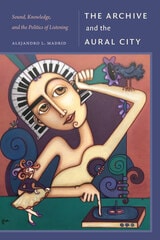
The Archive and the Aural City
Sound, Knowledge, and the Politics of ListeningAlejandro L. Madrid
Duke University Press, 2025
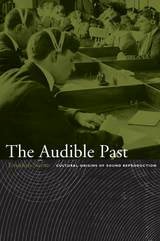
The Audible Past
Cultural Origins of Sound ReproductionJonathan Sterne
Duke University Press, 2003
Blending cultural studies and the history of communication technology, Sterne follows modern sound technologies back through a historical labyrinth. Along the way, he encounters capitalists and inventors, musicians and philosophers, embalmers and grave robbers, doctors and patients, deaf children and their teachers, professionals and hobbyists, folklorists and tribal singers. The Audible Past tracks the connections between the history of sound and the defining features of modernity: from developments in medicine, physics, and philosophy to the tumultuous shifts of industrial capitalism, colonialism, urbanization, modern technology, and the rise of a new middle class.
A provocative history of sound, The Audible Past challenges theoretical commonplaces such as the philosophical privilege of the speaking subject, the visual bias in theories of modernity, and static descriptions of nature. It will interest those in cultural studies, media and communication studies, the new musicology, and the history of technology.

The Metaphysics of Sound in Wallace Stevens
Anca Rosu
University of Alabama Press, 1995
Where sound speaks louder than meaning—Stevens’s poetry as a metaphysical echo.
Wallace Stevens dedicated his poetry to challenging traditional notions about reality, truth, knowledge, and the role of language as a means of representation. Rosu demonstrates that Stevens's experimentation with sound is not only essential to his poetics but also profoundly linked to the pragmatist ideas that informed his way of thinking about language. Her readings of Stevens's poems focus on revealing the dynamic through which meaning emerges in language patterns—a dynamic she calls "images of sound."
Rosu argues that the formal aspects of poetry are deeply ingrained in cultural realities and are, in fact, generated by their context. The sound pattern pervading Stevens's poems at once addresses and violates the reader's assumptions about the functioning of language and, along with them, ideas about reality, knowledge, and subjectivity. Sound is thus the starting point of an argument concerned with Stevens's epistemology and poetics—the way his poems insist on a movement past or through a normal poetic representation of the world to gesture toward a reality that lies outside or beyond systems of representation.
The relationship between sound and meaning isolated and analyzed in The Metaphysics of Sound in Wallace Stevens is firmly situated among critical debates concerning the poet's aesthetic and philosophical convictions. Rosu claims that Stevens's poetry is not ultimately about the powerlessness of language, nor is it a deconstructive enterprise of destabilizing culturally consecrated truths; rather it achieves meaning most frequently through patterns of sound. Sound helps Stevens make a deeply philosophical point in a language unavailable to philosophers.
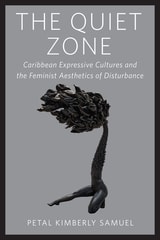
The Quiet Zone
Caribbean Expressive Cultures and the Feminist Aesthetics of DisturbancePetal Kimberly Samuel
Rutgers University Press, 2026
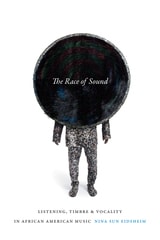
The Race of Sound
Listening, Timbre, and Vocality in African American MusicNina Sun Eidsheim
Duke University Press, 2018

The Sense of Sound, Volume 22
Rey Chow
Duke University Press, 0
Rey Chow is Anne Firor Scott Professor of Literature at Duke University. She is the author of The Age of the World Target and Modern Chinese Literary and Cultural Studies in the Age of Theory, both published by Duke University Press.
James A. Steintrager is Professor and Chair of English at the University of California, Irvine.
Contributors: Caroline Bassett, Eugenie Brinkema, Iain Chambers, Michel Chion, Rey Chow, Mladen Dolar, Veit Erlmann, Evan Johnson, Christopher Lee, Mara Mills, John Mowitt, Dominic Pettman, Tara Rodgers, Nicholas Seaver, James A. Steintrager, Jonathan Sterne,
The Sound of Dove
Singing in Appalachian Primitive Baptist ChurchesBeverly Bush Patterson
University of Illinois Press, 1995
The Sound of Exclusion
NPR and the Latinx PublicChristopher Chávez
University of Arizona Press, 2021
Chávez analyzes NPR as a historical product that has evolved alongside significant changes in technology, industry practice, and demography. In The Sound of Exclusion, Chávez asks these pressing questions: What kind of news organization was NPR intended to be? What has it become over time? In what ways is it evolving to meet the needs of a nation, in which U.S. Latinxs are becoming an increasingly larger portion of the American public that NPR serves? Informed by more than fifty in-depth interviews conducted with public radio practitioners from all aspects of the business, Chávez addresses how power is enacted in everyday broadcast practices. By interrogating industry practices, we might begin to reimagine NPR as a public good that serves the broad and diverse spectrum of the American public.
The Sound of Feathers
Attentive Living in a World Beyond OurselvesKathryn Gillespie
Duke University Press, 2026
The Sound of Leadership
Presidential Communication in the Modern AgeRoderick P. Hart
University of Chicago Press, 1987
The Sound of Leadership answers these questions and many more. Based on analysis of nearly 10,000 presidential speeches delivered between 1945 and 1985, this book is the first comprehensive examination of the ways in which presidents Truman through Reagan have used the powers of communication to advance their political goals. This communication revolution has produced, Roderick P. Hart argues, a new form of governance, one in which public speech has come to be taken as political action. Using a rhetorical appraoch, Hart details the features of this new American presidency by carefully examining when and where presidents spoke in public during the last four decades and what they said. Even though presidents have been speaking more and more, Hart reveals, they have been saying less and less. Rather than leading the nation, the modern president usually offers only the hollow "sound" of leadership. Written with great flair and acuteness, The Sound of Leadership will become a standard guide to the voices of modern presidential politics.
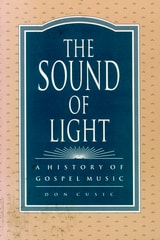
The Sound of Light
A History of Gospel MusicDon Cusic
University of Wisconsin Press, 1990
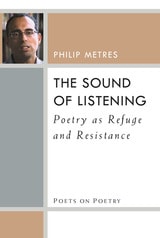
The Sound of Listening
Poetry as Refuge and ResistancePhilip Metres
University of Michigan Press, 2018
Philip Metres stakes a claim for the cultural work that poems can perform—from providing refuge to embodying resistance, from recovering silenced voices to building a more just world, in communities of solitude and solidarity. Gathering a decade of his writing on poetry, he widens our sense of poetry as a way of being in the world, proposing that poems can offer a permeability to marginalized voices and a shelter from the imperial noise and despair that can silence us. The Sound of Listening ranges between expansive surveys of the poetry of 9/11, Arab American poetry, documentary poetry, landscape poetry, installation poetry, and peace poetry; personal explorations of poets such as Adrienne Rich, Khalil Gibran, Lev Rubinstein, and Arseny Tarkovsky; and intimate dialogues with Randa Jarrar, Fady Joudah, and Micah Cavaleri, that illuminate Metres’s practice of listening in his 2015 work, Sand Opera.
The Sound of Memory
Themes from a Violinist’s LifeRebecca Fischer
The Ohio State University Press, 2022
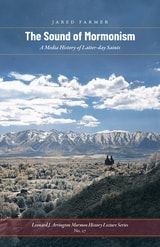
The Sound of Mormonism
A Media History of Latter-day SaintsJared Farmer
Utah State University Press, 2024
The Arrington Lecture series, established in honor of one of the twentieth-century American West’s most distinguished historians, Leonard Arrington, has become a leading forum for prominent scholars to address topics related to Latter-day Saint history. Utah State University hosts the Leonard J. Arrington Mormon History Lecture Series through the Merrill-Cazier Library’s Special Collections and Archives.
The Sound of Poetry / The Poetry of Sound
Edited by Marjorie Perloff and Craig Dworkin
University of Chicago Press, 2009
Sound—one of the central elements of poetry—finds itself all but ignored in the current discourse on lyric forms. The essays collected here by Marjorie Perloff and Craig Dworkinbreak that critical silence to readdress some of thefundamental connections between poetry and sound—connections that go far beyond traditional metrical studies.
Ranging from medieval Latin lyrics to a cyborg opera, sixteenth-century France to twentieth-century Brazil, romantic ballads to the contemporary avant-garde, the contributors to The Sound of Poetry/The Poetry of Sound explore such subjects as the translatability of lyric sound, the historical and cultural roles of rhyme,the role of sound repetition in novelistic prose, theconnections between “sound poetry” and music, between the visual and the auditory, the role of the body in performance, and the impact of recording technologies on the lyric voice. Along the way, the essaystake on the “ensemble discords” of Maurice Scève’s Délie, Ezra Pound’s use of “Chinese whispers,” the alchemical theology of Hugo Ball’s Dada performances, Jean Cocteau’s modernist radiophonics, and an intercultural account of the poetry reading as a kind of dubbing.
A genuinely comparatist study, The Sound of Poetry/The Poetry of Sound is designed to challenge current preconceptions about what Susan Howe has called “articulations of sound forms in time” as they have transformed the expanded poetic field of the twenty-first century.
The Sound of Rattles and Clappers
A Collection of New California Indian WritingEdited by Greg Sarris
University of Arizona Press, 1994
The Sound of Things to Come
An Audible History of the Science Fiction FilmTrace Reddell
University of Minnesota Press, 2018
A groundbreaking approach to sound in sci-fi films offers new ways of construing both sonic innovation and science fiction cinema
Including original readings of classics like The Day the Earth Stood Still, 2001: A Space Odyssey, Star Wars, and Blade Runner, The Sound of Things to Come delivers a comprehensive history of sound in science fiction cinema. Approaching movies as sound objects that combine cinematic apparatus and consciousness, Trace Reddell presents a new theory of sonic innovation in the science fiction film.
Reddell assembles a staggering array of movies from sixty years of film history—including classics, blockbusters, B-movies, and documentaries from the United States, Britain, France, Germany, Japan, and the Soviet Union—all in service to his powerful conception of sound making as a speculative activity in its own right. Reddell recasts debates about noise and music, while arguing that sound in the science fiction film provides a medium for alien, unknown, and posthuman sound objects that transform what and how we hear.
Avoiding genre criticism’s tendency to obsess over utopias, The Sound of Things to Come draws on film theory, sound studies, and philosophies of technology to advance conversations about the avant-garde, while also opening up opportunities to examine cinematic sounds beyond the screen.
The Sound of Thinking
A Listener's Companion to Conceptual MusicCraig Dworkin
University of Chicago Press, 2026
An artist draws two octaves of pitches randomly from a hat, just enough to set each syllable of the dictionary definition of imprimer (to score, to print). Trawling the internet for cute videos of cats “playing” piano, an artist splices together a complete, note-perfect performance of Arnold Schoenberg’s Opus 11. Half a century after the release of Miles Davis’s album Kind of Blue, a jazz quintet spends months of focused practice to reproduce the original exactly. These performances share a common denominator: absolute fidelity to the outcome of a system. From Marcel Duchamp to Yoko Ono, Steve Reich to Sun Ra, The Sound of Thinking brings together a diverse array of musical or sonic works that are algorithmic, automatic, permutational, procedural, or otherwise structured in contrast to the creative expressivity typically associated with artistic production.
In twenty-six short essays, each keyed to a term that begins with a different letter of the alphabet, Dworkin discusses work composed or performed according to a predetermined rule, transforming artistic creation into a system running its course. The pieces detailed here, drawn from more than a century of musical experimentation, offer a fresh perspective on the history of innovative music by decoupling music from expression and by shunting creativity from the level of organizing sounds to the level of devising a system that can do the organizing. Not only does this book spotlight the critical role of music in twentieth-century conceptual art, but it also identifies previously overlooked links among diverse artists and movements.
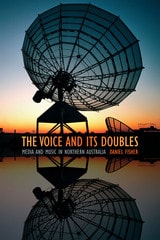
The Voice and Its Doubles
Media and Music in Northern AustraliaDaniel Fisher
Duke University Press, 2016
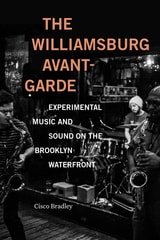
The Williamsburg Avant-Garde
Experimental Music and Sound on the Brooklyn WaterfrontCisco Bradley
Duke University Press, 2023
Thinking with Sound
A New Program in the Sciences and Humanities around 1900Viktoria Tkaczyk
University of Chicago Press, 2023
When the outside world is silent, all sorts of sounds often come to mind: inner voices, snippets of past conversations, imaginary debates, beloved and unloved melodies. What should we make of such sonic companions? Thinking with Sound investigates a period when these and other newly perceived aural phenomena prompted a far-reaching debate. Through case studies from Paris, Vienna, and Berlin, Viktoria Tkaczyk shows that the identification of the auditory cortex in late nineteenth-century neuroanatomy affected numerous academic disciplines across the sciences and humanities. “Thinking with sound” allowed scholars and scientists to bridge the gaps between theoretical and practical knowledge, and between academia and the social, aesthetic, and industrial domains. As new recording technologies prompted new scientific questions, new auditory knowledge found application in industry and the broad aesthetic realm. Through these conjunctions, Thinking with Sound offers a deeper understanding of today’s second “acoustic turn” in science and scholarship.
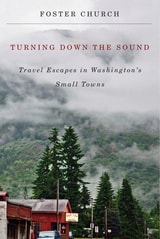
Turning Down the Sound
Travel Escapes in Washington's Small TownsFoster Church
Oregon State University Press, 2014
As in his previous book, Discovering Main Street: Travel Adventures in Small Towns of the Northwest, Church employs the finesse of his Pulitzer-Prize-winning journalism. He also shares his passion for encouraging tourists down less traveled paths—paths that curve beside valleys and wheat fields, travel along orchards and straits, and abut mountains and rivers.
Once inside these small towns, local flavors abound. Church reveals how each community’s unique character informs its hospitality and culture: In Morton, the abandoned Roxy movie theater was re-opened to host lectures and live performances. In the town of Palouse, a once-lonesome farming community in the Washington wheat country is now home to antiques shops and art galleries, and in Pomeroy, a pioneering legacy is celebrated in a lively annual festival.
With maps, photographs, and recommendations for more than thirty-five towns in all corners of the state, Turning Down the Sound vastly expands the resources available for readers and travelers keen on encountering what Church calls American tourism’s last frontier: its small towns.