Results by title
661 books match the query 'South America' and 152 start with t
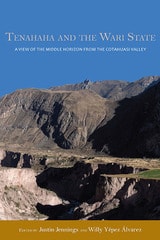
Tenahaha and the Wari State
A View of the Middle Horizon from the Cotahuasi ValleyEdited by Justin Jennings and Willy Yépez Álvarez
University of Alabama Press, 2015
Tenahaha and the Wari State contains a series of essays that challenge current beliefs about the Wari state and suggest a reassessment of this pivotal era in Andean history. In this collection, a picture emerges of Wari power projected across the region’s rugged and formidable topography less as a conquering empire than as a source of ideas, styles, and material culture voluntarily adopted by neighboring peoples.
Much of the previous fieldwork on Wari history took place in the Wari heartland and in Wari strongholds, not areas where Wari power and influence were equivocal. In Tenahaha and the Wari State, editors Justin Jennings and Willy Yépez Álvarez set out to test whether current theories of the Wari state as a cohesive empire were accurate or simply reflective of the bias inherent in studying Wari culture in its most concentrated centers. The essays in this collection examine instead life in the Cotahuasi Valley, an area into which Wari influence expanded during the Middle Horizon period.
Drawing on ten years of exhaustive field work both at the ceremonial site of Tenahaha and in the surrounding valley, Jennings and Yépez Álvarez posit that Cotahuasinos at Tenahaha had little contact with the Wari state. Their excavations and survey in the area tell the story of a region in flux rather than of a people conquered by Wari. In a time of uncertainty, they adopted Wari ideas and culture as ways to cope with change.
Terms of Exchange
Brazilian Intellectuals and the French Social SciencesIan Merkel
University of Chicago Press, 2022
Would the most recognizable ideas in the French social sciences have developed without the influence of Brazilian intellectuals? While any study of Brazilian social sciences acknowledges the influence of French scholars, Ian Merkel argues the reverse is also true: the “French” social sciences were profoundly marked by Brazilian intellectual thought, particularly through the University of São Paulo. Through the idea of the “cluster,” Merkel traces the intertwined networks of Claude Lévi-Strauss, Fernand Braudel, Roger Bastide, and Pierre Monbeig as they overlapped at USP and engaged with Brazilian scholars such as Mário de Andrade, Gilberto Freyre, and Caio Prado Jr..
Through this collective intellectual biography of Brazilian and French social sciences, Terms of Exchange reveals connections that shed new light on the Annales school, structuralism, and racial democracy, even as it prompts us to revisit established thinking on the process of knowledge formation through fieldwork and intellectual exchange. At a time when canons are being rewritten, this book reframes the history of modern social scientific thought.
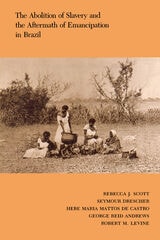
The Abolition of Slavery and the Aftermath of Emancipation in Brazil
Rebecca Scott, Seymour Drescher, Hebe Maria Mattos de Castro, George Reid Andrews, and Robert Levine
Duke University Press, 1988
The articles presented here represent a broad scope of scholarly inquiry that covers developments across a wide canvas of Brazilian history and accentuates the importance of formal abolition as a watershed in that nation’s development.
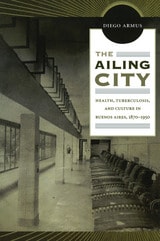
The Ailing City
Health, Tuberculosis, and Culture in Buenos Aires, 1870–1950Diego Armus
Duke University Press, 2011
The Allure of Labor
Workers, Race, and the Making of the Peruvian StatePaulo Drinot
Duke University Press, 2011
Although the vast majority of laboring peoples in Peru were indigenous, in the minds of social reformers indigeneity was not commensurable with labor: Indians could not be workers and were therefore excluded from the labor policies enacted in the 1920s and 1930s and, more generally, from elite conceptions of industrial progress. Drinot shows how the incommensurability of indigeneity with labor was expressed in the 1920 constitution, in specific labor policies, and in the activities of state agencies created to oversee collective bargaining and provide workers with affordable housing, inexpensive food, and social insurance. He argues that the racialized assumptions of the modernizing Peruvian state are reflected in the enduring inequalities of present-day Peru.
The Argentina Reader
History, Culture, PoliticsGabriela Nouzeilles and Graciela Montaldo, eds.
Duke University Press, 2002
This diverse collection brings together songs, articles, comic strips, scholarly essays, poems, and short stories. Most pieces are by Argentines. More than forty of the texts have never before appeared in English. The Argentina Reader contains photographs from Argentina’s National Archives and images of artwork by some of the country’s most talented painters and sculptors. Many selections deal with the history of indigenous Argentines, workers, women, blacks, and other groups often ignored in descriptions of the country. At the same time, the book includes excerpts by or about such major political figures as José de San Martín and Juan Perón. Pieces from literary and social figures virtually unknown in the United States appear alongside those by more well-known writers such as Jorge Luis Borges, Ricardo Piglia, and Julio Cortázar.
The Argentina Reader covers the Spanish colonial regime; the years of nation building following Argentina’s independence from Spain in 1810; and the sweeping progress of economic growth and cultural change that made Argentina, by the turn of the twentieth century, the most modern country in Latin America. The bulk of the collection focuses on the twentieth century: on the popular movements that enabled Peronism and the revolutionary dreams of the 1960s and 1970s; on the dictatorship from 1976 to 1983 and the accompanying culture of terror and resistance; and, finally, on the contradictory and disconcerting tendencies unleashed by the principles of neoliberalism and the new global economy. The book also includes a list of suggestions for further reading.
The Argentina Reader is an invaluable resource for those interested in learning about Argentine history and culture, whether in the classroom or in preparation for travel in Argentina.
The Argentine Folklore Movement
Sugar Elites, Criollo Workers, and the Politics of Cultural Nationalism, 1900–1955Oscar Chamosa
University of Arizona Press, 2010
Oscar Chamosa combines intellectual history with ethnographic and sociocultural analysis to reconstruct the process by which mestizo culture—in Argentina called criollo culture—came to occupy the center of national folklore in a country that portrayed itself as the only white nation in South America. The author finds that the conservative plantation owners—the “sugar elites”—who exploited the criollo peasants sponsored the folklore movement that romanticized them as the archetypes of nationhood. Ironically, many of the composers and folk singers who participated in the landowner-sponsored movement adhered to revolutionary and reformist ideologies and denounced the exploitation to which those criollo peasants were subjected. Chamosa argues that, rather than debilitating the movement, these opposing and contradictory ideologies permitted its triumph and explain, in part, the enduring romanticizing of rural life and criollo culture, essential components of Argentine nationalism.
The book not only reveals the political motivations of culture in Argentina and Latin America but also has implications for understanding the articulation of local culture with national politics and entertainment markets that characterizes contemporary cultural processes worldwide today.
The Argentine Silent Majority
Middle Classes, Politics, Violence, and Memory in the SeventiesSebastián Carassai
Duke University Press, 2014
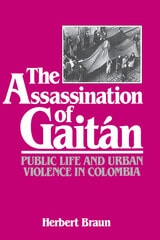
The Assassination of Gaitán
Public Life and Urban Violence in ColombiaHerbert Braun
University of Wisconsin Press, 1985
Drawn in part from personal interviews with participants and witnesses, Herbert Braun’s analysis of the riot’s roots, its patterns and consequences, provides a dramatic account of this historic turning point and an illuminating look at the making of modern Colombia.
Braun’s narrative begins in the year 1930 in Bogotá, Colombia, when a generation of Liberals and Conservatives came to power convinced they could kept he peace by being distant, dispassionate, and rational. One of these politicians, Jorge Eliécer Gaitán, was different. Seeking to bring about a society of merit, mass participation, and individualism, he exposed the private interests of the reigning politicians and engendered a passionate relationship with his followers. His assassination called forth urban crowds that sought to destroy every visible evidence of public authority of a society they felt no longer had the moral right to exist.
This is a book about behavior in public: how the actors—the political elite, Gaitán, and the crowds—explained and conducted themselves in public, what they said and felt, and what they sought to preserve or destroy, is the evidence on which Braun draws to explain the conflicts contained in Colombian history. The author demonstrates that the political culture that was emerging through these tensions offered the hope of a peaceful transition to a more open, participatory, and democratic society.
“Most Colombians regard Jorge Eliécer Gaitán as a pivotal figure in their nation’s history, whose assassination on April 9, 1948 irrevocably changed the course of events in the twentieth century. . . . As biography, social history, and political analysis, Braun’s book is a tour de force.”—Jane M. Rausch, Hispanic American Historical Review
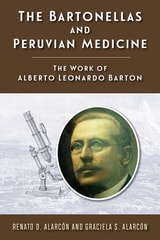
The Bartonellas and Peruvian Medicine
The Work of Alberto Leonardo BartonAlarcón, Graciela S
Rutgers University Press, 2019
The book is the result of intense bibliographic research and of original documents aimed not just at the examination of Barton’s life and work, but also the examination of today’s perspectives and future work in the field of infectious and “neglected” diseases. The authors address current scientific information on the relevant bacteria Bartonella bacilliformis, besides current research and clinical status of the other Bartonellas, making it a useful and practical text for those studying infectious diseases.
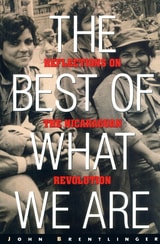
The Best of What We Are
Reflections on the Nicaraguan RevolutionJohn Brentlinger
University of Massachusetts Press, 1995
The Sandinista revolution in Nicaragua inspired many North Americans, including the author of this moving and informative book. John Brentlinger made six trips to Nicaragua, both before and after the defeat of the Sandinista Party. Combining the insights of a philosopher with the experiences of a participant-observer, he interprets the Sandinista period as a people’s struggle for self-realization in work, culture, politics, and community.
The book alternates between journal and essay chapters, weaving descriptions of personal experiences together with interviews and analysis. Whether telling the story of the last day of a young teacher’s life, describing new forms of poetry and art, examining representations of Nicaragua in the U.S. media, or discussing the government’s success and failures, Brentlinger vividly captures the spirit and enduring significance of the Sandinista revolution.

The Bewitchment of Silver
The Social Economy of Mining in Nineteenth-Century PeruJose R. Deustua
Ohio University Press, 1999
José Deustua argues that developing countries must be understood in terms of achieving domestic development as well as in their role in generating foreign exchange and in linking themselves to the world economy. Focusing on various sectors of Peru’s mining production, the mines, owners and mine workers, the transportation networks and the use of muleteers, this study is also concerned with market-building and domestic development in nineteenth-century Latin America.
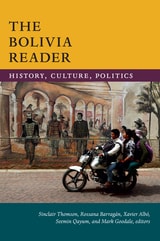
The Bolivia Reader
History, Culture, PoliticsSinclair Thomson, Rossana Barragán, Xavier Albó, Seemin Qayum, and Mark Goodale, editors
Duke University Press, 2018
The Brazil Chronicles
Stephen G. Bloom
University of Missouri Press, 2024
As a young journalist at the Brazil Herald from 1979-81, Stephen G. Bloom spent his early professional years working in Rio’s seedy Lapa district, surrounded by fugitives, drug runners, pornographers, and stealth CIA agents. Bloom shares the wild story of this English-language newspaper in The Brazil Chronicles. The expat newspaper was a breeding ground for a different kind of storyteller — audacious risk-takers who told madcap tales of Amazon plantations, Confederate emigres, and lost Indian tribes. Several renown journalists cut their teeth at the Brazil Herald, including acclaimed New York Times correspondent Tad Szulc, Huffington Post CEO Eric Hippeau, and an untamed Gonzo reporter by the name of Hunter S. Thompson.
Drawing from extensive archival research and more than 150 interviews with his former colleagues, Bloom’s eye-opening narrative dive is both entertaining and academically rigorous. With a backdrop of coups, nonstop political instability, censorship, hyper-inflation, and weekends at sultry Ipanema Beach, The Brazil Chronicles doubles as a coming-of-age memoir, following young Bloom as he embarks on his quest to become a foreign correspondent, relocating to a foreign country to pursue under-the-radar stories and tall tales. His firsthand experience provides an insider, eye-witness account of the newspaper’s colorful history, transporting the reader to its sweltering newsroom and delving into the multifarious lives of its eclectic, trailblazing, polyglot staff.
Even as Bloom weaves between personal narrative, history, and accounts from journalism luminaries, it’s clear who the book’s main character is: the one-of-a-kind newspaper itself.
The Brazil Reader
History, Culture, PoliticsRobert M. Levine and John J. Crocitti, eds.
Duke University Press, 1999
Complementing traditional views with fresh ones, The Brazil Reader’s historical selections range from early colonization to the present day, with sections on imperial and republican Brazil, the days of slavery, the Vargas years, and the more recent return to democracy. They include letters, photographs, interviews, legal documents, visual art, music, poetry, fiction, reminiscences, and scholarly analyses. They also include observations by ordinary residents, both urban and rural, as well as foreign visitors and experts on Brazil. Probing beneath the surface of Brazilian reality—past and present—The Reader looks at social behavior, women’s lives, architecture, literature, sexuality, popular culture, and strategies for coping with the travails of life in a country where the affluent live in walled compounds to separate themselves from the millions of Brazilians hard-pressed to find food and shelter. Contributing to a full geographic account—from the Amazon to the Northeast and the Central-South—of this country’s singular multiplicity, many pieces have been written expressly for this volume or were translated for it, having never previously been published in English.
This second book in The Latin America Readers series will interest students, specialists, travelers for both business and leisure, and those desiring an in-depth introduction to Brazilian life and culture.
The Brazil Reader
History, Culture, PoliticsJames N. Green, Victoria Langland, and Lilia Moritz Schwarcz, editors
Duke University Press, 2019
The Brazilians
Their Character and AspirationsBy José Honório Rodrigues
University of Texas Press, 1967
Brazil has long been a country in search of its own meaning and mission. Early in their history Brazilians began to puzzle over their surroundings and their relation to them. The eighteenth century produced an entire school of nativistic writers who, with the advent of independence, became fiery nationalists, still pursuing introspective studies of their homeland. Throughout the nineteenth century, the intellectuals of Brazil determined to define their nation, its character, and its aspirations.
In this now well-established tradition, José Honório Rodrigues confronts the questions of who and what the Brazilian is, what Brazil stands for, where it has been, and where it is going. This study, originally published in Portuguese as Aspirações nacionais, was especially timely at a period when strong feelings of nationalism led Brazilians to seek to define their own image, and when the revolution of rising expectations disposed them to determine what goals they were seeking and how far they were on the road to achieving them.
In order to understand and explain his nation, Rodrigues poses two questions: what are the national characteristics, and what are the national aspirations? Both questions are complex, but the reader will find well-reasoned answers, with a wealth of information on growth and development and abundant statistics to substantiate these answers.
The Buenos Aires Reader
History, Culture, PoliticsDiego Armus and Lisa Ubelaker Andrade, editors
Duke University Press, 2024

The Bureaucrats of Buenos Aires, 1769-1810
Amor al Real ServicioSusan Migden Socolow
Duke University Press, 1988
The late eighteenth century was a critical time for the southernmost regions of Latin America, for in this period they became a separate political entity, the Viceroyalty of the Rio de la Plata. Socolow's work, part of a continuing study of the political, economic, and social elites of the emerging city of Buenos Aires, here considers the bureaucracy put into place by the Bourbon reforms. The author examines the professional and personal circumstances of all bureaucrats, from the high-ranking heads of agencies to the more lowly clerks, contrasting their expectations and their actual experiences. She pays particular attention to their recruitment, promotion, salary, and retirement, as well as their marriage and kinship relationships in the local society.
The Burials of Cerro Azul, Peru
Joyce Marcus
University of Michigan Press, 2024
The CIA in Ecuador
Marc Becker
Duke University Press, 2021
The Chaco Mission Frontier
The Guaycuruan ExperienceJames Schofield Saeger
University of Arizona Press, 2000
Spanish missions in the New World usually pacified sedentary peoples accustomed to the agricultural mode of mission life, prompting many scholars to generalize about mission history. James Saeger now reconsiders the effectiveness of the missions by examining how Guaycuruan peoples of South America's Gran Chaco adapted to them during the eighteenth century. Because the Guaycuruans were hunter-gatherers less suited to an agricultural lifestyle, their attitudes and behaviors can provide new insight about the impact of missions on native peoples.
Responding to recent syntheses of the mission system, Saeger proposes that missions in the Gran Chaco did not fit the usual pattern. Through research in colonial documents, he reveals the Guaycuruan perspective on the missions, thereby presenting an alternative view of Guaycuruan history and the development of the mission system. He investigates Guaycuruan social, economic, political, and religious life before the missions and analyzes subsequent changes; he then traces Guaycuruan history into the modern era and offers an assessment of what Catholic missions meant to these peoples.
Saeger's research into Spanish documents is unique for its elicitation of the Indian point of view. He not only reconstructs Guaycuruan life independent of Spanish contact but also shows how these Indians negotiated the conditions under which they would adapt to the mission way of life, thereby retaining much of their independence.
By showing that the Guaycuruans were not as restricted in missions as has been assumed, Saeger demonstrates that there is a distinct difference between the establishment of missions and conquest. The Chaco Mission Frontier helps redefine mission studies by correcting overgeneralization about their role in Latin America.
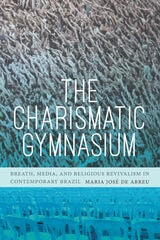
The Charismatic Gymnasium
Breath, Media, and Religious Revivalism in Contemporary BrazilMaria José de Abreu
Duke University Press, 2020
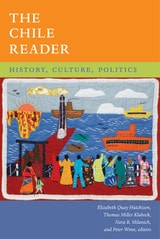
The Chile Reader
History, Culture, PoliticsElizabeth Quay Hutchison, Thomas Miller Klubock, Nara B. Milanich, and Peter Winn, eds.
Duke University Press, 2013
Texts and images, each introduced by the editors, provide insights into the ways that Chile's unique geography has shaped its national identity, the country's unusually violent colonial history, and the stable but autocratic republic that emerged after independence from Spain. They shed light on Chile's role in the world economy, the social impact of economic modernization, and the enduring problems of deep inequality. The Reader also covers Chile's bold experiments with reform and revolution, its subsequent descent into one of Latin America's most ruthless Cold War dictatorships, and its much-admired transition to democracy and a market economy in the years since dictatorship.
The Church in Brazil
The Politics of ReligionBy Thomas C. Bruneau
University of Texas Press, 1982
In 1980, Brazil was the largest Roman Catholic country in the world, with 90 percent of its more than 120 million people numbered among the faithful. The Church hierarchy became aware, however, that the religion practiced by the majority of its members was not that promoted by the institution, a point dramatized by the rapid growth of other religious movements in Brazil—particularly Protestant sects and spirit-possession cults. In response, the Church created and assumed new roles. The Church in Brazil is a case study of the changes within the Church and their impact on Brazilian society.
In an original and illuminating discussion, Thomas Bruneau combines institutional analysis and survey data to explore the relationship between structural changes in the Church and evolving patterns of practice and belief. His discussion displays the richness and variety of devotion in Brazil—characteristics recognized by many observers—and examines the Church's potential for influencing the people's religious life.
Moving from the historical and national to the regional, Bruneau analyzes and compares changes among eight dioceses. He concludes that the Church is actively promoting a progressive social role for itself and, by backing its statements with actions, is perceived as being socially effective by both supporters and opponents.
The first study in which the national and diocesan levels of the Church are analyzed together, it is also the first to inspect systematically the Basic Christian Communities, thought by some to be the most significant grass-roots movement in the Catholic world of that time.
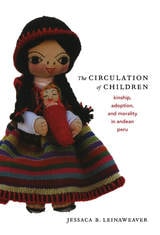
The Circulation of Children
Kinship, Adoption, and Morality in Andean PeruJessaca B. Leinaweaver
Duke University Press, 2008
Leinaweaver provides insight into the emotional and material factors that bring together and separate indigenous Andean families in the highland city of Ayacucho. She describes how child circulation is intimately linked to survival in the city, which has had to withstand colonialism, economic isolation, and the devastating civil war unleashed by the Shining Path. Leinaweaver examines the practice from the perspective of parents who send their children to live in other households, the adults who receive them, and the children themselves. She relates child circulation to international laws and norms regarding children’s rights, adoptions, and orphans, and to Peru’s history of racial conflict and violence. Given that history, Leinaweaver maintains that it is not surprising that child circulation, a practice associated with Peru’s impoverished indigenous community, is alternately ignored, tolerated, or condemned by the state.
The City at Its Limits
Taboo, Transgression, and Urban Renewal in LimaDaniella Gandolfo
University of Chicago Press, 2009
The Colombia Reader
History, Culture, PoliticsAnn Farnsworth-Alvear, Marco Palacios, and Ana María Gómez López, editors
Duke University Press, 2017
The Colonization of the Amazon
By Anna Luiza Ozorio de Almeida
University of Texas Press, 1992
Deforestation in the Amazon, one of today's top environmental concerns, began during a period of rapid colonization in the 1970s. Throughout that decade, Anna Luiza Ozorio de Almeida, a Stanford-trained economist, conducted a complex and massive economic study of what was going on in the Amazon, who was investing what, what was gained, and what it cost in all its aspects. The Colonization of the Amazon, the resulting work, brings together information on the physical, demographic, institutional, and economic dimensions of directed settlement in the Amazon Basin and raises significant questions about the gains and losses of the settlers, the reasons for these outcomes, and the economic rationale behind the devastation of the rainforest.
Particularly illuminating is Almeida's exploration of the role of the frontier in Brazil and her distinction between types of migrants and migrations. She concludes that the political costs avoided by not undertaking agrarian reform are being paid by devastating the Amazon, with the conflict between distribution and conservation steadily worsening. Today, it can no longer be circumvented.
The Color of Modernity
São Paulo and the Making of Race and Nation in BrazilBarbara Weinstein
Duke University Press, 2015
The Confederados
Old South Immigrants in BrazilCyrus B. Dawsey
University of Alabama Press, 1998
The story of exiles from the Confederate South who fled to Brazil after the US Civil War. The collection includes a previously unpublished narrative by an original settler
In the wake of the American Civil War, thousands of disillusioned Southerners sought refuge far from Reconstruction’s reach—many found it in Brazil. The Confederados is a compelling exploration of this little-known migration, tracing the journey of Confederate exiles who forged new lives in the sugarcane fields of São Paulo. Through vivid personal narratives, scholarly essays, and rare archival insights, this volume uncovers the cultural, agricultural, and religious legacy these settlers left behind.
From the harrowing voyage of Sarah Bellona Smith Ferguson to the enduring traditions of the Campo chapel, the book reveals how these Americans shaped—and were shaped by—their Brazilian surroundings. It examines their impact on education, Protestantism, and farming, and how their descendants maintain a distinct identity more than a century later.
Richly illustrated and deeply researched, The Confederados is essential reading for anyone interested in Southern history, diaspora studies, or the global echoes of the Civil War. This is not just a story of exile—it’s a testament to resilience, adaptation, and the enduring ties between two nations.
The Contemporary History of Latin America
Tulio Halperín Donghi
Duke University Press, 1993
Beginning with a survey of the late colonial landscape, The Contemporary History of Latin America traces the social, economic, and political development of the region to the late twentieth century, with special emphasis on the period since 1930. Chapters are organized chronologically, each beginning with a general description of social and economic developments in Latin America generally, followed by specific attention to political matters in each country. What emerges is a well-rounded and detailed picture of the forces at work throughout Latin American history.
This book will be of great interest to all those seeking a general overview of modern Latin American history, and its distinctive Latin American voice will enhance its significance for all students of Latin American history.
The Cord Keepers
Khipus and Cultural Life in a Peruvian VillageFrank Salomon
Duke University Press, 2004
In 1994, Salomon witnessed the use of khipus as civic regalia on the heights of Tupicocha, in Peru’s central Huarochirí region. By observing the rich ritual surrounding them, studying the village’s written records from past centuries, and analyzing the khipus themselves, Salomon opens a fresh chapter in the quest for khipu decipherment. He draws on a decade’s field research, early colonial records, and radiocarbon and fiber analysis. Challenging the prevailing idea that the use of khipus ended under early Spanish colonial rule, Salomon reveals that these beautiful objects served, apparently as late as the early twentieth century, to document households’ contribution to their kin groups and these kin groups’ contribution to their village. The Cord Keepers is a major contribution to Andean history and, more broadly, to understandings of writing and literacy.
The Creature in the Map
A Journey to El DoradoCharles Nicholl
University of Chicago Press, 1997
"Walter Raleigh . . . was one of those Elizabethan all-rounders who still seem staggeringly larger than life. . . . Mr. Nicholl's cogent reconstruction of the journey uses Raleigh's own account, 'The Discoverie of Guiana'—part truth, part advertising, part rhapsody—and much well-found ancillary material."—Anthony Bailey, New York Times
"Like The Reckoning, his brilliant account of the murder of Christopher Marlowe, Nicholl's new book might be called an exercise in historical conjuring. The Creature in the Map is an effort not only to analyse but also to call into presence the lived experience of the voyage Raleigh undertook in 1595 to the Orinoco Delta in what is now Venezuela."—Stephen Greenblatt, Times Literary Supplement
"Charles Nicholl belongs to an elite company, that of historians who know how to make research into arcane matters and distant times as engrossing as In Cold Blood or All the President's Men."—Michael Dirda, Washington Post
The Development of the Inca State
By Brian S. Bauer
University of Texas Press, 1992
The Inca empire was the largest state in the Americas at the time of the Spanish invasion in 1532. From its political center in the Cuzco Valley, it controlled much of the area included in the modern nations of Ecuador, Peru, Chile, and Bolivia. But how the Inca state became a major pan-Andean power is less certain. In this innovative work, Brian S. Bauer challenges traditional views of Inca state development and offers a new interpretation supported by archaeological, historical, and ethnographic evidence.
Spanish chroniclers of the sixteenth and seventeenth centuries attributed the rapid rise of Inca power to a decisive military victory over the Chanca, their traditional rivals, by Pachacuti Inca Yupanqui. By contrast, Bauer questions the usefulness of literal interpretations of the Spanish chronicles and provides instead a regional perspective on the question of state development. He suggests that incipient state growth in the Cuzco region was marked by the gradual consolidation and centralization of political authority in Cuzco, rather than resulting from a single military victory. Synthesizing regional surveys with excavation, historic, and ethnographic data, and investigating broad categories of social and economic organization, he shifts the focus away from legendary accounts and analyzes more general processes of political, economic, and social change.
The Devil and the Land of the Holy Cross
Witchcraft, Slavery, and Popular Religion in Colonial BrazilBy Laura de Mello e Souza
University of Texas Press, 2004
Originally published in Brazil as O Diabo e a Terra de Santa Cruz, this translation from the Portuguese analyzes the nature of popular religion and the ways it was transferred to the New World in the sixteenth and seventeenth centuries. Using richly detailed transcripts from Inquisition trials, Mello e Souza reconstructs how Iberian, indigenous, and African beliefs fused to create a syncretic and magical religious culture in Brazil.
Focusing on sorcery, the author argues that European traditions of witchcraft combined with practices of Indians and African slaves to form a uniquely Brazilian set of beliefs that became central to the lives of the people in the colony. Her work shows how the Inquisition reinforced the view held in Europe (particularly Portugal) that the colony was a purgatory where those who had sinned were exiled, a place where the Devil had a wide range of opportunities. Her focus on the three centuries of the colonial period, the multiple regions in Brazil, and the Indian, African, and Portuguese traditions of magic, witchcraft, and healing, make the book comprehensive in scope.
Stuart Schwartz of Yale University says, "It is arguably the best book of this genre about Latin America...all in all, a wonderful book." Alida Metcalf of Trinity University, San Antonio, says, "This book is a major contribution to the field of Brazilian history...the first serious study of popular religion in colonial Brazil...Mello e Souza is a wonderful writer."
The Disappearing Mestizo
Configuring Difference in the Colonial New Kingdom of GranadaJoanne Rappaport
Duke University Press, 2014
The Discovery and Conquest of Peru
Pedro de Cieza de León
Duke University Press, 1998
Alexandra Parma Cook and Noble David Cook present this recently discovered third book of a four-part chronicle that provides the most thorough and definitive record of the birth of modern Andean America. It describes with unparalleled detail the exploration of the Pacific coast of South America led by Francisco Pizarro and Diego de Almagro, the imprisonment and death of the Inca Atahualpa, the Indian resistance, and the ultimate Spanish domination.
Students and scholars of Latin American history and conquest narratives will welcome the publication of this volume.
The Division of the World
On Archives, Empires and the Vanity of BordersMartin Zimmerman
Haus Publishing, 2021
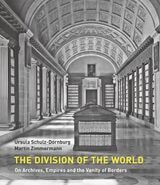
At a time when Western nations are being urged to confront their colonial past, this book examines a major archive, revealing the scale of the Spanish colonial enterprise in South and Central America.
Established in 1785, the Archivo General de Indias in Seville holds roughly three hundred years of Spanish colonial history in the Americas. It houses 8,000 charts and around ninety million documents—among them Christopher Columbus’s logbook and the famous Treaty of Tordesillas which, mediated by the Pope and signed in 1494, entitled the Spanish and Portuguese kings to divide the world between them. With this treaty as a starting point, the historian Martin Zimmermann journeys into the age of discovery and recounts stories of dangerous passages, encounters with the unknown, colonial brutality, and the power of cartographers, illustrating the insatiable lust of colonialists to conquer, exploit, and own the world. Ursula Schulz-Dornburg’s photographs show the archive before its redevelopment in 2002, offering a unique view into one of Europe’s most significant archives.
The Ecology of the Spoken Word
Amazonian Storytelling and the Shamanism among the Napo RunaMichael A. Uzendoski and Edith Felicia Calapucha-Tapuy
University of Illinois Press, 2012
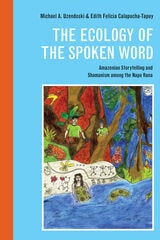
This volume offers the first theoretical and experiential translation of Napo Runa mythology in English. Michael A. Uzendoski and Edith Felicia Calapucha-Tapuy present and analyze lowland Quichua speakers in the Napo province of Ecuador through narratives, songs, curing chants, and other oral performances, so readers may come to understand and appreciate Quichua aesthetic expression. Guiding readers into Quichua ways of thinking and being--in which language itself is only a part of a communicative world that includes plants, animals, and the landscape--Uzendoski and Calapucha-Tapuy weave exacting translations into an interpretive argument with theoretical implications for understanding oral traditions, literacy, new technologies, and language. A companion websiteoffers photos, audio files, and videos of original performances illustrates the beauty and complexity of Amazonian Quichua poetic expressions.
The Ecuador Reader
History, Culture, PoliticsCarlos de la Torre and Steve Striffler, eds.
Duke University Press, 2008
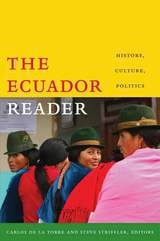
The voices and creations of Ecuadorian politicians, writers, artists, scholars, activists, and journalists fill the Reader, from José María Velasco Ibarra, the nation’s ultimate populist and five-time president, to Pancho Jaime, a political satirist; from Julio Jaramillo, a popular twentieth-century singer, to anonymous indigenous women artists who produced ceramics in the 1500s; and from the poems of Afro-Ecuadorians, to the fiction of the vanguardist Pablo Palacio, to a recipe for traditional Quiteño-style shrimp. The Reader includes an interview with Nina Pacari, the first indigenous woman elected to Ecuador’s national assembly, and a reflection on how to balance tourism with the protection of the Galápagos Islands’ magnificent ecosystem. Complementing selections by Ecuadorians, many never published in English, are samples of some of the best writing on Ecuador by outsiders, including an account of how an indigenous group with non-Inca origins came to see themselves as definitively Incan, an exploration of the fascination with the Andes from the 1700s to the present, chronicles of the less-than-exemplary behavior of U.S. corporations in Ecuador, an examination of Ecuadorians’ overseas migration, and a look at the controversy surrounding the selection of the first black Miss Ecuador.
The Elusive Promise of Indigenous Development
Rights, Culture, StrategyKaren Engle
Duke University Press, 2010
Conceiving indigenous rights as cultural rights, Engle argues, has largely displaced or deferred many of the economic and political issues that initially motivated much indigenous advocacy. She contends that by asserting static, essentialized notions of indigenous culture, indigenous rights advocates have often made concessions that threaten to exclude many claimants, force others into norms of cultural cohesion, and limit indigenous economic, political, and territorial autonomy.
Engle explores one use of the right to culture outside the context of indigenous rights, through a discussion of a 1993 Colombian law granting collective land title to certain Afro-descendant communities. Following the aspirations for and disappointments in this law, Engle cautions advocates for marginalized communities against learning the wrong lessons from the recent struggles of indigenous peoples at the international level.
The End of the Future
Trauma, Memory, and Reconciliation in Peruvian AmazoniaBartholomew Dean
Vanderbilt University Press, 2023
To give context to the causes and consequences of the MRTA's presence in the lower and central Huallaga, this book relies on the written works and testimony of Sístero García Torres, an MRTA rebel commander; the government's Truth and Reconciliation Commission; MRTA propaganda; media accounts; and critical historical texts. Besides exposing Huallaga Valley human rights abuses, the book's contribution to political anthropology is consequential for its insistence that reconciliation is by no means equivalent to local, Indigenous notions of "justice" or customary forms of dispute resolution. Without deliberately addressing the diverse socio-cultural contours defining overlapping epistemologies of justice, freedom, and communal well-being, enduring reconciliation will likely remain elusive.
The Exhaustion of Difference
The Politics of Latin American Cultural StudiesAlberto Moreiras
Duke University Press, 2001
What, asks Moreiras, is the function of critical reason in the present moment? What is regionalistic knowledge in the face of globalization? Can regionalistic knowledge be an effective tool for a critique of contemporary reason? What is the specificity of Latin Americanist reflection and how is it situated to deal with these questions? Through examinations of critical regionalism, restitutional excess, the historical genealogy of Latin American subalternism, testimonio literature, and the cultural politics of magical realism, Moreiras argues that while cultural studies is increasingly institutionalized and in danger of reproducing the dominant ideologies of late capitalism, it is also ripe for giving way to projects of theoretical reformulation. Ultimately, he claims, critical reason must abandon its allegiance to aesthetic-historicist projects and the destructive binaries upon which all cultural theories of modernity have been constructed.
The Exhaustion of Difference makes a significant contribution to the rethinking of Latin American cultural studies.

The Extractive Zone
Social Ecologies and Decolonial PerspectivesMacarena Gómez-Barris
Duke University Press, 2017
The Fabric of Resistance
Textile Workshops and the Rise of Rebellious Landscapes in Colonial PeruDi Hu
University of Alabama Press, 2022
Textiles as sites of power, production, and rebellion in the early modern Andes.
The Fabric of Resistance: Textile Workshops and the Rise of Rebellious Landscapes in Colonial Peru documents the impact of Spanish colonial institutions of labor on identity and social cohesion in Peru. Through archaeological and historical lines of evidence, Di Hu examines the long-term social conditions that enabled the large-scale rebellions in the late Spanish colonial period in Peru. Hu argues that ordinary people from different backgrounds pushed back against the top-down identity categories imposed by the Spanish colonial government and in the process created a cosmopolitan social landscape that later facilitated broader rebellion.
Hu’s case study is Pomacocha, the site of an important Spanish colonial hacienda (agricultural estate) and obraje (textile workshop). At its height, the latter had more than one hundred working families and sold textiles all over the Andes. Through analysis of this site, Hu explores three main long-term causes of rebellions against Spanish oppression. First, the Spanish colonial economy provided motivation and the social spaces for intercaste (indigenous, African, and mestizo) mixing at textile workshops. Second, new hybrid cultural practices and political solidarity arose there that facilitated the creation of new rebellious identities. Third, the maturation in the eighteenth century of popular folklore that reflected the harsh nature of Spanish labor institutions helped workers from diverse backgrounds gain a systemic understanding of exploitation.
This study provides a fresh archaeological and historical perspectives on the largest and most cosmopolitan indigenous-led rebellions of the Americas. Hu interweaves analyses of society at multiple scales including fine-grained perspectives of social networks, demography, and intimate details of material life in the textile workshop. She examines a wide range of data sources including artifacts, food remains, architectural plans, account books, censuses, court documents, contracts, maps, and land title disputes.
The Fate of the Forest
Developers, Destroyers, and Defenders of the Amazon, Updated EditionSusanna B. Hecht and Alexander Cockburn
University of Chicago Press, 2010
The Amazon rain forest covers more than five million square kilometers, amid the territories of nine different nations. It represents over half of the planet’s remaining rain forest. Is it truly in peril? What steps are necessary to save it? To understand the future of Amazonia, one must know how its history was forged: in the eras of large pre-Columbian populations, in the gold rush of conquistadors, in centuries of slavery, in the schemes of Brazil’s military dictators in the 1960s and 1970s, and in new globalized economies where Brazilian soy and beef now dominate, while the market in carbon credits raises the value of standing forest.
Susanna Hecht and Alexander Cockburn show in compelling detail the panorama of destruction as it unfolded, and also reveal the extraordinary turnaround that is now taking place, thanks to both the social movements, and the emergence of new environmental markets. Exploring the role of human hands in destroying—and saving—this vast forested region, The Fate of the Forest pivots on the murder of Chico Mendes, the legendary labor and environmental organizer assassinated after successful confrontations with big ranchers. A multifaceted portrait of Eden under siege, complete with a new preface and afterword by the authors, this book demonstrates that those who would hold a mirror up to nature must first learn the lessons offered by some of their own people.
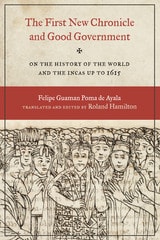
The First New Chronicle and Good Government
On the History of the World and the Incas up to 1615By Felipe Guaman Poma de Ayala
University of Texas Press, 2009
One of the most fascinating books on pre-Columbian and early colonial Peru was written by a Peruvian Indian named Felipe Guaman Poma de Ayala. This book, The First New Chronicle and Good Government, covers pre-Inca times, various aspects of Inca culture, the Spanish conquest, and colonial times up to around 1615 when the manuscript was finished. Now housed in the Royal Library, Copenhagen, Denmark, and viewable online at www.kb.dk/permalink/2006/poma/info/en/frontpage.htm, the original manuscript has 1,189 pages accompanied by 398 full-page drawings that constitute the most accurate graphic depiction of Inca and colonial Peruvian material culture ever done.
Working from the original manuscript and consulting with fellow Quechua- and Spanish-language experts, Roland Hamilton here provides the most complete and authoritative English translation of approximately the first third of The First New Chronicle and Good Government. The sections included in this volume (pages 1–369 of the manuscript) cover the history of Peru from the earliest times and the lives of each of the Inca rulers and their wives, as well as a wealth of information about ordinances, age grades, the calendar, idols, sorcerers, burials, punishments, jails, songs, palaces, roads, storage houses, and government officials. One hundred forty-six of Guaman Poma's detailed illustrations amplify the text.
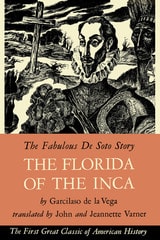
The Florida of the Inca
By Garcilaso de la Vega
University of Texas Press, 1951
Perhaps the most amazing thing of all about Garcilaso de la Vega's epic account of the De Soto expedition is the fact that, although it is easily the first great classic of American history, it had never before received a complete or otherwise adequate English translation in the 346 years which have elapsed since its publication in Spanish. Now the Inca's thrilling narrative comes into its own in the English speaking world.
Hernando de Soto's expedition for the conquest of North America was the most ambitious ever to brave the perils of the New World. Garcilaso tells in remarkably rich detail of the conquistadors' wanderings over half a continent, of the unbelievable vicissitudes which beset them, of the Indians whom they sought to win for King and Church and by whose hands most of them died, of De Soto's death, and of the final pitiful failure of the expedition.
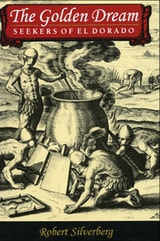
The Golden Dream
Seekers Of El DoradoRobert Silverberg
Ohio University Press, 1996
One of the most persistent legends in the annals of New World exploration is that of the Land of Gold. This mythical site was located over vast areas of South America (and later, North America); the search for it drove some men mad with greed and, as often as not, to their untimely deaths.
In this history of quest and adventure, Robert Silverberg traces the fate of Old World explorers lured westward by the myth of El Dorado. From the German conquistadores licensed by the Spanish king to operate out of Venezuela, to the journeys of Gonzalo Pizarro in the Amazon basin, and to the nearly miraculous voyage of Francisco Orellana to the mouth of the Amazon River, encountering the warlike women who gave the river its name, violence and bloodshed accompanied the determined adventurers. Sir Walter Raleigh and a host of other explorers spent small fortunes and many lives trying to locate Manoa, a city that was rumored to be El Dorado—City of Gold. Celebrated science fiction author Robert Silverberg recreates these legendary quests in The Golden Dream: Seekers of El Dorado.