Results by title
382 books match the query 'Southwest (AZ, NM, OK, TX)' and 97 start with t
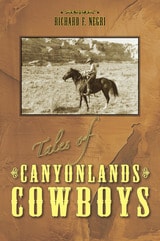
Tales of Canyonlands Cowboys
Richard Negri
Utah State University Press, 1997
Before Canyonlands was a national park, before tourists discovered the wildness and wonder of the Maze and the Land of Standing Rocks, before the San Rafael Desert became a hive of the mineral exploration, the lands west of the Colorado and Green Rivers to the San Rafael Swell and from the Book Cliffs and San Rafael River south to the dirty Devil River and the Henry Mountains were pastures for the stock of hardscrabble cowboys and sheep ranchers.
Often based in the nearby villages of Green River or Hanksville, sometimes residing on remote ranches, such as the famous Robbers Roost Ranch or the Chaffin Ranch at the mouth of the San Rafael, the cowboys and ranchers spent much of their time camped out on the range with their stock. They herded under the Ledge, along the river south across Elaterite Basin, Ernie Country, and Waterhole Flat, and above on the flats, mesas, and head canyons running from the west.
They named many of the places, opened many of the trails, and were there to meet and guide the first petroleum explorers, archaeologists, and tourists. And they bristled at government management of the public lands, which they had grown accustomed to considering their own.
Richard Negri interviewed members of the last generation of those cowboys for stories of their early days in canyon country. Their tales provide an oral history of the first non-Indians to roam and reside in the Maze District of Canyonlands National Park and much of the surrounding wild and remote country.
Texan Crucible
How the Irish, Germans, and Czechs Became AngloMarian J. Barber
University of Texas Press, 2026
A history of European immigrants in Texas and how they redefined racial identity.
While the creation of a Black-White racial binary was foundational to most of the United States, nineteenth-century Texas developed a unique tripartite system that acknowledged the role of individuals of Mexican ancestry in a region that was Spanish, Mexican, and an independent nation before becoming a US (and briefly Confederate) state. Yet this framework was fraught, struggling to accommodate new arrivals from beyond North America, in particular the Irish, Germans, and Czechs. Texan Crucible tells the story of these immigrants and how they became Anglo.
Marian Barber reveals the ways language, religion, alcohol use, and attitudes toward slavery distinguished these newcomers to Texas from those arriving from the eastern United States and how they nevertheless created thriving, influential communities. Their status was shaped by events inside and far beyond Texas, including an 1887 prohibition fight, the Civil War, and two world wars that encouraged them to erase their distinctiveness. As segregation was formally outlawed and civil rights activism grew, understandings of race shifted, cementing these groups’ status as Anglo. Texan Crucible recovers the histories of German, Irish, and Czech immigrants and unveils the social construction of racial difference underpinning Texan identity.
Texas Crossings
The Lone Star State and the American Far West, 1836–1986By Howard R. Lamar; foreword by Lewis L. Gould
University of Texas Press, 1991
“Texas is not a place, it is a commotion!” exclaimed one early visitor to the state, underscoring the mobility and “get-ahead” spirit that have always characterized Texas and its people. In these thought-provoking essays, Howard R. Lamar looks specifically at the “crossings” that have characterized Texas history to see what effect these migrations to and through Texas have had on Texas, the Southwest, and links between Texas and California.
Originally presented in 1986 at the University of Texas at Austin as the first George W. Littlefield Lectures in American History, these essays explore a previously neglected aspect of the western story: the influence of Texans—and other Southerners—on the character and history of the southwestern states. Lamar discusses the many efforts to establish overland trails, and later railroads, to California and how those efforts were fueled by the gold rush era of 1849–1850. He traces the influence of immigrant Texans and the flourishing southern community in California, particularly during the Civil War years. He follows the twentieth-century migration of “Okies,” whose desire to settle and resume their agricultural lifeways clashed with Californians’ preference for migrant workers. And he reveals how the discovery of oil, not only in Texas but also in California, western Canada, and Alaska, continues to link these regions.
Texas has always been a place that people pass through, going either east-west or north-south. Texas Crossings explains what brought the people to Texas and what they carried away with them to California and the West.

Texas Furniture, Volume One
The Cabinetmakers and Their Work, 1840-1880, Revised editionBy Lonn Taylor and David B. Warren
University of Texas Press, 2012
The art of furniture making flourished in Texas during the mid-nineteenth century. To document this rich heritage of locally made furniture, Miss Ima Hogg, the well-known philanthropist and collector of American decorative arts, enlisted Lonn Taylor and David B. Warren to research early Texas Furniture and its makers. They spent more than a decade working with museums and private collectors throughout the state to examine and photograph representative examples. They also combed census records, newspapers, and archives for information about cabinetmakers. These efforts resulted in the 1975 publication of Texas Furniture, which quickly became the authoritative reference on this subject.
Now updated with an expanded Index of Texas Cabinetmakers that includes information that has come to light since the original publication and corrects errors, Texas Furniture presents a catalog of more than two hundred pieces of furniture, each superbly photographed and accompanied by detailed descriptions of the piece’s maker, date, materials, measurements, history, and owner, as well as an analysis by the authors. The book also includes chapters on the material culture of nineteenth-century Texas and on the tools and techniques of nineteenth-century Texas cabinetmakers, with a special emphasis on the German immigrant cabinetmakers of the Hill Country and Central Texas. The index of Texas cabinetmakers contains biographical information on approximately nine hundred men who made furniture in Texas, and appendices list information on the state’s largest cabinet shops taken from the United States census records.
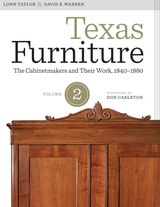
Texas Furniture, Volume Two
The Cabinetmakers and Their Work, 1840–1880By Lonn Taylor and David B. Warren
University of Texas Press, 2012
The art of furniture making flourished in Texas during the mid-nineteenth century. To document this rich heritage of locally made furniture, Miss Ima Hogg, the well-known philanthropist and collector of American decorative arts, enlisted Lonn Taylor and David B. Warren to research early Texas furniture and its makers. After more than a decade of investigation, they published Texas Furniture in 1975, and it quickly became the authoritative reference on this subject. An updated edition, Texas Furniture, Volume One, was issued in the spring of 2012.
Texas Furniture, Volume Two presents over 150 additional pieces of furniture that were not included in Volume One, each superbly photographed in color and accompanied by detailed descriptions of the piece’s maker, date, materials, measurements, history, and owner, as well as an analysis by the authors. Taylor and Warren have also written a new introduction for this volume, in which they amplify the story of early Texas furniture. In particular, they compare and contrast the two important traditions of cabinetmaking in Texas, Anglo-American and German, and identify previously unknown artisans. The authors also discuss nineteenth-century Texans’ desire for refinement and gentility in furniture, non-commercial furniture making, and marquetry work. And they pay tribute to the twentieth-century collectors who first recognized the value of locally made Texas furniture and worked to preserve it. A checklist of Texas cabinetmakers, which contains biographical information on approximately nine hundred men who made furniture in Texas, completes the volume.

Texas Gardening the Natural Way
The Complete HandbookBy Howard Garrett
University of Texas Press, 2004
Compost your old "complete" gardening guide. There's a new way of gardening in Texas that's healthier for people and the environment, more effective at growing vigorous plants and reducing pests, cheaper to maintain, and just more fun. It's Howard Garrett's "The Natural Way" organic gardening program, and it's all here in Texas Gardening the Natural Way.
This book is the first complete, state-of-the-art organic gardening handbook for Texas. Using Howard Garrett's new mainstream gardening techniques, Texas Gardening the Natural Way presents a total gardening program:
- How to plan, plant, and maintain beautiful landscapes without using chemical fertilizers and toxic pesticides.
- Gardening fundamentals: soils, landscape design, planting techniques, and maintenance practices.
- Includes more native and adaptable varieties of garden and landscape plants than any other guide on the market.
- Trees: 134 species of evergreens, berry- and fruit-bearing, flowering, yellow fall color, orange fall color, and red fall color.
- Shrubs and specialty plants: 85 species for sun, shade, spring flowering, summer flowering, and treeform shrubs.
- Ground covers and vines: 51 species for sun and shade.
- Annuals and perennials: 136 species for fall color, winter color, summer color in shade and sun, and spring color. Also seeding rates for wildflowers.
- Lawn grasses: 10 species for sun and shade, with additional information on 16 native grasses, seeding rates for 32 grasses, and suggested mowing heights.
- Fruits, nuts, and vegetables: 58 species, with a vegetable planting chart and information on organic pecan and fruit tree growing, fruit varieties for Texas, grape and pecan varieties, and gardening by the moon.
- Common green manure crops: 29 crops that help enrich the soil.
- Herbs: 66 species for culinary and medicinal uses.
- Bugs: 73 types of helpful and harmful bugs, with organic remedies for pests, lists of beneficial bugs and plants that attract them, a beneficial bug release schedule, and sources for beneficial bugs.
- Plant diseases: organic treatments for 55 common problems.
- Organic methods for repelling mice, rabbits, armadillos, beavers, cats, squirrels, and deer.
- Organic management practices: watering, fertilizing, controlling weeds, releasing beneficial insects, biological controls (including bats and purple martins), and recipes for Garrett Juice, fire ant control drench, vinegar herbicide, Sick Tree Treatment, and Tree Trunk Goop.
- Average first and last freeze dates for locations around the state.
- Organic fertilizers and soil amendments: 61 varieties, including full instructions for making compost.
- Organic pest control products: 30 varieties.
- Common house plants and poisonous plants.
- Instructions for climbing vegetable structures and bat houses.
- 833 gorgeous full-color photographs.
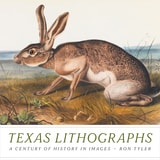
Texas Lithographs
A Century of History in ImagesRon Tyler
University of Texas Press, 2023
2024 Ewell L. Newman Book Award, American Historical Print Collectors Society
2024 Kate Broocks Bates Award for Historical Research, Texas State Historical Association
2024 TCU Texas Book Prize, Friends of the TCU Library and the TCU Press
2024 Kempner Family Book Prize—Nonfiction,The Philosophical Society of Texas
A stunning and comprehensive collection of lithographs from 1818 to 1900 Texas.
Westward expansion in the United States was deeply intertwined with the technological revolutions of the nineteenth century, from telegraphy to railroads. Among the most important of these, if often forgotten, was the lithograph. Before photography became a dominant medium, lithography—and later, chromolithography—enabled inexpensive reproduction of color illustrations, transforming journalism and marketing and nurturing, for the first time, a global visual culture. One of the great subjects of the lithography boom was an emerging Euro-American colony in the Americas: Texas.
The most complete collection of its kind—and quite possibly the most complete visual record of nineteenth-century Texas, period—Texas Lithographs is a gateway to the history of the Lone Star State in its most formative period. Ron Tyler assembles works from 1818 to 1900, many created by outsiders and newcomers promoting investment and settlement in Texas. Whether they depict the early French colony of Champ d’Asile, the Republic of Texas, and the war with Mexico, or urban growth, frontier exploration, and the key figures of a nascent Euro-American empire, the images collected here reflect an Eden of opportunity—a fairy-tale dream that remains foundational to Texans’ sense of self and to the world’s sense of Texas.

Texas Mexican Americans and Postwar Civil Rights
By Maggie Rivas-Rodriguez
University of Texas Press, 2015

Texas Place Names
By Edward Callary, with Jean K. Callary
University of Texas Press, 2020
Was Gasoline, Texas, named in honor of a gas station? Nope, but the name does honor the town’s original claim to fame: a gasoline-powered cotton gin. Is Paris, Texas, a reference to Paris, France? Yes: Thomas Poteet, who donated land for the town site, thought it would be an improvement over “Pin Hook,” the original name of the Lamar County seat. Ding Dong’s story has a nice ring to it; the name was derived from two store owners named Bell, who lived in Bell County, of course. Tracing the turning points, fascinating characters, and cultural crossroads that shaped Texas history, Texas Place Names provides the colorful stories behind these and more than three thousand other county, city, and community names.
Drawing on in-depth research to present the facts behind the folklore, linguist Edward Callary also clarifies pronunciations (it’s NAY-chis for Neches, referring to a Caddoan people whose name was attached to the Neches River during a Spanish expedition). A great resource for road trippers and historians alike, Texas Place Names alphabetically charts centuries of humanity through the enduring words (and, occasionally, the fateful spelling gaffes) left behind by men and women from all walks of life.

Texas Sports
Unforgettable Stories for Every Day of the YearBy Chad S. Conine
University of Texas Press, 2017
When it comes to sports, Texas more than earns its bragging rights. The Lone Star State has produced championship teams and legendary athletes not only in football, baseball, and basketball, but in dozens of other sports as well. Texas Sports celebrates more than a century of achievements in a day-by-day record of the people and events—both unforgettable and little-known—that have made Texas a powerhouse in the world of sports.
Chad S. Conine packs a wealth of sports facts and stories into 366 days. He ranges from firsts such as UT’s first football game (an 1893 win against Dallas University Football Club) to peak moments such as Earl Campbell running through defenders, Nolan Ryan throwing heat past baffled batters, and Babe Didrickson Zaharias winning the Western Open golf championship for the fourth time. Conine covers more than twenty-five sports and all levels from high school to professional, reminding us that if Texas had never seen a pigskin or a backboard, its sports legacy would still be secure. With a winning combination of victories and heartbreaks, men’s and women’s sports, and all regions of the state, Texas Sports is a must-read for all sports fans and trivia buffs.
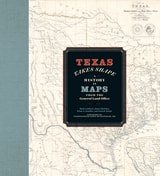
Texas Takes Shape
A History in Maps from the General Land OfficeBy Mark Lambert, James Harkins, Brian A. Stauffer, and Patrick Walsh
University of Texas Press, 2025
2025 Second Place, Presidio La Bahía Award, Sons of the Republic of Texas
2026 Ron Tyler Award for Best Illustrated Book on Texas History and Culture, Texas State Historical Association (TSHA)
A comprehensive volume on historical mapping in Texas.
The Texas General Land Office’s map collection contains over 45,000 maps, some dating from the sixteenth century, making it one of the most important cartographic archives in Texas. As products and agents of history drawn by cartographers with motives and means as diverse as the places they document, maps provide a unique perspective on geopolitical, cultural, and economic processes. The maps of the GLO offer key insights into Texas’s sprawling history. They speak to issues of changing borders, social and political upheaval, and questions of sovereignty and power.
Texas Takes Shape offers an illuminating selection from the GLO archive: over one hundred maps that tell—and sometimes obscure—the stories of European colonization, Spanish and Mexican rule, the Republic of Texas, and the modern US state. There are maps here of every scale, from the hemispheric visions of European explorers to individual survey plats. Accompanying essays offer fascinating lessons on topics ranging from Indigenous cartography to military and railroad mapmaking and frontier surveys. Artful and informative, Texas Takes Shape examines a unique place through the eyes and imaginations of those who sought to govern it, profit from it, understand it, and call it home.

Texas Takes Wing
A Century of Flight in the Lone Star StateBy Barbara Ganson
University of Texas Press, 2014
This book celebrates the aviators, astronauts, airline executives, and other innovators who have made Texas an influential world leader in the aerospace industry over the past century.
Tracing the hundred-year history of aviation in Texas, aviator and historian Barbara Ganson brings to life the colorful personalities that shaped the phenomenally successful development of this industry in the state. Weaving stories and profiles of aviators, designers, manufacturers, and those in related services, Texas Takes Wing covers the major trends that propelled Texas to the forefront of the field. Covering institutions from San Antonio’s Randolph Air Force Base (the West Point of this branch of service) to Brownsville’s airport with its Pan American Airlines instrument flight school (which served as an international gateway to Latin America as early as the 1920s) to Houston’s Johnson Space Center, home of Mission Control for the U.S. space program, the book provides an exhilarating timeline and engaging history of dozens of unsung pioneers as well as their more widely celebrated peers.
Drawn from personal interviews as well as major archives and the collections of several commercial airlines, including American, Southwest, Braniff, Pan American Airways, and Continental, this sweeping history captures the story of powered flight in Texas since 1910. With its generally favorable flying weather, flat terrain, and wide open spaces, Texas has more airports than any other state and is often considered one of America’s most aviation-friendly places. Texas Takes Wing also explores the men and women who made the region pivotal in military training, aircraft manufacturing during wartime, general aviation, and air servicing of the agricultural industry. The result is a soaring history that will delight aviators and passengers alike.
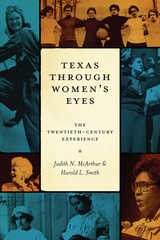
Texas Through Women's Eyes
The Twentieth-Century ExperienceBy Judith N. McArthur and Harold L. Smith
University of Texas Press, 2010
Winner, Liz Carpenter Award For Research in the History of Women, Texas State Historical Association, 2010
Texas women broke barriers throughout the twentieth century, winning the right to vote, expanding their access to higher education, entering new professions, participating fully in civic and political life, and planning their families. Yet these major achievements have hardly been recognized in histories of twentieth-century Texas. By contrast, Texas Through Women's Eyes offers a fascinating overview of women's experiences and achievements in the twentieth century, with an inclusive focus on rural women, working-class women, and women of color.
McArthur and Smith trace the history of Texas women through four eras. They discuss how women entered the public sphere to work for social reforms and the right to vote during the Progressive era (1900–1920); how they continued working for reform and social justice and for greater opportunities in education and the workforce during the Great Depression and World War II (1920–1945); how African American and Mexican American women fought for labor and civil rights while Anglo women laid the foundation for two-party politics during the postwar years (1945–1965); and how second-wave feminists (1965–2000) promoted diverse and sometimes competing goals, including passage of the Equal Rights Amendment, reproductive freedom, gender equity in sports, and the rise of the New Right and the Republican party.

Texas in the Confederacy
An Experiment in Nation BuildingClayton E. Jewett
University of Missouri Press, 2002
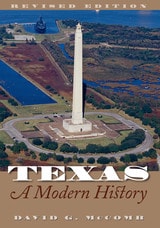
Texas, A Modern History
Revised EditionBy David G. McComb
University of Texas Press, 2010
Since its publication in 1989, Texas, A Modern History has established itself as one of the most readable and reliable general histories of Texas. David McComb paints the panorama of Lone Star history from the earliest Indians to the present day with a vigorous brush that uses fact, anecdote, and humor to present a concise narrative. The book is designed to offer an adult reader the savor of Texan culture, an exploration of the ethos of its people, and a sense of the rhythm of its development. Spanish settlement, the Battle of the Alamo, the Civil War, cattle trails, oil discovery, the growth of cities, changes in politics, the Great Depression, World War II, recreation, economic expansion, and recession are each a part of the picture. Photographs and fascinating sidebars punctuate the text.
In this revised edition, McComb not only incorporates recent scholarship but also tracks the post–World War II rise of the Republican Party in Texas and the evolution of the state from rural to urban, with 88 percent of the people now living in cities. At the same time, he demonstrates that, despite many changes that have made Texas similar to the rest of the United States, much of its unique past remains.

Texian Exodus
The Runaway Scrape and Its Enduring LegacyStephen L. Hardin
University of Texas Press, 2024
2026 Alamo Historical Society Book Award
A narrative account of the evacuation of the Texians in 1836, which was redeemed by the defeat of the Mexican army and the creation of the Republic of Texas.
Two events in Texas history shine so brightly that they can be almost blinding: the stand at the Alamo and the redemption at San Jacinto, where General Sam Houston’s volunteers won the decisive battle of the Texas Revolution. But these milestones came amid a less obviously heroic episode now studiously forgotten—the refugee crisis known as the Runaway Scrape.
Propulsive, lyrical, and richly illustrated, Texian Exodus transports us to the frigid, sodden spring of 1836, when thousands of Texians—Anglo-American settlers—fled eastward for the United States in fear of Antonio López de Santa Anna’s advancing Mexican army. Leading Texas historian Stephen L. Hardin draws on the accounts of the Runaways themselves to relate a tale of high stakes and great sorrow. While Houston tried to build a force that could defeat Santa Anna, the evacuees suffered incalculable pain and suffering. Yet dignity and community were not among the losses. If many of the stories are indeed tragic, the experience as a whole was no tragedy; survivors regarded the Runaway Scrape as their finest hour, an ordeal met with cooperation and courage. For Hardin, such qualities still define the Texas character. That it was forged in retreat as well as in battle makes the Runaway Scrape essential Texas history.
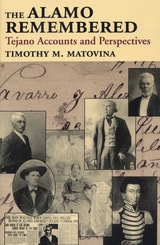
The Alamo Remembered
Tejano Accounts and PerspectivesBy Timothy M. Matovina
University of Texas Press, 1995
As Mexican soldiers fought the mostly Anglo-American colonists and volunteers at the Alamo in 1836, San Antonio's Tejano population was caught in the crossfire, both literally and symbolically. Though their origins were in Mexico, the Tejanos had put down lasting roots in Texas and did not automatically identify with the Mexican cause. Indeed, as the accounts in this new collection demonstrate, their strongest allegiance was to their fellow San Antonians, with whom they shared a common history and a common plight as war raged in their hometown.
Timothy M. Matovina here gathers all known Tejano accounts of the Battle of the Alamo. These accounts consist of first reports of the battle, including Juan N. Seguín's funeral oration at the interment ceremony of the Alamo defenders, conversations with local Tejanos, unpublished petitions and depositions, and published accounts from newspapers and other sources. This communal response to the legendary battle deepens our understanding of the formation of Mexican American consciousness and identity.
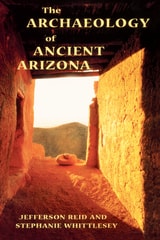
The Archaeology of Ancient Arizona
Jefferson Reid and Stephanie Whittlesey
University of Arizona Press, 1997
This book invites us to step into a Hohokam village with its sounds of barking dogs, children's laughter, and the ever-present grinding of mano on metate to produce the daily bread. Here, too, readers will marvel at the skills of Clovis elephant hunters and touch the lives of other ancestral people known as Mogollon, Anasazi, Sinagua, and Salado. Descriptions of long-ago people are balanced with tales about the archaeologists who have devoted their lives to learning more about "those who came before." Trekking through the desert with the famed Emil Haury, readers will stumble upon Ventana Cave, his "answer to a prayer." With amateur archaeologist Richard Wetherill, they will sense the peril of crossing the flooded San Juan River on the way to Chaco Canyon. Others profiled in the book are A. V. Kidder, Andrew Ellicott Douglass, Julian Hayden, Harold S. Gladwin, and many more names synonymous with the continuing saga of southwestern archaeology.
This book is an open invitation to general readers to join in solving the great archaeological puzzles of this part of the world. Moreover, it is the only up-to-date summary of a field advancing so rapidly that much of the material is new even to professional archaeologists. Lively and fast paced, the book will appeal to anyone who finds magic in a broken bowl or pueblo wall touched by human hands hundreds of years ago. For all readers, these pages offer a sense of adventure, that "you are there" stir of excitement that comes only with making new discoveries about the distant past.
The Archaeology of the Sierra Blanca Region of Southeastern New Mexico
Jane Holden Kelley
University of Michigan Press, 1984

The Arizona Diary of Lily Frémont, 1878–1881
Elizabeth Benton Frémont
University of Arizona Press, 1997
Here, in rich detail, her day-by-day narrative and the editor's annotations bring to life Arizona's territorial capital of Prescott more than one hundred years ago. Lily gives us firsthand accounts of the operation of territorial government; of pressure from Anglo settlers to dispossess Pima Indians from their land; and of efforts by the governor and the army to deal with Indian scares. Here also, underlying her words, are insights into the dynamics of a close-knit Victorian family, shaping the life of an intelligent, educated single woman. As unofficial secretary for her father, Lily was well placed to observe and record an almost constant stream of visitors to the governor's home and office. Observe and record, she did. Her diary is filled with unvarnished images of personalities such as the Goldwaters, General O. B. Willcox, Moses Sherman, Judge Charles Silent, and a host of lesser citizens, politicians, and army officers.
Lily's anecdotes vividly re-create the periodic personality clashes that polarized society (and one full-fledged scandal), the ever-present danger of fire, religious practices (particularly a burial service conducted in Hebrew), and attitudes toward Native Americans and Chinese. On a more personal level, the reader will find intimate accounts of John Frémont's obsession with mining promotion, his complicated business dealings with Judge Silent, and his attempts to recoup his family's sagging fortune. Here especially, Lily outlines a telling profile of her father, a man roundly castigated then and now as a carpetbagger less interested in promoting Arizona's interests than his own.
For students of western history, Lily Frémont's diary provides a wealth of fresh information on frontier politics, mining, army life, social customs, and ethnicity. For all readers, her words from a century ago offer new perspectives on the winning of the West as well as fascinating glimpses of a world that once was and is no more.

The Best I Recall
A MemoirBy Gary Cartwright
University of Texas Press, 2015
Gary Cartwright is one of Texas’s legendary writers. In a career spanning nearly six decades, he has been a newspaper reporter, Senior Editor of Texas Monthly, and author of several acclaimed books, including Blood Will Tell, Confessions of a Washed-up Sportswriter, and Dirty Dealing. Cartwright was a finalist for a National Magazine Award for reporting excellence, and he has won several awards from the Texas Institute of Letters, including its most prestigious—the Lon Tinkle Award for lifetime achievement. His personal life has been as colorful and occasionally outrageous as any story he reported, and in this vivid, often hilarious, and sometimes deeply moving memoir, Cartwright tells the story of his writing career, tangled like a runaway vine with great friendships, love affairs, four marriages, four or five great dogs . . . looking always to explain, at least to himself, how the pattern probably makes a kind of perverted sense.
Cartwright’s career began at the Fort Worth Star-Telegram and Fort Worth Press, among kindred spirits and fellow pranksters Edwin “Bud” Shrake and Dan Jenkins. He describes how the three rookie writers followed their mentor Blackie Sherrod to the Dallas Times Herald and the Dallas Morning News, becoming the “best staff of sportswriters anywhere, ever” and creating a new kind of sportswriting that “swept the country and became standard.” Cartwright recalls his twenty-five years at Texas Monthly, where he covered everything from true crime to notable Texans to Texas’s cultural oddities. Along the way, he tells lively stories about “rebelling against sobriety” in many forms, with friends and co-conspirators that included Willie Nelson, Ann Richards, Dennis Hopper, Willie Morris, Don Meredith, Jack Ruby, and countless others. A remarkable portrait of the writing life and Austin’s counterculture, The Best I Recall may skirt the line between fact and fiction, but it always tells the truth.
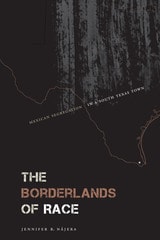
The Borderlands of Race
Mexican Segregation in a South Texas TownBy Jennifer R. Nájera
University of Texas Press, 2015
Throughout much of the twentieth century, Mexican Americans experienced segregation in many areas of public life, but the structure of Mexican segregation differed from the strict racial divides of the Jim Crow South. Factors such as higher socioeconomic status, lighter skin color, and Anglo cultural fluency allowed some Mexican Americans to gain limited access to the Anglo power structure. Paradoxically, however, this partial assimilation made full desegregation more difficult for the rest of the Mexican American community, which continued to experience informal segregation long after federal and state laws officially ended the practice.
In this historical ethnography, Jennifer R. Nájera offers a layered rendering and analysis of Mexican segregation in a South Texas community in the first half of the twentieth century. Using oral histories and local archives, she brings to life Mexican origin peoples’ experiences with segregation. Through their stories and supporting documentary evidence, Nájera shows how the ambiguous racial status of Mexican origin people allowed some of them to be exceptions to the rule of Anglo racial dominance. She demonstrates that while such exceptionality might suggest the permeability of the color line, in fact the selective and limited incorporation of Mexicans into Anglo society actually reinforced segregation by creating an illusion that the community had been integrated and no further changes were needed. Nájera also reveals how the actions of everyday people ultimately challenged racial/racist ideologies and created meaningful spaces for Mexicans in spheres historically dominated by Anglos.
The Chief Executive In Texas
A Study in Gubernatorial LeadershipBy Fred Gantt, Jr.
University of Texas Press, 1964
"A Texas governor has only two happy days: the day he is inaugurated and the day he retires."
So spoke Joseph D. Sayers at the beginning of the twentieth century. Now, in an analysis of the Texas governorship by Fred Gantt, Jr., the reader learns why Governor Sayers' remark remains true many years after it was uttered: the office has come to be so demanding that the reader may ask why anyone would want it. Price Daniel described a typical day: "The governor's job is a night-and-day job; I usually get up in the morning about seven and start answering the telephone, and then look over the mail that has come in late the day before. I sign mail before going over to the office and then have interviews most of the day. . . . In the evening at the Mansion I take calls and messages until late in the night."
The Chief Executive in Texas is much more than a book full of interesting facts: It is a discerning political commentary built on a broad historical foundation that places events and persons in a perspective perhaps not previously considered by the reader.
The office of chief executive in other states also is explored, as well as the decline and rise of executive power as it has been limited in various constitutions in Texas and as it has developed through custom. The account of the governor's relationship with the Legislature is historically valuable. Especially interesting to many readers will be the discussions of the political roles of individual Texas governors, whose ranks include "Ma" and "Pa" Ferguson and "Pappy" O'Daniel. These studies are personally revealing, and they attest that polities in Texas apparently can never be dull.
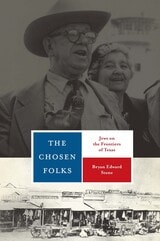
The Chosen Folks
Jews on the Frontiers of TexasBy Bryan Edward Stone
University of Texas Press, 2010
Texas has one of the largest Jewish populations in the South and West, comprising an often-overlooked vestige of the Diaspora. The Chosen Folks brings this rich aspect of the past to light, going beyond single biographies and photographic histories to explore the full evolution of the Jewish experience in Texas.
Drawing on previously unpublished archival materials and synthesizing earlier research, Bryan Edward Stone begins with the crypto-Jews who fled the Spanish Inquisition in the late sixteenth century and then discusses the unique Texas-Jewish communities that flourished far from the acknowledged centers of Jewish history and culture. The effects of this peripheral identity are explored in depth, from the days when geographic distance created physical divides to the redefinitions of "frontier" that marked the twentieth century. The rise of the Ku Klux Klan, the creation of Israel in the wake of the Holocaust, and the civil rights movement are covered as well, raising provocative questions about the attributes that enabled Texas Jews to forge a distinctive identity on the national and world stage. Brimming with memorable narratives, The Chosen Folks brings to life a cast of vibrant pioneers.
The City Moves West
Economic and Industrial Growth in Central West TexasBy Robert L. Martin
University of Texas Press, 1969
Where water supply, railway transportation, and oil reserves have been abundant, towns in central West Texas have prospered; where these resources are few, settlements have maintained only slight growth or disappeared entirely. Supporting his conclusions with profuse statistical evidence, Robert L. Martin traces the economic development of six major towns in the area, all with over 10,000 residents in 1960: Lamesa, Snyder, Sweetwater, Big Spring, Midland, and Odessa.
Ranching brought the first settlers to West Texas in the 1870s and dominated the economy until 1900. In the 1880s farmers began to arrive, and between 1900 and 1930 agricultural production replaced ranching as the most important industry.
With the influx of population came the railroad, and small settlements were established along its route. Those with sufficient water supply prospered and, as counties were organized, became county seats and supply centers for the surrounding agricultural regions.
The land could not support a large agricultural population, and agriculture-related manufactures soon drew population to the towns. However, it was not until the oil discoveries of the 1920's that the modern city emerged. After World War II, oil production and oil-related industries generated great wealth and caused a boom in population growth and urban development. Despite the growth in prosperity, the economy is precariously balanced. Urban centers dependent on oil—an industry of limited life—have matured in an area without sufficient water or agricultural resources to support them. Martin concludes that, without careful planning and a solution to the water problem, these cities could some day become ghost towns on the plains.
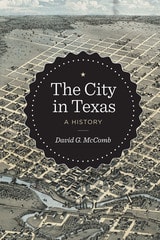
The City in Texas
A HistoryBy David McComb
University of Texas Press, 2015
Texans love the idea of wide-open spaces and, before World War II, the majority of the state’s people did live and work on the land. Between 1940 and 1950, however, the balance shifted from rural to urban, and today 88 percent of Texans live in cities and embrace the amenities of urban culture. The rise of Texas cities is a fascinating story that has not been previously told. Yet it is essential for understanding both the state’s history and its contemporary character.
In The City in Texas, acclaimed historian David G. McComb chronicles the evolution of urban Texas from the Spanish Conquest to the present. Writing in lively, sometimes humorous and provocative prose, he describes how commerce and politics were the early engines of city growth, followed by post–Civil War cattle shipping, oil discovery, lumbering, and military needs. McComb emphasizes that the most transformative agent in city development was the railroad. This technology—accompanied by telegraphs that accelerated the spread of information and mechanical clocks that altered concepts of time—revolutionized transportation, enforced corporate organization, dictated town location, organized space and architecture, and influenced thought. McComb also thoroughly explores the post–World War II growth of San Antonio, Dallas, Fort Worth, Austin, and Houston as incubators for businesses, educational and cultural institutions, and health care centers.
The Clifton-Morenci Strike
Labor Difficulty in Arizona, 1915–1916James R. Kluger
University of Arizona Press, 1970
Coming at a time when western labor was purging itself of radicalism and recharting its goals, the Clifton-Morenci strike may well have been that "milestone" in organized labor's groping for recognition in the West. Violence did not erupt- this notable absence of bloodshed thereby making the strike unique in that time of industrial turbulence.
Kluger's answer to the question of why and how peace prevailed is significant reading. Strikers and managers hurled charges at each other, but both sides showed restraint when it came to action. When negotiations reached an impasse, Gov. George W. P. Hunt moved to prevent the managers from importing strike-breakers. At the same time, the Department of Labor entered the situation, and the rise in copper prices and loss of wages made a settlement desirable for both sides.
When the mine whistles blew on January 26, 1916, to signal the end of the strike, the repercussions of the events of 1915 were still to be felt. Author Kluger traces how the strike affected working conditions, wages, and the cause of unionism in the district. Overall, he provides insight into feelings concerning the fears of management regarding unionism, and labor's manner of making itself heard during these years.
Western historians, labor historians, and all those concerned with labor relations will recognize the importance of this highly readable work.

The Conservative Frontier
Texas and the Origins of the New RightJeff Roche
University of Texas Press, 2025
2026 Al Lowman Memorial Prize, Texas State Historical Association (TSHA)
2026 Bonney MacDonald Outstanding Book Award Winner, Center for the Study of the American West at West Texas A&M University (CSAW)
How West Texas business and culture molded the rise of conservatism in the United States.
Much of what we understand as modern American political conservatism was born in West Texas, where today it predominates. How did the people of such a vast region—larger than New England and encompassing big cities like Lubbock and Amarillo, as well as tiny towns from Anson to Dalhart—develop such a uniform political culture? And why and how did it go national?
Jeff Roche finds answers in the history of what he calls cowboy conservatism. Political power players matter in this story, but so do football coaches, newspaper editors, and a breakfast cereal tycoon who founded a capitalist utopia. The Conservative Frontier follows these and other figures as they promoted an ideology grounded in the entrepreneurial and proto-libertarian attitudes of nineteenth-century Texas ranchers, including a fierce devotion to both individualism and small-town notions of community responsibility. This political sensibility was in turn popularized by its association with the mythology and iconography of the cowboy as imagined in twentieth-century mass media. By the 1970s and the rise of Ronald Reagan, Roche shows, it was clear that the cowboy conservatism of West Texas had set the stage for the emergence of the New Right—the more professionalized and tech-savvy operation that dominated national conservative politics for the next quarter century.

The Courthouses of Central Texas
By Brantley Hightower
University of Texas Press, 2015
The county courthouse has long held a central place on the Texas landscape—literally, as the center of the town in which it is located, and figuratively, as the symbol of governmental authority. As a county’s most important public building, the courthouse makes an architectural statement about a community’s prosperity and aspirations—or the lack of them. Thus, a study of county courthouses tells a compelling story about how society’s relationships with public buildings and government have radically changed over the course of time, as well as how architectural tastes have evolved through the decades.
A first of its kind, The Courthouses of Central Texas offers an in-depth, comparative architectural survey of fifty county courthouses, which serve as a representative sample of larger trends at play throughout the rest of the state. Each courthouse is represented by a description, with information about date(s) of construction and architects, along with a historical photograph, a site plan of its orientation and courthouse square, and two- and sometimes three-dimensional drawings of its facade with modifications over time. Side-by-side drawings and plans also facilitate comparisons between courthouses. These consistently scaled and formatted architectural drawings, which Brantley Hightower spent years creating, allow for direct comparisons in ways never before possible. He also explains the courthouses’ formal development by placing them in their historical and social context, which illuminates the power and importance of these structures in the history of Texas, as well as their enduring relevance today.

The Cross Timbers
Memories of a North Texas BoyhoodBy Edward Everett Dale
University of Texas Press, 1966
The activities of a young boy on a small farm in the Texas Cross Timbers during the 1880s seem especially distant today. No one can remember the adventure of a sixteen-and-a-half-mile journey, which consumed the greater part of a day; or hurried predawn dressing in a frosty cold loft while the fragrance of a hearty breakfast wafted upward through the floor cracks; or a two-room schoolhouse, where the last half of Friday afternoon was given over to “speaking pieces” or to spelling and ciphering matches.
Through the recollections of Edward Everett Dale we are able to view a pattern of life in rural America now gone forever. For The Cross Timbers is a story which, with but a few minor variations, could have been told about a vast number of small boys on farms cleared from the virgin forests in the timbered regions of many states.
After presenting a brief introduction to the members of the Dale family and the plant, animal, and bird life of the Lower Cross Timbers countryside, the author describes his boyhood of a past century. He tells of his home, its furnishings, and the food served there, as well as the neighbors and relatives who come to visit. We learn of the superstitions, the humorous homespun expressions, the mores of early rural Texans. We hunt and fish with young Master Dale in the thick woods and along the clear creeks. Pioneer life demanded much hard work, but not to the exclusion of a diverting social life—both of which included the youngsters, as the author so graphically relates. Dale tells us also of the religious and secular education of the era, showing the significance of the home in supplementing these two influences.
Anyone reading this volume must be impressed by the great differences in the lifeways of rural children today and of those of the end of the nineteenth century.
The Culture and Acculturation of the Delaware Indians
William W. Newcomb, Jr.
University of Michigan Press, 1956
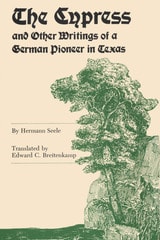
The Cypress and Other Writings of a German Pioneer in Texas
By Hermann Seele
University of Texas Press, 1979
When Hermann Seele anived in New Braunfels in 1845, the raw colony was plagued by poverty, disease, lack of food, and hostile Indians. This personal record of the Germans in Texas shows their evolution from struggling colonists to prosperous citizens.
From his viewpoint of a hardworking yet imaginative pioneer, Seele presents first a history of German immigration and settlement in Texas during the nineteenth century. Next, his autobiographical writings range from a "sentimental recollection" of his first Christmas Eve in Texas to his first day of teaching in New Braunfels, from accounts of the popular singing society to murder and justice along the Comal River. In addition, Seele's romantic novel, The Cypress, is a delightful though improbable tale of a traveling botanist, a chieftain's daughter, and a savage Indian cult.
Hermann Seele—farmer, lawyer, teacher, lay preacher, mayor, state representative, Civil War major, and editor—epitomizes the best of the German immigrants who established their communities as models of respectability and prosperity.

The Dallas Myth
The Making and Unmaking of an American CityHarvey J. Graff
University of Minnesota Press, 2010
In The Dallas Myth, Harvey J. Graff presents a novel interpretation of a city that has proudly declared its freedom from the past. He scrutinizes the city's origin myth and its governance ideology, known as the "Dallas Way," looking at how these elements have shaped Dallas and served to limit democratic participation and exacerbate inequality. Advancing beyond a traditional historical perspective, Graff proposes an original, integrative understanding of the city's urban fabric and offers an explicit critique of the reactionary political foundations of modern Dallas: its tolerance for right-wing political violence, the endemic racism and xenophobia, and a planning model that privileges growth and monumental architecture at the expense of the environment and social justice.
Revealing the power of myths that have defined the city for so long, Graff presents a new interpretation of Dallas that both deepens our understanding of America's urban landscape and enables its residents to envision a more equitable, humane, and democratic future for all.
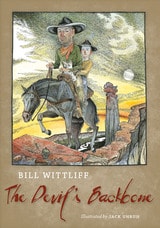
The Devil's Backbone
By Bill Wittliff, illustrated by Jack Unruh
University of Texas Press, 2014
The last the boy Papa saw of his Momma, she was galloping away on her horse Precious in the saddle her father took from a dead Mexican officer after the Battle of San Jacinto, fleeing from his Daddy, Old Karl, a vicious, tight-fisted horse trader. Momma’s flight sets Papa on a relentless quest to find her that thrusts him and his scrappy little dog Fritz into adventures all across the wild and woolly Hill Country of Central Texas, down to Mexico, and even into the realm of the ghostly “Shimmery People.” In The Devil’s Backbone, master storyteller Bill Wittliff takes readers on an exciting journey through a rough 1880s frontier as full of colorful characters and unexpected turns of events as the great American quest novel Adventures of Huckleberry Finn.
Wittliff grew up listening to stories and memories like these in his own family, and in this imaginative novel, they come to vivid life, creating an engrossing story of a Texas Huck Finn that brims with folk wisdom and sly humor. A rogue’s gallery of characters thwart and aid Papa’s path—Old Karl, hell-bent on bringing the boy back to servitude on his farm, and Herman, Papa’s brother who’s got Old Karl’s horse-trading instincts and greed; Calley Pearsall, an enigmatic cowboy with “other Fish to Fry” who might be an outlaw or a trustworthy “o’Amigo”; o’Jeffey, a black seer who talks to the spirits but won’t tell Papa what she has divined about his Momma; Mister Pegleg, a three-legged coyote with whom Papa forms a poignant, nearly tragic friendship; the “Mexkins” Pepe and Peto and their father Old Crecencio, whose longing for his lost family is as strong as Papa’s; and blind Bird, a magical “blue baby” who can’t see with his eyes but who helps other people see what they hold in their hearts. Papa’s adventures draw him ever nearer to a mysterious cave that haunts his dreams—an actual cave that he discovers at last in the canyons of the Devil’s Backbone—but will he find Momma before Old Karl finds him?
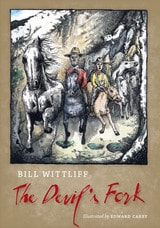
The Devil's Fork
By Bill Wittliff
University of Texas Press, 2018
The Devil’s Fork opens with the boy Papa exclaiming, “They was gonna hang my o’Amigo Calley Pearsall out there in front a’the Alamo down in San Antoneya come Saturday Noon and if I was gonna stop it I better Light a Shuck and Get on with it. And I mean Right Now.” And so Papa and his sweetheart Annie Oster set off to rescue Calley, thereby launching themselves into another series of hair-raising adventures.
The Devil’s Fork concludes the enthralling journey through wild and woolly Central Texas in the 1880s that began in The Devil’s Backbone and The Devil’s Sinkhole. Papa springs Calley from jail, but their troubles are far from over. Framed for murder, the two amigos have to flee for their lives. Joining their flight this time is o’Johnny, the evil Sheriff Pugh’s disabled little brother, who has uncanny abilities. Escaping danger for a while, Papa and Calley try to start a new life as horse traders, only to find themselves branded as horse thieves when o’Johnny and a mysterious white ghost horse begin rescuing abused horses from their masters. Can Papa and Calley escape the noose and save all the horses that Johnny and the White Horse liberate? Or will their own hot tempers send them down the Devil’s Fork, from which no one ever returns?
Proving himself a master storyteller once again, Bill Wittliff spins a yarn as engrossing as the stories his own Papa told him long ago, stories that inspired The Devil’s Backbone, The Devil’s Sinkhole, and The Devil’s Fork.

The Devil's Sinkhole
By Bill Wittliff; illustrated by Joe Ciardiello
University of Texas Press, 2016
When last we saw the boy Papa in The Devil’s Backbone, he had finally learned the fate of his missing Momma and his vicious daddy, Old Karl. But hardly has he concluded that quest before another one is upon him. Now a white-haired man with a hangman’s noose around his neck and death in his eye—o’Pelo Blanco—is coming. And he means to hang Papa.
In The Devil’s Sinkhole, the master storyteller Bill Wittliff takes us on another enthralling journey through wild and woolly Central Texas in the 1880s. When Papa and his o’amigo Calley Pearsall confront Pelo Blanco before he can ambush Papa, the encounter sets them on a pursuit with a promise of true love at the end, if only they can stay alive long enough for Calley to win the beautiful Pela Rosa, the captive/companion of Pelo Blanco. But before they can even hope to be united with Pela and Annie Oster, Papa’s plucky sweetheart, Papa and Calley have to defeat not only Pelo Blanco but also the evil, murdering Arlon Clavic and deliver Little Missey, the mysterious Wild Woman a’the Navidad, to the safe haven of the Choat farm. With dangers and emergencies around every bend, it’s a rough ride to the Devil’s Sinkhole, where this world and the next come together, bringing Papa and Calley, Pelo Blanco and Arlon to a climax that will leave readers clamoring for the next adventure.

The Discovery of New Mexico by the Franciscan Monk Friar Marcos de Niza in 1539
Adolph F. Bandelier; Translated and Edited by Madeleine Turrell Rodack
University of Arizona Press, 1980
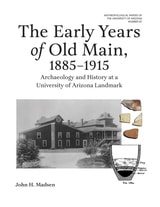
The Early Years of Old Main, 1885–1915
Archaeology and History at a University of Arizona LandmarkJohn H. Madsen
University of Arizona Press, 2026
The Early Years of Old Main, 1885–1915 details the archaeological discoveries revealed during the 2012–14 renovation of Old Main, which, due to its age and historic records, is on the National Register of Historic Places.
Thanks to detailed excavation work by a team of archaeologists, this work documents eight historic features of the building, ranging from equipment pads to drainage systems. Drawing on archaeological monitoring, artifact analysis, archival records, architectural drawings, and historic photographs, the narrative reconstructs how Old Main functioned during the university’s first decades and how its physical spaces supported early scientific instruction in mining, metallurgy, and agriculture.
More than a technical report, this volume offers a tangible glimpse into the material foundations of higher education in territorial and early statehood Arizona. Madsen’s careful documentation preserves knowledge of features that could not be saved during renovation and places them in the broader context of Old Main’s architectural evolution and its central role on campus. The result is an important resource for historians, archaeologists, preservationists, and anyone who values the University of Arizona’s heritage—demonstrating that even the most familiar buildings can still hold untold stories beneath their floors and landscapes.
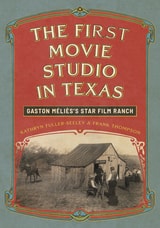
The First Movie Studio in Texas
Gaston Méliès's Star Film RanchKathryn Fuller-Seeley and Frank Thompson
University of Texas Press, 2026
The story of the Star Film Ranch and its pioneering crew, who created the first “authentic” Westerns filmed in Texas.
In 1910, the Méliès Star Film Company of Manhattan set up a moving-picture studio outside San Antonio, the first in Texas. Determined to make the most authentic Westerns possible, the company filmed there for a little over a year. In that brief time, it created more than seventy single-reel films, leaving a lasting mark on moviemaking.
Film historians Kathryn Fuller-Seeley and Frank Thompson return to a moment when on-location filmmaking was emerging as an artform. We meet producer Gaston Méliès, older brother of early-cinema legend Georges Méliès, and his cast and crew of young innovators, old hands, and genuine cowboys—like seventeen-year-old Edith Storey, the tomboy star who helped to ignite modern celebrity culture, and Francis Ford, who learned the art of film directing on the job and mentored his younger brother, Hollywood legend John Ford. The First Movie Studio in Texas traces the company’s trials and accomplishments, its influence on the depiction of race and gender in Western filmmaking, its surviving works, and its crowning achievement: The Immortal Alamo (1911), the earliest cinematic depiction of that famous battle.
Finally recovered from the shadows, the forgotten Méliès brother proves to be one of the key founders of the Western myth on screen.
The Garnsey Spring Campsite
Late Prehistoric Occupation in Southeastern New MexicoWilliam J. Parry and John D. Speth
University of Michigan Press, 1984

The Governor's Hounds
The Texas State Police, 1870–1873By Barry A. Crouch and Donaly E. Brice
University of Texas Press, 2011
In the tumultuous years following the Civil War, violence and lawlessness plagued the state of Texas, often overwhelming the ability of local law enforcement to maintain order. In response, Reconstruction-era governor Edmund J. Davis created a statewide police force that could be mobilized whenever and wherever local authorities were unable or unwilling to control lawlessness. During its three years (1870–1873) of existence, however, the Texas State Police was reviled as an arm of the Radical Republican party and widely condemned for being oppressive, arrogant, staffed with criminals and African Americans, and expensive to maintain, as well as for enforcing the new and unpopular laws that protected the rights of freed slaves.
Drawing extensively on the wealth of previously untouched records in the Texas State Archives, as well as other contemporary sources, Barry A. Crouch and Donaly E. Brice here offer the first major objective assessment of the Texas State Police and its role in maintaining law and order in Reconstruction Texas. Examining the activities of the force throughout its tenure and across the state, the authors find that the Texas State Police actually did much to solve the problem of violence in a largely lawless state. While acknowledging that much of the criticism the agency received was merited, the authors make a convincing case that the state police performed many of the same duties that the Texas Rangers later assumed and fulfilled the same need for a mobile, statewide law enforcement agency.

The Great Texas Stamp Collection
How Some Stubborn Texas Confederate Postmasters, a Handful of Determined Texas Stamp Collectors, and a Few of the World's Greatest Philatelists Created, Discovered, and Preserved Some of the World's Most Valuable Postage StampsBy Charles W. Deaton
University of Texas Press, 2012
Among the many difficulties the newly formed Confederate States of America endured in the summer of 1861 was the failure of its post office department to provide sufficient numbers of that item most crucial to its service: the postage stamp. Faced with the resulting din of customer complaints, a handful of industrious Texas postmasters solved the problem by simply making their own homemade stamps.
In this thoroughly researched history of these rare and highly coveted stamps, The Great Texas Stamp Collection traces their journey from creation through their rediscovery years later by local, and then international, stamp collectors—a journey that culminated in the sale of a few pieces at a recent auction in New York that fetched more than $250,000. Weaving the larger contexts of Texas and U.S. postal history together with individual tales of greed, intrigue, forgery, and discovery, Deaton’s book is rich with characters from European royalty to early stamp dealers to common criminals, while also providing detailed examinations of the stamps themselves, including a complete census of the stamps now known as the Texas Confederate Postmasters’ Provisionals.
Appealing at once to devoted philatelists, Texas and U.S. history buffs, and amateur collectors of all kinds, The Great Texas Stamp Collection offers a unique vantage point from which to view our history as well as the very nature of collecting.

The Great Texas Wind Rush
How George Bush, Ann Richards, and a Bunch of Tinkerers Helped the Oil and Gas State Win the Race to Wind PowerBy Kate Galbraith and Asher Price
University of Texas Press, 2013
In the late 1990s, West Texas was full of rundown towns and pumpjacks, aging reminders of the oil rush of an earlier era. Today, the towns are thriving as 300-foot-tall wind turbines tower above those pumpjacks. Wind energy has become Texas’s latest boom, with the Lone Star State now leading the nation. How did this dramatic transformation happen in a place that fights federal environmental policies at every turn? In The Great Texas Wind Rush, environmental reporters Kate Galbraith and Asher Price tell the compelling story of a group of unlikely dreamers and innovators, politicos and profiteers.
The tale spans a generation and more, and it begins with the early wind pioneers, precocious idealists who saw opportunity after the 1970s oil crisis. Operating in an economy accustomed to exploiting natural resources and always looking for the next big thing, their ideas eventually led to surprising partnerships between entrepreneurs and environmentalists, as everyone from Enron executives to T. Boone Pickens, as well as Ann Richards, George W. Bush and Rick Perry, ended up backing the new technology. In this down-to-earth account, the authors explain the policies and science that propelled the “windcatters” to reap the great harvest of Texas wind. They also explore what the future holds for this relentless resource that is changing the face of Texas energy.
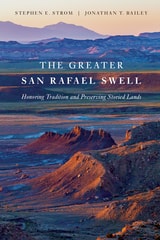
The Greater San Rafael Swell
Honoring Tradition and Preserving Storied LandsStephen E. Strom and Jonathan T. Bailey
University of Arizona Press, 2022
Natural and human history come together in The Greater San Rafael Swell, which spans much of Emery County in Utah. Authors Stephen Strom and Jonathan Bailey paint a multi-faceted picture of a singular place through photographs, along with descriptions of geology, paleontology, archaeology, history, and dozens of interviews with individuals who devoted more than two decades to developing a shared vision of the future of both the Swell and the County. At its core, the book relates the important story of how a coalition of ranchers, miners, off-road enthusiasts, conservationists, recreationists, and Native American tribal nations worked together for nearly 25 years to forge and pass the Emery County Public Lands Management Act in 2019.
This book chronicles hopeful stories for our times: how citizens of Emery and three other counties in the rural West worked to resolve perhaps the most volatile issue in the region – the future of public lands. Both their successes and the processes by which they found common ground serve as beacons in today’s uncertain landscape – beacons that can illuminate paths toward rebuilding our shared democracy from the ground up.
The Henderson Site Burials
Glimpses of a Late Prehistoric Population in the Pecos ValleyThomas R. Rocek and John D. Speth
University of Michigan Press, 1986

The House Will Come To Order
How the Texas Speaker Became a Power in State and National PoliticsBy Patrick L. Cox and Michael Phillips
University of Texas Press, 2010
In a state assumed to have a constitutionally weak governor, the Speaker of the Texas House wields enormous power, with the ability to almost single-handedly dictate the legislative agenda. The House Will Come to Order charts the evolution of the Speaker's role from a relatively obscure office to one of the most powerful in the state. This fascinating account, drawn from the Briscoe Center's oral history project on the former Speakers, is the story of transition, modernization, and power struggles.
Weaving a compelling story of scandal, service, and opportunity, Patrick Cox and Michael Phillips describe the divisions within the traditional Democratic Party, the ascendance of Republicans, and how Texas business, agriculture, and media shaped perceptions of officeholders. While the governor and lieutenant governor wielded their power, the authors show how the modern Texas House Speaker built an office of equal power as the state became more complex and diverse. The authors also explore how race, class, and gender affected this transition as they explain the importance of the office in Texas and the impact the state's Speakers have had on national politics.
At the apex of its power, the Texas House Speaker's role at last receives the critical consideration it deserves.
The LS Brand
The Story of a Texas Panhandle RanchBy Dulcie Sullivan; Introduction by Loula Grace Erdman.
University of Texas Press, 1968
In the spring of 1881, W. M. D. Lee and Lucien B. Scott, wealthy businessmen of Leavenworth, Kansas, purchased land in the upper Texas Panhandle to establish the Lee-Scott Cattle Company. Their range sprawled across four Texas counties and extended into eastern New Mexico. About six months later, fifty thousand head of mixed cattle, branded LS, grazed those thousands of acres of free grass.
This book is the story of Lee and Scott’s LS Ranch from the tempestuous years of the open range to the era of “bob wire.” It is also the story of the pioneer men and women whose efforts developed the LS into a cattle empire: W. M. D. and Lena Lee, Lucien and Julia Scott, “Mister Mac” and “Miss Annie” McAllister, and Charles and Pauline Whitman.
Here are accounts of chuck wagons and wagon bosses; prairie fires, blizzards, and bog holes; ranch management problems and cowboys on strike; lobo wolves and romance; wild sprees in Tascosa and its “Hogtown” sector; LS cowboys fighting against a gang of organized rustlers in a feud that ended in tragedy; and those same cowboys on the long trails to Dodge City and Montana.
Drawing upon stories told to her by men and women who were with the LS during the 1880’s and later years, Dulcie Sullivan presents her narrative in a clear, straightforward, but sympathetic manner that gives the reader a vivid sense of how life was really lived there in those times. Especially telling is her occasional use of an almost poetic incident: the steers bedding down around a campfire to listen to the chuck-wagon cook play his fiddle, or the suit of Spanish armor found in a spring, or the hail-battered trees attempting to renew themselves, despite their grotesque shapes.
The Labor Day Ghost
A Murder, Its Cover-Up, and the Long Road to JusticeCarol Dawson
University of Texas Press, 0
In Corsicana, Texas, Shelley Watkins, the charismatic young wife of Jerry Mack Watkins, disappeared on Labor Day, 1993; her body, tied and taped in plastic and chained to concrete blocks, was found in the Trinity River eight days later. Although a wealth of circumstantial evidence pointed toward Jerry Mack, corruption and its legacy have kept the investigation and legal proceedings in limbo for decades. Now, as DNA evidence offers hope for a long-overdue resolution, author Carol Dawson chronicles both one woman’s tragic story and the history of violence in small-town Texas.
Beginning with Shelley’s life before she arrived in Corsicana, Dawson reveals how her death perpetuates a Gothic history of crime within the town—including a devastating number of murdered women. She also delves into the closed culture of financial control and how the Watkins family became one of the town’s wealthiest, and pulls new details from the witnesses, cops, and prosecutors connected with a case that has haunted her for thirty years. Rooted in the complex history of author Carol Dawson’s hometown, and framed by her family connections to the case, The Labor Day Ghost delivers an arresting narrative that traces the way this tragedy has continued to split Corsicana’s citizenry during the long deferral of justice.
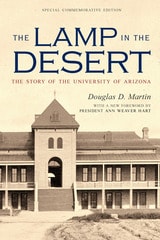
The Lamp in the Desert
The Story of the University of ArizonaDouglas D. Martin, With a New Foreword by President Ann Weaver Hart
University of Arizona Press, 1960
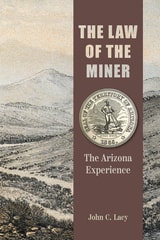
The Law of the Miner
The Arizona ExperienceJohn C. Lacy
University of Nevada Press, 2026
The first adventurers into the New World faced a fundamental legal challenge: how to secure rights to any mineral claims they discovered. Early conquistadors worked under charters that required them to return a portion of their findings to the Spanish crown, but those without such charters had no formal protection—and the crown was slow to clarify individual rights. This uncertainty only grew as miners pushed into the lands that would become the Western United States.
When gold was discovered in California, miners suddenly found themselves operating without any governing laws during the period between the end of the war with Mexico and the establishment of formal U.S. jurisdiction. In response, and without official sanction, they formed self-governing “mining districts,” best understood as mutual protection societies. These districts marked the first organized attempt to define boundaries and create rules for establishing and maintaining mining claims. As the early rushes in California and Nevada subsided, miners carried these practices with them into Arizona and other western territories.
In Arizona, no comprehensive collection of these early regulations has ever existed. The Law of the Mineraddresses this gap by tracing the development of mineral law in early Arizona and presenting the full text of every mining district regulation that could be found. This work serves both the mining industry and historians seeking to identify the individuals involved in creating the districts and to understand these districts’ historical boundaries.