Results by title
84 books match the query 'Special education' and 16 start with t
Teaching and Learning in Bilingual Classrooms
New ScholarshipKristin J. Mulrooney
Gallaudet University Press, 2014
After extensive SoTL training, the GSTLI professors reviewed interaction in their respective classrooms. Through meticulous study of class videos and written assignments in three General Studies Requirements courses for first-year students, the teachers learned how to ensure connecting with students who have a variety of language differences and communication methods.
The other professors assessed bottlenecks in classes on the linguistic structure of ASL, and on criminal justice. The linguistics professor identified the bottleneck as the students’ inability to conceptualize the interrelationship between definitions and examples, a fundamental skill to scientific thinking. In the criminal justice class, the professor saw the need to guide students through linguistic bottlenecks by providing materials in both ASL and English. The successes of the GSTLI presented in this unique volume can benefit other teachers by better preparing them to meet the needs of bilingual diverse learners in more effective ways.
Testing Deaf Students in an Age of Accountability
Robert C. Johnson
Gallaudet University Press, 2008
Despite the idealism represented by the No Child Left Behind law’s mandate for accountability in education, deaf students historically and on average have performed far below grade level on standardized tests. To resolve this contradiction in deaf education, this collection presents a spectrum of perspectives from a diverse corps of education experts to suggest a constructive synthesis of worthy ideals, hard realities, and pragmatic solutions. Contributors to this study include volume editors Robert C. Johnson and Ross E. Mitchell, Ed Bosso, Michael Bello, Betsy J. Case, Patrick Costello, Stephanie W. Cawthon, Joseph E. Fischgrund, Courtney Foster, Christopher Johnstone, Michael Jones, Jana Lollis, Pat Moore, Barbara Raimondo, Suzanne Recane, Richard C. Steffan, Jr., Sandra J. Thompson, Martha L. Thurlow, and Elizabeth Towles-Reeves.
These noted educators and researchers employ experiences from Massachusetts, Delaware, Maryland, North Carolina, Illinois and California to support their findings about the dilemma facing deaf students and their teachers. They assess the intent and flexibility of federal law; achievement data regarding deaf students; potential accommodations and universal design to make tests more accessible; possible alternatives for deaf student not ready for conventional assessments; accounts of varying degrees of cooperation and conflict between schools and state education departments; and the day-to-day efforts of teachers and school administrators to help deaf students measure up to the new standards. By presenting these wide-ranging insights together, Testing Deaf Students in an Age of Accountability provides a unique opportunity to create genuine means to educate deaf students for the only test that matters, that of life.
The Accidental Teacher
Life Lessons from My Silent SonAnnie Lubliner Lehmann
University of Michigan Press, 2009
"Jonah Lehmann is an accidental teacher of others, including his family and friends. This personal and touching account of Jonah's life is enlightening, especially to those coming to terms with similar challenges with autism and other cognitive disabilities. It was written with love to support research on autism, and I recommend it to anyone and everyone touched by those of us who are different."
---Patricia E. Kefalas Dudek, Legal Advocate for People with Disabilities
"I have never read a book about a disabled person that caught me from page one. I could not put this one down. Lehmann offers a profound perspective on living with the reality of a severely disabled child. This book will be required reading for students who take my class in Special Education Administration."
---Frances LaPlante-Sosnowsky, Associate Professor of Education at Wayne State University
"A story of the astonishing power of human love and family triumph over hardship. Lehmann's story, engaging and at times both heartbreaking and joyful, offers an intimate view of one mother's journey as she works with professionals and a blur of caregivers to assist the ever-changing needs of her son. I highly recommend it to seasoned professionals in the field of autism and students preparing for careers in special education."
---Janet E. Graetz, Assistant Professor of Human Development and Child Studies at Oakland University
A child teaches without intending to . . .
Having severe autism does not stop Annie Lehmann's son Jonah from teaching her some of life's most valuable lessons. The Accidental Teacher, a heartfelt memoir about self-discovery rather than illness, uses insight and humor to weave a tale rich with kitchen-table wisdom. It explains the realities of life with a largely nonverbal son and explores the frustrations and triumphs of the Lehmann family as Jonah grew into a young adult. This book is a must-read for anyone who has been personally touched by a major life challenge.
Annie Lubliner Lehmann, a freelance writer for more than twenty-five years, has published articles in many newspapers and magazines, including the New York Times and Detroit Free Press. She resides in Michigan with her husband and two of her three children. Her eldest son, who inspired this memoir, is now a young adult with autism who lives in a supervised home.

The Arachnean and Other Texts
Fernand Deligny
University of Minnesota Press, 2013
The network as a mode of being
In 1968, Fernand Deligny established a “network” for informally taking care of children with autism that was more than a mere site of living; it was a milieu created out of a reflection on the mode of being autistic. What is a space perceived outside of language? What is the form of a movement without perspective or goal? How do we engage with a world that is not our own, a world turned upside down yet truly common, where acting cohabitates with our actions and the unknown with our forms of knowledge? Such is the mythical web of the “Arachnean,” made of lines, holes, traces, enigmas, and questions without answers that demand to see that which cannot be seen. The Arachnean and Other Texts is a collection of Deligny’s writings from the second half of the 1970s. Long before the digital age of social networks, meshworks, and digital webs, Deligny speaks to us in his own autobiographical and aphoristic manner. For him, life was always experienced in the form of “the network as a mode of being.”g.”
The Art of Being Deaf
A MemoirDonna McDonald
Gallaudet University Press, 2014
Born in 1950s Australia, McDonald was placed in an oral deaf school when she was five. There, she was trained to communicate only in spoken English. Afterwards, she attended mainstream schools where she excelled with speechreading and hard work. Her determination led to achievements that proved her to be “the deaf girl that had made good.” Yet, despite her constant focus on fitting in the hearing world, McDonald soon realized that she missed her deaf schoolmates and desired to explore her closed-off feelings about being deaf.
When she reconnected with her friends, one urged her to write about her experiences to tell all about “the Forgotten Generation, the orally-raised deaf kids that no one wants to talk about.” In writing her memoir, McDonald did learn to reconcile her deaf-self with her “hearing-deaf” persona, and she realized that the art of being deaf is the art of life, the art of love.
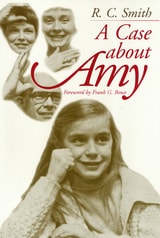
The Case About Amy
R. C. Smith, foreword by Frank G. Bowe
Temple University Press, 1996
The Rowley family's struggle began when Amy entered kindergarten and culminated five years later in a pivotal decision by the U.S. Supreme Court. In effect, the Court majority concluded that the Individuals with Disabilities Education Act did not mandate equal opportunity for children with disabilities in classes with typical children; a disappointing decision for disability advocates.
The Supreme Court decided that schools were required only to provide enough help for children with disabilities to pass from grade to grade. The Court reversed the lower courts' rulings, which had granted Amy an interpreter, setting a precedent that could affect the quality of education for all individuals with disabilities.
From the time Amy entered kindergarten in Peekskill, New York, her parents battled with school officials to get a sign language interpreter in the classroom. Nancy and Clifford Rowley, also deaf, struggled with officials for their own right to a communications process in which they could fully participate. Stuck in limbo was a bright, inquisitive child, forced to rely on partial lipreading of rapid classroom instruction and interaction, and sound amplifiers that were often broken and always cumbersome.
R.C. Smith chronicles the Rowley family's dealings with school boards, lawyers, teachers, expert consultants, advocates, and supporters, and their staunch determination to get through the exhaustive process of presenting the case time after time to school adjudicative bodies and finally the federal courts. The author also documents his own "coming to awareness" about how the "able" see the "disabled."
In the series Health, Society, and Policy, edited by Sheryl Ruzek and Irving Kenneth Zola.

The Enduring Effects of Prenatal Alcohol Exposure on Child Development
Birth Through Seven Years, a Partial Least Squares SolutionAnn P. Streissguth, Helen M. Barr, Fred L. Bookstein, and Paul D. Sampson
University of Michigan Press, 1993
Counseling on the dangers of consuming alcohol in pregnancy is now embedded in clinical practice. However, it took foundational research such as the 1974/75 Seattle Longitudinal Prospective Study on Alcohol and Pregnancy, analyzed in this book, to demonstrate the negative effects. This Seattle study interviewed 1,529 women in their fifth month of pregnancy regarding their alcohol consumption and many other pregnancy risk factors. A subsample of 500 of these women was selected, of whom half represented an oversampling of heavier drinkers and smokers from the 1,529, and their offspring were studied intensively as neonates and at ages 8 and 18 months and 4 and 7 years. This monograph is a summary of the effects of prenatal alcohol exposure upon a total of 474 outcome measures spanning those ages. The authors show that the effects of prenatal alcohol exposure manifest at all ages, from birth to seven years, that they appear on a variety of behavioral measures, and that they do not attenuate with time. They also show that binge drinking has more serious consequences than the same amount of heavy drinking, and drinking in early pregnancy has more serious consequences than the same reported pattern of drinking in mid-pregnancy. The book concludes that there is no statistical evidence for a “risk-free” or threshold level of prenatal drinking.
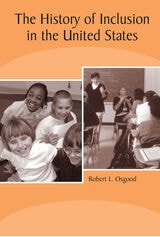
The History of Inclusion in the United States
Robert L. Osgood
Gallaudet University Press, 2005
As a significant term, inclusion came into use relatively recently in the long history of special education in the United States. Since the 1800s, when children with disabilities first were segregated for instruction in public schools, professionals and parents have called for more equitable, “normal” treatment of these students, and for closer contact with their nondisabled peers. Through the years, the central issues of the discussions between educators and parents have focused on who should be considered disabled and who should bear responsibility for planning and providing for their education. The History of Inclusion in the United States traces the antecedents of this ongoing debate to answer questions about what inclusion is, how it came to be, and where it might go.
In this comprehensive study, author Robert L. Osgood reveals how the idea of inclusion has evolved into broader realms of thought and practice. In its earliest manifestations, educators dwelled upon the classroom setting itself, wondering whether “disabled” children belonged there; if not, why not; and if so, how this could be accomplished? By the late 1960s, the scope of the discussion had shifted to assess the comprehensive structures of special education and its relationship with general education. The History of Inclusion seamlessly follows this progression into the present decade, in which current educational policy questions the need for any sort of separate “special education” in principle and structure.

The History of Special Education
From Isolation to IntegrationMargret A. Winzer
Gallaudet University Press, 1993

The Proper Way to Educate the Deaf
A Modern Annotated TranslationThe Abbé Charles-Michel de l’Epée
Gallaudet University Press, 2024
De l’Épée provides an anecdotal account of his methods and philosophy for educating deaf children using a sign system based on the French Sign Language of the era but adapted to visually represent the linguistic features of spoken and written French. His work laid the foundation for the use of the “manual method,” or sign language, in deaf education. One section of the text, originally published in Latin, outlines the intellectual clash between de l’Épée and Samuel Heinicke, an early proponent of oral education who contested the use of sign language.
De l’Épée’s text holds significant cultural and historical value for the fields of deaf studies and deaf education. This English language translation reveals de l’Épée’s own story of how he came to be known as the “father of the deaf” and is enriched by scholarly contributions that provide essential historical context and a framework for modern understanding.
The Role of the Educational Interpreter
Perceptions of Administrators and TeachersStephen B. Fitzmaurice
Gallaudet University Press, 2021
Through a series of qualitative interviews and quantitative questionnaires with district administrators, school administrators, general education teachers, and teachers of the deaf, Fitzmaurice documents their perceptions of educational interpreters. Findings from the data reveal the perceptions of administrators and teachers set the stage for role ambiguity, role conflicts, and subsequent role overload for educational interpreters. Fitzmaurice elaborates on the implications of the research, and also provides concrete recommendations for researchers and practitioners, including an emphasis on the importance of involving the Deaf community in this work. This volume aims to offer clarity on the role of the educational interpreter, and dispel the confusion and conflicts created by divergent perspectives. A shared understanding of the role of the educational interpreter will allow administrators, teachers, and interpreters to work collaboratively to improve educational outcomes for deaf students.

The Signed English Starter
Harry Bornstein
Gallaudet University Press, 1984
The organization of the volume facilitates learning. It provides a basic, functional sign vocabulary; a systematic progression in the use of the 14 sign markers; discussion of the unique features of a manual English system; a glossary of terms; and a page of exercises following each of the 12 chapters in the book. The words have been selected to be of most value to young children.
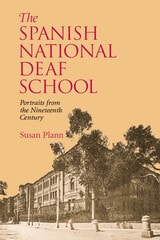
The Spanish National Deaf School
Portraits from the Nineteenth CenturySusan Plann
Gallaudet University Press, 2007
In nineteenth-century Spain, the education of deaf students took shape through various contradictory philosophies and practices. Susan Plann depicts this ambivalence by profiling a select group of teachers and students in her detailed history The Spanish National Deaf School: Portraits from the Nineteenth Century.
Plann’s subjects reveal the political, financial, and identity issues that dominated the operation of the National School for Deaf-Mutes and the Blind in Madrid from 1805 to1899. Roberto Francisco Prádez y Gautier, the first deaf teacher in Spain, taught art from 1805–36; he also was the last deaf teacher for the next 50 years. Juan Manuel Ballesteros, the hearing director from 1835 to1868, enacted an “ableist” policy that barred deaf professors. At the same time, another hearing teacher, Francisco Fernández Villabrille, wrote the first Spanish Sign Language dictionary. In the 1870s, two deaf students, Manuel Tinoco and Patricio García, resisted the physical abuse they received and set the stage for the growth of a Deaf identity that opposed the deprecating medical model of deafness. Marcelina Ruiz Ricote y Fernández a hearing female teacher who taught from 1869 to 1897, combated the school’s sexist polices. The Spanish National Deaf School concludes with Martín de Martín y Ruiz, the most famous deaf-blind student from the Madrid school. Through these portraits, Plann has brought life to the major issues that defined education in nineteenth-century Spain, themes that have influenced the status of deaf Spaniards today.
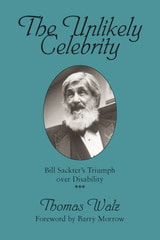
The Unlikely Celebrity
Bill Sackter's Triumph over DisabilityThomas Walz. Foreword by Barry Morrow
Southern Illinois University Press, 1998
Thomas Walz tells the story of Bill Sackter, a man who spent nearly half a century in a Minnesota mental institution and emerged to blossom into a most unlikely celebrity. Bill Sackter was committed to the Faribault State Hospital at the age of seven, there to remain until he was in his fifties. At the time of his commitment, Bill’s father had recently died; thus his sole contact with his family came through rare letters from his mother.
Some years after his discharge from Faribault as a result of the movement to deinstitutionalize the mentally ill in the 1960s, Bill enjoyed a serendipitous encounter with a young college student and part-time musician, Barry Morrow. Bill became part of the Morrow family and a regular in Morrow’s music group. When Morrow accepted a job at the School of Social Work at the University of Iowa, Bill followed him to Iowa City and was put in charge of a small coffee service.
Bill became an important part of the University of Iowa community, and Wild Bill’s Coffeeshop developed into an institution. A cheerful man of great good will who was a harmonica virtuoso, Bill began to inspire affectionate legends, and his life as a celebrity began in earnest. He was named Iowa’s Handicapped Person of the Year in 1977, and two television movies were made about his life—Bill, which earned Emmy awards for cowriter Barry Morrow and Mickey Rooney (as Bill) in 1981, and Bill on His Own in 1983. Years later, Morrow would earn an Oscar for his script of Rain Man.
Through vignettes ranging from hilarious to near tragic. Walz reveals a remarkable human being. An account of Bill's life in an institution is necessarily part of the story, but there is much more: Bill’s role in helping a young child recover from a coma, his menagerie of friends, his love for a pet parakeet, his late-life Bar Mitzvah, his failure as a woodworker, his success as Santa, and his dignified death at the age of seventy.
The Unteachables
Disability Rights and the Invention of Black Special EducationKeith A. Mayes
University of Minnesota Press, 2023
How special education used disability labels to marginalize Black students in public schools
The Unteachables examines the overrepresentation of Black students in special education over the course of the twentieth century. As African American children integrated predominantly white schools, many were disproportionately labeled educable mentally retarded (EMR), learning disabled (LD), and emotionally behavioral disordered (EBD). Keith A. Mayes charts the evolution of disability categories and how these labels kept Black learners segregated in American classrooms.
The civil rights and the educational disability rights movements, Mayes shows, have both collaborated and worked at cross-purposes since the beginning of school desegregation. Disability rights advocates built upon the opportunity provided by the civil rights movement to make claims about student invisibility at the level of intellectual and cognitive disabilities. Although special education ostensibly included children from all racial groups, educational disability rights advocates focused on the needs of white disabled students, while school systems used disability discourses to malign and marginalize Black students.
From the 1940s to the present, social science researchers, policymakers, school administrators, and teachers have each contributed to the overrepresentation of Black students in special education. Excavating the deep-seated racism embedded in both the public school system and public policy, The Unteachables explores the discriminatory labeling of Black students, and how it indelibly contributed to special education disproportionality, to student discipline and push-out practices, and to the school-to-prison pipeline effect.
Turning the Tide
Making Life Better for Deaf and Hard of Hearing SchoolchildrenGina A. Oliva
Gallaudet University Press, 2014
Turning the Tide presents a qualitative study of deaf and hard of hearing students who attended mainstream schools. The authors conducted three focus groups in different regions in the country, enlisting six to eight participants with diverse backgrounds for each session. They also gathered information from 113 online respondents who answered the same questions used in the focus groups. The respondents discussed many issues, including the difficulties of finding friends and social access, the struggle to establish an identity, the challenges of K-12 interpreting and class placement, and the vast potential of summer and weekend programs for deaf students. Their empowering stories clearly demonstrate that no deaf or hard of hearing student should be educated alone. The authors also elicited comments on other changes that parents, advocates, and other allies could work toward to improve further the educational environment of deaf children.