Results by title
63 books match the query 'Statistics' and 16 start with t
The American People
Census 2000Reynolds Farley
Russell Sage Foundation, 2005
The Cult of Statistical Significance
How the Standard Error Costs Us Jobs, Justice, and LivesStephen T. Ziliak and Deirdre N. McCloskey
University of Michigan Press, 2010
“McCloskey and Ziliak have been pushing this very elementary, very correct, very important argument through several articles over several years and for reasons I cannot fathom it is still resisted. If it takes a book to get it across, I hope this book will do it. It ought to.”
—Thomas Schelling, Distinguished University Professor, School of Public Policy, University of Maryland, and 2005 Nobel Prize Laureate in Economics
“With humor, insight, piercing logic and a nod to history, Ziliak and McCloskey show how economists—and other scientists—suffer from a mass delusion about statistical analysis. The quest for statistical significance that pervades science today is a deeply flawed substitute for thoughtful analysis. . . . Yet few participants in the scientific bureaucracy have been willing to admit what Ziliak and McCloskey make clear: the emperor has no clothes.”
—Kenneth Rothman, Professor of Epidemiology, Boston University School of Health
The Cult of Statistical Significance shows, field by field, how “statistical significance,” a technique that dominates many sciences, has been a huge mistake. The authors find that researchers in a broad spectrum of fields, from agronomy to zoology, employ “testing” that doesn’t test and “estimating” that doesn’t estimate. The facts will startle the outside reader: how could a group of brilliant scientists wander so far from scientific magnitudes? This study will encourage scientists who want to know how to get the statistical sciences back on track and fulfill their quantitative promise. The book shows for the first time how wide the disaster is, and how bad for science, and it traces the problem to its historical, sociological, and philosophical roots.
Stephen T. Ziliak is the author or editor of many articles and two books. He currently lives in Chicago, where he is Professor of Economics at Roosevelt University. Deirdre N. McCloskey, Distinguished Professor of Economics, History, English, and Communication at the University of Illinois at Chicago, is the author of twenty books and three hundred scholarly articles. She has held Guggenheim and National Humanities Fellowships. She is best known for How to Be Human* Though an Economist (University of Michigan Press, 2000) and her most recent book, The Bourgeois Virtues: Ethics for an Age of Commerce (2006).
The Evolution of Investing at the University of Michigan
1817–2016Rafael E. Castilla and William P. Hodgeson
Michigan Publishing Services, 2017
The Future of Meta-Analysis
Kenneth W. Wachter
Russell Sage Foundation, 1990

The Great Encyclopedia of Nineteenth-Century Major League Baseball
David Nemec
University of Alabama Press, 2006
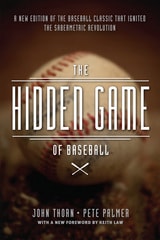
The Hidden Game of Baseball
A Revolutionary Approach to Baseball and Its StatisticsJohn Thorn, Pete Palmer, with David Reuther
University of Chicago Press, 2015
The new gospel promulgated by Thorn and Palmer opened the door for a flood of new questions, such as how a ballpark’s layout helps or hinders offense or whether a strikeout really is worse than another kind of out. Taking questions like these seriously—and backing up the answers with data—launched a new era, showing fans, journalists, scouts, executives, and even players themselves a new, better way to look at the game.
This brand-new edition retains the body of the original, with its rich, accessible analysis rooted in a deep love of baseball, while adding a new introduction by the authors tracing the book’s influence over the years. A foreword by ESPN’s lead baseball analyst, Keith Law, details The Hidden Game’s central role in the transformation of baseball coverage and team management and shows how teams continue to reap the benefits of Thorn and Palmer’s insights today. Thirty years after its original publication, The Hidden Game is still bringing the high heat—a true classic of baseball literature.
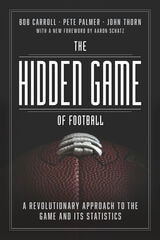
The Hidden Game of Football
A Revolutionary Approach to the Game and Its StatisticsBob Carroll, Pete Palmer, and John Thorn
University of Chicago Press, 2023
Data analytics have revolutionized football. With play sheets informed by advanced statistical analysis, today’s coaches pass more, kick less, and go for more two-point or fourth-down conversions than ever before. In 1988, sportswriters Bob Carroll, Pete Palmer, and John Thorn proposed just this style of play in The Hidden Game of Football, but at the time baffled readers scoffed at such a heartless approach to the game. Football was the ultimate team sport and unlike baseball could not be reduced to pure probabilities. Nevertheless, the book developed a cult following among analysts who, inspired by its unorthodox methods, went on to develop the core metrics of football analytics used today: win probability, expected points, QBR, and more. With a new preface by Thorn and Palmer and a new foreword by Football Outsiders’s Aaron Schatz, The Hidden Game of Football remains an essential resource for armchair coaches, fantasy managers, and fans of all stripes.
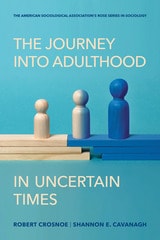
The Journey into Adulthood in Uncertain Times
Robert Crosnoe
Russell Sage Foundation, 2025
Drawing on both quantitative and qualitative survey data over five decades, Crosnoe and Cavanagh find that young adults are, in fact, waiting longer to take on “real” adult roles, such as worker or parent. However, this is not out of a reluctance to grow up. Instead, increased inequality and changes in the economy have forced young people to adapt their lives in new ways. Young adults are now spending more time in school, have more trouble finding their footing in the labor force, and consequently postpone getting married and having children. They also mix and match roles in more complicated ways now than in the past—going back and forth between school and work over longer periods of time or disconnecting parenthood from their romantic relationships. While the period from late teens to mid-twenties does look different now than in the past, the change has been slow and steady rather than a dramatic shift due to social crises. The Great Recession, for example, had a more muted effect on young people’s social and economic attainment and family formation than fears of a lost generation would suggest.
Crosnoe and Cavanagh find that while the panic over young adults today may be somewhat overblown, this conclusion should not obscure some clear concerns. Young adults do struggle with their social and emotional wellbeing. They are more depressed than their counterparts in previous generations, drink less alcohol in ways that suggest less engagement with social life, and express deep distrust of social institutions and the idea of the American Dream. The authors argue that worries about the state of young adulthood today should trigger more reflection about how to support young people rather than how to fix them.
The Journey into Adulthood in Uncertain Times is a comprehensive and illuminating examination of the challenges faced by contemporary young adults.
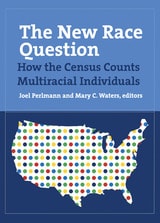
The New Race Question
How the Census Counts Multiracial IndividualsJoel Perlmann
Russell Sage Foundation, 2002
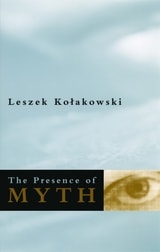
The Presence of Myth
Leszek Kolakowski
University of Chicago Press, 1989
With The Presence of Myth, Kolakowski demonstrates that no matter how hard man strives for purely rational thought, there has always been-and always will be-a reservoir of mythical images that lend "being" and "consciousness" a specifically human meaning.
"Kolakowski undertakes a philosophy of culture which extends to all realms of human intercourse—intellectual, artistic, scientific, and emotional. . . . [His] book has real significance for today, and may well become a classic in the philosophy of culture."—Anglican Theological Review

The Reference Guide to Data Sources
Julia Bauder
American Library Association, 2014
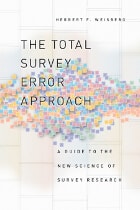
The Total Survey Error Approach
A Guide to the New Science of Survey ResearchHerbert F. Weisberg
University of Chicago Press, 2005
Herbert F. Weisberg's handbook presents a unified method for conducting good survey research centered on the various types of errors that can occur in surveys—from measurement and nonresponse error to coverage and sampling error. Each chapter is built on theoretical elements drawn from specific disciplines, such as social psychology and statistics, and follows through with detailed treatments of the specific types of error and their potential solutions. Throughout, Weisberg is attentive to survey constraints, including time and ethical considerations, as well as controversies within the field and the effects of new technology on the survey process—from Internet surveys to those completed by phone, by mail, and in person. Practitioners and students will find this comprehensive guide particularly useful now that survey research has assumed a primary place in both public and academic circles.
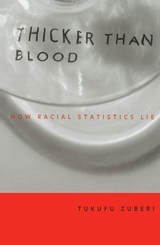
Thicker Than Blood
How Racial Statistics LieTukufu Zuberi
University of Minnesota Press, 2003
A hard-hitting investigation of the racist uses of statistics—now in paperback!
Tukufu Zuberi offers a concise account of the historical connections between the development of the idea of race and the birth of social statistics. Zuberi describes how race-differentiated data are misinterpreted in the social sciences and asks searching questions about the ways racial statistics are used. He argues that statistical analysis can and must be deracialized, and that this deracialization is essential to the goal of achieving social justice for all.
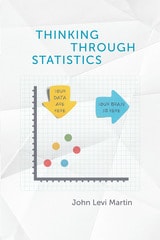
Thinking Through Statistics
John Levi Martin
University of Chicago Press, 2018
Martin argues that the task of social statistics isn't to estimate parameters, but to reject false theory. He illustrates common pitfalls that can keep researchers from doing just that using a combination of visualizations, re-analyses, and simulations. Thinking Through Statistics gives social science practitioners accessible insight into troves of wisdom that would normally have to be earned through arduous trial and error, and it does so with a lighthearted approach that ensures this field guide is anything but stodgy.
Toward Social Reporting
Next StepsOtis Dudley Duncan
Russell Sage Foundation, 1969
Towards Better Reproductive Health in Eastern Europe
Concern, Commitment, and ChangeWHO Scientific Working Group WHO Scientific Working Group
Central European University Press, 1998
Documenting the latest statistical data on current problems related to reproductive health issues in Central and Eastern Europe, this text explores the reasons for these problems and recommends action based on the scientific evidence for improving reproductive health.
The main issues covered are: declining standards of reproductive health care; rising trends in the incidence of sexually transmitted diseases; low rates of use of modern contraceptives; high rates of induced abortion; high prevalence of infertility; and the needs of adolescents with regard to reproductive health.