Results by title
428 books match the query 'Stories' and 87 start with t
Tales of Texas Cooking
Stories and Recipes from the Trans Pecos to the Piney Woods and High Plains to the Gulf PrairiesFrances Brannen Vick
University of North Texas Press, 2015
Teach the Free Man
StoriesPeter Nathaniel Malae
Ohio University Press, 2007
The twelve stories in Teach the Free Man mark the impressive debut of Peter Nathaniel Malae. The subject of incarceration thematically links the stories, yet their range extends beyond the prison’s barbed wire and iron bars. Avoiding sensationalism, Malae exposes the heart and soul in those dark, seemingly inaccessible corridors of the human experience.
The stories, often raw and startlingly honest, are distinguished by the colloquial voices of California’s prison inmates, who, despite their physical and cultural isolation, confront dilemmas with which we can all identify: the choice to show courage against peer pressure; the search for individual rights within a bureaucracy; and the desperate desire for honor in the face of great sacrifice. These stories present polished and poetic examples of finding something redemptive in the least among us.
The book’s epigraph by W. H. Auden, from which the book takes its title, exemplifies the spirit of these dynamic stories:
In the deserts of the heart
Let the healing fountain start.
In the prison of his days
Teach the free man how to praise.
Teaching Lives
Essays & StoriesWendy Bishop
Utah State University Press, 1997
Tell Me
StoriesJoe Baumann
Northwestern University Press, 2024
Queer stories about love, loneliness, the surreal, and the self
The stories in Tell Me feature queer men of various ages reckoning with loneliness, selfishness, and the struggle for self-discovery and identity. In “The Vanisher,” a young bisexual man struggling with his own desire to be seen receives a bandana that allows him to become invisible. In “Retreat,” a widower travels to an artists’ colony to seek an audience with his recently deceased husband. And in “We Are Rendered Silent,” people lose their ability to speak when a man they love dies. Through Baumann’s inventive employment of the strange and surreal, these stories set out to explore the bizarre and often confounding experience of navigating modern-day queerness. With his unique voice and magnificent imagination, Baumann fully immerses readers in the queer experience.
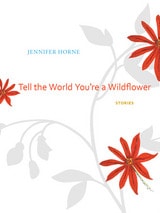
Tell the World You're a Wildflower
StoriesJennifer Horne
University of Alabama Press, 2014
In Tell the World You’re a Wildflower, each character must decide what to tell, whether to tell it, and to whom to tell it. Each struggles with questions of identity and truth, trying to understand who she is and what holds true for her. Some tell their stories plainly, directly, others more obliquely, nesting one within another. Anchored in the tradition of southern storytelling, these women contend with loss, change, and growth while going to church, school, and prison, navigating love and sex, and worrying too much about what people might think.
Yet these women generally refuse to behave, and they wander in and out of each other’s stories just like people do in small towns across the South. Small town lives are always interconnected: your third-grade teacher is your new neighbor’s aunt and the boy you dated your senior year falls from political grace after being caught in a hot tub with your second cousin. Though they may have had little say in where they were planted, Horne’s protagonists nevertheless do their best to bloom.
Rich, multifaceted, and unforgettable, Tell the World You’re a Wildflower is the work of a veteran explorer of the twentieth and twenty-first century South. Horne’s quest to understand her culture through decades of reading and observing has now yielded these narratives that imaginatively and insightfully enter the hearts and minds of southern women.
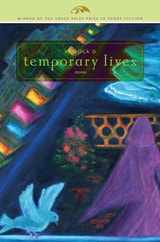
Temporary Lives
StoriesRamola Dharmaraj
University of Massachusetts Press, 2010
In the title story, Rose Ammal, who married young and bore numerous children, survives her husband's betrayal and religious conversion by creating her own private redemptions and conversions. "The Next Corpse Collector" chronicles significant moments in the lives of two young brothers, Anwar and Amir, who seek to escape the destiny of corpse
collector, the job their father is determined to bequeath to them. "What the Watchman Saw" offers a glimpse into the life of Venkatesh, a longtime watchman who is faced with the dilemma of whether to report the theft of stolen antiquities from the house of his new neighbor.
"Esther" is a tale of the haunting, troubled spirit of Leeza's grandmother, who lingers in Leeza's childhood home and unexpectedly helps her during the summer her grandfather dies as she wakes to an adolescent infatuation with a neighbor boy. In "The Couple in the Park," a young middle-class wife, Laura, in a constrictive arranged marriage, finds comfort in watching a couple in the park who remind her of her own grandparents as she tips over the edge into schizophrenia. "The Man on the Veranda" traces a significant day in the life of retired government-worker Parameswaran—the day his wife finally leaves him.
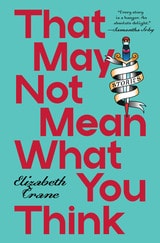
That May Not Mean What You Think
StoriesElizabeth Crane
Northwestern University Press, 2026
A visionary and profound new collection from innovative author Elizabeth Crane
Throughout her body of work, Elizabeth Crane’s literary vision has always been singular and innovative, twisting form and bending reality into new universes. Her latest collection, That May Not Mean What You Think, explores themes of aging and youth, gender and discrimination, and sex and love. In “Training Module,” Crane takes the structure and protocol of workplace harassment prevention training and turns it on its head; “The Box” tells the story of a woman trying to recover from divorce with the help of a literal unicorn; and “The Youngs” follows a group of teenagers experiencing loss for the first time, clinging to the belief that they’ll live forever. Across these delightfully weird and disarmingly truthful stories, American culture is refracted through humor and heart, asking readers to consider their complicity and to imagine new possibilities of participating in a better future.
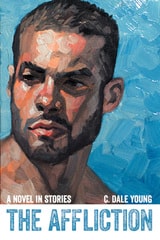
The Affliction
A Novel in StoriesC. Dale Young
Four Way Books, 2018
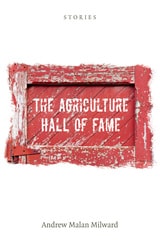
The Agriculture Hall of Fame
StoriesAndrew Malan Milward
University of Massachusetts Press, 2012
These powerful stories limn the complexities and dilemmas of life in Kansas, a state at “the center of the center of America,” as a billboard in one story announces. Andrew Malan Milward explores the less visible aspects of the Kansas experience—where its agrarian past comes into conflict with the harsh present reality of drugs, fundamentalism, and corporatism, relegating its agrarian identity to museums and amusement parks.
Presented in a triptych, the stories in Milward's debut collection range across a varied terrain, from tumbledown rural barns to modern urban hospitals, revealing the secrets contained therein.
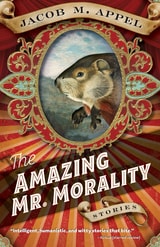
The Amazing Mr. Morality
StoriesJacob M. Appel
West Virginia University Press, 2018
The Amazing Mr. Morality features tenacious men and women whose determination to buck middle-class social convention draws them toward unforeseen challenges. A failed television producer insists upon having a woodchuck relocated from his lawn, only to receive desperate letters in which the woodchuck begs to return. An overconfident ne’er-do-well obtains a lucrative lecture invitation intended for a renowned ornithologist and decides to deliver the speech himself. An innocuous dispute over whether to rename a local street opens up racial fault lines that prove deadly.
The collection concludes with the title novella in which two unscrupulous ethicists, writing rival newspaper columns, seek to unseat each other by addressing questions such as: If you’re going to commit a murder, is it worse to kill when the victim is sleeping or awake?
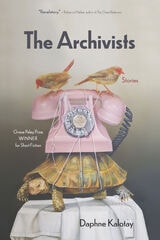
The Archivists
StoriesDaphne Kalotay
Northwestern University Press, 2023
Longlisted for the 2024 Joyce Carol Oates Prize
Longlisted for the 2024 Massachusetts Book Award
The characters in The Archivists are everyday people, but when private losses or the shocks of history set their worlds reeling, they find connection and liberation in surprising, buoyant ways. This vibrant collection brings transcendence, wry humor, and a touch of the uncanny to life’s absurdities and catastrophes—whether the 2008 economic crash, fallout after the 2016 presidential election, gentrification, pandemic lockdown, illness, or the intergenerational impacts of the Holocaust and Communist occupation of Eastern Europe.
A hardheaded realist is confronted by both her mortality and a would-be wizard. A thirteen-year-old girl in 1950s Toronto infiltrates the ranks of Bell Canada. A ninety-nine-year-old woman appears to be invincible. A group hikes in Germany, and a solitary woman is pursued on a walk in New Mexico. These deeply moving stories ingeniously consider issues of identity, history, and memory and our shared search for meaning in an off-kilter world.
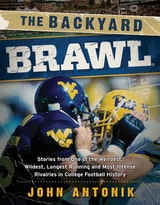
The Backyard Brawl
Stories from One of the Weirdest, Wildest, Longest Running, and Most Instense Rivalries in College Football HistoryJohn Antonik
West Virginia University Press, 2012
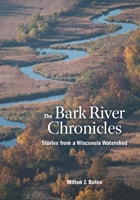
The Bark River Chronicles
Stories from a Wisconsin WatershedMilton J. Bates
Wisconsin Historical Society Press, 2012
The Bark River valley in southeastern Wisconsin is a microcosm of the state's - indeed, of the Great Lakes region's - natural and human history. "The Bark River Chronicles" reports one couple's journey by canoe from the river's headwaters to its confluence with the Rock River and several miles farther downstream to Lake Koshkonong. Along the way, it tells the stories of Ice Age glaciation, the effigy mound builders, the Black Hawk War, early settlement and the development of waterpower sites, and recent efforts to remove old dams and mitigate the damage done by water pollution and invasive species.
Along with these big stories, the book recounts dozens of little stories associated with sites along the river. The winter ice harvest, grain milling technology, a key supreme court decision regarding toxic waste disposal, a small-town circus, a scheme to link the Great Lakes to the Mississippi River by canal, the murder of a Chicago mobster, controversies over race and social class in Waukesha County's lake country, community efforts to clean up the river and restore a marsh, visits to places associated with the work of important Wisconsin writers - these and many other stories belong to the Bark River chronicles.
For the two voyageurs who paddle the length of the Bark, it is a journey of rediscovery and exploration. As they glide through marshes, woods, farmland, and cities, they acquire not only historical and environmental knowledge but also a renewed sense of the place in which they live. Maps and historical photographs help the reader share their experience.
The Bolero of Andi Rowe
StoriesToni Margarita Plummer
Northwestern University Press, 2011
Set largely in Los Angeles’s San Gabriel Valley, and crossing generations and borders, these stories focus on the quiet moments between explosions, where tension simmers just beneath the surface. From a Border Patrol agent whose own mother crossed the border illegally to a lonely woman seeking companionship with her hired day-laborer, characters seek revelation in the most ordinary of experiences, their actions filled with humor, longing, and honesty.
In the tradition of Flannery O’Connor, Toni Margarita Plummer explores themes of grace and redemption as each story spirals toward a surprising but inevitable conclusion. The Bolero of Andi Rowe, an impressive work by an exciting new talent, offers a compassionate look at the struggle between meeting cultural expectations and seeking happiness, and the sacrifices and triumphs made along the way.
The Book of Bauer
Stories from a Forgotten TownStephen S. Lottridge
University of Utah Press, 2023
Graffiti-covered industrial concrete ruins are all that remain today to remind us of the lives, adventures, and human relationships that once animated Bauer, Utah. Located just south of Tooele, across the Oquirrh Mountains west of the Salt Lake Valley, Bauer was abandoned in 1979 and declared a toxic waste site. The Book of Bauer: Stories from a Forgotten Town brings it back to life, evoking mid-twentieth century family and community in that company town as seen through the eyes of an observant adolescent boy.
Presenting a dramatic snapshot of life in Bauer in narrative autobiographical form, the book recalls the fate of hundreds of derelict mining towns throughout the mountain and sagebrush West. With vivid prose and intimate observation, The Book of Bauer offers an unparalleled memoir of small-town life in Utah and the Great Basin.
The Book of Mating
StoriesLaksmi Pamuntjak, Annie Tucker
Northwestern University Press, 2027
Winner of the Humanities in Translation Prize
The Book of Mating is a masterfully translated collection of stories in which Indonesian women explore the full spectrum of mating: marital, sexual, and spiritual; forced and free; transcendent, ruinous, and mundane. Laksmi Pamuntjak portrays both the constraints and opportunities facing women caught between the enduring restrictions of local norms and hierarchies and the tantalizing promises of globalized modern life, between internalized myths and social realities.
An experimental melding of Pamuntjak’s creative, journalistic, and activist work, these stories read as urgent dispatches from the Indonesian archipelago and diaspora—and as universal narratives of women’s lived experiences. Annie Tucker’s nuanced translation takes us from the prison island of Buru and the Bogor Botanical Gardens to Paris’s Left Bank, offering a polyphonic testament to the universal fight for women’s autonomy over their bodies and their lives.

The Canadian Shields
Stories and EssaysCarol Shields
University of Manitoba Press, 2024
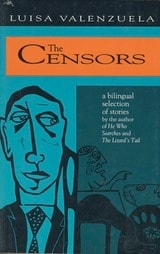
The Censors
A Bilingual Selection of StoriesLuisa Valenzuela
Northwestern University Press, 1995
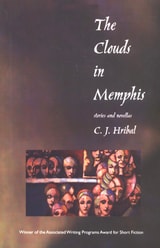
The Clouds in Memphis
Stories and NovellasC. J. Hribal
University of Massachusetts Press, 2000
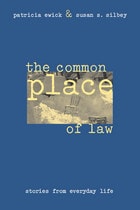
The Common Place of Law
Stories from Everyday LifePatricia Ewick and Susan S. Silbey
University of Chicago Press, 1998
One narrative is based on an idea of the law as magisterial and remote. Another views the law as a game with rules that can be manipulated to one's advantage. A third narrative describes the law as an arbitrary power that is actively resisted. Drawing on these extensive case studies, Ewick and Silbey present individual experiences interwoven with an analysis that charts a coherent and compelling theory of legality. A groundbreaking study of law and narrative, The Common Place of Law depicts the institution as it is lived: strange and familiar, imperfect and ordinary, and at the center of daily life.
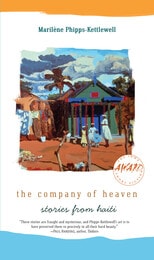
The Company of Heaven
Stories from HaitiMarilène Phipps-Kettlewell
University of Iowa Press, 2010
Marilène Phipps-Kettlewell’s award-winning stories transport you to Haiti—to a lush, lyrical, flamboyant, and spirit-filled Haiti where palm trees shine wet with moonlight and the sky paints a yellow screen over your head and the ocean sparkles with thousands of golden eyes—and keep you there forever. Her singular characters mysteriously address the deeper meanings of human existence. They also dream of escape, whether from themselves, from family, from Vodou, from financial and cultural difficulties and the politicians that create them, or from the country itself, but Haiti will forever remain part of their souls and part of the thoughts of her readers.
Some characters do achieve escape through the mind or through sea voyage—escape found by surrendering to spectacular fantasies and madness and love, bargaining with God, joining the boat people. Marie-Ange Saint-Jacques’s mother sacrifices everything to ensure her daughter’s survival on a perilous boat trip, Angelina waits to fly away to Nou Yòk, Vivi creates her own circus with dozens of rescued dogs, Gustave dies a martyr to his faith. Throughout, the “I” who moves in and out of these dream-filled stories embraces the heavenly mysteries found in “the room where all things lost are stored with grace.”
We begin our journey to Haiti with images of a little girl in a pink bedroom reading by candlelight a book about the life of Saint Bernadette, surrounded by the bewitching scents, sounds, and textures of a Caribbean night. Each story stands by itself, but some characters can be followed from one story to another through the transformations they undergo as a result of their life experiences. In this way, the collection can be read as one story, the story of a family trapped in a personal and cultural drama and the story of the people with whom the family interacts, themselves burdened by the need to survive within Haiti’s rigorously class-determined society and blessed by their relationship to the company of heaven in which they live and for which they are destined.
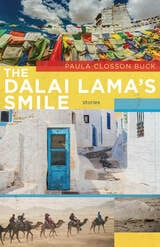
The Dalai Lama's Smile
StoriesPaula Closson Buck
Acre Books, 2025
A grieving American father visits Dharamsala to investigate the murder of the son he’s never understood and finds himself delving into the mystery of the young man’s life. A Turkish-Cypriot teacher is tasked with making an inventory of household goods in an occupied tourist resort the inhabitants have fled. A Greek sculptor whose marriage is failing covers for a student from the US who, instead of learning the art, engages in an affair. A Buddhist nun enlists the help of a Peace Corps worker to kill a suffering dog. A wannabe eco-activist in Kentucky writes confessional letters to Boyan Slat, the young CEO of The Ocean Cleanup. A woman in a Rajasthan tourist caravan bears helpless witness to a dire culture clash.
As Closson Buck’s characters encounter circumstances that challenge their understanding of themselves and the world around them, they are forced to negotiate fallout stemming from religious dogma, environmental crisis, and political violence. Ranging from fabulism to realism, the stories in The Dalai Lama’s Smile invite us to explore the perils and the possibilities that come from engaging the unknown.

The Darkrooms of Edith Tudor-Hart
Stories of a LifePeter Stephan Jungk
Haus Publishing, 2026
A portrait of one of Britain's foremost documentary photographers—and her long career as a Soviet agent.
Why did you get yourself into this, Edith? Was it all worth it?
Born and raised in a liberal Jewish family in Vienna, Edith Tudor-Hart’s legacy is defined by her pioneering social photography and her pivotal role in the recruitment of Kim Philby as a Soviet agent. Arrested for her involvement with socialist groups, Edith immigrated to England in 1933 to escape political and religious persecution. There, her photography came to reflect her socialist ideals, and her clandestine work for the Soviet Union meant she would spend the rest of her life under the suspicion and close surveillance of MI5.
The Darkrooms of Edith Tudor-Hart is the culmination of Peter Stephan Jungk’s enduring fascination with his cousin’s life. His vivid portrait reveals a woman whose life was shrouded in secrecy and whom—in his confession to MI5 a decade before Edith’s death—the Soviet spy Anthony Blunt called ‘the grandmother of us all.’

The Detroit River
Stories of Development and Industrialization, 1874–1912Richard Gebhart
Michigan State University Press, 2027
Covering the period from the first government survey of the treacherous Limekiln Crossing to the completion of the Livingstone Channel, The Detroit River tells the story of the industrial transformation of the city’s most important waterway.
The Disappearance
A Novella and StoriesIlan Stavans
Northwestern University Press, 2008
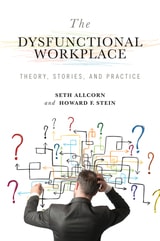
The Dysfunctional Workplace
Theory, Stories, and PracticeSeth Allcorn and Howard F. Stein
University of Missouri Press, 2015
This book explores an aspect of organizational life that is at times difficult to acknowledge and often painful to recall. Stories invite reflection and the development of greater understanding of organizational dynamics. This fresh scholarship provides a theoretical framework for discussion. Throughout this book, Allcorn and Stein utilize a psychoanalytically informed perspective to help readers understand why a leader, colleague or friend behaves in ways that are destructive of others and the organization and provides a basis for organizations to survive and thrive in a dysfunctional workplace.
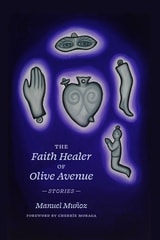
The Faith Healer of Olive Avenue
StoriesManuel Muñoz and Cherríe Moraga
Northwestern University Press, 2025
From the divergent paths of triplet brothers to a grieving father confronting his mistreatment of his son, these stories interweave a recurring cast of neighborhood characters, many of them in search of escape or release. Lauded for its empathetic portrayals of communities often ignored, The Faith Healer of Olive Avenue won a Whiting Award and an O. Henry Award; it was shortlisted for the Frank O’Connor International Short Story Award as one of the best collections published in English worldwide. A new foreword by author and activist Cherríe Moraga gives testament to Muñoz’s status as “the cartographer of a people.”
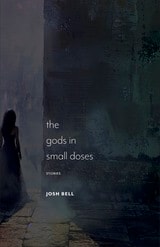
The Gods in Small Doses
StoriesJosh Bell
University of Massachusetts Press, 2026
The magical and mundane twist together in this collection of surreal stories
In this collection of stories set in an uncanny American suburbia and haunted by a lurking unease, the peculiar feeling of ephemeral youth finds its voice. The stories in The Gods in Small Doses depict childhood through a funhouse mirror, as a time of myth and damage, of tenderness and terror. Anything—except what should happen—can happen next.
A retired witch traps a goat-killing feral child, a girl becomes obsessed with the regenerative properties of her younger brother’s body, Armageddon is fought between the forces of good (those who like to go to bed early) and evil (those who prefer to stay up late), a supernatural orphan insinuates his way into an all-American family, the god Poseidon wrecks a high-school house party, and the women of a fabulated island city all mysteriously disappear overnight. In these fast, comic, and troubling tales, sweetness and violence vie to become synonymous.
This is a universe of both realism and surrealism, of magic and the mundane, where strong but deeply flawed characters fight to exert control over things—time, death, themselves—that can’t be controlled. Dreamlike moments of body horror, catastrophe, and absurdity challenge the reader to embrace the taboo and to expect—always—the unexpected. Bell’s stories offer a twisted, unique, and utterly fascinating take on what it means to “grow up,” and all of the questions that the notion inspires.
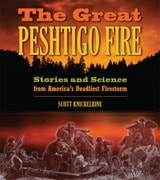
The Great Peshtigo Fire
Stories and Science from America’s Deadliest FireScott Knickelbine
Wisconsin Historical Society Press, 2012
On the night of October 8, 1871, a whirlwind of fire swept through northeastern Wisconsin, destroying the bustling frontier town of Peshtigo. Trees, buildings, and people burst into flames. Metal melted. Sand turned into glass. People thought the end of the world had come. When the “tornado of fire” was over, 2,500 people were dead, and Peshtigo was nothing but a smoking ruin. It was the deadliest wildfire in U.S. history.
The Great Peshtigo Fire: Stories and Science from America’s Deadliest Firestorm explores the history, science, and legacy of the 1871 Peshtigo Fire at a fourth-grade reading level. Readers will learn about the history of settlement, agriculture, and forestry in 19th-century Wisconsin. This illuminating text covers a diverse range of topics that will enrich the reader’s understanding of the Peshtigo Fire, including the building and land-use practices of the time that made the area ripe for such a fire, the weather patterns that fostered widespread fires throughout the upper Midwest in the summer and fall of 1871, and exciting first-person accounts that vividly bring the `victims’ stories to life. Connections made between the Peshtigo Fire and the history of fire prevention in the United States encourage critical thinking about issues that remain controversial to this day, such as planned burns and housing development restrictions near forested areas. The Great Peshtigo Fire: Stories and Science from America’s Deadliest Firestorm will inform and captivate its readers as it journeys through the horrifying history of the Peshtigo Fire.
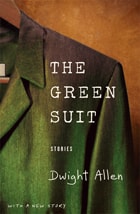
The Green Suit
StoriesDwight Allen
University of Wisconsin Press, 2011
This edition of Dwight Allen’s acclaimed story collection, The Green Suit, ends with a new story, rounding out a dozen interlinked tales about a well-to-do Kentucky family called the Sackriders. The stories cover a period of forty years, from the Vietnam War to the Age of Foreclosure. Chief among the Sackriders is Peter, son of a judge and a vitamin-pill-popping mother, brother to a sister whose troubles with boys take her far from Kentucky. He is a writer perhaps more in love with women (and, intermittently, men) than he is with words, whose eagerness to be loved leads him into alarming circumstances. He is a man with a yearning for transcendence and a penchant for betrayal.
The new story finds Sackrider in his mid-fifties, married for a second time, the father of a small child, and all tangled up with his next-door neighbor, an artist who likes to use the corpses of animals in his collages.

The Guantanamo Files
The Stories of the 774 Detainees in America's Illegal PrisonAndy Worthington
Pluto Press, 2007
Deprived of the safeguards of the Geneva Conventions, and, for the most part, sold to the Americans by their allies in Afghanistan and Pakistan, the detainees have struggled for five years to have their stories heard. Looking in detail at the circumstances of their capture, and at the coercive interrogations and unsubstantiated allegations that have been used to justify their detention. Stories of torture in Afghanistan and Guantanamo are uncovered, as well as new information about the process of 'extraordinary rendition' that underpins the US administration's 'war on terror'.
Who will speak for the 773 men who have been held in Guantanamo? This passionate and brilliantly detailed book brings their stories to the world for the first time.
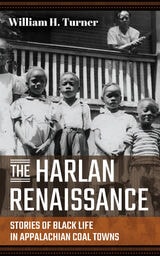
The Harlan Renaissance
Stories of Black Life in Appalachian Coal TownsWilliam H. Turner
West Virginia University Press, 2021
The Harlan Renaissance is an intimate remembrance of kinship and community in eastern Kentucky’s coal towns written by one of the luminaries of Appalachian studies, William Turner. Turner reconstructs Black life in the company towns in and around Harlan County during coal’s final postwar boom years, which built toward an enduring bust as the children of Black miners, like the author, left the region in search of better opportunities.
The Harlan Renaissance invites readers into what might be an unfamiliar Appalachia: one studded by large and vibrant Black communities, where families took the pulse of the nation through magazines like Jet and Ebony and through the news that traveled within Black churches, schools, and restaurants. Difficult choices for the future were made as parents considered the unpredictable nature of Appalachia’s economic realities alongside the unpredictable nature of a national movement toward civil rights.
Unfolding through layers of sociological insight and oral history, The Harlan Renaissance centers the sympathetic perspectives and critical eye of a master narrator of Black life.
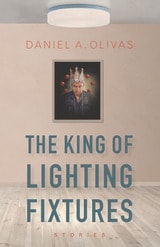
The King of Lighting Fixtures
StoriesDaniel A. Olivas
University of Arizona Press, 2017
The characters here represent all walks of L.A. life—from Satan’s reluctant Craigslist roommate to a young girl coping with trauma at her brother’s wake—and their tales ebb and flow among various styles, including magical realism, social realism, and speculative fiction. Like a jazz album, they glide and bop, tease and illuminate, sadden and hearten as they navigate effortlessly from meta to fabulist, from flash fiction to longer, more complex narratives.
These are literary sketches of a Los Angeles that will surprise, connect, and disrupt readers wherever they may live.
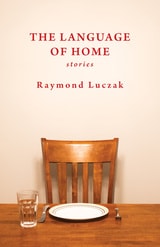
The Language of Home
StoriesRaymond Luczak
Gallaudet University Press, 2025
This short story collection offers readers many possible answers that reveal the Deaf experience in all its complexities. Written over nearly forty years by celebrated Deaf author Raymond Luczak, this collection of thirty stories paints a vivid panorama of Deaf lives. From a young DeafBlind boy feeling lost within his hearing family to a hearing son of Deaf parents caught between their infighting and a hearing mother realizing in the split second of her own death the full impact of the missteps she has taken while raising her Deaf son, Luczak crafts narratives that resonate with authenticity. Other stories feature an ASL interpreter feeling conflicted about a Deaf neighbor and a Deaf woman who becomes blacklisted as a backstabber. These characters often navigate the murky waters of the hearing world, sometimes with a touch of ASL gloss. The Language of Home is an exciting literary contribution that offers rare, nuanced representations of Deaf characters.
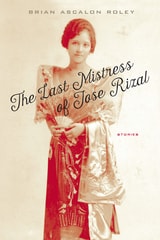
The Last Mistress of Jose Rizal
StoriesBrian Ascalon Roley
Northwestern University Press, 2016
Roley’s work has been praised by everyone from New York Times literary critics to APIA author Helen Zia for his bare, poetic style and raw emotionalism. In the collection’s title story, a woman living with her daughter and her daughter’s American husband fears the loss of Filipino tradition, especially Catholicism, as she tries to secretly permeate her granddaughter’s existence with elements of her ancestry. In "New Relations," an American-born son introduces his mother to his Caucasian bride and her family, only to experience his first marital discord around issues of politesse, the perception of culture, and post-colonial legacies. Roley’s delicately nuanced collection often leaves the audience with the awkwardness that comes from things lost in translation or entangled in generational divides.

The Lex Rex Effect
Stories of a Conservative Pursuing JusticeAsa Hutchinson
University of Arkansas Press, 2027
Lex rex—Latin for “the law is king”—expresses a foundational principle of human liberty: that the law, rather than the will of any individual ruler, is the ultimate governmental authority. This principle was at the heart of the American Revolution and remains essential to the functioning and endurance of America today. For 250 years, the United States has been tested by political conflict, social change, and institutional challenges, yet the rule of law has remained central to the nation’s constitutional order.
Asa Hutchinson’s distinguished career—as a former US attorney, member of the US House of Representatives, administrator of the Drug Enforcement Administration, under secretary of Homeland Security, and governor of Arkansas—offers a unique perspective from which to examine the lasting significance of lex rex in contemporary America.
Drawing on Hutchinson’s work at the intersection of law, politics, and public service, The Lex Rex Effect explores how the principles of law, justice, and constitutional government underpin democracy. Through personal stories and thoughtful analysis, Hutchinson considers the forces that sustain our democracy and argues for the perennial importance of a system in which the law—not an autocrat’s whim—reigns supreme in the land.
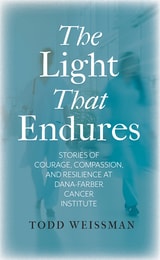
The Light That Endures
Stories of Courage, Compassion, and Resilience at Dana-Farber Cancer InstituteTodd Weissman
University of Massachusetts Press, 2026
Showing that everyday people offer the deepest, most relatable lessons in grace
Offering an intimate glimpse into the lives of individuals connected to one of the world’s foremost centers for cancer care and research, The Light That Endures reveals how ordinary people at Boston’s Dana-Farber Cancer Institute demonstrate extraordinary resilience in the face of life’s most challenging moments. Through eight captivating profiles, readers meet a world-renowned pediatric oncologist who rode on horseback at Eisenhower’s inauguration, delivered a secret message in Soviet-controlled Czechoslovakia, and hosted the future King of England; a florist-turned-nurse-turned-teacher whose life changed drastically after a chance encounter on a train; an administrator who has faced adversity his entire life, from a violent father, to confronting his own identity, to being held up at gunpoint; a teenage patient whose battle with cancer was just one of many challenges he has navigated; and a woman who, despite spending her life bringing comfort to others, wonders whether she’s been enough as she reflects after a terminal diagnosis.
These remarkable people, diverse in their backgrounds, share a common bond through cancer and Dana-Farber, that much is obvious. However, it is their quiet acts of grace and service—woven into both their professional paths and personal journeys—that more deeply unite them. Their stories reveal a deeper truth: despite hardship and loss, the arc of life bends toward goodness. Fractured childhoods, family estrangement, mental health strains, winding career paths, and the ever-present shadow of self-doubt are not just obstacles but catalysts. The individuals profiled have found hope and meaning in community and their work, shaping lives of purpose, service, and gratitude. More than a recounting of lives touched by cancer, The Light That Endures is a celebration of the profound impact of compassion and human connection. It captures the essence of Dana-Farber’s ethos, where a shared mission of care fosters an environment of empathy and hope.
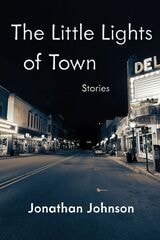
The Little Lights of Town
StoriesJonathan Johnson
Carnegie Mellon University Press, 2025
In The Little Lights of Town, acclaimed poet and memoirist Jonathan Johnson turns to fiction, bringing to life the rugged landscapes and tightly knit communities of Michigan’s Upper Peninsula. Against the backdrop of Lake Superior’s cold, untamed shores, his characters navigate love, loss, and the relentless pull of home.
From those who choose to stay despite the ever-present shadow of isolation to those searching for connection in a land where nature looms larger than life, these stories illuminate the quiet urgencies of human existence. With prose as lyrical as it is unflinching, Johnson visualizes a place where the past lingers in the streets, and where even in the darkest winters, little lights continue to shine.
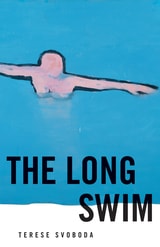
The Long Swim
StoriesTerese Svoboda
University of Massachusetts Press, 2024
A runaway circus lion haunts a small town where two lovers risk more than their respective marriages. A junket to Cuba and an ambassador’s dalliance with a niece hide dark secrets and political revolution. “I’ve always had a knife,” says the unstable stepson to his parents. Inventive, dark, and absurd, the stories in The Long Swim capture Terese Svoboda’s clear-eyed, wry angle on the world: a place of violence and uncertainty but also wild beauty, adventure, and love both lasting and ephemeral. Her characters strive for escape—through romance, travel, or more self-destructive pursuits—and collide with the constraints of family and home, their longing for freedom and autonomy often at odds with the desire for safety and harmony.
Cynical, irreverent, and formally daring, Svoboda’s stories in The Long Swim are a deft exploration of womanhood and humanity. Waves of provocation and wonder toss the reader and leave them wanting more.
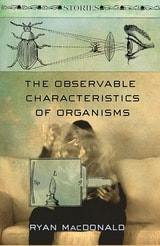
The Observable Characteristics of Organisms
StoriesRyan MacDonald
University of Alabama Press, 2014
As MacDonald says, “I think what I’m after in the stories as well as in the video work is finding an experiential moment, nothing really stable, something pleasantly unstable, or uncomfortable . . . purposefully pleasant uncomfortable instability with moments of tenderness and definitely humor. Certainly nothing concrete, unless it needs that. A certain fear of and respect for banality. I’m after a good time, which can often turn into a really bad time, but either way, one we’ll remember forever.”
Despite the range of circumstances they reveal, these stories are unified by a brightness of vision, deft observation, and consistently sharp, funny, and unbridled language.
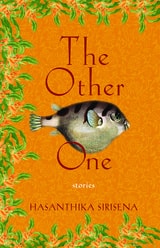
The Other One
StoriesHasanthika Sirisena
University of Massachusetts Press, 2016
Set in Sri Lanka and America, the ten short stories in this debut collection feature characters struggling to contend with the brutality of a decades-long civil war while also seeking security, love, and hope. The characters are students, accountants, soldiers, servants. They are immigrants and strivers. They are each forced to make sometimes comic, sometimes tragic, choices. What they share, despite what they've endured, is the sustaining power of human connection.
An excerpt from the book:
“All I want to know is when you are coming? When are you bringing my sons, my family?”
She watched as a gecko, tinier than normal, skittered across the far wall. It disappeared into a small crack. The room was very hot, and she hadn't turned on the ceiling fan so that the family could save a little money. She took a handkerchief from her nightstand and wiped the beads of sweat from her forehead and the back of her neck.
“I can't leave malli alone here. He's making progress but—”
“It will be for two years only. Then you can sponsor him.”
“The lawyer says it's not so easy.”
“He's a grown man. Let the government take him. The government did this to malli. Let the government pay the price for his care.”
Even though there was no chance that her brother Ranjith could hear her, Anoja dropped her voice. “Malli is all alone here. He has nobody but aiya and me.”
The Pillow Museum
StoriesClaire Bateman
University of Alabama Press, 2025
A collection of 56 flash fictions, micro-essays, and contemporary fables about the burden on women and families.
The Pillow Museum is a collection of 56 flash fictions, micro-essays, and contemporary fables set in various simulacra of our world. Claire Bateman’s gorgeous prose captures the imagination with closely observed details of people and places that are startlingly familiar yet unreal, where nothing can be taken for granted, including narrative logic: "It was snowing the night they had the fight about the glass piano whose music provided all the light in the house."
In an authoritative voice that offers no apologies or justifications, The Pillow Museum evokes a closely observed slipstream strangeness that refuses to take any moment or detail for granted—a fruitful, delirious disruption.
The Prisoner Pear
Stories from the LakeElissa Minor Rust
Ohio University Press, 2005
The twelve stories in The Prisoner Pear: Stories from the Lake take place in an affluent suburb of Portland, Oregon, but they could be taken from any number of similar enclaves across the United States. These stories infuse stark reality with occasional hints of magical realism to explore what the American dream means to twenty-first-century suburbanites. In a city where the homecoming queen still makes the front page of the weekly newspaper, ducks caught in storm drains and stolen campaign signs make up the bulk of the paper’s crime reports. The community’s hidden complexities, however, rival those of Sherwood Anderson’s Winesburg, Ohio.
Each of the stories begins with an entry from the newspaper’s police blotter. Elissa Minor Rust fills in the background to these small, odd events-a headless parakeet found in a mailbox, a nude jogger, an alarmingly deathlike discarded teddy bear. Her stories, both humorous and disturbing, probe beneath the clear, hard surface of a community into the murky depths beneath.
The lake at the center of town is a constant in the lives of this town’s people, and it reappears throughout the book as a symbol of wealth and power, of love and loss. The Prisoner Pear offers a rare look inside the heart of suburban America. Reading these stories is, as one character observes, “like seeing the town from the inside out, as if the lake was its heart and the rest merely its bones and skin.”

The Python Killer
Stories of Nzema LifeVinigi L. Grottanelli
University of Chicago Press, 1988
In twenty absorbing vignettes, The Python Killer renders a vivid portrayal of Nzema life. An unobtrusive observer, Grottanelli gives center stage to the Nzema narrators who tell their own vibrant, delightful, and mystical stories. This exotic world of coconut groves, nza (palm wine), cassava, and poisonous snakes is inhabited by a people who believe in sinister witches, oracles, jealous gods, and angry nwomenle (ghosts) to whom they offer "sheep, some rice, eggs, and drinks, including two bottles of Coca-Cola." Witches are all the more dreaded for their habit of stealing their female kin's wombs and for their faculty of turning instantly into hogs, snakes, or millipedes. Men, even if nominally Christian, may have as many wives as they can afford. Ghosts haunt the ocean beaches by night and may even sneak into villages and homes.
The Python Killer joins a growing number of recent works in anthropology that emphasize the voices of indigenous peoples. To provide a foundation for the stories, Grottanelli discusses the history, family ties, and beliefs of the Nzema in an introduction, and in an appendix he offers a theory of witchcraft as allegory. The only anthropologist to have lived among the Nzema, Grottanelli brings the realities of their lives to anthropologists, Africanists, and curious readers.
The Quick-Change Artist
StoriesCary Holladay
Ohio University Press, 2006
In these stories of magic and memory, clustered around a resort hotel in a small Virginia community, Cary Holladay takes the reader on an excursion through the changes wrought by time on the community and its visitors. From the quiet of a rural forest to the rhythms of rock and roll, The Quick-Change Artist is at once whimsical and hard-edged, dizzying in its matter-of-fact delivery of the fantastic.
Romance, a sense of place and belonging, and the supernatural—especially in the lives of children coming of age—offer windows into worlds beyond the ordinary throughout The Quick-Change Artist. In the title story, a young chambermaid is in love with a foreign magician who performs at the hotel where she works. In “Heaven,” set during the 1918 flu epidemic, a struggling mother and son rely on the support of their fortune-telling plow horse. The narrator of “Jane’s Hat” recalls a childhood enlivened by an unusual school principal and a friend who starts finding beauty everywhere.
Horses and the people who love them, wanderers and those who feed them, creatures that disappear and those who search for them: these are stories with a constant heart.
The Quiet Extinction
Stories of North America’s Rare and Threatened PlantsKara Rogers
University of Arizona Press, 2015
With extensive histories of a cast of familiar and rare North American plants, The Quiet Extinction explores the reasons why many of our native plants are disappearing. Curious minds will find a desperate struggle for existence waged by these plants and discover the great environmental impacts that could come if the struggle continues.
Kara Rogers relates the stories of some of North America’s most inspiring rare and threatened plants. She explores, as never before, their significance to the continent’s natural heritage, capturing the excitement of their discovery, the tragedy that has come to define their existence, and the remarkable efforts underway to save them. Accompanied by illustrations created by the author and packed with absorbing detail, The Quiet Extinction offers a compelling and refreshing perspective of rare and threatened plants and their relationship with the land and its people.
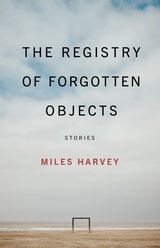
The Registry of Forgotten Objects
StoriesMiles Harvey
The Ohio State University Press, 2024
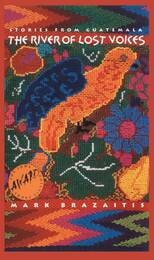
The River of Lost Voices
Stories from GuatemalaMark Brazaitis
University of Iowa Press, 1998
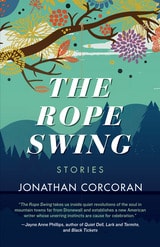
The Rope Swing
StoriesJonathan Corcoran
West Virginia University Press, 2016
A once-booming West Virginia rail town no longer has a working train. The residents left behind in this tiny hamlet look to the mountains that surround them on all sides: The outside world encroaches, and the buildings of the gilded past seem to crumble more every day.
These are the stories of outsiders—the down and out. What happens to the young boy whose burgeoning sexuality pushes him to the edge of the forest to explore what might be love with another boy? What happens when one lost soul finally makes it to New York City, yet the reminders of his past life are omnipresent? What happens when an old woman struggles to find a purpose and reinvent herself after decades of living in the shadow of her platonic life partner? What happens to those who dare to live their lives outside of the strict confines of the town’s traditional and regimented ways?
The characters in The Rope Swing—gay and straight alike—yearn for that which seems so close but impossibly far, the world over the jagged peaks of the mountains.
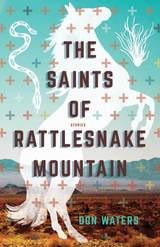
The Saints of Rattlesnake Mountain
StoriesDon Waters
University of Nevada Press, 2017
Soldiers, seekers, priests, prisoners, and surfers pursue their fate amid bizarre, sometimes overwhelming circumstances. In “La Luz de Jesús,” a gutless Los Angeles screenwriter, a believer in nothing but the god of Hollywood, must reorient after he encounters a group of penitents in New Mexico’s Sangre de Cristo Mountains. The decorated soldier in “Española” faces more chaos back home than he did during his tour in Iraq. And “The Saints of Rattlesnake Mountain” pairs a “trustee” prison inmate and a wild mustang horse, both wards of the state of Nevada, as they fumble toward a spiritual truth.
These stories capture the spirit of a region and its people. Once again Waters assembles an unconventional cast of characters, capturing their foibles and imperfections, and always rendering them with compassion as these modern-day martyrs and spiritually haunted survivors strive for some kind of redemption.
Ingenious, sometimes forbidding, often absurd, and altogether original, The Saints of Rattlesnake Mountain is a stirring tribute to the lives, loves, and hopes of the faithful and the dispossessed.