Results by title
308 books match the query 'Story' and 85 start with t
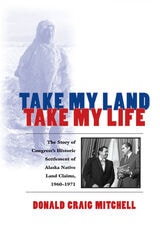
Take My Land, Take My Life
The Story of Congress's Historic Settlement of Alaska Native Land Claims 1960-1971Donald Craig Mitchell
University of Alaska Press, 2001
In Take My Land, Take My Life, Mitchell concludes the story of the 134-year history of the U.S. government's relations with Alaska's Native people begun in Sold American:The Story of Alaska Natives and Their Land, 1867-1959. The culmination of that tale occurred in 1971 when Congress enacted the Alaska Native Claims Settlement Act. ANCSA authorized Alaska Natives to be paid $962.5 million and to be conveyed title to 44 million acres of land. Though highly controversial, ANCSA remains the most generous settlement of aboriginal land claims in the nation's history. Mitchell's insightful, exhaustively researched work also describes the political history during the first decade of Alaska statehood, from the rise of Native organizations such as the Alaska Federation of Natives to the battles for power in the subcommittees of Congress.
Insightful and drawn from years of painstaking research of primary source materials, Sold American and Take My Land, Take My Life are an indispensable resource for readers who are interested in the history of the nation's largest state and of the federal government's involvement with Alaska's indigenous peoples.
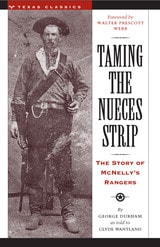
Taming the Nueces Strip
The Story of McNelly's RangersBy George Durham as told to Clyde Wantland
University of Texas Press, 1962
Only an extraordinary Texas Ranger could have cleaned up bandit-plagued Southwest Texas, between the Nueces River and the Rio Grande, in the years following the Civil War. Thousands of raiders on horseback, some of them Anglo-Americans, regularly crossed the river from Mexico to pillage, murder, and rape. Their main objective? To steal cattle, which they herded back across the Rio Grande to sell. Honest citizens found it almost impossible to live in the Nueces Strip.
In desperation, the governor of Texas called on an extraordinary man, Captain Leander M. McNelly, to take command of a Ranger company and stop these border bandits. One of McNelly's recruits for this task was George Durham, a Georgia farmboy in his teens when he joined the "Little McNellys," as the Captain's band called themselves. More than half a century later, it was George Durham, the last surviving "McNelly Ranger," who recounted the exciting tale of taming the Nueces Strip to San Antonio writer Clyde Wantland.
In Durham's account, those long-ago days are brought vividly back to life. Once again the daring McNelly leads his courageous band across Southwest Texas to victories against incredible odds. With a boldness that overcame their dismayingly small number, the McNellys succeeded in bringing law and order to the untamed Nueces Strip—succeeded so well that they antagonized certain "upright" citizens who had been pocketing surreptitious dollars from the bandits' operations.
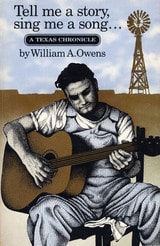
Tell Me a Story, Sing Me a Song
A Texas ChronicleBy William A. Owens
University of Texas Press, 1983
Texas, the 1930s—the years of the Great Depression. It was the Texas of great men: Dobie, Bedichek, Webb, the young Américo Paredes. And it was the Texas of May McCord and "Cocky" Thompson, the Reverend I. B. Loud, the Cajun Marcelle Comeaux, the black man they called "Grey Ghost," and all the other extraordinary "ordinary" people whom William A. Owens met in his travels.
"Up and down and sideways" across Texas, Owens traveled. His goal: to learn for himself what the diverse peoples of the state "believed in, yearned for, laughed at, fought over, as revealed in story and song." Tell me a story, sing me a song brings together both the songs he gathered—many accompanied by music—and Owens' warm reminiscences of his travels in the Texas of the Thirties and early Forties.
Tell Me a Story
Narrative and IntelligenceRoger C. Schank
Northwestern University Press, 1995
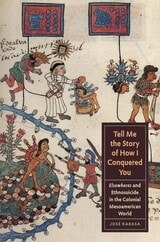
Tell Me the Story of How I Conquered You
Elsewheres and Ethnosuicide in the Colonial Mesoamerican WorldBy José Rabasa
University of Texas Press, 2011
Folio 46r from Codex Telleriano-Remensis was created in the sixteenth century under the supervision of Spanish missionaries in central Mexico. As an artifact of seismic cultural and political shifts, the manuscript painting is a singular document of indigenous response to Spanish conquest. Examining the ways in which the folio's tlacuilo (indigenous painter/writer) creates a pictorial vocabulary, this book embraces the place "outside" history from which this rich document emerged.
Applying contemporary intellectual perspectives, including aspects of gender, modernity, nation, and visual representation itself, José Rabasa reveals new perspectives on colonial order. Folio 46r becomes a metaphor for reading the totality of the codex and for reflecting on the postcolonial theoretical issues now brought to bear on the past. Ambitious and innovative (such as the invention of the concepts of elsewheres and ethnosuicide, and the emphasis on intuition), Tell Me the Story of How I Conquered You embraces the performative force of the native scribe while acknowledging the ineffable traits of 46r—traits that remain untenably foreign to the modern excavator/scholar. Posing provocative questions about the unspoken dialogues between evangelizing friars and their spiritual conquests, this book offers a theoretic-political experiment on the possibility of learning from the tlacuilo ways of seeing the world that dislocate the predominance of the West.
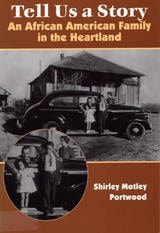
Tell Us a Story
An African American Family in the HeartlandShirley Motley Portwood
Southern Illinois University Press, 2000
Illinois State Historical Society's Certificate of Excellence (2002)
Supplemented by recollections from the present era, Tell Us a Story is a colorful mosaic of African American autobiography and family history set in Springfield, Illinois, and in rural southern Illinois, Missouri, and Arkansas from the 1920s through the 1950s.
Shirley Motley Portwood shares rural, African American family and community history through a collection of vignettes about the Motley family. Initially transcribed accounts of the Motleys’ rich oral history, these stories have been passed among family members for nearly fifty years. In addition to her personal memories, Portwood presents interviews with her father, three brothers, and two sisters plus notes and recollections from their annual family reunions. The result is a composite view of the Motley family.
A historian, Portwood enhances the Motley family story by investigating primary data such as census, marriage, school, and land records, newspaper accounts, city directories, and other sources. The backbone of this saga, however, is oral history gathered from five generations, extending back to Portwood's grandparents, born more than one hundred years ago. Information regarding two earlier generations—her great- grandfather and great-great-grandparents, who were slaves—is based on historical research into state archives, county and local records, plantation records, and manuscript censuses.
A rich source for this material—the Motley family reunions—are week-long retreats where four generations gather at the John Motley house in Burlington, Connecticut, the Portwood home in Godfrey, Illinois, or other locations. Here the Motleys, all natural storytellers, pass on the family traditions. The stories, ranging from humorous to poignant, reveal much about the culture and history of African Americans, especially those from nonurban areas. Like many rural African Americans, the Motleys have a rich and often joyful family history with traditions reaching back to the slave past. They have known the harsh poverty that made even the necessities difficult to obtain and the racial prejudice that divided whites and blacks during the era of Jim Crow segregation and inequality; yet they have kept a tremendous faith in self-improvement through hard work and education.
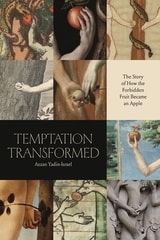
Temptation Transformed
The Story of How the Forbidden Fruit Became an AppleAzzan Yadin-Israel
University of Chicago Press, 2022
How did the apple, unmentioned by the Bible, become the dominant symbol of temptation, sin, and the Fall? Temptation Transformed pursues this mystery across art and religious history, uncovering where, when, and why the forbidden fruit became an apple.
Azzan Yadin-Israel reveals that Eden’s fruit, once thought to be a fig or a grape, first appears as an apple in twelfth-century French art. He then traces this image back to its source in medieval storytelling. Though scholars often blame theologians for the apple, accounts of the Fall written in commonly spoken languages—French, German, and English—influenced a broader audience than cloistered Latin commentators. Azzan Yadin-Israel shows that, over time, the words for “fruit” in these languages narrowed until an apple in the Garden became self-evident. A wide-ranging study of early Christian thought, Renaissance art, and medieval languages, Temptation Transformed offers an eye-opening revisionist history of a central religious icon.
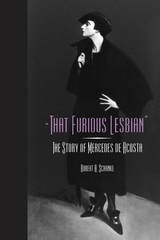
That Furious Lesbian
The Story of Mercedes de AcostaRobert A. Schanke
Southern Illinois University Press, 2004
In this first book-length biography of Mercedes de Acosta, theatre historian Robert A. Schanke adroitly mines lost archival materials and mixes in his own interviews with de Acosta’s intimates to correct established myths and at last construct an accurate, detailed, and vibrant portrait of the flamboyantly uninhibited early-twentieth-century author, poet, and playwright.
Born to wealthy Spanish immigrants, Mercedes de Acosta (1893–1968) lived in opulence and traveled in the same social circles as the Astors and Vanderbilts. Introduced to the New York theater scene at an early age, her dual loves of performance and of women informed every aspect of her life thereafter. Alice B. Toklas’s observation, “Say what you will about Mercedes, she’s had the most important women in the twentieth century,” was well justified, as her romantic conquests included such internationally renowned beauties as Greta Garbo, Marlene Dietrich, Isadora Duncan, and Eva Le Gallienne as well as Alla Nazimova, Tamara Karsavina, Pola Negri, and Ona Munson.
More than a record of her personal life and infamous romances, this account offers the first analysis of the complete oeuvre of de Acosta’s literary works, including three volumes of poetry, two novels, two film scripts, and a dozen plays. Although only two of her plays were ever published during her lifetime, four of them were produced, featuring such stage luminaries as John Gielgud, Ralph Richardson, and Eva Le Gallienne. Critics praised her first volume of poetry, Moods, in 1919 and predicted her rise to literary fame, but the love of other women that fueled her writing also limited her opportunities to fulfill this destiny. Failing to achieve any lasting fame, she died in relative poverty at the age of seventy-five.
De Acosta lived her desires publicly with verve and vigor at a time when few others would dare, and for that, she paid the price of marginalized obscurity. Until now. With “That Furious Lesbian” Schanke at last establishes Mercedes de Acosta’s rightful place as a pioneer—and indeed a champion—in the early struggle for lesbian rights in this country.
Robert A. Schanke has edited a companion to this biography, Women in Turmoil: Six Plays by Mercedes de Acosta,also available from Southern Illinois University Press.
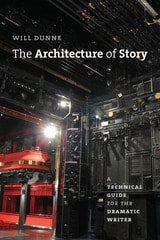
The Architecture of Story
A Technical Guide for the Dramatic WriterWill Dunne
University of Chicago Press, 2016
Through his workshops and book The Dramatic Writer’s Companion, Will Dunne has helped thousands of writers develop successful scripts. Now, in The Architecture of Story, he helps writers master the building blocks of dramatic storytelling by analyzing a trio of award-winning contemporary American plays: Doubt: A Parable by John Patrick Shanley, Topdog/Underdog by Suzan-Lori Parks, and The Clean House by Sarah Ruhl. Dismantling the stories and examining key components from a technical perspective enables writers to approach their own work with an informed understanding of dramatic architecture.
Each self-contained chapter focuses on one storytelling component, ranging from “Title” and “Main Event” to “Emotional Environment” and “Crisis Decision.” Dunne explores each component in detail, demonstrating how it has been successfully handled in each play and comparing and contrasting techniques. The chapters conclude with questions to help writers evaluate and improve their own scripts. The result is a nonlinear reference guide that lets writers work at their own pace and choose the topics that interest them as they develop new scripts. This flexible, interactive structure is designed to meet the needs of writers at all stages of writing and at all levels of experience.
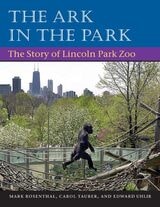
The Ark in Park
THE STORY OF LINCOLN PARK ZOOMark Rosenthal, Carol Tauber, and Edward Uhlir
University of Illinois Press, 2003
Lincoln Park Zoo was established in 1868 when New York's Central Park Commissioners sent the Lincoln Park Commissioners the gift of two pairs of swans. The swans were such a popular attraction that the park commissioners began acquiring other animals and building quarters for them, adding a bear cage, a bison enclosure, a sea lion pool, an eagle exhibit, and an animal house, all before 1900.
Although the zoo was initially conceived as a primarily recreational attraction, its mission has evolved over time, with conservation, science, and education now forming central elements. Starting in 1884, when the zoo saw what was reportedly the first-ever birth of a North American bison in captivity, Lincoln Park Zoo has been part of the effort to study and protect endangered species from all over the world.
This comprehensive history of Lincoln Park Zoo also tells the wider story of the growth of the American zoo movement and the changes that have occurred in the past century, as zoos evolved from a leisure pursuit into a multimillion-dollar industry and an invaluable participant in global conservation efforts.
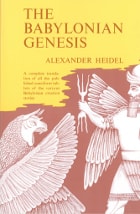
The Babylonian Genesis
The Story of the CreationAlexander Heidel
University of Chicago Press, 1963
The Babylonian Genesis offers, in one compact, accessible volume, a complete translation of all the published cuneiform tablets of the various Babylonian creation stories, of both the Semitic Babylonian and the Sumerian material. Each creation account is preceded by a brief introduction from renowned scholar and translator Alexander Heidel dealing with the age and provenance of the tablets, the aim and purpose of the story, and everything else that a reader of any level of knowledge needs to understand these stories in their context. Also included is a translation and discussion of two Babylonian creation versions written in Greek. The final chapter presents a detailed examination of the Babylonian creation accounts in their relation to our Old Testament literature.
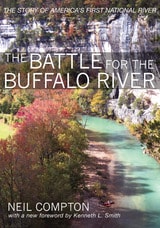
The Battle for the Buffalo River
The Story of America's First National RiverNeil Compton
University of Arkansas Press, 2010
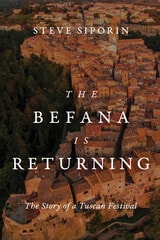
The Befana Is Returning
The Story of a Tuscan FestivalSteve Siporin
University of Wisconsin Press, 2022
The Pigitliano Befanata is distinct in its emphasis on song and strong in its richly symbolic use of food, which is not only consumed at each home but is also carried away as a gift. The characters who make up the squad are unique to the Italian practice. They always include the Befana and her husband, the Befano, but other members of the befanotti vary from place to place over time. Siporin combines fieldwork and archival evidence to introduce the Befanata and its historical and social contexts: what it is, what it means, and how it feels. The Befana Is Returning is a deeply researched, deftly insightful presentation of this living tradition that adds a large missing piece to the array of contemporary ethnographic scholarship on mumming.

The Bellwomen
The Story of the Landmark AT&T Sex Discrimation CaseStockford, Marjorie A
Rutgers University Press, 2004
In the early 1970s, David Copus, a young, long-haired lawyer, teamed up with his government colleagues to confront the mature and staid executives of AT&T over the company’s treatment of its female and minority employees. Their disagreement resulted in a $38 million settlement that benefited 15,000 employees, more than 13,000 of them women, and changed our perceptions of women’s and men’s roles in the workplace forever.
Copus, who worked for the Equal Employment Opportunity Commission (EEOC), was charged with representing American citizens who suffered from employment discrimination. Time and again he saw young, black women in the South being turned down for available jobs in local phone companies—usually as telephone operators—often for no valid reason at all. He and the EEOC decided to challenge AT&T’s company-wide sex discrimination practices. Eventually, AT&T’s corporate colleagues, witnessing AT&T’s capitulation, began to hire and promote women into better jobs themselves. At the same time, the EEOC started to more aggressively push corporate America to give women better opportunities.
The Bellwomen recounts the history of this case in a novelistic style, illuminating the motivations, strengths, and weaknesses of all the players, from AT&T corporate leaders, to the lawyers of the EEOC, to the female activists fighting for what they believed. Stockford also profiles three beneficiaries of the case, presenting their ambitions and achievements.
Combined with the power of America’s civil rights laws and the influence of the second wave women’s movement, this case provided a catalyst that drove many more women into the paid workforce in non-traditional jobs. By the late twentieth century, when women could be seen working everywhere, from construction sites to corporate offices, it appeared that they belonged there and always had.
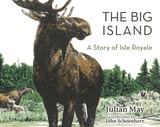
The Big Island
A Story of Isle RoyaleJulian May
University of Minnesota Press, 2021
First published in 1968, this engrossing and beautiful picture book about wildlife on Isle Royale is available again
Isle Royale, “the big island” of this book, is a wilderness national park in Lake Superior and home to a unique and fascinating ecosystem of animals, most notably the iconic wolf and majestic moose. Here is author Julian May’s story about the island’s beginning, the kinds of animals that came to populate it, and their effects on the pristine landscape. Among them were the moose, who swam to the island from the distant shore to fend off starvation. The moose found conditions on Isle Royale so favorable that they reproduced quickly—but then faced another food shortage. The wolves arrived by floating to the island on an ice floe in winter and soon became important to the island’s ecology as successful predators of the moose.
Complementing this fascinating text, John Schoenherr’s magnificent illustrations convey the strength of these animals and the beauty of the island that is their home.
First published in 1968, and reprinted here with a new note by renowned wolf expert L. David Mech, The Big Island is an enchanting introduction to the wilderness and wildlife of Isle Royale.
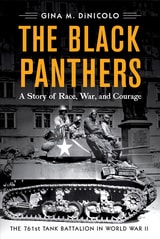
The Black Panthers
A Story of Race, War, and Courage—the 761st Tank Battalion in World War IIGina M. DiNicolo
Westholme Publishing, 2014
Known primarily for being the first African American armored unit to see combat in World War II and as future baseball star Jackie Robinson’s onetime outfit, the 761st Tank Battalion was forged in a devil’s cauldron of heat and prejudice at Camp Claiborne, Louisiana. Here, most viewed the tankers as tokens in a racial experiment, rather than as fellow American soldiers who would actually be deployed to fight a common enemy. Led by a small cadre of white and black officers, the 761st trained to the pinnacle of its craft. The Black Panthers, as they soon were called, proved their battle prowess against other units bound for combat on the parched Texas training fields. For this, they earned a coveted assignment to fight under General George S. Patton and go head-to-head with the best of Hitler’s arsenal. Moving to the front in November 1944, trial by fire soon shook the unit to its core. Ambushed by a veteran German force, the 761st suffered heavy casualties in the confusion as they cut their way out of the trap. But the men rallied to overcome self-doubt and vindicate their losses. Quickly battle hardened, the tankers saw intense combat through November and when Germany launched its last-ditch offensive through the Ardennes in December, the 761st fought side-by-side with Patton’s Third Army. Moving swiftly, the unit helped check the German advance, cut resupply routes to the forces surrounding beleaguered Bastogne, and drove the enemy back, recapturing towns crucial to the final defeat of Germany.
In The Black Panthers: A Story of Race, War, and Courage—the 761st Tank Battalion in World War II, historian Gina M. DiNicolo tells the full and unvarnished history of this important American fighting force. Relying on extensive archival research, including documents that had not been consulted in previous accounts, and interviews with surviving soldiers and family members, the author describes the unit’s training, deployment, combat, and individuals, such as Sgt. Ruben Rivers, one of only seven African American men awarded the Medal of Honor for World War II heroism. The professionalism, dedication, and courage of the 761st and other non-white units made clear that the strength of the American army in the future lay with integration—one of the enduring accomplishments of these servicemen.

The Convict and the Colonel
A Story of Colonialism and Resistance in the CaribbeanRichard Price
Duke University Press, 2006
In a stunning combination of scholarship and storytelling, the award-winning anthropologist Richard Price draws on long-term ethnography, archival documents, cinema and street theater, and Caribbean fiction and poetry to explore how one generation’s powerful historical metaphors could so quickly become the next generation’s trivial pursuit, how memories of oppression, inequality, and struggle could so easily become replaced by nostalgia, complicity, and celebration.
“A superb callaloo of a book. . . . Richard Price has a remarkable grasp of the literatures of the Caribbean, and draws on this resource to explore the underlying insanity of the colonial experience, as well as the bewildering complexities of the postcolonial world where memory is erased or invented according to the demands of a market modernity.”—George Lamming, author of The Pleasures of Exile
“By beautifully crafting elements as disparate as biographical data, sociological studies, literary sources, and archival documents, Richard Price’s research is more fascinating than a piece of fiction.”—Maryse Condé, author of I, Tituba, Black Witch of Salem
“Price does it again. Mixing eras, genres, and voices, he carries the reader through the contradictory streams of historical consciousness in the Caribbean island of Martinique. The result is as complex and as enticing as the sea it evokes.”—Michel-Rolph Trouillot, author of Silencing the Past
“Filled with insights that are at once theoretical, methodological, and ethnographic, The Convict and the Colonel is required reading for anyone interested in colonialism, memory, and contemporary Caribbean societies.”—Jennifer Cole, American Ethnologist
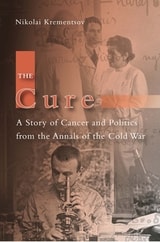
The Cure
A Story of Cancer and Politics from the Annals of the Cold WarNikolai Krementsov
University of Chicago Press, 2002
In 1946, Nina Kliueva and Grigorii Roskin announced the discovery of a preparation able to "dissolve" tumors in mice. Preliminary clinical trials suggested that KR, named after its developers, might work in humans as well. Media hype surrounding KR prompted the U.S. ambassador to the Soviet Union to seek U.S.-Soviet cooperation in perfecting the possible cure. But the escalating Cold War gave this American interest a double edge. Though it helped Kliueva and Roskin solicit impressive research support from the Soviet leadership, including Stalin, it also thrust the couple into the center of an ideological confrontation between the superpowers. Accused of divulging "state secrets" to America, the couple were put on a show trial, and their "antipatriotic sins" were condemned in Soviet stage and film productions.
Parlaying their notoriety into increased funding, Kliueva and Roskin continued their research, but envious colleagues discredited their work and took over their institute. For years, work on KR languished and ceased entirely with the deaths of Kliueva and Roskin. But recently, the Russian press reported that work on KR has begun again, reopening this illuminating story of the intersection among Cold War politics, personal ideals, and biomedical research.
The Disappearances
A Story of Exploration, Murder, and Mystery in the American WestScott Thybony
University of Utah Press, 2016
Intrigued by this unusual string of coincidental disappearances, Scott Thybony set out to learn what happened. His investigations took him from Island in the Sky to Skeleton Mesa, from Texas to Tucson, and from the Green River to the Red. He traced the journey of Lucy Garrett from the murder of her father to her dramatic courtroom testimony. Using the pages of an old journal he followed the route of Dan Thrapp as he crossed an expanse of wildly rugged country with a pair of outlaws. Thrapp’s story of survival in an unforgiving land is a poignant counterpoint to the fate of the artist Everett Ruess, which the New York Times has called “one of the most enduring mysteries of the modern West.” Thybony draws on extensive research and a lifetime of exploration to create a riveting story of these three lives.
The Fishing Creek Confederacy
A Story of Civil War Draft ResistanceRichard A. Sauers and Peter Tomasak
University of Missouri Press, 2012
Governor Andrew Gregg Curtin of Pennsylvania was a staunch supporter of the Lincoln administration. The commonwealth supplied more than 360,000 white soldiers and 9,000 black soldiers during the conflict. However, there was sustained opposition to the war throughout the state, much of it fanned by the pens of Democratic newspaper editors. Though most opposition was disorganized and spontaneous, other aspects of the antiwar sentiment in the state occasionally erupted as major incidents.
In The Fishing Creek Confederacy, Richard A. Sauers and Peter Tomasak address the serious opposition to the draft in Columbia County, Pennsylvania, in 1864. Egged on by the anti-Lincoln newspaper editors, a number of men avoided the draft and formed ad hoc groups to protect themselves from arrest. The shooting of a Union lieutenant confronting draft evaders in July 1864 resulted in military intervention in the northern townships of the county. The troops arrested more than one hundred men, sending about half of them to a prison fort near Philadelphia. Some of these men were subjected to military trials in Harrisburg, the state capital, that fall and winter. The arrests led to bitter feelings that were slow to die. The military intervention eventually impacted a Pennsylvania gubernatorial election and led to a murder trial.
Sauers and Tomasak describe the draft in Pennsylvania and consider how Columbia County fit into the overall draft process. Subsequent chapters take the reader through the events of the summer of 1864, including the interaction of soldiers and civilians in the county, the prison experiences of the men, and the trials. Later chapters cover the August 1865 Democratic rally at Nob Mountain and the effects of the draft episode after the war was over, including its influence on the 1872 election for governor, the 1891 murder trial, and the formation of the official Democratic version of the events, which has been used by historians ever since.
The Fishing Creek Confederacy is the first book to address this episode and its aftermath in their entirety. Sauers and Tomasak present the story and try to disentangle the often contradictory nature of the sources and how both amateur and professional historians have used them.
The Greater Perfection
The Story of the Gardens at Les Quatre VentsFrancis H. Cabot
University of Chicago Press, 2023
Featured in the 2018 film The Gardener, Les Quatre Vents in Charlevoix County, Quebec, has been acclaimed as the most aesthetically satisfying and horticulturally exciting landscape experience in North America. This twenty-acre garden seamlessly combines traditional and novel elements into a splendid composition, adorned with unexpected touches and perfectly compatible with its natural surroundings.
The Greater Perfection, first published in 2001, illustrates the delights, diversions, and surprises that await the garden’s visitors. Francis H. Cabot’s account of the challenges he faced in developing Les Quatre Vents reveals the fascinating process behind the creation of a world-class garden that has become a mecca for horticultural enthusiasts around the globe. Winner of the 2003 Annual Literature Award of the Council on Botanical and Horticultural Libraries and featuring stunning full-color images by five leading garden photographers, The Greater Perfection is one of the most beautiful books on gardens to appear in years. This new printing includes a foreword by Marianne Cabot Welch, Cabot’s daughter, that further contextualizes the gardens and explores how a place rooted in the past can confront the future.
The Greatest Ballpark Ever
Ebbets Field and the Story of the Brooklyn DodgersMcGee, Bob
Rutgers University Press, 2005
In this lively story of sports, politics, and the talented, hilarious, and charming characters associated with the Brooklyn Dodgers, Bob McGee chronicles the ballpark's vibrant history from the drawing board to the wrecking ball, beginning with Charley Ebbets and the heralded opening in 1913, on through the eras that followed. McGee weaves a story about how Ebbets Field's architectural details, notable flaws, and striking facade brought Brooklyn and its team together in ways that allowed each to define the other.
Drawing on original interviews and letters, as well as published and archival sources, The Greatest Ballpark Ever explores the struggle of Charley Ebbets to build Ebbets Field, the days of Wilbert Robinson's early pennant winners, the eras of the Daffiness Boys, Larry MacPhail, and Branch Rickey, the tumultuous field leadership of Leo the Lip, the fiery triumph of Jackie Robinson, the golden days of the Boys of Summer, and Walter O'Malley's ignominious departure.
With humor and passion, The Greatest Ballpark Ever lets readers relive a day in the raucous ballpark with its quirky angles and its bent right-field wall, with the characters and events that have become part of the nation's folklore.
The Greatest Scientific Gamble
A Story of Impossible Odds, Rival Scientists, and the Atomic BombMichael Joseloff
Michigan State University Press, 2026
During World War II, a group of physicists who had once been close friends found themselves on opposite sides of a deadly race. German scientist Werner Heisenberg and American physicists Robert Oppenheimer, Enrico Fermi, and Sam Goudsmit were all leading figures in nuclear research. But after the attack on Pearl Harbor, their shared passion for science turned into a high-stakes competition to build the world’s first atomic bomb—a weapon that could determine the outcome of the war. Heisenberg had a two-year head start, and the possibility that Nazi Germany might beat the Allies to the bomb terrified American scientists. The Manhattan Project, led by U.S. Army General Leslie Groves, became a massive effort to catch up. Fear of Heisenberg haunted Manhattan Project scientists. At one point, Groves even approved plans to bomb Heisenberg’s lab and assassinate him to stop Germany’s progress. Meanwhile, Sam Goudsmit led a secret military unit tasked with tracking down Heisenberg and uncovering the truth about the Nazi nuclear program. What they found would surprise everyone. The Greatest Scientific Gamble tells the dramatic and little-known story of how personal relationships, wartime fear, and scientific ambition collided in the race to unlock the power of the atom.
The Hayloft Gang
The Story of the National Barn DanceEdited by Chad Berry
University of Illinois Press, 2007
The Hayloft Gang draws on the colorful commentary of performers and former listeners to analyze the National Barn Dance, its audience, and its impact. Contributors trace the history of barn dance radio, explore the paradox of a foundational country music program broadcast from a major city, investigate notions of authenticity in the presentation of country music and entertainment, and delve into provocative issues raised by the barn dance phenomenon.
Contributors: Chad Berry, Michael T. Bertrand, Lisa Krissoff Boehm, Don Cusic, Wayne W. Daniel, Loyal Jones, Kristine M. McCusker, Stephen Parry, Susan Smulyan, Paul L. Tyler, and Michael Ann Williams.
The Inferno
A Story of Terror and Survival in ChileLuz Arce; Translated by Stacey Alba Skar
University of Wisconsin Press, 2004
As a member of Salvador Allende’s Personal Guards (GAP), Luz Arce worked with leaders of the Socialist Party during the Popular Unity Government from 1971 to1973. In the months following the coup, Arce served as a militant with others from the Left who opposed the military junta led by Augusto Pinochet, which controlled the country from 1973 to1990. Along with thousands of others in Chile, Arce was detained and tortured by Chile’s military intelligence service, the DINA, in their attempt to eliminate alternative voices and ideologies in the country. Arce’s testimonial offers the harrowing story of the abuse she suffered and witnessed as a survivor of detention camps, such as the infamous Villa Grimaldi.
But when faced with threats made to her family, including her young son, and with the possibility that she could be murdered as thousands of others had been, Arce began to collaborate with the Chilean military in their repression of national resistance groups and outlawed political parties. Her testimonial thus also offers a unique perspective from within the repressive structures as she tells of her work as a DINA agent whose identifications even lead to the capture of some of her former friends and compañeros.
During Chile’s return to democracy in the early 1990s, Arce experienced two fundamental changes in her life that led to the writing of her story. The first was a deep spiritual renewal through her contacts with the Catholic Church whose Vicariate of Solidarity had fought for human rights in the country during the dictatorship. The second was her decision to participate within the legal system to identify and bring to justice those members of the military who were responsible for the crimes committed from 1973 to1990. Luz Arce’s book invites readers to rethink the definition of testimonial narrative in Latin America through the unique perspective of a survivor-witness-confessor.

The Kirtland's Warbler
The Story of a Bird's Fight Against Extinction and the People Who Saved ItWilliam Rapai
University of Michigan Press, 2013
At a time when the world is seeing its species rapidly go extinct, the Kirtland's warbler is not just a survivor, it's a rock star. The Kirtland's warbler is the rarest warbler species in North America and will always be rare because of its persnickety nesting preferences. But when the total population fell below 400 birds in the 1970s and 1980s---driven largely by a loss of habitat and the introduction of a parasite---a small group of dedicated biologists, researchers, and volunteers vowed to save the Kirtland's warbler despite long odds. This is the story of the warbler's survival and gradual recovery, the people and policies that kept it from extinction, and the ongoing challenges that may again jeopardize the bird's future.
In The Kirtland's Warbler, William Rapai explores the bird's fascinating natural history as well as the complex and evolving relationships between the warbler, its environment, its human protectors, and state and federal policies that today threaten to eradicate decades of work done on the species' behalf. Beginning with an account of the warbler's discovery in the mid-nineteenth century and ornithologists' desperate hunt for information on the elusive new species, the book goes on to examine the dramatic events that quickly led to the warbler's precarious status and its eventual emergence as a lightning rod for controversy.
The Kirtland's warbler is often described as a "bird of fire" for its preference for nesting in areas cleared by wildfire. But it also warrants the name for the passion it ignites in humans. Both tragic and uplifting, the story of this intriguing bird is a stirring example of how strong leadership, vision, commitment, sustained effort, and cooperation can come together to protect our natural world.
The LS Brand
The Story of a Texas Panhandle RanchBy Dulcie Sullivan; Introduction by Loula Grace Erdman.
University of Texas Press, 1968
In the spring of 1881, W. M. D. Lee and Lucien B. Scott, wealthy businessmen of Leavenworth, Kansas, purchased land in the upper Texas Panhandle to establish the Lee-Scott Cattle Company. Their range sprawled across four Texas counties and extended into eastern New Mexico. About six months later, fifty thousand head of mixed cattle, branded LS, grazed those thousands of acres of free grass.
This book is the story of Lee and Scott’s LS Ranch from the tempestuous years of the open range to the era of “bob wire.” It is also the story of the pioneer men and women whose efforts developed the LS into a cattle empire: W. M. D. and Lena Lee, Lucien and Julia Scott, “Mister Mac” and “Miss Annie” McAllister, and Charles and Pauline Whitman.
Here are accounts of chuck wagons and wagon bosses; prairie fires, blizzards, and bog holes; ranch management problems and cowboys on strike; lobo wolves and romance; wild sprees in Tascosa and its “Hogtown” sector; LS cowboys fighting against a gang of organized rustlers in a feud that ended in tragedy; and those same cowboys on the long trails to Dodge City and Montana.
Drawing upon stories told to her by men and women who were with the LS during the 1880’s and later years, Dulcie Sullivan presents her narrative in a clear, straightforward, but sympathetic manner that gives the reader a vivid sense of how life was really lived there in those times. Especially telling is her occasional use of an almost poetic incident: the steers bedding down around a campfire to listen to the chuck-wagon cook play his fiddle, or the suit of Spanish armor found in a spring, or the hail-battered trees attempting to renew themselves, despite their grotesque shapes.
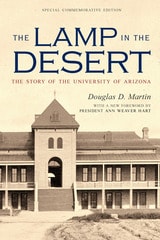
The Lamp in the Desert
The Story of the University of ArizonaDouglas D. Martin, With a New Foreword by President Ann Weaver Hart
University of Arizona Press, 1960
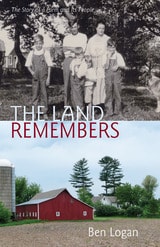
The Land Remembers
The Story of a Farm and Its PeopleBen Logan, with an introduction by Curt Meine
University of Wisconsin Press, 2017

The Lindbergh Case
A Story of Two LivesFisher, Jim
Rutgers University Press, 1987

The Love Surgeon
A Story of Trust, Harm, and the Limits of Medical RegulationSarah B. Rodriguez
Rutgers University Press, 2020
It would be easy to dismiss Dr. Burt as a monstrous aberration, a modern-day Dr. Frankenstein. Yet as medical historian Sarah Rodriguez reveals, that’s not the whole story. The Love Surgeon asks tough questions about Burt’s heinous acts and what they reveal about the failures of the medical establishment: How was he able to perform an untested surgical procedure? Why wasn’t he obliged to get informed consent from his patients? And why did it take his peers so long to take action?
The Love Surgeon is both a medical horror story and a cautionary tale about the limits of professional self-regulation.
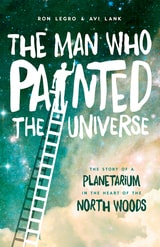
The Man Who Painted the Universe
The Story of a Planetarium in the Heart of the North WoodsRon Legro
Wisconsin Historical Society Press, 2015
The Man Who Painted the Universe: The Story of a Planetarium in the Heart of the North Woods introduces readers to the mild-mannered astronomy enthusiast whose creativity, ingenuity, fervor, and endurance realized a dream of galactic proportions. The story of this stargazer from Wisconsin’s North Woods so inspired two newspapermen, authors Ron Legro and Avi Lank, that they sought to document the story of the Kovac Planetarium for a new generation of stargazers and dreamers.
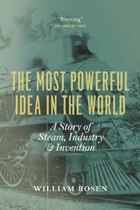
The Most Powerful Idea in the World
A Story of Steam, Industry, and InventionWilliam Rosen
University of Chicago Press, 2012
This bracing history uses the earth-shaking development of the steam engine to show how the very idea of intellectual property was essential to the entire Industrial Revolution.
Hardly a week passes without some high-profile court case that features intellectual property at its center. But how did the belief that one could own an idea come about? And how did that belief change the way humankind lives and works?
William Rosen, author of Justinian's Flea, seeks to answer these questions and more with The Most Powerful Idea in the World. A lively and passionate study of the engineering and scientific breakthroughs that led to the steam engine, this book argues that the very notion of intellectual property drove not only the invention of the steam engine but also the entire Industrial Revolution: history’s first sustained era of economic improvement. To do so, Rosen conjures up an eccentric cast of characters, including the legal philosophers who enabled most the inventive society in millennia, and the scientists and inventors—Thomas Newcomen, Robert Boyle, and James Watt—who helped to create and perfect the steam engine over the centuries. With wit and wide-ranging curiosity, Rosen explores the power of creativity, capital, and collaboration in the brilliant engineering of the steam engine and how this power source, which fueled factories, ships, and railroads, changed human history.
Deeply informative and never dull, Rosen's account of one of the most important inventions made by humans is a rollicking ride through history, with careful scholarship and fast-paced prose in equal measure.
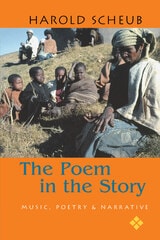
The Poem in the Story
Music, Poetry, and NarrativeHarold Scheub
University of Wisconsin Press, 2002
Fact and fiction meet at the boundaries, the betwixt and between where transformations occur. This is the area of ambiguity where fiction and fact become endowed with meaning, and this is the area—where ambiguity, irony, and metaphor join forces—that Harold Scheub exposes in all its nuanced and evocative complexity in The Poem in the Story.
In a career devoted to exploring the art of the African storyteller, Scheub has conducted some of the most interesting and provocative investigations into nonverbal aspects of storytelling, the complex relationship between artist and audience, and, most dramatically, the role played by poetry in storytelling. This book is his most daring effort yet, an unconventional work that searches out what makes a story artistically engaging and emotionally evocative, the metaphorical center that Scheub calls "the poem in the story." Drawing on extensive fieldwork in southern Africa and decades of experience as a researcher and teacher, Scheub develops an original approach—a blend of field notes, diary entries, photographs, and texts of stories and poems—that guides readers into a new way of viewing, even experiencing, meaning in a story. Though this work is largely focused on African storytelling, its universal applications emerge when Scheub brings the work of storytellers as different as Shakespeare and Faulkner into the discussion.
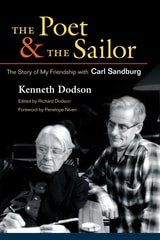
The Poet and the Sailor
The Story of My Friendship with Carl SandburgKenneth Dodson. Edited by Richard Dodson. Foreword by Penelope Niven
University of Illinois Press, 2006
Carl Sandburg first encountered Kenneth Dodson through a letter written at sea during World War II. Though Dodson wrote the letter to his wife, Letha, Sandburg read it in tears and told her, "I've got to meet this man." Composed primarily of their correspondence that continued until Sandburg's death in 1967, The Poet and the Sailor is a chronicle of the deep friendship that followed. Ranging over anything they found important, from writing to health and humor, the letters are arranged by Richard Dodson and are accompanied by a foreword from Sandburg's noted biographer, Penelope Niven.
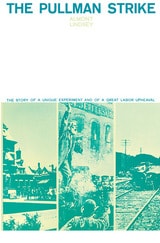
The Pullman Strike
The Story of a Unique Experiment and of a Great Labor UpheavalAlmont Lindsey
University of Chicago Press, 1964
Woven into the narrative is the rise and decline of the extraordinary Pullman experiment. To all outward appearances a philanthropic project conceived by a generous employer for his employees, the "model town" of George Pullman developed into a kind of medieval barony, operated with an iron hand. This experiment is carefully traced in all its varying aspects, with emphasis on its contribution to the origin of the strike.
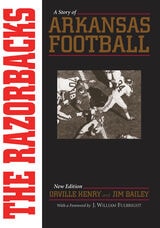
The Razorbacks
A Story of Arkansas FootballOrville Henry
University of Arkansas Press, 1996
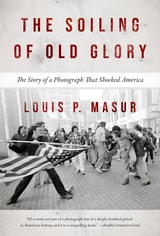
The Soiling of Old Glory
The Story of a Photograph That Shocked AmericaLouis P. Masur
Brandeis University Press, 2024
In 1976, Boston was bitterly divided over a court order to desegregate its public schools. Plans to bus students between predominantly white and Black neighborhoods stoked backlash and heated protests. Photojournalist Stanley Forman was covering one such demonstration at City Hall when he captured an indelible image: a white protester attacking a Black attorney with the American flag. A second white man grabs at the victim, appearing to assist the assailant.
The photo appeared in newspapers across the nation and went on to win the Pulitzer Prize. In The Soiling of Old Glory, esteemed historian Louis P. Masur reveals what happened the day of the assault and the ways these events reverberated long afterward. He interviews the men involved: Forman, who took the photo; Ted Landsmark, a Black, Yale-educated attorney and an activist; Joseph Rakes, the white protester lunging with the flag, a disaffected student; and Jim Kelly, a local politician who opposed busing, but who helped Landsmark to his feet after protesters knocked him to the ground. The photo, Masur discovers, holds more complexities than initially meet the eye. The flag never made contact with the victim, for example, and Kelly was attempting to protect Landsmark, not hurt him.
Masur delves into the history behind Boston’s efforts to desegregate the schools and the anti-busing protests that shook the city. He examines photography’s power to move, inform, and persuade us, as well as the assumptions we each bring to an image as viewers. And he delves into the flag, to explore how other artists and photographers have shaped, bolstered, or challenged its patriotic significance.
Gripping and deeply researched, The Soiling of Old Glory shows how a disturbing event, frozen on a film, impacted Boston and the nation. In an age of renewed calls for visual literacy and disagreements about the flag’s meaning, Masur’s history, now updated with a new foreword by Ted Landsmark and a new preface by the author, is as relevant as ever.
The Story I Tell Myself
A Venture in Existentialist AutobiographyHazel E. Barnes
University of Chicago Press, 1997
The Story of Act 31
How Native History Came to Wisconsin ClassroomsJ P Leary
Wisconsin Historical Society Press, 2018
Since its passage in 1989, a state law known as Act 31 requires that all students in Wisconsin learn about the history, culture, and tribal sovereignty of Wisconsin’s federally recognized tribes.
The Story of Act 31 tells the story of the law’s inception—tracing its origins to a court decision in 1983 that affirmed American Indian hunting and fishing treaty rights in Wisconsin, and to the violent public outcry that followed the court’s decision. Author J P Leary paints a picture of controversy stemming from past policy decisions that denied generations of Wisconsin students the opportunity to learn about tribal history.
The Story of Alabama in Fourteen Foods
Emily Blejwas
University of Alabama Press, 2019
Alabama’s history and culture revealed through fourteen iconic foods, dishes, and beverages.
The Story of Alabama in Fourteen Foods explores well-known Alabama food traditions to reveal salient histories of the state in a new way. In this book that is part history, part travelogue, and part cookbook, Emily Blejwas pays homage to fourteen emblematic foods, dishes, and beverages, one per chapter, as a lens for exploring the diverse cultures and traditions of the state.
Throughout Alabama’s history, food traditions have been fundamental to its customs, cultures, regions, social and political movements, and events. Each featured food is deeply rooted in Alabama identity and has a story with both local and national resonance. Blejwas focuses on lesser-known food stories from around the state, illuminating the lives of a diverse populace: Poarch Creeks, Creoles of color, wild turkey hunters, civil rights activists, Alabama club women, frontier squatters, Mardi Gras revelers, sharecroppers, and Vietnamese American shrimpers, among others. A number of Alabama figures noted for their special contributions to the state’s foodways, such as George Washington Carver and Georgia Gilmore, are profiled as well. Alabama’s rich food history also unfolds through accounts of community events and a food-based economy. Highlights include Sumter County barbecue clubs, Mobile’s banana docks, Appalachian Decoration Days, cane syrup making, peanut boils, and eggnog parties.
Drawing on historical research and interviews with home cooks, chefs, and community members cooking at local gatherings and for holidays, Blejwas details the myths, legends, and truths underlying Alabama’s beloved foodways. With nearly fifty color illustrations and fifteen recipes, The Story of Alabama in Fourteen Foods will allow all Alabamians to more fully understand their shared cultural heritage.
The Story of All Things
Writing the Self in English Renaissance Narrative PoetryMarshall Grossman
Duke University Press, 1998
Relating subjectivity to the nature of language, Grossman uses the theories of Lacan to analyze the concept of the self as it encounters a transforming environment. He shows how ideological tensions arose from the reorganization and "modernization" of social life in revolutionary England and how the major poets of the time represented the division of the self in writings that are suspended between lyric and narrative genres. Beginning with the portrayals of the self inherited from Augustine, Dante, and Petrarch, he describes the influence of historic developments such as innovations in agricultural technology, civil war and regicide, and the emergence of republican state institutions on the changing representation of characters in the works of Spenser, Donne, Marvell, and Milton. Furthering this psychoanalytic critique of literary history, Grossman probes the linguistic effects of social and personal factors such as Augustine’s strained relationship with his mother and the marital disharmony of Milton and Mary Powell. With its focus on these and other "literary historical events," The Story of All Things not only proposes a new structural theory of narrative but constitutes a significant challenge to New Historicist conceptions of the self.
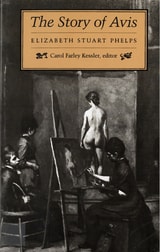
The Story of Avis
Kessler, Carol Farley
Rutgers University Press, 1985
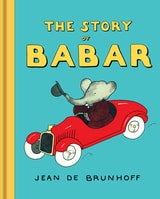
The Story of Babar
Jean de Brunhoff was a French artist and illustrator who wrote seven books in the Babar the Elephant series. His work had a major influence on the development of the picture book.
Bodleian Library Publishing, 2016
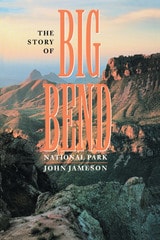
The Story of Big Bend National Park
By John Jameson
University of Texas Press, 1996
A breathtaking country of rugged mountain peaks, uninhabited desert, and spectacular river canyons, Big Bend is one of the United States' most remote national parks and among Texas' most popular tourist attractions. Located in the great bend of the Rio Grande that separates Texas and Mexico, the park comprises some 800,000 acres, an area larger than the state of Rhode Island, and draws over 300,000 visitors each year.
The Story of Big Bend National Park offers a comprehensive, highly readable history of the park from before its founding in 1944 up to the present. John Jameson opens with a fascinating look at the mighty efforts involved in persuading Washington officials and local landowners that such a park was needed. He details how money was raised and land acquired, as well as how the park was publicized and developed for visitors. Moving into the present, he discusses such issues as natural resource management, predator protection in the park, and challenges to land, water, and air. Along the way, he paints colorful portraits of many individuals, from area residents to park rangers to Lady Bird Johnson, whose 1966 float trip down the Rio Grande brought the park to national attention.
This history will be required reading for all visitors and prospective visitors to Big Bend National Park. For everyone concerned about our national parks, it makes a persuasive case for continued funding and wise stewardship of the parks as they face the twin pressures of skyrocketing attendance and declining budgets.
The Story of Coal and Iron in Alabama
Ethel Armes
University of Alabama Press, 2011
“The principal authority for the general treatment of the history of coal, and of iron and steel, in
Alabama is the work of Miss Ethel Armes. The Story of Coal and Iron in Alabama is a comprehensive
and scholarly work portraying in attractive style the growth of the mineral industries in its
relation to the development of the state and of the South, in preparation of which the author spent
more than five years.”
—Thomas McAdory Owen, History of Alabama and Dictionary of Alabama Biography
The Story of Fictional Truth
Realism from the Death to the Rise of the NovelPaul Dawson
The Ohio State University Press, 2023
The Story of Food in the Human Past
How What We Ate Made Us Who We AreRobyn E. Cutright
University of Alabama Press, 2021
Explore how food shaped humanity in this compelling archaeological journey.
The Story of Food in the Human Past: How What We Ate Made Us Who We Are uses case studies from recent archaeological research to tell the story of food in human prehistory. Beginning with the earliest members of our genus, Robyn E. Cutright investigates the role of food in shaping who we are as humans during the emergence of modern Homo sapiens and through major transitions in human prehistory such as the development of agriculture and the emergence of complex societies.
This fascinating study begins with a discussion of how food shaped humans in evolutionary terms by examining what makes human eating unique, the use of fire to cook, and the origins of cuisine as culture and adaptation through the example of Neandertals. The second part of the book describes how cuisine was reshaped when humans domesticated plants and animals and examines how food expressed ancient social structures and identities such as gender, class, and ethnicity. Cutright shows how food took on special meaning in feasts and religious rituals and also pays attention to the daily preparation and consumption of food as central to human society.
Cutright synthesizes recent paleoanthropological and archaeological research on ancient diet and cuisine and complements her research on daily diet, culinary practice, and special-purpose mortuary and celebratory meals in the Andes with comparative case studies from around the world to offer readers a holistic view of what humans ate in the past and what that reveals about who we are.

The Story of Gefilte Fish
András Koerner
Central European University Press, 2027
The Story of Jane
The Legendary Underground Feminist Abortion ServiceLaura Kaplan
University of Chicago Press, 1997
"The Story of Jane is a piece of women's history in step with feminist theory demanding that women tell their own stories. It serves to remind people of an important and often overlooked moment in the women's rights movement."—Seattle Weekly
"Laura Kaplan's The Story of Jane is the first book to chronicle this controversial sliver of history, and it is a fascinating, if partisan, close-up of the group."—Newsday
"[Kaplan] draws on her personal recollections and interviews with Jane members and clients and the doctors who performed the abortions to provide a well-written, detailed history of this radical group."—Publisher's Weekly
"Weaving together the voices and memories of her former co-workers, Kaplan recounts how the group initially focused on counseling women and helping them find reliable, reasonably priced doctors....Kaplan's account of this remarkable story recaptures the political idealism of the early '70s...23 years after Roe vs. Wade, the issues and memories raised by the books are close and all too relevant."—K Kaufmann, San Francisco Chronicle
"Laura Kaplan's The Story of Jane is the first book to chronicle this controversial sliver of history, and it is a fascinating, if partisan, close-up of the group....The Story of Jane succeeds on the steam of Kaplan's gripping subject and her moving belief in the power of small-scale change."—Cynthia Leive, New York Newsday
"During the four years before the Supreme Court's Roe v. Wade decision legalized abortion in 1973, the 100 members of Jane helped some 11,000 women end their pregnancies....There is more in this remarkable book that will further raise eyebrows....Kaplan's engrossing tales of the quiet courage of the women who risked their reputations and freedom to help others may remind many readers of other kinds of outlaws who have resisted tyranny throughout history."—Chicago Sun-Times