Results by title
72 books match the query 'Survival' and 13 start with t

Tazmamart
18 Years in Morocco's Secret PrisonAziz BineBine
Haus Publishing, 2021
On July 10, 1971, during birthday celebrations for King Hassan II of Morocco, attendant officers and cadets opened fire on visiting dignitaries. A young officer, Aziz BineBine, arrived late and witnessed the ensuing massacre without firing a single shot, yet he would spend the next two decades in a political prison hidden in the Atlas Mountains—Tazmamart. Conditions in this now-infamous prison were nightmarish. The dark, underground cells, too small for standing up in, exposed prisoners to extreme weather, overflowing sewage, and disease-ridden rats. Forgetting life outside his cell—his past, his family, his friends—and clinging to God, BineBine resolved to survive. Tazmamart: 18 Years in Morocco’s Secret Prison is a memorial to BineBine and his fellow inmates’ sacrifice. This searing tale of endurance offers an unfiltered depiction of the agonizing life of a political prisoner.
The Aesthetics of Survival
A Composer's View of Twentieth-Century MusicGeorge Rochberg
University of Michigan Press, 2005
"Rochberg presents the rare spectacle of a composer who has made his peace with tradition while maintaining a strikingly individual profile. . . . [H]e succeeds in transforming the sublime concepts of traditional music into contemporary language."
---Washington Post
"An indispensable book for anyone who wishes to understand the sad and curious fate of music in the twentieth century."
---Atlantic Monthly
"The writings of George Rochberg stand as a pinnacle from which our past and future can be viewed."
---Kansas City Star
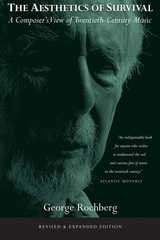
As a composer, George Rochberg has played a leading role in bringing about a transformation of contemporary music through a reassessment of its relation to tonality, melody, and harmony. In The Aesthetics of Survival, the author addresses the legacy of modernism in music and its related effect on the cultural milieu, particularly its overemphasis on the abstract, rationalist thinking embraced by contemporary science, technology, and philosophy. Rochberg argues for the renewal of holistic values in order to ensure the survival of music as a humanly expressive art.
A renowned composer, thinker, and teacher, George Rochberg has been honored with innumerable awards, including, most recently, an Alfred I. du Pont Award for Outstanding Conductors and Composers, and an André and Clara Mertens Contemporary Composer Award. He lives in Pennsylvania.
The Comic Mask in the Commedia dell'Arte
Actor Training, Improvisation, and the Poetics of SurvivalAntonio Fava
Northwestern University Press, 2007
Nobody says Shakespeare is dead, Antonio Fava tells us, but Commedia, they say, is dead. Why? Because clearly, he goes on, we have Shakespeare's texts, but nobody knows what to do with the improvisation that is the basis of the Commedia dell'Arte, despite massive documentation. This book by Fava, one of the few living master teachers of Commedia dell'Arte, is the first aesthetic and methodological study of the traditional Italian theater form--the first to describe, in a precise and practical way, what Commedia is and what it should be.
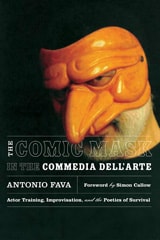
The mask--as object, symbol, character, theatrical practice, even spectacle itself--is the central metaphor around which Fava builds his discussion of structure, themes, characters, and methods. Drawing on twenty years of research conducted through his work as performer, director, mask maker, and scholar, he offers extensive practical, philosophical, and technical guidelines to performing the stock characters of Commedia, observing its structure, extracting its poetics, exploring its themes, and using the mask. A densely layered text combining historical fact, personal experience, philosophical speculation, and passionate opinion, and including copious illustrations--period drawings, prints, and color photographs of leather Commedia masks made by Fava himself--The Comic Mask in the Commedia dell'Arte is a rich work of singular insight into one of the world's most venerable forms of theater.
The Compassionate Court?
Support, Surveillance, and Survival in Prostitution Diversion ProgramsCorey S. Shdaimah, Chrysanthi S. Leon, and Shelly A. Wiechelt
Temple University Press, 2023
The authors of The Compassionate Court? provide case studies of such programs and draw upon interviews and observations conducted over a decade to reveal how participants and professionals perceive court-affiliated PDPs, clients, and staff. Considering the motivations, vision, and goals of these programs as well as their limitations—the inequity and disempowerment of their participants—the authors also present their own changing perspectives on prostitution courts, diversion programs, and criminalization of sex work.

The Future of Survival
Kevin B. Lee
Diaphanes, 2025
The Grind
Black Women and Survival in the Inner CityMcCurn, Alexis S
Rutgers University Press, 2018
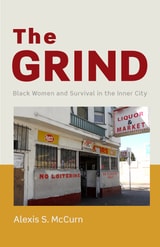
Alexis S. McCurn draws on nearly two years of naturalistic field research among adolescents and adults in Oakland, California to provide an ethnographic account of how black women accomplish the routine tasks necessary for basic survival in poor inner-city neighborhoods and how the intersections of race, gender, and class shape how black women interact with others in public. This book makes the case that the daily consequences of racialized poverty in the lives of African Americans cannot be fully understood without accounting for the personal and collective experiences of poor black women.
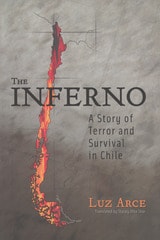
The Inferno
A Story of Terror and Survival in ChileLuz Arce; Translated by Stacey Alba Skar
University of Wisconsin Press, 2004
As a member of Salvador Allende’s Personal Guards (GAP), Luz Arce worked with leaders of the Socialist Party during the Popular Unity Government from 1971 to1973. In the months following the coup, Arce served as a militant with others from the Left who opposed the military junta led by Augusto Pinochet, which controlled the country from 1973 to1990. Along with thousands of others in Chile, Arce was detained and tortured by Chile’s military intelligence service, the DINA, in their attempt to eliminate alternative voices and ideologies in the country. Arce’s testimonial offers the harrowing story of the abuse she suffered and witnessed as a survivor of detention camps, such as the infamous Villa Grimaldi.
But when faced with threats made to her family, including her young son, and with the possibility that she could be murdered as thousands of others had been, Arce began to collaborate with the Chilean military in their repression of national resistance groups and outlawed political parties. Her testimonial thus also offers a unique perspective from within the repressive structures as she tells of her work as a DINA agent whose identifications even lead to the capture of some of her former friends and compañeros.
During Chile’s return to democracy in the early 1990s, Arce experienced two fundamental changes in her life that led to the writing of her story. The first was a deep spiritual renewal through her contacts with the Catholic Church whose Vicariate of Solidarity had fought for human rights in the country during the dictatorship. The second was her decision to participate within the legal system to identify and bring to justice those members of the military who were responsible for the crimes committed from 1973 to1990. Luz Arce’s book invites readers to rethink the definition of testimonial narrative in Latin America through the unique perspective of a survivor-witness-confessor.
The News at the Ends of the Earth
The Print Culture of Polar ExplorationHester Blum
Duke University Press, 2019
The Politics of Survival
Marc Abélès
Duke University Press, 2010
Abélès examines the new global politics, which assumes many forms and is enacted by diverse figures with varied sympathies: the officials at meetings of the WTO and the demonstrators outside them, celebrity activists, and online contributors to international charities. He makes an impassioned case that our accounts of globalization need to reckon with the preoccupations and affiliations now driving global politics. The Politics of Survival was first published in France in 2006. This English-language edition has been revised and includes a new preface.
The Professional Convict's Tale
The Survival of John O'Neill In and Out of PrisonElmer H. Johnson
Southern Illinois University Press, 2007
Challenging the ideology of treatment in the prison world
The Professional Convict’s Tale: The Survival of John O’Neill In and Out of Prison offers a unique, inside view of life behind bars in the 1960s. Elmer H. Johnson, a criminologist who has specialized in prison life for half a century, gave Menard Penitentiary parolee John O’Neill a tape recorder and a set of questions designed to draw out his opinions and observations about the prison world.
This study frames O’Neill’s responses with Johnson’s analysis. O’Neill’s narrative guides readers through the world beyond the prison gate as he shares his strategies for survival and proposes alternatives to rebellion or submission. He discusses the fractionalization between the keepers and the kept and the effects that subterranean communication, threats of inmate predators, and prison riots can have on the psyche of both inmates and staff.
O’Neill’s frustrations and the inadequate responses from the community to which he was paroled illustrate the social costs and impact of parole for the community and for the parolee. Although O’Neill recorded his comments more than forty years ago, they are still relevant today when thousands of convicts are being released from prison each year.

The Purpose-Based Library
Finding Your Path to Survival, Success, and GrowthJohn J. Huber
American Library Association, 2015
The Tree That Bends
Discourse, Power, and the Survival of Maskoki PeoplePatricia Riles Wickman
University of Alabama Press, 1999
In her compelling and controversial arguments, Wickman rejects the myths that erase Native Americans from Florida through the agency of Spaniards and diseases and make the area an empty frontier awaiting American expansion. Through research on both sides of the Atlantic and extensive oral history interviews among the Seminoles of Florida and Oklahoma, Wickman shatters current theories about the origins of the people encountered by the Spaniards and presents, for the first time ever, the Native American perspective. She describes the genesis of the groups known today as Creek, Seminole, and Miccosukee—the Maskoki peoples—and traces their common Mississippian heritage, affirming their claims to continuous habitation of the Southeast and Florida. Her work exposes the rhetoric of conquest and replaces it with the rhetoric of survival.
An important cross-disciplinary work, The Tree That Bends reveals the flexibility of the Maskoki people and the sociocultural mechanisms that allowed them to survive the pressures introduced at contact. Their world was capable of incorporating the New without destroying the Old, and their descendants not only survive today but also succeed as a discrete culture as a result.
Trap with a Green Fence
Survival in TreblinkaRichard Glazar
Northwestern University Press, 1995