Results by title
131 books match the query 'Texts' and 27 start with t
Tales and Songs of Southern Illinois
Collected by Charles Neely
Southern Illinois University Press, 1998
First published in 1938, this lively collection of over 150 tales and songs runs the gamut from joy to woe, from horror to humor. In forming the collection, Charles Neely required only that the tales and songs—whether home grown or transplanted from the great body of world lore— had taken root somehow in the area of southern Illinois known as Egypt.
Notable tales include "Bones in the Well," "A Visit from Jesse James," "The Flight of the Naked Teamsters," "The Dug Hill Boger," and "How Death Came to Ireland"; among the songs and ballads are "Barbara Allen," "Hog and Hominy," "The Drunkard’s Lone Child," "The Belleville Convent Fire," "Shawneetown Flood," and "The Death of Charlie Burger."

Talk, Tools, and Texts
A Logic-in-Use for Studying Lifespan Literate Action DevelopmentRyan J. Dippre
University Press of Colorado, 2020
Talk, Tools, and Texts tackles a perplexing issue: how can we envision writing as developing throughout a lifetime, from the first purposeful marks made on paper to the last? How can we make accounts of writing development that keep the complexity of our lives in mind while also providing useful insight to researchers, teachers, and writers?
Drawing on eleven accounts of writers at different points in the lifespan (ages 12 to 80) and in different social circumstances (from a middle-school classroom to a bird-sanctuary newsletter), Talk, Tools, and Texts constructs a “logic-in-use” for following writers and their writing development at a variety of points in the lifespan. It also offers several strategies scholars can use in pursuit of their own research into lifespan writing.
Texts Of Power
Emerging Disciplines in Colonial BengalPartha Chatterjee
University of Minnesota Press, 1995
The case of Bengal illustrates the interaction of colonialism and modernity.
Bengal was the first “modern” province in India-the first, that is, to undergo a forced encounter with Western modernity. Beginning with this premise, the writers in Texts of Power consider what the case of Bengal says about the workings of Western modernity in a colonial setting.
A truly interdisciplinary effort, this collection probes questions of pedagogy, nationalism, and gender. Among the subjects explored are colonialist and nationalist surveillance of Bengali literature; the disposition of the nation’s art; the politics of child-rearing; the mapping of Calcutta; and the disciplining of historical memory. By applying the theoretical insights of recent historical and cultural studies to the specific circumstances of Bengal, the authors develop a new approach to Indian intellectual and cultural history. Their work makes a significant contribution to our understanding of contemporary intellectual modernity.Contributors: Pradip Kumar Bose, Keya Dasgupta, Tapati Guha-Thakurta, all at the Centre for Studies in Social Sciences, Calcutta; Tapti Roy, Maharani Kashiswari College, Calcutta; Ranabir Samaddar, Maulana Azad Institute of Asian Studies.
Texts and Contexts from the History of Feminism and Women’s Rights
East Central Europe, Second Half of the Twentieth CenturyZsofia Lorand
Central European University Press, 2024
A compendium of one hundred sources, preceded by a short author’s bio and an introduction, this volume offers an English language selection of the most representative texts on feminism and women’s rights from East Central Europe between the end of the Second World War and the early 1990s. While communist era is the primary focus, the interwar years and the post-1989 transition period also receive attention. All texts are new translations from the original.
The book is organised around themes instead of countries; the similarities and differences between nations are nevertheless pointed out. The editors consider women not only in their local context, but also in conjunction with other systems of thought—including shared agendas with socialism, liberalism, nationalism, and even eugenics.
The choice of texts seeks to demonstrate how feminism as political thought was shaped and organised in the region. They vary in type and format from political treatises, philosophy to literary works, even films and the visual arts, with the necessary inclusion of the personal and the private. Women’s political rights, right to education, their role in nation-building, women, and war (and especially women and peace) are part of the anthology, alongside the gendered division of labour, violence against women, the body, and reproduction.
Texts and Contexts of the Book of Sirach / Texte und Kontexte des Sirachbuches
Gerhard Karner
SBL Press, 2017
Now available from SBL Press
Thirteen essays, some in German and others in English, tackle the complicated history of textual transmission of Sirach. This book presents the proceedings of an international conference held in 2014 in Eichstaett, Germany on the text of Ben Sira within its historical contexts.Contributors include James K. Aitken, Pierre-Maurice Bogaert, Franz Böhmisch, Anthony J. Forte SJ, Jan Joosten, Otto Kaiser, Siegfried Kreuzer, Jean-Sébastien Rey, Werner Urbanz, Knut Usener, Oda Wischmeyer, Markus Witte, Benjamin G. Wright, and Burkard M. Zapff.
Features:
- A sociocultural and theological history of Sirach
- Philological and textual problems of the Hebrew, Greek, Syriac, and Latin versions
- Translation strategies based on Greek, Syriac, and Latin text traditions and related hermeneutical questions
Texts from the Pyramid Age
Nigel C. Strudwick
SBL Press, 2005
The Ahhiyawa Texts
Gary M. Beckman
SBL Press, 2011
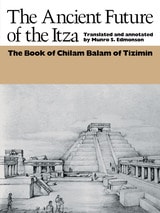
The Ancient Future of the Itza
The Book of Chilam Balam of TiziminTranslated and annotated by Munro S. Edmonson
University of Texas Press, 1982
The title of Edmonson's work refers to the Mayan custom of first predicting their history and then living it, and it may be that no other peoples have ever gone so far in this direction. The Book of Chilam Balam was a sacred text prepared by generations of Mayan priests to record the past and to predict the future. The official prophet of each twenty-year rule was the Chilam Balam, or Spokesman of the Jaguar—the Jaguar being the supreme authority charged with converting the prophet's words into fact.
This is a literal but poetic translation of one of fourteen known manuscripts in Yucatecan Maya on ritual and history. It pictures a world of all but incredible numerological order, slowly yielding to Christianity and Spanish political pressure but never surrendering. In fact, it demonstrates the surprising truth of a secret Mayan government during the Spanish rule, which continued to collect tribute in the names of the ruined Classic cities and preserved the essence of the Mayan calendar as a legacy for the tradition's modern inheritors.
The history of the Yucatecan Maya from the seventh to the nineteenth century is revealed. And this is history as the Maya saw it—of a people concerned with lords and priests, with the cosmology which justified their rule, and with the civil war which they perceived as the real dimension of the colonial period.
A work of both history and literature, the Tizimin presents a great deal of Mayan thought, some of which has been suspected but not previously documented. Edmonson's skillful reordering of the text not only makes perfect historical sense but also resolves the long-standing problem of correlating the two colonial Mayan calendars. The book includes both interpretative and literal translations, as well as the Maya parallel couplets and extensive annotations on each page. The beauty of the sacred text is illuminated by the literal translation, while both versions unveil the magnificent historical, philosophical, and social traditions of the most sophisticated native culture in the New World.
The prophetic history of the Tizimin creates a portrait of the continuity and vitality, of the ancient past and the foreordained future of the Maya.
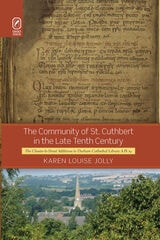
The Community of St. Cuthbert in the Late Tenth Century
The Chester-le-Street Additions to Durham Cathedral Library A.IV.19Karen Louise Jolly
The Ohio State University Press, 2012
The Community of St. Cuthbert in the Late Tenth Century: The Chester-le-Street Additions to Durham Cathedral Library A.IV.19 reveals the dynamic role a seemingly marginalized community played during a defining period for the emergence of English religious identity. Based on her new critical edition of additions made to Durham Cathedral Library A.IV.19 and by questioning the purpose of those late tenth-century additions, Karen Louise Jolly is able to uncover much about the Chester-le-Street scribes and their tumultuous time, rife as it was with various political tensions, from Vikings and local Northumbrian nobles to an increasingly dominant West Saxon monarchy.
Why, for instance, would a priest laboriously insert an Old English gloss above every Latin word in a collection of prayers intended to be performed in Latin? What motivated the same English scribe to include Irish-derived Christian materials in the manuscript, including prayers invoking the archangel Panchiel to clear birds from a field?
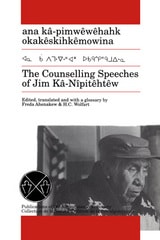
The Counselling Speeches of Jim Ka-Nipitehtew
Freda Ahenakew
University of Manitoba Press, 1998

The Cree Language is Our Identity
The La Ronge lectures of Sarah WhitecalfSarah Whitecalf
University of Manitoba Press, 1983
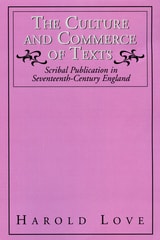
The Culture and Commerce of Texts
Scribal Publication in Seventeenth-Century EnglandHarold Love
University of Massachusetts Press, 1998
Long after the establishment of printing in England, many writers and composers still preferred to publish their work through handwritten copies. Texts so transmitted included some of the most distinguished poetry and music of the seventeenth century, along with a rich variety of political, scientific, antiquarian, and philosophical writings. While censorship was one reason for this persistence of the older practice, scribal publication remained the norm for texts that were required only in small numbers, or whose authors wished to avoid the “stigma” of print.
This is the first book to consider the trade in manuscripts as an important supplement to that in printed books, and to describe the agencies that met the need for rapid duplication of key texts.
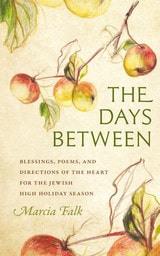
The Days Between
Blessings, Poems, and Directions of the Heart for the Jewish High Holiday SeasonMarcia Falk
Brandeis University Press, 2014
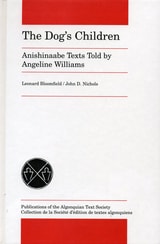
The Dog's Children
Anishinaabe Texts told by Angeline WilliamsLeonard Bloomfield
University of Manitoba Press, 1991
The Entablo Manuscript
Water Rituals and Khipu Boards of San Pedro de Casta, PeruSarah Bennison
University of Texas Press, 2022
A unique study of an Andean community’s water rituals and the extraordinary document describing how they should be performed
In the dry season in the Andes, water from springs, lakes, reservoirs, and melting glaciers feeds irrigation canals that have sustained communities for thousands of years. Managing and maintaining these water infrastructures is essential, and in 1921, in the village of San Pedro de Casta, Peru, local authorities recorded their ritual canal-cleaning duties in a Spanish-language document called the Entablo. It is only the second book (along with the Huarochirí Manuscript) ever seen by scholars in which an Andean community explains its customs and ritual laws in its own words.
Sarah Bennison offers a critical introduction to the Entablo, a Spanish transcription of the document, and an English translation. Among its other revelations, the Entablo delves into the use of khipu boards, devices that meld the traditional knotted strings known as khipus with a written alphabet. Only in the Entablo do we learn that there were multiple khipu boards associated with a single canal-cleaning ritual, or that there were separate khipu records for men and women. The Entablo manuscript furnishes unparalleled insights into Andean rituals, religion, and community history at a historical moment when rural highland communities were changing rapidly.
The Great Machines
Poems and Songs from the Age of the American RailroadRobert Hedin
University of Iowa Press, 1996
Here, for the first time, is a feast for anyone who has ever been beguiled by the trains that formerly thrummed through the landscapes of our lives. This entertaining and evocative anthology presents the amazing variety of poems and songs written about the American railroad in the last century and a half. Comprised of selections from both oral and written traditions, the volume celebrates the historical and cultural significance of this marvel of engineering skills. Hedin's anthology allows all readers, from the most avid railroad buff to anyone who has fond memories of train travel, to enjoy the romance of trains.
The Greek Magical Papyri in Translation, Including the Demotic Spells, Volume 1
TextsEdited by Hans Dieter Betz
University of Chicago Press, 1992
"The Greek magical papyri" is a collection of magical spells and formulas, hymns, and rituals from Greco-Roman Egypt, dating from the second century B.C. to the fifth century A.D. Containing a fresh translation of the Greek papyri, as well as Coptic and Demotic texts, this new translation has been brought up to date and is now the most comprehensive collection of this literature, and the first ever in English.
The Greek Magical Papyri in Transition is an invaluable resource for scholars in a wide variety of fields, from the history of religions to the classical languages and literatures, and it will fascinate those with a general interest in the occult and the history of magic.
The Holocaust of Texts
Genocide, Literature, and PersonificationAmy Hungerford
University of Chicago Press, 2002
Hungerford examines the implications of conflating texts with people in a broad range of texts: Art Spiegelman's Maus; Ray Bradbury's Fahrenheit 451; the poetry of Sylvia Plath; Binjamin Wilkomirski's fake Holocaust memoir Fragments; and the fiction of Saul Bellow, Philip Roth, and Don DeLillo. She considers the ethical consequences of this trend in the work of recent and contemporary theorists and literary critics as well, including Cathy Caruth, Jacqueline Rose, Jacques Derrida, and Paul de Man. What she uncovers are fundamentally flawed ideas about representation that underwrite and thus undermine powerful and commonly accepted claims about literature and identity. According to Hungerford, the personification of texts is ethically corrosive and theoretically unsound. When we exalt the literary as personal and construe genocide as less a destruction of human life than of culture, we esteem memory over learning, short-circuit debates about cultural change, lend credence to the illusion or metaphysics of presence, and limit our conception of literature and its purpose.
Ultimately, The Holocaust of Texts asks us to think more deeply about the relationship between reading, experience, and memorialization. Why, for instance, is it more important to remember acts of genocide than simply to learn about them? If literary works are truly the bearers of ontology, then what must be our conduct toward them? Considering difficult questions such as these with fresh logic, Hungerford offers us an invigorating work, one that will not only interest scholars of American and postwar literature, but students of the Holocaust and critical theory as well.
The Huarochiri Manuscript
A Testament of Ancient and Colonial Andean ReligionTranslation from the Quechua by Frank Salomon and George L. Urioste
University of Texas Press, 1991
One of the great repositories of a people's world view and religious beliefs, the Huarochirí Manuscript may bear comparison with such civilization-defining works as Gilgamesh, the Popul Vuh, and the Sagas. This translation by Frank Salomon and George L. Urioste marks the first time the Huarochirí Manuscript has been translated into English, making it available to English-speaking students of Andean culture and world mythology and religions.
The Huarochirí Manuscript holds a summation of native Andean religious tradition and an image of the superhuman and human world as imagined around A.D. 1600. The tellers were provincial Indians dwelling on the west Andean slopes near Lima, Peru, aware of the Incas but rooted in peasant, rather than imperial, culture. The manuscript is thought to have been compiled at the behest of Father Francisco de Avila, the notorious "extirpator of idolatries." Yet it expresses Andean religious ideas largely from within Andean categories of thought, making it an unparalleled source for the prehispanic and early colonial myths, ritual practices, and historic self-image of the native Andeans.
Prepared especially for the general reader, this edition of the Huarochirí Manuscript contains an introduction, index, and notes designed to help the novice understand the culture and history of the Huarochirí-area society. For the benefit of specialist readers, the Quechua text is also supplied.
The Life of Texts
An Introduction to Literary StudiesKiene Brillenburg Wurth
Amsterdam University Press, 2019
The Life of Texts is designed around particular issues rather than the history of the discipline as such. Each chapter concentrates on a different aspect of 'the life of texts' and introduces the key debates and concepts relevant to its study. The issues discussed range from aesthetics and narrative to intertextuality and intermediality, from reading practices to hermeneutics and semiotics, popular culture to literary canonisation, postcolonial criticism to cultural memory. Key concepts and schools in the field have been highlighted in the text and then collected in a glossary for ease of reference. All chapters are richly illustrated with examples from different language areas.
The Open Door
A Passover HaggadahRabbi Sue Levi Elwell
Central Conference of American Rabbis, 2002
The Phonology of Arizona Yaqui with Texts
Lynne S. Crumrine
University of Arizona Press, 1961
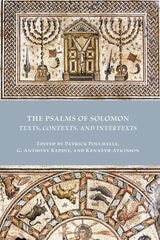
The Psalms of Solomon
Texts, Contexts, and IntertextsPatrick Pouchelle
SBL Press, 2021
Explore new approaches to the Psalms of Solomon
The Psalms of Solomon: Texts, Contexts, and Intertexts explores a unique pseudepigraphal document that bears witness to the 63 BCE Roman conquest of Jerusalem. Essays address a variety of themes, notably their political, social, religious, and historical contexts, through the lens of anthropology of religion, cognitive science, socioeconomic theory, and more. Contributors include Kenneth Atkinson, Eberhard Bons, Johanna Erzberger, Angela Kim Harkins, G. Anthony Keddie, Patrick Pouchelle, Stefan Schreiber, Shani Tzoref, and Rodney A. Werline.
The Talk and Texts of Teacher Development
Values, the Practicum, and Programmatic Change in Writing StudiesAdrienne Jankens
Utah State University Press, 2026
Through her multi-site analysis, Jankens examines the ways values are reflected in syllabi, committee meetings, and classroom practices. She demonstrates how values that are often unstated or assumed can be made explicit and linked to programmatic action, thus supporting development and aligning instructional goals with broader institutional objectives. Offering a nuanced framework on practicum courses, Jankens also highlights the importance of local contexts and distinguishes among tacit, implicit, explicit, emergent, and articulated values. This layered understanding helps reveal the often hidden mechanisms by which writing program values are enacted in day-to-day teaching practices.
Teacher development is a crucial site for enacting and understanding programmatic values, and making these values explicit can guide meaningful programmatic change. Providing an institutional ethnography of Jankens’s own writing program and situating those findings within broader conversations in writing studies, The Talk and Texts of Teacher Development adds to scholarship exploring the focus of the practicum course, the positionality and experience of graduate teaching assistants in writing programs, and the perennial work of the field to identify its core values and disciplinary identity.
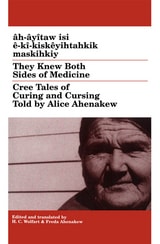
They Knew Both Sides of Medicine
Cree Tales of Curing and Cursing Told by Alice AhenakewH.C. Wolfart
University of Manitoba Press, 2000
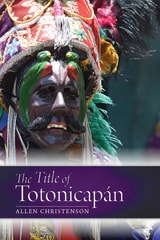
Title of Totonicapán
transcription, translation, and commentary by Allen J. Christenson
University Press of Colorado, 2022
The Title of Totonicapán is a land title written by surviving members of the K’iche’ Maya nobility, a branch of the Maya that dominated the highlands of western Guatemala prior to the Spanish invasion in 1524, and it was duly signed by the ruling lords of all three major K’iche’ lineages—the Kaweqib’, the Nijayib’, and the Ajaw K’iche’s. Titles of this kind were relatively common for Maya communities in the Guatemalan highlands in the first century after the Spanish Conquest as a means of asserting land rights and privileges for its leaders. Like the Popol Vuh, the Title of Totonicapán is written in the elevated court language of the early Colonial period and eloquently describes the mythic origins and history of the K’iche’ people. For the most part, the Title of Totonicapán agrees with the Popol Vuh’s version of K’iche’ history and cosmology, providing a complementary account that attests traditions that must have been widely known and understood. But in many instances the Totonicapán document is richer in detail and departs from the Popol Vuh’s more cursory description of history, genealogy, and political organization. In other instances, it contradicts assertions made by the authors of the Popol Vuh, perhaps a reflection of internal dissent and jealousy between rival lineages within the K’iche’ hierarchy. It also contains significant passages of cosmology and history that do not appear in any other highland Maya text.
This volume makes a comprehensive and updated edition of the Title of Totonicapán accessible to scholars and students in history, anthropology, archaeology, and religious studies in Latin America, as well as those interested in Indigenous literature and Native American/Indigenous studies more broadly. It is also a stand-alone work of Indigenous literature that provides additional K’iche’ perspectives, enhancing the reading of other colonial Maya sources.
Trust in Texts
A Different History of RhetoricSusan Miller
Southern Illinois University Press, 2008
Trust in Texts: A Different History of Rhetoric challenges the accepted idea of a singular rhetorical tradition poorly maintained from the Athenian Golden Age until the present. Author Susan Miller argues that oratorical rhetoric is but one among many codes that guide the production of texts and proposes that emotion and trust are central to the motives and effects of rhetoric.
This groundbreaking volume makes a case for historical rhetoric as disbursed, formal and informal lessons in persuasion that are codified as crafts that mediate between what is known and unknown in particular rhetorical situations. Traditional, unified histories of rhetoric ignore the extensive historical interactions among discourses—including medicine, drama, lyric poetry, philosophy, oratory, and literary fiction—that have operated from antiquity across cultures that are historically and geographically joined.
Drawing not just on traditional rhetorical works, but also on texts from philosophy and literature, Miller expands the body of works to be considered in the study of rhetoric. As the first book-length study that calls into question the centrality of logos to rhetoric, Trust in Texts will change the way the history of rhetoric is viewed and taught and will be essential to scholars and students of communications, rhetoric, English, classics, and literary studies.