Results by title
177 books match the query 'Themes, motives' and 36 start with t
Tan Men/Pale Women
Color and Gender in Archaic Greece and Egypt, a Comparative ApproachMary Ann Eaverly
University of Michigan Press, 2013
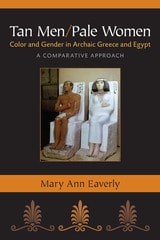
One of the most obvious stylistic features of Athenian black-figure vase painting is the use of color to differentiate women from men. By comparing ancient art in Egypt and Greece, Tan Men/Pale Women uncovers the complex history behind the use of color to distinguish between genders, without focusing on race. Author Mary Ann Eaverly considers the significance of this overlooked aspect of ancient art as an indicator of underlying societal ideals about the role and status of women. Such a commonplace method of gender differentiation proved to be a complex and multivalent method for expressing ideas about the relationship between men and women, a method flexible enough to encompass differing worldviews of Pharaonic Egypt and Archaic Greece. Does the standard indoor/outdoor explanation—women are light because they stay indoors—hold true everywhere, or even, in fact, in Greece? How “natural” is color-based gender differentiation, and, more critically, what relationship does color-based gender differentiation have to views about women and the construction of gender identity in the ancient societies that use it?
The depiction of dark men and light women can, as in Egypt, symbolize reconcilable opposites and, as in Greece, seemingly irreconcilable opposites where women are regarded as a distinct species from men. Eaverly challenges traditional ideas about color and gender in ancient Greek painting, reveals an important strategy used by Egyptian artists to support pharaonic ideology and the role of women as complementary opposites to men, and demonstrates that rather than representing an actual difference, skin color marks a society’s ideological view of the varied roles of male and female.
The Aesthetic Life of Infrastructure
Race, Affect, EnvironmentEdited by Kelly M. Rich, Nicole M. Rizzuto, and Susan Zieger
Northwestern University Press, 2023
A critical reading of the unstable structures that organize biological and social life
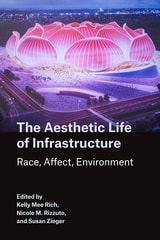
This timely and radically interdisciplinary volume uncovers the aesthetics and politics of infrastructure. From roads and bridges to harbors and canals, infrastructure is conventionally understood as the public works that allow for the circulation of capital. Yet this naturalized concept of infrastructure, driven by capital’s restless expansion, is haunted by imperial tendencies to occupy territory, extract resources, and organize life. Infrastructure thus undergirds the living nexus of modernity in an ongoing project of racialization, affective embodiment, and environmental praxis. Rather than merely making visible infrastructure’s modes of power, however, The Aesthetic Life of Infrastructure brings literary methods to bear on the interpretive terrain, reading infrastructural space and temporalities to show that their aesthetic and sensorial experience cannot be understood apart from histories of production and political economies.
Building on critical infrastructure studies in anthropology, geography, and media studies, this collection demonstrates the field’s vitality to scholars working across the humanities, including in literary, visual, and cultural studies. By querying the presumed invisibility of infrastructure’s hidden life, the volume’s contributors revitalize ongoing literary debates about reading surface and depth. How, they ask, might infrastructure and aesthetics then function as epistemic tools for rethinking each other? And what urgency do they acquire in light of current crises that bear on death, whether biological, social, or planetary?
The Art of I. Denton
Ivan Denton
University of Arkansas Press, 1988
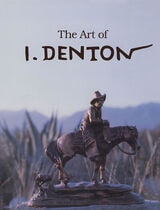
The remarkable detail and subtly stylized lines characterizing the artistry of celebrated woodcarver Ivan Denton are in abundant evidence in this beautifully illustrated volume of The Art of I. Denton. Behind each carving presented here, is its story from a piece of wood to a work of art, told in the words of Mr. Denton himself.
This is, in fact, a tour guided by Ivan Denton covering the best of his efforts, his love for the wood, and the process which turns a craftsman into an artist. As he says in describing his work: “Art exists only when you share it. When a tree falls in the woods, in school they said, ‘This tree doesn’t make a noise if someone doesn’t hear it.’ Because, you know, the sound waves don’t bump against the eardrum . . . The idea of not being able to get rid of a piece is basically the concept of an amateur. Not only does a professional need the money, and not only does he need his ego flattered, it’s just that the art doesn’t really exist until it’s shared. That’s an even deeper joy than the ego.”
Chosen from collections across the country, these pieces represent the masterworks from one of a disappearing breed of artisans. But The Art of I. Denton is more than a document of our cultural heritage, it is a tribute to the man and his art.
The Book of Samuel
Essays on Poetry and ImaginationMark Rudman
Northwestern University Press, 2009
Crisis, breakdown, rejuvenation: this is the territory of poetry that Rudman takes readers into with this set of essays. Constructed as a series of character studies, the essays are rooted in autobiographical material with biographical counterpoints, tying the poets distinctly to places. Even as they are placed, however, they are displaced: Rudman's subjects, from D.H. Lawrence to Czeslaw Milosz to T. S. Eliot, are almost all exiles, either geographically or within themselves. This exile spins anger into energy, transmuting emotion into imagination the same way that Passaic Falls, known to William Carlos Williams, turns water into power.
The mosaic style of the essays touches on nerve after nerve, avoiding the snags of academic jargon to ease towards an illuminating truth about the artists' shifting work and worlds. Some of the Samuels—Beckett and Fuller—were able to navigate these shifts, while others--Coleridge and Johnson--are shown to be less able to transmute their energy into motion.
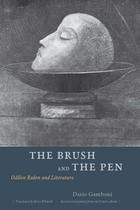
The Brush and the Pen
Odilon Redon and LiteratureDario Gamboni
University of Chicago Press, 2011
French symbolist artist Odilon Redon (1840–1916) seemed to thrive at the intersection of literature and art. Known as “the painter-writer,” he drew on the works of Poe, Baudelaire, Flaubert, and Mallarmé for his subject matter. And yet he concluded that visual art has nothing to do with literature. Examining this apparent contradiction, The Brush and the Pen transforms the way we understand Redon’s career and brings to life the interaction between writers and artists in fin-de-siècle Paris.
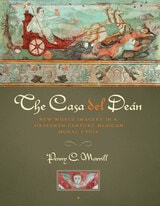
The Casa del Deán
New World Imagery in a Sixteenth-Century Mexican Mural CycleBy Penny C. Morrill
University of Texas Press, 2014
The Casa del Deán in Puebla, Mexico, is one of few surviving sixteenth-century residences in the Americas. Built in 1580 by Tomás de la Plaza, the Dean of the Cathedral, the house was decorated with at least three magnificent murals, two of which survive. Their rediscovery in the 1950s and restoration in 2010 revealed works of art that rival European masterpieces of the early Renaissance, while incorporating indigenous elements that identify them with Amerindian visual traditions.
Extensively illustrated with new color photographs of the murals, The Casa del Deán presents a thorough iconographic analysis of the paintings and an enlightening discussion of the relationship between Tomás de la Plaza and the indigenous artists whom he commissioned. Penny Morrill skillfully traces how native painters, trained by the Franciscans, used images from Classical mythology found in Flemish and Italian prints and illustrated books from France—as well as animal images and glyphic traditions with pre-Columbian origins—to create murals that are reflective of Don Tomás’s erudition and his role in evangelizing among the Amerindians. She demonstrates how the importance given to rhetoric by both the Spaniards and the Nahuas became a bridge of communication between these two distinct and highly evolved cultures. This pioneering study of the Casa del Deán mural cycle adds an important new chapter to the study of colonial Latin American art, as it increases our understanding of the process by which imagery in the New World took on Christian meaning.
The Dilemma of Style
Architectural Ideas from the Picturesque to the PostmodernJ. Mordaunt Crook
University of Chicago Press, 1987
This challenging book confronts one of the central problems of architectural theory: the nature—and necessity—of style.

The Double Screen
Medium and Representation in Chinese PaintingWu Hung
University of Chicago Press, 1997
and pictorial representations, The Double Screen shows how the
collaboration and tension between material form and image gives life to
a painting. A Chinese painting is often reduced to the image it bears;
its material form is dismissed; its intimate connection with social
activities and cultural conventions neglected.
A screen occupies a space and divides it, supplies an ideal surface for
painting, and has been a favorite pictorial image in Chinese art since
antiquity. Wu Hung undertakes a comprehensive analysis of the screen,
which can be an object, an art medium, a pictorial motif, or all three
at once. With its diverse roles, the screen has provided Chinese
painters with endless opportunities to reinvent their art.
The Double Screen provides a powerful non-Western perspective on
issues from portraiture and pictorial narrative to voyeurism,
masquerade, and political rhetoric. It will be invaluable to anyone
interested in the history of art and Asian studies.
The Edge of Surrealism
A Roger Caillois ReaderRoger Caillois, Edited by Claudine Frank
Duke University Press, 2003
These thirty-two essays with commentaries strike a balance between Caillois’s political and theoretical writings and between his better known works, such as the popular essays on the praying mantis, myth, and mimicry, and his lesser-known pieces. Presenting several new pieces and drawing on interviews and unpublished correspondence, this book reveals Caillois’s consistent effort to reconcile intellectual rigor and imaginative adventure. Perhaps most importantly, The Edge of Surrealism provides an overdue look at how Caillois’s intellectual project intersected with the work of Georges Bataille and others including Breton, Bachelard, Benjamin, Lacan, and Lévi-Strauss.
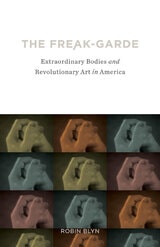
The Freak-garde
Extraordinary Bodies and Revolutionary Art in AmericaRobin Blyn
University of Minnesota Press, 2013
Since the 1890s, American artists have employed the arts of the freak show to envision radically different ways of being. The result is a rich avant-garde tradition that critiques and challenges capitalism from within.
The Freak-garde traces the arts of the freak show from P. T. Barnum to Matthew Barney and demonstrates how a form of mass culture entertainment became the basis for a distinctly American avant-garde tradition. Exploring a wide range of writers, filmmakers, photographers, and artists who have appropriated the arts of the freak show, Robin Blyn exposes the disturbing power of human curiosities and the desires they unleash. Through a series of incisive and often startling readings, Blyn reveals how such figures as Mark Twain, Djuna Barnes, Tod Browning, Lon Chaney, Nathanael West, and Diane Arbus use these desires to propose alternatives to the autonomous and repressed subject of liberal capitalism. Blyn explains how, rather than grounding revolutionary subjectivities in imaginary realms innocent of capitalism, freak-garde works manufacture new subjectivities by exploiting potentials inherent to capitalism.
Defying conventional wisdom, The Freak-garde ultimately argues that postmodernism is not the death of the avant-garde but the inheritor of a vital and generative legacy. In doing so, the book establishes innovative approaches to American avant-garde practices and embodiment and lays the foundation for a more nuanced understanding of the disruptive potential of art under capitalism.
The Human in Bits
Graphical Computers, Black AbstractionsKris Cohen
Duke University Press, 2025
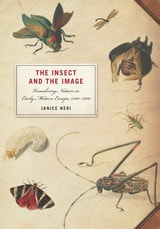
The Insect and the Image
Visualizing Nature in Early Modern Europe, 1500-1700Janice Neri
University of Minnesota Press, 2011
Once considered marginal members of the animal world (at best) or vile and offensive creatures (at worst), insects saw a remarkable uptick in their status during the early Renaissance. This quickened interest was primarily manifested in visual images—in illuminated manuscripts, still life paintings, the decorative arts, embroidery, textile design, and cabinets of curiosity. In The Insect and the Image, Janice Neri explores the ways in which such imagery defined the insect as a proper subject of study for Europeans of the early modern period.
It was not until the sixteenth century that insects began to appear as the sole focus of paintings and drawings—as isolated objects, or specimens, against a blank background. The artists and other image makers Neri discusses deployed this “specimen logic” and so associated themselves with a mode of picturing in which the ability to create a highly detailed image was a sign of artistic talent and a keenly observant eye. The Insect and the Image shows how specimen logic both reflected and advanced a particular understanding of the natural world—an understanding that, in turn, supported the commodification of nature that was central to global trade and commerce during the early modern era.
Revealing how sixteenth- and seventeenth-century artists and image makers shaped ideas of the natural world, Neri’s work enhances our knowledge of the convergence of art, science, and commerce today.
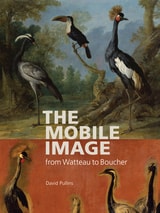
The Mobile Image from Watteau to Boucher
David Pullins
J. Paul Getty Trust, The, 2024
This book provides a new way of thinking about eighteenth-century French art and visual culture by prioritizing production over reception. Abandoning the ideologically driven discourse that distinguished fine from decorative art between the 1690s and 1770s, The Mobile Image reveals how the two have been inextricably bound from the earliest stages of artistic instruction through the daily life of painters’ workshops. In this study, author David Pullins defines artisanal and artistic means of learning, seeing, and making through a system of “mobile images”: motifs that were effectively engineered for mobility and designed never to be definitive, always awaiting replication and circulation. He examines the careers of Antoine Watteau, Jean-Baptiste Oudry, and François Boucher, situating them against a much broader cast of actors—such as printmakers, publishers, anonymous studio assistants, and architects, among others—to place eighteenth-century painting within a wider context of media and making.
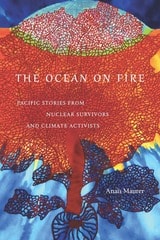
The Ocean on Fire
Pacific Stories from Nuclear Survivors and Climate ActivistsAnaïs Maurer
Duke University Press, 2024
The Place of Narrative
Mural Decoration in Italian Churches, 431-1600Marilyn Aronberg Lavin
University of Chicago Press, 1990
"Like many masterpieces, Lavin's book builds upon a simple idea . . . it is possible to do a computer analysis of . . . visual narratives. . . . This is the first computer-based study of the visual arts of which I am aware that illustrates how those technologies can utterly transform the study of old master art. An extremely important book, one likely to become the most influential recent study of art of this period, The Place of Narrative is also a beautiful artifact."—David Carrier, Leonardo
"Covering over a millennium and dealing with the whole of Italy, Lavin makes pioneering use of new methodology employing a computer database . . . [and] novel terminology to describe the disposition of scenes of church and chapel walls. . . . We should recognize this as a book of high seriousness which reaches out into new areas and which will fruitfully stimulate much thought on a neglected subject of very considerable significance."—Julian Gardner, Burlington Magazine
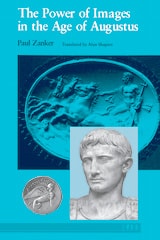
The Power of Images in the Age of Augustus
Paul Zanker; translated by Alan Shapiro
University of Michigan Press, 1990
The Public in the Picture
Involving the Beholder in Antique, Islamic, Byzantine, Western Medieval and Renaissance ArtEdited by Beate Fricke and Urte Krass
Diaphanes, 2015
With The Public in the Picture, contributors describe this shift, with each essay focusing on a specific group of works created at a different moment in history. Together, the contributions explore the political, religious, and social contexts of the publics depicted and relate this shift to the rise of perspectival representation. Contributors to The Public in the Picture include Andrew Griebler, Annette Haug, Henrike Haug, Christiane Hille, Christopher Lakey, Andrea Lermer, Cornelia Logemann, Anja Rathmann-Lutz, Alberto Saviello, and Daniela Wagner.
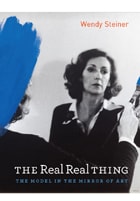
The Real Real Thing
The Model in the Mirror of ArtWendy Steiner
University of Chicago Press, 2010
Our era is defined by the model. From Victoria’s Secret and America’s Next Top Model to the snapshots we post on Facebook and Twitter, our culture is fixated on the pose, the state of existing simultaneously as artifice and the real thing.
In this bold view of contemporary culture, Wendy Steiner shows us the very meaning of the arts in the process of transformation. Her story begins at the turn of the last century, as the arts abandoned the representation of the world for a heady embrace of the abstract, the surreal, and the self-referential. Today though, this “separate sphere of the aesthetic” is indistinguishable from normal life. Media and images overwhelm us: we gingerly negotiate a real-virtual divide that we suspect no longer exists, craving contact with what J. M. Coetzee has called “the real real thing.” As the World Wide Web renders the lower-case world in ever-higher definition, the reality-based genres of memoir and documentary are displacing fiction, and novels and films are depicting the contemporary condition through model-protagonists who are half-human, half-image. Steiner shows the arts searching out a new ethical potential through this figure: by stressing the independent existence of the model, they welcome in the audience in all its unpredictability, redefining aesthetic experience as a real-world interaction with the promise of empathy, reciprocity, and egalitarian connection.
A masterly performance by a penetrating, inquisitive mind, The Real Real Thing is that rarest of books, one whose provocations and inspirations will inspire readers to take a new—and nuanced—look at the world around them.
The Russian Revival of the Dithyramb
A Modernist Use of AntiquityKatherine Lahti
Northwestern University Press, 2018
Nietzsche’s The Birth of Tragedy and Viacheslav Ivanov’s treatise in response, “The Hellenic Religion of the Suffering God,” have been considered the foundation of the dithyramb revival, but Katherine Lahti shows Erwin Rohde’s Psyche: The Cult of Souls and the Belief in Immortality among the Greeks also to have played a significant role.
Lahti’s wide-ranging and expertly curated survey of art, music, and letters includes the poetry and plays of the Symbolists and Futurists, with special attention to The Fairground Booth and Vladimir Mayakovsky: A Tragedy; the theater of Ozarovsky, Meyerhold, and Evreinov; dancing by Isadora Duncan, Nijinsky, and Fokine; and Matisse’s canvas The Dance.
Lahti follows the persistence of the dithyramb’s popularity after 1917, when it enjoyed a special place in Russian culture during the first years after the Bolshevik Revolution. Demonstrating the influence of the dithyramb on the development of Russian avant-garde culture, this book reshapes our understanding of an extraordinarily dynamic period in Russian art and thought.
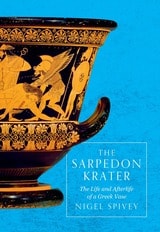
The Sarpedon Krater
The Life and Afterlife of a Greek VaseNigel Spivey
University of Chicago Press, 2019
Spivey takes the reader on a dramatic journey, beginning with the krater’s looting from an Etruscan tomb in 1971 and its acquisition by the Metropolitan Museum of Art, New York, followed by a high-profile lawsuit over its status and its eventual return to Italy. He explains where, how, and why the vase was produced, retrieving what we know about the life and legend of Sarpedon. Spivey also pursues the figural motif of the slain Sarpedon portrayed on the vase and traces how this motif became a standard way of representing the dead and dying in Western art, especially during the Renaissance.
Fascinating and informative, The Sarpedon Krater is a multifaceted introduction to the enduring influence of Greek art on the world.
The Social Life of Pots
Glaze Wares and Cultural Dynamics in the Southwest, AD 1250-1680Edited by Judith A. Habicht-Mauche, Suzanne L. Eckert, and Deborah L. Huntley
University of Arizona Press, 2006
Through the study of glaze-painted pottery, archaeologists are beginning to understand that pots had “social lives” in this changing world and that careful reconstruction of the social lives of pots can help us understand the social lives of Puebloan peoples. In this book, fifteen contributors apply a wide range of technological and stylistic analysis techniques to pottery of the Rio Grande and Western Pueblo areas to show what it reveals about inter- and intra-community dynamics, work groups, migration, trade, and ideology in the precontact and early postcontact Puebloan world.
The contributors report on research conducted throughout the glaze producing areas of the Southwest and cover the full historical range of glaze ware production. Utilizing a variety of techniques—continued typological analyses, optical petrography, instrumental neutron activation analysis, X-ray microprobe analysis, and inductively coupled plasma mass spectroscopy—they develop broader frameworks for examining the changing role of these ceramics in social dynamics. By tracing the circulation and exchange of specialized knowledge, raw materials, and the pots themselves via social networks of varying size, they show how glaze ware technology, production, exchange, and reflected a variety of dynamic historical and social processes.
Through this material evidence, the contributors reveal that technological and aesthetic innovations were deliberately manipulated and disseminated to actively construct “communities of practice” that cut across language and settlement groups. The Social Life of Pots offers a wealth of new data from this crucial period of prehistory and is an important baseline for future work in this area.
Contributors
Patricia Capone
Linda S. Cordell
Suzanne L. Eckert
Thomas R. Fenn
Judith A. Habicht-Mauche
Cynthia L Herhahn
Maren Hopkins
Deborah L. Huntley
Toni S. Laumbach
Kathryn Leonard
Barbara J. Mills
Kit Nelson
Gregson Schachner
Miriam T. Stark
Scott Van Keuren
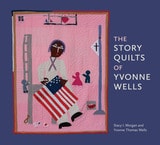
The Story Quilts of Yvonne Wells
Stacy I. Morgan
University of Alabama Press, 2024
The introduction and definitive guide to the work of celebrated folk artist Yvonne Wells, whose vibrant, innovative story quilts address an array of historic, cultural, and religious themes
The Story Quilts of Yvonne Wells is an introduction and definitive guide to the self-taught quilter whose expansive body of work serves as testament to the sweeping tides of American life and Wells’s significance as a major figure within the folk art and art world writ large.
Beginning when she was nearly 40 years old and without formal training, Wells created her first quilt for practical use but was soon hand stitching appliqué figures into bold, original designs that unleashed her voice as a storyteller. Incorporating a wide variety of symbolic materials and unconventional objects—“anything I can stick a needle in”—Wells’s vivid story quilts reveal a fearless and encyclopedic vision ranging from the intimately autobiographical to iconic scenes from African American history, the Bible, Southern culture, and contemporary headlines.
The result of years of close collaboration between Stacy I. Morgan and Wells herself, The Story Quilts of Yvonne Wells is richly illustrated with more than 100 quilts accompanied by narratives about each, told in the artist's own words, and interspersed with in-depth essays documenting Wells’s unique artistic practice and creative journey during her five-decade art career.

The Stranger from Omaha
Travel Narratives in the Cinema of Alexander PayneJason Sperb
University of Texas Press, 2025
The first in-depth analysis of the films of Alexander Payne through the lenses of authorship, tourism, and leisure.
With the films Election, About Schmidt, Sideways, Nebraska, and The Holdovers, Alexander Payne has carved out an unusual role in American cinema as a bankable auteur. There is something about Payne’s neurotics and searchers, his working stiffs and disillusioned idealists—something funny, moving, and filled with insight.
Jason Sperb dissects Payne’s oeuvre, focusing on the director’s penchant for travel narratives. Payne’s films usually center on male protagonists discontent with the emotional and material realities of the day-to-day and seeking satisfaction in some literal or metaphorical elsewhere. But their attempts to escape wind up perpetuating, rather than alleviating, the imbalance between labor and leisure that structures modern life. In this sense, Sperb argues, Payne’s characters are akin to tourists, searching for fleeting glimpses of the fulfillment they dream about. Examining themes of masculinity, nostalgia, whiteness, and class, The Stranger from Omaha is the first auteur study devoted to Payne’s delicately balanced cinematic world. An outsider even in his own heartland, Payne proves to be an artist working at a clarifying remove—a witness to the American condition, observing from just enough distance.
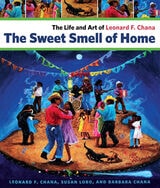
The Sweet Smell of Home
The Life and Art of Leonard F. ChanaLeonard F. Chana, Susan Lobo, and Barbara Chana
University of Arizona Press, 2009
He began his career by creating cards and soon was lending his art to posters and logos for many community-based Native organizations. Winning recognition from these groups, his work was soon actively sought by them. Chana’s work also appears on the covers and as interior art in a number of books on southwestern and American Indian topics.
The Sweet Smell of Home is an autobiographical work, written in Chana’s own voice that unfolds through oral history interviews with anthropologist Susan Lobo. Chana imparts the story of his upbringing and starting down the path toward a career as an artist. Balancing humor with a keen eye for cultural detail, he tells us about life both on and off the reservation.
Eighty pieces of art—26 in color—grace the text, and Chana explains both the impetus for and the evolution of each piece. Leonard Chana was a people’s artist who celebrated the extraordinary heroism of common people’s lives. The Sweet Smell of Home now celebrates this unique artist whose words and art illuminate not only his own remarkable life, but also the land and lives of the Tohono O’odham people
The Underground Poetry Metro Transportation System for Souls
Essays on the Cultural Life of PoetryTony Hoagland
University of Michigan Press, 2019

The Virgin and the Dynamo
Public Murals in American Architecture, 1893–1917Bailey Van Hook
Ohio University Press, 2003
The beaux-arts mural movement in America was fueled by energetic young artists and architects returning from training abroad. They were determined to transform American art and architecture to make them more thematically cosmopolitan and technically fluid and accomplished. The movement slowly coalesced around the decoration of mansions of the Gilded Age elite, mostly in New York, and of public buildings and institutions across the breadth of the country.
The Virgin and the Dynamo: Public Murals in American Architecture, 1893-1917 is the first book in almost a century to concentrate exclusively on the beaux-arts mural movement in the United States. Beginning with a short history of the movement from its inception in Boston during the American Renaissance, Bailey Van Hook focuses on the movement’s public manifestations in the period between the World’s Columbian Exposition in Chicago in 1893 and the First World War.
Professor Van Hook explores different aspects of the mural movement, the concept and meaning of “decoration,” the claim that murals are inherently democratic, the shift in preference from allegory to history, the gendered concept of modernity, the ideologies behind the iconography, and, finally, the decline of the movement when it began to be seen as old fashioned and anachronistic.
The Virgin and the Dynamo raises our understanding of the beaux-arts movement to a new level. For the general reader, this illustrated history will explain many familiar representations of local and national values.

The Zephyrs of Najd
The Poetics of Nostalgia in The Classical Arabic NasibJaroslav Stetkevych
University of Chicago Press, 1993
Stetkevych concentrates on the "places of lost bliss" that furnish the dominant motif in the lyric-elegiac opening section (nasib) of the classic Arab code, or qusidah. In defining the Arabic lyrical genre, he shows how pre-Islamic lamentations over abandoned campsites evolved, in Arabo-Islamic mystical poetry, into expressions of spiritual nostalgia. Stetkevych also draws intriguing parallels between the highlands of Najd in Arabic poetry and Arcadia in the European tradition. He concludes by exploring the degree to which the pastoral-paradisiacal archetype of the nasib pervades Arabic literary perception, from the pre-Islamic ode through the Thousand and One Nights and later texts.
Enhanced by Stetkevych's sensitive translations of all the Arabic texts discussed, The Zephyrs of Najd brings the classical Arabic ode fully into the purview of contemporary literary and critical discourse.

Themes and Issues in Asian Cartooning
John A. Lent
University of Wisconsin Press, 1999
Themes and Issues in Asian Cartooning uses overviews and case studies by scholars to discuss Asian animation, humor magazines, gag cartoons, comic strips, and comic books. The first half of the book looks at contents and audiences of Malay humor magazines, cultural labor in Korean animation, the reception of Aladdin in Islamic Southeast Asia, and a Singaporean comic book as a reflection of that society’s personality. Four other chapters treat gender and Asian comics, concentrating on Japanese anime and manga and Indian comic books.
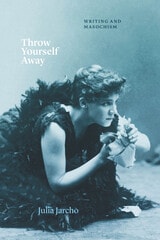
Throw Yourself Away
Writing and MasochismJulia Jarcho
University of Chicago Press, 2024
In a series of readings that engage American and European works of fiction, drama, and theory from the late nineteenth through the early twenty-first centuries, critic and playwright Julia Jarcho argues that these works conceive writing itself as masochistic, and masochism as sexuality enacted in writing. Throw Yourself Away is distinctive in its sustained focus on masochism as an engine of literary production across multiple authors and genres. In particular, Jarcho shows that theater has played a central role in modern erotic fantasies of the literary.
Jarcho foregrounds writing as a project of distressed subjects: When masochistic writing is examined as a strategy of response to injurious social systems, it yields a surprisingly feminized—and less uniformly white—image of both masochism and authorship. Ultimately, Jarcho argues that a retheorized concept of masochism helps us understand literature itself as a sex act and shows us how writing can tend to our burdened, desirous bodies. With startling insights into such writers as Henry James, Henrik Ibsen, Mary Gaitskill, and Adrienne Kennedy, Throw Yourself Away furnishes a new masochistic theory of literature itself.
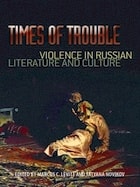
Times of Trouble
Violence in Russian Literature and CultureEdited by Marcus C. Levitt and Tatyana Novikov
University of Wisconsin Press, 2007
From the country that has added to our vocabulary such colorful terms as "purges," "pogroms," and "gulag," this collection investigates the conspicuous marks of violence in Russian history and culture.
Russians and non-Russians alike have long debated the reasons for this endemic violence. Some have cited Russia's huge size, unforgiving climate, and exposed geographical position as formative in its national character, making invasion easy and order difficult. Others have fixed the blame on cultural and religious traditions that spurred internecine violence or on despotic rulers or unfortunate episodes in the nation's history, such as the Mongol invasion, the rule of Ivan the Terrible, or the "Red Terror" of the revolution. Even in contemporary Russia, the specter of violence continues, from widespread mistreatment of women to racial antagonism, the product of a frustrated nationalism that manifests itself in such phenomena as the wars in Chechnya.
Times of Trouble is the first in English to explore the problem of violence in Russia. From a variety of perspectives, essays investigate Russian history as well as depictions of violence in the visual arts and in literature, including the works of Fyodor Dostoevsky, Isaac Babel, Mikhail Lermontov, and Nina Sadur. From the Mongol invasion to the present day, topics include the gulag, genocide, violence against women, anti-Semitism, and terrorism as a tool of revolution.
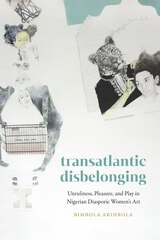
Transatlantic Disbelonging
Unruliness, Pleasure, and Play in Nigerian Diasporic Women's ArtBimbola Akinbola
Duke University Press, 2025
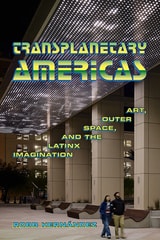
Transplanetary Americas
Art, Outer Space, and the Latinx ImaginationRobb Hernández
Duke University Press, 2026

Travelers, Immigrants, Inmates
Essays in EstrangementFrances Bartkowski
University of Minnesota Press, 1995
Travelers, Immigrants, Inmates was first published in 1995. Minnesota Archive Editions uses digital technology to make long-unavailable books once again accessible, and are published unaltered from the original University of Minnesota Press editions.
Identities are always mistaken; yet they are as necessary as air to sustain life in and among communities. Frances Bartkowski uses travel writings, U.S. immigrant autobiographies, and concentration camp memoirs to illustrate how tales of dislocation present readers with a picture of the complex issues surrounding mistaken identities. In turn, we learn much about the intimate relation between language and power.
Combining psychoanalytic and political modes of analysis, Bartkowski explores the intertwining of place and the construction of identities. The numerous writings she considers include André Gide's Voyage to the Congo, Eva Hoffman's Lost in Translation, Sandra Cisneros's House on Mango Street, Zora Neale Hurston's Dust Tracks on a Road and Tell My Horse, and Primo Levi's Survival in Auschwitz.
Elegantly written and incisive, Travelers, Immigrants, Inmates stands at the crossroads of contemporary discussions about ethnicity, race, gender, nationalism, and the politics and poetics of identity. It has much to offer readers interested in questions of identity and cultural differences.
Frances Bartkowski is associate professor of English and director of women's studies at Rutgers University in Newark. She is the author of Feminist Utopias (1989).
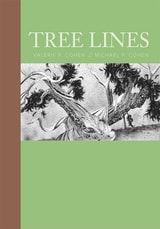
Tree Lines
Valerie P Cohen
University of Nevada Press, 2017
The drawings are black-and-white, pen-and-ink representations of high alpine ecosystems. The prose is stripped bare, abbreviated in an epigrammatic style that is poetic and spontaneous. Trees represented here are the Western Juniper or Sierra Juniper, the Limber, and the Bristlecone Pine—three species of long-lived, slow-growing conifers that grow across the Great Basin. While they represent only a small portion of the vegetative culture high in the western mountains, the Cohens use representation as abstraction as is utilized by writers and artists to convey a unique kind of microcosm of our natural environment. This book compares to such classics as Leopold’s A Sand County Almanac, and Berger’s Ways of Seeing, which open up lines of observation, analysis, and art for a new generation of readers.
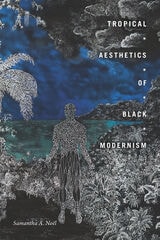
Tropical Aesthetics of Black Modernism
Samantha A. Noël
Duke University Press, 2021
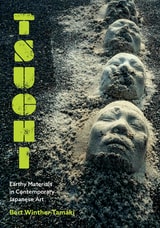
Tsuchi
Earthy Materials in Contemporary Japanese ArtBert Winther-Tamaki
University of Minnesota Press, 2022
An examination of Japanese contemporary art through the lens of ecocriticism and environmental history
Collectively referred to by the word tsuchi, earthy materials such as soil and clay are prolific in Japanese contemporary art. Highlighting works of photography, ceramics, and installation art, Bert Winther-Tamaki explores the many aesthetic manifestations of tsuchi and their connection to the country’s turbulent environmental history, investigating how Japanese artists have continually sought a passionate and redemptive engagement with earth.
In the seven decades following 1955, Japan has experienced severe environmental degradation as a result of natural disasters, industrial pollution, and nuclear irradiation. Artists have responded to these ongoing catastrophes through modes of “mudlarking” and “muckracking,” utilizing raw elements from nature to establish deeper contact with the primal resources of their world and expose its unfettered contamination. Providing a comparative assessment of more than seventy works of art, this study reveals Japanese artists’ engagement with a richly diverse repertoire of earthy materialities, elucidating their aesthetic properties, changing conditions, and cultural significance.
By focusing on the role of tsuchi as a convergence point for a wide range of creative practices, this book offers a critical reassessment of contemporary art in Japan and its intrinsic relationship to the environment. Situating art within the context of ecology and urbanization, Tsuchi shows artists striving to explore and reprocess raw forms of earth beneath the corruptions of human activity.