Results by title
82 books match the query 'Tourism' and 20 start with t
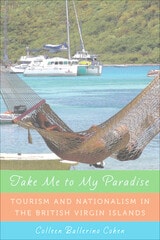
Take Me to My Paradise
Tourism and Nationalism in the British Virgin IslandsCohen, Colleen B
Rutgers University Press, 2010
Interweaving more than twenty years of field notes, Cohen provides a firsthand analysis of how tourism transformed the BVI from a small neglected British colony to a modern nation that competes in a global economic market. With its close reading of everything from advertisements to political manifestos and constitutional reforms, Take Me to My Paradise deepens our understanding of how nationalism develops hand-in-hand with tourism, and documents the uneven impact of economic prosperity upon different populations. We hear multiple voices, including immigrants working in a tourism economy, nationalists struggling to maintain some control, and the anthropologist trying to make sense of it all. The result is a richly detailed and accessible ethnography on the impact of tourism on a country that came into being as a tourist destination.
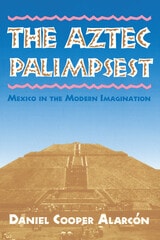
The Aztec Palimpsest
Mexico in the Modern ImaginationDaniel Cooper Alarcón
University of Arizona Press, 1997
He shows how the Chicano myth of Aztlan was constructed upon earlier Mesoamerican myths, discusses representations of Mexico in texts by nineteenth- and twentieth-century writers, and analyzes the content of tourist literature, thereby revealing the economic, social, and political interests that drive the production of Mexicanness today. This original linking of seemingly incongruous discourses corrects the misconception that Mexicanness is produced only by hegemonic groups. Cooper shows how Mexico has been defined and represented, by both Mexicans and non-Mexicans, as more than a political or geographic entity, and he particularly reveals how Mexicanness has been exploited by Mexicans themselves through the promotion of tourism as a form of neocolonialism.
Cooper's work is valuable both for identifying attempts to revise and control Mexican myth, history, and culture and for defining the intricate relationship between history, historiography, and cultural nationalism. The Aztec Palimpsest extends existing analyses of Mexicanness into new theoretical realms and provides a fresh perspective on the relationship between the United States and Mexico at a time when these two nations are becoming more intimately linked.
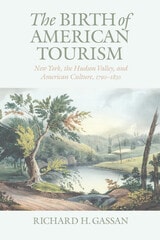
The Birth of American Tourism
New York, the Hudson Valley, and American Culture, 1790-1835Richard H. Gassan
University of Massachusetts Press, 2008
According to Gassan, the origins of American tourism in the Hudson Valley can be traced to a confluence of historical accidents, including the proximity of the region to the most rapidly growing financial and population center in the country, with its expanding middle class, and the remarkable beauty of the valley itself. But other developments also played a role, from the proliferation of hotels to accommodate tourists, to the construction of an efficient transportation network to get them to their destinations, to the creation of a set of cultural attractions that invested their experience with meaning. In the works of Washington Irving and James Fenimore Cooper and the paintings of Thomas Cole and others of the Hudson River School, travelers in the region encountered the nation's first literary and artistic movements. Tourism thus did more than provide an escape from the routines of everyday urban life; it also helped Americans of the early republic shape a sense of national identity.
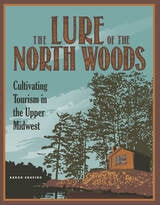
The Lure of the North Woods
Cultivating Tourism in the Upper MidwestAaron Shapiro
University of Minnesota Press, 2013
In the late nineteenth century, the North Woods offered people little in the way of a pleasant escape. Rather, it was a hub of production supplying industrial America with vast quantities of lumber and mineral ore. This book tells the story of how northern Minnesota, northern Wisconsin, and Michigan’s Upper Peninsula became a tourist paradise, turning a scarred countryside into the playground we know today.
Stripped of much of its timber and ore by the early 1900s, the North Woods experienced deindustrialization earlier than the Rust Belt cities that consumed its resources. In The Lure of the North Woods, Aaron Shapiro describes how residents and visitors reshaped the region from a landscape of exploitation to a vacationland. The rejuvenating North Woods profited in new ways by drawing on emerging connections between the urban and the rural, including improved transportation, promotion, recreational land use, and conservation initiatives. Shapiro demonstrates how this transformation helps explain the interwar origins of modern American environmentalism, when both the consumption of nature for pleasure and the work of the Civilian Conservation Corps in the North Woods and elsewhere led many Americans to cultivate a fresh perspective on the outdoors. At a time when travel and recreation are considered major economic forces, The Lure of the North Woods reveals how leisure—and tourism in particular—has shaped modern America.
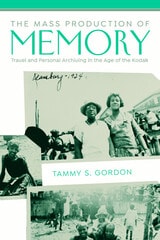
The Mass Production of Memory
Travel and Personal Archiving in the Age of the KodakTammy S. Gordon
University of Massachusetts Press, 2020
In 1888, the Eastman Dry Plate and Film Company offered the first portable camera that allowed users to conveniently take photos, using leisure travel as a primary marketing feature to promote it. The combination of portability, ease of use, and mass advertising fed into a national trend of popular photography that drew on Americans' increasing mobility and leisure time. The Kodak Company and the first generation of tourist photographers established new standards for personal archiving that amplified the individual's role in authoring the national narrative. But not everyone had equal access to travel and tourism, and many members of the African American, Native American, and gay and lesbian communities used the camera to counter the racism, homophobia, and classism that shaped public spaces.
In this groundbreaking history, Tammy S. Gordon tells the story of the camera's emerging centrality in leisure travel across the late nineteenth and early twentieth centuries and its role in “the mass production of memory,” a process in which users crafted a visual archive attesting to their experiences, values, and circumstances, setting the stage for the customizable visual culture of the digital age.
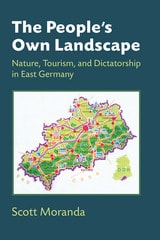
The People's Own Landscape
Nature, Tourism, and Dictatorship in East GermanyScott Moranda
University of Michigan Press, 2014
East Germany’s Socialist Unity Party aimed to placate a public well aware of the higher standards of living enjoyed elsewhere by encouraging them to participate in outdoor activities and take vacations in the countryside. Scott Moranda considers East Germany’s rural landscapes from the perspective of both technical experts (landscape architects, biologists, and physicians) who hoped to dictate how vacationers interacted with nature, and the vacationers themselves, whose outdoor experience shaped their understanding of environmental change. As authorities eliminated traditional tourist and nature conservation organizations, dissident conservationists demanded better protection of natural spaces. At the same time, many East Germans shared their government’s expectations for economic development that had real consequences for the land. By the 1980s, environmentalists saw themselves as outsiders struggling against the state and a public that had embraced mainstream ideas about limitless economic growth and material pleasures.

The Red Riviera
Gender, Tourism, and Postsocialism on the Black SeaKristen Ghodsee
Duke University Press, 2005
Interspersed throughout The Red Riviera are vivid examinations of the lives of Bulgarian women, including a waitress, a tour operator, a chef, a maid, a receptionist, and a travel agent. Through these women’s stories, Ghodsee describes their employment prior to 1989 and after. She considers the postsocialist forces that have shaped the tourist industry over the past fifteen years: the emergence of a new democratic state, the small but increasing interest of foreign investors and transnational corporations, and the proliferation of ngos. Ghodsee suggests that many of the ngos, by insisting that Bulgarian women are necessarily disenfranchised, ignore their significant professional successes.
The Scars of Project 459
The Environmental Story of the Lake of the OzarksTraci Angel
University of Arkansas Press, 2014
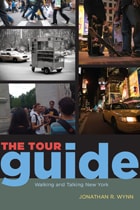
The Tour Guide
Walking and Talking New YorkJonathan R. Wynn
University of Chicago Press, 2011
Everyone wants to visit New York at least once. The Big Apple is a global tourist destination with a dizzying array of attractions throughout the five boroughs. The only problem is figuring out where to start—and that’s where the city’s tour guides come in.
These guides are a vital part of New York’s raucous sidewalk culture, and, as The Tour Guide reveals, the tours they offer are as fascinatingly diverse—and eccentric—as the city itself. Visitors can take tours that cover Manhattan before the arrival of European settlers, the nineteenth-century Irish gangs of Five Points, the culinary traditions of Queens, the culture of Harlem, or even the surveillance cameras of Chelsea—in short, there are tours to satisfy anyone’s curiosity about the city’s past or present. And the guides are as intriguing as the subjects, we learn, as Jonathan R. Wynn explores the lives of the people behind the tours, introducing us to office workers looking for a diversion from their desk jobs, unemployed actors honing their vocal skills, and struggling retirees searching for a second calling. Matching years of research with his own experiences as a guide, Wynn also lays bare the grueling process of acquiring an official license and offers a how-to guide to designing and leading a tour.
Touching on the long history of tour-giving across the globe as well as the ups and downs of New York’s tour guide industry in the wake of 9/11, The Tour Guide is as informative and insightful as the chatty, charming, and colorful characters at its heart.

The Tourist State
Performing Leisure, Liberalism, and Race in New ZealandMargaret Werry
University of Minnesota Press, 2011
No longer the dreary sheep farm at the end of the world, the New Zealand of the new millennium is a hot global ticket, heralded for its bicultural dynamism, laid-back lifestyle, and scenery extraordinary enough to pass for Tolkien’s Middle Earth. How this image was crafted is the story The Tourist State tells. In a series of narratives that address the embodied dimensions of biopolitics and explore the collision of race, performance, and the cultural poetics of the state, Margaret Werry exposes the real drama behind the new New Zealand, revealing how a nation was sold to the world—and to itself.
The story stretches back to the so-called Liberal Era at the beginning of the twentieth century, in which the young settler colony touted itself as the social laboratory of the world. Focusing on where tourism and liberal governmentality coincide, The Tourist State takes us from military diplomacy at the dawn of the American Pacific to the exotic blandishments of Broadway and Coney Island, from landscape preservation to health reform and town planning, from blockbuster film to knowledge economy policy.
Weaving together interpretive history, performance ethnography, and cultural criticism, Werry offers new ways to think about race and indigeneity—and about the role of human agency in state-making.
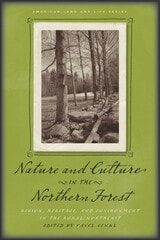
This Vast Book of Nature
Writing the Landscape of New Hampshire’s White Mountains, 1784–1911Pavel Cenkl
University of Iowa Press, 2006
Starting with an exploration of Jeremy Belknap’s 1784 expedition to Mount Washington, which Cenkl links to the origins of tourism in the White Mountains, to the transformation of touristic and residential relationships to landscape, This Vast Book of Nature explores the ways competing visions of the landscape have transformed the White Mountains culturally and physically, through settlement, development, and—most recently—preservation, a process that continues today.

Touring the Screen
Tourism and New Zealand Film GeographiesAlfio Leotta
Intellect Books, 2011
Following the success of prominent feature films shot on location, including Tolkien’s wildly popular The Lord of the Rings, New Zealand boasts an impressive film tourism industry. This book examines the relationship between New Zealand’s cinematic representation—as both a vast expanse of natural beauty and a magical world of fantasy on screen—and its tourism imagery, including the ways in which savvy local tourism boards have in recent decades used the country’s film representations to sell New Zealand as a premiere travel destination. Focusing on the films that have had a strong impact on marketing strategies by local tourist boards, Touring the Screen will be of interest to all those working and studying in the fields of cinema, postcolonial history, and tourism studies.
Tourism Geopolitics
Assemblages of Infrastructure, Affect, and ImaginationEdited by Mary Mostafanezhad, Matilde Córdoba Azcárate, Roger Norum
University of Arizona Press, 2021
In Tourism Geopolitics, contributors show enacted processes such as labor migration, conservation, securitization, nation building, territorial disputes, ethnic cleansing, heritage revitalization, and global health crisis management, among others. These contended societal processes are deployed through tourism development initiatives that mobilize deeply uneven symbolic and material landscapes. The chapters reveal how a range of experiences are implicated in this process: museum visits, walking tours, architectonical evocations of the past, road construction, militarized island imaginations, gendered cultural texts, and official silences. Collectively, the chapters offer ethnographically rich illustrations from around the world that demonstrate the critical nature of tourism in formal geopolitical practices, as well as the geopolitical nature of everyday tourism encounters. This volume is a vital read for critical geographers, anthropologists, and political scientists, as well as scholars of tourism and cultural studies.
Contributors: Sarah Becklake, M. Bianet Castellanos, Matilde Córdoba Azcárate, Jason Dittmer, Klaus Dodds, Jamie Gillen, Simon Halink, Jordan Hallbauer, James Igoe, Debbie Lisle, Mary Mostafanezhad, Dieter K. Müller, Roger Norum, Alessandro Rippa, Ian Rowen, Robert Saunders, Juan Francisco Salazar, Tani Sebro, Mimi Sheller, Henry Szadziewski, Vernadette Vicuña González, Emma Waterton
Tourism and the Metropolis
Exploring Conceptual and Geographical FrontiersEdited by Maria Gravari-Barbas, Sébastien Jacquot, Maja Jovic, and Johannes Novy
University of Westminster Press, 2026
What forms does tourism take in today’s metropolises and metropolitan regions? How do these forms differ from tourism in other urban contexts? Are these differences significant enough to warrant the classification of ‘metropolitan tourism’ as a distinct type of urban tourism? What are their implications for policy and planning processes? How do policy and planning processes in different metropolises and metropolitan regions differ from each other, and what can they learn from each other? And finally, how could tourism in metropolises and metropolitan regions be made more sustainable, resilient, and inclusive?
Given the importance widely attributed to major metropolises and metropolitan regions as contemporary engines of economic development, innovation, and change, the widespread portrayal of tourism as a leading economic and social force of the 21st century, and the fact that the world's large metropolitan areas are key recipients of tourism flows, it is surprising how little systematic attention is paid to tourism in metropolitan contexts. This book aims to fill these gaps.
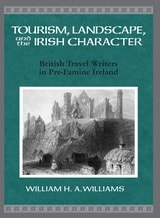
Tourism, Landscape, and the Irish Character
British Travel Writers in Pre-Famine IrelandWilliam H. A. Williams
University of Wisconsin Press, 2007
Picturesque but poor, abject yet sublime in its Gothic melancholy, the Ireland perceived by British visitors during the eighteenth and nineteenth centuries did not fit their ideas of progress, propriety, and Protestantism. The rituals of Irish Catholicism, the lamentations of funeral wakes, the Irish language they could not comprehend, even the landscapes were all strange to tourists from England, Wales, and Scotland. Overlooking the acute despair in England’s own industrial cities, these travelers opined in their writings that the poverty, bog lands, and ill-thatched houses of rural Ireland indicated moral failures of the Irish character.
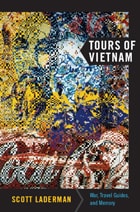
Tours of Vietnam
War, Travel Guides, and MemoryScott Laderman
Duke University Press, 2009
Tracing a history of ideological assertions embedded in travel discourse, Laderman analyzes the use of tourism in the Republic of Vietnam as a form of Cold War cultural diplomacy by a fledgling state that, according to one pamphlet published by the Vietnamese tourism authorities, was joining the “family of free nations.” He chronicles the evolution of the Defense Department pocket guides to Vietnam, the first of which, published in 1963, promoted military service in Southeast Asia by touting the exciting opportunities offered by Vietnam to sightsee, swim, hunt, and water-ski. Laderman points out that, despite historians’ ongoing and well-documented uncertainty about the facts of the 1968 “Hue Massacre” during the National Liberation Front’s occupation of the former imperial capital, the incident often appears in English-language guidebooks as a settled narrative of revolutionary Vietnamese atrocity. And turning to the War Remnants Museum in Ho Chi Minh City, he notes that, while most contemporary accounts concede that the United States perpetrated gruesome acts of violence in Vietnam, many tourists and travel writers still dismiss the museum’s display of that record as little more than “propaganda.”
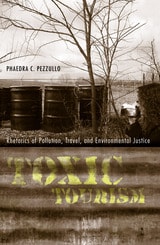
Toxic Tourism
Rhetorics of Pollution, Travel, and Environmental JusticePhaedra C. Pezzullo
University of Alabama Press, 2009
The first book length study of the environmental justice movement, tourism, and the links between race, class, and waste
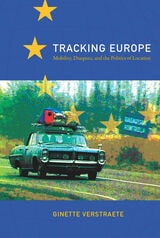
Tracking Europe
Mobility, Diaspora, and the Politics of LocationGinette Verstraete
Duke University Press, 2009
In demystifying the old and new Europe across a multiplicity of texts, images, media, and cultural practices in various times and locations, Verstraete lays bare a territorial persistence in the European imaginary, one which has been differently tied up with the politics of inclusion and exclusion. Tracking Europe moves from policy papers, cultural tourism, and migration to philosophies of cosmopolitanism, nineteenth-century travel guides, electronic surveillance at the border, virtual pilgrimages to Spain, and artistic interventions in the Balkan region. It is a sustained attempt to situate current developments in Europe within a complex matrix of tourism, migration, and border control, as well as history, poststructuralist theory, and critical media and art projects.

Travels in the Skin Trade
Tourism and the Sex IndustryJeremy Seabrook
Pluto Press, 2001
Truth-Spots
How Places Make People BelieveThomas F. Gieryn
University of Chicago Press, 2018
In Truth-Spots, Gieryn gives readers an elegant, rigorous rendering of the provenance of ideas, uncovering the geographic location where they are found or made, a spot built up with material stuff and endowed with cultural meaning and value. These kinds of places—including botanical gardens, naturalists’ field-sites, Henry Ford’s open-air historical museum, and churches and chapels along the pilgrimage way to Santiago de Compostela in Spain—would seem at first to have little in common. But each is a truth-spot, a place that makes people believe. Truth may well be the daughter of time, Gieryn argues, but it is also the son of place.