Results by title
134 books match the query 'Transformation' and 27 start with t
Tabloid Culture
Trash Taste, Popular Power, and the Transformation of American TelevisionKevin Glynn
Duke University Press, 2000
Glynn begins by situating these media shifts within the context of Reaganism, which gave rise to distinctive ideological currents in society and led the socially and economically disenfranchised to access new forms of information via the exploding television industry. He then tackles specific daytime talk shows and tabloid newscasts such as Jerry Springer and A Current Affair, reality-TV programs such as Cops and America’s Most Wanted, and two different supermarket tabloids’ coverage of the O.J. Simpson case. Tabloid Culture is the first book to treat these diverse yet related media forms and events in tandem. Rejecting the elitist dismissal of sensationalist media, Glynn instead traces the cultural currents and countercurrents running through their forms and products. Locating both reactionary and oppositional meanings in these texts, he demonstrates how these particular media genres draw on and contribute to important cultural struggles over the meanings of race, sexuality, gender, class, “normality,” “truth,” and “reality.” The study ends by discussing how the growing use of the Internet provides an entirely new realm in which such material can circulate, distort, inform, and flourish.
This innovative and provocative study of contemporary mainstream media culture in the United States will be valuable to those interested in both print and television media, the cultural-political influence of the Reagan era, and American culture in general.
Talking with the Children of God
Prophecy and Transformation in a Radical Religious GroupGordon Shepherd and Gary Shepherd
University of Illinois Press, 2010
Grounded in direct, systematic observation by neutral observers, Talking with the Children of God is a unique study of the radical religious movement now known as The Family International. The book draws on extraordinarily candid interviews with the group's leaders and administrative staff. In revealing new information about the organization's history, beliefs, and use of prophecy, Gordon Shepherd and Gary Shepherd offer a highly detailed case study that is both an antidote to sensationalized coverage of the group and a means for understanding the transformational practices of new religious movements in general.
One of the most controversial groups emerging from the Jesus People movement of the 1960s, the Family originally was known as The Children of God. Under leader David Berg, members proclaimed an apocalyptic "Endtime," shunned secular occupations, lived communally, and adopted unusual sexual practices that led to abuse scandals in the 1970s and 1980s. Following Berg's death in 1994, the organization began to dramatically alter its evangelization efforts and decision-making processes.
Talking with the Children of God builds a picture of a complex organization with ten thousand core members worldwide, including details on the lives, careers, and responsibilities of the second generation and their efforts to defend their faith. The authors summarize the Family's history and beliefs as well as its controversial past. In particular, they analyze the organization's use of prophecy--or channeled revelations from Jesus and other spiritual beings--for making decisions and setting policy, revealing how this essentially democratic process works and how it shapes Family life and culture.
These remarkable insights are the result of sixteen years of surveys and field observations conducted in Family member homes in sixteen countries, plus four days of face-to-face interviews with Family leaders and organizational staff. The volume also includes condensed transcripts of the interviews with analysis by Shepherd and Shepherd.
Teachers on the Waves of Transformation
School Culture Before and After 1989Dana Moree
Karolinum Press, 2020
Teachers on the Waves of Transformation aims to answer this question through the lens of education. With careful exploratory research at two schools in a small town in central Bohemia, anthropologist Dana Moree follows the fates of two generations of teachers at the schools. Through interviews with teachers, school administrators, and the students’ parents, Moree focuses on the relationships, values, shared stories, and symbolic and ritual worlds that create the culture of the schools. Teachers on the Waves of Transformation offers a unique perspective of cultural flux as witnessed in the classroom.
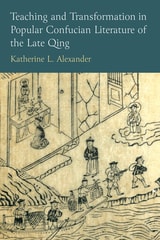
Teaching and Transformation in Popular Confucian Literature of the Late Qing
Katherine L. Alexander
University of Michigan Press, 2025
Yu’s works complicate the picture of socio-moral reform, particularly the Confucian mission of jiaohua (teaching and transformation). Though he viewed the disasters of the late Qing as the natural consequence of jiaohua’s failure to compete against socially disruptive media, such as vernacular fiction and theatrical productions, he also wanted reformers to engage closely with these genres. Yu became a vocal advocate of teaching with moral vernacular literature that he believed met commoners at their level. He emphasized the hope that by writing, printing, and performing such texts, every member of his audience could be transformed into teachers themselves, restoring society from the bottom up.
Tepoztlán and the Transformation of the Mexican State
The Politics of Loose ConnectionsJoAnn Martin
University of Arizona Press, 2005

Testing Baby
The Transformation of Newborn Screening, Parenting, and PolicymakingGrob, Rachel
Rutgers University Press, 2011
Within forty-eight hours after birth, the heel of every baby in the United States has been pricked and the blood sent for compulsory screening to detect or rule out a large number of disorders. Newborn screening is expanding rapidly, fueled by the prospect of saving lives. Yet many lives are also changed by it in ways not yet recognized.
Testing Baby is the first book to draw on parents’ experiences with newborn screening in order to examine its far-reaching sociological consequences. Rachel Grob’s cautionary tale also explores the powerful ways that parents’ narratives have shaped this emotionally charged policy arena. Newborn screening occurs almost always without parents’ consent and often without their knowledge or understanding, yet it has the power to alter such things as family dynamics at the household level, the context of parenting, the way we manage disease identity, and how parents’ interests are understood and solicited in policy debates.
The Arc of War
Origins, Escalation, and TransformationJack S. Levy and William R. Thompson
University of Chicago Press, 2011
The Book as Instrument
Stéphane Mallarmé, the Artist's Book, and the Transformation of Print CultureAnna Sigrídur Arnar
University of Chicago Press, 2011
Stéphane Mallarmé (1842–98) was a French Symbolist poet, theorist, and teacher whose ideas and legendary salons set the stage for twentieth-century experimentation in poetry, music, theater and art. A canonical figure in the legacy of modernism, Mallarmé was also a lifelong champion of the book as both a literary endeavor and a carefully crafted material object.
In The Book as Instrument, Anna Sigrídur Arnar explores how this object functioned for Mallarmé and his artistic circle, arguing that the book became a strategic site for encouraging a modern public to actively partake in the creative act, an idea that informed later twentieth-century developments such as conceptual and performance art. Arnar demonstrates that Mallarmé was invested in creating radically empowering reading experiences, and the diverse modalities he proposed for both reading and looking anticipate interactive media prevalent in today’s culture. In describing the world of books, visual culture, and mass media of the late nineteenth century, Arnar touches upon an array of themes that continues to preoccupy us in our own moment, including speculations on the future of the book. Enhanced by gorgeous illustrations, The Book as Instrument is sure to fascinate anyone interested in the ever-vibrant experiment between word and image that makes the page and the multi-sensory pleasures of reading.
The Douglass Century
Transformation of the Women’s College at Rutgers UniversityDenda, Kayo
Rutgers University Press, 2018
The Douglass Century celebrates the college’s longevity and diversity as distinctive accomplishments, and analyzes the contributions of Douglass administrators, alumnae, and students to its survival, while also investigating multiple challenges that threatened its existence. This book demonstrates how changing historical circumstances altered the possibilities for women and the content of higher education, comparing the Jazz Age, American the Great Depression, the Second World War, the post-war Civil Rights era, and the resurgence of feminism in the 1970s and 1980s. Concluding in the present day, the authors highlight the college’s ongoing commitment to Mabel Smith Douglass’ founding vision, “to bring about an intellectual quickening, a cultural broadening in connection with specific training so that women may go out into the world fitted…for leadership…in the economic, political, and intellectual life of this nation.” In addition to providing a comprehensive history of the college, the book brings its subjects to life with eighty full-color images from the Special Collections and University Archives, Rutgers University Libraries.
The Healing Stage
Black Women, Incarceration, and the Art of TransformationLisa Biggs
The Ohio State University Press, 2022
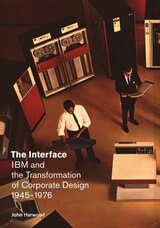
The Interface
IBM and the Transformation of Corporate Design, 1945–1976John Harwood
University of Minnesota Press, 2016
In February 1956 the president of IBM, Thomas Watson Jr., hired the industrial designer and architect Eliot F. Noyes, charging him with reinventing IBM’s corporate image, from stationery and curtains to products such as typewriters and computers and to laboratory and administration buildings. What followed—a story told in full for the first time in John Harwood’s The Interface—remade IBM in a way that would also transform the relationships between design, computer science, and corporate culture.
IBM’s program assembled a cast of leading figures in American design: Noyes, Charles Eames, Paul Rand, George Nelson, and Edgar Kaufmann Jr. The Interface offers a detailed account of the key role these designers played in shaping both the computer and the multinational corporation. Harwood describes a surprising inverse effect: the influence of computer and corporation on the theory and practice of design. Here we see how, in the period stretching from the “invention” of the computer during World War II to the appearance of the personal computer in the mid-1970s, disciplines once well outside the realm of architectural design—information and management theory, cybernetics, ergonomics, computer science—became integral aspects of design.
As the first critical history of the industrial design of the computer, of Eliot Noyes’s career, and of some of the most important work of the Office of Charles and Ray Eames, The Interface supplies a crucial chapter in the story of architecture and design in postwar America—and an invaluable perspective on the computer and corporate cultures of today.

The Politics of Compassion and Transformation
And TransformationDick Simpson
Ohio University Press, 1989
In our time, we require a religion, ethics, and politics adequate to confront the global crises we face. In our scientific era of “progress,” we might expect to look with confidence to the “scientific” disciplines of political science, sociology, and economics to solve the problems of our civilization. We might also look to the older disciplines of religion and ethics to determine our values and to tell us what we ought to do. But the sad truth is that the dominant paradigms, methods, and conclusions of the social sciences and humanities are inadequate to this task. We need a new “politics of compassion and transformation.”
The Renewal of the Kibbutz
From Reform to TransformationRussell, Raymond
Rutgers University Press, 2015
This book explores the waves of reforms since 1990. Looking through the lens of organizational theories that predict how open or closed a group will be to change, the authors find that less successful kibbutzim were most receptive to reform, and reforms then spread through imitation from the economically weaker kibbutzim to the strong.
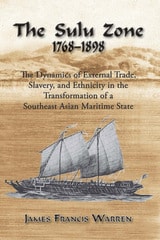
The Sulu Zone
The Dynamics of External Trade, Slavery and Ethnicity in the Transformation of a Southeast Asian Maritime State, 1768-1898 (Second Edition)James F. Warren
National University of Singapore Press, 2007
His work analyzes the dynamics of the last autonomous Malayo-Muslim maritime state over a long historical period and describes its stunning response to the world capitalist economy and the rapid "forward movement" of colonialism and modernity. It also shows how the changing world of global cultural flows and economic interactions caused by cross-cultural trade and European dominance affected men and women who were forest dwellers, highlanders, and slaves, people who worked in everyday jobs as fishers, raiders, divers and traders. Often neglected by historians, the responses of these members of society are a crucial part of the history of Southeast Asia.
The Terminal Classic in the Maya Lowlands
Collapse, Transition, and TransformationArthur A. Demarest
University Press of Colorado, 2004
Featuring an impressive roster of scholars, The Terminal Classic presents the most recent data and interpretations pertaining to this perplexing period of cultural transformation in the Maya lowlands. Although the research reveals clear interregional patterns, the contributors resist a single overarching explanation. Rather, this volume's diverse and nuanced interpretations provide a new, more properly grounded beginning for continued debate on the nature of lowland Terminal Classic Maya civilization.
The Transformation of American Religion
How We Actually Live Our FaithAlan Wolfe
University of Chicago Press, 2005
The Transformation of American Religion represents the first systematic effort in more than fifty years to bring together a wide body of literature about worship, fellowship, doctrine, tradition, identity, and sin to examine how Americans actually live their faith. Emphasizing personal stories, Wolfe takes readers to religious services across the nation-an Episcopal congregation in Massachusetts, a Catholic Mass in a suburb of Detroit, an Orthodox Jewish temple in Boston-to show that the stereotype of religion as a fire-and-brimstone affair is obsolete. Gone is the language of sin and damnation, and forgotten are the clear delineations between denominations; they have been replaced with a friendly God and a trend towards sampling new creeds and doctrines. Overall, Wolfe reveals American religion as less radical, less contentious, and less dangerous than it is generally perceived to be.
The Transformation of Authorship in America
Grantland S. Rice
University of Chicago Press, 1997
Rice shows that the rigorous censorship practiced by Puritan authorities conferred an implicit prestige on texts as civic interventions, helping to foster a vigorous and indigenous tradition of sociopolitical criticism. With special attention to the sudden emergence of the novel in post-revolutionary America, Rice reveals how the emergence of economic liberalism undermined the earlier tradition of political writing by transforming American authorship from an expression of individual civic conscience to a market-oriented profession.
Includes discussions of the writings of Benjamin Franklin, Michel-Guillaume-Jean de Crèvecoeur, and Hugh Henry Brackenridge.

The Transformation of Chinese Socialism
Chun Lin
Duke University Press, 2006

The Transformation of Family Law
State, Law, and Family in the United States and Western EuropeMary Ann Glendon
University of Chicago Press, 1989
"Glendon is generally acknowledged to be the premier comparative law scholar in the area of family law. This volume, which offers an analytical survey of the changes in family law over the past twenty-five years, will burnish that reputation. Essential reading for anyone interested in evaluating the major changes that occurred in the law of the family. . . . [And] of serious interest to those in the social sciences as well."—James B. Boskey, Law Books in Review
"Poses important questions and supplies rich detail."—Barbara Bennett Woodhouse, Texas Law Review
"An impressive scholarly documentation of the legal changes that comprise the development of a conjugally-centered family system."—Debra Friedman, Contemporary Sociology
"She has painted a portrait of the family in which we recognize not only ourselves but also unremembered ideological forefathers. . . . It sends our thoughts out into unexpected adventures."—Inga Markovits, Michigan Law Review

The Transformation of Old Age Security
Class and Politics in the American Welfare StateJill Quadagno
University of Chicago Press, 1988
The Transformation of the Avant-Garde
The New York Art World, 1940-1985Diana Crane
University of Chicago Press, 1989
Crane's account is built around discussions of seven styles: Abstract Expressionism in the forties; Pop art and Minimalism in the sixties; Figurative painting, Photorealism, and Pattern painting in the early seventies; and Neo-Expressionism in the early eighties. Demonstrating that the New York art world moved toward increasing acceptance of dominant American cultural trends, Crane offers a fascinating look not only at the intricacies of New York's artistic inner circle but also at the sociology of work and professions, the economics of culture markets such as "dealing art," and the sociology of culture.

The Transformation of the Christian Right in the 1980s
Matthew C. Moen
University of Alabama Press, 2008
The Transformation of the Christian Right chronicles and analyzes the remarkable changes that have occurred in the Christian Right from its emergence in the late 1970s to the present. It documents the rapid turnover of Christian-Right organizations and explains the forces driving that kaleidoscopic change. Moen also traces the strategic shift of the movement’s leaders, away from lobbying the Congress and toward mobilizing conservative activists in the grass roots; he demonstrates the substitution of liberal language (with its emphasis on “equality, rights, and freedom”) for moralistic language (with its focus on “right and wrong”). Much has been written about the Christian Right’s impact on politics but little about how years of political activism have shaped and influenced the Christian Right. Moen addresses that neglected side of the issue.

Tournament of Lawyers
The Transformation of the Big Law FirmMarc Galanter and Thomas Palay
University of Chicago Press, 1991
"Galanter and Palay pose questions and offer some answers which are certain to change the way big firm practice is regarded. To describe their work as challenging is something of an understatement: they at times delight, stimulate, frustrate and even depress the reader, but they never disappoint. Tournament of Lawyers is essential to the understanding of the business of the big law firms."—Jean and Colin Fergus, New York Law Journal
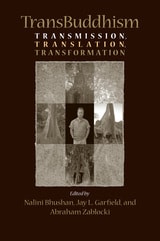
TransBuddhism
Transmission, Translation, and TransformationNalini Bhushan
University of Massachusetts Press, 2009
The chapters in the first section explore the transmission of Buddhism to the West, ranging from the writings of one of its earliest western interpreters, the Wesleyan missionary R. Spence Hardy, to the globalization of Tibetan Buddhist reincarnation, to the development and practice of Buddhism within the American prison system. The concluding chapter of this section presents a case study of a Japanese Buddhist temple in Oregon that ultimately died out—an example of a transmission that failed.
The second section looks at the complex issues that arise in the translation of Buddhist terms, texts, and concepts from one language or cultural milieu to another. Two chapters examine the challenges confronted by those who translate Buddhist texts—one exploring the contemporary translation of Tibetan Buddhism, the second analyzing an exchange of poetry in medieval Japan. The other two chapters describe the translation of Buddhist ideas into new cultural domains in America, specifically film and sports.
The final section presents case studies in the transformation of Buddhism which is resulting from its new global interconnections. Topics include the role of women in transforming Buddhist patriarchy, Buddhist-Freudian dialogue in relationship to mourning, and the interplay between Buddhism and the environmental movement.
The book also includes images created by the noted artist Meridel Rubenstein which frame the individual chapters within a nonverbal exploration of the themes discussed.
In addition to the editors, contributors include Mark Blum, Mario D'Amato, Sue Darlington, Elizabeth Eastman, Connie Kassor, Tom Rohlich, Judith Snodgrass, Jane Stangl, and Karma Lekshe Tsomo.
Transformation and Trouble
Crime, Justice and Participation in Democratic South AfricaDiana Gordon
University of Michigan Press, 2006
Crime is one of the major challenges to any new democracy. Violence often increases after the lifting of authoritarian control, or in the aftermath of regime change. But how can a fledgling democracy fight crime without violating the fragile rights of its citizens? In Transformation and Trouble, accomplished theorist and criminal justice scholar Diana Gordon critically examines South Africa's efforts to strike the perilous balance between democratic participation and social control.
South Africa has made great progress in pursuing the Western ideals of participatory justice and due process. Yet Gordon finds that popular concerns about crime have fostered the growth of a punitive criminal justice system that undermines the country's rights-oriented political culture. Transformation and Trouble calls for South Africa to reaffirm its commitment to public empowerment by reforming its criminal justice system-an approach, she argues, that would strengthen the country's new democracy.
"An eloquent, critical, but ultimately optimistic, analysis of the democratization of crime and justice in post-apartheid South Africa."
--Bill Dixon, School of Criminology, Education, Sociology and Social Work, Keele University
"A must read for understanding contemporary South Africa's agonizing dilemmas as it struggles to reconcile crime control with democratic values."
--Jerome H. Skolnick, New York University School of Law
"Gordon's vast experience with criminal justice illuminates her cautionary tale of the search for a new way in south Africa."
--Paul Chevigny, New York University
Diana Gordon is Professor Emerita of Political Science and Senior Research Scholar, City University of New York.
Transformation of American Catholic Sisters
Lora Quinonez
Temple University Press, 1993
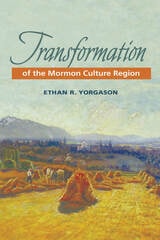
Transformation of the Mormon Culture Region
Ethan R. Yorgason
University of Illinois Press, 2010