Results by title
88 books match the query 'Translation' and 28 start with t
The Bible in Greek
Translation, Transmission, and Theology of the SeptuagintSiegfried Kreuzer
SBL Press, 2015
This volume presents English and German papers that give an overview on important stages, developments, and problems of the Septuagint and the research related to it. Four sections deal with the cultural and theological background and beginnings of the Septuagint, the Old Greek and recensions of the text, the Septuagint and New Testament quotations, and a discussion of Papyrus 967 and Codex Vaticanus.
Features:
- A complete list of Kreuzer’s publications on the text and textual history of the Hebrew Bible and the Septuagint
- Criteria for analysis of the Antiochene/Lucianic Text and the Kaige-Recension
- A close examination of the origins and development of the Septuagint in the context of Alexandrian and early Jewish culture and learning
The Book of Emperors
A Translation of the Middle High German KaiserchronikHenry A. Myers
West Virginia University Press, 2013
The Kaiserchronik (c.1152–1165) is the first verse chronicle to have been written in a language other than Latin. This story recounts the exploits of the Roman, Byzantine, Carolingian, and Holy Roman kings and rulers, from the establishment of Rome to the start of the Second Crusade. As an early example of popular history, it was written for a non-monastic audience who would have preferred to read, or may only have been able to read, in German. As a rhymed chronicle, its combined use of the styles of language found within a vernacular epic and a factual treaty was a German innovation. The Book of Emperors is the first complete translation of the Kaiserchronik from Middle High German to English. It is a rich resource not only for medieval German scholars and students, but also for those working in early cultural studies. It brings together an understanding of the conception of kingship in the German Middle Ages, from the relationship between emperor and king, to the moral, theological, and legal foundations of claims and legitimacy and the medieval epistemological approaches to historiography. This translation includes a substantial introduction that discusses the historical and philological context of the work, as well as the themes of power and kingship. Each chapter begins with a brief introduction that distinguishes historical truths from the epic fiction found within the original text.
The Book of Pontiffs of the Church of Ravenna (Medieval Texts in Translation)
Deborah Mauskopf Agnellus of Ravenna
Catholic University of America Press, 2004
The Community Rule
A Critical Edition with TranslationSarianna Metso
SBL Press, 2019
An authoritative critical edition
The discovery and translation of the Dead Sea Scrolls transformed our understanding of the life and history of ancient Jewish communities when both rabbinic Judaism and early Christianity were emerging. As part of this rich discovery, the Community Rule serves to illuminate the religious beliefs and practices as well as the organizational rules of the group behind the Dead Sea Scrolls. However, there is no single, unified text of the Community Rule; rather, multiple manuscripts of the Community Rule show considerable variation and highlight the work of ancient Jewish scribes and their intentional literary development of the text. In this volume, Sarianna Metso brings together the surviving evidence in a new edition that presents a critically established Hebrew text with an introduction and an English translation.
Features:
- A critical apparatus and textual notes
- All the surviving evidence of the Community Rule
- A new method for presenting complex developments and transmission history of ancient texts
The Complete Works of Liudprand of Cremona (Medieval Texts in Translation)
Paolo Liudprand of Cremona
Catholic University of America Press, 2007
The Craft of Translation
Edited by John Biguenet and Rainer Schulte
University of Chicago Press, 1989
Some of the contributors lay bare the rigorous methods of literary translation in comparisons of various translations of the same piece; some discuss the problems of translating a specific passage; others speak about the lessons learned over the course of a career in translation. As these essays make clear, translators work in the space between languages and, in so doing, provide insights into the ways in which a culture makes the world verbal. Exemplary readers both of authors and of their individual works, the translators represented in this collection demonstrate that the methodologies derived from the art and craft of translation can serve as a model to revitalize the interpretation and understanding of literary works.
Readers will find the opportunity to look over the shoulders of the translators gathered together in this volume an exciting and surprising experience. The act of translation emerges both as a powerful integration of linguistic, semantic, cultural, and historical thinking and as a valuable commentary on how we communicate both within a culture and from one culture to another.
The Fragments of Parmenides
A Critical Text With Introduction and Translation, the Ancient Testimonia and a CommentaryA. H, Coxon
Parmenides Publishing, 2009
With a New Preface by Malcolm Schofield
The Futures of Reparations in Latin America
Imagination, Translation, and BelongingPiergiorgio Di Giminiani
Rutgers University Press, 2026
The Greek Magical Papyri in Translation, Including the Demotic Spells, Volume 1
TextsEdited by Hans Dieter Betz
University of Chicago Press, 1992
"The Greek magical papyri" is a collection of magical spells and formulas, hymns, and rituals from Greco-Roman Egypt, dating from the second century B.C. to the fifth century A.D. Containing a fresh translation of the Greek papyri, as well as Coptic and Demotic texts, this new translation has been brought up to date and is now the most comprehensive collection of this literature, and the first ever in English.
The Greek Magical Papyri in Transition is an invaluable resource for scholars in a wide variety of fields, from the history of religions to the classical languages and literatures, and it will fascinate those with a general interest in the occult and the history of magic.

The Lucidarium of Marchetto of Padua
A Critical Edition, Translation, and CommentaryEdited by Jan W. Herlinger
University of Chicago Press, 1985
"An almost archetypal example of unpretentious and honest scholarship."—Alejandro Enrique Planchart, Journal of the American Musicological Society
Theaters of Translation
Cosmopolitan Vernaculars in Shakespeare's EnglandAndrew S. Keener
University of Alabama Press, 2025
Explores the profound influence of multilingual dictionaries, dialogues, and grammars on English Renaissance playwrights
In Theaters of Translation, Andrew S. Keener offers a fascinating account of the ways that plays by Thomas Kyd, Mary Sidney Herbert, Ben Jonson, and their fellow English contemporaries were shaped by and part of a multilingual Europe where dictionaries, grammars, and language-learning materials circulated widely. He proposes a fresh, multilingual approach to English Renaissance drama that challenges the histories of early modern European languages as sites of national and linguistic cohesion.
Covering the period between 1570 and 1640, when England’s drama and the English language itself were evolving, Keener uses the term “cosmopolitan vernaculars” to examine how nonclassical European languages modeled transnational forms of belonging for playgoers, readers, and authors in Renaissance England. Combining recent contributions to cosmopolitan theory and transnational studies of early modern literature and culture, Keener highlights both the ways in which cosmopolitanism manifests through Europe’s vernacular languages—in print and performance—and the ways languages themselves can exhibit cosmopolitanism for those who encounter them on the page or on the stage.
Theaters of Translation opens up new transnational interpretations of English Renaissance plays and casts fresh light on historical anecdotes, such as Jonson inscribing a copy of Pietro Aretino’s scandalous Italian dialogues or Shakespeare’s First Folio being advertised for sale in Germany before its London publication. It offers much of interest to readers and scholars of Renaissance Europe, early modern drama, and the development of national European languages.
Theories of Translation
An Anthology of Essays from Dryden to DerridaEdited by John Biguenet and Rainer Schulte
University of Chicago Press, 1992
Most of the twenty-one pieces appear in translation, some here in English for the first time and many difficult to find elsewhere. Selections include writings by Scheiermacher, Nietzsche, Ortega, Benjamin, Pound, Jakobson, Paz, Riffaterre, Derrida, and others.
A fine companion to The Craft of Translation, this volume will be a valuable resource for all those who translate, those who teach translation theory and practice, and those interested in questions of language philosophy and literary theory.
Times of Mobility
Transnational Literature and Gender in TranslationJasmina Lukic
Central European University Press, 2020
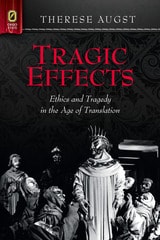
Tragic Effects
Ethics and Tragedy in the Age of TranslationTherese Augst
The Ohio State University Press, 2012
Tragic Effects: Ethics and Tragedy in the Age of Translation confronts the peculiar fascination with Greek tragedy as it shapes the German intellectual tradition, with particular focus on the often controversial practice of translating the Greeks. Whereas the tradition of emulating classical ideals in German intellectual life has generally emerged from the impulse to identify with models, the challenge of translating the Greeks underscores the linguistic and historical discontinuities inherent in the recourse to ancient material and inscribes that experience of disruption as fundamental to modernity.
Friedrich Hölderlin’s translations are a case in point. Regarded in his own time as the work of a madman, his renditions of Sophoclean tragedy intensify dramatic effect with the unsettling experience of familiar language slipping its moorings. His attention to marking the distances between ancient source text and modern translation has granted his Oedipus and Antigone a distinct longevity as objects of discussion, adaptation, and even retranslation. Cited by Walter Benjamin, Martin Heidegger, Bertolt Brecht, and others, Hölderlin’s Sophocles project follows a path both marked by various contexts and tinged by persistent quandaries of untranslatability.
Tragedy has long functioned as a cornerstone for questions about ethical life. By placing emphasis on processes of translation and adaptation, however, Tragic Effects approaches the question of ethics from a perspective informed by recent discourse in translation studies. Reconstructing an ancient text in this context requires negotiating the difficult tension between comprehending the distant past and preserving its radical singularity.
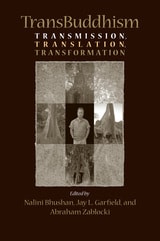
TransBuddhism
Transmission, Translation, and TransformationNalini Bhushan
University of Massachusetts Press, 2009
The chapters in the first section explore the transmission of Buddhism to the West, ranging from the writings of one of its earliest western interpreters, the Wesleyan missionary R. Spence Hardy, to the globalization of Tibetan Buddhist reincarnation, to the development and practice of Buddhism within the American prison system. The concluding chapter of this section presents a case study of a Japanese Buddhist temple in Oregon that ultimately died out—an example of a transmission that failed.
The second section looks at the complex issues that arise in the translation of Buddhist terms, texts, and concepts from one language or cultural milieu to another. Two chapters examine the challenges confronted by those who translate Buddhist texts—one exploring the contemporary translation of Tibetan Buddhism, the second analyzing an exchange of poetry in medieval Japan. The other two chapters describe the translation of Buddhist ideas into new cultural domains in America, specifically film and sports.
The final section presents case studies in the transformation of Buddhism which is resulting from its new global interconnections. Topics include the role of women in transforming Buddhist patriarchy, Buddhist-Freudian dialogue in relationship to mourning, and the interplay between Buddhism and the environmental movement.
The book also includes images created by the noted artist Meridel Rubenstein which frame the individual chapters within a nonverbal exploration of the themes discussed.
In addition to the editors, contributors include Mark Blum, Mario D'Amato, Sue Darlington, Elizabeth Eastman, Connie Kassor, Tom Rohlich, Judith Snodgrass, Jane Stangl, and Karma Lekshe Tsomo.
Transformations in Translation
Comparing Qumran Aramaic Job and Old Greek JobAlun Morton Thomas
SBL Press, 2026
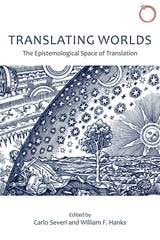
Translating Worlds
The Epistemological Space of TranslationEdited by Carlo Severi and William F. Hanks
HAU, 2015
Since Ferdinand de Saussure and Franz Boas, languages have been seen as systems whose differences make precise translation nearly impossible. And still others have viewed translation between languages as principally indeterminate. The contributors here argue that the challenge posed by the constant confrontation between incommensurable worlds and systems may be the most fertile ground for state-of-the-art ethnographic theory and practice. Ranging from tourism in New Guinea to shamanism in the Amazon to the globally ubiquitous restaurant menu, the contributors mix philosophy and ethnography to redefine translation not only as a key technique for understanding ethnography but as a larger principle in epistemology.
Translation
Martin Kay
CSLI, 2015
Translation and Epistemicide
Racialization of Languages in the AmericasJoshua M. Price
University of Arizona Press, 2023
The book gives an account of translation-as-epistemicide in the Americas, drawing on a range of examples from the early colonial period to the War on Terror. The first chapters demonstrate four distinct operations of epistemicide: the commensuration of worlds, the epistemic marginalization of subaltern translators and the knowledge they produce, the criminalization of translators and interpreters, and translation as piracy or extractivism. The second part of the book outlines decolonial translation strategies, including an epistemic posture the author calls “bewilderment.”
Translation and Epistemicide tracks how through the centuries translation practices have enabled colonialism and resulted in epistemicide, or the destruction of Indigenous and subaltern knowledge.
Translation and Ethnography
The Anthropological Challenge of Intercultural UnderstandingTullio Maranhão
University of Arizona Press, 2003
Translation and Ethnography focuses on issues that arise when we attempt to make significant thematic or symbolic elements of one culture meaningful in terms of another. Its chapters cover a wide range of topics, all stressing the interpretive practices that enable the approximation of meaning: the role of differential power, of language and so-called world view, and of translation itself as a metaphor of many contemporary cross-cultural processes.
The topics covered here represent a global sample of translation, ranging from Papua New Guinea to South America to Europe. Some of the issues addressed include postcolonial translation/transculturation from the perspective of colonized languages, as in the Mexican Zapatista movement; mis-translations of Amerindian conceptions and practices in the Amazon, illustrating the subversive potential of anthropology as a science of translation; Ethiopian oracles translating divine messages for the interpretation of believers; and dreams and clowns as translation media among the Gamk of Sudan.
Anthropologists have long been accustomed to handling translation chains; in this book they open their diaries and show the steps they take toward knowledge. Translation and Ethnography raises issues that will shake up the most obdurate, objectivist translators and stimulate scholars in sociolinguistics, communication, ethnography, and other fields who face the challenges of conveying meaning across human boundaries.

Translation and Power
Maria Tymoczko
University of Massachusetts Press, 2002
Although governments, churches, publishing firms, and other powerful institutions may influence the translation process, many translators have found ways to resist that influence and have used translation to introduce new ideas and modes of expression. Exploring the nexus of translation and power, the essays in this volume offer a wide variety of examples, across multiple languages and societies. They range from case studies of historical episodes in which translation has played a role in the assertion of political and military power, such as an 1840 treaty between the British and Maori that continues to be a source of conflict in present-day New Zealand, to analyses of the work of specific translators, such as Germaine de Staël and Gayatri Spivak. Along with examining how translation contributes to ideological negotiations and cultural struggles, the essays reveal the dimensions of power inherent in the translation process itself—in the relationship of translator to author, source text, and translated text.
In addition to the editors, contributors include Rosemary Arrojo, Michael Cronin, Sabine Fenton, Camino Gutiérrez Lanza, Christopher Larkosh, Alexandra Lianeri, Lin Kenan, Carol Maier, Paul Moon, Adriana S. Pagano, and Sherry Simon.
Translation and Subjectivity
On Japan and cultural nationalismNaoki Sakai
University of Minnesota Press, 1997
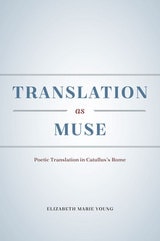
Translation as Muse
Poetic Translation in Catullus's RomeElizabeth Marie Young
University of Chicago Press, 2015
Catullus has long been admired as a poet, but his efforts as a translator have been largely ignored. Young reveals how essential translation is to his work: many poems by Catullus that we tend to label as lyric originals were in fact shaped by Roman translation practices entirely different from our own. By rereading Catullus through the lens of translation, Young exposes new layers of ingenuity in Latin poetry even as she illuminates the idiosyncrasies of Roman translation practice, reconfigures our understanding of translation history, and questions basic assumptions about lyric poetry itself.
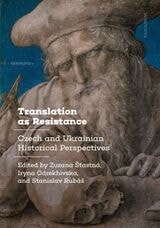
Translation as Resistance
Czech and Ukrainian Historical PerspectivesEdited by Zuzana Štastná, Iryna Odrekhivska, and Stanislav Rubáš
Karolinum Press, 2026
In cultures and communities under pressure, whether from a powerful neighbor or a hegemonic ideology, translation becomes a political act. Shaped by the constraints of the moment, both translations and their paratexts are subject to forces that compromise quality or restrict freedom of expression, even as translators seek to bring home the quality and expressive freedom of their originals. In Translation as Resistance, the role translation has played and continues to play in reframing language and power in Czech and Ukrainian cultures is presented and interrogated by Czech and Ukrainian translators.
Translation in a Global Market, Volume 13
Emily Apter, ed.
Duke University Press, 0
Translation in a Global Market assembles contributors from several academic disciplines as well as visual artists for a closer look at the formation of an international canon and at the kinds of texts that gain international visibility. The essays urge a shift in emphasis from global literacy—which implies the use of a standard language and a preference for translatability in texts—to transnational literacy, which places minority and diaspora literatures in direct conversation with each other rather than with Paris, London, or New York.
Contributors. Dina Al-Kassim, Emily Apter, Timothy Brennan, Elena Climent, Maryse Condé, Michael Eng, Renée Green, Rainer Ganahl, Sarah M. Hudgins, Michael North, Gayatri Chakravorty Spivak
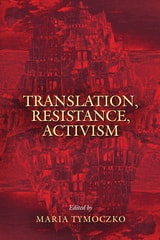
Translation, Resistance, Activism
Maria Tymoczko
University of Massachusetts Press, 2010
From silence to radical manipulation of texts, translation strategies are instrumental in significant historical interventions and cultural change. Translation plays a pivotal role in ideological dialogue and struggle, including resistance to oppression and cultural straitjackets of all types, from sexual puritanism to military dictatorships. Situated in their own space, time, history, and political contexts, translators promote ideological agendas by creating new cultural narratives, pragmatically adjusting tactics so as to maximize the social and political impact.
The essays in this volume explore ways to read translations as records of cultural contestation and ideological struggle; as means of fighting censorship, physical coercion, cultural repression, and political dominance; and as texts that foster a wide variety of goals from cultural nationalism to armed confrontation. Translations are set in relief as central cultural documents rather than derivative, peripheral, or marginalized productions. They are seen as forms of ethical, political, and ideological activity rather than as mere communicative transactions or creative literary exercises.
The contributors demonstrate that engaged and activist translations are performative acts within broader political and ideological contexts. The essays detail the initiative, resourcefulness, and courage of individual translators, whose willingness to put themselves on the line for social change can sometimes move the world.
In addition to Maria Tymoczko, contributors include Pua'ala'okalani D. Aiu, Brian James Baer, Mona Baker, Paul F. Bandia, Georges L. Bastin, Nitsa Ben-Ari, Ãngela Campo, Antonia Carcelen-Estrada, Ãlvaro Echeverri, Denise Merkle, John Milton, and Else R.P. Vieira.
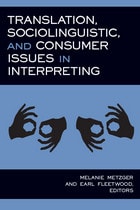
Translation, Sociolinguistic, and Consumer Issues in Interpreting
Melanie Metzger
Gallaudet University Press, 2007
The Third Volume in the Studies in Interpretation Series
This new volume focuses on scholarship over a refined spectrum of issues that confront interpreters internationally. Editors Melanie Metzger and Earl Fleetwood call upon researchers from the United States, Ireland, Australia, and the Philippines to share their findings in six chapters.
In the first chapter, Roberto R. Santiago and Lisa A. Frey Barrick reveal how interpreters deal with translating source language idioms into American Sign Language (ASL). In Chapter 2, Lorraine Neeson and Susan Foley-Cave review the particular demands for decision-making that face interpreters on several levels in a class on semantics and pragmatics. Liza B. Martinez explains in Chapter 3 the complicated, multilingual process of code switching by Filipino interpreters when voice-interpreting Filipino Sign Language.
Chapter 4 offers a deconstruction by Daniel Roush of the stereotype that Deaf ASL-users are direct or blunt, based on his analysis of two speech/social activities of requests and refusals. Jemina Napier investigates interpreting from the perspective of deaf consumers in Australia in Chapter 5 to explore their agenda for quality interpreting services. In the final chapter, Amy Frasu evaluates methods for incorporating visual aids into interpretations from spoken English to American Sign Language and the potential cognitive dissonance for deaf persons that could result.
Translocalities/Translocalidades
Feminist Politics of Translation in the Latin/a AméricasSonia E. Alvarez, Claudia de Lima Costa, Verónica Feliu, Rebecca J. Hester, Norma Klahn, and Millie Thayer, eds.
Duke University Press, 2014
Contributors. Sonia E. Alvarez, Kiran Asher, Victoria (Vicky) M. Bañales, Marisa Belausteguigoitia Rius, Maylei Blackwell, Cruz C. Bueno, Pascha Bueno-Hansen, Mirangela Buggs, Teresa Carrillo, Claudia de Lima Costa, Isabel Espinal, Verónica Feliu, Macarena Gómez-Barris, Rebecca J. Hester, Norma Klahn, Agustín Lao-Montes, Suzana Maia, Márgara Millán, Adriana Piscitelli, Ana Rebeca Prada, Ester R. Shapiro, Simone Pereira Schmidt, Millie Thayer