50 books match the query 'Trust' and 20 start with t
cover of Talking to Strangers: Anxieties of Citizenship since Brown v. Board of Education

Talking to Strangers

Anxieties of Citizenship since Brown v. Board of Education

Danielle Allen

University of Chicago Press, 2004

"Don't talk to strangers" is the advice long given to children by parents of all classes and races. Today it has blossomed into a fundamental precept of civic education, reflecting interracial distrust, personal and political alienation, and a profound suspicion of others. In this powerful and eloquent essay, Danielle Allen, a 2002 MacArthur Fellow, takes this maxim back to Little Rock, rooting out the seeds of distrust to replace them with "a citizenship of political friendship."

Returning to the landmark Brown v. Board of Education decision of 1954 and to the famous photograph of Elizabeth Eckford, one of the Little Rock Nine, being cursed by fellow "citizen" Hazel Bryan, Allen argues that we have yet to complete the transition to political friendship that this moment offered. By combining brief readings of philosophers and political theorists with personal reflections on race politics in Chicago, Allen proposes strikingly practical techniques of citizenship. These tools of political friendship, Allen contends, can help us become more trustworthy to others and overcome the fossilized distrust among us.

Sacrifice is the key concept that bridges citizenship and trust, according to Allen. She uncovers the ordinary, daily sacrifices citizens make to keep democracy working—and offers methods for recognizing and reciprocating those sacrifices. Trenchant, incisive, and ultimately hopeful, Talking to Strangers is nothing less than a manifesto for a revitalized democratic citizenry.
 
[more]
cover of Teaching, Tasks, and Trust: Functions of the Public Executive

Teaching, Tasks, and Trust

Functions of the Public Executive

John Brehm

Russell Sage Foundation, 2008

The mere word "bureaucracy" brings to mind images of endless lines, piles of paperwork, and frustrating battles over rules and red tape. But some bureaucracies are clearly more efficient and responsive than others. Why? In Teaching, Tasks, and Trust, distinguished political scientists John Brehm and Scott Gates show that a good part of the answer may be found in the roles that middle managers play in teaching and supporting the front-line employees who make a bureaucracy work. Brehm and Gates employ a range of sophisticated modeling and statistical methods in their analysis of employees in federal agencies, police departments, and social service centers. Looking directly at what front-line workers say about their supervisors, they find that employees who feel they have received adequate training have a clearer understanding of the agency's mission, which leads to improved efficiency within their departments. Quality training translates to trust – employees who feel supported and well-trained for the job are more likely to trust their supervisors than those who report being subject to constant monitoring and a strict hierarchy. Managers who "stand up" for employees—to media, government, and other agency officials—are particularly effective in cultivating the trust of their workers. And trust, the authors find, motivates superior job performance and commitment to the agency's mission. Employees who trust their supervisors report that they work harder, put in longer hours, and are less likely to break rules. The authors extend these findings to show that once supervisors grain trust, they enjoy greater latitude in influencing how employees allocate their time while working. Brehm and Gates show how these three executive roles are interrelated—training and protection for employees gives rise to trust, which provides supervisors with the leverage to stimulate improved performance among their workers. This new model—which frames supervisors as teachers and protectors instead of taskmasters—has widespread implications for training a new generation of leaders and creating more efficient organizations. Bureaucracies are notorious for inefficiency, but mid-level supervisors, who are often regarded as powerless, retain tremendous power to build a more productive workforce. Teaching, Tasks, and Trust provides a fascinating glimpse into a bureaucratic world operating below the radar of the public eye—a world we rarely see while waiting in line or filling out paperwork. A Volume in the Russell Sage Foundation Series on Trust
[more]
cover of The Love Surgeon: A Story of Trust, Harm, and the Limits of Medical Regulation

The Love Surgeon

A Story of Trust, Harm, and the Limits of Medical Regulation

Sarah B. Rodriguez

Rutgers University Press, 2020

Dr. James Burt believed women’s bodies were broken, and only he could fix them. In the 1950s, this Ohio OB-GYN developed what he called “love surgery,” a unique procedure he maintained enhanced the sexual responses of a new mother, transforming her into “a horny little house mouse.” Burt did so without first getting the consent of his patients. Yet he was allowed to practice for over thirty years, mutilating hundreds of women in the process.

It would be easy to dismiss Dr. Burt as a monstrous aberration, a modern-day Dr. Frankenstein. Yet as medical historian Sarah Rodriguez reveals, that’s not the whole story. The Love Surgeon asks tough questions about Burt’s heinous acts and what they reveal about the failures of the medical establishment: How was he able to perform an untested surgical procedure? Why wasn’t he obliged to get informed consent from his patients? And why did it take his peers so long to take action?

The Love Surgeon is both a medical horror story and a cautionary tale about the limits of professional self-regulation.
[more]
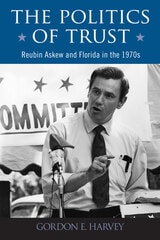
cover of The Politics of Trust: Reubin Askew and Florida in the 1970s

The Politics of Trust

Reubin Askew and Florida in the 1970s

Gordon E. Harvey

University of Alabama Press, 2015

Florida governor Reubin Askew memorably characterized a leader as “someone who cares enough to tell the people not merely what they want to hear, but what they need to know.” It was a surprising statement for a contemporary politician to make, and, more surprising still, it worked. In The Politics of Trust: Reubin Askew and Florida in the 1970s, Gordon E. Harvey traces the life and career of the man whose public service many still recall as “the Golden Age” of Florida politics.
 
Askew rose to power on a wave of “New South” leadership that hoped to advance the Democratic Party beyond the intransigent torpor of southern politics since the Civil War. He hoped to replace appeals to white supremacy with a vision of a more diverse and inclusive party. Following his election in Florida, other New South leaders such as Georgia’s Jimmy Carter, Arkansas’s Dale Bumpers, and South Carolina’s John C. West all came to power.
 
Audacious and gifted, Askew was one of six children raised by a single mother in Pensacola. As he worked his way up through the ranks of the state legislature, few in Florida except his constituents knew his name when he challenged Republic incumbent Claude R. Kirk Jr. on a populist platform promising higher corporate taxes. When he won, he inaugurated a series of reforms, including a new 5 percent corporate income tax; lower consumer, property, and school taxes; a review of penal statutes; environmental protections; higher welfare benefits; and workers’ compensation to previously uncovered migrant laborers.
 
Touting honesty, candor, and transparency, Askew dubbed his administration “government in the sunshine.” Harvey demonstrates that Askew’s success was not in spite of his penchant for bold, sometimes unpopular stances, but rather because his mix of unvarnished candor, sober ethics, and religious faith won the trust of the diverse peoples of his state.
[more]
cover of The State You See: How Government Visibility Creates Political Distrust and Racial Inequality

The State You See

How Government Visibility Creates Political Distrust and Racial Inequality

Aaron J. Rosenthal

University of Michigan Press, 2023

The State You See uncovers a racial gap in the way the American government appears in people’s lives. It makes it clear that public policy changes over the last fifty years have driven all Americans to distrust the government that they see in their lives, even though Americans of different races are not seeing the same kind of government.

For white people, these policy changes have involved a rising number of generous benefits submerged within America’s tax code, which taken together cost the government more than Social Security and Medicare combined. Political attention focused on this has helped make welfare and taxes more visible representations of government for white Americans. As a result, white people are left with the misperception that government does nothing for them, apart from take their tax money to spend on welfare. Distrust of government is the result. For people of color, distrust is also rampant but for different reasons. Over the last fifty years, America has witnessed increasingly overbearing policing and swelling incarceration numbers. These changes have disproportionately impacted communities of color, helping to make the criminal legal system a unique visible manifestation of government in these communities.

While distrust of government emerges in both cases, these different roots lead to different consequences. White people are mobilized into politics by their distrust, feeling that they must speak up in order to reclaim their misspent tax dollars. In contrast, people of color are pushed away from government due to a belief that engaging in American elections will yield the same kind of unresponsiveness and violence that comes from interactions with the police. The result is a perpetuation of the same kind of racial inequality that has always been present in American democracy. The State You See is essential reading for anyone interested in understanding how the American government engages in subtle forms of discrimination and how it continues to uphold racial inequality in the present day.
[more]
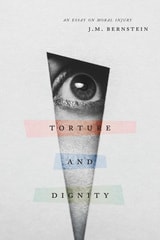
cover of Torture and Dignity: An Essay on Moral Injury

Torture and Dignity

An Essay on Moral Injury

J. M. Bernstein

University of Chicago Press, 2015

In this unflinching look at the experience of suffering and one of its greatest manifestations—torture—J. M. Bernstein critiques the repressions of traditional moral theory, showing that our morals are not immutable ideals but fragile constructions that depend on our experience of suffering itself. Morals, Bernstein argues, not only guide our conduct but also express the depth of mutual dependence that we share as vulnerable and injurable individuals.  
           
Beginning with the attempts to abolish torture in the eighteenth century, and then sensitively examining what is suffered in torture and related transgressions, such as rape, Bernstein elaborates a powerful new conception of moral injury. Crucially, he shows, moral injury always involves an injury to the status of an individual as a person—it is a violent assault against his or her dignity. Elaborating on this critical element of moral injury, he demonstrates that the mutual recognitions of trust form the invisible substance of our moral lives, that dignity is a fragile social possession, and that the perspective of ourselves as potential victims is an ineliminable feature of everyday moral experience. 

[more]
cover of Trust

Trust

Alphonso Lingis

University of Minnesota Press, 2004

A traveler to the world’s remote corners muses on human relationships and the nature of travel

Trust is inherent in travel. We ask strangers for directions or for a ride. We live among people whose language, culture, and motivations we don’t understand. Trust binds us to one another with an intoxicating energy; it is brave, giddy, joyous, and lustful. A sudden attraction careens into sexual surrender, and trust becomes unconditional. Trust laughs at danger and leaps into the unknown.

The author of Abuses and Foreign Bodies, Alphonso Lingis has traveled the globe for many years, and in Trust he reflects on journeys from Latin America to Asia to Antarctica. Whether feeding chocolate sauce and tuna to the baboons who visit his campsite in Ethiopia, celebrating the millennial New Year in Mongolia, or indulging in a passionate love affair in Vietnam, Lingis evaluates what happens around him and how it affects him and others. From these experiences he gains new understandings about spirituality, masculinity, love, death, ecstasy, and change. In the tradition of such international travelers as Paul Theroux, Pico Iyer, and Ryszard Kapuscinski, and with insight reminiscent of John Berger and Joan Didion, Lingis shares both the private revelations and the universal connections he acquires on his exotic journeys. “Travel far enough,” he concludes, “and we find ourselves happily back in the infantile world”—where trust is ultimate.
[more]
cover of Trust and Distrust In Organizations: Dilemmas and Approaches

Trust and Distrust In Organizations

Dilemmas and Approaches

Roderick M. Kramer

Russell Sage Foundation, 2004
The effective functioning of a democratic society—including social, business, and political interactions—largely depends on trust. Yet trust remains a fragile and elusive resource in many of the organizations that make up society's building blocks. In their timely volume, Trust and Distrust in Organizations, editors Roderick M. Kramer and Karen S. Cook have compiled the most important research on trust in organizations, illuminating the complex nature of how trust develops, functions, and often is thwarted in organizational settings. With contributions from social psychologists, sociologists, political scientists, economists, and organizational theorists, the volume examines trust and distrust within a variety of settings—from employer-employee and doctor-patient relationships, to geographically dispersed work teams and virtual teams on the internet. Trust and Distrust in Organizations opens with an in-depth examination of hierarchical relationships to determine how trust is established and maintained between people with unequal power. Kurt Dirks and Daniel Skarlicki find that trust between leaders and their followers is established when people perceive a shared background or identity and interact well with their leader. After trust is established, people are willing to assume greater risks and to work harder. In part II, the contributors focus on trust between people in teams and networks. Roxanne Zolin and Pamela Hinds discover that trust is more easily established in geographically dispersed teams when they are able to meet face-to-face initially. Trust and Distrust in Organizations moves on to an examination of how people create and foster trust and of the effects of power and betrayal on trust. Kimberly Elsbach reports that managers achieve trust by demonstrating concern, maintaining open communication, and behaving consistently. The final chapter by Roderick Kramer and Dana Gavrieli includes recently declassified data from secret conversations between President Lyndon Johnson and his advisors that provide a rich window into a leader's struggles with problems of trust and distrust in his administration. Broad in scope, Trust and Distrust in Organizations provides a captivating and insightful look at trust, power, and betrayal, and is essential reading for anyone wishing to understand the underpinnings of trust within a relationship or an organization. A Volume in the Russell Sage Foundation Series on Trust
[more]
cover of Trust and Governance

Trust and Governance

Valerie Braithwaite

Russell Sage Foundation, 1998
An effective democratic society depends on the confidence citizens place in their government. Payment of taxes, acceptance of legislative and judicial decisions, compliance with social service programs, and support of military objectives are but some examples of the need for public cooperation with state demands. At the same time, voters expect their officials to behave ethically and responsibly. To those seeking to understand—and to improve—this mutual responsiveness, Trust and Governance provides a wide-ranging inquiry into the role of trust in civic life. Trust and Governance asks several important questions: Is trust really essential to good governance, or are strong laws more important? What leads people either to trust or to distrust government, and what makes officials decide to be trustworthy? Can too much trust render the public vulnerable to government corruption, and if so what safeguards are necessary? In approaching these questions, the contributors draw upon an abundance of historical and current resources to offer a variety of perspectives on the role of trust in government. For some, trust between citizens and government is a rational compact based on a fair exchange of information and the public's ability to evaluate government performance. Levi and Daunton each examine how the establishment of clear goals and accountability procedures within government agencies facilitates greater public commitment, evidence that a strong government can itself be a source of trust. Conversely, Jennings and Peel offer two cases in which loss of citizen confidence resulted from the administration of seemingly unresponsive, punitive social service programs. Other contributors to Trust and Governance view trust as a social bonding, wherein the public's emotional investment in government becomes more important than their ability to measure its performance. The sense of being trusted by voters can itself be a powerful incentive for elected officials to behave ethically, as Blackburn, Brennan, and Pettit each demonstrate. Other authors explore how a sense of communal identity and shared values make citizens more likely to eschew their own self-interest and favor the government as a source of collective good. Underlying many of these essays is the assumption that regulatory institutions are necessary to protect citizens from the worst effects of misplaced trust. Trust and Governance offers evidence that the jurisdictional level at which people and government interact—be it federal, state, or local—is fundamental to whether trust is rationally or socially based. Although social trust is more prevalent at the local level, both forms of trust may be essential to a healthy society. Enriched by perspectives from political science, sociology, psychology, economics, history, and philosophy, Trust and Governance opens a new dialogue on the role of trust in the vital relationship between citizenry and government. A Volume in the Russell Sage Foundation's Series on Trust.
[more]
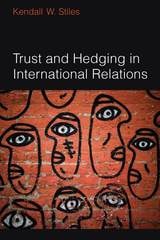
cover of Trust and Hedging in International Relations

Trust and Hedging in International Relations

Kendall W. Stiles

University of Michigan Press, 2018

Do states trust each other? What are the political and ethical implications of trust? Drawing from a wide range of disciplines, Trust and Hedging in International Relations adds to the emerging literature on trust in international relations by offering a systematic measure of state-to-state trust. Looking at how relationships between European microstates and their partners have evolved over the past few centuries, Stiles finds that rather than trusting, most microstates are careful to hedge in their relations by agreeing only to arrangements that provide them with opt-out clauses, heavy involvement in joint decision-making, and sunset provisions. In the process, Stiles assesses the role of rationality, social relations, identity politics, and other theories of trust to demonstrate that trust is neither essential for cooperation nor a guarantee of protection and safety. Finally, he explores the ethical implications of a foreign policy founded on trust—in particular whether heads of state have the right to enter into open-ended agreements that put their citizens at risk.
[more]
cover of Trust and Reciprocity: Interdisciplinary Lessons for Experimental Research

Trust and Reciprocity

Interdisciplinary Lessons for Experimental Research

Elinor Ostrom

Russell Sage Foundation, 2003

Trust is essential to economic and social transactions of all kinds, from choosing a marriage partner, to taking a job, and even buying a used car. The benefits to be gained from such transactions originate in the willingness of individuals to take risks by placing trust in others to behave in cooperative and non-exploitative ways. But how do humans decide whether or not to trust someone? Using findings from evolutionary psychology, game theory, and laboratory experiments, Trust and Reciprocity examines the importance of reciprocal relationships in explaining the origins of trust and trustworthy behavior. In Part I, contributor Russell Hardin argues that before one can understand trust one must account for the conditions that make someone trustworthy. Elinor Ostrom discusses evidence that individuals achieve outcomes better than those predicted by models of game theory based on purely selfish motivations. In Part II, the book takes on the biological foundations of trust. Frans de Waal illustrates the deep evolutionary roots of trust and reciprocity with examples from the animal world, such as the way chimpanzees exchange social services like grooming and sharing. Other contributors look at the links between evolution, cognition, and behavior. Kevin McCabe examines how the human mind processes the complex commitments that reciprocal relationships require, summarizing brain imaging experiments that suggest the frontal lobe region is activated when humans try to cooperate with their fellow humans. Acknowledging the importance of game theory as a theoretical model for examining strategic relationships, in Part III the contributors tackle the question of how simple game theoretic models must be extended to explain behavior in situations involving trust and reciprocity. Reviewing a range of experimental studies, Karen Cook and Robin Cooper conclude that trust is dependent on the complex relationships between incentives and individual characteristics, and must be examined in light of the social contexts which promote or erode trust. As an example, Catherine Eckel and Rick Wilson explore how people's cues, such as facial expressions and body language, affect whether others will trust them. The divergent views in this volume are unified by the basic conviction that humans gain through the development of trusting relationships. Trust and Reciprocity advances our understanding of what makes people willing or unwilling to take the risks involved in building such relationships and why. A Volume in the Russell Sage Foundation Series on Trust
[more]
cover of Trust and Trustworthiness

Trust and Trustworthiness

Russell Hardin

Russell Sage Foundation, 2002

What does it mean to "trust?" What makes us feel secure enough to place our confidence—even at times our welfare—in the hands of other people? Is it possible to "trust" an institution? What exactly do people mean when they claim to "distrust" their governments? As difficult as it may be to define, trust is essential to the formation and maintenance of a civil society. In Trust and Trustworthiness political scientist Russell Hardin addresses the standard theories of trust and articulates his own new and compelling idea: that much of what we call trust can be best described as "encapsulated interest." Research into the roles of trust in our society has offered a broad range of often conflicting theories. Some theorists maintain that trust is a social virtue that cannot be reduced to strategic self-interest; others claim that trusting another person is ultimately a rational calculation based on information about that person and his or her incentives and motivations. Hardin argues that we place our trust in persons whom we believe to have strong reasons to act in our best interests. He claims that we are correct when we assume that the main incentive of those whom we trust is to maintain a relationship with us—whether it be for reasons of economic benefit or for love and friendship. Hardin articulates his theory using examples from a broad array of personal and social relationships, paying particular attention to explanations of the development of trusting relationships. He also examines trustworthiness and seeks to understand why people may behave in ways that violate their own self-interest in order to honor commitments they have made to others. The book also draws important distinctions between vernacular uses of "trust" and "trustworthiness," contrasting, for example, the type of trust (or distrust) we place in individuals with the trust we place in institutions Trust and Trustworthiness represents the culmination of important new research into the roles of trust in our society; it offers a challenging new voice in the current discourse about the origins of cooperative behavior and its consequences for social and civic life. A Volume in the Russell Sage Foundation Series on Trust
[more]
cover of Trust in Public Life

Trust in Public Life

James Hawkey, Anthony Ball, Anna Rowlands, and Josie Rourke

Haus Publishing, 2023

A deep and thoughtful reflection on trust in the context of public life.

Trust in Public Life is a collection of essays addressing the importance of trust in public life and how public servants can engender and sustain it. In “The Roots of Trust,” Anna Rowlands argues that our loss of trust is a feature of modernity that can only be solved through encounters with real people. In “Trust in Oneself,” Claire Gilbert makes the case that leaders need to have self-trust and confidence to rule. In “Trust in Institutions,” Anthony Ball offers a guide to rebuilding trust in institutions through four virtues: honesty, humility, compassion, and competence. Finally, in “Trust in People,” James Hawkey argues that trust between groups is a choice, not something that can be injected like a vaccine. Together, the essays offer valuable reflections on trust in public life, agreeing that it must be engendered, and offer guidance on how this might be achieved.
 
[more]
cover of Trust in Schools: A Core Resource for Improvement

Trust in Schools

A Core Resource for Improvement

Anthony Bryk

Russell Sage Foundation, 2002
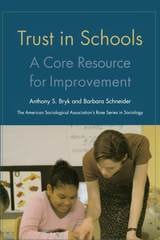
Most Americans agree on the necessity of education reform, but there is little consensus about how this goal might be achieved. The rhetoric of standards and vouchers has occupied center stage, polarizing public opinion and affording little room for reflection on the intangible conditions that make for good schools. Trust in Schools engages this debate with a compelling examination of the importance of social relationships in the successful implementation of school reform. Over the course of three years, Bryk and Schneider, together with a diverse team of other researchers and school practitioners, studied reform in twelve Chicago elementary schools. Each school was undergoing extensive reorganization in response to the Chicago School Reform Act of 1988, which called for greater involvement of parents and local community leaders in their neighborhood schools. Drawing on years longitudinal survey and achievement data, as well as in-depth interviews with principals, teachers, parents, and local community leaders, the authors develop a thorough account of how effective social relationships—which they term relational trust—can serve as a prime resource for school improvement. Using case studies of the network of relationships that make up the school community, Bryk and Schneider examine how the myriad social exchanges that make up daily life in a school community generate, or fail to generate, a successful educational environment. The personal dynamics among teachers, students, and their parents, for example, influence whether students regularly attend school and sustain their efforts in the difficult task of learning. In schools characterized by high relational trust, educators were more likely to experiment with new practices and work together with parents to advance improvements. As a result, these schools were also more likely to demonstrate marked gains in student learning. In contrast, schools with weak trust relations saw virtually no improvement in their reading or mathematics scores. Trust in Schools demonstrates convincingly that the quality of social relationships operating in and around schools is central to their functioning, and strongly predicts positive student outcomes. This book offer insights into how trust can be built and sustained in school communities, and identifies some features of public school systems that can impede such development. Bryk and Schneider show how a broad base of trust across a school community can provide a critical resource as education professional and parents embark on major school reforms. A Volume in the American Sociological Association's Rose Series in Sociology
[more]
cover of Trust in Society

Trust in Society

Karen Cook

Russell Sage Foundation, 2001
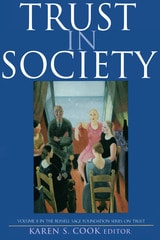
Trust plays a pervasive role in social affairs, even sustaining acts of cooperation among strangers who have no control over each other's actions. But the full importance of trust is rarely acknowledged until it begins to break down, threatening the stability of social relationships once taken for granted. Trust in Society uses the tools of experimental psychology, sociology, political science, and economics to shed light on the many functions trust performs in social and political life. The authors discuss different ways of conceptualizing trust and investigate the empirical effects of trust in a variety of social settings, from the local and personal to the national and institutional. Drawing on experimental findings, this book examines how people decide whom to trust, and how a person proves his own trustworthiness to others. Placing trust in a person can be seen as a strategic act, a moral response, or even an expression of social solidarity. People often assume that strangers are trustworthy on the basis of crude social affinities, such as a shared race, religion, or hometown. Likewise, new immigrants are often able to draw heavily upon the trust of prior arrivals—frequently kin—to obtain work and start-up capital. Trust in Society explains how trust is fostered among members of voluntary associations—such as soccer clubs, choirs, and church groups—and asks whether this trust spills over into other civic activities of wider benefit to society. The book also scrutinizes the relationship between trust and formal regulatory institutions, such as the law, that either substitute for trust when it is absent, or protect people from the worst consequences of trust when it is misplaced. Moreover, psychological research reveals how compliance with the law depends more on public trust in the motives of the police and courts than on fear of punishment. The contributors to this volume demonstrate the growing analytical sophistication of trust research and its wide-ranging explanatory power. In the interests of analytical rigor, the social sciences all too often assume that people act as atomistic individuals without regard to the interests of others. Trust in Society demonstrates how we can think rigorously and analytically about the many aspects of social life that cannot be explained in those terms. A Volume in the Russell Sage Foundation Series on Trust
[more]
cover of Trust in Texts: A Different History of Rhetoric

Trust in Texts

A Different History of Rhetoric

Susan Miller

Southern Illinois University Press, 2008

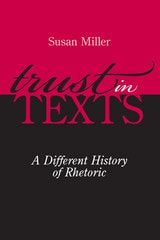
Trust in Texts: A Different History of Rhetoric challenges the accepted idea of a singular rhetorical tradition poorly maintained from the Athenian Golden Age until the present. Author Susan Miller argues that oratorical rhetoric is but one among many codes that guide the production of texts and proposes that emotion and trust are central to the motives and effects of rhetoric.

This groundbreaking volume makes a case for historical rhetoric as disbursed, formal and informal lessons in persuasion that are codified as crafts that mediate between what is known and unknown in particular rhetorical situations. Traditional, unified histories of rhetoric ignore the extensive historical interactions among discourses—including medicine, drama, lyric poetry, philosophy, oratory, and literary fiction—that have operated from antiquity across cultures that are historically and geographically joined.

Drawing not just on traditional rhetorical works, but also on texts from philosophy and literature, Miller expands the body of works to be considered in the study of rhetoric. As the first book-length study that calls into question the centrality of logos to rhetoric, Trust in Texts will change the way the history of rhetoric is viewed and taught and will be essential to scholars and students of communications, rhetoric, English, classics, and literary studies.

[more]
cover of Trust in the Land: New Directions in Tribal Conservation

Trust in the Land

New Directions in Tribal Conservation

Beth Rose Middleton

University of Arizona Press, 2011

“The Earth says, God has placed me here. The Earth says that God tells me to take care of the Indians on this earth; the Earth says to the Indians that stop on the Earth, feed them right. . . . God says feed the Indians upon the earth.”

—Cayuse Chief Young Chief, Walla Walla Council of 1855

America has always been Indian land. Historically and culturally, Native Americans have had a strong appreciation for the land and what it offers. After continually struggling to hold on to their land and losing millions of acres, Native Americans still have a strong and ongoing relationship to their homelands. The land holds spiritual value and offers a way of life through fishing, farming, and hunting. It remains essential—not only for subsistence but also for cultural continuity—that Native Americans regain rights to land they were promised.

Beth Rose Middleton examines new and innovative ideas concerning Native land conservancies, providing advice on land trusts, collaborations, and conservation groups. Increasingly, tribes are working to protect their access to culturally important lands by collaborating with Native and non- Native conservation movements. By using private conservation partnerships to reacquire lost land, tribes can ensure the health and sustainability of vital natural resources. In particular, tribal governments are using conservation easements and land trusts to reclaim rights to lost acreage. Through the use of these and other private conservation tools, tribes are able to protect or in some cases buy back the land that was never sold but rather was taken from them.

Trust in the Land sets into motion a new wave of ideas concerning land conservation. This informative book will appeal to Native and non-Native individuals and organizations interested in protecting the land as well as environmentalists and government agencies.
[more]
cover of Trust in the Law: Encouraging Public Cooperation with the Police and Courts

Trust in the Law

Encouraging Public Cooperation with the Police and Courts

Tom R. Tyler

Russell Sage Foundation, 2002

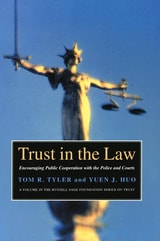
Public opinion polls suggest that American's trust in the police and courts is declining. The same polls also reveal a disturbing racial divide, with minorities expressing greater levels of distrust than whites. Practices such as racial profiling, zero-tolerance and three-strikes laws, the use of excessive force, and harsh punishments for minor drug crimes all contribute to perceptions of injustice. In Trust in the Law, psychologists Tom R. Tyler and Yuen J. Huo present a compelling argument that effective law enforcement requires the active engagement and participation of the communities it serves, and argue for a cooperative approach to law enforcement that appeals to people's sense of fair play, even if the outcomes are not always those with which they agree. Based on a wide-ranging survey of citizens who had recent contact with the police or courts in Oakland and Los Angeles, Trust in the Law examines the sources of people's favorable and unfavorable reactions to their encounters with legal authorities. Tyler and Huo address the issue from a variety of angles: the psychology of decision acceptance, the importance of individual personal experiences, and the role of ethnic group identification. They find that people react primarily to whether or not they are treated with dignity and respect, and the degree to which they feel they have been treated fairly helps to shape their acceptance of the legal process. Their findings show significantly less willingness on the part of minority group members who feel they have been treated unfairly to trust the motives to subsequent legal decisions of law enforcement authorities. Since most people in the study generalize from their personal experiences with individual police officers and judges, Tyler and Huo suggest that gaining maximum cooperation and consent of the public depends upon fair and transparent decision-making and treatment on the part of law enforcement officers. Tyler and Huo conclude that the best way to encourage compliance with the law is for legal authorities to implement programs that foster a sense of personal involvement and responsibility. For example, community policing programs, in which the local population is actively engaged in monitoring its own neighborhood, have been shown to be an effective tool in improving police-community relationships. Cooperation between legal authorities and community members is a much discussed but often elusive goal. Trust in the Law shows that legal authorities can behave in ways that encourage the voluntary acceptance of their directives, while also building trust and confidence in the overall legitimacy of the police and courts. A Volume in the Russell Sage Foundation Series on Trust
[more]
cover of Trust, Ethnicity, and Identity: Beyond the New Institutional Economics of Ethnic Trading Networks, Contract Law, and Gift-Exchange

Trust, Ethnicity, and Identity

Beyond the New Institutional Economics of Ethnic Trading Networks, Contract Law, and Gift-Exchange

Janet Tai Landa

University of Michigan Press, 1995

Trust, Ethnicity, and Identity deals with the economic role of laws and institutions in achieving social order in a decentralized economy. Specifically, this book considers the coordinating role of three major nonprice institutions--ethnic trading networks, contract law, and gift-exchange--in economizing on transaction costs and thus facilitating the process of exchange in decentralized economies in different historical contexts.

The major unifying theme of the book is this: identity matters when traders operate in an environment characterized by contract uncertainty, where the legal framework for the enforcement of contracts is not well developed. This in turn points out the importance of trust embedded in particularistic exchange relations such as kinship or ethnicity.

One unique facet of this book is that the author uses a property rights--public choice approach--part of the New Institutional Economics--to provide a unifying theoretical framework to explain such diverse exchange institutions as contract law, ethnic trading networks, and gift-exchange, In addition, it goes beyond the New Institutional Economics paradigm by incorporating some crucial concepts from sociology, anthropology, and bioeconomics, such as social structure, social norms, culture, reciprocity, and kin-related altruism. This broad interdisciplinary framework gives Landa's work a relevance beyond economics to law, political science, sociology, anthropology, and bioeconomics.
[more]
cover of Trust: Representatives and Constituents

Trust

Representatives and Constituents

William T. Bianco

University of Michigan Press, 1994

Why do constituents sometimes defer to their representative's judgment, rewarding her for acting as she thinks best, even when she ignores their demands? By making decisions about trust, constituents determine whether their representative is rewarded for implementing their demands or for using her judgment. These decisions shape legislator behavior and, through behavior, policy outcomes. Therefore, any attempt to explain or evaluate representative institutions such as the modern Congress requires an answer to a simple question: When do constituents trust their representative, and what is the basis of that trust?

This book is the first systematic analysis of constituent trust. It assumes that elected officials and ordinary citizens are rational actors. However, the book moves beyond the standard rational choice framework in three ways. It avoids narrow, unrealistic assumptions about motivations and information. It shows that many kinds of behavior not usually thought of as rational choices, such as a voter's desire to be represented by "someone like them," are the product of a systematic, predictable calculus---a calculus aimed at securing favorable policy outcomes. Finally, the book uses interviews with ninety-three members of the U.S. House of Representatives to test its predictions about trust.

[more]