Results by title
6 books match the query 'Insanity'
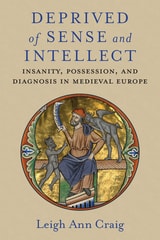
Deprived of Sense and Intellect
Insanity, Possession, and Diagnosis in Medieval EuropeLeigh Ann Craig
University of Michigan Press, 2026
While medieval communities assigned these tensions to a malfunction of consciousness in a single person, medieval miracle texts also reveal how the function and malfunction of consciousness was named and classified. In studying these texts, Leigh Ann Craig explores the terminology and rhetoric used to diagnose a loss of mind as either from natural causes or as an effect of demonic predation, tracing the use of Latin vocabulary in medical compendia, law, and theology. Deprived of Sense and Intellect finds that since diagnoses were difficult and frequently subject to doubt, they varied based on regional cultures of disability in northern and southern Europe, the influences on the development of community consensus in Latin Europe in the Middle Ages, and assumptions based on gender, material evidence, and self-diagnosis.
Law's Madness
Austin Sarat, Lawrence Douglas, and Martha Merrill Umphrey, Editors
University of Michigan Press, 2006
The distinguished contributors to Law's Madness propose a fascinating interdisciplinary approach to the instability and mutual permeability of law and madness. Their essays examine a variety of discursive forms—from the literary to the historical to the psychoanalytic—in which law is driven more by narrative than by reason. Their studies delineate the ways in which the law takes its definition in part from that which it excludes, suppresses, or excises from itself, illuminating the drive to enforce barriers between non-reason and legality, while simultaneously shedding new light on the constitutive force of the irrational in legal doctrine.
Law's Madness suggests that the tense and paradoxical relationship between law and madness is precisely what erects and sustains law. This provocative collection asks what must be forgotten in order to uphold the rule of law.
Austin Sarat is William Nelson Cromwell Professor of Jurisprudence and Political Science at Amherst College. Lawrence Douglas is Associate Professor of Law, Jurisprudence, and Social Thought at Amherst College. Martha Merrill Umphrey is Associate Professor of Law, Jurisprudence, and Social Thought at Amherst College.
Of Others Inside
Insanity, Addiction And Belonging in AmericaDarin Weinberg, foreword by Bryan S. Turner
Temple University Press, 2005
Seeking to offer a new sociological understanding of the relationship between social exclusion and mental disability, Of Others Inside considers the general social conditions of homelessness, poverty, and social marginality in the U.S. Weinberg also explores questions about American perceptions of these conditions, and examines in great detail the social reality of mental disability and drug addiction without reducing people's suffering to simple notions of biological fate or social disorder.
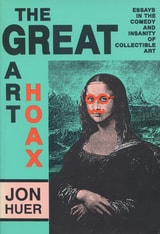
The Great Art Hoax
Essays in the Comedy and Insanity of Collectible ArtJon Huer
University of Wisconsin Press, 1990
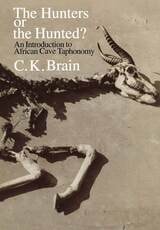
The Hunters or the Hunted?
An Introduction to African Cave TaphonomyC. K. Brain
University of Chicago Press, 1981
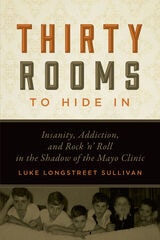
Thirty Rooms to Hide In
Insanity, Addiction, and Rock ‘n’ Roll in the Shadow of the Mayo ClinicLuke Longstreet Sullivan
University of Minnesota Press, 2014
Author Luke Longstreet Sullivan has a simple way of describing his new memoir: “It’s like The Shining . . . only funnier.” Thirty Rooms to HideIn tells the astonishing story of Sullivan’s father and his descent from one of the world’s top orthopedic surgeons at the Mayo Clinic to a man who is increasingly abusive, alcoholic, and insane, ultimately dying alone on the floor of a Georgia motel room. For his wife and six sons, the years prior to his death were characterized by turmoil, anger, and family dysfunction; but somehow they were also a time of real happiness for Sullivan and his brothers, full of dark humor and much laughter.
Through the 1950s and 1960s, the six brothers had a wildly fun and thoroughly dysfunctional childhood living in a forbidding thirty-room mansion, known as the Millstone, on the outskirts of Rochester, Minnesota. The many rooms of the immense home, as well as their mother’s loving protection, allowed the Sullivan brothers to grow up as normal, mischievous boys. Against a backdrop of the times—the Cold War, the Cuban Missile Crisis, fallout shelters, JFK’s assassination, and the Beatles—the cracks in their home life and their father’s psyche continue to widen. When their mother decides to leave the Millstone and move the family across town, the Sullivan boys are able to find solace in each other and in rock ’n’ roll.
As Thirty Rooms to HideIn follows the story of the Sullivan family—at times grim, at others poignant—a wonderful, dark humor lifts the narrative. Tragic, funny, and powerfully evocative of the 1950s and 1960s, Thirty Rooms to Hide In is a tale of public success and private dysfunction, personal and familial resilience, and the strange power of humor to give refuge when it is needed most, even if it can’t always provide the answers.