Results by title
141 books match the query 'Turkey' and 39 start with t
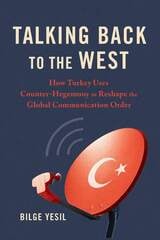
Talking Back to the West
How Turkey Uses Counter-Hegemony to Reshape the Global Communication OrderBilge Yesil
University of Illinois Press, 2024
Insightfully exploring the crossroads of communications and authoritarianism, Talking Back to the West illuminates how the Erdogan government and its media allies use history, religion, and identity to pursue complementary agendas and tighten the AKP’s grip on power.
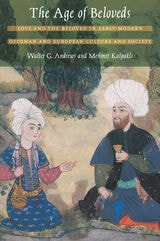
The Age of Beloveds
Love and the Beloved in Early-Modern Ottoman and European Culture and SocietyWalter G. Andrews and Mehmet Kalpakli
Duke University Press, 2005
The authors show that the “age of beloveds” was not just an Ottoman, eastern European, or Islamic phenomenon. It extended into western Europe as well, pervading the cultures of Venice, Florence, Rome, and London during the same period. Andrews and Kalpakli contend that in an age dominated by absolute rulers and troubled by war, cultural change, and religious upheaval, the attachments of dependent courtiers and the longings of anxious commoners aroused an intense interest in love and the beloved. The Age of Beloveds reveals new commonalities in the cultural history of two worlds long seen as radically different.
The Armenian Massacres in Ottoman Turkey
A Disputed GenocideGuenter Lewy
University of Utah Press, 2007
In 1915, the Ottoman government, then run by the Young Turks, deported most of its Armenian citizens from their eastern Anatolian lands. According to reliable estimates, close to forty percent of the prewar population perished, many in brutal massacres. Armenians call it the first genocide of the twentieth century. Turks speak of an instance of intercommunal warfare and wartime relocation made necessary by the treasonous conduct of their Armenian minority.
The voluminous literature on this tragic episode of World War I is characterized by acrimony and distortion in which both sides have simplified a complex historical reality and have resorted to partisan special pleading.
The Armenian Massacres in Ottoman Turkey examines the rich historical evidence without political preconceptions. Relying on archival materials as well as eye-witness testimony, Guenter Lewy avoids the sterile “was-it-genocide-or-not” debate and presents a detailed account of what actually happened. The result is a book that will open a new chapter in this contentious controversy and may help achieve a long-overdue reconciliation of Armenians and Turks.
The Armenian Rebellion at Van
McCarthy, Justin
University of Utah Press, 2006
Before World War I, the ancient city of Van in southeastern Anatolia had a population of approximately 100,000 people, while the population of Van Province was about 500,000. Armenians formed a large minority, with Kurdish tribes and Turks in the majority.
The Armenian Rebellion at Van presents a long-overdue examination of Van from the 1870s to 1919. As the authors state, "The Armenian Revolt was an integral part of the great disaster that overcame the people of the Ottoman East. The slaughter of Muslims that accompanied the Armenian revolt in Van Province inexorably led first to Kurdish reprisals on the Armenians, then to a general and mutual massacre of the people of the East."
The actions at Van offer a window into the far-reaching events that soon followed in other parts of Anatolia.
The Balkan Reconquista and Turkey's Forgotten Refugee Crisis
William H. Holt
University of Utah Press, 2019
In this book, William H. Holt tells the story of a people and moment in time that has largely been neglected in modern Turkish and Balkan memory. Holt uncovers the reasons for this mass forgetting, finding context both within the development of the modern Turkish state and the workings of collective memory. Bringing together a wide array of eyewitness accounts, the book provides unprecedented detail on the plight of the Muslim refugees in their flight from Bulgaria, in Istanbul, and in their resettlement in Anatolia. In crisp, clear, and engaging prose, Holt offers an insightful analysis of human suffering and social memory.

The Bathers
Jennette Williams
Duke University Press, 2009
To create the images in The Bathers, Williams drew on gestures and poses found in iconic paintings of nude women, including tableaux of bathers by Paul Cézanne and Auguste Renoir, renderings of Venus by Giorgione and Titian, Dominique Ingres’s Odalisque and Slave, and Pablo Picasso’s Les Demoiselles d’Avignon. By alluding to these images and others, Williams sought to reflect the religious and mythological associations of water with birth and rebirth, comfort and healing, purification and blessing. She also used copies of the paintings to communicate with her Hungarian- and Turkish-speaking subjects—homemakers, factory workers, saleswomen, secretaries, managers, teachers, and students. Working in steam-filled environments, Williams created quiet, dignified images that evoke not only canonical representations of female nudes but also early pictorial photography. At the same time, they raise contemporary questions about the gaze, the definition of documentary photography, and the representation and perception of beauty and femininity, particularly as they relate to the aging body. Above all else, her photos are sensuously evocative. They invite the viewer to feel the steam, hear the murmur of conversation, and reflect on the allure of the female form.
A CDS Book
Published by Duke University Press and the Center for Documentary Photography
The Concubine, the Princess, and the Teacher
Voices from the Ottoman HaremTranslated and edited by Douglas Scott Brookes
University of Texas Press, 2008
In the Western imagination, the Middle Eastern harem was a place of sex, debauchery, slavery, miscegenation, power, riches, and sheer abandon. But for the women and children who actually inhabited this realm of the imperial palace, the reality was vastly different. In this collection of translated memoirs, three women who lived in the Ottoman imperial harem in Istanbul between 1876 and 1924 offer a fascinating glimpse "behind the veil" into the lives of Muslim palace women of the late nineteenth and early twentieth centuries.
The memoirists are Filizten, concubine to Sultan Murad V; Princess Ayse, daughter of Sultan Abdulhamid II; and Safiye, a schoolteacher who instructed the grandchildren and harem ladies of Sultan Mehmed V. Their recollections of the Ottoman harem reveal the rigid protocol and hierarchy that governed the lives of the imperial family and concubines, as well as the hundreds of slave women and black eunuchs in service to them. The memoirists show that, far from being a place of debauchery, the harem was a family home in which polite and refined behavior prevailed. Douglas Brookes explains the social structure of the nineteenth-century Ottoman palace harem in his introduction.
These three memoirs, written across a half century and by women of differing social classes, offer a fuller and richer portrait of the Ottoman imperial harem than has ever before been available in English.
The Condition of the Working Class in Turkey
Labour under Neoliberal AuthoritarianismÇagatay Edgücan Sahin
Pluto Press, 2021
Decades of neoliberal authoritarianism have propelled Turkey into crisis. Regime change, economic disaster and Erdogan’s ambition to impose ‘one-man rule’ have shaken the foundations of Turkish political life, but what does this mean for workers?
Moving beyond the headlines and personalities, this book uncovers the real condition of the working class in modern Turkey. Combining field research and in-depth interviews, it offers cutting-edge analyses of workplace struggles, trade unionism, the AKP’s relationship with neoliberalism, migration, gender, agrarian change and precarity, as well as the Covid-19 pandemic and its impact on workers.
Bringing together Turkish activists and scholars, this book is an inside look at the dynamics and contradictions of working-class resistance against Turkey’s neoliberal authoritarian regime; from worker self-management to organized labor and rural struggles.

The Delight of Turkish Dizi
Memory, Genre and Politics of Television in TurkeyArzu Öztürkmen
Seagull Books, 2021
Standing at the crossroads of folklore, media, and performance studies, Arzu Öztürkmen explores the rise of the dizi genre in Turkey since the 1970s, when national television broadcasting began in the country. The Delight of Turkish Dizi approaches this unique genre—not quite soap opera or telenovela—as an art form that developed with the collective creative input of writers, producers, directors, actors, editors, musicians, and, lately, international distributors. Öztürkmen shows how dizi-making is a marathon run by sprinters, where production and broadcasting processes have been tightly interwoven, offering a mode of communication and consumption that is distinct to the Turkish television industry. The research consists of oral history with key figures in dizi production and ethnographic surveys of film sets, international content markets, and award ceremonies. This first-ever monograph on Turkish dizi will be a valuable addition to the field of performance and media studies while delighting the general reader as well.
The Emergence of a New Turkey
Islam, Democracy, and the AK PartiYavuz, M. Hakan
University of Utah Press, 2006
The start of accession talks between Turkey and the European Union presents an important challenge for Europe and the Muslim world. Although Turkey has often been cited as a model for the accommodation of Islam and secularism, Islam is still a profound factor in Turkish politics.
This book explores the conditions under which an Islamic movement or party ceases to be Islamic. The Emergence of a New Turkey explains the social, economic, and historical origins of the ruling Justice and Development Party, which evolved from Turkey's half-century-old Islamic National Outlook movement. It focuses on the interplay between internal and external forces in the transformation of political Islam into a conservative democratic party. The book also discusses the effect of neoliberal economic policies in Turkey, offering keen insight into one of the most successful transformations of an Islamic movement in the Muslim world.
In addition to satisfying Turkish studies specialists, this lucidly written book is also suited for use in courses on comparative politics, social movements, and Middle East history and politics.
The Forbidden Modern
Civilization and VeilingNilufer Gole
University of Michigan Press, 1997
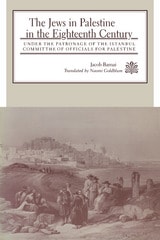
The Jews in Palestine in the Eighteenth Century
Under the Patronage of the Istanbul committee of Officials for PalestineJacob Barnai
University of Alabama Press, 1992
Research reveals a clear connection between the legal and social status of the Jews in Palestine in the 18th century and their ties with the Diaspora. The Jews who had immigrated to Palestine in that period were mostly poor and elderly. The country was economically backward and politically unstable, which made it impossible for the immigrants to support themselves through productive work. Therefore they lived off the contributions of their brethren overseas. Taxes and fees imposed by the Ottoman rulers increased the financial desperation of the Jews in Palestine. Prohibitions against young unmarried immigrant men and women made for an unstable population largely of old men, many of whom died shortly after immigrating. Families succumbed to disease, earthquakes, and famine, but in the face of these problems, the Jewish communities in Palestine persevered.
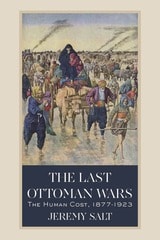
The Last Ottoman Wars
The Human Cost, 1877–1923Jeremy Salt
University of Utah Press, 2019
Jeremy Salt brings to the surface previously ignored facts that disrupt the conventional narrative of an ethno-religious division between Muslim perpetrators and Christian victims of violence. Salt shows instead that all major ethno-religious groups—including Armenians, Turks, Kurds, and Greeks—were guilty of violent acts. The result is a more balanced picture of European involvement in the Ottoman Empire and the Balkans, one that highlights the destructive role of British Prime Minister David Lloyd George and other European leaders grabbing for Ottoman resources up to the end of World War I. The effects of these events are felt to the present day.
This extraordinary story centers not on military campaigns but on ordinary civilians whose lives were disrupted and in many cases destroyed by events over which they had no control. Disease, malnutrition, massacre and inter-communal fighting killed millions of people during the First World War alone. Until now this epic saga of human suffering has remained a story largely untold.

The Liquid Continent
Travels through Alexandria, Venice and IstanbulNicholas Woodsworth
Haus Publishing, 2016

The Mosquito Bite Author
Baris Biçakçi, Translated by Matthew Chovanec
University of Texas Press, 2020
Originally published in 2011, The Mosquito Bite Author is the seventh novel by the acclaimed Turkish author Barış Bıçakçı. It follows the daily life of an aspiring novelist, Cemil, in the months after he submits his manuscript to a publisher in Istanbul. Living in an unremarkable apartment complex in the outskirts of Ankara, Cemil spends his days going on walks, cooking for his wife, repairing leaks in his neighbor’s bathroom, and having elaborate imaginary conversations in his head with his potential editor about the meaning of life and art. Uncertain of whether his manuscript will be accepted, Cemil wavers between thoughtful meditations on the origin of the universe and the trajectory of political literature in Turkey, panic over his own worth as a writer, and incredulity toward the objects that make up his quiet world in the Ankara suburbs.
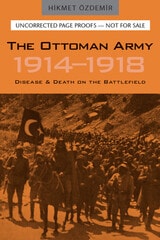
The Ottoman Army 1914 - 1918
Disease and Death on the BattlefieldHikmet Ozdemir
University of Utah Press, 2008
What kind of relationship exists between wars and epidemics? It is widely held that epidemics affected the outcomes of many wars and, until World War II, more victims of war died of disease than of battle wounds. Many disease vectors are present in times of conflict, including mass movements of people across borders and increased contact between persons of different geographic regions, yet disease is rarely treated in depth in histories of war.
Hikmet Özdemir’s The Ottoman Army, 1914–1918 provides extensive documentation of disease and death across the Ottoman Empire during World War I, when epidemic diseases annihilated armies and caused civilians to perish en masse. Drawing on hospital records and information on regional disease prevalence, Özdemir examines the effects that disease and epidemic had on the outcome of the war.
The information on disease mortality explains much that has never been properly understood about wartime events and government actions, events that only begin to make sense when the disease factor is considered. Rich in detail, this is an extremely valuable book that illuminates a facet of the war that has not been adequately considered until now.
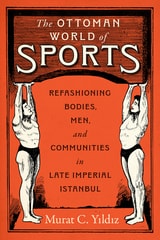
The Ottoman World of Sports
Refashioning Bodies, Men, and Communities in Late Imperial IstanbulMurat C. Yildiz
University of Texas Press, 2025
2026 co-winner of the Ottoman and Turkish Studies Association Book Prize
A revision of the history of modern sports in late Ottoman Istanbul, showing how Muslims, Christians, and Jews created a shared sports culture that was simultaneously global, imperial, and local.
The history of sports in Turkey is deeply contested. Over the decades, journalists, pundits, non-professional historians, sports scholars, and everyday people have offered competing narratives about the origins of modern sports in the late Ottoman Empire.
The Ottoman World of Sports tells the story of how Istanbul’s Muslims, Christians, and Jews—gymnastics teachers, football coaches, weightlifters, journalists, athletes, and fans—created a gendered and class-stratified civic project that promoted athletics as a source of fun, beauty, and moral education. Influenced by the emerging global vogue for organized sports, all boys from the expanding middle class of the late nineteenth- and early twentieth-century imperial capital were expected to exercise and compete on the playing field in order to develop into moral men. Yet even as the embrace of modern athletics transcended ethnoreligious divisions, it did not erase them. Drawing on a wide range of archival research in multiple languages, historian Murat Cihan Yıldız shows that sportsmen created new communal boundaries in team affiliations, fandom, and sports media. Adeptly reconstructing Istanbul’s imperial culture as it was experienced more than a century ago, The Ottoman World of Sports recovers a lived imperial culture whose defining features were shaped by its multiethnic, multireligious, and multilingual sportsmen.

The Political Economy of Turkey
Zulkuf Aydin
Pluto Press, 2005
The Political Thought of Abdullah Öcalan
Kurdistan, Women's Revolution and Democratic ConfederalismAbdullah Öcalan
Pluto Press, 2017
Bringing together Öcalan’s ideas in one slim volume for the first time, The Political Thought of Abdullah Öcalan contains a selection of his most influential writings over his lifetime. These ideas can be read in light of Öcalan’s continuing legacy during the ongoing revolution and the battle against conservatism and religious extremism. As the political situation in Syria intensifies, this book offers a timely and essential introduction for anyone wanting to come to grips with his political ideas on the Kurdish question, gender, Democratic Confederalism, and nationalism.
The Politics of the Welfare State in Turkey
How Social Movements and Elite Competition Created a Welfare StateErdem Yörük
University of Michigan Press, 2022

The Princes' Islands
Istanbul's ArchipelagoJoachim Sartorius
Haus Publishing, 2023
The Purple Color of Kurdish Politics
Women Politicians Write from PrisonGultan Kisanak
Pluto Press, 2022
Prison writings from twenty-two Kurdish women who were elected to office in Turkey and then imprisoned by the state on political grounds.
Gültan Kışanak, a Kurdish journalist and former MP, was elected co-mayor of Diyarbakır in 2014. Two years later, the Turkish state arrested and imprisoned her. Her story is remarkable, but not unique. While behind bars, she wrote about her own experiences and collected similar accounts from other Kurdish women, all co-chairs, co-mayors, and MPs in Turkey; all incarcerated on political grounds.
The Purple Colour of Kurdish Politics is a one-of-a-kind collection of prison writings from twenty-two Kurdish women politicians. Here they reflect on their personal and collective struggles against patriarchy and anti-Kurdish repression in Turkey; on the radical feminist principles and practices through which they transformed the political structures and state offices in which they operated. They discuss what worked and what didn’t, and the ways in which Turkey’s anti-capitalist and socialist movements closely informed their political stances and practices.
Demonstrating Kurdish women’s ceaseless political determination and refusal to be silenced – even when behind bars – the book ultimately hopes to inspire women living under even the most unjust conditions to engage in collective resistance.
The Republic of Love
Cultural Intimacy in Turkish Popular MusicMartin Stokes
University of Chicago Press, 2010
At the heart of The Republic of Love are the voices of three musicians—queer nightclub star Zeki Müren, arabesk originator Orhan Gencebay, and pop diva Sezen Aksu—who collectively have dominated mass media in Turkey since the early 1950s. Their fame and ubiquity have made them national icons—but, Martin Stokes here contends, they do not represent the official version of Turkish identity propagated by anthems or flags; instead they evoke a much more intimate and ambivalent conception of Turkishness.
Using these three singers as a lens, Stokes examines Turkey’s repressive politics and civil violence as well as its uncommonly vibrant public life in which music, art, literature, sports, and journalism have flourished. However, Stokes’s primary concern is how Müren, Gencebay, and Aksu’s music and careers can be understood in light of theories of cultural intimacy. In particular, he considers their contributions to the development of a Turkish concept of love, analyzing the ways these singers explore the private matters of intimacy, affection, and sentiment on the public stage.
The Rise and Relapse of European Human Rights in Turkey
The AKP Era of 2002–2024Tugba Bayar
Central European University Press, 2026
The Ruins of Ani
A Journey to Armenia's Medieval Capital and its LegacyKrikor Balakian
Rutgers University Press, 2019
From the tenth to the thirteenth centuries, the city of Ani was the jewel of the Armenian kingdom, renowned far and wide for its magnificent buildings. Known as the city of 1001 churches, Ani was a center for artistic innovation, and its architecture is a potential missing link between Byzantine and Gothic styles. By the fifteenth century, Ani was virtually abandoned, its stunning buildings left to crumble. Yet its ruins have remained a symbol of cultural accomplishment that looms large in the Armenian imagination.
The Ruins of Ani is a unique combination of history, art criticism, and travel memoir that takes readers on a thousand-year journey in search of past splendors. Today, Ani is a popular tourist site in Turkey, but the city has been falsified in its presentation by the Turkish government in order to erase Armenian history in the wake of the Armenian Genocide. This timely publication also raises questions about the preservation of major historic monuments in the face of post atrocity campaigns of cultural erasure.
Originally written by young priest Krikor Balakian in 1910, just a few years before the Armenian genocide, this book offers a powerful and poignant counterpart to Balakian’s acclaimed genocide memoir Armenian Golgotha. This new translation by the author’s great-nephew, Pulitzer Prize-winning poet Peter Balakian, eloquently renders the book’s vivid descriptions and lyrical prose into English. Including a new introduction that explores Ani’s continued relevance in the twenty-first century, The Ruins of Ani will give readers a new appreciation for this lost city’s status as a pinnacle of both Armenian civilization and human achievement.
The Sovietization of Azerbaijan
The South Caucasus in the Triangle of Russia, Turkey, and Iran, 1920–1922Jamil Hasanli
University of Utah Press, 2017
World War I and the fall of tsarist Russia brought brief independence to Azerbaijan, but by 1920 the Bolshevik revolution pushed south with the twofold purpose of accessing the oil-rich fields near Baku on the Caspian Sea and spreading communism into the Caucasus. Azerbaijan, the richest and earliest significant source of oil in the world, was the first republic in the South Caucasus occupied by the Red Army, which then advanced into neighboring Armenia and Georgia. Pulling from confidential, newly accessed archives, Hasanli describes Soviet Russia’s aggressive policy toward the three South Caucasian nations, which led to their absorption into the USSR by the end of 1922.
The book highlights the Caucasian peoples’ struggle to retain political independence against Soviet Russia and an international cast that included European powers wanting to retain petroleum concessions; Kemalist Turkey, which claimed special ties to the Turkic Azeris; and Iran, which controlled South Azerbaijan and was thus a possible route of expansion eastward for Bolshevik movement. The author also considers the impact on Azerbaijani-Armenian relations of the first two years of Sovietization and explains how Azerbaijan provided space for Bolshevik experiments. Throughout his book, Hasanli illuminates the tragedy of the complex, confused period of Sovietization of the South Caucasus.
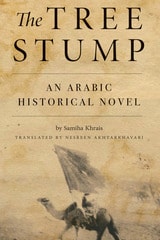
The Tree Stump
An Arabic Historical NovelSamiha Khrais
Michigan State University Press, 2017
The Turk in America
The Creation of an Enduring PrejudiceJustin McCarthy
University of Utah Press, 2010
Utah Series in Middle East Studies
In The Turk in America, historian Justin McCarthy seeks to explain the historical basis for American prejudice towards Turks in the nineteenth and early twentieth centuries. The volume focuses on fraudulent characterizations of Turks, mostly stemming from an antipathy in Europe and America toward non-Christians, and especially Muslims. Spanning one hundred and fifty years, this history explores the misinformation largely responsible for the negative stereotypes of Turks during this period.
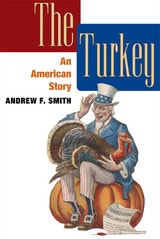
The Turkey
AN AMERICAN STORYAndrew F. Smith
University of Illinois Press, 2006
“Talking turkey” about the bird you thought you knew
Fondly remembered as the centerpiece of family Thanksgiving reunions, the turkey is a cultural symbol as well as a multi-billion dollar industry. As a bird, dinner, commodity, and as a national icon, the turkey has become as American as the bald eagle (with which it actually competed for supremacy on national insignias).
Food historian Andrew F. Smith’s sweeping and multifaceted history of Meleagris gallopavo separates fact from fiction, serving as both a solid historical reference and a fascinating general read. With his characteristic wit and insatiable curiosity, Smith presents the turkey in ten courses, beginning with the bird itself (actually several different species of turkey) flying through the wild. The Turkey subsequently includes discussions of practically every aspect of the iconic bird, including the wild turkey in early America, how it came to be called “turkey,” domestication, turkey mating habits, expansion into Europe, stuffing, conditions in modern industrial turkey factories, its surprising commercial history of boom and bust, and its eventual ascension to holiday mainstay.
As one of the easiest of foods to cook, the turkey’s culinary possibilities have been widely explored if little noted. The second half of the book collects an amazing array of over one hundred historical and modern turkey recipes from across America and Europe. From sandwiches to salmagundi, you’ll find detailed instructions on nearly every variation on the turkey. Historians will enjoy a look back at the varied appetites of their ancestors and seasoned cooks will have an opportunity to reintroduce a familiar food in forgotten ways.
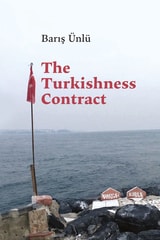
The Turkishness Contract
Baris Ünlü
Temple University Press, 2025
Ünlü uses Critical Race Theory to present a historical–sociological model to examine not only the historical constitution and contemporary functioning of the Turkish nation-state, but also the affective and bodily modalities of being Turkish. He also develops a framework for rethinking the complex relations between the socio-genesis of the Turkish nation and state and the psycho-genesis of the Turkish people, their cognitive habits and emotional orientations, and the structural privileges and unconsciousness strategies of Turkishness.
The Turkishness Contract addresses broader theoretical concerns including histories of colonialism, ethnic/racial social contracts, privilege, Armenian Genocide and the Kurdish question, as well as the unraveling of Turkey’s social contract at a moment of contemporary right-wing authoritarianism.
In the series Critical Race, Indigeneity, and Relationality
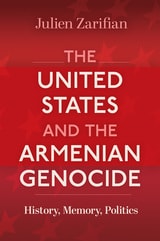
The United States and the Armenian Genocide
History, Memory, PoliticsJulien Zarifian
Rutgers University Press, 2024
This is the first book to examine how and why the United States refused to acknowledge the Armenian Genocide until the early 2020s. Although the American government expressed sympathy towards the plight of the Armenians in the 1910s and 1920s, historian Julien Zarifian explores how, from the 1960s, a set of geopolitical and institutional factors soon led the United States to adopt a policy of genocide non-recognition which it would cling to for over fifty years, through Republican and Democratic administrations alike. He describes the forces on each side of this issue: activists from the US Armenian diaspora and their allies, challenging Cold War statesmen worried about alienating NATO ally Turkey and dealing with a widespread American reluctance to directly confront the horrors of the past. Drawing from congressional records, rare newspapers, and interviews with lobbyists and decision-makers, he reveals how genocide recognition became such a complex, politically sensitive issue.
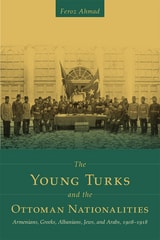
The Young Turks and the Ottoman Nationalities
Armenians, Greeks, Albanians, Jews, and Arabs, 1908–1918Feroz Ahmad
University of Utah Press, 2014
Ahmad holds that nationalism was introduced into the Ottoman Empire during the French Revolution, providing kindling for the struggles that later emerged. Setting the stage with this nineteenth-century background, Ahmad then examines each Ottoman nationality in the wake of the restoration of the Ottoman constitution in 1908. Officially known as the Committee of Union and Progress (CUP), the Young Turks made up a nationalist political party that ruled the Ottoman Empire from 1908 until the end of World War I. Ahmad illuminates the relationships and conflicts between the Young Turks and the Greek, Armenian, Albanian, Jewish, and Arab ethnic groups during this period. Placing these nationalities in their historical context, he shows their relationships not only to the Young Turks but also to one anotherno other single book has attempted to look closely at all of these connections.
Anyone interested in understanding the roots of current-day relations in the Balkans and Middle East will find this book very informative. Clearly organized and written, the book will enlighten both readers and scholars.
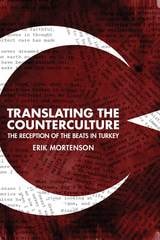
Translating the Counterculture
The Reception of the Beats in TurkeyErik Mortenson
Southern Illinois University Press, 2018
Mortenson examines how in Turkey the Beats have been framed by the label “underground literature”; explores the ways they are repurposed in the counterculture-inspired journal Underground Poetix; looks at the reception of Jack Kerouac’s On the Road and how that reaction provides a better understanding of the construction of “American-ness”; delves into the recent obscenity trial of William S. Burroughs’s novel The Soft Machine and the attention the book’s supporters brought to government repression and Turkish homophobia; and analyzes the various translations of Allen Ginsberg’s Howl to demonstrate the relevance Ginsberg still holds for social rebellion today.
Translating the Counterculture takes a revolutionary look at how contemporary readers in other parts of the world respond to the Beats. Challenging and unsettling an American-centric understanding of the Beats, Mortenson pushes the discipline toward a fuller consideration of their cultural legacy in a globalized twenty-first century.
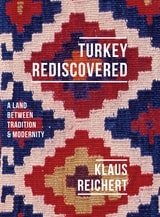
Turkey Rediscovered
A Land between Tradition and ModernityKlaus Reichert
Haus Publishing, 2015
Without a guide and driven only by his own curiosity, Klaus Reichert travels to Anatolia, Istanbul, and the Aegean coast. He explores the strip of land where Adam and Eve are said to have settled after their expulsion from the Garden of Eden, and where Moses struck water from stone. While following in the footsteps of the brilliant architect Mimar Sinan and investigating the mysteries of his mosques, Reichert speaks to an old stonemason and a young teacher, visits one of the last remaining colonies of a rare breed of ibis, and walks the wide expanses surrounding the archaeological sites of western Turkey. Finally, he draws parallels between Kilim weaving, minimal music, and modernity as a whole. Under Reichert’s gaze, what is seen and learned becomes a colorful and provocative collection of images and patterns.
A one-of-a-kind travelogue that touches on Turkey’s traditions, natural history, and political divisions, Turkey Rediscovered shows us a new side to a land we thought we already knew.
Turkey Reframed
Constituting Neoliberal HegemonyBaris Ozden
Pluto Press, 2013
Turkey Reframed documents the first decade of the 2000s, a period of radical change in Turkish society and politics, which has been marked by the major economic crisis of 2001 and the coming to power of ex-Islamist cadres organised under the Justice and Development Party (AKP).
The contributors analyse this period of radical change, with its continuities and breaks, and its main actor, the AKP, in relation to the creation of a neoliberal hegemony in post-1980 Turkey. They look at the conflictual, turbulent and painful history of neoliberal hegemony and the contested stabilisation strategy of the AKP government.
Turkey Reframed is a cutting-edge guide for students, scholars and other interested readers who want to understand this period in Turkey’s recent history and its social tensions.
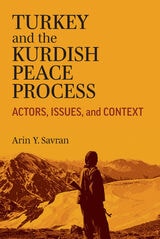
Turkey and the Kurdish Peace Process
Actors, Issues, and ContextArin Y. Savran
University of Michigan Press, 2022
After the fall of the Ottoman Empire following World War I, the Kurds in the Middle East became the largest ethnic group in the region without a state of their own. Divided between Turkey, Syria, Iran, and Iraq, the Kurds have fought for their right to exist as a distinct national group, as well as for governing themselves. Turkey and the Kurdish Peace Process provides a historical and conceptual account of events in order to detail the key conditions, factors, and events that gave rise to the PKK (Kurdistan Workers’ Party) conflict in Turkey, as well as the conditions influencing the emergence, management, and collapse of the peace talks. Drawing from conflict resolution theories, this book investigates the transformation of key conflict actors and changes, over time, in their approach to the main conflict issues.
Moreover, Arin Y. Savran expands the concept of conflict transformation to encompass the ideological transformation of a movement as a result of a rigorous and deep intellectual epiphany on the part of the political leaders—a phenomenon that is unusual and little is known about, making it all the more relevant to include in future theoretical approaches in peace process studies. Methodologically, she rethinks conflict transformation/resolution approaches to focus on shifts in beliefs and relationships that occur prior to a peace process or the start of peace negotiations, when often much focus on peace processes is on the post-agreement phase. This book is among the first comprehensive, scholarly accounts to date (in the English language) that analyzes the Kurdish peace process.
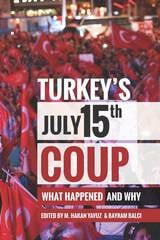
Turkey's July 15th Coup
What Happened and WhyEdited by M. Hakan Yavuz and Bayram Balci
University of Utah Press, 2018
Utah Series in Middle East Studies
On July 15, 2016, a faction of the Turkish military attempted to overthrow the government of President Recep Tayyip Erdoğan. The Turkish government blamed the unsuccessful coup attempt on Gülenists, adherents of an Islamist movement led by Fethullah Gülen. They had helped elect Erdoğan and his AK Party, with the goal of bringing an ostensibly “soft” version of Islam into the secular Turkish government. In alliance with the AK Party, Gülenists steadfastly increased their representation in various government institutions, including the military, the police, and the judiciary. This volume focuses on the historical and sociopolitical contexts of the Gülen Movement’s origins and political ascendancy along with its possible role in the failed coup.
Editors Yavuz and Balcı are among the first international scholars to have studied the movement from its nascent stages in Turkey. The volume's contributors include scholars who have researched the movement in Turkey, Central Asia, and the Balkans. The result is a comprehensive, timely assessment of numerous dimensions of Gülenist activities, including its social and political networks and the institutions that supported the movement as it became a major economic and educational force in Turkey and elsewhere. This volume reflects exchanges among scholars who having studied the Gülenists, assembled to discuss how and why the movement became belligerent opponents of Erdoğan’s government, and it addresses questions such as how this major, still continuing disruption in Turkey’s politics will affect not only the future of the movement but also that of Turkey's embattled democracy as well.
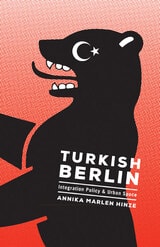
Turkish Berlin
Integration Policy and Urban SpaceAnnika Marlen Hinze
University of Minnesota Press, 2013
The integration of immigrants into a larger society begins at the local level. Turkish Berlin reveals how integration has been experienced by second-generation Turkish immigrant women in two neighborhoods in Berlin, Germany. While the neighborhoods are similar demographically, the lived experience of the residents is surprisingly different.
Informed by first-person interviews with both public officials and immigrants, Annika Marlen Hinze makes clear that local integration policies—often created by officials who have little or no contact with immigrants—have significant effects on the assimilation of outsiders into a community and a society. Focusing on the Turkish neighborhoods of Kreuzberg and Neukölln, Hinze shows how a combination of local policy making and grassroots organizing have contributed to one neighborhood earning a reputation as a hip, multicultural success story and the other as a rougher neighborhood featuring problem schools and high rates of unemployment. Aided by her interviews, she describes how policy makers draw from their imaginations of urban space, immigrants, and integration to develop policies that do not always take social realities into consideration. She offers useful examples of how official policies can actually exacerbate the problems they are trying to help solve and demonstrates that a powerful history of grassroots organizing and resistance can have an equally strong impact on political outcomes.
Employing spatial theory as a tool for understanding the complex processes of integration, Hinze asks two related questions: How do immigrants perceive themselves and their experiences in a new culture? And how are immigrants conceived of by politicians and policy makers? Although her research highlights the German–Turk experience in Berlin, her answers have implications that resonate far beyond the city’s limits.

Two NATO Allies at the Threshold of War
Parker T. Hart
Duke University Press, 1990
Hart has relied on his own papers from the period, as well as on United Nations sources from the Lyndon B. Johnson Presidential Library, and on the papers of the other key participants in the Crisis, Ambassador to Greece Phillips Talbot, Ambassador to Cyprus Taylor G. Belcher, and Cyrus Vance, to provide a rare play-by-play analysis of the crisis and its resolution.