Results by title
141 books match the query 'Twentieth Century' and 28 start with t
Tangled Bylines
A Father and Son Cover the Twentieth CenturyClyde H. Farnsworth
University of Missouri Press, 2017
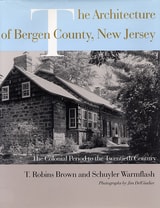
The Architecture of Bergen County, New Jersey
The Colonial Period to the Twentieth CenturyBrown, T. Robins
Rutgers University Press, 2000
Winner of the 2001 New Jersey Historic Preservation Award | Commendation Award from the Bergen County Historic Preservation Advisory Board
Walk or drive through any of Bergen County's seventy communities and you will find telling reminders of a wonderfully rich and diverse architectural history--the legacy of three hundred years of settlement, growth, and change.
The Architecture of Bergen County, New Jersey presents an accessible overview of the county's architectural heritage and its historic structures. The volume explores the styles, trends, and events that influenced the design and setting of the region's buildings. More than 150 photos document Bergen County's architectural treasures, generating awareness and appreciation for these structures and their history.
The book is arranged chronologically, beginning with the arrival of European settlers in the seventeenth century and ending in the late twentieth century. Each chapter opens with a brief historical background and follows with a description and analysis of building types common to Bergen County for the period. Some structures, such as the Hermitage in Ho-Ho-Kus, the Vreeland House in Leonia, and the Bergen County Courthouse in Hackensack, are of regional, even national, significance.
The book also highlights delightful surprises. Examples include a large number of picturesque houses that were built from the designs published in mid-nineteenth century architectural pattern books, the home of an early African American newspaper publisher, and two homes in Paramus and Washington Township whose exterior walls are made of mud.
The Architecture of Bergen County, New Jersey demonstrates the close association between architectural development at the national and local levels, and shows how social, technological, and political changes occurring within the county have been reflected in the building types and styles of the area.

The Big Empty
The Great Plains in the Twentieth CenturyR. Douglas Hurt
University of Arizona Press, 2011
Using the voices of women homesteaders, agrarian socialists, Jewish farmers, Mexican meatpackers, New Dealers, and Native Americans, this book creates a sweeping survey of contested race relations, radical politics, and agricultural prosperity and decline during the twentieth century. This narrative shows that even though Great Plains history is fraught with personal and group tensions, violence, and distress, the twentieth century also brought about compelling social, economic, and political change.
The only book of its kind, this account will be of interest to historians studying the region and to anyone inspired by the story of the men and women who found an opportunity for a better life in the Great Plains.
The Black Intellectual Tradition
African American Thought in the Twentieth CenturyEdited by Derrick P. Alridge, Cornelius L. Bynum, and James B. Stewart
University of Illinois Press, 2021
From 1900 to the present, people of African descent living in the United States have drawn on homegrown and diasporic minds to create a Black intellectual tradition engaged with ideas on race, racial oppression, and the world. This volume presents essays on the diverse thought behind the fight for racial justice as developed by African American artists and intellectuals; performers and protest activists; institutions and organizations; and educators and religious leaders. By including both women’s and men’s perspectives from the U.S. and the Diaspora, the essays explore the full landscape of the Black intellectual tradition. Throughout, contributors engage with important ideas ranging from the consideration of gender within the tradition, to intellectual products generated outside the intelligentsia, to the ongoing relationship between thought and concrete effort in the quest for liberation.
Expansive in scope and interdisciplinary in practice, The Black Intellectual Tradition delves into the ideas that animated a people’s striving for full participation in American life.
Contributors: Derrick P. Alridge, Keisha N. Blain, Cornelius L. Bynum, Jeffrey Lamar Coleman, Pero Gaglo Dagbovie, Stephanie Y. Evans, Aaron David Gresson III, Claudrena N. Harold, Leonard Harris, Maurice J. Hobson, La TaSha B. Levy, Layli Maparyan, Zebulon V. Miletsky, R. Baxter Miller, Edward Onaci, Venetria K. Patton, James B. Stewart, and Nikki M. Taylor
The Defining Moment
The Great Depression and the American Economy in the Twentieth CenturyEdited by Michael D. Bordo, Claudia Goldin, and Eugene N. White
University of Chicago Press, 1997
The essays consider whether New Deal-style legislation continues to operate today as originally envisioned, whether it altered government and the economy as substantially as did policies inaugurated during World War II, the 1950s, and the 1960s, and whether the legislation had important precedents before the Depression, specifically during World War I. Some chapters find that, surprisingly, in certain areas such as labor organization, the 1930s responses to the Depression contributed less to lasting change in the economy than a traditional view of the time would suggest. On the whole, however, these essays offer testimony to the Depression's legacy as a "defining moment." The large role of today's government and its methods of intervention—from the pursuit of a more active monetary policy to the maintenance and extension of a wide range of insurance for labor and business—derive from the crisis years of the 1930s.
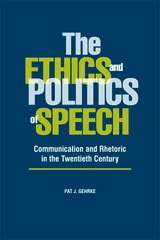
The Ethics and Politics of Speech
Communication and Rhetoric in the Twentieth CenturyPat J. Gehrke
Southern Illinois University Press, 2009
In The Ethics and Politics of Speech, Pat J. Gehrke provides an accessible yet intensive history of the speech communication discipline during the twentieth century. Drawing on several previously unpublished or unexamined sources—including essays, conference proceedings, and archival documents—Gehrke traces the evolution of communication studies and the dilemmas that often have faced academics in this field. In his examination, Gehrke not only provides fresh perspectives on old models of thinking; he reveals new methods for approaching future studies of ethical and political communication.
Gehrke begins his history with the first half of the twentieth century, discussing the development of a social psychology of speech and an ethics based on scientific principles, and showing the importance of democracy to teaching and scholarship at this time. He then investigates the shift toward philosophical—especially existential—ways of thinking about communication and ethics starting in the 1950s and continuing through the mid-1970s, a period associated with the rise of rhetoric in the discipline. In the chapters covering the last decades of the twentieth century, Gehrke demonstrates how the ethics and politics of communication were directed back onto the practices of scholarship within the discipline, examining the increased use of postmodern and poststructuralist theories, as well as the new trend toward writing original theory, rather than reinterpreting the past. In offering a thorough history of rhetoric studies, Gehrke sets the stage for new questions and arguments, ultimately emphasizing the deeply moral and political implications that by nature embed themselves in the field of communication.
More than simply a history of the discipline's major developments, The Ethics and Politics of Speech is an account of the philosophical and moral struggles that have faced communication scholars throughout the last century. As Gehrke explores the themes and movements within rhetoric and speech studies of the past, he also provides a better understanding of the powerful forces behind the forging of the field. In doing so, he reveals history’s potential to act as a vehicle for further academic innovation in the future.
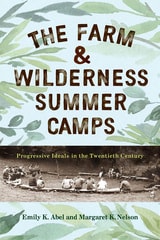
The Farm & Wilderness Summer Camps
Progressive Ideals in the Twentieth CenturyEmily K. Abel
Rutgers University Press, 2024

The Female Autograph
Theory and Practice of Autobiography from the Tenth to the Twentieth CenturyEdited by Domna C. Stanton
University of Chicago Press, 1987
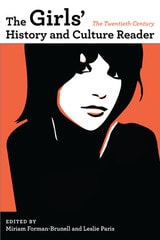
The Girls' History and Culture Reader
The Twentieth CenturyEdited by Miriam Forman-Brunell and Leslie Paris
University of Illinois Press, 2011
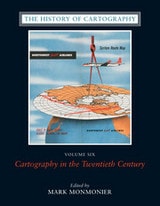
The History of Cartography, Volume Six
Cartography in the Twentieth CenturyEdited by Mark Monmonier
University of Chicago Press, 2015
The twentieth century is a pivotal period in map history. The transition from paper to digital formats led to previously unimaginable dynamic and interactive maps. Geographic information systems radically altered cartographic institutions and reduced the skill required to create maps. Satellite positioning and mobile communications revolutionized wayfinding. Mapping evolved as an important tool for coping with complexity, organizing knowledge, and influencing public opinion in all parts of the globe and at all levels of society. Volume 6 covers these changes comprehensively, while thoroughly demonstrating the far-reaching effects of maps on science, technology, and society—and vice versa.
The lavishly produced volume includes more than five hundred articles accompanied by more than a thousand images. Hundreds of expert contributors provide both original research, often based on their own participation in the developments they describe, and interpretations of larger trends in cartography. Designed for use by both scholars and the general public, this definitive volume is a reference work of first resort for all who study and love maps.
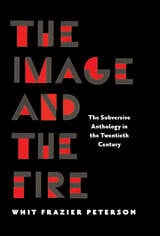
The Image and the Fire
The Subversive Anthology in the Twentieth CenturyWhit Frazier Peterson
University of Massachusetts Press, 2026
Racial identity and literary form in the modernist anthology
The Image and the Fire examines the coterie anthology—a small, outsider literary collection—as a key, yet understudied, instrument of literary intervention within American modernism. Whit Frazier Peterson argues that these anthologies, produced outside of institutional or canonical frameworks, served as deliberate challenges to dominant literary paradigms. Distinct from academic anthologies that helped codify the American literary canon, coterie anthologies were used by both white and Black avant-garde movements to disrupt prevailing cultural narratives and assert alternative literary visions.
Through close analysis of three seminal case studies—Des Imagistes, edited by Ezra Pound; Fire!!, a short-lived but groundbreaking magazine from the Harlem Renaissance, co-edited by Wallace Thurman; and Black Fire, compiled by Amiri Baraka and Larry Neal during the Black Arts Movement—Peterson traces a genealogy of the coterie anthology as a politically charged genre. He reveals how Black American writers and editors, particularly during the Harlem Renaissance and the Black Arts Movement, reappropriated and reconfigured this type of anthology format from white modernists.
Ultimately, The Image and the Fire positions the coterie anthology as a site of aesthetic and ideological contestation, one through which marginalized literary communities engaged in acts of cultural self-definition, canon revision, and formal innovation. By foregrounding the coterie anthology’s role in shaping a hybrid American modernism, Peterson contributes to ongoing conversations in literary studies around race, authorship, and the politics of literary form.

The Information Process
Reporting To Twentieth CenturyRobert W. Desmond
University of Iowa Press, 1978
The Mexican Petroleum Industry in the Twentieth Century
Edited by Jonathan C. Brown and Alan Knight
University of Texas Press, 1992
Mexico's petroleum industry has come to symbolize the very sovereignty of the nation itself. Politicians criticize Pemex, the national oil company, at their peril, and President Salinas de Gortari has made clear that the free trade negotiations between Mexico and the United States will not affect Pemex's basic status as a public enterprise. How and why did the petroleum industry gain such prominence and, some might say, immunity within Mexico's political economy?
The Mexican Petroleum Industry in the Twentieth Century, edited by Jonathan C. Brown and Alan Knight, seeks to explain the impact of the oil sector on the nation's economic, political, and social development. The book is a multinational effort—one author is Australian, two British, three North American, and five Mexican. Each contributing scholar has researched and written extensively about Mexico and its oil industry.
The National Question
Nationalism, Ethnic Conflict, and Self-Determination in the Twentieth Centuryedited by Berch Berberoglu
Temple University Press, 1995
The Passing of an Illusion
The Idea of Communism in the Twentieth CenturyFrançois Furet
University of Chicago Press, 1999
"This may well be the most illuminating study ever devoted to the question of appeal exerted not only by Communism but also by the Nazi and other fascist varieties of totalitarianism in this century."—Hilton Kramer, New Criterion
"A subtle, nuanced but gripping study of the most pervasive and destructive illusion in the 20th century." —Kirkus Reviews, starred review
"The Passing of an Illusion . . . is both a profound work of intellectual history that takes its place alongside other great studies of the leftist heresy . . . and a relentless diagnosis of the self-subversive risks that are inherent in democratic regimes. "—Roger Kaplan, Washington Times
" A remarkable book. . . . Stimulating and challenging. . . . A man widely read in several languages, Furet clearly knew his way around 20th-century Europe, even unto the dark alleys that figure on no existing map. "—Mark Falcoff, Commentary
"A history of ideas, this work is not for the faint of heart, yet those who challenge it will discover a signal contribution to the literature of Communism."—Booklist
"Imperious and stunningly confident, grand in conception and expansive in manner, packed with fascinating detail and often incisive judgements."—John Dunn, Times Higher Education Supplement
"The Passing of an Illusion is brilliant, and one would be hard pressed to find better writing of history than the first chapter, which traces the roots of modern political thinking back to the nineteenth century."—J. Arch Getty, Atlantic Monthly
"A brilliant and important book. . . . The publication of the American edition makes accessible to the general reader the most thought-provoking historical assessment of communism in Europe to appear since its collapse."—Jeffrey Herf, Wall Street Journal
François Furet (1927-1997), educator and author, was a Chevalier of the Legion of Honor and was elected, in 1997, to become one of the "Forty Immortals" of the Académie Française, the highest intellectual honor in France. His many books include Interpreting the French Revolution, Marx and the French Revolution, and Revolutionary France. Deborah Furet, his widow, collaborated with him on many projects.
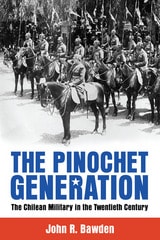
The Pinochet Generation
The Chilean Military in the Twentieth CenturyJohn R. Bawden
University of Alabama Press, 2016
Understanding the military generation that transformed modern Chile.
Chilean soldiers in the twentieth century appear in most historical accounts, if they appear at all, as decontextualized figures or simply as a single man: Augusto Pinochet. In his incisive study The Pinochet Generation: The Chilean Military in the Twentieth Century, John R. Bawden provides compelling new insights into the era and posits that Pinochet and his men were responsible for two major transformations in Chile’s constitution as well as the political and economic effects that followed.
Determined to refocus what he sees as a “decontextualized paucity” of historical information on Chile’s armed forces, Bawden offers a new perspective to explain why the military overthrew the government in 1973 as well as why and how Chile slowly transitioned back to a democracy at the end of the 1980s. Standing apart from other views, Bawden insists that the Chilean military’s indigenous traditions and customs did more than foreign influences to mold their beliefs and behavior leading up to the 1973 coup of Salvador Allende.
Drawing from defense publications, testimonial literature, and archival materials in both the United States and Chile, The Pinochet Generation characterizes the lens through which Chilean officers saw the world, their own actions, and their place in national history. This thorough analysis of the Chilean services’ history, education, values, and worldview shows how this military culture shaped Chilean thinking and behavior, shedding light on the distinctive qualities of Chile’s armed forces, the military’s decision to depose Allende, and the Pinochet dictatorship’s resilience, repressiveness, and durability.
Bawden’s account of Chile’s vast and complex military history of the twentieth century will appeal to political scientists, historians, faculty and graduate students interested in Latin America and its armed forces, students of US–Latin American diplomacy, and those interested in issues of human rights.
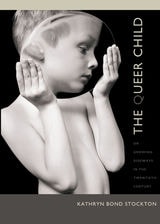
The Queer Child, or Growing Sideways in the Twentieth Century
Kathryn Bond Stockton
Duke University Press, 2009
Engaging and challenging the work of sociologists, legal theorists, and historians, Stockton coins the term “growing sideways” to describe ways of growing that defy the usual sense of growing “up” in a linear trajectory toward full stature, marriage, reproduction, and the relinquishing of childish ways. Growing sideways is a mode of irregular growth involving odd lingerings, wayward paths, and fertile delays. Contending that children’s queerness is rendered and explored best in fictional forms, including literature, film, and television, Stockton offers dazzling readings of works ranging from novels by Henry James, Radclyffe Hall, Virginia Woolf, Djuna Barnes, and Vladimir Nabokov to the movies Guess Who’s Coming to Dinner, The Hanging Garden, Heavenly Creatures, Hoop Dreams, and the 2005 remake of Willy Wonka and the Chocolate Factory. The result is a fascinating look at children’s masochism, their interactions with pedophiles and animals, their unfathomable, hazy motives (leading them at times into sex, seduction, delinquency, and murder), their interracial appetites, and their love of consumption and destruction through the alluring economy of candy.
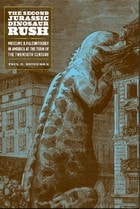
The Second Jurassic Dinosaur Rush
Museums and Paleontology in America at the Turn of the Twentieth CenturyPaul D. Brinkman
University of Chicago Press, 2010
The so-called “Bone Wars” of the 1880s, which pitted Edward Drinker Cope against Othniel Charles Marsh in a frenzy of fossil collection and discovery, may have marked the introduction of dinosaurs to the American public, but the second Jurassic dinosaur rush, which took place around the turn of the twentieth century, brought the prehistoric beasts back to life. These later expeditions—which involved new competitors hailing from leading natural history museums in New York, Chicago, and Pittsburgh—yielded specimens that would be reconstructed into the colossal skeletons that thrill visitors today in museum halls across the country.
Reconsidering the fossil speculation, the museum displays, and the media frenzy that ushered dinosaurs into the American public consciousness, Paul Brinkman takes us back to the birth of dinomania, the modern obsession with all things Jurassic. Featuring engaging and colorful personalities and motivations both altruistic and ignoble, The Second Jurassic Dinosaur Rush shows that these later expeditions were just as foundational—if not more so—to the establishment of paleontology and the budding collections of museums than the more famous Cope and Marsh treks. With adventure, intrigue, and rivalry, this is science at its most swashbuckling.
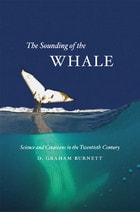
The Sounding of the Whale
Science and Cetaceans in the Twentieth CenturyD. Graham Burnett
University of Chicago Press, 2011
From the Bible’s “Canst thou raise leviathan with a hook?” to Captain Ahab’s “From Hell’s heart I stab at thee!,” from the trials of Job to the legends of Sinbad, whales have breached in the human imagination as looming figures of terror, power, confusion, and mystery.
In the twentieth century, however, our understanding of and relationship to these superlatives of creation underwent some astonishing changes, and with The Sounding of the Whale, D. Graham Burnett tells the fascinating story of the transformation of cetaceans from grotesque monsters, useful only as wallowing kegs of fat and fertilizer, to playful friends of humanity, bellwethers of environmental devastation, and, finally, totems of the counterculture in the Age of Aquarius. When Burnett opens his story, ignorance reigns: even Nature was misclassifying whales at the turn of the century, and the only biological study of the species was happening in gruesome Arctic slaughterhouses. But in the aftermath of World War I, an international effort to bring rational regulations to the whaling industry led to an explosion of global research—and regulations that, while well-meaning, were quashed, or widely flouted, by whaling nations, the first shot in a battle that continues to this day. The book closes with a look at the remarkable shift in public attitudes toward whales that began in the 1960s, as environmental concerns and new discoveries about whale behavior combined to make whales an object of sentimental concern and public adulation.
A sweeping history, grounded in nearly a decade of research, The Sounding of the Whale tells a remarkable story of how science, politics, and simple human wonder intertwined to transform the way we see these behemoths from below.
The University of Iowa in the Twentieth Century
An Institutional HistoryStow Persons
University of Iowa Press, 1990
The Unspeakable Vice
The Catholic Church and Homosexuality in the Twentieth CenturyFrancesco Torchiani, Translated by Johanna Bishop
University of Wisconsin Press, 2026
As gay men and lesbian women increasingly gained recognition and acceptance in twentieth-century literature and film, and subsequently in social and political movements, the Catholic Church reacted by subtly moving away from its overt condemnation of homosexuality as an urgent moral problem and toward tacitly shunning homosexuality as an “unspeakable vice.” In this revealing history, Francesco Torchiani reconstructs the Catholic Church’s shifting attitudes toward homosexuality during this period by drawing on a vast array of internal documents and external accounts. This monograph expands the scholarship on the relationship between Catholicism and homosexuality in terms of both method and content, ultimately concluding that the Catholic Church continues to wholeheartedly condemn homosexuality despite making genuine efforts to reflect on and understand its social and cultural impact. The Unspeakable Vice therefore sheds new light on and places into historical perspective the questions the Catholic Church continues to reckon with regarding its role in contemporary society.
The World in Which We Occur
John Dewey, Pragmatist Ecology, and American Ecological Writing in the Twentieth CenturyNeil W. Browne
University of Alabama Press, 2007
Where nature meets democracy—John Dewey’s vision for a more connected world.
American philosopher John Dewey considered all human endeavors to be one with the natural world. In his writings, particularly Art as Experience (1934), Dewey insists on the primacy of the environment in aesthetic experience. Dewey’s conception of environment includes both the natural and the man-made. The World in Which We Occur highlights this notion in order to define “pragmatist ecology,” a practice rooted in the interface of the cultural and the natural. Neil Browne finds this to be a significant feature of some of the most important ecological writing of the last century.
To fully understand human involvement in the natural world, Browne argues that disciplinary boundaries must be opened, with profound implications for the practice of democracy. The degradation of the physical environment and democratic decay, for Browne, are rooted in the same problem: our persistent belief that humans are somehow separate from their physical environment.
Browne probes the work of a number of major American writers through the lens of Dewey’s philosophy. Among other texts examined are John Muir’s My First Summer in the Sierra (1911); Sea of Cortez (1941) by John Steinbeck and Edward Ricketts; Rachel Carson’s three books about the sea, Under the Sea-Wind (1941), The Sea Around Us (1951), and The Edge of the Sea (1955); John Haines’s The Stars, the Snow, the Fire (1989); Barry Lopez’s Arctic Dreams (1986); and Terry Tempest Williams’s Refuge (1991). Together, these texts—with their combinations of scientific observation and personal meditation—challenge the dichotomies that we have become accustomed and affirm the principles of a pragmatist ecology, one in which ecological and democratic values go hand in hand.
Theatre Symposium, Vol. 9
Theatre and Politics in the Twentieth CenturyJohn C. Countryman
University of Alabama Press, 2001
This collection of essays explores how drama can teach political principles and entertain at the same time.
Political commentary is possible through "variety" theatre, this volume contends. Compiled from the April 2000 Theatre Symposium held on the campus of the University of Tennessee-Knoxville, this collection of essays presents a compelling mix of theoretical and practical viewpoints from a broad diversity of scholars from around the country.
What remains to be learned about the political objectives of Brecht's Lehrstriucke? What political power is resident in the satirical humor of Dario Fo's drama? What can we learn from Mordecai Gorelik's political/artistic philosophy that might inform contemporary practice? What was the impact of political theatre on Broadway between the wars? Is Thornton Wilder's Our Town the play we've always imagined it to be, or does it challenge the politics of its time? What is the role of theatre activism in raising consciousness about gender politics? These are only some of the questions addressed by this lively, informative discussion.

Therapeutic Revolutions
Pharmaceuticals and Social Change in the Twentieth CenturyEdited by Jeremy A. Greene, Flurin Condrau, and Elizabeth Siegel Watkins
University of Chicago Press, 2016
This collection challenges the historical accuracy of this revolutionary narrative and offers instead a more nuanced account of the process of therapeutic innovation and the relationships between the development of medicines and social change. These assembled histories and ethnographies span three continents and use the lived experiences of physicians and patients, consumers and providers, and marketers and regulators to reveal the tensions between universal claims of therapeutic knowledge and the actual ways these claims have been used and understood in specific sites, from postwar West Germany pharmacies to twenty-first century Nigerian street markets. By asking us to rethink a story we thought we knew, Therapeutic Revolutions offers invaluable insights to historians, anthropologists, and social scientists of medicine.
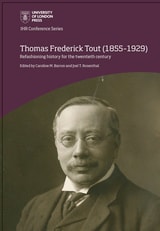
Thomas Frederick Tout (1855–1929)
refashioning history for the twentieth centuryEdited by Joel T. Rosenthal and Caroline M. Barron
University of London Press, 2019

Tides and Floods
New Research on London and the Tidal Thames from the Middle Ages to the Twentieth CenturyJames Galloway
University of London Press, 2010

Tracking the Texas Rangers
The Twentieth CenturyBruce A. Glasrud
University of North Texas Press, 2013
Tracking the Texas Rangers covers leaders such as Captains Bill McDonald, "Lone Wolf" Gonzaullas, and Barry Caver, accomplished Rangers like Joaquin Jackson and Arthur Hill, and the use of Rangers in the Mexican Revolution. Chapters discuss their role in the oil fields, in riots, and in capturing outlaws. Most important, the Rangers of the twentieth century experienced changes in investigative techniques, strategy, and intelligence gathering. Tracking looks at the use of Rangers in labor disputes, in race issues, and in the Tejano civil rights movement. The selections cover critical aspects of those experiences--organization, leadership, cultural implications, rural and urban life, and violence.
In their introduction, editors Bruce A. Glasrud and Harold J. Weiss, Jr., discuss various themes and controversies surrounding the twentieth-century Rangers and their treatment by historians over the years. They also have added annotations to the essays to explain where new research has shed additional light on an event to update or correct the original article text.
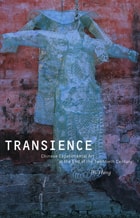
Transience
Chinese Experimental Art at the End of the Twentieth CenturyWu Hung
University of Chicago Press, 2006
These detailed essays on the artists and their works are now available in a revised edition of the exhibition catalog. Written by Wu Hung, a leading authority and the curator of the exhibit, Transience explores contemporary Chinese art through the themes of demystification, ruins, and transience, and represents an original perspective in the continuing discussion on Chinese experimental art.