57 books match the query 'Victorian Era (1837-1901)' and 13 start with t
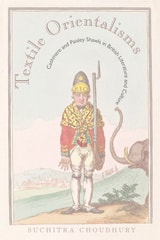
cover of Textile Orientalisms: Cashmere and Paisley Shawls in British Literature and Culture

Textile Orientalisms

Cashmere and Paisley Shawls in British Literature and Culture

Suchitra Choudhury

Ohio University Press, 2023
The first major study of Cashmere and Paisley shawls in nineteenth-century British literature, this book shows how they came to represent both high fashion and the British Empire. During the late eighteenth century, Cashmere shawls from the Indian subcontinent began arriving in Britain. At first, these luxury goods were tokens of wealth and prestige. Subsequently, affordable copies known as “Paisley” shawls were mass-produced in British factories, most notably in the Scottish town of the same name. Textile Orientalisms is the first full-length study of these shawls in British literature of the extended nineteenth century. Attentive to the juxtaposition of objects and their descriptions, the book analyzes the British obsession with Indian shawls through a convergence of postcolonial, literary, and cultural theories. Surveying a wide range of materials—plays, poems, satires, novels, advertisements, and archival sources—Suchitra Choudhury argues that while Cashmere and Paisley shawls were popular accoutrements in Romantic and Victorian Britain, their significance was not limited to fashion. Instead, as visible symbols of British expansion, for many imaginative writers they emerged as metaphorical sites reflecting the pleasures and anxieties of the empire. Attentive to new theorizations of history, fashion, colonialism, and gender, the book offers innovative readings of works by Sir Walter Scott, Wilkie Collins, William Thackeray, Frederick Niven, and Elizabeth Inchbald. In determining a key status for shawls in nineteenth-century literature, Textile Orientalisms reformulates the place of fashion and textiles in imperial studies. The book’s distinction rests primarily on three accounts. First, in presenting an original and extended discussion of Cashmere and Paisley shawls, Choudhury offers a new way of interpreting the British Empire. Second, by tracing how shawls represented the social and imperial experience, she argues for an associative link between popular consumption and the domestic experience of colonialism on the one hand and a broader evocation of texts and textiles on the other. Finally, discussions about global objects during the Victorian period tend to overlook that imperial Britain not only imported goods but also produced their copies and imitations on an industrial scale. By identifying the corporeal tropes of authenticity and imitation that lay at the heart of nineteenth-century imaginative production, Choudhury’s work points to a new direction in critical studies.
[more]
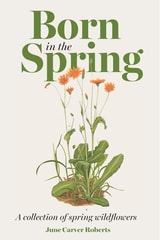
cover of The Born in the Spring: A Collection of Spring Wildflowers

The Born in the Spring

A Collection of Spring Wildflowers

June Carver Roberts

Ohio University Press, 2024

A must for flower and art lovers, Born in the Spring is a unique collection of line drawings and magnificent watercolors of spring wildflowers. All of the drawings and paintings were done from living plants, in minute detail, with complete botanical accuracy. There are over 90 illustrations, 46 of which are in full color. The text accompanying each plate enables the reader to easily locate the flower in its natural setting. The text also includes the origins of the common and botanical names, and bits of history and lore connected with the flowers. Some are hardy aliens that have come from all over the world, while others are fragile natives described by the earliest settlers; some are now becoming rare.
[more]
cover of The Centenary Edition of the Works of Nathaniel Hawthorne: Vol. XXI, the English Notebooks, 1853–1856

The Centenary Edition of the Works of Nathaniel Hawthorne

Vol. XXI, the English Notebooks, 1853–1856

Nathaniel Hawthorne

The Ohio State University Press, 1997
"Because it represents the first scholarly effort to establish texts as close as possible to the intentions of the author, this Centenary Edition makes obsolete all previous editions, notorious for their textual corruption. An eminent staff . . . has analyzed and synthesized the evidence of all MSS and worthwhile printed editions. Each volume includes a well documented introduction concerning such matters as circumstances leading to composition and history of publication as well as textual notes on alterations in the MSS, editorial emendations, etc." --Choice "The Centenary Edition, which has been producing weighty volumes of definitively edited texts of Hawthorne for a full generation, is now the sine qua non of Hawthorne scholarship. As an example of editorial care and research thoroughness it has been a model for the profession and as a physical object a model for publishers. In addition to the immensely important achievement of producing fully accurate texts of the romances, tales, and sketches, the Centenary editors have made available, for the very first time, all of the various Notebooks and letters. For the letters, especially, the wait has been long but the result is gratifying. Reading straight through the Centenary's six volumes of letters is a self-indulgent pleasure that brings us markedly closer to the man than we can get in any other way." --American Literature Representing decades of work, this is the definitive edition of Hawthorne's works. Each volume includes comprehensive notes and explanatory material. I: The Scarlet Letter $62.95 cloth 0-8142-0059-1 II: The House of the Seven Gables $69.95 cloth 0-8142-0060-5 III: The Blithedale Romance and Fanshawe $72.95 cloth 0-8142-0061-3 IV: The Marble Faun $83.95 cloth 0-8142-0062-1 V: Our Old Home $72.95 cloth 0-8142-0002-8 VI: True Stories from History and Biography $72.95 cloth 0-8142-0157-1 VII: A Wonder Book and Tanglewood Tales $72.95 cloth 0-8142-0158-X VIII: The American Notebooks $98.95 cloth 0-8142-0159-8 IX: Twice-told Tales $83.95 cloth 0-8142-0202-0 X: Mosses from an Old Manse $83.95 cloth 0-8142-0203-9 XI: The Snow Image and Uncollected Tales $72.95 cloth 0-8142-0204-7 XII: The American Claimant Manuscripts $83.95 cloth 0-8142-0251-9 XIII: The Elixir of Life Manuscripts $98.95 cloth 0-8142-0252-7 XIV: The French and Italian Notebooks $98.95 cloth 0-8142-0256-X XV: The Letters, 1813-1843 $98.95 cloth 0-8142-0363-9 XVI: The Letters, 1843-1853 $98.95 cloth 0-8142-0364-7 XVII: The Letters, 1853-1856 $83.95 cloth 0-8142-0365-5 XVIII: The Letters, 1857-1864 $98.95 cloth 0-8142-0383-3 XIX: The Consular Letters, 1853-1855 $83.95 cloth 0-8142-0384-1 XX: The Consular Letters, 1856-1857 $83.95 cloth 0-8142-0462-7 XXI: The English Notebooks, 1853-1856 $98.95 cloth 0-8142-0670-0 XXII: The English Notebooks, 1856-1860 $98.95 cloth 0-8142-0671-9 XXIII: Miscellaneous Prose and Verse $98.95 cloth 0-8142-0644-1
[more]
cover of The New Prometheans: Faith, Science, and the Supernatural Mind in the Victorian Fin de Siècle

The New Prometheans

Faith, Science, and the Supernatural Mind in the Victorian Fin de Siècle

Courtenay Raia

University of Chicago Press, 2019

The Society for Psychical Research was established in 1882 to further the scientific study of consciousness, but it arose in the surf of a larger cultural need. Victorians were on the hunt for self-understanding. Mesmerists, spiritualists, and other romantic seekers roamed sunken landscapes of entrancement, and when psychology was finally ready to confront these altered states, psychical research was adopted as an experimental vanguard. Far from a rejected science, it was a necessary heterodoxy, probing mysteries as diverse as telepathy, hypnosis, and even séance phenomena. Its investigators sought facts far afield of physical laws: evidence of a transcendent, irreducible mind.
 
The New Prometheans traces the evolution of psychical research through the intertwining biographies of four men: chemist Sir William Crookes, depth psychologist Frederic Myers, ether physicist Sir Oliver Lodge, and anthropologist Andrew Lang. All past presidents of the society, these men brought psychical research beyond academic circles and into the public square, making it part of a shared, far-reaching examination of science and society. By layering their papers, textbooks, and lectures with more intimate texts like diaries, letters, and literary compositions, Courtenay Raia returns us to a critical juncture in the history of secularization, the last great gesture of reconciliation between science and sacred truths.
[more]
cover of The Science of Character: Human Objecthood and the Ends of Victorian Realism

The Science of Character

Human Objecthood and the Ends of Victorian Realism

S. Pearl Brilmyer

University of Chicago Press, 2022

The Science of Character makes a bold new claim for the power of the literary by showing how Victorian novelists used fiction to theorize how character forms.
 
In 1843, the Victorian philosopher John Stuart Mill called for the establishment of a new science, “the science of the formation of character.” Although Mill’s proposal failed as scientific practice, S. Pearl Brilmyer maintains that it found its true home in realist fiction of the period, which employed the literary figure of character to investigate the nature of embodied experience. Bringing to life Mill’s unrealized dream of a science of character, novelists such as George Eliot, Thomas Hardy, and Olive Schreiner turned to narrative to explore how traits and behaviors in organisms emerge and develop, and how aesthetic features—shapes, colors, and gestures—come to take on cultural meaning through certain categories, such as race and sex. Engaged with materialist science and philosophy, these authors transformed character from the liberal notion of the inner truth of an individual into a materially determined figuration produced through shifts in the boundaries between the body’s inside and outside. In their hands, Brilmyer argues, literature became a science, not in the sense that its claims were falsifiable or even systematically articulated, but in its commitment to uncovering, through a fictional staging of realistic events, the laws governing physical and affective life. The Science of Character redraws late Victorian literary history to show how women and feminist novelists pushed realism to its aesthetic and philosophical limits in the crucial span between 1870 and 1920.
[more]
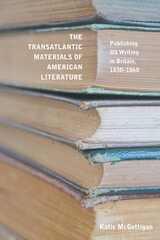
cover of The Transatlantic Materials of American Literature: Publishing US Writing in Britain, 1830–1860

The Transatlantic Materials of American Literature

Publishing US Writing in Britain, 1830–1860

Katie McGettigan

University of Massachusetts Press, 2023

Winner, Transatlantic Studies Association and Cambridge University Press Book Prize, 2023

During the antebellum period, British publishers increasingly brought out their own authorized and unauthorized editions of American literary works as the popularity of print exploded and literacy rates grew. Playing a formative role in the shaping of American literature, the industry championed the work of US-based writers, highlighted the cultural value of American literary works, and intervened in debates about the future of American literature, authorship, and print culture.

The Transatlantic Materials of American Literature examines the British editions of American fiction, poetry, essays, and autobiographies from writers like Edgar Allan Poe, Harriet Beecher Stowe, Frederick Douglass, and Hannah Flagg Gould. Putting these publications into historical context, Katie McGettigan considers key issues of the day, including developments in copyright law, changing print technologies, and the financial considerations at play for authors and publishers. This innovative study also uncovers how the transatlantic circulation of these works exposed the racial violence and cultural nationalism at the heart of the American experiment, producing overlapping and competing visions of American nationhood in the process.

[more]
cover of The Victoria History of Essex: Harwich, Dovercourt and Parkeston in the 19th Century

The Victoria History of Essex

Harwich, Dovercourt and Parkeston in the 19th Century

Andrew Senter Andrew Morrell

University of London Press, 2019

Exploring the changing character of Harwich, Dovercourt and Parkeston through the course of the 19th century, included in this book is the economic, social and political history of the borough. The book provides an overview of the development of areas such as education, religion, public health with a strong focus on Harwich’s maritime history. The borough of Harwich, including the parish of Dovercourt, lies in the far north east corner of Essex. Its coastal location as a natural harbour at the mouth of the Orwell river dictated that Harwich had a prominent role as a port and naval base from the 14th century onwards. In the 19th century Harwich retained its military function, particularly during the Napoleonic and Crimean wars. The port declined economically as a result of losing the continental packet service in the 1830s, but it was rejuvenated by the opening of the railway in 1854. Dovercourt grew as a residential area and seaside resort in the second half of the 19th century, although the rest of the parish retained much of its traditional agricultural character. The opening of the port at nearby Parkeston in 1883 led to a rapid growth in both passenger traffic and trade to and from the continent.
[more]
cover of The Victoria History of Essex: Southend: Victorian Town and Resort

The Victoria History of Essex

Southend: Victorian Town and Resort

Ken Crowe

University of London Press, 2025

The story of Southend’s growth as a town and resort in the Victorian and Edwardian periods is told here in this new history of Southend.

As the nearest seaside resort to London, the town’s development has been determined in large part by the impact of its seasonal visitors. Yet it was the year-round movement of people from other parts of Essex, England and from the European continent in the late-nineteenth and early-twentieth-centuries that was to have a lasting effect on the character of the town.

Richly illustrated and drawing from original sources, this volume offers new perspectives on the developments that laid the foundations of Southend as we know it today. Its thematic chapters chart the physical expansion of housing in the period and the development of the resort’s infrastructure and economy, among other topics. Although concentrating on Southend and its resort, chapters on agricultural depression and land speculation, education, clubs and societies and unemployment expand the book’s regional focus to neighbouring areas, making this valuable reading for anyone interested in the history of Essex and the UK’s seaside towns.
[more]
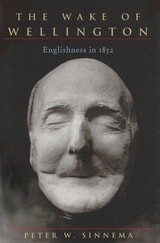
cover of The Wake of Wellington: Englishness in 1852

The Wake of Wellington

Englishness in 1852

Peter W. Sinnema

Ohio University Press, 2006

Soldier, hero, and politician, the Duke of Wellington is one of the best-known figures of nineteenth-century England. From his victory at Waterloo over Napoleon in 1815, he rose to become prime minister of his country. But Peter Sinnema finds equal fascination in Victorian England’s response to the duke’s death.

The Wake of Wellington considers Wellington’s spectacular funeral pageant in the fall of 1852—an unprecedented event that attracted one and a half million spectators to London—as a threshold event against which the life of the soldier-hero and High Tory statesman could be re-viewed and represented.

Canvassing a profuse and dramatically proliferating Wellingtoniana, Sinnema examines the various assumptions behind, and implications of, the Times’s celebrated claim that the Irish-born Wellington “was the very type and model of an Englishman.” The dead duke, as Sinnema demonstrates, was repeatedly caught up in interpretive practices that stressed the quasi-symbolic relations between hero and nation.

The Wake of Wellington provides a unique view of how in death Wellington and his career were promoted as the consummation of a national destiny intimately bound up with Englishness itself, and with what it meant to be English at midcentury.
[more]
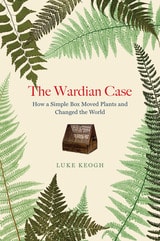
cover of The Wardian Case: How a Simple Box Moved Plants and Changed the World

The Wardian Case

How a Simple Box Moved Plants and Changed the World

Luke Keogh

University of Chicago Press, 2020

The story of a nineteenth-century invention (essentially a tiny greenhouse) that allowed for the first time the movement of plants around the world, feeding new agricultural industries, the commercial nursery trade, botanic and private gardens, invasive species, imperialism, and more.

Roses, jasmine, fuchsia, chrysanthemums, and rhododendrons bloom in gardens across the world, and yet many of the most common varieties have roots in Asia. How is this global flowering possible? In 1829, surgeon and amateur naturalist Nathaniel Bagshaw Ward placed soil, dried leaves, and the pupa of a sphinx moth into a sealed glass bottle, intending to observe the moth hatch. But when a fern and meadow grass sprouted from the soil, he accidentally discovered that plants enclosed in glass containers could survive for long periods without watering. After four years of experimentation in his London home, Ward created traveling glazed cases that would be able to transport plants around the world. Following a test run from London to Sydney, Ward was proven correct: the Wardian case was born, and the botanical makeup of the world’s flora was forever changed.
 
In our technologically advanced and globalized contemporary world, it is easy to forget that not long ago it was extremely difficult to transfer plants from place to place, as they often died from mishandling, cold weather, and ocean salt spray. In this first book on the Wardian case, Luke Keogh leads us across centuries and seas to show that Ward’s invention spurred a revolution in the movement of plants—and that many of the repercussions of that revolution are still with us, from new industries to invasive plant species. From the early days of rubber, banana, tea, and cinchona cultivation—the last used in the production of the malaria drug quinine—to the collecting of beautiful and exotic flora like orchids in the first great greenhouses of the United States Botanic Garden in Washington, DC, and England’s Royal Botanic Gardens, Kew, the Wardian case transformed the world’s plant communities, fueled the commercial nursery trade and late nineteenth-century imperialism, and forever altered the global environment.
[more]
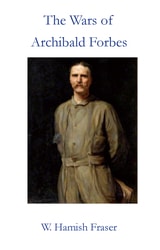
cover of The Wars of Archibald Forbes

The Wars of Archibald Forbes

W. Hamish Fraser

Aberdeen University Press, 2015
With heroic journeys on horseback and on foot to get to the nearest telegraph station, Archibald Forbes transformed the profession of war correspondent into something recognisably modern. He was widely regarded as the greatest war correspondent of the nineteenth century and the model with whom all others had to compete. It was he, more than any other, who appreciated the public demand for immediacy and therefore the need to get reports from the front into the press as fast as possible. He transformed the fortunes of the Daily News by making extensive use of the telegraph: his brilliant descriptive writing shaped images of wars for a public greedy for information and excitement.Despite persistent health difficulties he covered in the 1870s the Franco-Prussian War, the Paris Commune, the Carlist Wars in Spain, the Serbian-Turkish War, the Russo-Turkish War, the occupation of Cyprus, the Afghan War, the Zulu War, the Indian Famine and the Prince of Wales’s visit to India.At the same time, he kept up a prolific output of articles in many of which he did not hesitate to challenge the assumptions of the military authorities, to criticise the generals and to press for modernisation of the army. He defended the freedom of war correspondents to report wars as they saw them against the growing pressures to have their work censored and controlled. When ill-health forced him to abandon war work he became a tireless lecturer in Britain, the United States, Australia and New Zealand and his predictions on the shape of future wars came all too true in 1914.
[more]
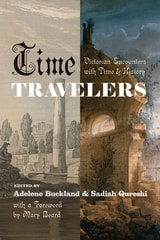
cover of Time Travelers: Victorian Encounters with Time and History

Time Travelers

Victorian Encounters with Time and History

Edited by Adelene Buckland and Sadiah Qureshi

University of Chicago Press, 2020

The Victorians, perhaps more than any Britons before them, were diggers and sifters of the past. Though they were not the first to be fascinated by history, the intensity and range of their preoccupations with the past were unprecedented and of lasting importance. The Victorians paved the way for our modern disciplines, discovered the primeval monsters we now call the dinosaurs, and built many of Britain’s most important national museums and galleries. To a large degree, they created the perceptual frameworks through which we continue to understand the past.
 
Out of their discoveries, new histories emerged, giving rise to fresh debates, while seemingly well-known histories were thrown into confusion by novel tools and methods of scrutiny. If in the eighteenth century the study of the past had been the province of a handful of elites, new technologies and economic development in the nineteenth century meant that the past, in all its brilliant detail, was for the first time the property of the many, not the few. Time Travelers is a book about the myriad ways in which Victorians approached the past, offering a vivid picture of the Victorian world and its historical obsessions.
 
[more]
cover of Transatlantic Women: Nineteenth-Century American Women Writers and Great Britain

Transatlantic Women

Nineteenth-Century American Women Writers and Great Britain

Beth L. Lueck

University of New Hampshire Press, 2012

In this volume, fifteen scholars from diverse backgrounds analyze American women writers’ transatlantic exchanges in the nineteenth century. They show how women writers (and often their publications) traveled to create or reinforce professional networks and identities, to escape strictures on women and African Americans, to promote reform, to improve their health, to understand the workings of other nations, and to pursue cultural and aesthetic education. Presenting new material about women writers’ literary friendships, travels, reception and readership, and influences, the volume offers new frameworks for thinking about transatlantic literary studies.
[more]