Results by title
60 books match the query 'Way' and 19 start with t

The Capital Order
How Economists Invented Austerity and Paved the Way to FascismClara E. Mattei
University of Chicago Press, 2022
"A must-read, with key lessons for the future."—Thomas Piketty
A groundbreaking examination of austerity’s dark intellectual origins.
For more than a century, governments facing financial crisis have resorted to the economic policies of austerity—cuts to wages, fiscal spending, and public benefits—as a path to solvency. While these policies have been successful in appeasing creditors, they’ve had devastating effects on social and economic welfare in countries all over the world. Today, as austerity remains a favored policy among troubled states, an important question remains: What if solvency was never really the goal?
In The Capital Order, political economist Clara E. Mattei explores the intellectual origins of austerity to uncover its originating motives: the protection of capital—and indeed capitalism—in times of social upheaval from below.
Mattei traces modern austerity to its origins in interwar Britain and Italy, revealing how the threat of working-class power in the years after World War I animated a set of top-down economic policies that elevated owners, smothered workers, and imposed a rigid economic hierarchy across their societies. Where these policies “succeeded,” relatively speaking, was in their enrichment of certain parties, including employers and foreign trade interests, who accumulated power and capital at the expense of labor. Here, Mattei argues, is where the true value of austerity can be observed: its insulation of entrenched privilege and its elimination of all alternatives to capitalism.
Drawing on newly uncovered archival material from Britain and Italy, much of it translated for the first time, The Capital Order offers a damning and essential new account of the rise of austerity—and of modern economics—at the levers of contemporary political power.
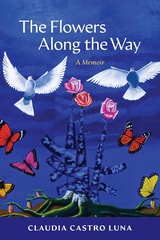
The Flowers Along the Way
A MemoirClaudia Castro Luna
Northwestern University Press, 2026
Passionately demonstrating the dormant trauma of political violence and the redemption waiting beyond it
From El Salvador’s lush countryside to the streets of Oakland, California, a young mother wrestles with the intersecting forces of memory, history, and language in order to chart a new path for herself and her growing family. Fleeing political unrest and civil war violence in El Salvador, fourteen-year-old Claudia Castro Luna arrived in the United States with her family in 1981. Two decades later, holding her two-year-old and pregnant with her second child, she survives a public shooting by hiding behind shrubs in front of her house in Oakland. This event unleashes disorienting and traumatic memories, plunging her into a journey of discovery as she grapples with PTSD, recovers family stories, and begins to make sense of all that was torn asunder within her by the experiences of war and emigration. Beauty, longing, fear, and joy entwine in this powerful story of love, self-determination, and the search for home.

The Greening of America’s Libraries
LEEDing the WayMary M. Carr
Assoc of College & Research Libraries, 2013
The Greening of America’s Libraries
LEEDing the WayMary M. Carr
Assoc of College & Research Libraries, 2013
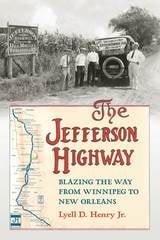
The Jefferson Highway
Blazing the Way from Winnepeg to New OrleansLyell D. Henry Jr.
University of Iowa Press, 2016
The plight of the rapidly rising numbers of early motorists soon spawned a “good roads” movement that included many efforts to build and pave long-distance, colorfully named auto trails across the length and breadth of the nation. Full of a can-do optimism, these early partisans of motoring sought to link together existing roads and then make them fit for automobile driving—blazing, marking, grading, draining, bridging, and paving them. The most famous of these named highways was the Lincoln Highway between New York City and San Francisco. By early 1916, a proposed counterpart coursing north and south from Winnipeg to New Orleans had also been laid out.
Called the Jefferson Highway, it eventually followed several routes through Minnesota, Iowa, Missouri, Kansas, Oklahoma, Texas, Arkansas, and Louisiana. The Jefferson Highway, the first book on this pioneering road, covers its origin, history, and significance, as well as its eventual fading from most memories following the replacement of names by numbers on long-distance highways after 1926. Saluting one of the most important of the early named highways on the occasion of its 100th anniversary, historian Lyell D. Henry Jr. contributes to the growing literature on the earliest days of road-building and long-distance motoring in the United States. For readers who might also want to drive the original route of the Jefferson Highway, three chapters trace that route through Iowa, pointing out many vintage features of the roadside along the way. The perfect book for a summer road trip!
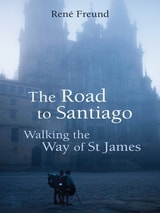
The Road to Santiago
Walking the Way of St JamesRené Freund
Haus Publishing, 2016
As René Freund learns, when you reach the edge of the European continent having walked along the Way of St. James—which pilgrims of former times thought to be the end of the world—only then do you realize that the old pilgrim’s saying is true: the journey does not end in Santiago. The journey begins in Santiago. In this vivid travelogue, Freund not only introduces us to the overwhelming natural beauty he encountered along the way, but also shares his experience of reaching his physical and psychological limits during the arduous journey.
The Texas Cookbook
From Barbecue to Banquet-- an Informal View of Dining and Entertaining the Texas WayMary Faulk Koock
University of North Texas Press, 1965
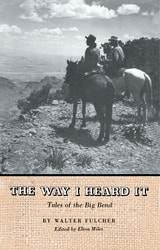
The Way I Heard It
Tales of the Big BendBy Walter Fulcher
University of Texas Press, 1959
The folklore of Texas' Big Bend region was still in the making during Walter Fulcher's lifetime. Born in Lampasas County in 1887, he worked on the Martin Ranch near Sheffield when a young man. There he witnessed events in the last outlaw activities of the Black Jack Ketchum gang.
He also listened to legends told almost as gossip, and some of the legendary figures were still alive—or said to be alive, usually in hiding. In every village there was sure to be some ancient with a good memory and a better imagination, and Walter Fulcher heard many versions of many tales. He has set them down as he heard them, as simple folk tales that reflect the color of a wild and vivid country in 400 years of its settlement.
The book has been edited, with introduction and notes, by Elton Miles, Professor of English at Sul Ross State College.
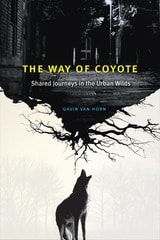
The Way of Coyote
Shared Journeys in the Urban WildsGavin Van Horn
University of Chicago Press, 2018
A hiking trail through majestic mountains. A raw, unpeopled wilderness stretching as far as the eye can see. These are the settings we associate with our most famous books about nature. But Gavin Van Horn isn’t most nature writers. He lives and works not in some perfectly remote cabin in the woods but in a city—a big city. And that city has offered him something even more valuable than solitude: a window onto the surprising attractiveness of cities to animals. What was once in his mind essentially a nature-free blank slate turns out to actually be a bustling place where millions of wild things roam. He came to realize that our own paths are crisscrossed by the tracks and flyways of endangered black-crowned night herons, Cooper’s hawks, brown bats, coyotes, opossums, white-tailed deer, and many others who thread their lives ably through our own.
With The Way of Coyote, Gavin Van Horn reveals the stupendous diversity of species that can flourish in urban landscapes like Chicago. That isn’t to say city living is without its challenges. Chicago has been altered dramatically over a relatively short timespan—its soils covered by concrete, its wetlands drained and refilled, its river diverted and made to flow in the opposite direction. The stories in The Way of Coyote occasionally lament lost abundance, but they also point toward incredible adaptability and resilience, such as that displayed by beavers plying the waters of human-constructed canals or peregrine falcons raising their young atop towering skyscrapers. Van Horn populates his stories with a remarkable range of urban wildlife and probes the philosophical and religious dimensions of what it means to coexist, drawing frequently from the wisdom of three unconventional guides—wildlife ecologist Aldo Leopold, Taoist philosopher Lao Tzu, and the North American trickster figure Coyote. Ultimately, Van Horn sees vast potential for a more vibrant collective of ecological citizens as we take our cues from landscapes past and present.
Part urban nature travelogue, part philosophical reflection on the role wildlife can play in waking us to a shared sense of place and fate, The Way of Coyote is a deeply personal journey that questions how we might best reconcile our own needs with the needs of other creatures in our shared urban habitats.
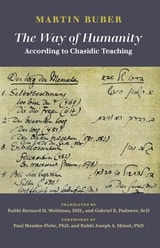
The Way of Humanity
According to Chasidic TeachingMartin Buber, translated by Rabbi Bernard H. Mehlman, DHL and GabrielE. Padawer, ScD
Central Conference of American Rabbis, 2023
Martin Buber (1878–1965) was one of the most influential Jewish thinkers of the twentieth century. A philosopher, seeker, and nurturer of dialogue, he responded to the complexities of his times by affirming the fullness of interpersonal encounter and the spiritual everyday. In 1947, Buber delivered lectures interpreting six traditional Chasidic stories to a German-speaking audience, published as The Way of Humanity. In the first new English translation in over half a century, Rabbi Bernard H. Mehlman, DHL, and Gabriel E. Padawer, ScD, z"l, bring the work to contemporary readers in a clear, accessible voice. The teachings within highlight the subversion and innovation of the early Chasidic masters of the eighteenth and nineteenth centuries, while providing meaningful spiritual guidance and insight for any seeker today. Scholarly forewords by Paul Mendes-Flohr, PhD, and Rabbi Joseph A. Skloot, PhD, as well as an introduction, epilogue, and notes from the translators, place Buber’s work in historical context. Timeless and enlightening, The Way of Humanity guides us to inner meaning and highlights our human wholeness.
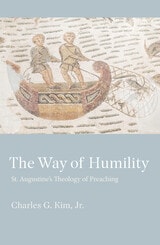
The Way of Humility
St. Augustine's Theology of PreachingCharles J. Kim
Catholic University of America Press, 2023
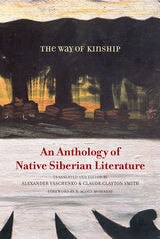
The Way of Kinship
An Anthology of Native Siberian LiteratureAlexander Vaschenko
University of Minnesota Press, 2010
The first anthology of Native Siberian literature in English, The Way of Kinship represents writers from regions extending from the Ob River in the west to the Chukotka peninsula, the easternmost point of the Siberian Russian Arctic. Drawn from seven distinct ethnic groups, this diverse body of work-prose fiction, poetry, drama, and creative nonfiction-chronicles ancient Siberian cultures and traditions threatened with extinction in the contemporary world.
Translated and edited by Alexander Vaschenko and Claude Clayton Smith, leading scholars in Native Siberian literature, The Way of Kinship is an essential collection that will introduce readers to new writers and new worlds.
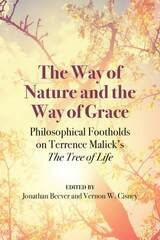
The Way of Nature and the Way of Grace
Philosophical Footholds on Terrence Malick's "The Tree of Life"Jonathan Beever and Vernon W. Cisney
Northwestern University Press, 2016
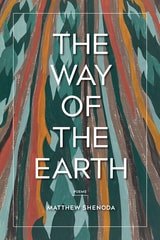
The Way of the Earth
PoemsMatthew Shenoda
Northwestern University Press, 2022
The Way of the Earth is the fourth collection from award-winning poet Matthew Shenoda. In this, his most personal collection to date, he explores the temporal and fleeting nature of human life and the earth we inhabit. Through ruminations on the intersections of culture and ecology, the death of loved ones, and the growing inequities in our midst, Shenoda explores what it means to be a person both grounded to the earth and with a yearning beyond it. Memories of landscapes and histories echo throughout the sensations of the present: the sight of egrets wading in the marshes, the smell of the ocean, a child’s hand nestled in a warm palm. “Time never goes back,” Shenoda writes, “but the imagination must.”
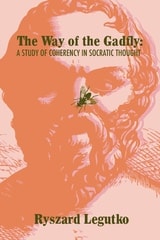
The Way of the Gadfly
A Study of Coherency in Socratic ThoughtRyszard Legutko
St. Augustine's Press, 2024
This new series of scholarly reflections on the interpretation of Socratic philosophy is an inviting combination of intuition and meticulous analysis. Ryszard Legutko provides the reader a monumental service in his confrontation of the most important and influential literature written on the subject to date. He likewise opens the conversation to European contributions and renders Socrates truly a figurehead of future philosophy far beyond being a pillar in ancient thought.
Legutko argues that Socrates was systematic, and his moral views were ultimately grounded in his theory of knowledge that was composed of logically connected propositions (logoi). Reading Plato, Legutko's intuition that Socrates was quite the opposite of the quirky, ironic, and enigmatic character is supported by his demonstration of Socrates' consistency, unity, and hierarchy of thought. He extends Socrates' coherency to a criticism of the democratic mind, framing him even less as a random spit-fire and more the grounded observer. Socrates, argues Letgutko, is well aware of the importance of general concepts and he intended to free these concepts from democratic distortions and give them firm and independent foundations.
In short, 'the way of the gadfly' is a beautiful and precise exploration of order that seeks to be changed by the awareness of this order, and how to wield concepts apart from the motives of arrogance and chaos––neither of which represent nature, and therefore are foreign to the way of the gadfly.

The Way to Be
A MemoirBarbara T. Smith
J. Paul Getty Trust, The, 0
For over fifty years, Barbara T. Smith has been at the forefront of artistic movements in California. Her work across many mediums explores concepts that strike at the core of human nature, including sexuality, physical and spiritual sustenance, technology, and death. In this memoir, Smith weaves together descriptive accounts of her pioneering performances with an intimate narrative of her life.
The Way to Be covers the years 1931 to 1981, up to the artist’s fiftieth birthday, resulting in an exhaustive catalogue of her early work. It reveals the personal stories and events behind her pieces and the challenges she faced in an art world dominated by sexism and machismo. Drawing on Smith’s archive at the Getty Research Institute, this enthralling book presents previously unpublished notes, documents, photographs, and firsthand accounts of her life and practice, as well as her more recent reflections on the past. The Way to Be demonstrates Smith’s lasting contributions to the field of contemporary art and provides an engaging commentary on a recent period of great cultural and political change.
This volume is published to accompany an exhibition on view at the Getty Research Institute at the Getty Center from February 28 to July 16, 2023.
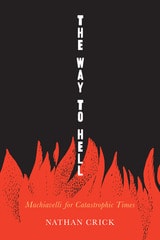
The Way to Hell
Machiavelli for Catastrophic TimesNathan Crick
University of Alabama Press, 2024
An incisive and erudite survey of Machiavelli, the catastrophes of his times and ours, and his counsel for responding to an era of constant crises.
Catastrophe looms. Political, environmental, epidemic, and military crises arrive with increasing frequency. In The Way to Hell, Nathan Crick argues that our perilous times call for the strongest medicine in the Western canon: Machiavelli. Crick reminds contemporary readers about the Florentine master’s advice—that one must learn the road to Hell precisely to avoid taking it.
Like a knowledgeable friend, Crick offers contemporary readers a guide to Machiavelli’s world, work, and warnings. He takes in the sweep of Western history, comparing Machiavelli’s work with ancient sources such as Cicero and Thucydides. And as Machiavelli has never stopped provoking comment, Crick treats readers to a feast of responses to Machiavelli’s work—caustic, learned, and humorous—in the five centuries since he lived.
Including both Machiavelli’s best-known works, The Prince and Discourses on Livy, as well as his personal correspondence and comic plays, Crick asks anew the questions that bedeviled Machiavelli’s beloved Florentine republic: When is force necessary? When are lies justified? Is cruelty defensible? When does social protest slip into violent revolution? What is the correct response to catastrophe?
Like Machiavelli himself, The Way to Hell is witty, stimulating, and challenging. In a world seemingly on the road to Hell, Machiavelli offers an alternative route. His bracing vision exhorts readers to see the dangers in their path and to take action with vigor and determination. Far from a vision of cynicism, Machiavelli offers a beacon of hope for a world that seems on the brink.
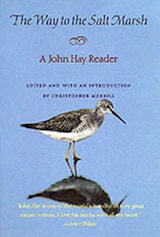
The Way to the Salt Marsh
A John Hay ReaderJohn Hay
Brandeis University Press, 1998
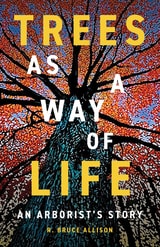
Trees as a Way of Life
An Arborist’s StoryR. Bruce Allison
Wisconsin Historical Society Press, 2027
An arborist’s lifelong journey reveals the deep connections between people and trees.
Bruce Allison has spent decades listening to trees and making sense of what they tell us. In this intimate and absorbing memoir, he deftly weaves personal stories, botanical insights, and moments of wonder and revelation into a captivating ode to trees.
Trees as a Way of Life follows Allison on his journey from seedling to sapling to maturity, as he explores a eucalyptus grove as a boy in Bonita, California; learns the tree ethic as an apprentice arborist in Baltimore, Maryland; and establishes his own tree care company in Madison, Wisconsin. After more than fifty years as a professional arborist, he tells stories of stewarding the trees at the Wisconsin State Capitol and Frank Lloyd Wright’s Taliesin, among other sites, and describes formative encounters with notable tree-loving clients, including American Girl creator Pleasant Rowland and Epic Systems founder Judith Faulkner. As he tells his own story, Allison incorporates the voices and stories of renowned naturalists like Henry David Thoreau, John Muir, Aldo Leopold, and Rachel Carson.
Allison also uses his own tree encounters as jumping-off points for deep dives into individual species, memorable moments in tree history, and tips and tricks for tree care and maintenance. As only an accomplished arborist and educator could, he provides a detailed-yet-accessible tutorial on trees, from the upper canopy of stem and crown, through the veil of bark, to the hidden underground landscape of tree roots and fungi.
In the tradition of the international bestseller The Hidden Life of Trees, this book carries readers root by root and limb by limb to a deeper understanding of the trees that feed us, protect us, shade us, and inspire us. In an engaging narrative style that blends the personal, the scientific, and the poetic, Allison’s story is an intimate love letter to trees, a master class in understanding and appreciating them, and an invitation to readers who also long to make trees a way of life.