Results by title
106 books match the query 'Western' and 32 start with t
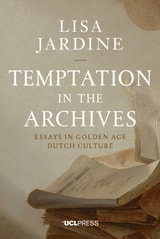
Temptation in the Archives
Essays in Golden Age Dutch CultureLisa Jardine
University College London, 2015
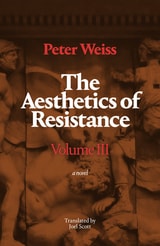
The Aesthetics of Resistance, Volume III
A Novel, Volume 3Peter Weiss
Duke University Press, 2025
Volume III, initially published in 1981, teems with characters, many of whom are based on historical figures. It commences in May of 1940, as the narrator’s parents flee Nazi forces in Eastern Europe and reunite with their son in Sweden. While in Stockholm, the narrator and other Communist activists living in exile struggle to build structures in the German underground. The story then follows Communist resistance fighter Charlotte Bischoff as she is smuggled to Bremen on a freighter. In Berlin, she contacts the narrator’s friends and joins the Red Orchestra resistance group. Soon, the Gestapo cracks the underground group’s code, arrests a number of its members, and takes them to Plötzensee Prison, where most of them are executed. Featuring the narrator’s meditations on paintings, sculpture, and literature throughout, The Aesthetics of Resistance demonstrates the affinity between political resistance and art. Ultimately, Weiss argues that we must look to art for new models of political action and social understanding.
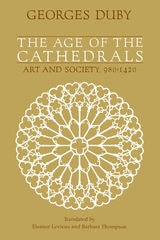
The Age of the Cathedrals
Art and Society, 980-1420Georges Duby
University of Chicago Press, 1981
"If Age of the Cathedrals has a fault, it is that Professor Duby knows too much, has too many new ideas and takes such a delight in setting them out. . . insights whiz to and fro like meteorites."—John Russell, New York Times Book Review
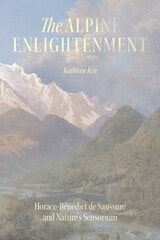
The Alpine Enlightenment
Horace-Bénédict de Saussure and Nature’s SensoriumKathleen Kete
University of Chicago Press, 2024
In The Alpine Enlightenment, historian Kathleen Kete takes us into the world of the Genevan geologist, physicist, inventor, and mountaineer Horace-Bénédict de Saussure. During his prodigious climbs into the upper ranges of the Alps, Saussure focused intensely on the natural phenomena he encountered—glaciers, crevasses, changes in the weather, and shifts in the color of the sky—and he described with great precision what he saw, heard, and touched. Kete uses Saussure’s evocative writings, which emphasized above all physical engagement with the earth, to uncover not just how people during the Enlightenment thought about nature, but how they experienced it. As Kete shows, Saussure thought with and through his body: he harnessed his senses to understand the forces that shaped the world around him. In so doing, he offered a vision of nature as worthy of respect independent of human needs, anticipating present-day concerns about the environment and our shared place within it.
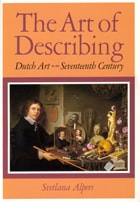
The Art of Describing
Dutch Art in the Seventeenth CenturySvetlana Alpers
University of Chicago Press, 1984
"There is no doubt that thanks to Alpers's highly original book the study of the Dutch masters of the seventeenth century will be thoroughly reformed and rejuvenated. . . . She herself has the verve, the knowledge, and the sensitivity to make us see familiar sights in a new light."—E. H. Gombrich, New York Review of Books
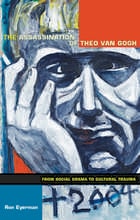
The Assassination of Theo van Gogh
From Social Drama to Cultural TraumaRon Eyerman
Duke University Press, 2008
Eyerman utilizes theories of social drama and cultural trauma to evaluate the reactions to and effects of the murder. A social drama is triggered by a public transgression of taken-for-granted norms; one that threatens the collective identity of a society may develop into a cultural trauma. Eyerman contends that the assassination of Theo van Gogh quickly became a cultural trauma because it resonated powerfully with the postwar psyche of the Netherlands. As part of his analysis of the murder and reactions to it, he discusses significant aspects of twentieth-century Dutch history, including the country’s treatment of Jews during the German occupation, the loss of its colonies in the wake of World War II, its recruitment of immigrant workers, and the failure of Dutch troops to protect Muslims in Srebrenica in 1995.
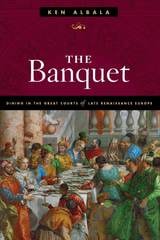
The Banquet
Dining in the Great Courts of Late Renaissance EuropeKen Albala
University of Illinois Press, 2017
In The Banquet, Ken Albala covers the transitional period between the heavily spiced and colored cuisine of the Middle Ages and classical French haute cuisine. This development involved increasing use of dairy products, a move toward lighter meats such as veal and chicken, increasing identification of national food customs, more sweetness and aromatics, and a refined aesthetic sense, surprisingly in line with the late-Renaissance styles found in other arts.
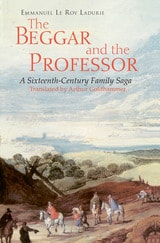
The Beggar and the Professor
A Sixteenth-Century Family SagaEmmanuel Le Roy Ladurie
University of Chicago Press, 1997
"Le Roy Ladurie paints a remarkably contemporary picture of life in the sixteenth century. . . . It's a good story, told with a deft narrative touch."—Michael S. Kimmel, The Nation
"Le Roy Ladurie is a master of the representative detail and uses the Platters' lives as a means to see a whole century 'through a glass, darkly'."—The Independent
"Le Roy Ladurie has not only thoroughly sketched out the Platters' particular brand of gusto, he has also made it seem a defining characteristic of the sixteenth century."—The New Republic
"All [of] the drama and pathos of a Disney film."—Emily Eakin, Lingua Franca
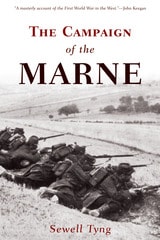
The Campaign of the Marne
Sewell Tyng
Westholme Publishing, 2007
The Definitive Account of the Battle of the Marne, One of World War I's Most Important Events
"A masterly account of the First World War in the West."—John Keegan
"A distinguished piece of historical writing."—Journal of Modern History
"Admirable... clear and interesting."—Foreign Affairs
"Direct and clear... it lays bare a most complicated course of events so that even the layman can follow."—New Republic
Named as One of The 100 Best Nonfiction Books of the Twentieth Century
With diplomacy unraveling during the summer of 1914, Germany swept into Belgium during the first week of August in an audacious attempt to catch France and England off guard. First contemplated after the Franco-Prussian War, the Schlieffen Plan was designed to keep Germany from fighting on two fronts. With a quick and decisive victory over France and its allies to the west, Germany could then confront Russia to the east. Despite the surprise of Germany's initial advance, the plan ultimately failed because it required much more mobile troops than were available at the time - something that would have to await the mechanized blitzkrieg of World War II—allowing France and British Expeditionary Forces to establish a tenacious defense. What followed was a stalemate along the Marne River and the beginning of four long years of destructive trench warfare that would only be lifted by a joint French, British, and American offensive across this same river plain in 1918. In The Campaign of the Marne, the entire genesis of the Schlieffen Plan, its modification, implementation, and the complex series of grueling battles that followed is laid out with the intent to make the entire episode comprehensible to the general reader. Hailed as one of the 100 best nonfiction books of the twentieth century by eminent military historian John Keegan, this is the first time the book has been available since its original publication in 1935.
The Contest for Knowledge
Debates over Women's Learning in Eighteenth-Century ItalyMaria Gaetana Agnesi, Diamante Medaglia Faini, Aretafila Savini de' Rossi, and the Accademia de' Ricovrati
University of Chicago Press, 2005
The Contest for Knowledge reveals how these four women used the methods and themes of their male counterparts to add their voices to the vigorous and prolific debate over the education of women during the eighteenth century. In the texts gathered here, the women discuss the issues they themselves thought most urgent for the equality of women in Italian society specifically and in European culture more broadly. Their thoughts on this important subject reveal how crucial the eighteenth century was in the long history of debates about women in the academy.
The Culture of Western Europe
The Nineteenth and Twentieth CenturiesGeorge L. Mosse with a critical introduction by Anthony James Steinhoff
University of Wisconsin Press, 2023
The Deeds of Count Roger of Calabria and Sicily and of His Brother Duke Robert Guisc
Kenneth Baxter Wolf
University of Michigan Press, 2005
Geoffrey Malaterra's Deeds of Count Roger is the most important extant account of the Norman conquest of Muslim Silicy (1061-91). This volume includes a translation of the Latin original as well as an introduction, notes, and maps.
The Deeds of Count Roger fills a gap in the primary literature pertaining to the earliest phase of Latin Christian expansion at the expense of Islam, since the Norman conquests in Sicily were more or less contemporary with the First Crusade and the beginnings of the Spanish Reconquista. The account also illustrates the complexity of medieval historical writing, with Malaterra on the one hand praising the Normans for their military achievements and on the other subtly criticising the "lust for domination" that inspired them.
Kenneth Baxter Wolf is Professor of History at Pomona College.

The Dictionary of Nineteenth-Century British Scientists
Edited by Bernard Lightman
University of Chicago Press, 2004
While the Dictionary of Nineteenth-Century British Scientists covers those working in traditional scientific areas such as physics, astronomy, chemistry, mathematics, and biology, it also acknowledges those working in the human sciences such as anthropology, sociology, psychology, and medicine. In addition, areas often overlooked by historians of science—such as phrenology, mesmerism, spiritualism, scientific illustration, scientific journalism and publishing, instrument making, and government policy—are included here, as are the important roles of neglected "amateurs," such as women and members of the working class. By including those who worked in nontraditional areas and by considering the social and cultural context in which they lived, the dictionary reflects a richer picture of nineteenth-century science than has ever been seen before.

The Dynamics of European Integration
Causes and Consequences of Institutional ChoicesThomas König
University of Michigan Press, 2024
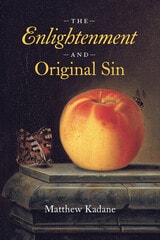
The Enlightenment and Original Sin
Matthew Kadane
University of Chicago Press, 2024
What was the Enlightenment? This question has been endlessly debated. In The Enlightenment and Original Sin, historian Matthew Kadane advances the bold claim that the Enlightenment is best defined through what it set out to accomplish, which was nothing short of rethinking the meaning of human nature.
Kadane argues that this project centered around the doctrine of original sin and, ultimately, its rejection, signaling the radical notion that an inherently flawed nature can be overcome by human means. Kadane explores this and other wide-ranging themes through the story of a previously unknown figure, Pentecost Barker, an eighteenth-century purser and wine merchant. By examining Barker’s personal diary and extensive correspondence with a Unitarian minister, Kadane tracks the transformation of Barker’s consciousness from a Puritan to an Enlightenment outlook, revealing through one man’s journey the large-scale shifts in self-understanding whose philosophical reverberations have shaped debates on human nature for centuries.
The Faces of Time
Portrayal of the Past in Old French and Latin Historical Narrative of the Anglo-Norman RegnumJean Blacker
University of Texas Press, 1994
The twelfth century witnessed the sudden appearance and virtual disappearance of an important literary genre—the Old French verse chronicle. These poetic histories of the British kings, which today are treated as fiction, were written contemporaneously with Latin prose narratives, which are regarded as historical accounts. In this pathfinding study, however, Jean Blacker asserts that twelfth-century authors and readers viewed both genres as factual history.
Blacker examines four Old French verse chronicles—Gaimar's Estoire des Engleis (c. 1135), Wace's Roman de Brut (c. 1155) and Roman de Rou (c. 1160–1174), and Benoît de Sainte-Maure's Chronique des Ducs de Normandie (c. 1174–1180) and four Latin narratives—William of Malmesbury's Gesta Regum (c. 1118–1143) and Historia Novella (c. 1140–1143), Orderic Vitalis's Historia Ecclesiastica (c. 1118–1140), and Geoffrey of Monmouth's Historia Regum Britanniae (c. 1138). She compares their similarity in three areas—the authors' stated intentions, their methods of characterization and narrative development, and the possible influences of patronage and audience expectation on the presentation of characters and events.
This exploration reveals remarkable similarity among the texts, including their idealization of historical and even legendary figures, such as King Arthur. It opens fruitful lines of inquiry into the role these writers played in the creation of the Anglo-Norman regnum and suggests that the Old French verse chronicles filled political, psychic, and aesthetic needs unaddressed by Latin historical writing of the period.
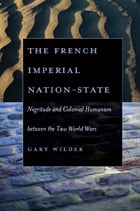
The French Imperial Nation-State
Negritude and Colonial Humanism between the Two World WarsGary Wilder
University of Chicago Press, 2005
Gary Wilder develops a sophisticated account of the contradictory character of colonial government and examines the cultural nationalism of Negritude as a multifaceted movement rooted in an alternative black public sphere. He argues that interwar France must be understood as an imperial nation-state—an integrated sociopolitical system that linked a parliamentary republic to an administrative empire. An interdisciplinary study of colonial modernity combining French history, colonial studies, and social theory, The French Imperial Nation-State will compel readers to revise conventional assumptions about the distinctions between republicanism and racism, metropolitan and colonial societies, and national and transnational processes.

The Immigrant Threat
The Integration of Old and New Migrants in Western Europe since 1850Leo Lucassen
University of Illinois Press, 2005
Leo Lucassen tackles the question of whether the integration process of these recent immigrants will fundamentally differ in the long run (over multiple generations) from the experiences of similar immigrant groups in the past. For comparison, Lucassen focuses on "large and problematic groups" from Western Europe's past (the Irish in the United Kingdom, the Poles in Germany, and the Italians in France) and demonstrates a number of structural similarities in the way migrants and their descendants integrated into these nation states. Lucassen emphasizes that the geographic sources of the "threat" have changed and that contemporaries tend to overemphasize the threat of each successive wave of immigrants, in part because the successfully incorporated immigrants of the past have become invisible in national histories.

The Indies Diaspora in the Netherlands
Essays on Race, Whiteness, and Identity in Dutch LiteratureAlfred Birney; Translated by Annemarie Toebosch and Marjolein van Pagee
Michigan Publishing Services, 2021
The Jews of Poland Between Two World Wars
Edited by Yisrael Gutman
Brandeis University Press, 1991
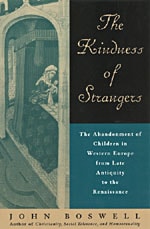
The Kindness of Strangers
The Abandonment of Children in Western Europe from Late Antiquity to the RenaissanceJohn Boswell
University of Chicago Press, 1998
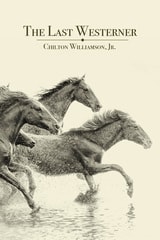
The Last Westerner
Chilton Williamson, Jr.
St. Augustine's Press, 2025
A Finalist for the 2026 Spur Award for Best Western Contemporary Novel, this is a tale of one man's road toward fulfillment that plays out in stages of encounters and abandonment instead of one glorious "last stand" expected in a Western romance. Williamson's story weaves the best elements of several genres and with masterful dialogue he illustrates the landscape of a heart cultivated and ravaged by the challenges that emerge in his path. The majestic setting of the rugged west and its horses is not the main aesthetical context, however. "For [us] women were the whole world and the promise of it, men being hardly more than rivals in love to be challenged and defeated." The Last Westerner is an ode to human happiness embodied in women, and "the kind that comes from a sense of the wholeness, the absolute rightness, of it all." Williamson seems to mean that without women (and horses) no such answers will ever be found. "People without hope don't write books, they say. Neither do men who love women––one woman in particular––lack hope."
Jeb Stuart Ryder, at 51 a retired range detective from Wyoming, meets Jody James, a handsome widowed cowgirl at a horse show in Moab, Utah, where she is exhibiting her prize horse. They begin an idyllic life together until this horse is stolen, and he pledges to pursue the thieves and bring him back to her. Along the way he meets a 16-year-old Navajo boy, John-Wayne Bilagody, who joins the search but with the intention of offering this horse to his own woman. Jeb takes it upon himself to instruct John-Wayne in the proper chivalric attitude a man owes a woman. When they come to the camp of brigada who now possesses the horse, Jeb's world strains to accommodate the existence of Carmen, the beautiful and aristocratic woman who is preparing to lead those men back into Mexico. She has his horse, but his pledge to return it to Jody holds fast. His promise had been a sign of hope, but Jeb at long last arrives at a pass that he knows is the real path to his sunset.
The Life of a Simple Man
Emile Guillaumin
University Press of New England, 1982
The Medieval Constitution of Liberty
Political Foundations of Liberalism in the WestAlexander William Salter and Andrew T. Young
University of Michigan Press, 2023
Why did enduring traditions of economic and political liberty emerge in Western Europe and not elsewhere? Representative democracy, constitutionalism, and the rule of law are crucial for establishing a just and prosperous society, which we usually treat as the fruits of the Renaissance and Enlightenment, as Western European societies put the Dark Ages behind them.
In The Medieval Constitution of Liberty, Salter and Young point instead to the constitutional order that characterized the High Middle Ages. They provide a historical account of how this constitutional order evolved following the fall of the Western Roman Empire. This account runs from the settlements of militarized Germanic elites within the imperial frontiers, to the host of successor kingdoms in the sixth and seventh centuries, and through the short-lived Carolingian empire of the late eighth and ninth centuries and the so-called “feudal anarchy” that followed its demise. Given this unique historical backdrop, Salter and Young consider the resulting structures of political property rights. They argue that the historical reality approximated a constitutional ideal type, which they term polycentric sovereignty. Salter and Young provide a theoretical analysis of polycentric sovereignty, arguing that bargains between political property rights holders within that sort of constitutional order will lead to improvements in governance.
The Netherlands in a Nutshell
Highlights from Dutch History and CultureEdited by Frits van Oostrom
Amsterdam University Press, 2009
The Pursuit of Power
Technology, Armed Force, and Society since A.D. 1000William H. McNeill
University of Chicago Press, 1982
The Short Chronicle
A Poor Clare's Account of the Reformation of GenevaJeanne de Jussie
University of Chicago Press, 2006
First published in French in 1611, Jussie’s Short Chronicle is translated here for an English-speaking audience for the first time, providing a fresh perspective on struggles for religious and political power in sixteenth-century Geneva and a rare glimpse at early modern monastic life.
The Soul of Brutes
Carlo Ginzburg
Seagull Books, 2022
Carlo Ginzburg has been at the forefront of the discipline of microhistory ever since his earliest works were published to great acclaim in the 1970s. The Soul of Brutes brings together four of Ginzburg’s recent scintillating essays and lectures that testify to the diversity of his thoughts on history and philosophy.
“Civilization and Barbarism” resurrects a sixteenth-century debate between two thinkers in Spain about the humanness, or lack thereof, of Native Americans, and highlights the influence of classical thinkers, from Herodotus to Aristotle, and the iterations and interpretations through which their writings have traversed down to the Cinquecento. In “The Soul of Brutes” Ginzburg traces the genealogy of the debate on the rationality of animals and the limits of their imagination, from Plutarch and Aristotle to sixteenth-century thinkers like Pietro Pomponazzi and Girolamo Rorario. Following Montaigne, he provokes, are we to beasts as they seem to us? In “Calvino, Manzoni and the Grey Zone,” Carlo Ginzburg pithily writes about the mental dialogue between Holocaust survivor Primo Levi and two Italians who profoundly influenced Levi’s search for these “unexplored pockets of exception”—his contemporary Italo Calvino and the nineteenth-century novelist and philosopher Alessandro Manzoni. And finally, in “Schema and Bias”, he probes whether the historian can clearly see into the past, peering through the layers of bias, which include their own prejudices, or if relativism is the only path.
With several beautifully reproduced color illustrations, The Soul of Brutes will interest not only scholars of history, philosophy, and art, but also general intellectual readers.

The Spirit of the Oxford Movement
Christopher Dawson
Catholic University of America Press, 2022
The Terezín Album of Mariánka Zadikow
Annotated by Debórah Dwork
University of Chicago Press, 2008
An imprisoned bookbinder wrote these words in a small blank book that he had secretly crafted from pilfered materials at the Terezín (Theresienstadt) concentration camp in September 1944. He presented the album to a fellow prisoner, twenty-one-year-old Marianka Zadików. Over the next several months, as the Nazis pressed forward with mass deportations from Terezín to Auschwitz, Marianka began to collect inscriptions and sketches from her fellow inmates.
Marianka Zadików’salbum, presented here in a facsimile edition, is a poignant document from the last months of the Holocaust. The words and images inscribed here—by children and grandparents, factory workers and farmhands, professionals and intellectuals, musicians and artists—reflect both joy and trepidation. They include passages of remembered verse, lovingly executed drawings, and hurried farewells on the eve of transport to Auschwitz. The great German-Jewish scholar Rabbi Leo Baeck, one of the elders of the camp, offers Marianka an inscription about Jewish self-discovery, and participants in Terezín’s now-famous musical performances fill several pages with musical annotation.
Facing-page translations render the book’s multitude of languages into English, while historical and biographical notes give details, where known, of the fates of those whose words are recorded here. An introduction by acclaimed Holocaust scholar Debórah Dwork tells the story of the Terezín camp and how Marianka and her family fared while imprisoned there.
The array of voices and the glimpses into individual lives afforded us by The Terezín Album make it an arresting reminder of the sustaining power of care, community, and hope amid darkness.
The Viennese Revolution of 1848
By R. John Rath
University of Texas Press, 1957
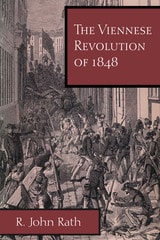
Liberalism, in the nineteenth-century sense of the term, came to Austria much later than it came to western Europe, for it was not until the 1840s that the industrial revolution reached the Hapsburg Empire, bringing in its train miserable working conditions and economic upheaval, which created bitter resentment among the working classes and a longing for a Utopia that would cure the ills of mankind.
This new-found liberalism, largely self-contained and uninfluenced by liberal movements outside the empire, centered mainly in the idea of individual freedom and constitutional monarchism. In the end, the revolution failed because the moderates proved too weak to control the radical excesses, and the radicals in growing desperation tried to turn the rebel idea into a democratic and, at the extreme, a republican one. Fear of this extremism finally drove the moderates into the counterrevolutionary camp.
Since the Viennese rebels fought to achieve many of the goals fundamental to democracy, historians have generally tended to idealize the revolutionaries and forget their shortcomings. R. John Rath has sought to evaluate the revolution from the point of view of the political ideologies of 1848 rather than those of the mid-twentieth century. Moreover, he has clearly and objectively stated the case for both the left and the right, pointing out the failures and shortcomings of each.
At its publication, this was the first detailed English-language book on the Viennese Revolution of 1848 in more than a hundred years. The author has not confined himself to the bare bones of history. In his descriptions of the times and lively portrayals of the chief actors of the revolution, he has vividly restaged a drama of an ideal that failed.
Tulipmania
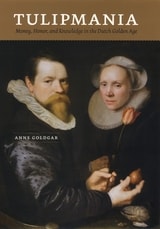
Money, Honor, and Knowledge in the Dutch Golden AgeAnne Goldgar
University of Chicago Press, 2007
“Goldgar tells us at the start of her excellent debunking book: ‘Most of what we have heard of [tulipmania] is not true.’. . . She tells a new story.”—Simon Kuper, Financial Times