Results by title
173 books match the query 'Women in literature' and 29 start with t
Taking Her Seriously
Penelope and the Plot of Homer's OdysseyRichard Heitman
University of Michigan Press, 2005
---Choice
---Bryn Mawr Classical Review
The 'Tragic Mulatta' Revisited
Race and Nationalism in Nineteenth-Century Antislavery FictionEve Allegra Raimon
Rutgers University Press, 2004
Since its inception, the United States has been intensely preoccupied with interracialism. The concept is embedded everywhere in our social and political fabric, including our sense of national identity. And yet, in both its quantitative and symbolic forms, interracialism remains an extremely elusive phenomenon, causing policy makers and census boards to wrangle over how to delineate it and, on an emblematic level, stirring intense emotions from fear to fascination.
In The “Tragic Mulatta” Revisited, Eve Allegra Raimon focuses on the mixed-race female slave in literature, arguing that this figure became a symbolic vehicle for explorations of race and nation—both of which were in crisis in the mid-nineteenth century. At this time, judicial, statutory, social, and scientific debates about the meaning of racial difference (and intermixture) coincided with disputes over frontier expansion, which were never merely about land acquisition but also literally about the “complexion” of that frontier. Embodying both northern and southern ideologies, the “amalgamated” mulatta, the author argues, can be viewed as quintessentially American, a precursor to contemporary motifs of “hybrid” and “mestizo” identities.
Where others have focused on the gendered and racially abject position of the “tragic mulatta,” Raimonreconsiders texts by such central antislavery writers as Lydia Maria Child, William Wells Brown, Harriet Beecher Stowe, and Harriet Wilson to suggest that the figure is more usefully examined as a way of understanding the volatile and shifting interface of race and national identity in the antebellum period.
The Bitch is Back
Wicked Women in LiteratureSarah Appleton Aguiar
Southern Illinois University Press, 2001
Although the “bitch” has always commanded a prominent spot in popular culture—television, movies, art—she virtually disappeared from the work of the second wave of feminist writers in the late 1960s and early 1970s. Now, announces Sarah Appleton Aguiar, the bitch is back, returned once more to cultural center stage in the world of serious literature.
Feminist writers such as Mary Gordon and Alice Walker, to name only two, felt obligated to subvert literary misrepresentations of females as dimensionless, to refute preconceptions of objectified characters, and, of paramount importance, to create memorable women full of complexity and character. They wanted to create a subjective reality for their protagonists. And they succeeded admirably.
But along the road to subjectivity, that vital woman, empowered with anger, with ruthless survival instincts—the bitch—was banished from the pages of feminist fiction. The village gossips, calculating gold-diggers, merciless backstabbers, sinful sirens, evil stepmothers, deadly daughters, twisted sisters, hags, bags, and crones—all had vanished from the fiction written by women. Ubiquitous in other forms of media, the bitch was noticeably absent from the feminist literary canon.
Aguiar, however, points to indications in contemporary culture that the season of the bitch is fast approaching. Contemporary feminist writers and theorists are making substantial reevaluations of the archetypal bitch. Focusing on the traits and the types of guises usually associated with this vital character, Aguiar discusses such characters as Zenia in Margaret Atwood’s The Robber Bride, Ruth Patchett in Fay Weldon’s The Life and Loves of a She-Devil, Sula in Toni Morrison’s Sula, and Ginny in Jane Smiley’s A Thousand Acres.
The Captive Woman's Lament in Greek Tragedy
By Casey Dué
University of Texas Press, 2006
The laments of captive women found in extant Athenian tragedy constitute a fundamentally subversive aspect of Greek drama. In performances supported by and intended for the male citizens of Athens, the songs of the captive women at the Dionysia gave a voice to classes who otherwise would have been marginalized and silenced in Athenian society: women, foreigners, and the enslaved. The Captive Woman's Lament in Greek Tragedy addresses the possible meanings ancient audiences might have attached to these songs. Casey Dué challenges long-held assumptions about the opposition between Greeks and barbarians in Greek thought by suggesting that, in viewing the plight of the captive women, Athenian audiences extended pity to those least like themselves. Dué asserts that tragic playwrights often used the lament to create an empathetic link that blurred the line between Greek and barbarian.
After a brief overview of the role of lamentation in both modern and classical traditions, Dué focuses on the dramatic portrayal of women captured in the Trojan War, tracing their portrayal through time from the Homeric epics to Euripides' Athenian stage. The author shows how these laments evolved in their significance with the growth of the Athenian Empire. She concludes that while the Athenian polis may have created a merciless empire outside the theater, inside the theater they found themselves confronted by the essential similarities between themselves and those they sought to conquer.
The Eve/Hagar Paradigm in the Fiction of Quince Duncan
Dellite Martin-Ogunsola
University of Missouri Press, 2004

The Fallen Angel
Chastity, Class and Women's Reading, 1835–1880Sally Mitchell
University of Wisconsin Press, 1981
This book discusses the figure of the unchaste woman in a wide range of fiction written between 1835 and 1880; serious novels by Dickens, Mrs. Gaskell, Meredith, and George Eliot; popular novels that provided light reading for middle-class women (including books by Dinah Craik, Rhoda Broughton, and Ouida); sensational fiction; propaganda for social reform; and stories in cheap periodicals such as the Family Herald and the London Journal, which reached a different and far wider audience than either serious or popular novels.
The Female Complaint
The Unfinished Business of Sentimentality in American CultureLauren Berlant
Duke University Press, 2008
Pairing literary criticism and historical analysis, Berlant explores the territory of this intimate public sphere through close readings of U.S. women’s literary works and their stage and film adaptations. Her interpretation of Uncle Tom’s Cabin and its literary descendants reaches from Harriet Beecher Stowe to Toni Morrison’s Beloved, touching on Shirley Temple, James Baldwin, and The Bridges of Madison County along the way. Berlant illuminates different permutations of the women’s intimate public through her readings of Edna Ferber’s Show Boat; Fannie Hurst’s Imitation of Life; Olive Higgins Prouty’s feminist melodrama Now, Voyager; Dorothy Parker’s poetry, prose, and Academy Award–winning screenplay for A Star Is Born; the Fay Weldon novel and Roseanne Barr film The Life and Loves of a She-Devil; and the queer, avant-garde film Showboat 1988–The Remake. The Female Complaint is a major contribution from a leading Americanist.
The Female as Subject
Reading and Writing in Early Modern JapanP. F. Kornicki, Mara Patessio, and G. G. Rowley, Editors
University of Michigan Press, 2010

The Feminization of Famine
Expressions of the Inexpressible?Margaret Kelleher
Duke University Press, 1997
Kelleher begins with a critical reading of the novels and short stories written about the Irish famine over the last 150 years, from the novels of William Carleton and Anthony Trollope to the writings of Liam O’Flaherty and John Banville. She then moves on to unveil a lesser-known body of literature—works written by women. This literature is read in the context of a rich variety of other sources, including eye-witness accounts, memoirs, journalistic accounts, and famine historiography. Concluding with a reading of the twentieth-century accounts of the famine in Bengal, this book reveals how gendered representations have played a crucial role in defining notions of famine.
The Feminization of Quest-Romance
Radical DeparturesBy Dana A. Heller
University of Texas Press, 1990
What happens when a woman dares to imagine herself a hero? Questing, she sets out for unknown regions. Lighting a torch, she elicits from the darkness stories never told or heard before. The woman hero sails against the tides of great legends that recount the adventures of heroic men, legends deemed universal, timeless, and essential to our understanding of the natural order that holds us and completes us in its spiral. Yet these myths and rituals do not fulfill her need for an empowering self-image nor do they grant her the mobility she requires to imagine, enact, and represent her quest for authentic self-knowledge.
The Feminization of Quest-Romance proposes that a female quest is a revolutionary step in both literary and cultural terms. Indeed, despite the difficulty that women writers face in challenging myths, rituals, psychological theories, and literary conventions deemed universal by a culture that exalts masculine ideals and universalizes male experience, a number of revolutionary texts have come into existence in the second half of the twentieth century by such American women writers as Jean Stafford, Mary McCarthy, Anne Moody, Marilynne Robinson, and Mona Simpson, all of them working to redefine the literary portrayal of American women's quests. They work, in part, by presenting questing female characters who refuse to accept the roles accorded them by restrictive social norms, even if it means sacrificing themselves in the name of rebellion. In later texts, female heroes survive their "lighting out" experiences to explore diverse alternatives to the limiting roles that have circumscribed female development.
This study of The Mountain Lion, Memories of a Catholic Girlhood, Coming of Age in Mississippi, Housekeeping, and Anywhere but Here identifies transformations of the quest-romance that support a viable theory of female development and offer literary patterns that challenge the male monopoly on transformative knowledge and heroic action.
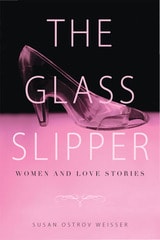
The Glass Slipper
Women and Love StoriesSusan Ostrov Weisser
Rutgers University Press, 2013
Why is the story of romance in books, magazines, and films still aimed at women rather than at men? Even after decades of feminism, traditional ideas and messages about romantic love still hold sway and, in our “postfeminist” age, are more popular than ever. Increasingly, we have become a culture of romance: stories of all kinds shape the terms of love. Women, in particular, love a love story.
The Glass Slipper is about the persistence of a familiar Anglo-American love story into the digital age. Comparing influential classics to their current counterparts, Susan Ostrov Weisser relates in highly amusing prose how these stories are shaped and defined by and for women, the main consumers of romantic texts. Following a trajectory that begins with Jane Austen and concludes with Internet dating sites, Weisser shows the many ways in which nineteenth-century views of women’s nature and the Victorian idea of romance have survived the feminist critique of the 1970s and continue in new and more ambiguous forms in today’s media, with profound implications for women.
More than a book about romance in fiction and media, The Glass Slipper illustrates how traditional stories about women’s sexuality, femininity, and romantic love have survived as seemingly protective elements in a more modern, feminist, sexually open society, confusing the picture for women themselves. Weisser compares diverse narratives—historical and contemporary from high literature and “low” genres—discussing novels by Jane Austen and Charlotte Brontë, Victorian women’s magazines, and D. H. Lawrence’s Lady Chatterley’s Lover; Disney movies; popular Harlequin romance novels; masochistic love in films; pornography and its relationship to romance; and reality TV and Internet ads as romantic stories.
Ultimately, Weisser shows that the narrative versions of the Glass Slipper should be taken as seriously as the Glass Ceiling as we see how these representations of romantic love are meant to inform women’s beliefs and goals. In this book, Weisser’s goal is not to shatter the Glass Slipper, but to see through it.
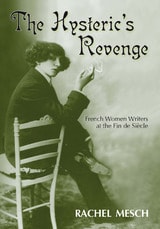
The Hysteric's Revenge
French Women Writers at the Fin de SiecleRachel Mesch
Vanderbilt University Press, 2006
This book argues, however, that the fear of sexual abandon--though real--veiled an even more insidious fear: that women might be capable of intellectual equality with men and thus pose a threat to the most basic structures of French patriarchal society. In demonstrating the pervasiveness of this anxiety through analysis of nineteenth-century medical texts, literary criticism, and fiction, The Hysteric's Revenge brings into relief a critical relationship between the female mind and body that is essential to understanding the discursive position of the turn-of-the-century woman writer.
The novels presented here confront this mind/body problem through a wide variety of styles and genres that challenge conventional fin-de-siecle notions of femininity. From the compelling autobiography of Liane de Pougy--one of Paris's most renowned courtesans--to Colette's frank discussions of female pleasure in one of her early novels, to the violent creativity of Rachilde's androgynous heroine, Mesch demonstrates how both canonical and non-canonical writers promoted women's intellectual authority through the development of a sexual counter-discourse. In engaging the relationship between women's minds and bodies, these novels challenge the conclusions of a century of doctors who sought to prove a physiological basis for female intellectual inferiority. At the same time, they point the way towards later French feminists who sought to subvert patriarchal structures through literary explorations of sexuality.
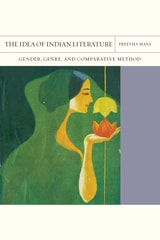
The Idea of Indian Literature
Gender, Genre, and Comparative MethodPreetha Mani
Northwestern University Press, 2022
Indian literature is not a corpus of texts or literary concepts from India, argues Preetha Mani, but a provocation that seeks to resolve the relationship between language and literature, written in as well as against English. Examining canonical Hindi and Tamil short stories from the crucial decades surrounding decolonization, Mani contends that Indian literature must be understood as indeterminate, propositional, and reflective of changing dynamics between local, regional, national, and global readerships. In The Idea of Indian Literature, she explores the paradox that a single canon can be written in multiple languages, each with their own evolving relationships to one another and to English.
Hindi, representing national aspirations, and Tamil, epitomizing the secessionist propensities of the region, are conventionally viewed as poles of the multilingual continuum within Indian literature. Mani shows, however, that during the twentieth century, these literatures were coconstitutive of one another and of the idea of Indian literature itself. The writers discussed here—from short-story forefathers Premchand and Pudumaippittan to women trailblazers Mannu Bhandari and R. Chudamani—imagined a pan-Indian literature based on literary, rather than linguistic, norms, even as their aims were profoundly shaped by discussions of belonging unique to regional identity. Tracing representations of gender and the uses of genre in the shifting thematic and aesthetic practices of short vernacular prose writing, the book offers a view of the Indian literary landscape as itself a field for comparative literature.
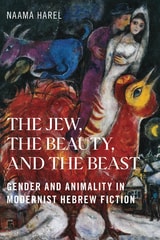
The Jew, the Beauty, and the Beast
Gender and Animality in Modernist Hebrew FictionNaama Harel
Rutgers University Press, 2026
The Jew, the Beauty, and the Beast critically explores the tangled interplay between Jewishness, gender, and animality and its manifestation in modernist Hebrew fiction. Through interdiscursive analysis and close readings, the effeminate Jew is examined vis-à-vis the animalized woman. Intertwining cutting-edge theoretical frameworks of posthumanism and animal studies with established scholarship of Hebrew literature, Jewish studies, and gender studies, Naama Harel offers new Hebrew literary historiography and innovative perspectives on canonical works by Shmuel Yosef Agnon, Devorah Baron, Micha Yosef Berdichevsky, Yosef Haim Brenner, Uri Nissan Gnessin, and David Vogel.

The Orwell Mystique
A Study in Male IdeologyDaphne Patai
University of Massachusetts Press, 1984
The Orwell Mystique: A Study in Male Ideology is a pioneering work of feminist literary criticism that subjects the life and writing of George Orwell (1903–1950) to a sustained and rigorous feminist analysis. Published in 1984—the same year as the famous date in Orwell's most celebrated dystopian novel—the book examines all of Orwell's major novels, essays, and journalism and argues that his widely celebrated reputation for moral authority and plain-speaking democratic decency is fundamentally undercut by a pervasive and condescending attitude toward women.
Author Daphne Patai contends that Orwell's work is saturated with a male ideology so deeply embedded as to be largely invisible to mainstream criticism, which had long treated Orwell as an exemplar of intellectual honesty and political courage while overlooking the gender assumptions that structure his writing. Drawing on feminist theory and close textual analysis, Patai systematically traces the ways in which Orwell's androcentrism—his tendency to place men and male experience at the center of human life—shapes not only his fiction but also his essays, autobiographical writings, and political commentary.
The book is organized around a series of thematic and textual investigations. An introductory chapter establishes what Patai calls “the Orwell myth”—the cultural phenomenon by which Orwell's personal authority as a moral and political guide has been constructed and sustained. Subsequent chapters examine specific dimensions of Orwell's work and biography, including his experience of empire and the masculine codes embedded in his writings about colonialism; his treatments of vagabondage, manual labor, and working-class masculinity (notably in works such as Down and Out in Paris and London and The Road to Wigan Pier); and the androcentrism running through Nineteen Eighty-Four, in which Patai argues that the novel's treatment of women, sexuality, and the body reflects deeply patriarchal assumptions. The book also addresses Orwell's essays and journalism, situating his gender ideology within the broader context of mid-twentieth-century British patriarchal culture.
At the time of its publication, The Orwell Mystique was one of the first book-length feminist examinations of Orwell, and it generated significant scholarly debate. It remains an important and frequently cited work in both Orwell studies and feminist literary criticism.
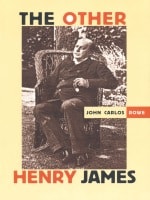
The Other Henry James
John Carlos Rowe
Duke University Press, 1998
Rowe traces a particular development in James’s work, showing how in his early writings James criticized women’s rights, same-sex relations, and other social and political trends now identified with modern culture; how he ambivalently explored these aspects of modernity in his writings of the 1880s; and, later, how he increasingly identified with such modernity in his heretofore largely ignored or marginally treated fiction of the 1890s. Building on recent scholarship that has shown James to be more anxious about gender roles, more conflicted, and more marginal a figure than previously thought, Rowe argues that James—through his treatment of women, children, and gays—indicts the values and conventions of the bourgeoisie. He shows how James confronts social changes in gender roles, sexual preferences, national affiliations, and racial and ethnic identifications in such important novels as The American, The Tragic Muse, What Maisie Knew, and In the Cage, and in such neglected short fiction as “The Last of the Valerii,” “The Death of the Lion,” and “The Middle Years.”
Positioning James’s work within an interpretive context that pits the social and political anxieties of his day against the imperatives of an aesthetic ideology, The Other Henry James will engage scholars, students, and teachers of American literature and culture, gay literature, and queer theory.
The Picara
From Hera to Fantasy HeroineAnne K. Kaler
University of Wisconsin Press, 1991
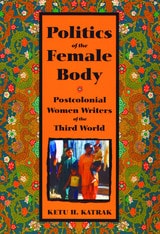
The Politics of the Female Body
Postcolonial Women WritersKetu H. Katrak
Rutgers University Press, 2006
Is it possible to simultaneously belong to and be exiled from a community? In Politics of the Female Body, Ketu H. Katrak argues that it is not only possible, but common, especially for women who have been subjects of colonial empires.
Through her careful analysis of postcolonial literary texts, Katrak uncovers the ways that the female body becomes a site of both oppression and resistance. She examines writers working in the English language, including Anita Desai from India, Ama Ata Aidoo from Ghana, and Merle Hodge from Trinidad, among others. The writers share colonial histories, a sense of solidarity, and resistance strategies in the on-going struggles of decolonization that center on the body.
Bringing together a rich selection of primary texts, Katrak examines published novels, poems, stories, and essays, as well as activist materials, oral histories, and pamphlets—forms that push against the boundaries of what is considered strictly literary. In these varied materials, she reveals common political and feminist alliances across geographic boundaries.
A unique comparative look at women’s literary work and its relationship to the body in third world societies, this text will be of interest to literary scholars and to those working in the fields of postcolonial studies and women’s studies.
The Scarlet Mob of Scribblers
Rereading Hester PrynneJamie Barlowe
Southern Illinois University Press, 2000
Jamie Barlowe finds it bitterly ironic that in literary criticism of The Scarlet Letter, a major American novel about a woman, the voices of female critics have been virtually excluded.
Barlowe examines the causes and consequences of the continuing disregard for women's scholarship. To that end, she chronicles The Scarlet Letter's critical reception, analyzes the history of Hester Prynne as a cultural icon in literature and film, rereads the canonized criticism of the novel, and offers a new reading of Hawthorne's work by rescuing marginalized interpretations from the alternative canon of women critics.
Despite the fervent protestations of scholars that women and minorities are no longer excluded from the arena of academic debate, Barlowe's investigation reveals that mainstream scholarship on The Scarlet Letter—studied as models by generations of students and teachers—remains male-dominated in its comprising population and in its attitudes and practices, which function as the source of its truth-claims. Rather than celebrating the minimal handouts of the academy to women and minorities—and of the culture that nurtures and supports the academy's continuing discrimination—Barlowe constructs a case study that reveals the "rather pitiful state of affairs at the close of the twentieth century."
By interrogating canonized assumptions, Barlowe charts new directions for Hawthorne studies and American literary studies. Through this exposé of ingrained institutional bias, perpetuated myths, and privileged critics, Barlowe provides a refigured perception of the field and state of contemporary literary scholarship.
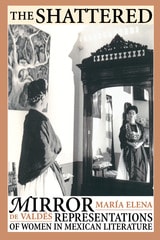
The Shattered Mirror
Representations of Women in Mexican LiteratureBy María Elena de Valdés
University of Texas Press, 1998
Popular images of women in Mexico—conveyed through literature and, more recently, film and television—were long restricted to either the stereotypically submissive wife and mother or the demonized fallen woman. But new representations of women and their roles in Mexican society have shattered the ideological mirrors that reflected these images. This book explores this major change in the literary representation of women in Mexico.
María Elena de Valdés enters into a selective and hard-hitting examination of literary representation in its social context and a contestatory engagement of both the literary text and its place in the social reality of Mexico. Some of the topics she considers are Carlos Fuentes and the subversion of the social codes for women; the poetic ties between Sor Juana Inés de la Cruz and Octavio Paz; questions of female identity in the writings of Rosario Castellanos, Luisa Josefina Hernández, María Luisa Puga, and Elena Poniatowska; the Chicana writing of Sandra Cisneros; and the postmodern celebration—without reprobation—of being a woman in Laura Esquivel's Like Water for Chocolate.

The TESTED WOMAN PLOT
Women’s Choices, Men’s Judgments, and the Shaping of StoriesLois E. Bueler
The Ohio State University Press, 2001
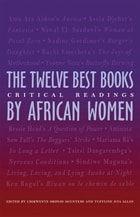
The Twelve Best Books by African Women
Critical ReadingsChikwenye Okonjo Ogunyemi
Ohio University Press, 2009
The Twelve Best Books by African Women is a collection of critical essays on eleven works of fiction and one play. The titles by African women that were included in the list of “Africa’s 100 Best Books of the Twentieth Century” are: Anowa, Ama Ata Aidoo (1970); A Question of Power, Bessie Head (1974); Woman at Point Zero, Nawal El Saadawi (1975); The Beggars’ Strike, Aminata Sow Fall (1979); Burger’s Daughter, Nadine Gordimer (1979); The Joys of Motherhood, Buchi Emesheta (1979); So Long a Letter, Mariama Bâ (1980); Fantasia: An Algerian Cavalcade, Assia Djebar (1983); Nervous Conditions, Tsitsi Dangarembga (1988); Living, Loving and Lying Awake at Night, Sindiwe Magona (1991); Butterfly Burning, Yvonne Vera (1998); Riwan ou le chemin de sable, Ken Bugul (1999).
This collection of original essays recognizes the gesture of inclusion as an important shift in consciousness and creates a fresh awareness of the literary works by African women writers. Each essay offers a penetrating analysis of individual texts and opens up a fresh perspective that allows scholars and students alike to explore new dimensions of these writers’ work.
The Untold Story
Women and Theory in Golden Age TextsMary S. Gossy
University of Michigan Press, 1990

The Voyage In
Fictions of Female DevelopmentEdited by Elizabeth Abel, Marianne Hirsch, and Elizabeth Langland
Dartmouth College Press, 1983

The Woman Detective
GENDER AND GENREViola Klein
University of Illinois Press, 1995
This new edition adds sixty new female private eyes to the roster and includes an afterword that assesses the current state of the genre's new and old novels. A comprehensive bibliography and a character list update the field through mid-1994.
"A highly intelligent analysis." -- Ms.
"Well-researched and well-written. . . . Traces the evolution of sexist boundaries in popular detective fiction from a feminist viewpoint and documents the parallels in social history and the women's rights movement." -- Ronald C. Miller, The Armchair Detective
"Identifies dozens of good novels whose titles are not well known, its promise of good reading extending well beyond its own covers." -- Jane Bakerman, Belles Lettres
Tomboys
A Literary and Cultural HistoryMichelle Ann Abate
Temple University Press, 2008
Starting with the figure of the bold, boisterous girl in the mid-19th century and ending with the “girl power” movement of the 1990’s, Tomboys is the first full-length critical study of this gender-bending code of female conduct. Michelle Abate uncovers the origins, charts the trajectory, and traces the literary and cultural transformations that the concept of “tomboy” has undergone in the United States.
Abate focuses on literature including Louisa May Alcott's Little Women and Carson McCullers's The Member of the Wedding and films such as Peter Bogdanovich's Paper Moon and Jon Avnet's Fried Green Tomatoes. She also draws onlesser-known texts like E.D.E.N. Southworth's once wildly popular 1859 novel The Hidden Hand, Cold War lesbian pulp fiction, and New Queer Cinema from the 1990s.
Tomboys also explores the gender and sexual dynamics of tomboyism, and offers intriguing discussions of race and ethnicity's role in the construction of the enduring cultural archetype. Abate’s insightful analysis provides useful, thought-provoking connections between different literary works and eras. The result demystifies this cultural phenomenon and challenges readers to consider tomboys in a whole new light.
Toward a Latina Feminism of the Americas
Repression and Resistance in Chicana and Mexicana LiteratureBy Anna Marie Sandoval
University of Texas Press, 2008
Weaving strands of Chicana and Mexicana subjectivities, Toward a Latina Feminism of the Americas explores political and theoretical agendas, particularly those that undermine the patriarchy, across a diverse range of Latina authors. Within this range, calls for a coalition are clear, but questions surrounding the process of these revolutionary dialogues provide important lines of inquiry. Examining the works of authors such as Sandra Cisneros, Laura Esquivel, Carmen Boullosa, and Helena María Viramontes, Anna Sandoval considers resistance to traditional cultural symbols and contemporary efforts to counteract negative representations of womanhood in literature and society.
Offering a new perspective on the oppositional nature of Latina writers, Sandoval emphasizes the ways in which national literatures have privileged male authors, whose viewpoint is generally distinct from that of women—a point of departure rarely acknowledged in postcolonial theory. Applying her observations to the disciplinary, historical, and spatial facets of literary production, Sandoval interrogates the boundaries of the Latina experience. Building on the dialogues begun with such works as Sonia Saldivar-Hull's Feminism on the Border and Ellen McCracken's New Latina Narrative, this is a concise yet ambitious comparative approach to the historical and cultural connections (as well as disparities) found in Chicana and Mexicana literature.
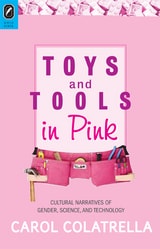
Toys and Tools in Pink
Cultural Narratives of Gender, Science, and TechnologyCarol Colatrella
The Ohio State University Press, 2011
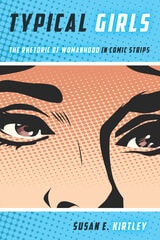
Typical Girls
The Rhetoric of Womanhood in Comic StripsSusan E. Kirtley
The Ohio State University Press, 2021
In the years following 1975, a group of female-created comic strips came to national attention in a traditionally male-dominated medium. Typical Girls: The Rhetoric of Womanhood in Comic Strips uncovers the understudied and developing history of these strips, defining and exploring the ramifications of this expression of women’s roles at a time of great change in history and in comic art. This impressive, engaging, and timely study illustrates how these comics express the complexities of women’s experiences, especially as such experiences were shaped by shifting and often competing notions of womanhood and feminism. Including the comics of Lynn Johnston (For Better or For Worse), Cathy Guisewite (Cathy), Nicole Hollander (Sylvia), Lynda Barry (Ernie Pook’s Comeek), Barbara Brandon-Croft (Where I’m Coming From), Alison Bechdel (Dykes to Watch Out For), and Jan Eliot (Stone Soup), Typical Girls is an important history of the representation of womanhood and women’s rights in popular comic strips.