Results by title
295 books match the query 'Zoology' and 64 start with t
Tadpoles
The Biology of Anuran LarvaeEdited by Roy W. McDiarmid and Ronald Altig
University of Chicago Press, 1999
In this indispensable reference, leading experts on tadpole biology relate what we currently know about tadpoles and what we might learn from them in the future. Tadpoles provides detailed summaries of tadpole morphology, development, behavior, ecology, and environmental physiology; explores the evolutionary consequences of the tadpole stage; synthesizes available information on their biodiversity; and presents a standardized terminology and an exhaustive literature review of tadpole biology.
Taking Flight
A History of Birds and People in the Heart of AmericaMichael Edmonds
Wisconsin Historical Society Press, 2018
Today, more than fifty million Americans traipse through wetlands at dawn, endure clouds of mosquitoes, and brave freezing autumn winds just to catch a glimpse of a bird. The human desire to connect with winged creatures defies age and generation. In the Midwest, humans and birds have lived together for more than twelve thousand years. Taking Flight explores how and why people have worshipped, feared, studied, hunted, eaten, and protected the birds that surrounded them.
Author and birder Michael Edmonds has combed archaeological reports, missionaries’ journals, travelers’ letters, early scientific treatises, the memoirs of American Indian elders, and the folklore of hunters, farmers, and formerly enslaved people throughout the Midwest to reveal how our ancestors thought about the very same birds we see today. Whether you’re a casual bird-watcher, a hard-core life-lister, or simply someone who loves the outdoors, you’ll look at birds differently after reading this book.
The Amboseli Elephants
A Long-Term Perspective on a Long-Lived MammalEdited by Cynthia J. Moss, Harvey Croze, and Phyllis C. Lee
University of Chicago Press, 2011
Elephants have fascinated humans for millennia. Aristotle wrote of them with awe; Hannibal used them in warfare; and John Donne called the elephant “Nature’s greatest masterpiece. . . . The only harmless great thing.” Their ivory has been sought after and treasured in most cultures, and they have delighted zoo and circus audiences worldwide for centuries. But it wasn’t until the second half of the twentieth century that people started to take an interest in elephants in the wild, and some of the most important studies of these intelligent giants have been conducted at Amboseli National Park in Kenya.
The Amboseli Elephants is the long-awaited summation of what’s been learned from the Amboseli Elephant Research Project (AERP)—the longest continuously running elephant research project in the world. Cynthia J. Moss and Harvey Croze, the founders of the AERP, and Phyllis C. Lee, who has been closely involved with the project since 1982, compile more than three decades of uninterrupted study of over 2,500 individual elephants, from newborn calves to adult bulls to old matriarchs in their 60s. Chapters explore such topics as elephant ecosystems, genetics, communication, social behavior, and reproduction, as well as exciting new developments from the study of elephant minds and cognition. The book closes with a view to the future, making important arguments for the ethical treatment of elephants and suggestions to aid in their conservation.
The most comprehensive account of elephants in their natural environment to date, The Amboseli Elephants will be an invaluable resource for scientists, conservationists, and anyone interested in the lives and loves of these extraordinary creatures.
The American Bird Conservancy Guide to Bird Conservation
Daniel J. Lebbin, Michael J. Parr, and George H. Fenwick
University of Chicago Press, 2010
Whether we live in cities, in the suburbs, or in the country, birds are ubiquitous features of daily life, so much so that we often take them for granted. But even the casual observer is aware that birds don’t fill our skies in the number they once did. That awareness has spawned conservation action that has led to notable successes, including the recovery of some of the nation’s most emblematic species, such as the Bald Eagle, Brown Pelican, Whooping Crane, and Peregrine Falcon. Despite this, a third of all American bird species are in trouble—in many cases, they’re in imminent danger of extinction. The most authoritative account ever published of the threats these species face, The American Bird Conservancy Guide to Bird Conservation will be the definitive book on the subject.
The Guide presents for the first time anywhere a classification system and threat analysis for bird habitats in the United States, the most thorough and scientifically credible assessment of threats to birds published to date, as well as a new list of birds of conservation concern. Filled with beautiful color illustrations and original range maps, the Guide is a timely, important, and inspiring reference for birders and anyone else interested in conserving North America’s avian fauna. But this book is far more than another shout of crisis. The Guide also lays out a concrete and achievable plan of long-term action to safeguard our country’s rich bird life. Ultimately, it is an argument for hope. Whether you spend your early weekend mornings crouched in silence with binoculars in hand, hoping to check another species off your list, or you’ve never given much thought to bird conservation, you’ll appreciate the visual power and intellectual scope of these pages.
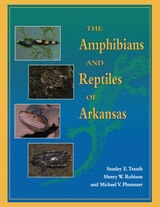
The Amphibians and Reptiles of Arkansas
Stanley E. Trauth
University of Arkansas Press, 2004
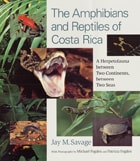
The Amphibians and Reptiles of Costa Rica
A Herpetofauna between Two Continents, between Two SeasJay M. Savage
University of Chicago Press, 2006
Costa Rica has played, and continues to play, a pivotal role in the study of tropical biology as well as the development of ecotourism and ecoprospecting, in part because more than half of the amphibians and reptiles in Costa Rica are also found elsewhere in Central America. The Amphibians and Reptiles of Costa Rica will be an essential book for a wide audience of nature lovers, naturalists, ecotourists, field biologists, conservationists, government planners, and those interested in Central America more generally.
"Written for the enthusiast as well as for the field researcher, this work is an excellent reference source for each of the 396 species of amphibians and reptiles that can be found in Costa Rica. Includes complete full-color photographs of all known species in the region, as well as maps showing their distribution patterns. . . . A must-have book for any library with interests in this subject area."—J. Elliott, Southeastern Naturalist
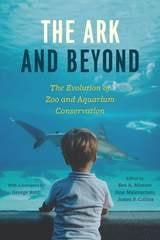
The Ark and Beyond
The Evolution of Zoo and Aquarium ConservationEdited by Ben A. Minteer, Jane Maienschein, and James P. Collins
University of Chicago Press, 2018
While early menageries were anything but the centers of conservation that many zoos are today, a concern with wildlife preservation has been an integral component of the modern, professionally run zoo since the nineteenth century. From captive breeding initiatives to rewilding programs, zoos and aquariums have long been at the cutting edge of research and conservation science, sites of impressive new genetic and reproductive techniques. Today, their efforts reach even further beyond recreation, with educational programs, community-based conservation initiatives, and international, collaborative programs designed to combat species extinction and protect habitats at a range of scales. Addressing related topics as diverse as zoo animal welfare, species reintroductions, amphibian extinctions, and whether zoos can truly be “wild,” this book explores the whole range of research and conservation practices that spring from zoos and aquariums while emphasizing the historical, scientific, and ethical traditions that shape these efforts. Also featuring an inspiring foreword by the late George Rabb, president emeritus of the Chicago Zoological Society / Brookfield Zoo, The Ark and Beyond illuminates these institutions’ growing significance to the preservation of global biodiversity in this century.
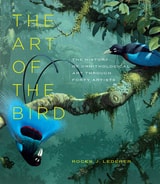
The Art of the Bird
The History of Ornithological Art through Forty ArtistsRoger J. Lederer
University of Chicago Press, 2019
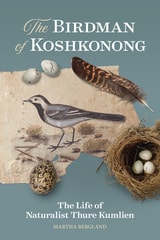
The Birdman of Koshkonong
The Life of Naturalist Thure KumlienMartha Bergland
Wisconsin Historical Society Press, 2021
For all of his achievements, Kumlien never gained the widespread notoriety of Wisconsin naturalists John Muir, Increase Lapham, or Aldo Leopold. Kumlien did his work behind the scenes, content to spend his days in the marshes and swamps rather than in the public eye. He once wrote that he was not “cut out for pretensions and show in the world.” Yet, his detailed observations of Wisconsin’s natural world—including the impact of early agriculture on the environment—were hugely important to the fields of ornithology and botany. As this carefully researched and lovingly rendered biography proves, Thure Kumlien deserves to be remembered as one of Wisconsin’s most influential naturalists.

The Birds of Arizona
Allan R. Phillips
University of Arizona Press, 1964
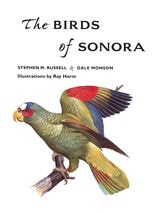
The Birds of Sonora
Stephen M. Russell
University of Arizona Press, 1998
The Birds of Sonora describes all the species known from that state and includes information on distribution, seasonal patterns of occurrence, abundance, and habitats. The first book of its kind in more than half a century to treat birds of this Mexican state immediately south of Arizona, it also contains details of nesting activity for breeding species, provides insight into factors influencing distribution, and notes historical changes in status. Each account is accompanied by a range map depicting the bird's range in Sonora—valuable information not available from any other source and useful to anyone interested in the distribution and ecology of North American birds. Drawings by internationally known wildlife artist Ray Harm enhance many of the entries.
Because other books on Mexican birds don't treat Sonora in detail, The Birds of Sonora is an indispensable resource for birders, and its background descriptions of Sonoran geography, climate, and habitats also make it a key reference for conservation and land use planning. A useful companion to field guides, it is a narrative account that puts readers in touch with birds of this important biogeographic area.
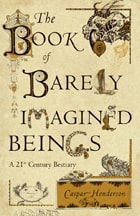
The Book of Barely Imagined Beings
A 21st Century BestiaryCaspar Henderson
University of Chicago Press, 2013
With The Book of Barely Imagined Beings, Caspar Henderson offers readers a fascinating, beautifully produced modern-day menagerie. But whereas medieval bestiaries were often based on folklore and myth, the creatures that abound in Henderson’s book—from the axolotl to the zebrafish—are, with one exception, very much with us, albeit sometimes in depleted numbers. The Book of Barely Imagined Beings transports readers to a world of real creatures that seem as if they should be made up—that are somehow more astonishing than anything we might have imagined. The yeti crab, for example, uses its furry claws to farm the bacteria on which it feeds. The waterbear, meanwhile, is among nature’s “extreme survivors,” able to withstand a week unprotected in outer space. These and other strange and surprising species invite readers to reflect on what we value—or fail to value—and what we might change.
A powerful combination of wit, cutting-edge natural history, and philosophical meditation, The Book of Barely Imagined Beings is an infectious and inspiring celebration of the sheer ingenuity and variety of life in a time of crisis and change.
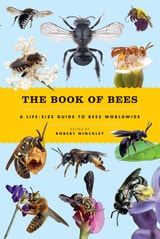
The Book of Bees
A Life-Size Guide to Bees WorldwideEdited by Robert Minckley
University of Chicago Press, 2026
Including more than four hundred species from all seven recognized biological families, a beautiful visual celebration of bee species the world over.
The honeycombs, hives, dancing, and royalty of bee colonies have long captured the public’s imagination, but there’s far more to these insects. There are over 20,000 bee species, but only a handful have colonies approaching the organization of the familiar western honeybee. The typical bee, if there is one, is solitary. It nests in the ground or a stem and has seven to fifteen offspring that develop and emerge the following year, long after their mother has died. These solitary species vary tremendously in the flowers they visit, how they collect pollen and nectar, the architecture of their nests, and how males strategize to find mates. Furthermore, another 17% of all bee species are well-armored parasites, often with striking colors and an array of tactics for attacking other bees.
Bees’ keystone contribution, as pollinators, to the human food supply and to the proper function of ecosystems far exceeds their numbers. From the emerald-green dilemma orchid bee to the spined leafcutter cuckoo, The Book of Bees celebrates bee species worldwide, highlighting a broad range of their diversity to illustrate how different they are in behavior, life history, and interactions with flowers and humans. Each entry includes a distribution map, a table of essential information, a section on related species, and a description of the species’ importance in terms of taxonomy, rarity, behavior, and scientific significance. Striking photos show the bees at their actual size and are also enlarged to showcase intricate details.
This wide-ranging exploration of social, solitary, and parasitic bees offers fascinating insights into their remarkable lives, fostering greater appreciation of their ecological importance and the need for their conservation.

The Book of Beetles, Second Edition
A Life-Size Guide to Six Hundred of Nature’s GemsEdited by Patrice Bouchard and Arthur V. Evans
University of Chicago Press, 2026
An up-to-date, exquisitely illustrated guide to six hundred of the world’s beguiling beetles.
When renowned British geneticist J. B. S. Haldane was asked what could be inferred about God from a study of his works, Haldane replied, “An inordinate fondness for beetles.” With more than 440,000 known species, and scientific estimates that millions more have yet to be identified, their abundance is indisputable, as is their variety. They range from the delightful summer firefly to the one-hundred-gram Goliath beetle. Beetles offer a dazzling array of shapes, sizes, and colors that entice scientists and collectors across the globe.
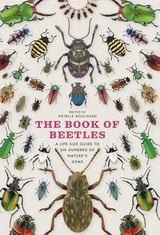
In a new updated edition, The Book of Beetles celebrates the beauty and diversity of this marvelous group of insects. The book includes six hundred significant beetle species, and each entry features a distribution map, basic biology, feeding habits, and information on cultural and economic significance. The beetles appear both at their actual size and enlarged to show details, such as the sextet of spots that distinguish the six-spotted tiger beetle or the jagged ridges of the mandibles on the giant jawed sawyer beetle. With updates to the common names, distribution, classification, or photographs for nearly five hundred entries, this edition offers the latest science and accessibly written, descriptive text that will appeal to researchers and armchair coleopterists alike.
The humble beetle continues to grow in popularity, taking center stage in biodiversity studies, sustainable agriculture programs, and even the dining rooms of adventurous and eco-conscious chefs. The Book of Beetles is the authoritative reference on these remarkably adaptable and beautiful creatures.
The Book of Beetles
A Life-Size Guide to Six Hundred of Nature's GemsPatrice Bouchard
University of Chicago Press, 2014
The Book of Beetles celebrates the beauty and diversity of this marvelous insect. Six hundred significant beetle species are covered, with each entry featuring a distribution map, basic biology, conservation status, and information on cultural and economic significance. Full-color photos show the beetles both at their actual size and enlarged to show details, such as the sextet of spots that distinguish the six-spotted tiger beetle or the jagged ridges of the giant-jawed sawyer beetle. Based in the most up-to-date science and accessibly written, the descriptive text will appeal to researchers and armchair coleopterists alike.
The humble beetle continues to grow in popularity, taking center stage in biodiversity studies, sustainable agriculture programs, and even the dining rooms of adventurous and eco-conscious chefs. The Book of Beetles is certain to become the authoritative reference on these remarkably adaptable and beautiful creatures.
The Book of Caterpillars
A Life-Size Guide to Six Hundred Species from around the WorldEdited by David G. James
University of Chicago Press, 2017
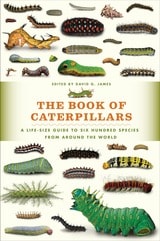
The Book of Caterpillars unveils the mysteries of six hundred species from around the world, introducing readers to the complexity and beauty of these underappreciated insects. With the advent of high-quality digital macrophotography, the world of caterpillars is finally opening up. The book presents a wealth of stunning imagery that showcases the astonishing diversity of caterpillar design, structure, coloration, and patterning. Each entry also features a two-tone engraving of the adult specimen, emphasizing the wing patterns and shades, as well as a population distribution map and table of essential information that includes their habitat, typical host plants, and conservation status. Throughout the book are fascinating facts that will enthrall expert entomologists and curious collectors alike.
A visually rich and scientifically accurate guide to six hundred of the world’s most peculiar caterpillars, this volume presents readers with a rare, detailed look at these intriguing forms of insect life.
The Book of Dogs
A Life-Size Guide to Canids WorldwideDavid W. Macdonald
University of Chicago Press, 2026
For all dog lovers, a stunningly illustrated and scientifically informed global guide to our beloved canine companions and their wild kin.
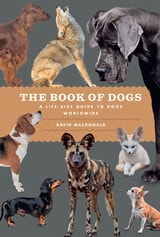
Dogs are spectacularly diverse. From the world’s smallest wild canid, the diminutive fennec fox, to the majestic grey wolf, and from the towering great Dane to the tiny Chihuahua, The Book of Dogs celebrates the connections between humans’ best friends, their ancestors, and their wild cousins, offering insights into both wild and domestic canines and profiling every related species in the dog family Canidae as well as the vast variety of domestic dog breeds.
No other book so comprehensively and globally covers the most widespread family of carnivore species, helping to show that humans’ companions are part of a much larger animal world. Leading canid expert and award-winning author David W. Macdonald accessibly explains developments in the study of genetics to reveal the ancestry of modern canids and the astonishing hybridization among them. In addition to showcasing the diversity of our planet’s dogs, the book presents the latest research on the ecology, behavior, and society of wild dog species. These compelling descriptions with beautiful photographs—including life-size snout images of each of the thirty-seven wild canid species and over two hundred global breeds—offer readers of The Book of Dogs a chance to meet and understand our companions and their kin like never before.
The Book of Eggs
A Life-Size Guide to the Eggs of Six Hundred of the World's Bird SpeciesMark E. Hauber
University of Chicago Press, 2014
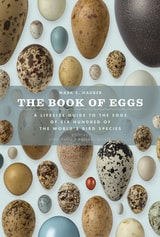
The Book of Eggs introduces readers to eggs from six hundred species—some endangered or extinct—from around the world and housed mostly at Chicago’s Field Museum of Natural History. Organized by habitat and taxonomy, the entries include newly commissioned photographs that reproduce each egg in full color and at actual size, as well as distribution maps and drawings and descriptions of the birds and their nests where the eggs are kept warm. Birds’ eggs are some of the most colorful and variable natural products in the wild, and each entry is also accompanied by a brief description that includes evolutionary explanations for the wide variety of colors and patterns, from camouflage designed to protect against predation, to thermoregulatory adaptations, to adjustments for the circumstances of a particular habitat or season. Throughout the book are fascinating facts to pique the curiosity of binocular-toting birdwatchers and budding amateurs alike. Female mallards, for instance, invest more energy to produce larger eggs when faced with the genetic windfall of an attractive mate. Some seabirds, like the cliff-dwelling guillemot, have adapted to produce long, pointed eggs, whose uneven weight distribution prevents them from rolling off rocky ledges into the sea.
A visually stunning and scientifically engaging guide to six hundred of the most intriguing eggs, from the pea-sized progeny of the smallest of hummingbirds to the eggs of the largest living bird, the ostrich, which can weigh up to five pounds, The Book of Eggs offers readers a rare, up-close look at these remarkable forms of animal life.
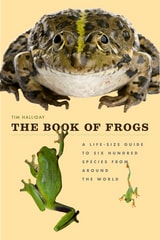
The Book of Frogs
A Life-Size Guide to Six Hundred Species from around the WorldTim Halliday
University of Chicago Press, 2015
The Book of Frogs commemorates the diversity and magnificence of all of these creatures, and many more. Six hundred of nature’s most fascinating frog species are displayed, with each entry including a distribution map, sketches of the frogs, species identification, natural history, and conservation status. Life-size color photos show the frogs at their actual size—including the colossal seven-pound Goliath Frog. Accessibly written by expert Tim Halliday and containing the most up-to-date information, The Book of Frogs will captivate both veteran researchers and amateur herpetologists.
As frogs increasingly make headlines for their troubling worldwide decline, the importance of these fascinating creatures to their ecosystems remains underappreciated. The Book of Frogs brings readers face to face with six hundred astonishingly unique and irreplaceable species that display a diverse array of adaptations to habitats that are under threat of destruction throughout the world.
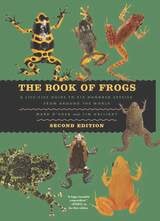
The Book of Frogs
A Life-Size Guide to Six Hundred Species from around the World, Second EditionMark O'Shea and Tim Halliday
University of Chicago Press, 2025
With almost nine thousand known species, frogs display a stunning array of forms and behaviors. A single gram of the toxin produced by the skin of the Golden Poison Frog can kill one hundred thousand people. Male Darwin’s Frogs carry their tadpoles in their vocal sacs for sixty days before coughing them out into the world. And the Wood Frogs of North America freeze every winter, reanimating in the spring.
The Book of Frogs documents the diversity and magnificence of all these anurans and many more. Readers meet six hundred of nature’s most fascinating frogs, with each entry including a distribution map, illustrations, species identification, natural history, and conservation status. Color photos show the frogs at their actual size—from Papua New Guinea’s diminutive Paedophryne amauensis, smaller than a coin, to Cameroon’s colossal Goliath Frog, heavier than some dogs. Written by experts Mark O’Shea and Tim Halliday and containing updated information on one hundred species and nearly twenty new entries, this revised edition will enthrall both veteran researchers and amateur herpetologists.
As frogs increasingly make headlines for their troubling worldwide decline, The Book of Frogs brings readers face to face with six hundred astonishingly unique and irreplaceable species that display a diverse array of adaptations to habitats that are ever changing.
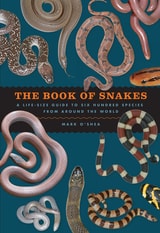
The Book of Snakes
A Life-Size Guide to Six Hundred Species from around the WorldMark O'Shea
University of Chicago Press, 2018
The Book of Snakes presents 600 species of snakes from around the world, covering nearly one in six of all snake species. It will bring greater understanding of a group of reptiles that have existed for more than 160 million years, and that now inhabit every continent except Antarctica, as well as two of the great oceans.
This volume pairs spectacular photos with easy-to-digest text. It is the first book on these creatures that combines a broad, worldwide sample with full-color, life-size accounts. Entries include close-ups of the snake’s head and a section of the snake at actual size. The detailed images allow readers to examine the intricate scale patterns and rainbow of colors as well as special features like a cobra’s hood or a rattlesnake’s rattle. The text is written for laypeople and includes a glossary of frequently used terms. Herpetologists and herpetoculturists alike will delight in this collection, and even those with a more cautious stance on snakes will find themselves drawn in by the wild diversity of the suborder Serpentes.
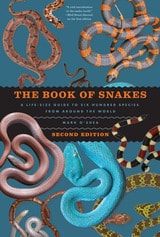
The Book of Snakes
A Life-Size Guide to Six Hundred Species from around the WorldMark O'Shea
University of Chicago Press, 2023
For millennia, humans have regarded snakes with an exceptional combination of fascination and revulsion. Some people recoil in fear at the very suggestion of these creatures, while others happily keep them as pets. Snakes can convey both beauty and menace in a single tongue flick, and so these creatures have held a special place in our cultures. Yet, for as many meanings as we attribute to snakes—from fertility and birth to sin and death—the real-life species represent an even wider array of wonders.
Now in a new edition, reflecting the most recent species classifications, The Book of Snakes presents 600 species of snakes from around the world, covering roughly one in seven of all snake species. It will bring greater understanding of a group of reptiles that have existed for more than 160 million years and that now inhabit every continent except Antarctica, as well as two of the great oceans.
This volume pairs spectacular photos with easy-to-digest text. It is the first book on these creatures that combines a broad, worldwide sample with full-color, life-size accounts. Entries include close-ups of the snake’s head and a section of the snake at actual size. The detailed images allow readers to examine the intricate scale patterns and rainbow of colors as well as special features like a cobra’s hood or a rattlesnake’s rattle. The text is written for laypeople and includes a glossary of frequently used terms. Herpetologists and herpetoculturists alike will delight in this collection, and even those with a more cautious stance on snakes will find themselves drawn in by the wild diversity of the suborder Serpentes.
The Chora of Metaponto 2
Archaeozoology at Pantanello and Five Other SitesStudies by Sándor Bökönyi and Erika Gál
University of Texas Press, 2010
From 1974 to the present, the Institute of Classical Archaeology at the University of Texas at Austin has carried out archaeological excavations in the ancient territory (chora) of Metaponto, now located in the modern province of Basilicata on the southern coast of Italy. This wide-ranging investigation, which covers a number of sites and a time period ranging from prehistory to the Roman Empire, has unearthed a wealth of new information about the ancient rural economy in southern Italy. These discoveries will be published in a multi-volume series titled The Chora of Metaponto. This volume on archaeozoology—the study of animal remains from archaeological sites—is the second in the series, following The Chora of Metaponto: The Necropoleis (1998).
Archaeozoology at Pantanello and Five Other Sites describes the animal remains found throughout Metaponto and discusses what they reveal about ancient practices of hunting and herding, domestication and importation of new breeds, people's attitudes toward animals, and what animal remains indicate about past environments. A chapter devoted to bird bones, which are a relatively rare find because of their fragility, provides high quality information on the environment and methods of fowling, as well as on the beliefs and symbolism associated with birds. The final chapter covers tools—some simple, others sophisticated and richly decorated—made from animal bones.
The Cockroach Papers
A Compendium of History and LoreRichard Schweid
University of Chicago Press, 2015
Traveling from New York City to Louisiana, Mexico, Nicaragua, and Morocco, Schweid blends stories of his own squirm-inducing roach encounters with meticulous research to spin a tale both humorous and harrowing. As he investigates roaches’ more nefarious interactions with our species—particularly with those of us living at the margins of society—Schweid also explores their astonishing diversity, how they mate, what they’ll eat, and what we’ve written about them (from Kafka and Nelson Algren to archy and mehitabel). Knowledge soon turns into respect, and Schweid looks beyond his own fears to arrive at an uncomfortable truth: We humans are no more peaceful, tidy, or responsible about taking care of the Earth or each other than these tiny creatures that swarm in the dark corners of our minds, homes, and cereal boxes.
The Colors of Mammals
Linking Evolution, Development, Perception, and CultureTim Caro
University of Chicago Press, 2026
A principal coloration scientist offers a comprehensive and beautifully illustrated synthesis of coloration in mammals, weaving together contemporary research on evolution, underlying genetics, visual systems, and relevance to humans.
Why are giant pandas black and white, mandrills red and blue, but mice brown? How do mammalian colors and patterns develop? And why do we see in three colors, but deer do not? A cadre of evolutionary scientists, including geneticists, behavioral ecologists, visual ecologists, and anthropologists has worked for over a century to answer these and other questions about the origin and functions of mammal coloration in nature. One of them is celebrated biologist Tim Caro, who has studied animal coloration for over three decades. In this landmark book, he presents a synthesis of experimental and observational studies to explain how and why animal coloration has evolved for three primary reasons: protection against predators, communication, and to respond to environmental factors. Furthermore, Caro provides accessible descriptions of the various genetic and visual mechanisms that have shaped mammals’ extraordinarily diverse colors and patterns.
Victorian naturalists were the first to recognize that coloration influences individuals’ survival and reproduction, and this led to an explosion of research on its adaptive significance a century later. Then, at the beginning of the twentieth century, biologists began to work on the genomic and developmental basis of coloration. Since then, genetic studies on model organisms, particularly mice, have led to a deep understanding of the genes regulating the production of melanin pigments and lately, pattern formation. Simultaneously, scientists have studied organisms’ color perception. However, these functional, molecular, and mechanistic approaches rarely overlap, as they historically emanate from different areas of science. In this book, Caro ties these areas of research together for the first time. Caro outlines perception and production of color; teases apart different aspects of protective coloration; discusses social and sexual signaling; explores environmental drivers of coloration in nonhuman mammals, including domesticated species; and discusses human biology and our use of color in clothing. The resulting volume offers readers both a holistic view of today’s science and an honest assessment of the remaining questions for future research.
The Courtiers' Anatomists
Animals and Humans in Louis XIV's ParisAnita Guerrini
University of Chicago Press, 2015
Through the stories of Duverney and Perrault, as well as those of Marin Cureau de la Chambre, Jean Pecquet, and Louis Gayant, The Courtiers' Anatomists explores the relationships between empiricism and theory, human and animal, as well as the origins of the natural history museum and the relationship between science and other cultural activities, including art, music, and literature.
The Cultural Lives of Whales and Dolphins
Hal Whitehead and Luke Rendell
University of Chicago Press, 2014
Unequivocally: yes. In The Cultural Lives of Whales and Dolphins, cetacean biologists Hal Whitehead, who has spent much of his life on the ocean trying to understand whales, and Luke Rendell, whose research focuses on the evolution of social learning, open an astounding porthole onto the fascinating culture beneath the waves. As Whitehead and Rendell show, cetacean culture and its transmission are shaped by a blend of adaptations, innate sociality, and the unique environment in which whales and dolphins live: a watery world in which a hundred-and-fifty-ton blue whale can move with utter grace, and where the vertical expanse is as vital, and almost as vast, as the horizontal.
Drawing on their own research as well as a scientific literature as immense as the sea—including evolutionary biology, animal behavior, ecology, anthropology, psychology, and neuroscience—Whitehead and Rendell dive into realms both humbling and enlightening as they seek to define what cetacean culture is, why it exists, and what it means for the future of whales and dolphins. And, ultimately, what it means for our future, as well.
The Dancing Bees
Karl von Frisch and the Discovery of the Honeybee LanguageTania Munz
University of Chicago Press, 2016
The Dancing Bees draws on previously unexplored archival sources in order to reveal von Frisch’s full story, including how the Nazi government in 1940 determined that he was one-quarter Jewish, revoked his teaching privileges, and sought to prevent him from working altogether until circumstances intervened. In the 1940s, bee populations throughout Europe were facing the devastating effects of a plague (just as they are today), and because the bees were essential to the pollination of crops, von Frisch’s research was deemed critical to maintaining the food supply of a nation at war. The bees, as von Frisch put it years later, saved his life. Munz not only explores von Frisch’s complicated career in the Third Reich, she looks closely at the legacy of his work and the later debates about the significance of the bee language and the science of animal communication.
This first in-depth biography of von Frisch paints a complex and nuanced portrait of a scientist at work under Nazi rule. The Dancing Bees will be welcomed by anyone seeking to better understand not only this chapter of the history of science but also the peculiar waggles of our garden visitors.
The Deep Structure of Biology
Is Convergence Sufficiently Ubiquitous to Give a Directional SignalSimon Conway Morris
Templeton Press, 2008
Twelve renowned scientists and theologians offer penetrating insights into the evolution dialogue in The Deep Structure of Biology. Each considers whether the orthodox evolution model is sufficient and offers their perspective on evolution and biology. Essays include:
- Chance and Necessity in Evolution
- Green Plants as Intelligent Organisms
- Canny Corvoids and Political Primates: A Case for Convergent Evolution in Intelligence
- Social and Cultural Evolution in the Ocean: Convergences and Contrasts with Terrestrial Systems
- Purpose in Nature: On the Possibility of a Theology of Evolution
Editor Simon Conway Morris provides the introduction, an overview of the issues, and an essay on evolution and convergence. Other contributors are Richard Lenski, George McGhee, Karl Niklas, Anthony Trewavas, Nigel Franks, Nicola Clayton, Nathan Emery, HalWhitehead, Robert Foley, Michael Ruse, Celia Deane-Drummond, and John Haught.
The discussion of biology and evolution in these essays broadens the scope of the traditional evolution discussion as it aims to stimulate the development of other research programs. Scholars in the science and religion field will find this book a valuable resource.
The Deer and the Tiger
George B. Schaller
University of Chicago Press, 1984
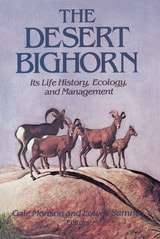
The Desert Bighorn
Its Life History, Ecology, and ManagementGale Monson
University of Arizona Press, 1980
"An intelligently researched and fully documented analysis of this noble rock-climber's life history, and ecology, and the human management of this nearly impossible-to-manage wilderness species." —American Field
"An outstanding and comprehensive work." —Books of the Southwest
"There is quite simply nothing else around that can tell you anywhere near as much about desert sheep, by anywhere near so distinguished a crew of authors." —Safari
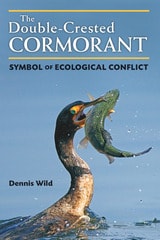
The Double-Crested Cormorant
Symbol of Ecological ConflictDennis Wild
University of Michigan Press, 2012
This is the story of the survival, recovery, astonishing success, and controversial status of the double-crested cormorant. After surviving near extinction driven by DDT and other contaminants from the 1940s through the early 1970s, the cormorant has made an unprecedented comeback from mere dozens to a population in the millions, bringing the bird again into direct conflict with humans. Hated for its colonial nesting behavior; the changes it brings to landscapes; and especially its competition with commercial and sports fishers, fisheries, and fish farmers throughout the Great Lakes and Mississippi Delta regions, the cormorant continues to be persecuted by various means, including the shotgun.
In The Double-Crested Cormorant, Dennis Wild brings together the biological, social, legal, and international aspects of the cormorant's world to give a complete and balanced view of one of the Great Lakes' and perhaps North America's most misunderstood species. In addition to taking a detailed look at the complex natural history of the cormorant, the book explores the implications of congressional acts and international treaties, the workings and philosophies of state and federal wildlife agencies, the unrelenting efforts of aquaculture and fishing interests to "cull" cormorant numbers to "acceptable" levels, and the reactions and visions of conservation groups. Wild examines both popular preconceptions about cormorants (what kinds of fish they eat and how much) and the effectiveness of ongoing efforts to control the cormorant population. Finally, the book delves into the question of climate and terrain changes, their consequences for cormorants, the new territories to which the birds must adapt, and the conflicts this species is likely to face going forward.
The Eagle's Nest
Natural History and American Ideas, 1812-1842Charlotte M. Porter
University of Alabama Press, 1986
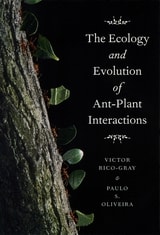
The Ecology and Evolution of Ant-Plant Interactions
Victor Rico-Gray and Paulo S. Oliveira
University of Chicago Press, 2007
Ants are probably the most dominant insect group on Earth, representing ten to fifteen percent of animal biomass in terrestrial ecosystems. Flowering plants, meanwhile, owe their evolutionary success to an array of interspecific interactions—such as pollination, seed dispersal, and herbivory—that have helped to shape their great diversity. The Ecology and Evolution of Ant-Plant Interactions brings together findings from the scientific literature on the coevolution of ants and plants to provide a better understanding of the unparalleled success of these two remarkable groups, of interspecific interactions in general, and ultimately of terrestrial biological communities.
The Ecology and Evolution of Ant-Plant Interactions synthesizes the dynamics of ant-plant interactions, including the sources of variation in their outcomes. Victor Rico-Gray and Paulo S. Oliveira capture both the emerging appreciation of the importance of these interactions within ecosystems and the developing approaches that place studies of these interactions into a broader ecological and evolutionary context. The collaboration of two internationally renowned scientists, The Ecology and Evolution of Ant-Plant Interactions will become a standard reference for understanding the complex interactions between these two taxa.
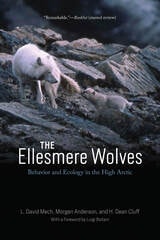
The Ellesmere Wolves
Behavior and Ecology in the High ArcticL. David Mech, Morgan Anderson, and H. Dean Cluff
University of Chicago Press, 2025
For parts of twenty-four summers, wolf biologist L. David Mech lived with a group of wolves on Ellesmere Island, some six hundred miles from the North Pole. Elsewhere, most wolves flee from even the scent of humans, but these animals, evolving relatively free from human persecution, are unafraid. Having already spent twenty-eight years studying other populations of wolves more remotely by aircraft, snow-tracking, live-trapping, and radio-tracking, Mech was primed to join their activities up close and record their interactions with each other. This book tells the remarkable story of what Mech—and the researchers who followed him—have learned while living among the wolves.
The Ellesmere wolves were so unconcerned with Mech’s presence that they allowed him to camp near their den and to sit on his all-terrain vehicle as he observed them, watching packs as large as seven adults and six pups go about their normal activities. In these extraordinarily close quarters, a pup untying his bootlace or an adult sniffing his gloved hand was just part of daily life. Mech accompanied the wolves on their travels and watched as they hunted muskoxen and arctic hares. By achieving the same kind of intimacy with his wild hosts’ every action that we might experience living with domesticated dogs, Mech gained new insights into common but rarely studied behaviors like pup feeding, food caching, howling, and scent-marking. After Mech’s time at Ellesmere ended, his coauthors and fellow wolf researchers Morgan Anderson and H. Dean Cluff spent parts of four summers studying the wolves via radio collars, further illuminating the creatures’ movements and ecology. This book synthesizes their findings, offering both a compelling scientific overview of the animals’ behavior—from hunting to living in packs to rearing pups—and a tale of adventure and survival in the Arctic.
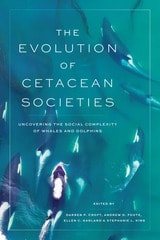
The Evolution of Cetacean Societies
Uncovering the Social Complexity of Whales and DolphinsEdited by Darren P. Croft, Andrew D. Foote, Ellen C. Garland, and Stephanie L. King
University of Chicago Press, 2026
Cetaceans—whales, dolphins, and porpoises—represent an evolutionary peak with respect to their advanced cognitive capacities; flexible communication systems; and structured, multilevel societies. Indeed, the social lives of whales and dolphins have long fascinated scientists and the public alike. The Evolution of Cetacean Societies provides a comprehensive overview of the significant advancements made in studying cetacean behavior and ecology over the last twenty-five years, focusing on our growing understanding of these animals’ complex social lives.
Bringing together scientists from multiple disciplines, the volume summarizes key innovations and progress related to studying cetacean societies’ cultural and genetic basis, their complex social structures, their use of cooperation and patterns of social conflict, and their significant interactions with humans. Each chapter provides an in-depth account of the social lives of whales and dolphins, incorporating the latest cutting-edge research from genomics, communication, network analysis, and animal culture to explain how these animals form societies, maintain relationships, and share information. The final chapters focus on the existential threats facing these diverse and charismatic species, how human-cetacean interactions have shaped our perceptions, and what scientists can learn from their diverse social lives by championing researcher diversity in marine mammal science. The result is an essential and forward-looking book that both contextualizes the lessons of the past two decades and questions the challenges these enigmatic species might face in the future.
Published in 2000 by Chicago, Cetacean Societies: Field Studies of Dolphins and Whales, edited by Janet Mann, Richard C. Connor, Peter Tyack, and Hal Whitehead, inspired a generation of marine biologists. In this new volume, Darren P. Croft, Andrew D. Foote, Ellen C. Garland, and Stephanie L. King—all respected cetacean researchers—offer a worthy successor.
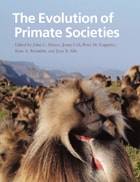
The Evolution of Primate Societies
Edited by John C. Mitani, Josep Call, Peter M. Kappeler, Ryne A. Palombit, and Joan B. Silk
University of Chicago Press, 2012
In 1987, the University of Chicago Press published Primate Societies, the standard reference in the field of primate behavior for an entire generation of students and scientists. But in the twenty-five years since its publication, new theories and research techniques for studying the Primate order have been developed, debated, and tested, forcing scientists to revise their understanding of our closest living relatives.
Intended as a sequel to Primate Societies, The Evolution of Primate Societies compiles thirty-one chapters that review the current state of knowledge regarding the behavior of nonhuman primates. Chapters are written by the leading authorities in the field and organized around four major adaptive problems primates face as they strive to grow, maintain themselves, and reproduce in the wild. The inclusion of chapters on the behavior of humans at the end of each major section represents one particularly novel aspect of the book, and it will remind readers what we can learn about ourselves through research on nonhuman primates. The final section highlights some of the innovative and cutting-edge research designed to reveal the similarities and differences between nonhuman and human primate cognition. The Evolution of Primate Societies will be every bit the landmark publication its predecessor has been.
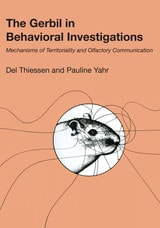
The Gerbil in Behavioral Investigations
Mechanisms of Territoriality and Olfactory CommunicationBy Del Thiessen and Pauline Yahr
University of Texas Press, 1977
In this comprehensive account of olfactory communication and territorial behavior in the Mongolian gerbil, Del Thiessen and PaulineYahr provide the first detailed study of the neurological and physiological mechanisms that control these basic functions. In addition to explaining the links between hormones, genes, olfactory cues, and territorial acts, they also offer a more general picture of gerbil behavior, as well as a brief look at other mammalian species that communicate social status by way of olfactory messages.
Territorial behavior, as defined by the authors, includes all acts that are restricted to a particular area and are crucial for successful reproduction. In the Mongolian gerbil, and probably in other mammals as well, territoriality is controlled by sex hormones acting on specific areas of the central nervous system. Hormones from the gonads apparently act in the brain by altering the genetic apparatus controlling biochemicals used in neural communication. Without these hormones, the animal is socially inert and unable to transmit genes to the next generation. The authors conclude from the results of over ten years of investigation that the most complex social interactions depend on the integrity of the hormone system and its constant tuning by olfactory stimuli.
The book incorporates a review of all previously known studies of gerbil behavior and representative data for many other scent-marking species. A stereotaxic brain atlas for the gerbil is a feature that will be especially helpful to other researchers. The book's eclectic nature should make it valuable to anyone concerned with territorial behavior, hormones and behavior, or brain processes, as well as to those who are specifically interested in the Mongolian gerbil.
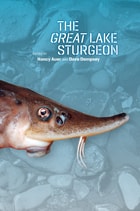
The Great Lake Sturgeon
Nancy Auer and Dave Dempsey
Michigan State University Press, 2013
The Hand that Feeds
The Complex Relations of Human-Animal FeedingEdited by Alexander Mullan, Riley Smallman, Herre de Bondt, and Juliette Waterman
University College London, 2025
Feeding animals is never a neutral act—whether in zoos, farms, backyards, or city streets, it shapes relationships, environments, and even entire ecosystems. The Hand that Feeds takes a deeper look into the complex and often-overlooked dynamics of human-animal feeding, moving beyond its utilitarian functions to explore the emotional, ethical, and ecological entanglements it creates. Through case studies spanning history to the present, this work discloses how feeding alters animal behaviors and reflects broader cultural and moral values. Why do we nurture some animals while exterminating others? How do feeding practices blur the lines between wild and domesticated life? What happens when acts of care lead to unintended harm?
Addressing everything from garden bird feeders to contested urban wildlife policies, the authors illuminate the deep significance of food in human-animal interactions. An invigorating read for scholars in environmental studies, anthropology, and history, The Hand that Feeds challenges us to reconsider the act of feeding as a powerful force in shaping multispecies worlds.
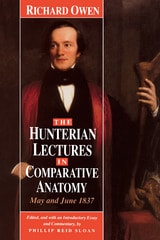
The Hunterian Lectures in Comparative Anatomy, May and June 1837
Richard Owen
University of Chicago Press, 1992
Now, for the first time, modern readers may consult the single sustained exposition of his views that Owen ever provided: his Hunterian Lectures. Phillip Reid Sloan has transcribed and edited the seven surviving lectures and has written an introduction and commentary that situate this work in the context of Owen's life and the scientific life of the time. The lectures survey some of the history of comparative anatomy since Aristotle and draw on work by some of Owen's contemporaries. Their chief value, however, lies in Owen's elucidation of his own view on the relationships among various groups of living things.
"Owen is one of the linchpin figures of Victorian science. The publication of these lectures is important, and Sloan is to be commended for a fine transcription."—Adrian Desmond, University College, London
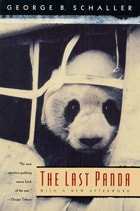
The Last Panda
George B. Schaller
University of Chicago Press, 1993
"No scientist is better at letting the rest of us in on just how the natural world works; no poet sees the world with greater clarity or writes about it with more grace. . . . Anyone who genuinely cares for wildlife cannot help being grateful to Schaller—both for his efforts to understand the panda and for the candor with which he reports what has gone so badly wrong in the struggle to save it from extinction."—Geoffrey C. Ward, New York Times Book Review
"Schaller's book is a unique mix of natural history and the politics of conservation, and it makes for compelling reading. . . . Having been in giant panda country myself, I found some of the descriptions of the animals and habitats breathtaking. Schaller describes the daily routines and personalities of the giant pandas he studied (as well as their fates thereafter) as though they were his blood relatives. . . . Schaller's brilliant presentation of the complexities of conservation makes his book a milestone for the conservation movement."—Devra G. Kleiman, Washington Post Book World
"George Schaller's most soulful work, written in journal style with many asides about a creature who evolved only two to three million years ago (about the same time as humans). . . . Here, conservation biology confronts an evil that grinds against hope and shatters the planet's diversity. Written with hope."—Whole Earth Catalog
"A nicely crafted blend of wildlife observation and political-cultural analysis. . . . The Last Panda is a sad chronicle of our failure, so far, to stem the decline of the animal that may be the most beloved on the planet."—Donald Dale Jackson, Smithsonian

The Last Refuge of the Mt. Graham Red Squirrel
Ecology of EndangermentH. Reed Sanderson and John L. Koprowski
University of Arizona Press, 2009
This book is derived from a symposium on the Mt. Graham red squirrel and offers a comprehensive picture of the ecology of this red squirrel and the impacts on its mountain home. Forty contributors detail studies conducted to understand the natural history of the creature and the challenges and changing ecological conditions on Mt. Graham.
Each chapter tells a unique story that contributes to the mosaic of natural history knowledge about the endangered Mt. Graham red squirrel. They reflect diverse viewpoints on the problems of conserving the habitats and populations of the squirrel, showing how it was complicated by perspectives ranging from Native Americans’ concern over traditional lands to astronomers’ hope for a better view of space, and by issues ranging from forestry practices to climate change. Studies of such factors as squirrel middens, seed hoarding, and nest sites provide definitive research on the animal.
Ongoing censuses continue to track the squirrel’s population trends, and both Forest Service and Arizona Department of Transportation activities continue to be scrutinized by interested parties to determine their impact. This book represents an authoritative overview of this still-endangered species and its habitat.
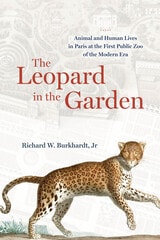
The Leopard in the Garden
Animal and Human Lives in Paris at the First Public Zoo of the Modern EraRichard W. Burkhardt, Jr.
University of Chicago Press, 2026
The Paris menagerie at the Paris Museum of Natural History has a special significance in the history of zoos. Founded in 1793–1794 at the height of the French Revolution, it was the model for the other great zoos of the nineteenth century that followed, beginning with London in 1828, Amsterdam in 1838, and Berlin in 1844.
Richard W. Burkhardt Jr. has written the definitive history of the Paris zoo and its early inhabitants, human and nonhuman. The book features narrative or thematic chapters interwoven with chapters focused on particular animals. Combining current scholarship with fresh discoveries gleaned from his immersion in the Paris Zoo’s extensive archive, Burkhardt shares historical treasures that illuminate not only the workings of the menagerie but also various dimensions of the golden age of French zoology (the years of Jean-Baptiste Lamarck, Geoffroy Saint-Hilaire, and Georges Cuvier). His history reconstructs the diverse sources of specimens, the growth of the collection over time, the efforts to make the menagerie scientifically significant, contemporary attitudes toward animals, and the lives of the animals themselves in colonial and diplomatic contexts.
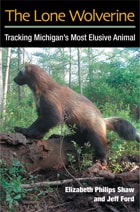
The Lone Wolverine
Tracking Michigan's Most Elusive AnimalElizabeth Philips Shaw and Jeff Ford
University of Michigan Press, 2012
It began in late winter of 2004. Almost 100 years had passed since the last spotting of a wild wolverine in Michigan when coyote hunters caught a glimpse of one of the animals in a frozen farm field in the northern thumb region. For the next six years, Jeff Ford, a local science teacher and amateur naturalist, devoted himself to locating and filming the wolverine that had unexpectedly and inexplicably appeared in the Wolverine State. By the time hikers found the animal dead in early 2010, Ford had taken hundreds of rare live action photos and shot numerous hours of video, with the story of the "Wolverine Guy" attracting national attention through countless newspaper and magazine articles and appearances on Animal Planet and PBS Nature.
This is the tale of Ford's quest as he uncovered answers to mysteries surrounding the animal's territory and movement patterns, while sparking a flurry of controversy surrounding the elusive predator's origin, much of which remains unresolved today. It's an intimate look at research in the raw, from DNA samples stuck on barbed wire to a sophisticated, motion-sensing infrared camera unit strategically placed to observe nocturnal behavior.
The Lone Wolverine brings to vivid life this unforgettable piece of American wildlife lore, using candid interviews, public records, and Ford's own vast storehouse of notes, personal writings, correspondence, and images, offering an extraordinary chronicle of a wild wolverine in its natural habitat, at play and in fierce competition for food and survival. This is a wildlife detective story, recounting years of study and fierce debate as researchers pondered the riddles of Michigan's last wolverine---her origins, habits, and ultimately the cause of her untimely death.
The Mollusks of the Arid Southwest
With an Arizona Check ListJoseph C. Bequaert and Walter B. Miller
University of Arizona Press, 1973
Part I: Zoogeography of Southwestern Nearctic Mollusks
Integrates and evaluates information of interest to students of variation, evolution, zoogeography, and ecology of the fauna of the arid Southwest.
Part II: Annotated Check List of Recent Arizona Mollusks
Treatment of 173 valid species and 46 recognized subspecies gives nomenclature, type localities, distribution in Arizona, occurrence elsewhere in the Southwestern Molluscan Province, general Recent distribution, presence or absence in Late Cenozoic deposits, and synonymy.
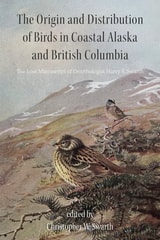
The Origin and Distribution of Birds in Coastal Alaska and British Columbia
The Lost Manuscript of Ornithologist Harry S. SwarthChristopher W. Swarth
Oregon State University Press, 2022
In 2019, Christopher Swarth, Harry’s grandson and a scientist in his own right, discovered the forgotten manuscript. This book includes the original unpublished manuscript, accompanied by contextual essays from contemporary ornithologists who examine the impact and relevance of Swarth’s research on coastal bird diversity, fox sparrow migration, and the systematic puzzle of the timberline sparrow. Expedition maps display field camps and exploration routes, and species checklists illustrate the variety of birds observed at key field sites. To bring additional color and insight, The Origin and Distribution of Birds in Coastal Alaska and British Columbia also includes excerpts from Harry Swarth’s field notes, a comprehensive list of Harry Swarth’s publications, and a glossary with historic and contemporary bird names. Naturalists, ornithologists, birders, and all those who want to learn more about the natural history of the region will delight in the rediscovery of this long-lost treasure.
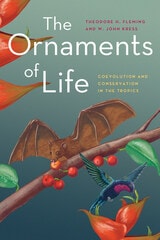
The Ornaments of Life
Coevolution and Conservation in the TropicsTheodore H. Fleming and W. John Kress
University of Chicago Press, 2013
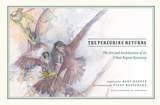
The Peregrine Returns
The Art and Architecture of an Urban Raptor RecoveryMary Hennen with Peggy Macnamara
University of Chicago Press, 2017
In The Peregrine Returns, Mary Hennen gives wings to this extraordinary conservation success story. Drawing on the beautiful watercolors of Field Museum artist-in-residence Peggy Macnamara and photos by Field Museum research assistant Stephanie Ware, as well as her own decades of work with peregrines, Hennen uses a program in Chicago as a case study for the peregrines’ journey from their devastating decline to the discovery of its cause (a thinning of eggshells caused by a by-product of DDT), through to recovery, revealing how the urban landscape has played an essential role in enabling falcons to return to the wild—and how people are now learning to live in close proximity to these captivating raptors.
Both a model for conservation programs across the country and an eye-opening look at the many creatures with which we share our homes, this richly illustrated story is an inspiring example of how urban architecture can serve not only our cities’ human inhabitants, but also their wild ones.
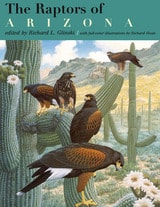
The Raptors of Arizona
Edited by Richard L. Glinski, with full-color illustrations by Richard Sloan
University of Arizona Press, 1998
Arizona's raptors are found in an unrivaled diversity of habitats, from saguaro cactus forests where tiny Elf Owls nest to the Vermilion Cliffs, where the gigantic California Condor was introduced in 1996. Yet many species live in habitats that are now jeopardized by degradation or development, making an understanding and appreciation of raptors crucial to their survival.
The Raptors of Arizona brings together the knowledge and insights of 29 raptor and wildlife authorities who provide original information and syntheses on Arizona's 42 raptor species, with an emphasis on aspects of their natural history in Arizona. A chapter on each bird includes its description, a range map, and information on its distribution, habitat, life history, and status. Additional chapters cover conservation, habitats, where and when to watch raptors, and the sport of falconry. The book is enhanced by 42 full-color illustrations by Richard Sloan, one of the premier wildlife artists in North America, whose paintings were commissioned by the Arizona Wildlife Foundation specifically for this project. Co-published with the Arizona Game and Fish Department.