Results by title
3390 books match the query 'Fiction' and 1041 start with t
The Islands
A. Alberts
University of Massachusetts Press, 1983
The Javelin Thrower
Paolo Volponi
Seagull Books, 2018
Isolating himself from anyone who might help him understand what he’s feeling, he channels his fury into his javelin, getting better and better until he is a local champion. But his success is fleeting, as wholly confused and caught up in his own anger, he ends up betraying and humiliating his friends. The Javelin Thrower is the story of an erotic education turned tragic, poisoned by the darkness running through Mussolini’s Italy.
The Jewish War and The Victory
Henryk Grynberg
Northwestern University Press, 2001
The Journal of Otto Peltonen
A Finnish Immigrant StoryWilliam Durbin
University of Minnesota Press, 2020
A portrait of the Finnish immigrant experience in Minnesota during the early twentieth century—now in paperback
After journeying across the Atlantic with his mother and two sisters, young Otto Peltonen joins his father in the iron ore mines of northern Minnesota, experiencing the harsh labor conditions that were common at the time, as mining companies cared more about making a profit than for their workers’ safety. Writing in his journal about his family’s struggles and the hard life Finnish immigrants endured in the early twentieth century, Otto ultimately strengthens his resolve to find the freedom his family had first sought in America.
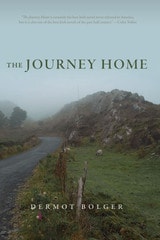
The Journey Home
By Dermot Bolger
University of Texas Press, 2008
2008 — Finalist, ForeWord Magazine Book of the Year Awards, Fiction Category
Young Francis Hanrahan dreams desperately of a life different from that of his country-born, suburban-living parents. On his first day at his first job Francis makes his first real friend. Shay, a would-be older brother, introduces "Hano" to Dublin's appealingly seedy after-hours bars and drug-fueled parties. They are joined by Cait, a troubled teenager who spends her days in a stupor. But the noir thrills of underground Dublin cannot conceal the unemployment, corruption, and violence strangling the city. The Plunkett brothers, masters of "the subtle everyday corruption on which a dynasty was built" will use the friends—with tragic results.
Torn between his friends, his family, and his own ideals, Hano ultimately falls victim to these powerful forces and commits a heinous crime. He flees through the countryside with Cait, wondering, as he narrates the events that set him on this path, if there is a home at the end of it.
Controversial for its gritty portrait of Dublin in the 1980s, The Journey Home is Dermot Bolger's unflinching look at the personal cost of social progress, and those, innocent or not, lost during the journey.
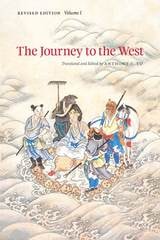
The Journey to the West, Revised Edition, Volume 1
Translated and Edited by Anthony C. Yu
University of Chicago Press, 2012
Read the legendary Chinese classic that inspired the hit game Black Myth: Wukong!
With over a hundred chapters written in both prose and poetry, The Journey to the West has always been a complicated and difficult text to render in English while preserving the lyricism of its language and the content of its plot. But Yu has successfully taken on the task, and in this new edition he has made his translations even more accurate and accessible. The explanatory notes are updated and augmented, and Yu has added new material to his introduction, based on his original research as well as on the newest literary criticism and scholarship on Chinese religious traditions. He has also modernized the transliterations included in each volume, using the now-standard Hanyu Pinyin romanization system. Perhaps most important, Yu has made changes to the translation itself in order to make it as precise as possible.
One of the great works of Chinese literature, The Journey to the West is not only invaluable to scholars of Eastern religion and literature, but, in Yu’s elegant rendering, also a delight for any reader.
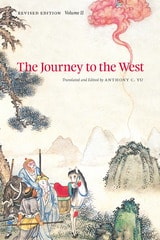
The Journey to the West, Revised Edition, Volume 2
Translated and Edited by Anthony C. Yu
University of Chicago Press, 2012
Read the legendary Chinese classic that inspired the hit game Black Myth: Wukong!
With over a hundred chapters written in both prose and poetry, The Journey to the West has always been a complicated and difficult text to render in English while preserving the lyricism of its language and the content of its plot. But Yu has successfully taken on the task, and in this new edition he has made his translations even more accurate and accessible. The explanatory notes are updated and augmented, and Yu has added new material to his introduction, based on his original research as well as on the newest literary criticism and scholarship on Chinese religious traditions. He has also modernized the transliterations included in each volume, using the now-standard Hanyu Pinyin romanization system. Perhaps most important, Yu has made changes to the translation itself in order to make it as precise as possible.
One of the great works of Chinese literature, The Journey to the West is not only invaluable to scholars of Eastern religion and literature, but, in Yu’s elegant rendering, also a delight for any reader.
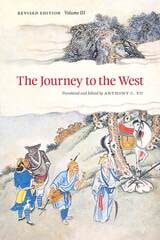
The Journey to the West, Revised Edition, Volume 3
Translated and Edited by Anthony C. Yu
University of Chicago Press, 2012
Read the legendary Chinese classic that inspired the hit game Black Myth: Wukong!
With over a hundred chapters written in both prose and poetry, The Journey to the West has always been a complicated and difficult text to render in English while preserving the lyricism of its language and the content of its plot. But Yu has successfully taken on the task, and in this new edition he has made his translations even more accurate and accessible. The explanatory notes are updated and augmented, and Yu has added new material to his introduction, based on his original research as well as on the newest literary criticism and scholarship on Chinese religious traditions. He has also modernized the transliterations included in each volume, using the now-standard Hanyu Pinyin romanization system. Perhaps most important, Yu has made changes to the translation itself in order to make it as precise as possible.
One of the great works of Chinese literature, The Journey to the West is not only invaluable to scholars of Eastern religion and literature, but, in Yu’s elegant rendering, also a delight for any reader.
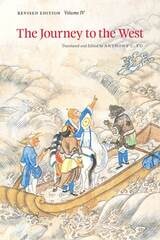
The Journey to the West, Revised Edition, Volume 4
Translated and Edited by Anthony C. Yu
University of Chicago Press, 2012
Read the legendary Chinese classic that inspired the hit game Black Myth: Wukong!
With over a hundred chapters written in both prose and poetry, The Journey to the West has always been a complicated and difficult text to render in English while preserving the lyricism of its language and the content of its plot. But Yu has successfully taken on the task, and in this new edition he has made his translations even more accurate and accessible. The explanatory notes are updated and augmented, and Yu has added new material to his introduction, based on his original research as well as on the newest literary criticism and scholarship on Chinese religious traditions. He has also modernized the transliterations included in each volume, using the now-standard Hanyu Pinyin romanization system. Perhaps most important, Yu has made changes to the translation itself in order to make it as precise as possible.
One of the great works of Chinese literature, The Journey to the West is not only invaluable to scholars of Eastern religion and literature, but, in Yu’s elegant rendering, also a delight for any reader.
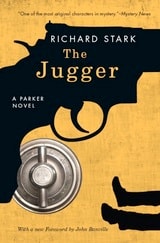
The Jugger
A Parker NovelRichard Stark
University of Chicago Press, 2009
An action-packed entry in the classic hard-boiled crime series starring the unstoppable heister, Parker!
Richard Stark's Parker novels are the hardest of hard-boiled, classic crime novels where the heists are huge, the body counts are high, and the bad guys usually win.
The Parker novels have been a huge influence on countless writers and filmmakers, including Quentin Tarantino, Stephen King, George Pelecanos, Colson Whitehead, Lucy Sante, John Banville, and many more. Their stripped-down language and hard-as-nails amorality create an unforgettable world where the next score could be the big one, but your next mistake could also be your last. There's nothing else like them.
They say the past always catches up to you—but if he can help it, Parker won’t let his. In The Jugger, an old contact who could blow Parker’s cover tells Parker he’s in trouble — then turns up dead. With Parker’s skeletons on the verge of escaping from their closet, he must put the pieces together—at any cost—before it’s too late.
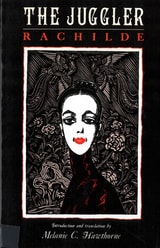
The Juggler
RachildeHawthorne, Melanie C
Rutgers University Press, 1990
The Juggler (La Jongleuse) is a "decadent" novel that was first published in 1900. Its author, Marguerite Vallette-Eymery (1860-1953), who used the pseudonym Rachilde, was a prolific novelist (over sixty works of fiction), playwright, literary critic and reviewer, and a forceful presence in French literary society of her time.
The protagonist of the novel, Eliante Donalger, is in some sense an exaggerated double for her creator--bizarre in appearance, clothing, and interests. Instinctively grasping a medical and psychological truth that the turn-of-the-century scientific world was only beginning to understand, Eliante maintains that there is nothing "natural" about human sexual expression. She claims to be in love with an inanimate (though anthropomorphic and sexually ambiguous) object, a Greek amphora, and the novel traces the rivalry between this faithful partner and an ardent human suitor, a young medical student. It is only through juggling, both literally and metaphorically, that Eliante is able to use her seductive power to maintain desire. The surprise ending challenges the limits of such power in a controversial and surprising twist.
Although Rachilde's work has been neglected in the past, the women's movement and feminist criticism have stimulated renewed interest in her fiction. The Juggler is a major rediscovery.
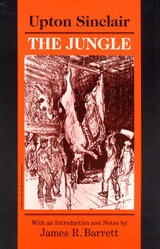
The Jungle
Upton Sinclair
University of Illinois Press, 1988
The Keepers of Truth
Michael Collins
University of Iowa Press, 2021
The Kentucky Trace
A Novel of the American RevolutionHarriette Simpson Arnow
Michigan State University Press, 2012
A gripping portrait of life in the hard-bitten wilderness of Revolutionary Kentucky, Harriette Simpson Arnow’s The Kentucky Trace follows surveyor William David Leslie Collins as he struggles to survive. Collins finds his fellow settlers to be almost as inscrutable as the weather—at times, they are allies, and at others, they are adversaries. Collins battles nature, bad luck, and the quickly shifting political tides to make his way in a changing world. Showcasing Arnow’s ear for dialogue and offering a wealth of historical detail, The Kentucky Trace is a masterful work of fiction by a preeminent Appalachian writer.
The Kind of Things Saints Do
Laura Valeri
University of Iowa Press, 2002
These stories grow through subtle shifts—the bad becomes not so bad, the worst livable. It is the saintly moments of unexpected understanding that shape the collection: one gigolo's lover picks up another at a bus stop and they agree on his worthlessness, the love-worn man reminds the newly divorced woman of her physical power, the estranged son shelters his father from an unexpected storm.
Valeri navigates the reader through the bones and scars of those who ache with wanting something else and become a little older and a little wiser for it. The Kind of Things Saints Do is a collection of human imperfections and missed connections that grows into a kaleidoscope of aspiration and hope.
The Kindly Ones
Book 6 of A Dance to the Music of TimeAnthony Powell
University of Chicago Press, 1995
Anthony Powell’s universally acclaimed epic A Dance to the Music of Time offers a matchless panorama of twentieth-century London. Now, for the first time in decades, readers in the United States can read the books of Dance as they were originally published—as twelve individual novels—but with a twenty-first-century twist: they’re available only as e-books.
As volume six, The Kindly Ones (1962), opens, rumblings from Germany recall memories of Nick Jenkins’s boyhood and his father’s service in World War I; it seems clear that all too soon, uniforms will be back in fashion. The looming threat throws the ordinary doings of life into stark relief, as Nick and his friends continue to negotiate the pitfalls of adult life. Moreland’s marriage founders, Peter Templer’s wife—his second—is clearly going mad, and Widmerpool is, disturbingly, gaining prominence in the business world even as he angles for power in the coming conflict. War, with all its deaths and disruptions, is on the way.
"Anthony Powell is the best living English novelist by far. His admirers are addicts, let us face it, held in thrall by a magician."--Chicago Tribune
"A book which creates a world and explores it in depth, which ponders changing relationships and values, which creates brilliantly living and diverse characters and then watches them grow and change in their milieu. . . . Powell's world is as large and as complex as Proust's."--Elizabeth Janeway, New York Times
"One of the most important works of fiction since the Second World War. . . . The novel looked, as it began, something like a comedy of manners; then, for a while, like a tragedy of manners; now like a vastly entertaining, deeply melancholy, yet somehow courageous statement about human experience."--Naomi Bliven, New Yorker
“The most brilliant and penetrating novelist we have.”--Kingsley Amis
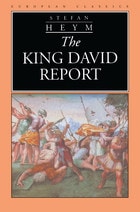
The King David Report
Stefan Heym
Northwestern University Press, 1997
Written by one of Germany's most acclaimed dissident authors, The King David Report is both an analysis of the writer's obligations to truth, and an astute satire on the workings of history and politics in a totalitarian state.
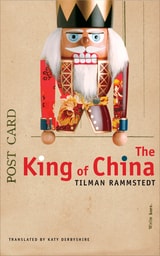
The King of China
Tilman Rammstedt
Seagull Books, 2019
And it is here that the novel opens, two men in hiding, mere miles apart. But when his grandfather dies unexpectedly, Keith is left to continue the farce alone. With the aid of a guidebook, Keith writes a series of letters home to his brothers and sisters, detailing their imaginary travels and the bizarre sights they see. These start off harmlessly, but before long he starts adding invented details: non-stop dental hygiene shows on television, dog vaccinations at the post office—and the letters get longer and longer. Engaging, strange, and ultimately moving, this hilarious novel from Tilman Rammstedt won him the prestigious Ingeborg Bachmann Prize in 2008 and confirmed him as one of Germany’s most compelling writers.
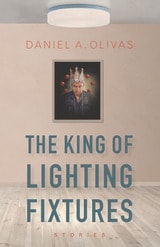
The King of Lighting Fixtures
StoriesDaniel A. Olivas
University of Arizona Press, 2017
The characters here represent all walks of L.A. life—from Satan’s reluctant Craigslist roommate to a young girl coping with trauma at her brother’s wake—and their tales ebb and flow among various styles, including magical realism, social realism, and speculative fiction. Like a jazz album, they glide and bop, tease and illuminate, sadden and hearten as they navigate effortlessly from meta to fabulist, from flash fiction to longer, more complex narratives.
These are literary sketches of a Los Angeles that will surprise, connect, and disrupt readers wherever they may live.
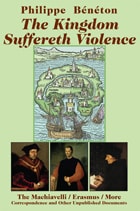
The Kingdom Suffereth Violence
The Machiavelli / Erasmus / More Correspondence and Other Unpublished DocumentsPhilippe Bénéton
St. Augustine's Press, 2012
The Kingdom of Strangers
Elias Khoury
University of Arkansas Press, 1996
The Knight and His Shadow
Boubacar Boris Diop
Michigan State University Press, 2015
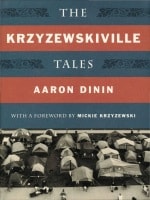
The Krzyzewskiville Tales
Aaron Dinin
Duke University Press, 2005
So the story begins. On a wintry night in Durham, North Carolina, writes Dinin, twelve students huddle under the meager protection of a nylon tent. They have little in common except the sacrosanct tradition that has brought them together for the past month. Before the sun next sets, they will anoint themselves in blue and white paint and enter nearby Cameron Indoor Stadium to worship at the altar of Blue Devils basketball. In the meantime, they abide in Krzyzewskiville.
A stranger enters the tent, a respected sportswriter, and suggests that the tenters pass the hours until the next tent check by telling stories of Krzyzewskiville. Like Chaucer’s pilgrims, the students compete to tell the best tale. They report on ribald tenting exploits, relate a dream in which Duke basketball players and coaches test a fan’s loyalty, debate the rationality of tenting as a way of allocating students’ tickets, and describe the spontaneous tent city that sprang up one summer when their beloved “Coach K” was offered a job elsewhere. This storytelling competition creates a loving portrait of the complex rules and tribal customs that make up the rich community and loyal fans that are Krzyzewskiville.
Mickie Krzyzewski, Coach K’s wife and a familiar courtside figure at Duke basketball games, has contributed a foreword praising the “love, commitment, and ownership” of the citizens of Krzyzewskiville.
The Kukotsky Enigma
A NovelLudmila Ulitskaya; Translated from the Russian by Diane Nemec Ignashev
Northwestern University Press, 2016
Translated from the Russian by Diane Nemec Ignashev
The central character in Ludmila Ulitskaya’s celebrated novel The Kukotsky Enigma is a gynecologist contending with Stalin’s prohibition of abortions in 1936. But, in the tradition of Russia’s great family novels, the story encompasses the history of two families and unfolds in Moscow, St. Petersburg, and the ruins of ancient civilizations on the Black Sea. Their lives raise profound questions about family heritage and genetics, nurture and nature, and life and death. In his struggle to maintain his professional integrity and to keep his work from dividing his family, Kukotsky confronts the moral complexity of reproductive science. Winner of the 2001 Russian Booker Prize and the basis for a blockbuster television miniseries, The Kukotsky Enigma is an engrossing, searching novel by one of contemporary literature’s most brilliant writers.
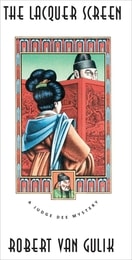
The Lacquer Screen
A Chinese Detective StoryRobert van Gulik
University of Chicago Press, 1962
Early in his career, Judge Dee visits a senior magistrate who shows him a beautiful lacquer screen on which a scene of lovers has been mysteriously altered to show the man stabbing his lover. The magistrate fears he is losing his mind and will murder his own wife. Meanwhile, a banker has inexplicably killed himself, and a lovely lady has allowed Dee's lieutenant, Chiao Tai, to believe she is a courtesan. Dee and Chiao Tai go incognito among a gang of robbers to solve this mystery, and find the leader of the robbers is more honorable than the magistrate.
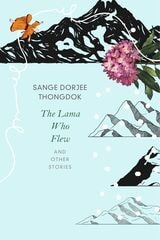
The Lama Who Flew
and Other Tales from My VillageSange Dorjee Thongdok
Seagull Books, 2025
The Flying Lama: Tales Around the Hearth invites readers into the enchanting world of a small Himalayan village in Arunachal Pradesh, where the past lingers in every rustling leaf and the supernatural feels as close as the wind against one’s skin. Drawing from his Shertukpen heritage, Sange Dorjee Thongdok crafts a collection of stories brimming with mysticism and an unshakable connection to the rhythms of nature. A lama who seems to defy gravity, a village where tradition and modernity stand in quiet conversation—each tale is steeped in folklore and rendered with cinematic detail, divulging a world that is both remote and deeply familiar. Blending wry humor with profound emotion, Thongdok’s storytelling captures the essence of a place often overlooked, yet teeming with life.
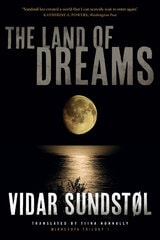
The Land of Dreams
Vidar Sundstøl
University of Minnesota Press, 2014
Winner of the Riverton Prize for best Norwegian crime novel and named by Dagbladet as one of the top twenty-five Norwegian crime novels of all time, The Land of Dreams is the chilling first installment in Vidar Sundstøl’s critically acclaimed Minnesota Trilogy, set on the rugged north shore of Lake Superior and in the region’s small towns and deep forests.
The grandson of Norwegian immigrants, Lance Hansen is a U.S. Forest Service officer and has a nearly all-consuming passion for local genealogy and history. But his quiet routines are shattered one morning when he comes upon a Norwegian tourist brutally murdered near a stone cross on the shore of Lake Superior. Another Norwegian man is nearby; covered in blood and staring out across the lake, he can only utter the word kjærlighet. Love.
FBI agent Bob Lecuyer is assigned to the case, as is Norwegian detective Eirik Nyland, who is immediately flown in from Oslo. As the investigation progresses, Lance begins to make shocking discoveries—including one that involves the murder of an Ojibwe man on the very same site more than one hundred years ago. As Lance digs into two murders separated by a century, he finds the clues may in fact lead toward someone much closer to home than he could have imagined.
The Land of Dreams is the opening chapter in a sweeping chronicle from one of Norway’s leading crime writers—a portrait of an extraordinary landscape, an exploration of hidden traumas and paths of silence that trouble history, and a haunting study in guilt and the bonds of blood.

The Land of Green Plums
Herta Muller
Northwestern University Press, 1998
The Language of Birds
Norbert Scheuer
Haus Publishing, 2018
As visceral horrors and everyday banalities of the war threaten to engulf Paul, he, like his great-great-grandfather, finds his very own refuge in Afghanistan’s natural world. In a diary filled with exquisite drawings of birds and ruminations on the life he left behind, Paul describes his experiences living with two comrades who are fighting their own demons and his befriending of an Afghan man, Nassim, as well as his dreams of escaping the restrictive base camp and visiting the shores of a lake visible from the lookout tower. But when he finally reaches the lake one night, he finds himself in the midst of a chain of events that, with his increasingly fragile state of mind, has dramatic—and ultimately heartbreaking—consequences.
A meditative novel that shows a new side to the conflict in Afghanistan, The Language of Birds takes a moving look at the all-too-human costs of war and questions what it truly means to fight for freedom.
The Language of Fiction
A Writer’s StylebookBrian Shawver
University Press of New England, 2013
The Language of Home
StoriesRaymond Luczak
Gallaudet University Press, 2025
This short story collection offers readers many possible answers that reveal the Deaf experience in all its complexities. Written over nearly forty years by celebrated Deaf author Raymond Luczak, this collection of thirty stories paints a vivid panorama of Deaf lives. From a young DeafBlind boy feeling lost within his hearing family to a hearing son of Deaf parents caught between their infighting and a hearing mother realizing in the split second of her own death the full impact of the missteps she has taken while raising her Deaf son, Luczak crafts narratives that resonate with authenticity. Other stories feature an ASL interpreter feeling conflicted about a Deaf neighbor and a Deaf woman who becomes blacklisted as a backstabber. These characters often navigate the murky waters of the hearing world, sometimes with a touch of ASL gloss. The Language of Home is an exciting literary contribution that offers rare, nuanced representations of Deaf characters.
The Last Client of Luis Montez
Manuel Ramos
Northwestern University Press, 2004
What a difference a day makes. Inside of twenty-four hours, a cop rumored to have received bribes from Montez takes a header off a mountain, Jimmy Esch is found butchered, and the cops consider the attorney their top suspect. Lisa—Montez's alibi—has conveniently disappeared. As if all that wasn't enough, Montez must also cope with the news his father is in the hospital.
Distracted by family strife and a media circus, Montez broods on the latest wrong turns in his life. Then he decides to act. Jumping bail, he heads across the Rockies to the barrios of San Diego. It's not easy to unravel the perfect set-up when you're down to your last cent. But Montez pursues the truths that will clear his name, and ultimately confronts the powerful force that is Family.
The Last Country
Svenja Leiber
Seagull Books, 2017
“Ruven Preuk stands apart from the village, on an August day in 1911, and listens.” Thus begins an epic bildungsroman about the life of Ruven Preuk, son of the wainwright, child of a sleepy village in Germany’s north, where life is both simple and harsh.
Ruven, though, is neither. He has the ability to see sounds, leading him to discover an uncanny gift for the violin. When he meets a talented teacher in the Jewish quarter, Ruven falls under the spell of a prodigious future. But as the twentieth century looms, Ruven’s pursuit of his craft takes a turn. In The Last Country, Svenja Leiber spins a tale that moves from the mansions of a disappearing aristocracy to a communist rebellion, from a joyous village wedding to a Nazi official’s threats, from the First World War to the Second. As the world Ruven knows disappears, the gifted musician must grapple with an important question: to what end has he devoted himself to his art?
Winner of the 2015 Arno Reinfrank Literaturpreis
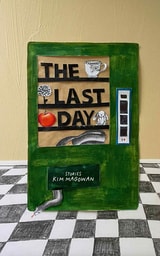
The Last Day
Flash FictionKim Magowan
Moon City Press, 2026
The Last Day explores endings: endings of love affairs, friendships, childhood, and rivalries, endings being occasions for mourning, celebration, and recovery all at the same time. Kim Magowan’s newest collection pinpoints the moments when everything changes, when endings become beginnings and the future starts anew.
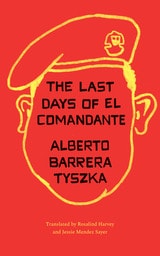
The Last Days of El Comandante
By Alberto Barrera Tyszka; translated by Rosalind Harvey and Jessie Mendez Sayer
University of Texas Press, 2020
2021 — Honorable Mention, Best Fiction Book Translation – International Latino Book Awards, Latino Literacy Now
Winner of the Tusquets Prize in 2015 and previously translated into French, German, Dutch, Polish, and Portuguese, Alberto Barrera Tyszka’s Patria o muerte is now available in English.
President Hugo Chávez’s cancer looms large over Venezuela in 2012, casting a shadow of uncertainty and creating an atmosphere of secrets, lies, and upheaval across the country. This literary thriller follows the connected lives of several Caracas neighbors consumed by the turmoil surrounding the Venezuelan president’s impending death.
Retired oncologist Miguel Sanabria, seeing the increasingly combustible world around him, feels on constant edge. He finds himself at odds with his wife, an extreme anti-Chavista, and his radical Chavista brother. These feelings grow when his nephew asks him to undertake the perilous task of hiding cell-phone footage of Chávez in Cuba. Fredy Lecuna, an unemployed journalist, takes a job writing a book about Chávez’s condition, which requires him to leave for Cuba while his landlord attempts to kick his wife and son out of their apartment. Nine-year-old María, long confined to an apartment with a neurotic mother intensely fearful of the city’s violence, finds her only contact with the outside world through a boy she messages online.
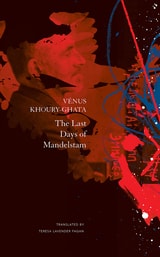
The Last Days of Mandelstam
Vénus Khoury-Ghata
Seagull Books, 2020
With her sensitive prose and innate sense of drama, French-Lebanese writer Vénus Khoury-Ghata brings Mandelstam back to life and allows him to have the last word—proving that literature is one of the surest means to fight against barbarism.
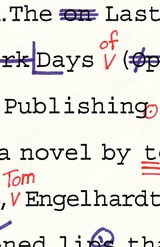
The Last Days of Publishing
A NovelThomas M. Engelhardt
University of Massachusetts Press, 2005
Koppes, who came of age in the sixties, is an editor slowly running off the rails. In the six episodes of The Last Days of Publishing, he refights the Vietnam War in a Chinese restaurant, discovers that the paleontological is political in a natural history museum, mixes it up with a flamboyant literary agent who went underground decades earlier, and encounters a hippie cultural oligarch on the forty-fifth floor of Multimedia's transnational entertainment headquarters.
Tom Engelhardt, himself a publishing veteran, has produced a tumultuous vision of the new world in which the word finds itself hustling for a living. By turns hilarious, sardonic, and poignant, his novel deftly captures the ways in which publishing, which has long put our world between covers but has seldom been memorialized in fiction, is being transformed.
The Last Happy Occasion
Alan Shapiro
University of Chicago Press, 1996
A refreshingly honest, lovingly crafted work, The Last Happy Occasion is a treasure map for anyone interested in exploring the intersections of life and art.
"The Last Happy Occasion is touching and intelligent, emotionally satisfying and eloquent testimony to the power of poetry to instruct, heal and inspire."—Emily Barton, New York Times Book Review
"Shapiro, not unlike Auden, doses his wordplay with a certain sly irony. . . . We come away from Shapiro's book with an intimate appreciation of the little subversions that poetry can work in one's life."—Jonathan Kirsch, Los Angeles Times
"He is an acute observer of moments, people, art and language. And he packs even seemingly simple stories with many layers of meaning. . . . He shows us the power and importance of transformative art in life."—Publishers Weekly, starred review
"The literary criticism is sharp, but what enthralls the reader more is Shapiro's humorous but honest perspective on his younger self, a perspective that is critical without being condescending."—Heller McAlpin, Newsday
The Last Hurrah
A NovelEdwin O'Connor
University of Chicago Press, 2016
Not quite a roman á clef of notorious Boston mayor James Michael Curley, The Last Hurrah tells the story of Skeffington’s final campaign as witnessed through the eyes of his nephew, who learns a great deal about politics as he follows his uncle to fundraisers, wakes, and into smoke-filled rooms, ultimately coming—almost against his will—to admire the man. Adapted into a 1958 film starring Spencer Tracy and directed by John Ford (and which Curley tried to keep from being made), Edwin O’Connor’s opus reveals politics as it really is, and big cities as they really were. An expansive, humorous novel offering deep insight into the Irish-American experience and the ever-changing nature of the political machine, The Last Hurrah reveals political truths still true today: what the cameras capture is just the smiling face of the sometimes sordid business of giving the people what they want.
The Last Journey of Ago Ymeri
Bashkim Shehu
Northwestern University Press, 2007
The Last Judgment of Kings / Le Jugement dernier des rois
A Bilingual EditionYann Robert
Bucknell University Press, 2025
Joué pour la première fois le lendemain de l’exécution de Marie-Antoinette, Le Jugement dernier des rois met en scène le procès burlesque des autres rois et reines d’Europe : exhibés et enchaînés tels des animaux, contraints de se battre pour un tonneau de biscuits, et finalement anéantis par l’éruption spectaculaire d’un volcan. Tel est le contexte scandaleux—tragédie et farce à la fois—de la pièce la plus célèbre de la Révolution française, bien connue de tous les spécialistes de cette période. Jusqu’à maintenant, pourtant, il n’existait ni édition critique ni traduction anglaise de cet ouvrage historique. Notre édition bilingue fait revivre la pièce de Maréchal et la replace au centre des plus grands débats chez les historiens de la Révolution, traitant de justice, religion, commémoration, comédie, et propagande. Provocateur, facile à lire, et concis—parfaitement adapté aux étudiants d’un cours de français ou d’histoire—Le Jugement dernier des rois propose ainsi une introduction idéale à la période révolutionnaire et à ses principales controverses.
Published by Bucknell University Press. Distributed worldwide by Rutgers University Press.
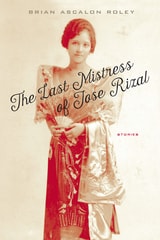
The Last Mistress of Jose Rizal
StoriesBrian Ascalon Roley
Northwestern University Press, 2016
Roley’s work has been praised by everyone from New York Times literary critics to APIA author Helen Zia for his bare, poetic style and raw emotionalism. In the collection’s title story, a woman living with her daughter and her daughter’s American husband fears the loss of Filipino tradition, especially Catholicism, as she tries to secretly permeate her granddaughter’s existence with elements of her ancestry. In "New Relations," an American-born son introduces his mother to his Caucasian bride and her family, only to experience his first marital discord around issues of politesse, the perception of culture, and post-colonial legacies. Roley’s delicately nuanced collection often leaves the audience with the awkwardness that comes from things lost in translation or entangled in generational divides.
The Last People You’d Expect
Spencer Wise
Carnegie Mellon University Press, 2027
A budding journalist and a housing advocate join forces to investigate a series of crimes spurred by an act of vandalism at the Boston Holocaust Memorial.
On the eve of the “Summer of Hate,” Mark Bergman, a young struggling Bar Mitzvah photographer trying to break into serious journalism, meets fellow tenant Annie Holt, a Catholic housing activist. The same night, across town, someone vandalizes the Boston Holocaust Memorial, which at first appears to be an isolated event, but when Mark joins Annie at an eviction protest across town, they soon discover it was a part of a more sinister and coordinated series of attacks. From the Vilna Shul in Beacon Hill down to South Carolina low country, Mark and Annie’s relationship deepens as they hunt the perpetrators and ultimately reach a point, both with each other and the crimes they’re investigating, where they must make the most difficult decisions they ever faced. Told from alternating points of view, Last People follows both Mark and Annie and a series of humorous minor characters, all of whom are searching for identity and a place in a fractured, volatile, and dangerous America. Part love story, part mystery, part coming of age, Last People is a novel about homelessness—literally, metaphorically—and the ways in which people grasp onto labels in order to find meaning and purpose in their lives even when those labels fail to adequately define them.
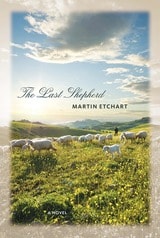
The Last Shepherd
Martin Etchart
University of Nevada Press, 2012
Matt’s journey to manhood takes place in a vividly depicted landscape populated by lively, memorable characters. This is the powerful story of a young man’s search for an identity that encompasses two cultures and one complex, scattered family.
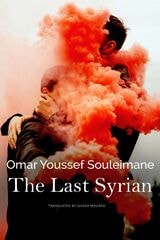
The Last Syrian
Omar Youssef Souleimane
Seagull Books, 2024
Youssef’s mother has always told him that he is named after the biblical prophet Joseph who had the power of foresight. But when Youssef participated in the first demonstration in Damascus in 2011, he felt that the uprising against the Bashar al-Assad regime after forty years of silence and fear was “a miracle more powerful than that of the prophet.”
While Josephine, a charming young Alawite, gathers in her home a group of youth to fight for their visions of a promising future, a forbidden love story unfolds between two men, Youssef and Mohammad. Meanwhile, young Khalid’s love for Josephine is brutally interrupted by the agents of the oppressive regime. Homosexuality clashes with tradition, emancipation with persecution, and feelings with loyalties, leading to an upheaval that sweeps away the destinies of the young as well as that of an entire nation.
Omar Youssef Souleimane’s eloquent novel is not only a narrative of the Syrian Revolution; it is also a story about inter-generational conflicts, rebellion, and liberation. With intense, poetic prose, he brilliantly captures the indomitable yearning for freedom that, despite all obstacles and setbacks, always survives in a hopeful person’s heart until it’s attained.
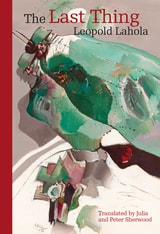
The Last Thing
Leopold Lahola
Karolinum Press, 2025
Slovak Jewish writer Leopold Lahola was able to escape deportation to a concentration camp and fight in the resistance only to find himself forced into exile by the postwar communist regime. He emerged from obscurity during the brief thaw of the Prague Spring, when he was able to return to his homeland and thrive as a playwright and film director. It was also in 1968 that his short story collection The Last Thing appeared in Slovakia. The collection’s title proved sadly prophetic with the author suffering a fatal heart attack in January 1968, just before his 50th birthday and as his short stories finally appeared in book form.
The nine stories which make up The Last Thing range from the prewar rise of fascism and its dangers for the Jewish community through the concentration camps and the partisan fight against the Germans, concluding in the devastating awareness of all that had been lost and destroyed in the war. Lahola is a master of writing outside of conventional tropes, exploring moral ambivalences where others work within the comforts of good versus evil. He punctures the standard historical image of the partisan fighters by depicting their heroism along with their cruelty and pettiness while also showing how often bravery and madness, kindness and stupidity can coexist. Lahola has written a World War II story collection whose translation will offer not only a compelling read but starkly new perspectives on the tragedy and grandeur of that momentous time in history.
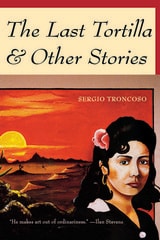
The Last Tortilla
and Other StoriesSergio Troncoso
University of Arizona Press, 1999
Writing in a straightforward, light-handed style reminiscent of Grace Paley and Raymond Carver, he spins charming tales that reflect his experiences in two worlds. Troncoso's El Paso is a normal town where common people who happen to be Mexican eat, sleep, fall in love, and undergo epiphanies just like everyone else. His tales are coming-of-age stories from the Mexican-American border, stories of the working class, stories of those coping with the trials of growing old in a rapidly changing society. He also explores New York with vignettes of life in the big city, capturing its loneliness and danger.
Beginning with Troncoso's widely acclaimed story "Angie Luna," the tale of a feverish love affair in which a young man rediscovers his Mexican heritage and learns how much love can hurt, these stories delve into the many dimensions of the human condition. We watch boys playing a game that begins innocently but takes a dangerous turn. We see an old Anglo woman befriending her Mexican gardener because both are lonely. We witness a man terrorized in his New York apartment, taking solace in memories of lost love. Two new stories will be welcomed by Troncoso's readers. "My Life in the City" relates a transplanted Texan's yearning for companionship in New York, while "The Last Tortilla" returns to the Southwest to explore family strains after a mother's death—and the secret behind that death. Each reflects an insight about the human heart that has already established the author's work in literary circles.
Troncoso sets aside the polemics about social discomfort sometimes found in contemporary Chicano writing and focuses instead on the moral and intellectual lives of his characters. The twelve stories gathered here form a richly textured tapestry that adds to our understanding of what it is to be human.
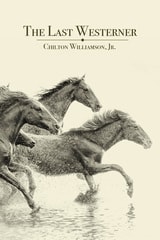
The Last Westerner
Chilton Williamson, Jr.
St. Augustine's Press, 2025
A Finalist for the 2026 Spur Award for Best Western Contemporary Novel, this is a tale of one man's road toward fulfillment that plays out in stages of encounters and abandonment instead of one glorious "last stand" expected in a Western romance. Williamson's story weaves the best elements of several genres and with masterful dialogue he illustrates the landscape of a heart cultivated and ravaged by the challenges that emerge in his path. The majestic setting of the rugged west and its horses is not the main aesthetical context, however. "For [us] women were the whole world and the promise of it, men being hardly more than rivals in love to be challenged and defeated." The Last Westerner is an ode to human happiness embodied in women, and "the kind that comes from a sense of the wholeness, the absolute rightness, of it all." Williamson seems to mean that without women (and horses) no such answers will ever be found. "People without hope don't write books, they say. Neither do men who love women––one woman in particular––lack hope."
Jeb Stuart Ryder, at 51 a retired range detective from Wyoming, meets Jody James, a handsome widowed cowgirl at a horse show in Moab, Utah, where she is exhibiting her prize horse. They begin an idyllic life together until this horse is stolen, and he pledges to pursue the thieves and bring him back to her. Along the way he meets a 16-year-old Navajo boy, John-Wayne Bilagody, who joins the search but with the intention of offering this horse to his own woman. Jeb takes it upon himself to instruct John-Wayne in the proper chivalric attitude a man owes a woman. When they come to the camp of brigada who now possesses the horse, Jeb's world strains to accommodate the existence of Carmen, the beautiful and aristocratic woman who is preparing to lead those men back into Mexico. She has his horse, but his pledge to return it to Jody holds fast. His promise had been a sign of hope, but Jeb at long last arrives at a pass that he knows is the real path to his sunset.
The Last of 'The Waltz Across Texas' and Other Stories
Jo Carson
Ohio University Press, 1993
Published in 1993 by Gnomon Press
The Last of 'The Waltz Across Texas' and Other Stories marks Jo Carson’s debut fiction collection. Across its pages, her keen imagination and sharp humor bring to life well-drawn characters navigating family, friends, and community.
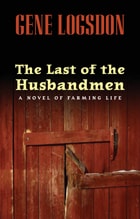
The Last of the Husbandmen
A Novel of Farming LifeGene Logsdon
Ohio University Press, 2008
“Nan turned to see Ben’s face turn as hard and white as a sauerkraut crock. When he did not respond, Nan figured that he was just going to back off as he usually did, the shy and retiring husbandman. She did not know her history. She did not know that shy and retiring husbandmen have been known to revolt against oppression with pitchforks drawn.”
—The Last of the Husbandmen
In The Last of the Husbandmen, Gene Logsdon looks to his own roots in Ohio farming life to depict the personal triumphs and tragedies, clashes and compromises, and abiding human character of American farming families and communities. From the Great Depression, when farmers tilled the fields with plow horses, to the corporate farms and government subsidy programs of the present, this novel presents the complex transformation of a livelihood and of a way of life.
Two friends, one rich by local standards, and the other of more modest means, grow to manhood in a lifelong contest of will and character. In response to many of the same circumstances—war, love, moonshining, the Klan, weather, the economy—their different approaches and solutions to dealing with their situations put them at odds with each other, but we are left with a deeper understanding of the world that they have inherited and have chosen.
Part morality play and part personal recollection, The Last of the Husbandmen is both a lighthearted look at the past and a profound statement about the present state of farming life. It is also a novel that captures the spirit of those who have chosen to work the land they love.