Results by title
4030 books match the query 'Language Arts & Disciplines' and 760 start with t
The Politics of Appalachian Rhetoric
Amanda E Hayes
West Virginia University Press, 2018
In exploring the ways that Appalachian people speak and write, Amanda E. Hayes raises the importance of knowing and respecting communication styles within a marginalized culture. Diving deep into the region’s historical roots—especially those of the Scotch-Irish and their influence on her own Appalachian Ohio—Hayes reveals a rhetoric with its own unique logic, utility, and poetry.
Hayes also considers the headwinds against Appalachian rhetoric, notably ideologies about poverty and the biases of the school system. She connects these to challenges that Appalachian students face in the classroom and pinpoints pedagogical and structural approaches for change.
Throughout, Hayes blends conventional scholarship with autobiography, storytelling, and language, illustrating Appalachian rhetoric’s validity as a means of creating and sharing knowledge.
The Politics of Linguistics
Frederick J. Newmeyer
University of Chicago Press, 1986
The Politics of Pain Medicine
A Rhetorical-Ontological InquiryS. Scott Graham
University of Chicago Press, 2015
In The Politics of Pain Medicine: A Rhetorical-Ontological Inquiry, S. Scott Graham offers a rich and detailed exploration of the medical rhetoric surrounding pain medicine. Graham chronicles the work of interdisciplinary pain management specialists to found a new science of pain and a new approach to pain medicine grounded in a more comprehensive biospychosocial model. His insightful analysis demonstrates how these materials ultimately shape the healthcare community’s understanding of what pain medicine is, how the medicine should be practiced and regulated, and how practitioner-patient relationships are best managed. It is a fascinating, novel examination of one of the most vexing issues in contemporary medicine.
The Politics of the Superficial
Visual Rhetoric and the Protocol of DisplayBrett Ommen
University of Alabama Press, 2016
Ommen argues, for example, that on viewing a billboard, a driver isn’t merely being exposed to a set of commercial messages or exhortations, but rather responding in a self-aware way that differentiates her from her collective associations like Democrat, Republican, rich, poor, Catholic, or Jewish.
By examining graphic design—as a profession, practice, and academic field—as the nexus for understanding visual display in public culture, The Politics of the Superficial develops two arguments about contemporary visual communication practices: first, that the study of visual communication privileges visual content at the expense of other dynamics, such as context; and second, that interpretations focusing on content conceal the most persuasive and subversive dimensions of the visual.
Wide-ranging and stimulating, The Politics of the Superficial ultimately posits that, far from serving as a communal oasis for public imagination, contemporary visual culture offers the possibility for politically engaged communication and persuasion while simultaneously threatening the health of public discourse by atomizing its constituent parts. It will serve as a vital contribution to the field of visual rhetoric.
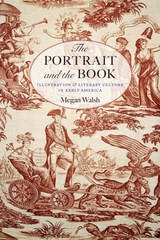
The Portrait and the Book
Illustration and Literary Culture in Early AmericaMegan Walsh
University of Iowa Press, 2017
Illustrations played a key role in American literary culture despite the fact there was little demand for books by American writers. Indeed, most of the illustrated books bought, sold, and shared by Americans were either imported British works or reprinted versions of those imported editions. As a result, in addition to embellishing books, illustrations provided readers with crucial information about the country’s status as a former colony.
Through an examination of readers’ portrait-collecting habits, writers’ employment of ekphrasis, printers’ efforts to secure American-made illustrations for periodicals, and engravers’ reproductions of British book illustrations, Walsh uncovers in late eighteenth-century America a dynamic but forgotten visual culture that was inextricably tied to the printing industry and to the early US literary imagination.
The Positive Case for Negative Campaigning
Kyle Mattes and David P. Redlawsk
University of Chicago Press, 2015
The most comprehensive treatment of negative campaigning to date, The Positive Case for Negative Campaigning uses models, surveys, and experiments to show that much of the seeming dislike of negative campaigning can be explained by the way survey questions have been worded. By failing to distinguish between baseless and credible attacks, surveys fail to capture differences in voters’ receptivity. Voters’ responses, the authors argue, vary greatly and can be better explained by the content and believability of the ads than by whether the ads are negative. Mattes and Redlawsk continue on to establish how voters make use of negative information and why it is necessary. Many voters are politically naïve and unlikely to make inferences about candidates’ positions or traits, so the ability of candidates to go on the attack and focus explicitly on information that would not otherwise be available is crucial to voter education.
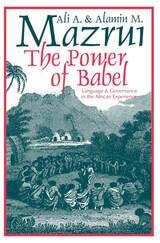
The Power of Babel
Language and Governance in the African ExperienceAli A. Mazrui and Alamin M. Mazrui
University of Chicago Press, 1998
The Power of Babel is one of the first comprehensive studies of the complex linguistic constellations of Africa. It draws on Ali Mazrui's earlier work in its examination of the "triple heritage" of African culture, in which indigenous, Islamic, and Western traditions compete for influence. In bringing the idea of the triple heritage to language, the Mazruis unravel issues of power, culture, and modernity as they are embedded in African linguistic life.
The first section of the book takes a global perspective, exploring such issues as the Eurocentrism of much linguistic scholarship on Africa; part two takes an African perspective on a variety of issues from the linguistically disadvantaged position of women in Africa to the relation of language policy and democratic development; the third section presents a set of regional studies, centering on the Swahili language's exemplification of the triple heritage.The Power of Babel unites empirical information with theories of nationalism and pluralism—among others—to offer the richest contextual account of African languages to date.

The Power of Data
An Introduction to Using Local, State, and National Data to Support School Library ProgramsSandra D. Andrews
American Library Association, 2012

The Power of Genre
Adena Rosmarin
University of Minnesota Press, 1986
The Power of Genre was first published in 1986. Minnesota Archive Editions uses digital technology to make long-unavailable books once again accessible, and are published unaltered from the original University of Minnesota Press editions.
The Power of Genre is a radical and systematic rethinking of the relationship between literary genre and critical explanation. Adene Rosmarin shows how traditional theories of genre—whether called "historical," "intrinsic," or "theoretical"—are necessarily undone by their attempts to define genre representationally. Rather, Rosmarin argues, the opening premise of critical argument is always critical purpose or, as E. H. Gombrich has said, function, and the genre or "form" follows the reform. The goal is a relational model that works.
Rosemarin analyzes existing theories of genre — those of Hirsch, Crane, Frye, Todorov, Jauss, and Rader are given particular attention—before proposing her own. These analyses uncover the illogic that plagues even sophisticated attempts to treat genre as a preexistent entity. Rosmarin shows how defining genre pragmatically – as explicitly chosen or devised to serve explicitly critical purposes – solves this problem: a pragmatic theory of genre builds analysis of its metaphors and motives into its program, thereby eliminating theory's traditional need to deny the invented and rhetorical nature of its schemes. A pragmatic theory, however, must be tested not only by its internal cohesion but also by its power to enable practice, and Rosmarin chooses the dramatic monologue, an infamously problematic genre, and its recent relative, the mask lyric, as testing grounds. Both genres—variously exemplified by poems of Browning, Thennyson, Eliot, and Pound—are ex post facto critical constructs that, when defined as such, make closely reasoned sense not only of particular poems but also of their perplexed interpretive histories. Moreover, both genres dwell on the historicity, textuality, and redemptive imperfection of the speaking self. This generic obsession ties the poems to their reception and, finally, to the openended, processes of hermeneutic question-and-answer stressed in Rosmarin's framing theory.The Power of Play
Designing Early Learning SpacesDorothy Stoltz
American Library Association, 2015

The Power of Signed Songs
Deaf Artists, Intercultural Reach, and the Politics of Music MakingJoana Morêdo Pereira
Gallaudet University Press, 2026
The first of its kind, The Power of Signed Songs: Deaf Artists, Intercultural Reach, and the Politics of Music Making analyzes musical performances that were translated or created in signed languages. Written by an international team of Deaf community researchers, The Power of Signed Songs explores the politics of music making in the form of signed songs, an often controversial art form in Deaf communities.
While raising questions about culture, translation, and authorship, signed songs demonstrate forms of Deaf cultural resistance, defy traditional conceptions of music, and draw attention to language diversity and intersectionality within Deaf communities in varied European settings. Drawing on both signed music performances and field research, the authors highlight the unique contributions of signing musical artists from both the UK and Portugal. Signed songs and translations illustrate a wide range of creative performance strategies, linguistic word and sign play across languages, and sociolinguistic variation.
By analyzing how translated songs created by Deaf artists serve as cultural products, translations, and performance, The Power of Signed Songs provides a glimpse into how translations of music can be a form of both transnational and localized cultural resistance. Ultimately, Deaf-centered signed songs are not just artistic expressions but also political statements, challenging the idea that music belongs exclusively to the hearing world.
The Power of Writing
Dartmouth '66 in the Twenty-First CenturyEdited by Christiane Donahue and Kelly Blewett
Dartmouth College Press, 2015

The Powers That Be
David Halberstam
University of Illinois Press, 1979
Beginning with FDR's masterful use of radio to establish the sense of a personal, benevolently paternal relationship with the American people and culminating in the discovery and coverage of the Watergate break-in, Halberstam tracks the firm establishment of the media as a potent means of shaping both public opinion and public policy. He tells the story through vivid, intimate portraits of the men, women, and politics behind four key media organizations: CBS and its board chairman William S. Paley; Time magazine and its cofounder Henry Luce; the Washington Post and successive publishers Philip Graham and his wife, Katherine; and the Los Angeles Times and publishers Norman Chandler and his son, Otis.
The Practical Handbook of Library Architecture
Creating Building Spaces that WorkFred Schlipf
American Library Association, 2018
The Practice of Rhetoric
Poetics, Performance, PhilosophyEdited by Debra Hawhee and Vessela Valiavitcharska
University of Alabama Press, 2022
Essays that show what a broad conception of rhetoric means and does in relation to practice
Rhetoric is the art of emphasis, in the ancient sense of bringing to light or obscuring in shadow, and it is both a practice and a theory about that practice. In recent decades, scholars of rhetoric have turned to approaches that braid together poetics, performance, and philosophy into a “practical art.” The Practice of Rhetoric: Poetics, Performance, Philosophy presents just such an account of rhetoric that presumes and incorporates theoretical approaches, offering a collection of principles assembled in the heat and trials of public practice. The essays gathered in this volume are inspired by the capacious conception of rhetoric put forth by historian of rhetoric Jeffrey Walker, who is perhaps best known for stressing rhetoric’s educational mission and its investments in both theory and practice.
The book extends that vision through the prisms of poetics, performance, and philosophy of argument. Poetics shows rhetoric’s meaning making in all its verbal possibilities and material manifestations, in contexts ranging from mouse-infested medieval fields to the threat of toxin-ridden streams in the twentieth century. Performance puts what is created into the heat of public life, tapping out the rhythms of Byzantine prose or using collage to visually depict the beliefs and convictions of Martin Luther King Jr. Philosophy of argument enacts the mutually constitutive relationship between rhetoric and dialectic, offering new insights on and contexts for old tools like stasis and disputation, while keeping the focus on usefulness and teachability.
Ranging across centuries and contexts, the essays collected here demonstrate the continued need to attend carefully to the cooperation of descriptive language and normative reality, conceptual vocabulary and material practice, public speech and moral self-shaping. This volume will rekindle long-standing conversations about the public, world-making practice of rhetoric, thereby enlivening anew its civic mission.

The Prague School
Selected Writings, 1929-1946Edited by Peter Steiner
University of Texas Press, 1982
The Prague Linguistic Circle came into being on the afternoon of October 6, 1926, when five Czech and Russian linguists gathered to hear a lecture by a German colleague. From this international beginning, the interests of the group grew to first encompass language in all its functional heterogeneity and then finally all of culture, which the Circle conceived of as a structure of sign systems. Semiotics was thus the overarching discipline for the Prague School, serving to organize all phenomena shared and exchanged by a cultural community.
In recent years increasing attention has been paid to the importance of the Prague School, but writing about it has frequently been marred by misconceptions. The central aim of this volume is to correct those misconceptions and to present the diversity of interests within the Prague School—literary criticism, linguistics, theory of theater, folklore, and philosophy. These essays by Bogatyrëv, Jakobson, Karcevskij, Mukařovský, Rieger, Vodička, and Honzl are here translated into English for the first time. Some have a special historical value in illuminating critical stages of structuralist thinking; others reveal the timeliness of the School's contributions for the theoretical conflicts of our day. Each essay is accompanied by an informative introductory note, and the whole is followed by the editor's "Postscript," tracing the roots of structuralist aesthetics.
The Press and Main Street
El Pais--Journalism in Democratic SpainJuan Luis Cebrian, Translated by Brian Nienhaus
University of Michigan Press, 1990

The Problem of the Essential Indexical and Other Essays, Expanded Edition
John Perry
CSLI, 2000
John Perry discusses how these kinds of words work, and why they express important philosophical thoughts. He shows that indexicals pose a challenge to traditional assumptions about language and thought. Over the years a number of these papers, now included in this book, have sparked lively debates and have been influential in philosophy, linguistics and other areas of cognitive science.
With seven new papers, including the previously unpublished ``What Are Indexicals?,'' the present volume expands on an earlier version of this book published in the early nineties. Also included are the well-known papers ``Frege on Demonstratives,'' ``Cognitive Significance and New Theories of Reference,'' ``Evading the Slingshot,'' ``The Prince and the Phone booth'' (coauthored with Mark Crimmins), ``Fodor on Psychological Explanations'' (coauthored with David Israel), and related papers on situation semantics, direct reference, and the structure of belief. This book also includes afterwords written by the author that discuss responses to his work by Gareth Evans, Robert Stalnaker, Barbara Partee, Howard Wettstein and others.

The Proceedings of the Fifteenth West Coast Conference on Formal Linguistics
Edited by Brian Agbayani and Sze-Wing Tang
CSLI, 1997

The Professionalisation of Political Communication
Edited by Ralph Negrine, Christina Holtz-Bacha, Paolo Mancini, Stylianos Papatha
Intellect Books, 1995
The Projection of Arguments
Lexical and Compositional FactorsEdited by Miriam Butt and Wilhelm Geuder
CSLI, 1998
The Promise of Reason
Studies in The New RhetoricEdited by John T. Gage
Southern Illinois University Press, 2011
Divided into four sections—Conceptual Understandings of The New Rhetoric, Extensions of The New Rhetoric, The Ethical Turn in Perelman and The New Rhetoric, and Uses of The New Rhetoric—this insightful volume covers a wide variety of topics. It includes general assessments of The New Rhetoric and its central concepts, as well as applications of those concepts to innovative areas in which argumentation is being studied, such as scientific reasoning, visual media, and literary texts. Additional essays compare Perelman’s ideas with those of other significant thinkers like Kenneth Burke and Richard McKeon, explore his career as a philosopher and activist, and shed new light on Perelman and Olbrechts- Tyteca’s collaboration. Two contributions present new scholarship based on recent access to letters, interviews, and archival materials housed in the Université Libre de Bruxelles. Among the volume’s unique gifts is a personal memoir from Perelman’s daughter, Noémi Perelman Mattis, published here for the first time.
The Promise of Reason, expertly compiled and edited by John T. Gage, is the first to investigate the pedagogical implications of Perelman and Olbrechts- Tyteca’s groundbreaking work and will lead the way to the next generation of argumentation studies.

The Proper Way to Educate the Deaf
A Modern Annotated TranslationThe Abbé Charles-Michel de l’Epée
Gallaudet University Press, 2024
De l’Épée provides an anecdotal account of his methods and philosophy for educating deaf children using a sign system based on the French Sign Language of the era but adapted to visually represent the linguistic features of spoken and written French. His work laid the foundation for the use of the “manual method,” or sign language, in deaf education. One section of the text, originally published in Latin, outlines the intellectual clash between de l’Épée and Samuel Heinicke, an early proponent of oral education who contested the use of sign language.
De l’Épée’s text holds significant cultural and historical value for the fields of deaf studies and deaf education. This English language translation reveals de l’Épée’s own story of how he came to be known as the “father of the deaf” and is enriched by scholarly contributions that provide essential historical context and a framework for modern understanding.
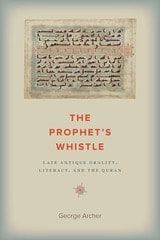
The Prophet's Whistle
Late Antique Orality, Literacy, and the QuranGeorge Archer
University of Iowa Press, 2024
The Prophet’s Whistle is a study of the ancient, nonliterary features of the Quran, many of which are often overlooked by historians and the public. George Archer corrects this striking absence by using observations from the anthropologies of living oral cultures, the cognitive sciences of literacy, and the study of other dead oral cultures. The Prophet’s Whistle shows that the thought systems of the Quran are oral, through and through, but by the end of the life of its Prophet, the Quran likewise hints at a personal and cultural embrace of writing and the mindsets of literate people.
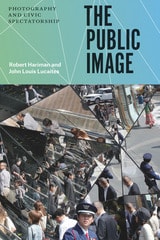
The Public Image
Photography and Civic SpectatorshipRobert Hariman and John Louis Lucaites
University of Chicago Press, 2016
By confronting these conflicted reactions to photography, Robert Hariman and John Louis Lucaites make the case for a fundamental shift in understanding photography and public culture. In place of suspicions about the medium’s capacity for distraction, deception, and manipulation, they suggest how it can provide resources for democratic communication and thoughtful reflection about contemporary social problems.
The key to living well in the image world is to unlock photography from viewing habits that inhibit robust civic spectatorship. Through insightful interpretations of dozens of news images, The Public Image reveals how the artistry of the still image can inform, challenge, and guide reflection regarding endemic violence, environmental degradation, income inequity, and other chronic problems that will define the twenty-first century.
By shifting from conventional suspicions to a renewed encounter with the image, we are challenged to see more deeply on behalf of a richer life for all, and to acknowledge our obligations as spectators who are, crucially, also citizens.
The Public Librarian's Guide to Answering Health Questions
Bobbi L. Newman and Carolyn Martin
American Library Association, 2026
It often starts with a patron’s simple question. Librarians play a central role in helping people navigate information, evaluate sources, and find answers they can trust. That includes health information, something many people come to the library looking for every day. Maybe they need more information about a diagnosis, a medication, or something they came across online. Perhaps they’re helping a family member with a medical issue or trying to better understand their own health. These are everyday interactions in libraries. And this book is about helping you approach them with confidence, clarity, and a strong sense of your role. You do not need a medical background to provide excellent health information service — just the right frameworks, tools, and reassurance to apply your core skills in a health context. No matter your comfort level or prior experience, you will
- understand why health information work is both practical and people-centered, requiring an approach that combines information skills with communication and care;
- gain an overview of health information and the role libraries play in supporting health literacy;
- learn about evaluating health information and identifying trustworthy, evidence-based sources;
- receive guidance on building and maintaining a relevant, reliable collection;
- walk through health reference interview scenarios, bolstered with strategies for effective and respectful interactions;
- discover reflection prompts to help you consider your own approach, your library’s practices, and the ways you can continue to build confidence over time;
- grasp the ethical and legal considerations related to health information work, such as privacy, boundaries, and professional responsibilities;
- find practical wisdom for sustaining yourself in this work and building practices that support your own long-term well-being; and
- get access to a companion website that provides checklists, tools, and additional resources you can use in your day-to-day work.
The Public Library Director's Toolkit
Kate Hall and Kathy Parker
American Library Association, 2019
New public library directors quickly learn what seasoned directors already know: running a library means you’ve always got your hands full—balancing the needs of staff, patrons, facilities, library boards, and other stakeholders with professional responsibilities like community interactions, legal and financial requirements, and whole lot else that wasn’t exactly in the job description. Whether you are considering becoming a public library director, are brand new to the role, or have settled in but find yourself thinking “there’s got to be a better way,” authors Hall and Parker are here to help. This book walks you through the core components of getting up to speed and then provides templates, sample documents, checklists, and other resources that will make your job easier. Gleaned from their own decades of experience in library leadership positions, in this toolkit they
- cover such key topics as employees, trustees, finances, legal issues, library policies, emergency planning, and technology;
- discuss strategic planning and share advice on keeping up with trends;
- offer nearly two dozen ready-to-use resources, including a Director’s Report Template, a Social Media Policy, an Employee Exit Questionnaire, a Library Cleaning Checklist, a Vision Statement worksheet, and more; and
- suggest additional learning opportunities in each chapter to help you continue your learning journey.
The Public Service Media and Public Service Internet Manifesto
Christian Fuchs and Klaus Unterberger
University of Westminster Press, 2021
This book presents the collectively authored Public Service Media and Public Service Internet Manifesto and accompanying materials.The Internet and the media landscape are broken. The dominant commercial Internet platforms endanger democracy. They have created a communications landscape overwhelmed by surveillance, advertising, fake news, hate speech, conspiracy theories, and algorithmic politics. Commercial Internet platforms have harmed citizens, users, everyday life, and society. Democracy and digital democracy require Public Service Media. A democracy-enhancing Internet requires Public Service Media becoming Public Service Internet platforms – an Internet of the public, by the public, and for the public; an Internet that advances instead of threatens democracy and the public sphere. The Public Service Internet is based on Internet platforms operated by a variety of Public Service Media, taking the public service remit into the digital age. The Public Service Internet provides opportunities for public debate, participation, and the advancement of social cohesion.
Accompanying the Manifesto are materials that informed its creation: Christian Fuchs’ report of the results of the Public Service Media/Internet Survey, the written version of Graham Murdock’s online talk on public service media today, and a summary of an ecomitee.com discussion of the Manifesto’s foundations.
The Manifesto can be signed by visiting http://bit.ly/signPSManifesto
The Purpose-Based Library
Finding Your Path to Survival, Success, and GrowthJohn J. Huber
American Library Association, 2015
The Quality Infrastructure
Measuring, Analyzing, and Improving Library ServicesSarah Anne Murphy
American Library Association, 2013
The Quality Library
A Guide to Self-Improvement, Better Efficiency, and Happier CustomersSara Laughlin
American Library Association, 2008
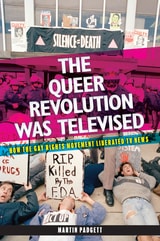
The Queer Revolution Was Televised
How the Gay Rights Movement Liberated TV NewsMartin Padgett
Rutgers University Press, 2027
This book demonstrates, in part through a history of emotions, how assumptions and prejudices about queer lives were challenged throughout the decade through the deceptively prosaic medium of television. Passion and disgust neatly outline the contours of the gay community’s press for equal rights at the dawn of the 1980s, just as fear and anxiety encapsulate the inchoate reactions to the emerging epidemic and the simultaneous explorations of privacy that were initiated by the onslaught of television as technology. While queer people anguished over their very survival and over the indifference of many to their situation, hope surfaced as a cause and potential treatments for HIV emerged and as the Supreme Court decided to make its first direct ruling on gay rights in a generation. When that latter hope was dashed by the Hardwick decision, the anger of gay rights advocates was trebled as they massed for the national March on Washington in homage to the 1963 March on Washington for Jobs and Freedom that lent its key political organizing and messaging tactics to it. With the realization that progress would then be slow and all-consuming, a desperation to change queer lives was enjoined by a determination to do so in the most visible ways possible, through television.
The Quieted Voice
Robert L. Hilliard and Michael C. Keith. Foreword by Robert W. McChesney
Southern Illinois University Press, 2005
How has American radio—once a grassroots, community-based medium—become a generic service that primarily benefits owners and shareholders and prohibits its listeners from receiving diversity of opinions, ideas, and entertainment through local programming? In The Quieted Voice: The Rise and Demise of Localism in American Radio, Robert L. Hilliard and Michael C. Keith blame the government’s continual deregulation of radio and the corporate obsession with the bottom line in the wake of the far-reaching and controversial Telecommunications Act of 1996. Fighting for greater democratization of the airwaves, Hilliard and Keith call for a return to localism to save radio from rampant media conglomeration and ever-narrowing music playlists—and to save Americans from corporate and government control of public information.
The Quieted Voice details radio’s obligation to broadcast in the public’s interest. Hilliard and Keith trace the origins of the public trusteeship behind the medium and argue that local programming is essential to the fulfillment of this responsibility. From historical and critical perspectives, they examine the decline of community-centered programming and outline the efforts of media watchdog and special interest groups that have vigorously opposed the decline of democracy and diversity in American radio. They also evaluate the implications of continuing delocalization of the radio medium and survey the perspectives of leading media scholars and experts.
The Radical Case for Teaching Skim Reading in First-Year Writing
Ellen C. Carillo
Utah State University Press, 2025
Data from studies of the lived experiences of undergraduates indicate that students do not need deep reading practices in the majority of their classes across the disciplines and, moreover, that students succeed in their classes by skim reading. Rather than imagining an idealized set of circumstances that allow for sustained deep reading, as does a great deal of the scholarship on reading in writing studies, The Radical Case for Teaching Skim Reading in First-Year Writing argues for teaching students reading practices that will support their success in their college writing assignments rather than those strategies the field believes should support their success.
In our information landscape and our fragile democracy, encouraging skimming as opposed to deep reading may seem like a gamble—this very tendency toward the quick rather than the critical has undoubtedly contributed to the current crisis of mass misinformation. However, teaching students to use skim reading as a strategic tool for purposeful engagement and efficient yet thoughtful information filtering better equips them to navigate the rapidly changing information landscape and manage the fast-paced flow of content from diverse media sources.
The Rag-Picker's Guide to Poetry
Poems, Poets, ProcessEleanor Wilner and Maurice Manning, editors
University of Michigan Press, 2013
The venture of this inviting collection is to look, from the many vantages that the 35 poets in this eclectic anthology chose to look, at what it was—knowing that a poem can’t be conceived in advance of its creation—that helped their poems to emerge or connected them over time. The Rag-Picker's Guide to Poetry permits an inside view of how poets outwit internal censors and habits of thought, showing how the meticulous and the spontaneous come together in the process of discovery. Within are contained the work and thoughts of:
- Betty Adcock
- Joan Aleshire
- Debra Allbery
- Elizabeth Arnold
- David Baker
- Rick Barot
- Marianne Boruch
- Karen Brennan
- Gabrielle Calvocoressi
- Michael Collier
- Carl Dennis
- Stuart Dischell
- Roger Fanning
- Chris Forhan
- Reginald Gibbons
- Linda Gregerson
- Jennifer Grotz
- Brooks Haxton
- Tony Hoagland
- Mark Jarman
- A. Van Jordan
- Laura Kasischke
- Mary Leader
- Dana Levin
- James Longenbach
- Thomas Lux
- Maurice Manning
- Heather McHugh
- Martha Rhodes
- Alan Shapiro
- Daniel Tobin
- Ellen Bryant Voigt
- Alan Williamson
- Eleanor Wilner
- C. Dale Young
The Readers' Advisory Guide to Genre Blends
Megan M. McArdle
American Library Association, 2014
The Readers' Advisory Guide to Genre Blends
Megan McArdle
American Library Association, 2022

The Readers' Advisory Guide to Genre Fiction
Neal Wyatt
American Library Association, 2018
Everyone’s favorite guide to fiction that’s thrilling, mysterious, suspenseful, thought-provoking, romantic, and just plain fun is back—and better than ever in this completely revamped and revised edition. A must for every readers’ advisory desk, this resource is also a useful tool for collection development librarians and students in LIS programs. Inside, RA experts Wyatt and Saricks
- cover genres such as Psychological Suspense, Horror, Science Fiction, Fantasy, Romance, Mystery, Literary and Historical Fiction, and introduce the concepts of Adrenaline and Relationship Fiction;
- include everything advisors need to get up to speed on a genre, including its appeal characteristics, key authors, sure bets, and trends;
- demonstrate how genres overlap and connect, plus suggestions for guiding readers among genres; and
- tie genre fiction to the whole collection, including nonfiction, audiobooks, graphic novels, film and TV, poetry, and games.
Both insightful and comprehensive, this matchless guidebook will help librarians become familiar with many different fiction genres, especially those they do not regularly read, and aid library staff in connecting readers to books they’re sure to love.
The Readers' Advisory Guide to Genre Fiction
Joyce G. Saricks
American Library Association, 2009
The Readers' Advisory Guide to Genre Fiction
Neal Wyatt
American Library Association, 2001
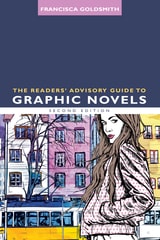
The Readers' Advisory Guide to Graphic Novels
Francisca Goldsmith
American Library Association, 2017
The first edition of this readers' advisory represented a pioneering effort to provide help and encouragement to librarians diving into this exciting format, and since then the popularity of graphic novels has continued apace. Goldsmith has updated her guide to encompass a bounty of new titles, authors, and styles, ensuring its continued usefulness as a tool for both RA and collection development. Suitable for newbies and hardcore fans alike, this book
- sketches in the history of graphic novels, tracing their evolution and showing what makes them unique;
- explores traditional and cutting edge titles most friendly to children, teens, and adults, reflecting the burgeoning and maturing publishing efforts made for each of these audiences;
- discusses common themes, topics, and the place of diversity in graphic novels;
- gives in-depth guidance on ways to connect readers to titles they'll be sure to love;
- offers ideas for media tie-ins, displays, programming, book clubs, and more;
- includes annotated bibliographies, with appeal characteristics noted, and multiple indexes to ensure that locating the right graphic novel is a snap; and
- provides detailed tips for keeping current and aware of new titles and trends.
Spotlighting this expanding body of intellectual, aesthetic, and engaging literature, Goldsmith's guide will entertain as well as inform.
The Readers' Advisory Guide to Historical Fiction
Jennifer S. Baker
American Library Association, 2014
The Readers' Advisory Guide to Horror
Becky Siegel Spratford
American Library Association, 2012

The Readers' Advisory Guide to Horror
Becky Siegel Spratford
American Library Association, 2021
Like the zombies, ghouls, and vampires which inhabit many of its books, the popularity of horror fiction is unstoppable. Even if you don’t happen to be a fan yourself, you won’t be “scared” to advise readers on finding their next great fright thanks to the astute guidance provided by horror expert Spratford in her updated guide. This definitive resource for library workers at any level of experience or familiarity with horror fiction
- details the state of the genre right now, including its appeal factors and key authors, assisting readers in getting up to speed quickly;
- presents ten annotated lists of suggested titles, all published since 2000, each with a short introduction providing historical context;
- delves into horror movies, TV shows, podcasts, and other formats; and
- offers abundant marketing advice, programming options, and pointers on additional resources.
The Readers' Advisory Guide to Mystery
John Charles
American Library Association, 2012
The Readers' Advisory Guide to Nonfiction
Neal Wyatt
American Library Association, 2007
The Readers' Advisory Guide to Street Literature
Vanessa Irvin Morris
American Library Association, 2011
The Readers' Advisory Guide to Teen Literature
Angela Carstensen
American Library Association, 2018
The Readers' Advisory Handbook
Jessica E. Moyer
American Library Association, 2010

The Reading-Writing Connection
Edited by Nancy Nelson and Robert C. Calfee
University of Chicago Press, 1998