Results by title
37 books match the query 'Reasoning'
A Sourcebook for Classical Logic
John Tomarchio
Catholic University of America Press, 2023
A Study of Dialectic in Plato's Parmenides
Eric Sanday
Northwestern University Press, 2014
A Theory of Argumentation
Charles Arthur Willard
University of Alabama Press, 1989
Establishes a theoretical context for, and to elaborate the implications of, the claim that argument is a form of interaction in which two or more people maintain what they construe to be incompatible positions
The thesis of this book is that argument is not a kind of logic but a kind of communication—conversation based on disagreement. Claims about the epistemic and political effects of argument get their authority not from logic but from their “fit with the facts” about how communication works. A Theory of Communication thus offers a picture of communication—distilled from elements of symbolic interactionism, personal construct theory, constructivism, and Barbara O’Keefe’s provocative thinking about logics of message design. The picture of argument that emerges from this tapestry is startling, for it forces revisions in thinking about knowledge, rationality, freedom, fallacies, and the structure and content of the argumentation discipline.
Abductive Reasoning
Douglas Walton
University of Alabama Press, 2005
Examines three areas in which abductive reasoning is especially important: medicine, science, and law. The reader is introduced to abduction and shown how it has evolved historically into the framework of conventional wisdom in logic. Discussions draw upon recent techniques used in artificial intelligence, particularly in the areas of multi-agent systems and plan recognition, to develop a dialogue model of explanation. Cases of causal explanations in law are analyzed using abductive reasoning, and all the components are finally brought together to build a new account of abductive reasoning.
By clarifying the notion of abduction as a common and significant type of reasoning in everyday argumentation, Abductive Reasoning will be useful to scholars and students in many fields, including argumentation, computing and artificial intelligence, psychology and cognitive science, law, philosophy, linguistics, and speech communication and rhetoric.

Academically Adrift
Limited Learning on College CampusesRichard Arum and Josipa Roksa
University of Chicago Press, 2010
In spite of soaring tuition costs, more and more students go to college every year. A bachelor’s degree is now required for entry into a growing number of professions. And some parents begin planning for the expense of sending their kids to college when they’re born. Almost everyone strives to go, but almost no one asks the fundamental question posed by Academically Adrift: are undergraduates really learning anything once they get there?
For a large proportion of students, Richard Arum and Josipa Roksa’s answer to that question is a definitive no. Their extensive research draws on survey responses, transcript data, and, for the first time, the state-of-the-art Collegiate Learning Assessment, a standardized test administered to students in their first semester and then again at the end of their second year. According to their analysis of more than 2,300 undergraduates at twenty-four institutions, 45 percent of these students demonstrate no significant improvement in a range of skills—including critical thinking, complex reasoning, and writing—during their first two years of college. As troubling as their findings are, Arum and Roksa argue that for many faculty and administrators they will come as no surprise—instead, they are the expected result of a student body distracted by socializing or working and an institutional culture that puts undergraduate learning close to the bottom of the priority list.
Academically Adrift holds sobering lessons for students, faculty, administrators, policy makers, and parents—all of whom are implicated in promoting or at least ignoring contemporary campus culture. Higher education faces crises on a number of fronts, but Arum and Roksa’s report that colleges are failing at their most basic mission will demand the attention of us all.
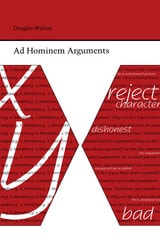
Ad Hominem Arguments
Douglas Walton
University of Alabama Press, 2009
A vital contribution to legal theory and media and civic discourse
In the 1860s, northern newspapers attacked Abraham Lincoln's policies by attacking his character, using the terms "drunk," "baboon," "too slow," "foolish," and "dishonest." Steadily on the increase in political argumentation since then, the argumentum ad hominem, or personal attack argument, has now been carefully refined as an instrument of "oppo tactics" and "going negative" by the public relations experts who craft political campaigns at the national level. In this definitive treatment of one of the most important concepts in argumentation theory and informal logic, Douglas Walton presents a normative framework for identifying and evaluating ad hominem or personal attack arguments.
Personal attack arguments have often proved to be so effective, in election campaigns, for example, that even while condemning them, politicians have not stopped using them. In the media, in the courtroom, and in everyday confrontation, ad hominem arguments are easy to put forward as accusations, are difficult to refute, and often have an extremely powerful effect on persuading an audience.
Walton gives a clear method for analyzing and evaluating cases of ad hominem arguments found in everyday argumentation. His analysis classifies the ad hominem argument into five clearly defined subtypes—abusive (direct), circumstantial, bias, "poisoning the well," and tu quoque ("you're just as bad") arguments—and gives methods for evaluating each type. Each subtype is given a well-defined form as a recognizable type of argument. The numerous case studies show in concrete terms many practical aspects of how to use textual evidence to identify and analyze fallacies and to evaluate argumentation as fallacious or not in particular cases.
Analogy after Aquinas
Domenic D'Ettore
Catholic University of America Press, 2018
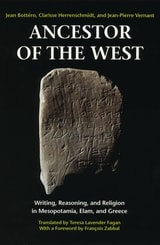
Ancestor of the West
Writing, Reasoning, and Religion in Mesopotamia, Elam, and GreeceJean Bottéro, Clarisse Herrenschmidt, and Jean-Pierre Vernant
University of Chicago Press, 2000
"Full of matter for anyone interested in language, religion, and politics in the ancient world."—R. T. Ridley, Journal of Religious History
"In this accessible introduction to the ancient world, three leading French scholars explore the emergence of rationality and writing in the West, tracing its development and its survival in our own traditions. . . . Jean Bottero focuses on writing and religion in ancient Mesopotamia, Clarisse Herrenschmidt considers a broader history of ancient writing, and Jean-Pierre Vernant examines classical Greek civilization in the context of Near Eastern history."—Translation Review
Argumentation and the Social Grounds of Knowledge
Charles Arthur Willard
University of Alabama Press, 2009
Chaim Perelman
Alan G. Gross and Ray D. Dearin
Southern Illinois University Press, 2002
Elements of Knowledge
Pragmatism, Logic, and InquiryArthur Franklin Stewart
Vanderbilt University Press, 1997
Elements of Knowledge is an engaging introductory text, effectively and imaginatively designed to bring a working understanding and appreciation of the fundamental tenets and methods of the American school of philosophy known as pragmatism, as articulated by its founder C. S. Peirce, to undergraduates and general readers. It presents and explains the basic pragmatic tools that are the common thread in our acquisition and development of knowledge, whether in an academic, vocational, or professional setting, or in life at large. Pragmatism guides, without dictating, examinations of ordinary human experience, creative learning in all fields, and progress in academic disciplines.
This book is intended for use by both general readers and students, particularly those in introductory logic or related philosophy courses. It will also fit well in the design of many "core curriculum" or "general education" course requirements. It is ultimately meant to be accessible and beneficial to anyone seeking a clearer understanding of the unifying principles for acquiring and assessing the soundness of all knowledge.
For the Sake of Argument
Practical Reasoning, Character, and the Ethics of BeliefEugene Garver
University of Chicago Press, 2004
Garver roots deliberation and persuasion in political friendship instead of a neutral, impersonal framework of justice. Through incisive readings of examples in modern legal and political history, from Brown v. Board of Education to the South African Truth and Reconciliation Commission, he demonstrates how acts of deliberation and persuasion foster friendship among individuals, leading to common action amid diversity. In an Aristotelian sense, there is a place for pathos and ethos in rational thought. Passion and character have as pivotal a role in practical reasoning as logic and language.
Higher Mental Processes
Edited by Robert W. Proctor
University of Illinois Press, 2015
Contributors: P. Baratta, M. H. Birnbaum, M. E. Bulbrook, L. S. Buyer, R. A. Carlson, S. N. F. Chant, A. A. Cleveland, T. D. Cutsforth, R. L. Dominowski, E. Galanter, P. N. Johnson-Laird, M. G. Preston, Robert W. Proctor, and J. Tagart.
Logic and Visual Information
Eric M. Hammer
CSLI, 1995
Logic as a Liberal Art
An Introduction to Rhetoric and ReasoningR. E. Houser
Catholic University of America Press, 2020
Logical Reasoning with Diagrams and Sentences
Using HyperproofDave Barker-Plummer, Jon Barwise, and John Etchemendy
CSLI, 2016
Unlike traditional formal treatments of reasoning, this package uses both graphical and sentential representations to reflect common situations in everyday reasoning where information is expressed in many forms, such as finding your way to a location using a map and an address. It also teaches students how to construct and check the logical validity of a variety of proofs—of consequence and non-consequence, consistency and inconsistency, and independence—using an intuitive proof system which extends standard proof treatments with sentential, graphical, and heterogeneous inference rules, allowing students to focus on proof content rather than syntactic structure. Building upon the widely used Tarski’s World and Language, Proof and Logic courseware packages, Logical Reasoning with Diagrams and Sentences contains more than three hundred exercises, most of which can be assessed by the Grade Grinder online assessment service; is supported by an extensive website through which students and instructors can access online video lectures by the authors; and allows instructors to create their own exercises and assess their students’ work.
Logical Reasoning with Diagrams and Sentences is an expanded revision of the Hyperproof courseware package.
Mesopotamia
Writing, Reasoning, and the GodsJean Bottéro
University of Chicago Press, 1995
To give the reader some sense of how Mesopotamian civilization has been mediated and interpreted in its transmission through time, Bottero begins with an account of Assyriology, the discipline devoted to the ancient culture. This transmission, compounded with countless discoveries, would not have been possible without the surprising decipherment of the cuneiform writing system. Bottero also focuses on divination in the ancient world, contending that certain modes of worship in Mesopotamia, in their application of causality and proof, prefigure the "scientific mind."
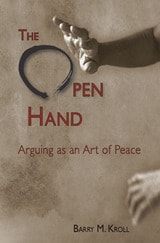
Open Hand
Arguing as an Art of PeaceBarry M. Kroll
Utah State University Press, 2013
Kroll cultivates a bodily investigation of noncombative argument, offering direct pedagogical strategies anchored in three modalities of learning—conceptual-procedural, kinesthetic, and contemplative—and projects, activities, assignments, informal responses, and final papers for students. Kinesthetic exercises derived from martial arts and contemplative meditation and mindfulness practices are key to the approach, with Kroll specifically using movement as a physical analogy for tactics of arguing.
Collaboration, mediation, and empathy are important yet overlooked values in communicative exchange. This practical, engaging, and accessible guide for teachers contains clear examples and compelling discussions of pedagogical strategies that teach students not only how to write persuasively but also how to deal with personal conflict in their daily lives.
Practical Reflection
J. David Velleman
CSLI, 2013
Presumptions and Burdens of Proof
An Anthology of Argumentation and the LawEdited by Hans V. Hansen, Fred J. Kauffeld, James B. Freeman, and Lilian Bermejo-Luque
University of Alabama Press, 2019
An anthology of the most important historical sources, classical and modern, on the subjects of presumptions and burdens of proof
In the last fifty years, the study of argumentation has become one of the most exciting intellectual crossroads in the modern academy. Two of the most central concepts of argumentation theory are presumptions and burdens of proof. Their functions have been explicitly recognized in legal theory since the middle ages, but their pervasive presence in all forms of argumentation and in inquiries beyond the law—including politics, science, religion, philosophy, and interpersonal communication—have been the object of study since the nineteenth century.
However, the documents and essays central to any discussion of presumptions and burdens of proof as devices of argumentation are scattered across a variety of remote sources in rhetoric, law, and philosophy. Presumptions and Burdens of Proof: An Anthology of Argumentation and the Law brings together for the first time key texts relating to the history of the theory of presumptions along with contemporary studies that identify and give insight into the issues facing students and scholars today.
The collection’s first half contains historical sources and begins with excerpts from Aristotle’s Topics and goes on to include the locus classicus chapter from Bishop Whately’s crucial Elements of Rhetoric as well as later reactions to Whately’s views. The second half of the collection contains contemporary essays by contributors from the fields of law, philosophy, rhetoric, and argumentation and communication theory. These essays explore contemporary understandings of presumptions and burdens of proof and their role in numerous contexts today. This anthology is the definitive resource on the subject of these crucial rhetorical modes and will be a vital resource to all scholars of communication and rhetoric, as well as legal scholars and practicing jurists.
Reason, Revelation, and Metaphysics
Montague Brown
Catholic University of America Press, 2021
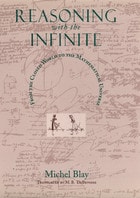
Reasoning with the Infinite
From the Closed World to the Mathematical UniverseMichel Blay
University of Chicago Press, 1998
"One of Michael Blay's many fine achievements in Reasoning with the Infinite is to make us realize how velocity, and later instantaneous velocity, came to play a vital part in the development of a rigorous mathematical science of motion."—Margaret Wertheim, New Scientist
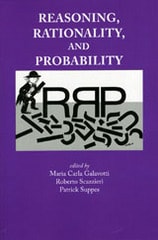
Reasoning, Rationality and Probability
Edited by Maria Carla Galavotti, Roberto Scazzieri, and Patrick Suppes
CSLI, 2008

The Anatomy of Judgment
Philip J. Regal
University of Minnesota Press, 1990
The Anatomy of Judgment was first published in 1990. Minnesota Archive Editions uses digital technology to make long-unavailable books once again accessible, and are published unaltered from the original University of Minnesota Press editions.
"The Anatomy of Judgment is a unique and valuable contribution to the literature of the social and humanistic contexts for science . . . The book will illuminate dark corners for any reader, and dozens of interesting points come to light." –Neil Greenberg, University of Tennessee
Tracing the emergence of science and the social institutions that govern it, The Anatomy of Judgment is an odyssey into what human thinking or judgment means. Philip Regal moves deftly from the history of Western philosophy to concepts of rationality in non-Western cultures, from the conceptual issues of the Salem witch trials to the basic structure of the human brain. The Anatomy of Judgment offers new perspectives on the workings of individual judgment and the social responsibility it entails.
Philip Regal is a professor of ecology and behavioral biology at the University of Minnesota. He served, during his pre- and postdoctoral work, as Coordinator's Appointee to the Mental Health Training Program at UCLA's Brain Research Institute.
The Development of Reasoning in Children with Normal and Defective Hearing
Mildred Templin
University of Minnesota Press, 1950
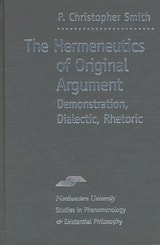
The Hermeneutics of Original Argument
Demonstration, Dialectic, RhetoricP. Christopher Smith
Northwestern University Press, 1998

The Intelligibility of Nature
How Science Makes Sense of the WorldPeter Dear
University of Chicago Press, 2006
In The Intelligibility of Nature, Peter Dear considers how science as such has evolved and how it has marshaled itself to make sense of the world. His intellectual journey begins with a crucial observation: that the enterprise of science is, and has been, directed toward two distinct but frequently conflated ends—doing and knowing. The ancient Greeks developed this distinction of value between craft on the one hand and understanding on the other, and according to Dear, that distinction has survived to shape attitudes toward science ever since.
Teasing out this tension between doing and knowing during key episodes in the history of science—mechanical philosophy and Newtonian gravitation, elective affinities and the chemical revolution, enlightened natural history and taxonomy, evolutionary biology, the dynamical theory of electromagnetism, and quantum theory—Dear reveals how the two principles became formalized into a single enterprise, science, that would be carried out by a new kind of person, the scientist.
Finely nuanced and elegantly conceived, The Intelligibility of Nature will be essential reading for aficionados and historians of science alike.
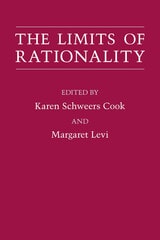
The Limits of Rationality
Edited by Karen Schweers Cook and Margaret Levi
University of Chicago Press, 1990
Intended to introduce novices to rational choice theory, this accessible, interdisciplinary book collects writings by leading researchers. The Limits of Rationality illuminates the rational choice paradigm of social and political behavior itself, identifies its limitations, clarifies the nature of current controversies, and offers suggestions for improving current models.
In the first section of the book, contributors consider the theoretical foundations of rational choice. Models of rational choice play an important role in providing a standard of human action and the bases for constitutional design, but do they also succeed as explanatory models of behavior? Do empirical failures of these explanatory models constitute a telling condemnation of rational choice theory or do they open new avenues of investigation and theorizing?
Emphasizing analyses of norms and institutions, the second and third sections of the book investigate areas in which rational choice theory might be extended in order to provide better models. The contributors evaluate the adequacy of analyses based on neoclassical economics, the potential contributions of game theory and cognitive science, and the consequences for the basic framework when unequal bargaining power and hierarchy are introduced.
The Limits of Scientific Reasoning
David FaustForeword by Paul E. Meehl
University of Minnesota Press, 1984
The Limits of Scientific Reasoning was first published in 1984. Minnesota Archive Editions uses digital technology to make long-unavailable books once again accessible, and are published unaltered from the original University of Minnesota Press editions.
The study of human judgment and its limitations is essential to an understanding of the processes involved in the acquisition of scientific knowledge. With that end in mind, David Faust has made the first comprehensive attempt to apply recent research on human judgment to the practice of science. Drawing upon the findings of cognitive psychology, Faust maintains that human judgment is far more limited than we have tended to believe and that all individuals - scientists included—have a surprisingly restricted capacity to interpret complex information. Faust's thesis implies that scientists do not perform reasoning tasks, such as theory evaluation, as well as we assume they do, and that there are many judgments the scientist is expected to perform but cannot because of restrictions in cognitive capacity.
"This is a very well-written, timely, and important book. It documents and clarifies, in a very scholarly fashion, what sociologists and psychologists of science have been flirting with for several decades—namely, inherent limitations of scientific judgment," –Michael Mahoney, Pennsylvania State University
David Faust is director of psychology at Rhode Island Hospital and a faculty member of the Brown University Medical School. He is co-author of Teaching Moral Reasoning: Theory and Practice.
The Promise of Reason
Studies in The New RhetoricEdited by John T. Gage
Southern Illinois University Press, 2011
Divided into four sections—Conceptual Understandings of The New Rhetoric, Extensions of The New Rhetoric, The Ethical Turn in Perelman and The New Rhetoric, and Uses of The New Rhetoric—this insightful volume covers a wide variety of topics. It includes general assessments of The New Rhetoric and its central concepts, as well as applications of those concepts to innovative areas in which argumentation is being studied, such as scientific reasoning, visual media, and literary texts. Additional essays compare Perelman’s ideas with those of other significant thinkers like Kenneth Burke and Richard McKeon, explore his career as a philosopher and activist, and shed new light on Perelman and Olbrechts- Tyteca’s collaboration. Two contributions present new scholarship based on recent access to letters, interviews, and archival materials housed in the Université Libre de Bruxelles. Among the volume’s unique gifts is a personal memoir from Perelman’s daughter, Noémi Perelman Mattis, published here for the first time.
The Promise of Reason, expertly compiled and edited by John T. Gage, is the first to investigate the pedagogical implications of Perelman and Olbrechts- Tyteca’s groundbreaking work and will lead the way to the next generation of argumentation studies.
The Rhetoric of Reason
Writing and the Attractions of ArgumentJames Crosswhite
University of Wisconsin Press, 1996
To those who have lost faith in the abilities of people to reach reasoned mutual agreements, and to others who have attacked the right-or-wrong model of formal logic, this book offers the reminder that the rhetorical tradition has always viewed argumentation as a dialogue, a response to changing situations, an exchange of persuading, listening, and understanding. Crosswhite’s aim is to give new purpose to writing instruction and to students’ writing, to reinvest both with the deep ethical interests of the rhetorical tradition. In laying out the elements of argumentation, for example, he shows that claiming, questioning, and giving reasons are not simple elements of formal logic, but communicative acts with complicated ethical features. Students must learn not only how to construct an argument, but the purposes, responsibilities, and consequences of engaging in one.
Crosswhite supports his aims through a rhetorical reconstruction of reason, offering new interpretations of Plato and Aristotle and of the concepts of reflection and dialogue from early modernity through Hegel to Gadamer. And, in his conclusion, he ties these theoretical and historical underpinnings to current problems of higher education, the definition of the liberal arts, and, especially, the teaching of written communication.
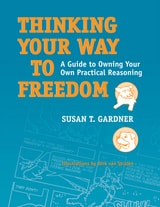
Thinking Your Way to Freedom
A Guide to Owning Your Own Practical ReasoningSusan T. Gardner
Temple University Press, 2009
Thinking Your Way to Freedom is a critical-thinking textbook with a difference. Rather than focusing exclusively on improving college students’ academic achievement, Susan Gardner seeks to dramatically change how students think through issues that are important in their lives beyond school. Gardner created 66 original and entertaining comic strips—featuring her dogs, Diva and Ben—that add a light touch as they encourage intellectual and personal autonomy. Through a clear step-by-step method of practical reasoning, students are taught how to think impartially and how to neutralize invisible biases that limit their freedom of thought and action. With the help of Diva and Ben, readers learn to evaluate the strengths of arguments and to recognize fallacies, all the while avoiding the paralyzing effects of relativism.
Thinking Your Way to Freedom includes the writing of short essays so that students can improve their critical thinking and writing at the same time. A Teacher’s Manual for this book will be available online.
Trade-Offs
An Introduction to Economic ReasoningHarold Winter
University of Chicago Press, 2023
The highly engaging introduction to thinking like an economist, updated for a new generation of readers.
When economists wrestle with any social issue—be it unemployment, inflation, healthcare, or crime and punishment—they do so impersonally. The big question for them is: what are the costs and benefits, or trade-offs, of the solutions to such matters? These trade-offs constitute the core of how economists see the world—and make the policies that govern it.
Trade-Offs is an introduction to the economic approach of analyzing controversial policy issues. A useful introduction to the various factors that inform public opinion and policymaking, Trade-Offs is composed of case studies on topics drawn from across contemporary law and society.
Intellectually stimulating yet accessible and entertaining, Trade-Offs will be appreciated by students of economics, public policy, health administration, political science, and law, as well as by anyone following current social policy debates.
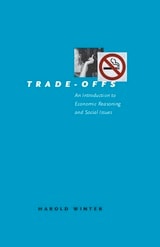
Trade-Offs
An Introduction to Economic Reasoning and Social IssuesHarold Winter
University of Chicago Press, 2005
Harold Winter provides readers with the analytical tools needed to identify and understand the trade-offs associated with these topics. By considering both the costs and benefits of potential policy solutions, Winter stresses that real-world policy decision making is best served by an explicit recognition of as many trade-offs as possible.
Intellectually stimulating yet accessible and entertaining, Trade-Offs will be appreciated by students of economics, public policy, health administration, political science, and law, as well as by anyone who follows current social policy debates.

Trade-Offs
An Introduction to Economic Reasoning and Social Issues, Second EditionHarold Winter
University of Chicago Press, 2013
What About Mozart? What About Murder?
Reasoning From CasesHoward S. Becker
University of Chicago Press, 2014
Becker draws on a lifetime of sociological research and wisdom to show, in helpful detail, how to use a variety of kinds of cases to build sociological knowledge. With his trademark conversational flair and informal, personal perspective Becker provides a guide that researchers can use to produce general sociological knowledge through case studies. He champions research that has enough data to go beyond guesswork and urges researchers to avoid what he calls “skeleton cases,” which use fictional stories that pose as scientific evidence. Using his long career as a backdrop, Becker delivers a winning book that will surely change the way scholars in many fields approach their research.
What Are Stem Cells?
Definitions at the Intersection of Science and PoliticsJohn Lynch
University of Alabama Press, 2011