Results by title
4155 books match the query 'State & Local' and 925 start with t
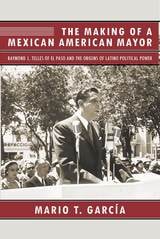
The Making of a Mexican American Mayor
Raymond L. Telles of El Paso and the Origins of Latino Political PowerMario T. García
University of Arizona Press, 2018
In the border metropolis of El Paso, more than half the population is Mexican American, yet this group had been denied effective political representation. Mexican Americans broke this barrier and achieved the “politics of status” through Telles’s stunning 1957 victory. This book captures the excitement of that long-awaited election.
The Making of a Mexican American Mayor also examines Telles’s story as a microcosm of the history of Mexican Americans before and after World War II—the Mexican American Generation. As mayor and ambassador, Telles symbolized this generation’s striving for political participation, and his legacy is evident in the growing number of Latinas/os holding office today.
The Making of a Southerner
William Barclay Napton's Private Civil WarChristopher Phillips
University of Missouri Press, 2008
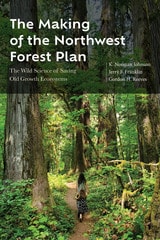
The Making of the Northwest Forest Plan
The Wild Science of Saving Old Growth EcosystemsK. Norman Johnson
Oregon State University Press, 2023
Tree sitters. Logger protests. Dying timber towns. An iconic species on the brink. The Timber Wars consumed the Pacific Northwest in the late 1980s and early1990s and led political leaders to ask scientists for a solution. The Northwest Forest Plan was the result.
For most of the twentieth century, the central theme of federal forest management in the Pacific Northwest had been logging old-growth forests to provide a sustained yield of timber. During the 1970s and 1980s, however, a series of studies by young scientists highlighted the destructive impact of that logging on northern spotted owls, salmon, and the old-growth ecosystem itself.
Combining this new science with newly minted environmental laws like the Endangered Species Act, environmental activists obtained court injunctions to stop old-growth logging on federal land, setting off a titanic struggle in the Pacific Northwest to find a way to accommodate conservation imperatives as well as the logging that provided employment for tens of thousands of people. That effort involved years of controversy and debate, federal courts, five science assessments, Congress, and eventually the president of the United States. It led to creation of the Northwest Forest Plan, which sharply and abruptly shifted the primary goal of federal forestry toward conserving the species and ecosystems of old-growth forests. Scientists went from spectators to planners and guides, employing their latest scientific findings and expertise to create a forest plan for 20 million acres that would satisfy the courts. The largest upheaval in federal forest management in history had occurred, along with a precipitous decline in timber harvest, and there was no going back.
In this book, three of the scientists who helped craft that change tell the story as they know it: the causes, development, adoption, and implementation of the Northwest Forest Plan. The book also incorporates personal reflections from the authors, short commentaries and histories from key figures— including spotted owl expert Eric Forsman—and experiences from managers who implemented the Plan as best they could. Legal expert Susan Jane M. Brown helped interpret court cases and Debora Johnson turned spatial data into maps. The final chapters cover the Plan’s ongoing significance and recommendations for conserving forest and aquatic ecosystems in an era of megafires and climate change.
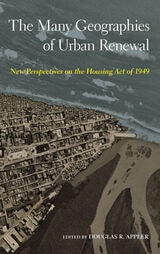
The Many Geographies of Urban Renewal
New Perspectives on the Housing Act of 1949Edited by Douglas R. Appler
Temple University Press, 2023
Taken as a whole, the essays showcase the unexpected diversity of how different communities used the federal urban renewal program. The Many Geographies of Urban Renewal allows us to better understand what was arguably the most significant urban policy of the 20th century, and how that policy shaped the American landscape.
Contributors include Francesca Russello Ammon, Brent Cebul, Robert B. Fairbanks, Leif Fredrickson, Colin Gordon, David Hochfelder, Robert K. Nelson, Benjamin D. Lisle, Stacy Kinlock Sewell and the editor.

The Many and the Few
A Chronicle of the Dynamic Auto WorkersHenry Kraus. With an Introduction by Neil O. Leighton, William J. Meyer, and Nan Pendrell
University of Illinois Press, 1985
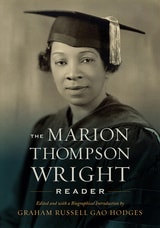
The Marion Thompson Wright Reader
Edited and with a Biographical Introduction by Graham Russell Gao HodgesGraham Russell Gao Hodges
Rutgers University Press, 2022
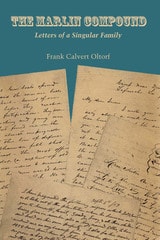
The Marlin Compound
Letters of a Singular FamilyBy Frank Calvert Oltorf
University of Texas Press, 1968
Written over a hundred-year period, the letters of Zenas Bartlett and his family and friends capture the vitality that marked the expansion and development of Texas during the nineteenth century. Warm, humorous, and illuminating, these letters and other papers record the changes in a family and in a region as bustling towns replaced clusters of log cabins and the hardships of the frontier were gradually mellowed by the luxuries of settled life.
The earliest letters describe the adventures of young Zenas Bartlett, who left his home in Maine and traveled first to Alabama and then to camps of the California Gold Rush. A new venture brought him to Marlin, Texas, in 1854. The transformation of a wilderness area into a prosperous community is the unifying theme of the rest of the collection.
Churchill Jones, Bartlett’s future father-in-law, writes about his struggles to establish a cotton plantation at the Falls of the Brazos River. Zenas’ antebellum letters perceptively reveal the poignancy of his partner’s death and the joys of his own fulfilling marriage.
John Watkins, an associate in Bartlett’s store, expresses the pride, loyalty, and eventual disillusionment of a soldier in the Civil War. Zenas’ correspondence with his family in the East describes the privations endured by Marlin during Reconstruction.
Beguiling Mollie Dickson’s schoolgirl journal and the letters of Zenas’ large family depict happier times during the eighties and nineties. The last letters were written by Lottie Barnes, a former servant who recalls the tranquil years following the turn of the century. An epilogue brings the story to conclusion, and selections from the author’s delightful collection of family photographs illustrate the book.
Frank Calvert Oltorf was reared on the “Marlin Compound,” the home where members of this singular family lived or visited and where many of the manuscripts included in this book were found. His comments bind the letters in a narrative of pioneering, which is also a humorous and human family history.
The Maverick Spirit
Building The New NevadaRichard O. Davies
University of Nevada Press, 1998
A collection of biographical essays on fourteen contemporary Nevadans. The subjects of the essays are Maude Frazier; Moe Dalitz; James B. McMillan; William F. Harrah; Hank Greenspun; Alan Bible; Robert Laxalt; Grant Sawyer; Molly Flagg Knudtsen; Paul Laxalt; Steve Wynn; William Raggio; Sue Wagner; and Jerry Tarkanian.

The Maverick and the Machine
Governor Dan Walker Tells His StoryDan Walker
Southern Illinois University Press, 2007
Best Memoir of 2008, San Diego Book Awards
Illinois State Historical Society Certificate of Excellence, 2008
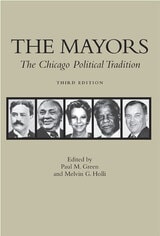
The Mayors, 3rd Edition
The Chicago Political TraditionEdited by Paul M. Green and Melvin G. Holli
Southern Illinois University Press, 2005
The Mayors: The Chicago Political Tradition taps America’s most qualified observers to scrupulously assess the city’s mayors within the vigorous and tumultuous history of Chicago government. This revised and updated edition features extensive commentary on the enduring mayoral influence of Richard M. Daley.
“In the seventeen years since The Mayors was first published,” editors Paul M. Green and Melvin G. Holli write in the Preface to this edition, “Chicago politics has become more genteel, more docile, and more predictable. This dampening of the city’s once red-hot political coals is due to domination by one man: Mayor Richard M. Daley.” Also providing a political roadmap through the complex and fascinating labyrinth of Chicago politics are essays on other recent mayors: Richard J. Daley, Michael A. Bilandic, Jane M. Byrne, and Harold Washington.
Green and Holli’s popular study maintains that the key to the mayor’s office is power: the power to reward and the power to punish that comes with occupying the fifth floor of city hall in Chicago. Beginning with Joseph Medill, the Tribune publisher who guided the city in its rise from the ashes after the Great Fire of 1871, The Mayors takes readers through the terms of some of the city’s most colorful leaders: from the progressive Carter Harrison II and the radical Edward F. Dunne to the politically reticent Fred A. Busse and the loudmouth Big Bill Thompson. The essays collectively tell a riveting story of structures wherein aggressive power brokers surmount even massive corruption and scandal, and those who fail to seize the office’s inherent authority have short, uncomfortable tenures.
In addition to Green and Holli, contributors include David L. Protess, Edward R. Kantowicz, John D. Buenker, Maureen A. Flanagan, Douglas Bukowski, John R. Schmidt, Roger Biles, Arnold R. Hirsch, William J. Grimshaw, Monroe Anderson, Steve Neal, Steve Rhodes, and Laura S. Washington.
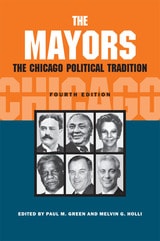
The Mayors
The Chicago Political Tradition, fourth editionEdited by Paul M. Green and Melvin G. Holli
Southern Illinois University Press, 2013
Chicago’s mayoral history is one of corruption and reform, scandal and ambition. This well-researched volume, more relevant than ever twenty-five years after its first edition, presents an intriguing and informative glimpse into the fascinating lives and legacies of Chicago’s most influential leaders.
The Mechanics of Optimism
Mining Companies, Technology, and the Hot Spring Gold Rush, Montana Territory, 1864-1868Jeffrey J. Safford
University Press of Colorado, 2004
Historian Jeffrey J. Safford examines how gold mining ventures were developed and financed during and after the Civil War, and how men, primarily Easterners with scant knowledge of mining, were willing to invest large sums in gold mines that promised quick and lucrative returns.
Safford explains how these mining companies were organized and underwritten, and why a little-known district in southwestern Montana was chosen as a center of operations. Relying on extensive primary sources, Safford addresses the mind-set of the businessmen, the expectations and realities of new mining technology, the financial strategies, and the universality of the Hot Spring experience.
The Medicine of Memory
A Mexica Clan in CaliforniaBy Alejandro Murguía
University of Texas Press, 2002
"People who live in California deny the past," asserts Alejandro Murguía. In a state where "what matters is keeping up with the current trends, fads, or latest computer gizmo," no one has "the time, energy, or desire to reflect on what happened last week, much less what happened ten years ago, or a hundred." From this oblivion of memory, he continues, comes a false sense of history, a deluded belief that the way things are now is the way they have always been.
In this work of creative nonfiction, Murguía draws on memories—his own and his family's reaching back to the eighteenth century—to (re)construct the forgotten Chicano-indigenous history of California. He tells the story through significant moments in California history, including the birth of the mestizo in Mexico, destruction of Indian lifeways under the mission system, violence toward Mexicanos during the Gold Rush, Chicano farm life in the early twentieth century, the Chicano Movement of the 1960s, Chicano-Latino activism in San Francisco in the 1970s, and the current rebirth of Chicano-Indio culture. Rejecting the notion that history is always written by the victors, and refusing to be one of the vanquished, he declares, "This is my California history, my memories, richly subjective and atavistic."
The Mee-Ow Show at 50
From Cultural Rebellion to Comedy InstitutionJoseph B. Radding and Paul W. Warshauer
Northwestern University Press, 2025
The fifty-year history of the Mee-Ow Show at Northwestern University and its influence on contemporary comedy
In the fall of 1973, two students at Northwestern University resolved to create something on stage that was wholly their own. Soon, they would be joined by a cohort of performers, musicians, and staff, and the resulting production would go on to launch the careers of scores of entertainment professionals, including some of the most well-known and awarded names in comedy today. This book is not only an account of the rebellious fifty-year history of the Mee-Ow Show, now the longest-running student sketch comedy and improv show in the country, but also its far-reaching influence. The storied group’s alumni include such household names as Craig Bierko, Ana Gasteyer, Julia Louis-Dreyfus, John Cameron Mitchell, Dermot Mulroney, Seth Meyers, and Kristen Schaal.
Based on more than a hundred new interviews with group members, presenting their words alongside never-before-published photographs and ephemera, The Mee-Ow Show at 50 provides a chronicle of the last half-century of the American undergraduate experience—and reveals how, from New York to Los Angeles, contemporary comedy can trace its roots to an upstart student production in Evanston, Illinois.
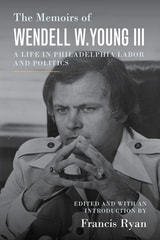
The Memoirs of Wendell W. Young III
A Life in Philadelphia Labor and PoliticsFrancis Ryan
Temple University Press, 2019
Philadelphia native Wendell W. Young III was one of the most important American labor leaders in the last half of the twentieth century. An Acme Markets clerk in the 1950s and ’60s, he was elected top officer of the Retail Clerks Union when he was twenty-four. His social justice unionism sought to advance wages while moving beyond collective bargaining to improve the conditions of the working-class majority, whether in a union or not. Young quickly gained a reputation for his independence, daring at times to publicly criticize the policies of the city’s powerful AFL-CIO leadership and tangle with the city’s political machine.
Editor Francis Ryan, whose introduction provides historical context, interviewed Young about his experiences working in the region’s retail and food industry, measuring the changes over time and the tangible impact that union membership had on workers. Young also describes the impact of Philadelphia’s deindustrialization in the 1970s and ’80s and recounts his activism for civil rights and the anti-war movements as well as on John F. Kennedy’s presidential campaign.
The Memoirs of Wendell W. YoungIII provides the most extensive labor history of late twentieth-century Philadelphia yet written.

The Mena File
Barry Seal's Ties to Drug Lords and U.S. OfficialsMara Leveritt
Butler Center for Arkansas Studies, 2016
Inquiries into Seal’s activities, including some by congressional committees, led nowhere. Many of the police files about him were reported lost; others were almost totally redacted. Nevertheless, hundreds of records have survived regarding this backwater of the Iran-Contra saga, pointing to government complicity in Seal’s shipments of cocaine into the United States and the powerful measures taken to obscure that involvement.
In brisk and meticulously footnoted order, The Mena File guides readers from the airstrip in the mountains of rural Arkansas (where Seal based his operation) to Nicaraguan jungles and then to courtrooms across the American South, culminating in a pivotal meeting in the nation’s capital. Menace lurks throughout the tale and, just as darkly, in the evidence of how law-enforcement agents who labored to bring Seal to justice found themselves undermined—and ultimately betrayed—by elected and appointed officials.
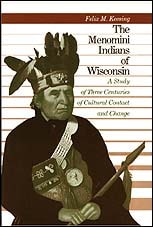
The Menomini Indians of Wisconsin
A Study of Three Centuries of Cultural Contact and ChangeFelix M. Keesing
University of Wisconsin Press, 1987
The Menomini, a peaceful people, lived by farming, hunting, fishing, and gathering wild rice. Perhaps because of their peaceful nature their name was not generally found in the white military annals, and they were largely unknown until 1892, when Walter James Hoffman published a detailed ethnographic account of them.
Felix Keesing's classic 1939 work on the Menomini is one of the most detailed, authoritative, and useful accounts of their history and culture. It superseded Hoffman's earlier work because of Keesing's modern methods of research. This work was among the first monographs on an American Indian people to employ a model of acculturation, and it is also an excellent early example of what is now called ethnohistory. It served as a model of anthropological research for decades after its publication.
Keesing's work, reprinted in this new Wisconsin edition, will continue to serve as a comprehensive introduction for the general reader, a book respected by both anthropologists and historians, and by the Menomini themselves. It is still the most important study of Menomini life up until 1939.

The Metal of a Thousand Uses
Mercury Mining in Arkansas, 1930-1946Terry S. Reynolds
University of Arkansas Press, 2026
In 1930, a remote corner of southwest Arkansas witnessed the discovery of cinnabar, the ore from which mercury is extracted. Upon the arrival of “the metal of a thousand uses,” a wave of hope and ambition swept through the foothills of the Ouachita Mountains as mercury mining promised economic revival for the struggling state. Despite the known dangers of the industry, Arkansans greeted the prospect of a mercury boom with unbridled enthusiasm, seeing it as a potential solution to their economic woes amid the Great Depression.
In The Metal of a Thousand Uses: Mercury Mining in Arkansas, 1930–1946, Terry S. Reynolds charts the dramatic rise and fall of the state’s mercury mining district, from the euphoria of discovery to the logistical and financial challenges of industrialization. Drawing on deep archival research, Reynolds explores the experiences of the miners and managers whose fates became bound to the companies that sought to commercialize mercury refining in the Ouachita Mountains. The result is a vivid account of a little-known chapter in American mineral-resource history.
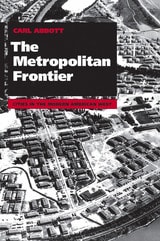
The Metropolitan Frontier
Cities in the Modern American WestCarl Abbott
University of Arizona Press, 1993
The Metropolitan Frontier places this last half-century of Western history in its urban context, making it the first comprehensive overview of urban growth in the region. Integrating the urban experience of all nineteen Western states, Carl Abbott ranges for evidence from Honolulu to Houston and from Fargo to Fairbanks to show how Western cities organize the region's vast spaces and connect them to the even larger sphere of the world economy. His survey moves from economic change to social and political response, examining the initial boom of the 1940s, the process of change in the following decades, and the ultimate impact of Western cities on their environments, on the Western regional character, and on national identity.
Today, a steadily decreasing number of Western workers are engaged in rural industries, but Western cities continue to grow. As ecological and social crises begin to affect those cities, Abbott’s study will prove required reading for historians, geographers, sociologists, urban planners, and all citizens concerned with America’s future.
The Mexican American Experience in Texas
Citizenship, Segregation, and the Struggle for EqualityBy Martha Menchaca
University of Texas Press, 2022
A historical overview of Mexican Americans' social and economic experiences in Texas
For hundreds of years, Mexican Americans in Texas have fought against political oppression and exclusion—in courtrooms, in schools, at the ballot box, and beyond. Through a detailed exploration of this long battle for equality, this book illuminates critical moments of both struggle and triumph in the Mexican American experience.
Martha Menchaca begins with the Spanish settlement of Texas, exploring how Mexican Americans’ racial heritage limited their incorporation into society after the territory’s annexation. She then illustrates their political struggles in the nineteenth century as they tried to assert their legal rights of citizenship and retain possession of their land, and goes on to explore their fight, in the twentieth century, against educational segregation, jury exclusion, and housing covenants. It was only in 1967, she shows, that the collective pressure placed on the state government by Mexican American and African American activists led to the beginning of desegregation. Menchaca concludes with a look at the crucial roles that Mexican Americans have played in national politics, education, philanthropy, and culture, while acknowledging the important work remaining to be done in the struggle for equality.
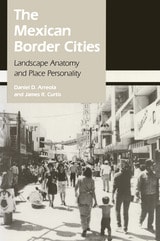
The Mexican Border Cities
Landscape Anatomy and Place PersonalityDaniel D. Arreola and James R. Curtis
University of Arizona Press, 1993
The Mexican Border Cities draws on extensive field research to examine eighteen settlements along the 2,000-mile border, ranging from towns of less than 10,000 people to dynamic metropolises of nearly a million. The authors chronicle the cities' growth and compare their urban structure, analyzing them in terms of tourist districts, commercial landscapes, residential areas, and industrial and transportation quarters.
Arreola and Curtis contend that, despite their proximity to the United States, the border cities are fundamentally Mexican places, as distinguished by their cultural landscapes, including town plan, land-use pattern, and building fabric. Their study, richly illustrated with over 75 maps and photographs, offers a provocative and insightful interpretation of the geographic anatomy and personality of these fascinating—and rapidly changing—communities.
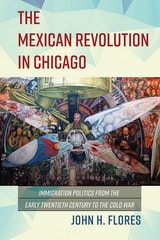
The Mexican Revolution in Chicago
Immigration Politics from the Early Twentieth Century to the Cold WarJohn H Flores
University of Illinois Press, 2018
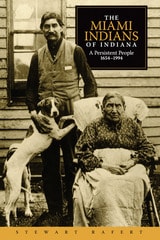
The Miami Indians of Indiana
A Persistent People, 1654-1994Stewart Rafert
Indiana Historical Society Press, 1996
The Midwestern Pastoral
Place and Landscape in Literature of the American HeartlandWilliam Barillas
Ohio University Press, 2006

The Mighty WMMR
An Oral History of Philadelphia's Rock Radio RevolutionErin Riley
Temple University Press, 2026
In the early 1980s, the scrappy radio station 93.3 WMMR was on the verge of a major takeover of the Philadelphia airwaves. Erin Riley, who had her finger on the pulse of new artists like Bon Jovi, whose music would define a generation, was hired as the station’s Music Director in 1983.
The Mighty WMMR is Riley’s affectionate and nostalgic oral history of the station’s early years, especially its 1980s heyday, covering everything from the pioneering influence of The Marconi Experiment and the success of The Morning Zoo to how WMMR broke artists like Bruce Springsteen, Billy Joel, and local favorites The Hooters onto the national scene. Featuring anecdotes and memories by beloved on-air personalities including John DeBella, Pierre Robert, and Michael Tearson, Riley chronicles the memorable songs and musicians; concerts, contests, and clubs; and the live broadcasts that marked the height of an unforgettable era in Philadelphia radio.
Riley breezily captures the station’s impact on listeners, which made WMMR a perfect storm of the times, the culture, and the counterculture. The Mighty WMMR is a captivating look back at Philadelphia’s rock history and the station that shaped a city and a generation.
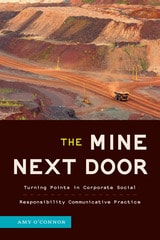
The Mine Next Door
Turning Points in Corporate Social Responsibility Communicative PracticeAmy O'Connor
University of Michigan Press, 2026
The Mine Next Door peels back the veneer of corporate public relations to expose the jagged edges that define the boundaries of corporate social responsibility (CSR) in Minnesota’s Iron Range. With five years of ethnographic and archival research, Amy O’Connor was able to interview over seventy people, including miners, retired miners, community members, elected officials, and representatives from Cleveland-Cliffs Inc. In addition to illuminating the everyday lives of Minnesota’s taconite miners and community members, she compares the corporate narratives of CSR with these lived experiences to reveal how CSR boundaries are co-constructed, contested, and consequential.
In this rare ethnographic account of iron ore mining in the United States, O’Connor shows how turning points—whether macrolevel (e.g., capitalism, governmental policy, and regulation) or microlevel (e.g., miner experiences, local culture, company proclivities)—create CSR communicative practice boundaries that are influenced by culture, history, and geography. The permanence and precariousness of the mining industry offers a unique opportunity to show how corporations, workers, and communities both collaborate and clash. The Mine Next Door argues that to understand CSR communicative practices, we must move beyond the staid, homogeneous CSR reports and glossy public relations documents to reveal the messy and contradictory moments of decision wherein corporations and communities determine where a company has power and responsibility.
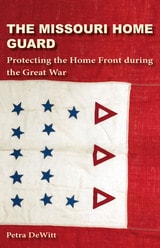
The Missouri Home Guard
Protecting the Home Front during the Great WarPetra DeWitt
University of Missouri Press, 2022
The Home Guard also functioned to preserve patriotism and reduce opposition to the war. Service in the Guard was a way to show loyalty to one’s country, particularly for German Americans, who were frequently under suspicion as untrustworthy. Many German Americans in Missouri enthusiastically signed up to dispel any whispers of treason, while others found themselves torn between the motherland and their new homeland. Men too old or exempt from the draft for other reasons found meaning in helping with the war effort through the Home Guard while also garnering respect from the community. For similar reasons, women attempted to join the organization as did African Americans, some of whom formed units of a “Negro Home Guard.” Informed by the dynamics of race, gender, and ethnicity, DeWitt’s consideration of this understudied but important organization examines the fluctuating definition of patriotism and the very real question of who did and who did not have the privilege of citizenship and acceptance in society.
The Missouri Mormon Experience
Edited by Thomas M. Spencer
University of Missouri Press, 2010

The Missouri State Penitentiary
170 Years inside "The Walls"Jamie Pamela Rasmussen
University of Missouri Press, 2012
In TheMissouri State Penitentiary, Jamie Pamela Rasmussen recounts the long and fascinating history of the place, focusing on the stories of inmates and the struggles by prison officials to provide opportunities for reform while keeping costs down. Tales of prominent prisoners, including Pretty Boy Floyd, Sonny Liston, and James Earl Ray, provide intrigue and insight into the institution’s infamous reputation.
The founding of the penitentiary helped solidify Jefferson City’s position as the state capital. A highlight in the chapter on the Civil War years is the story of George Thompson, who was imprisoned for attempting to help a number of slaves to freedom. The narrative enters the twentieth century with the controversy surrounding the various systems of inmate labor; the effort to make the prison self-supporting eventually caused punishment to be driven by factory needs. The example of Firebug Johnson demonstrates how inmates reacted to the prison labor system while Kate Richards O’Hare’s struggles and efforts to improve conditions in the penitentiary illuminate the role of women in the system at the time. A full chapter is devoted to the riot of 1954, and another concentrates on the reforms made in the wake of that catastrophe. Rasmussen also considers the effect inmate lawsuits during the 1980s and 1990s had on prison life before telling the story of the decision to close the prison.
The Missouri State Penitentiary provides a fitting account of an institution that was part of Missouri’s history for well over a century. Numerous illustrations and a list of recommended reading contribute to the readers’ understanding of the history of the institution.
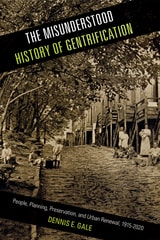
The Misunderstood History of Gentrification
People, Planning, Preservation, and Urban Renewal, 1915-2020Dennis E. Gale
Temple University Press, 2021
The origins of gentrification date back to World War I—only it was sometimes known as “remodeling” then. Dennis Gale’s insightful book, TheMisunderstood History of Gentrification, provides a recontextualization of American gentrification, planning, and policymaking. He argues that gentrification must be understood as an urban phenomenon with historical roots in the very early twentieth century.
Gale uses solid empirical evidence to trace the embryonic revitalization of Georgetown, Greenwich Village, Beacon Hill, and elsewhere back to 1915. He shows how reinvestment and restoration reversed urban decline and revitalized neighborhoods. The Misunderstood History of Gentrification also explains how federal policies such as the Urban Redevelopment Program (later named Urban Renewal), which first emerged in 1949, razed urban slums and created an “urban crisis” that persisted in the 1960s and ‘70s. This situation soon prompted city gentrifiers and historic preservationists to reuse and rehabilitate existing structures.
Within a more expansive historical framework, Gale offers a fresh perspective on and debunks misperceptions about gentrification in America.
The Moccasin Bluff Site and the Woodland Cultures of Southwestern Michigan
Robert Louis Bettarel and Hale Gilliam Smith
University of Michigan Press, 1973
The Mojave Desert
Ecosystem Processes and SustainabilityRobert Webb
University of Nevada Press, 2009
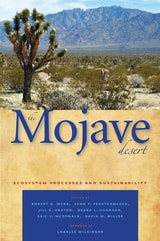
In The Mojave Desert, thirty-eight scientists who are all specialists in desert ecology address the threats to the Mojave, as well as the potential for natural recovery and active restoration. The contributing authors discuss the desert from several perspectives: regional threats such as expanding human populations, climate change, atmospheric nitrogen deposition, and invasive plants; the impact of roads in a desert ecosystem; soils and plant communities; shrinking aquifers; and the monitoring and sustainability of this fragile ecosystem. Finally, they discuss the importance of long-term data and the ways scientists and resource managers can interact to enhance understanding of the processes of change in the Mojave Desert and to advance the preservation and restoration of its precious resources.The Mojave Desert offers the fruits of extensive research in a number of disciplines and a sound assessment of the current state and possible future of one of the world's major deserts. As human intrusion and climate change increasingly threaten the Mojave's ecosystem, studies like this are essential in helping scientists, land managers, and the general public understand what is at risk and what can be done to preserve this austere and hauntingly beautiful region.
The Monetarists
The Making of the Chicago Monetary Tradition, 1927–1960George S. Tavlas
University of Chicago Press, 2023
The Chicago School of economic thought has been subject to endless generalizations—and mischaracterizations—in contemporary debate. What is often portrayed as a monolithic obsession with markets is, in fact, a nuanced set of economic theories born from decades of research and debate. The Monetarists is a deeply researched history of the monetary policies—and personalities—that codified the Chicago School of monetary thought from the 1930s through the 1960s. These policies can be characterized broadly as monetarism: the belief that prices and interest rates can be kept stable by controlling the amount of money in circulation.
As economist George S. Tavlas makes clear, these ideas were more than just the legacy of Milton Friedman; they were a tradition in theory brought forth by a crucible of minds and debates throughout campus. Through unprecedented mining of archival material, The Monetarists offers the first complete history of one of the twentieth century’s most formative intellectual periods and places. It promises to elevate our understanding of this doctrine and its origins for generations to come.
The Most Beautiful Place on Earth
Wallace Stegner in CaliforniaMatthew D. Stewart
University of Utah Press, 2021
This book tells the story of Stegner and his family as they made a home just outside of Palo Alto, California, during its transition from the Valley of Heart’s Delight (known for its rolling hills and orchards) to Silicon Valley. In this thoughtful study of the novels Stegner wrote in California—including his Pulitzer Prize–winning Angle of Repose—readers are invited to consider with Stegner what the practice of place requires in the American West. Specialists in the literature and history of the American West will find new analyses of Stegner and his influential work. Other readers will be guided through Stegner’s work in concrete and accessible prose, and anyone who has longed for home and a sense of place will encounter a powerful, beautiful, and at times tragic attempt to build and preserve it.
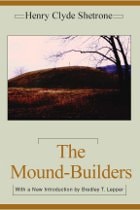
The Mound-Builders
Henry Clyde Shetrone; with a new introduction by Bradley T. Lepper
University of Alabama Press, 2004
A Dan Josselyn Memorial Publication
A classic resource on early knowledge of prehistoric mounds and the peoples who constructed them in the eastern United States
With this accessible volume, Henry Clyde Shetrone made available to general readers the archaeological research data and conclusions concerning the ancient mounds and earthworks that dot the landscape of eastern North America. Dismissing popularly held theories of mysterious giants who built these structures, he explained that their purposes were defensive and ceremonial, that they had been used for habitation, burial, and worship. Their builders were antecedents of the native peoples of present-day America and had been skilled artisans and engineers with successful agricultural practices and structured leadership.
Twenty chapters discuss aspects of mound-builder cultures: quarrying of flint and obsidian for knapping into points; mining of copper and iron and its fashioning into tools and ceremonial objects; spinning and weaving materials and methods; smoking customs; carving of calumets and their use in ceremony; freshwater pearls and other items for body ornamentation; and the use of stone burial vaults, cremation basins, and concepts of an afterlife. Data is presented from excavations ranging broadly from Massachusetts to Florida and from Texas to North Dakota.
As Bradley Lepper points out in his new introduction, "The Mound-Builders is a testament to Shetrone's success at working towards 'correlation and systematization' of data, as well as public education. . . . Shetrone was no armchair popularizer. His work was based on years of excavation and first-hand familiarity with much of the data. His popularizations [still] echo with the ring of the shovel and trowel in gravelly soil."
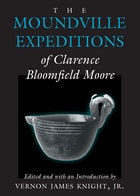
The Moundville Expeditions of Clarence Bloomfield Moore
Clarence Bloomfield MooreClarence Bloomfield Moore, edited and introduced by Vernon James Knight, Jr.
University of Alabama Press, 1996
The two works reprinted in this volume represent the pinnacle of the career of one of the most remarkable American archaeologists of the early 20th century, Clarence Bloomfield Moore.
Moore's Certain Aboriginal Remains of the Black Warrior River (1905) and Moundville Revisited (1907) brought the Moundville site in Alabama to the attention of the scholarly world in dramatic fashion by offering a splendid photographic display and expert commentary on its artifactual richness. Moore was the leading southeastern specialist of his day and the most prolific excavator of southern sites during the early part of the 20th century. Today Moore gives the impression of having been everywhere, having excavated everything, and having published on all of it. Moundville Expeditions contains facsimile reprints of these two classic works, along with a new scholarly introduction by one of the leading authorities on the Moundville archaeological site. Once again these rare materials on Moundville are available both for scholars and for a general audience.
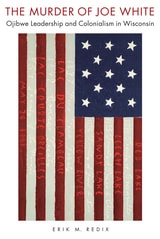
The Murder of Joe White
Ojibwe Leadership and Colonialism in WisconsinErik M. Redix
Michigan State University Press, 2014
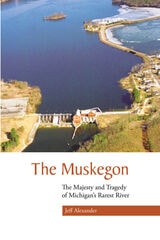
The Muskegon
The Majesty and Tragedy of Michigan's Rarest RiverJeff Alexander
Michigan State University Press, 2006
Muskegon is a derivation of a Native American word meaning "river with marshes." Jeff Alexander examines the creation, uses of, devastation, and restoration of Michigan's historic and beautiful Muskegon River.
Four of the five Great Lakes touch Michigan's shores; the state's shoreline spans more than 4,500 miles, not to mention more than 11,000 inland lakes and a multitude of rivers. The Muskegon River, the state's second longest river, runs 227 miles and has the most diverse features of any of Michigan’s many rivers. The Muskegon rises from the center of the state, widens, and moves westward, passing through the Pere Marquette and AuSable State Forests. The river ultimately flows toward Lake Michigan, where it opens into Muskegon Lake, a 12 square-mile, broad harbor located between the Muskegon River and Lake Michigan.
Formed several thousand years ago, when the glaciers that created the Great Lakes receded, and later inhabited by Ottawa and Potawatomi Indians, the Muskegon River was used by French fur trappers in the 1600s. Rich in white pine, the area was developed during the turn-of-the-century lumber boom, and at one time Muskegon Lake boasted more than 47 sawmills. The Muskegon was ravaged following settlement by Europeans, when rivers and streams were used to transport logs to the newly developing cities. Dams on rivers and larger streams provided power for sawmills and grain milling, and later provided energy for generating electricity as technology advanced.
There is now an ambitious effort to restore and protect this mighty river's natural features in the face of encroaching urbanization and land development that threatens to turn this majestic waterway into a mirror image of the Grand River, Michigan's longest river and one of its most polluted.
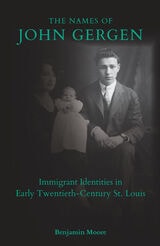
The Names of John Gergen
Immigrant Identities in Early Twentieth-Century St. LouisBenjamin Moore
University of Missouri Press, 2020
Winner of the 2022 Missouri History Book Award
Rescued from the dumpster of a boarded-up house, the yellowing scraps of a young migrant’s schoolwork provided Benjamin Moore with the jumping-off point for this study of migration, memory, and identity. Centering on the compelling story of its eponymous subject, The Names of John Gergen examines the converging governmental and institutional forces that affected the lives of migrants in the industrial neighborhoods of South St. Louis in the early twentieth century. These migrants were Banat Swabians from Torontál County in southern Hungary—they were Catholic, agrarian, and ethnically German.
Between 1900 and 1920, the St. Louis neighborhoods occupied by migrants were sites of efforts by civic authorities and social reformers to counter the perceived threat of foreignness by attempting to Americanize foreign-born residents. At the same time, these neighborhoods saw the strengthening of Banat Swabians’ ethnic identities. Historically, scholars and laypeople have understood migrants in terms of their aspirations and transformations, especially their transformations into Americans. The experiences of John Gergen and his kin, however, suggest that identity at the level of the individual was both more fragmented and more fluid than twentieth-century historians have recognized, subject to a variety of forces that often pulled migrants in multiple directions.
The Naomikong Point Site and the Dimensions of Laurel in the Lake Superior Region
Donald E. Janzen
University of Michigan Press, 1968
The National Alliance of Black Feminists
A HistoryIleana Nachescu
University of Illinois Press, 2025
Ileana Nachescu places the NABF’s history as the bridge between Black women’s social activism in the 1970s and the intellectual activism of the 1980s. Her account details the NABF’s work and how it reflected the group’s strong humanist belief in the transformation of all human beings. Nachescu also shows that the NABF’s post-Eighties erasure from movement histories is consistent with how many white feminists marginalized women of color and rejected their leadership. From there, Nachescu examines Black lesbians’ vibrant support of the NABF and shows how respectability politics pressured the group to support its lesbian membership in private but maintain a public silence on the issue.
A rare in-depth look at an overlooked organization, The National Alliance of Black Feminists tells an untold story of Black women’s liberation in the Midwest.
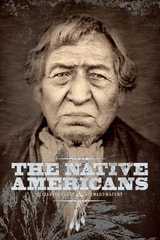
The Native Americans
Elizabeth Glenn and Stewart Rafert
Indiana Historical Society Press, 2009
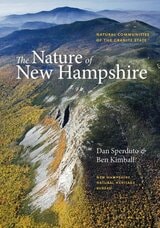
The Nature of New Hampshire
Natural Communities of the Granite StateDan Sperduto
University of New Hampshire Press, 2011
With gorgeous photographs, informative text, and recommended places to visit, The Nature of New Hampshire provides an important common language for conservation planning and informed land stewardship. Whether used as a field guide or an at-home resource, this book will help readers reconnect with their surroundings, and understand the places they value.
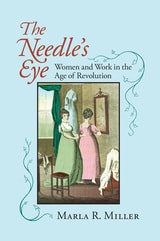
The Needle's Eye
Women and Work in the Age of RevolutionMarla R. Miller
University of Massachusetts Press, 2006
In this book, Marla R. Miller illuminates the significance of women's work in the clothing trades of the early Republic. Drawing on diaries, letters, reminiscences, ledgers, and material culture, she explores the contours of working women's lives in rural New England, offering a nuanced view of their varied ranks and roles—skilled and unskilled, black and white, artisanal and laboring—as producers and consumers, clients and craftswomen, employers and employees. By plumbing hierarchies of power and skill, Miller explains how needlework shaped and reflected the circumstances of real women's lives, at once drawing them together and setting them apart.
The heart of the book brings into focus the entwined experiences of six women who lived in and around Hadley, Massachusetts, a thriving agricultural village nestled in a bend in the Connecticut River about halfway between the Connecticut and Vermont borders. Miller's examination of their distinct yet overlapping worlds reveals the myriad ways that the circumstances of everyday lives positioned women in relationship to one another, enlarging and limiting opportunities and shaping the trajectories of days, years, and lifetimes in ways both large and small. The Needle's Eye reveals not only how these women thought about their work, but how they thought about their world.
The Negro in Illinois
The WPA PapersEdited by Brian Dolinar
University of Illinois Press, 2013
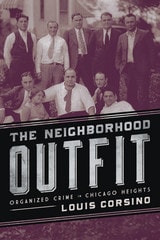
The Neighborhood Outfit
Organized Crime in Chicago HeightsLouis Corsino
University of Illinois Press, 2014
Debunking the popular idea of organized crime as a uniquely Italian enterprise, Corsino delves into the social and cultural forces that contributed to illicit activities. As he shows, discrimination blocked opportunities for Italians' social mobility and the close-knit Italian communities that arose in response to such limits produced a rich supply of social capital Italians used to pursue alternative routes to success that ranged from Italian grocery stores to union organizing to, on occasion, crime.
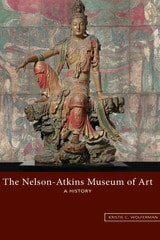
The Nelson-Atkins Museum of Art
A HistoryKristie C. Wolferman
University of Missouri Press, 2020
Wolferman begins by relaying how the trustees of the estates of the reclusive widow Mary Atkins and the family of Kansas City Star newspaper editor William Rockhill Nelson joined forces to establish a museum from scratch, then goes on to consider all of the highly talented people who directed and staffed the Nelson-Atkins along the way, their efforts resulting in many bold innovations, among them new collections, grounds, and educational programs and offerings.
With 100 color and black and white photographs, this book will be treasured by all who love and admire this remarkable institution, one that attracts half a million visitors—from across the city, state, nation, and world—each year.
This is a co-publication of the University of Missouri Press and the Nelson-Atkins Museum of Art.
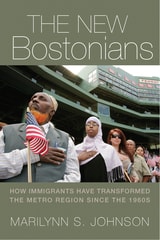
The New Bostonians
How Immigrants Have Transformed the Metro Area since the 1960sMarilynn S. Johnson
University of Massachusetts Press, 2015
How immigrants helped rebuild a city—and redefined what it means to be American
Among the most consequential pieces of Great Society legislation, the Immigration Act of 1965 opened the nation's doors to large-scale immigration from Africa, Asia, and Latin America. A half century later, the impact of the "new immigration" is evident in the transformation of the country's demographics, economy, politics, and culture, particularly in urban America.
In The New Bostonians, Marilynn S. Johnson examines the historical confluence of recent immigration and urban transformation in greater Boston, a region that underwent dramatic decline after World War II. Since the 1980s, the Boston area has experienced an astounding renaissance—a development, she argues, to which immigrants have contributed in numerous ways. From 1970 to 2010, the percentage of foreign-born residents of the city more than doubled, representing far more diversity than earlier waves of immigration. Like the older Irish, Italian, and other European immigrant groups whose labor once powered the region's industrial economy, these newer migrants have been crucial in re-building the population, labor force, and metropolitan landscape of the New Boston, although the fruits of the new prosperity have not been equally shared.
The New Decentralists
The Back-to-the-Land Movement and the Politics of Localism in Appalachia, 1968-2000Jinny A Turman
West Virginia University Press, 2026
How some “back-to-the-landers” fled alienating urban, bureaucratic places for rural Appalachia in pursuit of self-reliance, liberation, and community, only to later find themselves vulnerable to a rising tide of national conservatism that minted new political elites on the state and local level at odds with their progressive social ideas and environmental values.
The New History in an Old Museum
Creating the Past at Colonial WilliamsburgRichard Handler and Eric Gable
Duke University Press, 1997
During much of its existence, the "living museum" at Williamsburg has been considered a patriotic shrine, celebrating the upscale lifestyles of Virginia’s colonial-era elite. But in recent decades a new generation of social historians has injected a more populist and critical slant to the site’s narrative of nationhood. For example, in interactions with museum visitors, employees now relate stories about the experiences of African Americans and women, stories that several years ago did not enter into descriptions of life in Colonial Williamsburg. Handler and Gable focus on the way this public history is managed, as historians and administrators define historiographical policy and middle-level managers train and direct front-line staff to deliver this "product" to the public. They explore how visitors consume or modify what they hear and see, and reveal how interpreters and craftspeople resist or acquiesce in being managed. By deploying the voices of these various actors in a richly textured narrative, The New History in an Old Museum highlights the elements of cultural consensus that emerge from this cacophony of conflict and negotiation.