Results by title
28167 books match the query 'History' and 6372 start with t
The Tree Stump
An Arabic Historical NovelSamiha Khrais
Michigan State University Press, 2017
The Tree That Bends
Discourse, Power, and the Survival of Maskoki PeoplePatricia Riles Wickman
University of Alabama Press, 1999
In her compelling and controversial arguments, Wickman rejects the myths that erase Native Americans from Florida through the agency of Spaniards and diseases and make the area an empty frontier awaiting American expansion. Through research on both sides of the Atlantic and extensive oral history interviews among the Seminoles of Florida and Oklahoma, Wickman shatters current theories about the origins of the people encountered by the Spaniards and presents, for the first time ever, the Native American perspective. She describes the genesis of the groups known today as Creek, Seminole, and Miccosukee—the Maskoki peoples—and traces their common Mississippian heritage, affirming their claims to continuous habitation of the Southeast and Florida. Her work exposes the rhetoric of conquest and replaces it with the rhetoric of survival.
An important cross-disciplinary work, The Tree That Bends reveals the flexibility of the Maskoki people and the sociocultural mechanisms that allowed them to survive the pressures introduced at contact. Their world was capable of incorporating the New without destroying the Old, and their descendants not only survive today but also succeed as a discrete culture as a result.
The Tree of Life, Book One
On the Brink of the Precipice, 1939Chava Rosenfarb
University of Wisconsin Press, 2004
Winner of the 1972 J. J. Segal Prize and the 1979 Manger Prize for Yiddish Literature
The Tree of Life, Book Three
The Cattle Cars Are Waiting, 1942–1944Chava Rosenfarb
University of Wisconsin Press, 2006
The third volume in this powerful trilogy, The Cattle Cars Are Waiting follows the tragic fate of the inhabitants of the ghetto. Chava Rosenfarb, herself a survivor of the Lodz Ghetto, Auschwitz, and Bergen-Belsen, draws on her own history to create characters who struggle daily to retain a sense of humanity and dignity despite the physical and psychological effects of ghetto life. Although the novel depicts horrendous experiences, the light of faith in the human spirit shines through every page.
Winner, Georges Bugnet Award for Best Novel, Writers Guild of Alberta
The Tree of Life, Book Two
From the Depths I Call You, 1940–1942Chava Rosenfarb
University of Wisconsin Press, 2005
This volume describes the lives of the novel’s protagonists in the Lodz Ghetto at the beginning of World War II. Chava Rosenfarb, herself a survivor of the Lodz Ghetto, Auschwitz, and Bergen-Belsen, draws on her own history to create realistic characters who struggle daily to retain a sense of humanity and dignity despite the physical and psychological effects of ghetto life. Although horrendous experiences are depicted, the light of faith in the human spirit shines through this novel’s every page.
The Trend of Economic Thinking
Essays on Political Economists and Economic HistoryF. A. Hayek
University of Chicago Press, 1991
The Trend of Economic Thinking captures Hayek's views on political economists and economic history—on Mandeville, Hume, Cantillon, Adam Smith, and Henry Thornton. Framed by insightful editorial notes, fifteen newly collected essays—including five previously unpublished pieces and two others never before available in English—provide a fascinating introduction to the historical context of political economy and the evolution of monetary practices. In a highlight of the collection, "On Being an Economist," Hayek reflects on the influence of economists, the time required for new ideas to take hold, the best way to educate economic theorists, and the need to follow one's own interests, often in opposition to fashionable beliefs. As always, the words of this outspoken scholar are sure to provoke debate.
The Trial in American Life
Robert A. Ferguson
University of Chicago Press, 2006

The Trial of Charles I
A Documentary HistoryEdited by David Lagomarsino and Charles T. Wood
Dartmouth College Press, 1989
The Trial of Sören Qvist
Janet Lewis
Ohio University Press, 2013
Originally published in 1947, The Trial of Sören Qvist has been praised by a number of critics for its intriguing plot and Janet Lewis’s powerful writing. And in the introduction to this new edition, Swallow Press executive editor and author Kevin Haworth calls attention to the contemporary feeling of the story—despite its having been written more than fifty years ago and set several hundred years in the past. As in Lewis’s best-known novel, The Wife of Martin Guerre, the plot derives from Samuel March Phillips’s nineteenth-century study, Famous Cases of Circumstantial Evidence, in which this British legal historian considered the trial of Pastor Sören Qvist to be the most striking case.
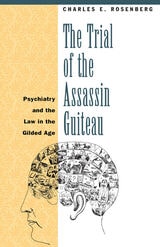
The Trial of the Assassin Guiteau
Psychiatry and the Law in the Gilded AgeCharles E. Rosenberg
University of Chicago Press, 1968
Although the role of genetics in behavior was widely accepted, these psychiatrists fiercely debated whether heredity had predisposed Guiteau to assassinate Garfield. Rosenberg's account allows us to consider one of the opening rounds in the controversy over the criminal responsibility of the insane, a debate that still rages today.
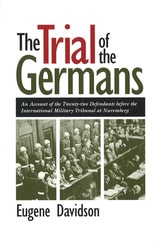
The Trial of the Germans
An Account of the Twenty-two Defendants before the International Military Tribunal at NurembergEugene Davidson
University of Missouri Press, 1997
The "definitive one-volume study of Nuremberg," The Trial of the Germans is now available in paperback. An astute observer of the Nuremberg trial, Eugene Davidson has struggled with the issues it raised: Was it a necessary response to the heinous crimes of the Third Reich? How were Germany and the Germans capable of such extraordinary evil? Was the trial just, given the claims that the defendants were simply serving their country, doing as they had been told to do? And if not just, was it nonetheless necessary as a warning to prevent future crimes against humanity? Davidson's approach to these and other large questions of justice is made through examination of each of the defendants in the trial. His reluctant, but firm, conclusion is: "In a world of mixed human affairs where a rough justice is done that is better than lynching or being shot out of hand, Nuremberg may be defended as a political event if not as a court." Some sentences may have seemed too severe, but none was harsher than the punishments meted out to innocent people by the regime these men served. "In a certain sense," says Davidson, "the trial succeeded in doing what judicial proceedings are supposed to do: it convinced even the guilty that the verdict against them was just."
Faulty as the trial was from the legal point of view, a catharsis of the pent-up emotions of millions of people had to be provided and a record of what had taken place duly preserved for whatever use later generations would make of it.
The Trials of Eroy Brown
The Murder Case That Shook the Texas Prison SystemBy Michael Berryhill
University of Texas Press, 2011
In April 1981, two white Texas prison officials died at the hands of a black inmate at the Ellis prison farm near Huntsville. Warden Wallace Pack and farm manager Billy Moore were the highest-ranking Texas prison officials ever to die in the line of duty. The warden was drowned face down in a ditch. The farm manager was shot once in the head with the warden's gun. The man who admitted to killing them, a burglar and robber named Eroy Brown, surrendered meekly, claiming self-defense.
In any other era of Texas prison history, Brown's fate would have seemed certain: execution. But in 1980, federal judge William Wayne Justice had issued a sweeping civil rights ruling in which he found that prison officials had systematically and often brutally violated the rights of Texas inmates. In the light of that landmark prison civil rights case, Ruiz v. Estelle, Brown had a chance of being believed.
The Trials of Eroy Brown, the first book devoted to Brown's astonishing defense, is based on trial documents, exhibits, and journalistic accounts of Brown's three trials, which ended in his acquittal. Michael Berryhill presents Brown's story in his own words, set against the backdrop of the chilling plantation mentality of Texas prisons. Brown's attorneys—Craig Washington, Bill Habern, and Tim Sloan—undertook heroic strategies to defend him, even when the state refused to pay their fees. The Trials of Eroy Brown tells a landmark story of prison civil rights and the collapse of Jim Crow justice in Texas.
The Trials of Masculinity
Policing Sexual Boundaries, 1870-1930Angus McLaren
University of Chicago Press, 1997
The Trials of Mrs. K.
Seeking Justice in a World with WitchesAdam Ashforth
University of Chicago Press, 2018
In The Trials of Mrs. K., Adam Ashforth studies this and similar stories of witchcraft that continue to circulate in Malawi. At the heart of the book is Ashforth’s desire to understand how claims to truth, the pursuit of justice, and demands for security work in contemporary Africa, where stories of witchcraft can be terrifying. Guiding us through the history of legal customs and their interactions with the court of public opinion, Ashforth asks challenging questions about responsibility, occult forces, and the imperfect but vital mechanisms of law. A beautifully written and provocative book, The Trials of Mrs. K. will be an essential text for understanding what justice means in a fragile and dangerous world.
The Trials of Richard Goldstone
Terris, Daniel
Rutgers University Press, 2019
The Trials of Richard Goldstone tells the story of this extraordinary individual and the price he paid for his convictions. It describes how Goldstone, working as a judge in apartheid South Africa, helped to undermine this unjust system and later, at Nelson Mandela’s request, led a commission that investigated cases of racial violence and intimidation. It also considers the international renown he received as the chief United Nations prosecutor for war crimes committed in Rwanda and the former Yugoslavia, the first tribunals to try political and military leaders on charges of genocide. Finally, it explores how Goldstone became a controversial figure in the wake of the Jewish jurist’s powerful, but flawed, investigation of Israel for alleged war crimes in Gaza.
Richard Goldstone’s dramatic life story reveals that even in a world rife with prejudice, nationalism, and contempt for human rights, one courageous man can advance the cause of justice.
The Triangle Fire, Protocols Of Peace
And Industrial Democracy In ProgressiveRichard A. Greenwald
Temple University Press, 2005
The Tribe of Black Ulysses
African American Lumber Workers in the Jim Crow SouthWilliam P. Jones
University of Illinois Press, 2005
The lumber industry employed more African American men than any southern economic sector outside agriculture. Yet little scholarship exists on these workers and their times.
William P. Jones merges interviews with archival sources to explore black men and women's changing relationship to industrial work in the southern sawmill communities of Elizabethtown, North Carolina; Chapman, Alabama; and Bogalusa, Louisiana. By placing black lumber workers within the history of southern industrialization, Jones reveals that industrial employment was another facet of the racial segregation and political disfranchisement that defined black life in the Jim Crow South. He also examines an older tradition of southern sociology that viewed industrialization as socially disruptive and morally corrupting to African American social and cultural traditions rooted in agriculture.
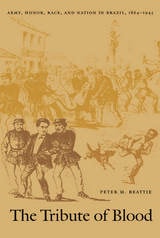
The Tribute of Blood
Army, Honor, Race, and Nation in Brazil, 1864–1945Peter M. Beattie
Duke University Press, 2001
Beattie looks through sociological, anthropological, and historical lenses to analyze archival sources such as court-martial cases, parliamentary debates, published reports, and the memoirs and correspondence of soldiers and officers. Combining these materials with a colorful array of less traditional sources—such as song lyrics, slang, grammatical evidence, and tattoo analysis—he reveals how the need to reform military recruitment with a conscription lottery became increasingly apparent in the wake of the Paraguayan War of 1865–1870 and again during World War I. Because this crucial reform required more than changing the army’s institutional roles and the conditions of service, The Tribute of Blood is ultimately the story of how entrenched conceptions of manhood, honor, race, citizenship, and nation were transformed throughout Brazil.
Those interested in social, military, and South American history, state building and national identity, and the sociology of the poor will be enriched by this pathbreaking study.
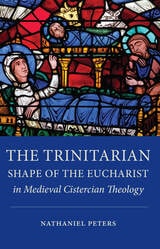
The Trinitarian Shape of the Eucharist in Medieval Cistercian Theology
Nathaniel Peters
Catholic University of America Press, 2026
The Trinity; The Spectacle; Jewish Foods; In Praise of Purity; Letters
Catholic University of America Press, 1974
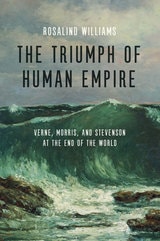
The Triumph of Human Empire
Verne, Morris, and Stevenson at the End of the WorldRosalind Williams
University of Chicago Press, 2013
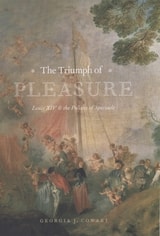
The Triumph of Pleasure
Louis XIV and the Politics of SpectacleGeorgia J. Cowart
University of Chicago Press, 2008
With bold revisionist strokes, Cowart traces this strain of artistic dissent through the comedy-ballets of Jean-Baptiste Lully and Molière, the late operatic works of Lully and the operas of his sons, the opera-ballets of André Campra and his contemporaries, and the related imagery of Antoine Watteau’s well-known painting The Pilgrimage to Cythera. She contends that through a variety of means, including the parody of old-fashioned court entertainments, these works reclaimed traditional allegories for new ideological aims, setting the tone for the Enlightenment. Exploring these arts from the perspective of spectacle as it emerged from the court into the Parisian public sphere, Cowart ultimately situates the ballet and related genres as the missing link between an imagery of propaganda and an imagery of political protest.
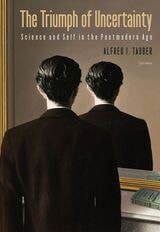
The Triumph of Uncertainty
Science and Self in the Postmodern AgeAlfred I. Tauber
Central European University Press, 2022
Tauber, a leading figure in history and philosophy of science, offers a unique autobiographical overview of how science as a discipline of thought has been characterized by philosophers and historians over the past century. He frames his account through science’s – and his own personal – quest for explanatory certainty.
During the 20th century, that goal was displaced by the probabilistic epistemologies required to characterize complex systems, whether in physics, biology, economics, or the social sciences. This “triumph of uncertainty” is the inevitable outcome of irreducible chance and indeterminate causality. And beyond these epistemological limits, the interpretative faculties of the individual scientist (what Michael Polanyi called the “personal” and the “tacit”) invariably affects how data are understood. Whereas positivism had claimed radical objectivity, post-positivists have identified how a web of non-epistemic values and social forces profoundly influence the production of knowledge.
Tauber presents a case study of these claims by showing how immunology has incorporated extra-curricular social elements in its theoretical development and how these in turn have influenced interpretive problems swirling around biological identity, individuality, and cognition. The correspondence between contemporary immunology and cultural notions of selfhood are strong and striking. Just as uncertainty haunts science, so too does it hover over current constructions of personal identity, self knowledge, and moral agency. Across the chasm of uncertainty, science and selfhood speak.
The Trouble with Sauling Around
Conversion in Ethnic American Autobiography, 1965-2002Madeline R. Walker
University of Iowa Press, 2011
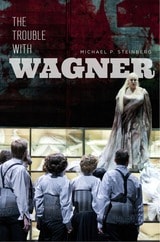
The Trouble with Wagner
Michael P. Steinberg
University of Chicago Press, 2018
Drawing on decades of engagement with Wagner and of experience teaching opera across disciplines, The Trouble with Wagner is packed with novel insights for experts and interested readers alike.
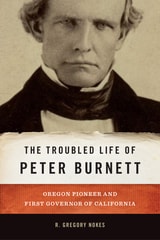
The Troubled Life of Peter Burnett
Oregon Pioneer and First Governor of CaliforniaR. Gregory Nokes
Oregon State University Press, 2018
It was one heck of a resume. Yet with the exception of the wagon road to California, in none of these roles was Burnett considered successful or well remembered. Indeed, he resigned from many of his most important positions, including the governorship, where he was widely perceived a failure.
Burnett’s weakness was that he refused to take advice from others. He insisted on marching to his own drum, even when it led to some terrible decisions. A former slaveholder, he could never seem to get beyond his single-minded goal of banning blacks and other minorities from the West.
The Troubled Life of Peter Burnett is the first full-length biography of this complicated character. Historians, scholars, and general readers with an interest in Western history will welcome R. Gregory Nokes’ accessible and deeply researched account.
The Troubles in Ballybogoin
Memory and Identity in Northern IrelandWilliam F. Kelleher, Jr.
University of Michigan Press, 2004
Why are the political polarities of Northern Ireland so intractable? Why, in a society riven by class division, do Northern Ireland's people identify most strongly with the nationalist and religious groupings of British Protestant versus Irish Catholic? Why, after over thirty years of violence and death, is dialogue about the future so difficult to create and sustain?
In The Troubles in Ballybogoin, William F. Kelleher Jr. examines the patterns of avoidance and engagement deployed by people in the western region of Northern Ireland and compares them to colonial patterns of settlement and retreat. The book shows how social memories inform and are strengthened by mundane aspects of daily life—the paths people use to move through communal spaces, the bodily movements involved in informal social encounters that mark political identities, and the "holiday" marches that displace citizens for the day and divide cross-community friendships.
The Troubles in Ballybogoin is the story of Ireland, its historical conundrums, its violence. It details the location of historical memory in the politics of the everyday and the colonial modernities that so often nurture long-term conflict.
". . . Bill Kelleher brings the reader in to the heart of Northern Ireland and its long, tragic conflict. Northern Ireland, in all its complexity, is authentically rendered."-Robert Connolly, writer and co-director, The Road to Reconciliation
". . . this exemplary ethnography is among the best books on Northern Ireland, and one of the very few that makes human sense of daily sectarian life."
-Lawrence Taylor, National University of Ireland, Maynooth
"More than a tour-a moving narrative."
-David Stark, Columbia University
"This is a wonderful contribution to Irish studies, postcolonial studies, and anthropology."
-Begoña Arétxaga, University of Texas, Austin
"It is a book that will be widely read and greatly appreciated."
--David Lloyd, Scripps College
The True Medicine
Oliva Sabuco de Nantes Barrera, Edited by Gianna Pomata, Translated by Gianna Pomata
Iter Press, 2010
This annotated translation allows the reader to locate the Dialogue on the True Medicine in the context of early modern medical and philosophical culture, identifying Sabuco’s ancient and modern sources. The editor’s introduction reviews the contested issue of authorship, offers new documentation for the history of the reception of Sabuco’s ideas in the seventeenth century, and relates Sabuco’s work to the Querelle des femmes, the protofeminist debate which had remarkable echoes in early modern medicine.
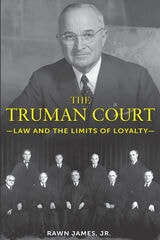
The Truman Court
Law and the Limits of LoyaltyRawn James
University of Missouri Press, 2021
The Truman Court: Law and the Limits of Loyalty argues that the years between FDR’s death in 1945 and Chief Justice Earl Warren’s confirmation in 1953—the dawn of the Cold War—were, contrary to widespread belief, important years in Supreme Court history. Never before or since has a president so quickly and completely changed the ideological and temperamental composition of the Court. With remarkable swiftness and certainty, Truman constructed a Court on which he relied to lend constitutional credence to his political agenda.
The Truman Scandals and the Politics of Morality
Andrew J. Dunar
University of Missouri Press, 1997
The Truman Scandals and the Politics of Morality is a thoroughly researched effort offering an excellent historical narrative of the scandals and accusations of scandal that bedeviled Harry Truman throughout his political career. The book is particularly significant in light of the connections the author establishes between Truman's early political experiences and his subsequent difficulties as president.

The Truth About Stories
A Native NarrativeThomas King
University of Minnesota Press, 2005
The Truth about Crime
Sovereignty, Knowledge, Social OrderJean Comaroff and John L. Comaroff
University of Chicago Press, 2016
To do so, the Comaroffs draw on their vast knowledge of South Africa, especially, and its struggle to build a democracy founded on the rule of law out of the wreckage of long years of violence and oppression. There they explore everything from the fascination with the supernatural in policing to the extreme measures people take to prevent home invasion, drawing illuminating comparisons to the United States and United Kingdom. Going beyond South Africa, they offer a global criminal anthropology that attests to criminality as the constitutive fact of contemporary life, the vernacular by which politics are conducted, moral panics voiced, and populations ruled.
The result is a disturbing but necessary portrait of the modern era, one that asks critical new questions about how we see ourselves, how we think about morality, and how we are going to proceed as a global society.
The Truth about Leo Strauss
Political Philosophy and American DemocracyCatherine H. Zuckert and Michael P. Zuckert
University of Chicago Press, 2006
Is Leo Strauss truly an intellectual forebear of neoconservatism and a powerful force in shaping Bush administration foreign policy? The Truth about Leo Strauss puts this question to rest, revealing for the first time how the popular media came to perpetuate such an oversimplified view of such a complex and wide-ranging philosopher. More important, it corrects our perception of Strauss, providing the best general introduction available to the political thought of this misunderstood figure.
Catherine and Michael Zuckert—both former students of Strauss—guide readers here to a nuanced understanding of how Strauss’s political thought fits into his broader philosophy. Challenging the ideas that Strauss was an inflexible conservative who followed in the footsteps of Nietzsche, Heidegger, and Carl Schmitt, the Zuckerts contend that Strauss’s signature idea was the need for a return to the ancients. This idea, they show, stemmed from Strauss’s belief that modern thought, with its relativism and nihilism, undermines healthy politics and even the possibility of real philosophy. Identifying this view as one of Strauss’s three core propositions—America is modern, modernity is bad, and America is good—they conclude that Strauss was a sober defender of liberal democracy, aware of both its strengths and its weaknesses.
The Zuckerts finish, appropriately, by examining the varied work of Strauss’s numerous students and followers, revealing the origins—rooted in the tensions within his own thought—oftheir split into opposing camps. Balanced and accessible, The Truth about Leo Strauss is a must-read for anyone who wants to more fully comprehend this enigmatic philosopher and his much-disputed legacy.
The Truth and Reconciliation Commission
Mary Ingouville Burton
Ohio University Press, 2017
In 1995, South Africa’s new government set up the Truth and Reconciliation Commission, a lynchpin of the country’s journey forward from apartheid. In contrast to the Nuremberg Trials and other retributive responses to atrocities, the TRC’s emphasis on reconciliation marked a restorative approach to addressing human rights violations and their legacies. The hearings, headed by Bishop Desmond Tutu, began in spring of 1996.
The commission was set up with three purposes: to investigate abuses, to assist victims with rehabilitation, and to consider perpetrators’ requests for amnesty. More than two decades after the first hearings, the TRC’s legacy remains mixed. Many families still do not know what became of their loved ones, and the commission came under legal challenges both from ex-president F. W. de Klerk and the African National Congress. Yet, the TRC fulfilled a vital role in the transition from apartheid to democracy, and has become a model for other countries.
This latest addition to the Ohio Short Histories of Africa series is a trenchant look at the TRC’s entire, stunningly ambitious project. And as a longtime activist for justice in South Africa and a former commissioner of the TRC, Mary Ingouville Burton is uniquely positioned to write this complex story.
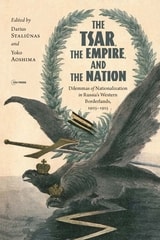
The Tsar, The Empire, and The Nation
Dilemmas of Nationalization in Russia's Western Borderlands, 1905-1915Darius Staliunas
Central European University Press, 2021
This collection of essays addresses the challenge of modern nationalism to the tsarist Russian Empire. First appearing on the empire’s western periphery this challenge, was most prevalent in twelve provinces extending from Ukrainian lands in the south to the Baltic provinces in the north, as well as to the Kingdom of Poland.
At issue is whether the late Russian Empire entered World War I as a multiethnic state with many of its age-old mechanisms run by a multiethnic elite, or as a Russian state predominantly managed by ethnic Russians. The tsarist vision of prioritizing loyalty among all subjects over privileging ethnic Russians and discriminating against non-Russians faced a fundamental problem: as soon as the opportunity presented itself, non-Russians would increase their demands and become increasingly separatist.
The authors found that although the imperial government did not really identify with popular Russian nationalism, it sometimes ended up implementing policies promoted by Russian nationalist proponents. Matters addressed include native language education, interconfessional rivalry, the “Jewish question,” the origins of mass tourism in the western provinces, as well as the emergence of Russian nationalist attitudes in the aftermath of the first Russian revolution.
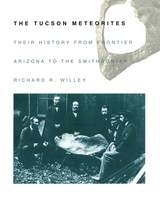
The Tucson Meteorites
Their History from Frontier Arizona to the SmithsonianRichard R. Willey
University of Arizona Press, 1997
Willey tracks the meteorites through years of confiscation and disputed ownership to the Smithsonian Institution. "I had seen passing allusions to the Meteorite in occasional writings on Tucson’s colorful history," he recalls, "but little that hinted at the social, political, and military involvement that the Meteorite had enjoyed in the Southwest of yesteryear, nor of the mystery surrounding other, yet unfound ‘enormous masses’ of the Meteorite." The book features both historical illustrations and photographs of the meteorite fragments and also includes data on their physical characteristics. Willey’s story will leave readers with an enhanced appreciation of life on the early Arizona frontier and of the facts surrounding the fate of the Tucson Meteorites in that frontier setting.
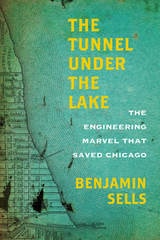
The Tunnel under the Lake
The Engineering Marvel That Saved ChicagoBenjamin Sells
Northwestern University Press, 2017
Despite Chicago's location beside the world’s largest source of fresh water, its low elevation at the end of Lake Michigan provided no natural method of carrying away waste. As a result, within a few years of its founding, Chicago began to choke on its own sewage collecting near the shore. The befouled environment, giving rise to outbreaks of sickness and cholera, became so acute that even the ravages and costs of the U.S. Civil War did not distract city leaders from taking action.
Chesbrough's solution was an unprecedented tunnel five feet in diameter lined with brick and dug sixty feet beneath Lake Michigan. Construction began from the shore as well as the tunnel’s terminus in the lake. With workers laboring in shifts and with clay carted away by donkeys, the lake and shore teams met under the lake three years later, just inches out of alignment. When it opened in March 1867, observers, city planners, and grateful citizens hailed the tunnel as the "wonder of America and of the world."
Benjamin Sells narrates in vivid detail the exceptional skill and imagination it took to save this storied city from itself. A wealth of fascinating appendixes round out Sells’s account, which will delight those interested in Chicago history, water resources, and the history of technology and engineering.
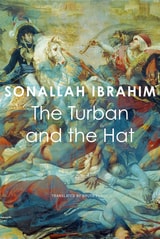
The Turban and the Hat
Sonallah Ibrahim
Seagull Books, 2022
The Napoleonic-era French invasion and occupation of Egypt are often seen as the Arab world’s first encounter with the military and technological prowess of the West—and it came as a terrible shock. The Turban and the Hat tells the story of those three tumultuous years from the perspective of a young Egyptian living in late-eighteenth-century Cairo. Knowing some French, he works as a translator for the occupiers. He meets their scientists and artists, has an affair with Bonaparte’s mistress, and accompanies the disastrous campaign to take Syria, where he witnesses the ravages of the plague and the horrific barbarism of war. He is astonished by the invaders’ lies and propaganda, but he finds that much of what he thought he knew about his fellow Egyptians was also an illusion. Convincing in its history but rich in themes that resonate today, The Turban and the Hat is a story of resistance, but also of collaboration, cooperation, and corruption. Sonallah Ibrahim, one of Egypt’s foremost novelists, gives us a marvelous account of the Western occupation of an Arab land, one that will resonate with contemporary readers. His portrayal of this tragic—and at times comic—“clash of civilizations” is never didactic, even as it reminds us that so many lessons of history go unlearned.
The Turk in America
The Creation of an Enduring PrejudiceJustin McCarthy
University of Utah Press, 2010
Utah Series in Middle East Studies
In The Turk in America, historian Justin McCarthy seeks to explain the historical basis for American prejudice towards Turks in the nineteenth and early twentieth centuries. The volume focuses on fraudulent characterizations of Turks, mostly stemming from an antipathy in Europe and America toward non-Christians, and especially Muslims. Spanning one hundred and fifty years, this history explores the misinformation largely responsible for the negative stereotypes of Turks during this period.
The Turkey
AN AMERICAN STORYAndrew F. Smith
University of Illinois Press, 2006
“Talking turkey” about the bird you thought you knew
Fondly remembered as the centerpiece of family Thanksgiving reunions, the turkey is a cultural symbol as well as a multi-billion dollar industry. As a bird, dinner, commodity, and as a national icon, the turkey has become as American as the bald eagle (with which it actually competed for supremacy on national insignias).
Food historian Andrew F. Smith’s sweeping and multifaceted history of Meleagris gallopavo separates fact from fiction, serving as both a solid historical reference and a fascinating general read. With his characteristic wit and insatiable curiosity, Smith presents the turkey in ten courses, beginning with the bird itself (actually several different species of turkey) flying through the wild. The Turkey subsequently includes discussions of practically every aspect of the iconic bird, including the wild turkey in early America, how it came to be called “turkey,” domestication, turkey mating habits, expansion into Europe, stuffing, conditions in modern industrial turkey factories, its surprising commercial history of boom and bust, and its eventual ascension to holiday mainstay.
As one of the easiest of foods to cook, the turkey’s culinary possibilities have been widely explored if little noted. The second half of the book collects an amazing array of over one hundred historical and modern turkey recipes from across America and Europe. From sandwiches to salmagundi, you’ll find detailed instructions on nearly every variation on the turkey. Historians will enjoy a look back at the varied appetites of their ancestors and seasoned cooks will have an opportunity to reintroduce a familiar food in forgotten ways.
The Turkishness Contract
Baris Ünlü
Temple University Press, 2025
Ünlü uses Critical Race Theory to present a historical–sociological model to examine not only the historical constitution and contemporary functioning of the Turkish nation-state, but also the affective and bodily modalities of being Turkish. He also develops a framework for rethinking the complex relations between the socio-genesis of the Turkish nation and state and the psycho-genesis of the Turkish people, their cognitive habits and emotional orientations, and the structural privileges and unconsciousness strategies of Turkishness.
The Turkishness Contract addresses broader theoretical concerns including histories of colonialism, ethnic/racial social contracts, privilege, Armenian Genocide and the Kurdish question, as well as the unraveling of Turkey’s social contract at a moment of contemporary right-wing authoritarianism.
In the series Critical Race, Indigeneity, and Relationality
The Turn to Transcendence
The Role of Religion in the Twenty-First CenturyGlenn Olsen
Catholic University of America Press, 2010

The Tutor'd Mind
Indian Missionary-Writers in Antebellum AmericaBernd C. Peyer
University of Massachusetts Press, 1997
In the view of the English colonists and their descendants, Indian converts to Christianity were expected to repudiate native traditions and affirm the superiority of European civilization, to serve as role models, and to spread the gospel far into the wilderness. Yet as Bernd C. Peyer shows, Indian missionaries did not always fulfill the expectations of those who trained them. Once the Indians recognized that conversion alone did not guarantee protection from discrimination, they devised a variety of strategies, theological as well as practical, to resist assimilation into the dominant white culture. Making effective use of their literacy and education, they called attention to the discrepancy between the Protestant ideals they had been taught and the Anglo-American practices to which native people were subjected.
By uncovering this subtext of dissent and resistance, Peyer at once alters and enriches our understanding of the evolution of the American Indian literary tradition.
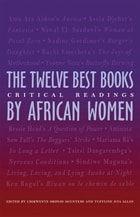
The Twelve Best Books by African Women
Critical ReadingsChikwenye Okonjo Ogunyemi
Ohio University Press, 2009
The Twelve Best Books by African Women is a collection of critical essays on eleven works of fiction and one play. The titles by African women that were included in the list of “Africa’s 100 Best Books of the Twentieth Century” are: Anowa, Ama Ata Aidoo (1970); A Question of Power, Bessie Head (1974); Woman at Point Zero, Nawal El Saadawi (1975); The Beggars’ Strike, Aminata Sow Fall (1979); Burger’s Daughter, Nadine Gordimer (1979); The Joys of Motherhood, Buchi Emesheta (1979); So Long a Letter, Mariama Bâ (1980); Fantasia: An Algerian Cavalcade, Assia Djebar (1983); Nervous Conditions, Tsitsi Dangarembga (1988); Living, Loving and Lying Awake at Night, Sindiwe Magona (1991); Butterfly Burning, Yvonne Vera (1998); Riwan ou le chemin de sable, Ken Bugul (1999).
This collection of original essays recognizes the gesture of inclusion as an important shift in consciousness and creates a fresh awareness of the literary works by African women writers. Each essay offers a penetrating analysis of individual texts and opens up a fresh perspective that allows scholars and students alike to explore new dimensions of these writers’ work.
The Twenty-First Ballot
A Political Party Struggle in MinnesotaDavid Lebedoff
University of Minnesota Press, 1969
The Twenty-First Ballot was first published in 1969. Minnesota Archive Editions uses digital technology to make long-unavailable books once again accessible, and are published unaltered from the original University of Minnesota Press editions.
This account of a bitter struggle with in the Democratic-Farmer-Labor (DFL) party in Minnesota is an interesting story in its own right, and, viewed from a wider perspective, is a valuable documentary on the American political process.
The author recounts the events leading up to and climaxing in the party's deep split over the nomination of a candidate for the 1966 gubernatorial election. The nomination was accomplished only after twenty ballots were taken at the party's convention. The twenty first ballot of the book's title derives from a campaign slogan which urged that the voters, not the party, would make the final decision.
The intraparty battle was waged between a faction which backed the nomination of the incumbent governor, Karl F. Rolvaag, for a second term and a group favoring the nomination of the incumbent lieutenant governor, A. M. "Sandy" Keith, as the gubernatorial candidate. Basic to the struggle was the conviction among supporters of Mr. Keith that a new "image' was needed to win the election of a party's obligation to an incumbent. Mr. Keith was nominated. However, Mr. Rolvaag challenged the nomination by entering the primary election. He defeated the party nominee and won a place on the general election ballot, only to be defeated, in the end, by his Republican opponent.
The book is illustrated with eight pages of news photographs of the principals and events of the story.
The details of this unusual sequence of events reveal much about the workings of party politics at the important state level. The book will, therefore, be of interest not only to the general readers but to students and teachers in political science courses.
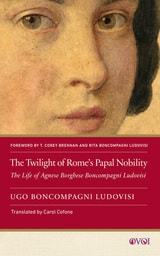
The Twilight of Rome's Papal Nobility
The Life of Agnese Borghese Boncompagni LudovisiUgo Boncompagni Ludovisi (1856–1935)
Rutgers University Press, 2025
First privately published in 1921, The Twilight of Rome's Papal Nobility provides an intimate look at a family who grew up accustomed to almost unimaginable wealth, power, and glamour. A descendant of two popes, Ugo Boncompagni Ludovisi recounts the life story of his mother Agnese, who was raised in a palace full of priceless artwork, including pieces by Caravaggio and Michelangelo. We get a window into Agnese's private life—her girlhood, marriage, and raising of several children—as her public life becomes increasingly tumultuous amid the family’s struggles to retain its property. A tender elegy to a bygone era, Boncompagni Ludovisi's story provides a unique perspective on Italian history and Rome’s urban redevelopment.
The Two Faces of TASS
Theodore Eduard Kruglak
University of Minnesota Press, 1962
The Two Faces of TASS was first published in 1962. Minnesota Archive Editions uses digital technology to make long-unavailable books once again accessible, and are published unaltered from the original University of Minnesota Press editions.
What is TASS and how does it operate? As the Soviet Union's international news agency does TASS serve other purposes besides the gathering and distribution of news? Does it engage in espionage? In propaganda? This account of the development of TASS and analysis of its present-day operations provides illuminating answers to such questions as these in a book that is significant not only to communications specialists but to anyone who wants to understand Soviet relations with the rest of the world.
Mr. Kruglak sketches the historical background of TASS and its antecedents and gives fascinating sidelights on the men who made TASS. He shows the evolution of the agency to its present status, explains its relationship to the news agencies of the various Soviet Republics and satellite countries, and recounts the relations of TASS and its predecessors with American news agencies.
Journalism educators will be especially interested in the chapter on the training of Soviet journalists and the discussion of the TASS concept of news. There is a comprehensive discussion of TASS operations in the United States and a detailed analysis of the TASS treatment of news of this country. The TASS handling of news from 33 other countries is examined and compared with the New York Times treatment of such news for the same period. Similarly, TASS reports of the news of the Soviet Union are analyzed. Finally, the questions of espionage and propaganda roles are discussed. In conclusion, the author points to the need for "news communication coexistence" between the U.S.S.R. and the rest of the world, and suggests that news media lead the way to an approach to international understanding.
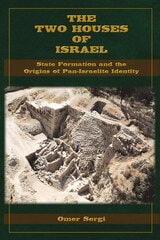
The Two Houses of Israel
State Formation and the Origins of Pan-Israelite IdentityOmer Sergi
SBL Press, 2023
The Two Houses of Israel: State Formation and the Origins of Pan-Israelite Identity bridges the gap between the biblical narrative of the great united monarchy ruled by David and Solomon and archaeological and historical reconstructions of a gradual, independent formation of Israel and Judah. Based on a thorough examination of the material remains and settlement patterns in the southern Levant during the Late Bronze Age and the Iron Age and on a review of the relevant historical sources, this book provides a detailed reconstruction of the ways in which Israel and Judah were formed as territorial polities and specifically how the house of David rose to power in Jerusalem and Judah. Omer Sergi further situates the stories of Saul and David in their accurate social and historical context in order to illuminate the historical conception of the united monarchy and the pan-Israelite ideology out of which it grew. Sergi provides a new history of the early Israelite monarchies, their formation, and the ways in which these social and political developments were commemorated in the cultural memory of generations to come.
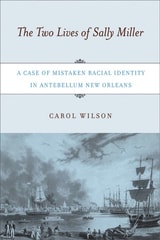
The Two Lives of Sally Miller
A Case of Mistaken Racial Identity in Antebellum New OrleansWilson, Carol
Rutgers University Press, 2007
In 1843, the Louisiana Supreme Court heard the case of a slave named Sally Miller, who claimed to have been born a free white person in Germany. Sally, a very light-skinned slave girl working in a New Orleans caf, might not have known she had a case were it not for a woman who recognized her as Salom Muller, with whom she had emigrated from Germany over twenty years earlier. Sally decided to sue for her freedom, and was ultimately freed, despite strong evidence contrary to her claim.
In The Two Lives of Sally Miller, Carol Wilson explores this fascinating legal case and its reflection on broader questions about race, society, and law in the antebellum South. Why did a court system known for its extreme bias against African Americans help to free a woman who was believed by many to be a black slave? Wilson explains that while the notion of white enslavement was shocking, it was easier for society to acknowledge that possibility than the alternative-an African slave who deceived whites and triumphed over the system.
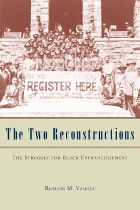
The Two Reconstructions
The Struggle for Black EnfranchisementRichard M. Valelly
University of Chicago Press, 2004
The Reconstruction era marked a huge political leap for African Americans, who rapidly went from the status of slaves to voters and officeholders. Yet this hard-won progress lasted only a few decades. Ultimately a "second reconstruction"—associated with the civil rights movement and the Voting Rights Act—became necessary.
How did the first reconstruction fail so utterly, setting the stage for the complete disenfranchisement of Southern black voters, and why did the second succeed? These are among the questions Richard M. Valelly answers in this fascinating history. The fate of black enfranchisement, he argues, has been closely intertwined with the strengths and constraints of our political institutions. Valelly shows how effective biracial coalitions have been the key to success and incisively traces how and why political parties and the national courts either rewarded or discouraged the formation of coalitions.
Revamping our understanding of American race relations, The Two Reconstructions brilliantly explains a puzzle that lies at the heart of America’s development as a political democracy.