Results by title
28167 books match the query 'History' and 6372 start with t

The Vatican and the Emergence of the Modern Middle East
Agnes de Dreuzy
Catholic University of America Press, 2016

The Vegetational History of the Oaxaca Valley and Zapotec Plant Knowledge
C. Earle Smith and Ellen Messer
University of Michigan Press, 1978
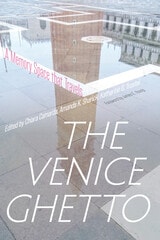
The Venice Ghetto
A Memory Space that TravelsEdited by Chiara Camarda, Amanda K. Sharick, and Katharine G. Trostel
University of Massachusetts Press, 2022
This interdisciplinary collection engages with questions about the history, conditions, and lived experience of the Venice Ghetto, including its legacy as a compulsory, segregated, and enclosed space. Contributors also consider the ghetto's influence on the figure of the Renaissance moneylender, the material culture of the ghetto archive, the urban form of North Africa's mellah and hara, and the ghetto's impact on the writings of Primo Levi and Marjorie Agosín.
In addition to the volume editors, The Venice Ghetto features a foreword from James E. Young and contributions from Shaul Bassi, Murray Baumgarten, Margaux Fitoussi, Dario Miccoli, Andrea Yaakov Lattes, Federica Ruspio, Michael Shapiro, Clive Sinclair, and Emanuela Trevisan Semi.
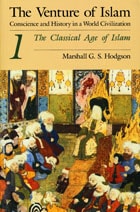
The Venture of Islam, Volume 1
The Classical Age of IslamMarshall G. S. Hodgson
University of Chicago Press, 1974
"This is a nonpareil work, not only because of its command of its subject but also because it demonstrates how, ideally, history should be written."—The New Yorker
Volume 1, The Classical Age of Islam, analyzes the world before Islam, Muhammad's challenge, and the early Muslim state between 625 and 692. Hodgson then discusses the classical civilization of the High Caliphate. The volume also contains a general introduction to the complete work and a foreword by Reuben Smith, who, as Hodgson's colleague and friend, finished the Venture of Islam after the author's death and saw it through to publication.
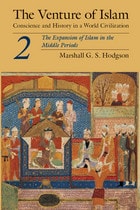
The Venture of Islam, Volume 2
The Expansion of Islam in the Middle PeriodsMarshall G. S. Hodgson
University of Chicago Press, 1977
The Venture of Islam has been honored as a magisterial work of the mind since its publication in early 1975. In this three-volume study, illustrated with charts and maps, Hodgson traces and interprets the historical development of Islamic civilization from before the birth of Muhammad to the middle of the twentieth century. This work grew out of the famous course on Islamic civilization that Hodgson created and taught for many years at the University of Chicago.
In the second work of this three-volume set, Hodgson investigates the establishment of an international Islamic civilization through about 1500. This includes a theoretical discussion of cultural patterning in the Islamic world and the Occident.
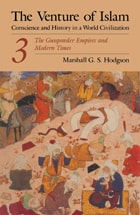
The Venture of Islam, Volume 3
The Gunpowder Empires and Modern TimesMarshall G. S. Hodgson
University of Chicago Press, 1977
In this concluding volume of The Venture of Islam, Hodgson describes the second flowering of Islam: the Safavi, Timuri, and Ottoman empires. The final part of the volume analyzes the widespread Islamic heritage in today's world.
"This is a nonpareil work, not only because of its command of its subject but also because it demonstrates how, ideally, history should be written."—The New Yorker
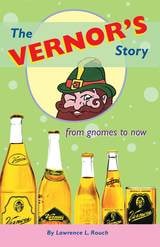
The Vernor's Story
From Gnomes to NowLawrence L. Rouch
University of Michigan Press, 2003

The Very Worst Road
Travellers' Accounts of Crossing Alabama's Old Creek Indian Territory, 1820-1847Jeffrey C. Benton
University of Alabama Press, 2009

The Viceregency of Antonio María Bucareli in New Spain, 1771–1779
By Bernard E. Bobb
University of Texas Press, 1962
When Antonio María Bucareli took up his duties in 1771 as the forty-sixth viceroy of New Spain, he assumed command of a magnificent complexity of land areas, large and small, whose people constituted a cultural and social entity ranging from the traditional Apache to the European gentleman of the Enlightenment.
He governed a key area at a significant time. Shortly before Bucareli's arrival in Mexico, José de Gálvez had completed an intensive inspection of the country, had instituted many reforms, and was ready to present the new viceroy with progressive policies for administrative reorganization.
How Bucareli, a loyal, indefatigable Spanish aristocrat, reacted to the new order is the particular concern of this book. It examines the actions and reflections of this cautious and conservative man as they relate to certain major problems of his administration: defense, the colonization of the Californias, mining, the Roman Catholic Church, the interior provinces, and—above all—filling Spanish coffers with Mexican pesos as resurgent Spain strove to regain her former position in world affairs.
The period of Bucareli's viceregency is seen as a transitional one, during which the seeds of the Enlightenment, of change, even of rebellion, were sown but had not yet begun to sprout. Bucareli, conservative by nature and training, continued to administer New Spain on the basis of a well-established and traditional system, although he supported changes of mere modification or those offering greater efficiency. Evidence of his dual success is the fact that revenues climbed steadily during his tenure and that Charles III was exceptionally pleased with his performance, while at the same time he won from people of all stations a degree of respect and affection far beyond that usually accorded to a viceroy.
Prior to the publication of Bucareli, only two other full-scale studies of Spanish viceroys existed, and both of them were concerned with sixteenth-century officials. The appearance of this book, providing at once a study of an important figure and of the system of viceregal administration as it had developed by the latter part of the eighteenth century, filled a long-existing gap in Latin American literature.
The heart of this study comes from the prodigious correspondence that passed between the Viceroy and Madrid. Authority for most statements was found in the thousands of documents that the author perused in the Archivo General de Indies in Seville and in the Archivo General de la Nación in Mexico City.
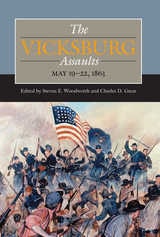
The Vicksburg Assaults, May 19-22, 1863
Edited by Steven E. Woodworth and Charles D. Grear
Southern Illinois University Press, 2019
But due to difficult terrain, strong defenses, and uncoordinated movements, the quick triumph Grant desired was unattainable. On the afternoon of May 19, with little rest, preparation, or reconnaissance, Union forces charged the Confederate lines only to be repulsed. A respite between the assaults allowed both sides to reinforce their positions. Early on May 22 the Union artillery sought to soften the stronghold’s defenses before the general attack, but despite the Union forces’ preparation, the fighting proved even more disorganized and vicious. Again Grant failed to move Pemberton. Not wanting to risk more soldiers in a third attack, Grant conceded to the necessity of laying siege. Confederate morale climbed as the Southerners realized they had held their ground against an overwhelming force.
Editors Steven E. Woodworth and Charles D. Grear have assembled five captivating essays that examine Grant’s unsuccessful assaults against Confederate defensive lines around Vicksburg. Ranging from military to social history, the essays further historical debates on prominent topics, such as the reactions of Midwesterners to the first failures of Grant’s Vicksburg campaign. Two essays from opposing sides analyze the controversial decisions surrounding the Railroad Redoubt, the site of the bloodiest fighting on May 22. Another investigates how the tenacity of Texan reinforcements forced Union soldiers to abandon their gains.
Peppered with first-hand observations and bolstered by an impressive depth of research, this anthology is an invitingly written account and comprehensive assessment. By zeroing in on the two assaults, the contributors offer essential clarity and understanding of these important events within the larger scope of the Civil War’s Vicksburg Campaign.
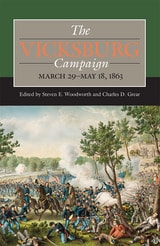
The Vicksburg Campaign, March 29–May 18, 1863
Edited by Steven E. Woodworth and Charles D. Grear
Southern Illinois University Press, 2013
Ulysses S. Grant’s ingenious campaign to capture the last Confederate stronghold on the Mississippi River was one of the most decisive events of the Civil War and one of the most storied military expeditions in American history. The ultimate victory at Vicksburg effectively cut the Confederacy in two, gave control of the river to Union forces, and delivered a devastating blow from which the South never fully recovered. Editors Steven E. Woodworth and Charles D. Grear have assembled essays by prominent and emerging scholars, who contribute astute analysis of this famous campaign’s most crucial elements and colorful personalities.
Encompassed in this first of five planned volumes on the Vicksburg campaign are examinations of the pivotal events that comprised the campaign’s maneuver stage, from March to May of 1863. The collection sheds new light on Grant’s formidable intelligence network of former slaves, Mississippi loyalists, and Union spies; his now legendary operations to deceive and confuse his Confederate counterparts; and his maneuvers from the perspective of classic warfare. Also presented are insightful accounts of Grant’s contentious relationship with John A. McClernand during the campaign; interactions between hostile Confederate civilians and Union army troops; and the planning behind such battles as Grierson’s Raid, Port Gibson, Raymond, Jackson, Champion Hill, and Big Black River Bridge.

The Victoria County History of Herefordshire
BosburyJanet Cooper
University of London Press, 2016
The Victoria History of Essex
Harwich, Dovercourt and Parkeston in the 19th CenturyAndrew Senter Andrew Morrell
University of London Press, 2019
The Victoria History of Essex
NewportEdited by Anthony Tuck
University of London Press, 2015
This book explores the varying character of Newport over eleven centuries. It examines the changing patterns of landownership, social structure and economy of the village and its institutions, not least its 16th-century grammar school. It also discusses the part played, especially in the 18th, 19th and 20th centuries, by the owners of Shortgrove Hall, within the parish, and Quendon Hall, a few miles to the south.
The Victoria History of Essex
Southend: Victorian Town and ResortKen Crowe
University of London Press, 2025
The story of Southend’s growth as a town and resort in the Victorian and Edwardian periods is told here in this new history of Southend.
As the nearest seaside resort to London, the town’s development has been determined in large part by the impact of its seasonal visitors. Yet it was the year-round movement of people from other parts of Essex, England and from the European continent in the late-nineteenth and early-twentieth-centuries that was to have a lasting effect on the character of the town.
Richly illustrated and drawing from original sources, this volume offers new perspectives on the developments that laid the foundations of Southend as we know it today. Its thematic chapters chart the physical expansion of housing in the period and the development of the resort’s infrastructure and economy, among other topics. Although concentrating on Southend and its resort, chapters on agricultural depression and land speculation, education, clubs and societies and unemployment expand the book’s regional focus to neighbouring areas, making this valuable reading for anyone interested in the history of Essex and the UK’s seaside towns.
The Victoria History of Gloucestershire
Cheltenham Before the SpaEdited by Alex Craven and with Beth Hartland
University of London Press, 2018
The Victoria History of Gloucestershire
YateRose Wallis
University of London Press, 2015
During the 1950s a 'new town' plan was devised which carefully controlled Yate's expansion, and included pioneering housing estate design, diverse industrial development and a large and progressive shopping mall. Yate's boundaries were redrawn in 1988, and the population of this vibrant, modern town now exceeds 20,000.
The Victoria History of Hampshire
Cliddesden, Hatch and Farleigh WallopAlison Deveson and Sue Lane
University of London Press, 2018
The Victoria History of Hampshire
MapledurwellJohn Hare, Jean Morrin, and Stan Waight
University of London Press, 2015
The Victoria History of Hampshire
Medieval BasingstokeJohn Hare
University of London Press, 2017
The Victoria History of Hampshire
SteventonJean Morrin
University of London Press, 2016
But the village had a rich history before and after its famous novelist and there are many other reasons to enjoy this book. Steventon is a typical southern chalkland settlement whose history provides examples of downland agriculture, of agricultural improvements, a scandalous landlord who was driven out of the village by his son and excommunicated by the archbishop of Canterbury, a new Victorian manor house, of landlord–tenant relations and much else. It discusses the social, economic and religious lives of the ordinary people of the village together with the lords of the manor.
This is the second parish history to be published by the new Victoria History of Hampshire group, providing scholarly studies of individual places. It should be of interest to those living in and beyond the county. The first new parish history by the group, Mapledurwell, was published in 2012.

The Victoria History of Herefordshire
ColwallJames Bowen
University of London Press, 2020
Discussing well-known landmarks, such as the Iron Age British Camp and the nearby mineral springs, this local history provides a narrative of the village’s development through the age of the landed gentry between the fifteenth and seventeenth centuries, the agricultural era of the eighteenth century, and the development of a spa economy in the mid-nineteenth century. Industrialization changed the town, with new railway infrastructure, tunnels, and the 1892 opening of the Schweppes bottling plant at Colwall Stone. Today, Colwall’s rural location and beautiful scenery continue to attract both visitors and new residents to the town, making this text a valuable resource for tourists and locals alike.
The Victoria History of Herefordshire
CradleyAnastasia Stylianou and Fergus Eskola-Oakes
University of London Press, 2025
Scenic and rural, the parish of Cradley stretches down westwards from the Malvern Hills, bordered by Worcestershire to the north and east. It is one of the largest parishes in Herefordshire, and from the medieval period to the nineteenth century was populous and prosperous. Cradley manor was a valuable holding of the medieval bishops of Hereford. The ecclesiastical benefice, Anglo-Saxon in origin, was equally lucrative, frequently passing nepotistically to well-connected young priests; however, such connections did not prevent one thirteenth-century rector being outlawed for murder! The expanding number of manors in the parish, from the thirteenth century onwards, resulted in a fragmented model of land ownership and the development of a powerful body of wealthy yeomanry, shaping the distinctive character of the parish and its governance in the early modern period.
Drawing extensively on local archival sources, this volume analyses, among other topics, the centrality of agriculture to the parish's story, charting Cradley's socio-economic growth from the sixteenth to nineteenth centuries, before its subsequent decline. As such, this book constitutes an important contribution to English local history, exploring the prosperity that could be enjoyed by parishes in fertile Eastern Herefordshire, and the impact of changes in the national economy upon rural, agrarian communities.
The Victoria History of Herefordshire
EastnorJanet Cooper
University of London Press, 2013
The Victoria History of Leicestershire
Buckminster and SewsternPamela J. Fisher
University of London Press, 2017
The Victoria History of Leicestershire
Castle DoningtonPamela J. Fisher and J.M. Lee
University of London Press, 2016

The Victoria History of Leicestershire
LutterworthPamela J. Fisher
University of London Press, 2022
From before the Norman Conquest to the development of the jet engine, this volume tells the history of Lutterworth, a small market town in the southwest of Leicestershire. A combination of factors ensured the town’s success, including its position linking the rich agricultural land of south Leicestershire with the Warwickshire Arden and its natural resources of wood and coal. Lutterworth also played a role on the national stage, first in 1428, when the bones of the town rector, the theologian John Wyclif, were disinterred and desecrated on the instructions of the Pope. Lutterworth also made headlines between 1937 and 1942, when Frank Whittle developed the jet engine in a disused foundry in the town.
This book focuses on the people of Lutterworth and the roles they played in shaping the economy, schools, hospitals, churches, and the social life of the community. The evolution and development of the town are described in these pages, from its humble beginnings to the challenges it faces today.
The Victoria History of Middlesex
Knightsbridge and HydePamela Taylor
University of London Press, 2017
The Victoria History of Middlesex
St Clement Danes, 1660-1900Edited by Francis Boorman
University of London Press, 2018
The Victoria History of Middlesex
St George Hanover SquareFrancis Calvert Boorman
University of London Press, 2024
The parish of St George Hanover Square encompasses the wealthy London neighborhoods of Mayfair, Belgravia, and Pimlico, as well as part of Hyde Park. This book relates the history of the parish, from its inception in 1725 to its abolition with the establishment of the London County Council in 1900. The area was transformed through rapid urbanization from largely undeveloped fields on the western fringe of London into one of the most affluent parts of the metropolis, with developments centered on a series of grand squares, including Hanover, Grosvenor, and Belgrave Squares. Through detailed thematic treatments, the book explores the local government of the vestry, as well as institutions such as schools and charities and St George’s Hospital, which is now based in South London. The wider political culture and the economy of the parish are also given their due, from the aristocrats and servants of Mayfair to the industries on the bank of the Thames, including factories and a distillery. Finally, it covers the religious life of the parish, the erection of new churches and chapels, and its division into ecclesiastical parishes and subdistricts as its population boomed in the nineteenth century.
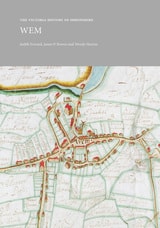
The Victoria History of Shropshire
WemJudith Ann Everard and James Bowen
University of London Press, 2020

The Victorian Eye
A Political History of Light and Vision in Britain, 1800-1910Chris Otter
University of Chicago Press, 2008
The Victorian Eye’s innovative interdisciplinary approach—and generous illustrations—will captivate a range of readers interested in the history of modern Britain, visual culture, technology, and urbanization.

The Victorian Marionette Theatre
John Mccormick
University of Iowa Press, 2004
The Victorian World Picture
Newsome, David
Rutgers University Press, 1997
When did the Victorians come to regard themselves as "Victorians" and to use that term to describe the period in which they were living? David Newsome's monumental history takes a good, long look at the Victorian age and what distinguishes it so prominently in the history of both England and the world. The Victorian World Picture presents a vivid canvas of the Victorians as they saw themselves and as the rest of the world saw them.
The Victorian era was a time of unprecedented population growth and massive industrialization. Darwinian theory shook people's religious beliefs and foreign competition threatened industry and agriculture. The transformation of this nineteenth-century world was overhwelming, pervading the social, cultural, intellectual, economic, and political spheres. By the time of the Great Exhibition in 1851, the British were calling themselves Victorians and Prince Albert was able to proclaim, "We are living at a period of most wonderful transition." David Newsome weaves all these strands of Victorian life into a compelling evocation of the spirit of a fascinating time that laid the foundation for the modern age.
The Victorians in the Rearview Mirror
Simon Joyce
Ohio University Press, 2007
When Margaret Thatcher called in 1979 for a return to Victorian values such as hard work, self-reliance, thrift, and national pride, Labour Party leader Neil Kinnock responded that “Victorian values” also included “cruelty, misery, drudgery, squalor, and ignorance.”
The Victorians in the Rearview Mirror is an in-depth look at the ways that the twentieth century reacted to and reimagined its predecessor. It considers how the Victorian inheritance has been represented in literature, politics, film, and visual culture; the ways in which modernists and progressives have sought to differentiate themselves from an image of the Victorian; and how conservatives (and some liberals) have sought to revive elements of nineteenth-century life. Nostalgic and critical impulses combine to fix an understanding of the Victorians in the popular imagination.
Simon Joyce examines heritage culture, contemporary politics, and the “neo-Dickensian” novel to offer a more affirmative assessment of the Victorian legacy, one that lets us imagine a model of social interconnection and interdependence that has come under threat in today’s politics and culture.
Although more than one hundred years have passed since the death of Queen Victoria, the impact of her time is still fresh. The Victorians in the Rearview Mirror speaks to diverse audiences in literary and cultural studies, in addition to those interested in visual culture and contemporary politics, and situates detailed close readings of literary and cinematic texts in the context of a larger argument about the legacies of an era not as distant as we might like to think.
The Victorious Counterrevolution
The Nationalist Effort in the Spanish Civil WarMichael Seidman
University of Wisconsin Press, 2011
This groundbreaking history of the Spanish Civil War (1936–39) examines, for the first time in any language, how General Francisco Franco and his Nationalist forces managed state finance and economic production, and mobilized support from elites and middle-class Spaniards, to achieve their eventual victory over Spanish Republicans and the revolutionary left.
The Spanish Nationalists are exceptional among counter-revolutionary movements of the twentieth century, Michael Seidman demonstrates, because they avoided the inflation and shortages of food and military supplies that stymied not only their Republican adversaries but also their counter-revolutionary counterparts—the Russian Whites and Chinese Nationalists. He documents how Franco’s highly repressive and tightly controlled regime produced food for troops and civilians; regular pay for soldiers, farmers, and factory workers; and protection of property rights for both large and small landowners. These factors, combined with the Nationalists’ pro-Catholic and anti-Jewish propaganda, reinforced solidarity in the Nationalist zone.
Seidman concludes that, unlike the victorious Spanish Nationalists, the Russian and Chinese bourgeoisie were weakened by the economic and social upheaval of the two world wars and succumbed in each case to the surging revolutionary left.

The Victory Album
Reflections on the Good Life after the Good WarPhilip D. Beidler
University of Alabama Press, 2010
The Viennese Revolution of 1848
By R. John Rath
University of Texas Press, 1957
Liberalism, in the nineteenth-century sense of the term, came to Austria much later than it came to western Europe, for it was not until the 1840s that the industrial revolution reached the Hapsburg Empire, bringing in its train miserable working conditions and economic upheaval, which created bitter resentment among the working classes and a longing for a Utopia that would cure the ills of mankind.
This new-found liberalism, largely self-contained and uninfluenced by liberal movements outside the empire, centered mainly in the idea of individual freedom and constitutional monarchism. In the end, the revolution failed because the moderates proved too weak to control the radical excesses, and the radicals in growing desperation tried to turn the rebel idea into a democratic and, at the extreme, a republican one. Fear of this extremism finally drove the moderates into the counterrevolutionary camp.
Since the Viennese rebels fought to achieve many of the goals fundamental to democracy, historians have generally tended to idealize the revolutionaries and forget their shortcomings. R. John Rath has sought to evaluate the revolution from the point of view of the political ideologies of 1848 rather than those of the mid-twentieth century. Moreover, he has clearly and objectively stated the case for both the left and the right, pointing out the failures and shortcomings of each.
At its publication, this was the first detailed English-language book on the Viennese Revolution of 1848 in more than a hundred years. The author has not confined himself to the bare bones of history. In his descriptions of the times and lively portrayals of the chief actors of the revolution, he has vividly restaged a drama of an ideal that failed.

The Viet Nam War/The American War
Images and Representations in Euro-American and Vietnamese Exile NarrativesRenny Christopher
University of Massachusetts Press, 1995
This book seeks to reformulate the canon of writings on what is called “the Viet Nam War” in America and “the American War” in Viet Nam. Until recently, the accepted canon has consisted almost exclusively of American white male combat narratives, which often reflect and perpetuate Asian stereotypes. Renny Christopher introduces material that displays a bicultural perspective, including works by Vietnamese exile writers and by lesser-known Euro-Americans who attempt to bridge the cultural gap.
Christopher traces the history of American stereotyping of Asians and shows how Euro-American ethnocentricity has limited most American authors' ability to represent fairly the Vietnamese in their stories. By giving us access to Vietnamese representations of the war, she creates a context for understanding the way the war was experienced from the “other” side, and she offers perceptive, well-documented analyses of how and why Americans have so emphatically excised the Vietnamese from narratives about a war fought in their own country.
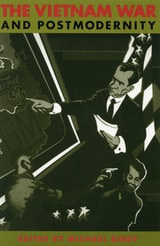
The Vietnam War and Postmodernity
Michael Bibby
University of Massachusetts Press, 1999
The longest war in the nation's history, the American military intervention in Vietnam dominated United States culture and politics from 1965 to 1975. In addition to causing immense devastation in Southeast Asia, the war transformed American society, with effects that continue to be felt today. Yet aside from a few cultural studies of the war's representations, scholars have tended to ignore the relationship between the American war in Vietnam and broader cultural developments in the West. Frederic Jameson once characterized the Vietnam War as “the first terrible postmodernist war,” suggesting that it embodied or reflected the sensibility of an emerging historical epoch. But does it make sense to place a military conflict within a category of cultural and aesthetic periodization? Is it possible to see the Vietnam War as an expression and reflection of postmodernity—what Jameson calls “the cultural logic of late capitalism?” These are some of the questions addressed in this volume. Ranging across a variety of disciplines, including philosophy, cultural studies, literary criticism, and film studies, the essays explore the war's discourses and technologies in relation to the post-modern condition. At the same time, they reinterpret key cultural representations of the war from a postmodern perspective. The result is a book that poses important challenges to both Vietnam War studies and postmodern studies, at once reshaping the ways postmodernity is conceived and reminding us of the war's enduring significance in contemporary cultural history. In addition to Michael Bibby, contributors are Philip D. Beidler, Michael Clark, Cynthia J. Fuchs, Brady Harrison, Tony Williams, Eric Gadzinski, Chris Hables Gray, and Douglas Kellner.

The Vietnam War in American Memory
Veterans, Memorials, and the Politics of HealingPatrick Hagopian
University of Massachusetts Press, 2009
A study of American attempts to come to terms with the legacy of the Vietnam War, this book highlights the central role played by Vietnam veterans in shaping public memory of the war.
Tracing the evolution of the image of the Vietnam veteran from alienated dissenter to traumatized victim to noble warrior, Patrick Hagopian describes how efforts to commemorate the war increasingly downplayed the political divisions it spawned in favor of a more unifying emphasis on honoring veterans and promoting national “healing.”
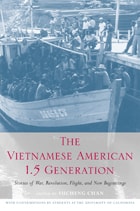
The Vietnamese American 1.5 Generation
Stories of War, Revolution, Flight and New Beginningsedited by Sucheng Chan
Temple University Press, 2006
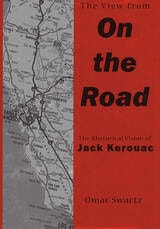
The View From On the Road
The Rhetorical Vision of Jack KerouacOmar Swartz
Southern Illinois University Press, 2000
Through careful analysis of Jack Kerouac’s On the Road, Omar Swartz argues that Kerouac’s influence on American society is largely rhetorical. Kerouac’s significance as a cultural icon can be best understood, Swartz asserts, in terms of traditional rhetorical practices and principles.
To Swartz, Kerouac is a rhetor who symbolically reconstructs his world and offers arguments and encouragements for others to follow. Swartz proposes that On the Road constitutes a “rhetorical vision,” a reality-defining discourse suggesting alternative possibilities for growth and change. Swartz asserts that the reader of Kerouac’s On theRoadbecomes capable of responding to the larger, confusing culture in a strategic manner. Kerouac's rhetorical vision of an alternative social and cultural reality contributes to the identity of localized cultures within the United States.
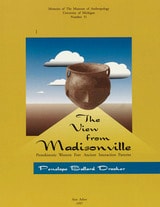
The View from Madisonville
Protohistoric Western Fort Ancient Interaction PatternsPenelope Ballard Drooker
University of Michigan Press, 1997
Madisonville was one of the key settlements of the Ohio Valley Fort Ancient people and was the subject of James Griffin’s 1943 classic, The Fort Ancient Aspect. It is a site rich in burials and artifacts documenting the earliest European influences. Drooker re-explores a century of excavation to explain how Contact Period events affected Madisonville inhabitants and their links to eastern Fort Ancient, northern Ohio, Iroquoian, Oneota, and Mississipian groups.
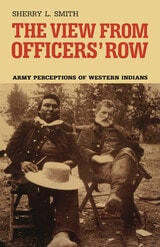
The View from Officers' Row
Army Perceptions of Western IndiansSherry L. Smith
University of Arizona Press, 1990
Capturing military men in contemplation rather than combat, Sherry L. Smith reveals American army officers' views about the Indians against whom they fought in the last half of the nineteenth century. She demonstrates that these officers—and their wives—did not share a monolithic, negative view of their enemies, but instead often developed a great respect for Indians and their cultures. Some officers even came to question Indian policy, expressed misgivings about their personal involvement in the Indian Wars, and openly sympathized with their foe.
The book reviews the period 1848–1890—from the acquisition of the Mexican Cession to the Battle of Wounded Knee—and encompasses the entire trans-Mississippi West. Resting primarily on personal documents drawn from a representative sample of the officer corps at all levels, the study seeks to juxtapose the opinions of high-ranking officers with those of officers of lesser prominence, who were perhaps less inclined to express personal opinions in official reports.
No educated segment of American society had more prolonged contact with Indians than did army officers and their wives, yet not until now has such an overview of their attitudes been presented. Smith's work demolishes the stereotype of the Indian-hating officer and broadens our understanding of the role of the army in the American West.
The View from Somewhere
Undoing the Myth of Journalistic ObjectivityLewis Raven Wallace
University of Chicago Press, 2019
In The View from Somewhere, Lewis Raven Wallace dives deep into the history of “objectivity” in journalism and how its been used to gatekeep and silence marginalized writers as far back as Ida B. Wells. At its core, this is a book about fierce journalists who have pursued truth and transparency and sometimes been punished for it—not just by tyrannical governments but by journalistic institutions themselves. He highlights the stories of journalists who question “objectivity” with sensitivity and passion: Desmond Cole of the Toronto Star; New York Times reporter Linda Greenhouse; Pulitzer Prize-winner Rachel Kaadzi Ghansah; Peabody-winning podcaster John Biewen; Guardian correspondent Gary Younge; former Buzzfeed reporter Meredith Talusan; and many others. Wallace also shares his own experiences as a midwestern transgender journalist and activist who was fired from his job as a national reporter for public radio for speaking out against “objectivity” in coverage of Trump and white supremacy.
With insightful steps through history, Wallace stresses that journalists have never been mere passive observers. Using historical and contemporary examples—from lynching in the nineteenth century to transgender issues in the twenty-first—Wallace offers a definitive critique of “objectivity” as a catchall for accurate journalism. He calls for the dismissal of this damaging mythology in order to confront the realities of institutional power, racism, and other forms of oppression and exploitation in the news industry.
The View from Somewhere is a compelling rallying cry against journalist neutrality and for the validity of news told from distinctly subjective voices.
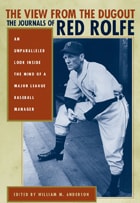
The View from the Dugout
The Journals of Red RolfeEdited by William M. Anderson
University of Michigan Press, 2006
-Bill James, in The New Bill James Historical Baseball Abstract, on the journals of Red Rolfe
"Red Rolfe's journal for his years as manager of the Detroit Tigers is the kind of precious source researchers yearn for. In combination with William M. Anderson's well-done text, The View from the Dugout will be of great interest to general readers and of immense value to students of baseball history."
-Charles C. Alexander, author of Breaking the Slump: Baseball in the Depression Era
"Red Rolfe was one of baseball's most astute observers. This is 'inside' baseball from the inside."
-Donald Honig, author of Baseball America, Baseball When the Grass Was Real, and other books in the Donald Honig Best Players of All Time series
"In his lucid journals Red Rolfe has provided an inside look at how an intelligent baseball manager thinks and prepares."
-Ray Robinson, Yankee historian and author of Iron Horse: Lou Gehrig in His Time
Baseball players as a rule aren't known for documenting their experiences on the diamond. Red Rolfe, however, during his time as manager of the Detroit Tigers from 1949 to 1952, recorded daily accounts of each game, including candid observations about his team's performance. He used these observations to coach his players and to gain an advantage by recording strengths, weaknesses, and tendencies of opposing players and managers. Rolfe's journals carry added value considering his own career as an All-Star Yankee third baseman on numerous world champion teams, where he was a teammate of Lou Gehrig and Joe DiMaggio.
Today, in the era of televised broadcasts, networks often wire a manager so that viewers can listen to his spontaneous comments throughout the game. Red Rolfe's journals offer an opportunity to find out what a manager is thinking when no one is around to hear.
William M. Anderson is Director of the Department of History, Arts and Libraries for the State of Michigan. His books include The Detroit Tigers: A Pictorial Celebration of the Greatest Players and Moments in Tigers' History.
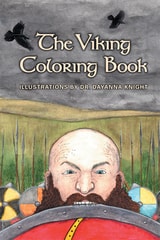
The Viking Coloring Book
Dayanna Knight
Arizona Center for Medieval and Renaissance Studies, 2017
What do you think of when you think of the Vikings? Fierce warriors? Sailors of magnificent dragon-prowed ships who terrorized North-Western Europe? Do you think of darkened halls thick with smoke and song?
Like all people those researchers now consider to be Viking were much more complex than the modern world sees them as. This coloring book is meant to show that. It is designed to provide scenes of the beauty of the early medieval world the Vikings inhabited. It is in this context that Viking cultures developed. You will find artifacts and animals, plants and landscapes within these pages to explore. Species that held some use to the Vikings, such as those that provided fur in particular have been focused on. Reconstructed scenes are inspired by the diverse world experienced in the north. There are no horned helmets here. The real Vikings were much more practical than that.

The Village Enlightenment in America
Popular Religion and Science in the Nineteenth CenturyCraig James Hazen
University of Illinois Press, 2000
A theologian, writer, and apologist for the nascent Mormon movement, as well as an amateur scientist, Orson Pratt wrote Key to the Universe, or a New Theory of Its Mechanism, to establish a scientific base for the Church of Jesus Christ of Latter-day Saints. Robert Hare, an inventor and ardent convert to spiritualism, used his scientific expertise to lend credence to the spiritualist movement. Phineas Parkhurst Quimby, generally considered the initiator of the American mind-cure movement, developed an overtly religious concept of science and used it to justify his system of theology.
Pratt, Hare, and Quimby all employed a potent combination of popular science and Baconianism to legitimate their new religious ideas. Using the same terms--matter, ether, magnetic force--to account for the behavior of particles, planetary rotation, and the influence of the Holy Ghost, these agents of the Enlightenment constructed complex systems intended to demonstrate a fundamental harmony between the physical and the metaphysical.
Through the lives and work of these three influential men, The Village Enlightenment in America opens a window to a time when science and religion, instead of seeming fundamentally at odds with each other, appeared entirely reconcilable.
The Village Is Like a Wheel
Rethinking Cargos, Family, and Ethnicity in Highland MexicoRoger Magazine
University of Arizona Press, 2012
According to Magazine, where Western anthropologists often assume that persons are individuals capable of acting on their own to produce things, rural highland Mexicans see persons as inherently interdependent and in need of others even to act. He utilizes the term “active subjectivity” to denote the fact that what they produce in others is not simply action but also a subjective state or attitude of willingness to perform the action.
The author’s goals are to improve understandings of rural highland Mexicans’ lives and to contribute to a broader disciplinary effort aimed at revealing the cultural specificity or ethnocentricity of our supposedly universally applicable concepts and theories.