Results by title
28167 books match the query 'History' and 6372 start with t

The Village Project
Rural Revitalization in Contemporary BulgariaSarah Craycraft
University of Wisconsin Press, 2026
Since the collapse of socialism, Bulgaria’s population has been on the move—out of rural regions and into cities, or out of the country altogether. Yet today there is a countermovement of young, urban Bulgarians, born around 1989, seeking to repopulate rural villages and reclaim traditional Bulgarian folklife. Though many of these young Bulgarians have no direct experience with a rural lifestyle nor memories of thriving village life, their actions and movements are inspired by a nostalgic vision of the past. And so, beyond a spatial return, this rural revitalization movement speaks to visions of an alternate future, one sparked by dismay with the conditions of contemporary life.
Using ethnographic and folkloristic methods, Sarah Craycraft paints a complex, detailed picture of responses to Europeanization, carried out through neoliberal folklife projects as they collide with ongoing efforts to build a revitalized rural Bulgaria in the ruins of the past. Contextualized within a particular Southeast European nation, the study speaks to broader questions of rural revival, public-facing culture work, intergenerational folklore, and the imbrication of folklore with politics and culture.

The Village and the Class War
Anti-Kulak Campaign in Estonia 1944-49Anu Mai Kõll
Central European University Press, 2013

The Village on the Plain
Auburn University, 1856–2006Dwayne Cox
University of Alabama Press, 2016
The Village on the Plain tells the story of the founding of Auburn University as a small private college and the tumultuous history of its growth and transformation into the complex institution it is today.
Auburn University possesses a rich and storied past as well as an esprit de corps that is the envy of its rivals. Dwayne Cox’s The Village on the Plain traces the school’s history in fascinating detail from its origins as a private college through its emergence as a nationally recognized land-grant university.
Founded before the Civil War to provide a classical education, Auburn became the state’s land-grant college after the cessation of hostilities. This infused the school with a vision of the reborn South as a commercial and industrial power. By the 1880s, the applied sciences were at the core of Auburn’s growth and strength. Like most southern universities, Auburn never enjoyed financial abundance, and scarcity intensified internal debates over investments in liberal arts or science. Modest state funding for higher education also complicated Auburn’s rise. It became a source of competition with the University of Alabama. This rivalry was most intense between 1908 and 1948. The two schools did not meet on the gridiron but blocked and tackled one another in the legislature over the division of state funds.
On the idyllic plains of Lee County, Alabama, Auburn developed a unique, sometimes introspective culture, which is true of many universities founded far from urban centers. Long Auburn’s head archivist, Cox describes this culture with an insider’s insights and shows how it shaped the school's history and community.
Auburn University’s history is that of a small private college that rose to the challenges of convulsive state and national events, not only to survive but to emerge more vibrant and thriving. Offering much to students of higher education and Alabama history, as well as readers affiliated with Auburn University, The Village on the Plain tells the story of this complex and fascinating institution.

The Villas of Pliny from Antiquity to Posterity
Pierre de la Ruffinière du Prey
University of Chicago Press, 1994
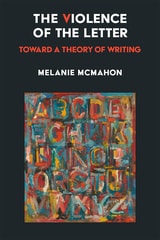
The Violence of the Letter
Toward a Theory of WritingMelanie McMahon
University of Michigan Press, 2023
Co-Winner of the 2024 ACLA Renè Wellek Prize for Monograph
The emergence of the alphabet in ancient Greece, usually heralded as the first step in the inexorable march toward reason and progress, in fact signaled the introduction of a chance technology that hijacked the future, with devastating consequences for humanity. By investigating an array of cultural artifacts, ranging from Kubrick's 2001: A Space Odyssey to the Oracle at Delphi to Luther's challenge to the Church, this book demonstrates how the apparently benign emergence of writing made possible far-ranging systems of organized domination and unprecedented levels of violence. The Violence of the Letter considers how a twenty-six-letter code changed the face of the world, and not always for the better.
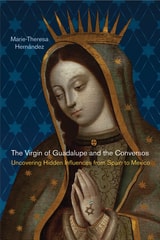
The Virgin of Guadalupe and the Conversos
Uncovering Hidden Influences from Spain to MexicoHernández, Marie-Theresa
Rutgers University Press, 2014
The terms converso and judaizante are often used for descendants of Spanish Jews (the Sephardi, or Sefarditas as they are sometimes called), who converted under duress to Christianity in the fourteenth and fifteenth centuries. There are few, if any, archival documents that prove the existence of judaizantes after the Spanish expulsion of the Jews in 1492 and the Portuguese expulsion in 1497, as it is unlikely that a secret Jew in sixteenth-century Spain would have documented his allegiance to the Law of Moses, thereby providing evidence for the Inquisition.
On a Da Vinci Code – style quest, Hernández persisted in hunting for a trove of forgotten manuscripts at the New York Public Library. These documents, once unearthed, describe the Jewish/Christian religious beliefs of an early nineteenth-century Catholic priest in Mexico City, focusing on the relationship between the Virgin of Guadalupe and Judaism. With this discovery in hand, the author traces the cult of Guadalupe backwards to its fourteenth-century Spanish origins. The trail from that point forward can then be followed to its interface with early modern conversos and their descendants at the highest levels of the Church and the monarchy in Spain and Colonial Mexico. She describes key players who were somehow immune to the dangers of the Inquisition and who were allowed the freedom to display, albeit in a camouflaged manner, vestiges of their family's Jewish identity.
By exploring the narratives produced by these individuals, Hernández reveals the existence of those conversos and judaizantes who did not return to the “covenantal bond of rabbinic law,” who did not publicly identify themselves as Jews, and who continued to exhibit in their influential writings a covert allegiance and longing for a Jewish past. This is a spellbinding and controversial story that offers a fresh perspective on the origins and history of conversos.

The Virtual Haydn
Paradox of a Twenty-First-Century KeyboardistTom Beghin
University of Chicago Press, 2015
With The Virtual Haydn, Tom Beghin—himself a professional keyboard player—delves deeply into eighteenth-century history and musicology to help us hear a properly complex Haydn. Unusually for a scholarly work, the book is presented in the first person, as Beghin takes us on what is clearly a very personal journey into the past. When a discussion of a group of Viennese sonatas, for example, leads him into an analysis of the contemporary interest in physiognomy, Beghin applies what he learns about the role of facial expressions during his own performance of the music. Elsewhere, he analyzes gesture and gender, changes in keyboard technology, and the role of amateurs in eighteenth-century musical culture.
The resulting book is itself a fascinating, bravura performance, one that partakes of eighteenth-century idiosyncrasy while drawing on a panoply of twenty-first-century knowledge.

The Virtuous and Violent Women of Seventeenth-Century Massachusetts
Emily C.K. Romeo
University of Massachusetts Press, 2020
Dismantling the image of the peaceful and serene colonial goodwife and countering the assumption that New England was inherently less violent than other regions of colonial America, Emily C. K. Romeo offers a revealing look at acts of violence by Anglo-American women in colonial Massachusetts, from the everyday to the extraordinary. Using Essex County as a case study, Romeo deftly utilizes seventeenth- and eighteenth-century sources to demonstrate that Puritan women, both “virtuous” and otherwise, learned to negotiate the shifting boundaries between acceptable and unacceptable violence in their daily lives and communities.
The Virtuous and Violent Women of Seventeenth-Century Massachusetts shows that more dramatic violence by women—including infanticide, the scalping of captors during the Indian Wars, and even witchcraft accusations—was not necessarily intended to challenge the structures of authority but often sprung from women's desire to protect property, safety, and standing for themselves and their families. The situations in which women chose to flout powerful social conventions and resort to overt violence expose the underlying, often unspoken, priorities and gendered expectations that shaped this society.

The Visceral Logics of Decolonization
Neetu Khanna
Duke University Press, 2020

The Visible Wall
Jews and Other Ethnic Outsiders in Swedish FilmRochelle Wright
Southern Illinois University Press, 1998
Rochelle Wright provides the first historical overview and analysis of the manner in which Jews and other ethnic outsiders have been depicted in Swedish film from 1930 to the present.
Focusing on films produced in Sweden for primarily Swedish audiences, Wright analyzes how the portrayal of the relatively small Jewish minority has evolved over the years. She compares the images of Jews in Swedish film with those of other ethnic subcultures: long-term resident communities such as tattare (‘travelers’, an indigenous pariah group often confused with gypsies), Finns, the Sami, and recent immigrant populations such as Greeks, Italians, Turks, and Yugoslavians.
Wright’s cross-disciplinary approach to interrelated issues of ethnicity and national identity enables her to take advantage of the methodologies of historians and sociologists as well as those of literary and film critics. She bases her study on a detailed analysis of the films, but, by way of comparison, she examines filmscripts and literary sources. She also consults contemporary reviews, interviews with actors and directors, and biographies and memoirs as well as critical discussion among film historians.
Wright confronts important—and exceedingly difficult—social questions. She deals head-on with xenophobia, anti-Semitism, immigration, assimilation, ethnicity, multiculturalism, and the national self-image of Swedes as reflected in their cinema. She also analyzes the manner in which Swedish film represents the persecution of Jews in Nazi-dominated Europe.
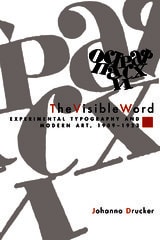
The Visible Word
Experimental Typography and Modern Art, 1909-1923Johanna Drucker
University of Chicago Press, 1994
Drucker suggests a methodology closer to the actual practices of the early avant-garde artists, based on a rereading of their critical and theoretical writings. After reviewing theories of signification, the production of meaning, and materiality, she analyzes the work of four poets active in the typographic experimentation of the 1910s and 1920s: Ilia Zdanevich, Filippo Marinetti, Guillaume Apollinaire, and Tristan Tzara.
Few studies of avant-garde art and literature in the early twentieth century have acknowledged the degree to which typographic activity furthered debates about the very nature and function of the avant-garde. The Visible Word enriches our understanding of the processes of change in artistic production and reception in the twentieth century.
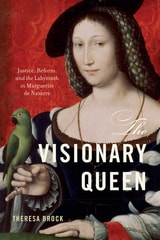
The Visionary Queen
Justice, Reform, and the Labyrinth in Marguerite de NavarreTheresa Brock
University of Delaware Press, 2024

The Visions of Sor María de Agreda
Writing Knowledge and PowerClark Colahan
University of Arizona Press, 1994

The Visual Afterlife of Abdelkader Bennahar
Robert Desjarlais
Duke University Press, 2025
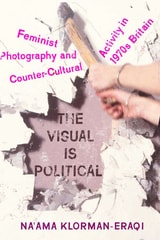
The Visual Is Political
Feminist Photography and Countercultural Activity in 1970s BritainNa'ama Klorman-Eraqi
Rutgers University Press, 2019
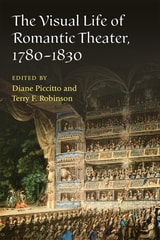
The Visual Life of Romantic Theater, 1780-1830
Edited by Diane Piccitto and Terry F. Robinson
University of Michigan Press, 2023
The Visual Life of Romantic Theater examines the dynamism and vibrancy of stage spectacle and its impact in an era of momentous social upheaval and aesthetic change. Situating theatrical production as key to understanding visuality ca. 1780-1830, this book places the stage front and center in Romantic scholarship—a field in a period long defined by its focus on poetry—by reenvisioning traditional approaches to artistic and social production. How, it asks, did dramaturgy and stagecraft influence aesthetic and sociopolitical concerns? How does a focus on visuality expand our understanding of the historical experience of theatergoing? In what ways did stage performance converge with visual culture beyond the theater? How did extra-theatrical genres engage with theatrical sight and spectacle? Finally, how does a focus on dramatic vision change the way we conceive of Romanticism itself? The volume’s essays by emerging and established scholars provide exciting and suggestive answers to these questions, along with a more capacious conception of Romantic theater as a locus of visual culture that reached well beyond playhouse walls.

The Visual World of the Hungarian Angevin Legendary
Béla Zsolt Szakács
Central European University Press, 2016
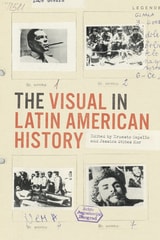
The Visual in Latin American History
Edited by Ernesto Capello and Jessica Stites Mor
University of Texas Press, 2026
A collection of essays examining the role of visual materials in shaping Latin American lives, historical thought, and worldmaking.
Historians have long valued visual media as a source of documentation and illustration. More recently, scholars have also been turning to visual media for another purpose: to directly observe historical processes. Paintings, maps, visual narratives, graffiti, photography—these objects do not simply transmit information about events; they are events. They imbue the historical change we seek to understand.
The Visual in Latin American History is a collection of essays that applies cutting-edge visual-studies methodology to the history of Central and South America and the Caribbean. Contributors focus on the visual production of postcolonial national imaginaries across Latin America—mythologies that purposely omitted Indigenous groups, African diasporic communities, and new migrants from Europe and Asia. The essays range across a vast territory, including erasure in archeology and Afro-Colombian portraiture; image making in domestic spaces and social movements; the visual vocabularies of urban planning and agrarian reform; military “performance” and anti-imperial Cold War exchanges; and humanitarian documentary along the US border.Collectively, the authors show how visual methods can radically transform our understanding of power and culture in Latin America and beyond.
The Voice in the Drum
Music, Language, and Emotion in Islamicate South AsiaRichard K. Wolf
University of Illinois Press, 2014

The Voice of Toil
Nineteenth-Century British Writings about WorkDavid J. Bradshaw
Ohio University Press, 1999
One of the most recurrent and controversial subjects of nineteenth–century discourse was work. Many thinkers associated work with honest pursuit of doing good, not the curse accompanying exile from Eden but rather “a great gift of God.” Sincerely undertaken work comprised a mission entailing a commitment to serve others and promote a better future for all.
Satisfaction with what work could do for individuals had its counterbalance in the anger and dismay expressed at the conditions of those whom Robert Owen, in 1817, first called the “working class.” What working–class people confronted both at the labor site and at their lodgings was construed as oppressive, and the misery of their lives became the subject of sentimental poetry, government report, popular fiction, and journalistic expose. Perhaps as heated as the discussion about conditions of lower–class workers was the conversation about separate spheres of work for men and women. This conversation, too, found its way into the literature and public discourse of the day.
In The Voice of Toil, the editors have collected the central writings from a pivotal place and time, including poems, stories, essays, and a play that reflect four prominent ways in which the subject of work was addressed: Work as Mission, Work as Opportunity, Work as Oppression, and (Separate) Spheres of Work. The resulting anthology offers a provocative text for students of nineteenth-century British literature and history and a valuable resource for scholars.
The text includes readings from John Wesley, William Blake, Elizabeth Gaskell, William Wordsworth, Charles Dickens, Florence Nightingale, William Morris, Joanna Baillie, Friedrich Engels, Matthew Arnold, Angela Burdett–Coutts, John Stuart Mill, Elizabeth Barrett Browning, Bernard Shaw and many others.
The Voice of the Dawn
An Autohistory of the Abenaki NationFrederick Matthew Wiseman
University Press of New England, 2001
The Voice of the Mother
Embedded Maternal Narratives in Twentieth-Century Women's AutobiographiesJo Malin
Southern Illinois University Press, 2000
Every woman autobiographer is a daughter who writes and establishes her identity through her autobiographical narrative. In The Voice of the Mother, Jo Malin argues that many twentieth-century autobiographies by women contain an intertext, an embedded narrative, which is a biography of the writer/daughter’s mother.
Analyzing this narrative practice, Malin examines ten texts by women who seem particularly compelled to tell their mothers’ stories: Virginia Woolf, Sara Suleri, Kim Chernin, Drusilla Modjeska, Joan Nestle, Carolyn Steedman, Dorothy Allison, Adrienne Rich, Cherríe Moraga, and Audre Lorde. Each author is, in fact, able to write her own autobiography only by using a narrative form that contains her mother’s story at its core. These texts raise interesting questions about autobiography as a genre and about a feminist writing practice that resists and subverts the dominant literary tradition.
Malin theorizes a hybrid form of autobiographical narrative containing an embedded narrative of the mother. The textual relationship between the two narratives is unique among texts in the auto/biographical canon. This alternative narrative practice—in which the daughter attempts to talk both to her mother and about her—is equally an autobiography and a biography rather than one or the other. The technique is marked by a breakdown of subject/object categories as well as auto/biographical dichotomies of genre. Each text contains a “self” that is more plural than singular, yet neither.
In addition to being a theoretical and textual analysis, Malin’s book is also a mother-daughter autobiography and biography itself. She shares her own story and her mother’s story as a way to connect directly with readers and as a way to bridge the gap between theory and practice.
The Voices of Need
From Petition to Patient in Early Massachusetts, 1730–1820Angela M. Keysor
University of Massachusetts Press, 2027
Revealing how people in need advocated for and negotiated their own care until the development of standardized medicine
The Voices of Need uncovers how men and women in Charlestown, Massachusetts, who turned to municipal authorities for aid, actively shaped how their need was understood and addressed. Through a close examination of Charlestown’s care networks, Angela Keysor shows how town selectmen relied on sufferers themselves to articulate what would relieve their distress, while local women—paid by town authorities—provided hands-on care in homes and neighborhoods. These networks flourished in the early and mid-eighteenth century, but their flexibility and responsiveness were increasingly strained by crisis and change. A devastating smallpox epidemic in 1763, followed by racialized debates over belonging after the legal end of enslavement in Massachusetts in 1783, exposed the limits of community-based care.
After the American Revolution, rising numbers of aid requests prompted town officials to reorganize care through a contract system in which paid caregivers attended to multiple dependents at once. As care became centralized and standardized, the space for individuals to define their own needs—and to influence how those needs were met—steadily narrowed. By 1819, with the founding of Massachusetts General Hospital, sufferers were fully redefined as patients, expected to submit to professional authority rather than participate in decisions about their own care.
Tracing this transition from negotiated assistance to institutional medicine, The Voices of Need illuminates a largely forgotten history of agency among the poor and infirm. In doing so, Keysor challenges conventional narratives of early American health care and shows how the rise of standardized medicine fundamentally reshaped the meaning of need, care, and authority.

The Void, The Grid & The Sign
Traversing The Great BasinWilliam L. Fox
University of Nevada Press, 2005
The Voluntary City
Choice, Community, and Civil SocietyDavid T. Beito, Peter Gordon, and Alexander Tabarrok, Editors
University of Michigan Press, 2002

The Vortex
A NovelJosé Eustasio Rivera
Duke University Press, 2018

The Votes That Counted
How the Court Decided the 2000 Presidential ElectionHoward Gillman
University of Chicago Press, 2001
Lively and authoritative, the book documents how the participants, the press, the academic community, and the public responded during these tension-filled thirty-six days. Gillman also provides a serious yet accessible overview of the legal strategies and debates-from briefs and oral arguments to final decisions. However, in explaining the behavior of courts, he moves beyond an analysis of law to also take into account the influences of partisanship, judicial ideology, and broader political and historical contexts.
Appropriately, Gillman pays special attention to the judges whose behavior generated the most controversy—the battling justices of the Florida and United States Supreme Courts. After carefully reviewing the arguments for and against their decisions, he concludes that the five justices behind the Bush v. Gore decision acted outside what should be considered the acceptable boundaries of judicial power. Gillman ends with an analysis of why they chose such an unprecedented course of action and an assessment of whether their partisan intervention will have any lasting effect on the Supreme Court's reputation and authority.
The Voting Districts of the Roman Republic
The Thirty-five Urban and Rural TribesLily Ross Taylor
University of Michigan Press, 2013
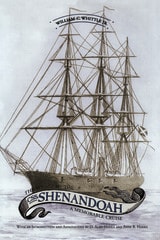
The Voyage of the CSS Shenandoah
A Memorable CruiseWilliam C. Whittle
University of Alabama Press, 2005
The only Confederate ship to circumnavigate the globe
The Confederate cruiser Shenandoah was the last of a group of commerce raiders deployed to prey on Union merchant ships. Ordered to the Pacific Ocean to “greatly damage and disperse” the Yankee whaling fleet in those waters, the Shenandoah’s successful pursuit of her quarry compared favorably with the exploits of the more celebrated Alabama and Florida but has never been as well known because it coincided with the war’s end and the Confederacy’s downfall. It was, however, one of the best documented naval expeditions—from England to the Indian Ocean, Australia and the South Pacific, the Bering Sea, San Francisco, and finally to port in Liverpool—during the Civil War.
The ship’s log and Captain James Waddell’s notes are well preserved, and a number of the Shenandoah’s officers kept detailed journals of the entire voyage. One of the most significant journals, by Lieutenant William Whittle, is presented here, with annotations from other journals, the official records and logs, and newspaper accounts of the Shenandoah’s activities, together bringing to life the history of this remarkable voyage.

The WPA Guide to 1930s Alabama
Harvey H. Jackson, III
University of Alabama Press, 2000
A fascinating time capsule, this classic guide captures Alabama at a critical moment in its history between the Great Depression and World War II and its aftermath.
The WPA guide to Alabama provides a unique snapshot of 1930s Alabama life and culture. Like the other state guides in the WPA's American Guide Series, it features essays on history, economy, people, folkways, education, and other characteristics of the state, as well as general information about the towns and cities. Fifteen suggested automobile tours encourage visitors and residents to explore every corner of the state, from the Gulf Coast to the Black Belt and the Tennessee Valley, from bayous to farmlands to mountain gorges.
When it was first published in 1941, the guide went far to dispel the myth of an Alabama consisting only of cotton fields, magnolias, and plantation houses by highlighting the vibrant university life in Tuscaloosa, the modern industrial activity in Birmingham, the informality of politics in Montgomery, the cultural diversity in Alabama's port city, Mobile, and the small town life in Huntsville before it became home to the space industry. The book includes a calendar of annual events, census data, and a wealth of information useful to the traveling public of the time and enlightening to readers today. The guide lists radio stations, buses, railroads, and highways as they existed before the advent of television, interstates, and malls.
Harvey Jackson's fascinating introduction assesses the guide as a historical document and recounts the involved and sometimes controversial process by which it was researched and written. Project directors struggled to make the guide palatable to its public while still addressing such issues as poverty and race relations and recognizing the state's diversity and its rich folk culture. The result makes for compelling reading for general readers and historians alike.
The WPA Guide to 1930s Iowa
Joseph Frazier Federal Writers Project
University of Iowa Press, 1938

The WPA Guide to 1930s Montana
Work Projects Work Projects Administration
University of Arizona Press, 1994
The Wages of History
Emotional Labor on Public History's Front LinesAmy M. Tyson
University of Massachusetts Press, 2013
Although many who are drawn to such work initially see it as a privilege—an opportunity to connect with the public in meaningful ways through the medium of history—the realities of the job almost inevitably alter that view. Not only do interpreters make considerable sacrifices, both emotional and financial, in order to pursue their work, but their sense of special status can lead them to avoid confronting troubling conditions on the job, at times fueling tensions in the workplace.
This case study also offers insights—many drawn from the author's seven years of working as an interpreter at Fort Snelling—into the way gendered roles and behaviors from the past play out among the workers, the importance of creative autonomy to historical interpreters, and the ways those on public history's front lines both resist and embrace the site's more difficult and painful histories relating to slavery and American Indian genocide.
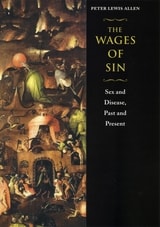
The Wages of Sin
Sex and Disease, Past and PresentPeter Lewis Allen
University of Chicago Press, 2000
Throughout history, Western society has often viewed sickness as a punishment for sin. It has failed to prevent and cure diseases—especially diseases tied to sex—that were seen as the retribution of a wrathful God. The Wages of Sin, the remarkable history of these diseases, shows how society's views of particular afflictions often heightened the suffering of the sick and substituted condemnation for care. Peter Allen moves from the medieval diseases of lovesickness and leprosy through syphilis and bubonic plague, described by one writer as "a broom in the hands of the Almighty, with which He sweepeth the most nasty and uncomely corners of the universe." More recently, medical and social responses to masturbation in the eighteenth and nineteenth centuries and AIDS in the twentieth round out Allen's timely and erudite study of the intersection of private morality and public health. The Wages of Sin tells the fascinating story of how ancient views on sex and sin have shaped, and continue to shape, religious life, medical practice, and private habits.
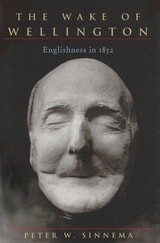
The Wake of Wellington
Englishness in 1852Peter W. Sinnema
Ohio University Press, 2006
Soldier, hero, and politician, the Duke of Wellington is one of the best-known figures of nineteenth-century England. From his victory at Waterloo over Napoleon in 1815, he rose to become prime minister of his country. But Peter Sinnema finds equal fascination in Victorian England’s response to the duke’s death.
The Wake of Wellington considers Wellington’s spectacular funeral pageant in the fall of 1852—an unprecedented event that attracted one and a half million spectators to London—as a threshold event against which the life of the soldier-hero and High Tory statesman could be re-viewed and represented.
Canvassing a profuse and dramatically proliferating Wellingtoniana, Sinnema examines the various assumptions behind, and implications of, the Times’s celebrated claim that the Irish-born Wellington “was the very type and model of an Englishman.” The dead duke, as Sinnema demonstrates, was repeatedly caught up in interpretive practices that stressed the quasi-symbolic relations between hero and nation.
The Wake of Wellington provides a unique view of how in death Wellington and his career were promoted as the consummation of a national destiny intimately bound up with Englishness itself, and with what it meant to be English at midcentury.

The Wall and the Garden
Selected Massachusetts Election Sermons, 1670-1775A.W. Plumstead, Editor
University of Minnesota Press, 1968
The Wall and the Garden was first published in 1968. Minnesota Archive Editions uses digital technology to make long-unavailable books once again accessible, and are published unaltered from the original University of Minnesota Press editions.
The election day sermon in colonial New England was an annual, formal address by a minister of the gospel to the newly assembled legislature of the colony. The tradition began in the Massachusetts Bay colony in 1634, and it continued, in Boston, for 250 years. In this volume, Professor Plumstead presents a collection of nine of the Massachusetts election sermons, chosen from among the surviving Massachusetts sermons which were printed between 1661 and 1775. They are not chosen as representative but, rather, as the best, judged on a basis of literary excellence and ideas and points of style relevant to later developments in American literature and history. There are changes in style and theme in the 105 years between the first and the last selection, and, in his brief introduction to each of the sermons, the editor discusses these changes and the sermon's relationship to the tradition as a whole.
In a general introduction, Professor Plumstead provides background information about the history and significance of the election sermons. As he makes clear, the election sermon tradition offers a vantage point for seeing both continuity and change in colonial intellectual history. The sermons in this collection will complement colonial studies by bringing the reader close to the spirit of the times.
The title of the volume, The Wall and the Garden, derives from the frequent use by colonial preachers of the metaphors of the garden and the wall to describe the colonies and their spiritual enemies.
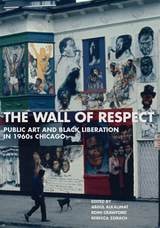
The Wall of Respect
Public Art and Black Liberation in 1960s ChicagoEdited by Abdul Alkalimat, Romi Crawford, and Rebecca Zorach
Northwestern University Press, 2017
The Wall of Respect received national critical acclaim when it was unveiled on the side of a building at Forty-Third and Langley in Chicago’s Bronzeville neighborhood. Painters and photographers worked side by side on the mural's seven themed sections, which featured portraits of Black heroes and sheroes, among them John Coltrane, Nina Simone, Billie Holiday, Malcolm X, Muhammad Ali, and W. E. B. Du Bois. The Wall became a platform for music, poetry, and political rallies. Over time it changed, reflecting painful controversies among the artists as well as broader shifts in the Civil Rights and Black Liberation Movements.
At the intersection of African American culture, politics, and Chicago art history, The Wall of Respect offers, in one keepsake-quality work, an unsurpassed collection of images and essays that illuminate a powerful monument that continues to fascinate artists, scholars, and readers in Chicago and across the United States.

The Walnut Trees of Altenburg
André Malraux
University of Chicago Press, 1992
"The description of the gas attack on the Russian front in 1915 will never be forgotten by anyone who has read it. . . . [Malraux] writes with the precision, the certitude and the authority of an obsessed person who knows that he has found the essence of what he has been looking for."—Conor Cruise O'Brien, from the Foreword
Malraux's greatest novel, Man's Fate, gave a grim, lurid picture of human suffering. [The Walnut Trees of Altenburg], written by a life-long observer of violent upheaval and within the shadows of World War II, gives a calm, thoughtful vision of humanistic endeavor that can transcend the absurdity of existence. Mature readers will find this a rewarding visit to one of the most accomplished writers of our time."—Choice

The Wandering Scholars
Helen Waddell
University of Michigan Press, 1990

The Wandering Signifier
Rhetoric of Jewishness in the Latin American ImaginaryErin Graff Zivin
Duke University Press, 2008
In her readings of Spanish American and Brazilian fiction, Graff Zivin highlights inventions of Jewishness in which the concept is constructed as a rhetorical device. She argues that Jewishness functions as a wandering signifier that while not wholly empty, can be infused with meaning based on the demands of the textual project in question. Just as Jews in Latin America possess distinct histories relative to their European and North American counterparts, they also occupy different symbolic spaces in the cultural landscape. Graff Zivin suggests that in Latin American fiction, anxiety, desire, paranoia, attraction, and repulsion toward Jewishness are always either in tension with or representative of larger attitudes toward otherness, whether racial, sexual, religious, national, economic, or metaphysical. She concludes The Wandering Signifier with an inquiry into whether it is possible to ethically represent the other within the literary text, or whether the act of representation necessarily involves the objectification of the other.

The Wapsipinicon Almanac
Selections from Thirty YearsTimothy Fay
University of Iowa Press, 2023

The War Against The Intellect
Episodes Decline Of DiscoursePeter Shaw
University of Iowa Press, 1989

The War Complex
World War II in Our TimeMarianna Torgovnick
University of Chicago Press, 2005
Marianna Torgovnick argues that we have lived, since the end of World War II, under the power of a war complex—a set of repressed ideas and impulses that stems from our unresolved attitudes toward the technological acceleration of mass death. This complex has led to gaps and hesitations in public discourse about atrocities committed during the war itself. And it remains an enduring wartime consciousness, one most recently animated on September 11.
Showing how different events from World War II became prominent in American cultural memory while others went forgotten or remain hidden in plain sight, The War Complex moves deftly from war films and historical works to television specials and popular magazines to define the image and influence of World War II in our time. Torgovnick also explores the 1961 trial of Adolf Eichmann, the emotional legacy of the Holocaust, and the treatment of World War II's missing history by writers such as W. G. Sebald to reveal the unease we feel at our dependence on those who hold the power of total war. Thinking anew, then, about how we account for war to each other and ourselves, Torgovnick ultimately, and movingly, shows how these anxieties and fears have prepared us to think about September 11 and our current war in Iraq.

The War Diaries of Vladimir Dedijer
Volume 1: From April 6, 1941, to November 27, 1942by Vladimir Dedijer
University of Michigan Press, 1990
The War Diaries of Vladimir Dedijer
Volume 2: From November 28, 1942, to September 10, 1943by Vladimir Dedijer
University of Michigan Press, 1990
The War Diaries of Vladimir Dedijer
Volume 3: From September 11, 1943, to November 7, 1944by Vladimir Dedijer
University of Michigan Press, 1990

The War Machines
Young Men and Violence in Sierra Leone and LiberiaDanny Hoffman
Duke University Press, 2011
Hoffman argues that in contemporary West Africa, space, sociality, and life itself are organized around making young men available for all manner of dangerous work. Drawing on his ethnographic research over the past nine years, as well as the anthropology of violence, interdisciplinary security studies, and contemporary critical theory, he maintains that the mobilization of West African men exemplifies a global trend in the outsourcing of warfare and security operations. A similar dynamic underlies the political economy of violence in Iraq, Afghanistan, and a growing number of postcolonial spaces. An experienced photojournalist, Hoffman integrates more than fifty of his photographs of young West Africans into The War Machines.

The War against Catholicism
Liberalism and the Anti-Catholic Imagination in Nineteenth-Century GermanyMichael B. Gross
University of Michigan Press, 2005
---Helmut Walser Smith, Vanderbilt University
"A marvelously original account of how the Kulturkampf emerged from the cultural, social, and gendered worlds of German liberalism. While not neglecting the 1870s, Gross's analysis directs historians' attention to the under-researched 1850s and 1860s-decades in which liberals' anti-Catholic arguments were formulated against a backdrop of religious revival, democratic innovation, national ambition, and the articulation of new roles for women in society, politics, and the church. The drama of these decades resonates in every chapter of Gross's fine study."
---James Retallack, University of Toronto
"Michael Gross has put the culture back into the Kulturkampf! Integrating social and political analysis with illuminating interpretations of visual and linguistic evidence, Gross explores the work of religious cleavage in defining German national identity. An emerging women's movement, liberal virtues, and Catholic difference come together to explain why, in a century of secularization, Germany's Catholics experienced a religious revival, and why its liberals responded with enmity and frustration. Vividly written and a pleasure to read, this groundbreaking study offers real surprises."
---Margaret Lavinia Anderson, University of California, Berkeley
An innovative study of the relationship between the two most significant, equally powerful, and irreconcilable movements in Germany, Catholicism and liberalism, in the decades following the 1848 Revolution.
After the defeat of liberalism in the Revolution of 1848, and in the face of the dramatic revival of popular Catholicism, German middle-class liberals used anti-Catholicism to orient themselves culturally in a new age. Michael B. Gross's study shows how anti-Catholicism and specifically the Kulturkampf, the campaign to break the power of the Catholic Church, were not simply attacks against the church nor were they merely an attempt to secure state autonomy. Gross shows that the liberal attack on Catholicism was actually a complex attempt to preserve moral, social, political, and sexual order during a period of dramatic pressures for change.
Gross argues that a culture of anti-Catholicism shaped the modern development of Germany including capitalist economics, industrial expansion, national unification, and gender roles. He demonstrates that images of priests, monks, nuns, and Catholics as medieval, backward, and sexually deviant asserted the liberal middle-class claim to social authority after the Revolution of 1848. He pays particular attention to the ways anti-Catholicism, Jesuitphobia, and antimonastic hysteria were laced with misogyny and expressed deeper fears of mass culture and democracy in the liberal imagination. In doing so, he identifies the moral, social, and cultural imperatives behind the Kulturkampf in the 1870s.
By offering a provocative reinterpretation of liberalism and its relationship to the German anti-Catholic movement, this work ultimately demonstrates that in Germany, liberalism itself contributed to a culture of intolerance that would prove to be a serious liability in the twentieth century. It will be of particular interest to students and scholars of culture, ideology, religion, and politics.
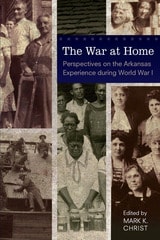
The War at Home
Perspectives on the Arkansas Experience during World War IMark K. Christ
University of Arkansas Press, 2020
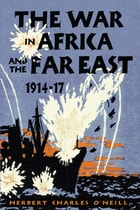
The War in Africa and the Far East, 1914-17
Herbert Charles O'Neill
Westholme Publishing, 2012
"This account will be welcome to a large circle of readers. . . . The arduous nature of these campaigns deserves to be far more widely known, and this is just the book for the purpose--short, clear, and easy to read."--Journal of the African Society
The largest battles of World War I were fought in Europe, and it is there where most critical studies focus. The fate of the far-flung colonies of Germany, however, are what gave the war its global scope, with campaigns reaching from China to New Guinea and East to West Africa. While there are detailed accounts of most of these campaigns, The War in Africa and the Far East, 1914-17 is unique in providing a concise history of the entire series of military events in Africa and Asia, giving the reader a better idea of the relationship and chronology of these wide-ranging events. While Germany was stripped of all its overseas colonies, the change in power had unintended consequences, most importantly the rise of Japan in the Pacific, where former German colonies now stood at the territorial boundary between Japan and the United States.
Waged by Allied troops from Britain, Kenya, Zambia, Portugal, Japan, India, Netherlands, and other countries and led by such personalities as General Jan Christian Smuts, the theater of operations crossed modern-day Tanzania, Rwanda, Burundi, Togo, Cameroon, Namibia, New Guinea, Qingdau, the Bismarck Archipelago, and other Pacific Island chains. Originally published in 1918 using official dispatches and other sources, and presented here for the first time in paperback, completely retypeset and with the original maps and additional photographs, The War in Africa and the Far East is a compact overview of an important aspect of the First World War.