Results by title
28167 books match the query 'History' and 6372 start with t
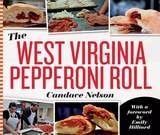
The West Virginia Pepperoni Roll
Candace Nelson
West Virginia University Press, 2017
This spicy snack soon found its way out of the mines and into bakeries, bread companies, restaurants, and event venues around the state, often with additional ingredients like cheese, red sauce, or peppers.
As the pepperoni roll’s reputation moves beyond the borders of West Virginia, this food continues to embody the culinary culture of its home state. It is now found at the center of bake-offs, eating contests, festivals, as a gourmet item on local menus, and even on a bill in the state’s legislature.
The West Virginia Pepperoni Roll is a comprehensive history of the unofficial state food of West Virginia. With over 100 photographs and countless recipes and recollections, it tells the story of the immigrants, business owners, laborers, and citizens who have developed and devoured this simple yet practical food since its invention.
The West and Central Florida Expeditions of Clarence Bloomfield Moore
Clarence Bloomfield Moore, edited and with an introduction by Jeffrey M. Mitchem
University of Alabama Press, 1999
This compilation of Moore's publications on western and central Florida provides all of his archaeological data on the region's mounds and prehistoric canals in a single volume.
The name Clarence B. Moore is familiar to every archaeologist interested in the southeastern United States. This amateur archaeologist's
numerous scientific expeditions to the region resulted in dozens of well-illustrated publications, the value of which increases daily as many of the sites he investigated continue to be destroyed by modern development.
Moore invested considerable time and effort exploring Florida's archaeological sites, devoting more pages of published reports and articles to Florida than to any other state. Because of the wealth of material on Florida, Moore's Florida expedition publications have been
collected in three separate volumes, all published within the Classics in Southeastern Archaeology series. The thirteen papers reproduced in this
volume present the results of Moore's research in West and Central Florida.
Moore's first and last expeditions were to Florida and spanned almost fifty years of archaeological investigations. Following the eastern river drainages to central and western Florida, in 1900 Moore concentrated his efforts along the Florida Gulf Coast, spurred by the exciting
discoveries of Frank Hamilton Cushing at Key Marco in 1896. Although this region is rich in mound sites, many sites located by Moore in the early
years of this century had already been destroyed by construction and lime processing. In addition to mound groupings—some containing masses of skeletal remains—Moore found a number of sites connected by a network of prehistoric canals. Several of the sites located by Moore contained European trade goods and have been used to trace the early wanderings of the conquistadores in the New World.
Moore's early work on the Florida Gulf Coast succeeded in preserving much of the archaeological record in this area. He is to be credited with remarkable insights concerning mound and earthwork construction, artifact trade networks, and chronology development.

The Western Bahr Al Ghazal under British Rule, 1898–1956
Mis Af#57Ahmad Alawad Sikainga
Ohio University Press, 1991

The Western Disease
Contesting Autism in the Somali DiasporaClaire Laurier Decoteau
University of Chicago Press, 2021
Because autism is an increasingly common diagnosis, North Americans are familiar with its symptoms and treatments. But what we know and think about autism is shaped by our social relationship to health, disease, and the medical system. In The Western Disease Claire Laurier Decoteau explores the ways that recent immigrants from Somalia to Canada and the US make sense of their children’s diagnosis of autism. Having never heard of autism before migrating to North America, they often determine that it must be a Western disease. Given its apparent absence in Somalia, they view it as Western in nature, caused by environmental and health conditions unique to life in North America.
Following Somali parents as they struggle to make sense of their children's illness and advocate for alternative care, Decoteau unfolds how complex interacting factors of immigration, race, and class affect Somalis’ relationship to the disease. Somalis’ engagement with autism challenges the prevailing presumption among Western doctors that their approach to healing is universal. Decoteau argues that centering an analysis on autism within the Somali diaspora exposes how autism has been defined and institutionalized as a white, middle-class disorder, leading to health disparities based on race, class, age, and ability. The Western Disease asks us to consider the social causes of disease and the role environmental changes and structural inequalities play in health vulnerability.
The Western Journals of Nehemiah and Henry Sanford, 1839–1846
Kenneth E. Lewis
Michigan State University Press, 2019
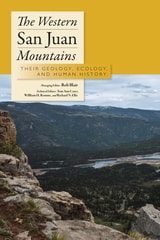
The Western San Juan Mountains
Their Geology, Ecology, and Human HistoryRob Blair
University Press of Colorado, 1996
The most complete work published on the natural history of southwest Colorado's majestic mountain system, The Western San Juan Mountains: Their Geology, Ecology, and Human History is designed to be used while exploring the scenic 235-mile paved San Juan Skyway, which passes through Durango, Silverton, Ouray, Telluride, Dolores, and Cortez.
The Western San Juan Mountains covers the physical environment, the biological communities, the human history, and points of interest represented on milepost signs along the highway. Some of the many topics covered include: how the San Juan Mountains were formed; why the landscape is so rugged and picturesque; why the vegetation changes from the lowlands to the alpine heights; energy and mineral resources of the area; why these mountains intrigued early explorers; factors that influence the unpredictable weather; and the first-known inhabitants.
The contributions to this guide include Fort Lewis College geologists, biologists, archaeologists, historians, and other specialists. Together they have amassed more than one hundred years of study based not only on previous work but on their own research.
This generously illustrated guidebook is aimed at all those who wish to understand this intricate mountain system in much greater detail than provided by most picture books.
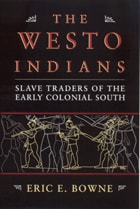
The Westo Indians
Slave Traders of the Early Colonial SouthEric E. Bowne
University of Alabama Press, 2005
A comprehensive study that rescues the Westo from obscurity.
The Westo Indians, who lived in the Savannah River region during the second half of the 17th century, are mentioned in few primary documents and only infrequently in secondary literature. There are no known Westo archaeological sites; no artifacts can be linked to the group; and no more than a single word of their language is known to us today. Yet, from the extant evidence, it is believed that the Westos, who migrated from around Lake Erie by 1656, had a profound effect on the development of the colonial South.
This volume reproduces excerpts from all 19 documents that indisputably reference the Westos, although the Europeans referred to them by a variety of names. Most of the information was written by Lords Proprietors who never met the Westos, or by a handful of Carolinians who did. But the author is able to chart a highly plausible history of this Native group who, for a period, thrived on the Southern frontier.
The narrative traces their northeastern origins and how the Erie conflicts with the Five Nations Iroquois in the Beaver Wars forced them southward, where they found new economic opportunities in the lucrative slave trade. At the height of their influence, between 1659 and 1680, it is believed the Westos captured and sold several thousand Indians from Spanish Florida, often trading them for guns. Eventually, their military advantage over the Indians of the lower South was compromised by the rise of powerful confederacies of native peoples, who could acquire equivalent firearms from the Europeans. Even though the aggressive Westos declined, they had influenced profound change in the Southeast. They furthered the demise of chiefly organization, helped to shift the emphasis from agricultural to hunting economies, and influenced the dramatic decrease in the number and diversity of native polities.

The Westside Slugger
Joe Neal's Lifelong Fight for Social JusticeJohn L. Smith
University of Nevada Press, 2019
Filled with an intense desire for education, he joined the United States Air Force and later graduated from Southern University—studying political science and the law at a time of great upheaval in the racial status quo. As part of a group of courageous men, Neal joined a Department of Justice effort to register the first black voters in Madison Parish.
When Neal moved to southern Nevada in 1963 he found the Silver State to be every bit as discriminatory as his former Louisiana home. As Neal climbed through the political ranks, he used his position in the state senate to speak on behalf of the powerless for more than thirty years. He took on an array of powerful opponents ranging from the Clark County sheriff to the governor of the state, as well as Nevada’s political kingmakers and casino titans. He didn’t always succeed—he lost two runs for governor—but he never stopped fighting. His successes included improved rights for convicted felons and greater services for public education, mental health, and the state’s libraries. He also played an integral role in improving hotel fire safety in the wake of the deadly MGM Grand fire and preserving the pristine waters of Lake Tahoe, which brought him national attention.
Neal lived a life that personified what is right, just, and fair. Pushing through racial and civil rights hurdles and becoming a lifelong advocate for social justice, his dedication and determination are powerful reminders to always fight the good fight and never stop swinging.
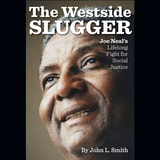
The Westside Slugger
Joe Neal's Lifelong Fight for Social JusticeJohn L. Smith
University of Nevada Press, 2019
Filled with an intense desire for education, he joined the United States Air Force and later graduated from Southern University—studying political science and the law at a time of great upheaval in the racial status quo. As part of a group of courageous men, Neal joined a Department of Justice effort to register the first black voters in Madison Parish.
When Neal moved to southern Nevada in 1963 he found the Silver State to be every bit as discriminatory as his former Louisiana home. As Neal climbed through the political ranks, he used his position in the state senate to speak on behalf of the powerless for more than thirty years. He took on an array of powerful opponents ranging from the Clark County sheriff to the governor of the state, as well as Nevada’s political kingmakers and casino titans. He didn’t always succeed—he lost two runs for governor—but he never stopped fighting. His successes included improved rights for convicted felons and greater services for public education, mental health, and the state’s libraries. He also played an integral role in improving hotel fire safety in the wake of the deadly MGM Grand fire and preserving the pristine waters of Lake Tahoe, which brought him national attention.
Neal lived a life that personified what is right, just, and fair. Pushing through racial and civil rights hurdles and becoming a lifelong advocate for social justice, his dedication and determination are powerful reminders to always fight the good fight and never stop swinging.
The Whale and His Captors; or, The Whaleman's Adventures
Henry T. Cheever
University Press of New England, 2018
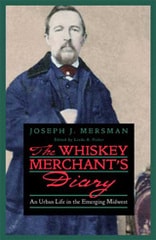
The Whiskey Merchant’s Diary
An Urban Life in the Emerging MidwestJoseph J. Mersman
Ohio University Press, 2007
Joseph J. Mersman was a liquor merchant, a German American immigrant who aspired—successfully—to become a self-made man. Hundreds of the residents of Mersman’s hometown in Germany immigrated to Cincinnati in the 1830s, joining many thousands of other German immigrants. In 1847, at the age of twenty-three, Mersman began recording his activities in a bound volume, small enough to fit into his coat pocket. His diary, filled with work and play, eating and drinking, flirting and dancing, provides a unique picture of everyday life, first in Cincinnati and then in St. Louis, the new urban centers of the emerging Midwest.
Outside of Gold Rush diaries and emigration journals, few narrative records of the antebellum period have been published. Illustrated with photographs, maps, and period advertisements, the diary reveals how a young man worked to establish himself during an era that was rich in opportunity.
As a whiskey rectifier, Mersman bought distilled spirits, redistilled or reprocessed them to remove contaminants or increase the alcohol content, and added various flavorings before selling his product to liquor retailers. In his diary, he describes scrambling for capital, marketing his wares, and arranging transportation by steamboat, omnibus, and train. Although the business that he sought to master was eliminated by the passage of the Pure Food Law of 1906, Mersman, like most rectifiers, was a reputable wholesaler. Merchants like him played an important role in distributing liquor in nineteenth-century America.
Mersman confronted serious disease, both as a sufferer from syphilis and as a witness to two devastating cholera epidemics. Unlike other residents of St. Louis, who fled the relative safety of the countryside, he remained in the city and saw the impact of the epidemics on the community.
Linda A. Fisher’s extensive, insightful, and highly readable annotations add a wealth of background information to Mersman’s story. Her professional training and career as a physician give her a particularly valuable perspective on the public health aspects of Mersman’s life and times.

The Whiskey Rebellion
A Distilled History of an American CrisisBrady J. Crytzer
Westholme Publishing, 2024
As the months passed however the people of Western Pennsylvania grew restless with the inadequacy of the government’s response and they soon turned to more violent means of political expression. Treasury officers across the west were targeted for their involvement in the tax collection, and they were brutally attacked by armed bands of disgruntled locals. They were tarred and feathered, burned with hot irons, and whipped; their homes were ransacked and burned. Extralegal courts were established in a direct challenge to federal authority, and the frontier slowly drifted toward a state of rebellion.
In response President George Washington raised an army of 13,000 men, one of the largest forces he ever commanded, to suppress the rebellion. No major battle ever occurred, but weeks of arrests, illegal detentions, and civil rights violations rocked the west. The event polarized the nation, and highlighted the dramatic differences between Washington’s Federalist perspective and Jefferson’s emerging Democratic-Republican Party. Two centuries later the Whiskey Rebellion stands as the second largest domestic rebellion in American History, only outdone by the Confederate States of America in 1861.
In The Whiskey Rebellion: A Distilled History of an American Crisis, historian Brady J. Crytzer takes the reader on a journey through Western Pennsylvania following the routes of both the rebels and the United States Army to place this important event into context for the reader. Complete with images and maps, the author illuminates what visitors can still see from the period while providing a cogent and engrossing account of this crisis unfolded and how it was resolved.
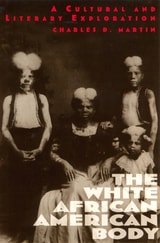
The White African American Body
Martin, Charles D.
Rutgers University Press, 2002
Blacks with white skin. Since colonial times, showmen have exhibited the bodies of African Americans with white or gradually whitening skin in taverns, dime museums, and circus sideshows. The term "white Negro" has served to describe an individual born with albinism as well as those who have vitiligo, a disorder that robs the skin of its pigment in ever-growing patches. In The White African American Body, Charles D. Martin examines the proliferation of the image of the white Negro in American popular culture, from the late eighteenth century to the present day.
This enigmatic figure highlights the folly of the belief in immutable racial differences. If skin is a race marker, what does it mean for blacks literally to be white? What does this say not only about blacks but also about whites? Scientists have probed this mystery, philosophers have pondered its meaning, and artists have profited from the sale of images of these puzzling figures.
Lavishly illustratedwith many rarely seen photographsThe White African American Body shows how the white Negro occupied, and still occupies, the precarious position between white and black, and how this figure remains resilient in American culture.
The White Indian Boy
and its sequel The Return of the White Indian BoyElijah Nicholas Wilson and Charles A. Wilson
University of Utah Press, 1985
These books, published here as a single volume, are testaments to a unique time and place in American history. Because he had a heart for adventure and unusual proficiency with Native American languages, Wilson’s life became an historical canvas on which was painted both the exploration and the closing of a frontier, as he went from childhood among the Shoshone to work as an interpreter for the U.S. government on Indian reservations in Wyoming and Idaho in his later years. This volume includes new introductory material, a family tree, and a background of Indian-white relations in Jackson Hole. Packed with amazing details about life in the Old West, Wilson’s colorful escapades are once again available to a new generation of readers.
The White Negress
Literature, Minstrelsy, and the Black-Jewish ImaginaryHarrison-Kahan, Lori
Rutgers University Press, 2010
Lori Harrison-Kahan examines writings by Edna Ferber, Fannie Hurst, and Zora Neale Hurston, as well as the blackface performances of vaudevillian Sophie Tucker and controversies over the musical and film adaptations of Show Boat and Imitation of Life. Moving between literature and popular culture, she illuminates how the dynamics of interethnic exchange have at once produced and undermined the binary of black and white.

The White Pine Industry in Minnesota
A HistoryAgnes M. Larson
University of Minnesota Press, 2007
“From the first logging operation to the closing of the last mill this book is so thorough, so comprehensive, so well organized, and so useful that it must take its place with the outstanding monographs of economic and western history.” —Journal of Economic History
The old-growth forests of Minnesota, at one time covering 70 percent of the state, played a major role in the development of the Upper Mississippi Valley. Telling the complete history of the white pine industry, Agnes Larson brings us back to a time when Minnesota’s lumber business was thriving. Larson recounts the development of the region with a wealth of information, including the building of the railroads and bustling mill towns; the daily lives of lumberjacks, loggers, river-drivers, and jam-breakers; and the final devastation of the forests.
“An excellent contribution to the regional history and historical geography of the Upper Great Lakes area and the upper Mississippi Valley.” —Geographical Review
Agnes M. Larson (1892–1967) was professor of history at St. Olaf College.
Bradley J. Gills is adjunct professor of history at Grand Valley State University.

The White Plague
Tuberculosis, Man and SocietyDubos, Jean
Rutgers University Press, 1987
In The White Plague, René and Jean Dubos argue that the great increase of tuberculosis was intimately connected with the rise of an industrial, urbanized society and—a much more controversial idea when this book first appeared forty years ago—that the progress of medical science had very little to do with the marked decline in tuberculosis in the twentieth century.
The White Plague has long been regarded as a classic in the social and environmental history of disease. This reprint of the 1952 edition features new introductory writings by two distinguished practitioners of the sociology and history of medicine. David Mechanic's foreword describes the personal and intellectual experience that shaped René Dubos's view of tuberculosis. Barbara Gutmann Rosenkrantz's historical introduction reexamines The White Plague in light of recent work on the social history of tuberculosis. Her thought-provoking essay pays particular attention to the broader cultural and medical assumptions about sickness and sick people that inform a society’s approach to the conquest of disease.
The White River Chronicles of S. C. Turnbo
Man and Wildlife on the Ozarks FrontierJames Keefe
University of Arkansas Press, 1999
This highly readable folklore collection highlights the most representative and evocative tales in the twenty-five hundred pages of backwoods stories collected by Silas Tunbo toward the end of the last century. Turnbo and his informants, antebellum Ozarks natives, believed that the legends of the hunt were, as William Faulkner would write, “the best of all breathing and forever the best of all listening.”
With no apology, the first settlers on the southern frontiers became predators in their own environment. They embraced blood sport and sought its rewards at every turn. The chase promised them a sureness of profit more predictable than land speculation, timbering, or commercial agriculture.
These early opportunists believed that the greatest natural resource along the lush White River drainages in Missouri and Arkansas was large game. Although surrounded by living waters, climax forests, and luxuriant grasses, the tellers of Turnbo’s stories only incidentally made mention of flora. Silas Turnbo and his informants were fascinated by animals and the settlers’ ongoing relationship with them—a relationship often defined by contents for supremacy.
Significantly, Tunbo’s education included only a few years in subscription schools of the 1850s. His writing is direct and in the idiom of hte Ozarks, including spellings that are occasionally whimsical, perfectly befitting these “fireside stories” of the great outdoor drama of the southern frontiers.
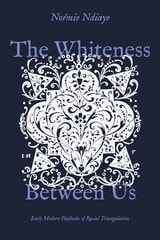
The Whiteness Between Us
Early Modern Playbooks of Racial TriangulationNoémie Ndiaye
University of Chicago Press, 2026
A theorization of the representational juxtapositions, frictions, and connections between Black people and other non-white people in early modern European theatre.
Over the course of the seventeenth century, European drama was an important tool for whiteness to imagine itself at the top of an aspirational structure of power relations. Indeed, that structure could only be aspirational at a time when Europeans were profoundly divided along easily racializable religious and ethnic lines, and when their sovereignty was threatened by the Ottoman empire. It was to strengthen this emerging consciousness of racial whiteness, Noémie Ndiaye argues, that European drama engaged in a form of racial triangulation, fitting Muslim, Jewish, Indigenous, Romani, and Asian characters into a spurious black/white racial binary.
Focusing on English, Spanish, and French drama from 1580 to 1715, The Whiteness Between Us shows how plays became a crucial tool to position not only black people but any non-white community in the new racial architecture that white supremacy sought to build. Ndiaye reveals the stage of this era as a space for wish fulfillment, enabling participants to imagine and work towards a whiter future.
The early modern playbooks of racial triangulation that Ndiaye brings to light can and have been reactivated for white supremacist purposes in our own day and age. Partly in response to the contemporary threat of white nationalism, scholars and students have sought to unearth the early modern roots of racial whiteness and white supremacy. Ndiaye’s book participates in this wave of interest, offering several innovations, including its capacious transnational claims.
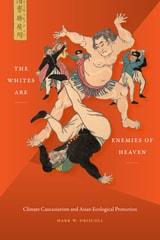
The Whites Are Enemies of Heaven
Climate Caucasianism and Asian Ecological ProtectionMark W. Driscoll
Duke University Press, 2020
The Whole Book
Cultural Perspectives on the Medieval MiscellanyStephen G. Nichols and Siegfried Wenzel, Editors
University of Michigan Press, 1996
This group of papers, edited by two well-known scholars of the medieval world, offers both general and particular approaches to the issues surrounding manuscripts produced in the medieval habit of "miscellany," works of seemingly diverse natures bound together into one volume. Julia Boffey investigates how certain poetical miscellanies came to be assembled, for example, while Sylvia Huot suggests that the miscellany had many different sorts of function and significance. Siegfried Wenzel considers a taxonomy of such collections, and A. S. G. Edwards' paper considers Bodleian Selden B.24 as an example of how the notions of canon, authorship, and attribution might come into play. Ann Matter's final chapter offers the notion that what we call "miscellanies" are likely to have an internal logic that we have been trained to miss, but can come to understand. Other contributors are Ralph Hanna III, Georg Knauer, Stephen Nichols, James J. O'Donnell, and Barbara A. Shailor.
Because The Whole Book deals not only with the content of miscellanies but also with contemporary literary principles, this volume will be of interest to a wide circle of literary critics and historians, as well as to students of the survival of literature and of cultural values.
Stephen G. Nichols is James M. Beall Professor of French and Chair of the Department of French, The Johns Hopkins University. Siegfried Wenzel is Professor of English, University of Pennsylvania.

The Wild Girl, Natural Man, and the Monster
Dangerous Experiments in the Age of EnlightenmentJulia V. Douthwaite
University of Chicago Press, 2002
A variety of educational experiments failed to tame these feral children by the standards of the day. After telling their stories, Douthwaite turns to literature that reflects on similar experiments to perfect human subjects. Her examples range from utopian schemes for progressive childrearing to philosophical tales of animated statues, from revolutionary theories of regenerated men to Gothic tales of scientists run amok. Encompassing thinkers such as Rousseau, Sade, Defoe, and Mary Shelley, Douthwaite shows how the Enlightenment conceived of mankind as an infinitely malleable entity, first with optimism, then with apprehension. Exposing the darker side of eighteenth-century thought, she demonstrates how advances in science gave rise to troubling ethical concerns, as parents, scientists, and politicians tried to perfect mankind with disastrous results.
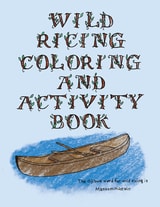
The Wild Ricing Coloring and Activity Book
Ojibwe Traditions Coloring Book SeriesCassie Brown
Wisconsin Historical Society Press, 2018
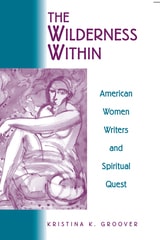
The Wilderness Within
American Women Writers and Spiritual QuestKristina K. Groover
University of Arkansas Press, 1999
Kristina K. Groover, in examining this question, finds that books by American women writers offer alternative patterns for seeking revelation—patterns which emphasize not solitary journeys, but the sacredness of everyday life. Drawing on the work of feminist theorists and theologians, including Carol Gilligan, Naomi Goldenberg, and Rosemary Ruether, Groover explores the spiritual nature and force of domesticity, community, storytelling, and the garden in the works of such writers as Toni Morrison, Katherine Anne Porter, Kaye Gibbons, and Alice Walker. Ordinary, personal experience in these works becomes a source for spiritual revelation. Wisdom is gained, lessons are learned, and lives are healed not in spite of home and communal ties, but because of them.
Thus, American women writers, Groover argues, make alternative literary and spiritual paradigms possible. Similarly, Kristina K. Groover, in this lucid and groundbreaking work, opens up new fields of exploration for any reader interested in women’s spirituality or in the rich, diverse field of American literature.

The Wildlife of New England
A Viewer's GuideJohn S. Burk
University of New Hampshire Press, 2011
With practical guidance, helpful tips, and informative overviews of each location, The Wildlife of New England invites you to discover more than 80 wildlife-viewing areas around New England.
• Where are you most likely to spot a moose, black bear, or otter in the wild?
• On what hilltop can you see thousands of migrating hawks in a single day?
• Where might you see a basking shark, seal, or sea star?
Experienced nature writer and photographer John S. Burk answers these questions and more in this unique guidebook. Organized by state, each viewing location is discussed in detail, including its natural habitats and their unique features, characteristic species to watch for and when to see them, and recommended trails, auto roads, and driving directions. The Wildlife of New England also offers informative introductions to 60 of the region's iconic animals organized by their natural habitats and shown in stunning photographs, many in color.

The Will of a People
A Critical Anthology of Great African American SpeechesEdited with Introductions by Richard W. Leeman and Bernard K. Duffy
Southern Illinois University Press, 2012
Normal0falsefalsefalseEN-USX-NONEX-NONE
Drawing upon nearly two hundred years of recorded African American oratory, The Will of a People: A Critical Anthology of Great African American Speeches,edited by Richard W. Leeman and Bernard K. Duffy, brings together in one unique volume some of this tradition’s most noteworthy speeches, each paired with an astute introduction designed to highlight its most significant elements.
Arranged chronologically, from Maria Miller Stewart’s 1832 speech “Why Sit Ye Here and Die?” to President Barack Obama’s 2009 inaugural address, these orations are tied to many of the key themes and events of American history, as well as the many issues and developments in American race relations. These themes, events, and issues include the changing roles of women, Native American relations, American “manifest destiny,” abolitionism, the industrial revolution, Jim Crow, lynching, World War I and American self-determination, the rise of the New Deal and government social programs, the Civil Rights Movement and desegregation, the Vietnam War, Nixon and Watergate, gay and lesbian rights, immigration, and the rise of a mediated culture. Leeman and Duffy have carefully selected the most eloquent and relevant speeches by African Americans, including those by Sojourner Truth, Frederick Douglass, Frances Ellen Watkins Harper, Ida B. Wells-Barnett, Booker T. Washington, Mary Church Terrell, W. E. B. Du Bois, Marcus Garvey, Martin Luther King Jr., Malcolm X, Stokely Carmichael, Barbara Jordan, Jesse Jackson, and Marian Wright Edelman, many of which have never received significant scholarly attention.
The Will of a People is the first book to pair the full texts of the most important African American orations with substantial introductory essays intended to guide the reader’s understanding of the speaker, the speech, its rhetorical interpretation, and the historical context in which it occurred. Broadly representative of the African American experience, as well as what it means to be American, this valuable collectionwill serve as an essential guide to the African American oratory tradition.
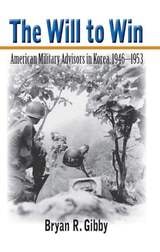
The Will to Win
American Military Advisors in Korea, 1946–1953Bryan R. Gibby
University of Alabama Press, 2012
One of America’s early attempts at nation building - US military advisors' shaping of the Republic of Korea Army (ROKA) from 1946 until 1953.
Gibby describes ROKA’s structure, mission, challenges, and successes, thereby linking the South Korean army and their US advisors to the traditional narrative of this “forgotten war.” The work also demonstrates the difficulties inherent in national reconstruction, focusing on barriers in culture and society, and the effects of rapid decolonization combined with intense nationalism and the appeal of communism to East Asia following the destruction of the Japanese empire. Key conclusions include the importance of individual advisors, the significance of the prewar advisory effort, and the depth of the impact these men had on individual Korean units and in a few cases on the entire South Korean army.
The success or failure of South Korean government in the decade following the end of World War II hinged on the loyalty, strength, and fighting capability of its army, which in turn relied on its American advisors. Gibby argues that without a proficient ROKA, the 1953 armistice, still in effect today, would not have been possible. He reexamines the Korean conflict from its beginning in 1945—particularly Korean politics, military operations, and armed forces—and demonstrates the crucial role the American military advisory program and personnel played to develop a more competent and reliable Korean army.

The Williamsburg Avant-Garde
Experimental Music and Sound on the Brooklyn WaterfrontCisco Bradley
Duke University Press, 2023

The Williwaw War
The Arkansas National Guard in the Aleutians in World War IIDonald Goldstein
University of Arkansas Press, 1992
When the 206th Coast Artillery Regiment of the Arkansas National Guard was called into federal service in January of 1941, few of the soldiers saw this action as anything more than a temporary detour in their lives. The war, after all, was in Europe and Asia and did not seem to involve them; many of the men thought they would serve their one-year enlistment and go home. The Japanese attack on Pearl Harbor changed all that.
The Williwaw War highlights the event sthat shaped the service of Arkansas’s 206th in the Aleutian Islands, including the Japanese strikes on Dutch Harbor on the third and fourth of June 1942, as well as the naval battle of the Komandorski Islands and the recapture of Attu and Kiska.
Written by the noted co-authors of the best-welling books on World War II, The Williwaw War chronicles the efforts of the men of the 206th as they battled terrible weather, overwhelming boredome and deprivation, and the Japanese, who were succesfully attempting to distract the Americans from the main Japanese assault on Midway Island.
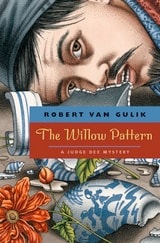
The Willow Pattern
A Judge Dee MysteryRobert van Gulik
University of Chicago Press, 1965
An exceptionally clever, cozy mystery that will thrill all fans of Judge Dee, whom the Los Angeles Times ranked with Sherlock Holmes
Judge Dee has been appointed emergency governor of the plague- and drought-ridden Imperial City. As his guards help the city fend off a popular uprising, an aristocrat from one of the oldest families in China suffers an "accident" in a deserted mansion.
In The Willow Pattern, the illustrious judge uses his trademark expertise to unravel the mysteries of the nobleman, a shattered vase, and a dead bondmaid. Along the way he encounters a woman who fights with loaded sleeves, a nearly drowned courtesan, and an elaborate trap set for a murderer. Packed with suspense, violence, and romance, The Willow Pattern won’t disappoint Judge Dee’s legions of loyal fans.

The Wilsonian Century
U.S. Foreign Policy since 1900Frank Ninkovich
University of Chicago Press, 1999
In the process of describing Wilson's legacy, Ninkovich reinterprets most of the twentieth century's main foreign policy developments. He views the 1920s, for example, not as an isolationist period but as a reversion to Taft's Dollar Diplomacy. The Cold War, with its faraway military interventions, illustrates Wilsonian America's preoccupation with achieving a cohesive world opinion and its abandonment of traditional, regional conceptions of national interest.
The Wilsonian Century offers a striking alternative to traditional interest-based interpretations of U.S. foreign policy. In revising the usual view of Wilson's contribution, Ninkovich shows the extraordinary degree to which Wilsonian ideas guided American policy through a century of conflict and tension.
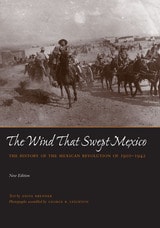
The Wind that Swept Mexico
The History of the Mexican Revolution of 1910-1942Text by Anita Brenner
University of Texas Press, 1971
The Mexican Revolution began in 1910 with the overthrow of dictator Porfirio Díaz. The Wind That Swept Mexico, originally published in 1943, was the first book to present a broad account of that revolution in its several different phases. In concise but moving words and in memorable photographs, this classic sweeps the reader along from the false peace and plenty of the Díaz era through the doomed administration of Madero, the chaotic years of Villa and Zapata, Carranza and Obregón, to the peaceful social revolution of Cárdenas and Mexico's entry into World War II.
The photographs were assembled from many sources by George R. Leighton with the assistance of Anita Brenner and others. Many of the prints were cleaned and rephotographed by the distinguished photographer Walker Evans.

The Winter Sailor
Francis R. Stebbins on Florida's Indian River, 1878-1888Edited by Carolyn Frances Baker Lewis
University of Alabama Press, 2004
A unique guide to Florida's frontier history along Indian River.
The Winter Sailor is a historical adventure that details the yearly winter travels of Francis R. Stebbins to Florida's Indian River. Stebbins, a writer from Michigan, visited Florida in March of 1878 and became entranced by its pristine beauty. Subsequently, Stebbins and his traveling companions made annual visits to Indian River—until 1888 when tragedy struck and ended Stebbins' yearly journeys.
Being an observant traveler, Stebbins began a series of descriptive articles for his hometown newspaper that chronicled his journeys to the Indian River area. Stebbins's articles tell of his own personal experiences during his leisurely visits, which included such activities as hunting and fishing, studying the natural surroundings, and excavating Indian mounds. What Stebbins enjoyed most was sailing down the river interviewing townspeople and examining local attractions as he went. His articles also detail the lifestyle of the region, food, fashion, industry, history, environment, and changes that occurred over time. Stebbins's articles not only entertained and informed but also became a travelogue for his readers. He inspired northern travelers to go south and visit Florida, which contributed to the beginnings of large-scale tourism in the region.
The Winter Sailor combines Stebbins's 49 articles along with three by his companions, to provide an enjoyable, historical guide. Unique among 19th-century travelogues, this fascinating look into Florida's past documents a decade of change to the Indian River wilderness and becomes Stebbins's gift to the present.

The Wired City
Reimagining Journalism and Civic Life in the Post-Newspaper AgeDan Kennedy
University of Massachusetts Press, 2013
Although the Independent is the principal subject of The Wired City, Kennedy examines a number of other online news projects as well, including nonprofit organizations such as Voiceof San Diego and the Connecticut Mirror and for-profit ventures such as the Batavian, Baristanet, and CT News Junkie. Where legacy media such as major city newspapers are cutting back on coverage, entrepreneurs are now moving in to fill at least some of the vacuum.
The Wired City includes the perspectives of journalists, activists, and civic leaders who are actively re-envisioning how journalism can be meaningful in a hyperconnected age of abundant news sources. Kennedy provides deeper context by analyzing the decline of the newspaper industry in recent years and, in the case of those sites choosing such a path, the uneasy relationship between nonprofit status and the First Amendment.
At a time of pessimism over the future of journalism, The Wired City offers hope. What Kennedy documents is not the death of journalism but rather the uncertain and sometimes painful early stages of rebirth.

The Wisconsin Capitol
Stories of a Monument and Its PeopleMichael Edmonds
Wisconsin Historical Society Press, 2017
On the occasion of the Capitol’s centennial in 2017, this book tells the remarkable story of the building—in all its incarnations—and the people who made history beneath its dome. The book covers the creation of the territorial capitol in 1837, the construction of the second capitol in the 1860s (and the fire that almost completely destroyed it in 1904), the eleven-year construction project that completed the third capitol in 1917, and the extensive conservation project of the 1990s that restored the building to its grandeur. Supporting the framework of this architectural history are colorful stories about the people who shaped Wisconsin from within the Capitol—attorneys, senators, and governors (from Henry Dodge to Scott Walker), as well as protesters, reformers, secretaries, tour guides, custodians, and even Old Abe, the Capitol’s resident eagle. Combining historical photographs with modern, full-color architectural photos, The Wisconsin Capitol provides fascinating details about the building, while also emphasizing the importance of the Capitol in Wisconsin’s storied history.
The Wisconsin Historical Society
Collecting, Preserving, and Sharing Stories Since 1846John Zimm
Wisconsin Historical Society Press, 2014
The Wisconsin Story
150 People, Places, and Turning Points that Shaped the Badger StateDennis McCann
Wisconsin Historical Society Press, 2019

The Wisconsin
River of a Thousand IslesAugust Derleth
University of Wisconsin Press, 1985

The Wisdom of the World
The Human Experience of the Universe in Western ThoughtRémi Brague
University of Chicago Press, 2003
Before the Greeks, people thought human action was required to maintain the order of the universe and so conducted rituals and sacrifices to renew and restore it. But beginning with the Hellenic Age, the universe came to be seen as existing quite apart from human action and possessing, therefore, a kind of wisdom that humanity did not. Wearing his remarkable erudition lightly, Brague traces the many ways this universal wisdom has been interpreted over the centuries, from the time of ancient Egypt to the modern era. Socratic and Muslim philosophers, Christian theologians and Jewish Kabbalists all believed that questions about the workings of the world and the meaning of life were closely intertwined and that an understanding of cosmology was crucial to making sense of human ethics. Exploring the fate of this concept in the modern day, Brague shows how modernity stripped the universe of its sacred and philosophical wisdom, transforming it into an ethically indifferent entity that no longer serves as a model for human morality.
Encyclopedic and yet intimate, The Wisdom of the World offers the best sort of history: broad, learned, and completely compelling. Brague opens a window onto systems of thought radically different from our own.
The Wished For Country
Wayne Karlin
Northwestern University Press, 2002
The stories of these three men, the women who love them, and the community they form, bring to vivid life the experiences of those who came to America pulled by a dream of what could be shaped from an emptiness that embodied promise, of those who were unwillingly brought to be the instruments of that dream, and of those who saw the shape of their world forever changed by the coming of the Europeans.

The Witchcraft Series Maqlu
Tzvi Abusch
SBL Press, 2015
A new reconstruction and translation of the Maqlû text
The Akkadian series Maqlû, “Burning,” is one of the most significant and interesting magical texts from the Ancient Near East. The incantations and accompanying rituals are directed against witches and witchcraft and ctually represent a single complex ceremony. The ceremony was performed during a single night and into the following morning at the end of the month Abu (July/August), a time when spirits were thought to move back and forth between the netherworld and the world of the living.
Features:
- English translation of approximately 100 incantations and rituals
- Annotated transcription
- Introduction places the series in historical context and shows how it is a product of a complex literary and ceremonial development.
The Woman I Am
Southern Baptist Women's Writings, 1906–2006Melody Maxwell
University of Alabama Press, 2014
The Southern Baptist Convention (SBC) represents the largest Protestant denomination in the United States, yet Southern Baptist women’s voices have been underreported in studies of American religion and culture. In The Woman I Am, Melody Maxwell explores how female Southern Baptist writers and editors in the twentieth century depicted changing roles for women and responded to the tensions that arose as Southern Baptist women assumed leadership positions, especially in the areas of missions and denominational support.
Given access to a century of primary sources and archival documents, Maxwell writes, as did many of her subjects, in a style that deftly combines the dispassionate eye of an observer with the multidimensional grasp of a participant. She examines magazines published by Woman’s Missionary Union (WMU), an auxiliary to the SBC: Our Mission Fields (1906–1914), Royal Service (1914–1995), Contempo (1970–1995), and Missions Mosaic (1995–2006). In them, she traces how WMU writers and editors perceived, constructed, and expanded the lives of southern women.
Showing ingenuity and resiliency, these writers and editors continually, though not always consciously, reshaped their ideal of Christian womanhood to better fit the new paths open to women in American culture and Southern Baptist life. Maxwell’s work demonstrates that Southern Baptists have transformed their views on biblically sanctioned roles for women over a relatively short historical period.
How Southern Baptist women perceive women’s roles in their churches, homes, and the wider world is of central importance to readers interested in religion, society, and gender in the United States. The Woman I Am is a tour de force that makes a lasting contribution to the world’s understanding of Southern Baptists and to their understanding of themselves.
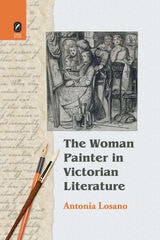
The Woman Painter in Victorian Literature
Antonia Losano
The Ohio State University Press, 2008
The nineteenth century saw a marked rise both in the sheer numbers of women active in visual art professions and in the discursive concern for the woman artist in fiction, the periodical press, art history, and politics. The Woman Painter in Victorian Literature argues that Victorian women writers used the controversial figure of the woman painter to intervene in the discourse of aesthetics. These writers were able to assert their own status as artistic producers through the representation of female visual artists.
Women painters posed a threat to the traditional heterosexual erotic art scenarios—a male artist and a male viewer admiring a woman or feminized art object. Antonia Losano traces an actual movement in history in which women writers struggled to rewrite the relations of gender and art to make a space for female artistic production. She examines as well the disruption female artists caused in the socioeconomic sphere. Losano offers close readings of a wide array of Victorian writers, particularly those works classified as noncanonical—by Anne Thackeray Ritchie, Margaret Oliphant, Anne Brontë, and Mrs. Humphrey Ward—and a new look at better-known novels such as Jane Eyre and Daniel Deronda, focusing on the pivotal social and aesthetic meanings of female artistic production in these texts. Each of the novels considered here is viewed as a contained, coherent, and complex aesthetic treatise that coalesces around the figure of the female painter.
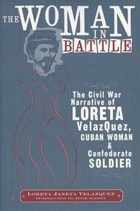
The Woman in Battle
The Civil War Narrative of Loreta Janeta Velazquez, Cuban Woman and Confederate SoldierLoreta Janeta Velazquez
University of Wisconsin Press, 2003
Originally published in 1876 as The Woman in Battle, this Civil War narrative offers Velazquez’s seemingly impossible autobiographical account, as well as a new critical introduction and glossary by Jesse Alemán. Scholars are divided between those who read the book as a generally honest autobiography and those who read it as mostly fiction. According to Alemán’s critical introduction, the book also reads as pulp fiction, spy memoir, seduction narrative, travel literature, and historical account, while it mirrors the literary conventions of other first-person female accounts of cross-dressing published in the United States during wartime, dating back to the Revolutionary War. Whatever the facts are, this is an authentic Civil War narrative, Alemán concludes, that recounts how war disrupts normal gender roles, redefines national borders, and challenges the definition of identity.

The Woman in the Violence
Gender, Poverty, and Resistance in PeruM. Cristina Alcalde
Vanderbilt University Press, 2010
Focusing on the experiences of women who are predominantly poor, nonwhite, rural-to-urban migrants with little or no formal education, The Woman in the Violence addresses a range of serious concerns. What types of violence do women experience at different stages in their lives? Which identities and roles are manifested throughout their lives, and do some of these increase their vulnerability to different forms of violence? What strategies do women employ to gain some power and control in these situations, and how can we conceptualize these strategies?
In examining these questions, The Woman in the Violence contributes to our understanding of violence, gender, race, resistance, and urbanism as it exposes and analyzes systemic violence against women. The everyday forms of resistance these women employ provide significant insight for students, scholars, and health professionals.
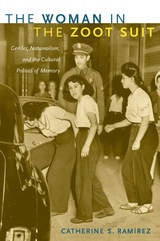
The Woman in the Zoot Suit
Gender, Nationalism, and the Cultural Politics of MemoryCatherine S. Ramírez
Duke University Press, 2009
Two events in wartime Los Angeles thrust young Mexican American zoot suiters into the media spotlight. In the Sleepy Lagoon incident, a man was murdered during a mass brawl in August 1942. Twenty-two young men, all but one of Mexican descent, were tried and convicted of the crime. In the Zoot Suit Riots of June 1943, white servicemen attacked young zoot suiters, particularly Mexican Americans, throughout Los Angeles. The Chicano movement of the 1960s–1980s cast these events as key moments in the political awakening of Mexican Americans and pachucos as exemplars of Chicano identity, resistance, and style. While pachucas and other Mexican American women figured in the two incidents, they were barely acknowledged in later Chicano movement narratives. Catherine S. Ramírez draws on interviews she conducted with Mexican American women who came of age in Los Angeles in the late 1930s, 1940s, and 1950s as she recovers the neglected stories of pachucas. Investigating their relative absence in scholarly and artistic works, she argues that both wartime U.S. culture and the Chicano movement rejected pachucas because they threatened traditional gender roles. Ramírez reveals how pachucas challenged dominant notions of Mexican American and Chicano identity, how feminists have reinterpreted la pachuca, and how attention to an overlooked figure can disclose much about history making, nationalism, and resistant identities.
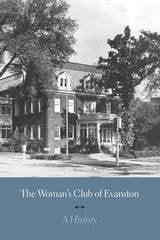
The Woman's Club of Evanston
A HistoryErin Hvizdak with an epilogue by Kathy Rocklin
Northwestern University Press, 2019
An exemplar of the women’s club movement, over the course of its long history the Woman’s Club has redirected its efforts in service and philanthropy and adjusted its organization in response to the changing needs of its community. The Charitable Foundation of the Woman’s Club of Evanston was established to support programs that provide a continuity of care and education and address gaps in funding for families in need. In 2010, the Harbert Society was created to recognize individuals who support the Woman’s Club of Evanston and to encourage and document planned gifts.

The Wombs of Women
Race, Capital, FeminismFrançoise Vergès
Duke University Press, 2020

The Women Carry River Water
PoemsNguyen Quang Thieu
University of Massachusetts Press, 1997
This landmark collection represents the first English translation of poetry by Nguyen Quang Thieu, a significant Vietnamese writer of the post-1975 generation. Translated collaboratively by acclaimed poet Martha Collins and the author himself, this bilingual volume presents verses rooted deeply in Vietnamese cultural traditions that honor the dignity of daily labor, the resilience of ordinary people, and the spiritual dimensions of human experience in contemporary Vietnam.
Thieu's work draws upon a rich Vietnamese poetic tradition while addressing themes of displacement, reconstruction, memory, and the search for meaning in the aftermath of conflict. The poems capture the essence of Vietnamese life—its rhythms, relationships, and philosophical underpinnings—through images drawn from nature, labor, family, and community. The bilingual format stands as a bridge between Vietnamese and American literary traditions, and honors the linguistic and cultural dimensions of Thieu groundbreaking collection.
The Women Who Reconstructed American Jewish Education, 1910-1965
Edited by Carol K. Ingall
Brandeis University Press, 2010