Results by title
3071 books match the query 'Business & Economics' and 687 start with t
The Return to Increasing Returns
James M. Buchanan and Yong J. Yoon, Editors
University of Michigan Press, 1994
The neoclassical theory of distribution, developed in the last decades of the nineteenth century, relies on the postulate that in equilibrium there exist constant returns to scale, not only in particular firms and industries, but in the economy as a whole. As general equilibrium theory developed, emphasis was sifted to the properties of equilibrium, to the proofs of its existence, and to the attributes of welfare. The possibility of increasing returns represented an analytical “monkey wrench” thrown in the whole neoclassical structure. Thus, the neglect of increasing returns may have been methodologically understandable – if scientifically scandalous. Only in recent years has the increasing returns postulate returned to the mainstream through analyses of endogenous growth, international trade, unemployment, and the economics of ethics.

The Revolutionary Imagination in the Americas and the Age of Development
María Josefina Saldaña-Portillo
Duke University Press, 2003
Reading governmental reports, memos, and policies, Saldaña-Portillo traces the arc of development narratives from its beginnings in the 1944 Bretton Woods conference through its apex during Robert S. McNamara's reign at the World Bank (1968–1981). She compares these narratives with models of subjectivity and agency embedded in the autobiographical texts of three revolutionary icons of the 1960s and 1970s—those of Che Guevara, Guatemalan insurgent Mario Payeras, and Malcolm X—and the agricultural policy of the Sandinista National Liberation Front (FSLN). Saldaña-Portillo highlights a shared paradigm of a masculinist transformation of the individual requiring the "transcendence" of ethnic particularity for the good of the nation. While she argues that this model of progress often alienated the very communities targeted by the revolutionaries, she shows how contemporary insurgents such as Rigoberta Menchú, the Zapatista movement, and queer Aztlán have taken up the radicalism of their predecessors to retheorize revolutionary subjectivity for the twenty-first century.
The Rhetoric of Economics
Deirdre N. McCloskey
University of Wisconsin Press, 1998
A classic in its field, this pathbreaking book humanized the scientific rhetoric of economics to reveal its literary soul. Economics needs to admit that it, like other sciences, works with metaphors and stories. Its most mathematical and statistical moments are properly dominated by comparison and narration, that is to say, human persuasion. The book was McCloskey's opening move in the development of a "humanomics," and unification of the sciences and the humanities on the field of ordinary business life.

The Rise of West Coast Philanthropy
A History of the Hewlett and Packard FoundationsAsher Orkaby and Tim Mueller
University of Chicago Press, 0
The first full-length history of the Hewlett and Packard foundations and how they were at the forefront of the emergence of a distinctive West Coast approach toward giving.
A new generation of mega-wealthy tech tycoons purported to upend the twenty-first-century practice of philanthropy, but pioneering tech entrepreneurs William Hewlett and David Packard, the co-founders of the Hewlett-Packard Company, had already begun the process four decades earlier. The Rise of West Coast Philanthropy follows Silicon Valley’s first generation of philanthropists and how their work helped establish West Coast philanthropy as a major global force.
Drawing on unprecedented access to archival records and interviews with over 115 philanthropy leaders and insiders around the world, authors Asher Orkaby and Tim Mueller uncover the previously untold histories of the foundations established by William and Flora Hewlett and David and Lucile Packard, two of America’s most famous power couples. Through their foundations, these two families introduced philanthropic trends later echoed by philanthropies on both the West and East Coasts, demonstrating a successful adaptation of the management principles that first made HP a model company. The Rise of West Coast Philanthropy explores more than sixty years of Hewlett and Packard grant-making, from early family enterprises with local ambitions to major regional, national, and international powerhouses.
In telling this story, Orkaby and Mueller offer a fresh perspective on the distinctive model of West Coast philanthropy, which has been crucial in shaping the twenty-first-century global philanthropic landscape.

The Rise of the Chicago Police Department
Class and Conflict, 1850-1894Sam Mitrani
University of Illinois Press, 2013
In this book, Sam Mitrani cogently examines the making of the police department in Chicago, which by the late 1800s had grown into the most violent, turbulent city in America. Chicago was roiling with political and economic conflict, much of it rooted in class tensions, and the city's lawmakers and business elite fostered the growth of a professional municipal police force to protect capitalism, its assets, and their own positions in society. Together with city policymakers, the business elite united behind an ideology of order that would simultaneously justify the police force's existence and dictate its functions.
Tracing the Chicago police department's growth through events such as the 1855 Lager Beer riot, the Civil War, the May Day strikes, the 1877 railroad workers strike and riot, and the Haymarket violence in 1886, Mitrani demonstrates that this ideology of order both succeeded and failed in its aims. Recasting late nineteenth-century Chicago in terms of the struggle over order, this insightful history uncovers the modern police department's role in reconciling democracy with industrial capitalism.
The Rise of the Entrepreneurial State
State and Local Economic Development Policy in the United StatesPeter K. Eisinger
University of Wisconsin Press, 1989
Eisinger’s meticulous research uncovers state and local governments’ transition from supply-side to demand-side strategies of market creation. He shows that, instead of relying solely on the supply-side strategies of tax breaks and other incentives to encourage business relocation, some governments promoted innovation and the creation of new business approaches.
The Rise of the Public Authority
Statebuilding and Economic Development in Twentieth-Century AmericaGail Radford
University of Chicago Press, 2013
The Risk Professionals
Thomas Dietz
Russell Sage Foundation, 1987
The Risk of Economic Crisis
Edited by Martin Feldstein
University of Chicago Press, 1991
In this accessible and thought-provoking volume, Benjamin M. Friedman investigates the origins of financial crisis in domestic capital markets, Paul Krugman examines the international origins and transmission of financial and economic crises, and Lawrence H. Summers explores the transition from financial crisis to economic collapse. In the introductory essay, Martin Feldstein reviews the major financial problems of the 1980s and discusses lessons to be learned from this experience. The book also contains provocative observations by senior academics and others who have played leading roles in business and government.

The Risks of Financial Institutions
Edited by Mark Carey and René M. Stulz
University of Chicago Press, 2007
Until about twenty years ago, the consensus view on the cause of financial-system distress was fairly simple: a run on one bank could easily turn to a panic involving runs on all banks, destroying some and disrupting the financial system. Since then, however, a series of events—such as emerging-market debt crises, bond-market meltdowns, and the Long-Term Capital Management episode—has forced a rethinking of the risks facing financial institutions and the tools available to measure and manage these risks.
The Risks of Financial Institutions examines the various risks affecting financial institutions and explores a variety of methods to help institutions and regulators more accurately measure and forecast risk. The contributors--from academic institutions, regulatory organizations, and banking--bring a wide range of perspectives and experience to the issue. The result is a volume that points a way forward to greater financial stability and better risk management of financial institutions.

The Road to Serfdom
F. A. Hayek
University of Chicago Press, 1994
First published by the University of Chicago Press on September 18, 1944, The Road to Serfdom garnered immediate attention from the public, politicians, and scholars alike. The first printing of 2,000 copies was exhausted instantly, and within six months more than 30,000 were sold. In April of 1945, Reader's Digest published a condensed version of the book, and soon thereafter the Book-of-the-Month Club distributed this condensation to more than 600,000 readers. A perennial best-seller, the book has sold over a quarter of a million copies in the United States, not including the British edition or the nearly twenty translations into such languages as German, French, Dutch, Swedish, and Japanese, and not to mention the many underground editions produced in Eastern Europe before the fall of the iron curtain.
After thirty-two printings in the United States, The Road to Serfdom has established itself alongside the works of Alexis de Tocqueville, John Stuart Mill, and George Orwell for its timeless meditation on the relation between individual liberty and government authority. This fiftieth anniversary edition, with a new introduction by Milton Friedman, commemorates the enduring influence of The Road to Serfdom on the ever-changing political and social climates of the twentieth century, from the rise of socialism after World War II to the Reagan and Thatcher "revolutions" in the 1980s and the transitions in Eastern Europe from communism to capitalism in the 1990s.
F. A. Hayek (1899-1992), recipient of the Medal of Freedom in 1991 and co-winner of the Nobel Memorial Prize in Economics in 1974, was a pioneer in monetary theory and the principal proponent of libertarianism in the twentieth century.
On the first American edition of The Road to Serfdom:
"One of the most important books of our generation. . . . It restates for our time the issue between liberty and authority with the power and rigor of reasoning with which John Stuart Mill stated the issue for his own generation in his great essay On Liberty. . . . It is an arresting call to all well-intentioned planners and socialists, to all those who are sincere democrats and liberals at heart to stop, look and listen."—Henry Hazlitt, New York Times Book Review, September 1944
"In the negative part of Professor Hayek's thesis there is a great deal of truth. It cannot be said too often—at any rate, it is not being said nearly often enough—that collectivism is not inherently democratic, but, on the contrary, gives to a tyrannical minority such powers as the Spanish Inquisitors never dreamt of."—George Orwell, Collected Essays
The Road to Serfdom
Text and Documents--The Definitive EditionF. A. Hayek
University of Chicago Press, 2007
First published by the University of Chicago Press on September 18, 1944, The Road to Serfdom garnered immediate, widespread attention. The first printing of 2,000 copies was exhausted instantly, and within six months more than 30,000 books were sold. In April 1945, Reader’s Digest published a condensed version of the book, and soon thereafter the Book-of-the-Month Club distributed this edition to more than 600,000 readers. A perennial best seller, the book has sold 400,000 copies in the United States alone and has been translated into more than twenty languages, along the way becoming one of the most important and influential books of the century.
With this new edition, The Road to Serfdom takes its place in the series The Collected Works of F. A. Hayek. The volume includes a foreword by series editor and leading Hayek scholar Bruce Caldwell explaining the book's origins and publishing history and assessing common misinterpretations of Hayek's thought. Caldwell has also standardized and corrected Hayek's references and added helpful new explanatory notes. Supplemented with an appendix of related materials ranging from prepublication reports on the initial manuscript to forewords to earlier editions by John Chamberlain, Milton Friedman, and Hayek himself, this new edition of The Road to Serfdom will be the definitive version of Hayek's enduring masterwork.
The Roaring Nineties
Can Full Employment Be Sustained?Alan B. Krueger
Russell Sage Foundation, 2001
The Role of Foreign Direct Investment in East Asian Economic Development
Edited by Takatoshi Ito and Anne O. Krueger
University of Chicago Press, 2000
The Role of Government in the History of Economic Thought
2005 Supplement, Volume 37Steven G. Medema and Peter Boettke
Duke University Press, 0
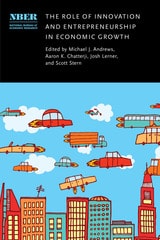
The Role of Innovation and Entrepreneurship in Economic Growth
Edited by Michael J. Andrews, Aaron Chatterji, Josh Lerner, and Scott Stern
University of Chicago Press, 2022
We live in an era in which innovation and entrepreneurship seem ubiquitous, particularly in regions like Silicon Valley, Boston, and the Research Triangle Park. But many metrics of economic growth, such as productivity growth and business dynamism, have been at best modest in recent years. The resolution of this apparent paradox is dramatic heterogeneity across sectors, with some industries seeing robust innovation and entrepreneurship and others seeing stagnation. By construction, the impact of innovation and entrepreneurship on overall economic performance is the cumulative impact of their effects on individual sectors. Understanding the potential for growth in the aggregate economy depends, therefore, on understanding the sector-by-sector potential for growth. This insight motivates the twelve studies of different sectors that are presented in this volume. Each study identifies specific productivity improvements enabled by innovation and entrepreneurship, for example as a result of new production technologies, increased competition, or new organizational forms. These twelve studies, along with three synthetic chapters, provide new insights on the sectoral patterns and concentration of the contributions of innovation and entrepreneurship to economic growth.

The Role of the Judge in International Trade Regulation
Experience and Lessons for the WTOThomas Cottier and Petros C. Mavroidis, Editors
University of Michigan Press, 2003
The book develops along three lines: the first a search for cases submitted to the WTO where the judge exceeded its authority; the second a comparison of the WTO with the operations of national judicial systems having different levels of integration, specifically the United States (federal level) and the EC (quasi-federal level); and the third an exploration of directions for the future of dispute settlement in the WTO.
Reflecting the diversity of its contributors, this book addresses questions of economics, political science, and law, bringing an unusual level of multidisciplinarity to this topic and context. It is designed for both academic readers and practitioners, who will find it full of practical insights as well as rich and detailed analysis.
Thomas Cottier is Professor of European and International Economic Law, University of Bern, and Managing Director, World Trade Institute, University of Bern.
Petros C. Mavroidis is Professor of Law, University of Neuchâtel. He formerly worked in the Legal Affairs Division of the World Trade Organization.
Patrick Blatter is Mavroidiss scientific collaborator.

The Roles of Immigrants and Foreign Students in US Science, Innovation, and Entrepreneurship
Edited by Ina Ganguli, Shulamit Kahn, and Megan MacGarvie
University of Chicago Press, 2020
The Rules of the Global Game
A New Look at US International Economic PolicymakingKenneth W. Dam
University of Chicago Press, 2001
In The Rules of the Global Game, Dam first lays out what US international economic policies are and compares them to what they should be based on how they affect US per capita income. With this foundation in place, Dam then develops and applies principles for elucidating the major components of economic policy, such as foreign trade and investment, international monetary and financial systems, and current controversial issues, including intellectual property and immigration. Underlying his explanations is a belief in the importance of worldwide free trade and open markets as well as a crucial understanding of the political forces that shape decision making. Because economic policy is not created in a political vacuum, Dam argues, sound policymaking requires an understanding of "statecraft"-the creation and use of institutions that channel the efforts of interest groups and political forces in directions that encourage good economic outcomes.
Dam's vast experience with the politics and practicalities of economic policy translates into a view of policy that is neither academic nor abstract. Rather, Dam shows us how policy is actually made, who makes it, and why, using examples such as GATT, NAFTA, the US-Japan semiconductor agreement, and the Asian financial crisis. A rare book that can be read with pleasure and profit by layperson and economist alike, The Rules of the Global Game allows readers to understand the policies that shape our economy and our lives.

The Samuel Gompers Papers, Volume 13
Cumulative IndexSamuel Gompers, Edited by Peter J. Albert and Grace Palladino
University of Illinois Press, 2013
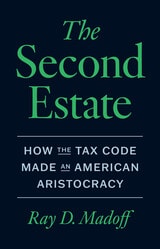
The Second Estate
How the Tax Code Made an American AristocracyRay D. Madoff
University of Chicago Press, 2025
Named by The New Yorker as one of the Best Books of 2025 and featured on the Armchair Expert podcast with Dax Shepherd.
A revelatory book that lifts the curtain on America’s most consequential public deception: how the rich get richer using tools the government gave them.
Amid conflicting narratives about the drivers of wealth and inequality in the United States, one constant hovers in the background: the US tax code. No political force has been more consequential—or more utterly opaque—than the 7,000-page document that details who pays what in American society and government. Most of us have a sense that it’s an unfair system. But does anyone know exactly how it’s unfair?
Legal scholar Ray D. Madoff knows. In The Second Estate, she offers an unprecedented look behind the scenes of America’s byzantine system of taxation, laying bare not only its capacity to consolidate wealth but also the mechanisms by which it has created two fundamentally separate American societies: the working Americans who pay and the ultra-rich who benefit.
This is not a story of offshore accounts or secret tax havens. In The Second Estate, Madoff shows that the US system itself has, over time, been stripped and reconstituted such that it now offers a series of secret paths, hidden in plain sight, for wealthy people in the know to avoid taxation altogether. Through the strategic avoidance of traditional income, leveraging of investments and debt, and exploitation of rules designed to promote charitable giving, America’s wealthy do more than just pay less than their share; they remove themselves from the tax system entirely. Wealth becomes its own sovereign state, and the living is surprisingly—and maddeningly—cheap.
The Second Estate
How the Tax Code Made an American AristocracyRay D. Madoff
University of Chicago Press, 2025
Named by The New Yorker as one of the Best Books of 2025 and featured on the Armchair Expert podcast with Dax Shepherd.
A revelatory book that lifts the curtain on America’s most consequential public deception: how the rich get richer using tools the government gave them.
Amid conflicting narratives about the drivers of wealth and inequality in the United States, one constant hovers in the background: the US tax code. No political force has been more consequential—or more utterly opaque—than the 7,000-page document that details who pays what in American society and government. Most of us have a sense that it’s an unfair system. But does anyone know exactly how it’s unfair?
Legal scholar Ray D. Madoff knows. In The Second Estate, she offers an unprecedented look behind the scenes of America’s byzantine system of taxation, laying bare not only its capacity to consolidate wealth but also the mechanisms by which it has created two fundamentally separate American societies: the working Americans who pay and the ultra-rich who benefit.
This is not a story of offshore accounts or secret tax havens. In The Second Estate, Madoff shows that the US system itself has, over time, been stripped and reconstituted such that it now offers a series of secret paths, hidden in plain sight, for wealthy people in the know to avoid taxation altogether. Through the strategic avoidance of traditional income, leveraging of investments and debt, and exploitation of rules designed to promote charitable giving, America’s wealthy do more than just pay less than their share; they remove themselves from the tax system entirely. Wealth becomes its own sovereign state, and the living is surprisingly—and maddeningly—cheap.

The Sensory Order and Other Writings on the Foundations of Theoretical Psychology
F. A. Hayek
University of Chicago Press, 2017
The latest addition to the University of Chicago Press’s Collected Works of F. A. Hayek series, The Sensory Order and Other Writings on the Foundations of Theoretical Psychology pairs the book, originally published in 1952, with additional essays related to The Sensory Order’s key themes, including a student paper from 1920 in which Hayek outlined the basic ideas he fully developed in the 1952 book. Rounding out the volume is an insightful introduction by editor Viktor Vanberg that sketches out the central problems Hayek was grappling with when he wrote The Sensory Order and the influential role this early thinking on theoretical psychology would play over the next six decades of his career. The book also features ample footnotes and citations for further reading, making this an essential contribution to the series.
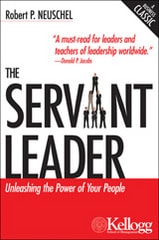
The Servant Leader
Unleashing the Power of Your PeopleRobert P. Neuschel
Northwestern University Press, 2005
He asks: what steps might we take to revitalize the quality and strength of our leadership? He then forcefully and straightforwardly gives an outline of what he believes are the major changes in leadership we must bring about. As a professor of management and strategy, and earlier, as a director and senior partner at a major consulting firm, and as a captain in the U. S. Army, Neuschel observed the best of leadership, and practiced it. He shares his insights with us in The Servant Leader.

The Slow Food Story
Politics and PleasureGeoff Andrews
Pluto Press, 2008
The Slow Food movement was set up in Italy as a response to the dominance of fast food chains, supermarkets and large-scale agribusiness. It seeks to defend what it calls 'the universal right to pleasure' and promotes an alternative approach to food production and consumption based on the promotion of 'good, clean and fair' local products.
This is the first in-depth study of the fascinating politics of Slow Food, which in twenty years has grown into an international organisation with more than 80,000 members in over 100 countries. With its roots in the 1960s and 1970s counter-culture, Slow Food's distinctive politics lie in the unity between gastronomic pleasure and environmental responsibility. The movement crosses the left-right divide to embrace both the conservative desire to preserve traditional rural communities and an alternative 'virtuous' idea of globalisation.
Geoff Andrews shows that the alternative future embodied in Slow Food extends to all aspects of modern life. The Slow Food Story presents an extensive new critique of fast-moving, work-obsessed contemporary capitalist culture.

The Social Benefits of Education
Jere R. Behrman and Nevzer Stacey, Editors
University of Michigan Press, 1997

The Social Life of Financial Derivatives
Markets, Risk, and TimeEdward LiPuma
Duke University Press, 2017
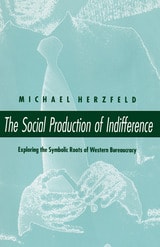
The Social Production of Indifference
Michael Herzfeld
University of Chicago Press, 1993
"Herzfeld's book is extremely ambitious and will be of interest to any anthropologist concerned with the study of bureaucracy, organizational and institutional control, symbols and their power, and social conflict. . . . Thoughtful and challenging."—Helen B. Schwartzman, American Ethnologist
The Socially Responsive Self
Social Theory and Professional EthicsLarry May
University of Chicago Press, 1996
Applying his theory of responsibility to professional ethics, May contends that current methods of professional socialization should be changed so that professionals are not expected to ignore considerations of personal well-being, family, or community. For instance, lawyers should not place client loyalty above concerns for the common good; doctors should not place the physical well-being of patients above their mental and spiritual well-being; scientists and engineers should not feel obliged to blow the whistle on fraud and corruption unless their professional groups protect them from retaliation.
This book should prove provocative reading for philosophers, political scientists, social theorists, professionals of many stripes, and ethicists.
The Sociology of the Economy
Frank Dobbin
Russell Sage Foundation, 2004

The Solutions are Already Here
Strategies of Ecological Revolution from BelowPeter Gelderloos
Pluto Press, 2022
Across the world, grassroots networks of local communities are working to realize their visions of an alternative revolutionary response to planetary destruction, often pitted against the new megaprojects promoted by greenwashed alternative energy infrastructures and the neocolonialist, technocratic policies that are the forerunners of the Green New Deal.
Gelderloos interviews food sovereignty activists in Venezuela, Indigenous communities reforesting their lands in Brazil and anarchists fighting biofuel plantations in Indonesia, looking at the battles that have cancelled airports, stopped pipelines, and helped the most marginalized to fight borders and environmental racism, to transform their cities, to win a dignified survival.
The Sounds of Capitalism
Advertising, Music, and the Conquest of CultureTimothy D. Taylor
University of Chicago Press, 2012
Timothy D. Taylor tracks the use of music in American advertising for nearly a century, from variety shows like The Clicquot Club Eskimos to the rise of the jingle, the postwar upsurge in consumerism, and the more complete fusion of popular music and consumption in the 1980s and after. The Sounds of Capitalism is the first book to tell truly the history of music used in advertising in the United States and is an original contribution to this little-studied part of our cultural history.

The Soybean Industry
With Special Reference to the Competitive Position of the Minnesota Producer and ProcessorRay A. Goldberg
University of Minnesota Press, 1952
The Soybean Industry was first published in 1952. Minnesota Archive Editions uses digital technology to make long-unavailable books once again accessible, and are published unaltered from the original University of Minnesota Press editions.
The rapid development of the soybean industry in the United States is reflected in the growth of the industry in Minnesota, a state that now ranks sixth in total production. This state was one of the last to develop a soybean crop, but in the decade from 1940 to 1950 the dollar value of its crop rose from $76,000 to $37,000,000.
Because the industry is a new and important one on the agricultural front, producers and processors in the industry, as well as members of the grain trade and agricultural economists, are faced with the problem of ascertaining the probably future trends of the industry. This study provides a factual basis for the industry's future planning in Minnesota and in other major soybean-producing and processing states.
Since the total picture of supply and demand and the operation of the industry within a single state are interrelated and interdependent, the study describes the elements of production, utilization, and processing on international, national, and state levels. These factors are then correlated with significant aspects of transportation, storage, commodity markets, and price formulation for an analysis of the competitive position of the industry in Minnesota. In conclusion, the future of the industry as a whole as well as specifically in Minnesota is estimated.
The Specter of Global China
Politics, Labor, and Foreign Investment in AfricaChing Kwan Lee
University of Chicago Press, 2017
Offering the clearest look yet at China’s state-driven investment in Africa, this book is rooted in six years of extensive fieldwork in copper mines and construction sites in Zambia, Africa’s copper giant. Lee shadowed Chinese, Indian, and South African managers in underground mines, interviewed Zambian miners and construction workers, and worked with Zambian officials. Distinguishing carefully between Chinese state capital and global private capital in terms of their business objectives, labor practices, managerial ethos, and political engagement with the Zambian state and society, she concludes that Chinese state investment presents unique potential and perils for African development. The Specter of Global China will be a must-read for anyone interested in the future of China, Africa, and capitalism worldwide.

The State of Europe
Transformation of Statehood from a European PerspectiveEdited by Sonja Puntscher Riekmann, Monika Mokre, and Michael Latzer
Campus Verlag, 2004
The Stolper-Samuelson Theorem
A Golden JubileeAlan V. Deardorff and Robert M. Stern, Editors
University of Michigan Press, 1994

The Street Porter and the Philosopher
Conversations on Analytical EgalitarianismSandra J. Peart and David M. Levy, editors
University of Michigan Press, 2009
Adam Smith, asserting the common humanity of the street porter and the philosopher, articulated the classical economists' model of social interactions as exchanges among equals. This model had largely fallen out of favor until, recently, a number of scholars in the avant-garde of economic thought rediscovered it and rechristened it "analytical egalitarianism." In this volume, Sandra J. Peart and David M. Levy bring together an impressive array of authors to explore the ramifications of this analytical ideal and to discuss the ways in which an egalitarian theory of individuality can enable economists to reconcile ideas from opposite ends of the political spectrum.
"The analytical egalitarianism project that Peart and Levy have advanced has come to occupy a prominent place in the current agenda of historians of economic thought."
---Ross Emmett, Associate Professor of Economics and Co-Director of the Michigan Center for Innovation and Economic Prosperity, Michigan State University
"These essays and dialogs from the Summer Institute would make Adam Smith, economist and moral philosopher, proud."
---J. Daniel Hammond, Hultquist Family Professor of Economics, Wake Forest University
With essays by:
- James M. Buchanan, Alfred Nobel Memorial Prize in Economic Sciences recipient (1985) and Professor Emeritus, George Mason University and Virginia Polytechnic and State University
- Juan Pablo Couyoumdijian, Universidad del Desearrollo, Chile
- Tyler Cowen, George Mason University
- Eric Crampton, University of Canterbury, New Zealand
- Andrew Farrant, Dickinson College
- Samuel Hollander, Professor Emeritus, University of Toronto
- M. Ali Khan, Johns Hopkins University
- Thomas Leonard, Princeton University
- Deirdre McCloskey, University of Illinois, Chicago
- Leonidas Montes, Dean of School of Government, Universidad Adolfo Ibañez, Chile
- Maria Pia Paganelli, Yeshiva University and New York University
- Warren J. Samuels, Professor Emeritus, Michigan State University
- Eric Schliesser, VENI post-doctoral research fellow, Leiden University, and University of Amsterdam
- Gordon Tullock, George Mason University
Sandra J. Peart is Dean of the Jepson School of Leadership Studies, University of Richmond, Virginia.
David M. Levy is Professor of Economics at George Mason University (GMU) and Research Associate at the Center for Study of Public Choice at GMU.
They are Co-Directors of George Mason University's Summer Institute for the Preservation of the History of Economics.

The Structure and Evolution of Recent U.S. Trade Policy
Edited by Robert E. Baldwin and Anne O. Krueger
University of Chicago Press, 1985
The contributors chart the history of U.S. trade policy since World War II, analyze industry-specific trade barriers, and discuss the effects of tariff preferences and export-promoting policies such as export credits and domestic international sales corporations (DISCs). The final section of essays examines the worldwide impact of import policies, pointing out subtleties in industry-specific policies and providing insight into the levels of protection in developing countries. The contributors blend state-of-the-art economics with language that is accessible to the business community, economists, and policymakers. Commentaries accompany each paper.
The Structure of Wages
An International ComparisonEdited by Edward P. Lazear and Kathryn L. Shaw
University of Chicago Press, 2009
A distinguished team of contributors reveal how a rising wage variance rewards star employees at a higher rate than ever before, how talent becomes concentrated in a few firms over time, and how outside market conditions affect wages in the twenty-first century. From a comparative perspective that examines wage and income differences within and between countries such as Denmark, Italy, and the Netherlands, this volume will be required reading for economists and those working in industrial organization.

The Struggle for Water
Politics, Rationality, and Identity in the American SouthwestWendy Nelson Espeland
University of Chicago Press, 1998
In the 1970s, the three groups most intimately involved in the Orme Dam—younger Bureau of Reclamation employees committed to "rational choice" decision making, older Bureau engineers committed to the dam, and the Yavapai community—all found themselves and their values transformed by their struggles. Wendy Nelson Espeland lays bare the relations between interests and identities that emerged during the conflict, creating a contemporary tale of power and colonization, bureaucracies and democratic practice, that asks the crucial question of what it means to be "rational."

The Sun Still Shone
Professors Talk RetirementLorraine T. Dorfman
University of Iowa Press, 1997
The Surprising Design of Market Economies
By Alex Marshall
University of Texas Press, 2012
The “free market” has been a hot topic of debate for decades. Proponents tout it as a cure-all for just about everything that ails modern society, while opponents blame it for the very same ills. But the heated rhetoric obscures one very important, indeed fundamental, fact—markets don’t just run themselves; we create them.
Starting from this surprisingly simple, yet often ignored or misunderstood fact, Alex Marshall takes us on a fascinating tour of the fundamentals that shape markets and, through them, our daily economic lives. He debunks the myth of the “free market,” showing how markets could not exist without governments to create the structures through which we assert ownership of property, real and intellectual, and conduct business of all kinds. Marshall also takes a wide-ranging look at many other structures that make markets possible, including physical infrastructure ranging from roads and railroads to water systems and power lines; mental and cultural structures such as common languages and bodies of knowledge; and the international structures that allow goods, services, cash, bytes, and bits to flow freely around the globe.
Sure to stimulate a lively public conversation about the design of markets, this broadly accessible overview of how a market economy is constructed will help us create markets that are fairer, more prosperous, more creative, and more beautiful.
The Synchronized Society
Time and Control From Broadcasting to the InternetRandall Patnode
Rutgers University Press, 2023
The Synchronized Society traces the history of the synchronous broadcast experience of the twentieth century and the transition to the asynchronous media that dominate today. Broadcasting grew out of the latent desire by nineteenth-century industrialists, political thinkers, and social reformers to tame an unruly society by controlling how people used their time. The idea manifested itself in the form of the broadcast schedule, a managed flow of information and entertainment that required audiences to be in a particular place – usually the home – at a particular time and helped to create “water cooler” moments, as audiences reflected on their shared media texts. Audiences began disconnecting from the broadcast schedule at the end of the twentieth century, but promoters of social media and television services still kept audiences under control, replacing the schedule with surveillance of media use. Author Randall Patnode offers compelling new insights into the intermingled roles of broadcasting and industrial/post-industrial work and how Americans spend their time.

The TVs of Tomorrow
How RCA’s Flat-Screen Dreams Led to the First LCDsBenjamin Gross
University of Chicago Press, 2018
Half a century later, RCA’s dreams have become a reality, and liquid crystals are the basis of a multibillion-dollar global industry. Yet the company responsible for producing the first LCDs was unable to capitalize upon its invention. In The TVs of Tomorrow, Benjamin Gross explains this contradiction by examining the history of flat-panel display research at RCA from the perspective of the chemists, physicists, electrical engineers, and technicians at the company’s central laboratory in Princeton, New Jersey.
Drawing upon laboratory notebooks, internal reports, and interviews with key participants, Gross reconstructs the development of the LCD and situates it alongside other efforts to create a thin, lightweight replacement for the television picture tube. He shows how RCA researchers mobilized their technical expertise to secure support for their projects. He also highlights the challenges associated with the commercialization of liquid crystals at RCA and Optel—the RCA spin-off that ultimately manufactured the first LCD wristwatch. The TVs of Tomorrow is a detailed portrait of American innovation during the Cold War, which confirms that success in the electronics industry hinges upon input from both the laboratory and the boardroom.

The Taxation of Income from Business and Capital in Colombia
Charles E. McLure, Jr., John Mutti, Victor Thuronyi, and George R. Zodrow
Duke University Press, 1990
“[The book’s] most important contribution, however, is undoubtedly with respect to consumption taxes. No one, anywhere, has thought through with such care just how the so-called ‘simplified alternative tax’ (essentially a direct personal consumption tax combined with a cash-flow corporate tax) might work in the real world. Since such taxes are increasingly being considered—if not adopted—all over the world, in developing and developed countries alike, for this reason alone this book should be high on the reading list of all those concerned with the design and implementation of efficient and equitable direct tax systems.”—From the Foreword by Richard M. Bird

The Taxation of Income from Capital
A Comparative Study of the United States, the United Kingdom, Sweden and West GermanyMervyn A. King and Don Fullerton
University of Chicago Press, 1984
The Technology of Transition
Science and Technology Policies for Transition CountriesDavid A. Dyker
Central European University Press, 1997
The Temp Economy
From Kelly Girls to Permatemps in Postwar AmericaAuthored by Erin Hatton
Temple University Press, 2010
Everyone knows that work in America is not what it used to be. Layoffs, outsourcing, contingent work, disappearing career ladders—these are the new workplace realities for an increasing number of people. But why? In The Temp Economy, Erin Hatton takes one of the best-known icons of the new economy—the temp industry—and finds that it is more than just a symbol of this degradation of work. The temp industry itself played an active role in this decline—and not just for temps. Industry leaders started by inventing the "Kelly Girl," exploiting 1950s gender stereotypes to justify low wages, minimal benefits, and chronic job insecurity. But they did not stop with Kelly Girls. From selling human"business machines" in the 1970s to "permatemps" in the 1990s, the temp industry relentlessly portrayed workers as profit-busting liabilities that hurt companies' bottom lines even in boom times. These campaigns not only legitimized the widespread use of temps, they also laid the cultural groundwork for a new corporate ethos of ruthless cost cutting and mass layoffs.
Succinct, highly readable, and drawn from a vast historical record of industry documents, The Temp Economy is a one-stop resource for anyone interested in the temp industry or the degradation of work in postwar America.
The Templeton Plan
21 Steps to Personal Success and Real HappinessJohn Marks Templeton
Templeton Press, 2011
The Templeton Touch
William Proctor
Templeton Press, 2012