4531 books match the query 'Cultural & Ethnic Studies' and 804 start with t

cover of The Politics of Public Health

The Politics of Public Health

Turshen, Meredeth

Rutgers University Press, 1989

In the progressive public health tradition, Meredeth Turshen criticizes conventional approaches to disease and offers an alternative framework based on the concept that health and illness are socially produced throughout the world. Using contemporary and historical accounts of great moments and great debates in public health, Turshen exposes the failure to improve health even when a specific program like smallpox vaccination succeeds. Her analyses incorporate theoretical contributions from Marxism and feminism.

The book is divided into four parts. Part 1 outlines current and alternative approaches to health, theories of disease causation, the policies and practices that follow from these theories, and issues of equity and access to health care. A chapter of women's health in three African countries illustrates these concepts. Part 2 describes limits to conventional public health, using case histories of plague control, dioxin decontamination, sanitary reform, and smallpox and malaria eradication. In Part 3, Turshen presents case histories of preventive medicine, nutrition and agribusiness, mental health, and AIDS in Africa to suggest new approaches based on an alternative model of social production. Part 4 looks to the future of public health. It examines basic issues in integrating public health research, training, and services, and concludes with an agenda for action.

[more]
cover of The Politics of Public Health

The Politics of Public Health

Turshen, Meredeth

Rutgers University Press, 1989

In the progressive public health tradition, Meredeth Turshen criticizes conventional approaches to disease and offers an alternative framework based on the concept that health and illness are socially produced throughout the world. Using contemporary and historical accounts of great moments and great debates in public health, Turshen exposes the failure to improve health even when a specific program like smallpox vaccination succeeds. Her analyses incorporate theoretical contributions from Marxism and feminism.

The book is divided into four parts. Part 1 outlines current and alternative approaches to health, theories of disease causation, the policies and practices that follow from these theories, and issues of equity and access to health care. A chapter of women's health in three African countries illustrates these concepts. Part 2 describes limits to conventional public health, using case histories of plague control, dioxin decontamination, sanitary reform, and smallpox and malaria eradication. In Part 3, Turshen presents case histories of preventive medicine, nutrition and agribusiness, mental health, and AIDS in Africa to suggest new approaches based on an alternative model of social production. Part 4 looks to the future of public health. It examines basic issues in integrating public health research, training, and services, and concludes with an agenda for action.

[more]
cover of The Politics of Sectarianism in Postwar Lebanon

The Politics of Sectarianism in Postwar Lebanon

Bassel Salloukh, Rabie Barakat, Jinan S. Al-Habbal, Lara W. Khattab and Shoghig Mikaelian

Pluto Press, 2015

The Arab Spring unsettled regimes across North Africa and the Middle East, from Morocco to Oman. Lebanon, however, proved immune. How can that be explained? What features of Lebanese politics and governance could account for the system’s ability to withstand the domestic and regional pressures unleashed by the Arab Spring?
 
The Politics of Sectarianism in Postwar Lebanon builds on extensive field work to find the answers to those questions and more. Bassel Salloukh, Lebanon’s leading political scientist, analyses the mix of institutional, clientelist, and discursive practices that sustain the sectarian nature of Lebanon, revealing an expanding sectarian web that occupies ever-more-substantial areas of everyday life in Lebanon. It also highlights the struggles waged by opponents of the system, including women, public sector employees, teachers, students, and NGO-based coalitions, and how their efforts often fail to bear fruit because of sabotage by various systematic forces.
[more]
cover of The Politics of Skin Tone: African American Experiences, Identity, and Attitudes

The Politics of Skin Tone

African American Experiences, Identity, and Attitudes

Nicole D. Yadon

University of Chicago Press, 2025

A nuanced examination of the salience of skin tone within African American politics.

Research shows that skin tone is associated with significant differences in life experiences. On average, African Americans with darker skin earn lower wages, suffer worse health outcomes, and endure more negative criminal justice experiences than lighter-skinned African Americans. Nicole D. Yadon conceptualizes skin tone as one facet of the multidimensional construct of race that powerfully influences racialized experiences which, in turn, can influence political identities and attitudes.

Drawing on evidence from one hundred in-depth interviews, multiple surveys, and a survey experiment, The Politics of Skin Tone investigates the political associations of skin tone. Yadon finds that skin tone correlates with political attitudes, particularly on issues where color-based disparities are especially pronounced such as criminal justice. Moreover, a sizable number of African Americans adopt a skin tone-based identity. In an era of shifting racial boundaries and growing color-based discrimination, The Politics of Skin Tone examines the implications for both scholars and policymakers.
[more]
cover of The Possessive Investment in Whiteness: How White People Profit from Identity Politics

The Possessive Investment in Whiteness

How White People Profit from Identity Politics

George Lipsitz

Temple University Press, 2018

George Lipsitz’s classic book The Possessive Investment in Whiteness argues that public policy and private prejudice work together to create a possessive investment in whiteness that is responsible for the racialized hierarchies of our society. Whiteness has a cash value: it accounts for advantages that come to individuals through profits made from housing secured in discriminatory markets, through the unequal educational opportunities available to children of different races, through insider networks that channel employment opportunities to the friends and relatives of those who have profited most from past and present discrimination, and especially through intergenerational transfers of inherited wealth that pass on the spoils of discrimination to succeeding generations. White Americans are encouraged to invest in whiteness, to remain true to an identity that provides them with structured advantages.

In this twentieth anniversary edition, Lipsitz provides a new introduction and updated statistics; as well as analyses of the enduring importance of Hurricane Katrina; the nature of anti-immigrant mobilizations; police assaults on Black women, the killings of Trayvon Martin, Michael Brown, and Freddie Gray; the legacy of Obama and the emergence of Trump; the Charleston Massacre and other hate crimes; and the ways in which white fear, white fragility, and white failure have become drivers of a new ethno-nationalism. 

As vital as it was upon its original publication, the twentieth anniversary edition of The Possessive Investment in Whiteness is an unflinching but necessary look at white supremacy.
[more]
cover of The Possessive Investment in Whiteness: How White People Profit from Identity Politics, Revised and Expanded Edition

The Possessive Investment in Whiteness

How White People Profit from Identity Politics, Revised and Expanded Edition

George Lipsitz

Temple University Press, 2006

In this unflinching look at white supremacy, George Lipsitz argues that racism is a matter of interests as well as attitudes, a problem of property as well as pigment. Above and beyond personal prejudice, whiteness is a structured advantage that produces unfair gains and unearned rewards for whites while imposing impediments to asset accumulation, employment, housing, and health care for minorities. Reaching beyond the black/white binary, Lipsitz shows how whiteness works in respect to Asian Americans, Latinos, and Native Americans.Lipsitz delineates the weaknesses embedded in civil rights laws, the racial dimensions of economic restructuring and deindustrialization, and the effects of environmental racism, job discrimination and school segregation. He also analyzes the centrality of whiteness to U.S. culture, and perhaps most importantly, he identifies the sustained and perceptive critique of white privilege embedded in the radical black tradition. This revised and expanded edition also includes an essay about the impact of Hurricane Katrina on working class Blacks in New Orleans, whose perpetual struggle for dignity and self determination has been obscured by the city's image as a tourist party town.
[more]
cover of The Possible Form of an Interlocution: W. E. B. Du Bois and Max Weber in Correspondence

The Possible Form of an Interlocution

W. E. B. Du Bois and Max Weber in Correspondence

Nahum Dimitri Chandler

Duke University Press, 2025
In The Possible Form of an Interlocution, Nahum Dimitri Chandler provides an epistemological and theoretical elaboration of the correspondence between W. E. B. Du Bois and Max Weber in 1904 and 1905. Their interlocution took place under the heading of Du Bois’s famous formulation “the problem of the color line.” This study takes as its incipient reference Weber’s statement to Du Bois that “I am absolutely convinced that the ‘color-line’ problem will be the paramount problem of the time to come, here and everywhere in the world.” Chandler provides a concise statement of Du Bois’s thought of “the problem of the color line” as a general formulation for understanding African American matters within modern historicity on a worldwide scale. He then examines Weber’s earliest writings to understand in just what way “the ‘color-line’ problem", served as a problematization for Weber in both his thought and itinerary, across the 1890s and through the time of their interlocution.
[more]
cover of The Post-Global City: Theorizing Technology Cultures in Urban Africa

The Post-Global City

Theorizing Technology Cultures in Urban Africa

Editors: Katrien Pype, Omolade Adunbi and Michael M.J. Fischer

University of Michigan Press, 2026

The Post-Global City seeks to open a new field of analytical inquiry that examines knowledge production and technological developments in urban Africa rooted in local, historical realities, while also partaking in transnational, global processes. This work explores the ways in which urban residents have utilized technologies and networks to operate around, under, and beyond the state and the international “order,” and challenges the stereotypical images of Africa as a continent either devoid of technology or filled with either broken technologies or technologies from the Global North or Asia. This book focuses on accounts and critiques of new “Rising Africa” ideologies, examining megaprojects such as geothermal and hydroelectric plants with new networked startups that circumvent state and patriarchal hierarchies, women vendors selling online, youths designing and constructing oil refining technologies and tech startups working across diasporas.

Grounded in ethnographic fieldwork carried out in urban spaces in Nigeria, Kenya, the Democratic Republic of Congo, Sudan, Gabon, Cameroon, and Tanzania, The Post-Global City brings together voices from Africa, Europe, and the United States to inquire into the dialectics between technology and the urban on the African continent. 

[more]
cover of The Postwar Transformation of Germany: Democracy, Prosperity and Nationhood

The Postwar Transformation of Germany

Democracy, Prosperity and Nationhood

John S. Brady, Beverly Crawford, and Sarah Elise Wiliarty, Editors

University of Michigan Press, 1999
As Germany celebrates the fiftieth anniversary of the founding of the Federal Republic of Germany--the former West Germany-- leading scholars take stock in this volume of the political, social, and economic progress Germany made as it built a democratic political system and a powerful economy, survived the Cold War, and dealt with the challenges of reunification.
The contributors address issues such as Germany's response to extremists, the development of a professional civil service, judicial review, the maintenance of the welfare state, the nature of contemporary German nationalism, and Germany's role in the world.
Contributors are Thomas Banchoff, Thomas U. Berger, Patricia Davis, Ernst Haas, Jost Halfmann, Christard Hoffmann, Carl-Lugwig Holtfrerich, Donald P. Kommers, Wolfgang Krieger, Peter Krueger, Gregg O. Kvistad, Ludger Lindlar, Charles Maier, Andrei Markovitz, Peter Merkl, Claus Offe, Simon Reich, and Michaela Richter.
John S. Brady and Sarah Elise Wiliarty are doctoral candidates in the Department of Political Science, University of California, Berkeley. Beverly Crawford is Professor of Political Science, Senior Lecturer in Political Economy of Industrial Societies, and Associate Director, Center for German and European Studies, University of California, Berkeley.
[more]
cover of The Power We Need Right Now: Black Sororities and Black Radical Movements of the 1970s

The Power We Need Right Now

Black Sororities and Black Radical Movements of the 1970s

Aisha A. Upton Azzam

Temple University Press, 2026

There is a long history of sororities such as Alpha Kappa Alpha (AKA) and Delta Sigma Theta (Delta) participating in activism and social justice efforts—from the Civil Rights Movement in the 1960s to Kamala Harris’s recent political campaigns. But radical movements like Black Lives Matter have posed more challenging questions for these organizations.

In The Power We Need Right Now, Aisha Upton Azzam investigates the legacies of AKA and Delta to understand the considerations that weigh on their engagement with present day Black movements. These organizations wield a significant amount of political power to mobilize in support of their causes. The response each sorority has had to movements fifty years apart is strikingly similar—even if their approaches are quite different.

Using a Black feminist theoretical framework, Upton Azzam brings context and meaning to the interactions of these sororities with Black radical movements. She highlights the costs communities bear from sororities’ adherence to respectability and racial uplift ideologies by tracing each sorority’s history and response to emerging Black feminist and Black Power movements during the tumultuous 1970s.

The Power We Need Right Now emphasizes that Black communities still have the ability to wield their political power and influence to further the struggle for Black liberation.

[more]
cover of The Power of Their Will: Slaveholding Women in Nineteenth-Century Cuba

The Power of Their Will

Slaveholding Women in Nineteenth-Century Cuba

Teresa Prados-Torreira

University of Alabama Press, 2021

CHOICE OUTSTANDING ACADEMIC TITLE, 2022

“This fascinating book explores the unique circumstances of white slaveholding women in 19th-century Cuba and the enslaved peoples they controlled . . .This is a must read for scholars of the Caribbean and the African diaspora. Essential.” —CHOICE

In the early nineteenth century, while abolitionism was rising and the slave trade was declining in the Atlantic world, Spain used this opportunity to massively expand plantation slavery in Cuba. Between 1501 and 1866, more than 778,000 Africans were torn from their homelands and brought to work for the Cuban slaveholding class.

An understudied aspect of Cuban slaveholding society is the role of the white Cuban slave mistress (amas). The Power of Their Will: Slaveholding Women in Nineteenth-Century Cuba illuminates the interaction of female slaveholders and the enslaved during this time. Teresa Prados-Torreira shows, despite the lack of political power in a highly patriarchal society, Cuban women as property owners were instrumental in supporting the long duration of slavery, whether by enforcing the disciplining of the enslaved in the domestic sphere or helping to create the illusion of slavery as a humane institution. Thousands of Creole slaveholding women relied on slaves to lead a comfortable life. Even the subsistence of many poor women depended on the income derived from the hiring out of their enslaved.

In this accessible cultural history, culled from government documents, fiction, newspaper articles, traveler’s accounts, women’s wills, and archival research, Prados-Torreira coalesces a valuable narrative out of the often paradoxical and conflicting stories of the human bonds between the female owner and the enslaved. Narrative chapters, enlivened by vignettes, describe the daily life of slave mistresses in the main cities of Havana and Santiago and other towns, workings of sugar mills and coffee plantations, how slaveholding women coping with slave rebellions and wartime during the Ten Years’ War, and how personal relationships could occasionally affect the balance of power.
 

[more]
cover of The Power to Die: Slavery and Suicide in British North America

The Power to Die

Slavery and Suicide in British North America

Terri L. Snyder

University of Chicago Press, 2015

The history of slavery in early America is a history of suicide. On ships crossing the Atlantic, enslaved men and women refused to eat or leaped into the ocean. They strangled or hanged themselves. They tore open their own throats. In America, they jumped into rivers or out of windows, or even ran into burning buildings. Faced with the reality of enslavement, countless Africans chose death instead.

In The Power to Die, Terri L. Snyder excavates the history of slave suicide, returning it to its central place in early American history. How did people—traders, plantation owners, and, most importantly, enslaved men and women themselves—view and understand these deaths, and how did they affect understandings of the institution of slavery then and now? Snyder draws on ships’ logs, surgeons' journals, judicial and legislative records, newspaper accounts, abolitionist propaganda and slave narratives, and many other sources to build a grim picture of slavery’s toll and detail the ways in which suicide exposed the contradictions of slavery, serving as a powerful indictment that resonated throughout the Anglo-Atlantic world and continues to speak to historians today.

[more]
cover of The Powers of Dignity: The Black Political Philosophy of Frederick Douglass

The Powers of Dignity

The Black Political Philosophy of Frederick Douglass

Nick Bromell

Duke University Press, 2021

In The Powers of Dignity Nick Bromell unpacks Frederick Douglass's 1867 claim that he had “elaborated a political philosophy” from his own “slave experience.” Bromell shows that Douglass devised his philosophy because he found that antebellum Americans' liberal-republican understanding of democracy did not provide a sufficient principled basis on which to fight anti-Black racism. To remedy this deficiency, Douglass deployed insights from his distinctively Black experience and developed a Black philosophy of democracy. He began by contesting the founders' racist assumptions about humanity and advancing instead a more robust theory of “the human” as a collection of human “powers.” He asserted further that the conscious exercise of those powers is what confirms human dignity and that human rights and democracy come into being as ways to affirm and protect that dignity. Thus, by emphasizing the powers and the dignity of all citizens, deriving democratic rights from these, and promoting a remarkably activist, power-oriented model of citizenship, Douglass's Black political philosophy aimed to rectify two major failings of US democracy in his time and ours: its complacence and its racism.
[more]
cover of The Prestes Column: An Interior History of Modern Brazil

The Prestes Column

An Interior History of Modern Brazil

Jacob Blanc

Duke University Press, 2024
In The Prestes Column, Jacob Blanc offers a new interpretation of the legendary rebellion, in which a band of rebel officers and soldiers marched fifteen thousand miles through the vast interior regions of Brazil between 1924 and 1927. Blanc’s analysis of the Prestes Column is a showcase of what he calls “interior history.” At a pivotal moment in national politics, the long march of the column came to embody the constructed duality of Brazil’s interior: a space that was seen by coastal elites as simultaneously backward—in relation to the more modern coast—and dormant, an expanse of untapped potential waiting to be brought into the nation. Drawing on a range of materials, from officers’ memoirs and local eyewitness accounts to physical memorials and government archives, Blanc’s framework of interior history helps explain the column’s initial rise to fame and also its enduring legacy across the twentieth century, offering a new approach for the study of space and nation.
[more]
cover of The Price of Racial Reconciliation

The Price of Racial Reconciliation

Ronald W. Walters

University of Michigan Press, 2008

“In The Price of Racial Reconciliation, Ronald Walters offers an abundance of riches. This book provides an extraordinarily comprehensive and persuasive set of arguments for reparations, and will be the lens through which meaningful opportunities for reconciliation are viewed in the future. If this book does not lead to the success of the reparations movement, nothing will.”

—Charles J. Ogletree, Jesse Climenko Professor of Law, Harvard Law School

“The Price of Racial Reconciliation is a seminal study of comparative histories and race(ism) in the formation of state structures that prefigure(d) socioeconomic positions of Black peoples in South Africa and the United States. The scholarship is meticulous in brilliantly constructed analysis of the politics of memory, reparations as an immutable principle of justice, imperative for nonracial(ist) democracy, and a regime of racial reconciliation.”

—James Turner, Professor of African and African American Studies and Founder, Africana Studies and Research Center, Cornell University

“A fascinating and pathbreaking analysis of the attempt at racial reconciliation in South Africa which asks if that model is relevant to the contemporary American racial dilemma. An engaging multidisciplinary approach relevant to philosophy, sociology, history, and political science.”

—William Strickland, Associate Professor of Political Science, W.E.B. Du Bois Department of Afro-American Studies, University of Massachusetts Amherst

The issue of reparations in America provokes a lot of interest, but the public debate usually occurs at the level of historical accounting: “Who owes what for slavery?” This book attempts to get past that question to address racial restitution within the framework of larger societal interests. For example, the answer to the “why reparations?” question is more than the moral of payment for an injustice done in the past. Ronald Walters suggests that, insofar as the impact of slavery is still very much with us today and has been reinforced by forms of postslavery oppression, the objective of racial harmony will be disrupted unless it is recognized with the solemnity and amelioration it deserves. The author concludes that the grand narrative of black oppression in the United States—which contains the past and present summary of the black experience—prevents racial reconciliation as long as some substantial form of racial restitution is not seriously considered. This is “the price” of reconciliation.

The method for achieving this finding is grounded in comparative politics, where the analyses of institutions and political behaviors are standard approaches. The author presents the conceptual difficulties involved in the project of racial reconciliation by comparing South African Truth and Reconciliation and the demand for reparations in the United States.

Ronald Walters is Distinguished Leadership Scholar and Director, African American Leadership Program and Professor of Government and Politics, University of Maryland.

[more]
cover of The Prism of Human Rights: Seeking Justice amid Gender Violence in Rural Ecuador

The Prism of Human Rights

Seeking Justice amid Gender Violence in Rural Ecuador

Karin Friederic

Rutgers University Press, 2023
Gender violence has been at the forefront of women’s human rights struggles for decades, shaping political movements and NGO and government programs related to women’s empowerment, community development, and public health. Drawing on over twenty years of research and activism in rural Ecuador, Karin Friederic provides a remarkably intimate view of what these rights-based programs actually achieve over the long term. The Prism of Human Rights brings us into the lives of women, men, and children who find themselves entangled in intimate partner violence, structural violence, political economic change, and a global cultural project in which “rights” are associated with modernity, development, and democratic states. She details the multiple forms of violence that rural women experience; shows the diverse ways they make sense of, endure, and combat this violence; and helps us understand how people are grappling with new ideas of gender, rights, and even of violence itself. Ultimately, Friederic demonstrates that rights-based interventions provide important openings for women seeking a life free of violence, but they also unwittingly expose “liberated” women to more extreme dynamics of structural violence. Thus, these interventions often reduce women’s room to maneuver and encourage communities to hide violence in order to appear “modern” and “developed.” This analysis of human rights in practice is essential for anyone seeking to promote justice in a culturally responsible manner, and for anyone who hopes to understand how the globalization of rights, legal institutions, and moral visions is transforming distant locales and often perpetuating violence in the process.
[more]
cover of The Problem of Passing

The Problem of Passing

Sandra Harvey

Duke University Press, 2026

The Problem of Passing traces the continued relevance of Black racial passing for contemporary Black life, Black studies, philosophy, and narratives of passing more generally. In this critical and interdisciplinary journey through historical archives, literature, law, and conceptual art, Sandra Harvey argues that narratives of passing are at the core of past and present-day violence toward all Black subjects. She reframes passing as a set of reader relations at once cultural, discursive, aesthetic, and metaphysical. From antebellum slavery to modern genomics, each chapter traces how seemingly disparate institutional complexes, including law, science, and philosophy, are animated by logics of Black racegender passing that support the national project and the modern knowing subject. The Problem of Passing untangles the messy, unstable sites of encounter between subject and object, self and other, to bring to light the ways Black racial passing and its mythology are bound up in logics of settler colonialism, the nation-state, white sovereignty, and policing.
[more]
cover of The Problem of the Color[blind]: Racial Transgression and the Politics of Black Performance

The Problem of the Color[blind]

Racial Transgression and the Politics of Black Performance

Brandi Wilkins Catanese

University of Michigan Press, 2011

Are we a multicultural nation, or a colorblind one? The Problem of the Color[blind] examines this vexed question in American culture by focusing on black performance in theater, film, and television. The practice of colorblind casting---choosing actors without regard to race---assumes a performing body that is somehow race neutral. But where, exactly, is race neutrality located---in the eyes of the spectator, in the body of the performer, in the medium of the performance? In analyzing and theorizing such questions, Brandi Wilkins Catanese explores a range of engaging and provocative subjects, including the infamous debate between playwright August Wilson and drama critic Robert Brustein, the film career of Denzel Washington, Suzan-Lori Parks's play Venus, the phenomenon of postblackness (as represented in the Studio Museum in Harlem's "Freestyle" exhibition), the performer Ice Cube's transformation from icon of gangsta rap to family movie star, and the controversial reality television series Black. White. Concluding that ideologies of transcendence are ahistorical and therefore unenforceable, Catanese advances the concept of racial transgression---a process of acknowledging rather than ignoring the racialized histories of performance---as her chapters move between readings of dramatic texts, films, popular culture, and debates in critical race theory and the culture wars.
[more]
cover of The Problem of the Fetish

The Problem of the Fetish

William Pietz

University of Chicago Press, 2022

A groundbreaking account of the origins and history of the idea of fetishism.
 
In recent decades, William Pietz’s innovative history of the idea of the fetish has become a cult classic. Gathered here, for the first time, is his complete series of essays on fetishism, supplemented by three texts on Marx, blood sacrifice, and the money value of human life. Tracing the idea of the fetish from its origins in the Portuguese colonization of West Africa to its place in Enlightenment thought and beyond, Pietz reveals the violent emergence of a foundational concept for modern theories of value, belief, desire, and difference. This book cements Pietz’s legacy of engaging questions about material culture, object agency, merchant capitalism, and spiritual power, and introduces a powerful theorist to a new generation of thinkers.

[more]
cover of The Problem of the Future World: W. E. B. Du Bois and the Race Concept at Midcentury

The Problem of the Future World

W. E. B. Du Bois and the Race Concept at Midcentury

Eric Porter

Duke University Press, 2010

The Problem of the Future World is a compelling reassessment of the later writings of the iconic African American activist and intellectual W. E. B. Du Bois. As Eric Porter points out, despite the outpouring of scholarship devoted to Du Bois, the broad range of writing he produced during the 1940s and early 1950s has not been thoroughly examined in its historical context, nor has sufficient attention been paid to the theoretical interventions he made during those years. Porter locates Du Bois’s later work in relation to what he calls “the first postracial moment.” He suggests that Du Bois’s midcentury writings are so distinctive and so relevant for contemporary scholarship because they were attuned to the shape-shifting character of modern racism, and in particular to the ways that discredited racial taxonomies remained embedded and in force in existing political-economic arrangements at both the local and global levels. Porter moves the conversation about Du Bois and race forward by building on existing work about the theorist, systematically examining his later writings, and looking at them from new perspectives, partly by drawing on recent scholarship on race, neoliberalism, and empire. The Problem of the Future World shows how Du Bois’s later writings help to address race and racism as protean, global phenomena in the present.
[more]
cover of The Problem of the Negro as a Problem for Gender

The Problem of the Negro as a Problem for Gender

Marquis Bey

University of Minnesota Press, 2020

A complex articulation of the ways blackness and nonnormative gender intersect—and a deeper understanding of how subjectivities are formed

A deep meditation on and expansion of the figure of the Negro and insurrectionary effects of the “X” as theorized by Nahum Chandler, The Problem of the Negro as a Problem for Gender thinks through the problematizing effects of blackness as, too, a problematizing of gender. Through the paraontological, the between, and the figure of the “X” (with its explicit contemporary link to nonbinary and trans genders) Marquis Bey presents a meditation on black feminism and gender nonnormativity. Chandler’s text serves as both an argumentative tool for rendering the “radical alternative” in and as blackness as well as demonstrating the necessarily trans/gendered valences of that radical alternative.

Forerunners is a thought-in-process series of breakthrough digital works. Written between fresh ideas and finished books, Forerunners draws on scholarly work initiated in notable blogs, social media, conference plenaries, journal articles, and the synergy of academic exchange. This is gray literature publishing: where intense thinking, change, and speculation take place in scholarship.

[more]
cover of The Product of Medicine: How Efficiency Made American Health Care

The Product of Medicine

How Efficiency Made American Health Care

Caitjan Gainty

Duke University Press, 2025

In The Product of Medicine, Caitjan Gainty traces the history of the early twentieth-century medical efficiency movement in the United States, restoring it as a significant driver of medicine’s modernization while also revealing its broader significance as a cultural force shaping modern American life. Covering a range of  efficiency’s uses in medicine—from the assembly-line structure of the early Mayo Clinic and Henry Ford Hospital to the landmark Flexner Report and the prosecution of the American Medical Association as a monopoly—Gainty challenges long-standing presumptions about how medicine acquired power and prestige during the Progressive Era. Gainty demonstrates how, rather than as a result of pathbreaking scientific advance or the rise of professional organizations, medicine came to be understood as modern through the more prosaic processes of standardization and organization. In doing so, Gainty uncovers medical efficiency as not only a function of industrial capitalism but also a vehicle for balancing populist and autocratic tendencies to maintain a workable American democracy.
[more]
cover of The Promise of Beauty

The Promise of Beauty

Mimi Thi Nguyen

Duke University Press, 2024

In The Promise of Beauty, Mimi Thi Nguyen explores the relationship between the concept of beauty and narratives of crisis and catastrophe. Nguyen conceptualizes beauty, which, she observes, we turn to in emergencies and times of destruction, as a tool to identify and bridge the discrepancy between the world as it is and what it ought to be. Drawing widely from aesthetic and critical theories, Nguyen outlines how beauty—or its lack—points to the conditions that must exist for it to flourish. She notes that an absence of beauty becomes both a political observation and a call to action to transform the conditions of the situation so as to replicate, preserve, or repair beauty. The promise of beauty can then engender a critique of social arrangements and political structures that would set the foundations for its possibility and presence. In this way, Nguyen highlights the role of beauty in inspiring action toward a more just world.
[more]
cover of The Public Life of Privacy in Nineteenth-Century American Literature

The Public Life of Privacy in Nineteenth-Century American Literature

Stacey Margolis

Duke University Press, 2005

Stacey Margolis rethinks a key chapter in American literary history, challenging the idea that nineteenth-century American culture was dominated by an ideology of privacy that defined subjects in terms of their intentions and desires. She reveals how writers from Nathaniel Hawthorne to Henry James depicted a world in which characters could only be understood—and, more importantly, could only understand themselves—through their public actions. She argues that the social issues that nineteenth-century novelists analyzed—including race, sexuality, the market, and the law—formed integral parts of a broader cultural shift toward understanding individuals not according to their feelings, desires, or intentions, but rather in light of the various inevitable traces they left on the world.

Margolis provides readings of fiction by Hawthorne and James as well as Susan Warner, Mark Twain, Charles Chesnutt, and Pauline Hopkins. In these writers’ works, she traces a distinctive novelistic tradition that viewed social developments—such as changes in political partisanship and childhood education and the rise of new politico-legal forms like negligence law—as means for understanding how individuals were shaped by their interactions with society. The Public Life of Privacy in Nineteenth-Century American Literature adds a new level of complexity to understandings of nineteenth-century American culture by illuminating a literary tradition full of accidents, mistakes, and unintended consequences—one in which feelings and desires were often overshadowed by all that was external to the self.

[more]
cover of The Puerto Rican Movement: Voices from the Diaspora

The Puerto Rican Movement

Voices from the Diaspora

Andres Torres

Temple University Press, 1998

Little attention has been paid to the Latino movements of the 1960s and 1970s in the literature of social movements. This volume is the first significant look at the organizations of the Puerto Rican movement, which emerged in the late 1960s and 1970s as a response to U.S. colonialism on the island and to the poverty and discrimination faced by most Puerto Ricans on the mainland.

To combat these two problems, and drawing n a tradition of patriotism and social responsibility, a number of organizations grew up, including the Young Lords Party (YLP), which later evolved into the Puerto Rican Revolutionary Workers Organization; the Pro Independence Movement (MPI), which evolved into the U.S> branch of the Puerto Rican Socialist Party; El Comite; the Puerto Rican Student Union (PRSU); the Movement for National Liberation (MLN); and the Armed Forces of National Liberation (FALN). THe Puerto Rican Movement looks at all these groups as specific organizations of real people in such places as Boston, Chicago, Hartford, New York, and Philadelphia.

The contributors, almost all of whom were involved with the organizations they describe, provide detailed descriptions and historical analyses of the Puerto Rican Left. Interviews with such key figures as Elizam Escobar, Piri Thomas, and Luis Fuentes, as well as accounts by people active in the gay/lesbian, African American, and white Left movements add a vivid picture of why and how people became  radicalized and how their ideals intersected with their group's own dynamics.

These critical assessments highlight each organization's accomplishments and failures and illuminate how different sets of people, in different circumstances, respond to social problems -- in this case, the "national question" and the issues of social justice and movement politics.

[more]
cover of The Pulse of the Earth: Political Geology in Java

The Pulse of the Earth

Political Geology in Java

Adam Bobbette

Duke University Press, 2023

In The Pulse of the Earth Adam Bobbette tells the story of how modern theories of the earth emerged from the slopes of Indonesia’s volcanoes. Beginning in the late nineteenth century, scientists became concerned with protecting the colonial plantation economy from the unpredictable bursts and shudders of volcanoes. Bobbette follows Javanese knowledge traditions, colonial geologists, volcanologists, mystics, Theosophists, orientalists, and revolutionaries to show how the earth sciences originate from a fusion of Western and non-Western cosmology, theology, anthropology, and geology. Drawing on archival research, interviews, and fieldwork at Javanese volcanoes and in scientific observatories, he explores how Indonesian Islam shaped the theory of plate tectonics, how Dutch colonial volcanologists learned to see the earth in new ways from Javanese spiritual traditions, and how new scientific technologies radically recast notions of the human body, distance, and the earth. In this way, Bobbette decenters the significance of Western scientists to expand our understanding of the evolution of planetary thought and rethinks the politics of geological knowledge.
[more]
cover of The Purple Color of Kurdish Politics: Women Politicians Write from Prison

The Purple Color of Kurdish Politics

Women Politicians Write from Prison

Gultan Kisanak

Pluto Press, 2022

Prison writings from twenty-two Kurdish women who were elected to office in Turkey and then imprisoned by the state on political grounds.

Gültan Kışanak, a Kurdish journalist and former MP, was elected co-mayor of Diyarbakır in 2014. Two years later, the Turkish state arrested and imprisoned her. Her story is remarkable, but not unique. While behind bars, she wrote about her own experiences and collected similar accounts from other Kurdish women, all co-chairs, co-mayors, and MPs in Turkey; all incarcerated on political grounds.

The Purple Colour of Kurdish Politics is a one-of-a-kind collection of prison writings from twenty-two Kurdish women politicians. Here they reflect on their personal and collective struggles against patriarchy and anti-Kurdish repression in Turkey; on the radical feminist principles and practices through which they transformed the political structures and state offices in which they operated. They discuss what worked and what didn’t, and the ways in which Turkey’s anti-capitalist and socialist movements closely informed their political stances and practices.

Demonstrating Kurdish women’s ceaseless political determination and refusal to be silenced – even when behind bars – the book ultimately hopes to inspire women living under even the most unjust conditions to engage in collective resistance.
[more]
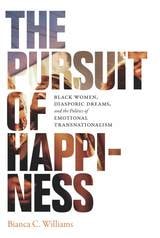
cover of The Pursuit of Happiness: Black Women, Diasporic Dreams, and the Politics of Emotional Transnationalism

The Pursuit of Happiness

Black Women, Diasporic Dreams, and the Politics of Emotional Transnationalism

Bianca C. Williams

Duke University Press, 2018

In The Pursuit of Happiness Bianca C. Williams traces the experiences of African American women as they travel to Jamaica, where they address the perils and disappointments of American racism by looking for intimacy, happiness, and a connection to their racial identities. Through their encounters with Jamaican online communities and their participation in trips organized by Girlfriend Tours International, the women construct notions of racial, sexual, and emotional belonging by forming relationships with Jamaican men and other "girlfriends." These relationships allow the women to exercise agency and find happiness in ways that resist the damaging intersections of racism and patriarchy in the United States. However, while the women require a spiritual and virtual connection to Jamaica in order to live happily in the United States, their notion of happiness relies on travel, which requires leveraging their national privilege as American citizens. Williams's theorization of "emotional transnationalism" and the construction of affect across diasporic distance attends to the connections between race, gender, and affect while highlighting how affective relationships mark nationalized and gendered power differentials within the African diaspora.
[more]
cover of The Quaker Community on Barbados: Challenging the Culture of the Planter Class

The Quaker Community on Barbados

Challenging the Culture of the Planter Class

Larry Gragg

University of Missouri Press, 2009

Prior to the Quakers’ large-scale migration to Pennsylvania, Barbados had more Quakers than any other English colony. But on this island of sugar plantations, Quakers confronted material temptations and had to temper founder George Fox’s admonitions regarding slavery with the demoralizing realities of daily life in a slave-based economy—one where even most Quakers owned slaves. In The Quaker Community on Barbados, Larry Gragg shows how the community dealt with these contradictions as it struggled to change the culture of the richest of England’s seventeenth-century colonies.

Gragg has conducted meticulous research on two continents to re-create the Barbados Quaker community. Drawing on wills, censuses, and levy books along with surviving letters, sermons, and journals, he tells how the Quakers sought to implement their beliefs in peace, simplicity, and equality in a place ruled by a planter class that had built its wealth on the backs of slaves. He reveals that Barbados Quakers were a critical part of a transatlantic network of Friends and explains how they established a “counterculture” on the island—one that challenged the practices of the planter class and the class’s dominance in island government, church, and economy.

In this compelling study, Gragg focuses primarily on the seventeenth century when the Quakers were most numerous and active on Barbados. He tells how Friends sought to convert slaves and improve their working and living conditions. He describes how Quakers refused to fund the Anglican Church, take oaths, participate in the militia, or pay taxes to maintain forts—and how they condemned Anglican clergymen, disrupted their services, and wrote papers critical of the established church. By the 1680s, Quakers were maintaining five meetinghouses and several cemeteries, paying for their own poor relief, and keeping their own records of births, deaths, and marriages. Gragg also tells of the severe challenges and penalties they faced for confronting and rejecting the dominant culture.

With their civil disobedience and stand on slavery, Quakers on Barbados played an important role in the early British Empire but have been largely neglected by scholars. Gragg’s work makes their contribution clear as it opens a new window on the seventeenth- and eighteenth-century Atlantic world.

[more]
cover of The Question of Women in Chinese Feminism

The Question of Women in Chinese Feminism

Tani E. Barlow

Duke University Press, 2004

The Question of Women in Chinese Feminism is a history of thinking about the subject of women in twentieth-century China. Tani E. Barlow illustrates the theories and conceptual categories that Enlightenment Chinese intellectuals have developed to describe the collectivity of women. Demonstrating how generations of these theorists have engaged with international debates over eugenics, gender, sexuality, and the psyche, Barlow argues that as an Enlightenment project, feminist debate in China is at once Chinese and international. She reads social theory, psychoanalytic thought, literary criticism, ethics, and revolutionary political ideologies to illustrate the range and scope of Chinese feminist theory’s preoccupation with the problem of gender inequality. She reveals how, throughout the cataclysms of colonial modernity, revolutionary modernization, and market socialism, prominent Chinese feminists have gathered up the remainders of the past and formed them into social and ethical arguments, categories, and political positions, ceaselessly reshaping progressive Enlightenment sexual liberation theory.
[more]
cover of The Quiet Zone: Caribbean Expressive Cultures and the Feminist Aesthetics of Disturbance

The Quiet Zone

Caribbean Expressive Cultures and the Feminist Aesthetics of Disturbance

Petal Kimberly Samuel

Rutgers University Press, 2026
A serene beach. The classroom of an elite private school. The still nights in an upscale residential neighborhood. An acclaimed poet with a quiet, dignified mode of address. The sonic etiquette and experience of quiet is integral to each of these scenes. The Quiet Zone examines what the emergence of quiet as an elite aesthetic, privilege, and entitlement means for minoritized people who are often narrated as loud, disruptive, and disturbing, sonically, visually, and otherwise. Taking the Caribbean and its diasporas as its key sites of study, the book explores what we can learn from efforts to transform the region into the quintessential site of quiet leisure, in part, through the enactment of regimes of sonic discipline and surveillance directed against its majority Black population. Analyzing the work of Afro-Caribbean artists that catalog and critique sonic surveillance, the book questions the ways that quiet gets produced both as a regulatory ideal of racial, gender, sexual, national, and civilizational belonging and as a universal object of desire
[more]
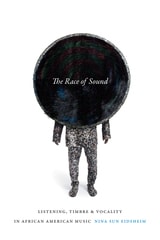
cover of The Race of Sound: Listening, Timbre, and Vocality in African American Music

The Race of Sound

Listening, Timbre, and Vocality in African American Music

Nina Sun Eidsheim

Duke University Press, 2018

In The Race of Sound Nina Sun Eidsheim traces the ways in which sonic attributes that might seem natural, such as the voice and its qualities, are socially produced. Eidsheim illustrates how listeners measure race through sound and locate racial subjectivities in vocal timbre—the color or tone of a voice. Eidsheim examines singers Marian Anderson, Billie Holiday, and Jimmy Scott as well as the vocal synthesis technology Vocaloid to show how listeners carry a series of assumptions about the nature of the voice and to whom it belongs. Outlining how the voice is linked to ideas of racial essentialism and authenticity, Eidsheim untangles the relationship between race, gender, vocal technique, and timbre while addressing an undertheorized space of racial and ethnic performance. In so doing, she advances our knowledge of the cultural-historical formation of the timbral politics of difference and the ways that comprehending voice remains central to understanding human experience, all the while advocating for a form of listening that would allow us to hear singers in a self-reflexive, denaturalized way.
[more]
cover of The Racial Logic of Politics: Asian Americans and Party Competition

The Racial Logic of Politics

Asian Americans and Party Competition

Thomas P. Kim

Temple University Press, 2006

As he systemically studies the barriers that Asian Americans face in the electoral and legislative processes, Thomas Kim shows how racism is embedded in America's two-party political system.Here Kim examines the institutional barriers that Asian Americans face in the electoral and legislative processes. Utilizing approaches from ethnic studies and political science, including rational choice theory, he demonstrates how the political logic of two-party competition actually works against Asian American political interests. According to Kim, political party leaders recognize that Asian Americans are tagged with "ethnic markers" that label them as immutably "foreign," and as such, parties cannot afford to be too closely associated with (racialized) Asian Americans. In publicly repudiating Asian American efforts to gain political power, Kim asserts, party elites are making rational, strategic calculations.Although other commentators have blamed the diversity of the Asian American population for its lack of political success, Kim argues convincingly that race itself is the chief barrier to political participation—and it will not be overcome simply by electing or appointing more Asian Americans to political office.
[more]
cover of The Racial Order

The Racial Order

Mustafa Emirbayer and Matthew Desmond

University of Chicago Press, 2015

Proceeding from the bold and provocative claim that there never has been a comprehensive and systematic theory of race, Mustafa Emirbayer and Matthew Desmond set out to reformulate how we think about this most difficult of topics in American life. In The Racial Order, they draw on Bourdieu, Durkheim, and Dewey to present a new theoretical framework for race scholarship. Animated by a deep and reflexive intelligence, the book engages the large and important issues of social theory today and, along the way, offers piercing insights into how race actually works in America. Emirbayer and Desmond set out to examine how the racial order is structured, how it is reproduced and sometimes transformed, and how it penetrates into the innermost reaches of our racialized selves. They also consider how—and toward what end—the racial order might be reconstructed. 
In the end, this project is not merely about race; it is a theoretical reconsideration of the fundamental problems of order, agency, power, and social justice. The Racial Order is a challenging work of social theory, institutional and cultural analysis, and normative inquiry.
[more]
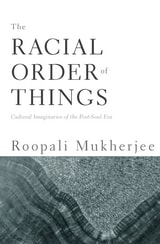
cover of The Racial Order Of Things: Cultural Imaginaries Of The Post-Soul Era

The Racial Order Of Things

Cultural Imaginaries Of The Post-Soul Era

Roopali Mukherjee

University of Minnesota Press, 2006

Why did affirmative action programs implemented during the sixties and seventies suffer vicious assaults in the nineties? How were culturally resonant appeals to individualism and colorblindness turned around during the nineties to epitomize a “toxic system of quotas, preference, and set-asides”?In The Racial Order of Things, Roopali Mukherjee analyzes reversals and reinterpretations that mark the turn from the civil rights era of the sixties to the post-soul decade of the nineties. She begins by surveying a series of intractable disagreements over race- and gender-based social justice that have played out over the past decade, framed by the 1996 passage of California’s Proposition 209 and the 2003 Supreme Court decision on admissions criteria at the University of Michigan. Examining political campaigns for and against affirmative action as well as films about dilemmas of gender and race in the mythic meritocracy, the book exposes a remarkable discursive tug-of-war over antidiscrimination policies during the nineties.Highlighting the ways in which categories such as “blackness” and “women” have operated in these debates, Mukherjee sees the public policy process as a key site where cultural identities are formed, recognized, and discarded. Considering mainstream media, including Hollywood films like Disclosure, G.I. Jane, Courage under Fire, and The Contender, Mukherjee focuses on conflicts following the introduction of women and blacks into the workplace. She explores the politics of public memory about the civil rights era through the lens of feature film, documentary, and network news. Using newspaper articles and legislative records, Mukherjee provides a comparative reading of narratives and counternarratives of the debate surrounding the 1964 Civil Rights Act and anti–affirmative action campaigns of the neoliberal nineties.Balancing policy narrative, cinematic reading, and conceptual analysis, Mukherjee demonstrates a shifting and paradoxical racial order that explains how the cultural authority and political career of affirmative action remains in flux, thoroughly contested, and contradictory.Roopali Mukherjee is assistant professor of media studies at Queens College of the City University of New York.
[more]
cover of The Real Hiphop: Battling for Knowledge, Power, and Respect in the LA Underground

The Real Hiphop

Battling for Knowledge, Power, and Respect in the LA Underground

Marcyliena Morgan

Duke University Press, 2009

Project Blowed is a legendary hiphop workshop based in Los Angeles. It began in 1994 when a group of youths moved their already renowned open-mic nights from the Good Life, a Crenshaw district health food store, to the KAOS Network, an arts center in Leimert Park. The local freestyle of articulate, rapid-fire, extemporaneous delivery, the juxtaposition of meaningful words and sounds, and the way that MCs followed one another without missing a beat, quickly became known throughout the LA underground. Leimert Park has long been a center of African American culture and arts in Los Angeles, and Project Blowed inspired youth throughout the city to consider the neighborhood the epicenter of their own cultural movement. The Real Hiphop is an in-depth account of the language and culture of Project Blowed, based on the seven years Marcyliena Morgan spent observing the workshop and the KAOS Network. Morgan is a leading scholar of hiphop, and throughout the volume her ethnographic analysis of the LA underground opens up into a broader examination of the artistic and cultural value of hiphop.

Morgan intersperses her observations with excerpts from interviews and transcripts of freestyle lyrics. Providing a thorough linguistic interpretation of the music, she teases out the cultural antecedents and ideologies embedded in the language, emphases, and wordplay. She discusses the artistic skills and cultural knowledge MCs must acquire to rock the mic, the socialization of hiphop culture’s core and long-term members, and the persistent focus on skills, competition, and evaluation. She brings attention to adults who provided material and moral support to sustain underground hiphop, identifies the ways that women choose to participate in Project Blowed, and vividly renders the dynamics of the workshop’s famous lyrical battles.

[more]
cover of The Red Spears, 1916–1949

The Red Spears, 1916–1949

Tai Hsüan-chih; Translated by Ronald Suleski; Introduction by Elizabeth Perry

University of Michigan Press, 1981

Before Tai Hsüan-chih’s work on the Red Spear Society, the subject was a little understood movement that seemed of only passing interest to scholars of China—intriguing for its peculiar beliefs and rituals, perhaps, but hardly of central importance to modern Chinese history. Today, however, thanks in no small measure to the pioneering work of Professor Tai, the Red Spears have gained a secure niche in scholarship on modern China. Their numbers (reaching perhaps some three million participants at the height of the movement) and enduring (lasting intermittently for several decades) should stand as reason enough for the recent scholarly attention.
But the Red Spears have generated interest for other reasons as well. As research has developed into the history both of China’s traditional rural rebellions and of her Communist revolution has developed over the past few years, the Red Spears have assumed increasing significance. A movement which bore marked similarities to earlier Chinese uprisings (most notably the Boxers), the Red Spears nevertheless operated in a later period of history (right through the middle of the twentieth century) which brought them in direct contact with Communist revolutionaries. An analysis of the Red Spears thus becomes important both for what it can tell us about longstanding patterns of rural rebellion in China, and for what it suggests about the nature of Chinese revolution.
[more]
cover of The Reorder of Things: The University and Its Pedagogies of Minority Difference

The Reorder of Things

The University and Its Pedagogies of Minority Difference

Roderick A. Ferguson

University of Minnesota Press, 2012

In the 1960s and 1970s, minority and women students at colleges and universities across the United States organized protest movements to end racial and gender inequality on campus. African American, Chicano, Asia American, American Indian, women, and queer activists demanded the creation of departments that reflected their histories and experiences, resulting in the formation of interdisciplinary studies programs that hoped to transform both the university and the wider society beyond the campus.

In The Reorder of Things, however, Roderick A. Ferguson traces and assesses the ways in which the rise of interdisciplines—departments of race, gender, and ethnicity; fields such as queer studies—were not simply a challenge to contemporary power as manifest in academia, the state, and global capitalism but were, rather, constitutive of it. Ferguson delineates precisely how minority culture and difference as affirmed by legacies of the student movements were appropriated and institutionalized by established networks of power.

Critically examining liberationist social movements and the cultural products that have been informed by them, including works by Adrian Piper, Toni Cade Bambara, Jhumpa Lahiri, and Zadie Smith, The Reorder of Things argues for the need to recognize the vulnerabilities of cultural studies to co-option by state power and to develop modes of debate and analysis that may be in the institution but are, unequivocally, not of it.

[more]
cover of The Repeating Body: Slavery's Visual Resonance in the Contemporary

The Repeating Body

Slavery's Visual Resonance in the Contemporary

Kimberly Juanita Brown

Duke University Press, 2015
Haunted by representations of black women that resist the reality of the body's vulnerability, Kimberly Juanita Brown traces slavery's afterlife in black women's literary and visual cultural productions. Brown draws on black feminist theory, visual culture studies, literary criticism, and critical race theory to explore contemporary visual and literary representations of black women's bodies that embrace and foreground the body's vulnerability and slavery's inherent violence. She shows how writers such as Gayl Jones, Toni Morrison, Audre Lorde, and Jamaica Kincaid, along with visual artists Carrie Mae Weems and María Magdalena Campos-Pons, highlight the scarred and broken bodies of black women by repeating, passing down, and making visible the residues of slavery's existence and cruelty. Their work not only provides a corrective to those who refuse to acknowledge that vulnerability, but empowers black women to create their own subjectivities. In The Repeating Body, Brown returns black women to the center of discourses of slavery, thereby providing the means with which to more fully understand slavery's history and its penetrating reach into modern American life. 
 
[more]
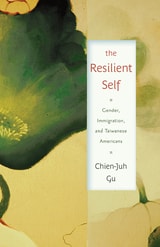
cover of The Resilient Self: Gender, Immigration, and Taiwanese Americans

The Resilient Self

Gender, Immigration, and Taiwanese Americans

Gu, Chien-Juh

Rutgers University Press, 2017

The Resilient Self explores how international migration re-shapes women’s senses of themselves. Chien-Juh Gu uses life-history interviews and ethnographic observations to illustrate how immigration creates gendered work and family contexts for middle-class Taiwanese American women, who, in turn, negotiate and resist the social and psychological effects of the processes of immigration and settlement. 

Most of the women immigrated as dependents when their U.S.-educated husbands found professional jobs upon graduation. Constrained by their dependent visas, these women could not work outside of the home during the initial phase of their settlement. The significant contrast of their lives before and after immigration—changing from successful professionals to foreign housewives—generated feelings of boredom, loneliness, and depression. Mourning their lost careers and lacking fulfillment in homemaking, these highly educated immigrant women were forced to redefine the meaning of work and housework, which in time shaped their perceptions of themselves and others in the family, at work, and in the larger community.  
 
[more]
cover of The Retreat from Race: Asian-American Admissions and Racial Politics

The Retreat from Race

Asian-American Admissions and Racial Politics

Takagi, Dana Y

Rutgers University Press, 1993

“An excellent book. Takagi takes a very complex and sensitive subject—racial politics—and shows, through a careful analysis . . . that changes in the discourse about Asian American admissions have facilitated a 'retreat from race' in the area of affirmative action. . . . This book will appeal to an audience significantly wider than a typical academic one.”— David Karen, Bryn Mawr College

Charges by Asian Americans that the top universities in the United States used quotas to limit the enrollment of Asian-American students developed into one of the most controversial public controversies in higher education since the Bakke case. In Retreat from Race, Dana Takagi follows the debates over Asian-American admissions at Berkeley, UCLA, Brown, Stanford, Harvard, and Princeton. She explains important developments in the politics of race:  changes in ethnic coalitions, reconstruction of the debate over affirmative action, and the conservative challenge to the civil rights agenda of the 1960s. Takagi examines the history and significance of the Asian American admissions controversy on American race relations both inside and outside higher education.

Takagi's central argument is that the Asian-American admissions controversy facilitated a subtle but important shift in affirmative action policy away from racial preferences toward class preferences. She calls this development a retreat from race. Takagi suggests that the retreat signals not only an actual policy shift but also the increasing reluctance on the part of intellectuals, politicans, and policy analysts to identify and address social problems as explicitly racial problems.

Moving beyond the university setting, Takagi explores the political significance of the retreat from race by linking Asian-American admissions to other controversies in higher education and in American politics, including the debates over political correctness and multiculturalism. In her assessment, the retreat from race is likely to fail at its promise of easing racial tension and promoting racial equality.
 

[more]
cover of The Returned: Former U.S. Migrants’ Lives in Mexico City

The Returned

Former U.S. Migrants’ Lives in Mexico City

Claudia Masferrer

Russell Sage Foundation, 2025

In the first two decades of the 21st century, more than two million Mexican migrants returned to Mexico from the United States. Between 2010 and 2020, the number of people who returned to Mexico was so large that, for the first time in at least fifty years, more people entered Mexico from the United States than entered the United States from Mexico. Many of these migrants were destined for urban areas, and we know little about how they fare after they return to cities. In The Returned, sociologists Claudia Masferrer, Erin R. Hamilton, and Nicole Denier examine the experiences of returned migrants in Mexico City, one of the largest metropolitan areas in the world.

Masferrer, Hamilton, and Denier draw on interviews with former U.S. migrants living in Mexico City to better understand the experience of return migration to urban areas. Each of the migrants they spoke with lived in the United States for long periods with noncitizen status during the last four decades. During this time, U.S. immigration policy became increasingly focused on restriction and enforcement, which made it difficult for migrants to safely move back and forth across the border for work or to visit family without documentation. The authors find that upon their return, migrants in Mexico City felt disoriented and lost and had difficulty adapting to a massive urban environment where there is little support for returnees. They struggled to translate their work experience from their time in the U.S. to find quality jobs. Additionally, many found their family lives upended as they reunited with or formed families in the U.S.. Some found themselves separated from family members still in the U.S. with no ability to legally visit them. Others brought their families back to Mexico, some of whom were U.S. citizens and had never been to Mexico before. They, too, struggled to adapt and integrate to life in Mexico City.

The authors use the experiences of return migrants to discuss policies and practices that would improve their lives and ease their reintegration. To help with the disorientation they experience, returnees proposed ongoing psychological support with mental health professionals who have knowledge and training in the social and legal issues that return migrants face. Return migrants also advocated for policies to enhance skill matching, job creation, and entrepreneurship, as many felt the occupational skills they developed in the U.S. were undervalued in Mexico. To address family separation, returnees argued for legal and policy reform to accommodate family reunification.
The Returned is an illuminating account of the difficulties faced by return migrants and their families in Mexico City.

 
[more]
cover of The Revolt of the Black Athlete: 50th Anniversary Edition

The Revolt of the Black Athlete

50th Anniversary Edition

Harry Edwards

University of Illinois Press, 2017
The Revolt of the Black Athlete hit sport and society like an Ali combination. This Fiftieth Anniversary edition of Harry Edwards's classic of activist scholarship arrives even as a new generation engages with the issues he explored. Edwards's new introduction and afterword revisit the revolts by athletes like Muhammad Ali, Kareem Abdul-Jabbar, Tommie Smith, and John Carlos. At the same time, he engages with the struggles of a present still rife with racism, double-standards, and economic injustice. Again relating the rebellion of black athletes to a larger spirit of revolt among black citizens, Edwards moves his story forward to our era of protests, boycotts, and the dramatic politicization of athletes by Black Lives Matter. Incisive yet ultimately hopeful, The Revolt of the Black Athlete is the still-essential study of the conflicts at the interface of sport, race, and society.
[more]
cover of The Revolution Has Come: Black Power, Gender, and the Black Panther Party in Oakland

The Revolution Has Come

Black Power, Gender, and the Black Panther Party in Oakland

Robyn C. Spencer

Duke University Press, 2016
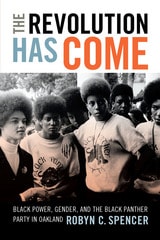
In The Revolution Has Come Robyn C. Spencer traces the Black Panther Party's organizational evolution in Oakland, California, where hundreds of young people came to political awareness and journeyed to adulthood as members. Challenging the belief that the Panthers were a projection of the leadership, Spencer draws on interviews with rank-and-file members, FBI files, and archival materials to examine the impact the organization's internal politics and COINTELPRO's political repression had on its evolution and dissolution. She shows how the Panthers' members interpreted, implemented, and influenced party ideology and programs; initiated dialogues about gender politics; highlighted ambiguities in the Panthers' armed stance; and criticized organizational priorities. Spencer also centers gender politics and the experiences of women and their contributions to the Panthers and the Black Power movement as a whole. Providing a panoramic view of the party's organization over its sixteen-year history, The Revolution Has Come shows how the Black Panthers embodied Black Power through the party's international activism, interracial alliances, commitment to address state violence, and desire to foster self-determination in Oakland's black communities.
[more]
cover of The Revolution Question: Feminisms in El Salvador, Chile, and Cuba

The Revolution Question

Feminisms in El Salvador, Chile, and Cuba

Shayne, Julie D.

Rutgers University Press, 2004
What do women do for revolutions? And what do revolutions do for women? Julie Shayne explores the roles of women in revolutionary struggles and the relationship of these movements to the emergence of feminism. Focusing upon the three very different cases of El Salvador, Chile, and Cuba, Shayne documents the roles of women in armed and unarmed political activities. She argues that women contribute to and participate in revolutionary movements in ways quite distinct from men. Despite the fact that their political contributions tend to be seen as less important than those of their male comrades, the roles that women play are actually quite significant to the expansion of revolutionary movements. Shayne also explains how, given the convergence of political and ideological factors, feminism is often born in the wake of revolutionary movements. As a result, revolutionary feminism is a struggle that addresses larger structures of political and economic inequalities. Based on extensive in-depth interviews with activists in all three countries, The Revolution Question offers new insight into the complex gender relations underlying revolutionary social movements and enables us to re-assess both the ways that women affect political struggle and the ways in which political struggle affects women.
[more]
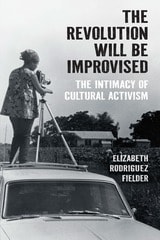
cover of The Revolution Will Be Improvised: The Intimacy of Cultural Activism

The Revolution Will Be Improvised

The Intimacy of Cultural Activism

Elizabeth Rodriguez Fielder

University of Michigan Press, 2024

The Revolution Will Be Improvised: The Intimacy of Cultural Activism traces intimate encounters between activists and local people of the civil rights movement through an archive of Black and Brown avant-gardism.  In the 1960s, Student Nonviolent Coordinating Committee (SNCC) activists engaged with people of color working in poor communities to experiment with creative approaches to liberation through theater, media, storytelling, and craft making. With a dearth of resources and an abundance of urgency, SNCC activists improvised new methods of engaging with communities that created possibilities for unexpected encounters through programs such as The Free Southern Theater, El Teatro Campesino, and the Poor People’s Corporation. 

Reading the output of these programs, Elizabeth Rodriguez Fielder argues that intimacy-making became an extension of participatory democracy. In doing so, Rodriguez Fielder supplants the success-failure binary for understanding social movements, focusing instead on how care work aligns with creative production. The Revolution Will Be Improvised returns to improvisation’s roots in economic and social necessity and locates it as a core tenet of the aesthetics of obligation, where a commitment to others drives the production and result of creative work. Thus, this book puts forward a methodology to explore the improvised, often ephemeral, works of art activism.
[more]
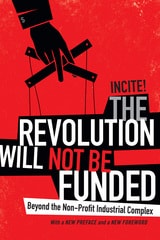
cover of The Revolution Will Not Be Funded: Beyond the Non-Profit Industrial Complex

The Revolution Will Not Be Funded

Beyond the Non-Profit Industrial Complex

INCITE! Women of Color Against Violence

Duke University Press, 2017

A trillion-dollar industry, the US non-profit sector is one of the world's largest economies. From art museums and university hospitals to think tanks and church charities, over 1.5 million organizations of staggering diversity share the tax-exempt 501(c)(3) designation, if little else. Many social justice organizations have joined this world, often blunting political goals to satisfy government and foundation mandates. But even as funding shrinks, many activists often find it difficult to imagine movement-building outside the non-profit model. The Revolution Will Not Be Funded gathers essays by radical activists, educators, and non-profit staff from around the globe who critically rethink the long-term consequences of what they call the "non-profit industrial complex." Drawing on their own experiences, the contributors track the history of non-profits and provide strategies to transform and work outside them. Urgent and visionary, The Revolution Will Not Be Funded presents a biting critique of the quietly devastating role the non-profit industrial complex plays in managing dissent.

Contributors. Christine E. Ahn, Robert L. Allen, Alisa Bierria, Nicole Burrowes, Communities Against Rape and Abuse (CARA), William Cordery, Morgan Cousins, Ruth Wilson Gilmore, Stephanie Guilloud, Adjoa Florência Jones de Almeida, Tiffany Lethabo King, Paul Kivel, Soniya Munshi, Ewuare Osayande, Amara H. Pérez, Project South: Institute for the Elimination of Poverty and Genocide, Dylan Rodríguez, Paula X. Rojas, Ana Clarissa Rojas Durazo, Sisters in Action for Power, Andrea Smith, Eric Tang, Madonna Thunder Hawk, Ije Ude, Craig Willse

[more]
cover of The Revolutionary Imagination in the Americas and the Age of Development

The Revolutionary Imagination in the Americas and the Age of Development

María Josefina Saldaña-Portillo

Duke University Press, 2003

In The Revolutionary Imagination in the Americas and the Age of Development, María Josefina Saldaña-Portillo boldly argues that crucial twentieth-century revolutionary challenges to colonialism and capitalism in the Americas have failed to resist—and in fact have been constitutively related to—the very developmentalist narratives that have justified and naturalized postwar capitalism. Saldaña-Portillo brings the critique of development discourse to bear on such exemplars of revolutionary and resistant political thought and practice as Ernesto “Che” Guevara, Malcolm X, the Sandinista government of Nicaragua, and the Guatemalan guerrilla resistance. She suggests that for each of these, developmentalist constructions frame the struggle as a heroic movement from unconsciousness to consciousness, from a childlike backwardness toward a disciplined and self-aware maturity.

Reading governmental reports, memos, and policies, Saldaña-Portillo traces the arc of development narratives from its beginnings in the 1944 Bretton Woods conference through its apex during Robert S. McNamara's reign at the World Bank (1968–1981). She compares these narratives with models of subjectivity and agency embedded in the autobiographical texts of three revolutionary icons of the 1960s and 1970s—those of Che Guevara, Guatemalan insurgent Mario Payeras, and Malcolm X—and the agricultural policy of the Sandinista National Liberation Front (FSLN). Saldaña-Portillo highlights a shared paradigm of a masculinist transformation of the individual requiring the "transcendence" of ethnic particularity for the good of the nation. While she argues that this model of progress often alienated the very communities targeted by the revolutionaries, she shows how contemporary insurgents such as Rigoberta Menchú, the Zapatista movement, and queer Aztlán have taken up the radicalism of their predecessors to retheorize revolutionary subjectivity for the twenty-first century.
[more]
cover of The Revolutionary Imaginations of Greater Mexico: Chicana/o Radicalism, Solidarity Politics, and Latin American Social Movements

The Revolutionary Imaginations of Greater Mexico

Chicana/o Radicalism, Solidarity Politics, and Latin American Social Movements

By Alan Eladio Gómez

University of Texas Press, 2016

Bringing to life the stories of political teatristas, feminists, gunrunners, labor organizers, poets, journalists, ex-prisoners, and other revolutionaries, The Revolutionary Imaginations of Greater Mexico examines the inspiration Chicanas/os found in social movements in Mexico and Latin America from 1971 to 1979. Drawing on fifteen years of interviews and archival research, including examinations of declassified government documents from Mexico, this study uncovers encounters between activists and artists across borders while sharing a socialist-oriented, anticapitalist vision. In discussions ranging from the Nuevo Teatro Popular movement across Latin America to the Revolutionary Proletariat Party of America in Mexico and the Peronista Youth organizers in Argentina, Alan Eladio Gómez brings to light the transnational nature of leftist organizing by people of Mexican descent in the United States, tracing an array of festivals, assemblies, labor strikes, clandestine organizations, and public protests linked to an international movement of solidarity against imperialism.

Taking its title from the “greater Mexico” designation used by Américo Paredes to describe the present and historical movement of Mexicans, Mexican Americans, and Chicanas/os back and forth across the US-Mexico border, this book analyzes the radical creativity and global justice that animated “Greater Mexico” leftists during a pivotal decade. While not all the participants were of one mind politically or personally, they nonetheless shared an international solidarity that was enacted in local arenas, giving voice to a political and cultural imaginary that circulated throughout a broad geographic terrain while forging multifaceted identities. The epilogue considers the politics of going beyond solidarity.
[more]
cover of The Right Kind of Suffering: Gender, Sexuality, and Arab Asylum Seekers in America

The Right Kind of Suffering

Gender, Sexuality, and Arab Asylum Seekers in America

Rhoda Kanaaneh

University of Texas Press, 2023

2024 Evelyn Shakir Non-Fiction Academic Award, The Arab American National Museum

An examination of Arab asylum seekers who feel compelled to package their tales of disenfranchisement and suffering to satisfy a deeply reluctant immigration system.

From the overloaded courts with their constantly changing dates and appointments to the need to prove oneself the “right” kind of victim, the asylum system in the United States is an exacting and drawn-out immigration process that itself results in suffering. When anthropologist Rhoda Kanaaneh became a volunteer interpreter for Arab asylum seekers, she learned how applicants were pushed to craft specific narratives to satisfy the system’s requirements.

Kanaaneh tells the stories of four Arab asylum seekers who sought protection in the United States on the basis of their gender or sexuality: Saud, who relived painful memories of her circumcision and police harassment in Sudan and then learned to number and sequence these recollections; Fatima, who visited doctors and therapists in order to document years of spousal abuse without over-emphasizing her resulting mental illness; Fadi, who highlighted the homophobic motivations that provoked his arrest and torture in Jordan, all the while sidelining connected issues of class and racism; and Marwa, who showcased her private hardships as a lesbian in a Shiite family in Lebanon and downplayed her environmental activism. The Right Kind of Suffering is a compelling portrait of Arab asylum seekers whose success stories stand in contrast with those whom the system failed.

[more]