Results by title
3284 books match the query 'art' and 643 start with t
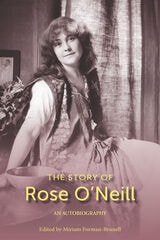
The Story of Rose O'Neill
An AutobiographyEdited by Miriam Forman-Brunell
University of Missouri Press, 2022
To most of us, Rose O'Neill is best known as the creator of the Kewpie doll, perhaps the most widely known character in American culture until Mickey Mouse. Prior to O'Neill's success as a doll designer, however, she already had earned a reputation as one of the best-known female commercial illustrators. Her numerous illustrations appeared in America's leading periodicals, including Life, Harper's Bazaar, and Cosmopolitan. While highly successful in the commercial world, Rose O'Neill was also known among intellectuals and artists for her contributions to the fine arts and humanities. In the early 1920s, her more serious works of art were exhibited in galleries in Paris and New York City. In addition, she published a book of poetry and four novels.
Yet, who was Rose Cecil O'Neill? Over the course of the twentieth century, Rose O'Neill has captured the attention of journalists, collectors, fans, and scholars who have disagreed over whether she was a sentimentalist or a cultural critic. Although biographers of Rose O'Neill have drawn heavily on portions of her previously unpublished autobiography, O'Neill's own voice--richly revealed in her well-written manuscript--has remained largely unheard until now.
In these memoirs, O'Neill reveals herself as a woman who preferred art, activism, and adventure to motherhood and marriage. Featuring photographs from the O'Neill family collection, The Story of Rose O'Neill fully reveals the ways in which she pushed at the boundaries of her generation's definitions of gender in an effort to create new liberating forms.
The Stranger, the Tears, the Photograph, the Touch
Divine Presence in Spain and Europe since 1500William A. Christian Jr.
Central European University Press, 2017
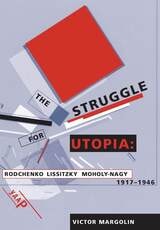
The Struggle for Utopia
Rodchenko, Lissitzky, Moholy-Nagy, 1917-1946Victor Margolin
University of Chicago Press, 1997
"An ambitious effort. This book puts the masters of European Modernism into perfect focus as inventors, propagators, and practitioners of a visual language that continues to hold sway over contemporary graphic style."—Steven Heller
"Worth the wait. . . . Margolin usefully presents what he calls the 'failed hope' of this movement in this valuable effort."—Publishers Weekly
The Student Guide to the Creative Studio in the Digital Age
Denitsa Petrova and Doug Specht
University of Westminster Press, 2025
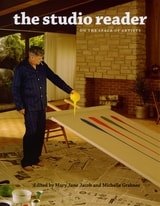
The Studio Reader
On the Space of ArtistsEdited by Mary Jane Jacob and Michelle Grabner
University of Chicago Press, 2010
The image of a tortured genius working in near isolation has long dominated our conceptions of the artist’s studio. Examples abound: think Jackson Pollock dripping resin on a cicada carcass in his shed in the Hamptons. But times have changed; ever since Andy Warhol declared his art space a “factory,” artists have begun to envision themselves as the leaders of production teams, and their sense of what it means to be in the studio has altered just as dramatically as their practices.
The Studio Reader pulls back the curtain from the art world to reveal the real activities behind artistic production. What does it mean to be in the studio? What is the space of the studio in the artist’s practice? How do studios help artists envision their agency and, beyond that, their own lives? This forward-thinking anthology features an all-star array of contributors, ranging from Svetlana Alpers, Bruce Nauman, and Robert Storr to Daniel Buren, Carolee Schneemann, and Buzz Spector, each of whom locates the studio both spatially and conceptually—at the center of an art world that careens across institutions, markets, and disciplines. A companion for anyone engaged with the spectacular sites of art at its making, The Studio Reader reconsiders this crucial space as an actual way of being that illuminates our understanding of both artists and the world they inhabit.
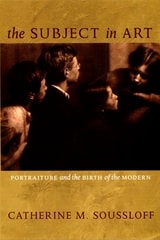
The Subject in Art
Portraiture and the Birth of the ModernCatherine M. Soussloff
Duke University Press, 2006
Soussloff combines a historically grounded examination of art and art historical thinking in Vienna with subsequent theories of portraiture and a careful historiography of philosophical and psychoanalytic approaches to human consciousness from Hegel to Sartre and from Freud to Lacan. She chronicles the emergence of a social theory of art among the art historians of the Vienna School, demonstrates how the Expressionist painter Oskar Kokoschka depicted the Jewish subject, and explores the development of pictorialist photography. Reflecting on the implications of the visualized, modern subject for textual and linguistic analyses of subjectivity, Soussloff concludes that the Viennese art historians, photographers, and painters will henceforth have to be recognized as precursors to such better-known theorists of the subject as Sartre, Foucault, and Lacan.
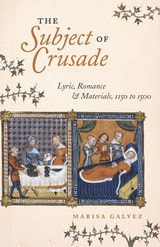
The Subject of Crusade
Lyric, Romance, and Materials, 1150 to 1500Marisa Galvez
University of Chicago Press, 2020
In The Subject of Crusade, Marisa Galvez offers a nuanced view of holy war and crusade poetry, reading these lyric works within a wider conversation with religion and culture. Arguing for an interdisciplinary treatment of crusade lyric, she shows how such poems are crucial for understanding the crusades as a complex cultural and historical phenomenon. Placing them in conversation with chronicles, knightly handbooks, artworks, and confessional and pastoral texts, she identifies a particular “crusade idiom” that emerged out of the conflict between pious and earthly duties. Galvez fashions an expanded understanding of the creative works made by crusaders to reveal their experiences, desires, ideologies, and reasons for taking up the cross.
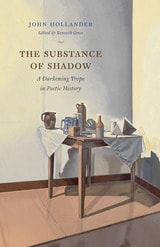
The Substance of Shadow
A Darkening Trope in Poetic HistoryJohn Hollander
University of Chicago Press, 2016
Shadow shows itself here in myriad literary identities, revealing its force as a way of seeing and a form of knowing, as material for fable and parable. Taking up a vast range of texts—from the Bible, Dante, Shakespeare, and Milton to Poe, Dickinson, Eliot, and Stevens—Hollander describes how metaphors of shadow influence our ideas of dreaming, desire, doubt, and death. These shadows of poetry and prose fiction point to unknown, often fearful domains of human experience, showing us concealed shapes of truth and possibility. Crucially, Hollander explores how shadows in poetic history become things with a strange substance and life of their own: they acquire the power to console, haunt, stalk, wander, threaten, command, and destroy. Shadow speaks, even sings, revealing to us the lost as much as the hidden self.
An extraordinary blend of literary analysis and speculative thought, Hollander’s account of the substance of shadow lays bare the substance of poetry itself.
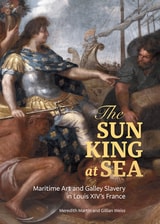
The Sun King at Sea
Maritime Art and Galley Slavery in Louis XIV's FranceMeredith Martin
J. Paul Getty Trust, The, 2022
Winner of the 2023 Leo Gershoy Award
2023 Winner of The David H. Pinkney Prize
Honorable Mention for The Mediterranean Seminar Best Book Prize 2023
Winner of the 2022 Kenshur Prize
Shortlisted for Apollo Magazine's 2022 Book of the Year
This richly illustrated volume, the first devoted to maritime art and galley slavery in early modern France, shows how royal propagandists used the image and labor of enslaved Muslims to glorify Louis XIV.
Mediterranean maritime art and the forced labor on which it depended were fundamental to the politics and propaganda of France’s King Louis XIV (r. 1643–1715). Yet most studies of French art in this period focus on Paris and Versailles, overlooking the presence or portrayal of galley slaves on the kingdom’s coasts. By examining a wide range of artistic productions—ship design, artillery sculpture, medals, paintings, and prints—Meredith Martin and Gillian Weiss uncover a vital aspect of royal representation and unsettle a standard picture of art and power in early modern France.
With an abundant selection of startling images, many never before published, The Sun King at Sea emphasizes the role of esclaves turcs (enslaved Turks)—rowers who were captured or purchased from Islamic lands—in building and decorating ships and other art objects that circulated on land and by sea to glorify the Crown. Challenging the notion that human bondage vanished from continental France, this cross-disciplinary volume invites a reassessment of servitude as a visible condition, mode of representation, and symbol of sovereignty during Louis XIV’s reign.

The Sun Tunnels Encyclo
Exploring Nancy Holt's Earthwork through Perception and SiteHikmet Sidney Loe
University of Utah Press, 2027
The Sun Tunnels Encyclo: Exploring Nancy Holt’s Earthwork through Perception and Site affords new information on the artist’s iconic work of land art. American artist Nancy Holt (1938-2014) extended her practice into the land, employing light, vision, and perception through photography, film, installations, and poetics. By creating her expansive earthwork Sun Tunnels (1973-76), Holt became a leader within the land art movement. Through her eponymous essay (1977) and film (1978), Holt presents the work through interdisciplinary topics: scientific (astronomical, mathematical, geologic, architectural) and regional (historical, cultural). Land use (Indigenous peoples, migration, military, industrial) joins poetry and philosophy to extend the work’s site-specificity. Through these myriad subjects, The Sun Tunnels Encyclo explores Holt’s pronouncement: “the center of the work becomes the center of the world.”
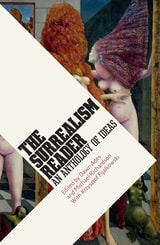
The Surrealism Reader
An Anthology of IdeasEdited by Dawn Ades, Michael Richardson, and Krzysztof Fijalkowski
University of Chicago Press, 2016
Including essays by leading surrealists and other major writers on the movement, the volume addresses the key themes of identity, otherness, freedom and morality, and poetry. The texts uncover, among other things, the significance of surrealism for the antifascist and anticolonialist movements and the various manifestations of surrealism in the years after World War II. Giving space to the many different voices that made up the movement, and placing them for the first time within a clear and coherent historical framework, The Surrealism Reader radically revises the popular understanding of what, and when, surrealism was—making this book an essential reference for students, scholars, and all those interested in the central place of surrealism within twentieth-century thought and culture.

The Swedish Porn Scene
Exhibition Contexts, 8mm Pornography and the Sex FilmMariah Larsson
Intellect Books, 2016
Combining contemporary case studies with comprehensive analyses of advertisements, critical responses, and censorship records, Larsson deconstructs the complexities and paradoxes of the Swedish porn scene. Looking as closely at the exhibition spaces where porn was seen as at the productions themselves and their audiences, Larsson reveals the conditions and social changes that allowed pornography in Sweden to flourish in the period.
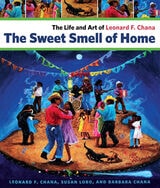
The Sweet Smell of Home
The Life and Art of Leonard F. ChanaLeonard F. Chana, Susan Lobo, and Barbara Chana
University of Arizona Press, 2009
He began his career by creating cards and soon was lending his art to posters and logos for many community-based Native organizations. Winning recognition from these groups, his work was soon actively sought by them. Chana’s work also appears on the covers and as interior art in a number of books on southwestern and American Indian topics.
The Sweet Smell of Home is an autobiographical work, written in Chana’s own voice that unfolds through oral history interviews with anthropologist Susan Lobo. Chana imparts the story of his upbringing and starting down the path toward a career as an artist. Balancing humor with a keen eye for cultural detail, he tells us about life both on and off the reservation.
Eighty pieces of art—26 in color—grace the text, and Chana explains both the impetus for and the evolution of each piece. Leonard Chana was a people’s artist who celebrated the extraordinary heroism of common people’s lives. The Sweet Smell of Home now celebrates this unique artist whose words and art illuminate not only his own remarkable life, but also the land and lives of the Tohono O’odham people
The São Paulo Neo-Avant-Garde
Radical Art and Mass Print Media in Cold War BrazilMari Rodríguez Binnie
University of Texas Press, 2024
How artists challenged a military dictatorship through mass print technologies in 1970s and 1980s São Paulo.
Throughout the 1970s and into the 1980s, during Brazil's military dictatorship, artists shifted their practices to critique the government and its sanitized images of Brazil, its use of torture, and its targeted persecutions. Mari Rodríguez Binnie's The São Paulo Neo-Avant-Garde examines these artworks and their engagement with politics and mainstream art institutions and practices.
As Binnie skillfully shows, artists appropriated processes like photocopy, offset lithography, and thermal and heliographic printing, making newly available technologies of mass production foundational to their work of resistance against both the dictatorship and the established art world. Often working collaboratively, these artists established alternative networks of exchange locally and internationally to circulate their work. As democracy was reestablished in Brazil, and in the decades that followed, their works largely fell out of sight. Here, in the first English-language book to focus entirely on conceptual practices in São Paulo in the 1970s and 1980s, Binnie unearths a scene critical to the development of contemporary Brazilian Art.
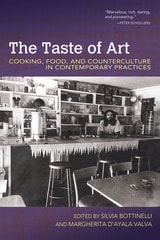
The Taste of Art
Cooking, Food, and Counterculture in Contemporary PracticesSilvia Bottinelli
University of Arkansas Press, 2017
The Taste of Art offers a sample of scholarly essays that examine the role of food in Western contemporary art practices. The contributors are scholars from a range of disciplines, including art history, philosophy, film studies, and history. As a whole, the volume illustrates how artists engage with food as matter and process in order to explore alternative aesthetic strategies and indicate countercultural shifts in society.
The collection opens by exploring the theoretical intersections of art and food, food art’s historical root in Futurism, and the ways in which food carries gendered meaning in popular film. Subsequent sections analyze the ways in which artists challenge mainstream ideas through food in a variety of scenarios. Beginning from a focus on the body and subjectivity, the authors zoom out to look at the domestic sphere, and finally the public sphere.
Here are essays that study a range of artists including, among others, Filippo Tommaso Marinetti, Daniel Spoerri, Dieter Roth, Joseph Beuys, Al Ruppersberg, Alison Knowles, Martha Rosler, Robin Weltsch, Vicki Hodgetts, Paul McCarthy, Luciano Fabro, Carries Mae Weems, Peter Fischli and David Weiss, Janine Antoni, Elżbieta Jabłońska, Liza Lou, Tom Marioni, Rirkrit Tiravanija, Michael Rakowitz, and Natalie Jeremijenko.
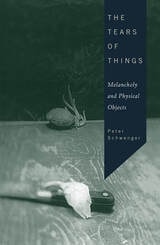
The Tears of Things
Melancholy and Physical ObjectsPeter Schwenger
University of Minnesota Press, 2005
Peter Schwenger deftly weaves together philosophical and psychoanalytical theory with artistic practice. Concerned in part with the act of collecting, The Tears of Things is itself a collection of exemplary art objects—literary and cultural attempts to control and possess things—including paintings by Georgia O’Keeffe and René Magritte; sculpture by Louise Bourgeois and Marcel Duchamp; Joseph Cornell’s boxes; Edward Gorey’s graphic art; fiction by Virginia Woolf, Georges Perec, and Louise Erdrich; the hallucinatory encyclopedias of Jorge Luis Borges and Luigi Serafini; and the corpse photographs of Joel Peter Witkin.
However, these representations of objects perpetually fall short of our aspirations. Schwenger examines what is left over—debris and waste—and asks what art can make of these. What emerges is not an art that reassembles but one that questions what it means to assemble in the first place. Contained in this catalog of waste is that ultimate still life, the cadaver, where the subject-object dichotomy receives its final ironic reconciliation.
Peter Schwenger is professor of English at Mount St. Vincent University in Halifax, Nova Scotia. He is the author of Fantasm and Fiction: On Textual Envisioning, Letter Bomb: Nuclear Holocaust and the Exploding Word, and Phallic Critiques: Masculinity and Twentieth-Century Literature.
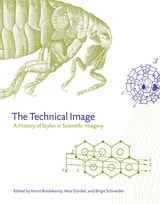
The Technical Image
A History of Styles in Scientific ImageryEdited by Horst Bredekamp, Vera Dünkel, and Birgit Schneider
University of Chicago Press, 2015
Opening with a set of key questions about artistic representation in science, technology, and medicine, The Technical Image then investigates historical case studies focusing on specific images, such as James Watson’s models of genes, drawings of Darwin’s finches, and images of early modern musical automata. These case studies in turn are used to illustrate broad themes ranging from “Digital Images” to “Objectivity and Evidence” and to define and elaborate upon fundamental terms in the field. Taken as a whole, this collection will provide analytical tools for the interpretation and application of scientific and technological imagery.
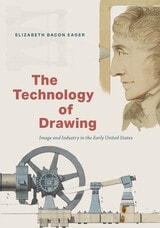
The Technology of Drawing
Image and Industry in the Early United StatesElizabeth Bacon Eager
University of Chicago Press, 2026
A richly illustrated study of how technical drawing shaped culture in the early United States.
With The Technology of Drawing, Elizabeth Bacon Eager explores the importance of manual skill and graphic literacy in the emergence of American industry, offering readers a new lens through which to view the visual culture of the early United States. Focused on questions of materiality and process, the book traces the development of drawing as a technology and argues for it as an embodied way of thinking and knowing, revealing the significance of such knowledge in the construction of both scientific and social authority. Through close analysis of materials, including construction drawings, mechanical treatises, cartographic surveys, and patent drawings, many of which have never been published before, Eager presents a history of American art focused on materiality and process through the view of the mechanic rather than the fine artist.
Reaching beyond the traditional boundaries of art historical study to engage objects rarely considered as art, The Technology of Drawing treats the technical image as a site of extraordinary creativity, in which eighteenth- and nineteenth-century Americans across the social spectrum negotiated critical concepts of identity, invention, and authorship with a remarkable degree of material intelligence and visual sophistication.
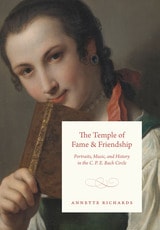
The Temple of Fame and Friendship
Portraits, Music, and History in the C. P. E. Bach CircleAnnette Richards
University of Chicago Press, 2020
One of the most celebrated German composers of the eighteenth century, C. P. E. Bach spent decades assembling an extensive portrait collection of some four hundred music-related items—from oil paintings to engraved prints. The collection was dispersed after Bach’s death in 1788, but with Annette Richards’s painstaking reconstruction, the portraits once again present a vivid panorama of music history and culture, reanimating the sensibility and humor of Bach’s time. Far more than a mere multitude of faces, Richards argues, the collection was a major part of the composer’s work that sought to establish music as an object of aesthetic, philosophical, and historical study.
The Temple of Fame and Friendship brings C. P. E. Bach’s collection to life, giving readers a sense of what it was like for visitors to tour the portrait gallery and experience music in rooms thick with the faces of friends, colleagues, and forebears. She uses the collection to analyze the “portraitive” aspect of Bach’s music, engaging with the influential theories of Swiss physiognomist Johann Caspar Lavater. She also explores the collection as a mode of cultivating and preserving friendship, connecting this to the culture of remembrance that resonates in Bach’s domestic music. Richards shows how the new music historiography of the late eighteenth century, rich in anecdote, memoir, and verbal portrait, was deeply indebted to portrait collecting and its negotiation between presence and detachment, fact and feeling.
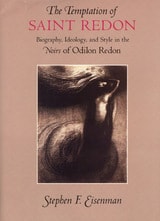
The Temptation of Saint Redon
Biography, Ideology, and Style in the Noirs of Odilon RedonStephen F. Eisenman
University of Chicago Press, 1992
Indeed, local tales and legends of witches, ghosts, one-eyed monsters, evil eyes, and wood fairies figure prominently in Redon's graphic works, which he called his noirs, or "blacks." After formal training at Bordeaux and Paris in the 1850s and 1860s, Redon began to chart his independent artistic course. Eisenman shows how, rejecting both naturalism and classicism, Redon, a prototypical Symbolist, found in grotesque and epic genres the expression of organic communities and precapitalist societies. He places Redon's desire for this imagined world of superstitious simplicity a desire manifest in his entire mature artistic practice in the context of contemporary avant-garde movements.
Redon's great noirs of the 1870s and 1880s, dreamlike configurations of seemingly irreconcilable elements from portraits, still lifes, and landscapes, show an increasingly subtle control of connotation and a complex indebtedness to caricature, allegory, and puns. Many of the noirs also visually interpret works by like-minded authors, including Baudelaire, Flaubert, Poe, and Mallarmé, one of Redon's close friends. Eisenman's analysis of the noirs underscores Redon's interest in creating an imaginative, even fantastic art, that could act directly on the human spirit. In addition to deepening our understanding of Redon and his art, The Temptation of Saint Redon exposes a link between place, politics, personal history, and the artistic imagination.
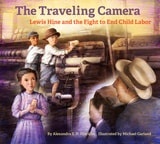
The The Traveling Camera
Lewis Hine and the Fight to End Child LaborAlexandra S. D. Hinrichs
J. Paul Getty Trust, The, 2021
Stunning visuals and poetic text combine to tell the inspiring story of Lewis Hine (1874–1940), a teacher and photographer who employed his art as a tool for social reform. Working for the National Child Labor Committee, Hine traveled the United States, taking pictures of children as young as five toiling under dangerous conditions in cotton mills, seafood canneries, farms, and coal mines. He often wore disguises to sneak into factories, impersonating a machinery inspector or traveling salesman. He said, “If I could tell this story in words, I wouldn’t need to lug a camera.” His poignant pictures attracted national attention and were instrumental in the passage of child labor laws. The Traveling Camera contains extensive back matter, including a time line, original photos, and a bibliography.
Ages six to nine.
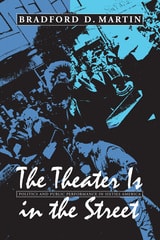
The Theater Is in the Street
Politics and Public Performance in 1960s AmericaBradford D. Martin
University of Massachusetts Press, 2004
During the 1960s, the SNCC Freedom Singers, The Living Theatre, the Diggers, the Art Workers Coalition, and the Guerrilla Art Action Group fused art and politics by staging unexpected and uninvited performances in public spaces. Through their activism and the response it provoked, art, theater, and politics began to converge and assume a new visibility in everyday life. While their specific political visions varied, these groups shared the impulse to stage performances and actions publicly—"in the streets"—eschewing museums, theaters, and other conventional halls of culture. Bradford D. Martin offers detailed portraits of each of these groups and examines why they embraced public performance as a vehicle to express and advance their politics.
At a time when the New Left and the counterculture were on the rise, these artists reflected the decade's political and cultural radicalism and helped to define a new aesthetic. Civil rights activists mobilized singing in the struggle for desegregation, introducing a vibrant musical form into the public space. The Living Theatre culminated an arduous quest to mesh artistic and political goals, leading audiences from theaters into the streets to begin the “beautiful nonviolent anarchist revolution.” The Diggers playfully engaged San Francisco's counterculture in politics with their carnivalesque public actions. The Art Workers Coalition and the Guerrilla Action Art Group sought to disrupt the conventional art world, mounting protests in and around New York City museums.
By questioning the values and assumptions that separated art from politics, these groups not only established public performance as a legitimate aesthetic but also provided a new creative vocabulary for future generations of artists. Their continued involvement with the women's liberation movement, rural communes, and political street theater into the 1970s and beyond challenges the popular myth that activists disengaged from politics after the 1960s.

The Thief, the Cross, and the Wheel
Pain and the Spectacle of Punishment in Medieval and Renaissance EuropeMitchell B. Merback
University of Chicago Press, 1999
Merback compares the images of Christ's Crucifixion with those of the two thieves who met their fate beside Jesus. In paintings by well-known Northern European masters and provincial painters alike, Merback finds the two thieves subjected to incredible cruelty, cruelty that artists could not depict in their scenes of Christ's Crucifixion because of theological requirements. Through these representations Merback explores the ways audiences in early modern Europe understood images of physical suffering and execution. The frequently shocking works also provide a perspective from which Merback examines the live spectacle of public torture and execution and how audiences were encouraged by the Church and the State to react to the experience. Throughout, Merback traces the intricate and extraordinary connections among religious art, devotional practice, bodily pain, punishment, and judicial spectatorship.
Keenly aware of the difficulties involved in discussing images of atrocious violence but determined to make them historically comprehensible, Merback has written an informed and provocative study that reveals the rituals of medieval criminal justice and the visual experiences they engendered.
The Thought of John Sallis
Phenomenology, Plato, ImaginationBernard Freydberg
Northwestern University Press, 2012
Sallis’s work possesses an intrinsic power and originality, as well as deep interpretive insight. This book is a descriptive and critical journey through his thought, providing an overview for readers who wish to gain a sense of its sweep, along with discrete sections on particular philosophical disciplines for readers whose interests are more specific. It grapples with the challenges Sallis’s thought presents, making them explicit and opening them up to further consideration. And it attempts to locate his thought within both contemporary continental philosophy and philosophy as a whole. Essential for any student of continental philosophy, The Thought of John Sallis expounds on his work in a manner that increases access, honors its depth, and opens up unexplored possibilities for philosophy.
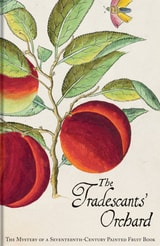
The Tradescants' Orchard
The Mystery of a Seventeenth-Century Painted Fruit BookBarrie Juniper and Hanneke Grootenboer
Bodleian Library Publishing, 2013
The Tradescants’ Orchard reproduces for the first time the entire manuscript, traditionally associated with the renowned father-and-son nurserymen the John Tradescants. The paintings pose many questions: Who painted them and why? What is the significance of the wildlife—birds, butterflies, frogs, and snails—that appear throughout? Why is there only one depiction of an apple tree despite its popularity? Were there others that have since gone missing?
A visual feast that will appeal to botany and gardening enthusiasts, the book also includes an introduction that maps out the mystery of how and why these enigmatic watercolors were made.
The Transformation of the Avant-Garde
The New York Art World, 1940-1985Diana Crane
University of Chicago Press, 1989
Crane's account is built around discussions of seven styles: Abstract Expressionism in the forties; Pop art and Minimalism in the sixties; Figurative painting, Photorealism, and Pattern painting in the early seventies; and Neo-Expressionism in the early eighties. Demonstrating that the New York art world moved toward increasing acceptance of dominant American cultural trends, Crane offers a fascinating look not only at the intricacies of New York's artistic inner circle but also at the sociology of work and professions, the economics of culture markets such as "dealing art," and the sociology of culture.
The Truth in Painting
Jacques Derrida
University of Chicago Press, 1987
The Truth in Painting
Jacques Derrida
University of Chicago Press, 1987
The Umayyad Mosque of Damascus
Art, Faith and Empire in Early IslamAlain George
Gingko, 2020
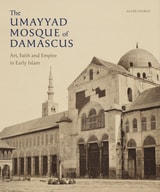
The Umayyad Mosque of Damascus is one of the oldest continuously used religious sites in the world. The mosque we see today was built in 705 CE by the Umayyad caliph al-Walid on top of a fourth-century Christian church that had been erected over a temple of Jupiter. Incredibly, despite the recent war, the mosque has remained almost unscathed, but over the centuries has been continuously rebuilt after damage from earthquakes and fires. In this comprehensive biography of the Umayyad Mosque, Alain George explores a wide range of sources to excavate the dense layers of the mosque’s history, also uncovering what the structure looked like when it was first built with its impressive marble and mosaic-clad walls. George incorporates a range of sources, including new information he found in three previously untranslated poems written at the time the mosque was built, as well as in descriptions left by medieval scholars. He also looks carefully at the many photographs and paintings made by nineteenth-century European travelers, particularly those who recorded the building before the catastrophic fire of 1893.
The Unauthorized Audubon
Anita Skeen and Laura B. DeLind
Michigan State University Press, 2014
The Uncommon Vision of Sergei Konenkov, 1874-1971
A Russian Sculptor and His TimesLampard, Marie Turbow
Rutgers University Press, 2001
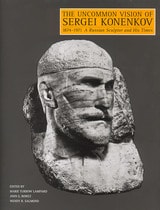
Sergei Konenkov was one of this century's most distinguished Russian artists. A celebrated sculptor, he was a leading figure of the young Soviet art establishment in the early 1920s. After spending over twenty years in the United States, he returned to the Soviet Union in 1945 to become a respected member of the Soviet art world. The mentor to an entire generation of Soviet sculptors, he was renowned for his personal charisma and artistic versatility. This collection of essays, interviews, and personal reminiscences is the first appraisal of his work and life published outside of Russia.
The contributors view Konenkov’s work within a variety of cultural, artistic, and philosophical contexts. With particular attention to his awareness of both indigenous Russian traditions and European innovations, they trace the many stages of his artistic development as he explored and experimented with techniques borrowed from Realism, Symbolism, salon portraiture, African wood carving, Socialist Realism, and Surrealism. The many different historical sources that inspired Konenkov’s artistic expression, from Orthodox Christianity and the folklore of the Russian peasantry to the Egyptian pyramids and pre-classical antiquity are also discussed. The contributors also explore the relationship of Konenkov's life and ideology to art, and the effects of expatriation on creativity.
Illustrated with dozens of photographs of Konenkov’s art, this study of one of the most enigmatic and fascinating artists of the modern period will accompany an exhibition at The Jane Voorhees Zimmerli Art Museum.
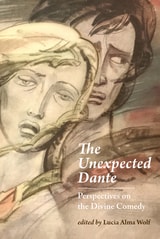
The Unexpected Dante
Perspectives on the Divine ComedyLucia Alma Wolf
Bucknell University Press, 2021
The Unexpected Dante brings together five leading scholars who offer fresh perspectives on the meanings and reception of The Divine Comedy. Some investigate Dante’s intentions by exploring the poem’s esoteric allusions to topics ranging from musical instruments to Roman law. Others examine the poem’s long afterlife and reception in the United States, with chapters showcasing new discoveries about Nicolaus de Laurentii’s 1481 edition of Commedia and the creative contemporary adaptations that have relocated Dante’s visions of heaven and hell to urban American settings.
This study also includes a guide that showcases selected treasures from the extensive Dante collections at the Library of Congress, illustrating the depth and variety of The Divine Comedy’s global influence. The Unexpected Dante is thus a boon to both Dante scholars and aficionados of this literary masterpiece.
Published by Bucknell University Press in association with the Library of Congress. Distributed worldwide by Rutgers University Press.
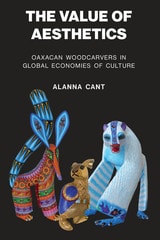
The Value of Aesthetics
Oaxacan Woodcarvers in Global Economies of CultureBy Alanna Cant
University of Texas Press, 2019
Unlike many other handicrafts in the Mexican state of Oaxaca, which have long cultural and historical trajectories, Oaxacan woodcarving began in the second half of the twentieth century and has always been done for the commercial market. In The Value of Aesthetics, Alanna Cant explores how one family’s workshop in the village of San Martín Tilcajete has become the most critically and economically successful, surpassing those of neighbors who use similar materials and techniques. The dominance of this family is tied to their ability to produce a new aesthetic that appeals to three key “economies of culture”: the tourist market for souvenirs, the national market for traditional Mexican artesanías, and the international market for indigenous art.
Offering a new analytical model by which anthropologists can approach visual aesthetics and conceptualize the power of artworks as socially active objects, The Value of Aesthetics shows how aesthetic practices produce and redefine social and political relationships. By investigating the links between aesthetics and issues of production, authorship, ownership, and identity, Cant shows aesthetic change to be a process that ultimately repackages everyday life into commodified objects in Oaxaca.
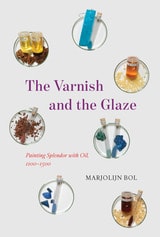
The Varnish and the Glaze
Painting Splendor with Oil, 1100–1500Marjolijn Bol
University of Chicago Press, 2023
Panel painters in both the middle ages and the fifteenth century created works that evoke the luster of precious stones, the sheen of polished gold and silver, and the colorful radiance of stained glass. Yet their approaches to rendering these materials were markedly different. Marjolijn Bol explores some of the reasons behind this radical transformation by telling the history of the two oil painting techniques used to depict everything that glistens and glows—varnish and glaze.
For more than a century after his death, the fifteenth-century painter Jan van Eyck was widely credited with inventing varnish and oil paint, on account of his unique visual realism. Once this was revealed to be a myth, the verisimilitude of his work was attributed instead to a new translucent painting technique: the glaze. Today, most theories about how Van Eyck achieved this realism revolve around the idea that he was the first to discover or refine the glazing technique. Bol, however, argues that, rather than being a fifteenth-century refinement, varnishing and glazing began centuries before. Drawing from an extensive body of recipes, Bol pieces together how varnishes and glazes were first developed as part of the medieval art of material mimesis. Artisans embellished metalwork and wood with varnishes and glazes to imitate gold and gems; infused rock crystal with oil, resin, and colorants to imitate more precious minerals; and oiled parchment to transform it into the appearance of green glass. Likewise, medieval panel painters used varnishes and glazes to create the look of enamel, silk, and more.
The explorations of materials and their optical properties by these artists stimulated natural philosophers to come up with theories about transparent and translucent materials produced by the earth. Natural historians, influenced by medieval artists’ understanding of refraction and reflection, developed theories about gems, their creation, and their optical qualities.
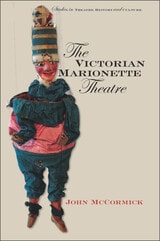
The Victorian Marionette Theatre
John Mccormick
University of Iowa Press, 2004
The Viking Coloring Book
Dayanna Knight
Arizona Center for Medieval and Renaissance Studies, 2017
What do you think of when you think of the Vikings? Fierce warriors? Sailors of magnificent dragon-prowed ships who terrorized North-Western Europe? Do you think of darkened halls thick with smoke and song?
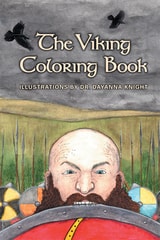
Like all people those researchers now consider to be Viking were much more complex than the modern world sees them as. This coloring book is meant to show that. It is designed to provide scenes of the beauty of the early medieval world the Vikings inhabited. It is in this context that Viking cultures developed. You will find artifacts and animals, plants and landscapes within these pages to explore. Species that held some use to the Vikings, such as those that provided fur in particular have been focused on. Reconstructed scenes are inspired by the diverse world experienced in the north. There are no horned helmets here. The real Vikings were much more practical than that.

The Virgin and the Dynamo
Public Murals in American Architecture, 1893–1917Bailey Van Hook
Ohio University Press, 2003
The beaux-arts mural movement in America was fueled by energetic young artists and architects returning from training abroad. They were determined to transform American art and architecture to make them more thematically cosmopolitan and technically fluid and accomplished. The movement slowly coalesced around the decoration of mansions of the Gilded Age elite, mostly in New York, and of public buildings and institutions across the breadth of the country.
The Virgin and the Dynamo: Public Murals in American Architecture, 1893-1917 is the first book in almost a century to concentrate exclusively on the beaux-arts mural movement in the United States. Beginning with a short history of the movement from its inception in Boston during the American Renaissance, Bailey Van Hook focuses on the movement’s public manifestations in the period between the World’s Columbian Exposition in Chicago in 1893 and the First World War.
Professor Van Hook explores different aspects of the mural movement, the concept and meaning of “decoration,” the claim that murals are inherently democratic, the shift in preference from allegory to history, the gendered concept of modernity, the ideologies behind the iconography, and, finally, the decline of the movement when it began to be seen as old fashioned and anachronistic.
The Virgin and the Dynamo raises our understanding of the beaux-arts movement to a new level. For the general reader, this illustrated history will explain many familiar representations of local and national values.
The Visceral Screen
Between the Cinemas of John Cassavetes and David CronenbergRobert Furze
Intellect Books, 2015
The Visceral Screen sets out to articulate alternative ways of appreciating film aesthetics outside the narrative/spectacle continuum. Cassavetes and Cronenberg are established auteurs, but the elements of their films that appear to be barriers to their artistic status—for example, slipshod method and lingering violence or pre-digital special effects—are reassessed here as other indicators of creativity. In this way, Furze encourages debates of what makes a film good or bad—beyond how much it is seen to adhere to particular, established models of filmmaking.
The Visible Word
Experimental Typography and Modern Art, 1909-1923Johanna Drucker
University of Chicago Press, 1994
Drucker suggests a methodology closer to the actual practices of the early avant-garde artists, based on a rereading of their critical and theoretical writings. After reviewing theories of signification, the production of meaning, and materiality, she analyzes the work of four poets active in the typographic experimentation of the 1910s and 1920s: Ilia Zdanevich, Filippo Marinetti, Guillaume Apollinaire, and Tristan Tzara.
Few studies of avant-garde art and literature in the early twentieth century have acknowledged the degree to which typographic activity furthered debates about the very nature and function of the avant-garde. The Visible Word enriches our understanding of the processes of change in artistic production and reception in the twentieth century.
The Vision of the Soul
James Matthew Wilson
Catholic University of America Press, 2017
Story-telling is foundational to the forms of the fine arts, but it is no less foundational to human reason. Human life in turn constitutes a specific kind of form—a story form. The ancient conception of human life as a pilgrimage to beauty itself is one that we can fully embrace only if we see the essential correlation between reason and story and the essential convertibility of truth, goodness and beauty in beauty. By turns a study in fundamental ontology, aesthetics, and political philosophy, Wilson’s book invites its readers to a renewal of the West’s intellectual tradition.
The Visual Is Political
Feminist Photography and Countercultural Activity in 1970s BritainNa'ama Klorman-Eraqi
Rutgers University Press, 2019
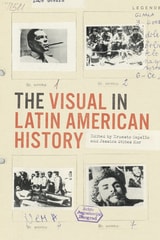
The Visual in Latin American History
Edited by Ernesto Capello and Jessica Stites Mor
University of Texas Press, 2026
A collection of essays examining the role of visual materials in shaping Latin American lives, historical thought, and worldmaking.
Historians have long valued visual media as a source of documentation and illustration. More recently, scholars have also been turning to visual media for another purpose: to directly observe historical processes. Paintings, maps, visual narratives, graffiti, photography—these objects do not simply transmit information about events; they are events. They imbue the historical change we seek to understand.
The Visual in Latin American History is a collection of essays that applies cutting-edge visual-studies methodology to the history of Central and South America and the Caribbean. Contributors focus on the visual production of postcolonial national imaginaries across Latin America—mythologies that purposely omitted Indigenous groups, African diasporic communities, and new migrants from Europe and Asia. The essays range across a vast territory, including erasure in archeology and Afro-Colombian portraiture; image making in domestic spaces and social movements; the visual vocabularies of urban planning and agrarian reform; military “performance” and anti-imperial Cold War exchanges; and humanitarian documentary along the US border.Collectively, the authors show how visual methods can radically transform our understanding of power and culture in Latin America and beyond.
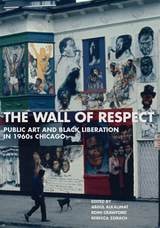
The Wall of Respect
Public Art and Black Liberation in 1960s ChicagoEdited by Abdul Alkalimat, Romi Crawford, and Rebecca Zorach
Northwestern University Press, 2017
The Wall of Respect received national critical acclaim when it was unveiled on the side of a building at Forty-Third and Langley in Chicago’s Bronzeville neighborhood. Painters and photographers worked side by side on the mural's seven themed sections, which featured portraits of Black heroes and sheroes, among them John Coltrane, Nina Simone, Billie Holiday, Malcolm X, Muhammad Ali, and W. E. B. Du Bois. The Wall became a platform for music, poetry, and political rallies. Over time it changed, reflecting painful controversies among the artists as well as broader shifts in the Civil Rights and Black Liberation Movements.
At the intersection of African American culture, politics, and Chicago art history, The Wall of Respect offers, in one keepsake-quality work, an unsurpassed collection of images and essays that illuminate a powerful monument that continues to fascinate artists, scholars, and readers in Chicago and across the United States.
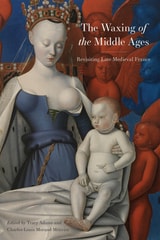
The Waxing of the Middle Ages
Revisiting Late Medieval FranceCharles-Louis Morand-Métivier
University of Delaware Press, 2023
The Waxing of the Middle Ages sets out to provide a rich, complex, and diverse study of these developments and to reassert that late medieval France is crucial in its own right. The collection argues for an approach that views the late medieval period not as an afterthought, or a blind spot, but as a period that is key in understanding the fluidity of time, traditions, culture, and history. Each essay explores some “cultural form,” to borrow Huizinga’s expression, to expose the false divide that has dominated modern scholarship.
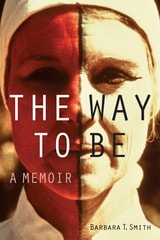
The Way to Be
A MemoirBarbara T. Smith
J. Paul Getty Trust, The, 0
For over fifty years, Barbara T. Smith has been at the forefront of artistic movements in California. Her work across many mediums explores concepts that strike at the core of human nature, including sexuality, physical and spiritual sustenance, technology, and death. In this memoir, Smith weaves together descriptive accounts of her pioneering performances with an intimate narrative of her life.
The Way to Be covers the years 1931 to 1981, up to the artist’s fiftieth birthday, resulting in an exhaustive catalogue of her early work. It reveals the personal stories and events behind her pieces and the challenges she faced in an art world dominated by sexism and machismo. Drawing on Smith’s archive at the Getty Research Institute, this enthralling book presents previously unpublished notes, documents, photographs, and firsthand accounts of her life and practice, as well as her more recent reflections on the past. The Way to Be demonstrates Smith’s lasting contributions to the field of contemporary art and provides an engaging commentary on a recent period of great cultural and political change.
This volume is published to accompany an exhibition on view at the Getty Research Institute at the Getty Center from February 28 to July 16, 2023.

The Winnipeg School of Art
Marilyn Baker
University of Manitoba Press, 1984
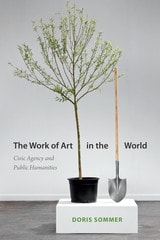
The Work of Art in the World
Civic Agency and Public HumanitiesDoris Sommer
Duke University Press, 2014
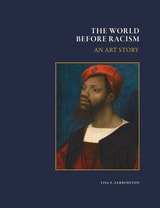
The World Before Racism
An Art StoryLisa E. Farrington
The Artist Book Foundation, 2025
Utilizing works of art as a primary source, Lisa Farrington's research in The World Before Racism conclusively answers the questions: Who invented racism? When? And why?
The term racism is understood to mean that race is the principal determinant of specific human traits and capacities and that due to racial differences, one race is inherently superior to all others. Over time, racism has commonly referenced the notion that the White race is superior to all others, fostering prejudice and discrimination. In The World Before Racism: An Art Story, author and art historian Lisa Farrington meticulously examines the intersection of art, history, and race, using original works of art as primary source materials to support her premise that racism is a construct, invented in the mid-1700s, to support the financial, political, and religious structures of European colonialism.
Using art from ancient Egypt, classical Greece, and the Roman Empire, through Medieval Europe and the colonization of the New World, to the art of the present day—sources that cannot be easily altered, edited, or selectively translated—Farrington expertly examines the intricate interplay between the Black and White races, how they saw and understood each other over the centuries. The artworks serve as powerful voices, precisely conveying the artist’s intended messages. The goal of The World Before Racism is to present irrefutable evidence that the ideology of racism is unfounded, unsupported, unjustified, and destined to fade away like so many other archaic and erroneous ideas.
The World of Roman Costume
Edited by Judith Lynn Sebesta and Larissa Bonfante
University of Wisconsin Press, 1994
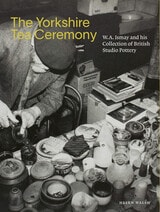
The Yorkshire Tea Ceremony
W. A. Ismay and His Collection of British Studio PotteryHelen Walsh
Paul Holberton Publishing, 2021
In the latter half of the twentieth century, “professional Yorkshireman” W. A. Ismay (1910–2001) amassed over 3,600 pieces by more than 500 potters. Surrounded by his family of pots, he lived in a tiny terraced house in Wakefield, Yorkshire, and left his collection and its associated archive to the city of York upon his death. This eclectic group of works contains objects created by many of the most significant potters working in the United Kingdom, including Lucie Rie, Hans Coper, Bernard Leach, and Michael Cardew, as well as lesser-known makers.
With new academic research into this little-studied collection and archive, Yorkshire Tea Ceremony explores Ismay’s journey as a collector and offers fresh perspectives on a marginalized area of British Modernism. Tracing the collection’s journey from private to public ownership illuminates issues surrounding the acquisition and reveals the transformative effect it has had on both curatorial practice and the ambition of regional public institutions. The W. A. Ismay Collection offers a well-documented example of the valuable contribution collectors can make to the British studio ceramics movement.
Published to coincide with the twentieth anniversary of the collection’s move from private to public ownership, this volume accompanies an exhibition at York Art Gallery’s Centre of Ceramic Art (CoCA).