Results by title
28250 books match the query 'history' and 6388 start with t
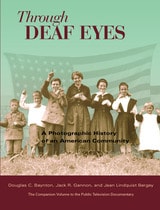
Through Deaf Eyes
A Photographic History of an American CommunityDouglas Baynton
Gallaudet University Press, 2007
In 2001, the Smithsonian Institution presented the landmark photographic exhibition History Through Deaf Eyes, representing nearly 200 years of United States deaf history. Drawing heavily on the extensive archives at Gallaudet University, the curators created an exhibition that drew more than 400,000 people viewed at the Smithsonian and in 12 cities during a five-year national tour. Its popularity prompted the production of a documentary film for national broadcast on the Public Broadcasting System. Now, the photographs, quotes, and stories from this remarkable exhibit and documentary have been assembled in a book of stunning beauty and poignant images, Through Deaf Eyes: A Photographic History of an American Community.
Featuring more than 200 full-color photographs, Through Deaf Eyes depicts the story of Deaf America and also affords readers the opportunity to learn about the nation’s broader history. The values and judgments of society have had an impact on the education, employment, and family life of deaf people, while historical eras often can be illuminated by examination through a Deaf lens. Photographs reveal the character of Deaf people in school settings, the workplace, during wartime, and using their cultural signature, American Sign Language. For both deaf and hearing readers, the Deaf community portrayed in Through Deaf Eyes offers a unique and fascinating perspective on the value of human difference.
Through French Windows
An Introduction to France in the NinetiesJames Corbett
University of Michigan Press, 1994
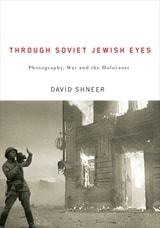
Through Soviet Jewish Eyes
Photography, War, and the HolocaustShneer, David
Rutgers University Press, 2012
These wartime photographers were the first liberators to bear witness with cameras to Nazi atrocities, three years before Americans arrived at Buchenwald and Dachau. In this passionate work, David Shneer tells their stories and highlights their work through their very own images-he has amassed never-before-published photographs from families, collectors, and private archives.
Through Soviet Jewish Eyes helps us understand why so many Jews flocked to Soviet photography; what their lives and work looked like during the rise of Stalinism, during and then after the war; and why Jews were the ones charged with documenting the Soviet experiment and then its near destruction at the hands of the Nazis.
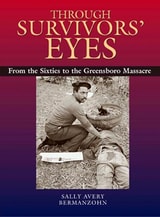
Through Survivors' Eyes
From the Sixties to the Greensboro MassacreSally Avery Bermanzohn
Vanderbilt University Press, 2003
In passionate first-person accounts, Through Survivors' Eyes tells the story of six remarkable people who set out to change the world. The survivors came of age as the "protest generation," joining the social movements of the 1960s and 1970s. They marched for civil rights, against war, for textile and healthcare workers, and for black power and women's liberation. As the mass mobilizations waned in the mid-1970s, they searched for a way to continue their activism, studied Marxism, and became communists.
Nelson Johnson, who grew up on a farm in eastern North Carolina in a family proud of its African American heritage, settled in Greensboro in the 1960s and became a leader of the Black Liberation Movement and a decade later the founder of the Faith Community Church. Willena Cannon, the daughter of black sharecroppers, witnessed a KKK murder as a child and was spurred to a life of activism. Her son, Kwame Cannon, was only ten when he saw the Greensboro killings. Marty Nathan, who grew up the daughter of a Midwestern union organizer and came to the South to attend medical school, lost her husband to the Klan/Nazi gunfire. Paul Bermanzohn, the son of Jewish Holocaust survivors, was permanently injured during the shootings. Sally Avery Bermanzohn, a child of the New York suburbs who came south to join the Civil Rights Movement, watched in horror as her friends were killed and her husband was wounded.
Through Survivors' Eyes is the story of people who abandoned conventional lives to become civil rights activists and then revolutionaries. It is about blacks and whites who united against Klan/Nazi terror, and then had to overcome unbearable hardship, and persist in seeking justice. It is also a story of one divided southern community, from the protests of black college students of the late 1960s to the convening this January of a Truth and Community Reconciliation Project (on the South African model) intended to reassess the Massacre.
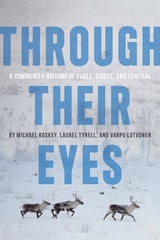
Through Their Eyes
A Community History of Eagle, Circle, and CentralEdited by Michael Koskey, Laurel Tyrrell, and Varpu Lotvonen
University of Alaska Press, 2018
Through their Eyes is a glimpse into the past and present of these communities, showing how their survival has depended on centuries of cooperation. The towns have roots in the gold rushes but they are also located within the traditional territories of the Hän Hwëch’in, the Gwichyaa Gwich’in, and Denduu Gwich’in Dena (Athabascan) peoples. Over time, residents have woven together new heritages, adopting and practicing each other’s traditions. This book combines oral accounts with archival research to create a rich portrayal of life in rural Alaska villages. Many of the stories come directly from the residents of these communities, giving an inside perspective on the often colorful events that characterize life in Eagle, Circle, and Central.
Through Time and the Valley
John R. Erickson
University of North Texas Press, 1995
Through Words and Deeds
Polish and Polish American Women in HistoryEdited by John Bukowczyk
University of Illinois Press, 2021
A valuable and enlightening resource, Through Words and Deeds offers an introduction to the many facets of Polish and Polish American womanhood.
Contributors: Laura Anker, Robert Blobaum, Anna Brzezińska, John J. Bukowczyk, Halina Filipowicz, William J. Galush, Rita Gladsky, Thaddeus V. Gromada, Bożena Karwowska, Grażyna Kozaczka, Lynn Lubamersky, Karen Majewski, Nameeta Mathur, Lori A. Matten, Jan Molenda, James S. Pula, Władysław Roczniak, and Robert Szymczak
Through a Glass Darkly
Contested Notions of Baptist IdentityKeith Harper
University of Alabama Press, 2012
Rethinking what it means to be Baptist through four centuries of debate, belief, and identity.Normal0falsefalsefalseMicrosoftInternetExplorer4
Through a Glass Darkly is a collection of essays by scholars who argue that Baptists are frequently misrepresented, by outsiders as well as insiders, as members of an unchanging monolithic sect. In contemporary discussions of religious denominations, it is often fashionable and easy to make bold claims regarding the history, beliefs, and practices of certain groups. Select versions of Baptist history have been used to vindicate incomplete or inaccurate assertions, attitudes, and features of Baptist life and thought. Historical figures quickly become saints, and overarching value systems can minimize the unsavory realities that would contribute to a truer interpretation of Baptist life.
The essays in this volume use the term Baptist in the broadest sense to refer to those Christians who identify themselves as Baptists and who baptize by immersion as a non-sacramental church rite. Over the past four hundred years, Baptists have grown from a persecuted minority to a significant portion of America’s religious population. They have produced their fair share of controversies and colorful characters that have, in turn, contributed to a multifaceted history.
But what does it mean to be a “real Baptist”? Some look to historical figures as heroic exemplars of Baptist core values. Others consider cultural, social, or political issues to be guideposts for Baptist identity. Through a Glass Darkly dives deeper into history for answers, revealing a more complete version of the expansive and nuanced history of one of America’s most influential religious groups.
Normal0falsefalsefalseMicrosoftInternetExplorer4
Contributors:
James P. Byrd / John G. Crowley / Edward R. Crowther / Christopher H. Evans / Elizabeth H. Flowers / Curtis W. Freeman / Barry G. Hankins / Paul Harvey / Bill J. Leonard / James A. Patterson / Jewel L. Spangler / Alan Scot Willis
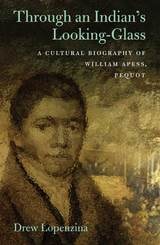
Through an Indian's Looking-Glass
A Cultural Biography of William Apess, PequotDrew Lopenzina
University of Massachusetts Press, 2017
The life of William Apess (1798–1839), a Pequot Indian, Methodist preacher, and widely celebrated writer, provides a lens through which to comprehend the complex dynamics of indigenous survival and resistance in the era of America's early nationhood. Apess's life intersects with multiple aspects of indigenous identity and existence in this period, including indentured servitude, slavery, service in the armed forces, syncretic engagements with Christian spirituality, and Native struggles for political and cultural autonomy. Even more, Apess offers a powerful and provocative voice for the persistence of Native presence in a time and place that was long supposed to have settled its “Indian question” in favor of extinction.
Through meticulous archival research, close readings of Apess's key works, and informed and imaginative speculation about his largely enigmatic life, Drew Lopenzina provides a vivid portrait of this singular Native American figure. This new biography will sit alongside Apess's own writing as vital reading for those interested in early America and indigeneity.
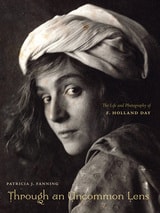
Through an Uncommon Lens
The Life and Photography of F. Holland DayPatricia J. Fanning
University of Massachusetts Press, 2008
Through the Crosshairs
War, Visual Culture, and the Weaponized GazeStahl, Roger
Rutgers University Press, 2018
Through the Crosshairs traces the genealogy of this weapon’s-eye view across a wide range of genres, including news reports, military public relations images, action movies, video games, and social media posts. As he tracks how gun-camera footage has spilled from the battlefield onto the screens of everyday civilian life, Roger Stahl exposes how this raw video is carefully curated and edited to promote identification with military weaponry, rather than with the targeted victims. He reveals how the weaponized gaze is not only a powerful propagandistic frame, but also a prime site of struggle over the representation of state violence.
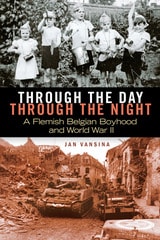
Through the Day, through the Night
A Flemish Belgian Boyhood and World War IIJan Vansina
University of Wisconsin Press, 2014
Within the vast literature on World War II, a much smaller body of work treats the everyday experiences of civilians, particularly in smaller countries drawn into the conflict. Recalling the war in Belgium from a child’s-eye perspective, Vansina describes pangs of hunger so great as to make him crave the bitter taste of cod-liver oil. He vividly remembers the shock of seeing severely wounded men on the grounds of a field hospital, the dangers of crossing fields and swimming in ponds strafed by planes, and his family’s interactions with occupying and escaping soldiers from both sides. After the war he recalls emerging numb from the cinema where he first saw the footage of the Nazi death camps, and he describes a new phase of unrest marked by looting, vigilante justice, and the country’s efforts at reunification.
Vansina, a historian and anthropologist best known for his insights into oral tradition and social memory, draws on his own memories and those of his siblings to reconstruct daily life in Belgium during a tumultuous era.
Best Special Interest Books, selected by the American Association of School Librarians
Best Books for General Audiences, selected by the Public Library Reviewers
Through the Past Darkly
History and Memory in François Mauriac’s Bloc-notesNathan Bracher
Catholic University of America Press, 2004
Through the Sands of Time
A History of the Jewish Community of St. Thomas, U.S. Virgin IslandsJudah M. Cohen
Brandeis University Press, 2012
Through the Window, Out the Door
Women's Narratives of Departure, from Austin and Cather to Tyler, Morrison, and DidionJanis P. Stout
University of Alabama Press, 1998
This informative and provocative study focuses on the centrality of departure in the texts of five major American women novelists.
An important moment in many novels and poems by American women writers occurs when a central character looks out a window or walks out the door of a house. These acts of departure serve to convey such values as the rejection of constraining social patterns, the search for individual fulfillment, and the entry into the political.
Janis Stout examines such moments and related patterns of venture and travel in the fiction of five major American novelists of the 20th century: Mary Austin, Willa Cather, Anne Tyler, Toni Morrison, and Joan Didion. Stout views these five writers within a spectrum of narrative engagements with issues of home and departure—a spectrum anchored at one end by Sarah Orne Jewett and at the other by Marilynne Robinson, whose Housekeeping posits a vision of female transience.
Through the Window, Out the Door ranges over an expansive territory. Moving between texts as well as between texts and contexts, Stout shows how women writers have envisioned the walls of physical and social structures (including genres) as permeable boundaries, drawing on both a rhetoric of liberation and a rhetoric of domesticity to construct narrative arguments for women's right to move freely between the two. Stout concludes with a personal essay on the dilemmas of domesticity and the ambivalence of departure.
Through the Window
Kinship and Elopement in Bosnia-HerzegovinaKeith Doubt
Central European University Press, 2014
This book is not about war crimes, crimes against humanity, genocide, evil, or the killing of a society. It is about a cultural heritage, something vital to a society as a society, something that was not killed in the previous war, something that is resilient.
Through the Window brings an original perspective to folklore of Bosnians at a certain period of time and the differences and similarities of the three main ethnic groups in Bosnia and Herzegovina. It examines the transethnic character of cultural heritage, against divisions that dominate their tragic recent past.
The monograph focuses in particular on customs shared by different ethnic groups, specifically elopement, and affinal visitation. The elopement is a transformative rite of passage where an unmarried girl becomes a married woman. The affinal visitation, which follows, is a confirmatory ceremony where ritualized customs between families establish in-lawships These customs reflect a transethnic heritage shared by people in Bosnia as a national group, including Bosniaks, Serbs and Croats.
Thucydides Book I
A Students' Grammatical CommentaryH. D. Cameron
University of Michigan Press, 2003
Because Book I is not primarily historical narrative, it inevitably proves difficult for inexperienced readers. Despite the convolutions and density of Thucydides' prose style, no authoritative commentary has been published since the early days of the last century. H. D. Cameron is a renowned expert in Greek and comparative grammar and has written this handbook for all levels of classical students and scholars. His commentary authoritatively accounts for the last one hundred years of evolving grammatical and linguistic theory as they apply to the seminal work of Thucydides.
H. D. Cameron is Professor of Greek and Latin and Director of the Great Books Program at the University of Michigan.
Thunder Below!
The USS *Barb* Revolutionizes Submarine Warfare in World War IIAdmiral Eugene B. Fluckey
University of Illinois Press, 1992
Under the leadership of her fearless skipper, Captain Gene Fluckey, the Barb sank the greatest tonnage of any American sub in World War II. At the same time, the Barb did far more than merely sink ships-she changed forever the way submarines stalk and kill their prey.
This is a gripping adventure chock-full of "you-are-there" moments. Fluckey has drawn on logs, reports, letters, interviews, and a recently discovered illegal diary kept by one of his torpedomen. And in a fascinating twist, he uses archival documents from the Japanese Navy to give its version of events.
The unique story of the Barb begins with its men, who had the confidence to become unbeatable. Each team helped develop innovative ideas, new tactics, and new strategies. All strove for personal excellence, and success became contagious. Instead of lying in wait under the waves, the USS Barb pursued enemy ships on the surface, attacking in the swift and precise style of torpedo boats. She was the first sub to use rocket missiles and to creep up on enemy convoys at night, joining the flank escort line from astern, darting in and out as she sank ships up the column.
Surface-cruising, diving only to escape, "Luckey Fluckey" relentlessly patrolled the Pacific, driving his boat and crew to their limits. There can be no greater contrast to modern warfare's long-distance, videogame style of battle than the exploits of the captain and crew of the USS Barb, where they sub, out of ammunition, actually rammed an enemy ship until it sank.
Thunder Below! is a first-rate, true-life, inspirational story of the courage and heroism of ordinary men under fire.
A Main Selection of the Military Book Club. Winner of the Rear Admiral Samuel Eliot Morison Award for Naval Literature given by the Naval Order of the United States, New York Commandery.
Thunder Cross
Fascist Antisemitism in Twentieth-Century LatviaPaula A. Oppermann
University of Wisconsin Press, 2025
Thunder Cross is the most comprehensive study of Latvia’s fascist movement in English to date, and the only work that investigates the often neglected continuities of fascist antisemitism after World War II. Formulated as an empirical case study, this book draws on international and interdisciplinary secondary literature and sources in seven languages to broaden our understanding of fascism, antisemitism, and mass violence from Germany and Italy to the larger European context.
Thunder Go North
The Hunt for Sir Francis Drake's Fair and Good BayMelissa Darby
University of Utah Press, 2019
Thunder Go North unravels the mysteries surrounding Drake’s famous voyage and summer sojourn in this bay. Comparing Drake’s observations of the Natives’ houses, dress, foods, language, and lifeways with ethnographic material collected by early anthropologists, Melissa Darby makes a compelling case that Drake and his crew landed not in California but on the Oregon coast. She also uncovers the details of how an early twentieth-century hoax succeeded in maintaining the California landing theory and silencing contrary evidence. Presented here in an engaging narrative, Darby’s research beckons for history to be rewritten.
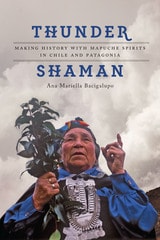
Thunder Shaman
Making History with Mapuche Spirits in Chile and PatagoniaBy Ana Mariella Bacigalupo
University of Texas Press, 2016
As a “wild,” drumming thunder shaman, a warrior mounted on her spirit horse, Francisca Kolipi’s spirit traveled to other historical times and places, gaining the power and knowledge to conduct spiritual warfare against her community’s enemies, including forestry companies and settlers. As a “civilized” shaman, Francisca narrated the Mapuche people’s attachment to their local sacred landscapes, which are themselves imbued with shamanic power, and constructed nonlinear histories of intra- and interethnic relations that created a moral order in which Mapuche become history’s spiritual victors.
Thunder Shaman represents an extraordinary collaboration between Francisca Kolipi and anthropologist Ana Mariella Bacigalupo, who became Kolipi’s “granddaughter,” trusted helper, and agent in a mission of historical (re)construction and myth-making. The book describes Francisca’s life, death, and expected rebirth, and shows how she remade history through multitemporal dreams, visions, and spirit possession, drawing on ancestral beings and forest spirits as historical agents to obliterate state ideologies and the colonialist usurpation of indigenous lands. Both an academic text and a powerful ritual object intended to be an agent in shamanic history, Thunder Shaman functions simultaneously as a shamanic “bible,” embodying Francisca’s power, will, and spirit long after her death in 1996, and an insightful study of shamanic historical consciousness, in which biography, spirituality, politics, ecology, and the past, present, and future are inextricably linked. It demonstrates how shamans are constituted by historical-political and ecological events, while they also actively create history itself through shamanic imaginaries and narrative forms.
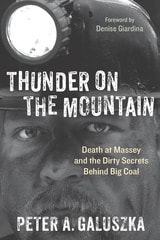
Thunder on the Mountain
Death at Massey and the Dirty Secrets behind Big CoalPeter A. Galuszka
West Virginia University Press, 2014
With a foreword by Denise Giardina
On April 5, 2010, an explosion ripped through Massey Energy’s Upper Big Branch Mine, killing twenty-nine coal miners. This tragedy was the deadliest mine disaster in the United States in forty years—a disaster that never should have happened. These deaths were rooted in the cynical corporate culture of Massey and its notorious former CEO Don Blankenship, and were part of an endless cycle of poverty, exploitation, and environmental abuse that has dominated the Appalachian coalfields since coal was first discovered there. And the cycle continues unabated as coal companies bury the most insidious dangers deep underground, all in search of higher profits, and hide the true costs from regulators, unions, and investors alike. But the disaster at Upper Big Branch goes beyond the coalfields of West Virginia. It casts a global shadow, calling into bitter question why coal miners in the United States are sacrificed to erect cities on the other side of the world, why the coal wars have been allowed to rage, polarizing the country, and how the world’s voracious appetite for energy is satisfied at such horrendous cost.
With Thunder on the Mountain, Peter A. Galuszka pieces together the true story of greed and negligence behind the tragedy at the Upper Big Branch Mine, and in doing so he has created a devastating portrait of an entire industry that exposes the coal-black motivations that led to the death of twenty-nine miners and fuel the ongoing war for the world’s energy future.
This paperback edition contains a foreword by Denise Giardinia that provides an update on Massey Energy and Donald Blankenship, Chairman and CEO of Massey Energy Company during the UBB disaster, and recounts her own experiences with Massey Energy and the United Mine Workers Association in the 1980s. This edition also includes a notes section and a bibliography.
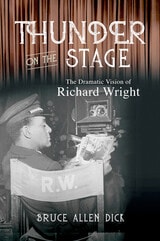
Thunder on the Stage
The Dramatic Vision of Richard WrightBruce Allen Dick
University of Illinois Press, 2024
Drawing on decades of research and interviews with Wright’s family and Wright scholars, Bruce Allen Dick uncovers the theatrical influence on Wright’s oeuvre--from his 1930s boxing journalism to his unpublished one-acts on returning Black GIs in WWII to his unproduced pageant honoring Vladimir Lenin. Wright maintained rewarding associations with playwrights, writers, and actors such as Langston Hughes, Theodore Ward, Paul Robeson, and Lillian Hellman, and took particular inspiration from French literary figures like Jean-Paul Sartre. Dick’s analysis also illuminates Wright’s direct involvement with theater and film, including the performative aspects of his travel writings; the Orson Welles-directed Native Son on Broadway; his acting debut in Native Son’s first film version; and his play “Daddy Goodness,” a satire of religious charlatans like Father Divine, in the 1930s.
Bold and original, Thunder on the Stage offers a groundbreaking reinterpretation of a major American writer.
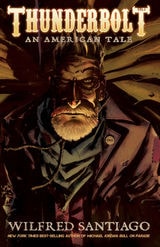
Thunderbolt
An American Tale, Vol. 1Wilfred Santiago
The Ohio State University Press, 2019
As a young boy in nineteenth-century America, Captain John Brown swore to dedicate his life to the struggle against slavery. Years later, he and his sons have joined the fight in Kansas, the epicenter of the national debate over slavery. As the territory nears statehood, abolitionists and proslavery border ruffians clash in increasingly violent conflict across the territory. But John Brown has more in mind than border skirmishes. He aims to eliminate slavery from US soil once and for all—even if that means raiding a government armory in order to arm a national slave revolt. From the Pottawatomie Massacre to the Battle of Black Jack and the Battle of Osawatomie, this first installment in the story of the legendary John Brown traces the rise of the insurrection in stunning detail.
Gritty, gripping, and masterfully illustrated, Wilfred Santiago’s telling of John Brown’s tale pulls no punches as it unflinchingly recounts the epic struggle across pre–Civil War America. And while John Brown’s methods may be questionable, his story is unforgettable. After all, dying is part of the plan.
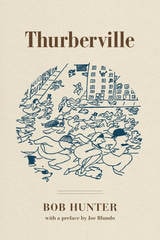
Thurberville
Bob Hunter
The Ohio State University Press, 2017
Thurber’s Columbus was a wild and crazy place, a city full of fascinating and sometimes peculiar characters, many in his own family. Because of the widespread popularity of his stories, that was also the Columbus that many of his readers around the world came to know.
Thurberville chronicles those characters and explores that world. But it also examines the real city where Thurber struggled and then blossomed as a college student, worked as a newspaper reporter and a press agent, and achieved international fame as a humorist and cartoonist after he left town, in part by writing about the subjects he left behind.
Much of Thurber’s best work was cultivated by experiences Thurber had in Columbus and in his dealings with family, friends, teachers, and acquaintances there. They are worth a revisit and, in some cases, an introduction.
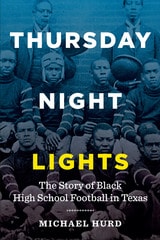
Thursday Night Lights
The Story of Black High School Football in TexasBy Michael Hurd
University of Texas Press, 2019
At a time when “Friday night lights” shone only on white high school football games, African American teams across Texas burned up the gridiron on Wednesday and Thursday nights. The segregated high schools in the Prairie View Interscholastic League (the African American counterpart of the University Interscholastic League, which excluded black schools from membership until 1967) created an exciting brand of football that produced hundreds of outstanding players, many of whom became college All-Americans, All-Pros, and Pro Football Hall of Famers, including NFL greats such as “Mean” Joe Green (Temple Dunbar), Otis Taylor (Houston Worthing), Dick “Night Train” Lane (Austin Anderson), Ken Houston (Lufkin Dunbar), and Bubba Smith (Beaumont Charlton-Pollard).
Thursday Night Lights tells the inspiring, largely unknown story of African American high school football in Texas. Drawing on interviews, newspaper stories, and memorabilia, Michael Hurd introduces the players, coaches, schools, and towns where African Americans built powerhouse football programs under the PVIL leadership. He covers fifty years (1920–1970) of high school football history, including championship seasons and legendary rivalries such as the annual Turkey Day Classic game between Houston schools Jack Yates and Phillis Wheatley, which drew standing-room-only crowds of up to 40,000, making it the largest prep sports event in postwar America. In telling this story, Hurd explains why the PVIL was necessary, traces its development, and shows how football offered a potent source of pride and ambition in the black community, helping black kids succeed both athletically and educationally in a racist society.

Thus Ruled Emir Abbas
Selected Cases from the Records of the Emir of Kano's Judicial CouncilAllen Christelow
Michigan State University Press, 1994
Thus Ruled Emir Abbas is an important new research tool that reveals much about daily life in Kano, the wealthiest and most populous emirate of the African Sokoto Caliphate. It contains a selection of Kano Judicial Council documents, as well as their English translations, that deal with matters such as land disputes, tax collection disputes, and theft. These documents are invaluable resources that reveal much about Kano social, economic, and political life before the region came under the influence of colonial institutions, law, and language. This selection of records for more than 415 cases, along with their translations, will become essential reading for those interested in Nigeria’s past and will certainly become a standard work in the field of Nigerian history and anthropology.
Thutmose III
A New BiographyEric H. Cline and David O'Connor, Editors
University of Michigan Press, 2006
Thutmose III was without question one of Egypt's greatest pharaohs. His 54-year reign was packed with momentous events as well as being unusually long. Thutmose III includes an overview of his life, and detailed examinations of civil administration, the religion and cults, the monumental architecture and royal building program, royal tombs and iconography, royal portraiture and ideology, the artistic production, the Northern and Southern campaigns, as well as the Aegean and other foreign visitors to Egypt during Thutmose's time. Finally, the book concludes with a look at the end of his reign and the accession of Amenhotep II.
This extensive treatment of a pivotal figure in the ancient Mediterranean world during the Late Bronze Age will provide a uniquely comprehensive view of one of Egypt's greatest pharaohs and will be of interest to a wide audience, including specialists in Egypt and the Near East, graduate and undergraduate students, and those with a general interest in Egypt.
Eric H. Cline is Associate Professor of Ancient History and Archaeology in the Department of Classical and Semitic Languages and Literatures at George Washington University.
David O'Connor is Lila Acheson Wallace Professor of Ancient Egyptian Art and Archaeology at the New York University Institute of Fine Arts.
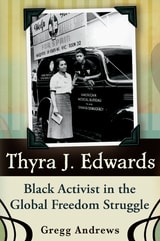
Thyra J. Edwards
Black Activist in the Global Freedom StruggleGregg Andrews
University of Missouri Press, 2011
Edwards, granddaughter of runaway slaves, grew up in Jim Crow–era Houston and started her career there as a teacher. She moved to Gary, Indiana, and Chicago as a social worker, then to New York as a journalist, and later became involved with the Communist Party, attracted by its stance on race and labor. She was mentored by famed civil rights leader A. Philip Randolph, who became her special friend and led her to pursue her education. She obtained scholarships to college, and after several years of study in the U.S. and then in Denmark, she became a women’s labor organizer and a union publicist.
In the 1930s and 1940s, she wrote about international events for black newspapers, traveling to Europe, Mexico, and the Soviet Union and presenting an anti-imperialist critique of world affairs to her readers. Edwards’s involvement with the Loyalists in the Spanish Civil War, her work in a Jewish refugee settlement in Italy, and her activities with U.S. communists drew the attention of the FBI. She was harassed by government intelligence organizations until she died at the age of just fifty-five. Edwards contributed as much to the radical foundations of the modern civil rights movements as any other woman of her time.
This fascinating new biography details Thyra Edwards’s lifelong journey and myriad achievements, describing both her personal and professional sides and the many ways they intertwined. Gregg Andrews used Edwards’s official FBI file—along with her personal papers, published articles, and civil rights manuscript collections—to present a complete portrait of this noteworthy activist. An engaging volume for the historian as well as the general reader, Thyra J. Edwards explores the complete domestic and international impact of her life and actions.
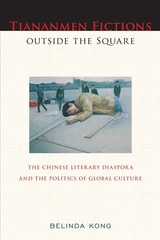
Tiananmen Fictions outside the Square
The Chinese Literary Diaspora and the Politics of Global CultureBelinda Kong
Temple University Press, 2012
An exciting analysis of the myriad literary effects of Tiananmen, Belinda Kong's Tiananmen Fictions Outside the Square is the first full-length study of fictions related to the 1989 movement and massacre. More than any other episode in recent world history, Tiananmen has brought a distinctly politicized Chinese literary diaspora into stark relief.
Kong redefines Tiananmen's meaning from an event that ended in local political failure to one that succeeded in producing a vital dimension of contemporary transnational writing today. She spotlights key writers-Gao Xingjian, Ha Jin, Annie Wang, and Ma Jian-who have written and published about the massacre from abroad. Their outsider/distanced perspectives inform their work, and reveal how diaspora writers continually reimagine Tiananmen's relevance to the post-1989 world at large.
Compelling us to think about how Chinese culture, identity, and politics are being defined in the diaspora, Tiananmen Fictions Outside the Square candidly addresses issues of political exile, historical trauma, global capital, and state biopower.
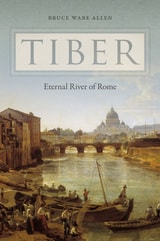
Tiber
Eternal River of RomeBruce Ware Allen
University Press of New England, 2018
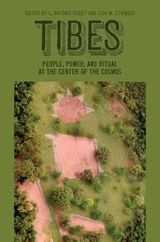
Tibes
People, Power, and Ritual at the Center of the CosmosEdited by L. Antonio Curet and Lisa M. Stringer
University of Alabama Press, 2009
The prehistoric civic-ceremonial center of Tibes is located on the southern coast of Puerto Rico, just north of the modern coastal city of Ponce. Protected on two sides by a river, and on the other two sides by hills, this approximately 10.5-acre site remains as fertile and productive today as when first occupied over 2,000 years ago. Such a rich region would have been a choice location for native peoples because of the diversity in all resources, from land, air, and sea--and also symbolically crucial as a liminal space within the landscape. It may have been regarded as a space charged with numen or cosmic energy where different parts of the cosmos (natural vs. supernatural, or world of the living vs. world of the dead) overlap. Archaeological evidence reveals a long occupation, about 1,000 years, possibly followed by an extensive period of sporadic ceremonial use after the site itself was practically abandoned.
In this volume, nineteen Caribbeanists, across a wide academic spectrum, examine the geophysical, paleoethnobotanical, faunal, lithics, base rock, osteology, bone chemistry and nutrition, social landscape, and ceremonial constructs employed at Tibes. These scholars provide a concise, well-presented, comprehensive analysis of the evidence for local level changes in household economy, internal organization, accessibility to economic, religious, and symbolic resources related to the development and internal operation of socially stratified societies in the Caribbean.

Tides Of War
World News Reporting 1931-1945Robert W. Desmond
University of Iowa Press, 1984

Tides and Floods
New Research on London and the Tidal Thames from the Middle Ages to the Twentieth CenturyJames Galloway
University of London Press, 2010
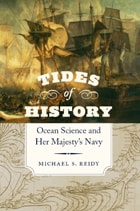
Tides of History
Ocean Science and Her Majesty's NavyMichael S. Reidy
University of Chicago Press, 2008
Analyzing the economic, political, social, and scientific changes on which the British sailed to power, Tides of History shows how the British Admiralty collaborated closely not only with scholars, such as William Whewell, but also with the maritime community —sailors, local tide table makers, dockyard officials, and harbormasters—in order to systematize knowledge of the world’s oceans, coasts, ports, and estuaries. As Michael S. Reidy points out, Britain’s security and prosperity as a maritime nation depended on its ability to maneuver through the oceans and dominate coasts and channels. The practice of science and the rise of the scientist became inextricably linked to the process of European expansion.
Tied to the Great Packing Machine
The Midwest and MeatpackingWilson J. Warren
University of Iowa Press, 2007
Writing from the vantage point of twenty-five years of extensive research, Warren analyzes the evolution of the packing industry from its early period, dominated by the big terminal markets, through the development of new marketing and technical innovations that transformed the ways animals were gathered, slaughtered, and processed and the final products were distributed. In addition, he concentrates on such cultural impacts as ethnic and racial variations, labor unions, gender issues, and changes in Americans’ attitudes toward the ethics of animal slaughter and patterns of meat consumption and such environmental problems as site-point pollution and microbe contamination, ending with a stimulating discussion of the future of American meatpacking.
Providing an excellent and well-referenced analysis within a regional and temporal framework that ensures a fresh perspective, Tied to the Great Packing Machine is a dynamic narrative that contributes to a fuller understanding of the historical context and contemporary concerns of an extremely important industry.
Ties That Bound
Founding First Ladies and SlavesMarie Jenkins Schwartz
University of Chicago Press, 2017
Unlike other histories that treat the stories of the First Ladies’ slaves as separate from the lives of their mistresses, Ties That Bound closely examines the relationships that developed between the First Ladies and their slaves. For elite women and their families, slaves were more than an agricultural workforce; slavery was an entire domestic way of life that reflected and reinforced their status. In many cases slaves were more constant companions to the white women of the household than were their husbands and sons, who often traveled or were at war. By looking closely at the complicated intimacy these women shared, Schwartz is able to reveal how they negotiated their roles, illuminating much about the lives of slaves themselves, as well as class, race, and gender in early America.
By detailing the prevalence and prominence of slaves in the daily lives of women who helped shape the country, Schwartz makes it clear that it is impossible to honestly tell the stories of these women while ignoring their slaves. She asks us to consider anew the embedded power of slavery in the very earliest conception of American politics, society, and everyday domestic routines.
Tiger Duff
India, Madeira and Empire in Eighteenth-Century ScotlandAlistair Mutch
Aberdeen University Press, 2017
Tiglath-pileser III, Founder of the Assyrian Empire
Josette Elayi
SBL Press, 2022
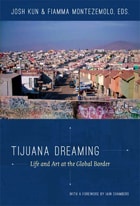
Tijuana Dreaming
Life and Art at the Global BorderJosh Kun and Fiamma Montezemolo, eds.
Duke University Press, 2012
Contributors. Tito Alegría, Humberto Félix Berumen, Roberto Castillo Udiarte, Iain Chambers, Luis Humberto Crosthwaite, Teddy Cruz, Ejival, Tarek Elhaik, Guillermo Fadanelli, Néstor García Canclini, Ingrid Hernández, Jennifer Insley-Pruitt, Kathryn Kopinak, Josh Kun, Jesse Lerner, Fiamma Montezemolo, Rene Peralta, Rafa Saavedra, Lucía Sanromán, Santiago Vaquera-Vásquez, Heriberto Yépez
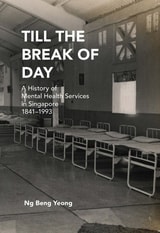
Till The Break of Day
A History of Mental Health Services in Singapore, 1841-1993Ng Beng Yeong
National University of Singapore Press, 2017
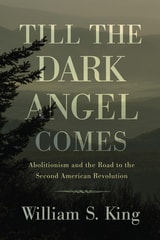
Till the Dark Angel Comes
Abolitionism and the Road to the Second American RevolutionWilliam S. King
Westholme Publishing, 2016
Establishing himself as a fresh and important voice in the history of African American emancipation,William S. King provides a critical introduction to the lead-up to the Civil War. A skilled and judicious chronicler, King seamlessly weaves multiple and seemingly disparate threads, including early nineteenth-century Revivalism, the emergence of the Republic of Texas, the fugitive slave laws—and even the explosion of a cannon aboard the U.S.S. Princeton in 1844—to explain how the opposition to slavery in America changed from producing speeches and pamphlets to embracing the reality that slavery could be eradicated only through armed conflict. By tracing this transformation through the life of John Brown, King provides an entirely new assessment of this enigmatic figure who was characterized as a “mad man” in the wake of his butchering of proslavery settlers in Kansas and the inept raid on Harpers Ferry, Virginia. King puts these actions in context to explain the paradox of Brown’s legacy. On one hand he was vilified as an unstable threat to American democracy or a fanatical sideshow to the history of the Civil War, while on the other he was an inspiration to the oppressed, a man who garnered the indomitable Harriet Tubman’s commitment to the righteousness of his endeavor.
Elegantly written with a command of period sources, Till the Dark Angel Comes: Abolitionism and the Road to the Second American Revolution is the story of interracial opposition to slavery, the important debates among free blacks as to their future in America, and the arguments and compromises at the highest levels of government. Here we encounter many personalities of the time, some well known, such as Frederick Douglass,William Lloyd Garrison, and John C. Calhoun, and others less so, but no less important—Martin Delany, Henry Highland Garnet, and Elijah Lovejoy.
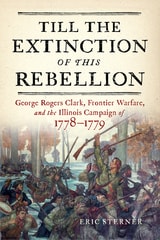
Till the Extinction of This Rebellion
George Rogers Clark, Frontier Warfare, and the Illinois Campaign of 1778–1779Eric Sterner
Westholme Publishing, 2026
Clark’s expedition was sanctioned by Virginia in order to protect its western border, and the author provides an overview of this rationale along with the strategies, tactics, and logistics Clark employed, particularly his ability to operate over great distances in remote areas. In particular, the author pays close attention to the psychological battlefield and how Clark combined mobility, surprise, and a calculated reputation for violence—a tactic respected by the Native peoples—to achieve dominance over his adversaries, often enabling the Americans to achieve their goals without harming anyone. The book culminates with the capture of Fort Sackville/Vincennes, in which Clark and his men fought the only pitched battle of the Illinois Campaign. The resounding success of Clark’s expedition laid the foundation for credible American postwar claims to lands as far west as the Mississippi, opening even more territory to new settlements at the expense of the Native peoples. Till the Extinction of This Rebellion is an important contribution to understanding the impact of the American Revolution on both Native peoples and westward expansion.
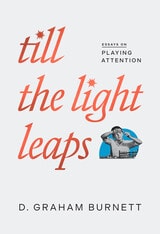
Till the Light Leaps
Essays on Playing AttentionD. Graham Burnett
University of Chicago Press, 2027
A ranging, erudite, and intimate examination of the nature of knowledge, by a thinker and creator who defies categorization.
Attention is in short supply and high demand. But when we bring our minds and time and senses to something—an idea, an object, another person—we tap into a human capacity for observation, patience, candor, and presence. Look long enough, and we can reliably catch a bright flash, a shift in the light, even a dawning.
In Till the Light Leaps, historian of science D. Graham Burnett explores the questions that have been major drivers of his intellectual life: How do we know what we know? And how are we changed by that effort? Written during a period of radical, collective, and creative experimentation with attention, the twenty-six essays collected here span topics like technology, science, art, and religion. Together, they comprise a sustained reflection on the relationship between empirical matters and the shiver-work of the human spirit. A brief history of spectroscopy offers an occasion to consider the solemn power of fire, as well as the righteous lessons of a childhood science experiment gone wrong. Skywriting invokes military might, but also the expressionistic bravura of a solo aeronaut, Art Smith. The Greek ritual of throwing plant matter in celebration is a thread connecting animal sacrifice, confetti production, and capitalist excess. In the final, previously unpublished essay, Galway Kinnell’s 1980 poem “Saint Francis and the Sow” becomes a heroic call to love and an allegory of attention in its richest sense.
Till the Light Leaps, a reference to the writings of Simone Weil, advises us to look at something “until the light leaps,” whether it yields a wink or an illumination. Burnett models the work—and the pleasure—of staying present with the world, and his essays test what science can offer, even as they feel for what it cannot.
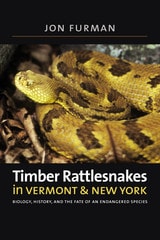
Timber Rattlesnakes in Vermont & New York
Biology, History, and the Fate of an Endangered SpeciesJon Furman
University Press of New England, 2007
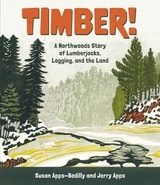
Timber!
A Northwoods Story of Lumberjacks, Logging, and the LandSusan Apps-Bodilly
Wisconsin Historical Society Press, 2024
How did the logging boom begin? What was it like to work in the woods? What happened to the land after the trees were cut down? The latest book for young readers from father-daughter duo Jerry Apps and Susan Apps-Bodilly explores the origin story of Wisconsin’s logging boom, the devastation it caused to the land, and the extraordinary efforts to restore the cutover land and log sustainably.
Timber! helps young readers examine a complex and pivotal chapter in our state and nation’s history, covering a wide range of topics, including:
• how Native people used, shared, and relied on natural resources for thousands of years
• the forced removal of Native people from forested lands
• how the lumber industry made possible the westward expansion of the United States
• what it was like to work in a logging camp, on a log drive, and inside a sawmill
• the roles on a logging team, from sawyer to cook
• the destructive legacy of early logging practices and early efforts to restore the land
• the emergence of sustainable forestry practices
This comprehensive yet easy-to-read history includes letters, postcards, and other primary sources paired with discussion questions designed to engage young readers’ creativity and critical-thinking skills. Timber! also features more than 100 images, a glossary, suggested activities, and an extensive list of related resources, including books, websites, teaching materials, museums, and outdoor places to visit. Timber! will inspire readers of all ages to explore, protect, and learn about trees and forests in their own communities.

Timberline Tailings
Tales Of Colorado'S Ghost Towns And Mining CampsMuriel Sibell Wolle
Ohio University Press, 1993
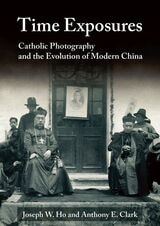
Time Exposures
Catholic Photography and the Evolution of Modern ChinaJoseph W. Ho and Anthony E. Clark
Hong Kong University Press, 2026
A history of China’s transition from empire to modern nation, told through photographs by and of Chinese Catholic communities.
Time Exposures explores how historical photographs created by and of Chinese Catholic communities illuminate the vicissitudes of China’s transition from empire to modern nation. Relying on an expansive worldwide network of Catholic photographic archives, this book examines largely unseen and unpublished images related to Catholicism in China. These images, made from the 1870s through the 1990s, were central to visual practices and afterlives that represent, recover, and reenvision diverse Chinese experiences. This volume provides insight into the lives of women and men behind and in front of the camera who were important documentarians of China’s local and national changes over time, shaping ways of seeing and belonging to the country’s many cultural evolutions.
Time Frames
Japanese Cinema and the Unfolding of HistoryScott Nygren
University of Minnesota Press, 2007

Time Maps
Collective Memory and the Social Shape of the PastEviatar Zerubavel
University of Chicago Press, 2003
Who were the first people to inhabit North America? Does the West Bank belong to the Arabs or the Jews? Why are racists so obsessed with origins? Is a seventh cousin still a cousin? Why do some societies name their children after dead ancestors?
As Eviatar Zerubavel demonstrates in Time Maps, we cannot answer burning questions such as these without a deeper understanding of how we envision the past. In a pioneering attempt to map the structure of our collective memory, Zerubavel considers the cognitive patterns we use to organize the past in our minds and the mental strategies that help us string together unrelated events into coherent and meaningful narratives, as well as the social grammar of battles over conflicting interpretations of history. Drawing on fascinating examples that range from Hiroshima to the Holocaust, from Columbus to Lucy, and from ancient Egypt to the former Yugoslavia, Zerubavel shows how we construct historical origins; how we tie discontinuous events together into stories; how we link families and entire nations through genealogies; and how we separate distinct historical periods from one another through watersheds, such as the invention of fire or the fall of the Berlin Wall.
Most people think the Roman Empire ended in 476, even though it lasted another 977 years in Byzantium. Challenging such conventional wisdom, Time Maps will be must reading for anyone interested in how the history of our world takes shape.