Results by title
3703 books match the query '19th Century' and 853 start with t
The Reception of Pragmatism in France and the Rise of Roman Catholic Modernism, 1890-1914
David G. Schultenover
Catholic University of America Press, 2009
The Reckless Decade
America in the 1890sH.W. Brands
University of Chicago Press, 2002
Just as we do today, Americans of the 1890s faced changes in economics, politics, society, and technology that led to wrenching and sometimes violent tensions between rich and poor, capital and labor, white and black, East and West. In The Reckless Decade, H. W. Brands demonstrates that we can learn a lot about the contradictions that lie at the heart of America today by looking at them through the lens of the 1890s.
The 1890s saw the closing of the American frontier and a shift toward imperialist ambitions. Populists and muckrakers grappled with robber barons and gold-bugs. Americans addressed the unfinished business of Reconstruction by separating blacks and whites. Booker T. Washington, W. E. B. Du Bois, and other black leaders clashed over the proper response to continuing racial inequality. Those on top of the economic heap—Rockefeller, Carnegie, and Morgan—created vast empires of wealth, while those at the bottom worked for dimes a day. Brands brings all this to life in a vivid narrative filled with larger-than-life characters facing momentous challenges as they worked toward an uncertain future.
The Reconstruction Amendments
The Essential Documents, Volume 1Edited by Kurt T. Lash
University of Chicago Press, 2021
Volume I outlines a broad historical context for the Reconstruction Amendments and contains materials related to the Thirteenth Amendment, which abolished slavery, while Volume 2 covers the Fourteenth and Fifteenth Amendments on the rights of citizenship and enfranchisement. The documents in this collection encompass a sweeping range of primary sources, from congressional debates to court cases, public speeches to newspaper articles. As a whole, the volumes meticulously depict a significant period of legal change even as they illuminate the ways in which people across the land grappled with the process of constitutional reconstruction. Filling a major gap in the literature on the era, The Reconstruction Amendments will be indispensable for readers in politics, history, and law, as well as anyone seeking a better understanding of the post–Civil War basis of American constitutional democracy.
The Reconstruction Amendments
The Essential Documents, Volume 2Edited by Kurt T. Lash
University of Chicago Press, 2021
Volume I outlines a broad historical context for the Reconstruction Amendments along with materials related to the Thirteenth Amendment, which abolished slavery, while Volume II covers the Fourteenth and Fifteenth Amendments on the rights of citizenship and enfranchisement. The documents in this collection encompass a sweeping range of primary sources, from congressional talks to court cases, public speeches to newspaper articles. As a whole, the volumes meticulously depict a significant period of legal change even as they illuminate the ways in which people across the land grappled with the process of constitutional reconstruction. Filling a major gap in the literature on the era, The Reconstruction Amendments will be indispensable for readers in politics, history, and law, as well as anyone seeking a better understanding of the post–Civil War basis of American constitutional democracy.
The Reconstruction Desegregation Debate
The Policies of Equality and the Rhetoric of Place, 1870-1875Kirt H. Wilson
Michigan State University Press, 2002
In the decade that followed the Civil War, two questions dominated political debate: To what degree were African Americans now “equal” to white Americans, and how should this equality be implemented in law? Although Republicans entertained multiple, even contradictory, answers to these questions, the party committed itself to several civil rights initiatives. When Congress passed the Thirteenth Amendment, the 1866 Civil Rights Act, the Fourteenth Amendment, and the Fifteenth Amendment, it justified these decisions with a broad egalitarian rhetoric. This rhetoric altered congressional culture, instituting new norms that made equality not merely an ideal,but rather a pragmatic aim for political judgments.
Kirt Wilson examines Reconstruction’s desegregation debate to explain how it represented an important movement in the evolution of U.S. race relations. He outlines how Congress fought to control the scope of black civil rights by contesting the definition of black equality, and the expediency and constitutionality of desegregation. Wilson explores how the debate over desegregation altered public memory about slavery and the Civil War, while simultaneously shaping a political culture that established the trajectory of race relations into the next century.

The Reframing of Realism
Galdós & the Discourses of the 19th-Century Spanish NovelHazel Gold
Duke University Press, 1993
A close look at Galdós's novels reveals the artist at pains to contain and interpret what he perceived to be the distinctive and often disheartening experience of bourgeois liberalism of his day. At the same time, he can be seen here undermining or negating the accepted conventions of realist fiction. Looking beyond text to context, Gold examines the ways in which Galdós's work itself has been framed by readers and critics in accordance with changing allegiances to contemporary literary theory and the canon.
The highly ambiguous status of the frame in Galdós's fictions confirms the author's own signal position as a writer poised at the limits between realism and modernity. Gold's work will command the interest of students of Spanish and comparative literature, narrative theory, and the novel, as well as all those for whom realism and representation are at issue.
The Reminiscences of George Strother Gaines
Pioneer and Statesman of Early Alabama and Mississippi, 1805–1843George Strother Gaines
University of Alabama Press, 1998
One man’s remarkable account of nation‑building, Native diplomacy, and the making of the early American South.
The Reminiscences of George Strother Gaines: Pioneer and Statesman of Early Alabama and Mississippi, 1805–1843 offers one of the most vivid, irreplaceable firsthand accounts of the American Southeast during its most transformative decades. Edited and expertly contextualized by historian James P. Pate, this volume gathers Gaines’s dictated memoirs, rare letters, early newspaper publications, oral-history interviews, and extensive editorial notes to illuminate a world on the cusp of monumental change.
George Strother Gaines was no ordinary frontier figure. Trusted by U.S. officials and Choctaw leaders alike, he played central roles as federal factor at the Choctaw Trading House, a key intermediary during treaty negotiations, a primary organizer of the first Choctaw removal, a banker and state senator in newly formed Alabama, and later a driving force behind the Mobile & Ohio Railroad. His reminiscences reveal intimate knowledge of the region’s political development, frontier economy, Native diplomacy, and daily life. They are written in a strikingly elegant “Addisonian” style praised even in his own lifetime.
This edition’s special features—including detailed maps, illustrations, genealogical material, and a robust scholarly introduction—make it the most comprehensive and authoritative presentation of Gaines’s writings ever published. It not only preserves his voice but situates him within the broader historical forces reshaping the Gulf South and Native nations in the nineteenth century.
Ideal readers include:
• Historians of Alabama, Mississippi, and the early American South
• Scholars of Native American and Choctaw/Chickasaw history
• Readers of frontier, antebellum, or political history
• Genealogists and local-history enthusiasts
• Anyone seeking an engaging, elegantly written window into the early Southeast
This is a foundational text for understanding the region’s past—and a compelling story told by one of its most influential witnesses.
The Renaissance Restored
Paintings Conservation and the Birth of Modern Art History in Nineteenth-Century EuropeMatthew Hayes
J. Paul Getty Trust, The, 2021
Repairing works of art and writing about them—the practices that became art conservation and art history—share a common ancestry. By the nineteenth century the two fields had become inseparably linked. While the art historical scholarship of this period has been widely studied, its restoration practices have received less scrutiny—until now.
This book charts the intersections between art history and conservation in the treatment of Italian Renaissance paintings in nineteenth-century Europe. Initial chapters discuss the restoration of works by Giotto and Titian, framed by the contemporary scholarship of art historians such as Jacob Burckhardt, G. B. Cavalcaselle, and Joseph Crowe that was redefining the earlier age. Subsequent chapters recount how paintings conservation was integrated into museum settings. The narrative uses period texts, unpublished archival materials, and historical photographs in probing how paintings looked at a time when scholars were writing the foundational texts of art history, and how contemporary restorers were negotiating the appearances of these works. The book proposes a model for a new conservation history, object focused yet enriched by consideration of a wider cultural horizon.
The Republic Afloat
Law, Honor, and Citizenship in Maritime AmericaMatthew Taylor Raffety
University of Chicago Press, 2013
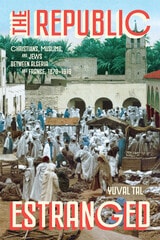
The Republic Estranged
Christians, Muslims, and Jews between Algeria and France, 1870-1919Yuval Tal
University of Chicago Press, 0
Examines how the modern French Republic came into being through state efforts to assimilate Christians, Muslims, and Jews across France and colonial Algeria.
In The Republic Estranged, Yuval Tal studies three religious communities—Christians, Muslims, and Jews—and their interactions with French settlers in colonial Algeria. While each of these groups wanted to “become French” without abandoning their communal identities, the French system had its own ideas about what kind of assimilation was possible or desirable. It welcomed Christians, excluded Muslims, and enfranchised Jews while insisting that Jews could never become as naturally French as Christians could. The result, Tal shows, was a “republican ethnic common sense” that continues to shape French politics today.
Tal argues we must understand France’s deeply entrenched anti-Muslim rhetoric as part of a larger strategy that selectively privileges Christians over and against Muslim and Jewish minorities. He focuses on a period between 1870 and 1919, in which we see how France’s supposedly universalist project of national assimilation was predicated on the notion that some ethnically and religiously defined communities were more capable of “becoming French” than others. Working with sources in Arabic, French, Spanish, and Italian, including literary, political, and legal texts, this book speaks to readers across French studies, Jewish studies, and Middle East and North African studies, showing the ongoing relevance of this important period in French history.
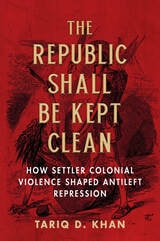
The Republic Shall Be Kept Clean
How Settler Colonial Violence Shaped Antileft RepressionTariq D. Khan
University of Illinois Press, 2023
The colonizing wars against Native Americans created the template for anticommunist repression in the United States. Tariq D. Khan’s analysis reveals bloodshed and class war as foundational aspects of capitalist domination and vital elements of the nation’s long history of internal repression and social control. Khan shows how the state wielded the tactics, weapons, myths, and ideology refined in America’s colonizing wars to repress anarchists, labor unions, and a host of others labeled as alien, multi-racial, multi-ethnic urban rabble. The ruling classes considered radicals of all stripes to be anticolonial insurgents. As Khan charts the decades of red scares that began in the 1840s, he reveals how capitalists and government used much-practiced counterinsurgency rhetoric and tactics against the movements they perceived and vilified as “anarchist.”
Original and boldly argued, The Republic Shall Be Kept Clean offers an enlightening new history with relevance for our own time.
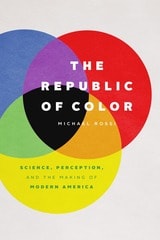
The Republic of Color
Science, Perception, and the Making of Modern AmericaMichael Rossi
University of Chicago Press, 2019
For a nation in the grip of profound economic, cultural, and demographic crises, the standardization of color became a means of social reform—a way of sculpting the American population into one more amenable to the needs of the emerging industrial order. Delineating color was also a way to characterize the vagaries of human nature, and to create ideal structures through which those humans would act in a newly modern American republic. Michael Rossi’s compelling history goes far beyond the culture of the visual to show readers how the control and regulation of color shaped the social contours of modern America—and redefined the way we see the world.
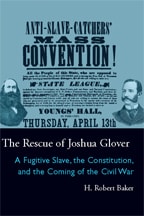
The Rescue of Joshua Glover
A Fugitive Slave, the Constitution, and the Coming of the Civil WarH. Robert Baker
Ohio University Press, 2006
On March 11, 1854, the people of Wisconsin prevented agents of the federal government from carrying away the fugitive slave, Joshua Glover. Assembling in mass outside the Milwaukee courthouse, they demanded that the federal officers respect his civil liberties as they would those of any other citizen of the state. When the officers refused, the crowd took matters into its own hands and rescued Joshua Glover. The federal government brought his rescuers to trial, but the Wisconsin Supreme Court intervened and took the bold step of ruling the Fugitive Slave Act unconstitutional.
The Rescue of Joshua Glover delves into the courtroom trials, political battles, and cultural equivocation precipitated by Joshua Glover’s brief, but enormously important, appearance in Wisconsin on the eve of the Civil War.
H. Robert Baker articulates the many ways in which this case evoked powerful emotions in antebellum America, just as the stage adaptation of Uncle Tom’s Cabin was touring the country and stirring antislavery sentiments. Terribly conflicted about race, Americans struggled mightily with a revolutionary heritage that sanctified liberty but also brooked compromise with slavery. Nevertheless, as The Rescue of Joshua Glover demonstrates, they maintained the principle that the people themselves were the last defenders of constitutional liberty, even as Glover’s rescue raised troubling questions about citizenship and the place of free blacks in America.
The Rescue of Romanticism
Walter Pater and John RuskinKenneth Daley
Ohio University Press, 2001
Valuable and timely in its long historical and critical perspective on the legacy of romanticism to Victorian art and thought, The Rescue of Romanticism is the first book-length study of the close intellectual relationship between Walter Pater and John Ruskin, the two most important Victorian critics of art. Kenneth Daley explores the work and thought of both writers in context with other Victorian writers, and enlarges the issues at stake between them, connecting these issues to ongoing artistic, cultural, and political concerns of the modern world.
Professor Daley gives a more finely honed picture than ever before of romanticism’s emergence as a literary concept in Victorian England, detailing the political differences that characterize the opposition between John Ruskin and his younger contemporary, Walter Pater, over the nature of romanticism. Individual chapters reassess the Victorian reception of such romantic figures as Wordsworth, Dante Gabriel Rossetti, Leonardo, and Michelangelo.
Daley demonstrates how Pater’s “modern” reading of romanticism emerged from Ruskin’s distrust of romanticism and from Ruskin’s arguments and examples defining pathetic fallacy. His discussion of Ruskin’s Oxford lectures and their timing in Pater’s developing career refresh the intersections of the two bodies of work and the portrait of the Victorian period in general.
The Return of Resentment
The Rise and Decline and Rise Again of a Political EmotionRobert A. Schneider
University of Chicago Press, 2023
The term “resentment,” often casually paired with words like “hatred,” “rage,” and “fear,” has dominated US news analysis since November 2016. Despite its increased use, this word seems to defy easy categorization. Does “resentment” describe many interlocking sentiments, or is it just another way of saying “anger”? Does it suggest an irrational grievance, as opposed to a legitimate callout of injustice? Does it imply political leanings, or is it nonpartisan by nature?
In The Return of Resentment, Robert A. Schneider explores these questions and more, moving from eighteenth-century Britain to the aftermath of the French Revolution to social movements throughout the twentieth century. Drawing on a wide range of writers, thinkers, and historical experiences, Schneider illustrates how resentment has morphed across time, coming to express a collective sentiment felt by people and movements across the political spectrum. In this history, we discover resentment’s modernity and its ambiguity—how it can be used to dismiss legitimate critique and explain away violence, but also convey a moral stance that demands recognition. Schneider anatomizes the many ways resentment has been used to label present-day movements, from followers of Trump and supporters of Brexit to radical Islamicists and proponents of identity politics. Addressing our contemporary political situation in a novel way, The Return of Resentment challenges us to think critically about the roles different emotions play in politics.

The Rhetoric of Modernist Fiction
From a New Point of ViewMorton Levitt
University Press of New England, 2005
The Rhetoric of Rebel Women
Civil War Diaries and Confederate PersuasionKimberly Harrison
Southern Illinois University Press, 2013
Informed by more than one hundred diaries, this study provides insight into how women cultivated rhetorical agency, challenging traditional gender expectations while also upholding a cultural status quo. Author Kimberly Harrison analyzes the rhetorical choices these women made and valued in wartime and postwar interactions with Union officers and soldiers, slaves and former slaves, local community members, and even their God. In their intimate accounts of everyday war, these diarists discussed rhetorical strategies that could impact their safety, their livelihoods, and those of their families. As they faced Union soldiers in attempts to protect their homes and property, diarists saw their actions as not only having local, immediate impact on their well-being but also as reflecting upon their cause and the character of the southern people as a whole. They instructed themselves through their personal writing, allowing insight into how southern women prepared themselves to speak and act in new and contested contexts.
The Rhetoric of Rebel Women highlights the contributions of privileged white southern women in the development of the Confederate national identity, presenting them not as passive observers but as active participants in the war effort.
The Right of Instruction and Representation in American Legislatures, 1778 to 1900
Peverill Squire
University of Michigan Press, 2021
The Rise and Fall of Early American Magazine Culture
Jared Gardner
University of Illinois Press, 2014

The Rise and Fall of Modern Japanese Literature
John Whittier Treat
University of Chicago Press, 2018
Beginning with journalistic accounts of female criminals in the aftermath of the Meiji civil war, Treat moves on to explore how woman novelist Higuchi Ichiyō’s stories engaged with modern liberal economics, sex work, and marriage; credits Natsume Sōseki’s satire I Am a Cat with the triumph of print over orality in the early twentieth century; and links narcissism in the visual arts with that of the Japanese I-novel on the eve of the country’s turn to militarism in the 1930s. From imperialism to Americanization and the new media of television and manga, from boogie-woogie music to Yoshimoto Banana and Murakami Haruki, Treat traces the stories Japanese audiences expected literature to tell and those they did not. The book concludes with a classic of Japanese science fiction a description of present-day crises writers face in a Japan hobbled by a changing economy and unprecedented natural and manmade catastrophes. The Rise and Fall of Japanese Literature reinterprets the “end of literature”—a phrase heard often in Japan—as a clarion call to understand how literary culture worldwide now teeters on a historic precipice, one at which Japan’s writers may have arrived just a moment before the rest of us.
The Rise of Constitutional Government in the Iberian Atlantic World
The Impact of the Cádiz Constitution of 1812Scott Eastman
University of Alabama Press, 2015
Exploring the constitution that transformed governance, citizenship, and political culture across the Hispanic Atlantic world.
In March 1812, while Napoleon’s brother Joseph sat on the throne of Spain and the armies of France occupied much of the country, legislators elected from Spain and its overseas territories met in the Andalusian city of Cádiz. There, as the cornerstone of a government in exile, they drafted and adopted the first liberal constitution in the Hispanic world, a document that became known as the Cádiz Constitution of 1812.
The 1812 Constitution was extremely influential in and beyond Europe, and this collection of essays explores how its enduring legacy not only shaped the history of state-building, elections, and municipal governance in Iberian America, but also affected national identities and citizenship as well as the development of race and gender in the region.
A bold blueprint for governing a global, heterogeneous monarchy, the Constitution represented a rupture with Spain’s Antiguo Régimen (Old Regime) in numerous ways—in the limits it placed on the previously autocratic Bourbon monarchs, in the admission to its governing bodies of deputies from Spain’s American viceroyalties as equals, and in its framers’ vociferous debate over the status of castas (those of mixed ancestry) and slaves. The Rise of Constitutional Government in the Iberian Atlantic World covers these issues and adopts a transatlantic perspective that recovers the voices of those who created a vibrant political culture accessible to commoners and elite alike.
The bicentenary of the Constitution of 1812 offered scholars an excellent moment to reexamine the form and role of constitutions across the Spanish-speaking world. Constitutionalism remains a topic of intense debate in Latin America, while contemporary Spain itself continues to seek ways to balance a strong central government with centripetal forces in its regions, notably the Basque and Catalan provinces. The multifaceted essays compiled here by Scott Eastman and Natalia Sobrevilla Perea both shed new light on the early, liberal Hispanic societies and show how the legacies of those societies shape modern Spain and Latin America.
The Rise of Newport’s Catholics
From Colonial Outcasts to Gilded Age LeadersJohn F. Quinn
University of Massachusetts Press, 2024
Honorable Mention, 2025 Catholic Media Association Book Awards
Nineteenth-century New England was a hostile place for Catholics. In Massachusetts a mob torched a convent; in Maine a priest was tarred and feathered; and Rhode Island elected an anti-Catholic Know Nothing governor. “No Irish Need Apply” signs were common.
Newport was different. It was a religiously diverse and tolerant city that welcomed Catholic French troops during the American Revolution. Later, as it became the favored summer retreat for America’s Protestant social elite, Irish Catholics arrived to work in construction jobs, the tourist economy, and the grand Gilded Age cottages. By the end of the century, Newport’s Catholic community was flourishing. Moneyed Catholics acquired their own mansions, an Irish Catholic was mayor, and prominent Protestants were helping Catholic neighbors establish new schools and churches. In this deeply researched study, John F. Quinn delves into this rich Catholic history to discover why nineteenth-century Newport was particularly religiously tolerant and accepting.
The Rise of the African Novel
Politics of Language, Identity, and OwnershipMukoma Wa Ngugi
University of Michigan Press, 2018
Calling it a major crisis in African literary criticism, Mukoma Wa Ngugi considers key questions around the misreading of African literature: Why did Chinua Achebe’s generation privilege African literature in English despite the early South African example? What are the costs of locating the start of Africa’s literary tradition in the wrong literary and historical period? What does it mean for the current generation of writers and scholars of African literature not to have an imaginative consciousness of their literary past?
This book will become a foundational text in African literary studies, as it raises questions about the very nature of African literature and criticism. It will be essential reading for scholars of African literary studies as well as general readers seeking a greater understanding of African literary history and the ways in which critical consensus can be manufactured and rewarded at the expense of a larger and historical literary tradition.

The Rise of the American Conservation Movement
Power, Privilege, and Environmental ProtectionDorceta E. Taylor
Duke University Press, 2016
The Rise of the Centennial State
Colorado Territory, 1861-76Eugene H. Berwanger
University of Illinois Press, 2006
A vivid description of Colorado’s beginnings
This is the first single-volume history of the Colorado territory, encompassing the entire territorial period from the beginning of the Civil War to 1876, when Colorado became a state. The Rise of the Centennial State traces the growth of the territory as new technologies increased mining profits and as new modes of transportation--especially the Union Pacific and Kansas Pacific railroads--opened the territory to eastern markets, bringing waves of settlers to farm, ranch, and establish new communities.
Eugene H. Berwanger's history is packed with colorful characters and portraits of sprawling, brawling frontier and mining towns from Denver to Central City. He presents a multifaceted discussion of Colorado's resurgence after the war, with rich discussions of the role of minorities in the territory’s development: Indian-white relations (including discussions of now forgotten battles of Beecher’s Island and Summit Springs, which destroyed the Indians’ hold on the Colorado Plains); the social segregation of blacks in Denver; and Mexican Americans’ displeasure at being separated from the Hispano culture of New Mexico. Berwanger also demonstrates the decisive role of Colorado’s admission to statehood in swinging the disputed presidential election of 1876 to the Republican candidate, Rutherford B. Hayes.
The Rise of the Research University
A SourcebookEdited by Louis Menand, Paul Reitter, and Chad Wellmon
University of Chicago Press, 2017
The editors focus on the development of American universities such as Cornell, Johns Hopkins, Harvard, and the Universities of Chicago, California, and Michigan. Looking to Germany, they translate a number of seminal sources that formulate the shape and purpose of the university and place them next to hard-to-find English-language texts that took the German university as their inspiration, one that they creatively adapted, often against stiff resistance. Enriching these texts with short but insightful essays that contextualize their importance, the editors offer an accessible portrait of the early research university, one that provides invaluable insights not only into the historical development of higher learning but also its role in modern society.

The Rise of the Wave Theory of Light
Optical Theory and Experiment in the Early Nineteenth CenturyJed Z. Buchwald
University of Chicago Press, 1989
The Road to Armageddon
The Martial Spirit in English Popular Literature, 1870–1914Cecil D. Eby
Duke University Press, 1988
In The Road to Armageddon Cecil Eby shows how the widely admired writers of English popular fiction and poetry contributed, at least in England, to a romantic militarism coupled with xenophobia that helped create the climate that made World War I seem almost inevitable.
Between the close of the Franco-Prussian War of 1871 and the opening guns of 1914, the works of such widely read and admired writers as H. G. Wells, Rudyard Kipling, J. M. Barrie, and Rupert Brooke, as well as a host of now almost forgotten contemporaries, bombarded their avid readers with strident warnings of imminent invasions and prophecies of the collapse of civilization under barbarian onslaught and internal moral collapse.
Eby seems these narratives as growing from and in turn fueling a collective neurosis in which dread of coming war coexisted with an almost loving infatuation with it. The author presents a vivid panorama of a militant mileau in which warfare on a scale hitherto unimaginable was largely coaxed into being by works of literary imagination. The role of covert propaganda, concealed in seemingly harmless literary texts, is memorably illustrated.
The Road to Home Rule
Anti-imperialism and the Irish National MovementPaul A. Townend
University of Wisconsin Press, 2016
Paul Townend shows that a growing critique of British imperialism shaped a rapidly evolving Irish political consciousness and was a crucial factor giving momentum to the Home Rule and Land League campaigns. Examining newspaper accounts, the rich political cartoons of the era, and the rhetoric and actions of Irish nationalists, he argues that anti-imperialism was a far more important factor in the formation of the independence movement than has been previously recognized in historical scholarship.

The Road to Rebellion
Class Formation and Kansas Populism, 1865-1900Scott G. McNall
University of Chicago Press, 1988
McNall rejects the traditional view that blames the failure of the Alliance on a turn to mass-based electoral politics, but rather sees the move into national politics by the Farmer's Alliance as part of a rational strategy to better wage their fight for economic justice. The Kansas populists failed, he argues, because of their inability to embrace a broad, working-class base, to provide an effective alternative vision, and ultimately to create a distinct class organization. Debates about how classes come into being, or how democracy is to be realized, cannot be settled in the abstract. McNall's recreation of this heroic struggle is a model in the analysis of class formation. At the same time, The Road to Rebellion is dynamic social history, which holds vital lessons for structuring and realizing alternative political agendas today.
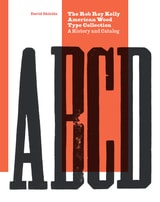
The Rob Roy Kelly American Wood Type Collection
A History and CatalogDavid Shields
University of Texas Press, 2022
2023 50 Books | 50 Covers Award, The American Institute of Graphic Arts (AIGA)
2024 Honorable Mention, Design Awards, Graphis
2024 Finalist, Typography Competition, Communication Arts Magazine
A beautifully illustrated exploration of the Rob Roy Kelly American Wood Type Collection.
The Rob Roy Kelly Wood Type Collection is a comprehensive collection of wood type manufactured and used for printing in nineteenth-century America. Comprising nearly 150 typefaces of various sizes and styles, it was amassed by noted design educator and historian Rob Roy Kelly starting in 1957 and is now held by the University of Texas. Although Kelly himself published a 1969 book on wood type and nineteenth-century typographic history, there has been little written about the creation of the wood type forms, the collection, or Kelly.
In this book, David Shields rigorously updates and expands upon Kelly’s historical information about the types, clarifying the collection’s exact composition and providing a better understanding of the stylistic development of wood type forms during the nineteenth century. Using rich materials from the period, Shields provides a stunning visual context that complements the textual history of each typeface. He also highlights the non-typographic material in the collection—such as borders, rules, ornaments, and image cuts—that have not been previously examined. Featuring over 300 color illustrations, this written history and catalog is bound to spark renewed interest in the collection and its broader typographic period.
The Romantic Absolute
Being and Knowing in Early German Romantic Philosophy, 1795-1804Dalia Nassar
University of Chicago Press, 2013
Scholars today interpret philosophical romanticism along two competing lines: one emphasizes the romantics’ concern with epistemology, the other their concern with metaphysics. Through careful textual analysis and systematic reconstruction of the work of three major romantics—Novalis, Friedrich Schlegel, and Friedrich Schelling—Nassar shows that neither interpretation is fully satisfying. Rather, she argues, one needs to approach the absolute from both perspectives. Rescuing these philosophers from frequent misunderstanding, and even dismissal, she articulates not only a new angle on the philosophical foundations of romanticism but on the meaning and significance of the notion of the absolute itself.
The Romantic Conception of Life
Science and Philosophy in the Age of GoetheRobert J. Richards
University of Chicago Press, 2002
Integrating Romantic literature, science, and philosophy with an intimate knowledge of the individuals involved—from Goethe and the brothers Schlegel to Humboldt and Friedrich and Caroline Schelling—Richards demonstrates how their tempestuous lives shaped their ideas as profoundly as their intellectual and cultural heritage. He focuses especially on how Romantic concepts of the self, as well as aesthetic and moral considerations—all tempered by personal relationships—altered scientific representations of nature. Although historians have long considered Romanticism at best a minor tributary to scientific thought, Richards moves it to the center of the main currents of nineteenth-century biology, culminating in the conception of nature that underlies Darwin's evolutionary theory.
Uniting the personal and poetic aspects of philosophy and science in a way that the German Romantics themselves would have honored, The Romantic Conception of Life alters how we look at Romanticism and nineteenth-century biology.

The Romantic Ideology
A Critical InvestigationJerome McGann
University of Chicago Press, 1983
In the course of his study, McGann analyzes both the predominant theories of Romanticism (those deriving from Coleridge, Hegel, and Heine) and the products of its major English practitioners. Words worth, Coleridge, Shelley, and Byron are considered in greatest depth, but the entire movement is subjected to a searching critique. Arguing that poetry is produced and reproduced within concrete historical contexts and that criticism must take these contexts into account, McGann shows how the ideologies embodied in Romantic poetry and theory have shaped and distorted contemporary critical activities.

The Romantic Machine
Utopian Science and Technology after NapoleonJohn Tresch
University of Chicago Press, 2012
In the years immediately following Napoleon’s defeat, French thinkers in all fields set their minds to the problem of how to recover from the long upheavals that had been set into motion by the French Revolution. Many challenged the Enlightenment’s emphasis on mechanics and questioned the rising power of machines, seeking a return to the organic unity of an earlier age and triggering the artistic and philosophical movement of romanticism. Previous scholars have viewed romanticism and industrialization in opposition, but in this groundbreaking volume John Tresch reveals how thoroughly entwined science and the arts were in early nineteenth-century France and how they worked together to unite a fractured society.
Focusing on a set of celebrated technologies, including steam engines, electromagnetic and geophysical instruments, early photography, and mass-scale printing, Tresch looks at how new conceptions of energy, instrumentality, and association fueled such diverse developments as fantastic literature, popular astronomy, grand opera, positivism, utopian socialism, and the Revolution of 1848. He shows that those who attempted to fuse organicism and mechanism in various ways, including Alexander von Humboldt and Auguste Comte, charted a road not taken that resonates today.
Essential reading for historians of science, intellectual and cultural historians of Europe, and literary and art historians, The Romantic Machine is poised to profoundly alter our understanding of the scientific and cultural landscape of the early nineteenth century.
The Roots of Radicalism
Tradition, the Public Sphere, and Early Nineteenth-Century Social MovementsCraig Calhoun
University of Chicago Press, 2012
The Roots of Rough Justice
Origins of American LynchingMichael J. Pfeifer
University of Illinois Press, 2014
The Ruin of Souls
A Religious History of Italian Catholic Immigrants in the United States (1853-1921)Massimo Di Gioacchino
Bridwell Press, 2025
Strengthened by largely unknown archival documentation and an original historiographic methodology, the work reveals a new political dimension in the religious history of Italian immigrants in the United States and their relationship with the Catholic religious canon. By integrating the analysis of the ecclesial practices of the Italian communities into a far-reaching epistemological reflection, the work also contributes to the continuing discussion of how we study and examine the religious practices of Catholic communities in the modern era.
The Ruling Passion
British Colonial Allegory and the Paradox of Homosexual DesireChristopher Lane
Duke University Press, 1995
Through attentive readings of sexual and political allegory in the work of Kipling, Forster, James, Beerbohm, Firbank, and others—and deft use of psychoanalytic theory—The Ruling Passion interprets turbulent scenes of masculine identification and pleasure, power and mastery, intimacy and antagonism. By foregrounding the shattering effects of male homosexuality and interracial desire, and by insisting on the centrality of unconscious fantasy and the death drive, The Ruling Passion examines the startling recurrence of colonial failure in narratives of symbolic doubt and ontological crisis. Lane argues compellingly that Britain can progress culturally and politically only when it has relinquished its residual fantasies of global mastery.
The Sacred Cause of Union
Iowa in the Civil WarThomas R. Baker
University of Iowa Press, 2016
To shed light on how individual Iowans experienced the war, the book profiles six state residents. Three were well-known. Annie Wittenmyer, a divorced woman with roots in Virginia, led the state’s efforts to ship clothing and food to the soldiers. Alexander Clark, a Muscatine businessman and the son of former slaves, eloquently championed the rights of African Americans. Cyrus Carpenter, a Pennsylvania-born land surveyor anxious to make his fortune, served in the army and then headed the state’s Radical Republican faction after the war, ultimately being elected governor.
Three never became famous. Ben Stevens, a young, unemployed carpenter, fought in an Iowa regiment at Shiloh, and then transferred to a Louisiana African American regiment so that he could lead the former slaves into battle. Farm boy Abner Dunham defended the Sunken Road at the Battle of Shiloh, before spending seven grim months in Confederate prison camps. The young Charles Musser faced pressure from his neighbors to enlist and from his parents to remain at home to work on the farm. Soon after he signed on to serve the Union, he discovered that his older brother had joined the Confederate Army. Through the letters and lives of these six Iowans, Thomas Baker shows how the Civil War transformed the state at the same time that Iowans transformed the nation.
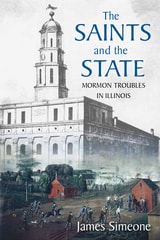
The Saints and the State
The Mormon Troubles in IllinoisJames Simeone
Ohio University Press, 2021
A compelling history of the 1846 Mormon expulsion from Illinois that exemplifies the limits of American democracy and religious tolerance.
When members of the Church of Jesus Christ of Latter-day Saints (known as Mormons) settled in Illinois in 1839, they had been persecuted for their beliefs from Ohio to Missouri. Illinoisans viewed themselves as religiously tolerant egalitarians and initially welcomed the Mormons to their state. However, non-Mormon locals who valued competitive individualism perceived the saints‘ western Illinois settlement, Nauvoo, as a theocracy with too much political power. Amid escalating tensions in 1844, anti-Mormon vigilantes assassinated church founder Joseph Smith and his brother Hyrum. Two years later, the state expelled the saints. Illinois rejected the Mormons not for their religion, but rather for their effort to create a self-governing state in Nauvoo.
Mormons put the essential aspirations of American liberal democracy to the test in Illinois. The saints’ inward group focus and their decision to live together in Nauvoo highlight the challenges strong group consciousness and attachment pose to democratic governance. The Saints and the State narrates this tragic story as an epic failure of governance and shows how the conflicting demands of fairness to the Mormons and accountability to Illinois’s majority became incompatible.
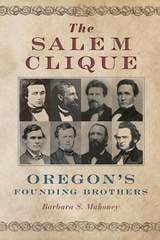
The Salem Clique
Oregon's Founding BrothersBarbara S. Mahoney
Oregon State University Press, 2017
While not in agreement with some of the more extreme contemporary accusations against the Clique, many historians have concluded that its members were vicious men who were able, because of their command of the Democratic party, to impose their hegemony on the Oregon Territory’s inhabitants. Other scholars have seen them as merely another instance of the contentious politics of the period.
Although the Salem Clique has been given considerable prominence in nearly every account of Oregon’s Territorial period, there has not been a detailed study of its role until now. What sort of people were these men? What was their impact on the issues, events, and movements of the period? What role did they play in the years after Oregon became a state? In The Salem Clique, Historian Barbara Mahoney sets out to answer these and many other questions in this comprehensive and deeply researched history.
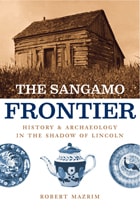
The Sangamo Frontier
History and Archaeology in the Shadow of LincolnRobert Mazrim
University of Chicago Press, 2006
When Abraham Lincoln moved to Illinois’ Sangamo Country in 1831, he found a pioneer community transforming from a cluster of log houses along an ancient trail to a community of new towns and state roads. But two of the towns vanished in a matter of years, and many of the activities and lifestyles that shaped them were almost entirely forgotten. In The Sangamo Frontier, archaeologist Robert Mazrim unearths the buried history of this early American community, breathing new life into a region that still rests in Lincoln’s shadow.
Named after a shallow river that cuts through the prairies of central Illinois, the Sangamo Country—an area that now encompasses the capital city of Springfield and present-day Sangamon County—was first colonized after the War of 1812. For the past fifteen years, Mazrim has conducted dozens of excavations there, digging up pieces of pioneer life, from hand-forged iron and locally made crockery to pewter spoons and Staffordshire teacups. And here, in beautifully illustrated stories of each dig, he shows how each of these small artifacts can teach us something about the lifestyles of people who lived on the frontier nearly two hundred years ago. Allowing us to see past the changed modern landscape and the clichés of pioneer history, Mazrim deftly uses his findings to portray the homes, farms, taverns, and pottery shops where Lincoln’s neighbors once lived and worked.
Drawing readers into the thrill of discovery, The Sangamo Frontier inaugurates a new kind of archaeological history that both enhances and challenges our written history. It imbues today’s landscape with an authentic ghostliness that will reawaken the curiosity of anyone interested in the forgotten people and places that helped shape our nation.

The Sanitary Arts
Aesthetic Culture and the Victorian Cleanliness CampaignsEileen Cleere
The Ohio State University Press, 2014
The Sanitary Arts covers the mid-forties controversy over cleaning the dirt from the pictures in the National Gallery, the debate over decorative “dust traps” in the overstuffed Victorian home, and the late-century proliferation of hygienic breeding principles as a program of aesthetic perfectibility, to demonstrate the unintentionally collaborative work of seemingly unrelated events and discourses. Bringing figures like Edwin Chadwick and John Ruskin into close conversation about the sanitary status of beauty in a variety of forms and environments, Cleere forcefully demonstrates that aesthetic development and scientific discovery can no longer be understood as separate or discrete forces of cultural change.
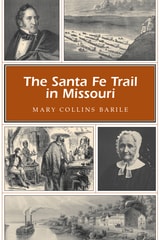
The Santa Fe Trail in Missouri
Mary Collins Barile
University of Missouri Press, 2010
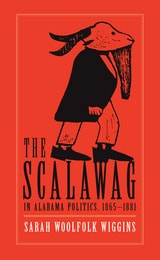
The Scalawag In Alabama Politics, 1865–1881
Sarah Woolfolk Wiggins
University of Alabama Press, 1977
Who was this scalawag? Simply a native, white, Alabama Republican! Scorned by his fellow white Southerners, he suffered, in his desire for socioeconomic reform and political power, more than mere verbal abuse and social ostracism; he lived constantly under the threat of physical violence. When first published in 1977, Wiggin’s treatment of the scalawag was the first book-length study of scalawags in any state, and it remains the most thorough treatment. According to The Journal of American History, this is the “most effective challenge to the scalawag stereotype yet to appear.”
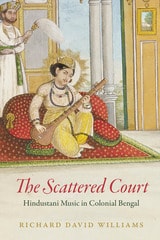
The Scattered Court
Hindustani Music in Colonial BengalRichard David Williams
University of Chicago Press, 2023
How far did colonialism transform north Indian music? In the period between the Mughal empire and the British Raj, how did the political landscape bleed into aesthetics, music, dance, and poetry? Examining musical culture through a diverse and multilingual archive, primarily using sources in Urdu, Bengali, and Hindi that have not been translated or critically examined before, The Scattered Court challenges our assumptions about the period. Richard David Williams presents a long history of interactions between northern India and Bengal, with a core focus on the two courts of Wajid Ali Shah (1822–1887), the last ruler of the kingdom of Awadh. He charts the movement of musicians and dancers between the two courts in Lucknow and Matiyaburj, as well as the transregional circulation of intellectual traditions and musical genres, and demonstrates the importance of the exile period for the rise of Calcutta as a celebrated center of Hindustani classical music. Since Lucknow is associated with late Mughal or Nawabi society and Calcutta with colonial modernity, examining the relationship between the two cities sheds light on forms of continuity and transition over the nineteenth century, as artists and their patrons navigated political ruptures and social transformations. The Scattered Court challenges the existing historiography of Hindustani music and Indian culture under colonialism by arguing that our focus on Anglophone sources and modernizing impulses has directed us away from the aesthetic subtleties, historical continuities, and emotional dimensions of nineteenth-century music.
The Science of Character
Human Objecthood and the Ends of Victorian RealismS. Pearl Brilmyer
University of Chicago Press, 2022
In 1843, the Victorian philosopher John Stuart Mill called for the establishment of a new science, “the science of the formation of character.” Although Mill’s proposal failed as scientific practice, S. Pearl Brilmyer maintains that it found its true home in realist fiction of the period, which employed the literary figure of character to investigate the nature of embodied experience. Bringing to life Mill’s unrealized dream of a science of character, novelists such as George Eliot, Thomas Hardy, and Olive Schreiner turned to narrative to explore how traits and behaviors in organisms emerge and develop, and how aesthetic features—shapes, colors, and gestures—come to take on cultural meaning through certain categories, such as race and sex. Engaged with materialist science and philosophy, these authors transformed character from the liberal notion of the inner truth of an individual into a materially determined figuration produced through shifts in the boundaries between the body’s inside and outside. In their hands, Brilmyer argues, literature became a science, not in the sense that its claims were falsifiable or even systematically articulated, but in its commitment to uncovering, through a fictional staging of realistic events, the laws governing physical and affective life. The Science of Character redraws late Victorian literary history to show how women and feminist novelists pushed realism to its aesthetic and philosophical limits in the crucial span between 1870 and 1920.
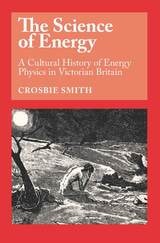
The Science of Energy
A Cultural History of Energy Physics in Victorian BritainCrosbie Smith
University of Chicago Press, 1999
Replacing the language and concepts of classical mechanics with terms such as "actual" and "potential" energy, the North British group conducted their revolution in physics so astutely and vigorously that the concept of "energy"—a valuable commodity in the early days of industrialization—became their intellectual property. Smith skillfully places this revolution in its scientific and cultural context, exploring the actual creation of scientific knowledge during one of the most significant episodes in the history of physics.
The Science of Sympathy
Morality, Evolution, and Victorian CivilizationRob Boddice
University of Illinois Press, 2016