
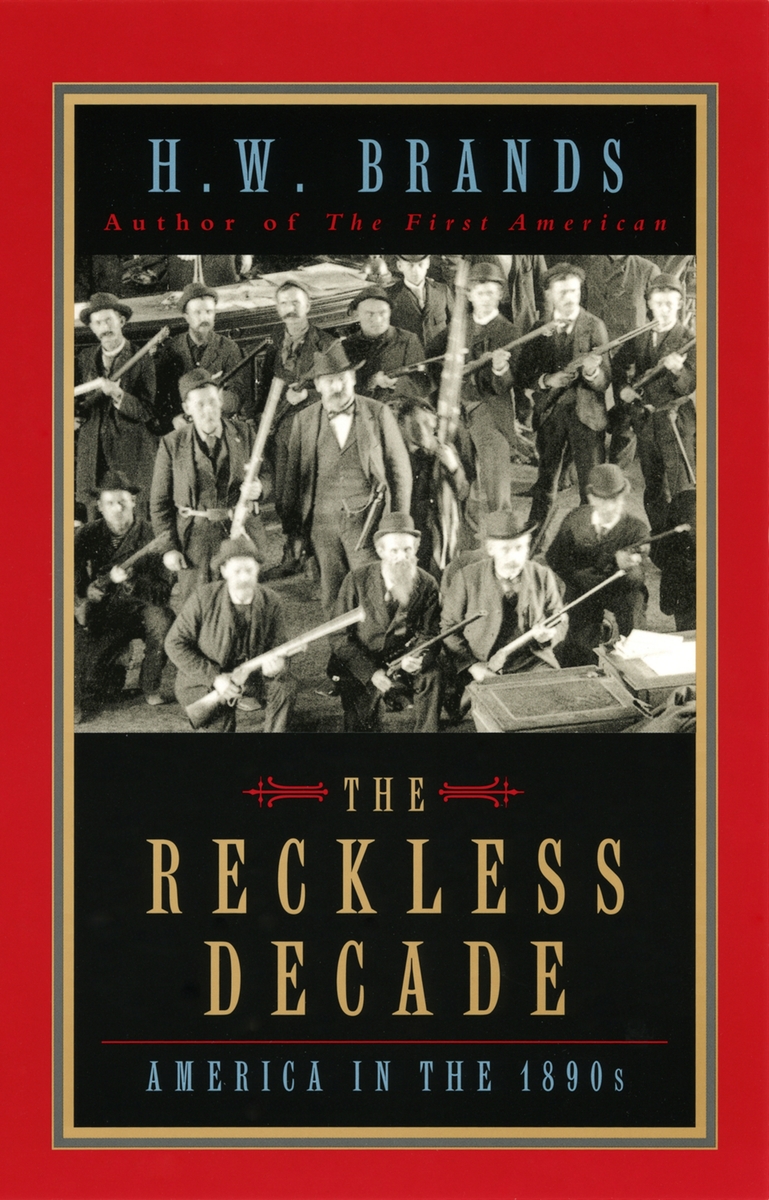
The Reckless Decade: America in the 1890s
by H.W. Brands
University of Chicago Press, 2002
Paper: 978-0-226-07116-9
Library of Congress Classification E661.B795 2002
Dewey Decimal Classification 973.8
ABOUT THIS BOOK
A rousing history that Douglas Brinkley called "the most accessible survey of America's turbulent 1890s ever composed"
Just as we do today, Americans of the 1890s faced changes in economics, politics, society, and technology that led to wrenching and sometimes violent tensions between rich and poor, capital and labor, white and black, East and West. In The Reckless Decade, H. W. Brands demonstrates that we can learn a lot about the contradictions that lie at the heart of America today by looking at them through the lens of the 1890s.
The 1890s saw the closing of the American frontier and a shift toward imperialist ambitions. Populists and muckrakers grappled with robber barons and gold-bugs. Americans addressed the unfinished business of Reconstruction by separating blacks and whites. Booker T. Washington, W. E. B. Du Bois, and other black leaders clashed over the proper response to continuing racial inequality. Those on top of the economic heap—Rockefeller, Carnegie, and Morgan—created vast empires of wealth, while those at the bottom worked for dimes a day. Brands brings all this to life in a vivid narrative filled with larger-than-life characters facing momentous challenges as they worked toward an uncertain future.
See other titles from University of Chicago Press