Results by title
702 books match the query 'America' and 63 start with a

A Call for Heresy
Why Dissent Is Vital to Islam and AmericaAnouar Majid
University of Minnesota Press, 2007
A Call for Heresy discovers unexpected common ground in one of the most inflammatory issues of the twenty-first century: the deepening conflict between the Islamic world and the United States. Moving beyond simplistic answers, Anouar Majid argues that the Islamic world and the United States are both in precipitous states of decline because, in each, religious, political, and economic orthodoxies have silenced the voices of their most creative thinkers—the visionary nonconformists, radicals, and revolutionaries who are often dismissed, or even punished, as heretics.
The United States and contemporary Islam share far more than partisans on either side admit, Majid provocatively argues, and this “clash of civilizations” is in reality a clash of competing fundamentalisms. Illustrating this point, he draws surprising parallels between the histories and cultures of Islam and the United States and their shortsighted suppression of heresy (zandaqa in Arabic), from Muslim poets and philosophers like Ibn Rushd (known in the West as Averroës) to the freethinker Thomas Paine, and from Abu Bakr Razi and Al-Farabi to Thomas Jefferson and Abraham Lincoln. He finds bitter irony in the fact that Islamic culture is now at war with a nation whose ideals are losing ground to the reactionary forces that have long condemned Islam to stagnation.
The solution, Majid concludes, is a long-overdue revival of dissent. Heresy is no longer a contrarian’s luxury, for only through encouraging an engaged and progressive intellectual tradition can the nations reverse their decline and finally work together for global justice and the common good of humanity.
Anouar Majid is founding chair and professor of English at the University of New England and the author of Freedom and Orthodoxy: Islam and Difference in the Post-Andalusian Age; Unveiling Traditions: Postcolonial Islam in a Polycentric World; and Si Yussef, a novel. He is also cofounder and editor of Tingis, a Moroccan-American magazine of ideas and culture.
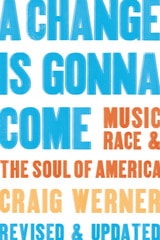
A Change Is Gonna Come
Music, Race & the Soul of AmericaCraig Werner
University of Michigan Press, 2006
—Notes
"No one has written this way about music in a long, long time. Lucid, insightful, with real spiritual, political, intellectual, and emotional grasp of the whole picture. A book about why music matters, and how, and to whom."
—Dave Marsh, author of Louie, Louie and Born to Run: The Bruce Springsteen Story
"This book is urgently needed: a comprehensive look at the various forms of black popular music, both as music and as seen in a larger social context. No one can do this better than Craig Werner."
—Henry Louis Gates, Jr., W.E.B. Du Bois Professor of the Humanities, Harvard University
"[Werner has] mastered the extremely difficult art of writing about music as both an aesthetic and social force that conveys, implies, symbolizes, and represents ideas as well as emotion, but without reducing its complexities and ambiguities to merely didactic categories."
—African American Review
A Change Is Gonna Come is the story of more than four decades of enormously influential black music, from the hopeful, angry refrains of the Freedom movement, to the slick pop of Motown; from the disco inferno to the Million Man March; from Woodstock's "Summer of Love" to the war in Vietnam and the race riots that inspired Marvin Gaye to write "What's Going On."
Originally published in 1998, A Change Is Gonna Come drew the attention of scholars and general readers alike. This new edition, featuring four new and updated chapters, will reintroduce Werner's seminal study of black music to a new generation of readers.
Craig Werner is Professor of Afro-American Studies at the University of Wisconsin, and author of many books, including Playing the Changes: From Afro-Modernism to the Jazz Impulse and Up Around the Bend: An Oral History of Creedence Clearwater Revival. His most recent book is Higher Ground: Stevie Wonder, Aretha Franklin, Curtis Mayfield, and the Rise and Fall of American Soul.
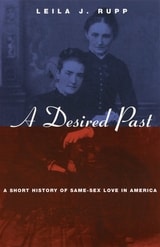
A Desired Past
A Short History of Same-Sex Love in AmericaLeila J. Rupp
University of Chicago Press, 1999
"Most extraordinary about Leila J. Rupp's indeed short, two-hundred-page history of 'same-sex love and sexuality' is not that it manages to account for such a variety of individuals, races, and classes or take in such a broad chronological and thematic range, but rather that it does all this with such verve, lucidity, and analytical rigor. . . . [A]n elegant, inspiring survey." —John Howard, Journal of American History

A Great Fear
Luís de Onís and the Shadow War against Napoleon in Spanish America, 1808–1812Timothy Hawkins
University of Alabama Press, 2019
A Great Fear: Luís de Onís and the Shadow War against Napoleon in Spanish America, 1808–1812 explores why Spanish Americans did not take the opportunity to seize independence in this critical period when Spain was overrun by French armies and, arguably, in its weakest state. In the first years after his appointment as Spanish ambassador to the United States, Luís de Onís claimed the heavy responsibility of defending Spanish America from the wave of French spies, subversives, and soldiers whom he believed Napoleon was sending across the Atlantic to undermine the empire.
As a leading representative of Spain’s loyalist government in the Americas, Onís played a central role in identifying, framing, and developing what soon became a coordinated response from the colonial bureaucracy to this perceived threat. This crusade had important short-term consequences for the empire. Since it paralleled the emergence of embryonic independence movements against Spanish rule, colonial officials immediately conflated these dangers and attributed anti-Spanish sentiment to foreign conspiracies.
Little direct evidence of Napoleon’s efforts at subversion in Spanish America exists. However, on the basis of prodigious research, Hawkins asserts that the fear of French intervention mattered far more than the reality. Reinforced by detailed warnings from Ambassador Onís, who found the United States to be the staging ground for many of the French emissaries, colonial officials and their subjects became convinced that Napoleon posed a real threat. The official reaction to the threat of French intervention increasingly led Spanish authorities to view their subjects with suspicion, as potential enemies rather than allies in the struggle to preserve the empire. In the long term, this climate of fear eroded the legitimacy of the Spanish Crown among Spanish Americans, a process that contributed to the unraveling of the empire by the 1820s.
This study draws on documents and official records from both sides of the Hispanic Atlantic, with extensive research conducted in Spain, Guatemala, Argentina, and the United States. Overall, it is a provocative interpretation of the repercussions of Napoleonic intrigue and espionage in the New World and a stellar examination of late Spanish colonialism in the Americas.

A History of America in 100 Maps
Susan Schulten
University of Chicago Press, 2018
In this book Susan Schulten uses maps to explore five centuries of American history, from the voyages of European discovery to the digital age. With stunning visual clarity, A History of America in 100 Maps showcases the power of cartography to illuminate and complicate our understanding of the past.
Gathered primarily from the British Library’s incomparable archives and compiled into nine chronological chapters, these one hundred full-color maps range from the iconic to the unfamiliar. Each is discussed in terms of its specific features as well as its larger historical significance in a way that conveys a fresh perspective on the past. Some of these maps were made by established cartographers, while others were made by unknown individuals such as Cherokee tribal leaders, soldiers on the front, and the first generation of girls to be formally educated. Some were tools of statecraft and diplomacy, and others were instruments of social reform or even advertising and entertainment. But when considered together, they demonstrate the many ways that maps both reflect and influence historical change.
Audacious in scope and charming in execution, this collection of one hundred full-color maps offers an imaginative and visually engaging tour of American history that will show readers a new way of navigating their own worlds.

A Hundred Acres of America
The Geography of Jewish American Literary HistoryHoberman, Michael
Rutgers University Press, 2019
Jewish writers have long had a sense of place in the United States, and interpretations of American geography have appeared in Jewish American literature from the colonial era forward. But troublingly, scholarship on Jewish American literary history often limits itself to an immigrant model, situating the Jewish American literary canon firmly and inescapably among the immigrant authors and early environments of the early twentieth century. In A Hundred Acres of America, Michael Hoberman combines literary history and geography to restore Jewish American writers to their roles as critical members of the American literary landscape from the 1850s to the present, and to argue that Jewish history, American literary history, and the inhabitation of American geography are, and always have been, contiguous entities.

A Key into the Language of America
The Tomaquag Museum EditionRoger Williams
Westholme Publishing, 2019
Roger Williams’s Key into the Language of America, first published in 1643, is one of the most important artifacts of early Indigenous American culture. In it, Williams recorded the day-to-day experience of the Narragansett people of Rhode Island in their own words, the first documentation of an American Indian language in English. Williams’s Key can be read at many levels because of its historical, literary, political, and religious significance. Its greatest value, though, is its intimate portrait of the Narragansett and their linguistic neighbors in the early years of European colonial settlement, before disease, dislocation, warfare—in particular, King Philip’s War—and colonial interference had diminished their population and power in the region. An extraordinary achievement, Williams’s Key gives us a contemporary account of Narragansett family life, of their sociability and skill in business, their dress, foodways, and the farming, fishing, and hunting that formed the basis of their sustenance practices.
This new Tomaquag Museum edition includes for the first time cultural commentary provided by the Narragansett Tribe as well as modern linguistic information provided by a leading authority in the study of American Indian languages.
The Tomaquag Museum, located in Exeter, Rhode Island, is an Indigenous nonprofit organization dedicated to sharing the culture, arts, and history of the Narragansett and other tribal communities of southern New England.

A Natural History of the New World
The Ecology and Evolution of Plants in the AmericasAlan Graham
University of Chicago Press, 2010
The paleoecological history of the Americas is as complex as the region is broad: stretching from the Arctic Circle to Tierra del Fuego, the New World features some of the most extraordinary vegetation on the planet. But until now it has lacked a complete natural history. Alan Graham remedies that with A Natural History of the New World. With plants as his scientific muse, Graham traces the evolution of ecosystems, beginning in the Late Cretaceous period (about 100 million years ago) and ending in the present, charting their responses to changes in geology and climate.
By highlighting plant communities’ roles in the environmental history of the Americas, Graham offers an overdue balance to natural histories that focus exclusively on animals. Plants are important in evolution’s splendid drama. Not only are they conspicuous and conveniently stationary components of the Earth’s ecosystems, but their extensive fossil record allows for a thorough reconstruction of the planet’s paleoenvironments. What’s more, plants provide oxygen, function as food and fuel, and provide habitat and shelter; in short, theirs is a history that can speak to many other areas of evolution.
A Natural History of the New World is an ambitious and unprecedented synthesis written by one of the world’s leading scholars of botany and geology.

A Noble Fight
African American Freemasonry and the Struggle for Democracy in AmericaCorey D. B. Walker
University of Illinois Press, 2008
With great care and detail, Walker argues that African American freemasonry provides a critical theoretical lens for understanding the distinctive ways African Americans have constructed a radically democratic political imaginary through racial solidarity and political nationalism, forcing us to reconsider much more circumspectly the complex relationship between voluntary associations and democratic politics.
Mapping the discursive logics of the language of freemasonry as a metaphoric rendering of American democracy, this study interrogates the concrete forms of an associational culture, revealing how paradoxical aspects of freemasonry such as secrecy and public association inform the production of particular ideas and expressions of democracy in America.
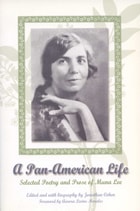
A Pan-American Life
Selected Poetry and Prose of Muna LeeMuna Lee; Edited and with biography by Jonathan M. Cohen
University of Wisconsin Press, 2004

A Passion for Consumption
The Gothic Novel in AmericaAnna Sonser
University of Wisconsin Press, 2001
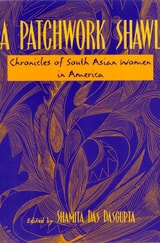
A Patchwork Shawl
Chronicles of South Asian Women in AmericaDas Dasgupta, Shamita
Rutgers University Press, 1998
A Patchwork Shawl sheds light on the lives of a segment of the U.S. immigrant population that has long been relegated to the margins. It focuses on women's lives that span different worlds: Bangladesh, India, Pakistan, and the United States. This collection of essays by and about South Asian women in America challenges stereotypes by allowing women to speak in their own words. Together they provide discerning insights into the reconstruction of immigrant patriarchy in a new world, and the development of women's resistance to that reconstruction. Shamita Das DasGupta's introduction also acquaints readers with the psychological topography of the South Asian community.
A Patchwork Shawl considers topics from re-negotiation of identity to sexuality, violence to intimacy, occupations to organizing within the community. The essays bear witness to women's negotiations for independent identities, their claim to their own bodies, and the right to choose relationships based on their own histories and truths. They bring new understanding to the intersection of gender, ethnicity, race, sexuality, and class.
A Place of Their Own
Creating the Deaf Community in AmericaJohn Vickrey Van Cleve
Gallaudet University Press, 1989
Using original sources, this unique book focuses on the Deaf community during the 19th century. Largely through schools for the deaf, deaf people began to develop a common language and a sense of community.
A Place of Their Own brings the perspective of history to bear on the reality of deafness and provides fresh and important insight into the lives of deaf Americans.
A Suffragette in America
Reflections on Prisoners, Pickets and Political ChangeSylvia Pankhurst
Pluto Press, 2019
This book gathers Pankhurst’s writings from the year-long visit, in which she reveals her shock at the darkness hidden in American life, and draws parallels to her experiences of imprisonment and misogyny in her own country. Never before published, these writings mark an important stage in the development of the suffragette's thought, which she brought back to Britain to inform the burgeoning suffrage campaign there.

A War for the Soul of America, Second Edition
A History of the Culture WarsAndrew Hartman
University of Chicago Press, 2019
“As a guide to the late twentieth-century culture wars, Hartman is unrivalled. . . . Incisive portraits of individual players in the culture wars dramas. . . . Reading Hartman sometimes feels like debriefing with friends after a raucous night out, an experience punctuated by laughter, head-scratching, and moments of regret for the excesses involved.”—New Republic
A War for the Soul of America
A History of the Culture WarsAndrew Hartman
University of Chicago Press, 2015
Buchanan’s fiery speech marked a high point in the culture wars, but as Andrew Hartman shows in this richly analytical history, their roots lay farther back, in the tumult of the 1960s—and their significance is much greater than generally assumed. Far more than a mere sideshow or shouting match, the culture wars, Hartman argues, were the very public face of America’s struggle over the unprecedented social changes of the period, as the cluster of social norms that had long governed American life began to give way to a new openness to different ideas, identities, and articulations of what it meant to be an American. The hot-button issues like abortion, affirmative action, art, censorship, feminism, and homosexuality that dominated politics in the period were symptoms of the larger struggle, as conservative Americans slowly began to acknowledge—if initially through rejection—many fundamental transformations of American life.
As an ever-more partisan but also an ever-more diverse and accepting America continues to find its way in a changing world, A War for the Soul of America reminds us of how we got here, and what all the shouting has really been about.

AIDS Alibis
Sex, Drugs, and Crime in the AmericasStephanie Kane
Temple University Press, 1998
The stories reveal the dynamics that determine how the policy decisions of white-collar health care professionals actually play out in real life. By focusing on life-changing social problems, the narratives highlight the contradictions between public health and criminal law. Look at how HIV has transformed our social consciousness, from intimate touch to institutional outreach. But, Kane argues, these changes are dwarfed by the United States's refusal to stop the war on drugs, in effect misdirecting resources and awareness.
AIDS Alibis combines empirical and interpretive methods in a path-breaking attempt to recognize the extent to which coercive institutional practices are implicated in HIV transmission patterns. Kane shows how th e virus feeds on the politics of inequality and indifference, even as it exploits the human need for intimacy and release.
Abolitionism and Imperialism in Britain, Africa, and the Atlantic
Derek R. Peterson
Ohio University Press, 2010
The abolition of the slave trade is normally understood to be the singular achievement of eighteenth-century British liberalism. Abolitionism and Imperialism in Britain, Africa, and the Atlantic expands both the temporal and the geographic framework in which the history of abolitionism is conceived. Abolitionism was a theater in which a variety of actors—slaves, African rulers, Caribbean planters, working-class radicals, British evangelicals, African political entrepreneurs—played a part. The Atlantic was an echo chamber, in which abolitionist symbols, ideas, and evidence were generated from a variety of vantage points. These essays highlight the range of political and moral projects in which the advocates of abolitionism were engaged, and in so doing it joins together geographies that are normally studied in isolation.
Where empires are often understood to involve the government of one people over another, Abolitionism and Imperialism shows that British values were formed, debated, and remade in the space of empire. Africans were not simply objects of British liberals’ benevolence. They played an active role in shaping, and extending, the values that Britain now regards as part of its national character. This book is therefore a contribution to the larger scholarship about the nature of modern empires.
Contributors: Christopher Leslie Brown, Seymour Drescher, Jonathon Glassman, Boyd Hilton, Robin Law, Phillip D. Morgan, Derek R. Peterson, John K. Thornton

Aby Warburg and America
The Art Historian as EthnographerHorst Bredekamp
Bard Graduate Center, 2021

Accidental Pluralism
America and the Religious Politics of English Expansion, 1497-1662Evan Haefeli
University of Chicago Press, 2021

Across the Great Border Fault
The Naturalist Myth in AmericaDann, Kevin
Rutgers University Press, 2000
In recent years scholars have begun to question the cultural values underlying our view of Nature. Kevin Dann contributes to this debate by juxtaposing two radically different “Arcadian” experiments founded by Manhattanites seeking cultural renewal through contact with the natural world.
Dann focuses first on initiatives carried out by the American Museum of Natural History and the Eugenics Record Office from 1910 to 1940 within Harriman State Park in the Ramapo Mountains. He argues that these diverse expressions of the early “back-to-nature” movement are united by their biological materialism, or “Naturalism,” which became integral to the popular culture of educated metropolitan Americans in the early twentieth century.
He then compares this activity to the contemporary efforts at nearby Threefold Farm, where anthroposophists--followers of Rudolf Steiner's“spiritual science”--developed a program of natural scientific research and education that directly opposed Darwinian explanations of natural history, social Darwinian views of human society, and reductionist scientific methods. By challenging scientific “fact” with spiritual scientific descriptions of supersensible phenomena, the Threefold Farm initiative offered Americans a new gospel of nature.

Acts of Possession
Collecting in AmericaDilworth, Leah
Rutgers University Press, 2003
Drawing upon the body of theoretical work on collecting and focusing on individual as opposed to museum collections, the contributors investigate how, what, and why Americans have collected and explore the inherent meanings behind systems of organization and display. Essays consider the meanings of Thomas Jefferson's Indian Hall at Monticello; the pedagogical theories behind nineteenth-century children's curiosity cabinets; collections of Native American artifacts; and the ability of the owners of doll houses to construct meaning within the context of traditional ideals of domesticity.
The authors also consider some darker aspects of collecting-hoarding, fetishism, and compulsive behavior-scrutinizing collections of racist memorabilia and fascist propaganda. The final essay posits the serial killer as a collector, an investigation into the dangerous objectification of humans themselves.
By bringing fresh, interdisciplinary critical perspectives to bear on these questions, Dilworth and her coauthors weave a fascinating cultural history of collecting in America.

Adoption in America
Historical PerspectivesE. Wayne Carp, Editor
University of Michigan Press, 2004
---Choice
"Sheds new light on the roots of this complex and fascinating institution."
---Library Journal
"Well-written and accessible . . . showcases the wide-ranging scholarship underway on the history of adoption."
---Adoptive Families
"[T]his volume is a significant contribution to the literature and can serve as a catalyst for further research."
---Social Service Review
Adoption affects an estimated 60 percent of Americans, but despite its pervasiveness, this social institution has been little examined and poorly understood. Adoption in America gathers essays on the history of adoptions and orphanages in the United States. Offering provocative interpretations of a variety of issues, including antebellum adoption and orphanages; changing conceptions of adoption in late-nineteenth-century novels; Progressive Era reform and adoptive mothers; the politics of "matching" adoptive parents with children; the radical effect of World War II on adoption practices; religion and the reform of adoption; and the construction of birth mother and adoptee identities, the essays in Adoption in America will be debated for many years to come.
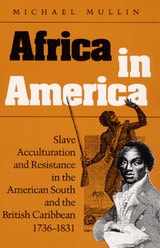
Africa in America
Slave Acculturation and Resistance in the American South and the British Caribbean, 1736-1831Michael Mullin
University of Illinois Press, 1992

African American Jeremiad Rev
Appeals For Justice In AmericaDavid Howard-Pitney
Temple University Press, 2005
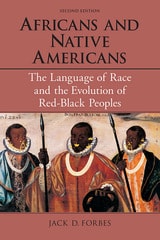
Africans and Native Americans
The Language of Race and the Evolution of Red-Black PeoplesJack D. Forbes
University of Illinois Press, 1993

After Freud Left
A Century of Psychoanalysis in AmericaEdited by John Burnham
University of Chicago Press, 2012
From August 29 to September 21, 1909, Sigmund Freud visited the United States, where he gave five lectures at Clark University in Worcester, Massachusetts. This volume brings together a stunning gallery of leading historians of psychoanalysis and of American culture to consider the broad history of psychoanalysis in America and to reflect on what has happened to Freud’s legacy in the United States in the century since his visit.

Agewise
Fighting the New Ageism in AmericaMargaret Morganroth Gullette
University of Chicago Press, 2011
Let’s face it: almost everyone fears growing older. We worry about losing our looks, our health, our jobs, our self-esteem—and being supplanted in work and love by younger people. It feels like the natural, inevitable consequence of the passing years, But what if it’s not? What if nearly everything that we think of as the “natural” process of aging is anything but?
In Agewise, renowned cultural critic Margaret Morganroth Gullette reveals that much of what we dread about aging is actually the result of ageism—which we can, and should, battle as strongly as we do racism, sexism, and other forms of bigotry. Drawing on provocative and under-reported evidence from biomedicine, literature, economics, and personal stories, Gullette probes the ageism thatdrives discontent with our bodies, our selves, and our accomplishments—and makes us easy prey for marketers who want to sell us an illusory vision of youthful perfection. Even worse, rampant ageism causes society to discount, and at times completely discard, the wisdom and experience acquired by people over the course of adulthood. The costs—both collective and personal—of this culture of decline are almost incalculable, diminishing our workforce, robbing younger people of hope for a decent later life, and eroding the satisfactions and sense of productivity that should animate our later years.
Once we open our eyes to the pervasiveness of ageism, however, we can begin to fight it—and Gullette lays out ambitious plans for the whole life course, from teaching children anti-ageism to fortifying the social safety nets, and thus finally making possible the real pleasures and opportunities promised by the new longevity. A bracing, controversial call to arms, Agewise will surprise, enlighten, and, perhaps most important, bring hope to readers of all ages.
Aiding Students, Buying Students
Financial Aid in AmericaRupert Wilkinson
Vanderbilt University Press, 2005
From the first scholarship donated to Harvard in 1643 to today's world of "enrollment management" and federal grants and loans, the author gives a lively social and economic history of the conflicting purposes of student aid and makes proposals for the future. His research for this book is based on archives and interviews at 131 public and private institutions across the United States.
In the words of Joe Paul Case, Dean and Director of Financial Aid, Amherst College, "Wilkinson has mined the archives of dozens of institutions to create a mosaic that details the progress of student assistance from the 17th century to the present. He gives particular attention to the origins of need-based assistance, from the charitable benevolence of early colleges to the regulation-laden policies of the federal government. He gives due consideration to institutional motive--he challenges the egalitarian platitudes of affluent colleges and questions the countervailing market and economic forces that may imperil need-based aid at less competitive institutions. By drawing on scores of personal interviews and exchanges of correspondence with aid practitioners, Wilkinson fleshes out recent decades, helping the reader to understand new trends in the provision of aid."
All That Glitters
Country Music in AmericaGeorge H. Lewis
University of Wisconsin Press, 1993

All the Rage
The Story of Gay Visibility in AmericaSuzanna Danuta Walters
University of Chicago Press, 2001
Many consider the new gay visibility a sign of social acceptance, while others charge that it is mere window dressing, obscuring the dogged persistence of discrimination. Walters moves beyond these positions and instead argues that these realities coexist: gays are simultaneously depicted as the sign of social decay and the chic flavor of the month. Taking on the common wisdom that visibility means progress, All the Rage maps the terrain on which gays are accepted as witty accessories in movies, gain access to political power, and yet still fall into constrictive stereotypes. Walters warns us with clarity and wit of the pitfalls of equating visibility with full integration into the fabric of American society. From the playful TV fantasies of lesbian weddings on Friends to the very real obstacles confronting gay marriage, from the award-winning comedy Will & Grace to Bible-thumping radio superhost Dr. Laura, All the Rage takes on naive celebrants and jaded naysayers alike. With a sophisticated mix of caution and optimism, it provides an illuminating guide through these exciting, controversial times.

Alternative Models of Sports Development in America
Solutions to a Crisis in Education and Public HealthB. David Ridpath
Ohio University Press, 2017
In the United States, the entanglement of sports and education has persisted for over a century. Multimillion-dollar high school football stadiums, college coaches whose salaries are many times those of their institutions’ presidents, psychological and educational tolls on student-athletes, and high-profile academic scandals are just symptoms of a system that has come under increasing fire. Institutions large and small face persistent quandaries: which do they value more, academic integrity or athletic success? Which takes precedence: prioritizing elite teams and athletes, or making it possible for all students to participate in sports? How do we create opportunities for academic—not just athletic—development for players?
In Alternative Models of Sports Development in America, B. David Ridpath—a leading sports development researcher who has studied both the US system and the European club model—offers clear steps toward creating a new status quo. He lays out four possible alternative models that draw various elements from academic, athletic, and European approaches. His proposals will help increase access of all young people to the benefits of sports and exercise, allow athletes to also thrive as students, and improve competitiveness. The result is a book that will resonate with sports development professionals, academic administrators, and parents.

America
Bert Lamers
Amsterdam University Press, 2024

America and the Blitz
The Shaping of US Public Opinion and Policy on Great BritainSean Dettman
University of Missouri Press, 2026
In this work, Sean Dettman traces an observable correlation over the course of late summer 1940 between the bombings of London and other UK cities and the changing attitude of the American people towards adopting a moderate pro-aid position, and argues that these processes were aided by pro-aid US journalists who deployed a positive Blitz narrative centered on themes of resilience, courage, and fortitude. This shift in US public opinion allowed the Roosevelt Administration and pro-aid pressure groups to advance conversations in Washington towards aiding Britain, even at the risk of war.
Dettman also argues that this shift in opinion was caused by fear that a Nazi victory would threaten US national security and the American way of life, rather than an interest in expanding pro-democratic structures and institutions in Britain.
Whereas the vast body of literature examining US public opinion during the ‘Great Debate’ reduces the Blitz narrative to a minor cause, America and the Blitz demonstrates how the Blitz narrative influenced domestic conversations regarding US national security and the American way of life. The author reveals that when the events and themes of the Blitz come into dialogue with conversations about US aid to Britain and national security, the traditional narrative changes.
America and the Blitz offers a new framework for understanding the ‘Great Debate,’ revealing the relationship between US journalists’ Blitz narrative and its effect on US public opinion towards aiding Britain and the ascendancy of American global power.
America and the Political Philosophy of Common Sense
Scott Philip Segrest
University of Missouri Press, 2009
America in the Forties
The Letters of Ole Munch RæderGunnar Malmin
University of Minnesota Press, 1929
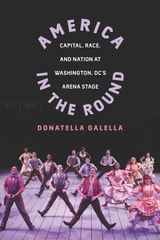
America in the Round
Capital, Race, and Nation at Washington D.C.'s Arena StageDonatella Galella
University of Iowa Press, 2019
Washington D.C.’s Arena Stage was the first professional regional theatre in the nation’s capital to welcome a racially integrated audience; the first to perform behind the Iron Curtain; and the first to win the Tony Award for best regional theatre. This behind-the-scenes look at one of the leading theatres in the United States shows how key financial and artistic decisions were made, using a range of archival materials such as letters and photographs as well as interviews with artists and administrators. Close-ups of major productions from The Great White Hope to Oklahoma! illustrate how Arena Stage navigated cultural trends.
More than a chronicle, America in the Round is a critical history that reveals how far the theatre could go with its budget and racially liberal politics, and how Arena both disputed and duplicated systems of power. With an innovative “in the round” approach, the narrative simulates sitting in different parts of the arena space to see the theatre through different lenses—economics, racial dynamics, and American identity.

America on the World Stage
A Global Approach to U.S. HistoryOrganization of American Historians. Edited by Gary Reichard and Ted Dickson
University of Illinois Press, 2007
Recognizing the urgent need for students to understand the emergence of the United States' power and prestige in relation to world events, Gary W. Reichard and Ted Dickson reframe the teaching of American history in a global context. Each essay covers a specific chronological period and approaches fundamental topics and events in United States history from an international perspective, emphasizing how the development of the United States has always depended on its transactions with other nations for commodities, cultural values, and populations. For each historical period, the authors also provide practical guidance on bringing this international approach to the classroom, with suggested lesson plans and activities. Ranging from the colonial period to the civil rights era and everywhere in between, this collection will help prepare Americans for success in an era of global competition and collaboration.
Contributors are David Armitage, Stephen Aron, Edward L. Ayers, Thomas Bender, Stuart M. Blumin, J. D. Bowers, Orville Vernon Burton, Lawrence Charap, Jonathan Chu, Kathleen Dalton, Betty A. Dessants, Ted Dickson, Kevin Gaines, Fred Jordan, Melvyn P. Leffler, Louisa Bond Moffitt, Philip D. Morgan, Mark A. Noll, Gary W. Reichard, Daniel T. Rodgers, Leila J. Rupp, Brenda Santos, Gloria Sesso, Carole Shammas, Suzanne M. Sinke, Omar Valerio-Jimenez, Penny M. Von Eschen, Patrick Wolfe, and Pingchao Zhu.
America the Middlebrow
Women's Novels, Progressivism, and Middlebrow Authorship between the WarsJaime Harker
University of Massachusetts Press, 2007
Between the two world wars, American publishing entered a “golden age” characterized by an explosion of new publishers, authors, audiences, distribution strategies, and marketing techniques. The period was distinguished by a diverse literary culture, ranging from modern cultural rebels to working-class laborers, political radicals, and progressive housewives. In America the Middlebrow, Jaime Harker focuses on one neglected mode of authorship in the interwar period—women's middlebrow authorship and its intersection with progressive politics.
With the rise of middlebrow institutions and readers came the need for the creation of the new category of authorship. Harker contends that these new writers appropriated and adapted a larger tradition of women's activism and literary activity to their own needs and practices. Like sentimental women writers and readers of the 1850s, these authors saw fiction as a means of reforming and transforming society. Like their Progressive Era forebears, they replaced religious icons with nationalistic images of progress and pragmatic ideology. In the interwar period, this mode of authorship was informed by Deweyan pragmatist aesthetics, which insisted that art provided vicarious experience that could help create humane, democratic societies.
Drawing on letters from publishers, editors, agents, and authors, America the Middlebrow traces four key moments in this distinctive culture of letters through the careers of Dorothy Canfield, Jessie Fauset, Pearl Buck, and Josephine Herbst. Both an exploration of a virtually invisible culture of letters and a challenge to monolithic paradigms of modernism, the book offers fresh insight into the ongoing tradition of political domestic fiction that flourished between the wars.
America, Compromised
Lawrence Lessig
University of Chicago Press, 2018
So begins Lawrence Lessig's sweeping indictment of contemporary American institutions and the corruption that besets them. We can all see it—from the selling of Congress to special interests to the corporate capture of the academy. Something is wrong. It’s getting worse.
And it’s our fault. What Lessig shows, brilliantly and persuasively, is that we can’t blame the problems of contemporary American life on bad people, as our discourse all too often tends to do. Rather, he explains, “We have allowed core institutions of America’s economic, social, and political life to become corrupted. Not by evil souls, but by good souls. Not through crime, but through compromise.” Every one of us, every day, making the modest compromises that seem necessary to keep moving along, is contributing to the rot at the core of American civic life. Through case studies of Congress, finance, the academy, the media, and the law, Lessig shows how institutions are drawn away from higher purposes and toward money, power, quick rewards—the first steps to corruption.
Lessig knows that a charge so broad should not be levied lightly, and that our instinct will be to resist it. So he brings copious, damning detail gleaned from years of research, building a case that is all but incontrovertible: America is on the wrong path. If we don’t acknowledge our own part in that, and act now to change it, we will hand our children a less perfect union than we were given. It will be a long struggle. This book represents the first steps.
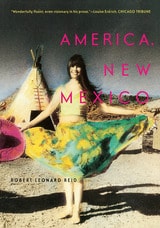
America, New Mexico
Robert Leonard Reid
University of Arizona Press, 1998
America, the Dream of My Life
Selections from the Federal Writers' Project's New Jersey Ethnic SurveyCohen, David Steven
Rutgers University Press, 1990
America
Exploration and TravelSteven E. Kagel
University of Wisconsin Press, 1979
Travel gets us from one place to another—often with wonderful attendant enjoyment–but exploration makes us understand our travel, the places we travel to—and ourselves. The essays in this collection constitute a major step toward this understanding. They open up new areas for concern and draw many valuable insights and conclusions.
American Indian Languages
Cultural and Social ContextsShirley Silver and Wick R. Miller
University of Arizona Press, 1997
Authors Silver and Miller demonstrate the complexity and diversity of these languages while dispelling popular misconceptions. Their text reveals the linguistic richness of languages found throughout the Americas, emphasizing those located in the western United States and Mexico, while drawing on a wide range of other examples found from Canada to the Andes. It introduces readers to such varied aspects of communicating as directionals and counting systems, storytelling, expressive speech, Mexican Kickapoo whistle speech, and Plains sign language.
The authors have included basics of grammar and historical linguistics, while emphasizing such issues as speech genres and other sociolinguistic issues and the relation between language and worldview. They have incorporated a variety of data that have rarely or never received attention in nontechnical literature in order to underscore the linguistic diversity of the Americas, and have provided more extensive language classification lists than are found in most other texts.
American Indian Languages: Cultural and Social Contexts is a comprehensive resource that will serve as a text in undergraduate and lower-level graduate courses on Native American languages and provide a useful reference for students of American Indian literature or general linguistics. It also introduces general readers interested in Native Americans to the amazing diversity and richness of indigenous American languages.
Coverage includes:
Achumawi, Acoma, Algonquin, Apache, Araucanian, Arawakan, Athapascan, Atsugewi, Ayamara, Bacairi, Bella Coola, Beothuk, Biloxi, Blackfoot, Caddoan, Cahto, Cahuilla, Cakchiquel, Carib, Cayuga, Chemehuevi, Cherokee, Chibchan, Chichimec, Chimakuan, Chimariko, Chinook, Chipewyan, Choctaw-Chickasaw, Chol, Cocopa, Coeur d'Alene, Comanche, Coos, Cora, Cree, Creek, Crow, Cubeo, Cupeño, Dakota, Delaware, Diegueño, Eskimo-Aleut, Esselen, Eyak, Fox, Gros Ventre, Guaraní, Guarijío, Haida, Havasupai, Hill Patwin, Hopi, Huastec, Huave, Hupa, Inuit-Inupiaq, Iroquois, Jaqaru, Je, Jicaque, Kalapuyan, Kamia, Karankawas, Karuk, Kashaya, Keres, Kickapoo, Kiliwa, Kiowa-Tanoan, Koasati, Konkow, Kuna, Kwakiutl, Kwalhioqua-Tlatskanai, Lakota, Lenca, Luiseño, Maidu, Mapuche, Markoosie, Mayan, Mazahua, Mazatec, Métis, Mexica, Micmac, Misumalpan, Mitchif, Miwok, Mixe-Zoquean, Mixtec, Mobilian, Mohave, Mohawk, Muskogean, Nahuatl, Natchez, Navajo, Nez Perce, Nheengatú, Nicola, Nomlaki, Nootka, Ojibwa, Oneida, O'odham, Otomí, Paiute, Palaihnihan, Panamint, Panoan, Paya, Pima, Pipil, Pomo, Poplocan, Pueblo, Puquina, Purpecha, Quechua, Quiché, Quileute, Sahaptian, Salish, Seneca, Sequoyah, Seri, Serrano, Shasta, Shoshoni, Sioux, Sirenikski, Slavey, Subtiaba-Tlapanec, Taíno, Takelma, Tanaina, Tarahumara, Tequistlatecan, Tewa, Tlingit, Toba, Toltec, Totonac, Tsimshian, Tubatulabal, Tukano, Tunica, Tupí, Ute, Uto-Aztecan, Vaupés, Venture¤o, Wakashan, Walapai, Wappo, Washo, Wintu, Wiyot, Xinca, Yahi, Yana, Yokuts, Yucatec, Yuchi, Yuki, Yuma, Yurok, Zapotec, Zoquean, and Zuni.

American Pentimento
The Invention of Indians and the Pursuit of RichesPatricia Seed
University of Minnesota Press, 2001

Amerikanuak
Basques In The New WorldWilliam A. Douglass
University of Nevada Press, 2005

An Athletic Director’s Story and the Future of College Sports in America
Robert E. Mulcahy
Rutgers University Press, 2020
His words and actions were prominent during a nationally-reported incident involving student athletes. When the Rutgers Women’s Basketball team players were slandered by racist remarks from a popular radio talk show host, Mulcahy met it head on. With the coach and players, he set an inspiring example for defending character and values.
Though Mr. Mulcahy left Rutgers in 2009, his memoir reflects continued devotion to intercollegiate athletics and student athletes. His insights for addressing several leading issues confronting Division I sports today offer guidelines for present and future athletic directors to follow.

An Essay for Ezra
Racial Terror in AmericaGrant Farred
University of Minnesota Press, 2021
An intensely personal, and philosophical, account of why white America’s racial unconscious is not so unconscious
An Essay for Ezra is a critique of terror that begins but by no means ends with the presidency of Donald J. Trump. A father addresses his son and a boy shares his observations in a dynamic dialogistic exchange that is a commentary of and for its time, taking the measure of racial terror and of white supremacy both in our moment and as a historical phenomenon.
Framed through the experiences of the author’s biracial son, An Essay for Ezra is intensely personal while also powerfully universal. Drawing on the social and political thought of James Baldwin and Martin Luther King, Grant Farred examines the temptation and the perils of essentialism and the need to discriminate—to engage the black mind as much as the black body. With that dialectic as his starting point, Farred engages the ideas of Jameson, Barthes, Derrida, Adorno, Kant, and other thinkers to derive an ethics of being in our time of social peril. His antiessentialist racial analysis is salient, especially when he deploys Dave Chappelle as a counterpoint to Baldwin—and Chappelle’s brilliant comic philosophic voice jabs at both racial and gender identity.
Standing apart for its willingness to explore terror in all its ambivalence, this theoretical reflection on racism, knowledge, ethics, and being in our neofascist present brings to bear the full weight of philosophical inquiry and popular cultural critique on black life in the United States.
An Unformed Map
Geographies of Belonging between Africa and the CaribbeanPhilip Janzen
Duke University Press, 2025
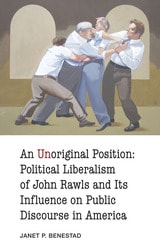
An Unoriginal Position
Political Liberalism of John Rawls and Its Influence on Public Discourse in AmericaJanet P. Benestad
St. Augustine's Press, 2026