Results by title
4038 books match the query 'Social aspects' and 711 start with t
The Thinking Woman
Julienne van Loon
Rutgers University Press, 2021
While women have struggled to gain recognition in the discipline of philosophy, there is no shortage of brilliant female thinkers. What can these women teach us about ethics, politics, and the nature of existence, and how might we relate these big ideas back to the smaller everyday concerns of domestic life, work, play, love, and relationships?
Australian novelist Julienne van Loon goes on a worldwide quest to answer these questions, by engaging with eight world-renowned thinkers who have deep insights on humanity and society: media scholar Laura Kipnis, novelist Siri Hustvedt, political philosopher Nancy Holmstrom, psychoanalytic theorist Julia Kristeva, domestic violence reformer Rosie Batty, peace activist Helen Caldicott, historian Marina Warner, and feminist philosopher Rosi Braidotti. As she speaks to these women, she reflects on her own experiences. Combining the intimacy of a memoir with the intellectual stimulation of a theoretical text, The Thinking Woman draws novel connections between the philosophical, personal, and political. Giving readers a new appreciation for both the ethical complexities and wonder of everyday life, this book is inspiration to all thinking people.
The Thirty-Year War
A History of Detroit's Streetcars, 1892–1922Neil J. Lehto
Michigan State University Press, 2017
The Time beneath the Concrete
Palestine between Camp and ColonyNasser Abourahme
Duke University Press, 2025
The Time of Laughter
Comedy and the Media Cultures of JapanDavid Humphrey
University of Michigan Press, 2023
The Tour Guide
Walking and Talking New YorkJonathan R. Wynn
University of Chicago Press, 2011
Everyone wants to visit New York at least once. The Big Apple is a global tourist destination with a dizzying array of attractions throughout the five boroughs. The only problem is figuring out where to start—and that’s where the city’s tour guides come in.
These guides are a vital part of New York’s raucous sidewalk culture, and, as The Tour Guide reveals, the tours they offer are as fascinatingly diverse—and eccentric—as the city itself. Visitors can take tours that cover Manhattan before the arrival of European settlers, the nineteenth-century Irish gangs of Five Points, the culinary traditions of Queens, the culture of Harlem, or even the surveillance cameras of Chelsea—in short, there are tours to satisfy anyone’s curiosity about the city’s past or present. And the guides are as intriguing as the subjects, we learn, as Jonathan R. Wynn explores the lives of the people behind the tours, introducing us to office workers looking for a diversion from their desk jobs, unemployed actors honing their vocal skills, and struggling retirees searching for a second calling. Matching years of research with his own experiences as a guide, Wynn also lays bare the grueling process of acquiring an official license and offers a how-to guide to designing and leading a tour.
Touching on the long history of tour-giving across the globe as well as the ups and downs of New York’s tour guide industry in the wake of 9/11, The Tour Guide is as informative and insightful as the chatty, charming, and colorful characters at its heart.

The Tourist State
Performing Leisure, Liberalism, and Race in New ZealandMargaret Werry
University of Minnesota Press, 2011
No longer the dreary sheep farm at the end of the world, the New Zealand of the new millennium is a hot global ticket, heralded for its bicultural dynamism, laid-back lifestyle, and scenery extraordinary enough to pass for Tolkien’s Middle Earth. How this image was crafted is the story The Tourist State tells. In a series of narratives that address the embodied dimensions of biopolitics and explore the collision of race, performance, and the cultural poetics of the state, Margaret Werry exposes the real drama behind the new New Zealand, revealing how a nation was sold to the world—and to itself.
The story stretches back to the so-called Liberal Era at the beginning of the twentieth century, in which the young settler colony touted itself as the social laboratory of the world. Focusing on where tourism and liberal governmentality coincide, The Tourist State takes us from military diplomacy at the dawn of the American Pacific to the exotic blandishments of Broadway and Coney Island, from landscape preservation to health reform and town planning, from blockbuster film to knowledge economy policy.
Weaving together interpretive history, performance ethnography, and cultural criticism, Werry offers new ways to think about race and indigeneity—and about the role of human agency in state-making.
The Transit of Empire
Indigenous Critiques of ColonialismJodi A. Byrd
University of Minnesota Press, 2011
In 1761 and again in 1768, European scientists raced around the world to observe the transit of Venus, a rare astronomical event in which the planet Venus passes in front of the sun. In The Transit of Empire, Jodi A. Byrd explores how indigeneity functions as transit, a trajectory of movement that serves as precedent within U.S. imperial history. Byrd argues that contemporary U.S. empire expands itself through a transferable “Indianness” that facilitates acquisitions of lands, territories, and resources.
Examining an array of literary texts, historical moments, and pending legislations—from the Cherokee Nation of Oklahoma’s vote in 2007 to expel Cherokee Freedmen to the Native Hawaiian Government Reorganization bill—Byrd demonstrates that inclusion into the multicultural cosmopole does not end colonialism as it is purported to do. Rather, that inclusion is the very site of the colonization that feeds U.S. empire.
Byrd contends that the colonization of American Indian and indigenous nations is the necessary ground from which to reimagine a future where the losses of indigenous peoples are not only visible and, in turn, grieveable, but where indigenous peoples have agency to transform life on their own lands and on their own terms.

The Transsion Approach
Translating Chinese Mobile Technology in AfricaMiao Lu
University of Illinois Press, 2025

The Trials of Mrs. K.
Seeking Justice in a World with WitchesAdam Ashforth
University of Chicago Press, 2018
In The Trials of Mrs. K., Adam Ashforth studies this and similar stories of witchcraft that continue to circulate in Malawi. At the heart of the book is Ashforth’s desire to understand how claims to truth, the pursuit of justice, and demands for security work in contemporary Africa, where stories of witchcraft can be terrifying. Guiding us through the history of legal customs and their interactions with the court of public opinion, Ashforth asks challenging questions about responsibility, occult forces, and the imperfect but vital mechanisms of law. A beautifully written and provocative book, The Trials of Mrs. K. will be an essential text for understanding what justice means in a fragile and dangerous world.
The Triumph of Pleasure
Louis XIV and the Politics of SpectacleGeorgia J. Cowart
University of Chicago Press, 2008
With bold revisionist strokes, Cowart traces this strain of artistic dissent through the comedy-ballets of Jean-Baptiste Lully and Molière, the late operatic works of Lully and the operas of his sons, the opera-ballets of André Campra and his contemporaries, and the related imagery of Antoine Watteau’s well-known painting The Pilgrimage to Cythera. She contends that through a variety of means, including the parody of old-fashioned court entertainments, these works reclaimed traditional allegories for new ideological aims, setting the tone for the Enlightenment. Exploring these arts from the perspective of spectacle as it emerged from the court into the Parisian public sphere, Cowart ultimately situates the ballet and related genres as the missing link between an imagery of propaganda and an imagery of political protest.
The Triumph of the Therapeutic
Uses of Faith after FreudPhilip Rieff
University of Chicago Press, 1987
"A triumphantly successful exploration of certain key themes in cultural life. Rieff's incidental remarks are not only illuminating in themselves; they suggest whole new areas of inquiry."—Alasdair MacIntyre, Guardian
The Type V City
Codifying Material Inequity in Urban AmericaJeana Ripple
University of Texas Press, 2025
How building codes shaped material, social, and environmental landscapes in American cities.
Almost every American city contains neighborhoods dominated by wood frame construction—light, cheap, combustible, and requiring the lowest upfront investment of labor and material in the building industry. Known as a Type V (five) construction in the terminology of building codes, these buildings became ubiquitous in the American urban landscape thanks to the abundance of timber, housing affordability aspirations, and the adoption of a uniform code.
In The Type V City, Jeana Ripple examines the social and spatial history of building codes and material patterns in five cities—New York, Tampa, Chicago, Philadelphia, and Seattle—to reframe the stories of America’s building priorities, methods, negotiations, and assumptions. By examining the development of building materials and codes alongside the environmental, social, economic, and political context of each city’s development, Ripple reveals previously overlooked connections between the power structures underpinning regulatory evolution and the impacts that lay just beyond the frame of city builders’ priorities. Handsomely illustrated and informed by both archival research and insights enabled by contemporary data analysis, The Type V City critiques the homogenous construction practices underlying US urbanization and raises pointed questions for future generations of data-driven city planners and architects.
The Uncaring, Intricate World
A Field Diary, Zambezi Valley, 1984-1985Pamela Reynolds
Duke University Press, 2019
The Unequal Ocean
Living with Environmental Change along the Peruvian CoastMaximilian Viatori
University of Arizona Press, 2023
Tackling important subjects of global concern, the author presents a complex image of Peru’s global seascapes as historical spaces comprising precarious worlds that expose people, nonhuman species, and places to unequal levels of harm. He traces how powerful actors in Peru represent the ocean in ways that erase the systemic inequalities, histories of uneven development, and extractive violence that have shaped ocean life. These erasures underscore the need for alternative representations of the ocean that highlight the engagements and commitments that make oceanic ecologies possible, as well as the material relationships and unequal positions of different people and species within them.
The author analyzes a multitude of timely topics, including waves and coastal development, the circulation of ocean waste, El Niño warming events, and the extraction of jumbo squid. This book also addresses expanding scholarly interest in the world’s oceans as sites for thinking about social inequities, environmental politics, and multispecies relationships.
The University and Social Justice
Struggles Across the GlobeAziz Choudry
Pluto Press, 2020
Whether calling for the decommodification or the decolonization of education, many of these struggles have attempted to draw on (and in turn, resonate with) longer histories of popular resistance, broader social movements and radical visions of a fairer world. In this critical collection, Aziz Choudry, Salim Vally and a host of international contributors bring grounded, analytical accounts of diverse struggles relating to higher education into conversation with each other.
Featuring contributions written by students and staff members on the frontline of struggles from 12 different countries, including Canada, Chile, France, India, Mexico, Nigeria, Occupied Palestine, the Philippines, South Africa, Turkey, the UK and the USA, the book asks what can be learned from these movements' strategies, demands and visions.
The Unruly Dead
Spirits, Memory, and State Formation in Timor-LesteLia Kent
University of Wisconsin Press, 2024
With generous, careful ethnography and incisive analysis, Kent challenges comfortable, linear narratives of transitional justice and argues that this memory work is reshaping the East Timorese social and political order—a process in which the dead are active, and sometimes disruptive, participants. Community ties and even the landscape itself are imbued with their presence and demands, and the horrific scale of mass death in recent times—at least a third of the population perished during the Indonesian occupation—means Timor-Leste’s dead have real, significant power in the country’s efforts to remember, recover, and reestablish itself.
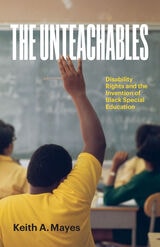
The Unteachables
Disability Rights and the Invention of Black Special EducationKeith A. Mayes
University of Minnesota Press, 2023
How special education used disability labels to marginalize Black students in public schools
The Unteachables examines the overrepresentation of Black students in special education over the course of the twentieth century. As African American children integrated predominantly white schools, many were disproportionately labeled educable mentally retarded (EMR), learning disabled (LD), and emotionally behavioral disordered (EBD). Keith A. Mayes charts the evolution of disability categories and how these labels kept Black learners segregated in American classrooms.
The civil rights and the educational disability rights movements, Mayes shows, have both collaborated and worked at cross-purposes since the beginning of school desegregation. Disability rights advocates built upon the opportunity provided by the civil rights movement to make claims about student invisibility at the level of intellectual and cognitive disabilities. Although special education ostensibly included children from all racial groups, educational disability rights advocates focused on the needs of white disabled students, while school systems used disability discourses to malign and marginalize Black students.
From the 1940s to the present, social science researchers, policymakers, school administrators, and teachers have each contributed to the overrepresentation of Black students in special education. Excavating the deep-seated racism embedded in both the public school system and public policy, The Unteachables explores the discriminatory labeling of Black students, and how it indelibly contributed to special education disproportionality, to student discipline and push-out practices, and to the school-to-prison pipeline effect.

The Upright Farmer
Racial Capitalism and Agricultural Modernization in Burkina FasoJessie K. Luna
Duke University Press, 2026
The Urban Grotesque
Life and Debt in JakartaDoreen Lee
Duke University Press, 2025

The Urbanization of Opera
Music Theater in Paris in the Nineteenth CenturyAnselm Gerhard
University of Chicago Press, 1998
"An invaluable look at this fascinating genre."—George W. Loomis, Opera News
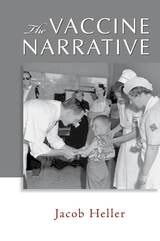
The Vaccine Narrative
Jacob Heller
Vanderbilt University Press, 2008
The author examines four cases that span the twentieth century--diphtheria, rubella, pertussis, and HIV/AIDS. Each case challenges the reader to examine how the values we attribute to vaccines influence their use. Diphtheria vaccination brought laboratory science into an existing narrative based on earlier vaccines. With rubella vaccine, researchers efficiently responded to an epidemic of birth defects while subtly changing the relationship between vaccination recipients and beneficiaries. Opposition to pertussis vaccine from average Americans created a narrative crisis, in which faith in vaccination as a whole seemed to be at risk. With more recent vaccines, including a hoped-for HIV/AIDS vaccine, the persistent cultural narrative continues to encourage vaccine development and use.
The Value Gap
Female-Driven Films from Pitch to PremiereCourtney Brannon Donoghue
University of Texas Press, 2023
How female directors, producers, and writers navigate the challenges and barriers facing female-driven projects at each stage of filmmaking in contemporary Hollywood.
Conversations about gender equity in the workplace accelerated in the 2010s, with debates inside Hollywood specifically pointing to broader systemic problems of employment disparities and exploitative labor practices. Compounded by the devastating #MeToo revelations, these problems led to a wide-scale call for change. The Value Gap traces female-driven filmmaking across development, financing, production, film festivals, marketing, and distribution, examining the realities facing women working in the industry during this transformative moment. Drawing from five years of extensive interviews with female producers, writers, and directors at different stages of their careers, Courtney Brannon Donoghue examines how Hollywood business cultures “value” female-driven projects as risky or not bankable. Industry claims that “movies targeting female audiences don’t make money” or “women can’t direct big-budget blockbusters” have long circulated to rationalize systemic gender inequities and have served to normalize studios prioritizing the white male–driven status quo. Through a critical media industry studies lens, The Value Gap challenges this pervasive logic with firsthand accounts of women actively navigating the male-dominated and conglomerate-owned industrial landscape.
The Victorian Eye
A Political History of Light and Vision in Britain, 1800-1910Chris Otter
University of Chicago Press, 2008
The Victorian Eye’s innovative interdisciplinary approach—and generous illustrations—will captivate a range of readers interested in the history of modern Britain, visual culture, technology, and urbanization.
The Victorious Counterrevolution
The Nationalist Effort in the Spanish Civil WarMichael Seidman
University of Wisconsin Press, 2011
This groundbreaking history of the Spanish Civil War (1936–39) examines, for the first time in any language, how General Francisco Franco and his Nationalist forces managed state finance and economic production, and mobilized support from elites and middle-class Spaniards, to achieve their eventual victory over Spanish Republicans and the revolutionary left.
The Spanish Nationalists are exceptional among counter-revolutionary movements of the twentieth century, Michael Seidman demonstrates, because they avoided the inflation and shortages of food and military supplies that stymied not only their Republican adversaries but also their counter-revolutionary counterparts—the Russian Whites and Chinese Nationalists. He documents how Franco’s highly repressive and tightly controlled regime produced food for troops and civilians; regular pay for soldiers, farmers, and factory workers; and protection of property rights for both large and small landowners. These factors, combined with the Nationalists’ pro-Catholic and anti-Jewish propaganda, reinforced solidarity in the Nationalist zone.
Seidman concludes that, unlike the victorious Spanish Nationalists, the Russian and Chinese bourgeoisie were weakened by the economic and social upheaval of the two world wars and succumbed in each case to the surging revolutionary left.
The Vinyl Ain't Final
Hip Hop and the Globalization of Black Popular CultureDipannita Basu and Sidney Lemelle
Pluto Press, 2006
From the front lines of hip hop culture and music in the USA, Britain, France, Japan, Germany, Hawaii, Tanzania, Cuba, Samoa and South Africa, academics, poets, practitioners, journalists, and political commentators explore hip hop -- both as a culture and as a commodity. From the political economy of the South African music industry to the cultural resistance forged by Afro-Asian hip hop, this potent mix of contributors provides a unique critical insight into the implications of hip hop globally and locally. Indispensable for fans of hip hop culture and music, this book will also appeal to anyone interested in cultural production, cultural politics and the implications of the huge variety of forms hip hop encompasses.
Dipa Basu is and Associate Professor of Sociology and Black Studies at Pitzer College, Claremont, California. Her recent publications include 'Sociology of the Color Line' in Peter Ratcliffe, ed. The Politics of Social Science Research: Race, Ethnicity and Social Change (Palgrave Press, 2001).
Sidney Lemelle is an Associate Professor of Black Studies at Pomona College, Claremont, California. He has co-edited with Robin D.G Kelley, Imagining Home: Class, Culture and Nationalism in the African Diaspora (Verso, 1994).
The Violence of the Letter
Toward a Theory of WritingMelanie McMahon
University of Michigan Press, 2023
Co-Winner of the 2024 ACLA Renè Wellek Prize for Monograph
The emergence of the alphabet in ancient Greece, usually heralded as the first step in the inexorable march toward reason and progress, in fact signaled the introduction of a chance technology that hijacked the future, with devastating consequences for humanity. By investigating an array of cultural artifacts, ranging from Kubrick's 2001: A Space Odyssey to the Oracle at Delphi to Luther's challenge to the Church, this book demonstrates how the apparently benign emergence of writing made possible far-ranging systems of organized domination and unprecedented levels of violence. The Violence of the Letter considers how a twenty-six-letter code changed the face of the world, and not always for the better.
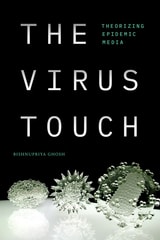
The Virus Touch
Theorizing Epidemic MediaBishnupriya Ghosh
Duke University Press, 2023
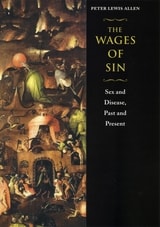
The Wages of Sin
Sex and Disease, Past and PresentPeter Lewis Allen
University of Chicago Press, 2000
Throughout history, Western society has often viewed sickness as a punishment for sin. It has failed to prevent and cure diseases—especially diseases tied to sex—that were seen as the retribution of a wrathful God. The Wages of Sin, the remarkable history of these diseases, shows how society's views of particular afflictions often heightened the suffering of the sick and substituted condemnation for care. Peter Allen moves from the medieval diseases of lovesickness and leprosy through syphilis and bubonic plague, described by one writer as "a broom in the hands of the Almighty, with which He sweepeth the most nasty and uncomely corners of the universe." More recently, medical and social responses to masturbation in the eighteenth and nineteenth centuries and AIDS in the twentieth round out Allen's timely and erudite study of the intersection of private morality and public health. The Wages of Sin tells the fascinating story of how ancient views on sex and sin have shaped, and continue to shape, religious life, medical practice, and private habits.
The Walking Wounded
Festering and Ricocheting Trauma After Gun ViolenceJooyoung Lee
University of Chicago Press, 2026
Gun violence is a plague in the United States; even survivors experience suffering that wreaks havoc on their lives and our communities. Although excellent emergency trauma care means that 80 percent of shooting victims do not die from their injuries, surviving is only the first step. Most survivors then find themselves trapped in health care and judicial systems that only amplify their pain, trauma, and uncertainty.
In The Walking Wounded, Jooyoung Lee invites readers into the hospitals, courtrooms, and homes where gunshot victims struggle to rebuild their lives. Drawing from years of fieldwork in Philadelphia, Lee shows how victims’ injuries fester into new problems over time in the absence of meaningful follow-up care. Attempting routine tasks with a wounded body reminds survivors that they are no longer who they used to be—both physically and socially. Lee shows how trauma ricochets through victims’ worlds as their injuries also affect their family and friends. To make matters worse, Lee argues, existing government safety nets place victims into ever more precarious circumstances that compound their suffering.
In the face of health care and judicial systems that fail wounded people, Lee urges a sensible and sensitive rehabilitative process aimed at equipping the walking wounded with ongoing care that aspires for more than mere survival: the regaining of independent lives.
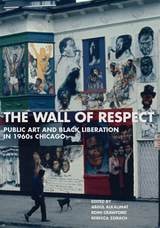
The Wall of Respect
Public Art and Black Liberation in 1960s ChicagoEdited by Abdul Alkalimat, Romi Crawford, and Rebecca Zorach
Northwestern University Press, 2017
The Wall of Respect received national critical acclaim when it was unveiled on the side of a building at Forty-Third and Langley in Chicago’s Bronzeville neighborhood. Painters and photographers worked side by side on the mural's seven themed sections, which featured portraits of Black heroes and sheroes, among them John Coltrane, Nina Simone, Billie Holiday, Malcolm X, Muhammad Ali, and W. E. B. Du Bois. The Wall became a platform for music, poetry, and political rallies. Over time it changed, reflecting painful controversies among the artists as well as broader shifts in the Civil Rights and Black Liberation Movements.
At the intersection of African American culture, politics, and Chicago art history, The Wall of Respect offers, in one keepsake-quality work, an unsurpassed collection of images and essays that illuminate a powerful monument that continues to fascinate artists, scholars, and readers in Chicago and across the United States.
The War Complex
World War II in Our TimeMarianna Torgovnick
University of Chicago Press, 2005
Marianna Torgovnick argues that we have lived, since the end of World War II, under the power of a war complex—a set of repressed ideas and impulses that stems from our unresolved attitudes toward the technological acceleration of mass death. This complex has led to gaps and hesitations in public discourse about atrocities committed during the war itself. And it remains an enduring wartime consciousness, one most recently animated on September 11.
Showing how different events from World War II became prominent in American cultural memory while others went forgotten or remain hidden in plain sight, The War Complex moves deftly from war films and historical works to television specials and popular magazines to define the image and influence of World War II in our time. Torgovnick also explores the 1961 trial of Adolf Eichmann, the emotional legacy of the Holocaust, and the treatment of World War II's missing history by writers such as W. G. Sebald to reveal the unease we feel at our dependence on those who hold the power of total war. Thinking anew, then, about how we account for war to each other and ourselves, Torgovnick ultimately, and movingly, shows how these anxieties and fears have prepared us to think about September 11 and our current war in Iraq.
The War at Home
Perspectives on the Arkansas Experience during World War IMark K. Christ
University of Arkansas Press, 2020
The War in American Culture
Society and Consciousness during World War IIEdited by Lewis A. Erenberg and Susan E. Hirsch
University of Chicago Press, 1996
World War II posed a crisis for American culture: to defeat the enemy, Americans had to unite across the class, racial and ethnic boundaries that had long divided them. Exploring government censorship of war photography, the revision of immigration laws, Hollywood moviemaking, swing music, and popular magazines, these essays reveal the creation of a new national identity that was pluralistic, but also controlled and sanitized. Concentrating on the home front and the impact of the war on the lives of ordinary Americans, the contributors give us a rich portrayal of family life, sexuality, cultural images, and working-class life in addition to detailed consideration of African Americans, Latinos, and women who lived through the unsettling and rapidly altered circumstances of wartime America.
The War of My Generation
Youth Culture and the War on TerrorKieran, David
Rutgers University Press, 2015
The War of My Generation is the first essay collection to focus specifically on how the terrorist attacks and their aftermath have shaped these new generations of Americans. Drawing from a variety of disciplines, including anthropology, sociology, cultural studies, and literary studies, the essays cover a wide range of topics, from graphic war images in the classroom to computer games designed to promote military recruitment to emails from parents in the combat zone. The collection considers what cultural factors and products have shaped young people's experience of the 9/11 attacks, the wars that have followed, and their experiences as emerging citizen-subjects in that moment. Revealing how young people understand the War on Terror—and how adults understand the way young people think—The War of My Generation offers groundbreaking research on catastrophic events still fresh in our minds.
The War on Drugs and the Global Colour Line
Edited by Kojo Koram
Pluto Press, 2019
While laws prohibiting the production, sale and use of particular drugs are presented as politically neutral and objective, this collection reveals the racist impact of the War on Drugs across multiple continents and in numerous situations. From racialised drugs policing at festivals in the UK to the necropolitical wars in Juarez, Mexico and from the exchange of drug policing programs between the United States and Israel to the management of black bodies in Brazil, this collection proves that the regulation of drugs and race is an international, and intentional, disaster.
Pushing forward the debate and activism led by groups such as Black Lives Matter and calling for radical changes in drug policy legislation and prison reform, both nationally and internationally, this collection cuts deep and rings true for all people fighting racism today.
The War on Words
Slavery, Race, and Free Speech in American LiteratureMichael T. Gilmore
University of Chicago Press, 2010
How did slavery and race impact American literature in the nineteenth century? In this ambitious book, Michael T. Gilmore argues that they were the carriers of linguistic restriction, and writers from Frederick Douglass to Stephen Crane wrestled with the demands for silence and circumspection that accompanied the antebellum fear of disunion and the postwar reconciliation between the North and South.
Proposing a radical new interpretation of nineteenth-century American literature, The War on Words examines struggles over permissible and impermissible utterance in works ranging from Thoreau’s “Civil Disobedience” to Henry James’s The Bostonians. Combining historical knowledge with groundbreaking readings of some of the classic texts of the American past, The War on Words places Lincoln’s Cooper Union address in the same constellation as Margaret Fuller’s feminism and Thomas Dixon’s defense of lynching. Arguing that slavery and race exerted coercive pressure on freedom of expression, Gilmore offers here a transformative study that alters our understanding of nineteenth-century literary culture and its fraught engagement with the right to speak.
The Warehouse
Workers and Robots at AmazonAlessandro Delfanti
Pluto Press, 2021
'Work hard, have fun, make history' proclaims the slogan on the walls of Amazon's warehouses. This cheerful message hides a reality of digital surveillance, aggressive anti-union tactics and disciplinary layoffs. Reminiscent of the tumult of early industrial capitalism, the hundreds of thousands of workers who help Amazon fulfil consumers' desire are part of an experiment in changing the way we all work.
In this book, Alessandro Delfanti takes readers inside Amazon's warehouses to show how technological advancements and managerial techniques subdue the workers rather than empower them, as seen in the sensors that track workers' every movement around the floor and algorithmic systems that re-route orders to circumvent worker sabotage. He looks at new technologies including robotic arms trained by humans and augmented reality goggles, showing that their aim is to standardize, measure and discipline human work rather than replace it.
Despite its innovation, Amazon will always need living labor's flexibility and low cost. And as the warehouse is increasingly automated, worker discontent increases. Striking under the banner 'we are not robots', employees have shown that they are acutely aware of such contradictions. The only question remains: how long will it be until Amazon's empire collapses?

The West Side Carbondale, Pennsylvania Mine Fire
Kathleen Purcell Munley
University of Scranton Press, 2010
In early 1947 residents of the west side of Carbondale, Pennsylvania began noticing a peculiar steam escaping from the ground. An investigation into this phenomenon revealed that Carbondale was slowly but steadily being destroyed by a burning inferno deep below its surface—a fire raging through the deserted anthracite coal mine shafts that twisted and turned beneath that part of the city. After several years of attempting to contain the fire by flushing, municipal leaders decided that the only sure way of eliminating the threat to the community was by digging it out. To eradicate the burning menace, hundreds of homes and buildings were purchased and destroyed, and what was once a vibrant neighborhood became an abandoned wasteland.
Historian Kathleen Purcell Munley narrates here the story of this great fire, identifying its source, tracing its history, and, through personal interviews with former Carbondale residents, reveals its physical and psychological toll. The mine fire destroyed the West Side as it was, but this volume will keep its memory alive and preserve an important chapter in the history of Carbondale and Pennsylvania.
The Whale and the Reactor
A Search for Limits in an Age of High Technology, Second EditionLangdon Winner
University of Chicago Press, 2020
First published to great acclaim in 1988, Langdon Winner’s groundbreaking exploration of the political, social, and philosophical implications of technology is timelier than ever. He demonstrates that choices about the kinds of technical systems we build and use are actually choices about who we want to be and what kind of world we want to create—technical decisions are political decisions, and they involve profound choices about power, liberty, order, and justice. A seminal text in the history and philosophy of science, this new edition includes a new chapter, preface, and postscript by the author.
The White African American Body
Martin, Charles D.
Rutgers University Press, 2002
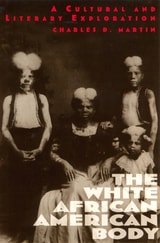
Blacks with white skin. Since colonial times, showmen have exhibited the bodies of African Americans with white or gradually whitening skin in taverns, dime museums, and circus sideshows. The term "white Negro" has served to describe an individual born with albinism as well as those who have vitiligo, a disorder that robs the skin of its pigment in ever-growing patches. In The White African American Body, Charles D. Martin examines the proliferation of the image of the white Negro in American popular culture, from the late eighteenth century to the present day.
This enigmatic figure highlights the folly of the belief in immutable racial differences. If skin is a race marker, what does it mean for blacks literally to be white? What does this say not only about blacks but also about whites? Scientists have probed this mystery, philosophers have pondered its meaning, and artists have profited from the sale of images of these puzzling figures.
Lavishly illustratedwith many rarely seen photographsThe White African American Body shows how the white Negro occupied, and still occupies, the precarious position between white and black, and how this figure remains resilient in American culture.

The White Plague
Tuberculosis, Man and SocietyDubos, Jean
Rutgers University Press, 1987
In The White Plague, René and Jean Dubos argue that the great increase of tuberculosis was intimately connected with the rise of an industrial, urbanized society and—a much more controversial idea when this book first appeared forty years ago—that the progress of medical science had very little to do with the marked decline in tuberculosis in the twentieth century.
The White Plague has long been regarded as a classic in the social and environmental history of disease. This reprint of the 1952 edition features new introductory writings by two distinguished practitioners of the sociology and history of medicine. David Mechanic's foreword describes the personal and intellectual experience that shaped René Dubos's view of tuberculosis. Barbara Gutmann Rosenkrantz's historical introduction reexamines The White Plague in light of recent work on the social history of tuberculosis. Her thought-provoking essay pays particular attention to the broader cultural and medical assumptions about sickness and sick people that inform a society’s approach to the conquest of disease.
The White Savior Film
Content, Critics, and ConsumptionMatthew Hughey
Temple University Press, 2014
In The White Savior Film, Matthew Hughey provides a cogent, multipronged analysis of this subgenre of films to investigate the underpinnings of the Hollywood-constructed images of idealized (and often idealistic) white Americans.
Hughey considers the production, distribution, and consumption of white savior films to show how the dominant messages of sacrifice, suffering, and redemption are perceived by both critics and audiences. Examining the content of fifty films, nearly 3,000 reviews, and interviews with viewer focus groups, he accounts for the popularity of this subgenre and its portrayal of "racial progress."
The White Savior Film shows how we as a society create and understand these films and how they reflect the political and cultural contexts of their time.

The Witch Studies Reader
Soma Chaudhuri and Jane Ward, editors
Duke University Press, 2025
Contributors. Maria Amir, Ruth Asiimwe, Bernadette Barton, Ethel Brooks, Shelina Brown, Ruth Charnock, Soma Chaudhuri, Carolyn Chernoff, Saira Chhibber, Simon Clay, Krystal Cleary, Adrianna L. Ernstberger, Tina Escaja, Laurie Essig, Marcelitte Failla, D Ferrett, Marion Goldman, Jaime Hartless, Margaretha Haughwout, Patricia Humura, Apoorvaa Joshi, Govind Kelkar, Oliver Kellhammer, Ayça Kurtoğlu, Helen Macdonald, Isabel Machado, Brandy Renee McCann, Dev Nathan, Mary Jo Neitz, Amy Nichols-Belo, Allison (or AP) Pierce, Emma Quilty, Anna Rogel, Karen Schaller, Jacquelyn Marie Shannon, Shashank Shekhar Sinha, Gabriella V. Smith, Nathan Snaza, Shannon Hughes Spence, Eric Steinhart, Morena Tartari, Nicole Trigg, Katie Von Wald, Tushabe wa Tushabe, Jane Ward
The Women of Katrina
How Gender, Race, and Class Matter in an American DisasterEmmanuel David
Vanderbilt University Press, 2012
The Work of Art in the World
Civic Agency and Public HumanitiesDoris Sommer
Duke University Press, 2014
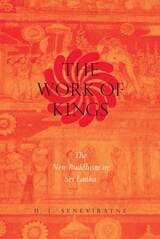
The Work of Kings
H. L. Seneviratne
University of Chicago Press, 2000
Beginning with Anagarika Dharmapala's "rationalization" of Buddhism in the early twentieth century, which called for monks to take on a more activist role in the community, Seneviratne shows how the monks have gradually revised their role to include involvement in political and economic spheres. The altruistic, morally pure monks of Dharamapala's dreams have become, Seneviratne trenchantly argues, self-centered and arrogant, concealing self-aggrandizement behind a façade of "social service."
A compelling call for reform and a forceful analysis, The Work of Kings is essential to anthropologists, historians of religion, and those interested in colonialism, nationalism, and postcolonial politics.
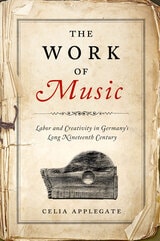
The Work of Music
Labor and Creativity in Germany's Long Nineteenth CenturyCelia Applegate
University of Wisconsin Press, 2025

The World Computer
Derivative Conditions of Racial CapitalismJonathan Beller
Duke University Press, 2021
The World is Watching
Dennis Redmond
Southern Illinois University Press, 2003
Evolving rapidly from the movie screen to the television screen to the computer screen, video culture has blossomed from its origins as an obscure spin-off of the 1960s Anglo-American media culture into one of the leading art forms of the late twentieth century. And as such, video culture has grown from being the dominion of small but dedicated cult followings to becoming a near mainstream cinematic interest. The World Is Watching: Video as Multinational Aesthetics, 1968–1995 explores the origins and implications of this powerful visual medium which crosses national, cultural, and political boundaries to present provocative tales of the highest quality. Dennis Redmond’s probing study is rooted in close readings of three stylish and highly successful video efforts—The Prisoner (1967), The Decalogue (1988), and Neon Genesis: Evangelion (1995).
Irish director and star Patrick McGoohan’s classic science fiction vision, The Prisoner, established many of the basic conventions of video for such elements as shot selection, set design, scripting, scoring, and editing techniques. In The Prisoner, a government agent has resigned his position only to be immediately abducted and confined to an isolated town. Thus imprisoned, the agent faces the sinister and surreal efforts of his captors to break him and learn the secret cause of his resignation. Saturated with Cold War allegory, this seventeen-part series was groundbreaking in its exploration of new types of global content, ranging from gender and ethnic identity to the politics of information. Part futuristic thriller, part James Bond parody, the cult series remains hugely popular among partisans of science fiction, and has had an indelible influence on its mainstream descendants.
Set in a Polish housing complex, each episode of The Decalogue examines one of the ten commandments. The provocative series synthesized elements of the Eastern European auteur film with the consumerism of its Western European counterparts, establishing the new genre of Eurovideo. Paying special attention to director Krzysztof Kieslowski's micropolitics of gender, as well as his innovations in scripting, lighting, and framing, Redmond locates The Decalogue within the broader context of Polish filmmaking and as a harbinger of the subsequent Velvet Revolutions of Eastern Europe. Now available on DVD for English-speaking audiences, The Decalogue remains a stunning specimen of video artistry.
Aided by transcripts that are far superior to the flawed English dubbing in some video versions, Redmond’s analysis of Hideaki Anno’s acclaimed television series Neon Genesis: Evangelion explores the increasingly popular narrative form of anime. This animated series is set in the post-apocalyptic future, where young pilots in robotic battle suits combat alien invaders. In discussing this twenty-six part epic undertaking, Redmond identifies the impact of the Godzilla narratives, videogame culture, the Japanese mecha, the Hong Kong action thriller and the American sci-fi blockbuster on the formation of a uniquely East Asian identity and aesthetic sensibility. Anime is proving itself to be exceedingly apt and able at crossing national borders and is now enjoying mass popularity among global audiences, thus making it an ideal subject for Redmond’s telling assessment of the impact of video culture worldwide.
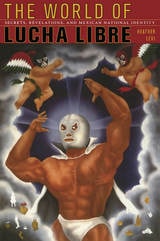
The World of Lucha Libre
Secrets, Revelations, and Mexican National IdentityHeather Levi
Duke University Press, 2008
Levi considers lucha libre in light of scholarship about sport, modernization, and the formation of the Mexican nation-state, and in connection to professional wrestling in the United States. She examines the role of secrecy in wrestling, the relationship between wrestlers and the characters they embody, and the meanings of the masks worn by luchadors. She discusses male wrestlers who perform masculine roles, those who cross-dress and perform feminine roles, and female wrestlers who wrestle each other. Investigating the relationship between lucha libre and the mass media, she highlights the history of the sport’s engagement with television: it was televised briefly in the early 1950s, but not again until 1991. Finally, Levi traces the circulation of lucha libre symbols in avant-garde artistic movements and its appropriation in left-wing political discourse. The World of Lucha Libre shows how a sport imported from the United States in the 1930s came to be an iconic symbol of Mexican cultural authenticity.