Results by title
5159 books match the query 'Biography' and 934 start with t
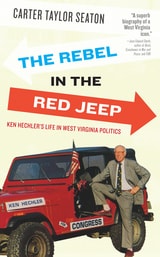
The Rebel in the Red Jeep
Ken Hechler's Life in West Virginia PoliticsCarter Taylor Seaton
West Virginia University Press, 2017
This biography recounts a century of accomplishments, from Hechler’s introduction of innovative teaching methods at major universities, to his work as a speechwriter and researcher for President Harry Truman, and finally to his time representing West Virginia in the US House of Representatives and as the secretary of state.
In West Virginia, where he resisted mainstream political ideology, Hechler was the principal architect behind the Federal Coal Mine Health and Safety Act of 1969 and constantly battled big coal, strip-mining, and fellow politicians alike. He and his signature red jeep remain a fixture in West Virginia. Since 2004, Hechler has campaigned against mountaintop removal mining. He was arrested for trespassing during a protest in 2009 at the age of 94.
The Reckoning
The Murder of Christopher MarloweCharles Nicholl
University of Chicago Press, 1995
Here, in a tour de force of scholarship and ingenuity, Charles Nicholl penetrates four centuries of obscurity to reveal not only a complex and unsettling story of entrapment and betrayal, chimerical plot and sordid felonies, but also a fascinating vision of the underside of the Elizabethan world.
"Provides the sheer enjoyment of fiction, and might just be true."—Michael Kenney, Boston Globe
"Mr. Nicholl's glittering reconstruction of Marlowe's murder is only one of the many fascinating aspects of this book. Indeed, The Reckoning is equally compelling for its masterly evocation of a vanished world, a world of Elizabethan scholars, poets, con men, alchemists and spies, a world of Machiavellian malice, intrigue and dissent."—Michiko Kakutani, New York Times
"The rich substance of the book is his detail, the thick texture of betrayal and evasion which was Marlowe's life."—Thomas Flanagan, Washington Post Book World
Winner of the Crime Writer's Gold Dagger Award for Nonfiction Thriller

The Red Caddy
Into the Unknown with Edward AbbeyBy Charles Bowden; foreword by Luis Alberto Urrea
University of Texas Press, 2018
A passionate advocate for preserving wilderness and fighting the bureaucratic and business forces that would destroy it, Edward Abbey (1927–1989) wrote fierce, polemical books such as Desert Solitaire and The Monkey Wrench Gang that continue to inspire environmental activists. In this eloquent memoir, his friend and fellow desert rat Charles Bowden reflects on Abbey the man and the writer, offering up thought-provoking, contrarian views of the writing life, literary reputations, and the perverse need of critics to sum up “what he really meant and whether any of it was truly up to snuff.”
The Red Caddy is the first literary biography of Abbey in a generation. Refusing to turn him into a desert guru, Bowden instead recalls the wild man in a red Cadillac convertible for whom liberty was life. He describes how Desert Solitaire paradoxically “launched thousands of maniacs into the empty ground” that Abbey wanted to protect, while sealing his literary reputation and overshadowing the novels that Abbey considered his best books. Bowden also skewers the cottage industry that has grown up around Abbey’s writing, smoothing off its rougher (racist, sexist) edges while seeking “anecdotes, little intimacies . . . pieces of the True Beer Can or True Old Pickup Truck.” Asserting that the real essence of Abbey will always remain unknown and unknowable, The Red Caddy still catches gleams of “the fire that from time to time causes a life to become a conflagration.”
The Red Earth
A Vietnamese Memoir of Life on a Colonial Rubber PlantationBinh Tu Tran
Ohio University Press, 1985
Phu Rieng was one of many French rubber plantations in colonial Vietnam; Tran Tu Binh was one of 17,606 laborers brought to work there in 1927, and his memoir is a straightforward, emotionally searing account of how one Vietnamese youth became involved in revolutionary politics. The connection between this early experience and later activities of the author becomes clear as we learn that Tran Tu Binh survived imprisonment on Con Son island to help engineer the general uprising in Hanoi in 1945.
The Red Earth is the first of dozens of such works by veterans of the 1924–45 struggle in Vietnam to be published in English translation. It is important reading for all those interested in the many-faceted history of modern Vietnam and of communism in the non-Western world.
The Redskins Encyclopedia
Michael Richman
Temple University Press, 2007
"Hail to the Redskins" and Redskin-mania have consumed the nation's capital since 1937, the Redskins' fist year in Washington. And the fervor remains as strong, if not stronger, today.
Amply illustrated with 200 photos of players, coaches, and fans, The Redskins Encyclopedia recounts the franchise's first 75 seasons, reliving the great -- and not so great -- moments in the team's storied history, and the men who helped make Sundays memorable.
Fans will read about:
--Coaches like George Allen, the eccentric, passionate man who left a legacy as an NFL pioneer, and Joe Gibbs, who formed a D-Y-N-A-S-T-Y
--Players like star running back and all-time Redskins ground-gainer John Riggins, who once told Supreme Court Justice Sandra Day O'Connor to "loosen up, Sandy baby," and Doug Williams, the first black quarterback to win a Super Bowl and Super Bowl MVP honors
--The franchise's golden run of four Super Bowl appearances -- and three wins -- in the 1980s and early 1990s
--The legendary Redskins-Cowboys rivalry
--A year-by-year history of the team from 1932 to the present, with stats from each season
--Individual profiles of more than 100 Redskins players -- from Sammy Baugh to Darrell Green to Art Monk to Sonny Jurgensen to Charley Taylor to Joe Theismann
With an unparalleled collection of anecdotes, quotes, trivia, and hard-to-find information, The Redskins Encyclopedia is a must-have book for any fan who has ever bled burgundy and gold.

The Reel Thrilling Events of Bank Robber Henry Starr
From Gentleman Bandit to Movie Star and Back AgainMark Archuleta
University of North Texas Press, 2025
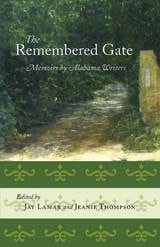
The Remembered Gate
Memoirs by Alabama WritersJay Lamar
University of Alabama Press, 2002
Nineteen acclaimed writers reflect on the Alabama landscapes, memories, and experiences that shaped their voices.
In The Remembered Gate, nationally prominent fiction writers, essayists, and poets recall how their formative years in Alabama shaped them as people and as writers. The essays range in tone from the pained and sorrowful to the wistful and playful, in class from the privileged to the poverty-stricken, in geography from the rural to the urban, and in time from the first years of the 20th century to the height of the Civil Rights era and beyond.
In all the essays we see how the individual artists came to understand something central about themselves and their art from a changing Alabama landscape. Whether from the perspective of C. Eric Lincoln, beaten for his presumption as a young black man asking for pay for his labors, or of Judith Hillman Paterson, floundering in her unresolved relationship with her troubled family, these personal renderings are intensely realized visions of a writer's sense of being a writer and a human being. Robert Inman tells of exploring his grandmother's attic, and how the artifacts he found there fired his literary imagination. William Cobb profiles the lasting influence of the town bully, the diabolical Cletus Hickey. And in “Growing up in Alabama: A Meal in Four Courses, Beginning with Dessert,” Charles Gaines chronicles his upbringing through the metaphor of southern cooking.
What emerges overall is a complex, richly textured portrait of men and women struggling with, and within, Alabama’s economic and cultural evolution to become major voices of our time.
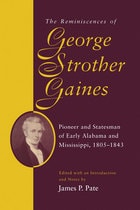
The Reminiscences of George Strother Gaines
Pioneer and Statesman of Early Alabama and Mississippi, 1805–1843George Strother Gaines
University of Alabama Press, 1998
One man’s remarkable account of nation‑building, Native diplomacy, and the making of the early American South.
The Reminiscences of George Strother Gaines: Pioneer and Statesman of Early Alabama and Mississippi, 1805–1843 offers one of the most vivid, irreplaceable firsthand accounts of the American Southeast during its most transformative decades. Edited and expertly contextualized by historian James P. Pate, this volume gathers Gaines’s dictated memoirs, rare letters, early newspaper publications, oral-history interviews, and extensive editorial notes to illuminate a world on the cusp of monumental change.
George Strother Gaines was no ordinary frontier figure. Trusted by U.S. officials and Choctaw leaders alike, he played central roles as federal factor at the Choctaw Trading House, a key intermediary during treaty negotiations, a primary organizer of the first Choctaw removal, a banker and state senator in newly formed Alabama, and later a driving force behind the Mobile & Ohio Railroad. His reminiscences reveal intimate knowledge of the region’s political development, frontier economy, Native diplomacy, and daily life. They are written in a strikingly elegant “Addisonian” style praised even in his own lifetime.
This edition’s special features—including detailed maps, illustrations, genealogical material, and a robust scholarly introduction—make it the most comprehensive and authoritative presentation of Gaines’s writings ever published. It not only preserves his voice but situates him within the broader historical forces reshaping the Gulf South and Native nations in the nineteenth century.
Ideal readers include:
• Historians of Alabama, Mississippi, and the early American South
• Scholars of Native American and Choctaw/Chickasaw history
• Readers of frontier, antebellum, or political history
• Genealogists and local-history enthusiasts
• Anyone seeking an engaging, elegantly written window into the early Southeast
This is a foundational text for understanding the region’s past—and a compelling story told by one of its most influential witnesses.
The Repression of Psychoanalysis
Otto Fenichel and the Political FreudiansRussell Jacoby
University of Chicago Press, 1986
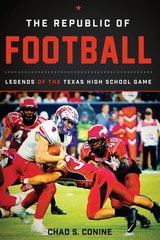
The Republic of Football
Legends of the Texas High School GameChad S. Conine
University of Texas Press, 2016
Anywhere football is played, Texas is the force to reckon with. Its powerhouse programs produce the best football players in America. In The Republic of Football, Chad S. Conine vividly captures Texas’s impact on the game with action-filled stories about legendary high school players, coaches, and teams from around the state and across seven decades.
Drawing on dozens of interviews, Conine offers rare glimpses of the early days of some of football’s biggest stars. He reveals that some players took time to achieve greatness—LaDainian Tomlinson wasn’t even the featured running back on his high school team until a breakthrough game in his senior season vaulted him to the highest level of the sport—while others, like Colt McCoy, showed their first flashes of brilliance in middle school. In telling these and many other stories of players and coaches, including Hayden Fry, Spike Dykes, Bob McQueen, Lovie Smith, Art Briles, Lawrence Elkins, Warren McVea, Ray Rhodes, Dat Nguyen, Zach Thomas, Drew Brees, and Adrian Peterson, Conine spotlights the decisive moments when players caught fire and teams such as Celina, Southlake Carroll, and Converse Judson turned into Texas dynasties. Packed with never-before-told anecdotes, as well as fresh takes on the games everyone remembers, The Republic of Football is a must-read for all fans of Friday night lights.
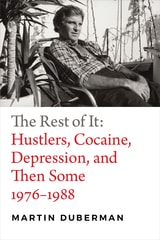
The Rest of It
Hustlers, Cocaine, Depression, and Then Some, 1976–1988Martin Duberman
Duke University Press, 2018
Despite the hardships, Duberman managed to be incredibly productive: he wrote his biography of Paul Robeson, rededicated himself to teaching, wrote plays, and coedited the prize-winning Hidden from History. His exploration of new paths of scholarship culminated in his founding of the Center for Lesbian and Gay Studies, thereby inaugurating a new academic discipline. At the outset of the HIV/AIDS epidemic Duberman increased his political activism, and in these pages he also describes the tensions between the New Left and gay organizers, as well as the profound homophobia that created the conditions for queer radical activism. Filled with gossip, featuring cameo appearances by luminaries such as Gore Vidal, Norman Mailer, Vivian Gornick, Susan Brownmiller, Kate Millett, and Néstor Almendros, among many others, and most importantly, written with an unflinching and fearless honesty, The Rest of It provides scathing insights into a troubling decade of both personal and political history. It is a stimulating look into a key period of Duberman's life, which until now had been too painful to share.
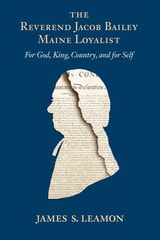
The Reverend Jacob Bailey, Maine Loyalist
For God, King, Country, and for SelfJames S. Leamon
University of Massachusetts Press, 2012
Reverend Bailey's persistence in praying for the king and his refusal to publicize the Declaration of Independence from his Pownalborough pulpit aroused hostilities that drove him and his family to the safety of Nova Scotia. There, in exile, Bailey devoted himself to assisting fellow refugees while defending himself from others. During this time, he wrote almost obsessively: poems, dramas, novels, histories. Though few were ever completed, and even fewer published, in one way or another most of his writings depicted the trauma he underwent as a loyalist.
Leamon's study of the Reverend Jacob Bailey depicts the complex nature and burdens of one person's loyalism while revealing much about eighteenth-century American life and culture.
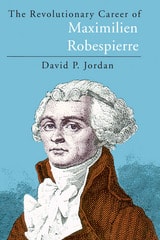
The Revolutionary Career of Maximilien Robespierre
David P. Jordan
University of Chicago Press, 1989
The Rhetorics of Life-Writing in Early Modern Europe
Forms of Biography from Cassandra Fedele to Louis XIVThomas Mayer and D. R. Woolf, Editors
University of Michigan Press, 1995
The volume is especially timely in light of the growing interest in "microhistory," and in the histories that are emerging from nonliterary documents. Chapters consider numerous genres, including hagiography, epistolary and verse biography, and less familiar forms such as parodic prosopography, life-writing in funeral sermons, and comic martyrology.
Contributors to the volume come from history, art history, and literature, and they include F.W. Conrad, Sheila ffolliott, Robert Kolb, James Mehl, Diana Robin, T.C. Price Zimmerman, and Elizabeth Goldsmith and Abby Zanger, among others.
Thomas F. Mayer is Associate Professor of History, Augustana College. D. R. Woolf is Professor of History, Dalhousie University.

The Right Blood
America's Aristocrats in Thoroughbred RacingCase, Carole
Rutgers University Press, 2000
The spectacle of thoroughbred horses dashing powerfully and gracefully down the track is one of the most stimulating and beautiful of all athletic events. Yet despite its mass appeal, an elite group of men and a few women have traditionally controlled the sport. What are the origins and personalities behind the sport in America?
In The Right Blood, Carole Case examines the history of American thoroughbred racing, in particular the story behind the Jockey Club. Formed in 1894 by the nation’s richest, most powerful, and often most notorious men, the Jockey Club continues to this day to exert a formidable influence on this “sport of kings.”
Using Jockey Club documents and personal interviews, Case traces the history of how club members created and enforced the rules governing racing, from the first decades of the twentieth century to the present day. She tells of how club members once assigned racing dates, issued licenses, appointed judges, and dictated who could train, ride, and own thoroughbred horses. Case also describes how many of them exploited the poor to work their horses, defeated those who posed a threat to their interests, and excluded people of different backgrounds from horse racing ¾ all in the name of improving the breed and promoting the sport. The Jockey Club maintained this stranglehold on the sport until 1950, when an appellate court took away its licensing power. Perhaps most interestingly, the men of the Jockey Club became and continue as keepers of the registry of North American thoroughbred horses, The American Stud Book, determining which horses can ¾ and cannot ¾ be considered thoroughbreds.
Written for the general reader interested in the sport and its culture, The Right Blood is an engaging look behind the scenes of American horse racing.
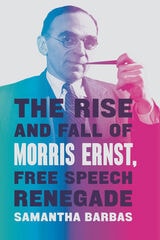
The Rise and Fall of Morris Ernst, Free Speech Renegade
Samantha Barbas
University of Chicago Press, 2021
In the 1930s and ’40s, Morris Ernst was one of America’s best-known liberal lawyers. The ACLU’s general counsel for decades, Ernst was renowned for his audacious fights against artistic censorship. He successfully defended Ulysses against obscenity charges, litigated groundbreaking reproductive rights cases, and supported the widespread expansion of protections for sexual expression, union organizing, and public speech. Yet Ernst was also a man of stark contradictions, waging a personal battle against Communism, defending an autocrat, and aligning himself with J. Edgar Hoover’s inflammatory crusades.
Arriving at a moment when issues of privacy, artistic freedom, and personal expression are freshly relevant, The Rise and Fall of Morris Ernst, Free Speech Renegade brings this singularly complex figure into a timely new light. As Samantha Barbas’s eloquent and compelling biography makes ironically clear, Ernst both transformed free speech in America and inflicted damage to the cause of civil liberties. Drawing on Ernst’s voluminous cache of publications and papers, Barbas follows the life of this singular idealist from his pugnacious early career to his legal triumphs of the 1930s and ’40s and his later idiosyncratic zealotry. As she shows, today’s challenges to free speech and the exercise of political power make Morris Ernst’s battles as pertinent as ever.
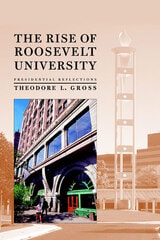
The Rise of Roosevelt University
Presidential ReflectionsTheodore L. Gross
Southern Illinois University Press, 2005
Underscoring professional and educational issues pertinent to higher learning at universities across the country, Theodore L. Gross’s memoir of his years in academia chronicles his successful fourteen-year presidency at Chicago’s Roosevelt University, a period of leadership that resulted in an upsurge of fund-raising, sharp increases in enrollment and endowment, and the transformation of an urban campus into a metropolitan university.
Beginning with a description of his childhood and adolescent education and experiences, Gross recalls his years as a faculty member and academic administrator at the City College of New York from 1958 to 1978, when the college was moving from selective admissions to open enrollment. He also served in administrative positions at Penn State University and SUNY Purchase before accepting the Roosevelt presidency in 1988. Focusing on the tension between the promise of open admissions and aspirations of academic excellence, The Rise of Roosevelt University: Presidential Reflections relates Gross’s perceptions of the failure of open admissions at CCNY and his resolution to learn from those mistakes while at Roosevelt.
Drawing on private correspondence and conversations, essays, university documents, and other archival materials and research, Gross re-creates the highs and lows of his quest to make Roosevelt distinctive. His strategic plan included the appointment of senior executives and deans, the creation of a performing arts conservatory, the development of an educational alliance with other universities, online instruction, an honors program, a Chicago School of Real Estate, an MBA for Chinese students, the Partners in Corporate Education program, and the implementation of a second comprehensive campus. He describes the creation of the Albert A. Robin campus in Schaumburg and the realization of Roosevelt as a metropolitan university, creating a vivid portrait of the suburban culture, the educational context of large community colleges throughout the northwest suburbs, the development of a community advisory board that helped secure funds, and the improved morale of faculty and administration.
Gross’s fund-raising efforts increased the endowment from $3 million to $33 million, and a capital campaign surpassed the goal of $45 million. In this volume, he describes meetings with major donors, the successes and failures of contributions, and the development of greater alumni support in the context of fund-raising throughout Chicago. He also analyzes the highly publicized legal dispute between the Auditorium Theatre Council and Roosevelt University over ownership of the world renowned theatre, pointing out how the case epitomizes issues that all universities confront: the university’s need to control its entities, detrimental publicity, sectional and regional conflicts, and a split in the arts community. Throughout this narrative, Gross juxtaposes his personal life and professional career, dramatizing how the two are related.
More than a retelling of anecdotes and statistics, the volume provides a rare perspective on the intersection of higher education and politics in Chicago. Gross analyzes the different public and private universities in the city and in surrounding Cook County to describe their relationships with ethnicity, religion, class, and with city hall. He also covers the Daley political machine’s influence on higher education, the politics of university governance, the spectacular growth of the western suburbs, and city versus suburban identities.
A personal road map of the development of higher education through the post–World War II decades, The Rise of Roosevelt University: Presidential Reflections mirrors the social climate that affected the country’s universities at large, from the open admissions policies and student rebellions of the ’60s and ’70s, to the urban blight and suburban sprawl of the ’80s, to the strategic planning and expansion of the ’90s and the new century. The result is a captivating account of the issues involved in presidential transition and leadership, the strategic development of metropolitan universities, and the future role of Roosevelt and similar institutions.
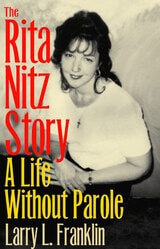
The Rita Nitz Story
Larry L. Franklin
Southern Illinois University Press, 2005
The April 1988 murder and decapitation of twenty-three-year-old Michael Miley in rural southern Illinois horrified and enraged local residents and law enforcement officials, some of whom suspected the homicide was a hate crime. The Rita Nitz Story: A Life Without Parole is an in-depth personal investigation into Miley’s murder, for which Rita Nitz was convicted as an accomplice to life in prison. Born in 1959, Rita was thirty when she was sentenced in 1989. Her husband, Richard Nitz, was convicted of the murder. Detailing the crime and its aftermath, Larry L. Franklin uncovers a disturbing set of facts that illuminate a possible miscarriage of justice.
Was Rita Nitz involved in the murder of Michael Miley? Franklin doesn’t purport her guilt or her innocence but instead details the plight of a troubled woman who was a victim of sexual abuse and domestic violence at the hands of family members and spouses and who may also have been a victim of inadequate legal representation and a judicial system more interested in delivering the maximal punishment than in serving justice. Consulting with experts in prosecutorial conduct, jury psychology, and forensic evidence, Franklin discovered details that were withheld from the jury and the public during the trial in 1989. He also suggests other theories and names possible perpetrators involved in the murder that further imply shoddy police work and a tainted criminal investigation.
Drawing on numerous conversations with Rita at the Dwight Correctional Center in Illinois, Franklin divulges the story of Rita’s tumultuous youth and her three problematic marriages. He shows her to be a battered woman who didn’t fully understand the circumstances and behavior that led to her being implicated in such a hideous crime and who lacked the financial resources and emotional strength to navigate the legal tangle that entrapped her.
Franklin also points out the disparity in justice between Rita and Richard, who is up for parole in less than twenty years, while Rita remains sentenced to life without parole. In attempting to reach the truth about Miley’s murder, Franklin highlights abuses in the Illinois correctional system and disparities between the treatment of male and female convicts, sketching a blueprint that could improve law enforcement and justice in rural Illinois.
The River Has Never Divided Us
A Border History of La Junta de los RiosBy Jefferson Morgenthaler
University of Texas Press, 2004
Winner, William P. Clements Prize, Best Non-Fiction Book on Southwestern America, 2004
Not quite the United States and not quite Mexico, La Junta de los Rios straddles the border between Texas and Chihuahua, occupying the basin formed by the conjunction of the Rio Grande and the Rio Conchos. It is one of the oldest continuously inhabited settlements in the Chihuahuan Desert, ranking in age and dignity with the Anasazi pueblos of New Mexico.
In the first comprehensive history of the region, Jefferson Morgenthaler traces the history of La Junta de los Rios from the formation of the Mexico-Texas border in the mid-19th century to the 1997 ambush shooting of teenage goatherd Esquiel Hernandez by U.S. Marines performing drug interdiction in El Polvo, Texas. "Though it is scores of miles from a major highway, I found natives, soldiers, rebels, bandidos, heroes, scoundrels, drug lords, scalp hunters, medal winners, and mystics," writes Morgenthaler. "I found love, tragedy, struggle, and stories that have never been told." In telling the turbulent history of this remote valley oasis, he examines the consequences of a national border running through a community older than the invisible line that divides it.
The River Home
A MemoirDorothy Weil
Ohio University Press, 2001
The death of her father begins Dorothy Weil’s search for what causes the family’s “spinning of in all directions like the pieces of Chaos.” She embarks on a river odyssey, traveling the Ohio, Missouri, and Mississippi Rivers by steamboat, towboat, and even an old-fashioned flatboat. The river brings her family back, as she records the stories of her fellow “river rats”: steamboat veterans, deckhands, captains, and cooks.
The River Home takes the reader into a world few ever glimpse, that of America’s riverboats. In the fast-paced narrative, with incisive characterizations and dialogue, the author introduces us to this vivid milieu and a gallery of fascinating people. We meet her father, a “wild river man from the Kentucky hills,” her mother, “a proper girl from a Cincinnati Dutch clan,” and her brother, a fourth-generation river man, as well as the artists and academics she meets in her adult life.
Weil’s voice is clear and wry, as well as poetic, bringing out both the sadness and joys of a family torn by mismatched backgrounds. Her themes speak to all: the confusion brought by family conflict, the strength of family love no matter how troubled the relationships, the mortality we all face, the importance of where we come from and where we go.
The River Knows Everything
Desolation Canyon and the GreenJames M Aton
Utah State University Press, 2009
The Road
DePastino, Todd
Rutgers University Press, 2006
In 1894, an eighteen-year-old Jack London quit his job shoveling coal, hopped a freight train, and left California on the first leg of a ten thousand-mile odyssey. His adventure was an exaggerated version of the unemployed migrations made by millions of boys, men, and a few women during the original "great depression of the 1890s. By taking to the road, young wayfarers like London forged a vast hobo subculture that was both a product of the new urban industrial order and a challenge to it. As London's experience suggests, this hobo world was born of equal parts desperation and fascination. "I went on 'The Road,'" he writes, "because I couldn't keep away from it . . . Because I was so made that I couldn't work all my life on 'one same shift'; because-well, just because it was easier to than not to."
The best stories that London told about his hoboing days can be found in The Road, a collection of nine essays with accompanying illustrations, most of which originally appeared in Cosmopolitan magazine between 1907 and 1908. His virile persona spoke to white middle-class readers who vicariously escaped their desk-bound lives and followed London down the hobo trail. The zest and humor of his tales, as Todd DePastino explains in his lucid introduction, often obscure their depth and complexity. The Road is as much a commentary on London's disillusionment with wealth, celebrity, and the literary marketplace as it is a picaresque memoir of his youth.
The Road Washes Out in Spring
A Poet’s Memoir of Living Off the GridBaron Wormser
University Press of New England, 2008
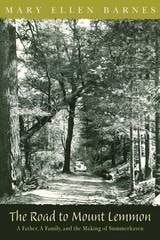
The Road to Mount Lemmon
A Father, A Family, and the Making of SummerhavenMary Ellen Barnes
University of Arizona Press, 2009
The Santa Catalina Mountains first captivated Tony Zimmerman on a 1937 hunting trip. Regard for the alpine beauty must have been in his genes—he was the son of Swiss German immigrants—and by 1940 the Tucson schoolteacher had begun taking his family to Mount Lemmon to spend the summer. Back then, the road up the mountain was a rough two-track dirt road from Oracle, and Summerhaven was nothing but a sleepy cluster of summer cabins. But Tony Zimmerman was to help change all of that.
The Road to Mount Lemmon is a beguiling memoir of the Catalina Mountains told by the daughter of one of the pioneers in the life and development of Mount Lemmon’s communities. Mary Ellen Barnes tells how her father Tony resigned from teaching in 1943 to devote his career to the development of this mountain oasis. He not only sold real estate for long time landowner Randolph Jenks, he even bought the village’s tiny two-room store, installing a sawmill to build a larger store, and built the Mount Lemmon Inn. And as she spins Tony’s personal saga, she also gives readers a glimpse of the Catalinas before Tucson became a boom town, recalling idyllic adventures in wild country and the cowboys, rangers, ranchers, and loggers who worked there.
Barnes tells Tony’s story as if sharing it with family, evoking her father’s personality on every page. The Road to Mount Lemmon is an intimate view of a mountain community over the course of nearly sixty years—a view that few people have shared but one all can appreciate.
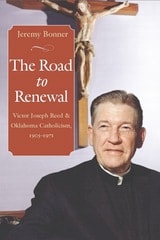
The Road to Renewal
Victor Joseph Reed and Oklahoma Catholicism, 1905–1971Jeremy BONNER
Catholic University of America Press, 2008
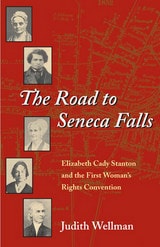
The Road to Seneca Falls
Elizabeth Cady Stanton and the First Woman's Rights ConventionJudith Wellman
University of Illinois Press, 2004
The convention succeeded by uniting powerful elements of the antislavery movement, radical Quakers, and the campaign for legal reform under a common cause. Wellman shows that these three strands converged not only in Seneca Falls, but also in the life of women's rights pioneer Elizabeth Cady Stanton. It is this convergence, she argues, that foments one of the greatest rebellions of modern times.
Rather than working heavy-handedly downward from their official "Declaration of Sentiments," Wellman works upward from richly detailed documentary evidence to construct a complex tapestry of causes that lay behind the convention, bringing the struggle to life. Her approach results in a satisfying combination of social, community, and reform history with individual and collective biographical elements.
The Road to Seneca Falls challenges all of us to reflect on what it means to be an American trying to implement the belief that "all men and women are created equal," both then and now. A fascinating story in its own right, it is also a seminal piece of scholarship for anyone interested in history, politics, or gender.
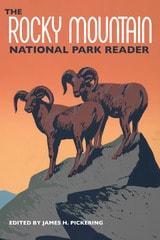
The Rocky Mountain National Park Reader
James H. Pickering
University of Utah Press, 2015
Representative both in subject and approach, the selections reach back to Arapaho and pioneer times before the park was established and move forward to span its entire first century. The voices that speak to us are distinctive: among them are Irish sportsman Windham Thomas Wyndham-Quin, the Fourth Earl of Dunraven; British travel writer Isabella Bird; mountaineer Frederick Chapin; naturalist Enos Mills; iconic ranger Jack Moomaw and his fictional counterpart, Dorr Yeager’s Bob Flame; and contemporary nature writers Anne Zwinger and SueEllen Campbell—to mention but a few. Some tell us about the past, recalling moments of personal triumph and tragedy. Other voices are quieter; some are more polemic. All capture and share a part of the national treasure that is Rocky Mountain National Park.
The first of its kind, this original collection is a rich literary and historical compendium of the best that has been written about Rocky Mountain National Park. As such it provides an indispensable introduction to the nation’s twelfth national park.
Part of the National Park Reader series, edited by Lance Newman and David Stanley
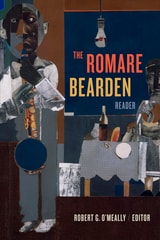
The Romare Bearden Reader
Robert G. O'Meally, editor
Duke University Press, 2019
Contributors. Elizabeth Alexander, Romare Bearden, Mary Lee Corlett, Rachel DeLue, David C. Driskell, Brent Hayes Edwards, Ralph Ellison, Henri Ghent, Farah Jasmine Griffin, Harry Henderson, Kobena Mercer, Toni Morrison, Albert Murray, Robert G. O’Meally, Richard Powell, Richard Price, Sally Price, Myron Schwartzman, Robert Burns Stepto, Calvin Tomkins, John Edgar Wideman, August Wilson
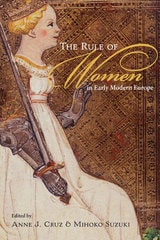
The Rule of Women in Early Modern Europe
Edited by Anne J. Cruz and Mihoko Suzuki
University of Illinois Press, 2008
Drawing on early modern literature and historical documents, this study investigates the various political, discursive, and symbolic measures employed to negotiate and support female sovereignty by both early modern writers and the rulers themselves. The detailed analysis of the women's responses--or inability to respond--to these strictures underscores the relationship between early modern authors and sovereigns and the complex and vexed situation of European women rulers.
Contributors are Tracy Adams, Anne J. Cruz, Éva Deák, Mary C. Ekman, Catherine L. Howey, Elizabeth Ketner, Carole Levin, Sandra Logan, Magdalena S. Sánchez, Mihoko Suzuki, and Barbara F. Weissberger.

The Running Kind
Listening to Merle HaggardDavid Cantwell
University of Texas Press, 2022
2022 Belmont Award for the Best Book on Country Music, International Country Music Conference/Belmont University
New and expanded biography of one of country music’s most celebrated singer-songwriters.
Merle Haggard enjoyed numerous artistic and professional triumphs, including more than a hundred country hits (thirty-eight at number one), dozens of studio and live album releases, upwards of ten thousand concerts, induction into the Country Music Hall of Fame, and songs covered by artists as diverse as Lynryd Skynyrd, Elvis Costello, Tammy Wynette, Bobby "Blue" Bland, Willie Nelson, the Grateful Dead, and Bob Dylan.
In The Running Kind, a new edition that expands on his earlier analysis and covers Haggard's death and afterlife as an icon of both old-school and modern country music, David Cantwell takes us on a revelatory journey through Haggard’s music and the life and times out of which it came. Covering the breadth of his career, Cantwell focuses especially on the 1960s and 1970s, when Haggard created some of his best-known and most influential music: songs that helped invent the America we live in today. Listening closely to a masterpiece-crowded catalogue (including “Okie from Muskogee,” “Sing Me Back Home,” “Mama Tried,” and “Working Man Blues,” among many more), Cantwell explores the fascinating contradictions—most of all, the desire for freedom in the face of limits set by the world or self-imposed—that define not only Haggard’s music and public persona but the very heart of American culture.
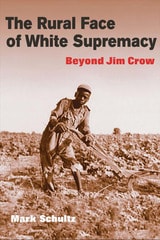
The Rural Face of White Supremacy
BEYOND JIM CROWMark Schultz
University of Illinois Press, 2007
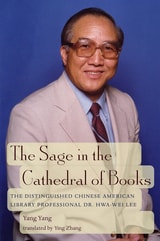
The Sage in the Cathedral of Books
The Distinguished Chinese American Library Professional Dr. Hwa-Wei LeeYang Yang
Ohio University Press, 2016
The biography of Dr. Hwa-Wei Lee, who was awarded the highly prestigious Melvil Dewey Medal by the American Library Association in 2015, will be welcomed by readers interested in knowing not only more about Lee’s personal achievements and contributions in librarianship but also about the rapid changes in the library profession in general. The biography, written by Ms. Yang Yang of China Central Television in Beijing, was first published in Chinese in China in 2011. It was republished in Taiwan with added information in 2014. This English edition, translated by Dr. Ying Zhang of the Universityof California in Irvine, was updated by Lee.
Throughout his childhood and youth, Lee experienced tremendous hardship during the brutal Sino-Japanese War and then the Chinese civil war, described in the first three chapters. After arriving in the United States as a graduate student from Taiwan in 1957, he struggled to realize the American dream by studying hard and working diligently in the field of librarianship for nearly half a century.
The biography explores Lee’s career at major academic libraries, beginning at the University of Pittsburgh to his retirement from Ohio University, including his seven years of library directorship at the Asian Institute of Technology in Bangkok, Thailand, under the sponsorship of the U.S. Agency for International Development. After his first retirement, Lee was invited by OCLC to become a Visiting Distinguished Scholar. From there he was appointed Chief of the Asian Division at the Library of Congress and retired for the second time in 2008.
The biography also highlights Lee’s contributions in international librarianship, especially in the promotion of library cooperation between the United States and China.
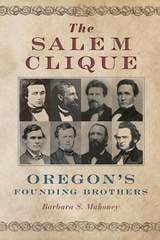
The Salem Clique
Oregon's Founding BrothersBarbara S. Mahoney
Oregon State University Press, 2017
While not in agreement with some of the more extreme contemporary accusations against the Clique, many historians have concluded that its members were vicious men who were able, because of their command of the Democratic party, to impose their hegemony on the Oregon Territory’s inhabitants. Other scholars have seen them as merely another instance of the contentious politics of the period.
Although the Salem Clique has been given considerable prominence in nearly every account of Oregon’s Territorial period, there has not been a detailed study of its role until now. What sort of people were these men? What was their impact on the issues, events, and movements of the period? What role did they play in the years after Oregon became a state? In The Salem Clique, Historian Barbara Mahoney sets out to answer these and many other questions in this comprehensive and deeply researched history.
The Salt House
A Summer on the Dunes of Cape CodCynthia Huntington
Dartmouth College Press, 2003
The Santa Fe Trail in Missouri
Mary Collins Barile
University of Missouri Press, 2010
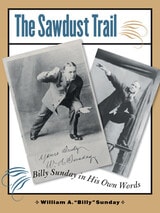
The Sawdust Trail
Billy Sunday in His Own WordsWilliam A. Sunday
University of Iowa Press, 2005
Published serially in the Ladies’ Home Journal in 1932 and 1933 and now in book form for the first time, The Sawdust Trail is the only autobiography that this hugely popular and hugely controversial preacher ever wrote. From his childhood days in Iowa to the early days of his conversion in Illinois, from his baseball career with the National League teams in Chicago, Pittsburgh, and Philadelphia to the challenges of preaching in New York City during his heyday, the sections of Sunday’s autobiography roll out like so many exuberant sermons, yet the sympathetic reader can hear echoes of the loneliness and misery of his early years.
In The Sawdust Trail the sometimes appalling but always appealing Billy Sunday creates a usable past for himself, notable for what he omits as well as for what he includes, which gives us insight not just into his own life and career but also into the peculiar history of evangelism in America.
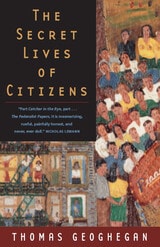
The Secret Lives of Citizens
Pursuing the Promise of American LifeThomas Geoghegan
University of Chicago Press, 2000
"This is unlike any public-policy book I've ever read: part Catcher in the Rye, part The Road to Wigan Pier, part The Federalist Papers, it is mesmerizing, rueful, painfully honest, and never, ever dull."—Nicholas Lemann, author of The Big Test
"Extraordinary. It has the essential trait of a memorable book, in that after reading it you look at daily life in a lastingly different way." —James Fallows, author of Breaking the News
"[Geoghegan] has written a book that is not only compelling to read but that provokes us to seriously reflect on the choices we make and how we spend our time." —Jonathan Coleman, Washington Post Book World
"Geoghegan's language is playful. . . . Personal reminiscence mixing with historical anecdote, dipping into complex themes . . . shifting from wistful nostalgia to dark comedy." —Robert B. Reich, New York Times Book Review
"A truly strange and wonderful book." — William Finnegan

The Secret Trust of Aspasia Cruvellier Mirault
The Life and Trials of a Free Woman of Color in Antebellum GeorgiaJanice L. Sumler-Edmond
University of Arkansas Press, 2008
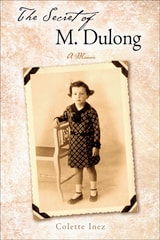
The Secret of M. Dulong
A MemoirColette Inez
University of Wisconsin Press, 2005
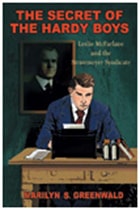
The Secret of the Hardy Boys
Leslie McFarlane and the Stratemeyer SyndicateMarilyn S. Greenwald
Ohio University Press, 2004
For generations of readers, the Hardy Boys were the creations of the legendary Franklin W. Dixon—except Dixon never existed. Behind the iconic series stood the Stratemeyer Syndicate, a powerhouse of children’s publishing, and one gifted but largely unrecognized writer: Leslie McFarlane.
In The Secret of the Hardy Boys, acclaimed biographer Marilyn S. Greenwald uncovers the remarkable story of the man who first brought Frank and Joe Hardy to life. A young Canadian journalist with ambitions beyond formula fiction, McFarlane infused the Syndicate’s rigid plots with wit, atmosphere, and narrative vitality—helping to shape one of the most enduring franchises in children’s literature.
Bound by contract and reluctant to claim authorship, McFarlane kept his role a secret for decades, receiving little financial reward for books that sold in the millions. Yet his story is far from one of regret. Drawing on extensive research, Greenwald paints a vivid portrait of a versatile writer who navigated the shifting landscape of twentieth-century media, from pulp magazines to radio and film.
Rich in literary history and human insight, The Secret of the Hardy Boys is both a revealing behind-the-scenes account of a cultural phenomenon and an inspiring testament to creativity, resilience, and the quiet architects of beloved stories.
The Selected Letters of Juanita Brooks
Edited by Craig S. Smith
University of Utah Press, 2019
The letters in this volume, written from 1941 to 1978, trace Brooks’s development from fledgling historian to recognized authority. Serving almost as an autobiography of her interactions with her contemporaries, this selection provides a new perspective on Brooks’s personality and growth as a scholar. Richly detailed, chatty, and covering a wide array of subjects, the letters afford an important glimpse into Brooks’s struggles, concerns, and interests.
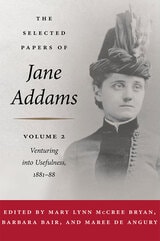
The Selected Papers of Jane Addams
Vol. 2: Venturing into UsefulnessEdited by Mary Lynn McCree Bryan, Barbara Bair, and Maree de Angury; with the assistance of Elizabeth Stevens, Stewart Burns, and Ellen Skerrett
University of Illinois Press, 2009
Artfully annotated, The Selected Papers of Jane Addams offers an evocative choice of correspondence, photographs, and other primary documents, presenting a multi-layered narrative of Addams's personal and emerging professional life. Themes inaugurated in the previous volume are expanded here, including dilemmas of family relations and gender roles; the history of education; the dynamics of female friendship; religious belief and ethical development; changes in opportunities for women; and the evolution of philanthropy, social welfare, and reform ideas.
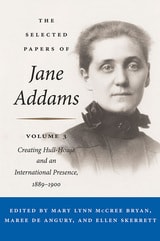
The Selected Papers of Jane Addams
Vol. 3: Creating Hull-House and an International Presence, 1889-1900Jane Addams Edited by Mary Lynn McCree Bryan, Maree de Angury, and Ellen Skerrett: with the assistance of Richard R. Seidel,
University of Illinois Press, 2019
The third volume in this acclaimed series documents Addams’s creation of Hull-House and her rise to worldwide fame as the acknowledged female leader of progressive reform. It also provides evidence of her growing commitment to pacifism. Here we see Addams, a force of thought, action, and commitment, forming lasting relationships with her Hull-House neighbors and the Chicago community of civic, political, and social leaders, even as she matured as an organizer, leader, and fund-raiser, and as a sought-after speaker, and writer. The papers reveal her positions on reform challenges while illuminating her strategies, successes, and responses to failures. At the same time, the collection brings to light Addams’s private life. Letters and other documents trace how many of her Hull-House and reform alliances evolved into deep, lasting friendships and also explore the challenges she faced as her role in her own family life became more complex.
Fully annotated and packed with illustrations, The Selected Papers of Jane Addams, Volume 3 is a portrait of a woman as she changed—and as she changed history.
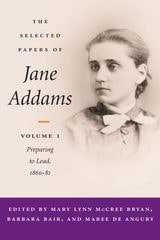
The Selected Papers of Jane Addams
vol. 1: Preparing to Lead, 1860-81Edited by Mary Lynn McCree Bryan, Barbara Bair, and Maree de Angury
University of Illinois Press, 2002
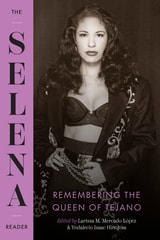
The Selena Reader
Remembering the Queen of TejanoEdited by Larissa M. Mercado-López and Yndalecio Isaac Hinojosa
University of Texas Press, 2026
A literary collection honoring and memorializing Selena, the Queen of Tejano.
Thirty years after her death, Selena Quintanilla-Pérez remains a cherished figure of Mexican American popular culture, her music and celebrity resounding across the decades. This unique collection of creative and scholarly works traces Selena’s lasting impact as an entertainer and focal point of community and identity.
Assembling essays, memoir, short stories, and poems, The Selena Reader memorializes a beloved singer while also exploring the politics and personal meaning of what we remember. Selena’s devoted admirers tell us what they took from her lyrics and stage presence, the official and fan tributes, and the media and products she inspired. In one essay, Tejana coming-of-age is sharply refracted through the prism of Selena’s art and social status. Another piece considers how Selena’s body and distinctive clothing have shaped the author’s sense of queer self. Honey Avila (aka Honey Andrews), the renowned Selena impersonator, shares vivid recollections of her hero. A father and daughter describe how their conversations about Selena changed their relationship and contributed to Chicana feminist consciousness in their lives. All told, this anthology amplifies the gratitude of generations who have loved, and learned from, Selena.
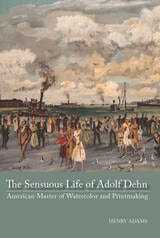
The Sensuous Life of Adolf Dehn
American Master of Watercolor and PrintmakingHenry Adams
University of Missouri Press, 2020
In this wide-ranging biography, Henry Adams explores how a once central figure can come to be forgotten. Noting that Dehn’s watercolor Spring in Central Park has been widely reproduced on calendars, postcards, and other Metropolitan Museum of Art souvenirs, Adams asks why it is that some artists are celebrated as key figures while others, even those who created images that form an integral part of our visual culture, are relatively unknown. With his account of the life of the prolific and influential Dehn, and a look at the circles of artists and writers in which Dehn moved, Adams helps to fill in what he calls the “secret or subterranean history of art.”
The Sexual Labyrinth of Nikolai Gogol
Simon Karlinsky
University of Chicago Press, 1992
"A brilliant new biography that will long be prized for its illuminating psychological insights into Gogol's actions, its informative readings of his fiction and drama, and its own stylistic grace and vivacity."—Edmund White, Washington Post Book World
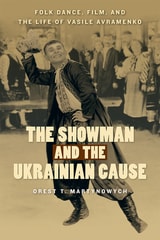
The Showman and the Ukrainian Cause
Folk Dance, Film, and the Life of Vasile AvramenkoOrest T. Martynowych
University of Manitoba Press, 2014
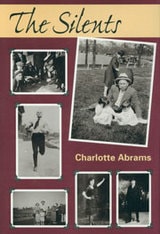
The Silents
Charlotte Abrams
Gallaudet University Press, 1996
The Silents departs from other narratives about deaf parents and hearing children when the family discovers that Abrams’ mother is becoming blind. With resiliency, the family turned the secret, terrifying sorrow their mother felt at losing her only contact with the world into a quest for the best way to bring it back. Should she learn Braille? Should she use a cane? All of the old communication and day-to-day living routines had to be relearned. And through it all, the family and their neighbors, hearing and deaf, worked together to ensure that Abrams’ parents remained the close, vital members of the community that they had always been.
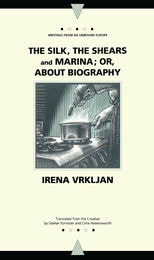
The Silk, the Shears and Marina; or, About Biography
Irena Vrkljan
Northwestern University Press, 1999
These are the first two volumes of the Croatian poet and novelist Irena Vrkljan's lyrical autobiography. Although each novel illuminates the other, they also stand alone as original and independent works of art. In The Silk, the Shears, Vrkljan traces the symbolic and moral significance of her life, and her vision of the fate of women in her mother's time and in her own. Marina continues the intense analysis of the poetic self, using the life of Marina Tsvetaeva to meditate on the processes behind biography.