Results by title
3071 books match the query 'Business & Economics' and 687 start with t

The Workless
Stigma, Unpaid Labour and the Myth of Economic InactivityJames Morrison
Intellect Books, 2026
A critical analysis of historical and contemporary discourses around worklessness, economic inactivity, and the factors that contribute to people withdrawing from the conventional labor market.
How do we define and respond to worklessness? This book combines analysis of media and political narratives around worklessness and factors that limit individuals’ capacity for conventional paid work—from disability and long-term illness to caring responsibilities—with interviews that shed light on the lived experience of so-called economic inactivity.
In dissecting popular portrayals of “the workless” in the present and tracing the historical evolution of discourses around “inactivity”—especially work-limiting disability—James Morrison draws heavily on sociological theories of stigma and symbolic annihilation. Conceptualising the contemporary narrative about the UK's supposed crisis in economic inactivity as the latest in a continuum of periodic moral panics about worklessness, he argues that neoliberal definitions of work and worklessness are too narrow, as they deny—and render invisible—the importance of various forms of unpaid labor performed by many people classified as “inactive,” notably informal caregiving and volunteering.
The World Bank Unveiled
Inside the revolutionary struggle for transparencyDavid Ian Shaman
Parkhurst Brothers, Inc., 2009
Nobel Prize winning economist and former World Bank Chief Economist, Joseph Stiglitz, has repeatedly discussed the importance of transparency in policymaking at the World Bank and International Monetary Fund. He believes a lack of transparency in the two institutions has lead to bad decisions. Bad decisions at IMF and the World Bank mean real pain for the world’s poor.
There is a perception that “the suits” close the World Bank’s doors to deliberate the fate of earth’s poorest populations and only when the doors are unlocked do people living in poverty learn what has been decided about their future. Meanwhile donations are down. The bank’s critical International Development Association’s funding has dropped dramatically. Managers are discouraged by studies examining the World Bank’s effectiveness. How, they wonder, could such large beneficences have so little impact on poor populations?
Events of the past two years have only increased the stakes. First, rising fuel prices caused a worldwide rise in the price of basic foods. Then the deepest economic downturn since the Great Depression sapped donor nation’s coffers. By the end of the Bush administration in 2009, giving by the USA lagged more than any other wealthy nation.
In 1999, two Bank researchers understood the situation was already on a precipice. World Bank loans had ceased to make significant impact on poverty in many client nations. Certain governments and multi-national corporations were destroying environments and desecrating indigenous cultures, all to achieve short-term gains for a fortunate few.
Demonstrable successes were few, and every World Bank conference became a melee of demonstrators and police. The two researchers asked themselves whether it was possible to open up the institution by increased transparency, improve its accountability, and mute criticism. They decided to launch an internet-based broadcast to disseminate unedited videos of internal discussions and debates. The bank’s culture and bureaucracy, hardened over a half-century, presented them with a formidable foe. Some powerful officials feared the transparency initiative; others withheld public support while standing on the sidelines. The World Bank Unveiled documents this epic struggle. It is the story of a revolution to transform the World Bank and a case study of the power of the Bank to transform people’s lives.

The World Bank
A Critical PrimerEric Toussaint
Pluto Press, 2007
The World Bank is a controversial organisation. It is widely viewed with suspicion, as the international economic arm of the US, in thrall to the President who is responsible for appointing the head of the Bank.
Eric Toussaint gives a highly readable account of just why the World Bank has become so powerful. In short, clear chapters he shows how the bank operates, who funds it, and what it sets out to promote.
The Bank's main purpose is to grant loans to all the newly independent states of the developing world, to help them on their journey to recovery after colonial occupation. In reality, the conditions imposed on these states -- including enforced privatisation of all public services, and enforced neo-liberal rules on trade -- mean that the Bank has become the new colonial authority in everything but name.
This is a perfect book for anyone looking for a critical introduction to the history of the Bank and its role in world affairs.
The World Bank
Lending on a Global ScaleJo Marie Griesgraber
Pluto Press, 1996
The World Economy
History & ProspectBy W. W. Rostow
University of Texas Press, 1978
This monumental study is an account of the world economy from the eighteenth century to the twentieth, an analysis and prescription for the future, and a challenge to the neo-Keynesian theories of income determination and growth. It is based on some forty years of research and teaching.
Originally published in 1978, the volume looks back over the nineteenth and twentieth centuries. It includes an analysis of how the world's population expanded from about 1 billion in 1800 to 4 billion in 1976, with some 6.5 billion in sight for the year 2000; an account of the expansion and distribution of industrial production and trade during this period; and an analysis of price and relative price movements since the eighteenth century. Rostow gives a detailed description of the Kondratieff long cycles in the relative scarcity and abundance of food and raw materials and reasons that the world economy entered the fifth Kondratieff upswing at the close of 1972. He also examines the changing pattern of business cycles over the whole sweep of modern economic growth and the failure of the post-1945 world economy to control inflation. The volume also includes short economic histories of twenty national economies responsible for 80 percent of the world's production, based on a collection of computerized aggregate and sectoral data.
Each historical section leads naturally into one or more of the major problems dealt with in the final portion of the book, which looks to the future of the world economy: food, population, energy, raw materials, the environment, and the tasks of national and international policy. Rostow argued, counter to the Limits to Growth doctrine, that the critical period for industrial civilization lay in the last twenty-five years of the twentieth century, rather than in the twenty-first century, and that what we did or failed to do in that generation would determine the shape of the longer future.
No other economic history of this depth and breadth exists. It is a reference for economists, economic historians, and other social scientists as well as the informed lay reader.

The World Tin Market
Political Pricing and Economic CompetitionWilliam L. Baldwin
Duke University Press, 1983
The World Wide Web of Work
A History in the MakingMarcel van der Linden
University College London, 2023
Global labor history is one of the fastest-growing fields of study worldwide today. This volume assembles a group of contributors from around the world to discuss the core concepts “capitalism” and “workers,” and to refine notions such as “coerced labor,” “household strategies,” and “labor markets.” It explores in new ways the connections between laborers in different parts of the world, arguing that both globalization and modern labor management originated in agriculture in the Global South and were only later introduced in Northern industrial settings. It reveals that nineteenth-century chattel slavery was frequently replaced by other forms of coerced labor, and it reconstructs the twentieth-century attempts of the International Labor Organisation to regulate work standards internationally. The book also pays attention to the relational inequality through which workers in wealthy countries benefit from the exploitation of those in poor countries. The final part addresses workers’ resistance and acquiescence: why collective actions often have unanticipated consequences, why and how workers sometimes organize massive flights from exploitation and oppression, and why proletarian revolutions took place in pre-industrial or industrializing countries but never in fully developed capitalist societies.
The World in Guangzhou
Africans and Other Foreigners in South China’s Global MarketplaceGordon Mathews, Linessa Dan Lin, and Yang Yang
University of Chicago Press, 2017
Through detailed ethnographic portraits, Mathews reveals a world of globalization based on informality, reputation, and trust rather than on formal contracts. How, he asks, can such informal relationships emerge between two groups—Chinese and sub-Saharan Africans—that don't share a common language, culture, or religion? And what happens when Africans move beyond their status as temporary residents and begin to put down roots and establish families?
Full of unforgettable characters, The World in Guangzhou presents a compelling account of globalization at ground level and offers a look into the future of urban life as transnational connections continue to remake cities around the world.
The World of Credit in Colonial Massachusetts
James Richards and His Daybook, 1692-1711James E. Wadsworth
University of Massachusetts Press, 2017
For years, James Richards, a prosperous and typical colonial farmer, tracked nearly five thousand transactions, involving more than six hundred individuals and stretching from Charlestown to Barnstable. Richards and his neighbors were bound together in a heterogeneous economy, reliant on networks of credit, barter, and sometimes cash. Richards practiced mixed husbandry farming, shipped goods by cart and by sloop, and produced and sold malt, salt, wool, and timber. The day book also reveals significant social details of Richards and his household, including his diverse trading partners, his extensive family connections, an Indian slave girl, and a well-dressed female servant. Available in both print and electronic editions, fully transcribed, annotated, and introduced by the editor, this record of economic life reinforces and challenges our understanding of colonial America.

The World of Worker
LABOR IN TWENTIETH-CENTURY AMERICAJames R. Green
University of Illinois Press, 1998
The World of the Worker illuminates workers' lives at home, on
the job, and in the voting booths. A new preface enhances this social,
cultural, and political history: an unparalleled picture of working people
during the turbulent rise and fall of the labor movement.
"A fresh and provocative look at twentieth-century American unions,
and a fine introduction to recent labor history scholarship." --
Leslie Woodcock Tentler, Washington Post Book World
"Will be welcomed by anyone with a serious interest in labor history."
-- Library Journal
"Probably the best social history of twentieth-century labor
there is." -- Kirkus Reviews
"Virtually replaces any previously existing one-volume popular history
of the labor movement." -- Ron Radosh, Democratic Left
The World the Game Theorists Made
Paul Erickson
University of Chicago Press, 2015
The World the Game Theorists Made seeks to explain the ascendency of game theory, focusing on the poorly understood period between the publication of John von Neumann and Oscar Morgenstern’s seminal Theory of Games and Economic Behavior in 1944 and the theory’s revival in economics in the 1980s. Drawing on a diverse collection of institutional archives, personal correspondence and papers, and interviews, Paul Erickson shows how game theory offered social scientists, biologists, military strategists, and others a common, flexible language that could facilitate wide-ranging thought and debate on some of the most critical issues of the day.
The Worlds of Victor Sassoon
Bombay, London, Shanghai, 1918–1941Rosemary Wakeman
University of Chicago Press, 2024
In this book, historian Rosemary Wakeman brings to life the frenzied, crowded streets, markets, ports, and banks of Bombay, London, and Shanghai. In the early twentieth century, these cities were at the forefront of the sweeping changes taking the world by storm as it entered an era of globalized commerce and the unprecedented circulation of goods, people, and ideas. Wakeman explores these cities and the world they helped transform through the life of Victor Sassoon, who in 1924 gained control of his powerful family’s trading and banking empire. She tracks his movements between these three cities as he grows his family’s fortune and transforms its holdings into a global juggernaut. Using his life as its point of entry, The Worlds of Victor Sassoon paints a broad portrait not just of wealth, cosmopolitanism, and leisure but also of the discrimination, exploitation, and violence wreaked by a world increasingly driven by the demands of capital.
The Wright Company
From Invention to IndustryEdward J. Roach
Ohio University Press, 2014
Fresh from successful flights before royalty in Europe, and soon after thrilling hundreds of thousands of people by flying around the Statue of Liberty, in the fall of 1909 Wilbur and Orville Wright decided the time was right to begin manufacturing their airplanes for sale. Backed by Wall Street tycoons, including August Belmont, Cornelius Vanderbilt III, and Andrew Freedman, the brothers formed the Wright Company. The Wright Company trained hundreds of early aviators at its flight schools, including Roy Brown, the Canadian pilot credited with shooting down Manfred von Richtofen—the “Red Baron”—during the First World War; and Hap Arnold, the commander of the U.S. Army Air Forces during the Second World War. Pilots with the company’s exhibition department thrilled crowds at events from Winnipeg to Boston, Corpus Christi to Colorado Springs. Cal Rodgers flew a Wright Company airplane in pursuit of the $50,000 Hearst Aviation Prize in 1911.
But all was not well in Dayton, a city that hummed with industry, producing cash registers, railroad cars, and many other products. The brothers found it hard to transition from running their own bicycle business to being corporate executives responsible for other people’s money. Their dogged pursuit of enforcement of their 1906 patent—especially against Glenn Curtiss and his company—helped hold back the development of the U.S. aviation industry. When Orville Wright sold the company in 1915, more than three years after his brother’s death, he was a comfortable man—but his company had built only 120 airplanes at its Dayton factory and Wright Company products were not in the U.S. arsenal as war continued in Europe.
Edward Roach provides a fascinating window into the legendary Wright Company, its place in Dayton, its management struggles, and its effects on early U.S. aviation.

The Wright Company
From Invention to IndustryEdward J. Roach
Ohio University Press, 0
But all was not well in Dayton, a city that hummed with industry, producing cash registers, railroad cars, and many other products. The brothers found it hard to transition from running their own bicycle business to being corporate executives responsible for other people’s money. Their dogged pursuit of enforcement of their 1906 patent — especially against Glenn Curtiss and his company — helped hold back the development of the U.S. aviation industry. When Orville Wright sold the company in 1915, more than three years after his brother’s death, he was a comfortable man — but his company had built only 120 airplanes at its Dayton factory and Wright Company products were not in the U.S. arsenal as war continued in Europe.
Edward Roach provides a fascinating window into the legendary Wright Company, its place in Dayton, its management struggles, and its effects on early U.S. aviation.

The Writers
A History of American Screenwriters and Their GuildBanks, Miranda J
Rutgers University Press, 2016
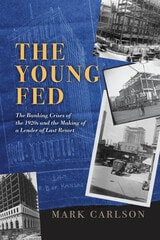
The Young Fed
The Banking Crises of the 1920s and the Making of a Lender of Last ResortMark Carlson
University of Chicago Press, 2025
A new history of crisis responses in the central bank’s formative years.
The long-standing description of the Federal Reserve as a “lender of last resort” refers to the central bank’s emergency liquidity provision for financial entities in periods of crisis. As Mark Carlson shows, this function was foundational to how the Fed was designed but has, at times, proven challenging to implement. The Young Fed examines the origins of the Federal Reserve’s emergency liquidity provision which, along with the setting of monetary policy, has become a critical responsibility.
Focusing on the Fed’s response to the financial crises of the 1920s, Carlson documents the formative deliberations of central bank policymakers regarding how to assist banks experiencing distress; the lessons that were learned; and how those lessons shaped subsequent policies. Carlson depicts an early Fed that experimented with a variety of approaches to crises, ranging from bold spectacles featuring cash-filled armored cars to behind-the-scenes interventions to prevent inducing panics or bank runs. The Young Fed weaves previously unpublished material from the Fed archives into a watershed work in American economic history: a deeply sourced account of how the world’s most important central bank became a lender of last resort.
The Youth Labor Market Problem
Its Nature, Causes, and ConsequencesEdited by Richard B. Freeman and David A. Wise
University of Chicago Press, 1982
Themes in the Economics of Aging
Edited by David A. Wise
University of Chicago Press, 2001
This volume begins by looking at the implications of private and public personal retirement plans, focusing in particular on the impact of 401(k) programs on retirement strategies in light of potential social security reform and factors such as annuitization and on asset accumulation. Next, the often-observed relationship between health and wealth is dissected from two different perspectives and correlated with striking increases in health-care spending over the past two decades, despite the improved health of older populations. The volume concludes with an investigation of the retirement effects of various social security provisions in both U.S. and German systems.
This carefully developed collection expands the current investigative focus and broadens the dialogue on a rapidly growing area of social and economic concern.
Theories of Dependent Foreign Policy and the Case of Ecuador in the 1980s
Jeanne A. K. Hey
Ohio University Press, 1995
How do economic weakness and dependence influence foreign policy decisions and behavior in third world countries? Theories in Dependent Foreign Policy examines six foreign policy theories: compliance, consensus, counterdependence, realism, leader preferences and domestic politics, and each is applied to a series of case studies of Ecuador’s foreign policy during the 1980s under two regimes: Osvaldo Hurtado (1981-1984) and his successor León Febres Cordero (1984-1988).
Hey shows that Ecuador during this period represented the third world in many ways. It was a new democracy, having just emerged from years of military rule, extremely indebted to the West, and dependent on primary product export economy that relied heavily on importers, especially the United States.
Jeanne Hey finds that some of the most popular and enduring theories in western research, such as realism and compliance, poorly account for Ecuadorian foreign policy. She explains that poor countries like Ecuador have substantial foreign policy latitude in the diplomatic area. Drawing on archival research and interviews with policy makers including Presidents Hurtado and Febres Cordero, Dr. Hey convincingly argues that many of the traditional foreign policy theories do not “fit” dependent states, and inadequately account for the complexity of foreign policy in the third world.
Theory in the Practice of the Nicaraguan Revolution
Bruce E. Wright
Ohio University Press, 1995
Even in the period following the electoral defeat of the Sandinista National Liberation Front (FSLN) in 1990, the revolution of 1979 continues to have a profound effect on the political economy of Nicaragua. Wright’s study, which is based on interviews with people from all walks of life—from government and party officials to academics and campesinos—as well as on the large volume of literature in both English and Spanish, focuses on the FSLN understanding of the relationships between the state, the party, and mass actors, and the nature of social classes. Wright considers the topics of agrarian reform, the development of mass organizations, the role of labor, and other aspects of the Nicaraguan political economy in order to assess their significance in theoretical as well as practical terms.

Things Worth Keeping
The Value of Attachment in a Disposable WorldChristine Harold
University of Minnesota Press, 2020
A timely examination of the attachments we form to objects and how they might be used to reduce waste
Rampant consumerism has inundated our planet with pollution and waste. Yet attempts to create environmentally friendly forms of consumption are often co-opted by corporations looking to sell us more stuff. In Things Worth Keeping, Christine Harold investigates the attachments we form to the objects we buy, keep, and discard, and explores how these attachments might be marshaled to create less wasteful practices and balance our consumerist and ecological impulses.
Although all economies produce waste, no system generates as much or has become so adept at hiding its excesses as today’s mode of global capitalism. This book suggests that managing the material excesses of our lives as consumers requires us to build on, rather than reject, our desire for and attraction to objects. Increasing environmental awareness on its own will be ineffective at reversing ecological devastation, Harold argues, unless it is coupled with a more thorough understanding of how and why we love the things that imbue our lives with pleasure, meaning, and utility.
From Marie Kondo’s method for decluttering that asks whether the things in our lives “spark joy” to the advent of emotionally durable design, which seeks to reduce consumption and waste by increasing the meaningfulness of the relationship between user and product, Harold explores how consumer psychology and empathetic design can transform our perception of consumer products from disposable to interconnected. An urgent call for rethinking consumerism, Things Worth Keeping shows that by recognizing our responsibility for the things we produce, we can become better stewards of the planet.
Thinker, Faker, Spinner, Spy
Corporate PR and the Assault on DemocracyEdited by David Miller and William Dinan
Pluto Press, 2007
Written by leading activists and writers, this book reveals the secrets of the PR trade including deception, the use of fake 'institutes', spying and dirty tricks. The impact can be devastating -- when the public is denied access to the truth, the results are rising inequality and environmental catastrophe.
Exposing the misdeeds of famous companies including Coca Cola, British Aerospace, Exxon and Monsanto, and revealing information about the covert funding of various apparently independent thinks tanks and institutes, the authors offer a guide to campaigns that can help us roll back corporate power and resist deceptive PR.

Thinking Through Statistics
John Levi Martin
University of Chicago Press, 2018
Martin argues that the task of social statistics isn't to estimate parameters, but to reject false theory. He illustrates common pitfalls that can keep researchers from doing just that using a combination of visualizations, re-analyses, and simulations. Thinking Through Statistics gives social science practitioners accessible insight into troves of wisdom that would normally have to be earned through arduous trial and error, and it does so with a lighthearted approach that ensures this field guide is anything but stodgy.
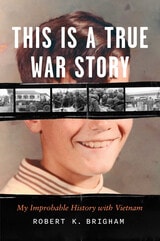
This Is a True War Story
My Improbable History with VietnamRobert K. Brigham
University of Chicago Press, 2026
Robert K. Brigham has had a substantial career as a historian of the Vietnam War, with a hand in nine books, a documentary, public history projects, and more. While many a historian has felt compelled at some point to write about a subject close to them personally, Brigham did not think he was doing that. But, at age fifty-eight, Brigham, who had long known he was adopted, discovered that he’d improbably and unknowingly been studying and talking about his biological father for decades. That man, Bruce Atwell, was a Marine Corps photographer who took some of that war’s most indelible and widely reproduced pictures. Brigham had used those images over and over again in decades’ worth of classes and public lectures, never knowing the truth.
Both Brigham and Atwell were products of the American foster care and adoption system, and both were defined professionally by Vietnam. In a story shot through with echoes and shadows, Brigham not only reveals his own history as an adoptee but opens a startlingly fresh vantage on the fragility of American families; the power of social norms and taboos to shape lives; and the forces that inequitably disrupt families, not least of them war. The result is an accessible and moving book that is at once both a powerful personal story and an illuminating social critique.
This Is a True War Story
My Improbable History with VietnamRobert K. Brigham
University of Chicago Press, 2026
A personal account by a war historian and adoptee who discovers his biological father was a famous Marine combat photographer in Vietnam.
Robert K. Brigham has had a substantial career as a historian of the Vietnam War, with a hand in nine books, a documentary, public history projects, and more. While many a historian has felt compelled at some point to write about a subject close to them personally, Brigham did not think he was doing that. But, at age 58, Brigham, who had long known he was adopted, discovered that he’d improbably and unknowingly been studying and talking about his real father for decades. That man, Bruce Atwell, was a Marine Corps photographer who took some of that war’s most indelible and widely reproduced pictures. Brigham had used those images over and over again in decades’ worth of classes and public lectures, never knowing the truth.
Both Brigham and Atwell were products of the American foster care and adoption system, and both were defined professionally by Vietnam. In a story shot through with echoes and shadows, Brigham not only reveals his own history as an adoptee but opens a startlingly fresh vantage on the fragility of American families; the power of social norms and taboos to shape lives; and the forces that inequitably disrupt families, not least of them war. The result is an accessible and moving book that is at once both a powerful personal story and an illuminating social critique.
This Little Kiddy Went to Market
The Corporate Capture of ChildhoodSharon Beder, Wendy Varney, and Richard Gosden
Pluto Press, 2009
This book investigates the way that corporations are strategically shaping children to be under-aged hyperconsumers as well as the submissive employees and uncritical citizens of the future.
Sharon Beder shows how marketers and advertisers are targeting ever younger children in a relentless campaign, transforming children's play into a commercial opportunity and taking advantage of childish anxieties.
Beder investigates the corporate relations and ideals that infiltrate every aspect of our lives. She presents an alarming picture of how a child's social development -- through education, health care and nutrition -- has become an ordered conveyor belt of consumerist conditioning. Focusing on education in particular, Beder explains how businesses are taking control of more and more aspects of schooling, not only for profit but to erode state schooling and promote business values. Similarly, she shows how 'difficult' children are taught from an early age that pharmaceuticals can be used to discipline them or to make them 'happy'.

Ticket Operations and Sales Management in Sport
James T. Reese
FiT Publishing, 2013
In one of the most current and comprehensive textbooks on the topic of ticket operations and sales management, James T. Reese and a collection of academicians and practitioners provide insight, practical tips, and first-hand accounts of what it takes to excel in this growing and ever-changing industry. Chapters cover topics such as customer service, sales, pricing, distribution, the secondary ticket market, and new ticketing technology.
"This book is the 'how to' book on ticket operations and sales management. Students utilizing this book will be prepared to sell and operate one of the most important revenue streams in sport ticketing."
—From the foreword by Rick Nichols, owner of Admissions Sport Consulting
Tight Knit
Global Families and the Social Life of Fast FashionElizabeth L. Krause
University of Chicago Press, 2018
Krause offers a revelatory look into how families involved in the fashion industry are coping with globalization based on longterm research in Prato, the historic hub of textile production in the heart of metropolitan Tuscany. She brings to the fore the tensions—over value, money, beauty, family, care, and belonging—that are reaching a boiling point as the country struggles to deal with the same migration pressures that are triggering backlash all over Europe and North America. Tight Knit tells a fascinating story about the heterogeneity of contemporary capitalism that will interest social scientists, immigration experts, and anyone curious about how globalization is changing the most basic of human conditions—making a living and making a life.

Timber!
A Northwoods Story of Lumberjacks, Logging, and the LandSusan Apps-Bodilly
Wisconsin Historical Society Press, 2024
How did the logging boom begin? What was it like to work in the woods? What happened to the land after the trees were cut down? The latest book for young readers from father-daughter duo Jerry Apps and Susan Apps-Bodilly explores the origin story of Wisconsin’s logging boom, the devastation it caused to the land, and the extraordinary efforts to restore the cutover land and log sustainably.
Timber! helps young readers examine a complex and pivotal chapter in our state and nation’s history, covering a wide range of topics, including:
• how Native people used, shared, and relied on natural resources for thousands of years
• the forced removal of Native people from forested lands
• how the lumber industry made possible the westward expansion of the United States
• what it was like to work in a logging camp, on a log drive, and inside a sawmill
• the roles on a logging team, from sawyer to cook
• the destructive legacy of early logging practices and early efforts to restore the land
• the emergence of sustainable forestry practices
This comprehensive yet easy-to-read history includes letters, postcards, and other primary sources paired with discussion questions designed to engage young readers’ creativity and critical-thinking skills. Timber! also features more than 100 images, a glossary, suggested activities, and an extensive list of related resources, including books, websites, teaching materials, museums, and outdoor places to visit. Timber! will inspire readers of all ages to explore, protect, and learn about trees and forests in their own communities.
Time and Decision
Economic and Psychological Perspectives of Intertemporal ChoiceGeorge Loewenstein
Russell Sage Foundation, 2003
Time to Get Real!
Turning Uncertainty into an Action Plan for Personal and Professional SuccessAlex J. Plinio
Rutgers University Press, 2019
The Life and Career Planning Model in Time to Get Real! has been utilized by individuals in early, mid and later career and life. Too many individuals let life happen to them. Control more of your life through readiness and preparation. We can help you visualize a future that you desire and a road that you can travel to get there.
Written by Alex J. Plinio, and Melissa Smith, acclaimed business leaders and life and career planning specialists, this book is filled with instructive case studies, illuminating stories, interactive exercises, and inspirational quotes enabling you to unlock those things leading to personal satisfaction and success. The Life and Career Planning Model helps you target what matters the most to you in your life while providing the impetus to move you forward in a positive direction. Whether you are 21, 41, or 61, it is now Time to Get Real!

Time, Ignorance, and Uncertainty in Economic Models
Donald W. Katzner
University of Michigan Press, 1998
Donald W. Katzner begins with an extensive investigation of the distinction between potential surprise and probability. He presents a modified version of Shackle's model of decision-making in ignorance and examines in considerable detail its "comparative statics" and operationality properties. The meaning of aggregation and simultaneity under these conditions is also explored, and Shackle's model is applied to the construction of models of the consumer, the firm, microeconomics, and macroeconomics. Katzner concludes with discussions of the roles of history, hysteresis, and empirical investigation in economic inquiry.
Time, Ignorance, and Uncertainty in Economic Models will be of interest to economists and others engaged in the study of uncertainty, probability, aggregation, and simultaneity. Those interested in the microeconomics of consumer and firm behavior, general equilibrium, and macroeconomics will also benefit from this book.
Donald W. Katzner is Professor of Economics, University of Massachusetts.
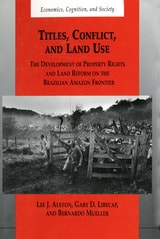
Titles, Conflict, and Land Use
The Development of Property Rights and Land Reform on the Brazilian Amazon FrontierLee J. Alston, Gary D. Libecap, and Bernardo Mueller
University of Michigan Press, 1999
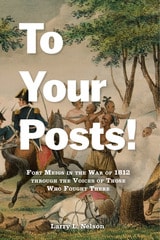
To Your Posts!
Fort Meigs in the War of 1812 through the Voices of Those Who Fought ThereLarry L. Nelson
Michigan State University Press, 2025
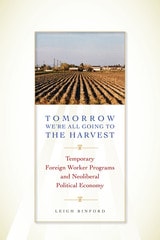
Tomorrow We're All Going to the Harvest
Temporary Foreign Worker Programs and Neoliberal Political EconomyBy Leigh Binford
University of Texas Press, 2013
From its inception in 1966, the Canadian Seasonal Agricultural Worker Program (SAWP) has grown to employ approximately 20,000 workers annually, the majority from Mexico. The program has been hailed as a model that alleviates human rights concerns because, under contract, SAWP workers travel legally, receive health benefits, contribute to pensions, are represented by Canadian consular officials, and rate the program favorably. Tomorrow We’re All Going to the Harvest takes us behind the ideology and examines the daily lives of SAWP workers from Tlaxcala, Mexico (one of the leading sending states), observing the great personal and family price paid in order to experience a temporary rise in a standard of living. The book also observes the disparities of a gutted Mexican countryside versus the flourishing agriculture in Canada, where farm labor demand remains high.
Drawn from extensive surveys and nearly two hundred interviews, ethnographic work in Ontario (destination of over 77 percent of migrants in the author’s sample), and quantitative data, this is much more than a case study; it situates the Tlaxcala-Canada exchange within the broader issues of migration, economics, and cultural currents. Bringing to light the historical genesis of “complementary” labor markets and the contradictory positioning of Mexican government representatives, Leigh Binford also explores the language barriers and nonexistent worker networks in Canada, as well as the physical realities of the work itself, making this book a complete portrait of a provocative segment of migrant labor.
Topics in Empirical International Economics
A Festschrift in Honor of Robert E. LipseyEdited by Magnus Blomström and Linda S. Goldberg
University of Chicago Press, 2001
Topics in the Economics of Aging
Edited by David A. Wise
University of Chicago Press, 1992
Totalled
Salvaging the Future from the Wreckage of CapitalismColin Cremin
Pluto Press, 2015
Totalled maps the deteriorating socio-economic, political, and ecological conditions in which we live. Yet Cremin asks how a utopian possibility discernable in the power of human creation can be realized even though as a society we are bound up materially, ideologically, libidinally—totally—to the capitalist machine of destruction. Totalled concludes with a politically and economically grounded set of propositions on how we might begin to imagine such a possibility.
Towards a Cognitive Mode in Global Finance?
The Governance of a Knowledge-Based Financial SystemEdited by Torsten Strulik and Helmut Willke
Campus Verlag, 2007
Towards a Future for BRICS+
Edited by Heiwai Tang and Brian Wong Yue Shun
Hong Kong University Press, 2025
As the BRICS bloc expands beyond its original five members to include Egypt, Ethiopia, Iran, Indonesia, and the UAE—with Saudi Arabia invited to join—the influence of BRICS+ in global trade and geopolitics is growing. The question remains: what does this shifting balance of power mean for the world?
Towards a Future for BRICS+, edited by Heiwai Tang and Brian Wong, brings together leading scholars to assess the past, present, and future of this evolving coalition. With rigorous, evidence-based analysis, this work outlines the economic and political complementarities between BRICS+ nations while also addressing internal tensions and the broader implications for the Global South.
As questions linger over the viability of BRICS+ as a counterweight to the G7, this book is a valuable reference for policymakers and scholars seeking to understand the emerging global order.

Toxic Ivory Towers
The Consequences of Work Stress on Underrepresented Minority FacultyRuth Enid Zambrana
Rutgers University Press, 2018
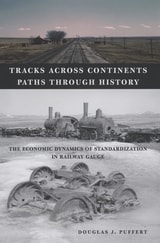
Tracks across Continents, Paths through History
The Economic Dynamics of Standardization in Railway GaugeDouglas J. Puffert
University of Chicago Press, 2009
A standard track gauge—the distance between the two rails—enables connecting railway lines to exchange traffic. But despite the benefits of standardization, early North American railways used six different gauges extensively, and even today breaks of gauge at national borders and within such countries as India and Australia are expensive burdens on commerce. In Tracks across Continents, Paths through History, Douglas J. Puffert offers a global history of railway track gauge, examining early choices and the dynamic process of diversity and standardization that resulted.
Drawing on the economic theory of path dependence, and grounded in economic, technical, and institutional realities, this innovative volume traces how early historical events, and even idiosyncratic personalities, have affected choices of gauge ever since, despite changing technology and understandings of what gauge is optimal. Puffert also uses this history to develop new insights in the theory of path dependence. Tracks across Continents, Paths through History will be essential reading for anyone interested in how history and economics inform each other.
Trade Policies for International Competitiveness
Edited by Robert C. Feenstra
University of Chicago Press, 1989
In Trade Policies for International Competitiveness, Robert C. Feenstra collects seven papers from the conference, each accompanied by discussants' comments, and adds a helpful introduction. Some of the issues considered by contributors are effects of macroeconomic and strategic foreign policies on competitiveness; the recent influx of foreign direct investment in the United States, primarily from Japan; the extent to which Japanese trade patterns are a reflection of underlying factor and endowments rather than trade barriers; and the market structure of Canadian industries, including applications for ongoing U.S.-Canadian free trade negotiations. Topical and provocative, these papers will be of value to economists, policymakers, and those in the business world.
Trade Policy Issues and Empirical Analysis
Edited by Robert E. Baldwin
University of Chicago Press, 1988
The volume is divided into four parts. The papers in part 1 consider the problem of imperfect competition, empirically assessing the economic effect of various trade policies introduced in industries in which the "new" trade theory seems to apply. Those in part 2 isolate the effects of protection from the influences of the many economic changes that accompany actual periods of protection and also examine how the effects from exogenous changes in economic conditions vary with the form of protection. Part 3 provides new empirical evidence on the effect of foreign production by a country's firms on the home country's exports. Finally, in part 4, two key bilateral issues are analyzed: recent U.S.-Japanese trade tensions and the incident involving the threat of the imposition of countervailing duties by the United States on Canadian softwood lumber.

Trade Policy in a Changing World Economy
Robert E. Baldwin
University of Chicago Press, 1989
Trade Policy in a Changing World Economy provides a clear introduction to complex trade issues, covering theoretical issues of trade policy, the changing nature of American trade policy, the changing nature of American trade policy since World War II, multilateral trade negotiations, and trade strategies. The volume is particularly timely as the world's nations enter a new round of GATT negotiations for the reduction of trade barriers.
Trade Threats, Trade Wars
Bargaining, Retaliation, and American Coercive DiplomacyKa Zeng
University of Michigan Press, 2004
Trade and Employment in Developing Countries, Volume 1
Individual StudiesEdited by Anne O. Krueger, Hal B. Lary, Terry Monson, and Narongchai Akrasanee
University of Chicago Press, 1980
Ten countries are studied: Brazil, Chile, Colombia, Indonesia, the Ivory Coast, Pakistan, South Korea, Thailand, Tunisia, and Uruguay. The contributors to the volume analyze the link between trade strategies and employment within a common framework, and the analyses of trade policy include the level and structure of protection, the relation of trade policy to labor demand, the labor intensiveness of trade, and the extent of distortions in factor markets and their effects on trade.
Trade and Employment in Developing Countries, Volume 2
Factor Supply and SubstitutionEdited by Anne O. Krueger
University of Chicago Press, 1982
Trade and Investment Relations among the United States, Canada, and Japan
Edited by Robert M. Stern
University of Chicago Press, 1989
The papers in this volume were developed from a conference that addressed the need to discover which structural determinants and policies shape the close economic ties among these nations. Leading experts on trade and macroeconomics from all three countries examine disproportionate saving rates, exchange rate volatility, varying industrial policies and levels of financial innovation, the effects of present tax policies and proposed reforms, and the dynamism of major Pacific nations and the leadership role Japan may play in U.S. relations with that region. Several important conclusions are reached by the contributors. They assert that Japan's trade barriers are relatively low overall and are comparable to those maintained by the United States and Canada, and that divergent fiscal policies have been the major source of macroeconomic imbalances between the United States and other major countries in the 1980s. They also conclude that current trade imbalances may persist for some time. The analyses offered here are likely to prove influential in future policymaking and will be of interest to a wide audience, including academic economists, government officials, and students of theoretical and policy issues of international trade, investment, and finance.
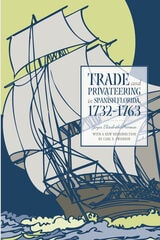
Trade and Privateering in Spanish Florida, 1732–1763
Joyce Elizabeth Harman, With a New Introduction by Carl E. Swanson
University of Alabama Press, 2004
A groundbreaking study of commerce, conflict, and survival in colonial Spanish Florida.
Trade and Privateering examines the illegal yet highly profitable and mutually beneficial trade between Spanish Florida and the English colonies on the eastern seaboard in the mid-18th century. In St. Augustine, the arrival of subsidies from Spain was erratic, causing shortages of food and supplies, so authorities ignored the restrictions on trade with foreign colonies and welcomed British goods. Likewise, the British colonists sought Spanish products from Florida, especially oranges.
But when England and Spain became declared enemies in the War of Jenkins’ Ear and the French and Indian Wars, this tacit trade arrangement was threatened, and the result was a rise of privateering in the region. Rather than do without Spanish goods, the English began to attack and capture Spanish vessels with their cargoes at sea. Likewise, the Spaniards resorted to privateering as a means of steadily supplying the Florida colony. Harman concludes that, both willingly and unwillingly, the English colonies helped their Spanish neighbor to sustain its position in the Southeast.