Results by title
4130 books match the query 'Science' and 981 start with t
The Night of the Physicists
Operation Epsilon: Heisenberg, Hahn, Weizsäcker and the German BombRichard von Schirach
Haus Publishing, 2015
The Nocturnal Side of Science in David Friedrich Strauss's Life of Jesus Critically Examined
Thomas Fabisiak
SBL Press, 2015
A close look at how Strauss's engagement with popular and scholarly controversies influenced his study of the Gospels
David Friedrich Strauss's Life of Jesus Critically Examined is known as a monumental contribution to the critical, scientific study of religion and Christian origins. It was widely read and influenced literary and historical research on the Bible as well as critical philosophy between Hegel and Nietzsche. Less well-known are Strauss's writings from the same period on "the nocturnal side of nature," paranormal phenomena such as demon possession, animal magnetism, and the ghost-seeing of Frederike Hauffe, the famous "Seeress of Prevorst."
Features:
- Illuminates unfamiliar features of early nineteenth-century theology, philosophy, and medicine showing how spirituality and science blended together in these fields
- Demonstrates the importance of Western esotericism and popular religion in the history of modern biblical studies
- Sheds new light on Strauss’s study of the Gospels as myths, his critique of miracles and his account of the historical Jesus
The Normals
A People’s History of Modern America in Five Human ExperimentsLaura Stark
University of Chicago Press, 2027
How healthy control subjects in clinical research transformed the practice and labor of science, as told by the Normals themselves.
In the 1950s, the National Institutes of Health were in search of a large, replenishing stream of healthy people to participate in clinical studies. To establish legal sources of test subjects, the NIH signed unprecedented contracts with American colleges, church organizations, and other government agencies, and in the process gave rise to a new type of test subject: the “normal patient.” Thousands of them eventually moved into the NIH Clinical Center to live in hospital rooms, eat food prepared in a metabolic kitchen, and follow—or flout—the rules.
The Normals is a groundbreaking account of the NIH Normal Volunteer Patient Program, which has lasted into the twenty-first century. This program harnessed outside organizations in all areas of postwar American life—colleges and universities, labor unions, civic groups, federal prisons, and churches—to recruit research subjects for human experiments. Drawing on thousands of pages of unearthed government documents, oral histories, and personal materials shared by the patients themselves (collected in a new archive), Laura Stark follows five experiments and the people involved, delving into their biographies, their time at the Clinical Center, and the thorny problem of determining who counts as “normal.” The “Normals” were not passive objects of study, Stark shows, but active research participants who collaborated with scientists, maintained the laboratories where they served, informed official ethics policies, and bargained to meet their needs.
By taking seriously the pillow fights and the first kisses, the bible clubs and the movie nights that animated the Clinical Center as much as the medical experiments, The Normals brings to life a surprising true story of the origins of our present-day system of human experiment, one that at once explores what it means to work, to serve, to volunteer.
The Northeast
A Fire SurveyStephen J. Pyne
University of Arizona Press, 2019
The Northeast has its roster of great fires, beginning with dark days in the late 18th century, followed by a chronicle of conflagrations continuing as late as 1903 and 1908, with a shocking after-tremor in 1947. It hosted the nation’s first forestry schools. It organized the first interstate (and international) fire compact. And it was the Northeast that pioneered the transition to the true Big Burn—industrial combustion—as America went from burning living landscapes to burning lithic ones.
In this new book in the To the Last Smoke series, renowned fire expert Stephen J. Pyne narrates this history and explains how fire is returning to a place not usually thought of in America’s fire scene. He examines what changes in climate and land use mean for wildfire, what fire ecology means for cultural landscapes, and what experiments are underway to reintroduce fire to habitats that need it. The region’s great fires have gone; its influence on the national scene has not.
The Northeast: A Fire Survey samples the historic and contemporary significance of the region and explains how it fits into a national cartography and narrative of fire.
Included in this volume:
How the region shaped America’s understanding and policy toward fire
How fire fits into the region today and what that means for the country overall
What changes in climate, land use, and institutions may mean for northeastern fire, both wild and tame
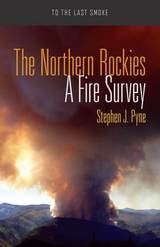
The Northern Rockies
A Fire SurveyStephen J. Pyne
University of Arizona Press, 2016
The Northern Rockies remain one of three major hearths for America’s fire culture. They hold a major fire laboratory, an equipment development center, an aerial fire depot, and a social engagement with fire—even a literature. Missoula is to fire in the big backcountry what Tallahassee is to prescribed burning and what Southern California is to urban-wildland hybrids. On its margins, Boise hosts the National Interagency Fire Center. In this structured collection of essays on the region, Stephen J. Pyne explores what makes the Northern Rockies distinctive and what sets it apart from other regions of the country. Surprisingly, perhaps, the story is equally one of big bureaucracies and of generations that encounter the region’s majestic landscapes through flame.
The Northern Rockies is part of a multivolume series describing the nation’s fire scene region by region. The volumes in To the Last Smoke also cover Florida, the Northern Rockies, the Great Plains, the Southwest, and several other critical fire regions. The series serves as an important punctuation point to Pyne’s 50-year career with wildland fire—both as a firefighter and a fire scholar. These unique surveys of regional pyrogeography are Pyne’s way of “keeping with it to the end,” encompassing the directive from his rookie season to stay with every fire “to the last smoke.”
The Obsolescence of Human Rights
The Alt-Right, the Pandemic and Science as an Emerging Political CleavageFilip Balunovic
Central European University Press, 2026
The Old Barn Book
A Field Guide to North American Barns & Other Farm StructuresNoble, Allen G
Rutgers University Press, 1996
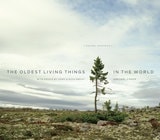
The Oldest Living Things in the World
Rachel Sussman
University of Chicago Press, 2014
Her work is both timeless and timely, and spans disciplines, continents, and millennia. It is underscored by an innate environmentalism and driven by Sussman’s relentless curiosity. She begins at “year zero,” and looks back from there, photographing the past in the present. These ancient individuals live on every continent and range from Greenlandic lichens that grow only one centimeter a century, to unique desert shrubs in Africa and South America, a predatory fungus in Oregon, Caribbean brain coral, to an 80,000-year-old colony of aspen in Utah. Sussman journeyed to Antarctica to photograph 5,500-year-old moss; Australia for stromatolites, primeval organisms tied to the oxygenation of the planet and the beginnings of life on Earth; and to Tasmania to capture a 43,600-year-old self-propagating shrub that’s the last individual of its kind. Her portraits reveal the living history of our planet—and what we stand to lose in the future. These ancient survivors have weathered millennia in some of the world’s most extreme environments, yet climate change and human encroachment have put many of them in danger. Two of her subjects have already met with untimely deaths by human hands.
Alongside the photographs, Sussman relays fascinating – and sometimes harrowing – tales of her global adventures tracking down her subjects and shares insights from the scientists who research them. The oldest living things in the world are a record and celebration of the past, a call to action in the present, and a barometer of our future.
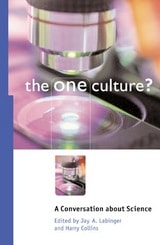
The One Culture?
A Conversation about ScienceEdited by Jay A. Labinger and Harry Collins
University of Chicago Press, 2001
The One Culture? is organized into three parts. The first consists of position papers written by scientists and sociologists of science, which were distributed to all the participants. The second presents commentaries on these papers, drawing out and discussing their central themes and arguments. In the third section, participants respond to these critiques, offering defenses, clarifications, and modifications of their positions.
Who can legitimately speak about science? What is the proper role of scientific knowledge? How should scientists interact with the rest of society in decision making? Because science occupies such a central position in the world today, such questions are vitally important. Although there are no simple solutions, The One Culture? does show the reader exactly what is at stake in the Science Wars, and provides a valuable framework for how to go about seeking the answers we so urgently need.
Contributors include:
Constance K. Barsky, Jean Bricmont, Harry Collins, Peter Dear, Jane
Gregory, Jay A. Labinger, Michael Lynch, N. David Mermin, Steve
Miller, Trevor Pinch, Peter R. Saulson, Steven Shapin, Alan Sokal,
Steven Weinberg, Kenneth G. Wilson
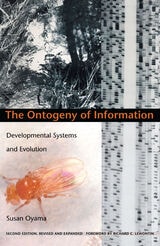
The Ontogeny of Information
Developmental Systems and EvolutionSusan Oyama
Duke University Press, 2000
Information, says Oyama, is thought to reside in molecules, cells, tissues, and the environment. When something wondrous occurs in the world, we tend to question whether the information guiding the transformation was pre-encoded in the organism or installed through experience or instruction. Oyama looks beyond this either-or question to focus on the history of such developments. She shows that what developmental “information” does depends on what is already in place and what alternatives are available. She terms this process “constructive interactionism,” whereby each combination of genes and environmental influences simultaneously interacts to produce a unique result. Ontogeny, then, is the result of dynamic and complex interactions in multileveled developmental systems.
The Ontogeny of Information challenges specialists in the fields of developmental biology, philosophy of biology, psychology, and sociology, and even nonspecialists, to reexamine the existing nature-nurture dichotomy as it relates to the history and formation of organisms.
The Open Mind
Cold War Politics and the Sciences of Human NatureJamie Cohen-Cole
University of Chicago Press, 2013

The Optics of Ibn al-Haytham Books IV–V
On Reflection and Images Seen by ReflectionAbdelhamid I. Sabra
University of London Press, 2023
Ibn al-Haytham was perhaps the greatest mathematician and physicist of the medieval Arabic/Islamic world. The most famous book in which he applied his scientific method is his Optics, through which he dealt with both the mathematics of rays of light and the physical aspects of the eye in seven comprehensive books. His rethinking of the entire science of optics set the scene for the whole of the subsequent development of the subject, influencing figures such as William of Ockham, Kepler, Descartes, and Christaan Huygens. The immense work of editing, translating into English, and commenting on this work was undertaken by Abdelhamid I. Sabra. This English translation of Books IV–V was completed by Sabra just before his death in 2013 with an introduction and critical analysis. It has been extensively revised by Jan Hogendijk.
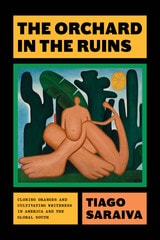
The Orchard in the Ruins
Cloning Oranges and Cultivating Whiteness in America and the Global SouthTiago Saraiva
University of Chicago Press, 2026
Ingeniously connects the history of citrus cultivation to the production and maintenance of whiteness in sites around the world.
In The Orchard in the Ruins, acclaimed historian Tiago Saraiva illuminates the global impact of cloning Californian oranges, a practice that emerged in the aftermath of the great depression of the 1890s. Cloning promised control, uniformity, and resistance to an array of environmental and economic threats. But Californian orchards—white-owned but tended by workers of Chinese, Japanese, Mexican, or Indigenous origin—were also places where plantations and race intertwined. Agricultural anxieties about strains of oranges and their value, Saraiva shows, formed a continuum with anxieties about vanishing whiteness.
The Orchard in the Ruins connects Californian history to other sites of citrus cultivation: South Africa, where concerns about white poverty grew during the early twentieth century; Mandatory Palestine, where orchards were key to Zionist undertakings; colonial Algeria, where French settlers transformed the landscape with European farming techniques; and Brazil, where orchards were cultivated post-abolition. Drawing on local histories as well as the works of John Dewey, J. M. Coetzee, Edward Said, Frantz Fanon, and artist Tarsila do Amaral, Saraiva shows that in each place, orchards grew in the wake of specific historical crises. Orange cultivation was a transnational project in cultivating whiteness, one in which studies of fruits, buds, rootstocks, fungi, and viruses became race-making experiments.
A must-read for anyone interested in the history of science, technology, agriculture, and race, The Orchard in the Ruins reveals a troubled account of science-led attempts to remedy crumbling worlds.

The Ordering of Time
From the Ancient Computus to the Modern ComputerArno Borst
University of Chicago Press, 1993
Arno Borst examines the various ways that time has been calculated by numbers and measured by instruments over several centuries, from the computus—an ancient method of determining times and dates—to the present-day computer. In a wide-ranging discussion, he analyzes the classical Greek concepts of divine, natural, and human time; the universal time of ancient Rome; the Easter cycle of the Middle Ages; the development of the mechanical clock in the fourteenth and fifteenth centuries; early modern chronology; and twentieth-century data processing.
Borst argues that although many centuries and countless different instruments—sundials, horologia, abaci, astrolabes, calendars, and calculating machines—separate the medieval computus from the modern computer, each generation has had to answer the same question: how can we make the best use of our available time to improve our lives? The computer, he suggests, is merely a new instrument employed for an ancient purpose.
Lively and accessible, The Ordering of Time will be welcomed by students and researchers in social and cultural history, the history of science and mathematics, as well as anyone interested in the history of time and numbers.
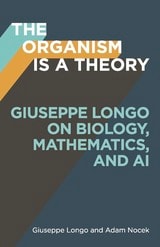
The Organism Is a Theory
Giuseppe Longo on Biology, Mathematics, and AIGiuseppe Longo
University of Minnesota Press, 2026
A bold reimagining of life that bridges science, philosophy, cybernetics, and the complexities of biological existence
The Organism Is a Theory is an intriguing synthesis of decades of interdisciplinary research by eminent mathematician and biological scientist Giuseppe Longo. A unique collaboration between Longo and philosopher of technology Adam Nocek, the volume confronts foundational issues in the history of mathematics, computer science, physics, and theoretical biology.
Challenging conventional approaches that apply computational and formalist models to the biological world, Longo reveals how the limitations of these models hinder the understanding of organismic complexity, development, and evolution. Through a critique of dominant scientific paradigms, he emphasizes the need for a new biological theory that accounts for the temporal and spatial intricacies of life. Enhanced by Nocek’s comprehensive introduction and a fascinating three-part interview with Longo, The Organism Is a Theory offers a bold rethinking of the biosciences, integrating the work of Alan Turing, Bernhard Riemann, Henri Poincaré, Kurt Gödel, and others into Longo’s vision of critical biology.
Bridging scientific and philosophical discourses, this book creatively applies insights from mathematics, physics, and computing into the study of the organism to present a new theoretical approach to understanding biological complexity that resists reductive mechanistic and informatic explanations.
Retail e-book files for this title are screen-reader friendly with image accompanied by short alt text and/or extended description.
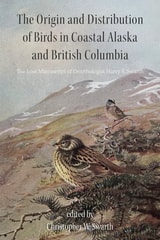
The Origin and Distribution of Birds in Coastal Alaska and British Columbia
The Lost Manuscript of Ornithologist Harry S. SwarthChristopher W. Swarth
Oregon State University Press, 2022
In 2019, Christopher Swarth, Harry’s grandson and a scientist in his own right, discovered the forgotten manuscript. This book includes the original unpublished manuscript, accompanied by contextual essays from contemporary ornithologists who examine the impact and relevance of Swarth’s research on coastal bird diversity, fox sparrow migration, and the systematic puzzle of the timberline sparrow. Expedition maps display field camps and exploration routes, and species checklists illustrate the variety of birds observed at key field sites. To bring additional color and insight, The Origin and Distribution of Birds in Coastal Alaska and British Columbia also includes excerpts from Harry Swarth’s field notes, a comprehensive list of Harry Swarth’s publications, and a glossary with historic and contemporary bird names. Naturalists, ornithologists, birders, and all those who want to learn more about the natural history of the region will delight in the rediscovery of this long-lost treasure.
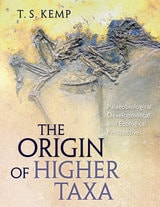
The Origin of Higher Taxa
Palaeobiological, Developmental, and Ecological PerspectivesT. S. Kemp
University of Chicago Press, 2015
Looking beyond the microevolutionary force of Darwinian natural selection, Kemp enters the realm of macroevolution, or evolution above the species level. From the origin of mammals to the radiation of flowering plants, these large-scale patterns—such as the rise of novel organismal design, adaptive radiations, and lineage extinctions—encompass the most significant trends and transformations in evolution. As macroevolution cannot be studied by direct observation and experiment, scientists have to rely on the outcome of evolution as evidence for the processes at work, in the form of patterns of species appearances and extinctions in a spotty fossil record, and through the nature of species extant today. Marshalling a wealth of new fossil and molecular evidence and increasingly sophisticated techniques for their study, Kemp here offers a timely and original reinterpretation of how higher taxa such as arthropods, mollusks, mammals, birds, and whales evolved—a bold new take on the history of life.
The Origins of Theoretical Population Genetics
With a New AfterwordWilliam B. Provine
University of Chicago Press, 2001
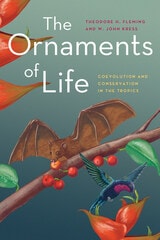
The Ornaments of Life
Coevolution and Conservation in the TropicsTheodore H. Fleming and W. John Kress
University of Chicago Press, 2013
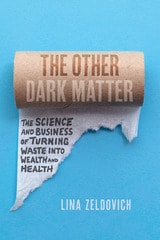
The Other Dark Matter
The Science and Business of Turning Waste into Wealth and HealthLina Zeldovich
University of Chicago Press, 2021
The average person produces about four hundred pounds of excrement a year. More than seven billion people live on this planet. Holy crap!
Because of the diseases it spreads, we have learned to distance ourselves from our waste, but the long line of engineering marvels we’ve created to do so—from Roman sewage systems and medieval latrines to the immense, computerized treatment plants we use today—has also done considerable damage to the earth’s ecology. Now scientists tell us: we’ve been wasting our waste. When recycled correctly, this resource, cheap and widely available, can be converted into a sustainable energy source, act as an organic fertilizer, provide effective medicinal therapy for antibiotic-resistant bacterial infection, and much more.
In clear and engaging prose that draws on her extensive research and interviews, Lina Zeldovich documents the massive redistribution of nutrients and sanitation inequities across the globe. She profiles the pioneers of poop upcycling, from startups in African villages to innovators in American cities that convert sewage into fertilizer, biogas, crude oil, and even life-saving medicine. She breaks taboos surrounding sewage disposal and shows how hygienic waste repurposing can help battle climate change, reduce acid rain, and eliminate toxic algal blooms. Ultimately, she implores us to use our innate organic power for the greater good. Don’t just sit there and let it go to waste.
The Outward Mind
Materialist Aesthetics in Victorian Science and LiteratureBenjamin Morgan
University of Chicago Press, 2017
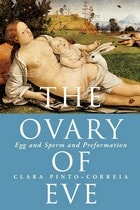
The Ovary of Eve
Egg and Sperm and PreformationClara Pinto-Correia
University of Chicago Press, 1997
"The most wonderfully eye-opening, or imagination-opening book, as amusing as it is instructive."—Mary Warnock, London Observer
"[A] fascinating and often humorous study of a reproductive theory that flourished from the mid-17th century to the mid-18th century."—Nina C. Ayoub, Chronicle of Higher Education
"More than just a good story, The Ovary of Eve is an object lesson about the history of science: Don't trust it. . . . Pinto-Correia says she wants to tell the story of history's losers. In doing so, she makes defeat sound more appealing than victory."—Emily Eakin, Nation.
"A sparkling history of preformation as it once affected every facet of European culture."—Robert Taylor, Boston Globe
The Ozone Layer
From Discovery to RecoveryGuy P. Brasseur
American Meteorological Society, 2020
This first complete study of ozone research demonstrates the key role fundamental research plays in solving global environmental, climate, and human health problems. More importantly, it shows that the scientific method works. Convincing decision makers of research results that do not correspond to their values, or to the interests of certain business groups, stands to be the highest hurdle in using science to benefit humanity. Students, early-career scientists, and even specialists who do not know much about the history of their field will benefit from this big picture view, offered by a researcher who has played leadership roles in stewarding this science through decades of discovery.

The Pacific Northwest Coast
Living with the Shores of Oregon and WashingtonPaul D. Komar
Duke University Press, 1998
In this guide, Paul D. Komar, one of the nation’s leading coastal oceanographers, examines the lessons taught by ages of geological and cultural history. With explanations of the area’s geological evolution, including natural shoreline erosion and sea-cliff landsliding, Komar details human interaction with the coast: erosion caused by early settlers, the development and destruction of Bayocean Spit, the disastrous effects caused by the 1982–1983 El Niño, and the notorious failure of a construction project on the picturesqueæbut unstableæbluffs at Jump-Off Joe. Emphasizing the actual and potential harm to human projects and to the natural heritage of the coast, Komar provides the knowledge necessary for finding a safe home near the shore while preserving the beauty that draws us to it.
The Pale Blue Data Point
An Earth-Based Perspective on the Search for Alien LifeJon Willis
University of Chicago Press, 2025
“Here is Willis’s fundamental argument: The more we learn about Earth—our one ‘pale blue data point’ for a planet on which life has definitively arisen—the more qualified we will be to recognize signs of life elsewhere. . . . [A] joyful account.”—Steven Poole, The Wall Street Journal
A thrilling tour of Earth that shows the search for extraterrestrial life starts in our own backyard.
Is there life off Earth? Bound by the limitations of spaceflight, a growing number of astrobiologists investigate the question by studying life on our planet. Astronomer and author Jon Willis shows us how it’s done, allowing readers to envision extraterrestrial landscapes by exploring their closest Earth analogs. With Willis, we dive into the Pacific Ocean from the submersible-equipped E/V Nautilus to ponder the uncharted seas of Saturn’s and Jupiter’s moons; search the Australian desert for some of Earth’s oldest fossils and consider the prospects for a Martian fossil hunt; visit mountaintop observatories in Chile to search for the telltale twinkle of extrasolar planets; and eavesdrop on dolphins in the Bahamas to imagine alien minds.
With investigations ranging from meteorite hunting to exoplanet detection, Willis conjures up alien worlds and unthought-of biological possibilities, speculating what life might look like on other planets by extrapolating from what we can see on Earth, our single “pale blue dot”—as Carl Sagan famously called it—or, in Willis’s reframing, scientists’ “pale blue data point.”
The Paleoarchaic Occupation of the Old River Bed Delta
David B. Madsen, Dave N. Schmitt, and David Page
University of Utah Press, 2015
University of Utah Anthropological Paper No. 128
About 12,000 years ago, a major river ran from the Sevier Basin to the Great Salt Lake, feeding a wetland delta system and creating riparian habitat along its length. But after three thousand years the river dried up and the surrounding lands became more like what we see today. Because the Old River Bed Delta experienced less environmental and human disturbance than other areas, many of the Paleoarchaic sites found there have remained relatively intact—a rare find in the Great Basin. This book presents a comprehensive synthesis of a decade of investigations conducted by research teams working in different parts of the delta and explores questions about how the old riverbed was formed, how its distributary system changed through time, and how these changes affected early foragers. It concludes with an integrated summary and interpretation. Additional material from this study will be available online at UofUpress.com.
Supplementary Material for The Paleoarchaic Occupation of the Old River Bed Delta
Chapter 3 - SDM Trench and Locality Descriptions November
Chapter 3 SDM Individual Channel Images November
Chapter 5 - SDM Additional Lithic Artifact Images
Chapter 6 - SDM Results of XRF and PXRF Analysis
Chapter 6 - SDM Source Assignment Tables
The Paleobiological Revolution
Essays on the Growth of Modern PaleontologyEdited by David Sepkoski and Michael Ruse
University of Chicago Press, 2009
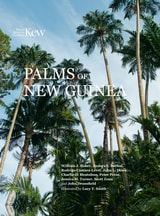
The Palms of New Guinea
William J. Baker, Anders S. Barfod, Rodrigo Camara-Leret, John L. Dowe, John Dransfield, Charlie D. Heatubun, Peter Petoe, Jessica H. Turner, and Scott Zona
Royal Botanic Gardens, Kew, 2024
From exquisite palmlets to graceful canopy giants, palms dominate the rainforests of New Guinea, one of the last tropical wilderness areas on the planet. New Guinea is the world’s largest tropical island and a globally significant biodiversity hotspot. Its extraordinary flora and remarkable 250 species of palm are vital for the people of New Guinea, who depend on them for their survival.
Palms of New Guinea is the first comprehensive account of these immensely important plants, covering their taxonomy, identification, distribution, habitat, conservation status, and much more. Alongside over 650 photographs and 250 detailed maps, botanical artist Lucy T. Smith has illustrated all species featured in Palms of New Guinea. Written by nine scientific experts, this is an essential companion for anyone studying or working in the region.
The Participatory Condition in the Digital Age
Darin Barney
University of Minnesota Press, 2016
Just what is the “participatory condition”? It is the situation in which taking part in something with others has become both environmental and normative. The fact that we have always participated does not mean we have always lived under the participatory condition. What is distinctive about the present is the extent to which the everyday social, economic, cultural, and political activities that comprise simply being in the world have been thematized and organized around the priority of participation.
Structured along four axes investigating the relations between participation and politics, surveillance, openness, and aesthetics, The Participatory Condition in the Digital Age comprises fifteen essays that explore the promises, possibilities, and failures of contemporary participatory media practices as related to power, Occupy Wall Street, the Arab Spring uprisings, worker-owned cooperatives for the post-Internet age; paradoxes of participation, media activism, open source projects; participatory civic life; commercial surveillance; contemporary art and design; and education.
This book represents the most comprehensive and transdisciplinary endeavor to date to examine the nature, place, and value of participation in the digital age. Just as in 1979, when Jean-François Lyotard proposed that “the postmodern condition” was characterized by the questioning of historical grand narratives, The Participatory Condition in the Digital Age investigates how participation has become a central preoccupation of our time.
Contributors: Mark Andrejevic, Pomona College; Bart Cammaerts, London School of Economics and Political Science (LSE); Nico Carpentier, Vrije Universiteit Brussel (VUB – Free University of Brussels) and Charles University in Prague; Julie E. Cohen, Georgetown University; Kate Crawford, MIT; Alessandro Delfanti, University of Toronto; Christina Dunbar-Hester, University of Southern California; Rudolf Frieling, California College of Arts and the San Francisco Art Institute; Salvatore Iaconesi, La Sapienza University of Rome and ISIA Design Florence; Jason Edward Lewis, Concordia University; Rafael Lozano-Hemmer; Graham Pullin, University of Dundee; Trebor Scholz, The New School in New York City; Cayley Sorochan, McGill University; Bernard Stiegler, Institute for Research and Innovation in Paris; Krzysztof Wodiczko, Harvard Graduate School of Design; Jillian C. York.
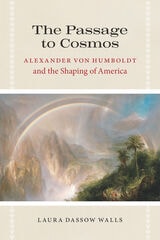
The Passage to Cosmos
Alexander von Humboldt and the Shaping of AmericaLaura Dassow Walls
University of Chicago Press, 2009
Explorer, scientist, writer, and humanist, Alexander von Humboldt was the most famous intellectual of the age that began with Napoleon and ended with Darwin. With Cosmos, the book that crowned his career, Humboldt offered to the world his vision of humans and nature as integrated halves of a single whole. In it, Humboldt espoused the idea that, while the universe of nature exists apart from human purpose, its beauty and order, the very idea of the whole it composes, are human achievements: cosmos comes into being in the dance of world and mind, subject and object, science and poetry.
Humboldt’s science laid the foundations for ecology and inspired the theories of his most important scientific disciple, Charles Darwin. In the United States, his ideas shaped the work of Emerson, Thoreau, Poe, and Whitman. They helped spark the American environmental movement through followers like John Muir and George Perkins Marsh. And they even bolstered efforts to free the slaves and honor the rights of Indians.
Laura Dassow Walls here traces Humboldt’s ideas for Cosmos to his 1799 journey to the Americas, where he first experienced the diversity of nature and of the world’s peoples—and envisioned a new cosmopolitanism that would link ideas, disciplines, and nations into a global web of knowledge and cultures. In reclaiming Humboldt’s transcultural and transdisciplinary project, Walls situates America in a lively and contested field of ideas, actions, and interests, and reaches beyond to a new worldview that integrates the natural and social sciences, the arts, and the humanities.
To the end of his life, Humboldt called himself “half an American,” but ironically his legacy has largely faded in the United States. The Passage to Cosmos will reintroduce this seminal thinker to a new audience and return America to its rightful place in the story of his life, work, and enduring legacy.
The People's Forests
Marshall, Robert
University of Iowa Press, 2002
Devoted conservationist, environmentalist, and explorer Robert Marshall (1901-1939) was chief of the Division of Recreation and Lands, U.S. Forest Service, when he died at age thirty-eight. Throughout his short but intense life, Marshall helped catalyze the preservation of millions of wilderness acres in all parts of the U.S., inspired countless wilderness advocates, and was a pioneer in the modern environmental movement: he and seven fellow conservationists founded the Wilderness Society in 1935. First published in 1933, The People's Forests made a passionate case for the public ownership and management of the nation's forests in the face of generations of devastating practices; its republication now is especially timely.
Marshall describes the major values of forests as sources of raw materials, as essential resources for the conservation of soil and water, and as a “precious environment for recreation” and for “the happiness of millions of human beings.” He considers the pros and cons of private and public ownership, deciding that public ownership and large-scale public acquisition are vital in order to save the nation's forests, and sets out ways to intelligently plan for and manage public ownership.
The last words of this book capture Marshall's philosophy perfectly: “The time has come when we must discard the unsocial view that our woods are the lumbermen's and substitute the broader ideal that every acre of woodland in the country is rightly a part of the people's forests.”
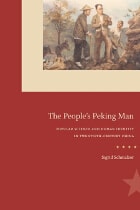
The People's Peking Man
Popular Science and Human Identity in Twentieth-Century ChinaSigrid Schmalzer
University of Chicago Press, 2008
The People’s Peking Man is a skilled social history of twentieth-century Chinese paleoanthropology and a compelling cultural—and at times comparative—history of assumptions and debates about what it means to be human. By focusing on issues that push against the boundaries of science and politics, The People’s Peking Man offers an innovative approach to modern Chinese history and the history of science.
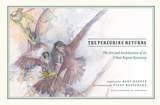
The Peregrine Returns
The Art and Architecture of an Urban Raptor RecoveryMary Hennen with Peggy Macnamara
University of Chicago Press, 2017
In The Peregrine Returns, Mary Hennen gives wings to this extraordinary conservation success story. Drawing on the beautiful watercolors of Field Museum artist-in-residence Peggy Macnamara and photos by Field Museum research assistant Stephanie Ware, as well as her own decades of work with peregrines, Hennen uses a program in Chicago as a case study for the peregrines’ journey from their devastating decline to the discovery of its cause (a thinning of eggshells caused by a by-product of DDT), through to recovery, revealing how the urban landscape has played an essential role in enabling falcons to return to the wild—and how people are now learning to live in close proximity to these captivating raptors.
Both a model for conservation programs across the country and an eye-opening look at the many creatures with which we share our homes, this richly illustrated story is an inspiring example of how urban architecture can serve not only our cities’ human inhabitants, but also their wild ones.
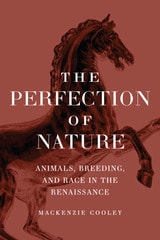
The Perfection of Nature
Animals, Breeding, and Race in the RenaissanceMackenzie Cooley
University of Chicago Press, 2022
The Renaissance is celebrated for the belief that individuals could fashion themselves to greatness, but there is a dark undercurrent to this fêted era of history. The same men and women who offered profound advancements in European understanding of the human condition—and laid the foundations of the Scientific Revolution—were also obsessed with controlling that condition and the wider natural world.
Tracing early modern artisanal practice, Mackenzie Cooley shows how the idea of race and theories of inheritance developed through animal breeding in the shadow of the Spanish Empire. While one strand of the Renaissance celebrated a liberal view of human potential, another limited it by biology, reducing man to beast and prince to stud. “Race,” Cooley explains, first referred to animal stock honed through breeding. To those who invented the concept, race was not inflexible, but the fragile result of reproductive work. As the Spanish empire expanded, the concept of race moved from nonhuman to human animals. Cooley reveals how, as the dangerous idea of controlled reproduction was brought to life again and again, a rich, complex, and ever-shifting language of race and breeding was born.
Adding nuance and historical context to discussions of race and human and animal relations, The Perfection of Nature provides a close reading of undertheorized notions of generation and its discontents in the more-than-human world.
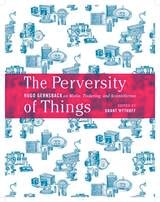
The Perversity of Things
Hugo Gernsback on Media, Tinkering, and ScientifictionHugo Gernsback
University of Minnesota Press, 2016
In 1905, a young Jewish immigrant from Luxembourg founded an electrical supply shop in New York. This inventor, writer, and publisher Hugo Gernsback would later become famous for launching the first science fiction magazine, Amazing Stories, in 1926. But while science fiction’s annual Hugo Awards were named in his honor, there has been surprisingly little understanding of how the genre began among a community of tinkerers all drawn to Gernsback’s vision of comprehending the future of media through making. In The Perversity of Things, Grant Wythoff makes available texts by Hugo Gernsback that were foundational both for science fiction and the emergence of media studies.
Wythoff argues that Gernsback developed a means of describing and assessing the cultural impact of emerging media long before media studies became an academic discipline. From editorials and blueprints to media histories, critical essays, and short fiction, Wythoff has collected a wide range of Gernsback’s writings that have been out of print since their magazine debut in the early 1900s. These articles cover such topics as television; the regulation of wireless/radio; war and technology; speculative futures; media-archaeological curiosities like the dynamophone and hypnobioscope; and more. All together, this collection shows how Gernsback’s publications evolved from an electrical parts catalog to a full-fledged literary genre.
The Perversity of Things aims to reverse the widespread misunderstanding of Gernsback within the history of science fiction criticism. Through painstaking research and extensive annotations and commentary, Wythoff reintroduces us to Gernsback and the origins of science fiction.
The Phoenix
An Unnatural Biography of a Mythical BeastJoseph Nigg
University of Chicago Press, 2016
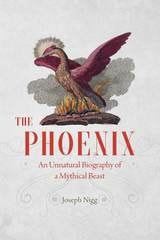
Beginning in ancient Egypt and traveling around the globe and through the centuries, Nigg’s vast and sweeping narrative takes readers on a brilliant tour of the cross-cultural lore of this famous, yet little-known, immortal bird. Seeking both the similarities and the differences in the phoenix’s many myths and representations, Nigg describes its countless permutations over millennia, including legends of the Chinese “phoenix,” which was considered one of the sacred creatures that presided over China’s destiny; classical Greece and Rome, where it can be found in the writings of Herodotus and Ovid; nascent and medieval Christianity, in which it came to embody the resurrection; and in Europe during the Renaissance, when it was a popular emblem of royals. Nigg examines the various phoenix traditions, the beliefs and tales associated with them, their symbolic and metaphoric use, the skepticism and speculation they’ve raised, and their appearance in religion, bestiaries, and even contemporary popular culture, in which the ageless bird of renewal is employed as a mascot and logo, including for our own University of Chicago.
Never bested by hardship or defeated by death, the phoenix is the ultimate icon of hope and rebirth. And in The Phoenix: An Unnatural Biography of a Mythical Beast, it finally has its due—a complete chronicle worthy of such a fantastic and phantasmal creature. This entertaining and informative look at the
life and transformation of the phoenix will be the authoritative source for anyone fascinated by folklore and mythology, re-igniting our curiosity about one of myth’s greatest beasts.

The Physico-Chemical Properties of Plant Saps in Relation to Phytogeography
Data on Native Vegetation in its Natural EnvironmentJ. Harris
University of Minnesota Press, 1934
The Physics and Technology of Semiconductor Devices
David K. Ferry
The Institution of Engineering and Technology, 2026
The Physics of Extragalactic Radio Sources
David S. De Young
University of Chicago Press, 2002
In The Physics of Extragalactic Radio Sources, David De Young provides a clearly written overview of what is currently known about these objects. A unique feature of the book is De Young's emphasis on the physical processes associated with extragalactic radio sources: their evolution, their environment, and their use as probes to solve other astrophysical problems. He also makes extensive use of the large amount of data now available from observations at x-ray, optical, and radio wavelengths to illustrate his main points.
The Physics of Extragalactic Radio Sources will be a comprehensive introduction to the field for graduate students and a useful summary for astrophysicists.
The Physics of Time Reversal
Robert G. Sachs
University of Chicago Press, 1987
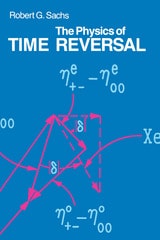
In The Physics of Time Reversal, Robert G. Sachs comprehensively treats the role of the transformation T, both as a tool for analyzing the structure of matter and as a field of fundamental research relating to CP violation. For this purpose he reformulates the definitions of T, P, and C so as to avoid subliminal assumptions of invariance. He summarizes the standard phenomenology of CP violation in the K-meson system and addresses the question of the mysterious origin of CP violation. Using simple examples based on the standard quark model, Sachs summarizes and illustrates how these phenomenological methods can be extended to analysis of future experiments on heavy mesons. He notes that his reformulated approach to conventional quantum field theory leads to new questions about the meaning of the transformations in the context of recent theoretical developments such as non-Abelian gauge theories, and he suggests ways in which these questions may lead to new directions of research.
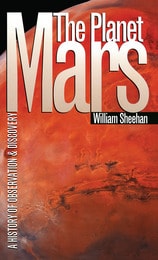
The Planet Mars
A History of Observation and DiscoveryWilliam Sheehan
University of Arizona Press, 1996
In this timely and vividly written account, William Sheehan traces human fascination with Mars back to the naked-eye observers of the planet. He recalls the early telescopic observers who first made out enigmatic markings and polar caps on its surface. Through lively historical anecdotes, he describes in detail the debate over the so-called canals of Mars, which encouraged speculation that the planet might be inhabited. Finally, Sheehan describes more recent theories about the planet, leading up to the present, when unmanned spacecraft have enabled us to make giant strides in exploration.
Well documented and sparked with human interest, this book will be a useful companion and guide in interpreting the barrage of headlines about Mars that is sure to come over the next few years. Amateurs will appreciate the contributions that have been made to Martian studies by people like themselves, and professionals will find much original material that has never before been published. The American Mars Global Surveyor is scheduled for launch in November 1996, and soon after the American Mars Pathfinder will make its way toward the red planet. A Russian mission consisting of an orbiter and two landers will be launched in October 1997. These space travelers will write a whole new chapter in the dramatic story of Mars, a planet whose exploration has only just begun. Astronomy Book Club main selection and selections of Book-of-the-Month Club and Quality Paperback Book Club.
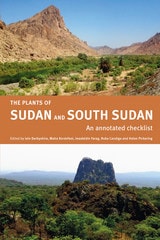
The Plants of Sudan and South Sudan
An Annotated ChecklistEdited by Iain Darbyshire, Maha Kordofani, Imadeldin Farag, Ruba Candiga, and Helen Pickering
Royal Botanic Gardens, Kew, 2014
The Plants of Sudan and South Sudan is the first comprehensive look at the plants of this region and includes nearly every known species. Each entry includes accepted scientific names, relevant synonymy, and brief habitat notes, as well as both global and regional distribution data. Also featured is a list of globally threatened plant species, their habitats, and their distribution within the region, which offers conservationists, land management agencies, and governmental departments key information on potential conservation priorities. This book will be the baseline reference for all future botanical and conservation work in the Sudan region.
The Player's Passion
Studies in the Science of ActingJoseph R. Roach
University of Michigan Press, 1993
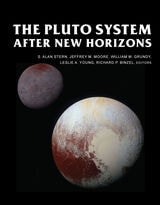
The Pluto System After New Horizons
S. Alan Stern, Jeffrey M. Moore, William M. Grundy, Leslie A. Young, Richard P. Binzel, Editors
University of Arizona Press, 2021
The Pluto System After New Horizons seeks to become the benchmark for synthesizing our understanding of the Pluto system. The volume’s lead editor is S. Alan Stern, who also serves as NASA’s New Horizons Principal Investigator; co-editors Richard P. Binzel, William M. Grundy, Jeffrey M. Moore, and Leslie A. Young are all co-investigators on New Horizons. Leading researchers from around the globe have spent the last five years assimilating Pluto system flyby data returned from New Horizons. The chapters in this volume form an enduring foundation for ongoing study and understanding of the Pluto system. The volume also advances insights into the nature of dwarf planets and Kuiper Belt objects, providing a cornerstone for planning new missions that may return to the Pluto system and explore others of the myriad important worlds beyond Neptune.
The Poconos
An Illustrated Natural History GuideCarl S. Oplinger and Robert Halma
Rutgers University Press, 2006
The Poconos, a rich plateau nestled in northeastern Pennsylvania between the Delaware River and the Moosic Mountains, encompass a variety of alluring features. The perfect reference for amateur naturalists, outdoor enthusiasts, tourists, and others who wish to explore the area, this classic guide clearly explains the unique geographic characteristics, animal habits and habitats, climate, geology, and vegetation of the area.
The authors trace the region from its beginnings millions of years ago as part of a shallow sea, through the reshaping forces of great glaciers, to today’s roadways and turnpikes. This revised and expanded edition also includes brief profiles of individuals who played significant roles in the preservation or understanding of the area’s ecology. Chapters provide a general survey of the area, including its history and places to be explored and observed, information on forest types, wildlife, and aquatic habitats, updated facts and figures on animal populations, as well as new details on invasive species.
Throughout the book, numerous boxes direct readers to observatory points for specific birds, ecosystems, vegetation types, and geological features, while maps, tables, original pen-and-ink illustrations, and a select list of field guides and other references enhance the book’s appeal. An indispensable companion for visitors as well as residents, The Poconos is a must-read for everyone who wants to discover or better understand the beauty and natural history of this unique region.
The Poetics of DNA
Judith Roof
University of Minnesota Press, 2007
How has DNA come to be seen as a cosmic truth, representative of all life, potential for all cures, repository for all identity, and end to all stories? In The Poetics of DNA, Judith Roof examines the rise of this powerful symbol and the implications of its ascendancy for the ways we think—about ourselves, about one another, and about the universe.
Descriptions of DNA, Roof argues, have distorted ideas and transformed nucleic acid into the answer to all questions of life. This hyperbolized notion of DNA, inevitably confused or conflated with the “gene,” has become a vector through which older ways of thinking can merge with the new, advancing long-discredited and insidious ideas about such things as eugenics and racial selection and influencing contemporary debates, particularly the popular press obsession with the “gay gene.” Through metaphors of DNA, she contends, racist and homophobic ideology is masked as progressive science.
Grappling with twentieth-century intellectual movements as well as contemporary societal anxieties, The Poetics of DNA reveals how descriptions of DNA and genes typify a larger set of epistemological battles that play out not only through the assumptions associated with DNA but also through less evident methods of magical thinking, reductionism, and pseudoscience.
For the first time, Roof exposes the ideology and cultural consequences of DNA and gene metaphors to uncover how, ultimately, they are paradigms used to recreate prejudices.
Judith Roof is professor of English and film studies at Michigan State University. She is the author of several books, including All about Thelma and Eve: Sidekicks and Third Wheels.
The Poetics of Natural History
Christoph Irmscher
Rutgers University Press, 2019
Early American naturalists assembled dazzling collections of native flora and fauna, from John Bartram’s botanical garden in Philadelphia and the artful display of animals in Charles Willson Peale’s museum to P. T. Barnum’s American Museum, infamously characterized by Henry James as “halls of humbug.” Yet physical collections were only one of the myriad ways that these naturalists captured, catalogued, and commemorated America’s rich biodiversity. They also turned to writing and art, from John Edward Holbrook’s forays into the fascinating world of herpetology to John James Audubon’s masterful portraits of American birds.
In this groundbreaking, now classic book, Christoph Irmscher argues that early American natural historians developed a distinctly poetic sensibility that allowed them to imagine themselves as part of, and not apart from, their environment. He also demonstrates what happens to such inclusiveness in the hands of Harvard scientist-turned Amazonian explorer Louis Agassiz, whose racist pseudoscience appalled his student William James.
This expanded, full-color edition of The Poetics of Natural History features a preface and art from award-winning artist Rosamond Purcell and invites the reader to be fully immersed in an era when the boundaries between literature, art, and science became fluid.
The Poison Trials
Wonder Drugs, Experiment, and the Battle for Authority in Renaissance ScienceAlisha Rankin
University of Chicago Press, 2021
At a time when poison was widely feared, the urgent need for effective cures provoked intense excitement about new drugs. As doctors created, performed, and evaluated poison trials, they devoted careful attention to method, wrote detailed experimental reports, and engaged with the problem of using human subjects for fatal tests. In reconstructing this history, Rankin reveals how the antidote trials generated extensive engagement with “experimental thinking” long before the great experimental boom of the seventeenth century and investigates how competition with lower-class healers spurred on this trend.
The Poison Trials sheds welcome and timely light on the intertwined nature of medical innovations, professional rivalries, and political power.
The Political Mapping of Cyberspace
Jeremy W. Crampton
University of Chicago Press, 2003
Using concepts and methods derived from the work of Michel Foucault, Crampton outlines a new mapping of cyberspace to help define the role of space in virtual worlds and to provide constructive ways in which humans can exist in another spatial dimension. He delineates the critical role maps play in constructing the medium as an object of knowledge and demonstrates that by processes of mapping we come to understand cyberspace. Maps, he argues, shape political thinking about cyberspace, and he deploys in-depth case studies of crime mapping, security maintenance, and geo-surveillance to show how we map ourselves onto cyberspace, inexorably, and indelibly.
Offering a powerful reinterpretation of technology and contemporary life, this innovative book will be an essential touchstone for the study of cartography and cyberspace in the twenty-first century.
The Political Origins of Inequality
Why a More Equal World Is Better for Us AllSimon Reid-Henry
University of Chicago Press, 2015
The problem of inequality, Reid-Henry argues, is a problem that manifests between places as well as over time. This is one reason why it cannot be resolved by the usual arguments of left versus right, bound as they are to the national scale alone. Most of all, however, it is why the level of inequality that confronts us today is indicative of a more general crisis in political thought. Modern political discourse has no place for public reason or the common good. Equality is yesterday’s dream. Yet the fact that we now accept such a world—a world that values security over freedom, special treatment over universal opportunity, and efficiency over fairness—is ultimately because we have stopped even trying in recent decades to build the political architecture the world actually requires.
Our politics has fallen out of step with the world, then, and at the every moment it is needed more than ever. Yet it is within our power to address this. Doing so involves identifying and then meeting our political responsibilities to others, not just offering them the selective charity of the rich. It means looking beyond issues of economics and outside our national borders. But above all it demands of us that we reinvent the language of equality for a modern, global world: and then institute this. The world is not falling apart. Different worlds, we all can see, are colliding together. It is our capacity to act in concert that is falling apart. It is this that needs restoring most of all.