Results by title
3390 books match the query 'Fiction' and 1041 start with t
The Poet and the Idiot
Friedebert Tuglas
Central European University Press, 2007
The Poetry of Indifference
From the Romantics to the RubaiyatErik Irving Gray
University of Massachusetts Press, 2005
of poetic indifference began to emerge.
The Poetry of Indifference analyzes nineteenth-century works by Wordsworth, Keats, Byron, Tennyson, Robert Browning, and Edward FitzGerald, among others—works that do not merely declare themselves to be indifferent but formally enact the indifference they describe. Each poem consciously disregards some aspect of poetry that is usually considered to be crucial or definitive, even at the risk of seeming "indifferent" in the sense of "mediocre." Such gestures discourage critical attention, since the poetry of indifference refuses to make claims for itself.
This is particularly true of FitzGerald's Rubáiyát, one of the most popular poems of the nineteenth century, but one that recent critics have almost entirely ignored. In concentrating on this underexplored mode of poetry, Gray not only traces a major shift in recent literary history, from a Romantic poetics of sympathy to a Modernist poetics of alienation, but also considers how this literature can help us understand the sometimes embarrassing but unavoidable presence of indifference in our lives.
The Portage to San Cristobal of A. H.
A NovelGeorge Steiner
University of Chicago Press, 1999
"Two readings have convinced me that this is a fiction of extraordinary power and thoughtfulness. . . . [A] remarkable novel."—Bernard Bergonzi, Times Literary Supplement
"In this tour de force Mr. Steiner makes his reader re-examine, to whatever conclusions each may choose, a history from which we would prefer to avert our eyes."—Edmund Fuller, Wall Street Journal
"Portage largely avoids both the satisfactions of the traditional novel and the horrifying details of Holocaust literature. Instead, Steiner has taken as his model the political imaginings of an Orwell or Koestler. . . . He has produced a philosophic fantasy of remarkable intensity."—Otto Friedrich, Time
The Possibility of Music
Stephen-Paul Martin
University of Alabama Press, 2007
The Possibility of Music is an imaginative reconstruction of America in the early 21st century. What would our post-9/11 society look like if it were viewed through a series of funhouse mirrors?
Each of Stephen-Paul Martin’s stories is a response to this question, a prose exploration that redefines what it means to write fiction in a world in which the Sistein Chapel has become the Mall of America. Nightmarish at times, playfully amusing at others, Martin’s prose is relentlessly inventive and challenging, relocating the experimental tradition of Joyce, Kafka, Borges, and Marquez in a contemporary context in which intelligent communication has become both impossible and increasingly necessary.
"I’d always told myself that if I ever wrote my own music," the narrator of one story says, "every composition would become its own distinct struggle with aesthetic questions that emerged as the process unfolded." In good part, that’s what animates The Possibility of Music, a book in which John Coltrane’s "Love Supreme" moves through characters and stories like a soundtrack.

The Postal Confessions
Max Garland
University of Massachusetts Press, 1995
These poems wrestle with the inherited myths of their particular time and place. Often set in a small corner of western Kentucky, they explore moments when an individual life becomes implicated in a larger scheme—the realm of Cold War politics, the mysteries of religious faith, the codes and rituals of romantic love. Max Garland shows a lyrical determination to deal with history through the lives, minds, and emotions of ordinary people “stricken with time.”
In poems about baptism, bowling, Greek goddesses, and the hydrogen bomb, Garland seems to say that knowledge and even revelation might come from anywhere. The book ends with the image of the empty space Michelangelo left between the hands of Adam and God on the ceiling of the Sistine Chapel; that tension between what lasts and what passes away, comprises the territory of these poems.

The Posthumous Affair
James Friel
Tupelo Press, 2012
The Postman of Abruzzo
Vénus Khoury-Ghata
Seagull Books, 2023
Following the path of her late geneticist husband, Laure arrives in the town of Malaterra in the harsh mountains of Abruzzo in Italy, where her husband was studying the close-knit Albanian inhabitants. At first an intruder, she is gradually accepted by the population, which is made up of amusing, eccentric characters. Among them: Helena, who hanged her dishonored daughter from the fig tree in her garden, and who has been waiting for thirty years with her gun for her daughter’s rapist to return; the Kosovar, a distrusted bookseller languishing in his dusty shop; Mourad, the baker, who proposes marriage to Laure and every other woman who enters his bakery; and Yussuf, the postman, who makes his rounds even if there is no mail to deliver. We also meet the unfortunate assailant who returns from his exile to reclaim and restore his family home. With humor and compassion, this book brings to life the inhabitants of a small, remote town in the mountains of Abruzzo.
The Potbellied Virgin
By Alicia Yánez Cossío
University of Texas Press, 2006
In an unnamed town in the Ecuadorian Andes, a small wooden icon—La Virgen Pipona (the Potbellied Virgin)—conceals the documents that define the town's social history. That history recently has been dominated by the women of the Benavides family, a conservative clan and, not coincidentally, the caretakers of the Virgin. Their rivals are the Pandos, a family led by four old men who spend their days smoking in the park across from the Virgin's cathedral and offering revisionist versions of local and national events. When a military skirmish threatens the Virgin (and the secret in her famous belly), the Benavides women must scramble to preserve their place as local matriarchs—without alerting the old Pandos to the opportunity that might enable them to finally supplant their rivals.
One of Ecuador's foremost contemporary writers, Alicia Yánez Cossío illuminates the complexity of Andean society by placing disenfranchised players such as women and Amerindians onstage with traditional powers such as the military and the church. Folk wisdom, exemplified in The Potbellied Virgin by the beautifully translated proverbs so popular with the Benavideses and the Pandos alike, stands up to historical record. Such inclusiveness ultimately allows the whole truths of Yánez Cossío's subjects to emerge. Only the second of her novels to be translated into English, The Potbellied Virgin (La cofradía del mullo del vestido de la Virgen Pipona) is a funny, focused portrait of Ecuadorian life in the twentieth century.
The Powers of the False
Reading, Writing, Thinking beyond Truth and FictionDoro Wiese
Northwestern University Press, 2014
The Powers
A NovelValerie Sayers
Northwestern University Press, 2015
In her inventive novel The Powers, Valerie Sayers, in both realistic and fantastic chapters, transports the reader to an age filled with giants: Dorothy Day and Walker Evans appear beside DiMaggio. The problems they face, from Catholic antisemitism to the challenge of pacifism in the face of overwhelming evil, play out in very public media, among them the photography of Evans and the baseball of DiMaggio. At once magical and familiar, The Powers is a story of witness and moral responsibility that will, like Joe DiMaggio, find some unlikely fans.
The Precipice
Elia W. Peattie
University of Illinois Press, 1989
The Price of Three Stories
Rare Folktales from JapanHiroko Fujita & Fran Stallings
Parkhurst Brothers, Inc., 2015
“This delightful compendium of short, savory, and highly tellable tales embodies the beliefs and folkways of rural Japan—specifically the area most impacted by the recent tsunami and nuclear disaster. It adds immeasurably to our insight into that endangered world.”
—Joseph Sobol, Ph.D., director, ETSU Storytelling Graduate Program
The Principles of Life on Black Friday
Chronicle of Emotions, Notebook 1Alexander Kluge
Seagull Books, 2023
This volume concerns itself with the question of time, from the description of a brief fragment passing by in a matter of minutes to stories of the unexpected stock-market crash of 1929, a once-in-a-century event that Europeans call ‘Black Friday’ because Wall Street’s collapse reached the Old World one day later. Through this exploration of time, Kluge ponders some fundamental questions not altered by the passing of time: What can I trust? How can I protect myself? What should I be afraid of? Our age today has achieved a new kind of obscurity. We’ve encountered a pandemic. We’ve witnessed the Capitol riots. We see before us inflation, war, and a burning planet. We gaze at the world with suspense. What we need in our lives is orientation—just like ships that navigate the high seas. We might just find that in Kluge’s vignettes and stories.
The Prisoner Pear
Stories from the LakeElissa Minor Rust
Ohio University Press, 2005
The twelve stories in The Prisoner Pear: Stories from the Lake take place in an affluent suburb of Portland, Oregon, but they could be taken from any number of similar enclaves across the United States. These stories infuse stark reality with occasional hints of magical realism to explore what the American dream means to twenty-first-century suburbanites. In a city where the homecoming queen still makes the front page of the weekly newspaper, ducks caught in storm drains and stolen campaign signs make up the bulk of the paper’s crime reports. The community’s hidden complexities, however, rival those of Sherwood Anderson’s Winesburg, Ohio.
Each of the stories begins with an entry from the newspaper’s police blotter. Elissa Minor Rust fills in the background to these small, odd events-a headless parakeet found in a mailbox, a nude jogger, an alarmingly deathlike discarded teddy bear. Her stories, both humorous and disturbing, probe beneath the clear, hard surface of a community into the murky depths beneath.
The lake at the center of town is a constant in the lives of this town’s people, and it reappears throughout the book as a symbol of wealth and power, of love and loss. The Prisoner Pear offers a rare look inside the heart of suburban America. Reading these stories is, as one character observes, “like seeing the town from the inside out, as if the lake was its heart and the rest merely its bones and skin.”
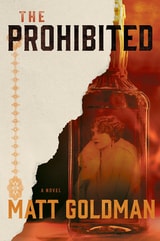
The Prohibited
A NovelMatt Goldman
University of Minnesota Press, 2026
A family, their liquor store, and the clash of the Eighteenth and Nineteenth Amendments in 1920s St. Paul
The Kaner brothers were getting by well enough running Kaner’s Fine Wine and Spirits in St. Paul, Minnesota, until Prohibition took effect in January 1920. With their liquor store shuttered, Red, Isaac, and Lewis are left to forge new livelihoods, their paths taking turns distinct as their personalities. All of the Kaners have secrets of their own—from a clandestine lover to a joyless marriage to an entanglement with the mob—but when it comes down to it, the family will do just about anything for each other, and they’re going to have to prove it.
The Prohibited follows the Kaner family in the wake of the Eighteenth Amendment. Isaac finds unlikely means to stay close to the family trade, becoming a rabbi (or someone the Feds believe is a rabbi, anyway) to exploit a loophole that allows men of the cloth to sell sacramental wine. Lewis takes the opportunity to pursue his lifelong dream of being a playwright, managing to secure the funds to produce a staged reading of his new play, albeit from an unlikely source. And Red is secretly happy to find himself working in a haberdashery, though he resents his wife’s suffragist allegiance and resulting support of Prohibition. Meanwhile, Red’s children bring challenges of their own: tough, quick-thinking Rose is working odd jobs to send herself to medical school and trying to fix her brother’s mess with the mob, something carefree Willie can’t seem to grasp is deadly serious. Tangled up in the Kaners’ story is Pearl Holgerson. After a tragic event up north, she has finally found community in the Rondo neighborhood in St. Paul, but she has a score to settle with Willie and just might get to him before the mob does.
Based loosely on Matt Goldman’s family history, The Prohibited brings to life 1920s St. Paul, a haven for bootleggers, gangsters, and bank robbers, but also home to many ordinary folks navigating a remarkable new social order. With his signature wry wit, Goldman presents an engrossing character study of a family testing their bonds, leaving their lives irrevocably changed.
Retail e-book files for this title are screen-reader friendly.
The Proper Words for Sin
Gary Fincke
West Virginia University Press, 2013
Coal burns underground and destroys a small town. A woman confronts police officers with her pet copperheads. A young girl drinks Drano. A man is banned from his favorite bar.
Within these eleven short stories, Flannery O’Connor Award winner and poet Gary Fincke brings into focus the small struggles of ordinary people. The characters within this collection, from boys and girls to fathers, mothers, and the aging, live in cities, in towns, and in rural areas. Yet, no matter the surroundings, all seem alone within a collective anxiety. Set against extraordinary events, such as the Three Mile Island accident, the Challenger Disaster, and the Kennedy assassination, these stories personalize history through a juxtaposition between large and small tragedies and the unflinching desire to find insight within and redemption from weakness and shortcoming.
The Prophecy and Other Stories
Drago Jancar
Northwestern University Press, 2009
These newly collected short stories reveal a master at the top of his game. Drago Jancar possesses an acute understanding of the human psyche, enabling his stories to resonate beyond their particular milieu. This collection features seven pieces, drawn from four different collections, that together present the struggle of individuals against powerful forces. The characters try to make sense of a world of shifting borders and changing names that make the idea of a "homeland"—either literal or figurative—a dream rather than a reality.
The Prose of the Mountains
Three Tales of the CaucasusAleksandre Qazbegi
Central European University Press, 2015
The Prose of the Mountains contains three tales of the Caucasus by Aleksandre Qazbegi, one of the most prescient and gifted chroniclers of the Georgian encounter with colonial modernity. His stories offer an invaluable counterpoint to the predominantly Russian narratives that have hitherto shaped scholarly accounts of the nineteenth-century Caucasus. “Memoirs of a Shepherd” poignantly chronicles the young author’s decision to pass seven years of his life as a shepherd with Georgian mountaineers. “Eliso” (the name of a Chechen girl) offers one of the most searing accounts on record of the forced migration of this people from their homeland to Ottoman lands. Set in the sixteenth century, “Khevis Beri Gocha” (the name of a Georgian village chief) classically chronicles a tragic misunderstanding between a severe father and his loving son.
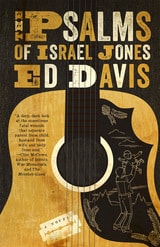
The Psalms of Israel Jones
A NovelEd Davis
West Virginia University Press, 2014
Secrets and snakes, rock and gospel, guilt and grace.
The Psalms of Israel Jones is the story of a father and son’s journey towards spiritual redemption. This novel tells the tale of a famous father trapped inside the suffocating world of rock and roll, and his son who is stranded within the bounds of conventional religion.
When Reverend Thomas Johnson receives an anonymous phone call, he learns his Dylanesque rock star father is acting deranged on stage, where he’s being worshipped by a cult of young people who slash their faces during performances. In his declining years, Israel Jones has begun to incite his fans to violence. They no longer want to watch the show—they want to be the show.
Eager to escape troubles with his congregation as well as gain an apology from his dad for abandoning his family, Reverend Johnson leaves town and joins Israel Jones’s Eternal Tour. This decision propels him to the center of a rock and roll hell, giving him one last chance to reconnect with his father, wife, congregation—and maybe even God.
The Psalms of Israel Jones is the 2010 Hackney Literary Award winner for an unpublished manuscript.
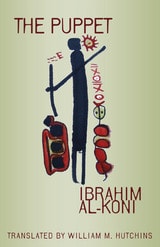
The Puppet
By Ibrahim al-Koni
University of Texas Press, 2010
The Puppet, a mythic tale of greed and political corruption, traces the rise, flourishing, and demise of a Saharan oasis community. Aghulli, a noble if obtuse man who has been chosen leader of the oasis, hankers after the traditional nomadic pastoralist life of the Tuareg. He sees commerce (understood as including trade in gold, marriage, agriculture, and even recreation) as the prime culprit in the loss of the nomadic ethos. Thus he is devastated to learn that his supporters are hoarding gold.
The novel's title notwithstanding, the author has stressed repeatedly that he is not a political author. He says that The Puppet portrays a good man who has been asked to lead a corrupt society. The subplot about star-crossed young lovers introduces a Sufi theme of the possibility of transforming carnal into mystical love. The Puppet, though, is first and foremost a gripping, expertly crafted tale of bloody betrayal and revenge inspired by gold lust and an ancient love affair.
The Pure Element of Time
Haim Be’er
Brandeis University Press, 2012
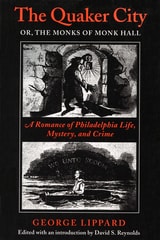
The Quaker City, or The Monks of Monk Hall
A Romance of Philadelphia Life, Mystery, and CrimeGeorge Lippard
University of Massachusetts Press, 1995
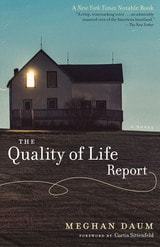
The Quality of Life Report
A NovelBy Meghan Daum, Foreword by Curtis Sittenfeld
University of Texas Press, 2017
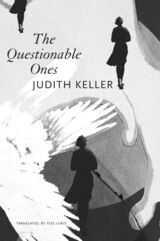
The Questionable Ones
Judith Keller
Seagull Books, 2023
With quirky humor and wry insight, Swiss author Judith Keller’s micro-fictions unravel the fabric of daily life. She delves into the aporia of language by taking idiomatic expressions literally, unpacking the multiple meanings of words, and confounding expectations. Seven Zurich tram stops provide the framework for these familiar yet absurd portraits of passers-by, fellow passengers on the tram, the unemployed and the overemployed, the innocent and the suspicious, young mothers and confused elderly. The reader is taken on a journey through the city and offered glimpses of people going more or less successfully about their lives. These deceptively banal glimpses, however, show us more than we expect—they turn the lens back on us, puncture our complacency and ask, "Who are you to judge?"
The characters are hapless and far-fetched, trying to find their footing on shifting ground and grateful for what happiness they can find. In just a sentence or two, Keller unlocks metaphysical trapdoors. The Questionable Ones offers a collection of snapshots that reveal the extraordinary lurking inside the ordinary and the ordinary at the core of the extraordinary.
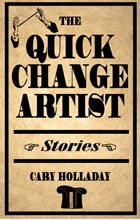
The Quick-Change Artist
StoriesCary Holladay
Ohio University Press, 2006
In these stories of magic and memory, clustered around a resort hotel in a small Virginia community, Cary Holladay takes the reader on an excursion through the changes wrought by time on the community and its visitors. From the quiet of a rural forest to the rhythms of rock and roll, The Quick-Change Artist is at once whimsical and hard-edged, dizzying in its matter-of-fact delivery of the fantastic.
Romance, a sense of place and belonging, and the supernatural—especially in the lives of children coming of age—offer windows into worlds beyond the ordinary throughout The Quick-Change Artist. In the title story, a young chambermaid is in love with a foreign magician who performs at the hotel where she works. In “Heaven,” set during the 1918 flu epidemic, a struggling mother and son rely on the support of their fortune-telling plow horse. The narrator of “Jane’s Hat” recalls a childhood enlivened by an unusual school principal and a friend who starts finding beauty everywhere.
Horses and the people who love them, wanderers and those who feed them, creatures that disappear and those who search for them: these are stories with a constant heart.
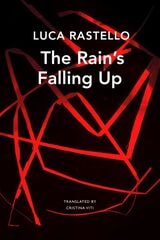
The Rain's Falling Up
Luca Rastello
Seagull Books, 2022
What was it really like to be a teenager growing up in Italy in the 1970s, during a time it has become all too easy to file away under “years of lead,” as the fathers’ betrayed ideals came face to face with the sons’ and daughters’ rebellions? What was happening in schools, in assemblies, social centers, and occupied factories as the postwar “economic miracle” was being dismantled from within? What moved the foremost French intellectuals of the time to sign an appeal against the repression of the student and workers’ movement in Italy? What did the bullets and heroin bring to a halt, and where did they come from? How does it feel when strategies of terror and police brutality become as ordinary as a TV dinner and as eerie as the plots of the science fiction novels you are plagiarizing to impress a girl? How are metropolitan geographies alchemized in the muscles of a young body crossing the shady lines between ages and sexes?
Luca Rastello raises these and other questions in an astonishing novel that splices chunks of plot and historical reconstruction into the free flow of memory and dream. Rain’s Falling Up tracks the trajectory of a generation while refusing to romanticize its protagonists or resolve the tensions that powered its volatile energy.
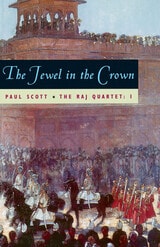
The Raj Quartet, Volume 1
The Jewel in the CrownPaul Scott
University of Chicago Press, 1976
No set of novels so richly recreates the last days of India under British rule—"two nations locked in an imperial embrace"—as Paul Scott's historical tour de force, The Raj Quartet. The Jewel in the Crown opens in 1942 as the British fear both Japanese invasion and Indian demands for independence. On the night after the Indian Congress Party votes to support Ghandi, riots break out and an ambitious police sergeant arrests a young Indian for the alleged rape of the woman they both love.
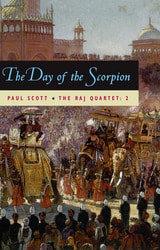
The Raj Quartet, Volume 2
The Day of the ScorpionPaul Scott
University of Chicago Press, 1998
In The Day of the Scorpion, Scott draws us deeper in to his epic of India at the close of World War II. With force and subtlety, he recreates both private ambition and perversity, and the politics of an entire subcontinent at a turning point in history.
As the scorpion, encircled by a ring of fire, will sting itself to death, so does the British raj hasten its own destruction when threatened by the flames of Indian independence. Brutal repression and imprisonment of India's leaders cannot still the cry for home rule. And in the midst of chaos, the English Laytons withdraw from a world they no longer know to seek solace in denial, drink, and madness.
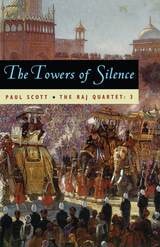
The Raj Quartet, Volume 3
The Towers of SilencePaul Scott
University of Chicago Press, 1998
India, 1943: In a regimental hill station, the ladies of Pankot struggle to preserve the genteel façade of British society amid the debris of a vanishing empire and World War II. A retired missionary, Barbara Batchelor, bears witness to the connections between many human dramas; the love between Daphne Manner and Hari Kumar; the desperate grief an old teacher feels for an India she cannot rescue; and the cruelty of Captain Ronald Merrick, Susan Layton's future husband.
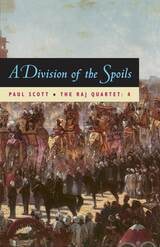
The Raj Quartet, Volume 4
A Division of SpoilsPaul Scott
University of Chicago Press, 1998
After exploiting India's divisions for years, the British depart in such haste that no one is prepared for the Hindu-Muslim riots of 1947. The twilight of the raj turns bloody. Against the backdrop of the violent partition of India and Pakistan, A Division of the Spoils illuminates one last bittersweet romance, revealing the divided loyalties of the British as they flee, retreat from, or cling to India.
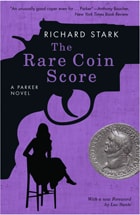
The Rare Coin Score
A Parker NovelRichard Stark
University of Chicago Press, 2009
Parker breaks nearly all his personal rules in this surprising, fast-paced entry in the classic hard-boiled series
Richard Stark's Parker novels are the hardest of hard-boiled, classic crime novels where the heists are huge, the body counts are high, and the bad guys usually win.
The Parker novels have been a huge influence on countless writers and filmmakers, including Quentin Tarantino, Stephen King, George Pelecanos, Colson Whitehead, Lucy Sante, John Banville, and many more. Their stripped-down language and hard-as-nails amorality create an unforgettable world where the next score could be the big one, but your next mistake could also be your last. There's nothing else like them.
When it comes to heists, Parker believes in some cardinal rules. On this job, he breaks two of them: never bring a dame along—especially not one you like—and never, ever, work with amateurs. Nevertheless, with the help of a creepy coin collector named Billy, and the lure of a classy widow, he agrees to set up a heist of a coin convention. But Billy’s a rookie with no idea how to pull off a score, and the lady soon becomes a major distraction. The Rare Coin Score marks the first appearance of Claire, who pulls off her own heist on Parker's heart—while together they steal two million dollars worth of coins.
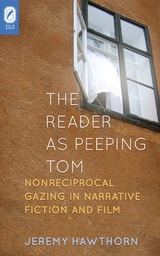
The Reader as Peeping Tom
Nonreciprocal Gazing in Narrative Fiction and FilmJeremy Hawthorn
The Ohio State University Press, 2014
Hawthorn suggests that while some literary and film narratives use the reader’s or viewer’s sense of all-seeing invulnerability to underwrite the various systems of control and surveillance that are depicted in the work, others associate such forms of nonreciprocal observation with impotence and impoverishment and thus critique political systems that legitimize surveillance. Hawthorn concludes that critics have underestimated the extent to which reader’s or viewer’s sense of disempowerment adds meaning to the experience of fiction and film and may encourage acceptance or criticism of spying and surveillance in the real world. The book questions benign views of the reader’s or spectator’s role as passive observer, and offers original and exciting readings of some key narrative texts.

The Readers' Advisory Guide to Genre Blends
Megan M. McArdle
American Library Association, 2014
The Readers' Advisory Guide to Genre Blends
Megan McArdle
American Library Association, 2022
The Readers' Advisory Guide to Genre Fiction
Joyce G. Saricks
American Library Association, 2009
The Readers' Advisory Guide to Genre Fiction
Neal Wyatt
American Library Association, 2001
The Readers' Advisory Guide to Street Literature
Vanessa Irvin Morris
American Library Association, 2011
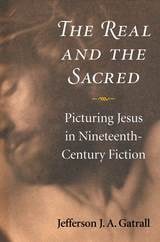
The Real and the Sacred
Picturing Jesus in Nineteenth-Century FictionJefferson J. A. Gatrall
University of Michigan Press, 2014
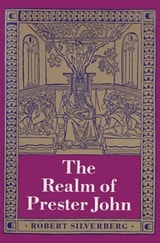
The Realm Of Prester John
Robert Silverberg
Ohio University Press, 1996
In this modern account of the genesis of a great medieval myth, celebrated science fiction author Robert Silverberg’s explores the mysterious origins of Prester John, the astonishing Christian potentate of the East.
Prester John was a legendary figure who cast a powerful spell over Latin Christendom for almost five centuries. Rumors of the warrior-king-prelate’s fabulous realms first reached Europe in the eleventh century and quickly assumed an exalted status alongside such fabled wonders as El Dorado, The Fountain of Youth, and the Holy Grail.
The defeat of a Moslem Turkish tribe by a Buddhist Chinese warlord seems to have been the unlikely historical nugget around which the Prester John myth grew, but contributions to this strange saga have also been traced all around the globe to the Apostle Thomas' apocryphal preaching in India, to the actual existence of small colonies of Nestorian schismatics in central Asia, and even to Genghis Khan.
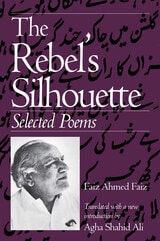
The Rebel's Silhouette
Selected PoemsFaiz Ahmed Faiz, translated and edited by Agha Shalid Ali
University of Massachusetts Press, 1995
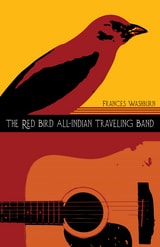
The Red Bird All-Indian Traveling Band
Frances Washburn
University of Arizona Press, 2014
The Red Bird All-Indian Traveling Band is part mystery, part community chronicle. Shaped by a cast of skillfully drawn characters, all of whom at one time or another are potential suspects, at the core of the story is smart and compassionate Sissy. Four years past high school, Sissy’s wry humor punctuates descriptions of reservation life as she learns more about Ames’s potential killer, and as she embarks on a personal search for ways to buck expectations and leave rural South Dakota to attend college.
Ames’s death is just an example of the undercurrents of violence and passions that run through this fast-moving novel of singing, loving, and fighting. Following Sissy as she unravels the mystery of both Buffalo Ames’s death and her own future, The Red Bird All-Indian Traveling Band is the story of Indian Country on the verge of historic change and a woman unwilling to let change pass her by.
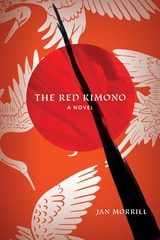
The Red Kimono
A NovelJan Morrill
University of Arkansas Press, 2013
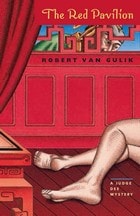
The Red Pavilion
A Judge Dee MysteryRobert van Gulik
University of Chicago Press, 1961
A chance encounter with Autumn Moon, the most powerful courtesan on Paradise Island, leads Judge Dee to investigate three deaths. Although he finally teases the true story from a tangled history of passion and betrayal, Dee is saddened by the perversion, corruption, and waste of the world "of flowers and willows" that thrives on prostitution.
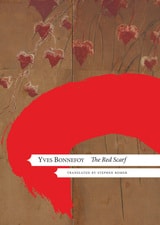
The Red Scarf
Followed by "Two Stages" and Additional NotesYves Bonnefoy
Seagull Books, 2021
In December 2015, six months before his death at the age of 93, Yves Bonnefoy concluded what was to be his last major text in prose, L’écharpe rouge, translated here as The Red Scarf. In this unique book, described by the poet as "an anamnesis"—a formal act of commemoration—Bonnefoy undertakes, at the end of his life, a profoundly moving exegesis of some fragments written in 1964. These fragments lead him back to an unspoken, lifelong anxiety: “My most troubling memory, when I was between ten and twelve years old, concerns my father, and my anxiety about his silence.” Bonnefoy offers an anatomy of his father’s silence, and of the melancholy that seemed to take hold some years into his marriage to the poet’s mother.
At the heart of this book is the ballad of Elie and Hélène, the poet’s parents. It is the story of their lives together in the Auvergne, and later in Tours, seen through the eyes of their son—the solitary boy’s intense but inchoate experience, reviewed through memories of the now elderly man. What makes The Red Scarf indispensable is the intensely personal nature of the material, casting its slant light, a setting sun, on all that has gone before.
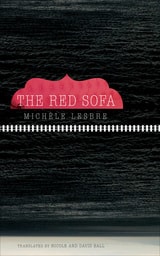
The Red Sofa
Michel Lesbre
Seagull Books, 2017
In The Red Sofa, we meet Anne, a young woman setting off on the Trans-Siberian Railway in order to find her former lover, Gyl, who left twenty years before. As the train moves across post-Soviet Russia and its devastated landscapes, Anne reflects on her past with Gyl and their patriotic struggles, as well as on the neighbor she has just left behind, Clémence Barrot.
Rocked by the train’s movements Anne is moved by her memory of Clémence, who is old and whose memory is failing, but who has not lost her taste for life and adventure. Ensconced on her red sofa at home, Clémence loves to tell Anne her life story, mourning lost loved ones and celebrating the lives of brave, rebellious women who went before her. Eventually, Anne’s train trip returns her home having not found Gyl, but having found something much more meaningful—herself.
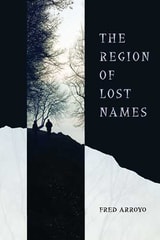
The Region of Lost Names
Fred Arroyo
University of Arizona Press, 2008
Ernest is searching for a place where he can live beyond his past. His family has returned to Puerto Rico, and Ernest remains in the States, desiring only distance from his memories of childhood displacement and work, his parents’ tumultuous relationship, and his own love for Magdalene. Magdalene, too, looks to move beyond her memories as she follows Ernest’s family home, seeking resolution to her mother’s hurtful secrets, her father’s unknown identity, and her love for Ernest.
As Ernest moves through the fields of Michigan, as Magdalene traverses the jungles of Puerto Rico and the shores of the Caribbean, they discover that their dreams and identities are linked within the framework of their families and their pasts. Together, Ernest and Magdalene must come to terms with the secrets and mistakes made by the previous generation, the histories of disloyalty and abandonment, of secrecy and sorrow.
Their struggles take place in a region of lost names, where loves and memories are banished and found. Fred Arroyo writes a story in two voices, following Ernest and Magdalene by turns in prose that is elegant and lyrical. His words evoke another world lush with the scent of salt spray, the taste of mangoes, and the rush of leaves, alive with characters whose ardors and pathos are achingly real. Arroyo explores the ebb and flow between past and present and themes that are enduring. Ultimately, Ernest and Magdalene must live with more than their memories; they must rediscover the intimacies of the region of lost names.
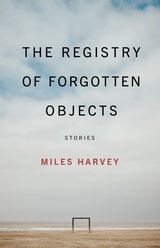
The Registry of Forgotten Objects
StoriesMiles Harvey
The Ohio State University Press, 2024
The Relic
Jose Maria Eca de Queiros
Catholic University of America Press, 2023
The Relic
A NovelJosé Maria De Eça De Queirós
Tagus Press, 2012
The Relic is an irreverent fictional autobiography narrating the picaresque adventures of Teodorico, a Portuguese playboy determined to be the sole heir of his absurdly pious, sexually repressed, and tyrannical Auntie. Sent to the Holy Land, he returns with what he presumes is the “relic of relics” in hopes of persuading Auntie to bequeath her vast fortune to him. While in Jerusalem, Teodorico has a vision in which he witnesses Christ's trial and crucifixion and the founding of Christianity—with a twist.
The Religion of Hands
Prose Poems and Flash FictionsRay Gonzalez
University of Arizona Press, 2005
The Religion of Hands does not foster sleep. Look quickly and you will catch the hint of a fox streaking in front of your car’s headlights at night. Look more carefully out your bedroom window and you may see your life going by, lost loved ones waving hello.
"Who were you when the stars were misinterpreted as the fingertips of God?"
Ray Gonzalez blends symbolic play with lyrical beauty as he works from a vast and complex palette to infuse popular culture with myth. The Religion of Hands is imbued with magical realism: a suffocating dream of tamales, mysterious reptilian allusions, a man who "finds God walking down the stairs to hand him an old, tattered phonebook from the year he was born." It offers strange prophecies: "A steady vegetation will grow across the empire as more homeboys are killed in drive-bys. . . . Microscopic scratches on an old vinyl record will form a message discovered in twenty more years when the album is bought at a garage sale." And in 14 flash fictions, it tells of a tiny old man kept in a glass jar, an accordion stored in an old family trunk, tales of sharks and bandits. The religion of hands has its own unspoken sacraments. "The fingers take over, teaching whoever holds the moment that the rapid weight of the open hands is a dangerous way to live."
Seamlessly, effortlessly, multi-dexterously, Ray Gonzalez spins words that speak our very dreams.