Results by title
8113 books match the query 'Literary Criticism' and 1818 start with t
The Hundreds
Lauren Berlant and Kathleen Stewart
Duke University Press, 2019
The Huron River
Voices from the WatershedJohn Knott and Keith Taylor, Editors
University of Michigan Press, 2000
"The Huron River . . . was called 'Cos-scut-e-nong Sebee'. . . . [It] is a beautiful, transparent stream, passing alternatively through rich bottoms, openings, plains, and sloping woodlands, covered with heavy timber."
---History of Washtenaw County, Michigan, 1881
The Huron River---stretching 130 miles through three counties---has inspired numerous writers throughout the nineteenth and twentieth centuries. Contained here is a collection of new poems, essays, and stories, accompanied by maps, photographs, and illustrations that celebrate the Huron River. Over twenty locally and nationally known literary figures, including Alice Fulton and Charles Baxter, have contributed to this volume. In addition, the work of biologists, naturalists, and even an arche-ologist have been included to give a richer sense of the physical and cultural environment.
Each of these writers reminds us that our lives are more intertwined with the river and its watershed than we might think. The Huron River opens with these words: "Watersheds are the oldest and most durable markers of place. . . . These boundaries affect our lives by defining our natural environment, not only its topography but its soils, its plant and animal life, and to some extent its weather. The water that sustains most of us is the water that flows through our local watershed."
And the river's strength is wondrous unto itself. "The water will always be there, and it will always find its way down," writer Gary Snyder tells us. The river is sometimes visible, sometimes not; yet it "is alive and well under the city streets, running in giant culverts."
John Knott is Professor of English, University of Michigan. After working as a bookseller for twenty years, Keith Taylor now teaches writing part-time for the University of Michigan and works as a freelance writer.
The Hybrid Muse
Postcolonial Poetry in EnglishJahan Ramazani
University of Chicago Press, 2001
In The Hybrid Muse, Jahan Ramazani argues that postcolonial poets have also dramatically expanded the atlas of literature in English, infusing modern and contemporary poetry with indigenous metaphors and creoles. A rich and vibrant poetry, he contends, has issued from the hybridization of the English muse with the long resident muses of Africa, India, and the Caribbean. Starting with the complex case of Ireland, Ramazani closely analyzes the work of leading postcolonial poets and explores key questions about the relationship between poetry and postcolonialism. As inheritors of both imperial and native cultures, poets such as W. B. Yeats, Derek Walcott, Louise Bennett, A. K. Ramanujan, and Okot p'Bitek invent compelling new forms to articulate the tensions and ambiguities of their cultural in-betweeness. They forge hybrid figures, vocabularies, and genres that embody the postcolonial condition.
Engaging an array of critical topics, from the aesthetics of irony and metaphor to the politics of nationalism and anthropology, Ramazani reconceptualizes issues central to our understanding of both postcolonial literatures and twentieth-century poetry. The first book of its kind, The Hybrid Muse will help internationalize the study of poetry, and in turn, strengthen the place of poetry in postcolonial studies.
The Hygienic Apparatus
Weimar Cinema and Environmental DisorderPaul Dobryden
Northwestern University Press, 2022
Framing hygiene within the project of national reconstruction after World War I, The Hygienic Apparatus explores cinema’s material contexts alongside its representations of housework, urban space, traffic, pollution, disability, aging, and labor. Reformers worried about the health risks associated with moviegoing but later used film to popularize hygienic ideas, encouraging viewers to see the world and themselves in relation to public health objectives. Modernist architecture and design fashioned theaters into regenerative environments for fatigued spectators. Filmmakers like F. W. Murnau and Slatan Dudow, meanwhile, explored the aesthetic and political possibilities of dirt, contagion, intoxication, and disorder. Dobryden recovers a set of ecological and biopolitical concerns to show how the problem of environmental disorder fundamentally shaped cinema’s relationship to modernity. As accessible as it is persuasive, the book adds to a growing body of scholarship on biopolitics within German studies and reveals fresh ways of understanding the apparatus of Weimar cinema.
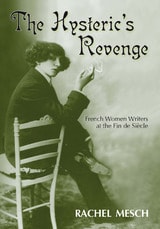
The Hysteric's Revenge
French Women Writers at the Fin de SiecleRachel Mesch
Vanderbilt University Press, 2006
This book argues, however, that the fear of sexual abandon--though real--veiled an even more insidious fear: that women might be capable of intellectual equality with men and thus pose a threat to the most basic structures of French patriarchal society. In demonstrating the pervasiveness of this anxiety through analysis of nineteenth-century medical texts, literary criticism, and fiction, The Hysteric's Revenge brings into relief a critical relationship between the female mind and body that is essential to understanding the discursive position of the turn-of-the-century woman writer.
The novels presented here confront this mind/body problem through a wide variety of styles and genres that challenge conventional fin-de-siecle notions of femininity. From the compelling autobiography of Liane de Pougy--one of Paris's most renowned courtesans--to Colette's frank discussions of female pleasure in one of her early novels, to the violent creativity of Rachilde's androgynous heroine, Mesch demonstrates how both canonical and non-canonical writers promoted women's intellectual authority through the development of a sexual counter-discourse. In engaging the relationship between women's minds and bodies, these novels challenge the conclusions of a century of doctors who sought to prove a physiological basis for female intellectual inferiority. At the same time, they point the way towards later French feminists who sought to subvert patriarchal structures through literary explorations of sexuality.
The Iconic Page in Manuscript, Print, and Digital Culture
George Bornstein and Theresa Tinkle, Editors
University of Michigan Press, 1998
The material features of texts as physical artifacts--their "bibliographic codes" --have over the last decade excited increasing interest in a variety of disciplines. The Iconic Page in Manuscript, Print, and Digital Culture gathers essays by an extraordinarily distinguished group of scholars to offer the most comprehensive examination of these issues yet, drawing on examples from literature, history, the fine arts, and philosophy.
Fittingly, the volume contains over two dozen illustrations that display the iconic features of the works analyzed--from Alfred the Great's Boethius through medieval manuscripts to the philosophy of C. S. Peirce and the dustjackets on works by F. Scott Fitzgerald and William Styron.
The Iconic Page in Manuscript, Print, and Digital Culture will be groundbreaking reading for scholars in a wide range of fields.
George Bornstein is C. A. Patrides Professor of English, University of Michigan. Theresa Tinkle is Associate Professor of English, University of Michigan.
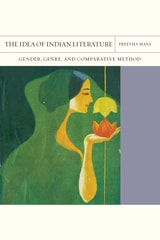
The Idea of Indian Literature
Gender, Genre, and Comparative MethodPreetha Mani
Northwestern University Press, 2022
Indian literature is not a corpus of texts or literary concepts from India, argues Preetha Mani, but a provocation that seeks to resolve the relationship between language and literature, written in as well as against English. Examining canonical Hindi and Tamil short stories from the crucial decades surrounding decolonization, Mani contends that Indian literature must be understood as indeterminate, propositional, and reflective of changing dynamics between local, regional, national, and global readerships. In The Idea of Indian Literature, she explores the paradox that a single canon can be written in multiple languages, each with their own evolving relationships to one another and to English.
Hindi, representing national aspirations, and Tamil, epitomizing the secessionist propensities of the region, are conventionally viewed as poles of the multilingual continuum within Indian literature. Mani shows, however, that during the twentieth century, these literatures were coconstitutive of one another and of the idea of Indian literature itself. The writers discussed here—from short-story forefathers Premchand and Pudumaippittan to women trailblazers Mannu Bhandari and R. Chudamani—imagined a pan-Indian literature based on literary, rather than linguistic, norms, even as their aims were profoundly shaped by discussions of belonging unique to regional identity. Tracing representations of gender and the uses of genre in the shifting thematic and aesthetic practices of short vernacular prose writing, the book offers a view of the Indian literary landscape as itself a field for comparative literature.
The Idea of the Sciences in the French Enlightenment
A ReinterpretationG. Matthew Adkins
University of Delaware Press, 2014
Published by University of Delaware Press. Distributed worldwide by Rutgers University Press.
The Ideas in Things
Fugitive Meaning in the Victorian NovelElaine Freedgood
University of Chicago Press, 2006
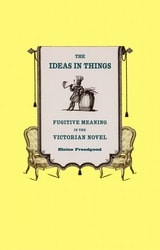
While the Victorian novel famously describes, catalogs, and inundates the reader with things, the protocols for reading it have long enjoined readers not to interpret most of what crowds its pages. The Ideas in Things explores apparently inconsequential objects in popular Victorian texts to make contact with their fugitive meanings. Developing an innovative approach to analyzing nineteenth-century fiction, Elaine Freedgood here reconnects the things readers unwittingly ignore to the stories they tell.
Building her case around objects from three well-known Victorian novels—the mahogany furniture in Charlotte Brontë’s Jane Eyre, the calico curtains in Elizabeth Gaskell’s Mary Barton, and “Negro head” tobacco in Charles Dickens’s Great Expectations—Freedgood argues that these things are connected to histories that the novels barely acknowledge, generating darker meanings outside the novels’ symbolic systems. A valuable contribution to the new field of object studies in the humanities, The Ideas in Things pushes readers’ thinking about things beyond established concepts of commodity and fetish.
The Illicit Joyce of Postmodernism
Reading Against the GrainKevin Dettmar
University of Wisconsin Press, 1996
For nearly three quarters of a century, the modernist way of reading has been the only way of reading James Joyce—useful, yes, and powerful but, like all frameworks, limited. This book takes a leap across those limits into postmodernism, where the pleasures and possibilities of an unsuspected Joyce are yet to be found.
Kevin J. H. Dettmar begins by articulating a stylistics of postmodernism drawn from the key texts of Roland Barthes, Mikhail Bakhtin, and Jean-François Lyotard. Read within this framework, Dubliners emerges from behind its modernist facade as the earliest product of Joyce’s proto-postmodernist sensibility. Dettmar exposes these stories as tales of mystery, not mastery, despite the modernist earmarks of plentiful symbols, allusions, and epiphanies. Ulysses, too, has been inadequately served by modernist critics. Where they have emphasized the work’s ingenious Homeric structure, Dettmar focuses instead upon its seams, those points at which the narrative willfully, joyfully overflows its self-imposed bounds. Finally, he reads A Portrait of the Artist and Finnegans Wake as less playful, less daring texts—the first constrained by the precious, would-be poet at its center, the last marking a surprising retreat from the constantly evolving, vertiginous experience of Ulysses.
In short, The Illicit Joyce of Postmodernism explores what happens when the extra-literary pronouncements of Eliot, Pound, and Joyce, as well as Joyce’s early critics, are set aside and a new, “unauthorized” Joyce is allowed to appear. This postmodern Joyce, more willful and less easily compartmentalized, stands as a counterpoint to the modernist Joyce who has perhaps become too familiar.
The Illusions of Doctor Faustino
Juan Valera
Catholic University of America Press, 2008
The Image and the Fire
The Subversive Anthology in the Twentieth CenturyWhit Frazier Peterson
University of Massachusetts Press, 2026
Racial identity and literary form in the modernist anthology
The Image and the Fire examines the coterie anthology—a small, outsider literary collection—as a key, yet understudied, instrument of literary intervention within American modernism. Whit Frazier Peterson argues that these anthologies, produced outside of institutional or canonical frameworks, served as deliberate challenges to dominant literary paradigms. Distinct from academic anthologies that helped codify the American literary canon, coterie anthologies were used by both white and Black avant-garde movements to disrupt prevailing cultural narratives and assert alternative literary visions.
Through close analysis of three seminal case studies—Des Imagistes, edited by Ezra Pound; Fire!!, a short-lived but groundbreaking magazine from the Harlem Renaissance, co-edited by Wallace Thurman; and Black Fire, compiled by Amiri Baraka and Larry Neal during the Black Arts Movement—Peterson traces a genealogy of the coterie anthology as a politically charged genre. He reveals how Black American writers and editors, particularly during the Harlem Renaissance and the Black Arts Movement, reappropriated and reconfigured this type of anthology format from white modernists.
Ultimately, The Image and the Fire positions the coterie anthology as a site of aesthetic and ideological contestation, one through which marginalized literary communities engaged in acts of cultural self-definition, canon revision, and formal innovation. By foregrounding the coterie anthology’s role in shaping a hybrid American modernism, Peterson contributes to ongoing conversations in literary studies around race, authorship, and the politics of literary form.
The Image of the Poet in Ovid’s Metamorphoses
Barbara Pavlock
University of Wisconsin Press, 2009
The Image of the Poet explores issues central to Ovid’s poetics—the status of the image, the generation of plots, repetition, opposition between refined and inflated epic style, the reliability of the narrative voice, and the interrelation of rhetoric and poetry. The work explores the constructed author and complements recent criticism focusing on the reader in the text.
2009 Outstanding Academic Title, Choice Magazine
The Imaginary Present
Essays in Quantum PoeticsAmy Catanzano
University of Michigan Press, 2025
19th Annual National Indie Excellence Awards Poetry Finalist
The Imaginary Present by award-winning poet and professor Amy Catanzano explores cutting-edge scientific fields such as particle physics and astrophysics, and branches of physics such as quantum theory and relativity, through a poetic vision equally loyal to the imagination and rationality. Drawing upon her groundbreaking research and artist residencies at major scientific research centers like CERN and the U.S. National Science Foundation’s NOIRLab, as well as talks and poetry readings at esteemed institutions, Catanzano invites enthusiasts of poetry and science to consider what can be achieved through greater collaboration between these fields.
In linked chapters that fluidly blend lyric essay, literary and scientific analysis, poetry, theory, and memoir, The Imaginary Present offers refreshing new insights on a wide range of thinkers over the past 100 years, including poets Rae Armantrout and M. NourbeSe Philip, novelists Alfred Jarry and Virginia Woolf, comic book writer Grant Morrison, and physicists Albert Einstein and Werner Heisenberg. The introduction explores why poetry and physics are capable of jointly investigating our most fundamental questions about the universe and discusses the history of the art-science connection in addition to the author’s own journey. In searching for the groundbreaking ways that artists and scientists can collaborate, The Imaginary Present offers readers both reasoned grounding and poetic framing for an interdisciplinary poetics and praxis based on science.
The Imaginary and Its Worlds
American Studies after the Transnational TurnEdited by Laura Bieger, Ramón Saldívar, and Johannes Voelz
Dartmouth College Press, 2013
The Imaginative Prose of Oliver Wendell Holmes
Michael A. Weinstein
University of Missouri Press, 2006
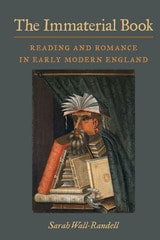
The Immaterial Book
Reading and Romance in Early Modern EnglandSarah Wall-Randell
University of Michigan Press, 2013
In romances—Renaissance England’s version of the fantasy novel—characters often discover books that turn out to be magical or prophetic, and to offer insights into their readers’ selves. The Immaterial Book examines scenes of reading in important romance texts across genres: Spenser’s Faerie Queene, Shakespeare’s Cymbeline and The Tempest, Wroth’s Urania, and Cervantes’ Don Quixote. It offers a response to “material book studies” by calling for a new focus on imaginary or “immaterial” books and argues that early modern romance authors, rather than replicating contemporary reading practices within their texts, are reviving ancient and medieval ideas of the book as a conceptual framework, which they use to investigate urgent, new ideas about the self and the self-conscious mind.
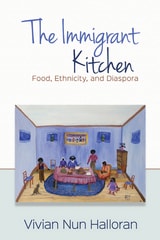
The Immigrant Kitchen
Food, Ethnicity, and DiasporaVivian Nun Halloran
The Ohio State University Press, 2016
The Immigrant Kitchen describes how these memoirs function as a complex and engaging mass media genre that caters to multiple reading constituencies. Specifically, they entertain readers with personal anecdotes and recollections, teach new culinary skills through recipes, share insight into different cultural mores through ethnographic and reportorial discussions of life in other countries, and attest to the impact that an individual’s legal immigration into the United States continues to have down through the generations of his or her American-born families.
The Imperative of Reliability
Russian Prose on the Eve of the Novel, 1820s-1850sVictoria Somoff
Northwestern University Press, 2015
The Imperative of Reliability examines the development of nineteenth-century Russian prose and the remarkably swift emergence of the Russian novel. Victoria Somoff identifies an unprecedented situation in the production and perception of the utterance that came to define nascent novelistic fictionality both in European and Russian prose, where the utterance itself—whether an oral story or a “found” manuscript—became the object of representation within the compositional format of the frame narrative. This circumstance generated a narrative perspective from which both the events and their representation appeared as concomitant in time and space: the events did not precede their narration but rather occurred and developed along with and within the narration itself. Somoff establishes this story-discourse convergence as a major factor in enabling the transition from shorter forms of Russian prose to the full-fledged realist novel.
The Imperial Sublime
A Russian Poetics of EmpireHarsha Ram
University of Wisconsin Press, 2003
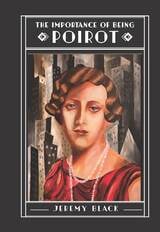
The Importance of Being Poirot
Jeremy Black
St. Augustine's Press, 2021
Hercule Poirot as a character is masterfully imagined, but Black shows us how he is inseparable from Christie’s turbulent and changing world. He also illuminates significant social commentary in Christie’s fiction, and in so doing Black often uses his authority to vindicate Christie’s work from hastily, at times stupidly, applied labels and interpretations. He is especially magnificent in his chapters, “Xenophobia” and “The Sixties.” Black nevertheless gives due recognition to Christie’s critics when they have something relevant and reasonable to say, and hence the reader finds yet another service in Black’s comprehensive review of the reviewers over the expanse of Christie’s writing career.
For all this, Black proves himself to be a worthy history-teller because he can aptly ‘detect’ the meaning of stories that seeks to answer the past and guide the present. His erudition runs much deeper than his ability to navigate the stores of resources available on the subject, and the reader gets a glimpse of this early on when in the introduction he proffers his own defense for writing about the importance of a Hercule Poirot. Black writes, “the notion of crime had a moral component from the outset, and notably so in terms of the struggle between Good and Evil, and in the detection of the latter. Indeed, it is this detection that is the basis of the most powerful strand of detection story, because Evil disguises its purposes. It has to do so in a world and humanity made fundamentally benign and moral by God.” The Golden Age of detective novels represents much more than a triumph of a literary genre. It is in its own right a story of how the challenge to address the problem of evil was accepted. Its convergence with the plot-rich narrative of the twentieth century in the modern age renders Black’s account a thrilling masterpiece, seducing historians to read fiction and crime junkies to read more history.
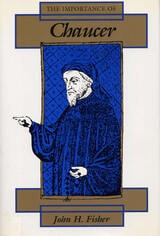
The Importance of Chaucer
John H. Fisher
Southern Illinois University Press, 1992
In this fresh and innovative approach, John H. Fisher eloquently explains Chaucer’s importance to Western culture.
English literature begins with Chaucer. The first writer to demonstrate that English was as effective a medium for literature as Latin or French, Chaucer introduced realism, satire, and humor into English writing. In examining Chaucer’s cultural importance, however, Fisher ventures beyond literary excellence, basing his cultural interpretation on inferences about Chaucer’s domestic life, about his possible experience in the inns of chancery and inns of court, and about the possibility that Henry V and the Lancastrian government sought deliberately to promote Chaucer’s poems as models of what could be accomplished in the vernacular.
Fisher’s willingness to boldly infer from the scant evidence available allows him to place Chaucer in the poet’s, and our, culture in a way he has not been placed before. By attributing to Chaucer innovations to which other writers have only alluded, and by reaching conclusions which others have been hesitant to approach, Fisher presents an interpretation at once controversial, engaging, and informative.
The Imprint of Another Life
Adoption Narratives and Human PossibilityMargaret Homans
University of Michigan Press, 2015
The Imprint of Another Life: Adoption Narratives and Human Possibilityaddresses a series of questions about common beliefs about adoption. Underlying these beliefs is the assumption that human qualities are innate and intrinsic, an assumption often held by adoptees and their families, sometimes at great emotional cost. This book explores representations of adoption—transracial, transnational, and domestic same-race adoption—that reimagine human possibility by questioning this assumption and conceiving of alternatives.
Literary scholar Margaret Homans examines fiction making’s special relationship to themes of adoption, an “as if” form of family making, fabricated or fictional instead of biological or “real.” Adoption has tended to generate stories rather than uncover bedrock truths. Adoptive families are made, not born; in the words of novelist Jeanette Winterson, “adopted children are self-invented because we have to be.” In attempting to recover their lost histories and identities, adoptees create new stories about themselves. While some believe that adoptees cannot be whole unless they reconnect with their origins, others believe that privileging biology reaffirms hierarchies (such as those of race) that harm societies and individuals. Adoption is lived and represented through an irresolvable tension between belief in the innate nature of human traits and belief in their constructedness, contingency, and changeability. The book shows some of the ways in which literary creation, and a concept of adoption as a form of creativity, manages this tension.
The texts examined include fiction (e.g., classic novels such as Silas Marner, What Maisie Knew, and Beloved); memoirs by adoptees, adoptive parents, and birthmothers; drama, documentary films, advice manuals, social science writing; and published interviews with adoptees, parents, and birth parents. Along the way the book tracks the quests of adoptees who, whether or not they meet their original families, must construct their own stories rather than finding them; follows transnational adoptees as they return, hopes held high, to Korea and China; looks over the shoulders of a generation of girls adopted from China as they watch Disney’s iconic Mulan, with its alluring story of destiny written on the skin; and listens to birthmothers as they struggle to tell painful secrets held for decades.
This book engages in debates within adoption studies, women’s and gender studies, transnational studies, and ethnic studies; it will appeal to literary scholars and critics, including specialists in memoir or narrative theory, and to general readers interested in adoption and in race.
The Imprisoned Traveler
Joseph Forsyth and Napoleon's ItalyKeith Crook
Bucknell University Press, 2020
Published by Bucknell University Press. Distributed worldwide by Rutgers University Press.
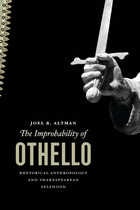
The Improbability of Othello
Rhetorical Anthropology and Shakespearean SelfhoodJoel B. Altman
University of Chicago Press, 2010
Shakespeare’s dramatis personae exist in a world of supposition, struggling to connect knowledge that cannot be had, judgments that must be made, and actions that need to be taken. For them, probability—what they and others might be persuaded to believe—governs human affairs, not certainty. Yet negotiating the space of probability is fraught with difficulty. Here, Joel B. Altman explores the problematics of probability and the psychology of persuasion in Renaissance rhetoric and Shakespeare’s theater.
Focusing on the Tragedy of Othello, Altman investigates Shakespeare’s representation of the self as a specific realization of tensions pervading the rhetorical culture in which he was educated and practiced his craft. In Altman’s account, Shakespeare also restrains and energizes his audiences’ probabilizing capacities, alternately playing the skeptical critic and dramaturgic trickster. A monumental work of scholarship by one of America’s most respected scholars of Renaissance literature, The Improbability of Othello contributes fresh ideas to our understanding of Shakespeare’s conception of the self, his shaping of audience response, and the relationship of actors to his texts.
The Impure Imagination
Toward A Critical Hybridity In Latin American WritingJoshua Lund
University of Minnesota Press, 2006
In this pathbreaking work, Joshua Lund offers a thoughtful critique of hybridity by reading contemporary theories of cultural mixing against their historical precursors. The Impure Imagination is the first book to systematically analyze today’s dominant theories in relation to earlier, narrative manifestations of hybridity in Latin American writing, with a particular focus on Mexico and Brazil.
Generally understood as the impurification of standard or canonized forms, hybridity has historically been embraced as a basic marker of Latin American regional identity and as a strategy of resistance to cultural imperialism. Lund contends that Latin American theories and narratives of hybridity have been, and continue to be, underwritten by a structure of colonial power. Here he provides an informed critique and cogent investigation of this connection, its cultural effects, and its political implications. Using the emergence of hybridity as an analytical frame for thinking about culture in the Americas, Lund examines the contributions of influential thinkers, including Néstor García Canclini, Homi Bhabha, Jacques Derrida, Giorgio Agamben, Jorge Luis Borges, Antonio Candido, and many others.
Distinguished by its philosophical grounding and underpinned with case studies, The Impure Imagination employs postcolonial theory and theories of race as it explores Latin American history and culture. The result is an original and interrogative study of hybridity that exposes surprising—and unsettling—similarities with nationalistic discourses.
Joshua Lund is assistant professor of Spanish at the University of Pittsburgh. His essays have appeared in A Contracorriente, Race & Class, Cultural Critique, and the Journal of Latin American Cultural Studies.
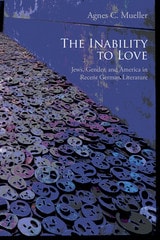
The Inability to Love
Jews, Gender, and America in Recent German LiteratureAgnes C. Mueller
Northwestern University Press, 2014
The Inability to Love borrows its title from Alexander and Margarete Mitscherlich’s 1967 landmark book The Inability to Mourn, which discussed German society’s lack of psychological reckoning with the Holocaust. Challenging that notion, Agnes Mueller turns to recently published works by prominent contemporary German, non-Jewish writers to examine whether there has been a thorough engagement with German history and memory. She focuses on literature that invokes Jews, Israel, and the Holocaust. Mueller’s aim is to shed light on pressing questions concerning German memories of the past, and on German images of Jews in Germany at a moment that s ideologically and historically fraught.
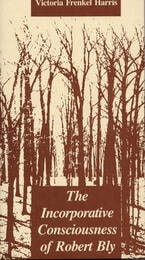
The Incorporative Consciousness of Robert Bly
Victoria Frenkel Harris
Southern Illinois University Press, 1991
Victoria Frenkel Harris traces the aesthetic journey of poet Robert Bly from his early structured works of mystical imagery and lyrical landscapes to his recent explorations of intimate relationships and male socialization.
Examining the various ways Bly’s prose poems articulate his opposition to the Vietnam War and his recent writings manipulate more formal patterns in detailing the intricacies of human relationships, Harris labels this evolution in form, subject, and imagery the incorporative consciousness, incorporative because it assimilates Jungian psychological categories, international poetic traditions, and a compelling breadth of topics.
Harris relies in part on contemporary feminist theory to throw revealing new light on Bly’s recent works. Though sympathetic to Bly, Harris finds that—in spite of his affirmation of the interaction of psychic, creative, and intellectual energies in both sexes—the poet’s later, erotic poems tend to objectify women in counterproductive ways. Bly’s idealization of woman as a Jungian universal, Harris contends, can blind him toward actual women.
Harris is at her best as she delimits with balance and precision the full complexity of the poet’s work.
The Indies of the Setting Sun
How Early Modern Spain Mapped the Far East as the Transpacific WestRicardo Padrón
University of Chicago Press, 2020
Narratives of Europe’s westward expansion often tell of how the Americas came to be known as a distinct landmass, separate from Asia and uniquely positioned as new ground ripe for transatlantic colonialism. But this geographic vision of the Americas was not shared by all Europeans. While some imperialists imagined North and Central America as undiscovered land, the Spanish pushed to define the New World as part of a larger and eminently flexible geography that they called las Indias, and that by right, belonged to the Crown of Castile and León. Las Indias included all of the New World as well as East and Southeast Asia, although Spain’s understanding of the relationship between the two areas changed as the realities of the Pacific Rim came into sharper focus. At first, the Spanish insisted that North and Central America were an extension of the continent of Asia. Eventually, they came to understand East and Southeast Asia as a transpacific extension of their empire in America called las Indias del poniente, or the Indies of the Setting Sun.
The Indies of the Setting Sun charts the Spanish vision of a transpacific imperial expanse, beginning with Balboa’s discovery of the South Sea and ending almost a hundred years later with Spain’s final push for control of the Pacific. Padrón traces a series of attempts—both cartographic and discursive—to map the space from Mexico to Malacca, revealing the geopolitical imaginations at play in the quest for control of the New World and Asia.

The Indigenization of Pali Meters in Thai Poetry
Mis Sea#87Thomas Hudak
Ohio University Press, 1990
This study of the Thai chan meters contends that Thai linguistic constraints and poetic principles determined the transformation of the Pali meters and stanzas into their Thai counterparts. Disproving the frequent claims that the old chan compositions ignored the sequencing of the particular syllable types required by the meters, the author determines why the meters became popular only during certain eras and just what the aesthetic conditions were that nurtured the use of the meters.

The Inner Life of Mestizo Nationalism
Estelle Tarica
University of Minnesota Press, 2008
The only recent English-language work on Spanish-American indigenismo from a literary perspective, Estelle Tarica’s work shows how modern Mexican and Andean discourses about the relationship between Indians and non-Indians create a unique literary aesthetic that is instrumental in defining the experience of mestizo nationalism.
Engaging with narratives by Jesús Lara, José María Arguedas, and Rosario Castellanos, among other thinkers, Tarica explores the rhetorical and ideological aspects of interethnic affinity and connection. In her examination, she demonstrates that these connections posed a challenge to existing racial hierarchies in Spanish America by celebrating a new kind of national self at the same time that they contributed to new forms of subjection and discrimination.
Going beyond debates about the relative merits of indigenismo and mestizaje, Tarica puts forward a new perspective on indigenista literature and modern mestizo identities by revealing how these ideologies are symptomatic of the dilemmas of national subject formation. The Inner Life of Mestizo Nationalism offers insight into the contemporary resurgence and importance of indigenista discourses in Latin America.
Estelle Tarica is associate professor of Latin American literature and culture at the University of California, Berkeley.
The Inner Sea
Maritime Literary Culture in Early Modern PortugalJosiah Blackmore
University of Chicago Press, 2022
In this book, Josiah Blackmore considers how the sea and seafaring shaped literary creativity in early modern Portugal during the most active, consequential decades of European overseas expansion. Blackmore understands “literary” in a broad sense, including a diverse archive spanning genres and disciplines—epic and lyric poetry, historical chronicles, nautical documents, ship logs, shipwreck narratives, geographic descriptions, and reference to texts of other seafaring powers and literatures of the period—centering on the great Luís de Camões, arguably the sea poet par excellence of early modern Europe.
Blackmore shows that the sea and nautical travel for Camões and his contemporaries were not merely historical realities; they were also principles of cultural creativity that connected to larger debates in the widening field of the maritime humanities. For Blackmore, the sea, ships, and nautical travel unfold into a variety of symbolic dimensions, and the oceans across the globe that were traversed in the fifteenth and sixteenth centuries correspond to vast reaches within the literary self. The sea and seafaring were not merely themes in textual culture but were also principles that created individual and collective subjects according to oceanic modes of perception. Blackmore concludes with a discussion of depth and sinking in shipwreck narratives as metaphoric and discursive dimensions of the maritime subject, foreshadowing empire’s decline.
The Innocent Midwest
Culture, Region, and Identity, 1793–1930Marcia Noe
Ohio University Press, 0
The Innocent Midwest delves into one of the most enduring stereotypes in American cultural history: the image of the Midwest as a bastion of innocence. Despite its share of social, political, and economic complexities, the region has long been portrayed as wholesome, virtuous, and peace loving—a perception that has persisted from its pastoral beginnings through industrialization and into the digital age.
This book traces the roots and evolution of that myth, arguing that the Midwest’s innocent image has been carefully cultivated through American popular and high culture. From literature and film to music and visual art, the trope of the innocent Midwesterner has shaped national perceptions of the region for over a century. Focusing on literature from 1793 to the 1920s, the book explores how this character type emerged, evolved, and eventually confronted the disillusionment of the machine age.
Organized thematically, the book examines early frontier narratives, stories of Midwesterners abroad, Progressive Era ideals of neighborliness, immigrant and migrant experiences, and the eventual unraveling of the pastoral dream. It reveals how the myth of innocence was underpinned by a constellation of values—agrarianism, Christian morality, and a belief in education—that supported the Jeffersonian vision of a democratic, virtuous citizenry.
Rather than offering a sweeping theory of regional identity, The Innocent Midwest focuses on the recurring literary figure of the innocent Midwesterner—an individual shaped by the land and striving for self-actualization. The book draws both on canonical authors like Mark Twain, William Dean Howells, Booth Tarkington, Sinclair Lewis, Theodore Dreiser, and Willa Cather and on lesser-known voices such as Maria Susanna Cummins, David Graham Phillips, Elia W. Peattie, William Webb, Chief Luther Standing Bear, and Oscar Micheaux, whose works contributed to the cultural construction of the Midwest.
Through its nuanced exploration of literature and culture, this book offers a compelling account of how the Midwest came to symbolize innocence—and why that image continues to resonate in the American imagination.
The Inordinate Eye
New World Baroque and Latin American FictionLois Parkinson Zamora
University of Chicago Press, 2006
The New World Baroque combines indigenous, African, and European forms of expression, and, in the early decades of the twentieth century, Latin American writers began to recuperate its visual structures to construct an alternative account of modernity, using its hybrid forms for the purpose of creating a discourse of “counterconquest”—a postcolonial self-definition aimed at disrupting entrenched power structures, perceptual categories, and literary forms.
Zamora engages this process, discussing a wide range of visual forms—Baroque façades and altarpieces, portraits of saints and martyrs (including the self-portraits of Frida Kahlo), murals from indigenous artisans to Diego Rivera—to elucidate works of fiction by Borges, Carpentier, Lezama Lima, Sarduy, Garro, García Márquez, and Galeano, and also to establish a critical perspective external to their work. Because visual media are “other” to the verbal economy of modern fiction, they serve these writers (and their readers) as oblique means by which to position their fiction culturally, politically, and aesthetically.
The first study of its kind in scope and ambition, The Inordinate Eye departs radically from most studies of literature by demonstrating how transcultural conceptions of the visual image have conditioned present ways of seeing and reading in Latin America.
The Insatiability of Human Wants
Economics and Aesthetics in Market SocietyRegenia Gagnier
University of Chicago Press, 2000
The Insatiability of Human Wants begins during a key transitional moment in aesthetic and economic theory, 1871, when both disciplines underwent a turn from production to consumption models. In economics, an emphasis on the theory of value and the social relations between land, labor, and capital gave way to more individualistic models of consumerism. Similarly, in aesthetics, theories of artistic production or creativity soon bowed to models of taste, pleasure, and reception.
Using these developments as a point of departure, Gagnier deftly traces the shift in Western thought from models of production to consumption. From its exploration of early market logic and Kantian thought to its look at the aestheticization of homelessness and our own market boom, The Insatiability of Human Wants invites us to contemplate alternative interpretations of economics, aesthetics, and history itself.
The Institutions of Russian Modernism
Conceptualizing, Publishing, and Reading SymbolismJonathan Stone
Northwestern University Press, 2017
The Institutions of Russian Modernism illuminates the key role of Symbolism as the earliest form of modernism in Russia, emerging seemingly ex nihilo at the end of the nineteenth century. Combining book history, periodical studies, and reception theory, Jonathan Stone examines the poetry and theory of Russian Symbolism within the framework of the institutions that organized, published, and disseminated the works to Russian readers. Surveying a wealth of examples of books, journals, and almanacs, Stone traces how publishers of Symbolist works marketed the movement and fashioned a Symbolist reader. His persuasive argument that after its eclipse Symbolism's legacy remained embedded in the heart of Russian modernism will be of interest to scholars and general readers.
The Intellective Space
Thinking beyond CognitionLaurent Dubreuil
University of Minnesota Press, 2015
The Intellective Space explores the nature and limits of thought. It celebrates the poetic virtues of language and the creative imperfections of our animal minds while pleading for a renewal of the humanities that is grounded in a study of the sciences.
According to Laurent Dubreuil, we humans both say more than we think and think more than we say. Dubreuil’s particular interest is the intellective space, a space where thought and knowledge are performed and shared. For Dubreuil, the term “cognition” refers to the minimal level of our mental operations. But he suggests that for humans there is an excess of cognition due to our extensive processing necessary for verbal language, brain dynamics, and social contexts. In articulating the intellective, Dubreuil includes “the productive undoing of cognition.”
Dubreuil grants that cognitive operations take place and that protocols of experimental psychology, new techniques of neuroimagery, and mathematical or computerized models provide access to a certain understanding of thought. But he argues that there is something in thinking that bypasses cognitive structures. Seeking to theorize with the sciences, the book’s first section develops the “intellective hypothesis” and points toward the potential journey of ideas going beyond cognition, after and before computation. The second part, “Animal Meditations,” pursues some of the consequences of this hypothesis with regard to the disparaged but enduring project of metaphysics, with its emphasis on categories such as reality, humanness, and the soul.
The International Strindberg
New Critical EssaysAnna Westerståhl Stenport
Northwestern University Press, 2012
The Interpretation of Dialogue
Edited by Tulio Maranhão
University of Chicago Press, 1990
The Intimacies of Four Continents
Lisa Lowe
Duke University Press, 2015
The Intimacy of Paper in Early and Nineteenth-Century American Literature
Jonathan Senchyne
University of Massachusetts Press, 2020
The Intimacy of Paper in Early and Nineteenth-Century American Literature reveals that book history and literary studies are mutually constitutive and proposes a new literary periodization based on materiality and paper production. In unpacking this history and connecting it to cultural and literary representations, Senchyne also explores how the textuality of paper has been used to make social and political claims about gender, labor, and race.
The Intimate Critique
Autobiographical Literary CriticismDiane P. Freedman, Olivia Frey, and Frances Murphy Zauhar, eds.
Duke University Press, 1993
Grounded in feminism and connected to the race, class, and gender paradigms in cultural studies, the twenty-six contributors to this volume—including Jane Tompkins, Henry Louis Gates, Jr., Shirley Nelson Garner, and Shirley Goek-Lin Lim—respond in new, refreshing ways to literary subjects ranging from Homer to Freud, Middlemarch to The Woman Warrior, Shiva Naipaul to Frederick Douglass. Revealing the beliefs and formative life experiences that inform their essays, these writers characteristically recount the process by which their opinions took shape--a process as conducive to self-discovery as it is to critical insight. The result—which has been referred to as "personal writing," "experimental critical writing," or "intellectual autobiography"—maps a dramatic change in the direction of literary criticism.
Contributors. Julia Balen, Dana Beckelman, Ellen Brown, Sandra M. Brown, Rosanne Kanhai-Brunton, Suzanne Bunkers, Peter Carlton, Brenda Daly, Victoria Ekanger, Diane P. Freedman, Olivia Frey, Shirley Nelson Garner, Henry Louis Gates, Jr., Melody Graulich, Gail Griffin, Dolan Hubbard, Kendall, Susan Koppelman, Shirley Geok-Lin Lim, Linda Robertson, Carol Taylor, Jane Tompkins, Cheryl Torsney, Trace Yamamoto, Frances Murphy Zauhar
The Invention and Gendering of Epicurus
Pamela Gordon
University of Michigan Press, 2012
The school of Greek philosopher Epicurus, which became known as the Garden, famously put great stock in happiness and pleasure. As a philosophical community, and a way of seeing the world, Epicureanism had a centuries-long life in Athens and Rome, as well as across the Mediterranean.
The Invention and Gendering of Epicurusstudies how the Garden's outlook on pleasure captured Greek and Roman imaginations---particularly among non-Epicureans---for generations after its legendary founding. Unsympathetic sources from disparate eras generally focus not on historic personages but on the symbolic Epicurean. And yet the traditions of this imagined Garden, with its disreputable women and unmanly men, give us intermittent glimpses of historical Epicureans and their conceptions of the Epicurean life.
Pamela Gordon suggests how a close hearing and contextualization of anti-Epicurean discourse leads us to a better understanding of the cultural history of Epicureanism. Her primary focus is on sources hostile to the Garden, but her Epicurean-friendly perspective is apparent throughout. Her engagement with ancient anti-Epicurean texts makes more palpable their impact on modern responses to the Garden.
Intended both for students and for scholars of Epicureanism and its response, the volume is organized primarily according to the themes common among Epicurus' detractors. It considers the place of women in Epicurean circles, as well as the role of Epicurean philosophy in Homer and other writers.
The Invention of the Oral
Print Commerce and Fugitive Voices in Eighteenth-Century BritainPaula McDowell
University of Chicago Press, 2017
Drawing on an impressive array of sources including travel narratives, elocution manuals, theological writings, ballad collections, and legal records, McDowell re-creates a world in which everyone from fishwives to philosophers, clergymen to street hucksters, competed for space and audiences in taverns, marketplaces, and the street. She argues that the earliest positive efforts to theorize "oral tradition," and to depict popular oral culture as a culture (rather than a lack of culture), were prompted less by any protodemocratic impulse than by a profound discomfort with new cultures of reading, writing, and even speaking shaped by print.
Challenging traditional models of oral versus literate societies and key assumptions about culture’s ties to the spoken and the written word, this landmark study reorients critical conversations across eighteenth-century studies, media and communications studies, the history of the book, and beyond.
The Inverted Conquest
The Myth of Modernity and the Transatlantic Onset of ModernismAlejandro Mejias-Lopez
Vanderbilt University Press, 2009
Expanding Bourdieu's concepts of cultural field and symbolic capital beyond national boundaries, The Inverted Conquest shows how modernismo originated in Latin America and traveled to Spain, where it provoked a complete renovation of Spanish letters and contributed to a national identity crisis. In the process, described by Latin American writers as a reversal of colonial relations, modernismo wrested literary and cultural authority away from Spain, moving the cultural center of the Hispanic world to the Americas.
Mejias-Lopez further reveals how Spanish American modernistas confronted the racial supremacist claims and homogenizing force of an Anglo-American modernity that defined the Hispanic as un-modern. Constructing a new Hispanic genealogy, modernistas wrote Spain as the birthplace of modernity and themselves as the true bearers of the modern spirit, moved by the pursuit of knowledge, cosmopolitanism, and cultural miscegenation, rather than technology, consumption, and scientific theories of racial purity.
Bound by the intrinsic limits of neocolonial and postcolonial theories, scholarship has been unwilling or unable to explore modernismo's profound implications for our understanding of Western modernities.
The Invisible Tent
The War Novels of Ford Madox FordBy Ambrose Gordon, Jr.
University of Texas Press, 1964
This critical evaluation of Ford Madox Ford's "novels of war, which are also novels about peace," is made in a most delightful manner. Based on a thorough knowledge of the novelist, it is enriched by keen perception and delicate taste and is couched in an informal, highly readable style.
Ambrose Gordon, Jr., here analyzes seven novels by Ford that in Gordon's opinion constitute Ford's masterpieces: Parade's End (a tetralogy consisting of Some Do Not, No More Parades, A Man Could Stand Up, and The Last Post), The Marsden Case, No Enemy, and The Good Soldier.
Interested in what these novels have to say, Gordon is equally interested in how they make their comment, and so approaches them through analysis of the fictional methods that Ford employed. Yet he skillfully avoids a common error of critics who become absorbed in technique—loss of contact with the book itself—by providing numerous quotations of sufficient length to indicate the novels' quality. These passages, examined in detail for content and technique, give the reader an understanding of the novel that, though not a substitute for one's own reading of the narratives, is enhanced by the interpretation of a brilliant critic.
Gordon traces the development of the novelist's art in various phases: the characteristic moods and general patterns of his novels, his borrowings from the French, the effects of his association with Conrad, his concept of the novel as fairy tale, his use of scene exteriors and interiors. Gordon's discussion cuts across the seven novels in many aspects but concentrates on one novel, or a group of novels, when his ideas have less general illustration.
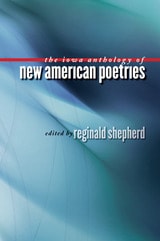
The Iowa Anthology of New American Poetries
Reginald Shepherd
University of Iowa Press, 2004
This landmark collection features emerging poets who combine a commitment to innovation and experimentation with a love for the lyric tradition, whose poetry transcends “mainstream” and avant-garde practice to create new and exciting poetic territories.
These new American poetries for the twenty-first century and beyond reach back toward the Modernists and even earlier lyric poetries (such as those of Wyatt, Donne, Keats, and Dickinson) and, simultaneously, reach forward to poetic possibilities not yet realized or even imagined. Most of the poets included here have won publication prizes, awards, and fellowships, and some have had their work anthologized. Others are at earlier stages of recognition but have published in major journals. All are writing highly accomplished work that will soon find a wider audience.
One distinguishing feature of this collection is the inclusion of substantial artistic statements from each contributor, in which the poets discuss their works, their influences, their aims, and their poetics. These statements are invaluable in giving readers a point of entry to the poems and can contribute to the development of a conversation among American poets that transcends questions of “craft” to address fundamental issues of poetry as an artistic practice.
Shepherd, a leading poet, essayist, and literary critic, is uniquely situated to bring us this important collection: young enough to feel the spirit of newer poets and yet established enough to bring a more experienced eye and a wider view to this groundbreaking project.The Iowa Anthology of New American Poetries highlights some of the most exciting, vital, and productive tendencies in contemporary American poetry and will be a significant milestone for students and teachers of poetry as well as for the general reader.
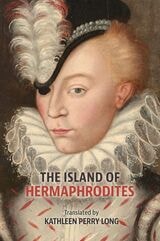
The Island of Hermaphrodites
Translated by Kathleen Perry Long
Arizona Center for Medieval and Renaissance Studies, 2025
A scandalous and subversive satire, Island of Hermaphrodites skewers the decadence and corruption of early seventeenth-century French society with razor-sharp wit. Published anonymously in 1605, this daring Menippean satire created an uproar for its irreverent portrayal of the French court, critique of absolute monarchy, and radical questioning of gender and power. A blend of political critique and biting humor, the novel follows an imagined land of aristocratic excess, where opulent feasts, elaborate fashion, and absurd rituals mask the deeper instability of a society built on privilege and deception.
Republished throughout the eighteenth century and connected to the intellectual ferment leading up to the French Revolution, Island of Hermaphrodites remains a strikingly modern indictment of unchecked power and economic exploitation. In its first full English translation, Kathleen P. Long offers new audiences a satirical romp through a world of absurdist power—one that feels politically salient today.

The Islands
A. Alberts
University of Massachusetts Press, 1983
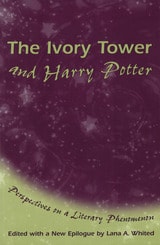
The Ivory Tower and Harry Potter
Perspectives on a Literary PhenomenonEdited, Intro, & Epilogue by Lana A. Whited
University of Missouri Press, 2004
Now available in paper, The Ivory Tower and Harry Potter is the first book-length analysis of J. K. Rowling's work from a broad range of perspectives within literature, folklore, psychology, sociology, and popular culture. A significant portion of the book explores the Harry Potter series' literary ancestors, including magic and fantasy works by Ursula K. LeGuin, Monica Furlong, Jill Murphy, and others, as well as previous works about the British boarding school experience. Other chapters explore the moral and ethical dimensions of Harry's world, including objections to the series raised within some religious circles. In her new epilogue, Lana A. Whited brings this volume up to date by covering Rowling's latest book, Harry Potter and the Order of the Phoenix.