Results by title
4743 books match the query 'Religion' and 1168 start with t
The Quotable Saint Jerome
Jerome Saint Jerome
Catholic University of America Press, 2020
The Rabbula Corpus
Comprising the Life of Rabbula, His Correspondence, a Homily Delivered in ConstanRobert R. Phenix Jr.
SBL Press, 2017
A significant new study of Rabbula and Christianity in Edessa
This volume makes available for the first time both the Syriac text and an English translation of every available original composition by Rabbula, the controversial bishop of Edessa (ca. 411–435 CE). It includes a new edition of the Life of Rabbula and other biographical traditions about him, including his conversion from paganism to Christianity. The texts collected in the volume are a valuable source for studying the reception history of biblical themes. In addition, the corpus offers insights into the beginnings of ecclesiastical legislation in the East, charitable work, pilgrimage, ascetic ideals, and church administration. Horn and Phenix examine Rabbula’s contribution to the Christological controversies of the fifth and sixth centuries, including his influence on Cyril of Alexandria in his debate with Theodoret of Cyrrhus and Theodore of Mopsuestia.
Features
- A critical study of the theological, cultural, and historical development of Syriac Christianity
- Thorough historical, theological, and socio-cultural analysis provided for each text
- A previously unidentified Christian Palestinian Aramaic fragment
The Raw and the Cooked
Mythologiques, Volume 1Claude Lévi-Strauss
University of Chicago Press, 1983

The Reader's Repentance
Women Preachers, Women Writers, and Nineteenth-Century Social DiscourseChristine L. Krueger
University of Chicago Press, 1992
Christine L. Krueger persuasively argues that Evangelical Christianity, by assuming the spiritual equality of women and men and the moral superiority of middle-class women, opened a space for the linguistic empowerment of women and fostered the emergence of women orators and writers who, in complex and contradictory ways, became powerful public figures. In the light of unpublished or long out-of-print writing by eighteenth- and nineteenth-century women preachers, Krueger shows how these women drew on religious language to critique forms of male domination, promote female political power, establish communities of women, and, most significantly, feminize social discourse. She traces the legacy of these preachers through the work of writers as diverse as Hannah More, Charlotte Elizabeth Tonna, Elizabeth Gaskell, and George Eliot—women who, despite political differences, shared an evangelical strategy for placing women's concerns on the social agenda of their time.
Documenting and analyzing the tradition of women's preaching as a powerful and distinctly feminist force in the development of nineteenth-century social fiction, The Reader's Repentance reconstitutes a significant chapter in the history of women and culture. This original work will be of interest to students of women's history, literature, and eighteenth- and nineteenth-century society.
The Real and the Sacred
Picturing Jesus in Nineteenth-Century FictionJefferson J. A. Gatrall
University of Michigan Press, 2014
The Realm Of Prester John
Robert Silverberg
Ohio University Press, 1996
In this modern account of the genesis of a great medieval myth, celebrated science fiction author Robert Silverberg’s explores the mysterious origins of Prester John, the astonishing Christian potentate of the East.
Prester John was a legendary figure who cast a powerful spell over Latin Christendom for almost five centuries. Rumors of the warrior-king-prelate’s fabulous realms first reached Europe in the eleventh century and quickly assumed an exalted status alongside such fabled wonders as El Dorado, The Fountain of Youth, and the Holy Grail.
The defeat of a Moslem Turkish tribe by a Buddhist Chinese warlord seems to have been the unlikely historical nugget around which the Prester John myth grew, but contributions to this strange saga have also been traced all around the globe to the Apostle Thomas' apocryphal preaching in India, to the actual existence of small colonies of Nestorian schismatics in central Asia, and even to Genghis Khan.
The Reason of Following
Christology and the Ecstatic IRobert P. Scharlemann
University of Chicago Press, 1991
Scharlemann presents a christological phenomenology of the self, tracing the connections between the "I am" of the God who spoke to Moses, the "I am" of Christ, and the "I am" of autonomous self-identification. How, he asks, can the self that spontaneously responds to Jesus' "Follow me!" be compared with the everyday, autonomous self? What is the nature of "following" on the part of those who answer the summons of one whose name is "I am"? Pursuing these questions, Scharlemann develops a christological phenomenology of the self—an account in which following means not the expression of the self in action or reflection but rather self-discovery in another person.
With a deep sense of both culture and philosophy, Scharlemann distinguishes the forms of reason involved in "following" from those in ethics, aesthetics, and other modes of religious philosophic thought. His penetrating readings of nineteenth- and twentieth-century German theological and philosophical traditions provide an introduction to lesser-known thinkers such as Hermann and Picht as well as a profound critique of major figures such as Descartes, Heidegger, Fichte, and Kant.
Finally Scharlemann outlines a program for a more systematic and rounded presentation of what Christian doctrine might mean in the contemporary world. His work will be of interest to students of theology and philosophy alike.
The Reception of Pragmatism in France and the Rise of Roman Catholic Modernism, 1890-1914
David G. Schultenover
Catholic University of America Press, 2009
The Rediscovery of Jewish Christianity
From Toland to BaurF. Stanley Jones
SBL Press, 2012
The Reformation of Machismo
Evangelical Conversion and Gender in ColombiaBy Elizabeth E. Brusco
University of Texas Press, 1995
Protestant evangelicalism has spread rapidly in Latin America at the same time that foreign corporations have taken hold of economies there. These concurrent developments have led some observers to view this religious movement as a means of melding converts into a disciplined work force for foreign capitalists rather than as a reflection of conscious individual choices made for a variety of personal, as well as economic, reasons.
In this pioneering study, Elizabeth Brusco challenges such assumptions and explores the intra-household motivations for evangelical conversion in Colombia. She shows how the asceticism required of evangelicals (no drinking, smoking, or extramarital sexual relations are allowed) redirects male income back into the household, thereby raising the living standard of women and children. This benefit helps explain the appeal of evangelicalism for women and questions the traditional assumption that organized religion always disadvantages women.
Brusco also demonstrates how evangelicalism appeals to men by offering an alternative to the more dysfunctional aspects of machismo. Case studies add a fascinating human dimension to her findings.
With the challenges this book poses to conventional wisdom about economic, gender, and religious behavior, it will be important reading for a wide audience in anthropology, women’s studies, economics, and religion. For all students of Latin America, it offers thoughtful new perspectives on a major, grass-roots agent of social change.
The Regensburg Lecture
James V. Schall, S.J.
St. Augustine's Press, 2007
The Relic
Jose Maria Eca de Queiros
Catholic University of America Press, 2023
The Religion of Empire
Political Theology in Blake's Prophetic SymbolismG. A. Rosso
The Ohio State University Press, 2016
The Religion of Empire also reevaluates Blake’s relationship with Milton, whose influence Blake both affirms and contests in a unique appropriation of Milton’s prophetic legacy. In this context, Rosso challenges recent views of Blake as complicit with the nationalism and sexism of his time, expanding the religion-empire nexus to include Blake’s esoteric understanding of gender. Foregrounding the role of female characters in the longer prophecies, Rosso discloses the variegated and progressive nature of Blake’s apocalyptic humanism.
The Religion of Existence
Asceticism in Philosophy from Kierkegaard to SartreNoreen Khawaja
University of Chicago Press, 2016
At the heart of existentialism, Noreen Khawaja argues, is a story about secular thought experimenting with the traditions of European Christianity. This book explores how a distinctly Protestant asceticism formed the basis for the chief existentialist ideal, personal authenticity, which is reflected in approaches ranging from Kierkegaard’s religious theory of the self to Heidegger’s phenomenology of everyday life to Sartre’s global mission of atheistic humanism. Through these three philosophers, she argues, we observe how ascetic norms have shaped one of the twentieth century’s most powerful ways of thinking about identity and difference—the idea that the “true” self is not simply given but something that each of us is responsible for producing.
Engaging with many central figures in modern European thought, this book will appeal to philosophers and historians of European philosophy, scholars of modern Christianity, and those working on problems at the intersection of religion and modernity.
The Religion of Falun Gong
Benjamin Penny
University of Chicago Press, 2012
In July 1999, a mere seven years after the founding of the religious movement known as the Falun Gong, the Chinese government banned it. Falun Gong is still active in other countries, and its suppression has become a primary concern of human rights activists and is regularly discussed in dealings between the Chinese government and its Western counterparts. But while much has been written on Falun Gong’s relation to political issues, no one has analyzed in depth what its practitioners actually believe and do.
The Religion of Hands
Prose Poems and Flash FictionsRay Gonzalez
University of Arizona Press, 2005
The Religion of Hands does not foster sleep. Look quickly and you will catch the hint of a fox streaking in front of your car’s headlights at night. Look more carefully out your bedroom window and you may see your life going by, lost loved ones waving hello.
"Who were you when the stars were misinterpreted as the fingertips of God?"
Ray Gonzalez blends symbolic play with lyrical beauty as he works from a vast and complex palette to infuse popular culture with myth. The Religion of Hands is imbued with magical realism: a suffocating dream of tamales, mysterious reptilian allusions, a man who "finds God walking down the stairs to hand him an old, tattered phonebook from the year he was born." It offers strange prophecies: "A steady vegetation will grow across the empire as more homeboys are killed in drive-bys. . . . Microscopic scratches on an old vinyl record will form a message discovered in twenty more years when the album is bought at a garage sale." And in 14 flash fictions, it tells of a tiny old man kept in a glass jar, an accordion stored in an old family trunk, tales of sharks and bandits. The religion of hands has its own unspoken sacraments. "The fingers take over, teaching whoever holds the moment that the rapid weight of the open hands is a dangerous way to live."
Seamlessly, effortlessly, multi-dexterously, Ray Gonzalez spins words that speak our very dreams.
The Religion of Humanity
The Illusion of Our TimesPierre Manent
St. Augustine's Press, 2022
The Religion of Humanity: The Illusion of Our Time is the first anthology in any language of the writings of the contemporary French political philosopher, Pierre Manent, on “the religion of Humanity.” The striking phrase comes from nineteenth-century French thinker, Auguste Comte (1798–1857). Comte coined the phrase and indeed created an atheistic religion of a self-adoring Humanity. In the aftermath of the Cold War, Manent observed victorious democracy interpreting itself in a similar framework. He took it upon himself to track this development, analyze it, and warn his fellow Europeans of its deleterious political, intellectual, moral, and spiritual effects. With conceptual precision and (most often) a sober tone, many contemporary sacred cows were gored. But in addition to cursing the humanitarian darkness, he also lit many candles of judicious political, philosophical, moral, and spiritual analysis. This anthology is thus almost unique in its subject matter, and certainly unique in its treatment of the subject. It is a rarity and gem: a first-rate work of political philosophy.
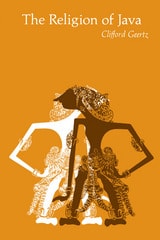
The Religion of Java
Clifford Geertz
University of Chicago Press, 1976
The Religion of Java will interest specialists in Southeast Asia, anthropologists and sociologists concerned with the social analysis of religious belief and ideology, students of comparative religion, and civil servants dealing with governmental policy toward Indonesia and Southeast Asia.
The Religion of Reality
Inquiry into the Self, Art, and TranscendenceDidier Maleuvre
Catholic University of America Press, 2006

The Religion of SEC Football
Gameday Rituals of the Football FaithfulTerry Barr and Michael Nelson
University of Alabama Press, 2026
A testament to the rituals, rivalries, loyalties, and generational faith of SEC football
For most of the United States, September marks the arrival of autumn. In the South, it signals something else entirely: the return of college football season. In The Religion of SEC Football, Terry Barr and Michael Nelson explore how SEC football has become one of the South’s most distinctive cultural traditions and the parallels it shares with religious devotion. Using history, humor, archival research, personal testimony, and decades of fandom, they examine the rituals, rivalries, communities, and legacies that transform ordinary Saturdays into something more sacred.
For generations, fans across the South have organized life around kickoff times and these “sacred Saturdays.” Weddings, family gatherings, and travel plans are often arranged around the football calendar. They make pilgrimages to beloved stadiums, gather with family and friends to observe longstanding game-day traditions, and invest their hopes, memories, and identities in the teams they love. For many, college football is more than entertainment—it’s a shared culture, a lifelong inheritance, and an enduring act of faith.
From tailgate lore to stadium pilgrimages, Barr and Nelson reveal a world where coaches become saints, miracle plays become scripture, and fandom becomes a family inheritance. Along the way, they celebrate the stories, passions, and personalities that have made SEC football a defining part of Southern life and an enduring act of faith. Regardless of your team’s colors, mascot, or fight song, The Religion of SEC Football celebrates the traditions, stories, and experiences that unite generations of fans across the South and remind us why, year after year, it truly just “means more.”

The Religion of Science Fiction
Frederick A. Kreuziger
University of Wisconsin Press, 1986
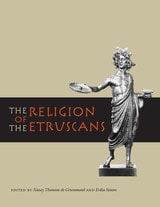
The Religion of the Etruscans
Edited by Nancy Thomson de Grummond and Erika Simon
University of Texas Press, 2006
Devotion to religion was the distinguishing characteristic of the Etruscan people, the most powerful civilization of Italy in the Archaic period. From a very early date, Etruscan religion spread its influence into Roman society, especially with the practice of divination. The Etruscan priest Spurinna, to give a well-known example, warned Caesar to beware the Ides of March. Yet despite the importance of religion in Etruscan life, there are relatively few modern comprehensive studies of Etruscan religion, and none in English. This volume seeks to fill that deficiency by bringing together essays by leading scholars that collectively provide a state-of-the-art overview of religion in ancient Etruria.
The eight essays in this book cover all of the most important topics in Etruscan religion, including the Etruscan pantheon and the roles of the gods, the roles of priests and divinatory practices, votive rituals, liturgical literature, sacred spaces and temples, and burial and the afterlife. In addition to the essays, the book contains valuable supporting materials, including the first English translation of an Etruscan Brontoscopic Calendar (which guided priests in making divinations), Greek and Latin sources about Etruscan religion (in the original language and English translation), and a glossary. Nearly 150 black and white photographs and drawings illustrate surviving Etruscan artifacts and inscriptions, as well as temple floor plans and reconstructions.
The Religious Foundations of Francis Bacon's Thought
Stephen A. McKnight
University of Missouri Press, 2006
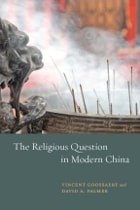
The Religious Question in Modern China
Vincent Goossaert and David A. Palmer
University of Chicago Press, 2011
Recent events—from strife in Tibet and the rapid growth of Christianity in China to the spectacular expansion of Chinese Buddhist organizations around the globe—vividly demonstrate that one cannot understand the modern Chinese world without attending closely to the question of religion. The Religious Question in Modern China highlights parallels and contrasts between historical events, political regimes, and cultural movements to explore how religion has challenged and responded to secular Chinese modernity, from 1898 to the present.
Vincent Goossaert and David A. Palmer piece together the puzzle of religion in China not by looking separately at different religions in different contexts, but by writing a unified story of how religion has shaped, and in turn been shaped by, modern Chinese society. From Chinese medicine and the martial arts to communal temple cults and revivalist redemptive societies, the authors demonstrate that from the nineteenth century onward, as the Chinese state shifted, the religious landscape consistently resurfaced in a bewildering variety of old and new forms. The Religious Question in Modern China integrates historical, anthropological, and sociological perspectives in a comprehensive overview of China’s religious history that is certain to become an indispensible reference for specialists and students alike.
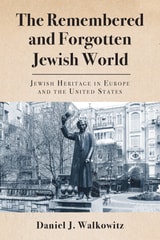
The Remembered and Forgotten Jewish World
Jewish Heritage in Europe and the United StatesDaniel J. Walkowitz
Rutgers University Press, 2018
The Remembered and Forgotten Jewish World investigates the politics of heritage tourism and collective memory. In an account that is part travelogue, part social history, and part family saga, acclaimed historian Daniel J. Walkowitz visits key Jewish museums and heritage sites from Berlin to Belgrade, from Krakow to Kiev, and from Warsaw to New York, to discover which stories of the Jewish experience are told and which are silenced. As he travels to thirteen different locations, participates in tours, displays, and public programs, and gleans insight from local historians, he juxtaposes the historical record with the stories presented in heritage tourism. What he finds raises provocative questions about the heritage tourism industry and its role in determining how we perceive Jewish history and identity. This book offers a unique perspective on the importance of collective memory and the dangers of collective forgetting.
The Renewal of the Kibbutz
From Reform to TransformationRussell, Raymond
Rutgers University Press, 2015
This book explores the waves of reforms since 1990. Looking through the lens of organizational theories that predict how open or closed a group will be to change, the authors find that less successful kibbutzim were most receptive to reform, and reforms then spread through imitation from the economically weaker kibbutzim to the strong.

The Reprobation of Humans and Angels
Augustinus, Tome III, Book XCornelius Jansen
Catholic University of America Press, 2026
The Republic Estranged
Christians, Muslims, and Jews between Algeria and France, 1870-1919Yuval Tal
University of Chicago Press, 0
Examines how the modern French Republic came into being through state efforts to assimilate Christians, Muslims, and Jews across France and colonial Algeria.
In The Republic Estranged, Yuval Tal studies three religious communities—Christians, Muslims, and Jews—and their interactions with French settlers in colonial Algeria. While each of these groups wanted to “become French” without abandoning their communal identities, the French system had its own ideas about what kind of assimilation was possible or desirable. It welcomed Christians, excluded Muslims, and enfranchised Jews while insisting that Jews could never become as naturally French as Christians could. The result, Tal shows, was a “republican ethnic common sense” that continues to shape French politics today.
Tal argues we must understand France’s deeply entrenched anti-Muslim rhetoric as part of a larger strategy that selectively privileges Christians over and against Muslim and Jewish minorities. He focuses on a period between 1870 and 1919, in which we see how France’s supposedly universalist project of national assimilation was predicated on the notion that some ethnically and religiously defined communities were more capable of “becoming French” than others. Working with sources in Arabic, French, Spanish, and Italian, including literary, political, and legal texts, this book speaks to readers across French studies, Jewish studies, and Middle East and North African studies, showing the ongoing relevance of this important period in French history.
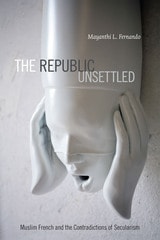
The Republic Unsettled
Muslim French and the Contradictions of SecularismMayanthi L. Fernando
Duke University Press, 2014
The Retractions
Saint Augustine
Catholic University of America Press, 1999
The Returns of Fetishism
Charles de Brosses and the Afterlives of an IdeaCharles de Brosses, Rosalind C. Morris, and Daniel H. Leonard
University of Chicago Press, 2017
The product of de Brosses’s autodidactic curiosity and idiosyncratic theories of language, On the Worship of Fetish Gods is an enigmatic text that is often difficult for contemporary audiences to assess. In a thorough introduction to the text, Leonard situates de Brosses’s work within the cultural and intellectual milieu of its time. Then, Morris traces the concept of fetishism through its extraordinary permutations as it was picked up and transformed by the fields of philosophy, comparative religion, political economy, psychoanalysis, and anthropology. Ultimately, she breaks new ground, moving into and beyond recent studies by thinkers such as William Pietz, Hartmut Böhme, and Alfonso Iacono through illuminating new discussions on topics ranging from translation issues to Africanity and the new materialisms.
The Revelation of Imagination
From Homer and the Bible through Virgil and Augustine to DanteWilliam Franke
Northwestern University Press, 2015
In The Revelation of Imagination, William Franke attempts to focus on what is enduring and perennial rather than on what is accommodated to the agenda of the moment. Franke’s book offers re-actualized readings of representative texts from the Bible, Homer, and Virgil to Augustine and Dante. The selections are linked together in such a way as to propose a general interpretation of knowledge. They emphasize, moreover, a way of articulating the connection of humanities knowledge with what may, in various senses, be called divine revelation. This includes the sort of inspiration to which poets since Homer have typically laid claim, as well as that proper to the biblical tradition of revealed religion. The Revelation of Imagination invigorates the ongoing discussion about the value of humanities as a source of enduring knowledge.
The Revelation of Your Words
The New Evangelization and the Role of the Seminary Professor of Sacred ScriptureKevin Zilverberg
Saint Paul Seminary Press, 2021
The Rhetoric of Abraham's Faith in Romans 4
Andrew Kimseng Tan
SBL Press, 2018
Explore Romans 4 from a sociorhetorical perspective
Andrew Kimseng Tan examines Romans using sociorhetorical interpretation to determine how Paul attempted to alleviate dissension between Judean (or “Jewish”) and non-Judean (or “gentile”) Christians. Through his analysis of Paul’s rhetoric, Tan reveals that Paul used Abraham’s faith in Genesis to demonstrate that the both groups were equally children and heirs of Abraham whose acceptance by God was through the same kind of faith that Abraham possessed, not through the Mosaic law, which Judean Christians claimed gave them a special honored status with God.
Features
- A model for the application of sociorhetorical interpretation for analyzing close readings of biblical texts
- A demonstration of the persuasive power of Romans 4 through the use of sociorhetorical interpretation
- Exploration of the relationships between important theological topics such as resurrection, the Mosaic law, the Holy Spirit, righteousness, ethical living, and eschatological salvation
The Rhetoric of Church and State
A Critical Analysis of Religion Clause JurisprudenceFrederick Mark Gedicks
Duke University Press, 1995
Gedicks suggests that the Supreme Court’s inconsistent decisions mirror a divergence in American society between an increasingly secular public culture and the primarily devout private lives of the majority of Americans. He notes that while the Court is committed to principles of secular individualism, it has repeatedly endorsed government actions that violate those principles—actions that would be far more justifiable under the discourse of religious communitarianism. The impossibility of reconciling the two discourses leaves the Court no choice but to efface—often implausibly—the religious nature of practices it deems permissible. Gedicks concludes that the road to a coherent religion clause doctrine lies neither in a return to religious communitarianism nor in its complete displacement by secular individualism, but in a yet-to-be-identified discourse that would attract popular support while protecting a meaningful measure of religious freedom.
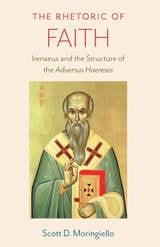
The Rhetoric of Faith
Irenaeus and the Structure of the Adversus HaeresesScott D. Moringiello
Catholic University of America Press, 2019
The argument focuses on the Adversus Haereses, although it does begin with some discussion to put Irenaeus in the context of second century Christian literature. Moringiello concludes with a discussion of Irenaeus’s Demonstration of the Apostolic Preaching.Other scholars have provided introductions to Irenaeus’s work, and other scholars have argued for the structural unity of the Adversus Haereses. No other scholar, though, has argued that the faith of the Church is the basis of Irenaeus’s argument. This argument, then, presents an important contribution to the field of Irenaeus studies.
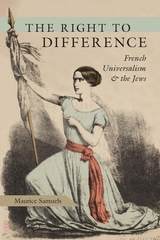
The Right to Difference
French Universalism and the JewsMaurice Samuels
University of Chicago Press, 2016
Samuels demonstrates that Jewish difference has always been essential to the elaboration of French universalism, whether as its foil or as proof of its reach. He traces the development of this discourse through key moments in French history, from debates over granting Jews civil rights during the Revolution, through the Dreyfus Affair and Vichy, and up to the rise of a “new antisemitism” in recent years. By recovering the forgotten history of a more open, pluralistic form of French universalism, Samuels points toward new ways of moving beyond current ethnic and religious dilemmas and argues for a more inclusive view of what constitutes political discourse in France.
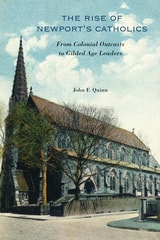
The Rise of Newport’s Catholics
From Colonial Outcasts to Gilded Age LeadersJohn F. Quinn
University of Massachusetts Press, 2024
Honorable Mention, 2025 Catholic Media Association Book Awards
Nineteenth-century New England was a hostile place for Catholics. In Massachusetts a mob torched a convent; in Maine a priest was tarred and feathered; and Rhode Island elected an anti-Catholic Know Nothing governor. “No Irish Need Apply” signs were common.
Newport was different. It was a religiously diverse and tolerant city that welcomed Catholic French troops during the American Revolution. Later, as it became the favored summer retreat for America’s Protestant social elite, Irish Catholics arrived to work in construction jobs, the tourist economy, and the grand Gilded Age cottages. By the end of the century, Newport’s Catholic community was flourishing. Moneyed Catholics acquired their own mansions, an Irish Catholic was mayor, and prominent Protestants were helping Catholic neighbors establish new schools and churches. In this deeply researched study, John F. Quinn delves into this rich Catholic history to discover why nineteenth-century Newport was particularly religiously tolerant and accepting.
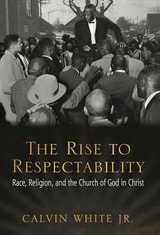
The Rise to Respectability
Race, Religion, and the Church of God in ChristCalvin White
University of Arkansas Press, 2015
The Rites of Passage, Second Edition
Arnold van Gennep
University of Chicago Press, 2019
With a new introduction by Pulitzer Prize–winner David I. Kertzer
Arnold van Gennep’s masterwork, The Rites of Passage, has been a staple of anthropological education for more than a century. First published in French in 1909, and translated into English by the University of Chicago Press in 1960, this landmark book explores how the life of an individual in any society can be understood as a succession of transitions: birth, puberty, marriage, parenthood, old age, and, finally, death. Van Gennep’s great insight was discerning a common structure in each of these seemingly different transitions, involving rituals of separation, liminality, and incorporation. With compelling precision, he set out the terms that would both define twentieth-century ritual theory and become a part of our everyday lexicon.
This new edition of his work demonstrates how we can still make use of its enduring critical tools to understand our own social, religious, and political worlds, and even our personal and professional lives. In his new introduction, Pulitzer Prize–winning historian and anthropologist David I. Kertzer sheds new light on van Gennep, on the battles he fought, and on the huge impact the book has had since publication of the first English edition.
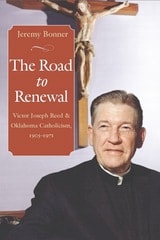
The Road to Renewal
Victor Joseph Reed and Oklahoma Catholicism, 1905–1971Jeremy BONNER
Catholic University of America Press, 2008
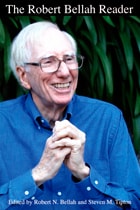
The Robert Bellah Reader
Robert N. Bellah
Duke University Press, 2006
The Reader is organized around four central concerns. It seeks to place modernity in theoretical and historical perspective, drawing from major figures in social science, historical and contemporary, from Aristotle and Rousseau through Durkheim and Weber to Habermas and Mary Douglas. It takes the United States to be in some respects the type-case of modernity and in others the most atypical of modern societies, analyzing its common faith in individual freedom and democratic self-government, and its persistent paradoxes of inequality, exclusion, and empire. The Reader is also concerned to test the axiomatic modern assumption that rational cognition and moral evaluation, fact and value, are absolutely divided, arguing instead that they overlap and interact much more than conventional wisdom in the university today usually admits. Finally, it criticizes modernity’s affirmation that faith and knowledge stand even more utterly at odds, arguing instead that their overlap and interaction, obvious in every premodern society, animate the modern world as well.
Through such critical and constructive inquiry this Reader probes many of our deepest social and cultural quandaries, quandaries that put modernity itself, with all its immense achievements, at mortal risk. Through the practical self-understanding such inquiry spurs, Bellah shows how we may share responsibility for the world we have made and seek to heal it.
The Roles of Christ's Humanity in Salvation
Insights from Theodore of MopsuestiaFrederick G. McLeod S.J.
Catholic University of America Press, 2005
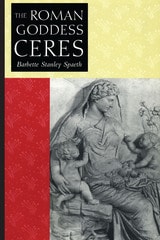
The Roman Goddess Ceres
By Barbette Stanley Spaeth
University of Texas Press, 1995
Interest in goddess worship is growing in contemporary society, as women seek models for feminine spirituality and wholeness. New cults are developing around ancient goddesses from many cultures, although their modern adherents often envision and interpret the goddesses very differently than their original worshippers did.
In this thematic study of the Roman goddess Ceres, Barbette Spaeth explores the rich complexity of meanings and functions that grew up around the goddess from the prehistoric period to the Late Roman Empire. In particular, she examines two major concepts, fertility and liminality, and two social categories, the plebs and women, which were inextricably linked with Ceres in the Roman mind. Spaeth then analyzes an image of the goddess in a relief of the Ara Pacis, an important state monument of the Augustan period, showing how it incorporates all these varied roles and associations of Ceres. This interpretation represents a new contribution to art history.
With its use of literary, epigraphical, numismatic, artistic, and archaeological evidence, The Roman Goddess Ceres presents a more encompassing view of the goddess than was previously available. It will be important reading for all students of Classics, as well as for a general audience interested in New Age, feminist, or pagan spirituality.
The Root of Friendship
Anthony T. Flood
Catholic University of America Press, 2014
The Roots of Fundamentalism
British and American Millenarianism, 1800-1930Ernest R. Sandeen
University of Chicago Press, 1970
The Rope of God
James T. Siegel
University of Michigan Press, 2000
The Royal Remains
The People's Two Bodies and the Endgames of SovereigntyEric L. Santner
University of Chicago Press, 2011
"The king is dead. Long live the king!" In early modern Europe, the king's body was literally sovereign—and the right to rule was immediately transferrable to the next monarch in line upon the king's death. In The Royal Remains, Eric L. Santner argues that the "carnal" dimension of the structures and dynamics of sovereignty hasn't disappeared from politics. Instead, it migrated to a new location—the life of the people—where something royal continues to linger in the way we obsessively track and measure the vicissitudes of our flesh.
Santner demonstrates the ways in which democratic societies have continued many of the rituals and practices associated with kingship in displaced, distorted, and usually, unrecognizable forms. He proposes that those strange mental activities Freud first lumped under the category of the unconscious—which often manifest themselves in peculiar physical ways—are really the uncanny second life of these "royal remains," now animated in the body politic of modern neurotic subjects. Pairing Freud with Kafka, Carl Schmitt with Hugo von Hofmannsthal,and Ernst Kantorowicz with Rainer Maria Rilke, Santner generates brilliant readings of multiple texts and traditions of thought en route to reconsidering the sovereign imaginary. Ultimately, The Royal Remains locates much of modernity—from biopolitical controversies to modernist literary experiments—in this transition from subjecthood to secular citizenship.
This major new work will make a bold and original contribution to discussions of politics, psychoanalysis, and modern art and literature.
The Ruin of Souls
A Religious History of Italian Catholic Immigrants in the United States (1853-1921)Massimo Di Gioacchino
Bridwell Press, 2025
Strengthened by largely unknown archival documentation and an original historiographic methodology, the work reveals a new political dimension in the religious history of Italian immigrants in the United States and their relationship with the Catholic religious canon. By integrating the analysis of the ecclesial practices of the Italian communities into a far-reaching epistemological reflection, the work also contributes to the continuing discussion of how we study and examine the religious practices of Catholic communities in the modern era.
The Runes of Evolution
How the Universe became Self-AwareSimon Conway Morris
Templeton Press, 2015
A leading evolutionary biologist at the University of Cambridge, Conway Morris came into international prominence for his work on the Cambrian explosion (especially fossils of the Burgess Shale) and evolutionary convergence, which is the process whereby organisms not closely related (not monophyletic), independently evolve similar traits as a result of having to adapt to similar environments or ecological niches.
In The Runes of Evolution, he illustrates how the ubiquity of convergence hints at an underlying framework whereby many outcomes, not least brains and intelligence, are virtually guaranteed on any Earth-like planet. Conway Morris also emphasizes how much of the complexity of advanced biological systems is inherent in microbial forms.
By casting a wider net, The Runes of Evolution explores many neglected evolutionary questions. Some are remarkably general. Why, for example, are convergences such as parasitism, carnivory, and nitrogen fixation in plants concentrated in particular taxonomic hot spots? Why do certain groups have a particular propensity to evolve toward particular states?
Some questions lead to unexpected evolutionary insights: If bees sleep (as they do), do they dream? Why is that insect copulating with an orchid? Why have sponges evolved a system of fiber optics? What do mantis shrimps and submarines have in common? If dinosaurs had not gone extinct what would have happened next? Will a saber-toothed cat ever re-evolve?
Cona Morris observes: “Even amongst the mammals, let alone the entire tree of life, humans represent one minute twig of a vast (and largely fossilized) arborescence. Every living species is a linear descendant of an immense string of now-vanished ancestors, but evolution itself is the very reverse of linear. Rather it is endlessly exploratory, probing the vast spaces of biological hyperspace. Indeed this book is a celebration of how our world is (and was) populated by a riot of forms, a coruscating tapestry of life.”
The Runes of Evolution is the most definitive synthesis of evolutionary convergence to be published to date.