Results by title
3703 books match the query '19th century' and 853 start with t
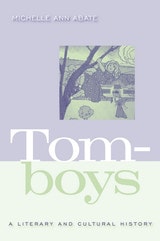
Tomboys
A Literary and Cultural HistoryMichelle Ann Abate
Temple University Press, 2008
Starting with the figure of the bold, boisterous girl in the mid-19th century and ending with the “girl power” movement of the 1990’s, Tomboys is the first full-length critical study of this gender-bending code of female conduct. Michelle Abate uncovers the origins, charts the trajectory, and traces the literary and cultural transformations that the concept of “tomboy” has undergone in the United States.
Abate focuses on literature including Louisa May Alcott's Little Women and Carson McCullers's The Member of the Wedding and films such as Peter Bogdanovich's Paper Moon and Jon Avnet's Fried Green Tomatoes. She also draws onlesser-known texts like E.D.E.N. Southworth's once wildly popular 1859 novel The Hidden Hand, Cold War lesbian pulp fiction, and New Queer Cinema from the 1990s.
Tomboys also explores the gender and sexual dynamics of tomboyism, and offers intriguing discussions of race and ethnicity's role in the construction of the enduring cultural archetype. Abate’s insightful analysis provides useful, thought-provoking connections between different literary works and eras. The result demystifies this cultural phenomenon and challenges readers to consider tomboys in a whole new light.
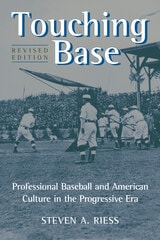
Touching Base
Professional Baseball and American Culture in the Progressive EraSteven A. Riess
University of Illinois Press, 1999
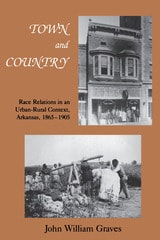
Town and Country
Race Relations in an Urban-Rural Context, Arkansas, 1865–1905John Graves
University of Arkansas Press, 1990
A thoroughly researched and extensively documented look at race relations in Arkansas druing the forty years after the Civil War, Town and Country focuses on the gradual adjustment of black and white Arkansans to the new status of the freedman, in both society and law, after generations of practicing the racial etiquette of slavery.
John Graves examines the influences of the established agrarian culture on the developing racial practices of the urban centers, where many blacks living in the towns were able to gain prominence as doctors, lawyers, successful entrepreneurs, and political leaders. Despite the tension, conflict, and disputes within and between the voice of the government and the voice of the people in an arduous journey toward compromise, Arkansas was one of the most progressive states during Reconstruction in desegregating its people.
Town and Country makes a significant contribution to the history of the postwar South and its complex engagement with the race issue.

Tracking the Texas Rangers
The Nineteenth CenturyBruce A. Glasrud
University of North Texas Press, 2012

Trading Freedom
How Trade with China Defined Early AmericaDael A. Norwood
University of Chicago Press, 2022
The economic and geographic development of the early United States is usually thought of in trans-Atlantic terms, defined by entanglements with Europe and Africa. In Trading Freedom, Dael A. Norwood recasts these common conceptions by looking to Asia, making clear that from its earliest days, the United States has been closely intertwined with China—monetarily, politically, and psychologically.
Norwood details US trade with China from the late eighteenth through the late nineteenth centuries—a critical period in America’s self-definition as a capitalist nation—and shows how global commerce was central to the articulation of that national identity. Trading Freedom illuminates how debates over political economy and trade policy, the building of the transcontinental railroad, and the looming sectional struggle over slavery were all influenced by Sino-American relations. Deftly weaving together interdisciplinary threads from the worlds of commerce, foreign policy, and immigration, Trading Freedom thoroughly dismantles the idea that American engagement with China is anything new.
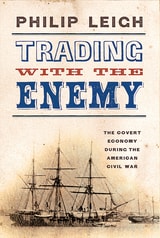
Trading with the Enemy
The Covert Economy During the American Civil WarPhilip Leigh
Westholme Publishing, 2022
While Confederate blockade runners famously carried the seaborne trade for the South during the American Civil War, the amount of Southern cotton exported to Europe was only half of that shipped illicitly to the North. Most went to New England textile mills where business “was better than ever,” according to textile mogul Amos Lawrence. Rhode Island senator William Sprague, a mill owner and son-in-law to Treasury Secretary Salmon P. Chase, was a member of a partnership supplying weapons to the Confederacy in exchange for cotton. The trade in contraband was not confined to New England. Union General William T. Sherman claimed Confederates were supplied with weapons from Cincinnati, while General Ulysses S. Grant captured Rebel cavalry armed with carbines purchased in Union-occupied Memphis. During the last months of the war, supplies entering the Union-controlled port of Norfolk, Virginia, were one of the principal factors enabling Robert E. Lee’s Confederate army to avoid starvation. Indeed, many of the supplies that passed through the Union blockade into the Confederacy originated in Northern states, instead of Europe as is commonly supposed. Merchants were not the only ones who profited; Union officers General Benjamin Butler and Admiral David Dixon Porter benefited from this black market. President Lincoln admitted that numerous military leaders and public officials were involved, but refused to stop the trade.
In Trading with the Enemy: The Covert Economy During the American Civil War, New York Times Disunion contributor Philip Leigh recounts the little-known story of clandestine commerce between the North and South. Cotton was so important to the Northern economy that Yankees began growing it on the captured Sea Islands of South Carolina. Soon the neutral port of Matamoras, Mexico, became a major trading center, where nearly all the munitions shipped to the port—much of it from Northern armories—went to the Confederacy. After the fall of New Orleans and Vicksburg, a frenzy of contraband-for-cotton swept across the vast trans-Mississippi Confederacy, with Northerners sometimes buying the cotton directly from the Confederate government. A fascinating study, Trading with the Enemy adds another layer to our understanding of the Civil War.
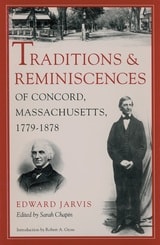
Traditions and Reminiscences of Concord, Massachusetts, 1779-1878
Edward Jarvis
University of Massachusetts Press, 1993
A statistician and pioneer in the treatment of the mentally ill, Edward Jarvis (1803–1884) decided late in life to record his recollections of Concord, Massachusetts, the town in which he was raised. Using Lemuel Shattuck's History of Concord as the springboard for his thoughts, Jarvis produced a remarkable document. Traditions and Reminiscences is encyclopedic in scope but intimate in style; it provides an astonishingly detailed account of life in early nineteenth-century Concord. Jarvis escorts us through the family home, making certain we understand the function and value of each item in the domestic scene. Then he is off to the neighbors' houses, to the schoolhouse, the church, the social clubs, the library, the post office, the town hall, and even the tavern, where he unabashedly counts patrons' drinks. Along the way we learn about neighborly cooperation—quiltings, husking bees, and barn raisings—about social manners and respectability, and about local vices. The result is a vast storehouse of information and a vivid portrait of life in an early nineteenth-century preindustrial community. The memoir also provides a first-hand witness to the crusade for moral reform that transformed mid-nineteenth-century New England.
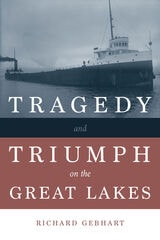
Tragedy and Triumph on the Great Lakes
Richard Gebhart
Michigan State University Press, 2024

Tragic Muse
Rachel of the Comédie-FrançaiseRachel M. Brownstein
Duke University Press, 1995
Born to itinerant Jewish peddlers in 1821, Rachel arrived on the Paris stage at the age of fifteen. She became both a symbol of her culture’s highest art and a clue to its values and obsessions. Fascinated with all things Napoleonic, she was the mother of Napoleon’s grandson and the lover of many men connected to the emperor. Her story—the rise from humble beginnings to queen of the French state theater—echoes and parodies Napoleon’s own. She decisively controlled her career, her time, and finances despite the actions and claims of managers, suitors, and lovers. A woman of exceptional charisma, Rachel embodied contradiction and paradox. She captured the attention of her time and was memorialized in the works of Matthew Arnold, Charlotte Brontë, George Eliot, and Henry James.
Richly illustrated with portraits, photographs, and caricatures, Tragic Muse combines brilliant literary analysis and exceptional historical research. With great skill and acuity, Rachel M. Brownstein presents Rachel—her brief intense life and the image that was both self-fashioned and, outliving her, fashioned by others. First published by Knopf (1993), this book will attract a broad audience interested in matters as wide ranging as the construction of character, the cult of celebrity, women’s lives, and Jewish history. It will also be of enduring interest to readers concerned with nineteenth-century French culture, history, literature, theater, and Romanticism. Tragic Muse won the 1993 George Freedley Award presented by the Theater Library Association.
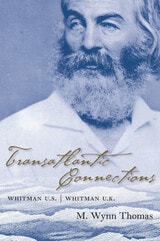
Transatlantic Connections
Whitman U.S., Whitman U.K.Thomas, M. Wynn
University of Iowa Press, 2005
The book’s contrasting sections reflect the two locations studied: the first shows Whitman in his time and place, while the second repositions him within the cultures of England and Wales from the late 19th to the late 20th century. In the opening chapter he is placed against the vivid, outrageous background of the New York of his time; the second finds evidence in his poetry of a critique of the new urban politics of the emerging city boss; the third radically redefines Whitman's relationship to his famous contemporary Longfellow. Other chapters deal with the Civil War poet, exploring the ways in which his poetic responses were in part shaped by his relationship to his soldier brother George, and his use of the meteorological discoveries of his day to fashion metaphors for imaging the different phases of the conflict.
The second section ponders the paradox that this Whitman, who was so much the product of his specific time and limited “local” culture, should come to be accepted as an international visionary. The United Kingdom is taken as offering striking instances of this phenomenon, and his transatlantic admirers are shown to have been engaged in an unconscious process of “translating” Whitman into the terms of their own culturally specific social, political, and sexual preoccupations. Some of the connections explored are those between Whitman and Edward Carpenter, the so-called English Whitman; between Whitman and perhaps his greatest English critic, D. H. Lawrence; and between Whitman and the Welsh poets Ernest Rhys, Amanwy (David Rees Griffiths), Niclas y Glais (T. E. Nicholas), Waldo Williams, Glyn Jones, Dylan Thomas, and R. S. Thomas.
This bold and original study, offering new points of entry into understanding Whitman as the product of his time and place as well as understanding the reception of Whitman in the U.K. as a process of cultural translation, should fascinate scholars of Whitman and students of comparative literature.

Transatlantic Conversations
Nineteenth-Century American Women’s Encounters with Italy and the Atlantic WorldBeth L. Lueck
University of New Hampshire Press, 2017
This unique interdisciplinary essay collection offers a fresh perspective on the active involvement of American women authors in the nineteenth-century transatlantic world. Internationally diverse contributors explore topics ranging from women's social and political mobility to their authorship and activism. While a number of essays focus on such well-known writers as Margaret Fuller, Catharine Maria Sedgwick, Harriet Beecher Stowe, George Eliot, Louisa May Alcott, and Charlotte Perkins Gilman, other, perhaps lesser-known authors are also included, such as E. D. E. N. Southworth, Elizabeth Stuart Phelps, Elizabeth Peabody, Jeannette Hart, and Laura Richards.
These essays show the spectrum of interests and activities in which nineteenth-century women were involved as they moved, geographically and metaphorically, toward gaining their independence and the right to control their lives. Traveling far and wide—to Italy, France, Great Britain, and the Bahamas—these writers came into contact with realities far different from their own. On topics ranging from homeopathy and literary endeavors to politics and revolution, they conversed with others, reaching and inspiring transnational audiences with their words and deeds, and creating a space for self-expression in the rapidly changing transatlantic world.
Transatlantic Correspondence
Modernity, Epistolarity, and Literature in Spain and Spanish America, 1898–1992José Luis Venegas
The Ohio State University Press, 2014
Each chapter frames literary works by authors from both sides of the Atlantic within key historical events spanning the loss of Spain’s overseas possessions in 1898 to the commemoration of Columbus’s quincentennial in 1992. This broad range of historical reference is counterpointed by the nuanced examination of a single formal feature in a wide variety of canonical and non-canonical texts. Drawing on insights from postcolonial studies, the book addresses the link between historical transformations that traverse decades and continents and specific stylistic choices in order to foster an understanding of Hispanic literary and cultural studies that is not limited by categories such as “movement,” “generation,” and “national literature.”
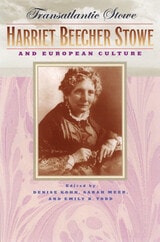
Transatlantic Stowe
Harriet Beecher Stowe and European CultureDenise Kohn
University of Iowa Press, 2006
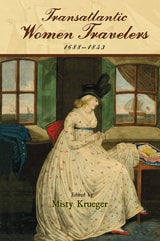
Transatlantic Women Travelers, 1688-1843
Misty Krueger
Bucknell University Press, 2021

Transatlantic Women
Nineteenth-Century American Women Writers and Great BritainBeth L. Lueck
University of New Hampshire Press, 2012
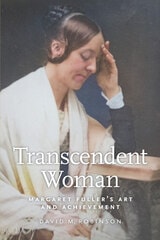
Transcendent Woman
Margaret Fuller’s Art and AchievementDavid M. Robinson
University of Massachusetts Press, 2025
Journalist, editor, critic, translator, and women’s rights advocate, Margaret Fuller was America’s first major female intellectual. Throughout much of the late-19th and 20th centuries, however, critics and scholars largely saw her as a minor figure in the transcendentalist movement with which she is associated, and her work was considered secondary to that of male figures like Emerson and Hawthorne. While her biography—including her marriage to an Italian noble and her dramatic death in a shipwreck—was often the focus, her skill as a writer was generally overlooked, and her intellectual development largely ignored.
In the early 1980s, David M. Robinson was one of the first scholars to publish an article that focused on Fuller’s mind and art. Now Transcendent Woman completes and extends this early work. Outlining the development of her philosophy, which Robinson defines as a “purpose-oriented form of thinking, tailored to the commitment and assets of each individual,” he traces Fuller’s intellectual journey, first in relation to her family and the people around her in New England and later in her travels in the midwestern United States and, more importantly, through Europe and her residency in Italy. He focuses first and foremost on what Fuller was reading (Goethe was key), what she was thinking as revealed in her letters and journals, and what she was writing, including seminal works such as Summer on the Lakes and Woman in the Nineteenth Century as well as lesser-known essays, translations, and short stories. Drawing extensively on primary sources, Robinson charts Fuller’s development and achievement as an original thinker and fearless advocate of democracy.
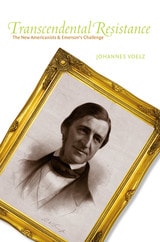
Transcendental Resistance
The New Americanists and Emerson's ChallengeJohannes Voelz
Dartmouth College Press, 2010

Transcendental Wordplay
America’s Romantic Punsters and the Search for the Language of NatureMichael West
Ohio University Press, 2000
Throughout the first half of the nineteenth century, America was captivated by a muddled notion of “etymology.” New England Transcendentalism was only one outcropping of a nationwide movement in which schoolmasters across small-town America taught students the roots of words in ways that dramatized religious issues and sparked wordplay.
Shaped by this ferment, our major romantic authors shared the sensibility that Friedrich Schlegel linked to punning and christened “romantic irony.” Notable punsters or etymologists all, they gleefully set up as sages, creating jocular masterpieces from their zest for oracular wordplay. Their search for a primal language lurking beneath all natural languages provided them with something like a secret language that encodes their meanings. To fathom their essentially comic masterpieces we must decipher it.
Interpreting Thoreau as an ironic moralist, satirist, and social critic rather than a nature-loving mystic, Transcendental Wordplay suggests that the major American Romantics shared a surprising conservatism. In this award-winning study, Professor West rescues the pun from critical contempt and allows readers to enjoy it as a serious form of American humor.
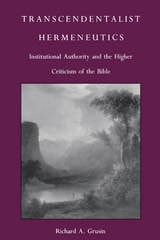
Transcendentalist Hermeneutics
Institutional Authority and the Higher Criticism of the BibleRichard A. Grusin
Duke University Press, 1991
In the ongoing revision of American literary history, this traditional reading of the supposed anti-institutionalism of the Transcendentalists has been duly detailed and continually supported. Richard A. Grusin challenges both traditional and revisionist interpretations with detailed contextual studies of the hermeneutics of Ralph Waldo Emerson, Henry David Thoreau, and Theodore Parker. Informed by the past two decades of critical theory, Grusin examines the influence of the higher criticism of the Bible—which focuses on authorship, date, place of origin, circumstances of composition, and the historical credibility of biblical writings—on these writers. The author argues that the Transcendentalist appeal to the authority of the “self” is not an appeal to a source of authority independent of institutions, but to an authority fundamentally innate.
Transcribing Class and Gender
Masculinity and Femininity in Nineteenth-Century Courts and OfficesCarole Srole
University of Michigan Press, 2012
"Drawing upon census data, trade periodicals devoted to stenography and court reporting, the writings of educational reformers, and fiction, Srole allows us to better understand the roles that gender and work played in the formation of middle-class identity. Clearly written and thoroughly researched, her book reminds us of the contradictions that both men and women faced as they navigated changes in the labor market and sought to realize a modern professional identity."
---Thomas Augst, New York University
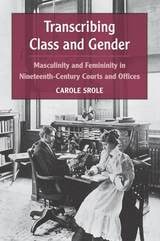
Transcribing Class and Gender explores the changing meanings of clerical work in nineteenth-century America, focusing on the discourse surrounding that work. At a time when shorthand transcription was the primary method of documenting business and legal communications and transactions, most stenographers were men, but changing technology saw the emergence of women in the once male-dominated field. Carole Srole argues that this shift placed stenographers in a unique position to construct a new image of the professional man and woman and, in doing so, to redefine middle- and working-class identities.
Many male court reporters emphasized their professionalism, portraying themselves as educated language experts as a way to elevate themselves above the growing numbers of female and working-class stenographers and typewriter operators. Meanwhile, women in the courts and offices were confronting the derogatory image of the so-called Typewriter Girl who cared more about her looks, clothing, and marriage prospects than her job. Like males in the field, women responded by fashioning a gendered professional image---one that served to combat this new version of degraded female labor while also maintaining traditional ideals of femininity.The study is unique in the way it reads and analyzes popular fiction, stenography trade magazines, the archives of professional associations, and writings by educational reformers to provide new perspectives on this history. The author challenges the common assumption that men and women clerks had separate work cultures and demonstrates how each had to balance elements of manhood and womanhood in the drive toward professionalism and the construction of a new middle-class image. Transcribing Class and Gender joins the recent scholarship that employs cultural studies approaches to class and gender without abandoning the social history valuation of workers' experiences.
Carole Srole is Professor of History at California State University, Los Angeles.
Photo: A female stenographer working for an actuary in 1897. Courtesy Metlife Archives.
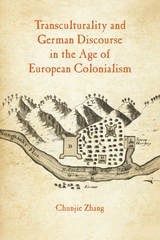
Transculturality and German Discourse in the Age of European Colonialism
Chunjie Zhang
Northwestern University Press, 2017
Transfiguring America
Myth, Ideology, and Mourning in Margaret Fuller's WritingJeffrey Steele
University of Missouri Press, 2001
Transfiguring America is the product of more than ten years of research and numerous published articles on Margaret Fuller, arguably America's first feminist theorist and one of the most important woman writers in the nineteenth century. Focusing on Fuller's development of a powerful language that paired cultural critique with mythmaking, Steele shows why her writing had such a vital impact on the woman's rights movement and modern conceptions of gender.
This groundbreaking study pays special attention to the ways in which Fuller's feminist consciousness and social theory emerged out of her mourning for herself and others, her dialogue with Emersonian Transcendentalism, and her eclectic reading in occult and mythical sources. Transfiguring America is the first book to provide detailed analyses of all of Fuller's major texts, including her mystical Dial essays, correspondence with Emerson, Summer on the Lakes, 1844 poetry, Woman in the Nineteenth Century, and New York Tribune essays written both in New York and Europe.
Starting from her own profound sense of loss as a marginalized woman, Fuller eventually recognized the ways in which the foundational myths of American society, buttressed by conservative religious ideologies, replicated dysfunctional images of manhood and womanhood. With Woman in the Nineteenth Century, after exploring the roots of oppression in her essays and poetry, Fuller advanced the cause of woman's rights by conceptualizing a more fluid and equitable model of gender founded upon the mythical reconfiguration of human potential. But as her horizons expanded, Fuller demanded not only political equality for women, but also emotional, intellectual, and spiritual freedom for all victims of social oppression.
By the end of her career, Steele shows, Fuller had blended personal experience and cultural critique into the imaginative reconstruction of American society. Beginning with a fervent belief in personal reform, she ended her career with the apocalyptic conviction that the dominant myths both of selfhood and national identity must be transfigured. Out of the ashes of personal turmoil and political revolution, she looked for the phoenix of a revitalized society founded upon the ideal of political justice.
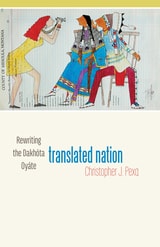
Translated Nation
Rewriting the Dakhóta OyáteChristopher J. Pexa
University of Minnesota Press, 2019
How authors rendered Dakhóta philosophy by literary means to encode ethical and political connectedness and sovereign life within a settler surveillance state
Translated Nation examines literary works and oral histories by Dakhóta intellectuals from the aftermath of the 1862 U.S.–Dakota War to the present day, highlighting creative Dakhóta responses to violences of the settler colonial state. Christopher Pexa argues that the assimilation era of federal U.S. law and policy was far from an idle one for the Dakhóta people, but rather involved remaking the Oyáte (the Očéti Šakówiŋ Oyáte or People of the Seven Council Fires) through the encrypting of Dakhóta political and relational norms in plain view of settler audiences.
From Nicholas Black Elk to Charles Alexander Eastman to Ella Cara Deloria, Pexa analyzes well-known writers from a tribally centered perspective that highlights their contributions to Dakhóta/Lakhóta philosophy and politics. He explores how these authors, as well as oral histories from the Spirit Lake Dakhóta Nation, invoke thióšpaye (extended family or kinship) ethics to critique U.S. legal translations of Dakhóta relations and politics into liberal molds of heteronormativity, individualism, property, and citizenship. He examines how Dakhóta intellectuals remained part of their social frameworks even while negotiating the possibilities and violence of settler colonial framings, ideologies, and social forms.
Bringing together oral and written as well as past and present literatures, Translated Nation expands our sense of literary archives and political agency and demonstrates how Dakhóta peoplehood not only emerges over time but in everyday places, activities, and stories. It provides a distinctive view of the hidden vibrancy of a historical period that is often tied only to Indigenous survival.
Transmedia Adaptation in the Nineteenth Century
Lissette Lopez Szwydky
The Ohio State University Press, 2020
In Transmedia Adaptation in the Nineteenth Century, Lissette Lopez Szwydky convincingly historicizes the practice of adaptation, drawing on multiple disciplines to illustrate narrative mobility across time, culture, and geography. Case studies from stage plays, literature, painting, illustration, chapbooks, and toy theaters position adaptation as a central force in literary history that ensures continued cultural relevance, accessibility, and survival. The history of these forms helps to inform and put into context our contemporary obsessions with popular media. Finally, in upending a traditional understanding of canon by arguing that adaptation creates canon and not the other way around, Szwydky provides crucial bridges between nineteenth-century literary scholarship, adaptation studies, and media studies, thus identifying new stakes for all.
Transnational Modernity and the Italian Reinvention of Walt Whitman, 1870-1945
Caterina Bernardini
University of Iowa Press, 2021
Studying Whitman’s reception from a transnational perspective shows how many countries were simultaneously carving out a new modernity in literature and culture. In this sense, Bernardini not only shows the interconnectedness of various international agents in understanding and contributing to the spread of Whitman’s work, but, more largely, illustrates a constellation of similar pre-modernist and modernist sensibilities. This stands in contrast to the notion of sudden innovation: modernity was not easy to achieve, and it did not imply a complete refusal of tradition. Instead, a continuous and fruitful negotiation between tradition and innovation, not a sudden break with the literary past, is at the very heart of the Italian and transnational reception of Whitman. The book is grounded in archival studies and the examination of primary documents of noteworthy discovery.
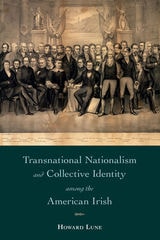
Transnational Nationalism and Collective Identity among the American Irish
Howard Lune
Temple University Press, 2020
In Transnational Nationalism and Collective Identity among the American Irish, Howard Lune considers the development and mobilization of different nationalisms over 125 years of Irish diasporic history (1791–1920) and how these campaigns defined the Irish nation and Irish citizenship.
Lune takes a collective approach to exploring identity, concentrating on social identities in which organizations are the primary creative agent to understand who we are and how we come to define ourselves. As exiled Irishmen moved to the United States, they sought to create a new Irish republic following the American model. Lune traces the construction of Irish American identity through the establishment and development of Irish nationalist organizations in the United States. He looks at how networks—such as societies, clubs, and private organizations—can influence and foster diaspora, nationalism, and nationalist movements.
By separating nationalism from the physical nation, Transnational Nationalism and Collective Identity among the American Irish uniquely captures the processes and mechanisms by which collective identities are constructed, negotiated, and disseminated. Inevitably, this work tackles the question of what it means to be Irish—to have a nationality, a community, or a shared history.
Traveling Economies
American Women's Travel WritingJennifer Bernhardt Steadman
The Ohio State University Press, 2007
Traveling Women
Narrative Visions of Early AmericaSusan Clair Imbarrato
Ohio University Press, 2006
Susan Clair Imbarrato closely examines women’s accounts of their journeys from 1700 to 1830, including Sarah Kemble Knight’s well-known journal of her trip from Boston to New York in 1704 and many lesser-known accounts, such as Sarah Beavis’s 1779 journal of her travel to Ohio via Kentucky and Susan Edwards Johnson’s account or her 1801–2 journey from Connecticut to North Carolina.
In the women’s keen observations and entertaining wit, readers will find bravado mixed with hesitation, as women set forth on business, to relocate, and for pleasure. These travelers wrote compellingly of crossing rivers and mountains, facing hunger, encountering native Americans, sleeping in taverns, and confronting slavery, expressing themselves in voices that differed in sensibility from male explorers and travelers.
These accounts, as Imbarrato shows, challenge assumptions that such travel was predominately a male enterprise. In addition, Traveling Women provides a more balanced portrait of westward settlement by affirming women’s importance in the settling of early America.
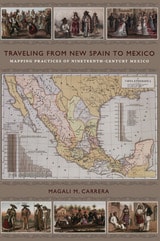
Traveling from New Spain to Mexico
Mapping Practices of Nineteenth-Century MexicoMagali M. Carrera
Duke University Press, 2011
From the sixteenth century until the early nineteenth, Europeans had envisioned New Spain (colonial Mexico) in texts, maps, and other images. In the first decades of the 1800s, ideas about Mexican, rather than Spanish, national character and identity began to cohere in written and illustrated narratives produced by foreign travelers. During the nineteenth century, technologies and processes of visual reproduction expanded to include lithography, daguerreotype, and photography. New methods of display—such as albums, museums, exhibitions, and world fairs—signaled new ideas about spectatorship. García Cubas participated in this emerging visual culture as he reconfigured geographic and cultural imagery culled from previous mapping practices and travel writing. In works such as the Atlas geográfico (1858) and the Atlas pintoresco é historico (1885), he presented independent Mexico to Mexican citizens and the world.
Travels into Print
Exploration, Writing, and Publishing with John Murray, 1773-1859Innes M. Keighren, Charles W. J. Withers, and Bill Bell
University of Chicago Press, 2015
Drawing on detailed examination of the John Murray Archive of manuscripts, images, and the firm’s correspondence with its many authors—a list that included such illustrious explorers and scientists as Charles Darwin and Charles Lyell, and literary giants like Jane Austen, Lord Byron, and Sir Walter Scott—Travels into Print considers how journeys of exploration became published accounts and how travelers sought to demonstrate the faithfulness of their written testimony and to secure their personal credibility. This fascinating study in historical geography and book history takes modern readers on a journey into the nature of exploration, the production of authority in published travel narratives, and the creation of geographical authorship—a journey bound together by the unifying force of a world-leading publisher.
Travels with a Donkey in the Cevennes
Robert Louis Stevenson
Northwestern University Press, 1996
Stevenson's third book, Travels with a Donkey was originally intended as a lighthearted sketch, a companion-piece to his recent Inland Voyage. Although he would not be recognized as a major author until the publication of Treasure Island and Dr. Jekyll and Mr. Hyde, one can see his voice developing. Full of charm and instruction, Travels with a Donkey serves as a guide to alternatives to the restless and distracted standard of contemporary travel.
Treasure Hill
Portrait Of A Silver Mining CampW. Turrentine Jackson
University of Nevada Press, 2000
Trekking across America
An Up-Close Look at a Once-Popular PastimeLyell D. Jr. Henry
University of Iowa Press, 2024
As competitive walking faded, a new kind of spectacle walking, which had also begun in the late 1860s, came to full flower. Between 1890 and 1930, hundreds of men, women, even children and entire families were on the nation’s roads and railroad tracks trekking between widely separated points, sometimes moving in unusual ways such as on roller skates or by walking barefooted, backward, on stilts, or while rolling a hoop. To finance their attention-seeking journeys, many sold souvenir postcards. The public usually found these performers entertaining, but public officials and newspaper editors often denounced them as nuisances or frauds. Tapping vintage postcards and old newspaper articles, this is the first book to bring back to view this once-familiar feature of American life.

Trials of Intimacy
Love and Loss in the Beecher-Tilton ScandalRichard Wightman Fox
University of Chicago Press, 1999
Henry Ward Beecher was pastor of Brooklyn's Plymouth Church and for many the "representative man" of mid-nineteenth century America. Elizabeth Tilton was the wife of Beecher's longtime intimate friend Theodore. His accusation of "criminal conversation" between Henry and Elizabeth confronted the American public with entirely new dilemmas about religion and intimacy, privacy and publicity, reputation and celebrity. The scandal spotlighted a series of comic and tragic loves and betrayals among these three figures, with a supporting cast that included Victoria Woodhull, Susan B. Anthony, and Elizabeth Cady Stanton.
To readers at the time, the Beecher-Tilton Scandal was an irresistible mystery. Richard Fox puts his readers into that same reverberating story, while offering it as a timeless tale of love, deception, faith, and the confounding indeterminacy of truth. Trials of Intimacy revises our conception of nineteenth-century morals and passions. And it is an American history richly resonant with present-day dramas.
Tristan's Shadow
Sexuality and the Total Work of Art after WagnerAdrian Daub
University of Chicago Press, 2013
Das Rheingold, Die Walküre, and Siegfried. Parsifal. Tristan und Isolde. Both revered and reviled, Richard Wagner conceived some of the nineteenth century’s most influential operas—and created some of the most indelible characters ever to grace the stage. But over the course of his polarizing career, Wagner also composed volumes of essays and pamphlets, some on topics seemingly quite distant from the opera house. His influential concept of Gesamtkunstwerk—the “total work of art”—famously and controversially offered a way to unify the different media of an opera into a coherent whole. Less well known, however, are Wagner’s strange theories on sexuality—like his ideas about erotic acoustics and the metaphysics of sexual difference.
Drawing on the discourses of psychoanalysis, evolutionary biology, and other emerging fields of study that informed Wagner’s thinking, Adrian Daub traces the dual influence of Gesamtkunstwerk and eroticism from their classic expressions in Tristan und Isolde into the work of the generation of composers that followed, including Zemlinsky, d’Albert, Schreker, and Strauss. For decades after Wagner’s death, Daub writes, these composers continued to grapple with his ideas and with his overwhelming legacy, trying in vain to write their way out from Tristan’s shadow.
Trollope in the Post Office
R. H. Super
University of Michigan Press, 1981
Tropical Freedom
Climate, Settler Colonialism, and Black Exclusion in the Age of EmancipationIkuko Asaka
Duke University Press, 2017
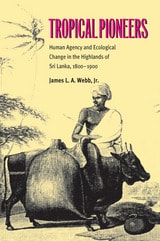
Tropical Pioneers
Human Agency and Ecological Change in the Highlands of Sri Lanka, 1800–1900James L. A. Webb Jr.
Ohio University Press, 2002
In 1800, the highlands of Sri Lanka had some of the most biologically diverse primary tropical rainforest ecosystems in the world. By 1900, only a few craggy corners and mountain caps had been spared the fire stick. Highland villagers, through the extension of slash-and-burn agriculture, and British managers, through the creation of plantations—first of coffee, then cinchona, and finally tea—had removed virtually the entire primary forest cover.
Tropical Pioneers documents the conversion of a tropical rainforest biome and the collision between what previously had been more discrete ecological zones within South Asia. The ecological impacts were transformational. Author James L. A. Webb, Jr., demonstrates that profound ecological disruption occurred in the central highlands of Sri Lanka during the nineteenth century and suggests that the theme of ecological crisis brought about by the integration of tropical ecological zones during precolonial and colonial periods alike is an important one for historians to investigate elsewhere.
Tropical Pioneers is based on extensive research in the National Archives of Sri Lanka, the National Agricultural Library at Gannaruwa, the Library of the Royal Asiatic Society-Ceylon Branch, the Royal Botanic Gardens at Kew, the Public Record Office of the United Kingdom, and the British Library.
Tropical Travels
Brazilian Popular Performance, Transnational Encounters, and the Construction of RaceBy Lisa Shaw
University of Texas Press, 2018
Brazilian popular culture, including music, dance, theater, and film, played a key role in transnational performance circuits—inter-American and transatlantic—from the latter nineteenth century to the middle of the twentieth century. Brazilian performers both drew inspiration from and provided models for cultural production in France, Portugal, Argentina, the United States, and elsewhere. These transnational exchanges also helped construct new ideas about, and representations of, “racial” identity in Brazil. Tropical Travels fruitfully examines how perceptions of “race” were negotiated within popular performance in Rio de Janeiro and how these issues engaged with wider transnational trends during the period.
Lisa Shaw analyzes how local cultural forms were shaped by contact with imported performance traditions and transnational vogues in Brazil, as well as by the movement of Brazilian performers overseas. She focuses specifically on samba and the maxixe in Paris between 1910 and 1922, teatro de revista (the Brazilian equivalent of vaudeville) in Rio in the long 1920s, and a popular Brazilian female archetype, the baiana, who moved to and fro across national borders and oceans. Shaw demonstrates that these transnational encounters generated redefinitions of Brazilian identity through the performance of “race” and ethnicity in popular culture. Shifting the traditional focus of Atlantic studies from the northern to the southern hemisphere, Tropical Travels also contributes to a fuller understanding of inter-hemispheric cultural influences within the Americas.
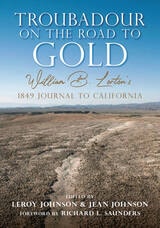
Troubadour on the Road to Gold
William B. Lorton's 1849 Journal to CaliforniaEdited by LeRoy Johnson and Jean Johnson, Foreword by Richard Saunders
University of Utah Press, 2020
Lorton’s work is revealing and entertaining. It captures glimpses of a growing Salt Lake City, the hardships of Death Valley, and the extraordinary and mundane aspects of daily life on the road to gold. With resilience and a droll sense of humor, Lorton shares accounts of life-threatening stampedes, dangerous hailstorms, mysteriously moving rocks, and slithering sidewinders. The inclusion of images, maps, and the editors’ detailed notes make this a volume that will entertain and inform.
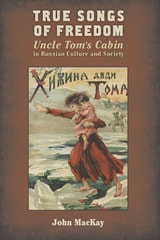
True Songs of Freedom
Uncle Tom’s Cabin in Russian Culture and SocietyJohn MacKay
University of Wisconsin Press, 2013
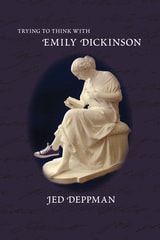
Trying to Think with Emily Dickinson
Jed Deppman
University of Massachusetts Press, 2008
This book presents Emily Dickinson as one of America's great thinkers and argues that she has even more to say to the twenty-first century than she did to the nineteenth. Jed Deppman weaves together many strands in Dickinson's intellectual culture—philosophy, lexicography, religion, experimental science, the female Bildungsroman—and shows how she developed a lyricized, conversational hermeneutics uniquely suited to rethinking the authoritative discourses of her time.
Through Deppman's original analysis, readers come to see how Dickinson's mind and poetry were informed by two strong but opposing philosophical vocabularies: on the one hand, the Lockean materialism and Scottish Common Sense that dominated her schoolbooks in logic and mental philosophy—Reid, Hedge, Watts, Stewart, Brown, and Upham—and on the other, the neo-Kantian modes of apprehending the supersensible that circulated throughout German idealism and Transcendentalism.
Blending close readings with philosophical and historical approaches, Deppman affirms Dickinson's place in the history of ideas and brings her to the center of postmodern conversations initiated by Jean-François Lyotard, Jean-Luc Nancy, Jacques Derrida, Richard Rorty, and Gianni Vattimo. Trying her out in various postmodern roles—the Nietzschean accomplished nihilist, the Nancian finite thinker, the Vattimian weak thinker, and the Rortian liberal ironist—Deppman adds to the traditional expressive functions of her poetry a valuable, timely, and interpretable layer of philosophical inquiry. Dickinson, it turns out, is an ideal companion for anybody trying to think in the contemporary conditions that Vattimo characterizes as the “weakened experience of truth.”

Tuberculosis and the Politics of Exclusion
A History of Public Health and Migration to Los AngelesAbel, Emily K.
Rutgers University Press, 2007
Winner of the 2008 Arthur J. Viseltear Prize from the American Public Health Association and Nominated for the 2008 William H. Welch Medal, AAHM
Though notorious for its polluted air today, the city of Los Angeles once touted itself as a health resort. After the arrival of the transcontinental railroad in 1876, publicists launched a campaign to portray the city as the promised land, circulating countless stories of miraculous cures for the sick and debilitated. As more and more migrants poured in, however, a gap emerged between the city’s glittering image and its dark reality.
Emily K. Abel shows how the association of the disease with “tramps” during the 1880s and 1890s and Dust Bowl refugees during the 1930s provoked exclusionary measures against both groups. In addition, public health officials sought not only to restrict the entry of Mexicans (the majority of immigrants) during the 1920s but also to expel them during the 1930s.
Abel’s revealing account provides a critical lens through which to view both the contemporary debate about immigration and the U.S. response to the emergent global tuberculosis epidemic.

Tuning the World
The Rise of 440 Hertz in Music, Science, and Politics, 1859–1955Fanny Gribenski
University of Chicago Press, 2023
Tuning the World tells the unknown story of how the musical pitch A 440 became the global norm.
Now commonly accepted as the point of reference for musicians in the Western world, A 440 hertz only became the standard pitch during an international conference held in 1939. The adoption of this norm was the result of decades of negotiations between countries, involving a diverse group of performers, composers, diplomats, physicists, and sound engineers. Although there is widespread awareness of the variability of musical pitches over time, as attested by the use of lower frequencies to perform early music repertoires, no study has fully explained the invention of our current concert pitch. In this book, Fanny Gribenski draws on a rich variety of previously unexplored archival sources and a unique combination of musicological perspectives, transnational history, and science studies to tell the unknown story of how A 440 became the global norm. Tuning the World demonstrates the aesthetic, scientific, industrial, and political contingencies underlying the construction of one of the most “natural” objects of contemporary musical performance and shows how this century-old effort was ultimately determined by the influence of a few powerful nations.
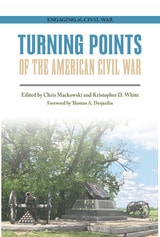
Turning Points of the American Civil War
Edited by Chris Mackowski and Kristopher D. White, with a foreword by Thomas A. Desjardin
Southern Illinois University Press, 2017
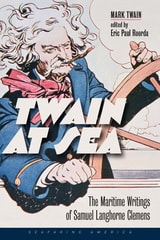
Twain at Sea
The Maritime Writings of Samuel Langhorne ClemensMark Twain
University Press of New England, 2018
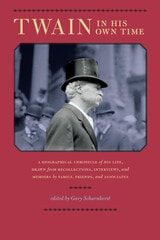
Twain in His Own Time
A Biographical Chronicle of His Life, Drawn from Recollections, Interviews, and Memoirs by Family, Friends, and AssociatesGary Scharnhorst
University of Iowa Press, 2010
Never one to suffer fools gladly, especially if they wore crinolines, Mark Twain lost as many friends as he made, and he targeted them all indiscriminately. The first major American writer born west of the Mississippi River, he enjoys a reputation unrivaled in American literary history, and from the beginning of his career he tried to control that reputation by fiercely protecting his public persona. Not a debunking account of Twain’s life but refreshingly immune from his relentless image making, Gary Scharnhorst’s Twain in His Own Time offers an anecdotal version of Twain’s life over which the master spin-doctor had virtually no control.
The ninety-four recollections gathered in Twain in His Own Time form an unsanitized, collaborative biography designed to provide a multitude of perspectives on the iconic author. Opening with an interview with his mother that has never been reprinted, it includes memoirs by his daughters and by men who knew him when he was roughing it in Nevada and California, an interview with the pilot who taught him to navigate the Mississippi River, reminiscences from his illustrators E. M. Kemble and Dan Beard and two of his so-called adolescent angelfish, contributions from politicians and from such literary figures as Dan De Quille and George Bernard Shaw, and one of the most damning assessments of his character—by the author Frank Harris—ever published.
Each entry is introduced by a brief explanation of its historical and cultural context; explanatory notes provide further information about people and places; and Scharnhorst’s introduction and chronology of Twain’s eventful life are comprehensive and detailed. Dozens of lively primary sources published incrementally over more than eighty years, most recorded after his death, illustrate the complexities of this flamboyant, outspoken personality in a way that no single biographer could.
Twisted Words
Torture and Liberalism in Imperial BritainKatherine Judith Anderson
The Ohio State University Press, 2022
Two Counties in Crisis
Measuring Political Change in Reconstruction TexasRobert J. Dillard
University of North Texas Press, 2023

Two Vermonts
Geography and Identity, 1865-1910Paul Searls
University of New Hampshire Press, 2006
Two Vermonts establishes a little-known fact about Vermont: that the state's fascination with tourism as a savior for a suffering economy is more than a century old, and that this interest in tourism has always been dogged by controversy. Through this lens, the book is poised to take its place as the standard work on Vermont in the Gilded Age and the Progressive Era. Searls examines the origins of Vermont's contemporary identity and some reasons why that identity ("Who is a Vermonter?") is to this day so hotly contested.
Searls divides nineteenth-century Vermonters into conceptually “uphill,” or rural/parochial, and “downhill,” or urban/cosmopolitan, elements. These two groups, he says, negotiated modernity in distinct and contrary ways. The dissonance between their opposing tactical approaches to progress and change belied the pastoral ideal that contemporary urban Americans had come to associate with the romantic notion of “Vermont.” Downhill Vermonters, espousing a vision of a mutually reinforcing relationship between tradition and progress, unilaterally endeavored to foster the pastoral ideal as a means of stimulating economic development. The hostile uphill resistance to this strategy engendered intense social conflict over issues including education, religion, and prohibition in the late nineteenth and early twentieth centuries. The story of Vermont's vigorous nineteenth-century quest for a unified identity bears witness to the stirring and convoluted forging of today's “Vermont.”
Searls's engaging exploration of this period of Vermont's history advances our understanding of the political, economic, and cultural transformation of all of rural America as industrial capitalism and modernity revolutionized the United States between 1865 and 1910. By the late Progressive Era, Vermont's reputation was rooted in the national yearning to keep society civil, personal, and meaningful in a world growing more informal, bureaucratic, and difficult to navigate. The fundamental ideological differences among Vermont communities are indicative of how elusive and frustrating efforts to balance progress and tradition were in the context of effectively negotiating capitalist transformation in contemporary America.