Results by title
5159 books match the query 'Biography' and 934 start with t
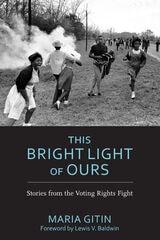
This Bright Light of Ours
Stories from the Voting Rights FightMaria Gitin
University of Alabama Press, 2014
Combining memoir with oral history, creates a vivid and searing portrait of the Freedom Summer of 1965.
This Bright Light of Ours offers a tightly focused insider’s view of the community-based activism that was the heart of the civil rights movement. A celebration of grassroots heroes, this book details through first-person accounts the contributions of ordinary people who formed the nonviolent army that won the fight for voting rights.
Combining memoir and oral history, Maria Gitin fills a vital gap in civil rights history by focusing on the neglected Freedom Summer of 1965 when hundreds of college students joined forces with local black leaders to register thousands of new black voters in the rural South. Gitin was an idealistic nineteen-year-old college freshman from a small farming community north of San Francisco who felt called to action when she saw televised images of brutal attacks on peaceful demonstrators during Bloody Sunday, in Selma, Alabama.
Atypical among white civil rights volunteers, Gitin came from a rural low-income family. She raised funds to attend an intensive orientation in Atlanta featuring now-legendary civil rights leaders. Her detailed letters include the first narrative account of this orientation and the only in-depth field report from a teenage Summer Community Organization and Political Education (SCOPE) project participant.
Gitin details the dangerous life of civil rights activists in Wilcox County, Alabama, where she was assigned. She tells of threats and arrests, but also of forming deep friendships and of falling in love. More than four decades later, Gitin returned to Wilcox County to revisit the people and places that she could never forget and to discover their views of the “outside agitators” who had come to their community. Through conversational interviews with more than fifty Wilcox County residents and former civil rights workers, she has created a channel for the voices of these unheralded heroes who formed the backbone of the civil rights movement.
This Great Symbol
Pierre de Coubertin and the Origins of the Modern Olympic GamesJohn J. MacAloon
University of Chicago Press, 1981
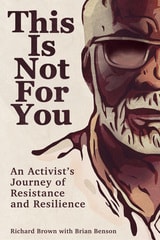
This Is Not For You
An Activist's Journey of Resistance and ResilienceRichard Brown
Oregon State University Press, 2021
The book finds Brown approaching his eightieth birthday and reflecting on his life. As he recalls his childhood in 1940s Harlem, his radicalization in the newly desegregated Air Force, and his decades of activism in one of America’s whitest cities, he questions how much longer he’ll do this work, and he wonders who, if anyone, will take his place.
This is a book about how and why to become an engaged, activist citizen, and how activists can stay grounded, no matter how deeply they immerse themselves in the work. It also offers an intimate, firsthand look at policing: what policing is and could be, how civilians can have a say, and how police can and should be responsive to and inclusive of civilian voices. This Is Not For You speaks on every page about being Black in America: about Black pride; Black history, art, and culture; and the experience of resisting white supremacy. It also stands as a much-needed counternarrative to Portlandia, telling a different story about the city and who has shaped it.
Over fifty percent of royalties earned on this book will be donated to organizations working on behalf of Black Portlanders.
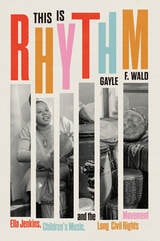
This Is Rhythm
Ella Jenkins, Children’s Music, and the Long Civil Rights MovementGayle F. Wald
University of Chicago Press, 2025
Ella Jenkins was one of the most influential musicians of the twentieth century. Her songs “You’ll Sing a Song and I’ll Sing a Song” and “Who Fed the Chickens?” are classics in the world of children’s music. In a career spanning more than sixty years, she recorded forty albums, won a lifetime-achievement Grammy, and became the best-selling individual artist in the history of Smithsonian Folkways Records, the independent label that played a significant role in the 1960s folk revival movement and introduced listeners to Woody Guthrie and Pete Seeger. During her remarkable career, Jenkins joined forces with twentieth-century luminaries such as Odetta, Big Bill Broonzy, Armando Peraza, Bayard Rustin, and Fred Rogers. Despite her wide-reaching influence on children’s music, Ella Jenkins’s sonic civil rights activism isn’t widely known today.
Based on dozens of interviews and access to Ella Jenkins’s personal archives, Gayle F. Wald’s This Is Rhythm shares how Jenkins, a “rhythm specialist” with no formal musical training, became the most prolific and significant American children’s musician of the twentieth century, creating a beloved catalog of songs grounded in values of community-building, antiracism, and cultural pluralism. Wald traces how the daughter of southern migrants translated the music of her own Black girlhood on the South Side of Chicago into a form of civil rights activism—a musical education that empowered children by introducing them to Black history, African diasporic rhythms, and a participatory, community-centered approach to music. Wald also discusses how, beginning in 1961, Jenkins built a life with a female partner who supported her materially and emotionally. Although Jenkins did not talk publicly about her sixty-three-year relationship, she opened up to Wald, offering insight into how a “private” Black woman in the public eye negotiated sexuality in an era before gay and lesbian liberation movements. Throughout her career, her innovative music found its way into thousands of community centers, classrooms, and concert venues, and her “call-and-response” method has influenced and empowered generations of children and adults.
A beautifully written tribute to Ella Jenkins’s legacy, this biography illustrates her impact on children’s music and expands our understanding of folk music’s relationship with social justice. Jenkins used music to build a new world in which children—and adults—are encouraged to listen to each other’s distinct rhythms.
This Is Where I Am
A MemoirZeke Caligiuri
University of Minnesota Press, 2016
Prison is where Zeke Caligiuri is. Powderhorn Park in South Minneapolis, dubbed “Murderapolis” the year he turned eighteen, is where he comes from. It was the same neighborhood his father grew up in but had changed dramatically by the early 1990s. Yet in Zeke’s family, father and mother and grandmother kept things together while all around them the houses decayed and once-safe streets gave way to the crush of poverty and crime.
This Is Where I Am is Zeke Caligiuri’s clear-eyed account of how he got from there to here, how a boy who had every hope went from dreaming of freedom to losing it, along with nearly everything and everyone he loved. Tenderhearted in its reflections on his lost childhood, brutally candid in its description of a life of hanging and hustling, Zeke’s memoir recreates a world of tagging and goofing gone awry, of moving from smoking pot to unsuccessful attempts at dealing crack, of watching his father weep at the funeral of a seventeen-year-old boy, of going to jail: first strike. It is a place where, when asked what he's going to do with his life, a friend can only answer: “What the fuck are you talking about?”
This Is Where I Am is Zeke's own answer: he is going to tell his story, every sharp detail and sobering word, with the natural grace of a gifted writer and the hard-won wisdom of hindsight.
This Is a True War Story
My Improbable History with VietnamRobert K. Brigham
University of Chicago Press, 2026
Robert K. Brigham has had a substantial career as a historian of the Vietnam War, with a hand in nine books, a documentary, public history projects, and more. While many a historian has felt compelled at some point to write about a subject close to them personally, Brigham did not think he was doing that. But, at age fifty-eight, Brigham, who had long known he was adopted, discovered that he’d improbably and unknowingly been studying and talking about his biological father for decades. That man, Bruce Atwell, was a Marine Corps photographer who took some of that war’s most indelible and widely reproduced pictures. Brigham had used those images over and over again in decades’ worth of classes and public lectures, never knowing the truth.
Both Brigham and Atwell were products of the American foster care and adoption system, and both were defined professionally by Vietnam. In a story shot through with echoes and shadows, Brigham not only reveals his own history as an adoptee but opens a startlingly fresh vantage on the fragility of American families; the power of social norms and taboos to shape lives; and the forces that inequitably disrupt families, not least of them war. The result is an accessible and moving book that is at once both a powerful personal story and an illuminating social critique.
This Land Is Your Land
The Story of Field Biology in AmericaMichael J. Lannoo
University of Chicago Press, 2018
Lannoo illuminates characters such as John Wesley Powell, William Temple Hornaday, and Olaus and Adolph Murie—homegrown midwestern field biologists who either headed east to populate major research centers or went west to conduct their fieldwork along the frontier. From the pioneering work of Victor Shelford, Henry Chandler Cowles, and Aldo Leopold to contemporary insights from biologists such as Jim Furnish and historians such as William Cronon, Lannoo’s unearthing of American—and particularly midwestern—field biologists reveals how these scientists influenced American ecology, conservation biology, and restoration ecology, and in turn drove global conservation efforts through environmental legislation and land set-asides. This Land Is Your Land reveals the little-known legacy of midwestern field biologists, whose ethos and discoveries have enabled us to preserve and understand not just their land, but all lands.
This Storied River
Legend & Lore of the Upper MississippiDennis McCann
Wisconsin Historical Society Press, 2017
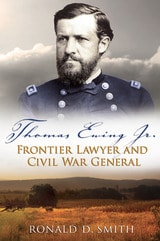
Thomas Ewing Jr.
Frontier Lawyer and Civil War GeneralRonald D. Smith
University of Missouri Press, 2008
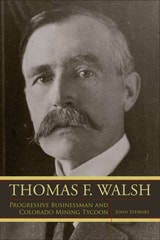
Thomas F. Walsh
Progressive Businessman and Colorado Mining TycoonJohn Stewart
University Press of Colorado, 2007
In the first complete biography of Thomas Walsh, John Stewart recounts the tycoon's life from his birth in 1850 and his beginnings as a millwright and carpenter in Ireland to his tenacious, often fruitless mining work in the Black Hills and Colorado, which finally led to his discovery of an extremely rich vein of gold ore in the Imogene Basin. Walsh's Camp Bird Mine yielded more than $20 million worth of gold and other minerals in twenty years, and the mine's 1902 sale to British investors made Walsh very wealthy.
He achieved national prominence, living with his family in mansions in Colorado and Washington, D.C., and maintaining a rapport with Presidents McKinley, Theodore Roosevelt, and Taft, as well as King Leopold II of Belgium.
Despite his fame and lavish lifestyle, Walsh is remembered as an unassuming and philanthropic man who treated his employees well. In addition to making many anonymous donations, he established the Walsh Library in Ouray and a library near his Irish birthplace, and helped establish a research fund for the study of radium and other rare western minerals at the Colorado School of Mines. Walsh gave his employees at the Camp Bird Mine top pay and lodged them in an alpine boardinghouse featuring porcelain basins, electric lighting, and excellent food.
Stewart's engaging account explores the exceptional path of this Colorado mogul in detail, bringing Walsh and his time to life.
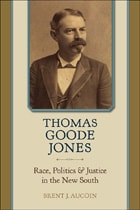
Thomas Goode Jones
Race, Politics, and Justice in the New SouthBrent J. Aucoin
University of Alabama Press, 2016
Thomas Goode Jones of Alabama is the first comprehensive biography of a key Alabama politician and federal jurist whose life and times embody the conflicts and transformations in the Deep South between the Civil War and World War I.
A man who both represented and differed from his class, Thomas Goode Jones offers contemporary readers and scholars an ideal subject of study to understand a period of southern history that still shapes American life today. Often overshadowed by the pharaonic antebellum period, the Civil War, and the luminous heights of the civil rights movement, the deceptively placid decades at the turn of the century were, in fact, a period when southerners fiercely debated the course of the South’s future. In tracing Jones’s career, Brent J. Aucoin offers vivid accounts of the great events and trends of that pivotal period: Reconstruction, the birth of the “Solid South,” the Populist Revolt, and the establishment of racial disenfranchisement and segregation.
Born in 1844, Jones served in the Confederate army and after the war identified as a conservative “Bourbon” Democrat. He served as Alabama's governor from 1890 to 1894 and as a federal judge from 1901 until his death in 1914. As a veteran, politician, and judge, Jones embodied numerous roles in the shifting political landscape of the South.
Jones was not, however, a reflexive conformist and sometimes pursued policies at odds with his party. Jones’s rhetoric and support of African American civil rights were exceptional and earned him truculent criticism from unrepentant racist factions in his party. His support was so fearless that it inspired Booker T. Washington to recommend Jones to Republican president Theodore Roosevelt as a federal judge. On the bench, Jones garnered national attention for his efforts to end peonage and lynching, and yet he also enabled the establishment of legalized segregation in Alabama, confounding attempts easily to categorize him as an odious reactionary or fearless progressive.
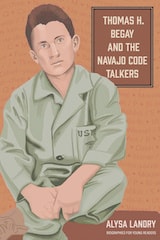
Thomas H. Begay and the Navajo Code Talkers
Alysa Landry
Ohio University Press, 2023
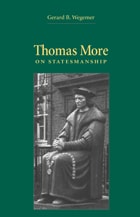
Thomas More on Statesmanship
Gerard Wegemer
Catholic University of America Press, 1996
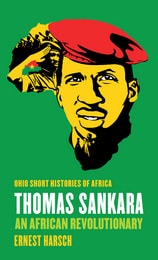
Thomas Sankara
An African RevolutionaryErnest Harsch
Ohio University Press, 2014

Thomas Taggart
Public Servant, Political Boss, 1856-1929James Phillip Fadely
Indiana Historical Society Press, 1997
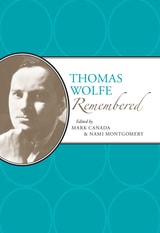
Thomas Wolfe Remembered
Edited by Mark Canada and Nami Montgomery
University of Alabama Press, 2018
A collection of reminiscences captures the private life of a great American writer.
Thomas Wolfe’s life may seem to be an open book. A life that, after all, was the source for his best-known works, including the novels Look Homeward, Angel and Of Time and the River, as well as his numerous short stories and dramas. Since his death in 1938, scholars and admirers of Wolfe have relied largely on these texts to understand the man himself.
Thomas Wolfe Remembered provides something new: a rich, multifaceted portrait painted by those who knew him (casually or intimately), loved him (or didn’t), and saw, heard, and experienced the literary (and literal) giant. This volume gathers in one place for the first time dozens of reminiscences by friends, family members, colleagues, and casual acquaintances, adding color and fine details to the self-portrait the author created in his novels.
Wolfe found plenty to challenge and frustrate him throughout his life, from his boyhood in Asheville, North Carolina, to his education at the University of North Carolina and Harvard University, through his time in New York and Europe, his travels through the American West, and his death in Baltimore. He experienced two distracted parents in a loveless marriage, the premature death of a beloved brother, a minor stutter, and the difficulties of controlling a mercurial temper. Yet Wolfe’s exuberance, perceptiveness, memory, and compulsion to record virtually all that he experienced made for an extravagance of material that sometimes angered the people whose lives he used as source material.
Editors Mark Canada and Nami Montgomery have collected dozens of remembrances, many unpublished or long forgotten, including pieces from Julia Wolfe, Margaret Roberts, Frederick Koch, Maxwell Perkins, Elizabeth Nowell, Edward Aswell, and Martha Dodd. Some are endearing, others are disturbing, and many are comical. All provide glimpses into the vibrant, haunted, boyish, paranoid, disheveled, courteous, captivating, infuriating, and altogether fascinating giant who was Thomas Wolfe.
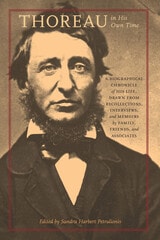
Thoreau in His Own Time
A Biographical Chronicle of His Life, Drawn from Recollections, Interviews, and Memoirs by Family, Friends, and AssociatesSandra Harbert Petrulionis
University of Iowa Press, 2012
The forty-nine recollections gathered in Thoreau in His Own Time demonstrate that it was those who knew him personally, rather than his contemporary literati, who most prized Thoreau’s message, but even those who disparaged him respected his unabashed example of an unconventional life. Included are comments by Ralph Waldo Emerson—friend, mentor, Walden landlord, and progenitor of the spin on Thoreau’s posthumous reputation; Nathaniel Hawthorne, who could not compliment Thoreau without simultaneously denigrating him; and John Weiss, whose extended commentary on Thoreau’s spirituality reflects unusual tolerance. Selections from the correspondence of Caroline Healey Dall, Maria Thoreau, Sophia Hawthorne, Sarah Alden Bradford Ripley, and Amanda Mather amplify our understanding of the ways in which nineteenth-century women viewed Thoreau. An excerpt by John Burroughs, who alternately honored and condemned Thoreau, asserts his view that Thoreau was ever searching for the unattainable.
The dozens of primary sources in this crisply edited collection illustrate the complexity of Thoreau’s iconoclastic singularity in a way that no one biographer could. Each entry is introduced by a headnote that places the selection in historical and cultural context. Petrulionis’s comprehensive introduction and her detailed chronology of personal and literary events in Thoreau’s life provide a lively and informative gateway to the entries themselves. The collaborative biography that Petrulionis creates in Thoreau in His Own Time contextualizes the strikingly divergent views held by his contemporaries and highlights the reasons behind his profound legacy.
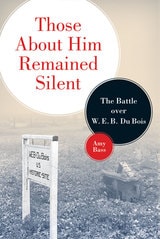
Those About Him Remained Silent
The Battle over W. E. B. Du BoisAmy Bass
University of Minnesota Press, 2012
On the eve of Martin Luther King Jr.’s 1963 March on Washington, W. E. B. Du Bois died in exile in Ghana at the age of 95, more than a half century after cofounding the NAACP. Five years after his death, residents of Great Barrington, the small Massachusetts town where Du Bois was born in 1868, proposed recognizing his legacy through the creation of a memorial park on the site of his childhood home. Supported by the local newspaper and prominent national figures including Harry Belafonte and Sydney Poitier, the effort to honor Du Bois set off an acrimonious debate that bitterly divided the town. Led by the local chapter of the Veterans of Foreign Wars, opponents compared Du Bois to Hitler, vilifying him as an anti-American traitor for his communist sympathies, his critique of American race relations, and his pan-Africanist worldview.
In Those About Him Remained Silent, Amy Bass provides the first detailed account of the battle over Du Bois and his legacy, as well as a history of Du Bois’s early life in Massachusetts. Bass locates the roots of the hostility to memorialize Du Bois in a cold war worldview that reduced complicated politics to a vehement hatred of both communism and, more broadly, anti-Americanism. The town’s reaction was intensified, she argues, by the racism encoded within cold war patriotism.
Showing the potency of prevailing, often hidden, biases, Those About Him Remained Silent is an unexpected history of how racism, patriotism, and global politics played out in a New England community divided on how—or even if—to honor the memory of its greatest citizen.
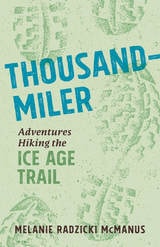
Thousand-Miler
Adventures Hiking the Ice Age TrailMelanie Radzicki McManus
Wisconsin Historical Society Press, 2017
In thirty-six thrilling days, Melanie Radzicki McManus hiked 1,100 miles around Wisconsin, landing her in the elite group of Ice Age Trail thru-hikers known as the Thousand-Milers. In prose that’s alternately harrowing and humorous, Thousand-Miler takes you with her through Wisconsin’s forests, prairies, wetlands, and farms, past the geologic wonders carved by long-ago glaciers, and into the neighborhood bars and gathering places of far-flung small towns. Follow along as she worries about wildlife encounters, wonders if her injured feet will ever recover, and searches for an elusive fellow hiker known as Papa Bear. Woven throughout her account are details of the history of the still-developing Ice Age Trail—one of just eleven National Scenic Trails—and helpful insight and strategies for undertaking a successful thru-hike.
In addition to chronicling McManus’s hike, Thousand-Miler also includes the little-told story of the Ice Age Trail’s first-ever thru-hiker Jim Staudacher, an account of the record-breaking thru-run of ultrarunner Jason Dorgan, the experiences of a young combat veteran who embarked on her thru-hike as a way to ease back into civilian life, and other fascinating tales from the trail. Their collective experiences shed light on the motivations of thru-hikers and the different ways hikers accomplish this impressive feat, providing an entertaining and informative read for outdoors enthusiasts of all levels.
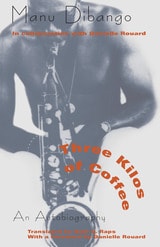
Three Kilos of Coffee
An AutobiographyManu Dibango and Danielle Rouard
University of Chicago Press, 1994
Composer, producer, performer, film score writer and humanitarian for the poor, Manu Dibango defines the "African sound" of modern world music. He has worked with and influenced such artists as Art Blakey, Don Cherry, Herbie Hancock, Harry Belafonte, Paul Simon, and Johnny Clegg. In Africa, he has helped younger musicians, performed benefit concerts, and transcribed for the first time the scores and lyrics of African musicians.
The product of a "mixed marriage" (of different tribes and religions) who owes allegiances to both Africa and Europe, Dibango has always been aware of the ambiguities of his identity. This awareness has informed all of the important events of his life, from his marriage to a white Frenchwoman in 1957, to his creation of an "Afro-music" which joyfully blends blues, jazz, reggae, traditional European and African serenades, highlife, Caribbean and Arabic music. This music addresses the meaning of "Africanness" and what it means to be a Black artist and citizen of the world.
This lively and thoughtful memoir is based on an extensive set of interviews in 1989 with French journalist Danielle Rouard. Richly illustrated with photographs, this book will be a must for readers of jazz biographies, students of African music and ethnomusicology, and all those who are lovers of Manu Dibango's unique artistry and accomplishments.
Three Poems
Concerning His Own Affairs, Concerning Himself and the Bishops, and Concerning His Own LifeSaint Gregory of Nazianzus
Catholic University of America Press, 1987
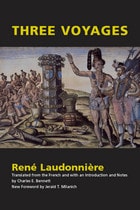
Three Voyages
Rene Laudonniere
University of Alabama Press, 2001
This translation of an eyewitness account by a major participant offers valuable information about all three attempts to establish a French colony on the south Atlantic coast of North America.
Rene Laudonniere's account of the three attempts by France to colonize what is now the United States is uniquely valuable because
he played a major role in each of the ventures—first, in 1562, as second in command during the founding of the ill-fated Charlesport, then as commander for the establishment of Fort Caroline on Florida's St. Johns River in 1564, and finally as the one to welcome French reinforcements the following year. It was also Laudonniere's destiny to witness the tragic fall of Fort Caroline to Spanish claims one month later.
Laudonniere wrote his chronicle, L'histoire Notable de la Floride, in 1565 following the fall of Fort Caroline as he recuperated in England. Much more than an account of his feelings and adventures, Laudonniere's history reveals him to be an exceedingly able and accurate geographer with a highly developed interest in anthropology.
The first English translation was published by Richard Hakluyt in 1587. Charles E. Bennett's graceful and accurate rendering in modern English was first published in 1975 by the University Press of Florida. Besides the account, thoroughly annotated and with present-day names identifying sites visited by the Frenchman, this volume includes a valuable introductory essay. The appendices to the volume are four noteworthy documents, the last of which—a guide to plants of 16th-century Florida—will be of exceptional interest to naturalists, gardeners, and students of folklore. The account itself will fascinate professional historians and anthropologists as well as general readers interested in the exciting and often moving
events of early European settlement in the New World.
Rene Laudonniere was a French adventurer and explorer of the 16th century who wrote L'histoire Notable de la Floride. Charles E. Bennett is a historian and former Florida congressman. He was coauthor of the Moss-Bennett legislation and was instrumental in the establishment of the Fort Caroline National Memorial and the Timucuan Ecological and Historical Preserve. Jerald T. Milanich is Curator in Archaeology at the Florida Museum of Natural History.
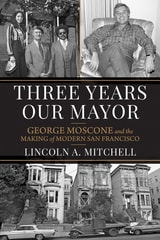
Three Years Our Mayor
George Moscone and the Making of Modern San FranciscoLincoln A. Mitchell
University of Nevada Press, 2025
Moscone was also a very colorful character who, in addition to being a successful politician, was a charming and charismatic bon vivant who was deeply embedded in the fabric and culture of San Francisco. He grew up the only son of a single mother in Cow Hollow when it was a working class, largely Italian American neighborhood, and he became the kind of politician who knew bartenders, playground attendants, small business owners, and neighborhood activists in every corner of the city. Moscone’s life and the history of San Francisco during the middle half of the twentieth century are deeply intertwined.
Through illustrating the life of Moscone, author Lincoln A. Mitchell explores how today’s San Francisco came into being. Moscone—through his work in the State Senate, victory in the very divisive 1975 mayor’s race, and brief tenure as mayor—was a key figure in the city’s evolution. The politics surrounding Moscone’s election as mayor, governance of the city, and tragic death are still relevant issues. Moscone was a groundbreaking politician whose life was cut short, but his influence on San Francisco can still be felt today.
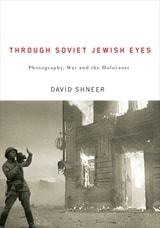
Through Soviet Jewish Eyes
Photography, War, and the HolocaustShneer, David
Rutgers University Press, 2012
These wartime photographers were the first liberators to bear witness with cameras to Nazi atrocities, three years before Americans arrived at Buchenwald and Dachau. In this passionate work, David Shneer tells their stories and highlights their work through their very own images-he has amassed never-before-published photographs from families, collectors, and private archives.
Through Soviet Jewish Eyes helps us understand why so many Jews flocked to Soviet photography; what their lives and work looked like during the rise of Stalinism, during and then after the war; and why Jews were the ones charged with documenting the Soviet experiment and then its near destruction at the hands of the Nazis.
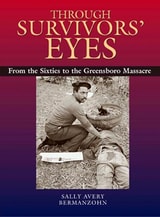
Through Survivors' Eyes
From the Sixties to the Greensboro MassacreSally Avery Bermanzohn
Vanderbilt University Press, 2003
In passionate first-person accounts, Through Survivors' Eyes tells the story of six remarkable people who set out to change the world. The survivors came of age as the "protest generation," joining the social movements of the 1960s and 1970s. They marched for civil rights, against war, for textile and healthcare workers, and for black power and women's liberation. As the mass mobilizations waned in the mid-1970s, they searched for a way to continue their activism, studied Marxism, and became communists.
Nelson Johnson, who grew up on a farm in eastern North Carolina in a family proud of its African American heritage, settled in Greensboro in the 1960s and became a leader of the Black Liberation Movement and a decade later the founder of the Faith Community Church. Willena Cannon, the daughter of black sharecroppers, witnessed a KKK murder as a child and was spurred to a life of activism. Her son, Kwame Cannon, was only ten when he saw the Greensboro killings. Marty Nathan, who grew up the daughter of a Midwestern union organizer and came to the South to attend medical school, lost her husband to the Klan/Nazi gunfire. Paul Bermanzohn, the son of Jewish Holocaust survivors, was permanently injured during the shootings. Sally Avery Bermanzohn, a child of the New York suburbs who came south to join the Civil Rights Movement, watched in horror as her friends were killed and her husband was wounded.
Through Survivors' Eyes is the story of people who abandoned conventional lives to become civil rights activists and then revolutionaries. It is about blacks and whites who united against Klan/Nazi terror, and then had to overcome unbearable hardship, and persist in seeking justice. It is also a story of one divided southern community, from the protests of black college students of the late 1960s to the convening this January of a Truth and Community Reconciliation Project (on the South African model) intended to reassess the Massacre.
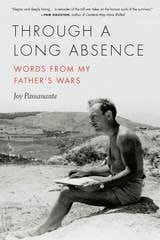
Through a Long Absence
Words from My Father's WarsJoy Passanante
The Ohio State University Press, 2017
Against the backdrop of World War II, Joy Passanante’s touching new book, Through a Long Absence: Words from My Father’s Wars, is the saga of a wartime medical unit, a passionate long-distance love, the making of a surgeon, and two first-generation American families. Told through her father’s eyes—drawing on hundreds of his letters to his beloved wife, his four-volume wartime diary, and his paintings—Passanante masterfully recreates his wartime journey and physically retraces his steps more than sixty years later in an attempt to understand a time in her parents’ lives that they’d spoken about very little.
More than just a World War II story, Through a Long Absence delves into one man’s past to explore his personal wars: a stint as a child bootlegger, a marriage between newlyweds separated by continents and strained by years apart, and his struggle late in life with his own mind. The narrative propels readers to surprising places—from a freight train through North Africa to an underground St. Louis distillery during Prohibition, from a young couple’s forbidden courtship to the chaos of surgical tents under fire in Normandy, from an underground trove of priceless artwork hidden by the Nazis to Jewish New Year services in Paris a week after its liberation. Through a Long Absence is a love story, an honest look into one man’s life, and a daughter’s moving quest to rediscover her father years later through his own words.
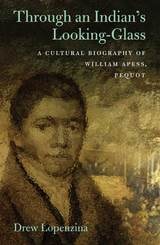
Through an Indian's Looking-Glass
A Cultural Biography of William Apess, PequotDrew Lopenzina
University of Massachusetts Press, 2017
The life of William Apess (1798–1839), a Pequot Indian, Methodist preacher, and widely celebrated writer, provides a lens through which to comprehend the complex dynamics of indigenous survival and resistance in the era of America's early nationhood. Apess's life intersects with multiple aspects of indigenous identity and existence in this period, including indentured servitude, slavery, service in the armed forces, syncretic engagements with Christian spirituality, and Native struggles for political and cultural autonomy. Even more, Apess offers a powerful and provocative voice for the persistence of Native presence in a time and place that was long supposed to have settled its “Indian question” in favor of extinction.
Through meticulous archival research, close readings of Apess's key works, and informed and imaginative speculation about his largely enigmatic life, Drew Lopenzina provides a vivid portrait of this singular Native American figure. This new biography will sit alongside Apess's own writing as vital reading for those interested in early America and indigeneity.
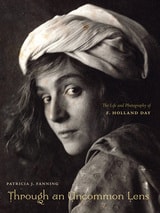
Through an Uncommon Lens
The Life and Photography of F. Holland DayPatricia J. Fanning
University of Massachusetts Press, 2008
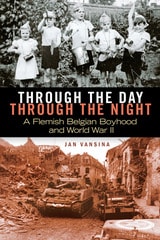
Through the Day, through the Night
A Flemish Belgian Boyhood and World War IIJan Vansina
University of Wisconsin Press, 2014
Within the vast literature on World War II, a much smaller body of work treats the everyday experiences of civilians, particularly in smaller countries drawn into the conflict. Recalling the war in Belgium from a child’s-eye perspective, Vansina describes pangs of hunger so great as to make him crave the bitter taste of cod-liver oil. He vividly remembers the shock of seeing severely wounded men on the grounds of a field hospital, the dangers of crossing fields and swimming in ponds strafed by planes, and his family’s interactions with occupying and escaping soldiers from both sides. After the war he recalls emerging numb from the cinema where he first saw the footage of the Nazi death camps, and he describes a new phase of unrest marked by looting, vigilante justice, and the country’s efforts at reunification.
Vansina, a historian and anthropologist best known for his insights into oral tradition and social memory, draws on his own memories and those of his siblings to reconstruct daily life in Belgium during a tumultuous era.
Best Special Interest Books, selected by the American Association of School Librarians
Best Books for General Audiences, selected by the Public Library Reviewers

Through the Door of Life
A Jewish Journey between GendersJoy Ladin
University of Wisconsin Press, 2012
Professor Jay Ladin made headlines around the world when, after years of teaching literature at Yeshiva University, he returned to the Orthodox Jewish campus as a woman—Joy Ladin. In Through the Door of Life, Joy Ladin takes readers inside her transition as she changed genders and, in the process, created a new self.
With unsparing honesty and surprising humor, Ladin wrestles with both the practical problems of gender transition and the larger moral, spiritual, and philosophical questions that arise. Ladin recounts her struggle to reconcile the pain of her experience living as the “wrong” gender with the pain of her children in losing the father they love. We eavesdrop on her lifelong conversations with the God whom she sees both as the source of her agony and as her hope for transcending it. We look over her shoulder as she learns to walk and talk as a woman after forty-plus years of walking and talking as a man. We stare with her into the mirror as she asks herself how the new self she is creating will ever become real.
Ladin’s poignant memoir takes us from the death of living as the man she knew she wasn’t, to the shattering of family and career that accompanied her transition, to the new self, relationships, and love she finds when she opens the door of life.
2012 Finalist for the National Jewish Book Award for Biography, Autobiography, or Memoir
“Given her high-profile academic position, Ladin’s transition was a major news story in Israel and even internationally. But behind the public story was a private struggle and learning experience, and Ladin pulls no punches in telling that story. She offers a peek into how daunting it was to learn, with little support from others, how to dress as a middle-aged woman, to mu on make-up, to walk and talk like a female. She provides a front-row seat for observing how one person confronted a seemingly impossible situation and how she triumphed, however shakingly, over the many adversities, both societal and psychological, that stood in the way.”—The Gay and Lesbian Review Worldwide
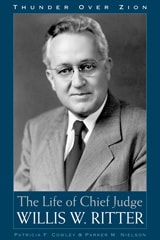
Thunder Over Zion
The Life and Times of Chief Judge Willis W RitterCowley & Nielson
University of Utah Press, 2006
Ritter was clearly ahead of his time, for his opinions on criminal justice, police interrogation, and the rights to counsel have now become accepted standards in jurisprudence. They are, indeed, so universally accepted that few if any viewers of televised police court dramas would even question them. In his personal life he was a man flawed on a grand scale and he lived a life fraught with contradictions. This is his compelling story, compellingly recounted.
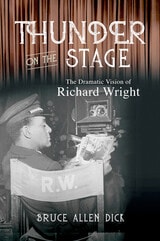
Thunder on the Stage
The Dramatic Vision of Richard WrightBruce Allen Dick
University of Illinois Press, 2024
Drawing on decades of research and interviews with Wright’s family and Wright scholars, Bruce Allen Dick uncovers the theatrical influence on Wright’s oeuvre--from his 1930s boxing journalism to his unpublished one-acts on returning Black GIs in WWII to his unproduced pageant honoring Vladimir Lenin. Wright maintained rewarding associations with playwrights, writers, and actors such as Langston Hughes, Theodore Ward, Paul Robeson, and Lillian Hellman, and took particular inspiration from French literary figures like Jean-Paul Sartre. Dick’s analysis also illuminates Wright’s direct involvement with theater and film, including the performative aspects of his travel writings; the Orson Welles-directed Native Son on Broadway; his acting debut in Native Son’s first film version; and his play “Daddy Goodness,” a satire of religious charlatans like Father Divine, in the 1930s.
Bold and original, Thunder on the Stage offers a groundbreaking reinterpretation of a major American writer.
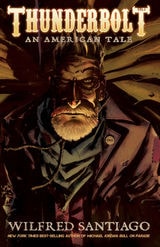
Thunderbolt
An American Tale, Vol. 1Wilfred Santiago
The Ohio State University Press, 2019
As a young boy in nineteenth-century America, Captain John Brown swore to dedicate his life to the struggle against slavery. Years later, he and his sons have joined the fight in Kansas, the epicenter of the national debate over slavery. As the territory nears statehood, abolitionists and proslavery border ruffians clash in increasingly violent conflict across the territory. But John Brown has more in mind than border skirmishes. He aims to eliminate slavery from US soil once and for all—even if that means raiding a government armory in order to arm a national slave revolt. From the Pottawatomie Massacre to the Battle of Black Jack and the Battle of Osawatomie, this first installment in the story of the legendary John Brown traces the rise of the insurrection in stunning detail.
Gritty, gripping, and masterfully illustrated, Wilfred Santiago’s telling of John Brown’s tale pulls no punches as it unflinchingly recounts the epic struggle across pre–Civil War America. And while John Brown’s methods may be questionable, his story is unforgettable. After all, dying is part of the plan.
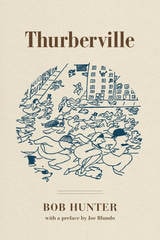
Thurberville
Bob Hunter
The Ohio State University Press, 2017
Thurber’s Columbus was a wild and crazy place, a city full of fascinating and sometimes peculiar characters, many in his own family. Because of the widespread popularity of his stories, that was also the Columbus that many of his readers around the world came to know.
Thurberville chronicles those characters and explores that world. But it also examines the real city where Thurber struggled and then blossomed as a college student, worked as a newspaper reporter and a press agent, and achieved international fame as a humorist and cartoonist after he left town, in part by writing about the subjects he left behind.
Much of Thurber’s best work was cultivated by experiences Thurber had in Columbus and in his dealings with family, friends, teachers, and acquaintances there. They are worth a revisit and, in some cases, an introduction.
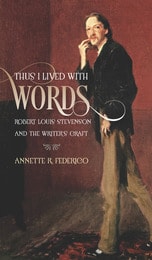
Thus I Lived with Words
Robert Louis Stevenson and the Writer's CraftAnnette R. Federico
University of Iowa Press, 2017
Stevenson belonged to a newly commercial literary world, an era of mass readership, marketing, and celebrity. He had plenty of practical advice for writers who wanted to enter the profession: study the best authors, aim for simplicity, strike a keynote, work on your style. He also held that a writer should adhere to the truth and utter only what seems sincere to his or her heart and experience of the world. Writers have messages to deliver, whether the work is a tale of Highland adventure, a collection of children’s verse, or an essay on umbrellas. Stevenson believed that an author could do no better than to find the appetite for joy, the secret place of delight that is the hidden nucleus of most people’s lives. His remarks on how to write, on style and method, and on pleasure and moral purpose contain everything in literature and life that he cared most about—adventuring, persisting, finding out who you are, and learning to embrace “the romance of destiny.”
Thutmose III
A New BiographyEric H. Cline and David O'Connor, Editors
University of Michigan Press, 2006
Thutmose III was without question one of Egypt's greatest pharaohs. His 54-year reign was packed with momentous events as well as being unusually long. Thutmose III includes an overview of his life, and detailed examinations of civil administration, the religion and cults, the monumental architecture and royal building program, royal tombs and iconography, royal portraiture and ideology, the artistic production, the Northern and Southern campaigns, as well as the Aegean and other foreign visitors to Egypt during Thutmose's time. Finally, the book concludes with a look at the end of his reign and the accession of Amenhotep II.
This extensive treatment of a pivotal figure in the ancient Mediterranean world during the Late Bronze Age will provide a uniquely comprehensive view of one of Egypt's greatest pharaohs and will be of interest to a wide audience, including specialists in Egypt and the Near East, graduate and undergraduate students, and those with a general interest in Egypt.
Eric H. Cline is Associate Professor of Ancient History and Archaeology in the Department of Classical and Semitic Languages and Literatures at George Washington University.
David O'Connor is Lila Acheson Wallace Professor of Ancient Egyptian Art and Archaeology at the New York University Institute of Fine Arts.
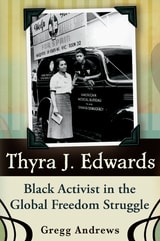
Thyra J. Edwards
Black Activist in the Global Freedom StruggleGregg Andrews
University of Missouri Press, 2011
Edwards, granddaughter of runaway slaves, grew up in Jim Crow–era Houston and started her career there as a teacher. She moved to Gary, Indiana, and Chicago as a social worker, then to New York as a journalist, and later became involved with the Communist Party, attracted by its stance on race and labor. She was mentored by famed civil rights leader A. Philip Randolph, who became her special friend and led her to pursue her education. She obtained scholarships to college, and after several years of study in the U.S. and then in Denmark, she became a women’s labor organizer and a union publicist.
In the 1930s and 1940s, she wrote about international events for black newspapers, traveling to Europe, Mexico, and the Soviet Union and presenting an anti-imperialist critique of world affairs to her readers. Edwards’s involvement with the Loyalists in the Spanish Civil War, her work in a Jewish refugee settlement in Italy, and her activities with U.S. communists drew the attention of the FBI. She was harassed by government intelligence organizations until she died at the age of just fifty-five. Edwards contributed as much to the radical foundations of the modern civil rights movements as any other woman of her time.
This fascinating new biography details Thyra Edwards’s lifelong journey and myriad achievements, describing both her personal and professional sides and the many ways they intertwined. Gregg Andrews used Edwards’s official FBI file—along with her personal papers, published articles, and civil rights manuscript collections—to present a complete portrait of this noteworthy activist. An engaging volume for the historian as well as the general reader, Thyra J. Edwards explores the complete domestic and international impact of her life and actions.
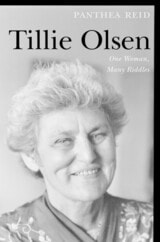
Tillie Olsen
One Woman, Many RiddlesReid, Panthea
Rutgers University Press, 2011
Born in Omaha, Nebraska, Tillie Olsen spent her young adulthood there, in Kansas City, and in Faribault, Minnesota. She relocated to California in 1933 and lived most of her life in San Francisco. From 1962 on, she sojourned frequently in Massachusetts, New Hampshire, Santa Cruz, and Soquel, California. She was a 1920s "hell-cat"; a 1930s revolutionary; an early 1940s crusader for equal pay for equal work and a war-relief patriot; an ex-GI's ideal wife in the later 1940s; a victim of FBI surveillance in the 1950s;a civil rights and antiwar advocate during the 1960s and 1970s; and a life-long orator for universal human rights.
The enigma of Tillie Olsen is intertwined with that of the twentieth century. From the rebellions in Czarist Russia, through the terrors of the Depression and the hopes of the New Deal, to World War II, the Nuremberg Trials, and the United Nations' founding, to the cold war and House Un-American Activities Committee hearings, to later progressive and repressive movements, the story of Olsen's life brings remote events into focus.
In her classic short story "I Stand Here Ironing" and her groundbreaking Tell Me a Riddle, Yonnondido, and Silences, Olsen scripted powerful, moving prose about ordinary people's lives, exposing the pervasive effects of sexism, racism, and classism and elevating motherhood and women's creativity into topics of study. Popularly referred to as "Saint Tillie," Olsen was hailed by many as the mother of modern feminism.
Based on diaries, letters, manuscripts, private documents, resurrected public records, and countless interviews, Reid's artfully crafted biography untangles some of the puzzling knots of the last century's triumphs and failures and speaks truth to legend, correcting fabrications and myths about and also by Tillie Olsen.
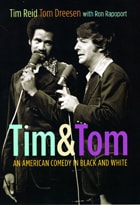
Tim and Tom
An American Comedy in Black and WhiteTim Reid and Tom Dreesen with Ron Rapoport
University of Chicago Press, 2008
Tim and Tom tells the story of that pioneering duo, the first interracial comedy team in the history of show business--and the last. Tim Reid and Tom Dreesen polished their act in the nightclubs of Chicago, then took it on the road, not only in the North, but in the still-simmering South as well, developing routines that even today remain surprisingly frank--and remarkably funny--about race. Most nights, the shock of seeing an integrated comedy team quickly dissipated in uproarious laughter, but on some occasions the audience’s confusion and discomfort led to racist heckling, threats, and even violence. Though Tim and Tom perpetually seemed on the verge of making it big throughout their five years together, they grudgingly came to realize that they were ahead of their time: America was not yet ready to laugh at its own failed promise.
Eventually, the grind of the road took its toll, as bitter arguments led to an acrimonious breakup. But the underlying bond of friendship Reid and Dreesen had forged with each groundbreaking joke has endured for decades, while their solo careers delivered the success that had eluded them as a team. By turns revealing, shocking, and riotously funny, Tim and Tom unearths a largely forgotten chapter in the history of comedy.
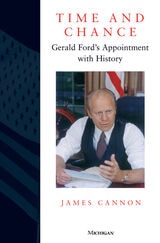
Time and Chance
Gerald Ford's Appointment with HistoryJames Cannon
University of Michigan Press, 1998
"James Cannon, formerly national affairs editor at Newsweek and Ford's domestic policy advisor, has written a superbly provocative and arresting biography that traces Ford's life from his July 4, 1913, birth in Omaha, Nebraska, to his September 8,1974, decision to pardon Nixon of the Watergate conspiracy." --Washington Post Book World
James M. Cannon is a journalist and was Domestic Policy Adviser to President Ford and Chief of Staff to Senate Majority Leader Howard Baker.
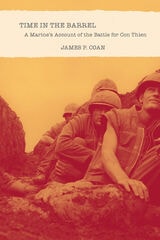
Time in the Barrel
A Marine's Account of the Battle for Con ThienJames P. Coan
University of Alabama Press, 2019
A Marine’s highly personal memoir reliving the hellish days of a pivotal conflict of the Vietnam War.
Con Thien, located only two miles from the demilitarized zone dividing North and South Vietnam, was a United States Marine Corps firebase that was the scene of fierce combat for months on end during 1967. Staving off attacks and ambushes while suffering from ineffectual leadership from Washington as well as media onslaughts, courageous American Marines protected this crucial piece of land at all costs. They would hold Con Thien, but many paid the ultimate price. By the end of the war, more than 1,400 Marines had died and more than 9,000 sustained injuries defending the “Hill of Angels.”
For eight months, James P. Coan’s five-tank platoon was assigned to Con Thien while attached to various Marine infantry battalions. A novice second lieutenant at the time, the author kept a diary recording the thoughts, fears, and frustrations that accompanied his life on “The Hill.” Time in the Barrel: A Marine’s Account of the Battle for Con Thien offers an authentic firsthand account of the daily nightmare that was Con Thien. An enticing and fascinating read featuring authentic depictions of combat, it allows readers to fully grasp the enormity of the fierce struggle for Con Thien.
The defenders of Con Thien were bombarded with hundreds of rounds of incoming rockets, mortars, and artillery that pounded the beleaguered outpost daily. Monsoon downpours turned the red laterite clay soil into a morass of oozing mud, flooded bunkers and trenches, and made Con Thien a living hell. .Being at Con Thien came to be ruefully referred to by the Marines stationed there as "time in the barrel” because they were targets as easy as fish in a barrel.
More than a retelling of military movements, Coan’s engrossing narratives focus on the sheer sacrifice and misery of one Marine’s experience in Vietnam. Through his eyes, we experience the abysmal conditions the Marines endured, from monsoon rainstorms to the constant threat of impending attack. Climatic moments in history are captured through the rare, personal perspective of one particularly astute and observant participant.
Time of Grace
Thoughts on Nature, Family, and the Politics of Crime and PunishmentKen Lamberton
University of Arizona Press, 2007
Time of Grace is a remarkable book, written with great eloquence by a former science teacher who was incarcerated for twelve years for his sexual liaison with a teenage student. Far more than a “prison memoir,” it is an intimate and revealing look at relationships—with fellow humans and with the surprising wildlife of the Sonoran Desert, both inside and beyond prison walls. Throughout, Ken Lamberton reflects on human relations as they mimic and defy those of the natural world, whose rhythms calibrate Lamberton’s days and years behind bars. He writes with candor about his life, while observing desert flora and fauna with the insight and enthusiasm of a professional naturalist.
While he studies a tarantula digging her way out of the packed earth and observes Mexican freetail bats sailing into the evening sky, Lamberton ruminates on his crime and on the wrenching effects it has had on his wife and three daughters. He writes of his connections with his fellow inmates—some of whom he teaches in prison classes—and with the guards who control them, sometimes with inexplicable cruelty. And he unflinchingly describes a prison system that has gone horribly wrong—a system entrapped in a self-created web of secrecy, fear, and lies.
This is the final book of Lamberton’s trilogy about the twelve years he spent in prison. Readers of his earlier books will savor this last volume. Those who are only now discovering Lamberton’s distinctive voice—part poet, part scientist, part teacher, and always deeply, achingly human—will feel as if they are making a new friend.
Gripping, sobering, and beautifully written, Lamberton’s memoir is an unforgettable exploration of crime, punishment, and the power of the human spirit.

Times Remembered
The Final Years of the Bill Evans TrioJoe La Barbera
University of North Texas Press, 2021
Times of Upheaval
Four Medievalists in Twentieth-Century Central Europe. Conversations with Jerzy Kloczowski, János M. Bak, František Šmahel, and Herwig WolframPavlína Rychterová
Central European University Press, 2019

Tito Puente and the Making of Latin Music
Steven Loza
University of Illinois Press, 1999
He was known as "El Rey"—the king—and he came to epitomize the Latin experience in music, not just to Latinos throughout the United States and Latin America but to a worldwide audience.
Tito Puente and the Making of Latin Music is the first in-depth historical, musical, and cultural look at the career and the influence of a giant of Latin music. Steven Loza brings the man and his music vividly to life through exclusive interviews with Puente and a number of his close associates, including Hilton Ruiz, Ray Santos, Jerry González, Poncho Sanchez, and Joe Conzo, as well as music journalist Max Salazar and former DJ/producer Chico Sesma.
Loza shows how Puente's music evolved in tandem with the crystallization of Latin music into its current compelling mix of Afro-Cuban music, salsa, and Latin jazz. Tracing Puente's innovations as a drummer and a bandleader, Loza defines his influence over the course of half a century on Latin music as well as on other musicians and musical genres. Loza also delineates the social and cultural history of Latin music, exploring questions of nationalism and ethnic expression, the play between musical creation and commercial competition, and the politics of so-called multiculturalism as they bear on Latin music and musicians. The book includes detailed musical analyses and a discography of more than a hundred recordings.
Celebrating a dynamic performer and a genre that is deeply rooted in America's rich ethnic diversity, Tito Puente and the Making of Latin Music reveals all the vibrancy and color of a consummate artist's life, work, and world.
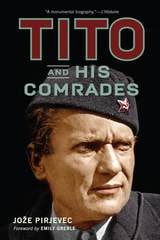
Tito and His Comrades
Jože Pirjevec, Foreword by Emily Greble
University of Wisconsin Press, 2018
With his Partisans he fought Hitler during World War II, and after the war he shrewdly resisted the Soviet Union's grasp. A leader of the non-aligned nations, he long enjoyed a reputation in the West as "the only good Communist" despite a dubious human rights record at home. Jože Pirjevec employs impressive research from archives in eight languages to offer this illuminating, definitive portrait of a complex man in turbulent times.
Pirjevec recounts how Tito, with little schooling but an astute intellect and driving ambition, rose through Communist Party ranks to shape and rule the Yugoslav federation. Surviving multiple assassination attempts by Nazis, Soviet spies, and others, Tito boldly threatened Stalin in return and may have, Pirjevec reveals, contrived Stalin's death. The narrative follows Tito's personal and political life into old age, as the specter of a Soviet invasion haunted him until his death at age eighty-seven. Available in English for the first time, this edition includes new material from Pirjevec and a foreword by Emily Greble.
To Alcatraz, Death Row, and Back
Memories of an East LA OutlawBy Ernie López and Rafael Pérez-Torres
University of Texas Press, 2005
When Ernie López was a boy selling newspapers in Depression-era Los Angeles, his father beat him when he failed to bring home the expected eighty to ninety cents a day. When the beatings became unbearable, he took to petty stealing to make up the difference. As his thefts succeeded, Ernie's sense of necessity got tangled up with ambition and adventure. At thirteen, a joyride in a stolen car led to a sentence in California's harshest juvenile reformatory. The system's failure to show any mercy soon propelled López into a cycle of crime and incarceration that resulted in his spending decades in some of America's most notorious prisons, including four and a half years on death row for a murder López insists he did not commit.
To Alcatraz, Death Row, and Back is the personal life story of a man who refused to be broken by either an abusive father or an equally abusive criminal justice system. While López freely admits that "I've been no angel," his insider's account of daily life in Alcatraz and San Quentin graphically reveals the violence, arbitrary infliction of excessive punishment, and unending monotony that give rise to gang cultures within the prisons and practically insure that parolees will commit far worse crimes when they return to the streets. Rafael Pérez-Torres discusses how Ernie López's experiences typify the harsher treatment that ethnic and minority suspects often receive in the American criminal justice system, as well as how they reveal the indomitable resilience of Chicanos/as and their culture. As Pérez-Torres concludes, "López's story presents us with the voice of one who—though subjected to a system meant to destroy his soul—not only endured but survived, and in surviving prevailed."
To Battle for God and the Right
The Civil War Letterbooks of Emerson OpdyckeEmerson Opdycke, Ed. by Glenn V. Longacre and John E. Haas.
University of Illinois Press, 2002
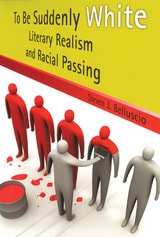
To Be Suddenly White
Literary Realism and Racial PassingSteven J. Belluscio
University of Missouri Press, 2006
To Be Suddenly White offers new readings of traditional passing narratives from the African American literary tradition, such as James Weldon Johnson’s The Autobiography of an Ex-Coloured Man, Nella Larsen’s Passing, and George Schuyler’s Black No More. It is also the first full-length work to consider a number of Jewish American and Italian American prose texts, such as Mary Antin’s The Promised Land, Anzia Yezierska’s Bread Givers, and Guido d’Agostino’s Olives on the Apple Tree, as racial passing narratives in their own right. Belluscio also demonstrates the contradictions that result from the passing narrative’s exploration of racial subjectivity, racial difference, and race itself.
When they are seen in comparison, ideological differences begin to emerge between African American passing narratives and “white ethnic” (Jewish American and Italian American) passing narratives. According to Belluscio, the former are more likely to engage in a direct critique of ideas of race, while the latter have a tendency to become more simplistic acculturation narratives in which a character moves from a position of ethnic difference to one of full American identity.
The desire “to be suddenly white” serves as a continual point of reference for Belluscio, enabling him to analyze how writers, even when overtly aware of the problematic nature of race (especially African American writers), are also aware of the conditions it creates, the transformations it provokes, and the consequences of both. Byexamining the content and context of these works, Belluscio elucidates their engagement with discourses of racial and ethnic differences, assimilation, passing, and identity, an approach that has profound implications for the understanding of American literary history.
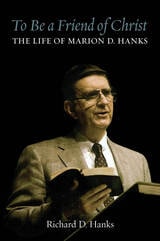
To Be a Friend of Christ
The Life of Marion D. HanksHanks, Richard D.
Signature Books, 2024
Marion Duff Hanks (1921–2011) was one of the most beloved and influential leaders of the Church of Jesus Christ of Latter-day Saints in the twentieth century, serving as a General Authority (senior leader) for forty years. He was also a leader of national import. As a recognized expert on youth, five US presidents appointed him to their President’s Council on Physical Fitness and Sports. Hanks also served as an executive leader of Rotary International and the Boy Scouts of America.
Author Richard Hanks draws on previously unavailable primary sources—journals, correspondence, notebooks, and recordings—to share this first and only authorized biography of his father. Hanks traces his father’s influence as he advocated for numerous changes in the institutional church, including humanitarian efforts, refugee relief services, missionary community service, a focus on mercy for the sinner, and a churchwide emphasis on “coming unto Christ.” A Renaissance man, Duff Hanks felt comfortable mingling with presidents and world leaders and speaking from pulpits and podiums to huge audiences and on television. But he found his greatest joy in assisting the individual, encouraging each in their personal search for happiness. Once, when asked about his goals, he replied, “My strongest desire is to qualify to be a friend of Christ.”