Results by title
5550 books match the query 'Biography & Autobiography' and 1006 start with t
The Westside Slugger
Joe Neal's Lifelong Fight for Social JusticeJohn L. Smith
University of Nevada Press, 2019
Filled with an intense desire for education, he joined the United States Air Force and later graduated from Southern University—studying political science and the law at a time of great upheaval in the racial status quo. As part of a group of courageous men, Neal joined a Department of Justice effort to register the first black voters in Madison Parish.
When Neal moved to southern Nevada in 1963 he found the Silver State to be every bit as discriminatory as his former Louisiana home. As Neal climbed through the political ranks, he used his position in the state senate to speak on behalf of the powerless for more than thirty years. He took on an array of powerful opponents ranging from the Clark County sheriff to the governor of the state, as well as Nevada’s political kingmakers and casino titans. He didn’t always succeed—he lost two runs for governor—but he never stopped fighting. His successes included improved rights for convicted felons and greater services for public education, mental health, and the state’s libraries. He also played an integral role in improving hotel fire safety in the wake of the deadly MGM Grand fire and preserving the pristine waters of Lake Tahoe, which brought him national attention.
Neal lived a life that personified what is right, just, and fair. Pushing through racial and civil rights hurdles and becoming a lifelong advocate for social justice, his dedication and determination are powerful reminders to always fight the good fight and never stop swinging.
The Windward Shore
A Winter on the Great LakesJerry Dennis
University of Michigan Press, 2012
If you have been enchanted by Jerry Dennis’s earlier work on sailing the Great Lakes, canoeing, angling, and the natural wonders of water and sky—or you have not yet been lucky enough to enjoy his engaging prose—you will want to immerse yourself in his powerful and insightful new book on winter in Great Lakes country.
Grounded by a knee injury, Dennis learns to live at a slower pace while staying in houses ranging from a log cabin on Lake Superior’s Keweenaw Peninsula to a $20 million mansion on the northern shore of Lake Michigan. While walking on beaches and exploring nearby woods and villages, he muses on the nature of time, weather, waves, agates, books, words for snow and ice, our complex relationship with nature, and much more.
From the introduction: “I wanted to present a true picture of a complex region, part of my continuing project to learn at least one place on earth reasonably well, and trusted that it would appear gradually and accumulatively—and not as a conventional portrait, but as a mosaic that included the sounds and scents and textures of the place and some of the plants, animals, and its inhabitants. Bolstered by the notion that a book is a journey that author and reader walk together, I would search for promising trails and follow them as far as my reconstructed knee would allow.”
The Winter Sailor
Francis R. Stebbins on Florida's Indian River, 1878-1888Edited by Carolyn Frances Baker Lewis
University of Alabama Press, 2004
A unique guide to Florida's frontier history along Indian River.
The Winter Sailor is a historical adventure that details the yearly winter travels of Francis R. Stebbins to Florida's Indian River. Stebbins, a writer from Michigan, visited Florida in March of 1878 and became entranced by its pristine beauty. Subsequently, Stebbins and his traveling companions made annual visits to Indian River—until 1888 when tragedy struck and ended Stebbins' yearly journeys.
Being an observant traveler, Stebbins began a series of descriptive articles for his hometown newspaper that chronicled his journeys to the Indian River area. Stebbins's articles tell of his own personal experiences during his leisurely visits, which included such activities as hunting and fishing, studying the natural surroundings, and excavating Indian mounds. What Stebbins enjoyed most was sailing down the river interviewing townspeople and examining local attractions as he went. His articles also detail the lifestyle of the region, food, fashion, industry, history, environment, and changes that occurred over time. Stebbins's articles not only entertained and informed but also became a travelogue for his readers. He inspired northern travelers to go south and visit Florida, which contributed to the beginnings of large-scale tourism in the region.
The Winter Sailor combines Stebbins's 49 articles along with three by his companions, to provide an enjoyable, historical guide. Unique among 19th-century travelogues, this fascinating look into Florida's past documents a decade of change to the Indian River wilderness and becomes Stebbins's gift to the present.
The Wisconsin Capitol
Stories of a Monument and Its PeopleMichael Edmonds
Wisconsin Historical Society Press, 2017
On the occasion of the Capitol’s centennial in 2017, this book tells the remarkable story of the building—in all its incarnations—and the people who made history beneath its dome. The book covers the creation of the territorial capitol in 1837, the construction of the second capitol in the 1860s (and the fire that almost completely destroyed it in 1904), the eleven-year construction project that completed the third capitol in 1917, and the extensive conservation project of the 1990s that restored the building to its grandeur. Supporting the framework of this architectural history are colorful stories about the people who shaped Wisconsin from within the Capitol—attorneys, senators, and governors (from Henry Dodge to Scott Walker), as well as protesters, reformers, secretaries, tour guides, custodians, and even Old Abe, the Capitol’s resident eagle. Combining historical photographs with modern, full-color architectural photos, The Wisconsin Capitol provides fascinating details about the building, while also emphasizing the importance of the Capitol in Wisconsin’s storied history.
The Witkiewicz Reader
Stanislaw Ignacy Witkiewicz
Northwestern University Press, 1992
The Woman I Was Not Born To Be
A Transsexual JourneyAleshia Brevard
Temple University Press, 2001
Under the stage name Lee Shaw, Brevard worked as a drag queen at Finocchio's, a San Francisco club, doing Marilyn Monroe impersonations. (Like Marilyn, she sought romance all the time and had a string of entanglements with men.) Later, she worked as a stripper in Reno and as a Playboy Bunny at the Sunset Strip hutch.
After playing opposite Don Knotts in the movie The Love God, Brevard appeared in other films and broke into TV as a regular on the Red Skelton Show. She created the role of Tex on the daytime soap opera One Life To Live. As a woman, Brevard returned to teach theater at East Tennessee State, the same university she had attended as a boy.
This memoir is a rare pre-Women's Movement account of coming to terms with gender identity. Brevard writes frankly about the degree to which she organized her life around pleasing men, and how absurd it all seems to her now.
The Woman Who Knew Too Much, Revised Ed.
Alice Stewart and the Secrets of RadiationGayle Greene
University of Michigan Press, 2017
Author Gayle Greene traces Stewart's life and career as she came up against ever more powerful authorities, first the British medical profession, then the U.S. nuclear industry, and finally the regulatory agencies that set radiation safety standards throughout the world. Stewart endured the fate of other women scientists in having her findings dismissed and funding cut, but today is recognized as a pioneering figure in epidemiological research on the dangers of nuclear radiation. In her preface to the second edition, Greene looks at new information that’s come out about the forces and individuals responsible for marginalizing her as a scientist and downplaying the disturbing implications of her research.
The Woman in Battle
The Civil War Narrative of Loreta Janeta Velazquez, Cuban Woman and Confederate SoldierLoreta Janeta Velazquez
University of Wisconsin Press, 2003
Originally published in 1876 as The Woman in Battle, this Civil War narrative offers Velazquez’s seemingly impossible autobiographical account, as well as a new critical introduction and glossary by Jesse Alemán. Scholars are divided between those who read the book as a generally honest autobiography and those who read it as mostly fiction. According to Alemán’s critical introduction, the book also reads as pulp fiction, spy memoir, seduction narrative, travel literature, and historical account, while it mirrors the literary conventions of other first-person female accounts of cross-dressing published in the United States during wartime, dating back to the Revolutionary War. Whatever the facts are, this is an authentic Civil War narrative, Alemán concludes, that recounts how war disrupts normal gender roles, redefines national borders, and challenges the definition of identity.
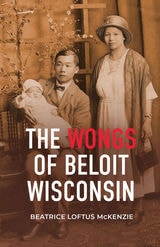
The Wongs of Beloit, Wisconsin
Beatrice McKenzie
University of Wisconsin Press, 2022
The Wongs thrived in Beloit despite facing racism and classism, embracing wartime opportunities, education, love, and careers within the U. S. McKenzie's collaboration with descendent Mary Wong Palmer reveals a poignant story of Chinese immigrant life in the Upper Midwest that adds a much-needed Wisconsin perspective to existing literature by and about Asian Americans.
The Words of My Father
A MemoirYousef Bashir
Haus Publishing, 2018
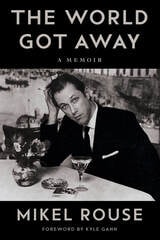
The World Got Away
A MemoirMikel Rouse. Foreward by Kyle Gann
University of Illinois Press, 2024
One of the most innovative composers of his generation, Mikel Rouse is known for a trilogy of operas that includes Dennis Cleveland and a gift for superimposing pop vernaculars onto avant-garde music. This memoir channels Rouse’s high energy personality into an exuberant account of the precarity and pleasures of artistic creation. Raconteur and starving artist, witty observer and acclaimed musician, Rouse emerged from the legendary art world of 1980s New York to build a forty-year career defined by stage and musical successes, inexhaustible creativity, and a support network of famous faces, loyal allies, and high art hustlers. Rouse guides readers through a working artists’ hardscrabble life while illuminating the unromantic truth that a project’s reception may depend on a talented cast and crew but can depend on reliable air conditioning.
Candid and hilarious, The World Got Away is a one-of-a-kind account of a creative life fueled by talent, work, and luck.
The World and the Bo Tree
Helen Bevington
Duke University Press, 1991
So writes Helen Bevington in The World and the Bo Tree, a book that describes her travels taken amid the turbulence of the 1980s. The “world” of the title is the one everybody knows, a fairly troubled, even threatening place to inhabit these days. The bo tree, which has flourished for centuries in India and Asia, is itself a meaningful symbol of peace, since under it the Buddha sat when he gained enlightenment and sought thereafter to share it with the world.
The book fashions a delightful fabric, a weave of exotic journeys and chaotic recent history. While we travel with Bevington to and from various destinations in Europe, Asia, South America, Africa, China, and elsewhere, we are conscious of the look of the world at home in striking contrast to the serenity occasionally glimpsed in distant places. At home she reminds us of such global disturbances as the demise of the Equal Rights Amendment, the Chernobyl nuclear disaster, the explosion of the space shuttle Challenger, and the possible destruction of the planet. Abroad, on some quest of their own, we may encounter such fascinating passersby as Mark Twain in Bangkok, Lord Byron in Italy, Goethe in Sicily, Marco Polo in China, Isak Dinesen in Africa, and Gladstone in the Blue Grotto of Capri.
Against the backdrop of the world, Bevington discovers moments of peace in unexpected and unlikely places—visible, she says, in Tibet or on the road to Mandalay, in the look of the midnight sun, or in the silence of Africa. Fleeting and elusive though these moments are, they are real and in themselves strangely enlightening.
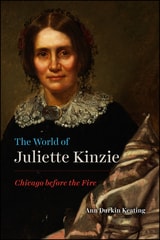
The World of Juliette Kinzie
Chicago before the FireAnn Durkin Keating
University of Chicago Press, 2019
Juliette is one of Chicago’s forgotten founders. Early Chicago is often presented as “a man’s city,” but women like Juliette worked to create an urban and urbane world, often within their own parlors. With The World of Juliette Kinzie, we finally get to experience the rise of Chicago from the view of one of its most important founding mothers.
Ann Durkin Keating, one of the foremost experts on nineteenth-century Chicago, offers a moving portrait of a trailblazing and complicated woman. Keating takes us to the corner of Cass and Michigan (now Wabash and Hubbard), Juliette’s home base. Through Juliette’s eyes, our understanding of early Chicago expands from a city of boosters and speculators to include the world that women created in and between households. We see the development of Chicago society, first inspired by cities in the East and later coming into its own midwestern ways. We also see the city become a community, as it developed its intertwined religious, social, educational, and cultural institutions. Keating draws on a wealth of sources, including hundreds of Juliette’s personal letters, allowing Juliette to tell much of her story in her own words.
Juliette’s death in 1870, just a year before the infamous fire, seemed almost prescient. She left her beloved Chicago right before the physical city as she knew it vanished in flames. But now her history lives on. The World of Juliette Kinzie offers a new perspective on Chicago’s past and is a fitting tribute to one of the first women historians in the United States.
The World of Juliette Kinzie
Chicago before the FireAnn Durkin Keating
University of Chicago Press, 2019
When Juliette Kinzie first visited Chicago in 1831, it was anything but a city. An outpost in the shadow of Fort Dearborn, it had no streets, no sidewalks, no schools, no river-spanning bridges. And with two hundred disconnected residents, it lacked any sense of community. In the decades that followed, not only did Juliette witness the city’s transition from Indian country to industrial center, but she was instrumental in its development.
Juliette is one of Chicago’s forgotten founders. Early Chicago is often presented as “a man’s city,” but women like Juliette worked to create an urban and urbane world, often within their own parlors. With The World of Juliette Kinzie, we finally get to experience the rise of Chicago from the view of one of its most important founding mothers.
Ann Durkin Keating, one of the foremost experts on nineteenth-century Chicago, offers a moving portrait of a trailblazing and complicated woman. Keating takes us to the corner of Cass and Michigan (now Wabash and Hubbard), Juliette’s home base. Through Juliette’s eyes, our understanding of early Chicago expands from a city of boosters and speculators to include the world that women created in and between households. We see the development of Chicago society, first inspired by cities in the East and later coming into its own midwestern ways. We also see the city become a community, as it developed its intertwined religious, social, educational, and cultural institutions. Keating draws on a wealth of sources, including hundreds of Juliette’s personal letters, allowing Juliette to tell much of her story in her own words.
Juliette’s death in 1870, just a year before the infamous fire, seemed almost prescient. She left her beloved Chicago right before the physical city as she knew it vanished in flames. But now her history lives on. The World of Juliette Kinzie offers a new perspective on Chicago’s past and is a fitting tribute to one of the first women historians in the United States.
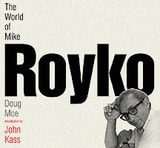
The World of Mike Royko
Doug Moe
University of Wisconsin Press, 1999
This illustrated biography is the first account of the colorful life of Chicago newspaper columnist Mike Royko, Pulitzer Prize winner, best-selling author, and legendary journalist who personified Chicago in all its rough-edged charm. Drawing on exclusive photos and interviews with Royko’s family and intimates, the book chronicles Royko’s rise from a “flat-above-a-tavern” youth—raised above a bar on Chicago’s Polish northwest side—to one of the best-known names in American journalism.
Readers will get the inside scoop on Royko’s epic battles with Mayor Richard J. Daley and other politicians and his hilarious columns featuring “Slats Grobnik.” They’ll also meet a softer, largely unknown, side of Royko, through the love letters he sent to his wife-to-be from an Air Force base in Washington State.
More than 100 photos—many never before available to the public—capture the man and his times. Millions of readers—in 800 newspapers around the world—followed Royko’s work and life. In The World of Mike Royko—he lives again.
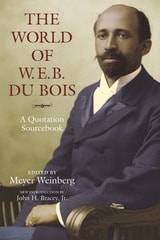
The World of W.E.B. Du Bois
A Quotation SourcebookMeyer Weinberg
University of Massachusetts Press, 2012
Meyer Weinberg created The World of W.E.B. Du Bois to provide a short journey through Du Bois's views on virtually all aspects of twentieth-century life. More than one thousand quotations from his published writings and correspondence are included, arranged into twenty topical chapters. Each quotation begins with a heading designed to summarize its main theme. A subject index provides additional access to the ideas of this complex figure.
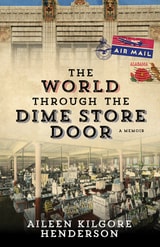
The World through the Dime Store Door
A MemoirAileen Kilgore Henderson
University of Alabama Press, 2020
A coming-of-age memoir evoking farm, mining, and small-town life in Alabama’s Tuscaloosa County as the world transitions from the Great Depression to World War II.
In the 1930s, the rural South was in the throes of the Great Depression. Farm life was monotonous and hard, but a timid yet curious teenager thought it worth recording. Aileen Kilgore Henderson kept a chronicle of her family’s daily struggles in Tuscaloosa County alongside events in the wider world she gleaned from shortwave radio and the occasional newspaper. She wrote about Howard Hughes’s round-the-world flight and her horror at the rise to power in Germany of a bizarre politician named Adolf Hitler. Henderson longed to join the vast world beyond the farm, but feared leaving the refuge of her family and beloved animals.
Yet, with her father’s encouragement, she did leave, becoming a clerk in the Kress dime store in downtown Tuscaloosa. Despite long workdays and a lengthy bus commute, she continued to record her observations and experiences in her diary, for every day at the dime store was interesting and exciting for an observant young woman who found herself considering new ideas and different points of view.
Drawing on her diary entries from the 1930s and early 1940s, Henderson recollects a time of sweeping change for Tuscaloosa and the South. The World through the Dime Store Door is a personal and engaging account of a Southern town and its environs in transition told through the eyes of a poor young woman with only a high school education but gifted with a lively mind and an openness to life.
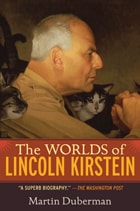
The Worlds of Lincoln Kirstein
Martin Duberman
Northwestern University Press, 2008
Lincoln Kirstein was a tireless champion of the arts in America. Working behind the scenes to provide artists with money, space, audiences, and, at times, emotional support, he helped found such landmark cultural institutions as the New York City Ballet, the School of American Ballet, New York’s Lincoln Center and Stratford's American Shakespeare Festival.
The Worlds of William Penn
Murphy, Andrew R
Rutgers University Press, 2019
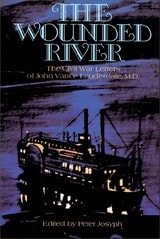
The Wounded River
The Civil War Letters of John Vance Lauderdale, M.D.Peter Josyph
Michigan State University Press, 1993
The Wounded River takes the reader back more than 130 years to reveal a marvelous, first-hand account of nineteenth-century warfare. In the process, the work cuts the legends and mythology that have come to frame and define accounts of America's bloodiest war. Of equal significance, Peter Josyph's editorial work on this superb collection of letters from the Western Americana Division of Yale University's Beinecke Rare Book and Manuscripts Library enhances and clarifies Lauderdale's experinces as a surgeon aboard the U.S. Army hospital ship D. A. January.
The reader looks on while Lauderdale, a New York civilian contract surgeon, operates on hundreds of Confederate and Union wounded. The young doctor's clear writing style and his great compassion for these unfortunate men whose bodies were ripped apart by bullets, shell fragments, and bayonets permits us to catch a disturbiing glimpse of what modern warfare does to humanity. Finally, we learn of Lauderdale's motives for volunteering, his impressions of the "hospital ship" D. A. January, Confederate morale, the Abolitionist cause, and black slavery. The Wounded River is a must read for anyone interested in the real American Civil War.
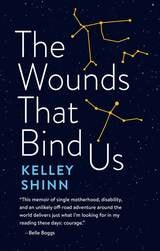
The Wounds That Bind Us
Kelley Shinn
West Virginia University Press, 2023
The improbable and powerful true story of a single mother with prosthetics for both legs who travels the globe with her young daughter in a Land Rover.
“A harrowing memoir. . . . Readers may not want to follow in [Shinn’s] footsteps, but they will never be bored with her as a companion.” —Kirkus Reviews
The Wounds That Bind Us is the improbable true story of Kelley Shinn, an orphan at birth who loses her legs at the age of sixteen to a rare bacterial pathogen. She becomes an avid off-road racer and, as a single mother, attempts to drive around the globe in a Land Rover with her three-year-old daughter in tow to bring light to the plight of land mine survivors. With unflinching honesty, exceptional lyricism, and biting humor, Shinn (“that’s two Ns and no shins”) takes readers on a wild journey—literal and emotional—filled with striking characters and landscapes, heartbreaks, and hard-won insights, ultimately arriving at a place of profound redemption.
Told with the energy and intensity of the adventure story it is, this terrifically rich and nuanced examination of a life is also a careful meditation on renewal—a remapping of the world. Guided by the narrator’s keen introspection and her ability to look resolutely at harrowing sorrows and still find hope, joy, and meaning, The Wounds That Bind Us will resonate deeply, long after the last page.
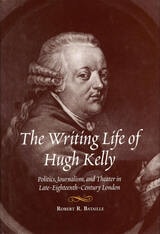
The Writing Life of Hugh Kelly
Politics, Journalism, and Theatre in Late-Eighteenth-Century LondonRobert R. Bataille
Southern Illinois University Press, 2000
Robert R. Bataille demonstrates convincingly that between 1767 and 1777, Anglo-Irish writer Hugh Kelly made major contributions in three areas of British culture: politics, journalism, and theater. Bataille shows how all three activities were integrated in Kelly’s life, suggesting that such interrelationships often existed in the rough and ready London culture during the early reign of King George III.
When he discovered several newspaper campaigns that Kelly orchestrated as a paid political propagandist for George III and his ministers, Bataille understood in part how important Kelly was to his era. In his capacity as propagandist, Kelly defended Hanoverian colonial policies on the eve of the American Revolution, served as a key opponent of the radical Wilkites, and promoted the acceptance of the 1774 Quebec Bill, which established, among other things, the right of the recently defeated French citizens of Quebec to maintain the French language.
A belletristic journalist, Kelly published theater reviews and essays that played a major role in shaping the taste of his era. He wrote in defense of the controversial sentimental drama, and whenever he could, he promoted the major theatrical figure of the age, David Garrick. Under his editorship, the newspaper Public Ledger became a leading source of theater information. Seeking to raise the status of the profession of journalism, he wrote essays and articles that provided his middle-class readers with an insider’s view of the operations of the journalist.
Assessing Kelly’s contributions to the novel and drama, Bataille argues that this powerful journalist stands in the vanguard in the larger struggle against traditional attitudes supporting male superiority and aristocratic privilege. Kelly wrote in favor of gender equality and middle-class respectability, striving to inculcate what modern scholars refer to as the values of sensibility. Bataille also argues, however, that Kelly knew his audience. Instrumental in the rise of professional writing and popular culture, he understood that he had to observe the needs of his audience, detecting cultural trends and using the skills of the rhetorician.
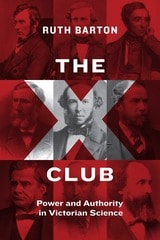
The X Club
Power and Authority in Victorian ScienceRuth Barton
University of Chicago Press, 2018
These six ambitious professionals and three wealthy amateurs—J. D. Hooker, T. H. Huxley, John Tyndall, John Lubbock, William Spottiswoode, Edward Frankland, George Busk, T. A. Hirst, and Herbert Spencer—wanted to guide the development of science and public opinion on issues where science impinged on daily life, religious belief, and politics. They formed a private dining club, which they named the X Club, to discuss and further their plans. As Ruth Barton shows, they had a clear objective: they wanted to promote “scientific habits of mind,” which they sought to do through lectures, journalism, and science education. They devoted enormous effort to the expansion of science education, with real, but mixed, success.
For twenty years, the X Club was the most powerful network in Victorian science—the men succeeded each other in the presidency of the Royal Society for a dozen years. Barton’s group biography traces the roots of their success and the lasting effects of their championing of science against those who attempted to limit or control it, along the way shedding light on the social organization of science, the interactions of science and the state, and the places of science and scientific men in elite culture in the Victorian era.
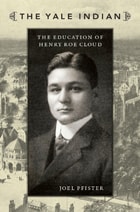
The Yale Indian
The Education of Henry Roe CloudJoel Pfister
Duke University Press, 2009
Roe Cloud’s white-collar activism was entwined with the Progressive Era formation of an Indian professional and managerial class, a Native “talented tenth,” whose members strategically used their contingent entry into arenas of white social, intellectual, and political power on behalf of Indians without such access. His Yale training provided a cross-cultural education in class-structured emotions and individuality. While at Yale, Roe Cloud was informally adopted by a white missionary couple. Through them he was schooled in upper-middle-class sentimentality and incentives. He also learned how interracial romance could jeopardize Indian acceptance into their class. Roe Cloud expanded the range of what modern Indians could aspire to and achieve.
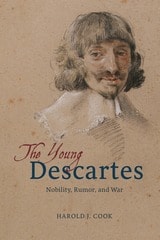
The Young Descartes
Nobility, Rumor, and WarHarold J. Cook
University of Chicago Press, 2018
In The Young Descartes, Harold J. Cook tells the story of a man who did not set out to become an author or philosopher—Descartes began publishing only after the age of forty. Rather, for years he traveled throughout Europe in diplomacy and at war. He was present at the opening events of the Thirty Years' War in Central Europe and Northern Italy, and was also later involved in struggles within France. Enduring exile, scandals, and courtly intrigue, on his journeys Descartes associated with many of the most innovative free thinkers and poets of his day, as well as great noblemen, noblewomen, and charismatic religious reformers. In his personal life, he expressed love for men as well as women and was accused of libertinism by his adversaries.
These early years on the move, in touch with powerful people and great events, and his experiences with military engineering and philosophical materialism all shaped the thinker and philosopher Descartes became in exile, where he would begin to write and publish, with purpose. But though it is these writings that made ultimately made him famous, The Young Descartes shows that this story of his early life and the tumultuous times that molded him is sure to spark a reappraisal of his philosophy and legacy.
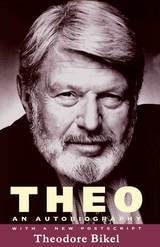
Theo
An AutobiographyTheodore Bikel
University of Wisconsin Press, 2002
An award-winning actor on screen and stage (The Defiant Ones, The African Queen, The Sound of Music, My Fair Lady, Fiddler on the Roof), an activist for civil rights and progressive causes worldwide, and a singer whose voice has won him great applause, Theodore Bikel here tells his own compelling life story. Born in Austria, raised in Palestine, educated in England, and with a stellar career in the United States and around the world, Bikel offers a personal history parallel to momentous events of the twentieth century. In an eloquent, fiercely committed voice, he writes of the Third Reich, the birth of the State of Israel, the McCarthy witch hunts of the 1950s, and the tumultuous 1960s in America. In a new postscript to this paperback edition, he looks at recent events in the Middle East and takes both sides to task for their excesses.
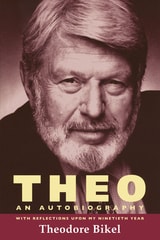
Theo
An AutobiographyTheodore Bikel
University of Wisconsin Press, 2014
In this edition celebrating Bikel’s ninetieth birthday, he looks back in a new chapter at his youth in prewar Vienna, his adolescent years, his continued joy in performing timeless songs, his return to Vienna in recent years, and the active life that keeps him feeling young even after nearly a century of adventure.

Theodore Dreiser - American Writers 102
University of Minnesota Pamphlets on American WritersW.M. Frohock
University of Minnesota Press, 1972
Theodore Dreiser - American Writers 102 was first published in 1972. Minnesota Archive Editions uses digital technology to make long-unavailable books once again accessible, and are published unaltered from the original University of Minnesota Press editions.
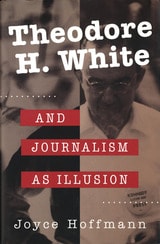
Theodore H. White and Journalism As Illusion
Joyce Hoffmann
University of Missouri Press, 1995
In this groundbreaking study, Joyce Hoffmann examines a critical twenty-five-year period in the work of one of the most influential journalists of the twentieth century. Theodore H. White was already a celebrated reporter when Jacqueline Kennedy summoned him for an exclusive interview in the aftermath of her husband's assassination. With her help, White would preserve what the First Lady claimed had been John F. Kennedy's vision of the New Frontier as an incarnation of that wistful, romantic kingdom--Camelot. Over the years, friends and advisers to Kennedy declared that they had never heard the president speak of Camelot. But White's article, which ran in Life magazine, created a myth that still endures in the popular consciousness.
That story was just one of many by Theodore White that had a lasting impact on the nation. As a correspondent for several of the country's most popular magazines, he covered the crucial events of the 1940s, '50s, and '60s. His best-selling book The Making of the President 1960 changed political reporting forever.
A gifted and likable man with a remarkable skill for ingratiating himself with others, White earned the confidence of key political, military, and diplomatic leaders. First in the Far East, later in Europe, and finally in Washington, D.C., he became a confidant and adviser rather than an adversary to the figures he covered for the news, following a pattern set by elite journalists. Even as he played the impartial reporter, White kept secrets in order to maintain access to his important sources, and he occasionally allowed his subjects, including John F. Kennedy and Nelson Rockefeller, to make changes in his work before publication.
Clinging to the illusion of objectivity, White--like other leading journalists in the postwar years--wrote about the world not as it was but as he believed it ought to be. Hoffmann relates the little-known episode in White's career when he intentionally obscured the truth about Chiang Kai-shek's corrupt and inept Nationalist government because he believed that undermining China's cause would be "a disservice to democracy."
No other book so thoroughly documents how a first-rank journalist can become a political insider and distort the news without losing the gloss of impartiality that is supposed to accompany the profession. Impressively researched, skillfully written, Theodore H. White and Journalism as Illusion is an unflinching look at a key figure in the history of American journalism and at the profession itself.
Theodore Roethke - American Writers 30
University of Minnesota Pamphlets on American WritersRalph J. Mills Jr.
University of Minnesota Press, 1963
Theodore Roethke - American Writers 30 was first published in 1963. Minnesota Archive Editions uses digital technology to make long-unavailable books once again accessible, and are published unaltered from the original University of Minnesota Press editions.
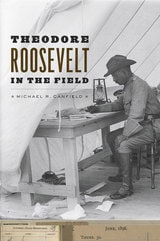
Theodore Roosevelt in the Field
Michael R. Canfield
University of Chicago Press, 2015
Drawing extensively on Roosevelt’s field notebooks, diaries, and letters, Canfield takes readers into the field on adventures alongside him. From Roosevelt’s early childhood observations of ants to his notes on ornithology as a teenager, Canfield shows how Roosevelt’s quest for knowledge coincided with his interest in the outdoors. We later travel to the Badlands, after the deaths of Roosevelt’s wife and mother, to understand his embrace of the rugged freedom of the ranch lifestyle and the Western wilderness. Finally, Canfield takes us to Africa and South America as we consider Roosevelt’s travels and writings after his presidency. Throughout, we see how the seemingly contradictory aspects of Roosevelt’s biography as a hunter and a naturalist are actually complementary traits of a man eager to directly understand and experience the environment around him.
As our connection to the natural world seems to be more tenuous, Theodore Roosevelt in the Field offers the chance to reinvigorate our enjoyment of nature alongside one of history’s most bold and restlessly curious figures.
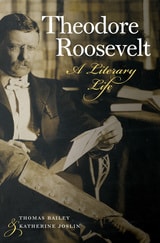
Theodore Roosevelt
A Literary LifeThomas Bailey and Katherine Joslin
University Press of New England, 2018
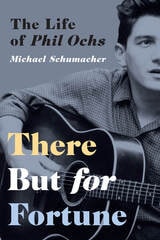
There But for Fortune
The Life of Phil OchsMichael Schumacher
University of Minnesota Press, 2018
The life and influence of singer Phil Ochs
Phil Ochs burst onto the American music scene just as the popularity of folk music was breaking through on the national consciousness. Along with friend and rival Bob Dylan, Ochs wrote some of the most compelling topical music of his time. In There But for Fortune, Michael Schumacher explores the life and career of a singer, songwriter, and political activist whose music resonates today as much as it applied to a divided country a half-century ago. His politically charged songs were covered by Pete Seeger; Joan Baez; Gordon Lightfoot; Peter, Paul and Mary; and a host of others, and such songs as “I Ain’t Marching Anymore” and “The War Is Over” became anthems of the anti–Vietnam War movement. He seemed to be performing everywhere, from concerts on college campuses to huge demonstrations, culminating with an appearance at the Democratic National Convention in Chicago in 1968.
But as this biography illustrates in painstaking detail, Ochs suffered from a dark side that gravely affected his life and music. Diagnosed as manic depressive, he shifted between incredible highs and debilitating lows that ultimately drove him to suicide at age 36. To piece together his life story, Schumacher interviewed Ochs’s friends, family members, and fellow musicians; examined his journals and scrapbooks; and even scrutinized his FBI files. While Phil Ochs’s life might have been plagued by downturn and tragedies, his music is an enduring call to activism and fighting for a better future.
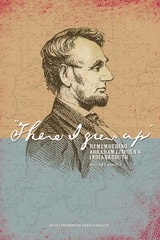
There I Grew Up
Remembering Abraham Lincoln's Indiana YouthWilliam E. Bartelt
Indiana Historical Society Press, 2008
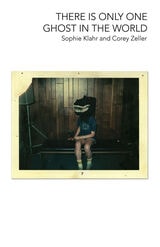
There Is Only One Ghost in the World
Sophie Klahr and Corey Zeller
University of Alabama Press, 2023
One ghost, infinite echoes—where memory, myth, and identity collide.
There Is Only One Ghost in the World follows the fragmented meditations of a multilayered voice, an intimate witness to our times that delicately and bluntly reveals the best and the worst in all of us. It is a kaleidoscopic investigation into the loneliness of modern American life as well as family relationships, exploring the truths and lies that families tell one another, and why, with empathy, sorrow, and humility. We travel from the oil-slicked beaches of California and the alleys of New Orleans to the steps of the Capitol. Here: the raw nerves of gender and identity. Here: the lessons of heartbreak. Here: true myths, fake news, and old rumors. Here: the legacies of art and incisors of seasons. Incompletable Venn diagrams, sibling porn stars, addiction and climate change, shootings and stolen x-rays, the lyrics of disco and the taxonomy of slot machines, steel monoliths and 99-cent stores, last meals and unearthed mummies. There Is Only One Ghost in the World is a book about what happened just before you woke up, and what happened just after. And what happened next.
There Was an Old Woman
Reflections on These Strange, Surprising, Shining YearsAndrea Carlisle
Oregon State University Press, 2023
In these personal essays, Carlisle looks for new ways to bring herself more fully to this time of life, such as daily walks with other women and connecting to the natural world that surrounds her houseboat on an Oregon river at the foot of a forest. She writes about experiences shared with many, if not most, older women: wondering at her body’s transformation, discovering new talents, caregiving, facing loss, tuning in to life patterns and drawing strength through understanding them, letting go (or not) of pieces of the past, and facing other changes large and small. Those curious about, approaching, or living in old age will find wisdom and insight in her unique perspective.
In a voice that rings with clarity, humor, humility, Carlisle shows us that Old Age is not another country where we can expect to find The Old Woman grimly waiting, but is instead an expansion of the borders in the country we’re most familiar with: ourselves.
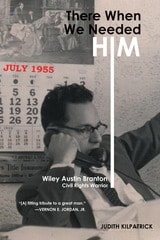
There When We Needed Him
Wiley Austin Branton, Civil Rights WarriorJudith Kilpatrick
University of Arkansas Press, 2007
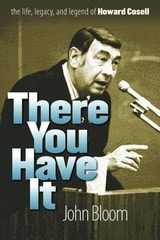
There You Have It
The Life, Legacy, and Legend of Howard CosellJohn Bloom
University of Massachusetts Press, 2010
Raised in Brooklyn in a middle-class Jewish family, Cosell carried with him a deeply ingrained sense of social justice. Yet early on he abandoned plans for a legal career to become a pioneer in sports broadcasting, first in radio and then in television. The first white TV reporter to address the former Cassius Clay by his chosen Muslim name, Cosell was also the first sportscaster to conduct locker room interviews with professional athletes, using a tape recorder purchased with his own money. At the 1968 Olympics in Mexico City, he not only defended the fisted "Black Power" salutes of American track medalists John Carlos and Tommie Smith, but he publicly excoriated Olympic Committee chairman Avery Brundage for "hypocritical," racist policies. He was also instrumental in launching ABC's Monday Night Football, a prime-time sports program that evolved into an American cultural institution.
Yet while Cosell took courageous stands on behalf of civil rights and other causes, he could be remarkably blind to the inconsistencies in his own life. In this way, John Bloom argues, he embodied contradictions that still resonate widely in American society today.
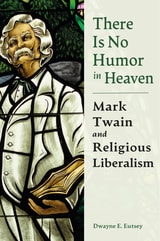
There is No Humor in Heaven
Mark Twain and Religious LiberalismDwayne E. Eutsey
University of Missouri Press, 2025
In There is No Humor in Heaven, Dwayne Eutsey challenges the persistent view of Twain as a hostile critic of religion by placing him within the prevailing liberal religious ethos of his time. From Hannibal to the western frontier and from Hartford to the wider world, Eutsey contends Twain’s vocation as a humorist was rooted in his frustrated youthful ambition to become a preacher of the Gospel. Throughout his life, his friendships with several influential liberal ministers, each of them espousing various forms of the era’s diverse progressive theology, informed not only Twain’s evolving religious worldview but his lecture performances and literary output.
There is No Humor in Heaven traces unconventional theological influences on Twain ranging from African-American spirituality, Freemasonry, and frontier Unitarianism to devout Liberal Christianity, radical Free Religion, and esoteric Hinduism. Drawing from Twain’s writings, documents, personal notes, and more, There is No Humor in Heaven offers readers a radical re-examination of the spiritually creative vitality of a controversial literary giant.
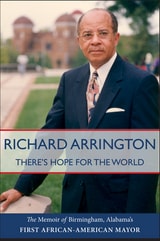
There's Hope for the World
The Memoir of Birmingham, Alabama's First African American MayorRichard Arrington
University of Alabama Press, 2008
On a sultry September morning in 1955, a young African American man, the son of share croppers, boarded a Greyhound bus in Birmingham, Alabama, to leave his home state for the first time in his life. He was headed for the University of Detroit on a teaching scholarship from MilesCollege. Richard Arrington could not have guessed then that his future as a teacher would be postponed for decades by big-city politics--and that he would serve a record-setting five terms as chief executive of Alabama’s largest city.
Under Arrington’s leadership, Birmingham rebuilt itself from a foundering, steel-driven industrial center to one of the most diversified metropolitan areas in the Southeast, with an economy fueled by health care, biomedical research, engineering, telecommunications, and banking. As mayor, Arrington’s economic legacy is impressive. When he left office, Birmingham boasted a record number of jobs and the lowest unemployment rate in its history. Additionally, Birmingham had built the strongest tax base in Alabama, expanded its city limits by 60 square miles, reduced crime to its lowest level in 25 years, and funded a $260 million school construction program. Today Birmingham is financially sound and is the only city in the Southeast with a $100 million endowment fund.
These Boys and Their Fathers
A MemoirDon Waters
University of Iowa Press, 2019
These Boys and Their Fathers touches on Waters’s early life with his single mother—and her string of dysfunctional men—and his later search for and encounters with his father, but it quickly expands into a gripping account of the life of a 1930s pulp writer, also named Don Waters, with whom Waters becomes obsessed. This wildly original book blends memoir, investigative reporting, and fiction to sort out difficult aspects of family, masculinity, and what it means to be a father.
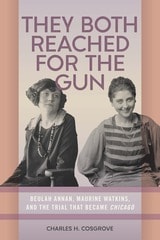
They Both Reached for the Gun
Beulah Annan, Maurine Watkins, and the Trial That Became ChicagoCharles H. Cosgrove
Southern Illinois University Press, 2024
Honorable Mention, 2025 Society of Midland Authors Award in History!
Examining the case that inspired a pop culture phenomenon
In 1924 Beulah Annan was arrested and incarcerated for killing her lover, Harry Kalsted. Six weeks later, a jury acquitted her of murder. Inspired by the sordid event, trial, and acquittal, Maurine Watkins, a reporter at the time, wrote the play Chicago, a Broadway hit that was adapted several times. Through a fresh retelling of the story of Annan and of Watkins’s play, Charles H. Cosgrove provides the first critical examination of the criminal case, and an initial exploration of the era’s social assumptions that made the message of the play so plausible in its own time. His careful historical research challenges the received portrait of Annan as a killer who got away with murder, and of Watkins as a savvy cub reporter and precocious playwright.
In They Both Reached for the Gun, Charles H. Cosgrove expertly combines inquest and police records, and interviews with Annan’s relatives, to analyze the participants, the trial, and the subsequent play. Although no one will ever know what really happened in the Kenwood apartment on Chicago’s south side one hundred years ago, Cosgrove’s interrogation shows how sensationalized Watkins’s writing was. Her reporting on the Annan case perpetuated falsehoods about Annan’s so-called “confession,” and her play gave an inaccurate portrayal of Chicago’s criminal justice system. Despite Watkins’s insistence that her drama revealed the truth about its subjects without any exaggeration, her play depicted police, prosecutors, and judges as the only “good guys” in the story, ignoring those who lied, misled, and used brutal methods to obtain forced confessions.
They Call You Back
A Lost History, A Search, A MemoirTim Z. Hernandez
University of Arizona Press, 2024
A haunting, an obsession, a calling: Tim Z. Hernandez has been searching for people his whole life. Now, in this highly anticipated memoir, he takes us along on an investigative odyssey through personal and collective history to uncover the surprising conjunctions that bind our stories together.
Hernandez’s mission to find the families of the twenty-eight Mexicans who were killed in the 1948 plane wreck at Los Gatos Canyon formed the basis for his acclaimed documentary novel All They Will Call You, which the San Francisco Chronicle dubbed “a stunning piece of investigative journalism,” and the New York Times hailed as “painstaking detective work by a writer who is the descendant of farmworkers.”
In this riveting new work, Hernandez continues his search for the plane crash victims while also turning the lens on himself and his ancestral past, revealing the tumultuous and deeply intimate experiences that have fueled his investigations—a lifelong journey haunted by memory, addiction, generational trauma, and the spirit world.
They Call You Back is the true chronicle of one man’s obsession to restore dignity to an undignified chapter in America’s past, while at the same time making a case for why we must heal our personal wounds if we are ever to heal our political ones.
They Came to Nashville
Marshall Chapman
Vanderbilt University Press, 2010
In They Came to Nashville, Chapman records the personal stories of musicians shaping the modern history of music in Nashville, from the mouths of the musicians themselves. The trials, tribulations, and evolution of Music City are on display, as she sits down with influential figures like Kris Kristofferson, Emmylou Harris, and Miranda Lambert, and a dozen other top names, to record what brought each of them to Nashville and what inspired them to persevere. The book culminates in a hilarious and heroic attempt to find enough free time with Willie Nelson to get a proper interview. Instead, she's brought along on his raucous 2008 tour and winds up onstage in Beaumont, Texas singing "Good-Hearted Woman" with Willie.
They Came to Nashville reveals the daily struggle facing newcomers to the music business, and the promise awaiting those willing to fight for the dream.
Co-published with the Country Music Foundation Press
They Don't Want Her There
Fighting Sexual and Racial Harassment in the American UniversityCarolyn Chalmers
University of Iowa Press, 2022
As Jew gained accolades and advanced through the ranks at Iowa, she was met with increasingly vicious attacks on her character by her white male colleagues—implying that her sexuality had opened doors for her. After years of being subjected to demoralizing sexual, racial, and ethnic discrimination, finding herself without any higher-up departmental support, and noting her professional progression beginning to suffer by the hands of hate, Jean Jew decided to fight back. Carolyn Chalmers was her lawyer.
This book tells the inside story of pioneering litigation unfolding during the eight years of a university investigation, a watershed federal trial, and a state court jury trial. In the face of a university determined to defeat them and maintain the status quo, Jew and Chalmers forged an exceptional relationship between a lawyer and a client, each at the top of their game and part of the first generation of women in their fields. They Don’t Want Her There is a brilliant, original work of legal history that is deeply personal and shows today’s professional women just how recently some of our rights have been won—and at what cost.
They Met at Wounded Knee
The Eastmans' StoryGretchen Cassel Eick
University of Nevada Press, 2020
They Raised Me Up
A Black Single Mother and the Women Who Inspired HerCarolyn Marie Wilkins
University of Missouri Press, 2013
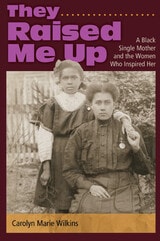
At the height of the cocaine-fueled 1980s, Carolyn Wilkins left a disastrous marriage in Seattle and, hoping to make it in the music business, moved with her four-year-old daughter to a gritty working-class town on the edge of Boston. They Raised Me Up is the story of her battle to succeed in the world of jam sessions and jazz clubs—a man’s world where women were seen as either sex objects or doormats. To survive, she had to find a way to pay the bills, overcome a crippling case of stage fright, fend off a series of unsuitable men, and most important, find a reliable babysitter.
Alternating with Carolyn’s story are the stories of her ancestors and mentors—five musically gifted women who struggled to realize their dreams at the turn of the twentieth century:
Philippa Schuyler, whose efforts to “pass” for white inspired Carolyn to embrace her own black identity despite her “damn near white” appearance and biracial child;
Marjory Jackson, the musician and single mother whose dark complexion and flamboyant lifestyle raised eyebrows among her contemporaries in the snobby, color-conscious world of the African American elite;
Lilly Pruett, the daughter of an illiterate sharecropper whose stunning beauty might have been her only ticket out of the “Jim Crow” South;
Ruth Lipscomb, the country girl who dreamed, against all odds, of becoming a concert pianist and realized her improbable ambition in 1941;
Alberta Sweeney, who survived a devastating personal tragedy by relying on the musical talent and spiritual stamina she had acquired growing up in a rough-and-tumble Kansas mining town.
They Raised Me Up interweaves memoir with family history to create an entertaining, informative, and engrossing read that will appeal to anyone with an interest in African American or women’s history or to readers simply looking for an intriguing story about music and family.
Thieving Three-Fingered Jack
Transatlantic Tales of a Jamaican Outlaw, 1780-2015Botkin, Frances R.
Rutgers University Press, 2018
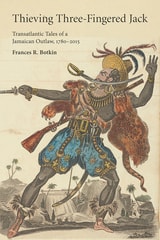
The fugitive slave known as “Three-Fingered Jack” terrorized colonial Jamaica from 1780 until vanquished by Maroons, self-emancipated Afro-Jamaicans bound by treaty to police the island for runaways and rebels. A thief and a killer, Jack was also a freedom fighter who sabotaged the colonial machine until his grisly death at its behest. Narratives about his exploits shed light on the problems of black rebellion and solutions administered by the colonial state, creating an occasion to consider counter-narratives about its methods of divide and conquer. For more than two centuries, writers, performers, and storytellers in England, Jamaica, and the United States have “thieved" Three Fingered Jack's riveting tale, defining black agency through and against representations of his resistance.
Frances R. Botkin offers a literary and cultural history that explores the persistence of stories about this black rebel, his contributions to constructions of black masculinity in the Atlantic world, and his legacies in Jamaican and United States popular culture.
Things No Longer There
A Memoir of Losing Sight and Finding VisionSusan Krieger
University of Wisconsin Press, 2005
Krieger's touching memoir explores the ways that outer landscapes may change and sight may be lost, but inner visions persist, giving meaning, jarring the senses with a very different picture than what appears before the eyes. This book will reward both the general reader and those interested in disability studies, feminist ethnography, and lesbian studies.
Things You Need to Hear
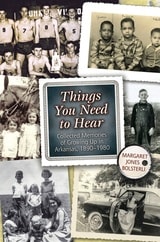
Collected Memories of Growing Up in Arkansas, 1890–1980Margaret Jones Bolsterli
University of Arkansas Press, 2016