Results by title
3745 books match the query 'Europe' and 973 start with t

The Travels of Reverend Olafur Egilsson
Karl Smari Hreinsson
Catholic University of America Press, 2016

The Trial of Charles I
A Documentary HistoryEdited by David Lagomarsino and Charles T. Wood
Dartmouth College Press, 1989

The Trial of the Germans
An Account of the Twenty-two Defendants before the International Military Tribunal at NurembergEugene Davidson
University of Missouri Press, 1997
The "definitive one-volume study of Nuremberg," The Trial of the Germans is now available in paperback. An astute observer of the Nuremberg trial, Eugene Davidson has struggled with the issues it raised: Was it a necessary response to the heinous crimes of the Third Reich? How were Germany and the Germans capable of such extraordinary evil? Was the trial just, given the claims that the defendants were simply serving their country, doing as they had been told to do? And if not just, was it nonetheless necessary as a warning to prevent future crimes against humanity? Davidson's approach to these and other large questions of justice is made through examination of each of the defendants in the trial. His reluctant, but firm, conclusion is: "In a world of mixed human affairs where a rough justice is done that is better than lynching or being shot out of hand, Nuremberg may be defended as a political event if not as a court." Some sentences may have seemed too severe, but none was harsher than the punishments meted out to innocent people by the regime these men served. "In a certain sense," says Davidson, "the trial succeeded in doing what judicial proceedings are supposed to do: it convinced even the guilty that the verdict against them was just."
Faulty as the trial was from the legal point of view, a catharsis of the pent-up emotions of millions of people had to be provided and a record of what had taken place duly preserved for whatever use later generations would make of it.

The Trials of Richard Goldstone
Terris, Daniel
Rutgers University Press, 2019
The Trials of Richard Goldstone tells the story of this extraordinary individual and the price he paid for his convictions. It describes how Goldstone, working as a judge in apartheid South Africa, helped to undermine this unjust system and later, at Nelson Mandela’s request, led a commission that investigated cases of racial violence and intimidation. It also considers the international renown he received as the chief United Nations prosecutor for war crimes committed in Rwanda and the former Yugoslavia, the first tribunals to try political and military leaders on charges of genocide. Finally, it explores how Goldstone became a controversial figure in the wake of the Jewish jurist’s powerful, but flawed, investigation of Israel for alleged war crimes in Gaza.
Richard Goldstone’s dramatic life story reveals that even in a world rife with prejudice, nationalism, and contempt for human rights, one courageous man can advance the cause of justice.
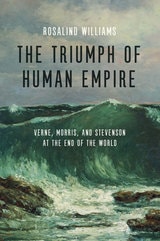
The Triumph of Human Empire
Verne, Morris, and Stevenson at the End of the WorldRosalind Williams
University of Chicago Press, 2013
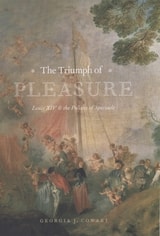
The Triumph of Pleasure
Louis XIV and the Politics of SpectacleGeorgia J. Cowart
University of Chicago Press, 2008
With bold revisionist strokes, Cowart traces this strain of artistic dissent through the comedy-ballets of Jean-Baptiste Lully and Molière, the late operatic works of Lully and the operas of his sons, the opera-ballets of André Campra and his contemporaries, and the related imagery of Antoine Watteau’s well-known painting The Pilgrimage to Cythera. She contends that through a variety of means, including the parody of old-fashioned court entertainments, these works reclaimed traditional allegories for new ideological aims, setting the tone for the Enlightenment. Exploring these arts from the perspective of spectacle as it emerged from the court into the Parisian public sphere, Cowart ultimately situates the ballet and related genres as the missing link between an imagery of propaganda and an imagery of political protest.
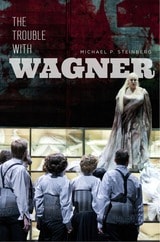
The Trouble with Wagner
Michael P. Steinberg
University of Chicago Press, 2018
Drawing on decades of engagement with Wagner and of experience teaching opera across disciplines, The Trouble with Wagner is packed with novel insights for experts and interested readers alike.
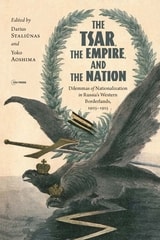
The Tsar, The Empire, and The Nation
Dilemmas of Nationalization in Russia's Western Borderlands, 1905-1915Darius Staliunas
Central European University Press, 2021
This collection of essays addresses the challenge of modern nationalism to the tsarist Russian Empire. First appearing on the empire’s western periphery this challenge, was most prevalent in twelve provinces extending from Ukrainian lands in the south to the Baltic provinces in the north, as well as to the Kingdom of Poland.
At issue is whether the late Russian Empire entered World War I as a multiethnic state with many of its age-old mechanisms run by a multiethnic elite, or as a Russian state predominantly managed by ethnic Russians. The tsarist vision of prioritizing loyalty among all subjects over privileging ethnic Russians and discriminating against non-Russians faced a fundamental problem: as soon as the opportunity presented itself, non-Russians would increase their demands and become increasingly separatist.
The authors found that although the imperial government did not really identify with popular Russian nationalism, it sometimes ended up implementing policies promoted by Russian nationalist proponents. Matters addressed include native language education, interconfessional rivalry, the “Jewish question,” the origins of mass tourism in the western provinces, as well as the emergence of Russian nationalist attitudes in the aftermath of the first Russian revolution.
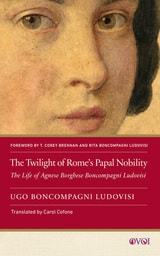
The Twilight of Rome's Papal Nobility
The Life of Agnese Borghese Boncompagni LudovisiUgo Boncompagni Ludovisi (1856–1935)
Rutgers University Press, 2025
First privately published in 1921, The Twilight of Rome's Papal Nobility provides an intimate look at a family who grew up accustomed to almost unimaginable wealth, power, and glamour. A descendant of two popes, Ugo Boncompagni Ludovisi recounts the life story of his mother Agnese, who was raised in a palace full of priceless artwork, including pieces by Caravaggio and Michelangelo. We get a window into Agnese's private life—her girlhood, marriage, and raising of several children—as her public life becomes increasingly tumultuous amid the family’s struggles to retain its property. A tender elegy to a bygone era, Boncompagni Ludovisi's story provides a unique perspective on Italian history and Rome’s urban redevelopment.
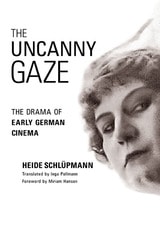
The Uncanny Gaze
The Drama of Early German CinemaHeide Schlupmann. Translated by Inga Pollmann. Foreword by Miriam Hansen.
University of Illinois Press, 2010
Heide Schlüpmann's classic study of early German cinema was published in German as Unheimlichkeit des Blicks: Das Drama des Frühen deutschen Kinos in 1990. For the first time in English, this translation makes available her feminist examination of German cinema and Germany in the sociopolitical context of Wilhelmine society. By examining then-unknown pre-World War I narrative films, this study paints a picture of the conflicted early years of the German cinema. During this period cinema and film production were able to develop independently from the cultural bourgeoisie and relied on those forces excluded from high "culture": technology, business, performers, showmen, and actors. In cinema, the dime novel and kitsch were exhibited for all, and the internationalism of modernity prevailed over the prevailing nationalism of the period.
Featuring a foreword by film scholar Miriam Hansen and a new afterword by Schlüpmann, this volume performs a critical perusal of film commentary and offers an in-depth look at little-known films in early German cinema.
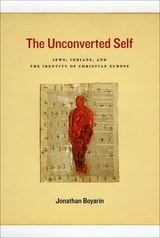
The Unconverted Self
Jews, Indians, and the Identity of Christian EuropeJonathan Boyarin
University of Chicago Press, 2009
Europe’s formative encounter with its “others” is still widely assumed to have come with its discovery of the peoples of the New World. But, as Jonathan Boyarin argues, long before 1492 Christian Europe imagined itself in distinction to the Jewish difference within. The presence and image of Jews in Europe afforded the Christian majority a foil against which it could refine and maintain its own identity. In fundamental ways this experience, along with the ongoing contest between Christianity and Islam, shaped the rhetoric, attitudes, and policies of Christian colonizers in the New World.
The Unconverted Self proposes that questions of difference inside Christian Europe not only are inseparable from the painful legacy of colonialism but also reveal Christian domination to be a fragile construct. Boyarin compares the Christian efforts aimed toward European Jews and toward indigenous peoples of the New World, bringing into focus the intersection of colonial expansion with the Inquisition and adding significant nuance to the entire question of the colonial encounter.
Revealing the crucial tension between the Jews as “others within” and the Indians as “others without,” The Unconverted Self is a major reassessment of early modern European identity.
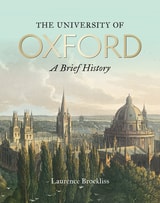
The University of Oxford
A Brief HistoryLaurence Brockliss
Bodleian Library Publishing, 2018
This book offers a succinct illustrated account of the university’s colorful and controversial eight-hundred-year history, from medieval times through the Reformation and on to the nineteenth century, in which the foundations of the modern tutorial system were laid. It describes the extraordinary and influential people who shaped the development of the institution and helped to create today’s world-class research university.
Richly illustrated with archival material, prints, and portraits, this book explores how a university in a small provincial town rose to become one of the top universities in the world at the beginning of the twenty-first century.
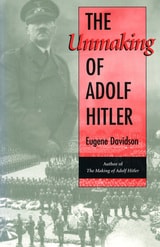
The Unmaking of Adolf Hitler
Eugene Davidson
University of Missouri Press, 2003
Available only in the USA and Canada.
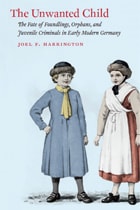
The Unwanted Child
The Fate of Foundlings, Orphans, and Juvenile Criminals in Early Modern GermanyJoel F. Harrington
University of Chicago Press, 2009
The baby abandoned on the doorstep is a phenomenon that has virtually disappeared from our experience, but in the early modern world, unwanted children were a very real problem for parents, government officials, and society. The Unwanted Child skillfully recreates sixteenth-century Nuremberg to explore what befell abandoned, neglected, abused, or delinquent children in this critical period.
Joel F. Harrington tackles this question by focusing on the stories of five individuals. In vivid and poignant detail, he recounts the experiences of an unmarried mother-to-be, a roaming mercenary who drifts in and out of his children’s lives, a civic leader handling the government’s response to problems arising from unwanted children, a homeless teenager turned prolific thief, and orphaned twins who enter state care at the age of nine. Braiding together these compelling portraits, Harrington uncovers and analyzes the key elements that link them, including the impact of war and the vital importance of informal networks among women. From the harrowing to the inspiring, The Unwanted Child paints a gripping picture of life on the streets five centuries ago.
The Unwanted
European Refugees From 1St World WarMichael Marrus
Temple University Press, 2001

The Upside-Down Forest
The Vanished Souls Duology, Book 2Richard Zimler
Tagus Press, 2027
When cruelty is sanctified, betrayal is rewarded as virtue, and the innocent must hide their true identities to survive, seventeen-year-old Isaaque Zarco struggles to preserve the principles he lives by and protect the people he loves in this luminous and deeply moving conclusion to The Vanished Souls duology.
As Isaaque attempts to put his life back together, mysteries and conflicts continue to haunt him, most prominently his father’s inexplicable rejection and the knowledge that his survival depends on concealing his identity and faith.
His world is shaken by a letter saying his grandmother, Flor, has been arrested. Unable to abandon the woman who guided him throughout his childhood, Isaaque crosses into Spain, entering a society ruled by fear and deception, where anonymous accusations carry the force of law and compassion itself has become an act of defiance. Flor has been transferred to a prison in Madrid. She has been physically broken by imprisonment. Isaaque learns that, under torture, she revealed the names of two of his oldest friends as secret Jews. Racing back to his home village, he embarks on a desperate attempt to help them escape before the Inquisition comes for them.
The Upside-Down Forest portrays a society in which slander is revered as truth, mercy is condemned as weakness, and persecution masquerades as justice. Giving voice to victims whose suffering has too often been erased from history, Richard Zimler explores how systems of fear corrupt not only institutions but also the bonds between family, friends, and neighbors. Ultimately, it asks what remains of our humanity when the moral order itself has been turned upside down—and whether a life shaped by love, loyalty, and compassion can still endure when survival itself demands treachery and betrayal.
The Urbanization of Opera
Music Theater in Paris in the Nineteenth CenturyAnselm Gerhard
University of Chicago Press, 1998
"An invaluable look at this fascinating genre."—George W. Loomis, Opera News

The Utility of Splendor
Ceremony, Social Life, and Architecture at the Court of Bavaria, 1600-1800Samuel John Klingensmith
University of Chicago Press, 1993
Drawing on a broad range of sources, including building documents, correspondence, diaries, and court regulations, Klingensmith investigates the intricacies of Bavarian court practice and shows that Versailles was only one among several influences on German palace planning. Klingensmith offers a cogent, detailed understanding of the relations between architectural spaces and the ceremonial, social, and private life that both required and used them. Handsomely illustrated with photographs and plans, The Utility of Splendor will appeal to anyone interested in how life was lived among the nobility during the last centuries of the old regime.
Samuel John Klingensmith (1949-1986) was assistant professor of art history at Tulane University.
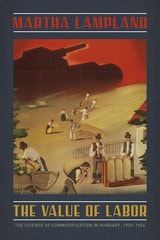
The Value of Labor
The Science of Commodification in Hungary, 1920-1956Martha Lampland
University of Chicago Press, 2016
Lampland trains her eye on the scientific claims of modern economic modeling, using Hungary’s unique vantage point to show how theories, policies, and techniques for commodifying agrarian labor that were born in the capitalist era were adopted by the socialist regime as a scientifically designed wage system on cooperative farms. Paying attention to the specific historical circumstances of Hungary, she explores the ways economists and the abstract notions they traffic in can both shape and be shaped by local conditions, and she compellingly shows how labor can be commodified in the absence of a labor market. The result is a unique account of economic thought that unveils hidden but necessary continuities running through the turbulent twentieth century.
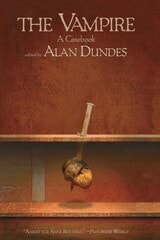
The Vampire
A CasebookEdited by Alan Dundes
University of Wisconsin Press, 1998
Vampires are the most fearsome and fascinating of all creatures of folklore. For the first time, detailed accounts of the vampire and how its tradition developed in different cultures are gathered in one volume by eminent folklorist Alan Dundes. Eleven leading scholars from the fields of Slavic studies, history, anthropology, and psychiatry unearth the true nature of the vampire from its birth in graveyard lore to the modern-day psychiatric patient with a penchant for drinking blood.
The Vampire: A Casebook takes this legend out of the realm of literature and film and back to its dark beginnings in folk traditions. The essays examine the history of the word “vampire;” Romanian vampires; Greek vampires; Serbian vampires; the physical attributes of vampires; the killing of vampires; and the possible psychoanalytic underpinnings of vampires. Much more than simply a scary creature of the human imagination, the vampire has been and continues to haunt the lives of all those who encounter it—in reality or in fiction.
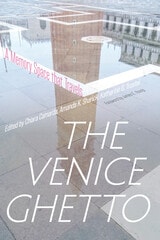
The Venice Ghetto
A Memory Space that TravelsEdited by Chiara Camarda, Amanda K. Sharick, and Katharine G. Trostel
University of Massachusetts Press, 2022
This interdisciplinary collection engages with questions about the history, conditions, and lived experience of the Venice Ghetto, including its legacy as a compulsory, segregated, and enclosed space. Contributors also consider the ghetto's influence on the figure of the Renaissance moneylender, the material culture of the ghetto archive, the urban form of North Africa's mellah and hara, and the ghetto's impact on the writings of Primo Levi and Marjorie Agosín.
In addition to the volume editors, The Venice Ghetto features a foreword from James E. Young and contributions from Shaul Bassi, Murray Baumgarten, Margaux Fitoussi, Dario Miccoli, Andrea Yaakov Lattes, Federica Ruspio, Michael Shapiro, Clive Sinclair, and Emanuela Trevisan Semi.

The Viceregency of Antonio María Bucareli in New Spain, 1771–1779
By Bernard E. Bobb
University of Texas Press, 1962
When Antonio María Bucareli took up his duties in 1771 as the forty-sixth viceroy of New Spain, he assumed command of a magnificent complexity of land areas, large and small, whose people constituted a cultural and social entity ranging from the traditional Apache to the European gentleman of the Enlightenment.
He governed a key area at a significant time. Shortly before Bucareli's arrival in Mexico, José de Gálvez had completed an intensive inspection of the country, had instituted many reforms, and was ready to present the new viceroy with progressive policies for administrative reorganization.
How Bucareli, a loyal, indefatigable Spanish aristocrat, reacted to the new order is the particular concern of this book. It examines the actions and reflections of this cautious and conservative man as they relate to certain major problems of his administration: defense, the colonization of the Californias, mining, the Roman Catholic Church, the interior provinces, and—above all—filling Spanish coffers with Mexican pesos as resurgent Spain strove to regain her former position in world affairs.
The period of Bucareli's viceregency is seen as a transitional one, during which the seeds of the Enlightenment, of change, even of rebellion, were sown but had not yet begun to sprout. Bucareli, conservative by nature and training, continued to administer New Spain on the basis of a well-established and traditional system, although he supported changes of mere modification or those offering greater efficiency. Evidence of his dual success is the fact that revenues climbed steadily during his tenure and that Charles III was exceptionally pleased with his performance, while at the same time he won from people of all stations a degree of respect and affection far beyond that usually accorded to a viceroy.
Prior to the publication of Bucareli, only two other full-scale studies of Spanish viceroys existed, and both of them were concerned with sixteenth-century officials. The appearance of this book, providing at once a study of an important figure and of the system of viceregal administration as it had developed by the latter part of the eighteenth century, filled a long-existing gap in Latin American literature.
The heart of this study comes from the prodigious correspondence that passed between the Viceroy and Madrid. Authority for most statements was found in the thousands of documents that the author perused in the Archivo General de Indies in Seville and in the Archivo General de la Nación in Mexico City.

The Victoria County History of Herefordshire
BosburyJanet Cooper
University of London Press, 2016
The Victoria History of Essex
Harwich, Dovercourt and Parkeston in the 19th CenturyAndrew Senter Andrew Morrell
University of London Press, 2019
The Victoria History of Essex
NewportEdited by Anthony Tuck
University of London Press, 2015
This book explores the varying character of Newport over eleven centuries. It examines the changing patterns of landownership, social structure and economy of the village and its institutions, not least its 16th-century grammar school. It also discusses the part played, especially in the 18th, 19th and 20th centuries, by the owners of Shortgrove Hall, within the parish, and Quendon Hall, a few miles to the south.
The Victoria History of Essex
Southend: Victorian Town and ResortKen Crowe
University of London Press, 2025
The story of Southend’s growth as a town and resort in the Victorian and Edwardian periods is told here in this new history of Southend.
As the nearest seaside resort to London, the town’s development has been determined in large part by the impact of its seasonal visitors. Yet it was the year-round movement of people from other parts of Essex, England and from the European continent in the late-nineteenth and early-twentieth-centuries that was to have a lasting effect on the character of the town.
Richly illustrated and drawing from original sources, this volume offers new perspectives on the developments that laid the foundations of Southend as we know it today. Its thematic chapters chart the physical expansion of housing in the period and the development of the resort’s infrastructure and economy, among other topics. Although concentrating on Southend and its resort, chapters on agricultural depression and land speculation, education, clubs and societies and unemployment expand the book’s regional focus to neighbouring areas, making this valuable reading for anyone interested in the history of Essex and the UK’s seaside towns.
The Victoria History of Gloucestershire
Cheltenham Before the SpaEdited by Alex Craven and with Beth Hartland
University of London Press, 2018
The Victoria History of Gloucestershire
YateRose Wallis
University of London Press, 2015
During the 1950s a 'new town' plan was devised which carefully controlled Yate's expansion, and included pioneering housing estate design, diverse industrial development and a large and progressive shopping mall. Yate's boundaries were redrawn in 1988, and the population of this vibrant, modern town now exceeds 20,000.
The Victoria History of Hampshire
Cliddesden, Hatch and Farleigh WallopAlison Deveson and Sue Lane
University of London Press, 2018
The Victoria History of Hampshire
MapledurwellJohn Hare, Jean Morrin, and Stan Waight
University of London Press, 2015
The Victoria History of Hampshire
Medieval BasingstokeJohn Hare
University of London Press, 2017
The Victoria History of Hampshire
SteventonJean Morrin
University of London Press, 2016
But the village had a rich history before and after its famous novelist and there are many other reasons to enjoy this book. Steventon is a typical southern chalkland settlement whose history provides examples of downland agriculture, of agricultural improvements, a scandalous landlord who was driven out of the village by his son and excommunicated by the archbishop of Canterbury, a new Victorian manor house, of landlord–tenant relations and much else. It discusses the social, economic and religious lives of the ordinary people of the village together with the lords of the manor.
This is the second parish history to be published by the new Victoria History of Hampshire group, providing scholarly studies of individual places. It should be of interest to those living in and beyond the county. The first new parish history by the group, Mapledurwell, was published in 2012.

The Victoria History of Herefordshire
ColwallJames Bowen
University of London Press, 2020
Discussing well-known landmarks, such as the Iron Age British Camp and the nearby mineral springs, this local history provides a narrative of the village’s development through the age of the landed gentry between the fifteenth and seventeenth centuries, the agricultural era of the eighteenth century, and the development of a spa economy in the mid-nineteenth century. Industrialization changed the town, with new railway infrastructure, tunnels, and the 1892 opening of the Schweppes bottling plant at Colwall Stone. Today, Colwall’s rural location and beautiful scenery continue to attract both visitors and new residents to the town, making this text a valuable resource for tourists and locals alike.
The Victoria History of Herefordshire
CradleyAnastasia Stylianou and Fergus Eskola-Oakes
University of London Press, 2025
Scenic and rural, the parish of Cradley stretches down westwards from the Malvern Hills, bordered by Worcestershire to the north and east. It is one of the largest parishes in Herefordshire, and from the medieval period to the nineteenth century was populous and prosperous. Cradley manor was a valuable holding of the medieval bishops of Hereford. The ecclesiastical benefice, Anglo-Saxon in origin, was equally lucrative, frequently passing nepotistically to well-connected young priests; however, such connections did not prevent one thirteenth-century rector being outlawed for murder! The expanding number of manors in the parish, from the thirteenth century onwards, resulted in a fragmented model of land ownership and the development of a powerful body of wealthy yeomanry, shaping the distinctive character of the parish and its governance in the early modern period.
Drawing extensively on local archival sources, this volume analyses, among other topics, the centrality of agriculture to the parish's story, charting Cradley's socio-economic growth from the sixteenth to nineteenth centuries, before its subsequent decline. As such, this book constitutes an important contribution to English local history, exploring the prosperity that could be enjoyed by parishes in fertile Eastern Herefordshire, and the impact of changes in the national economy upon rural, agrarian communities.
The Victoria History of Herefordshire
EastnorJanet Cooper
University of London Press, 2013
The Victoria History of Leicestershire
Buckminster and SewsternPamela J. Fisher
University of London Press, 2017
The Victoria History of Leicestershire
Castle DoningtonPamela J. Fisher and J.M. Lee
University of London Press, 2016
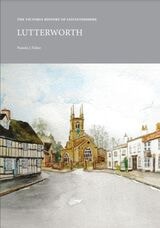
The Victoria History of Leicestershire
LutterworthPamela J. Fisher
University of London Press, 2022
From before the Norman Conquest to the development of the jet engine, this volume tells the history of Lutterworth, a small market town in the southwest of Leicestershire. A combination of factors ensured the town’s success, including its position linking the rich agricultural land of south Leicestershire with the Warwickshire Arden and its natural resources of wood and coal. Lutterworth also played a role on the national stage, first in 1428, when the bones of the town rector, the theologian John Wyclif, were disinterred and desecrated on the instructions of the Pope. Lutterworth also made headlines between 1937 and 1942, when Frank Whittle developed the jet engine in a disused foundry in the town.
This book focuses on the people of Lutterworth and the roles they played in shaping the economy, schools, hospitals, churches, and the social life of the community. The evolution and development of the town are described in these pages, from its humble beginnings to the challenges it faces today.
The Victoria History of Middlesex
Knightsbridge and HydePamela Taylor
University of London Press, 2017
The Victoria History of Middlesex
St Clement Danes, 1660-1900Edited by Francis Boorman
University of London Press, 2018
The Victoria History of Middlesex
St George Hanover SquareFrancis Calvert Boorman
University of London Press, 2024
The parish of St George Hanover Square encompasses the wealthy London neighborhoods of Mayfair, Belgravia, and Pimlico, as well as part of Hyde Park. This book relates the history of the parish, from its inception in 1725 to its abolition with the establishment of the London County Council in 1900. The area was transformed through rapid urbanization from largely undeveloped fields on the western fringe of London into one of the most affluent parts of the metropolis, with developments centered on a series of grand squares, including Hanover, Grosvenor, and Belgrave Squares. Through detailed thematic treatments, the book explores the local government of the vestry, as well as institutions such as schools and charities and St George’s Hospital, which is now based in South London. The wider political culture and the economy of the parish are also given their due, from the aristocrats and servants of Mayfair to the industries on the bank of the Thames, including factories and a distillery. Finally, it covers the religious life of the parish, the erection of new churches and chapels, and its division into ecclesiastical parishes and subdistricts as its population boomed in the nineteenth century.
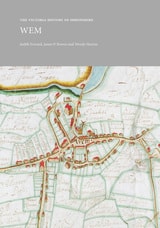
The Victoria History of Shropshire
WemJudith Ann Everard and James Bowen
University of London Press, 2020

The Victorian Eye
A Political History of Light and Vision in Britain, 1800-1910Chris Otter
University of Chicago Press, 2008
The Victorian Eye’s innovative interdisciplinary approach—and generous illustrations—will captivate a range of readers interested in the history of modern Britain, visual culture, technology, and urbanization.
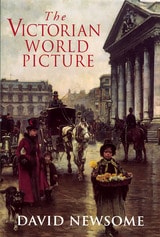
The Victorian World Picture
Newsome, David
Rutgers University Press, 1997
When did the Victorians come to regard themselves as "Victorians" and to use that term to describe the period in which they were living? David Newsome's monumental history takes a good, long look at the Victorian age and what distinguishes it so prominently in the history of both England and the world. The Victorian World Picture presents a vivid canvas of the Victorians as they saw themselves and as the rest of the world saw them.
The Victorian era was a time of unprecedented population growth and massive industrialization. Darwinian theory shook people's religious beliefs and foreign competition threatened industry and agriculture. The transformation of this nineteenth-century world was overhwelming, pervading the social, cultural, intellectual, economic, and political spheres. By the time of the Great Exhibition in 1851, the British were calling themselves Victorians and Prince Albert was able to proclaim, "We are living at a period of most wonderful transition." David Newsome weaves all these strands of Victorian life into a compelling evocation of the spirit of a fascinating time that laid the foundation for the modern age.
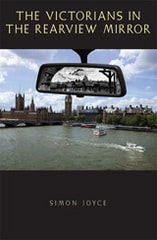
The Victorians in the Rearview Mirror
Simon Joyce
Ohio University Press, 2007
When Margaret Thatcher called in 1979 for a return to Victorian values such as hard work, self-reliance, thrift, and national pride, Labour Party leader Neil Kinnock responded that “Victorian values” also included “cruelty, misery, drudgery, squalor, and ignorance.”
The Victorians in the Rearview Mirror is an in-depth look at the ways that the twentieth century reacted to and reimagined its predecessor. It considers how the Victorian inheritance has been represented in literature, politics, film, and visual culture; the ways in which modernists and progressives have sought to differentiate themselves from an image of the Victorian; and how conservatives (and some liberals) have sought to revive elements of nineteenth-century life. Nostalgic and critical impulses combine to fix an understanding of the Victorians in the popular imagination.
Simon Joyce examines heritage culture, contemporary politics, and the “neo-Dickensian” novel to offer a more affirmative assessment of the Victorian legacy, one that lets us imagine a model of social interconnection and interdependence that has come under threat in today’s politics and culture.
Although more than one hundred years have passed since the death of Queen Victoria, the impact of her time is still fresh. The Victorians in the Rearview Mirror speaks to diverse audiences in literary and cultural studies, in addition to those interested in visual culture and contemporary politics, and situates detailed close readings of literary and cinematic texts in the context of a larger argument about the legacies of an era not as distant as we might like to think.

The Victorious Counterrevolution
The Nationalist Effort in the Spanish Civil WarMichael Seidman
University of Wisconsin Press, 2011
This groundbreaking history of the Spanish Civil War (1936–39) examines, for the first time in any language, how General Francisco Franco and his Nationalist forces managed state finance and economic production, and mobilized support from elites and middle-class Spaniards, to achieve their eventual victory over Spanish Republicans and the revolutionary left.
The Spanish Nationalists are exceptional among counter-revolutionary movements of the twentieth century, Michael Seidman demonstrates, because they avoided the inflation and shortages of food and military supplies that stymied not only their Republican adversaries but also their counter-revolutionary counterparts—the Russian Whites and Chinese Nationalists. He documents how Franco’s highly repressive and tightly controlled regime produced food for troops and civilians; regular pay for soldiers, farmers, and factory workers; and protection of property rights for both large and small landowners. These factors, combined with the Nationalists’ pro-Catholic and anti-Jewish propaganda, reinforced solidarity in the Nationalist zone.
Seidman concludes that, unlike the victorious Spanish Nationalists, the Russian and Chinese bourgeoisie were weakened by the economic and social upheaval of the two world wars and succumbed in each case to the surging revolutionary left.
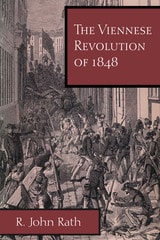
The Viennese Revolution of 1848
By R. John Rath
University of Texas Press, 1957
Liberalism, in the nineteenth-century sense of the term, came to Austria much later than it came to western Europe, for it was not until the 1840s that the industrial revolution reached the Hapsburg Empire, bringing in its train miserable working conditions and economic upheaval, which created bitter resentment among the working classes and a longing for a Utopia that would cure the ills of mankind.
This new-found liberalism, largely self-contained and uninfluenced by liberal movements outside the empire, centered mainly in the idea of individual freedom and constitutional monarchism. In the end, the revolution failed because the moderates proved too weak to control the radical excesses, and the radicals in growing desperation tried to turn the rebel idea into a democratic and, at the extreme, a republican one. Fear of this extremism finally drove the moderates into the counterrevolutionary camp.
Since the Viennese rebels fought to achieve many of the goals fundamental to democracy, historians have generally tended to idealize the revolutionaries and forget their shortcomings. R. John Rath has sought to evaluate the revolution from the point of view of the political ideologies of 1848 rather than those of the mid-twentieth century. Moreover, he has clearly and objectively stated the case for both the left and the right, pointing out the failures and shortcomings of each.
At its publication, this was the first detailed English-language book on the Viennese Revolution of 1848 in more than a hundred years. The author has not confined himself to the bare bones of history. In his descriptions of the times and lively portrayals of the chief actors of the revolution, he has vividly restaged a drama of an ideal that failed.

The View from the Hill
Four Seasons in a Walker’s BritainChristopher Somerville
Haus Publishing, 2023
In Christopher Somerville’s workroom is a case of shelves that holds four hundred and fifty notebooks. Their pages are creased and stained with mud, blood, flattened insects, beer glass rings, smears of plant juice, and gallons of sweat. Everything Somerville has written about walking the British countryside has had its origin in these little black and red books.
During the lockdowns and enforced isolation of the COVID-19 pandemic, Somerville began to revisit this treasury of notes, spanning forty years of exploring on foot. The View from the Hill pulls together the best of his written collections, following the cycle of the seasons from a freezing January on the Severn Estuary to the sight of sunrise on Christmas morning from inside a prehistoric burial mound. In between are hundreds of walks to discover toads in a Cumbrian spring, trout in a Hampshire chalk stream, a lordly red stag at the autumn rut on the Isle of Mull, and three thousand geese at full gabble in the wintry Norfolk sky. Somerville’s writing enables readers to enjoy these magnificent walks without stirring from the comfort of home.
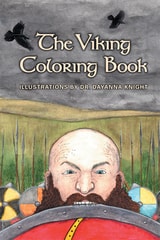
The Viking Coloring Book
Dayanna Knight
Arizona Center for Medieval and Renaissance Studies, 2017
What do you think of when you think of the Vikings? Fierce warriors? Sailors of magnificent dragon-prowed ships who terrorized North-Western Europe? Do you think of darkened halls thick with smoke and song?
Like all people those researchers now consider to be Viking were much more complex than the modern world sees them as. This coloring book is meant to show that. It is designed to provide scenes of the beauty of the early medieval world the Vikings inhabited. It is in this context that Viking cultures developed. You will find artifacts and animals, plants and landscapes within these pages to explore. Species that held some use to the Vikings, such as those that provided fur in particular have been focused on. Reconstructed scenes are inspired by the diverse world experienced in the north. There are no horned helmets here. The real Vikings were much more practical than that.

The Village Project
Rural Revitalization in Contemporary BulgariaSarah Craycraft
University of Wisconsin Press, 2026
Since the collapse of socialism, Bulgaria’s population has been on the move—out of rural regions and into cities, or out of the country altogether. Yet today there is a countermovement of young, urban Bulgarians, born around 1989, seeking to repopulate rural villages and reclaim traditional Bulgarian folklife. Though many of these young Bulgarians have no direct experience with a rural lifestyle nor memories of thriving village life, their actions and movements are inspired by a nostalgic vision of the past. And so, beyond a spatial return, this rural revitalization movement speaks to visions of an alternate future, one sparked by dismay with the conditions of contemporary life.
Using ethnographic and folkloristic methods, Sarah Craycraft paints a complex, detailed picture of responses to Europeanization, carried out through neoliberal folklife projects as they collide with ongoing efforts to build a revitalized rural Bulgaria in the ruins of the past. Contextualized within a particular Southeast European nation, the study speaks to broader questions of rural revival, public-facing culture work, intergenerational folklore, and the imbrication of folklore with politics and culture.