Results by title
8812 books match the query 'Political Science' and 1911 start with t
The Limits of Legitimacy
Dissenting Opinions, Media Coverage, and Public Responses to Supreme Court DecisionsMichael A. Zilis
University of Michigan Press, 2015
Zilis finds that the media tends not to quote from majority opinions. However, the greater the division over a particular ruling among the justices themselves, the greater the likelihood that the media will criticize that ruling, characterize it as "activist," and employ inflammatory rhetoric. Hethen demonstrates that the media’s portrayal of a decision, as much as the substance of the decision itself, influences citizens’ reactions to and acceptance of it.
This meticulously constructed study and its persuasively argued conclusion advance the understanding of the media, judicial politics, political institutions, and political behavior.

The Limits of Liberty
Between Anarchy and LeviathanJames M. Buchanan
University of Chicago Press, 1977
James Buchanan offers a strikingly innovative approach to a pervasive problem of social philosophy. The problem is one of the classic paradoxes concerning man's freedom in society: in order to protect individual freedom, the state must restrict each person's right to act. Employing the techniques of modern economic analysis, Professor Buchanan reveals the conceptual basis of an individual's social rights by examining the evolution and development of these rights out of presocial conditions.
The Limits of Market Organization
Richard R. Nelson
Russell Sage Foundation, 2005

The Limits of Okinawa
Japanese Capitalism, Living Labor, and Theorizations of CommunityWendy Matsumura
Duke University Press, 2015
The Limits of Party
Congress and Lawmaking in a Polarized EraJames M. Curry and Frances E. Lee
University of Chicago Press, 2020
In The Limits of Party, James M. Curry and Frances E. Lee challenge this conventional wisdom. By constructing legislative histories of congressional majority parties’ attempts to enact their policy agendas in every congress since the 1980s and by drawing on interviews with Washington insiders, the authors analyze the successes and failures of congressional parties to enact their legislative agendas.
Their conclusions will surprise many congressional observers: Even in our time of intense party polarization, bipartisanship remains the key to legislative success on Capitol Hill. Congressional majority parties today are neither more nor less successful at enacting their partisan agendas. They are not more likely to ram though partisan laws or become mired in stalemate. Rather, the parties continue to build bipartisan coalitions for their legislative priorities and typically compromise on their original visions for legislation in order to achieve legislative success.
The Limits of Rationality
Edited by Karen Schweers Cook and Margaret Levi
University of Chicago Press, 1990
Intended to introduce novices to rational choice theory, this accessible, interdisciplinary book collects writings by leading researchers. The Limits of Rationality illuminates the rational choice paradigm of social and political behavior itself, identifies its limitations, clarifies the nature of current controversies, and offers suggestions for improving current models.
In the first section of the book, contributors consider the theoretical foundations of rational choice. Models of rational choice play an important role in providing a standard of human action and the bases for constitutional design, but do they also succeed as explanatory models of behavior? Do empirical failures of these explanatory models constitute a telling condemnation of rational choice theory or do they open new avenues of investigation and theorizing?
Emphasizing analyses of norms and institutions, the second and third sections of the book investigate areas in which rational choice theory might be extended in order to provide better models. The contributors evaluate the adequacy of analyses based on neoclassical economics, the potential contributions of game theory and cognitive science, and the consequences for the basic framework when unequal bargaining power and hierarchy are introduced.

The Limits of Transnationalism
Nancy L. Green
University of Chicago Press, 2019
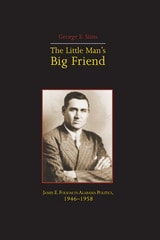
The Little Mans Big Friend
James E. Folsom in Alabama Politics, 1946-1958George E. Sims
University of Alabama Press, 1985
At the end of World War II changing economic and social forces transformed the lives of Alabamians, whose political leaders had built careers on localistic politics shaped by established economic and governmental interests. Into this context strolled “Big Jim”—six feet eight inches tall—with his corn-shuck mop, wooden suds bucket, and a promise to scrub out the Capitol. Ridiculed by his opponents, Folsom advertised his progressive program in every crossroads community.
As governor, Folsom faced a legislature dominated by local politicians whom he had bypassed during the campaign, and although he won approval of some bills, legislative opposition made his administration a four-year filibuster.
Not until 1955, after his election to a second term, did Folsom become an effective leader. Tying programs for expanded services to the local interests of the legislators, he won approval for road construction, “old-age pensions,” industrial development, and reorganization of the state docks. But the lawmakers balked at constitutional reform.
As his reform efforts met defeat during 1956, Folsom was losing his ability to lead. He refused to exploit racial tensions, and the rise of the civil rights movement undermined his popularity among whites. Unwilling to discipline his aides and supporters, his administration became notorious for petty graft. By 1958 aspiring candidates kept their distance from Folsom. “Big Jim” attempted a comeback in the 1962 campaign, but he was never again to hold public office.

The Locavore’s Kitchen
A Cook’s Guide to Seasonal Eating and PreservingMarilou K. Suszko
Ohio University Press, 2011
More and more Americans are becoming dedicated locavores, people who prefer to eat locally grown or produced foods and who enjoy the distinctive flavors only a local harvest can deliver. The Locavore’s Kitchen invites readers to savor homegrown foods that come from the garden, the farm stand down the road, or local farmers’ markets through cooking and preserving the freshest ingredients.
In more than 150 recipes that highlight seasonal flavors, Marilou K. Suszko inspires cooks to keep local flavors in the kitchen year round. From asparagus in the spring to pumpkins in the fall, Suszko helps readers learn what to look for when buying seasonal homegrown or locally grown foods as well as how to store fresh foods, and which cooking methods bring out fresh flavors and colors. Suszko shares tips and techniques for extending seasonal flavors with detailed instructions on canning, freezing, and dehydrating and which methods work best for preserving texture and flavor.
The Locavore’s Kitchen is an invaluable reference for discovering the delicious world of fresh, local, and seasonal foods.
The Logic of Delegation
D. Roderick Kiewiet and Mathew D. McCubbins
University of Chicago Press, 1991
In The Logic of Delegation, however, D. Roderick Kiewiet and Mathew D. McCubbins persuasively argue that political scientists have paid far too much attention to what congressional parties can't do. The authors draw on economic and management theory to demonstrate that the effectiveness of delegation is determined not by how much authority is delegated but rather by how well it is delegated.
In the context of the appropriations process, the authors show how congressional parties employ committees, subcommittees, and executive agencies to accomplish policy goals. This innovative study will force a complete rethinking of classic issues in American politics: the "autonomy" of congressional committees; the reality of runaway federal bureaucracy; and the supposed dominance of the presidency in legislative-executive relations.
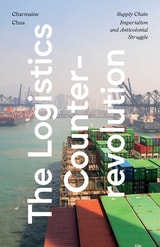
The Logistics Counterrevolution
Supply Chain Imperialism and Anticolonial StruggleCharmaine Chua
University of Minnesota Press, 2027
How the global supply chain developed in response to postcolonial struggles for independence
No part of the global economy today remains untouched by the logistics sector. Each time we make a purchase online, buy a car, or shop for groceries, we interact with planetary supply chains that connect industrial, transport, and service workers across vast distances. The Logistics Counterrevolution critically reexamines the history of global logistics from the perspective of anticolonial struggles that coincided with its emergence. Positioning this history as a counterrevolution on behalf of powerful state and capitalist interests, Charmaine Chua underscores how subaltern resistance shaped the development of the supply chains, containerization, and maritime logistics that underpin our daily lives.
This book charts how the logistics economy emerged after World War II as a response to the perceived threat of national liberation and economic autonomy among developing nations. Drawing from case studies in Indonesia, Singapore, the Philippines, and in international institutions, Chua demonstrates how the global supply chain not only sped up the international circulation of goods but also enacted new forms of imperialism leveled against the emerging nations of the Global South.
With insights from Filipino seafarers, Amazon warehouse workers, postcolonial leaders, and shipping executives, The Logistics Counterrevolution uncovers the enormous infrastructures and economic mechanisms that sustain capital distribution systems across the world. Combining ethnography with historical research from company and colonial archives, this book offers a necessary reconsideration of the logistics industry by illuminating the internationalist struggles that precipitated its rise.
Retail e-book files for this title are screen-reader friendly with images accompanied by short alt text and/or extended descriptions.
The London Problem
What Britain Gets Wrong About Its Capital CityJack Brown
Haus Publishing, 2021
The United Kingdom has never had an easy relationship with its capital. By far the wealthiest and most populous city in the country, London is the political, financial, and cultural center of the UK, responsible for almost a quarter of the national economic output. But the city’s insatiable growth and perceived political dominance have gravely concerned national leaders for hundreds of years.
This perception of London as a problem has only increased as the city becomes busier, dirtier, and more powerful. The recent resurgence in anti-London sentiment and plans to redirect power away from the capital should not be a surprise in a nation still feeling the effects of austerity. Published on the eve of the delayed mayoral elections and in the wake of the greatest financial downturn in generations, The London Problem asks whether it is fair to see the capital’s relentless growth and its stranglehold of commerce and culture as smothering the United Kingdom’s other cities, or whether as a global megacity it makes an undervalued contribution to Britain’s economic and cultural standing.
The Long 1989
Decades of Global RevolutionKyrill Kunakhovich
Central European University Press, 2019
The Long Détente
Changing Concepts of Security and Cooperation in Europe, 1950s–1980sPoul Villaume
Central European University Press, 2017
The Long March of Coxey’s Army
The Path of Protest from Populism to the New DealWesley R. Bishop
University of Illinois Press, 2027
Wesley R. Bishop explores how Coxey and his allies organized the first national protest to bring citizens to Washington, D.C. Though the march failed in its immediate goals, for the next forty years its ideas influenced America’s political parties. The demonstration pioneered marching for economic justice while its push for federal public works projects and government responsibility for unemployment helped shaped the New Deal. But in the years after the march, racism and other types of exclusion muddied hopes and tainted demands for democratic and economic fairness.
Eye-opening and insightful, The Long March of Coxey’s Army examines the influence and aftermath of an important historical event.
The Long Night of the Watchman
Essays by Vaclav Benda, 1977-1989F. Flagg Taylor
St. Augustine's Press, 2017
The Long Red Thread
How Democratic Dominance Gave Way to Republican Advantage in US House ElectionsKyle Kondik
Ohio University Press, 2021
The Long Walk to Equality
Perspectives on Racial Inequality, Injustice and the LawAvis Whyte, Patricia Tuitt and Judith Bourne
University of Westminster Press, 2024

The Loop
The “L” Tracks That Shaped and Saved ChicagoPatrick T. Reardon
Southern Illinois University Press, 2021
Every day Chicagoans rely on the loop of elevated train tracks to get to their jobs, classrooms, or homes in the city’s downtown. But how much do they know about the single most important structure in the history of the Windy City? In engagingly brisk prose, Patrick T. Reardon unfolds the fascinating story about how Chicago’s elevated Loop was built, gave its name to the downtown, helped unify the city, saved the city’s economy, and was itself saved from destruction in the 1970s.
This unique volume combines urban history, biography, engineering, architecture, transportation, culture, and politics to explore the elevated Loop’s impact on the city’s development and economy and on the way Chicagoans see themselves. The Loop rooted Chicago’s downtown in a way unknown in other cities, and it protected that area—and the city itself—from the full effects of suburbanization during the second half of the twentieth century. Masses of data underlie new insights into what has made Chicago’s downtown, and the city as a whole, tick.
The Loop features a cast of colorful Chicagoans, such as legendary lawyer Clarence Darrow, poet Edgar Lee Masters, mayor Richard J. Daley, and the notorious Gray Wolves of the Chicago City Council. Charles T. Yerkes, an often-demonized figure, is shown as a visionary urban planner, and engineer John Alexander Low Waddell, a world-renowned bridge creator, is introduced to Chicagoans as the designer of their urban railway.
This fascinating exploration of how one human-built structure reshaped the social and economic landscape of Chicago is the definitive book on Chicago’s elevated Loop.
The Loss and Recovery of Truth
Selected Writings of Gerhart NiemeyerGerhart Niemeyer
St. Augustine's Press, 2013
The Lost Art of Declaring War
Brien Hallett
University of Illinois Press, 1998
Historically, it has been assumed that war is violence and declarations of war are simply public announcements that serve to initiate combat. Brien Hallett denies both assumptions and claims that war is policy, not violence.
The Lost Art of Declaring War analyzes the crucial differences between combat and war and convincingly argues that the power to "declare" war is in actuality the power to compose a text, draft a document, write a denunciation. Once written, the declaration then serves three functions: to articulate the political purposes of the war, to guide and direct military operations, and to establish the boundary between justified combat and unjustified devastation.
Hallett sounds a clarion call urging the people and their representatives to take up the challenge and write fully reasoned declarations of war. Then, and only then, can a civilized nation like the United States lay claim to being fully democratic, not only in peacetime, but in wartime as well.
The Lost Cause and the Great War
Progressive Reform and Patriotism in the American SouthRobert E. Hunt
University of Alabama Press, 2025
How Tennessee reformers reconciled Southern heritage with rising nationalism, weaving the Lost Cause into the fabric of American progress and identity.
The Lost Cause and the Great War tells the stories of central Tennessee Progressive-era reformers to illustrate the fascinating broader issue of how Southerners steeped in Lost Cause Civil War mythologies simultaneously developed patriotic American fervor. Focusing on Luke Lea, a prominent politician and American army officer who attempted to capture Kaiser Wilhelm II during World War I, the book reveals the intricate interplay between three competing ideas: attachment to the memory of the Confederacy, intense American nationalism, and advocacy for progressive reforms.
Hunt shows that Lea and his contemporaries sought either to harmonize these competing loyalties or to compartmentalize them to use when needed. Through insightful accounts of Tennessee’s 1928 presidential campaign, the American Legion’s response to cuts to veteran benefits in 1933, and the redefinition of America’s global role post–World War II, Hunt shows how these reformers achieved a balance that held until the Civil Rights movement disrupted this delicate consensus.
Hunt’s rich account reveals how Lea and others like him wove national patriotism and Southern collective memory into a cohesive narrative that supported their broader Progressive goals. The book offers much to readers interested in Southern history, the Gilded Age, Prohibition, World War I, World War II, and the beginnings of the Civil Rights movement. It provides vivid examples of how collective memory and narratives shape social and political movements. General readers will discover how white Southerners who remained devoted to vindicating the Confederacy nonetheless became fervent supporters of America's growing nationalism in the early twentieth century.
The Lost Chance in China and the Rise of Cold War Populism
Stephen J. Hartnett
Michigan State University Press, 2025

The Lost Promise of Patriotism
Debating American Identity, 1890-1920Jonathan M. Hansen
University of Chicago Press, 2003
Intellectuals such as William James, John Dewey, Jane Addams, Eugene V. Debs, and W. E. B. Du Bois repudiated liberalism's association with acquisitive individualism and laissez-faire economics, advocating a model of liberal citizenship whose virtues and commitments amount to what Hansen calls cosmopolitan patriotism. Rooted not in war but in dedication to social equity, cosmopolitan patriotism favored the fight against sexism, racism, and political corruption in the United States over battles against foreign foes. Its adherents held the domestic and foreign policy of the United States to its own democratic ideals and maintained that promoting democracy universally constituted the ultimate form of self-defense. Perhaps most important, the cosmopolitan patriots regarded critical engagement with one's country as the essence of patriotism, thereby justifying scrutiny of American militarism in wartime.
The Lost Soul of American Politics
Virtue, Self-Interest, and the Foundations of LiberalismJohn Patrick Diggins
University of Chicago Press, 1986
The Madisonian Turn
Political Parties and Parliamentary Democracy in Nordic EuropeTorbjörn Bergman and Kaare Strøm, editors
University of Michigan Press, 2013
"The Madisonian Turn is an outstanding assessment of the functioning of democratic institutions in the Nordic countries. If democracy is in trouble in Scandinavia, then it is surely facing problems everywhere, so the book will be read carefully by those concerned about contemporary governance in all modern democracies."
---Michael Gallagher, Trinity College, Dublin
"This welcome and timely re-evaluation of Nordic politics constitutes a major contribution to comparative government, and is likely to stand as the definitive treatment of politics in the region for many years to come."
---Peter Mair, European University Institute
"This book is unique in its comparative scope and the wealth of information on the state of parliamentary democracy in the Nordic countries. It is particularly useful for the comparativists who do not come from these countries, because the original literature which it covers in detail is often not accessible for the English-speaking audience."
---Hanspeter Kriesi, University of Zurich
"The strength of The Madisonian Turn is to interface detailed empirical evidence on the dynamics of democratic politics in Scandinavia with an elaboration and test of rival theories of change in the politics of postindustrial democracies. This book is an inspiration for students of Northern Europe, but also for scholars of comparative legislatures and political parties more generally."
---Herbert Kitschelt, Duke University
Parliamentary democracy is the most common regime type in the contemporary political world, but the quality of governance depends on effective parliamentary oversight and strong political parties. Denmark, Finland, Iceland, Norway, and Sweden have traditionally been strongholds of parliamentary democracy. In recent years, however, critics have suggested that new challenges such as weakened popular attachment, the advent of cartel parties, the judicialization of politics, and European integration have threatened the institutions of parliamentary democracy in the Nordic region.
This volume examines these claims and their implications. The authors find that the Nordic states have moved away from their previous resemblance to a Westminster model toward a form of parliamentary democracy with more separation-of-powers features---a Madisonian model. These features are evident both in vertical power relations (e.g., relations with the European Union) and horizontal ones (e.g., increasingly independent courts and central banks). Yet these developments are far from uniform and demonstrate that there may be different responses to the political challenges faced by contemporary Western democracies.
Torbjörn Bergman is Professor of Political Science at Umeå University, Sweden.
Kaare Strøm is Professor of Political Science at the University of California, San Diego.
Jacket Credit: Heidi Hobde Dailey
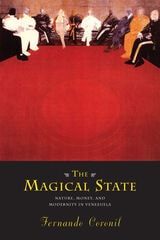
The Magical State
Nature, Money, and Modernity in VenezuelaFernando Coronil
University of Chicago Press, 1997
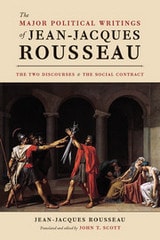
The Major Political Writings of Jean-Jacques Rousseau
The Two "Discourses" and the "Social Contract"Jean-Jacques Rousseau
University of Chicago Press, 2012
Individualist and communitarian. Anarchist and totalitarian. Classicist and romanticist. Progressive and reactionary. Since the eighteenth century, Jean-Jacques Rousseau has been said to be all of these things. Few philosophers have been the subject of as much or as intense debate, yet almost everyone agrees that Rousseau is among the most important and influential thinkers in the history of political philosophy. This new edition of his major political writings, published in the year of the three-hundredth anniversary of his birth, renews attention to the perennial importance of Rousseau’s work.
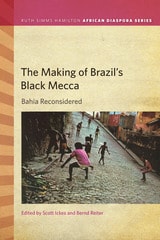
The Making of Brazil's Black Mecca
Bahia ReconsideredScott Ickes
Michigan State University Press, 2018
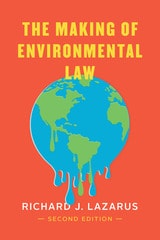
The Making of Environmental Law
Richard J. Lazarus
University of Chicago Press, 2022
How did environmental law first emerge in the United States? Why has it evolved in the ways that it has? And what are the unique challenges inherent to environmental lawmaking in general and in the United States in particular?
Since its first edition, The Making of Environmental Law has been foundational to our understanding of these questions. For the second edition, Richard J. Lazarus returns to his landmark book and takes stock of developments over the last two decades. Drawing on many years of experience on the frontlines of legal and policy battles, Lazarus provides a theoretical overview of the challenges that environmental protection poses for lawmaking, related to both the distinctive features of US lawmaking institutions and the spatial and temporal dimensions of ecological change. The book explains why environmental law emerged in the manner and form that it did in the 1970s and traces how it developed over sequent decades through key laws and controversies. New chapters, composing more than half of the second edition, examine a host of recent developments. These include how Congress dropped out of environmental lawmaking in the early twenty-first century; the shifting role of the judiciary; long-overdue efforts to provide environmental justice to disadvantaged communities; and the destabilization of environmental law that has resulted from the election of Presidents with dramatically clashing environmental policies.
As the nation’s partisan divide has grown deeper and the challenge of climate change has dramatically raised the perceived stakes for opposing interests, environmental law is facing its greatest challenges yet. This book is essential reading for understanding where we have been and what challenges and opportunities lie ahead.

The Making of Federal Coal Policy
Robert H. Nelson
Duke University Press, 1983
The Making of Lawyers' Careers
Inequality and Opportunity in the American Legal ProfessionRobert L. Nelson, Ronit Dinovitzer, Bryant G. Garth, Joyce S. Sterling, David B. Wilkins, Meghan Dawe, and Ethan Michelson
University of Chicago Press, 2023
An unprecedented account of social stratification within the US legal profession.
How do race, class, gender, and law school status condition the career trajectories of lawyers? And how do professionals then navigate these parameters?
The Making of Lawyers’ Careers provides an unprecedented account of the last two decades of the legal profession in the US, offering a data-backed look at the structure of the profession and the inequalities that early-career lawyers face across race, gender, and class distinctions. Starting in 2000, the authors collected over 10,000 survey responses from more than 5,000 lawyers, following these lawyers through the first twenty years of their careers. They also interviewed more than two hundred lawyers and drew insights from their individual stories, contextualizing data with theory and close attention to the features of a market-driven legal profession.
Their findings show that lawyers’ careers both reflect and reproduce inequalities within society writ large. They also reveal how individuals exercise agency despite these constraints.
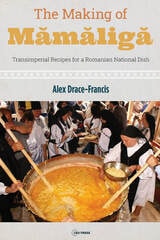
The Making of Mamaliga
Transimperial Recipes for a Romanian National DishAlex Drace-Francis
Central European University Press, 2022
Mămăligă, maize porridge or polenta, is a universally consumed dish in Romania and a prominent national symbol. But its unusual history has rarely been told. Alex Drace-Francis surveys the arrival and spread of maize cultivation in Romanian lands from Ottoman times to the eve of the First World War, and also the image of mămăligă in art and popular culture. Drawing on a rich array of sources and with many new findings, Drace-Francis shows how the making of mămăligă has been shaped by global economic forces and overlapping imperial systems of war and trade.
The story of maize and mămăligă provides an accessible way to revisit many key questions of Romanian and broader regional history. More generally, the book links the history of production, consumption, and representation. Analyses of recipes, literary and popular depictions, and key vocabulary complete the work.
The Making of Pro-life Activists
How Social Movement Mobilization WorksZiad W. Munson
University of Chicago Press, 2008
Through extensive interviews and detailed studies of pro-life organizations across the nation, Munson makes the startling discovery that many activists join up before they develop strong beliefs about abortion—in fact, some are even pro-choice prior to their mobilization. Therefore, Munson concludes, commitment to an issue is often a consequence rather than a cause of activism.
The Making of Pro-life Activists provides a compelling new model of how people become activists while also offering a penetrating analysis of the complex relationship between religion, politics, and the pro-life movement. Policy makers, activists on both sides of the issue, and anyone seeking to understand how social movements take shape will find this book essential.

The Making of Terrorism
Michel Wieviorka
University of Chicago Press, 1993
Wieviorka demonstrates that the truly terrorist actor has become alienated both from the collective movement and society. The actor turns to the blind violence when he finds himself cut off from the very ideology which legitimates his actions. Pure terrorism, Wieviorka concludes, is more than simply a break between those who use it and those it targets; it is also a relationship—between the individual and the collective he represents—which has been rendered unrealistic or artificial. Thus, terrorist violence should be understood not as the desperate act of a faltering movement but as a substitute for a movement which has fallen away from the ideology in which it was forged.
For the revelations it offers on the roots and motivations of terrorism, for its innovative methods, and for its useful comparative analysis of terrorist groups in recent history, The Making of Terrorism will be an important resource across many disciplines for anyone interested in terrorism or political violence.
The Making of Tocqueville's America
Law and Association in the Early United StatesKevin Butterfield
University of Chicago Press, 2015
Butterfield explains that the first generations of American citizens found in the concept of membership—in churches, fraternities, reform societies, labor unions, and private business corporations—a mechanism to balance the tension between collective action and personal autonomy, something they accomplished by emphasizing law and procedural fairness. As this post-Revolutionary procedural culture developed, so too did the legal substructure of American civil society. Tocqueville, then, was wrong to see associations as the training ground for democracy, where people learned to honor one another’s voices and perspectives. Rather, they were the training ground for something no less valuable to the success of the American democratic experiment: increasingly formal and legalistic relations among people.
The Making of Working-Class Religion
Matthew Pehl
University of Illinois Press, 2016
Pehl embarks on an integrative view of working-class faith that ranges across boundaries of class, race, denomination, and time. As he shows, workers in the 1910s and 1920s practiced beliefs characterized by emotional expressiveness, alliance with supernatural forces, and incorporation of mass culture's secular diversions into the sacred. That gave way to the more pragmatic class-conscious religion cultures of the New Deal era and, from the late Thirties on, a quilt of secular working-class cultures that coexisted in competitive, though creative, tension. Finally, Pehl shows how the ideology of race eclipsed class in the 1950s and 1960s, and in so doing replaced the class-conscious with the race-conscious in religious cultures throughout the city.
An ambitiously inclusive contribution to a burgeoning field, The Making of Working-Class Religion breaks new ground in the study of solidarity and the sacred in the American heartland.
The Making of a Black Communist
The Selected Writings of Eugene GordonLouis J. Parascandola, Editor
University of Massachusetts Press, 2025
Eugene Gordon (1891–1974) was a major writer involved in the development of the burgeoning Black literary scene in Boston in the 1920s, an active player in the Harlem Renaissance, and a longtime member of the Communist Party. Despite his credentials as a reporter, editor, fiction writer, and political activist, he is rarely mentioned in studies of the Harlem Renaissance or Marxist politics. Here, Louis J. Parascandola has pulled together Gordon’s journalism, autobiographical writing, and fiction. This new collection, featuring both previously published pieces from a wide variety of publications as well as material that has never before been published, demonstrates his range and his skill while establishing his importance as a critical voice of his time.
Gordon was born and raised in the South but made his way north at a young age. In Boston, he founded the Saturday Evening Quill Club, an African American literary group that included other notable writers such as Helene Johnson and Dorothy West. He later became editor of and contributor to two major publications coming out of the era: the Messenger and Opportunity: A Journal of Negro Life. As he grew more political, he joined the Communist Party in the 1930s and became editor of and contributor to the New Masses. Scholars looking to research him have struggled to find disparate writings to get a fuller sense of his literary stylings as well as his political commitments. This welcome new volume establishes Gordon as a significant, understudied figure.
The Making of a Human Bomb
An Ethnography of Palestinian ResistanceNasser Abufarha
Duke University Press, 2009
Abufarha draws on the life histories of martyrs, interviews he conducted with their families and members of the groups that sponsored their operations, and examinations of Palestinian literature, art, performance, news stories, and political commentaries. He also assesses data—about the bombers, targets, and fatalities caused—from more than two hundred martyrdom operations carried out by Palestinian groups between 2001 and 2004. Some involved the use of explosive belts or the detonation of cars; others entailed armed attacks against Israeli targets (military and civilian) undertaken with the intent of fighting until death. In addition, he scrutinized suicide attacks executed by Hamas and Islamic Jihad between 1994 and 2000. In his analysis of Palestinian political violence, Abufarha takes into account Palestinians’ understanding of the history of the conflict with Israel, the effects of containment on Palestinians’ everyday lives, the disillusionment created by the Oslo peace process, and reactions to specific forms of Israeli state violence. The Making of a Human Bomb illuminates the Palestinians’ perspective on the conflict with Israel and provides a model for ethnographers seeking to make sense of political violence.
The Making of a Nation in the Balkans
Roumen Daskalov
Central European University Press, 2004
The Making of a Socialist Night
Society, Imagination and Everyday Life in Czechoslovakia 1945-1960Lucie Dusková
Central European University Press, 2026
The Making of the Mexican Border
The State, Capitalism, and Society in Nuevo León, 1848-1910By Juan Mora-Torres
University of Texas Press, 2001
The issues that dominate U.S.-Mexico border relations today—integration of economies, policing of boundaries, and the flow of workers from south to north and of capital from north to south—are not recent developments. In this insightful history of the state of Nuevo León, Juan Mora-Torres explores how these processes transformed northern Mexico into a region with distinct economic, political, social, and cultural features that set it apart from the interior of Mexico.
Mora-Torres argues that the years between the establishment of the U.S.-Mexico boundary in 1848 and the outbreak of the Mexican Revolution in 1910 constitute a critical period in Mexican history. The processes of state-building, emergent capitalism, and growing linkages to the United States transformed localities and identities and shaped class formations and struggles in Nuevo León. Monterrey emerged as the leading industrial center and home of the most powerful business elite, while the countryside deteriorated economically, politically, and demographically. By 1910, Mora-Torres concludes, the border states had already assumed much of their modern character: an advanced capitalist economy, some of Mexico's most powerful business groups, and a labor market dependent on massive migrations from central Mexico.
The Making of the New Deal Democrats
Voting Behavior and Realignment in Boston, 1920-1940Gerald H. Gamm
University of Chicago Press, 1990
Almost all previous work on the subject has dealt with large-scale national patterns which make it difficult to pin down the precise processes by which the alignment took place. Gamm's work is most remarkable in that it is a close analysis of shifting voter alignments on the precinct and block level in the city of Boston. His extremely detailed and painstaking work of isolating homogeneous ethnic units over a twenty-year period allows one to trace the voting behavior of the particular ethnic groups that ultimately formed the core of the New Deal realignment."—Sidney Verba, Harvard University
The Malayan Emergency
Essays on a Small, Distant WarSouchou Yao
National University of Singapore Press, 2016
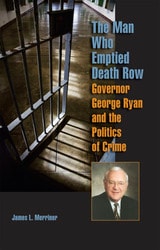
The Man Who Emptied Death Row
Governor George Ryan and the Politics of CrimeJames L. Merriner
Southern Illinois University Press, 2008
George H. Ryan, Illinois governor from 1999 to 2003, became nationally known for two significant and very different reasons. The first governor in the United States to clear out his state’s death row and put a moratorium on the death penalty, he was also convicted and sent to prison on corruption charges. The Man Who Emptied Death Row: Governor George Ryan and the Politics of Crime details the career of a man who both enhanced and tarnished the image of the highest office in Illinois and examines the political history and culture that shaped him.
Author James L. Merriner explores the two very different stories of George Ryan: the brave crusader against the death penalty and the petty crook. An extensive analysis of the official record, exclusive interviews, and previously undisclosed incidents in Ryan’s career expose why the governor pardoned or commuted the sentences of all 171 prisoners on Illinois’s death row before leaving office and how he later was convicted of eighteen counts of official corruption.
This biography traces Ryan’s family history and the Illinois political climate that influenced his development as a politician. Although Ryan championed “good-government” initiatives—organ donations, tougher drunken-driving and lobbyist disclosure laws—he never overcame a reputation as a wheeler-dealer, notes Merriner.
Merriner goes beyond Ryan’s life and career to explore the politics of crime, highlighting the successes and failures of the criminal justice system and suggesting how both white-collar fraud and violent crime shape politics. A fascinating story that reveals much about the way Illinois politics works, The Man Who Emptied Death Row will help determine how history will judge Illinois governor George Ryan.

The Man Who Stayed Behind
Sidney Rittenberg and Amanda Bennett
Duke University Press, 2001
Both a memoir and a documentary history of the Chinese revolution from 1949 through the Cultural Revolution, The Man Who Stayed Behind provides a human perspective on China’s efforts to build a new society. Critical of both his own mistakes and those of the Communist leadership, Rittenberg nevertheless gives an even-handed account of a country that is now free of internal war for the first time in a hundred years.
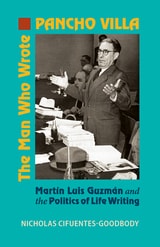
The Man Who Wrote Pancho Villa
Martin Luis Guzman and the Politics of Life WritingNicholas Cifuentes-Goodbody
Vanderbilt University Press, 2016
The Man Who Wrote Pancho Villa places Guzman's work in a biographical context, shedding light on the immediate motivations behind his writing in a given moment and the subsequent ways in which he rewrote or repackaged the material. Despite his efforts to establish a definitive reading of his life and literature, Guzman was unable to control that interpretation as audiences became less tolerant of the glaring omissions in his self-portrait.
The Mandarin and the Cadre
China’s Political CulturesLucian W. Pye
University of Michigan Press, 2000
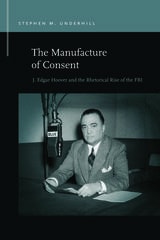
The Manufacture of Consent
J. Edgar Hoover and the Rhetorical Rise of the FBIStephen M. Underhill
Michigan State University Press, 2020
The Many Faces of Political Islam, Second Edition
Religion and Politics in Muslim SocietiesMohammed Ayoob and Danielle N. Lussier
University of Michigan Press, 2020
Analysts and pundits from across the American political spectrum describe Islamic fundamentalism as one of the greatest threats to modern, Western-style democracy. Yet very few non-Muslims would be able to venture an accurate definition of political Islam. Fully revised and updated, The Many Faces of Political Islam thoroughly analyzes the many facets of this political ideology and shows its impact on global relations.