Results by title
8812 books match the query 'Political Science' and 1911 start with t
The Many Faces of Political Islam
Religion and Politics in the Muslim WorldMohammed Ayoob
University of Michigan Press, 2009
---Peter J. Katzenstein, Walter S. Carpenter, Jr. Professor of International Studies and Stephen H. Weiss Presidential Teaching Fellow, Cornell University
---Fawaz A. Gerges, Carnegie Scholar, and holds the Christian A. Johnson Chair in International Affairs and Middle Eastern Studies, Sarah Lawrence College
---François Burgat, Director, French National Centre for Scientific Research (CNRS) and the Institute for Research and Study on the Arab and Muslim World (IREMAM), Aix-en-Provence, France
---Shibley Telhami, Anwar Sadat Professor for Peace and Development, University of Maryland, and Senior Fellow, Brookings Institution

The Many Faces of Sandinista Democracy
Katherine Hoyt
Ohio University Press, 1997
Taking power in Nicaragua in 1979 as a revolutionary party, the Sandinista National Liberation Front (FSLN) was willing to put its fate in the hands of the Nicaraguan people twice, in 1984 and 1990. The party wrote a democratic constitution and then, remarkably, accepted the decision of the majority by relinquishing power upon its defeat in the 1990 election.
The Many Faces of Sandinista Democracy explores the conflicts involving different visions of political and economic democracy, as well as new radical thought on participatory democracy. The latter addresses the problems popular organizations encountered as they moved from subservience to the FSLN in the 1980s to the liberating but disorientating electoral defeat of 1990. Up until the moment of defeat, the Sandinistas saw themselves as the true vanguard of the Nicaraguan people, able to submit themselves to free elections, because they felt they truly represented the general will of the people.
Dr. Hoyt brings to an international audience for the first time a study of the ideas of several Nicaraguan thinkers. She examines the conflicts surrounding the development of ideas within the FSLN, as well as the strengths and weaknesses of its rare combination of democratic and vanguard principles.
The Many Faces of Strategic Voting
Tactical Behavior in Electoral Systems Around the WorldLaura B. Stephenson, John H. Aldrich, and André Blais, Editors
University of Michigan Press, 2018
Voters do not always choose their preferred candidate on election day. Often they cast their ballots to prevent a particular outcome, as when their own preferred candidate has no hope of winning and they want to prevent another, undesirable candidate’s victory; or, they vote to promote a single-party majority in parliamentary systems, when their own candidate is from a party that has no hope of winning. In their thought-provoking book The Many Faces of Strategic Voting, Laura B. Stephenson, John H. Aldrich, and André Blais first provide a conceptual framework for understanding why people vote strategically, and what the differences are between sincere and strategic voting behaviors. Expert contributors then explore the many facets of strategic voting through case studies in Great Britain, Spain, Canada, Japan, Belgium, Germany, Switzerland, and the European Union.
The Many Geographies of Urban Renewal
New Perspectives on the Housing Act of 1949Edited by Douglas R. Appler
Temple University Press, 2023
Taken as a whole, the essays showcase the unexpected diversity of how different communities used the federal urban renewal program. The Many Geographies of Urban Renewal allows us to better understand what was arguably the most significant urban policy of the 20th century, and how that policy shaped the American landscape.
Contributors include Francesca Russello Ammon, Brent Cebul, Robert B. Fairbanks, Leif Fredrickson, Colin Gordon, David Hochfelder, Robert K. Nelson, Benjamin D. Lisle, Stacy Kinlock Sewell and the editor.
The Many Lives of Cy Endfield
Film Noir, the Blacklist, and <i>Zulu</i>Brian Neve
University of Wisconsin Press, 2015
The Many Lives of Cy Endfield is the first book on this fascinating figure. The fruit of years of archival research and personal interviews by Brian Neve, it documents Endfield’s many identities: among them second-generation immigrant, Jew, Communist, and exile. Neve paints detailed scenes not only of the political and personal dramas of the blacklist era, but also of the attempts by Hollywood directors in the postwar 1940s and early 1950s to address social and political controversies of the day. Out of these efforts came two crime melodramas (what would become known as film noir) on inequalities of class and race: The Underworld Story and The Sound of Fury (also known as Try and Get Me!). Neve reveals the complex production and reception histories of Endfield’s films, which the critic Jonathan Rosenbaum saw as reflective of “an uncommon intelligence so radically critical of the world we live in that it’s dangerous.”
The Many Lives of Cy Endfield is at once a revealing biography of an independent, protean figure, an insight into film industry struggles, and a sensitive and informed study of an underappreciated body of work.
Best Five Books of the Year list, Iranian 24 Monthly, London UK
“Make[s] a case for [Endfield’s] distinctive voice while tracing the way struggle, opposition, and thwarted ambition both defined his life and became the powerful themes of his best work.”—Cineaste

The Many and the Few
A Chronicle of the Dynamic Auto WorkersHenry Kraus. With an Introduction by Neil O. Leighton, William J. Meyer, and Nan Pendrell
University of Illinois Press, 1985
The Marrying Kind?
Debating Same-Sex Marriage within the Lesbian and Gay MovementMary Bernstein
University of Minnesota Press, 2013
As the fight for same-sex marriage rages across the United States and lesbian and gay couples rush to marriage license counters, the goal of marriage is still fiercely questioned within the LGBT movement. Rarely has an objective so central to a social movement’s political agenda been so controversial within the movement itself. While antigay forces work to restrict marriage to one man and one woman, lesbian and gay activists are passionately arguing about the desirability, viability, and social consequences of same-sex marriage.
The Marrying Kind? is the first book to draw on empirical research to examine these debates and how they are affecting marriage equality campaigns. The essays in this volume analyze the rhetoric, strategies, and makeup of the LGBT social movement organizations pushing for same-sex marriage, and address the dire predictions of some LGBT commentators that same-sex marriage will spell the end of queer identity and community. Case studies from California, Connecticut, Massachusetts, New Jersey, Oklahoma, Vermont, and Canada illuminate the complicated politics of same-sex marriage, making clear that the current disagreements among LGBT activists over whether marriage is conforming or transformative are far too simplistic. Instead, the impact of the marriage equality movement is complex and often contradictory, neither fully assimilationist nor fully oppositional.
Contributors: Ellen Ann Andersen, U of Vermont; Mary C. Burke, U of Vermont; Adam Isaiah Green, U of Toronto; Melanie Heath, McMaster U, Ontario; Kathleen E. Hull, U of Minnesota; Katrina Kimport, U of California, San Francisco; Jeffrey Kosbie; Katie Oliviero, U of Colorado, Boulder; Kristine A. Olsen; Timothy A. Ortyl; Arlene Stein, Rutgers U; Amy L. Stone, Trinity U; Nella Van Dyke, U of California, Merced.
The Mau Mau War in Perspective
Eastern African StudiesFrank Furedi
Ohio University Press, 1989
The book breaks new ground in following the story of the participants of the rural movement during the decade after the defeat of the Mau Mau. New archival sources and interviews provide exciting material on the mechanics of the sociology of decolonization and on the containment of rural radicalism in Kenya. For the first time an account of decolonization in Kenya based on primary sources is offered to the reader.
The Mau Mau was militarily crushed in the mid-fifties, but the struggle for land rights was only contained in the post independence era of Kenya. Kikuyu squatters on European estates who formed the backbone of this movement are the main subject of this book.
Furedi’s account considers how the radicalization of rural protest in the so-called White Highlands led to the Mau Mau explosion and how it was sustained during the subsequent fifteen years.
The book establishes a focus for discussion of these critical events through exploring the relationship between rural resistance and decolonization. The author argues that the main issue facing post-colonial policies in Kenya was to resolve the problems raised by the Mau Mau revolt.
Written from an interdisciplinary perspective, with a special emphasis on historical and political sociology, this book is aimed at students of African politics and political sociologists interested in rural revolution and revolt.
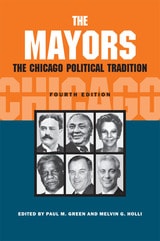
The Mayors
The Chicago Political Tradition, fourth editionEdited by Paul M. Green and Melvin G. Holli
Southern Illinois University Press, 2013
Chicago’s mayoral history is one of corruption and reform, scandal and ambition. This well-researched volume, more relevant than ever twenty-five years after its first edition, presents an intriguing and informative glimpse into the fascinating lives and legacies of Chicago’s most influential leaders.
The Meaning of Democracy and the Vulnerabilities of Democracies
A Response to Tocqueville's ChallengeVincent Ostrom
University of Michigan Press, 1997
Arguing that democratic systems are characterized by self-governing--not state- governed--societies, Ostrom contends that the nature and strength of individual relationships and self-organizing behavior are critical to the creation and survival of a democratic political system. Ostrom begins with a basic contradiction identified by Alexis de Tocqueville. De Tocqueville suggested that if citizens acted on the basis of their natural inclinations they would expect government to provide for them and take care of their needs. Yet these conditions contradict what it means to be self-governing. Ostrom explores the social and cultural context necessary for a democratic system to flourish emphasizing the important role of ideas and the use of language in defining and understanding political life. Discussing differences in the ideas about social organization among various cultural and intellectual traditions, he considers the difficulties encountered over time in building democratic societies in America, Asia, Europe, and Africa. He outlines lessons from these experiences for the efforts to build democracy in the developing world and the countries emerging from communism.
Based on a lifetime of thinking about the social conditions necessary to support a democracy, this book makes a significant contribution to the recent discussion about civil society and the fragility of our formal and informal social institutions and will be of interest to social scientists, historians and all readers concerned with the state of democracy in the modern world.
Vincent Ostrom is Arthur F. Bentley Professor of Political Science Emeritus and Co-Director of the Workshop on Political Theory and Policy Analysis, Indiana University. He is the author of many works on political theory and public administration.
The Meaning of Liberalism - East and West
Zdenek Suda
Central European University Press, 1999
The Meaning of Liberalism provides a new perspective on the continuing debate about how liberalism should be defined and what it means in countries with an established parliamentary system, particularly in the new democracies of Central and Eastern Europe.
The key question this book addresses is: will the specific experience of communism and its aftermath give birth to a new distinct current of liberal thought, or will it simply enlarge the scope of the Western liberal debate? The authors argue that liberalism cannot be reduced merely to private property and market prices, but needs a very complex set of institutions and corresponding law.
Contributors come from both sides of the former Iron Curtain and they highlight the richness and diversity of liberalism and discuss different perceptions of liberal thinking in the East and West in the post-modern world.
The Means of Prediction
How AI Really Works (and Who Benefits)Maximilian Kasy
University of Chicago Press, 2025
AI is inescapable, from its mundane uses online to its increasingly consequential decision-making in courtrooms, job interviews, and wars. The ubiquity of AI is so great that it might produce public resignation—a sense that the technology is our shared fate.
As economist Maximilian Kasy shows in The Means of Prediction, artificial intelligence, far from being an unstoppable force, is irrevocably shaped by human decisions—choices made to date by the ownership class that steers its development and deployment. Kasy shows that the technology of AI is ultimately not that complex. It is insidious, however, in its capacity to steer results to its owners’ wants and ends. Kasy clearly and accessibly explains the fundamental principles on which AI works, and, in doing so, reveals that the real conflict isn’t between humans and machines, but between those who control the machines and the rest of us.
The Means of Prediction offers a powerful vision of the future of AI: a future not shaped by technology, but by the technology’s owners. Amid a deluge of debates about technical details, new possibilities, and social problems, Kasy cuts to the core issue: Who controls AI’s objectives, and how is this control maintained? The answer lies in what he calls “the means of prediction,” or the essential resources required for building AI systems: data, computing power, expertise, and energy. As Kasy shows, in a world already defined by inequality, one of humanity’s most consequential technologies has been and will be steered by those already in power.
Against those stakes, Kasy offers an elegant framework both for understanding AI’s capabilities and for designing its public control. He makes a compelling case for democratic control over AI objectives as the answer to mounting concerns about AI's risks and harms. The Means of Prediction is a revelation, both an expert undressing of a technology that has masqueraded as more complicated and a compelling call for public oversight of this transformative technology.
The Means of Prediction
How AI Really Works (and Who Benefits)Maximilian Kasy
University of Chicago Press, 2025
An eye-opening examination of how power—not technology—will define life with AI.
AI is inescapable, from its mundane uses online to its increasingly consequential decision-making in courtrooms, job interviews, and wars. The ubiquity of AI is so great that it might produce public resignation—a sense that the technology is our shared fate.
As economist Maximilian Kasy shows in The Means of Prediction, artificial intelligence, far from being an unstoppable force, is irrevocably shaped by human decisions—choices made to date by the ownership class that steers its development and deployment. Kasy shows that the technology of AI is ultimately not that complex. It is insidious, however, in its capacity to steer results to its owners’ wants and ends. Kasy clearly and accessibly explains the fundamental principles on which AI works, and, in doing so, reveals that the real conflict isn’t between humans and machines, but between those who control the machines and the rest of us.
The Means of Prediction offers a powerful vision of the future of AI: a future not shaped by technology, but by the technology’s owners. Amid a deluge of debates about technical details, new possibilities, and social problems, Kasy cuts to the core issue: Who controls AI’s objectives, and how is this control maintained? The answer lies in what he calls “the means of prediction,” or the essential resources required for building AI systems: data, computing power, expertise, and energy. As Kasy shows, in a world already defined by inequality, one of humanity’s most consequential technologies has been and will be steered by those already in power.
Against those stakes, Kasy offers an elegant framework both for understanding AI’s capabilities and for designing its public control. He makes a compelling case for democratic control over AI objectives as the answer to mounting concerns about AI's risks and harms. The Means of Prediction is a revelation, both an expert undressing of a technology that has masqueraded as more complicated and a compelling call for public oversight of this transformative technology.
The Media Commons
Globalization and Environmental DiscoursesPatrick D Murphy
University of Illinois Press, 2017
The media draws the cultural boundaries of our environmental imagination--and influences just who benefits. Murphy's analysis emphasizes social context, institutional alignments, and commercial media's ways of rendering discussion. He identifies and examines key terms, phrases, and metaphors as well as the ways consumers are presented with ideas like agency and the place of nature. What emerges is the link between pervasive messaging and an "environment" conjured by our media-saturated social imagination. As the author shows, today's complex, integrated media networks shape, frame, and deliver many of our underlying ideas about the environment. Increasingly--and ominously--individuals and communities experience these ideas not only in the developed world but in the increasingly consumption-oriented Global South.
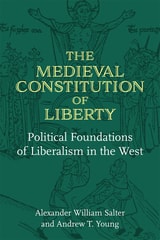
The Medieval Constitution of Liberty
Political Foundations of Liberalism in the WestAlexander William Salter and Andrew T. Young
University of Michigan Press, 2023
Why did enduring traditions of economic and political liberty emerge in Western Europe and not elsewhere? Representative democracy, constitutionalism, and the rule of law are crucial for establishing a just and prosperous society, which we usually treat as the fruits of the Renaissance and Enlightenment, as Western European societies put the Dark Ages behind them.
In The Medieval Constitution of Liberty, Salter and Young point instead to the constitutional order that characterized the High Middle Ages. They provide a historical account of how this constitutional order evolved following the fall of the Western Roman Empire. This account runs from the settlements of militarized Germanic elites within the imperial frontiers, to the host of successor kingdoms in the sixth and seventh centuries, and through the short-lived Carolingian empire of the late eighth and ninth centuries and the so-called “feudal anarchy” that followed its demise. Given this unique historical backdrop, Salter and Young consider the resulting structures of political property rights. They argue that the historical reality approximated a constitutional ideal type, which they term polycentric sovereignty. Salter and Young provide a theoretical analysis of polycentric sovereignty, arguing that bargains between political property rights holders within that sort of constitutional order will lead to improvements in governance.
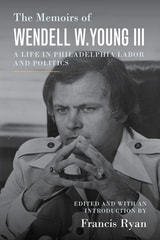
The Memoirs of Wendell W. Young III
A Life in Philadelphia Labor and PoliticsFrancis Ryan
Temple University Press, 2019
Philadelphia native Wendell W. Young III was one of the most important American labor leaders in the last half of the twentieth century. An Acme Markets clerk in the 1950s and ’60s, he was elected top officer of the Retail Clerks Union when he was twenty-four. His social justice unionism sought to advance wages while moving beyond collective bargaining to improve the conditions of the working-class majority, whether in a union or not. Young quickly gained a reputation for his independence, daring at times to publicly criticize the policies of the city’s powerful AFL-CIO leadership and tangle with the city’s political machine.
Editor Francis Ryan, whose introduction provides historical context, interviewed Young about his experiences working in the region’s retail and food industry, measuring the changes over time and the tangible impact that union membership had on workers. Young also describes the impact of Philadelphia’s deindustrialization in the 1970s and ’80s and recounts his activism for civil rights and the anti-war movements as well as on John F. Kennedy’s presidential campaign.
The Memoirs of Wendell W. YoungIII provides the most extensive labor history of late twentieth-century Philadelphia yet written.
The Michigan Constitutional Conventions of 1835-36
Debates and ProceedingsEdited by Harold M. Dorr
University of Michigan Press, 1940
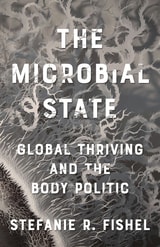
The Microbial State
Global Thriving and the Body PoliticStefanie R. Fishel
University of Minnesota Press, 2017
For three centuries, concepts of the state have been animated by one of the most powerful metaphors in politics: the body politic, a claustrophobic and bounded image of sovereignty. Climate change, neoliberalism, mass migration, and other aspects of the late Anthropocene have increasingly revealed the limitations of this metaphor. Just as the human body is not whole and separate from other bodies—comprising microbes, bacteria, water, and radioactive isotopes—Stefanie R. Fishel argues that the body politic of the state exists in dense entanglement with other communities and forms of life.
Drawing on insights from continental philosophy, science and technology studies, and international relations theory, this path-breaking book critiques the concept of the body politic on the grounds of its very materiality. Fishel both redefines and extends the metaphor of the body politic and its role in understanding an increasingly posthuman, globalized world politics. By conceiving of bodies and states as lively vessels, living harmoniously with multiplicity and the biosphere, she argues that a radical shift in metaphors can challenge a politics based on fear to open new forms of global political practice and community.
Reframing the concept of the body politic to accommodate greater levels of complexity, Fishel suggests, will result in new configurations for the political and social organization necessary to build a world in which the planet’s inhabitants do not merely live but actively thrive.
The Middle Works of John Dewey, Volume 11, 1899 - 1924
Journal Articles, Essays, and Miscellany Published in the 1918-1919 PeriodJohn Dewey. Edited by Jo Ann Boydston
Southern Illinois University Press, 2008
Volume 11 brings together all of Dewey’s writings for 1918 and 1919. A Modern Language Association Committee on Scholarly Editions textual edition.
Dewey’s dominant theme in these pages is war and its aftermath. In the Introduction, Oscar and Lilian Handlin discuss his philosophy within the historical context: “The First World War slowly ground to its costly conclusion; and the immensely more difficult task of making peace got painfully under way. The armistice that some expected would permit a return to normalcy opened instead upon a period of turbulence that agitated further a society already unsettled by preparations for battle and by debilitating conflict overseas.”
After spending the first half of 1918–19 on sabbatical from Columbia at the University of California, Dewey traveled to Japan and China, where he lectured, toured, and assessed in his essays the relationship between the two nations. From Peking he reported the student revolt known as the May Fourth Movement. The forty items in this volume also include an analysis of Thomas Hobbe’s philosophy; an affectionate commemorative tribute to Theodore Roosevelt, “our Teddy”; the syllabus for Dewey’s lectures at the Imperial University in Tokyo, which were later revised and published as Reconstruction in Philosophy; an exchange with former disciple Randolph Bourne about F. Matthias Alexander’s Man’sSupreme Inheritance; and, central to Dewey’s creed, “Philosophy and Democracy.” His involvement in a study of the Polish-American community in Philadelphia—resulting in an article, two memoranda, and a lengthy report—is discussed in detail in the Introduction and in the Note on the “Confidential Report of Conditions among the Poles in the United States.”
The Middle Works of John Dewey, Volume 15, 1899 - 1924
Journal Articles, Essays, and Miscellany Published in the 1923-1924 PeriodJohn Dewey. Edited by Jo Ann Boydston
Southern Illinois University Press, 2008
Volume 15 in The Middle Works of John Dewey, 1899–1924, series brings together Dewey’s writings for the period 1923–1924. A Modern Language Association Committee on Scholarly Editions textual edition.
Volume 15 completes the republication of Dewey’s extensive writings for the 25-year period included in the Middle Works series. Many facets of Dewey’s interests—politics, philosophy, education, and social concerns—are illuminated by the 40 items from 1923 and 1924.
Inspired by his own convictions and those of his friend Salmon O. Levinson, founder of the American Committee for the Outlawry of War, Dewey’s articles became the keystone of the committee’s campaign to outlaw war. His essay, “Logical Method and Law,” is perhaps the most enduring of Dewey’s writings in this volume. Dewey’s philosophical discussions with Daniel Sommer Robinson, David Wight Prall, Arthur Oncken Lovejoy, and Sterling Power Lamprecht are represented here, as is Dewey’s assessment of the Turkish educational system.
The Migrant's Paradox
Street Livelihoods and Marginal Citizenship in BritainSuzanne M. Hall
University of Minnesota Press, 2021
Connects global migration with urban marginalization, exploring how “race” maps onto place across the globe, state, and street
In this richly observed account of migrant shopkeepers in five cities in the United Kingdom, Suzanne Hall examines the brutal contradictions of sovereignty and capitalism in the formation of street livelihoods in the urban margins. Hall locates The Migrant’s Paradox on streets in the far-flung parts of de-industrialized peripheries, where jobs are hard to come by and the impacts of historic state underinvestment are deeply felt.
Drawing on hundreds of in-person interviews on streets in Birmingham, Bristol, Leicester, London, and Manchester, Hall brings together histories of colonization with current forms of coloniality. Her six-year project spans the combined impacts of the 2008 financial crisis, austerity governance, punitive immigration laws and the Brexit Referendum, and processes of state-sanctioned regeneration. She incorporates the spaces of shops, conference halls, and planning offices to capture how official border talk overlaps with everyday formations of work and belonging on the street.
Original and ambitious, Hall’s work complicates understandings of migrants, demonstrating how migrant journeys and claims to space illuminate the relations between global displacement and urban emplacement. In articulating “a citizenship of the edge” as an adaptive and audacious mode of belonging, she shows how sovereignty and inequality are maintained and refuted.
The Mild Voice of Reason
Deliberative Democracy and American National GovernmentJoseph M. Bessette
University of Chicago Press, 1994
Drawing on original research, case studies of policymaking in Congress, and portraits of American lawmakers, Bessette demonstrates not only the limitations of nondeliberative explanations for how laws are made but also the continued vitality of genuine reasoning on the merits of public policy. Bessette discusses the contributions of the executive branch to policy deliberation, and looks at the controversial issue of the proper relationship of public opinion to policymaking.
Informed by Bessette's nine years of public service in city and federal government, The Mild Voice of Reason offers important insights into the real workings of American democracy, articulates a set of standards by which to assess the workings of our governing institutions, and clarifies the forces that promote or inhibit the collective reasoning about common goals so necessary to the success of American democracy.
"No doubt the best-publicized recent book-length work on Congress is columnist George Will's diatribe in praise of term limits in which the core of his complaint is that Congress does not deliberate in its decision-making. Readers who are inclined to share that fantasy would do well to consult the work of Joseph M. Bessette. He turns up massive amounts of material attesting to the centrality of deliberation in congressional life."—Nelson W. Polsby, Presidential Studies Quarterly
The Military Intervenes
Case Studies in Political DevelopmentHenry Bienen
Russell Sage Foundation, 1968
The Military and Politics in Postauthoritarian Chile
Gregory Weeks
University of Alabama Press, 2003
"The Military and Politics in Post-Authoritarian Chile should be read by everyone concerned with the relation between democracy and the armed forces. It is a well-researched, well-written volume that should prove both interesting and useful to scholars and students alike." —Perspectives on Politics
Why have political leaders of developing and authoritarian nations run into so many obstacles as they attempt to establish civilian supremacy over armed forces in the democratization of their countries? This is the question Gregory Weeks poses in his study of Chile from 1990 onward. He explains how the Chilean military has maintained a high level of political influence in the tumultuous aftermath of dictatorial rule by Army General Augusto Pinochet, thus confounding a smooth transition to civilian authority.
Even after the reins of power were officially handed over in 1990, Pinochet continued as commander in chief of the army until 1998, when he took a lifetime seat in the Senate and led the military’s efforts to retain its legal and constitutional prerogatives while limiting civilian oversight of military affairs. This assertion of guardianship by the military has produced a political tug-of-war between it and civilian authorities the two contenders for political primacy in Chile. In addition to recounting the historical background of this situation, Weeks’s study examines where conflict between these two contenders has been most productive and accord has been highest. His findings suggest that formal contacts, conducted through formal institutions, have been the most conducive to civil supremacy and, therefore, the consolidation of democracy.
Based on interviews, government documents, military journals, newspapers, and other archival sources, The Military and Politics in Postauthoritarian Chile describes how presidents, military officers, members of Congress, and judges have interacted since the end of the military regime. With implications for conflict resolution studies, this book will be valuable for Chileanists and policymakers and analysts of Latin American regimes, as well as academic libraries, military historians, social scientists, and students and scholars of Latin American history and politics.
The Militia and the Right to Arms, or, How the Second Amendment Fell Silent
H. Richard Uviller and William G. Merkel
Duke University Press, 2002
—Amendment II, United States Constitution
The Second Amendment is regularly invoked by opponents of gun control, but H. Richard Uviller and William G. Merkel argue the amendment has nothing to contribute to debates over private access to firearms. In The Militia and the Right to Arms, or, How the Second Amendment Fell Silent, Uviller and Merkel show how postratification history has sapped the Second Amendment of its meaning. Starting with a detailed examination of the political principles of the founders, the authors build the case that the amendment's second clause (declaring the right to bear arms) depends entirely on the premise set out in the amendment's first clause (stating that a well-regulated militia is necessary to the security of a free state). The authors demonstrate that the militia envisioned by the framers of the Bill of Rights in 1789 has long since disappeared from the American scene, leaving no lineal descendants. The constitutional right to bear arms, Uviller and Merkel conclude, has evaporated along with the universal militia of the eighteenth century.
Using records from the founding era, Uviller and Merkel explain that the Second Amendment was motivated by a deep fear of standing armies. To guard against the debilitating effects of militarism, and against the ultimate danger of a would-be Caesar at the head of a great professional army, the founders sought to guarantee the existence of well-trained, self-armed, locally commanded citizen militia, in which service was compulsory. By its very existence, this militia would obviate the need for a large and dangerous regular army. But as Uviller and Merkel describe the gradual rise of the United States Army and the National Guard over the last two hundred years, they highlight the nation's abandonment of the militia ideal so dear to the framers. The authors discuss issues of constitutional interpretation in light of radically changed social circumstances and contrast their position with the arguments of a diverse group of constitutional scholars including Sanford Levinson, Carl Bogus, William Van Alstyne, and Akhil Reed Amar.
Espousing a centrist position in the polarized arena of Second Amendment interpretation, this book will appeal to those wanting to know more about the amendment's relevance to the issue of gun control, as well as to those interested in the constitutional and political context of America's military history.
The Mind That Is Catholic
Philosophical and Political EssaysJames V. Schall
Catholic University of America Press, 2008

The Minnesota Commission of Administration and Finance, 1925-1939
An Administrative HistoryLloyd M. Short and Carl W. Tiller
University of Minnesota Press, 0
The Minnesota Commission of Administration and Finance, 1925-1939 was first published in 1964. Minnesota Archive Editions uses digital technology to make long-unavailable books once again accessible, and are published unaltered from the original University of Minnesota Press editions.
The Minnesota Department of Taxation
An Administrative HistoryLloyd Short
University of Minnesota Press, 1955
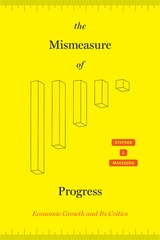
The Mismeasure of Progress
Economic Growth and Its CriticsStephen J. Macekura
University of Chicago Press, 2020
Beginning with the rise of the growth paradigm in the 1940s and 1950s and continuing through the present day, The Mismeasure of Progress is the first book on the myriad thinkers who argued against growth and the conventional way progress had been measured and defined. For growth critics, questioning the meaning and measurement of growth was a necessary first step to creating a more just, equal, and sustainable world. These critics argued that focusing on growth alone would not resolve social, political, and environmental problems, and they put forth alternate methods for defining and measuring human progress.
In today’s global political scene—marked by vast inequalities of power and wealth and made even more fraught by a global climate emergency—the ideas presented by these earlier critics of growth resonate more loudly than ever. Economic growth appealed to many political leaders because it allowed them to avoid addressing political trade-offs and class conflict. It sustained the fiction that humans are somehow separate from nonhuman “nature,” ignoring the intimate and dense connections between the two. In order to create a truly just and equitable society, Macekura argues, we need a clear understanding of our collective needs beyond growth and more holistic definitions of progress that transcend economic metrics like GDP.
The Missing Link
West European Neutrals and Regional SecurityRichard E. Bissell and Curt Gasteyger, eds.
Duke University Press, 1990
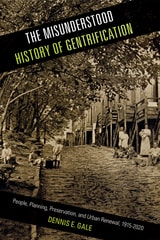
The Misunderstood History of Gentrification
People, Planning, Preservation, and Urban Renewal, 1915-2020Dennis E. Gale
Temple University Press, 2021
The origins of gentrification date back to World War I—only it was sometimes known as “remodeling” then. Dennis Gale’s insightful book, TheMisunderstood History of Gentrification, provides a recontextualization of American gentrification, planning, and policymaking. He argues that gentrification must be understood as an urban phenomenon with historical roots in the very early twentieth century.
Gale uses solid empirical evidence to trace the embryonic revitalization of Georgetown, Greenwich Village, Beacon Hill, and elsewhere back to 1915. He shows how reinvestment and restoration reversed urban decline and revitalized neighborhoods. The Misunderstood History of Gentrification also explains how federal policies such as the Urban Redevelopment Program (later named Urban Renewal), which first emerged in 1949, razed urban slums and created an “urban crisis” that persisted in the 1960s and ‘70s. This situation soon prompted city gentrifiers and historic preservationists to reuse and rehabilitate existing structures.
Within a more expansive historical framework, Gale offers a fresh perspective on and debunks misperceptions about gentrification in America.
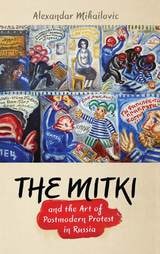
The Mitki and the Art of Postmodern Protest in Russia
Alexandar Mihailovic
University of Wisconsin Press, 2019
More broadly, Alexandar Mihailovic shows, the Mitki pioneered a form of political protest art that has since become a centerpiece of activism in post-Soviet Russia, most visibly today in groups such as Pussy Riot. He draws on extensive interviews with members of the collective and illuminates their critique of the authoritarian state, militarism, and social strictures from the Brezhnev years to the present.
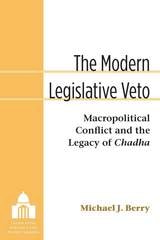
The Modern Legislative Veto
Macropolitical Conflict and the Legacy of ChadhaMichael J. Berry
University of Michigan Press, 2016
Berry argues that, since the U.S. Supreme Court declared the legislative veto unconstitutional in Immigration and Naturalization Service (INS) v. Chadha (1983), Congress has strategically modified its use of the veto to give more power to appropriations committees. Using an original dataset of legislative veto enactments, Berry finds that Congress has actually increased its use of this oversight mechanism since Chadha, especially over defense and foreign policy issues. Democratic and Republican presidents alike have fought back by vetoing legislation containing legislative vetoes and by using signing statements with greater frequency to challenge the legislative veto’s constitutionality. A complementary analysis of state-level use of the legislative veto finds variation in oversight powers granted to state legislatures, but similar struggles between the legislature and the executive.
This ongoing battle over the legislative veto points to broader efforts by legislative and executive actors to control policy, efforts that continually negotiate how the democratic republic established by the Constitution actually operates in practice.
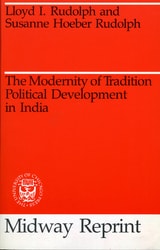
The Modernity of Tradition
Political Development in IndiaLloyd I. Rudolph and Susanne Hoeber Rudolph
University of Chicago Press, 1984
Three areas of Indian life are analyzed: social stratification, charismatic leadership, and law. The authors question whether objective historical conditions, such as advanced industrialization, urbanization, or literacy, are requisites for political modernization.

The Money Mandarins
The Making of a Supranational Economic OrderHoward M. Wachtel
Pluto Press, 1991
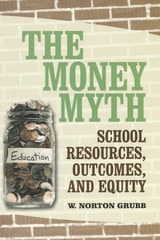
The Money Myth
School Resources, Outcomes, and EquityW. Norton Grubb
Russell Sage Foundation, 2009
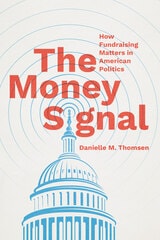
The Money Signal
How Fundraising Matters in American PoliticsDanielle M. Thomsen
University of Chicago Press, 2025
A data-rich, eye-opening look at how, when, and why political fundraising is consequential.
Over the last two decades, the number of competitive congressional races has declined precipitously. Yet candidates and officeholders dial for more and more dollars each election, and they do so earlier and earlier in the campaign cycle.
In The Money Signal, Danielle M. Thomsen offers a new perspective on the role of money in politics. She shows that fundraising matters because it is widely used as an indicator of a candidate’s viability and strength, which shapes subsequent donations, dropout decisions, media attention, and rewards in office. Put simply, money is a focal point that candidates, donors, journalists, and party leaders rally around. For candidates, fundraising is a highly public form of self-presentation that pays dividends long before the election and well after the votes are cast.
Thomsen draws on comprehensive fundraising data that spans more than four decades, in addition to interviews, surveys of candidates and donors, newspaper coverage, committee assignments, and analysis of legislative success. The Money Signal highlights the numerous ways that dollars influence the perceptions and behavior of key actors and observers throughout the election cycle.
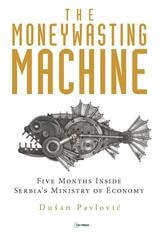
The Moneywasting Machine
Five Months Inside Serbia‘s Ministry of EconomyDusan Pavlovic
Central European University Press, 2022
For five months in 2013–2014, Dušan Pavlović took time off from teaching to accept a senior position in Serbia’s Ministry of Economy. This short period was long enough for him to make a penetrating diagnosis of the economic activity of the postcommunist government. He found that a coterie of tycoons and politicians live off the wealth of the majority of citizens and smaller entrepreneurs, while the economy performs below its capacities. In academic terms, extractive economic institutions create allocative inefficiency.
Vivid, suggestive, and even entertaining accounts depict how privatization is administered and foreign investment projects are handled, and how party members, relatives, and friends are hired into public administration and state-owned companies. They show how the managers of firms that queue for state subsidies resist the systematic screening of their businesses. The principles of Keynesian economics are distorted and misused to conceal deliberate fiscal mismanagement. Huge ill-conceived development projects siphon taxpayers’ money from “non-economic” activities like social services, health, education, science, and culture.
What Pavlović found in Serbia is acutely symptomatic of many other European post-communist regimes of our time, lending his book singular importance.
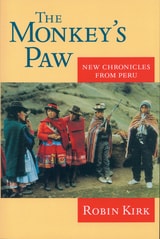
The Monkey's Paw
New Chronicles from PeruRobin Kirk
University of Massachusetts Press, 1997
The Moral Economy of the State
Conservation, Community Development, and State-Making in ZimbabweWilliam A. Munro
Ohio University Press, 1998
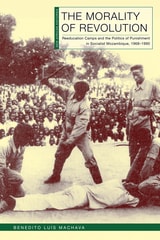
The Morality of Revolution
Reeducation Camps and the Politics of Punishment in Socialist Mozambique, 1968–1990Benedito Luís Machava
Ohio University Press, 2024
The Mosaic Constitution
Political Theology and Imagination from Machiavelli to MiltonGraham Hammill
University of Chicago Press, 2012
It is a common belief that scripture has no place in modern, secular politics. Graham Hammill challenges this notion in The Mosaic Constitution, arguing that Moses’s constitution of Israel, which created people bound by the rule of law, was central to early modern writings about government and state.
The Most Activist Supreme Court in History
The Road to Modern Judicial ConservatismThomas M. Keck
University of Chicago Press, 2004
Ranging from 1937 to the present, The Most Activist Supreme Court in History traces the legal and political forces that have shaped the modern Court. Thomas M. Keck argues that the tensions within modern conservatism have produced a court that exercises its own power quite actively, on behalf of both liberal and conservative ends. Despite the long-standing conservative commitment to restraint, the justices of the Rehnquist Court have stepped in to settle divisive political conflicts over abortion, affirmative action, gay rights, presidential elections, and much more. Keck focuses in particular on the role of Justices O'Connor and Kennedy, whose deciding votes have shaped this uncharacteristically activist Court.
The Motherless State
Women's Political Leadership and American DemocracyEileen McDonagh
University of Chicago Press, 2009
American women attain more professional success than most of their counterparts around the world, but they lag surprisingly far behind in the national political arena. Women held only 15 percent of U.S. congressional seats in 2006, a proportion that ranks America behind eighty-two other countries in terms of females elected to legislative office. A compelling exploration of this deficiency, TheMotherless State reveals why the United States differs from comparable democracies that routinely elect far more women to their national governing bodies and chief executive positions.
Explaining that equal rights alone do not ensure equal access to political office, Eileen McDonagh shows that electoral gender parity also requires public policies that represent maternal traits. Most other democracies, she demonstrates, view women as more suited to govern because their governments have taken on maternal roles through social welfare provisions, gender quotas, or the continuance of symbolic hereditary monarchies. The United States has not adopted such policies, and until it does, McDonagh insightfully warns, American women run for office with a troubling disadvantage.
The Moulding of Ukraine
The Constitutional Politics of State FormationKataryna Wolczuk
Central European University Press, 2002
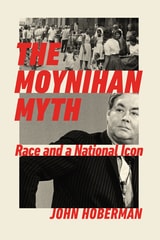
The Moynihan Myth
Race and a National IconJohn Hoberman
University of Illinois Press, 2026
John Hoberman cuts through decades of media adulation and high-profile reverence to illuminate Moynihan’s shortcomings and the Report’s disastrous legacy. As a model of the eloquent scholar-politician, Moynihan answered the demand for a white authority figure to explain Black dysfunction. But his undoubted intellect and gift for language eclipsed a singular lack of qualifications and endowed the Report with an authority it did not deserve. Hoberman delves into the factors that raised Moynihan to the role of race expert while revealing the depths of his naïveté about white racial animosity and how policymakers would use his Report against Black Americans.
Incisive and in-depth, The Moynihan Myth is a long-overdue exposé of a deeply flawed race expert.

The Muslim Brotherhood
Ideology, History, DescendantsJoas Wagemakers
Amsterdam University Press, 2022
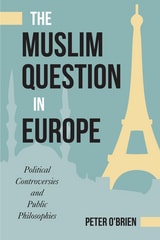
The Muslim Question in Europe
Political Controversies and Public PhilosophiesPeter O'Brien
Temple University Press, 2016
An estimated twenty million Muslims now reside in Europe, mostly as a result of large-scale postwar immigration. In The Muslim Question in Europe, Peter O’Brien challenges the popular notion that the hostilities concerning immigration—which continues to provoke debates about citizenship, headscarves, secularism, and terrorism—are a clash between “Islam and the West.” Rather, he explains, the vehement controversies surrounding European Muslims are better understood as persistent, unresolved intra-European tensions.
O’Brien contends that the best way to understand the politics of state accommodation of European Muslims is through the lens of three competing political ideologies: liberalism, nationalism, and postmodernism. These three broadly understood philosophical traditions represent the most influential normative forces in the politics of immigration in Europe today. He concludes that Muslim Europeans do not represent a monolithic anti-Western bloc within Europe. Although they vehemently disagree among themselves, it is along the same basic liberal, nationalist, and postmodern contours as non-Muslim Europeans.
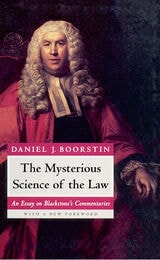
The Mysterious Science of the Law
An Essay on Blackstone's CommentariesDaniel J. Boorstin
University of Chicago Press, 1996
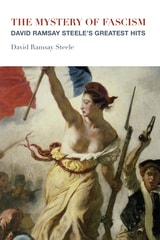
The Mystery of Fascism
David Ramsay Steele's Greatest HitsDavid Ramsay Steele
St. Augustine's Press, 2019
David Ramsay Steele, PhD, is a libertarian writer with a powerful underground reputation for producing caustic, entertaining, knowledgeable, and surprising arguments, often violently at odds with conventional thinking. For the first time, some of Dr. Steele’s “greatest hits” have been brought together in an anthology of provocative essays on a wide range of topics. The essays are divided into two parts, “More Popular than Scholarly” and “More Scholarly than Popular.”
“Scott Adams and the Pinocchio Fallacy,” Steele’s 2018 refutation of the popular claim that we might be living in a “simulated reality,” has been hailed as a totally irresistible debunking of that fallacy as promoted by The Matrix movie and by Scott Adams (among many pundits).
“What Follows from the Non-Existence of Mental Illness?” (2017) preserves the crucial insights of “psychiatric abolitionist” Thomas Szasz, while exposing Szasz’s major misconceptions.
In “The Bigotry of the New Atheism” (2014), Steele, himself an atheist, brings out the intolerant quality of the “New Atheists.” Steele powerfully argues that while “enthusiastic belief systems” may give rise to enormous atrocities, the historical evidence goes against the theory (promoted by Harris, Dawkins, and Hitchens) that these appalling outcomes are more likely when those belief systems include belief in God.
“Taking the JFK Assassination Conspiracy Seriously” (2003) has been reprinted many times, continues to be viewed online many thousands of times, and like many of Steele’s writings, keeps making converts. It is acknowledged to be the most persuasive brief popular statement of the Lone Nut theory.
“The Mystery of Fascism” (2001), which gives this collection its title, is still continually viewed and cited, for its demonstration that fascism arose directly out of far-left revolutionary Marxism and revolutionary syndicalism. Conventional ideologues of both right and left have been provoked by this highly readable piece to start thinking outside the box.
The earliest piece in this collection, “Alice in Wonderland” (1987) is a devastating critique of the Ayn Rand belief system and the Ayn Rand cult.
“Gambling Is Productive and Rational” (1997), mercilessly strips away the loose thinking which favors intolerance and prohibition of gambling. Steele argues that gambling adds to human well-being and ought to be completely legalized everywhere.
Other topics include the recovered memory witch hunt of the 1990s, the benefits of replacing democratic voting with selection of political positions by lottery, the unexpected results of research into the causes of human happiness, the reasons why Dexter (a TV show sympathetic to a psychotic serial killer) was politically “safe,” why economic growth can go on for ever, why the most popular moral argument against eating meat just doesn’t work, how Hillary Clinton could have won the presidency in 2016, why Friedrich Hayek is wrong about social evolution, the inevitable disappearance of market socialism, Robert Nozick’s muddled thinking about economics, and the proper way to view anti-consensus theories such as the Atkins Diet.